




Abstract
Abstract
The present study was conducted aiming to compare the five-factor model of personality in addicted men with and without hypersexual disorder (HD). The research method was causal-comparative, and the study population included all addicted men who were residents of addiction treatment centers in Tabriz city. 216 male addicts with HD and without HD were compared in 2 groups of 108 members through the Big Five Inventory (BFI-44). Data were analyzed using independent t test, chi-square, multivariate analysis of variance, and SPSS 22 version software for Windows (IBM Corporation, Armonk, NY, USA). The results showed that 2 groups were significantly different in the five-factor model of personality. Addicted men with HD obtained lower scores in agreeableness, conscientiousness, and openness to experience; and obtained higher scores in neuroticism personality dimension in comparison to addicted men without HD. There was no significant difference between the 2 groups in extraversion dimension. These findings indicated that there is a significant difference between the 2 groups in the five-factor model of personality, and addicted men with HD scored higher in neuroticism dimension. Therefore, this study illustrates the need to pay attention to the personality dimension of neuroticism (or emotional instability) as a variable comorbid with HD and substance-related disorders.
Introduction
During the previous decade, researches in the domain of drug addiction and excessive, uncontrollable, and troublesome sexual behaviors have increased substantially. By introducing such behaviors as behavioral addictions, these researches have provided the context for a better understanding of these behaviors as primary addictive processes.1-3 Addictive and compulsive sexual behaviors are similar with substance use disorders (SUD) in clinical features and matching biological processes; also, high rates of comorbidity (40% to 64%) between the 2 disorders reveal the notion of sexual addiction more clearly.4, 5 Sexual addiction is defined and described in various terms, including sexual compulsivity, sexual impulsivity, and HD; as various studies have described HD as an addictive behavior,6-8 the term is used in the present study.
HD is defined as: “A sexual desire disorder characterized by an increased frequency and intensity of sexually motivated fantasies, arousal, urges, and enacted behavior in association with an impulsivity component—a maladaptive behavioral response with adverse consequences.” 9 This disorder is more common among men, begins in adolescence and early adulthood, and has a chronic period. 10 Studies on people with substance abuse history and involvement in hypersexual behaviors have resulted in significant results.5, 11 In their work, Stavro et al 12 depicted that of 211 patients, who had referred to substance use treatment centers, 25% had hypersexual behaviors; the prevalence of hypersexual behavior in relation to different substances used by patients was as follows: cannabis (34%), cocaine (32%), amphetamine (13%), opioids (13%), benzodiazepine (8%), and alcohol (53%).
People with SUD, in addition to addiction, report various mental health problems (such as depression, mood disorders, anxiety disorders, and personality disorders) that complicate the situation and, in fact, have comorbid disorders which affect one another. 13 Personality traits are among the variables that play an important role in the formation and continuity of individuals’ behaviors, 14 and their key role in the emergence of different types of healthy sexual behaviors has been confirmed in various studies. 15 Therefore, personality traits can be involved in the development of uncontrollable sexual behaviors, and evidence suggests that there is a relationship between HD, personality traits, and psychopathology. 16 In a study, Zilberman et al 17 examined personality profiles of substance and behavioral addictions, and their results showed that types of addictions were similar in neuroticism and impulsivity; personality profiles of gambling disorders were more similar to the control group; SUD were similar to compulsive sexual behaviors; and alcohol-related disorders were associated with low scores of extroversion and openness to experience. The results of Eysenck’s research indicated that there was a positive correlation between neuroticism and sexual disorders. 18 Eysenck, as a pioneer in the study of personality traits associated with sexual behaviors, attempted to design a personality model called the three-factor model, including psychoticism, extraversion, and neuroticism. 19 Later, researchers developed the five-factor model (FFM) of personality to identify major personality features. The model consists of 5 dimensions of extraversion, agreeableness, conscientiousness, neuroticism, and openness to experience. 20 Research has shown that the FFM can predict individual behaviors. 15
People with HD are prone to many anxiety disorders, personality disorders, and psychological disorders. 8 For example, Elmquist et al 21 showed that borderline personality symptoms were associated with compulsive sexual behaviors in women with SUD. Also, the results of a study by Shimoni et al, 22 which examined the contributions of FFM traits and sexual differences to sexual addiction, revealed that men showed higher scores in sexual addiction than women; and men had more openness to experience and less neuroticism in comparison to women. Personality factors explained the variance of sexual addiction significantly; sexual addiction was positively correlated with openness to experience and neuroticism, and negatively correlated with conscientiousness.
People with SUD are vulnerable. They face many psychological problems that have negative impacts on their sexual self-efficacy and quality of life. 23 Sexual behavior plays a key role in relapse or treatment of addiction, and the overall health of such individuals. 23 With a clearer understanding of the etiology and characteristics of hypersexual disorder (especially fundamental personality traits), the negative consequences of this disorder—including the possibility of losing job, legal problems, social isolation, and higher rates of divorce, as well as potential health risks associated with sexual diseases—can be prevented and the treatment process can be accelerated.8, 24 Therefore, considering the sensitivity of the subject and the importance of research in the field of pathological sexual behaviors in people with SUD, the present study was designated and conducted to compare the FFM of personality in addicted men with and without hypersexual disorder.
Method
Participants and Procedures
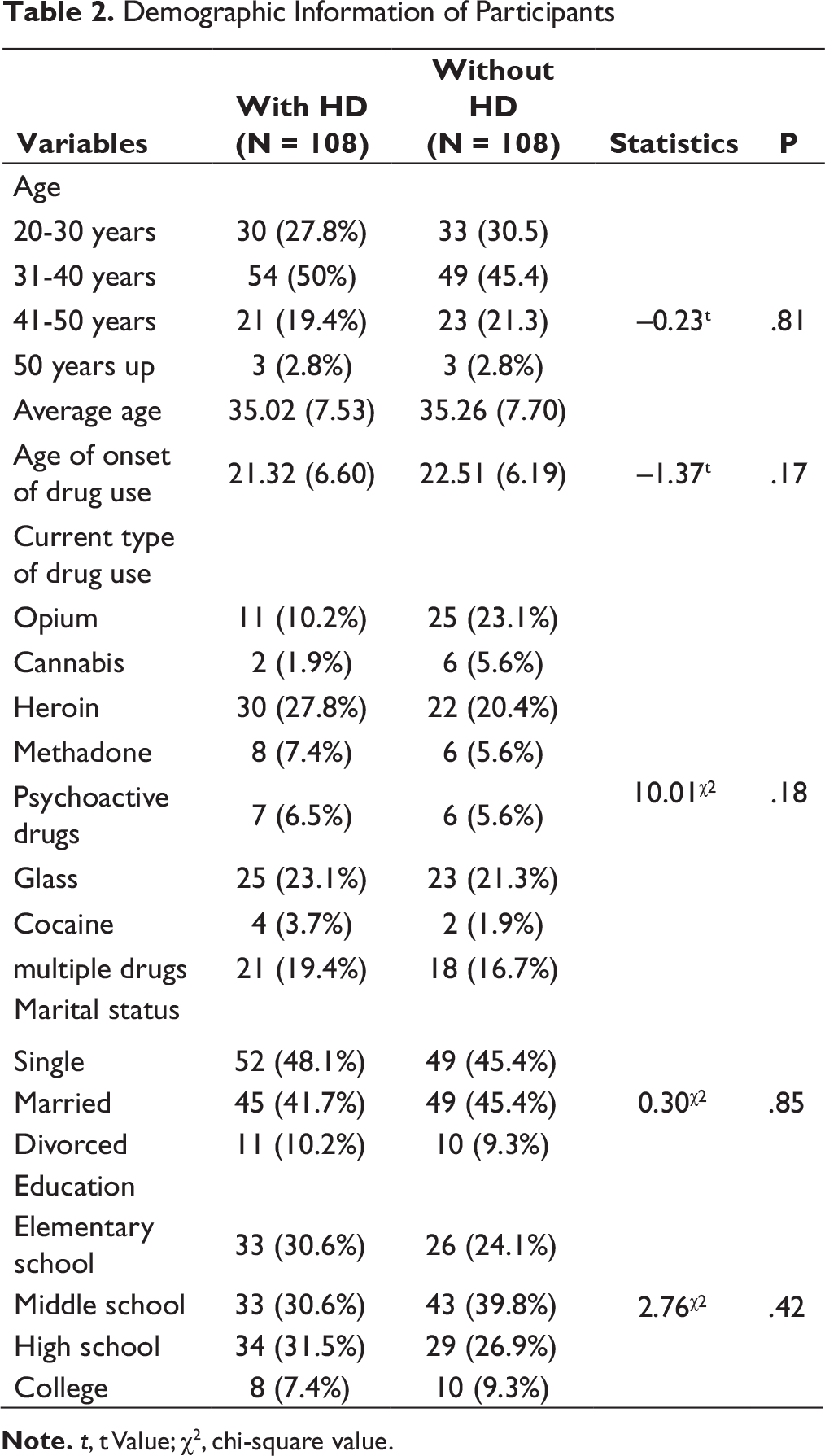
The present study was of causal-comparative type which was conducted cross-sectionally with the aim of comparing the FFM of personality in addicted men with and without hypersexual disorder. The statistical population of this study included all addicted men who were residents of the addiction treatment centers in Tabriz city, during the academic year of 2017-2018. For this purpose, a sample of 301 individuals was selected via the convenience sampling method, according to the criteria for entry and exit, from male addicts in the treatment centers. In order to screen the participants in terms of hypersexual behavior, the Hypersexual Behavior Inventory (HBI-19) was used. In the second stage, 120 individuals, who scored above the cut-off in Reid’s HBI (+53), went through a clinical diagnostic interview; diagnosis of hypersexual disorder was conducted by the center’s physician and psychologist, and 12 individuals were excluded due to violation of the entry criteria (illiteracy and psychiatric problem of schizophrenia). For the control group, a score of less than 53 in HBI was needed to enter the next stage of the study. Thus, 108 addicted men who scored lower than the cut-off score were invited for the second phase of the study. Both groups of 108 members were matched for demographic variables and were compared with the BFI-44 personality inventory. According to Fraenkel et al, 25 the sample size for a causal-comparative research is 30 people; clearly, the sample size of the present study is far more than what is proposed, and thus, it is desirable. The criteria used to enter the participants in the 2 groups were being male, aging from 20 to 55 years old, having the minimum degree of secondary school for education level, having a favorable general condition for taking the test after a detoxification period, and not suffering from psychiatric illnesses like psychosis. Also, the possibility of having other disorders along with addiction was controlled by a physician of the addiction center and a psychologist through a clinical diagnostic interview. Before the implementation of the questionnaires among the participants, the informed consent forms of the study were distributed and got signed by the participants.
Measures
Hypersexual Behavior Inventory (HBI-19)
It was developed by Reid et al, 26 in 2011 to measure the behavior of people dealing with hypersexual disorder. The tool includes 19 self-reporting questions that examine sexual impersonal behavior in the following 3 dimensions: control, coping, and consequences; and people rate their responses on a 5-point Likert scale ranging from “never = 1” to “always = 5.” The validation analysis of the scale was calculated using Cronbach’s alpha coefficient. A high internal consistency for the total scale was obtained being 0.90, and the control sub-scale was 0.95, the coping was 0.91, and the consequence was 0.89. The confirmatory factor analysis was also desirable (CFI = 0.95), the overall scale test–retest reliability was high (r = 0.91, P < .01). 27 Its psychometric properties in Iran have been reported as favorable by Shalchi and Seyed Hashemi, 28 and Cronbach’s alpha coefficients for the total scale were 0.90 and for the 3 subscales of control, coping, and consequences were obtained 0.82, 0.80, and 0.86, respectively; also, the results of confirmatory factor analysis (CFI = 0.91) had a favorable fitness. In the present study, internal consistency with Cronbach’s alpha for the total scale and the subscales of control, coping, and consequences were 0.95, 0.90, 0.90, and 0.83, respectively.
Big Five Inventory (BFI-44)
This scale, which has 44 items, is scored in a 5-point Likert scale ranging from “strongly disagree = 1” to “strongly agree = 5;” it was developed by John and Srivastava to measure personality dimensions. The 5 facets of personality include: extraversion, agreeableness, conscientiousness, neuroticism, and openness to experience. The coefficients of its 3-month re-test in the main culture were between 0.80 and 0.90. The convergent validity of this inventory was favorable due to its correlation to other instruments of measuring the 5 personality factors. 29 In Iran, the validation analysis of this instrument was reported as favorable by Joshanloo et al 30 through the Cronbach Alpha method and desirable confirmatory factor analysis. In the present study, internal consistency was reported as favorable using optimal Cronbach alpha (see Table 1 and Table 3).
Data Analysis
Descriptive statistics (mean and standard deviation), chi-square, multivariate analysis of variance (MANOVA), and the independent t tests were employed to analyze the data using were SPSS 22 version software for Windows (IBM Corporation, Armonk, NY, USA).
Results
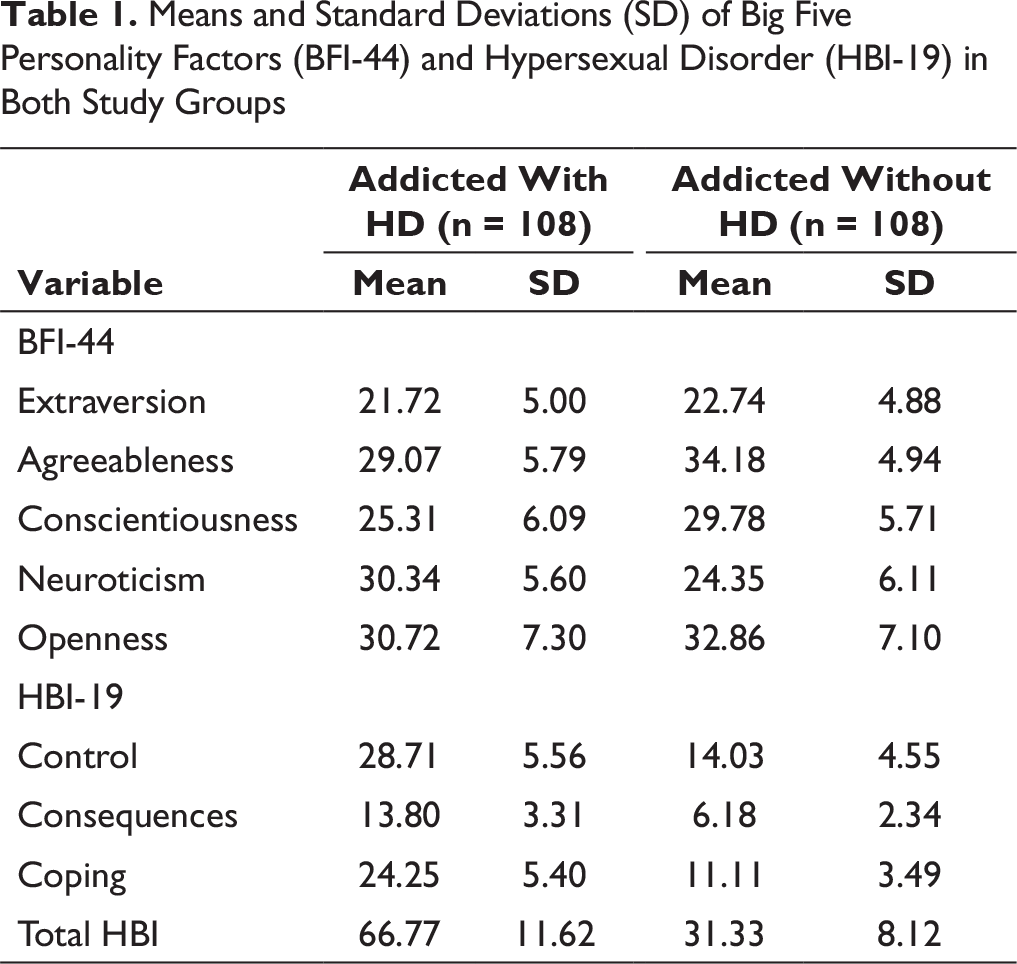
Means and Standard Deviations (SD) of Big Five Personality Factors (BFI-44) and Hypersexual Disorder (HBI-19) in Both Study Groups
Demographic Information of Participants
The mean and standard deviation of the 5 major personality factors and HD and its dimensions among the 2 groups are shown in Table 1. The mean scores of addicted men with HD (66.77 ± 11.62) were higher than addicted men without HD (31.33 ± 8.12). MANOVA was used to assess the difference between the scores of the 2 groups in 5 major personality factors. Before using the parametric test, Kolmogorov–Smirnov, Box’s M, and Levene tests were used to observe the assumptions of the test. The results of Kolmogorov–Smirnov test showed that the distribution of data in all of the studied variables was normal (P > .05). The Box’s M test examines the homogeneity condition of the variance/covariance matrices, which was insignificant in this case (Box’s M = 10.68, F = 0.69, P = .73), and Levene examines the homogeneity condition and equality of variance, which was not significant for any of the components (P < .05).
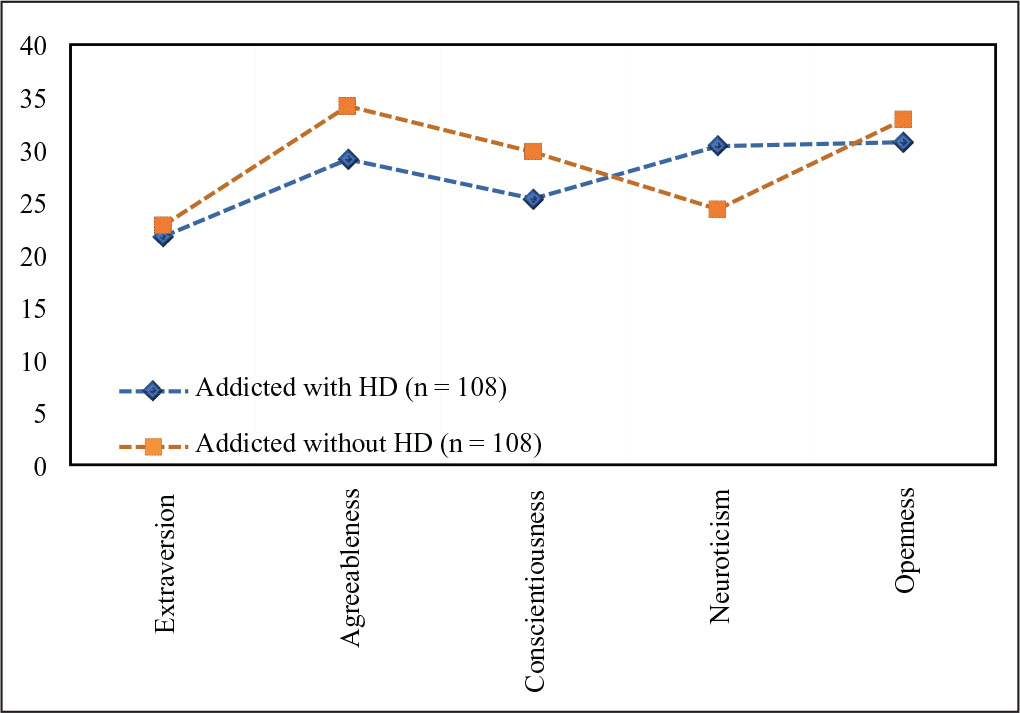
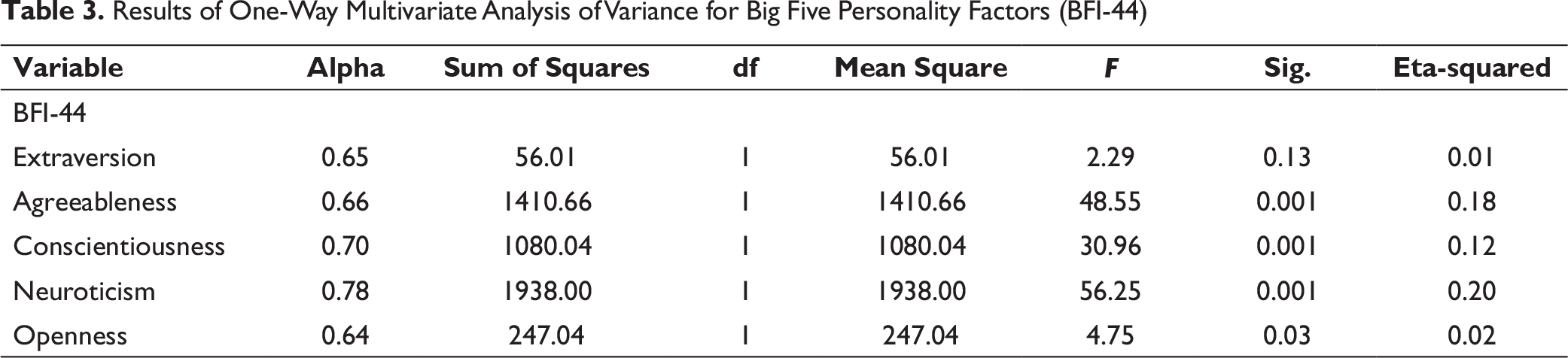
MANOVA results indicated that there was a significant difference between the 2 groups of men with HD and without HD in terms of scores of the BFI-44 (Wilks’ λ = 0.72; F5; 210.06 = 16.06; P < .001; partial η 2 = 0.27). Eta square (which is actually the squared coefficient of correlation between dependent variables and group membership) indicated that the rate of difference is 27%, that is, approximately 27% of the variance is related to the difference between the 2 groups in the interplay of the dependent variables (FFM of personality). The results obtained from the analysis of each of the dependent variables showed that addicted men with HD scored lower in personality dimensions of agreeableness (P < .001, F = 48.55), conscientiousness (P < .001, F = 30.96), and openness to experience (P <.001, F = 4.75), and scored higher in the dimension of neuroticism (P < .001, F = 56.25) in comparison to addicted men without HD, but in the extraversion dimension (P <.13, F = 2.29) no significant difference was found between the 2 groups (see Table 3 and Figure 1). The highest efficiency variance of personality traits is related to neuroticism (η 2 = 0.20, P < .001, F = 56.25).
Big Five Personality Factors (BFI-44) Mean Comparison Between Addicted With and Without HD
Discussion
The results of recent studies on the patterns of drug use in people with sex addiction or HD indicate that they are inextricably linked, and people with 1 type of addiction often suffer from other similar drug-related disorders.31, 2, 8, 5 Also, studies show that some of the psychological features and structures, along with addiction, can play a role in accelerating and enhancing HD. 3 Personality traits are one of the variables that play a fundamental role in directing our behaviors,15, 32 and this is the first study to compare the FFM of personality in addicted people with and without HD. The results of this study showed that there was a significant difference between the 2 groups of people in the FFM of personality: on the one hand, addicted men with HD had significantly lower scores in terms of agreeableness, conscientiousness, and openness to experience personality dimensions; on the other hand, they scored higher in the neuroticism dimension in comparison to addicted men without HD. There was no significant difference between the 2 groups in the extraversion dimension, which is consistent with the theoretical background and empirical studies on the disorder.
Personality traits reflect a pattern of thoughts, feelings, and actions that are, to a certain degree, constant over time and in situations; they also play a determinative role in adapting to stressful events and life challenges. 33 The results of various studies have shown a negative correlation between the neuroticism personality trait and uncontrollable and addictive sexual behaviors.34, 15, 27, 17 In line with the results of this study, Allen and Walter 15 showed that high levels of neuroticism were associated with negative emotions and sexual dysfunction. It seems that anxiety and neuroticism personality traits can be considered as factors initiating hypersexual behavior, and people are involved in such behaviors in order to escape the anxiety and emotional instability caused by neuroticism personality trait. In their study, Reid et al 35 compared the use of coping strategies against painful effects of shame in HD patients with a control group of male students. Their results showed that those HD patients who felt ashamed had involuntary experiences of unsuccessful attempts to quit their behavior, because they did not have the cognitive flexibility needed to reflect on to their own position from a higher perspective; these behaviors can vary depending on the severity of personality problems.
Also, neuroticism exhibits the level of experiencing negative emotions and affects such as fear, sadness, shame, anger, guilt, hatred, and vengeance in the face of stress, extreme reactivity, and psychological instability. 36 People with high neuroticism, as compared with normal people, are more irritable, which makes them vulnerable to drug use and high-risk behaviors to deal with aversive mood states. 37 Sexual activity together with drug use provides a modified mood experience which enables people to disconnect from their annoying, raw, and unpleasant emotions. 38
In line with researches conducted by Egan and Parmar, 39 Walton et al, 40 and Shimoni et al, 22 the results of the current research depicted that addicted men with HD scored low in conscientiousness. The characteristics of individuals with this personality trait include measured performance, caution in making decisions, and responding effectively rather than compulsively or habitually. Conscientious people are able to withstand impulses or inappropriate excitement, and show less risky and unhealthy behaviors. They also want to avoid behaviors that endanger their health and engage in activities with positive behavioral implications. 41 Walton et al 40 showed that higher scores for neuroticism and extraversion, as well as lower scores for agreeableness and conscientiousness were linked to HD and predicted it.
A number of personality theories, especially psychodynamic theory, are concerned with controlling impulses. During the growth period, most people learn how to cope with their aspirations. Generally, the inability to control impulses, or temptations, is a sign of high neuroticism among adults. Also, self-control may indicate that the individual has the power to actively plan, organize, and conduct the tasks appropriately. In this case, individual differences lay the foundations for conscientiousness.42, 43 People with a low score in this personality trait do not necessarily lack ethics; in fact, they are not too rigorous in applying ethics. They are also dull in their efforts toward their goals. The studies indicate that such individuals are hedonist 44 and are excessively enthusiastic about sexual matters. 45
Addicted men with HD scored lower in agreeableness personality trait, which is consistent with the results of Pinto et al, 46 Egan and Parmer, 39 and Walton et al. 40 Agreeable people are inclined to be sympathetic, straightforward, philanthropist, companion and cooperative, and supportive in interpersonal interactions. While people with low agreeableness (ie, antagonistic individuals) are usually competitive, negative, unpleasant, contentious, arrogant, stubborn, and skeptical about others’ intentions, they may deceive others in their path to reach their goals. Low score in this factor is associated with narcissistic and antisocial personality disorders. 47 Thus, low levels of agreeableness in addicted men with HD can be explained in the fact that they seek to satisfy their sexual needs immediately and to establish addictive and uncontrolled sexual relationships, 8 rather than establishing an interpersonal emotional relationship with support and trust. 48
Other results of this study showed that there was a significant difference between addicted men with and without HD in personality trait of openness to experience, but the difference was insignificant in extraversion; these results are consistent with those of Pinto et al, 46 Dini et al, 34 and Egan and Parmer, 39 , and inconsistent with Walton et al, 40 Shimoni et al, 22 and Zilberman et al. 17 Low scores of openness to experience in addicted men with HD can be explained by the fact that low scores in this personality trait are associated with features such as lack of imagination, lack of creativity, lack of curiosity, impulsivity, and unwise behavior which lead to low flexibility in individuals. Also, they tend to have more conventional behaviors and to maintain their own vision. In general, these attributes make addicted people more likely to use conventional and persistent addictive behavioral patterns, such as addictive and compulsive sexual behaviors in daily life 17 and in aversive and stressful situations. 3
Results of One-Way Multivariate Analysis of Variance for Big Five Personality Factors (BFI-44)
One of the limitations of this research is its focus on only one gender (male). As the Hypersexual Behavior Inventory (HBI-19) was developed to assess hypersexual behaviors in men, addicted women were not included in this research. It is suggested that future researches investigate the personality traits of addicted women using addiction and hypersexual behavior measuring tools which are basically designed for females. Also, examining the association of this disorder with personality disorders would not go amiss. On the one hand, the findings of this study should be considered within the framework of its society (addicted men from residential addiction centers), and one must be cautious in applying it to general populations. Therefore, it is suggested that longitudinal and controlled studies should be conducted with a greater number of samples and cultural diversity in order to accurately explain the nature of the disorder. It is also suggested to address the comorbidities of hypersexual behavior with other disorders.
Conclusion
Generally, the results showed that there is a significant difference in the FFM of personality in addicted men with HD and without HD. Addicted men with HD scored significantly lower in agreeableness, conscientiousness, and openness to experience personality traits; and scored higher in neuroticism dimension in comparison to addicted men without HD. There was no significant difference between the 2 groups in the extraversion dimension. There are lots of similarities between hypersexual disorder and SUD (such as clinical features, neurobiological profiles, and therapeutic responses), and these 2 disorders were investigated together using various addictive models. According to the results obtained from current study and other empirical studies, in clinical practice, by subjecting and focusing on the mentioned personality traits in instructional and interventional programs concerning hypersexuality in individuals with SUD, one can contribute to the interactions of the patients and the therapist in psychotherapy; and as a result, enable the therapist to guide and treat the patient more properly.
Footnotes
Declaration of Conflicting Interests
The author declared no potential conflicts of interest with respect to the research, authorship, and/or publication of this article.
Funding
The author received no financial support for the research, authorship, and/or publication of this article.
