




Abstract
Cave mines operating at greater depths are faced with higher draw column heights, typically ranging from several hundred metres to over one kilometre. This results in significantly higher cave stress on the production level, making reliable stress estimation critical for assessing long-term stability. The current approach to estimating cave stresses in the draw column relies on Janssen's equation, developed initially using the Method of Differential Slices (MDS) and based on laboratory observations of corn and bulk solids in storage silos. This article first reviews the MDS and the assumptions used to derive Janssen's equation. The article also discusses how the limitations of the analogues (e.g. corn material and full-to-empty silo condition) used to develop the equation do not represent conditions equivalent to those observed in cave mining (e.g. fragmented rock blocks undergoing fragmentation and no-column to full-column condition as cave propagates). These mechanistic differences may lead to erroneous estimations of cave stresses. While Janssen's equation is a valuable initial tool for estimating cave stresses, practitioners must carefully assess its assumptions and limitations before applying it to engineering designs.
Introduction
Janssen's equation (Janssen, 1895), developed by German engineer H.A. Janssen in 1895, was initially used to estimate the vertical pressure exerted by bulk solids on the bottom of a silo for storage silo design. Physical experiments involving the filling of corn and other bulk materials into silos revealed that the vertical pressure at the silo base increases exponentially with the material weight but eventually stabilises. This phenomenon, known as Janssen's effect, is attributed to the shear stresses at the silo walls and the stress arching of bulk solids, reducing the vertical pressure at the silo bottom compared to the total material weight. Notably, Janssen's equation assumes fully isolated silo walls which diverge from the interacting ore columns in cave mining.
Janssen's equation is derived using the Method of Differential Slices (MDS), which applies force equilibrium to an infinitesimally thin horizontal slice of material to estimate the mean vertical stress across the silo cross-section. In recent decades, Janssen's equation has been adapted to estimating the average vertical stresses at the base of a draw column (Figure 1) for various applications of cave mine design (Castro, 2007; Pierce, 2010, 2019). Pierce (2010) applied Janssen's equation to model stresses around the Isolated Movement Zone (IMZ) in REBOP. The same author and Leonardo (2016) also proposed to use Janssen's equation combined with the Rankine's coefficient of earth pressure K to estimate normal stress on the shear band of IMZ for secondary fragmentation estimation. Gómez et al. (2017) used Janssen's equation to estimate average vertical stress as the input to the cave comminution model. Pierce (2019) employed Janssen's equation to estimate the average vertical stress at the base of the cave and analyse the stabilities of drifts in the production level. While Janssen's equation provides a practical starting point for stress estimation in cave mining, the initial assumptions of MDS and its inherent limitations are often overlooked.
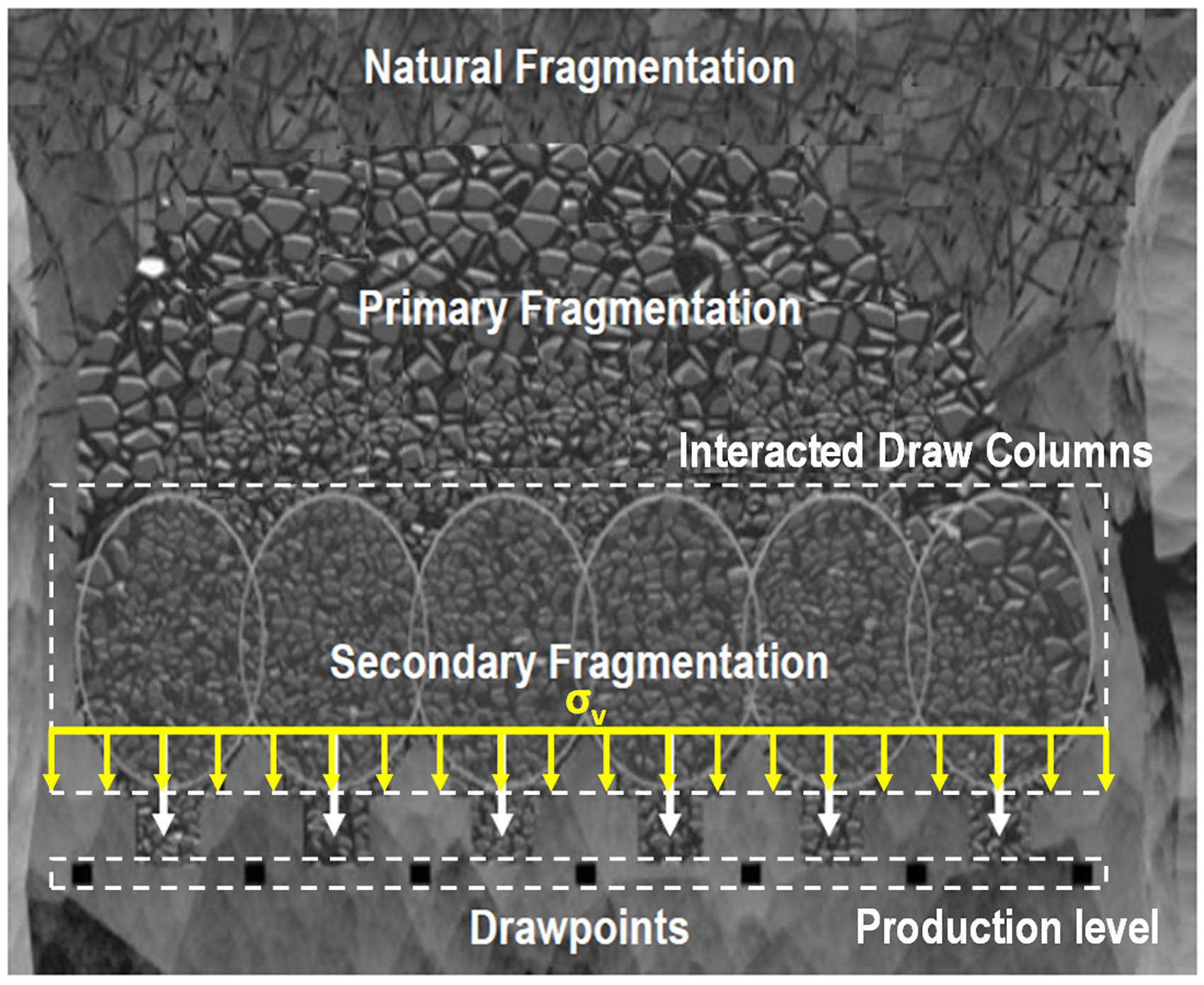
Illustrations of fragmentation processes inside the cave and vertical pressure on column base (modified after Elmo et al., 2015).
This paper critically reviews the MDS approach and the assumptions underlying Janssen's equation to examine their applicability and limitations in the context of cave stress estimation. Sensitivity analyses are conducted to investigate the influences of parameters in Janssen's equation on the vertical stress estimations. The study shows that relying on empiricism and expert judgment to estimate these parameters can lead to significant discrepancies in calculated cave stresses. Additionally, we need to consider the imperfect physical analogy between storage silos and underground caves. This article advocates for the cautious use of Janssen's equation in cave stress estimation. To refine current methods for estimating cave stresses, the industry will need to consider modifying Janssen's equation and developing laboratory experiments using analogues that are more representative of cave conditions.
Janssen's equation for cave stress estimation
The method of differential slices
Figure 2 illustrates the schematic of an elemental slice at depth z from the surface of a volume of bulk solids inside a container, along with the stress components acting on the slice. According to MDS theory, the elemental slice at depth z has infinitesimal thickness
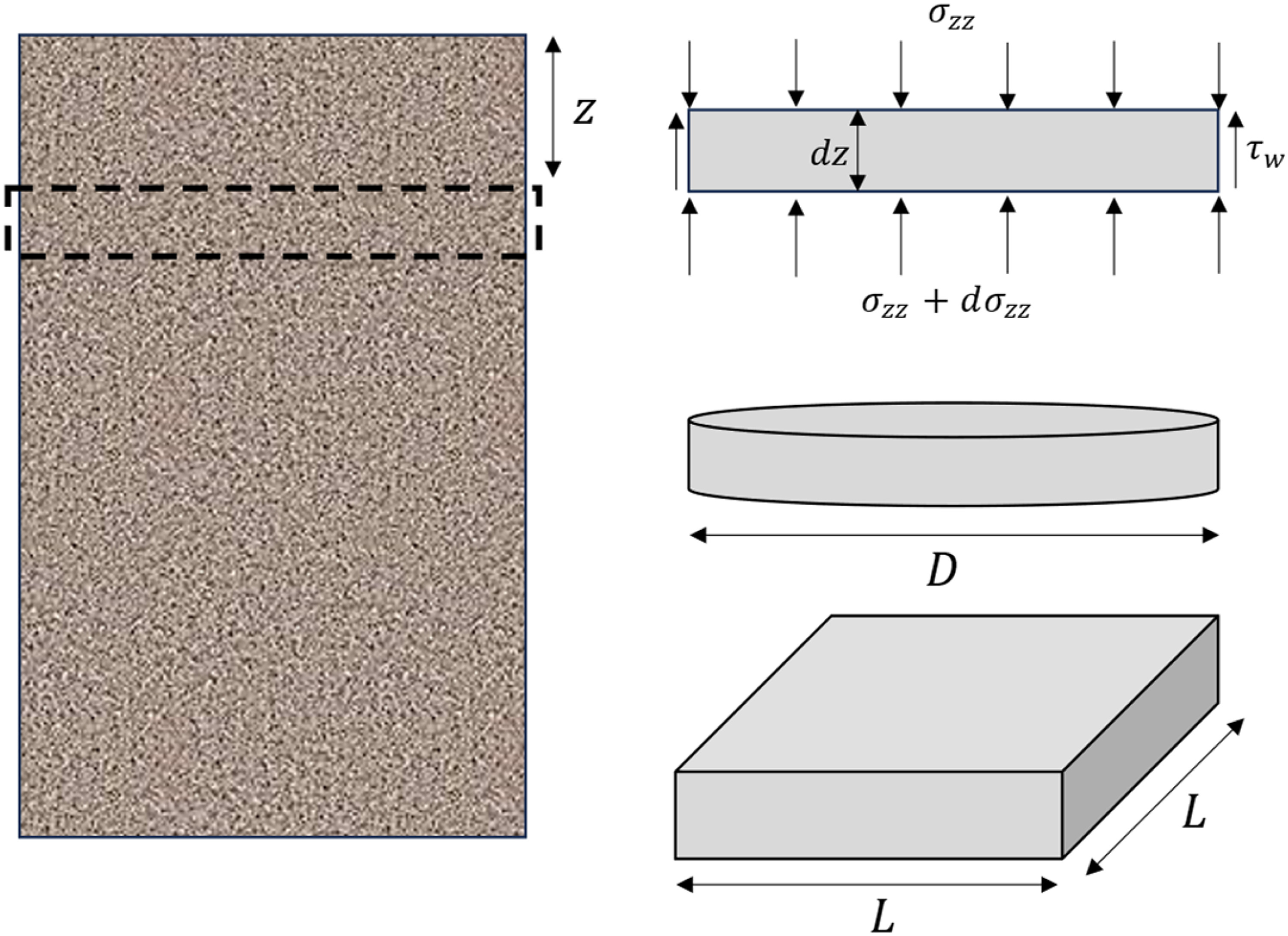
Schematic of the method of differential slices.
MDS theory assumes that the sum of vertical forces on the elemental slice is considered to be zero (i.e. vertical force ( vertical reaction force ( wall shear forces (
Therefore, the force equilibrium on an elemental slice can be expressed as:

The shear stress on the silo wall (

Substituting equation (2) into equation (1) results in:

Janssen (1895) introduced a constant K, defined as a product of horizontal to vertical stress ratio (

Substituting equation (4) into equation (3) gives:

Equation (5) is a first-order differential equation. Solving for

Assuming no surcharge on the surface of the bulk solid (i.e.

Janssen (1895) also considered a square-shaped slice (Figure 2) where

Equation (8) represents the original Janssen's equation. A modified version was later proposed by Nedderman (1992), who derived the equation for vertical stresses while considering different silo shapes. Starting from equation (1) and assuming a circular slice:

Substituting equation (9) into equation (1) gives:

In Nedderman's version, the constant K was redefined as the ratio of horizontal to vertical stresses, ignoring the impact of the wall friction coefficient (

With a surface surcharge
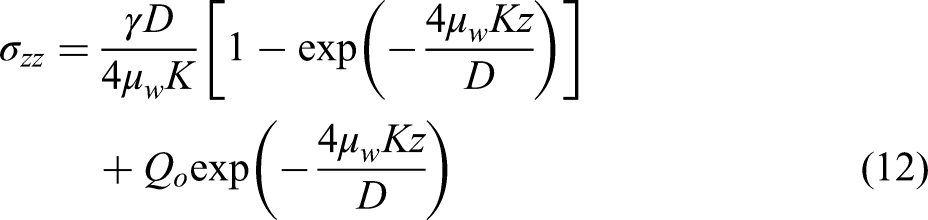
The hydraulic radius

This definition also applies to square slices, where
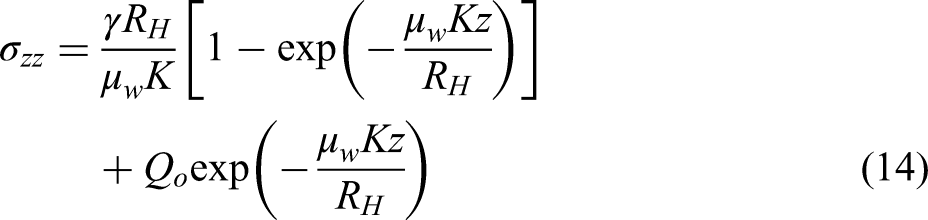
This equation was later modified to account for the bulk density (
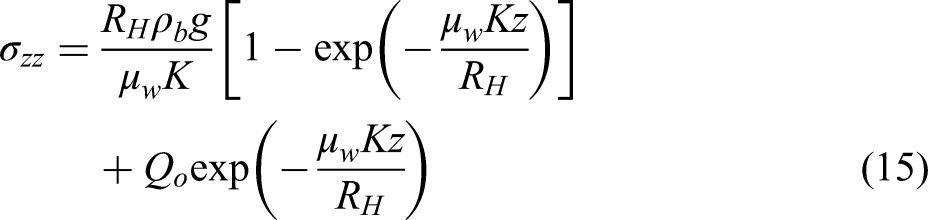

Equations (15) and (16) are widely used for cave stress estimation (Castro, 2007; Castro et al., 2014, 2020; Pierce, 2010, 2019), assuming the cave walls acts as the walls of an isolated silo, and that fragmented rock blocks in a cave are equivalent to bulk solids.
Nedderman (1992) assumed the constant K to be identical to Rankine's coefficient of earth pressure:


Schulze (2021) recommends equation (18) be applied only to particle beds with infinite horizontal dimensions where silo wall effects are negligible. As such, its application to cave problems requires caution.
Assumptions of Janssen's equation
The derivations in the method of differential slices section highlight two key assumptions underlying Janssen's equation:
Stresses are uniform along the elemental slice. The vertical and horizontal stresses on the elemental slice are principal stresses.
However, neither assumption is mechanistically correct. Numerous authors (e.g. Nedderman, 1992; Schulze, 2021; Shamlou, 2013; Walker, 1966) have presented laboratory measurements showing that the stresses are not uniform along the base of the elemental slice. Specifically, vertical stresses near the silo walls tend to be lower than those at the centre of the element due to the presence of shear stresses (Figure 2). These nonzero shear stresses at the walls further indicate that the second assumption of Janssen's equation is only valid along the central axis of the vertical section.
To address these limitations, Walker (1966) proposed a stress distribution factor (
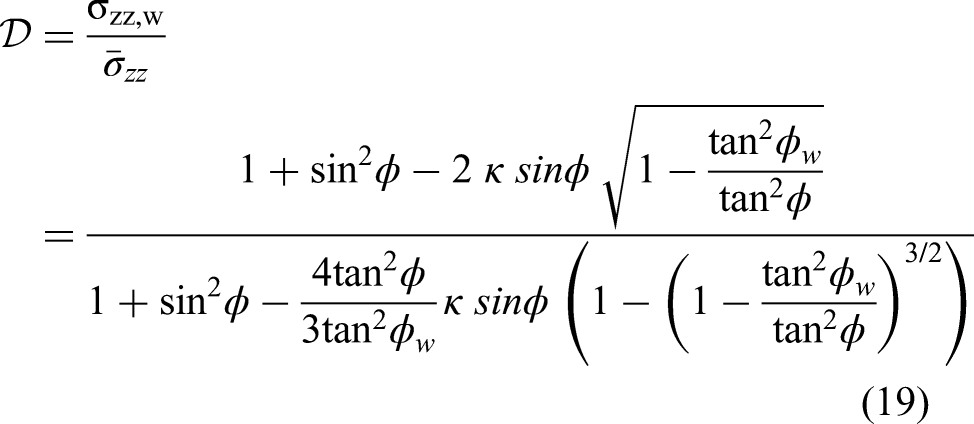
Janssen's equation can be modified to incorporate
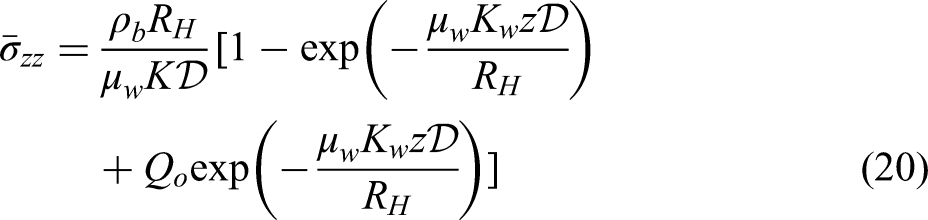
Despite Walker's (1966) improvement, this adjustment has been largely ignored in practice due to the mathematical complexity of
Based on the derivations in the method of differential slices section, the following assumptions and conditions are necessary for the application of the MDS to cave problems:
Material size: The material particles must be small relative to the silo dimensions so that the elemental slice can be treated as a continuum. Element shape: The elemental slice is assumed to have a perfect circular or square cross-section. Wall geometry: The silo walls are assumed to be perfectly vertical and parallel to ensure vertical shear stress at walls are consistent. Furthermore, stress arching is assumed to be uniform in all directions, from the centre of the horizontal slice to the silo walls. Surface topography: The surface of the bulk solids is assumed to be flat. Static condition: The method is limited to static conditions and does not account for dynamic processes (i.e. flow).
These conditions significantly limit the applicability of Janssen's equation to cave stress estimation. The following section examines these limitations, as well as the critical parameters that affect the degree of stress arching and the caution required in using Janssen's equation for cave stress estimation.
Stress arching and cave stress estimation
Janssen's effect has been interpreted to be the result of stress arching within granular material and between the material and silo walls (Castro, 2007; Pierce, 2010). Specifically, a higher degree of stress arching causes a greater portion of the material's weight to be supported by the silo walls, which results in reduced pressure transmitted to the silo bottom. While Janssen's equation does not explicitly quantify stress arching as a parameter, it is indirectly represented by factors such as the hydraulic radius (
Influence of hydraulic radius (
)
To analyse this, a sensitivity study was performed using the widely applied version of Janssen's equation (i.e. Equation 16) to investigate the influence of
Figure 3 illustrates the impact of varying
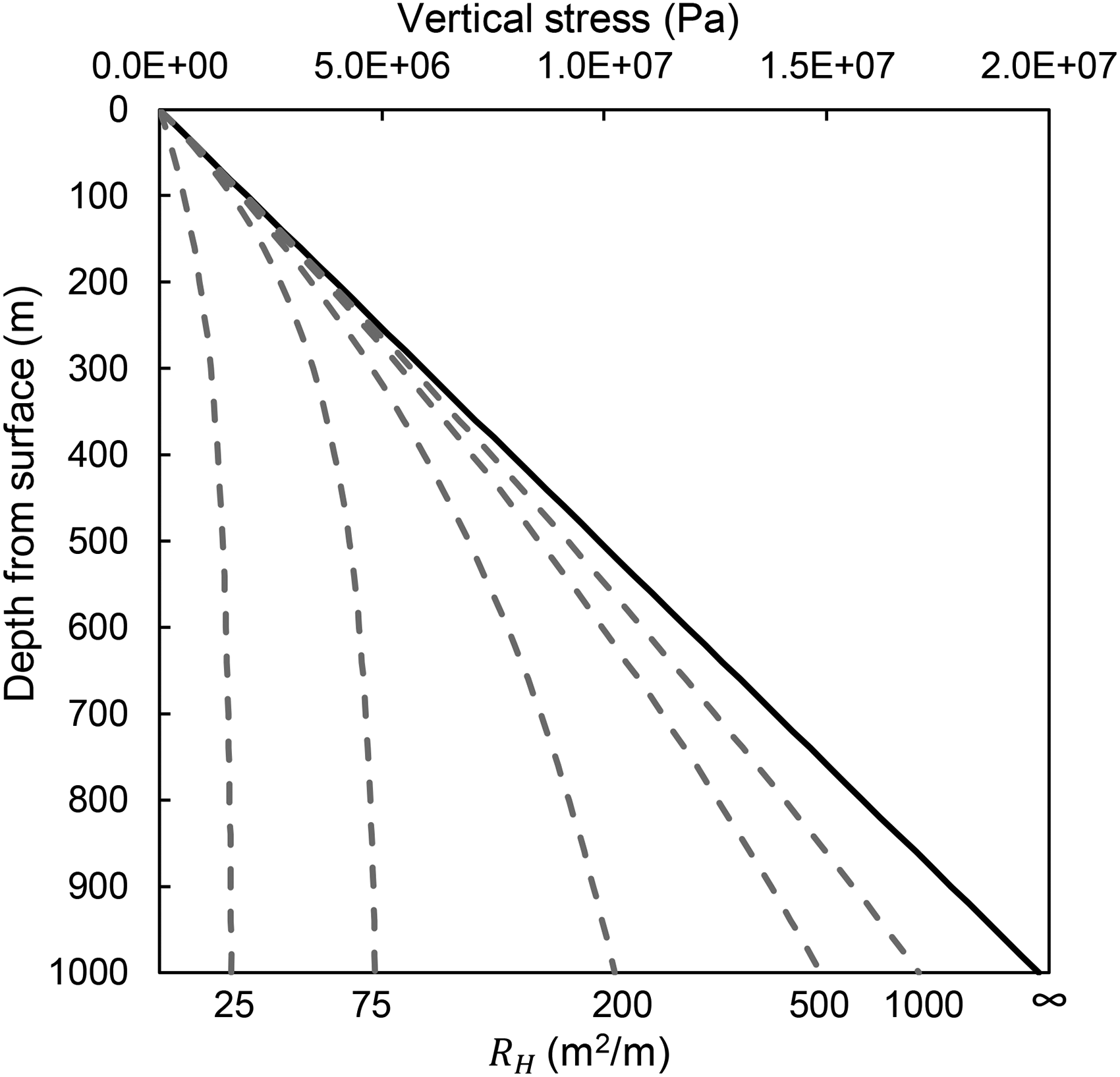
Influence of
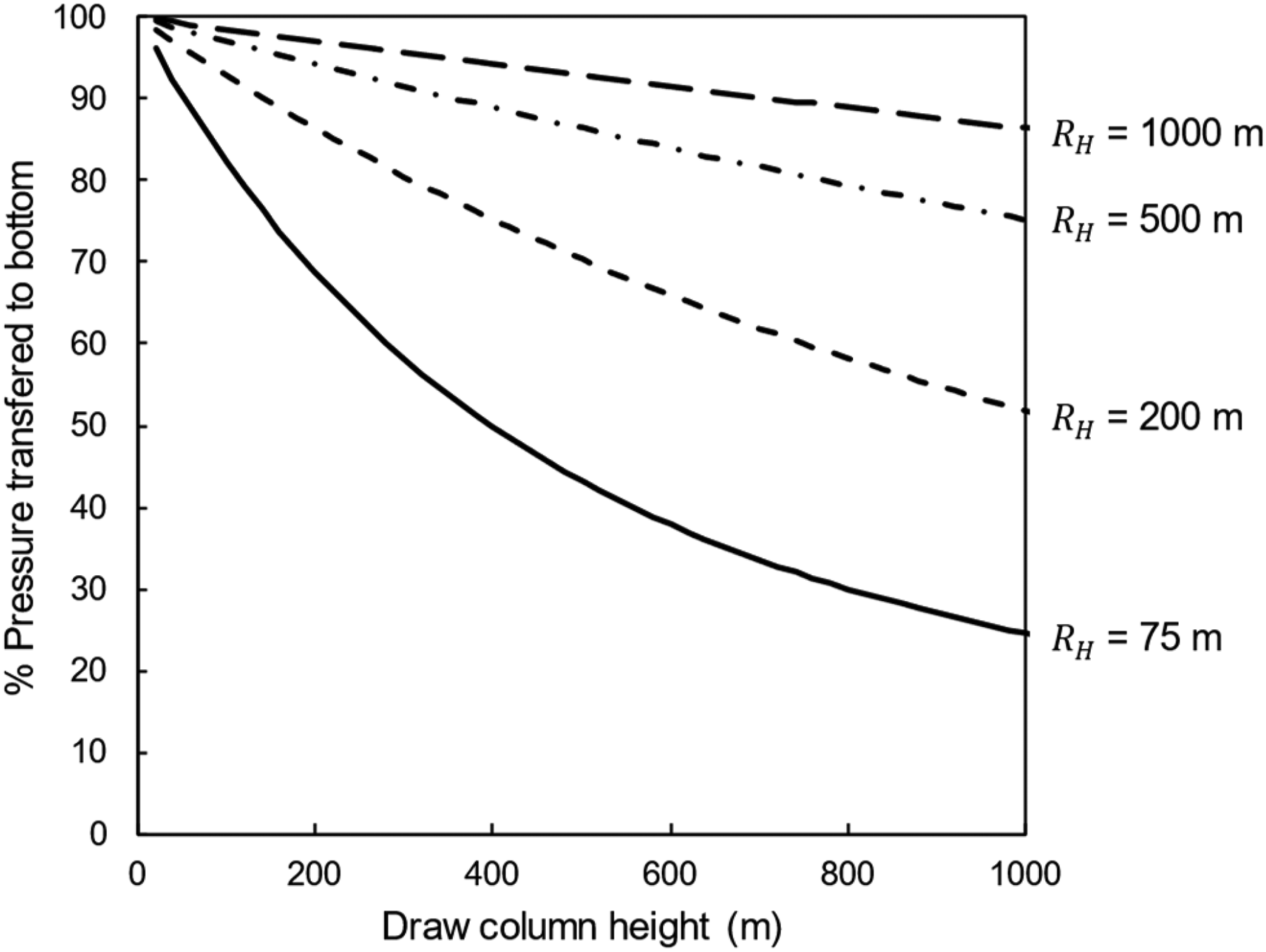
Percentage pressure transferred to the bottom of the column plotted against the depth from the material surface (draw column height).
The function of vertical stress increment with depth when

According to Equation (21), the muckpile acts as a continuum media, which is unrealistic in practice. For finite

It can be seen from Equation (22) that the value of
According to Laubscher’s (2000) caveability chart, the maximum

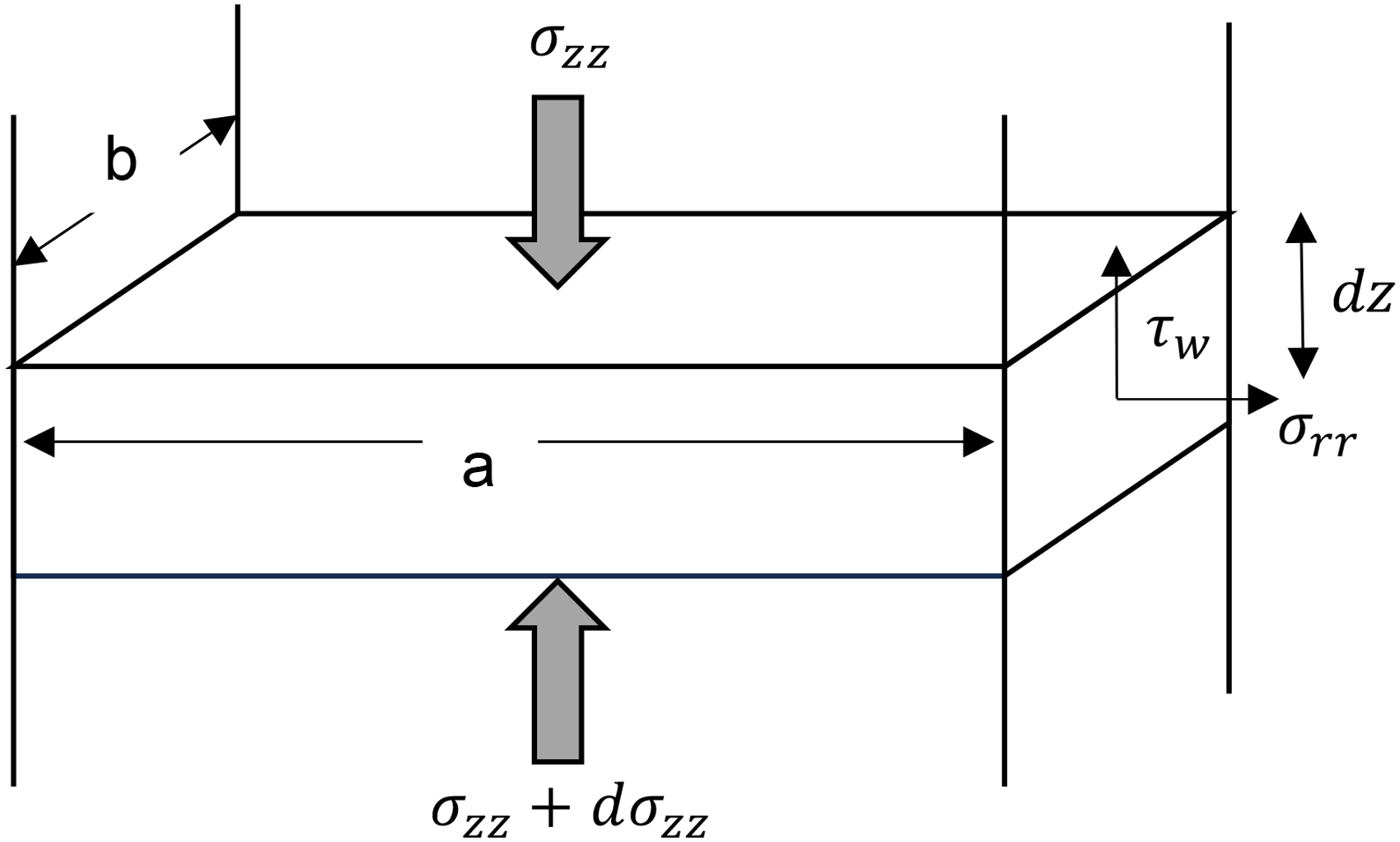
Schematic of a rectangular elemental slice (after Castro, 2007).
Equation (23) deviates from the original assumptions of the MDS framework discussed in the method of differential slices section. The original equation assumed a circular or square cross-section. Therefore, equation (23) suggests that
The initial definition of
Some authors have linked
Influence of fragment and column sizes
In Janssen's equation, the relative size of the silo and the material is neglected. The assumption is that the material size is small enough compared to the silo dimensions. This implies that the material along the slice (i.e. the elemental slice) can be treated as a continuum, focusing solely on silo size (i.e.
Figure 6 schematically illustrates how different sizes and shapes of rock fragments influence the degree of stress arching in a draw column of the same size. Results of numerical simulations in Figure 7 shows numerical simulation results using various sizes of granular materials. In Figure 7, the force chain magnitude (representing stress arching) decreases with decreasing particle sizes. It becomes apparent that a higher degree of stress arching is expected for larger, more angular blocks with higher aspect ratios (e.g. d/D = 10). The degree of stress arching decreases with decreasing the material size (i.e. force chain magnitude decreases at the upper part of the model in d/D − 100). Therefore
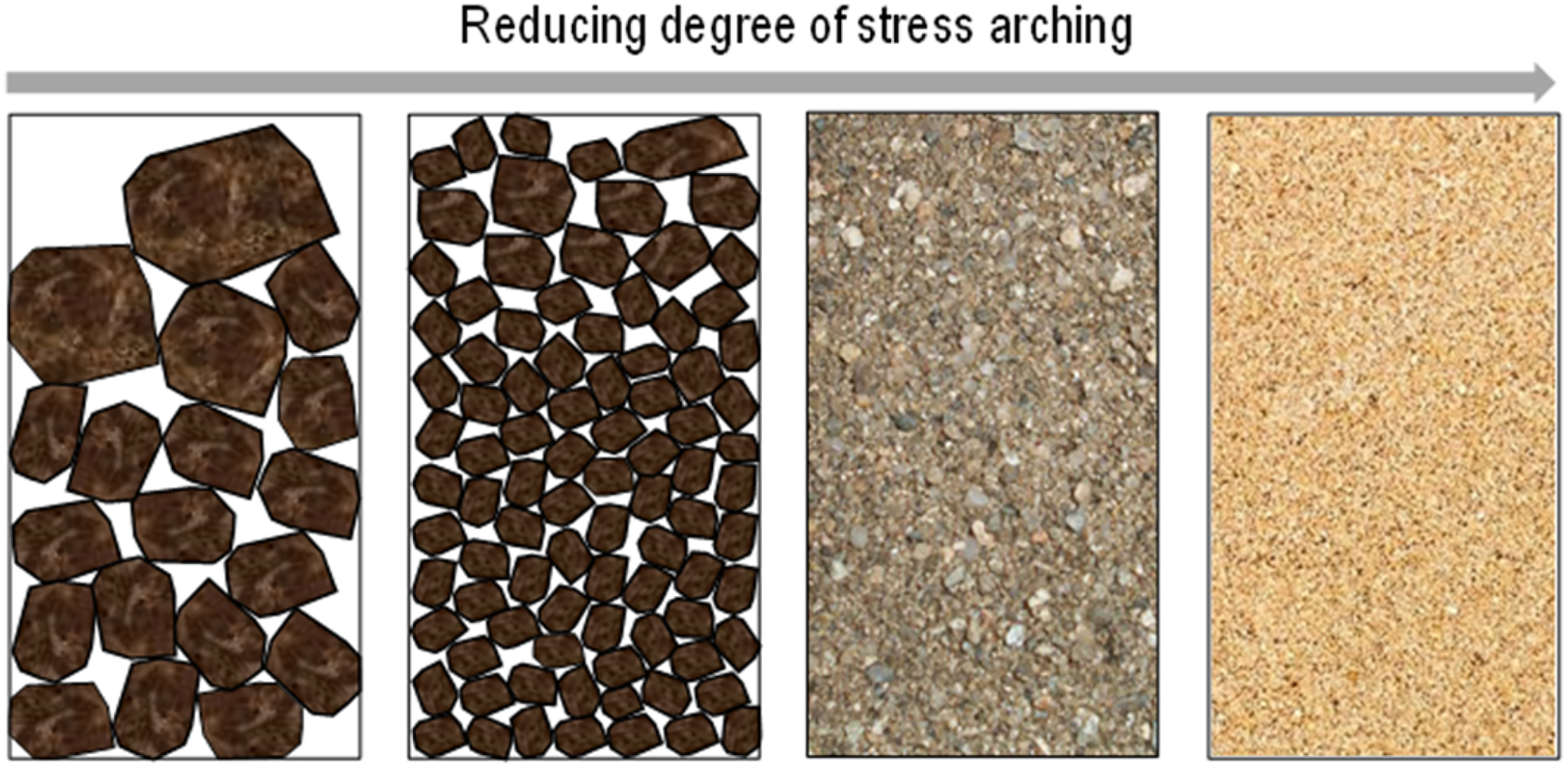
Degree of stress arching with different sizes of fragments.
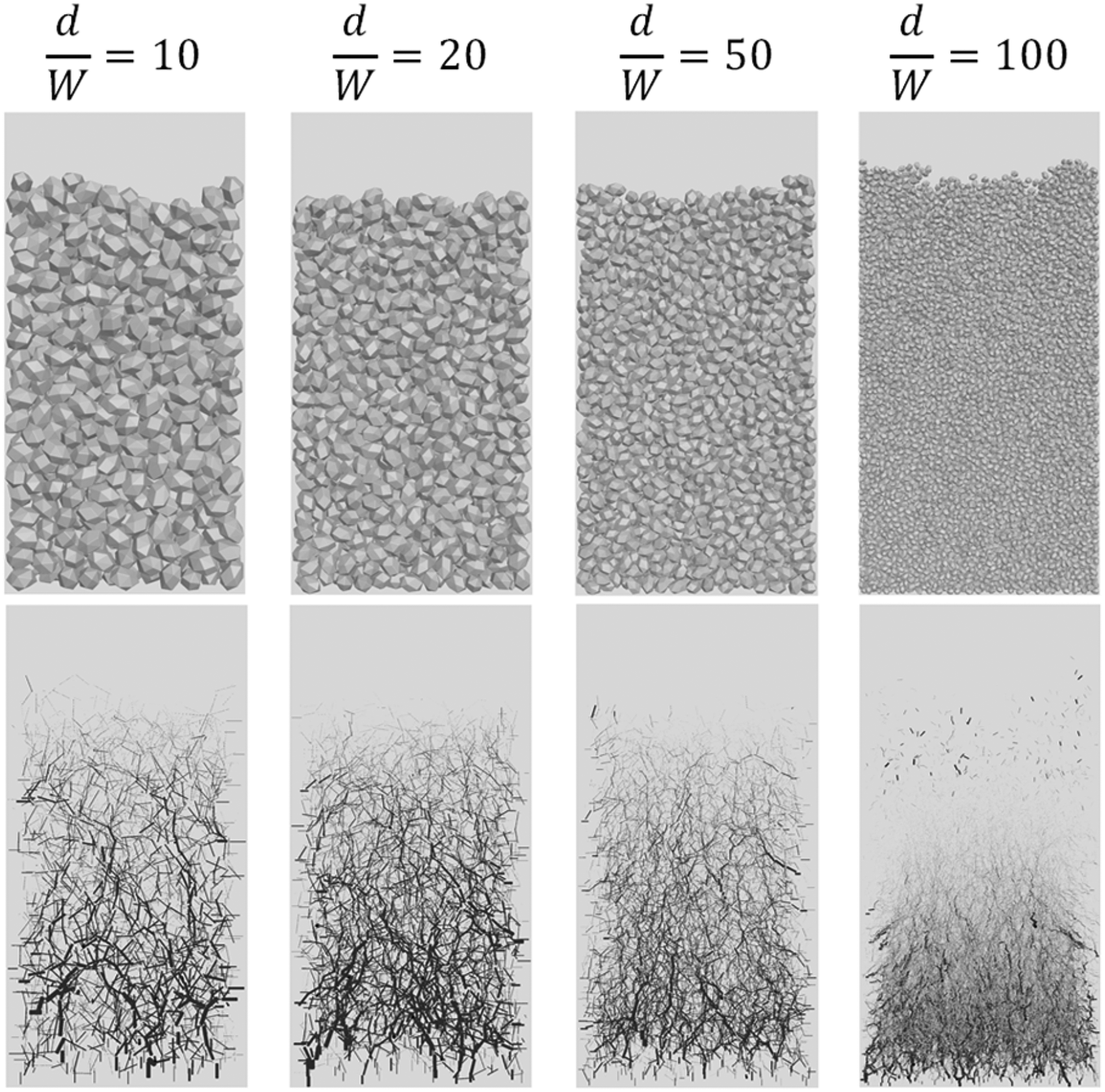
Force chain of numerical simulation using various sizes of granular materials.
The degree of stress arching would also vary in drawing columns with high aspect ratios. Figure 8 compares the stress arching in a column with an aspect ratio of two in major and minor axes of vertical directions. The degree of stress arching along the minor axis is hypothesised to be higher than along the major axis. Janssen's equation does not account for this variation, as it assumes circular or square slices where the degree of stress arching is uniform along all axes.
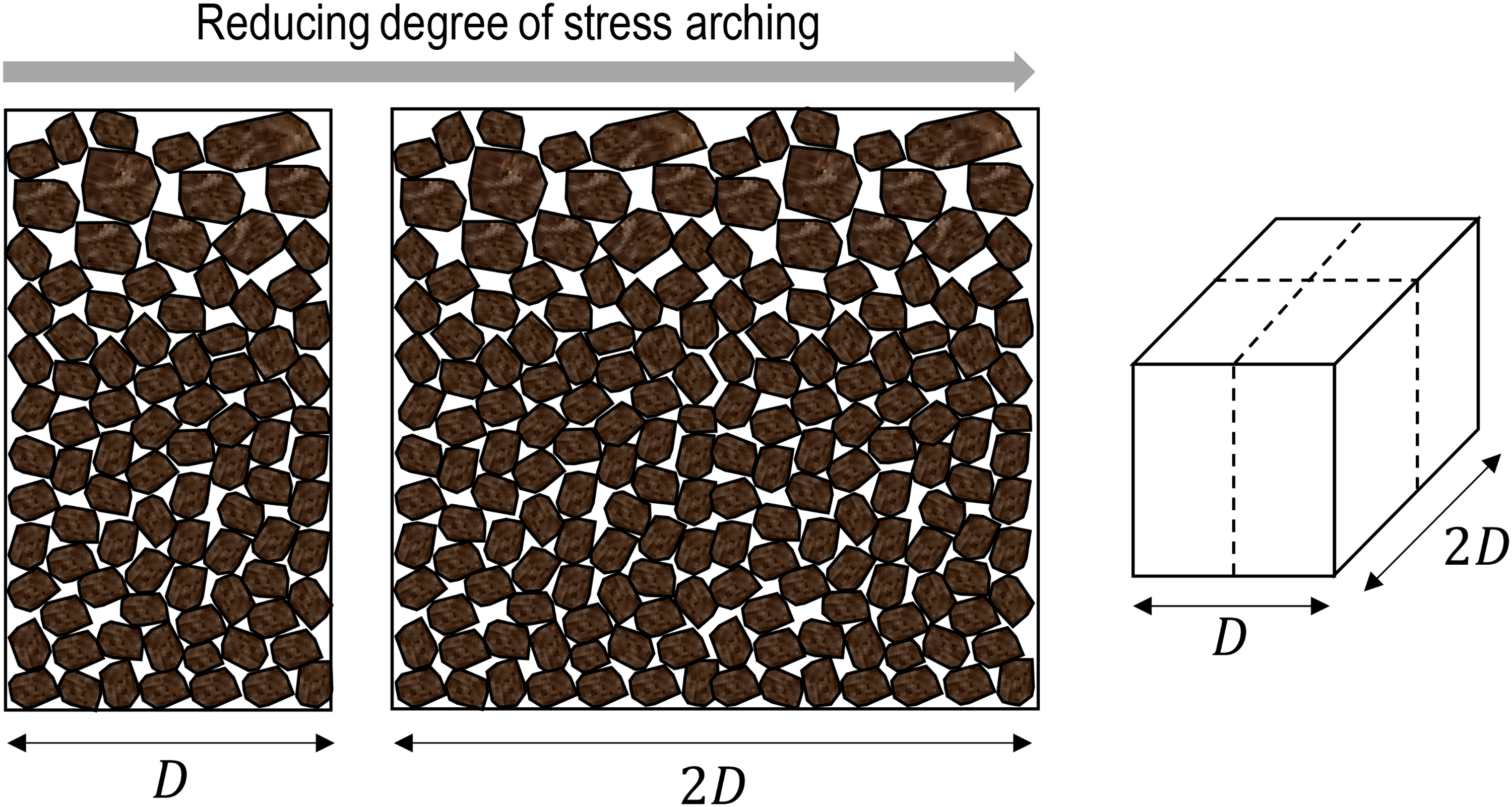
Degree of stress arching with different column widths.
Rock fragments in the draw column are typically smaller near the base of the ore column than at the top of the muck pile (Figure 9). As the cave propagates and the draw column height increases, rock fragments near the base experience breakage due to increased vertical loads. This breakage reduces the degree of stress arching with depth. Janssen's equation, developed for silos with relatively small heights (metres) and unbreakable materials (e.g. corn or bulk solids), does not account for the effects of breakable rock fragments over the much taller draw columns (several hundred metres to one kilometre) developed in cave mines.
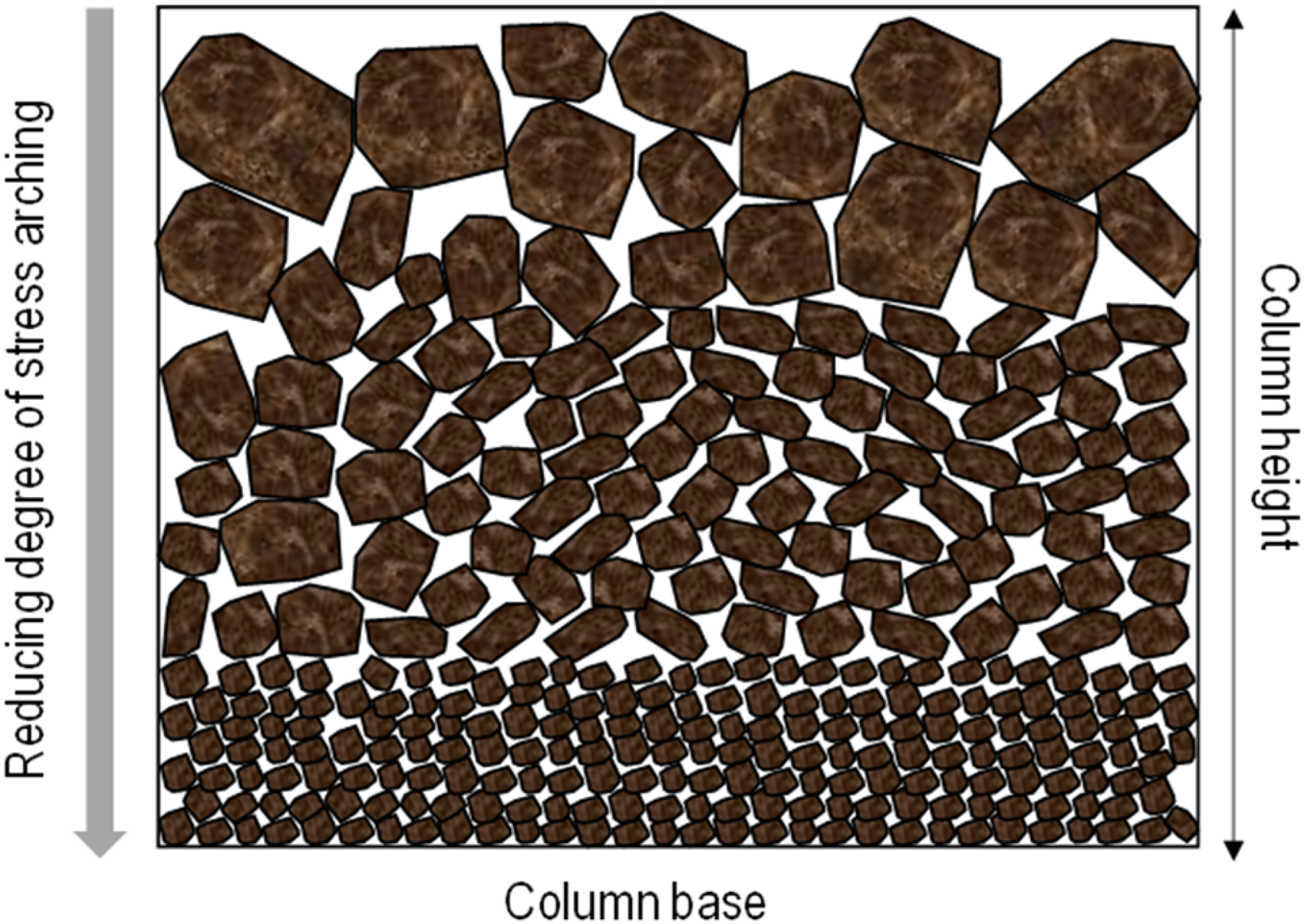
Degree of stress arching with increasing column height.
Influence of horizontal to vertical stress ratio (
)
For the design of storage silos, the horizontal to vertical stress ratio K in equation (11) has traditionally been equated to Rankine's coefficient of earth pressure in equation (17). In cave design, this constant is typically assumed to be the at-rest earth pressure constant (equation 18).
The interfriction angle (

where
Figure 10 illustrates the influence of K on the vertical stress increment from the top of the muck pile. Higher values of K result in a higher degree of stress arching along the horizontal cross-sectional slice. It is typically accepted that
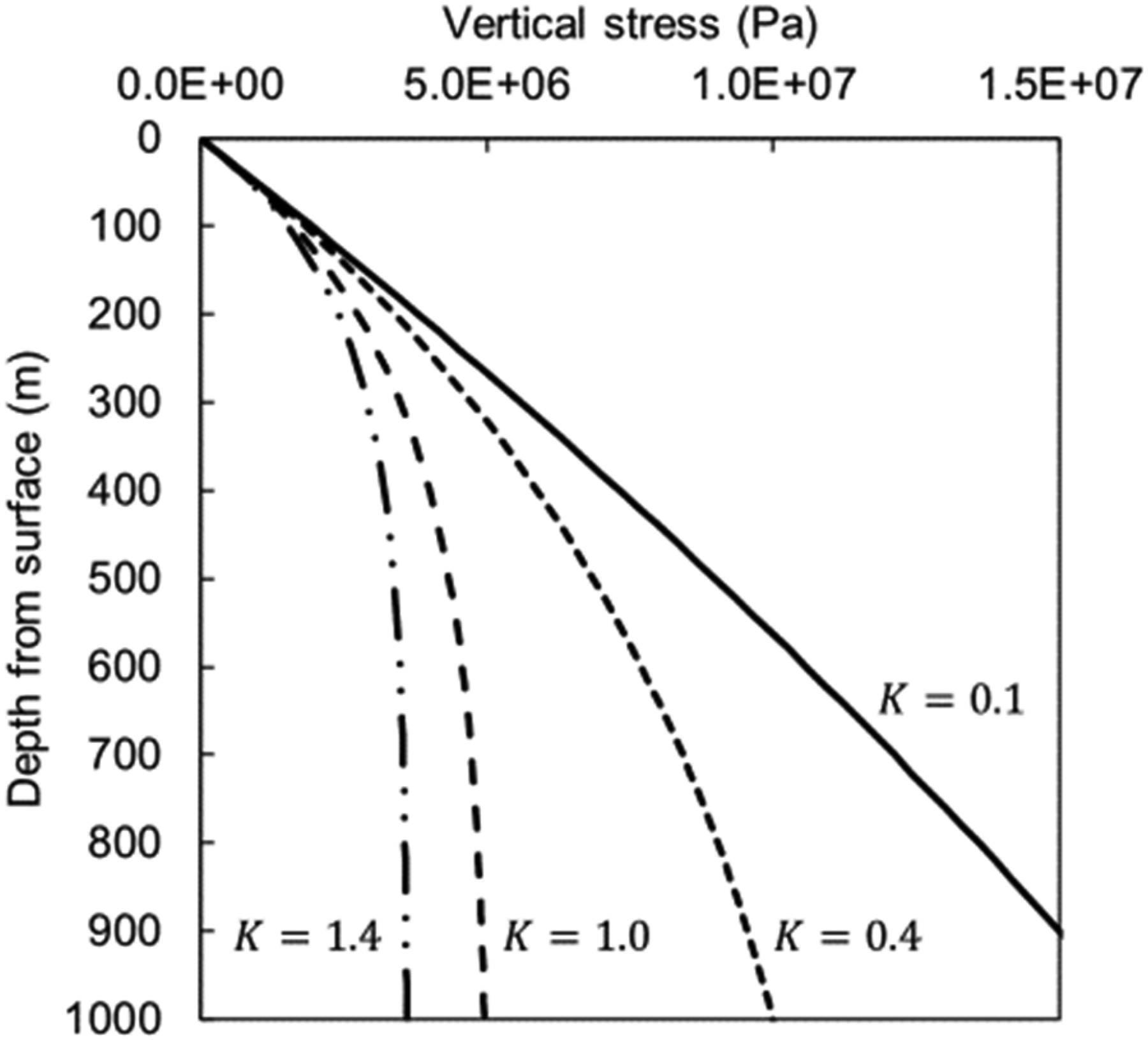
Influence of K on vertical stress increment with depth from surface when
Influence of draw column shape
Janssen's equation assumes that silo walls are perfectly upright, which is achievable in artificially designed storage silos. However, in cave mines, draw column shapes are much more complex. Factors such as the advance direction, pre-conditioning volume, cave rate, and operational blast control can create varying degrees of wall inclination, which significantly affect the degree of stress arching.
Figure 11 shows two examples of different column shapes with the same footprint area. In Cave 1, column walls are inclined outwards, whereas Cave 2 the walls are inclined inwards. Caves 1 and 2 are typical scenarios of shallow (Vyazmensky et al., 2010) and deeper caves (e.g. Elmo et al., 2015; Shapka-Fels and Elmo, 2022), respectively. Cave breakthrough to surface eventually happens in both scenarios. Because of the different cave geometry, the walls in Cave 1 support more material weight, leading to a higher degree of stress arching, whereas the walls in Cave 2 provide minimal support, resulting in a much lower degree of stress arching. Ignoring the effects of the shape of the cave can lead to unreasonable estimations of cave stress. At the same time, the shape of the cave can only be delineated once the caving is initiated and develops. In principle, discrete and hybrid numerical models can simulate caving mechanisms, including breakage and material flow above the undercut level. However, the caving industry prefers to use continuum models in which the caving and flow of material are implicitly simulated using methods that rely on Jansen's equation. This may create a paradox whereby the cave shape is determined using methods in which the stress arching and draw column shapes are not independent variables.
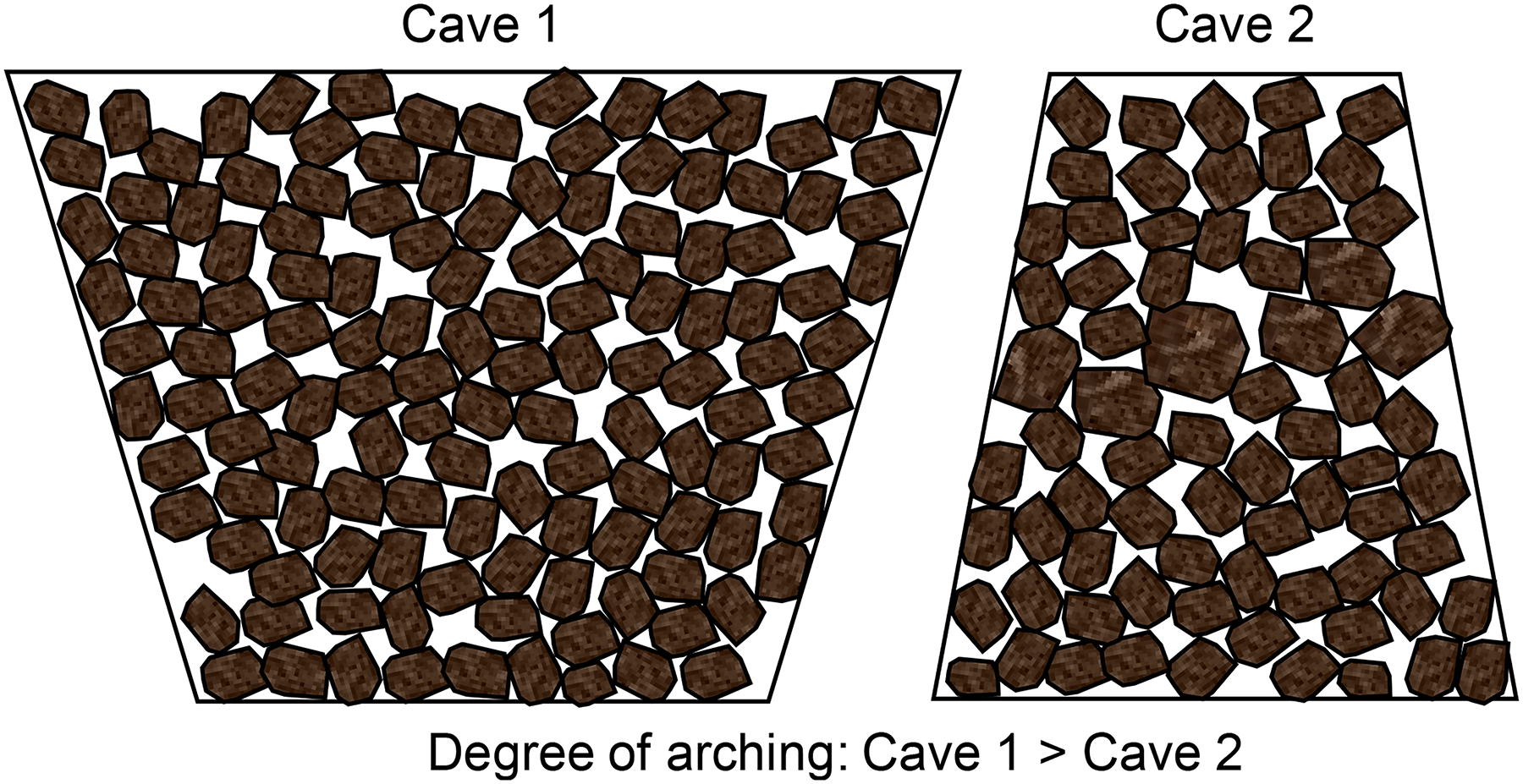
Conceptual description of how different degrees of stress arching could develop because of different draw column shapes.
Discussion and conclusions
This paper has reviewed the MDS and Janssen's equation developed over a century ago and highlights their initial assumptions and limitations. Despite its mechanistically erroneous assumptions, Janssen's equation has been widely used for designing storage silos for corn/bulk solids. From a historical perspective, Janssen's original paper experienced a significant revival over the past three decades, coinciding with the growing interest in studying granular material flow in cave mining operations. However, this raises important questions concerning the validity of the corn/rock and silo/ore columns analogues applied to stress estimation in cave mine designs.
Janssen's equation assumes that bulk solids are relatively small, uniform, and well-graded in shape. It also presumes that the silo is a perfect cylinder or rectangular prism with smooth, upright walls, resulting in consistent stress arching along the major and minor axes of horizontal cross-sectional slices. However, these assumptions do not apply to cave mining. In cave systems, rock fragments are expected to be more angular, and their sizes are non-uniform at different depths due to breakage. In addition, draw columns deviate from ideal cylindrical or rectangular shapes and lack smooth, upright walls.
Another critical factor is the horizontal-to-vertical stress ratio (K). Estimations of K must consider the actual flow and cave conditions, including the advance rate and draw sequence, cave wall deformability, and material flow kinematics. As the cave advances, walls are expected to provide minimal support, suggesting an active stress state for the muckpile. Conversely, rock fragments flowing towards the drawpoint may induce a passive stress state. Simplification using the at-rest earth pressure constant may lead to an erroneous estimation of cave stresses.
While one may argue in favour of the use of Jansen's equation in cave mining as a practical starting point, its initial assumptions and inherent limitations are overlooked. The imperfect use of a model like Jansen's equation is not an isolated case. Indeed, empiricism and expert judgment are at the core of many methods we use in rock engineering design, from classification systems to failure criteria. It is important to acknowledge that model acceptance should not be viewed as synonymous with model validation. Even flawed (Ptolemy's geocentric model) and imperfect (Copernicus's heliocentric model) astronomical models can successfully predict planetary motions while being mechanistically incorrect. But we do not rely on them to plot the course of probes and spacecraft trajectories.
The truth is that in rock and mining engineering, the scientific validity of a method often takes a secondary role for several reasons:
It is impossible to physically recreate and study the same problem we are trying to design. For example, we cannot set up a laboratory experiment that simulates the mechanisms (e.g. flow, fragmentation) encountered in ore columns in cave mining. It is difficult to extend the application of a model across different sites due to the natural variability of structural geology, rock properties, and stress conditions. There are no universal models in rock engineering. Many numerical parameters used in rock engineering design are qualitatively established and, therefore, include human-induced variability. At the same time, quantitative measurements (e.g. uniaxial compressive strength) are also characterised by large coefficients of variation. Artificial and natural variability are typically addressed by adopting very conservative design limits. There is a growing trend to rely on computer simulations and machine learning tools without critically examining their underlying principles and the role of empirical and often subjective input in the outcomes of those complex simulations. The degree of conservativeness adopted in rock engineering design inevitably masks the imperfections and flaws of our models. This may lead to conflating empirical justifications with rigorous scientific validation.
This article did not propose an alternative to Janssen's equation, and we understand some readers may find this disappointing. However, as Elmo (2025) argues, the fundamental methodological flaws in the derivation and application of Janssen's equation in cave mining are epistemologically independent of the existence of alternative design methods. The absence of an alternative method does not mitigate the critical importance of identifying significant theoretical limitations. Acknowledging theoretical limitations and identifying methodological flaws represents a crucial first step in the scientific process of developing more robust analytical frameworks, even before alternative methods are formally proposed.
While rock engineering design may often be perceived as practical, it should not be overlooked that the scientific method provides a rigorous framework for systematically understanding mechanisms that drive what we observe in the field. The scientific method enables us to develop theories and explanations grounded in empirical evidence, thus demanding continuous critical evaluation of existing engineering methods.
Rock engineering knowledge cannot advance without the willingness to challenge established practices and beliefs. Practitioners have a professional and intellectual obligation to critically examine the limits and flaws of current accepted methods and hypotheses. A flawed method remains fundamentally flawed, regardless of its current applications in the mining industry or the immediate availability of alternatives.
Footnotes
Declaration of conflicting interests
The authors declared no potential conflicts of interest with respect to the research, authorship, and/or publication of this article.
Funding
The authors would like to acknowledge the financial support of the Natural Sciences and Engineering Research Council of Canada (NSERC PGS-D), (NSERC Grant No. LJGQ GR000440 and Mitacs Grant No. POEH/GR022346).
