




Abstract
Autonomous and smart mines are predicted to become more prevalent. Automation has undeniable benefits in the mining industry, especially in terms of safety. However, automation has also led to unforeseen implications for individuals, organisations and communities. This study undertakes a systematic review of research on the impacts of automation in the mining context. A total of 94 documents that dealt with issues related to humans, safety and communities were found. Documents were analysed using both manual and natural language processing techniques. The review revealed the main concerns the industry must face for the successful implementation of automation, with interoperability and inadequate wireless networks identified as the most significant challenges. Key themes for individuals were workload, cognitive load, communication, acceptance of automation and trust. Task changes and culture were the most predominant issues at the organisational level. Impacts on employment and indigenous communities were highlighted at the community level. The emergence of advanced technologies and interoperability issues have implications for implementing of smart or intelligent mining. Human factors, precisely situation awareness and workload, have far-reaching consequences for safety and productivity because automation is becoming more complex. Moreover, not quantifying community impacts affects how companies can meet their corporate social responsibility commitments.
Introduction
Automation has become imperative to improve performance and safety in the mining sector to overcome the rising demand, incremental operational costs and competitive pressure (Ghodrati et al., 2015). It is also stated that ongoing automation and digitalisation are crucial for sustainable mine development (Jang and Topal, 2020). Moreover, automation and digitalisation will change the mining ecosystems and revolutionise its traditional value chain (Jang and Topal, 2020). Mines of the future that adopt automation and digitalisation will improve safety, environmental performance, productivity and energy efficiency, and also will bring new roles for people who will remain fundamental to the process (Bearne, 2014).
In different contexts, implementing automated systems has been successful (Woods et al., 1997). In mining, for example, automation can reduce operators’ exposure to injury risks (Kramer et al., 2019), thereby improving safety performance by removing workers from hazardous mine sites (Chirgwin, 2021). However, developing new technologies and digitalisation also brings new challenges that must be appropriately identified and managed (Atkins and Ritchie, 2019).
Automation does not remove the need for human involvement. It changes, and it can be reduced in some cases. Automation may lead to unforeseen impacts on systems’ safety and productivity unless humans’ role is carefully considered (Horberry et al., 2016a). Lessons from other industries, such as in aviation and medicine (where it is common), have been introduced with the belief that human errors will be eliminated and levels of operator workload will be reduced. However, automation can introduce new errors and, in some cases, increase mental workload instead of lowering it (Wickens et al., 2021).
Automation frequently extends the operator's influence on the system because it allows one person to do the work of ten (Nof, 2009), e.g., in the mining industry, one operator can monitor and control up to three drills or dozers and eight trucks. Automation does not simply replace humans; it modifies the job and incorporates new tasks. Automation issues can arise due to changes in the type of feedback that operators receive and the nature and structure of the tasks (Nof, 2009). In this sense, incidents regarding the interaction between human operators and automated systems have been reported since 2012 in Australia (Burgess-Limerick, 2020b).
Organisationally, the introduction of automation affects work processes, information flow, employee training (Palka and Stecuła, 2019) and relationships in the workplace, mostly among operators, co-workers, management teams and designers (Rogers et al., 2019). Automation changes the task structure in a way that can undermine collaboration between operators. In some settings, automation might directly support the work of a team of operators in different locations. However, it is assumed that automation affects a few persons or one set of tasks (Lee and Seppelt, 2023).
Automation implementation has been focused on technology (sensors, algorithms, etc.) with little or no attention given to the users of such systems (Lee and Seppelt, 2023). Changes introducing automation will only result in improved safety if the combination of human and automated components is designed to function as a whole system. Therefore, it is relevant to identify and understand issues related to the interaction between human operators and automated systems, as well as the organisational implications
Automation is transforming the mining industry beyond the mine site and changing how mines interact with communities. Implications for employment and interaction with Aboriginal communities have been identified (Bellamy and Pravica, 2011; McNab et al., 2013) that can change the value proposition that mining presents for local communities and the nation (McNab et al., 2013). These social aspects must be considered for the automation process to succeed. A systemic view of automation should include workers, their environment, that is, the organisation, and beyond the mine site to understand how automation can affect companies’ commitment to the sustainable development of the regions in which they are located.
Ten literature reviews have previously been published on automation in mining. The articles (Wang et al., 2019; Zhang et al., 2022) focused on China's coal industry's development and future trends considering intelligent unmanned mining. Human factor issues are analysed in two articles. First, Lynas and Horberry (2011a) discussed specific concerns in mining automation and current and future trends and deployment issues. Then, Rogers et al. (2019) explored the current state, considering technical aspects, human factors and political risk considerations. The other two studies presented the current status and future of automation in specific areas in the value chain of mining. Jämsä-Jounela (2001) concentrated on research on mineral and metal processing control, and Ranjith et al. (2017) explored the current global status of deep mining. The development and evolution of longwall mining technology in Europe and the United States were described by Peng et al. (2019). Concerning the adaptation of mining to new technologies (e.g., big data, AI) or digital transformation (DT), three authors (Bui et al., 2021; Qi, 2020; Young and Rogers, 2019) dealt with issues in the future of this transformation and its requirements.
In this context, most reviews focused on the technological aspects of automation. Only two reviews explored issues related to human factors’ impacts on the individual level. Therefore, this paper aims to systematically review and analyse the existing literature on automation in mining from a more holistic point of view. Specifically, it seeks to answer the following research questions:
What are the main concerns that mining must face for a successful automation process? What are the key themes that need to be addressed at the individual, organisational and community levels? What further insights can be obtained from applying natural language processing (NLP) techniques to the automation literature?
The rapid growth of the mining industry literature necessitates using advanced techniques to categorise, understand and extract meaningful patterns from vast amounts of text. Thus, this research employs both manual and machine learning techniques to thematically analyse the publications, enabling a structured exploration of the dataset (Rybak and Hassall, 2023; Smith et al., 2023). The machine learning experiment aimed to explore and understand the thematic organisation of a collection of automation mining-related publications to determine what further insights might be revealed from the literature.
The main contributions of this research include capturing a holistic understanding of the human, organisational and community impacts of automation in mining; no other systematic literature review has been found in this area. Secondly, the use of NLP techniques appears to be novel as no published works that utilised natural language processing on mine automation literature could be found.
The outline of the paper is as follows. Section 2 details the information sources and the approaches to selecting the relevant literature for the analysis of automation in mining, guided by the Preferred Reporting Items for Systematic Reviews and Meta-Analyses (PRISMA) framework. Then, in Section 3, the findings of the thematic analysis and NLP techniques are presented. Section 4 contains a discussion related to relevant results. Finally, Section 5 ends with concluding remarks and recommendations for future work.
Method: Systematic literature review
This systematic review utilised the PRISMA framework (Page et al., 2021) to provide a general overall picture of the evidence about the impacts of automation in mining from the point of view of the human, organisational and community perspectives. Accordingly, a review protocol PRISMA-P checklist (Moher et al., 2015) was included to guide the literature search.
Information sources and search strategy
The systematic review comprised an advanced search in Scopus, Web of Science (WoS), Science Direct, Google, Google Scholar, Informit 1 and the CSIRO Research Publications Repository 2 . The searches were conducted between August and September 2022. Grey literature is defined as publicly available, foreign or domestic, open-source information that is usually available only through special channels and may not enter normal channels or systems of publication, distribution, bibliographic control or acquisition by booksellers or subscription agents (Benzies et al., 2006). The grey literature search was performed to collect other disseminated findings and relevant information (Benzies et al., 2006). The search strategy considered search terms, publication period, document types, research areas and language.
Specifically, the search included article titles, abstracts and keywords using the search string (automation OR automated OR autonom* OR “industry 4.0” OR intelligen*) AND (mine* OR mining) AND (risk* OR safety OR “human factor” OR ergonomic* OR trend* OR future OR challenge*). Additionally, research unrelated to engineering areas were excluded to refine the search results. The entire search string for all sources can be found in the Protocol PRISMA-P checklist (Moher et al., 2015) – included in Supplementary Appendix A. Furthermore, cited references of the selected studies were examined, and studies recommended by the advisors were included in the final sample; see Figure 1 for details. For updates, email alerts in the databases were set up to provide weekly updates of new literature until 30 July 2023.
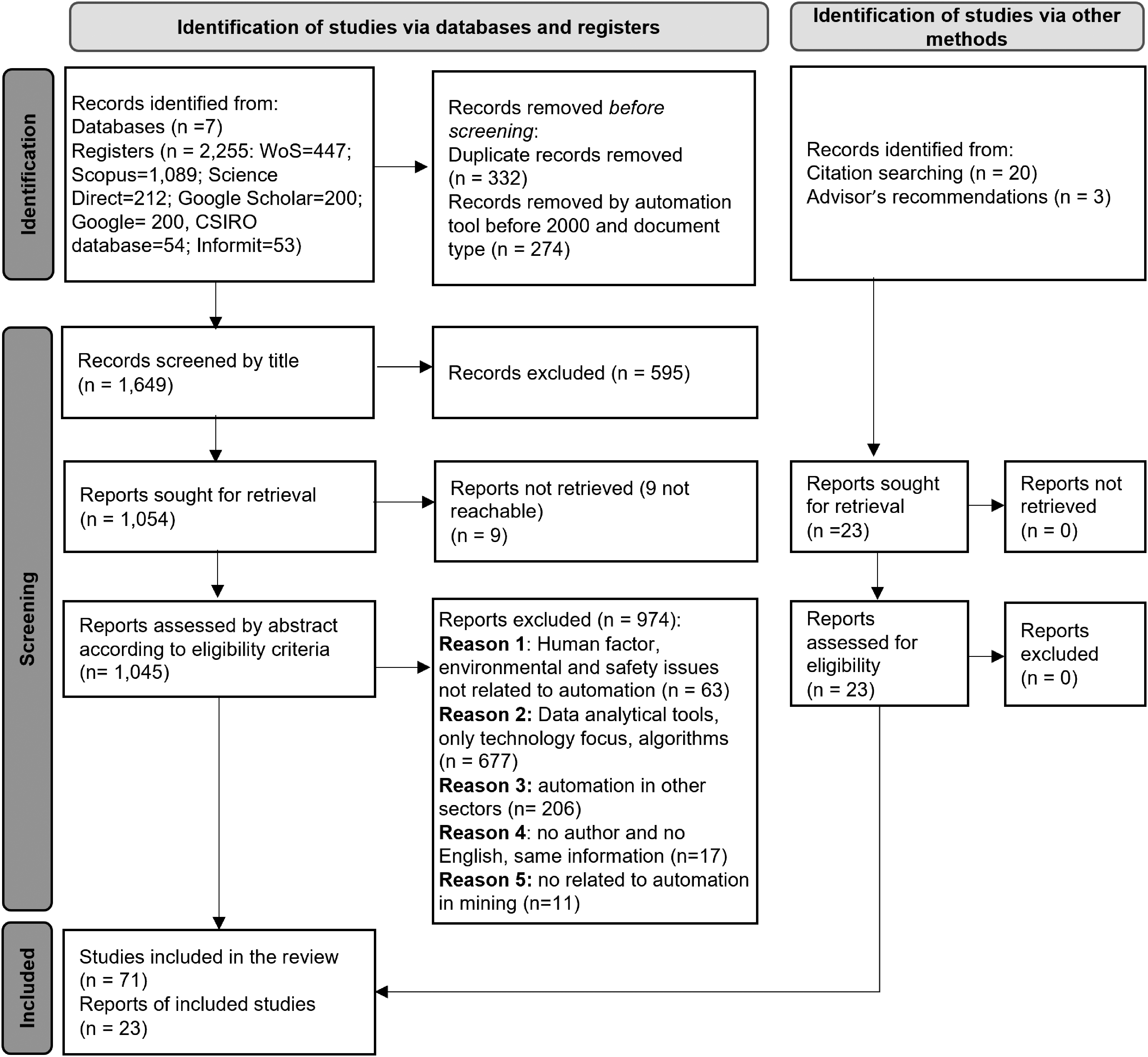
Process of selecting documents for the systematic review according to the PRISMA flowchart.
Inclusion and exclusion criteria
Articles, conference proceedings, proceeding papers, reports, reviews and reports published between 2000 and 2022 in English were searched. This review was restricted to the context of the mining industry. Documents that only dealt with developing a specific technology, automated system, tool, software, algorithms or technique were excluded. This allowed authors to focus on analysing the effects of automation on workers, organisations or communities beyond the mere application of a particular technology. Also, considering the heterogeneity of the documents, there were no specifications about methodological aspects or study design.
Selection process
The search strategy produced 1855 documents from the academic databases. The grey literature searches of Google and Google Scholar databases produced over 140,000 and 6000 results. Therefore, results were sorted by relevance, and the first 200 documents were selected. Each file from the different databases was merged and filtered using the Python Jupyter Notebook, and the selection of the studies to review was conducted in two iterations. First, all duplicated articles and documents by type (book chapter, magazine articles, etc.) and range date (before 2000) were removed. Then, in the second phase, documents including in their title at least one of the following keywords: automation, mining, robotics, safety, industry 4.0, intelligent(ce), miners, mine(s), risk(s), human, challenges, hazards, autonomous, automated and ergonomics were selected. This process yielded 1054 articles. The obtained documents were analysed by the abstracts. The procedure in this stage was to identify and include only those studies that dealt with impacts, effects and issues on humans, safety and community due to automation in mining.
Nine studies were excluded because the full text was unreachable. Finally, uncertainties were solved by screening the full text. Using the criteria, 974 articles were removed, and the studies from other sources resulted in a final sample of 94 documents. The described process is summarised in Figure 1, and a complete list of the papers included in the review has been incorporated in Supplementary Appendix B.
Quality assessment
Quality assessment of all selected documents was undertaken using a modified version of the Critical Appraisal Skills Programme (CASP) checklist for qualitative studies (Critical Appraisal Skills Programme (2018); CASP Qualitative Checklist, n.d.). The CASP tool is a generic tool for appraising the strengths and limitations of any qualitative research methodology. Besides, it is considered a user-friendly option (Long et al., 2020). The documents were assessed focused on just five 5 of 10 questions of the CASP checklist that included aim, methodology, data analysis, results and how valuable the document for the research was. Each document was rated based on fulfilling criteria. If 4–5 criteria are met, quality is high; 3 are moderate; 1–2 are low. All the documents accomplished the minimum requirement (high or moderate quality). The assessment of documents is included in the list of reviewed papers in Supplementary Appendix B.
Data analysis
Thematic analysis
According to Braun and Clarke (2013), a thematic analysis of the reviewed papers and the results related to the impacts of automation in mining was provided. A complete thematic approach seeks to identify anything and everything relevant to answering the research questions. In this study, thematic analysis was used to gain an integral view of the automation process. Therefore, something potentially significant was coded systematically for each data item in full before proceeding to the following (Braun and Clarke, 2013). First, data coding was related to research questions. Next, the coding used an inductive approach to identify the interacting variables in this process. Then, to recognise patterns in the data, the codes and the collected data relating to each code were reviewed, identifying similarities and overlaps between codes. Consequently, key concepts and themes were identified. Also, inconsistencies in the literature regarding the benefits and disadvantages of automation in the mining industry were identified. Finally, the distinctive themes that capture the most relevant data were organised to answer the research questions (Braun and Clarke, 2013).
Natural language processing of automation literature
The dataset consisted of titles and abstracts of the final sample (94 documents). To prepare the data for clustering, the following pre-processing steps were employed (Manning et al., 2009):
Uniforming data: all text was converted to ensure uniformity Text vectorisation: the Term Frequency-Inverse Document Frequency (TF-IDF) technique was used, transforming textual data into numerical vectors, while considering each term's importance in the entire dataset's context
The clustering algorithm chosen for this task was the KMeans algorithm. To determine the optimal number of clusters, the Elbow method was applied, evaluating the sum of squared distances from each point to its assigned centre for various cluster counts (Sinaga and Yang, 2020). The Silhouette method suggested an optimal cluster count, and the KMeans algorithm subsequently categorised the abstracts accordingly (Rybak and Hassall, 2022a). Each cluster was then interpreted based on its centroid's top-weighted terms, providing a thematic label to each cluster. The Silhouette method evaluates the goodness of clustering by calculating the silhouette score for each data point. The Silhouette score, ranging between −1 and 1, measures how close each point in one cluster is to the points in the neighbouring clusters. Values near 1 indicate that the data point is far from the neighbouring clusters, whereas values near −1 mean the data point is close to the neighbouring clusters. A value of 0 suggests overlapping clusters.
In the vast landscape of mining literature, some publications diverge from common themes, representing unique or niche topics. While clustering helps categorise common themes in a dataset, anomaly detection focuses on identifying data points that deviate from established patterns (Rybak and Hassall, 2021). Recognising these outliers can lead to discovering novel research areas or unique perspectives in the mining domain. This study employed anomaly detection techniques to identify such outliers in a dataset of mining-related abstracts.
The anomaly detection algorithm chosen for this task was the Isolation Forest method, which isolates anomalies by randomly selecting features and recursively partitioning the data. The Isolation Forest algorithm operates on the principle of isolating anomalies rather than profiling normal data points (Rybak and Hassall, 2022b). The method isolates observations by randomly selecting a feature and then randomly selecting a split value between the maximum and minimum values of the chosen feature.
The logic behind this approach is that anomalies are few and different, which means they can be isolated quickly. The number of splitting required to isolate a sample is equivalent to the path length from the root node to the terminating node. This path length, averaged over forest trees, serves as a measure of normality. The algorithm assigns a score to each data point to determine potential outliers, indicating its likelihood of being an anomaly. A threshold is then defined, beyond which data points are considered outliers. The Isolation Forest method was particularly suited for this study due to several reasons:
Efficiency – unlike distance-based or density-based methods, the Isolation Forest method is more scalable for large datasets. Inherent handling of high dimensions – given the high-dimensional nature of the TF-IDF vectors, the Isolation Forest method is apt as it does not suffer from the ‘curse of dimensionality’. This refers to the phenomenon where the performance of certain algorithms deteriorates as the number of dimensions, or features, in the data increases. The Isolation Forest method is well-suited for dealing with high-dimensional data because it constructs a simple model of normal data points by isolating them in binary trees. No assumption of normality – the algorithm does not make prior assumptions about the normality of data, making it versatile for diverse datasets.
Findings
A description of the relevant papers is presented in Table 1. The ‘type of research’ has been mapped to the inductively derived categories of qualitative, quantitative and mixed. Thus, 93% are qualitative-oriented.
Description of the reviewed documents.
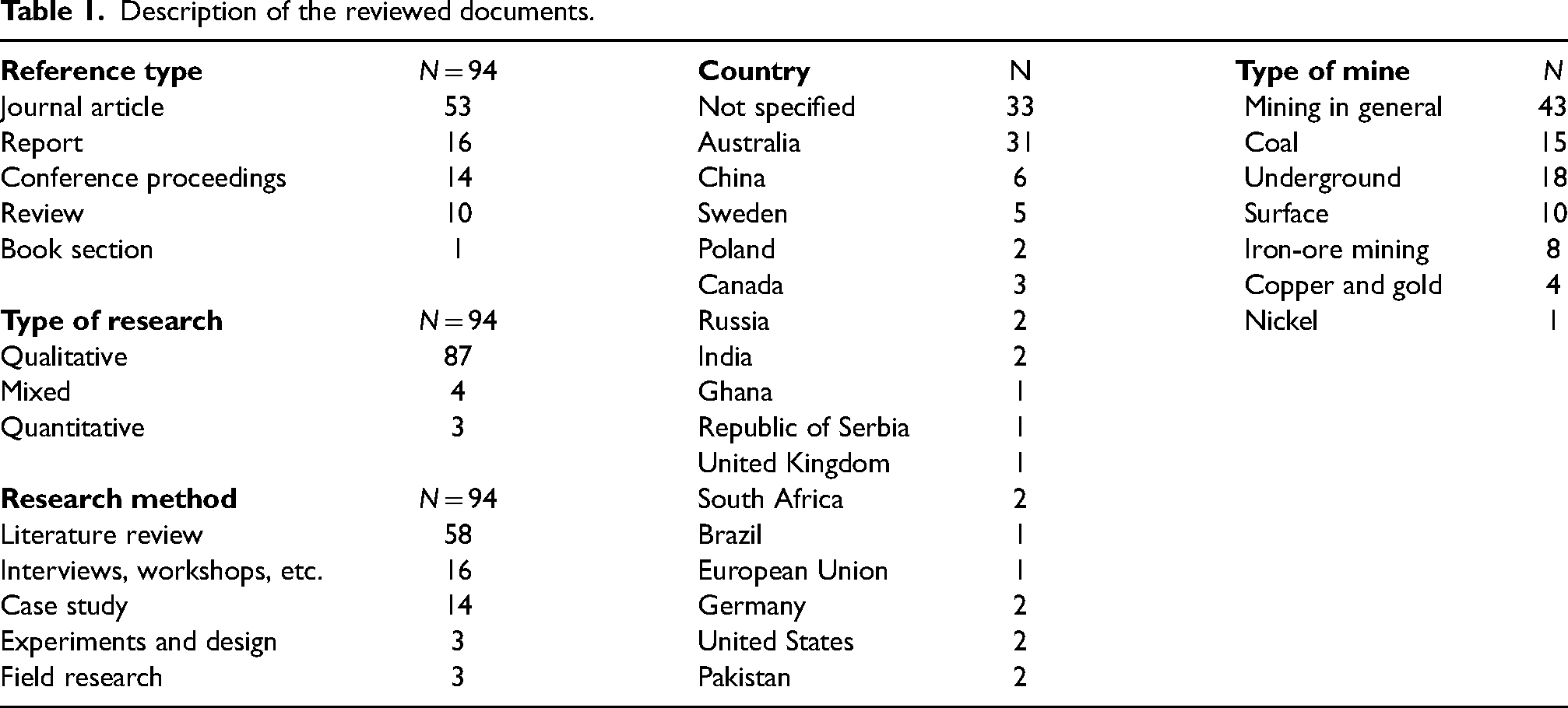
The most prevalent research methods are literature review, interviews, workshops, discussions, etc. Besides, it is important to note that the field research available on automation's impacts in the mining context is scarce. Figure 2 shows a distribution of the keywords to explore the contents. The keywords examined are those used by writers in their publications’ titles, abstracts and keyword sections.
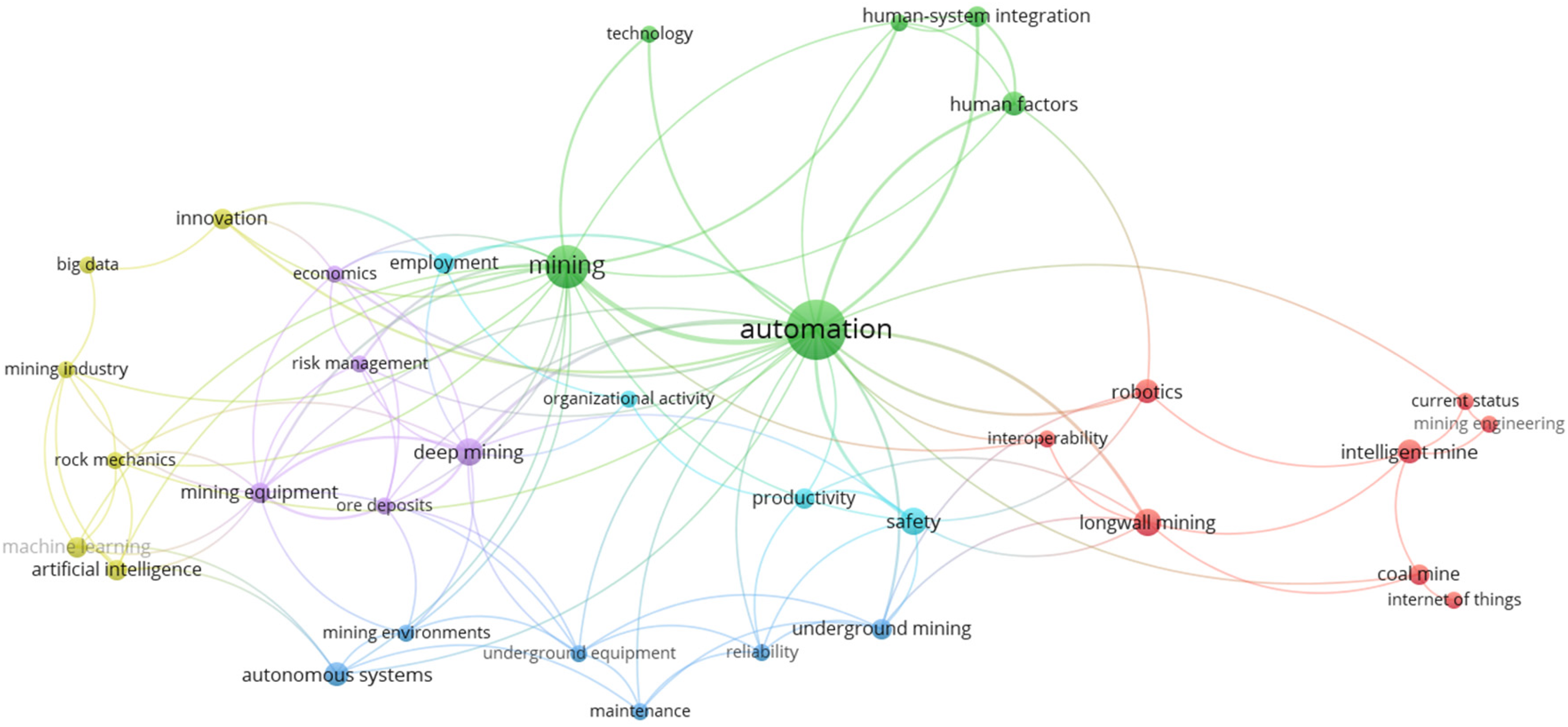
Visualisation map for co-occurring keywords (vosViewer).
Figure 3 highlights that more intense research in automation in the last 20 years began in 2011, peaking in 2019 with 14 documents. Therefore, more than half of the reviewed documents were published from 2017 to 2022. This increase in recent publications matches the reported changes that are occurring in the industry.
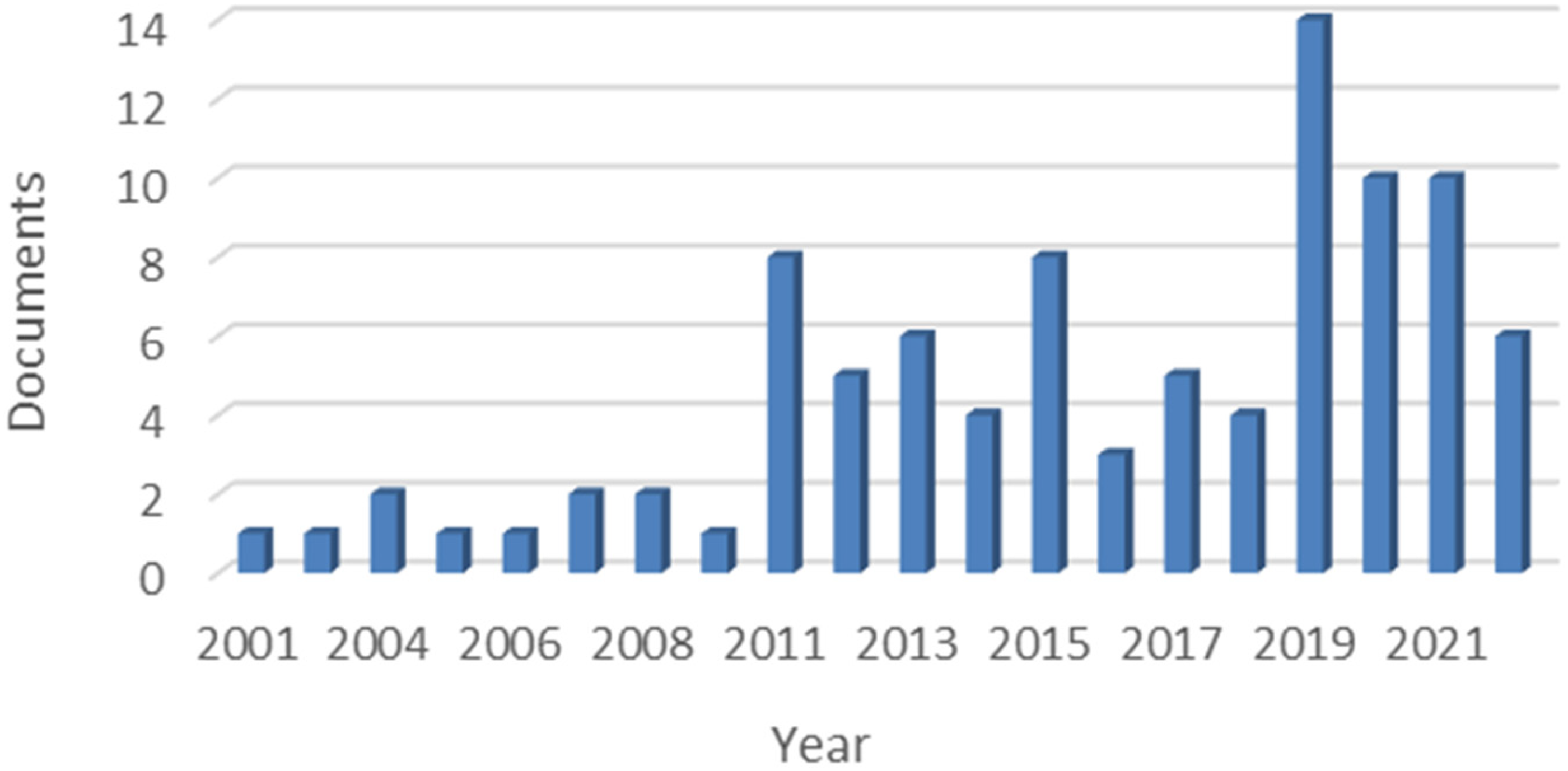
Classification of documents by year.
Some authors describe specific milestones in the automation evolution in the mining sector, including those related to the adoption of advanced Information and Communication Technologies (ICTs), autonomous haulage systems (AHSs), robotics and automated longwall mining equipment. ICTs have been crucial for automation in mining processes (Fisher and Schnittger, 2012). This is evidenced by a notable ICT expenditure growth from approximately 200 million in 2000 to 700 million in 2010 in the Australian mining sector processes (Fisher and Schnittger, 2012). Since 2000, advanced ICTs have been adopted by the mining industry to drive improvements in productivity and safety (Jang and Topal, 2020).
Research into AHSs commenced in the mid-2000s and was led by Caterpillar (MINESTARTM system) and Komatsu (FrontRunner AHS truck system) (Jang and Topal, 2020). However, it was not until 2008 that the first commercial deployment of Komatsu driverless trucks was realised in the Gaby mine, operated by Codelco in Chile. This was followed closely by a deployment by Rio Tinto at their West Angelas mine in the Pilbara, Western Australia (Marshall et al., 2016). The truck AHS is perceived as an icon of mine automation, prompting mining corporations to rush to expand their fleet of AHS trucks despite significant initial expenses (Jang and Topal, 2020).
Robotics experienced a significant milestone in 2008 with Rio Tinto's establishment of the ‘Mine of the Future’ initiative. This program aimed to facilitate resource exploration at greater depths, while simultaneously to enhance safety measures and minimise the environmental impact (Lopes et al., 2018).
In the 2010s, longwall automation incorporated technologies for anti-collision and proximity detection sensors and intelligent water spray systems (Fisher and Schnittger, 2012). Also, Rio Tinto, in 2010, opened the operation centre in Perth, Australia, to operate 16 iron ore mines (Jang and Topal, 2020). Then, in 2012, the Rio Tinto Innovation Centre was opened in Pune, India. In the same manner, in 2013, BHP opened its Integrated Remote Operations Centre in Perth, Australia (Jang and Topal, 2020).
Today, the mining industry is shifting to a new era, where digitisation and automation are essential for efficiency. Mining companies plan to create intelligent or smart mines (Shrivastava and Pradhan, 2022). The former refers to a new technology platform for all development stages: exploration, mineral resource assessment, mining planning and design, safety management, logistic operations and decision-making processes (Kazanin et al., 2021). According to Brown et al. 2020, the critical indicator of the intelligent mine is an ‘unmanned system’ that can operate from mining faces, tunnelling faces and hazardous locations to the entire mine. Smart mines use IT to enhance communication among people and the social and natural environment, optimising mining processes (Ge and Zhang, 2011). By 2030, mining will achieve the highest optimisation level and lead to Mining 4.0 (Jang and Topal, 2020) with an acceleration of automation technology.
Results from thematic analysis
A thematic map was produced from the analysis. Figure 4 integrates community, organisational and individual characteristics into a single automation impact framework. Figure 5 shows the year range research and number of the documents related to the themes identified in the thematic map (Figure 4).
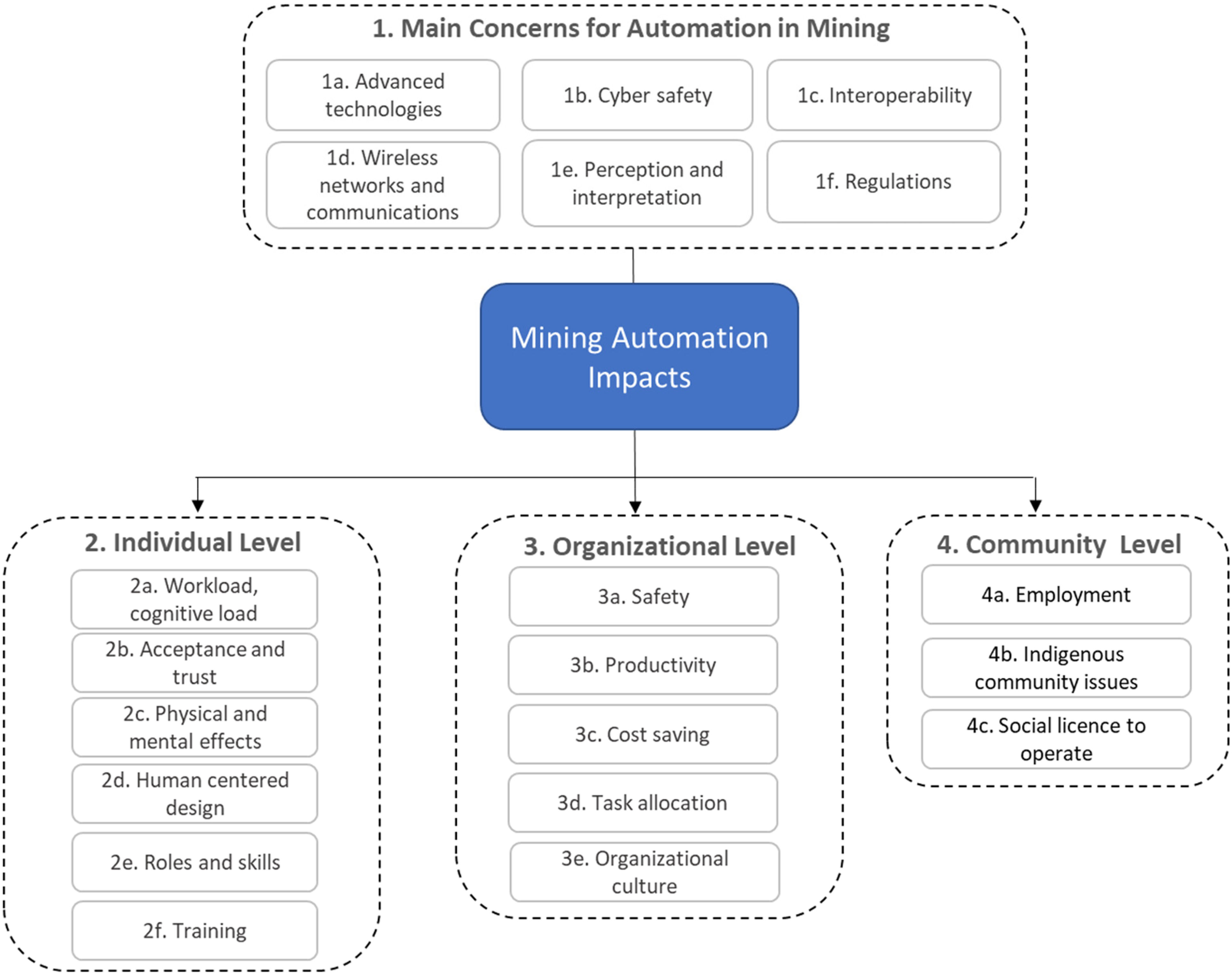
Thematic map of automation impacts on mining.
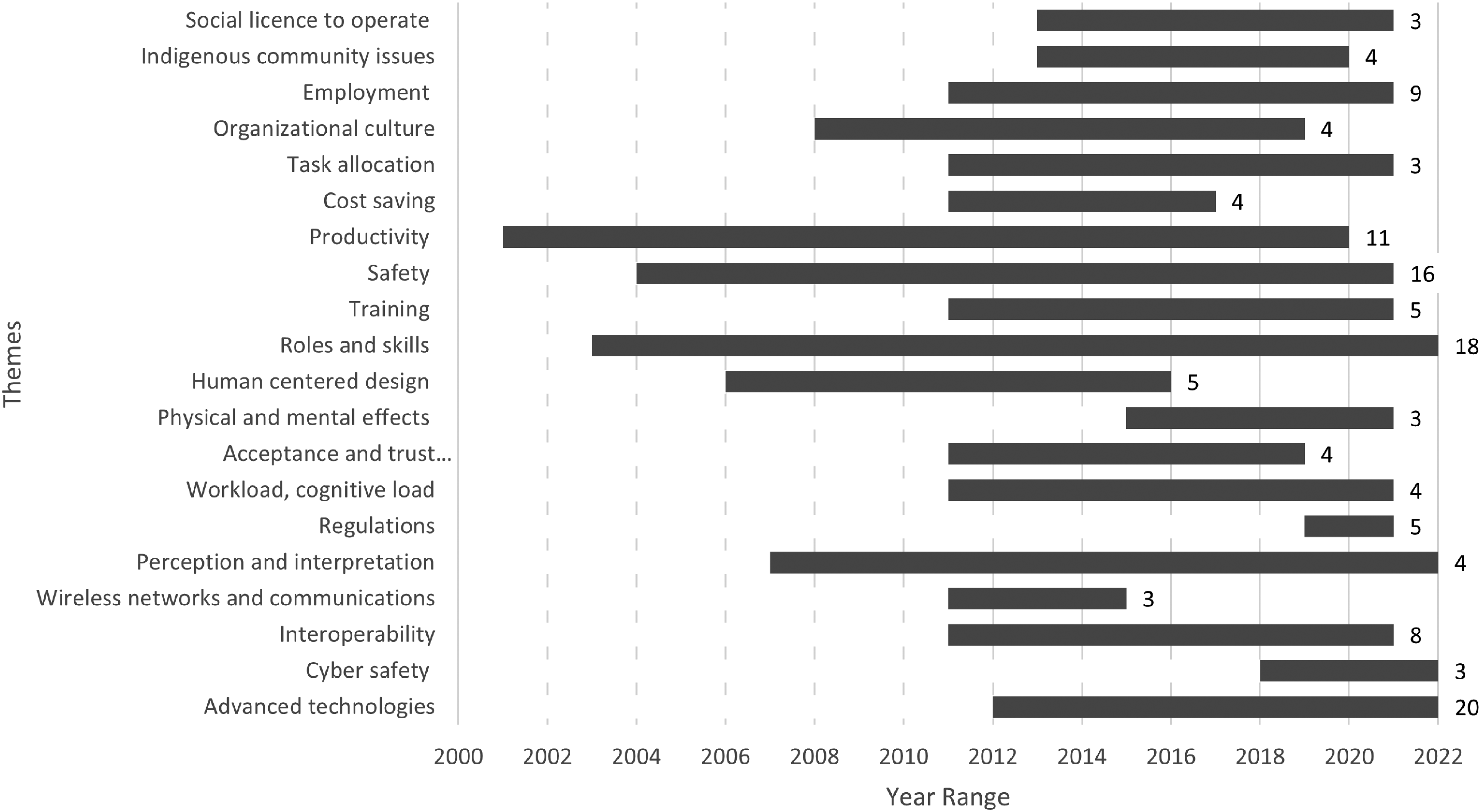
Year range of publications by themes.
Figure 5 highlights that the most recent research is related to advanced technologies, cyber safety, perception and interpretation and roles and skills. In 2001, research focused on productivity, followed by roles and skills in 2003 and safety in 2004. Research entered into mining automation in more recent years is referred to as cyber safety and regulations. Less research in automation dealt with a social licence to operate, task allocation and physical and mental effects of automation. In terms of technology, less research is associated with wireless communications and cyber safety. The following section covers some of the major concerns the mining industry must address to maintain its competitiveness and the impacts of automation implementation at the individual, organisational and community levels.
Advanced technologies
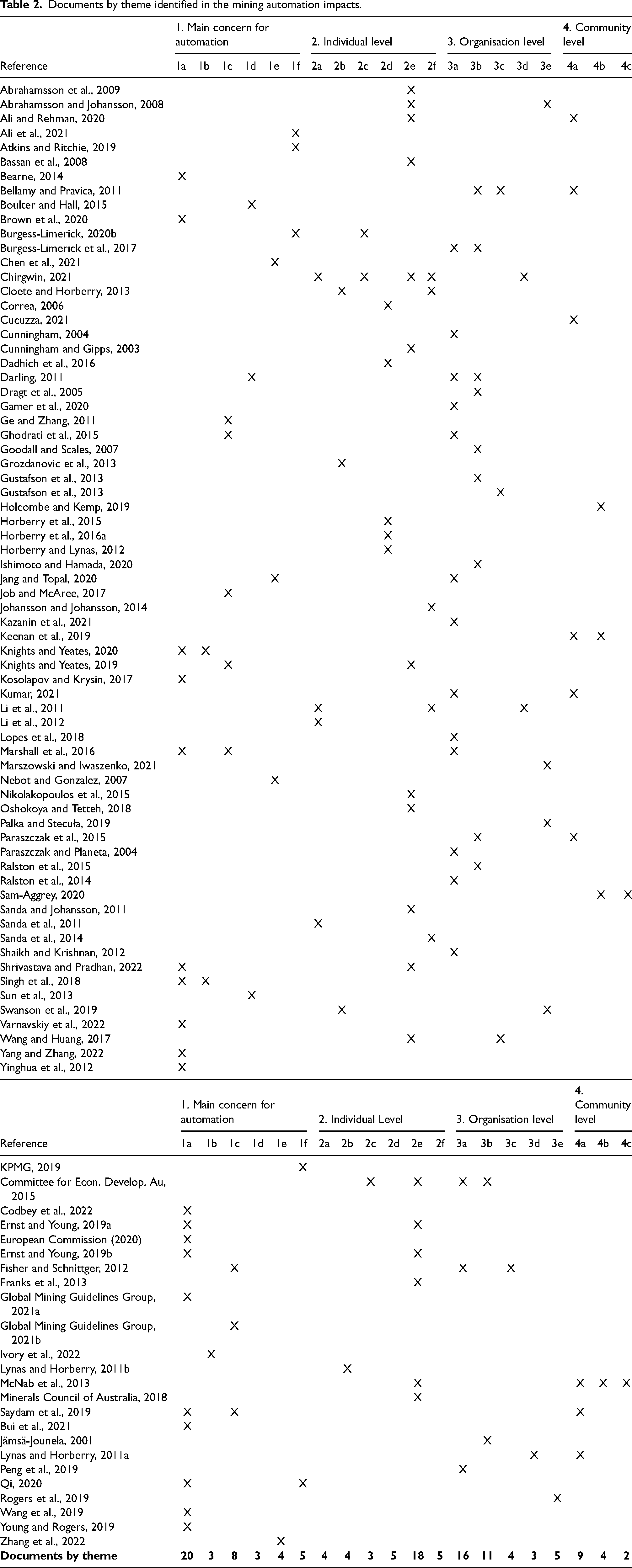
As shown in Table 2, 20 documents dealt with advanced technologies. At present, in surface mining, only blast-hole drills and truck haulage have autonomous capabilities (Knights and Yeates, 2020). Autonomous drills have been a reality at the Pilbara operations of Rio Tinto since 2014. This technology has led to greater utilisation, precision and safety. AI has been proven to be an effective tool for optimising blasting parameters and predicting blast-induced problems (Bui et al., 2021). The largest fleet of autonomous haulage trucks (AHTs) worldwide is in Australia, with more than 220 trucks operating in Rio Tinto (Global Mining Guidelines Group, 2021a). Outside of Australia, automated loading and haulage systems have been used since the 2000s in Chile, Finland, Canada and South Africa (Cosbey et al., 2022).
Documents by theme identified in the mining automation impacts.
Future autonomous trucks present an opportunity to collect data on the asset's performance on different paths, corners, ramps and loading zones. For example, a digital twin is an innovation being used in Chile and Brazil by Anglo Americans for tracking haulage performance and optimising mining fleets (Ernst and Young, 2019a).
Although significant progress has been made in automating the Load–Haul–Dump (LHD) system, no system in the market currently manages unsupervised loading (Knights and Yeates, 2020). Dozer automation is now focusing on semi-autonomous and autonomous system retrofits due to the limitations of remote-control technologies (Marshall et al., 2016).
The application of robotics, autonomous vehicles and remote-controlled operational systems will be expanded to improve exploration tasks (Ernst and Young, 2019b) and robotic subterranean mine inspection (Brown et al., 2020). Also, an integrated robotic tunnelling system to integrate cutting, shipping, support and design of robot tunnel faces has been developed in China (Yang and Zhang, 2022). Research on underground inertial navigation and precise location, straightness and intelligent control is also ongoing in China (Wang et al., 2019). Furthermore, drones are used in inspections of mines (European Commission, 2020) and in surface mines to construct 3D models and update the integrated mine operation centres and autonomous equipment in the mines (Bearne, 2014). Also, Shrivastava and Pradhan envision drones will be used to create precise plans and sections of the mine (Shrivastava and Pradhan, 2022).
Big data will play one of the prominent roles in full automation (Kosolapov and Krysin, 2017), and it is also seen as an opportunity for fast processing of data in geological surveys. As Qi (Qi, 2020) stated, the mining industry can benefit from this tool in safety, security and reliability through the data on operations and performance with machines equipped with sensors that can provide continuous information about workers, equipment and the environment. These applications are currently in the initial stages of their development (Qi, 2020), and mines extract only a minimal part of the information content of operational processes (Saydam et al., 2019).
The Internet of Things (IoT) connects heavy equipment, machinery, sensors and people through integrated platforms for better decision-making processes through data analytics (Young and Rogers, 2019). Different real-time monitoring sensors, drilling intelligence and control and continuous minor teleoperations could generate this data. In underground mines, IoT can also transfer data to cloud storage for further processing (Singh et al., 2018). Besides, it can improve the accurate location of underground personnel, equipment and the working environment. Tracking management of safe explosive production and healthy diagnosis of critical equipment could also be achieved (Yinghua et al., 2012). However, IoT requires the improvement of technological structure in the mine sites (Varnavskiy et al., 2022) and further research in terms of the lack of standardisation in the architecture and design to sustain the extreme conditions of the mining environment (dust, gas, humidity, etc.) (Singh et al., 2018).
Cyber safety
Table 2 shows three documents on this theme. Mining companies are vulnerable to hacking due to specific vulnerabilities in advanced technologies and automation (Knights and Yeates, 2020). Cyber safety is crucial in mining safety planning. For instance, the IoT increases the possibility of security loopholes, and critical information may be exposed to the Internet. Furthermore, cyber attacks can interrupt autonomous machine operations, resulting in unsafe working areas (Singh et al., 2018). Mining companies have found that accidental, temporary or unauthorised Internet connections have compromised their essential safety systems. Therefore, mining companies must have the tools, processes and talent to detect cyber breaches (Ivory et al., 2022).
Interoperability
Interoperability, Table 2 with 8 documents, is seen as one of the challenges for the wide adoption of autonomous drills (Job and McAree, 2017) and future zero-entry mines (Knights and Yeates, 2019). Interoperability refers to the capacity of two or more systems, components or processes to exchange information and perform actions based on it (Global Mining Guidelines Group, 2021b). Most of the mine information application systems are information island systems that lack the capacity for interaction, cooperation and effective management (Ge and Zhang, 2011). This lack of industry standards regarding definitions, standards, language and data exchange capabilities and minimal agreement among original equipment manufacturers (OEMs) pose a significant technical barrier (Marshall et al., 2016; Saydam et al., 2019). This can cause system stoppages and downtime.
Additionally, there is an inconsistency between mine infrastructure and its automated equipment; usually, automated systems are implemented without considering the operating environment and required infrastructure (Ghodrati et al., 2015). Collaborative efforts between equipment manufacturers and mining companies can be challenging due to the need to protect intellectual property and other related concerns (Fisher and Schnittger, 2012).
Wireless networks and communications
Table 2 highlights four documents related to wireless and communications. As claimed by Boulter and Hall (2015), automation has increased in mining, and the volume of data that needs to be supported by wireless communications has also increased exponentially. The data requirements through wireless networks are expected to increase by 50% annually. Furthermore, as efforts to improve mining machines’ reliability have been made in isolation, much data obtained through automation may not be efficiently utilised. Therefore, integration is a crucial aspect of enhancing the overall reliability of automation (Sun et al., 2013).
In open pit mines, wireless networks were installed considering one product or system rather than managing the massive data associated with multiple systems. Hence, they are becoming obsolete due to their limited data transfer capacity. Consequently, it may affect reliability, particularly in the ever-changing topology found in open-pit mining (Boulter and Hall, 2015; Darling, 2011). Communication problems also arise with sensors used in collision avoidance, obstacle detection and remote dispatching systems, which need appropriate bandwidth and 100% availability to avoid loss of connection and downtime for trucks disrupting production and not guaranteeing the safety of the operation. Long-term network infrastructure design strategies are necessary to address these challenges (Boulter and Hall, 2015).
Perception and interpretation
Perception and interpretation, as shown in Table 2 with four documents, will also be an area of significant importance in mining applications (Nebot and Gonzalez, 2007). Real-time positioning information of mining equipment is vital to mine design, particularly in daily or weekly planning. Besides, precision positioning systems at the centimetre level are essential to mitigate location errors that could increase accident risks (Jang and Topal, 2020).
According to Chen et al. (2021), future development of intelligent mines needs to consider aspects such as 3D modelling, which is fundamental to intelligent mines; a mine control system serves as the brain of an intelligent mine; equipment failure prediction uses multi-source sensors and data fusion techniques. The authors also consider human-computer interaction collaboration indispensable for monitoring, positioning and health prediction. The emergence of 5G as a new infrastructure platform is now leading to a transformation in the distance of intelligent control (Zhang et al., 2022).
Regulations
Table 2, with five documents, deals with standards and regulations. ISO 17757, ‘Earth-moving machinery and mining – Autonomous and semi-autonomous machine system safety’, is considered a mining area standard regarding safety requirements (Burgess-Limerick, 2020a). Also, mining companies are adhering to the Critical Controls Framework promulgated by the International Council of Mining and Metals (Atkins and Ritchie, 2019). However, clear regulations are required for big data to ensure its compatibility across different platforms and clients (Qi, 2020). Other related challenges need to be analysed, such as data privacy, security and archiving, which are crucial for safeguarding personally identifiable information and company data. Another legal concern arises from policy frameworks incorporating digital or smart mineral resource management (Ali et al., 2021).
Privacy laws were established assuming humans would only collect and utilise data for decision-making. However, technology allows significant amounts of data to be collected and analysed at unprecedented speeds, and based on this data, it can also replace humans in decision-making processes (KPMG, 2019).
Individual-level impacts of automation in the mining context
Among the articles that discussed the impacts of automation implementation on individuals, the most common topic covered was Roles and Skills with 18 documents, Table 2. These articles explored the roles that will be reduced or added in response to automation and advanced technologies, as well as their skill requirements. Other documents focused on workload and cognitive load, acceptance and trust of automation, physical and mental effects, human-centred design challenges and training.
Workload and cognitive load
Table 2 highlights four documents focused on workload and cognitive load. The mines of the future have to deal with the implementation of automation and create a work environment that allows workers to adapt and engage as essential resources whose understanding of the mining practice could enhance creativity in designing intelligent automation (Sanda et al., 2011).
Field mining research revealed human factor issues with automation. Chirgwin (2021) reported that experienced workers with manned and autonomous operations in the control room evidenced increased workload, cognitive load and communications responsibilities. Li et al. (2011, 2012) described that operators in two Australian processing plants frequently must handle multiple tasks concurrently in the control room, requiring prompt problem-solving and decision-making. They also lack a comprehensive understanding of critical process dynamics related to mineral processing mills and flotation controllers, and senior operators cannot predict the most effective control actions for future scenarios.
Acceptance and trust of automation
Overreliance, acceptance of automation and trust issues were also identified in four documents, Table 2. Losing trust in automation can lead to it not being used, while having excessive trust can cause complacency and decrease vigilance, resulting in weaker monitoring (Grozdanovic et al., 2013). For instance, studies on Australian mining stakeholders revealed excessive dependence on technology and not using it as intended by the developer (Lynas and Horberry, 2011b). Similarly, Swanson et al. (2019) found that some US underground coal mines reported remarkably higher trust in their mobile proximity detection systems than others. Furthermore, in the study conducted by Cloete and Horberry (2013), shovel operators revealed a lack of trust in specific sensor readings, a passive role in the control room and a mistrust of alarms.
Physical and mental effects
As shown in Table 2 with three articles, automation has other unexpected physical and mental effects on control room operators. The mental well-being of automation workers will be relevant to maintaining working-level capacity in their roles (Committee for Economic Development of Australia, 2015). For example, stress, reduced social interactions, low control of workload and production pressure can impact an operator's mental health (Burgess-Limerick, 2020a). This situation was observed also by Chirgwin (2021) in the real-time working of four mines and seven control rooms, in which a 12-h shift demanded high-performance output and concentration.
Human-centred design
In Table 2, five articles discussed human-centred design. Even with technological advances, a lack of focus on the operator has been identified as an issue in emerging technology design, development and deployment (Horberry and Lynas, 2012). The human–machine interfaces should include essential information for efficient remote control and decrease operator stress (Dadhich et al., 2016). In this sense, Human-Centred Design (HCD) has been used successfully with mining equipment and technologies, as evidenced by Horberry et al. (2015). The achievements of this approach were better hazard detection, error detection, critical tasks and risk identification. Also, Correa (2006) pointed out that the HCD approach for its system's implementation allowed Samarco (a Brazilian mining company) to focus on critical data and alarms and improve maintenance through accurate diagnosis. Similarly, Horberry et al. (2016b) applied a useful technique to identify specific equipment-related issues and break down participants’ assumptions about the tasks.
Roles and skills
Roles and skills are discussed in 18 documents, Table 2. There is expected to be a decrease in certain types of roles and an emergence of new roles associated with automation developments (Ernst and Young, 2019a). For instance, as Rio Tinto introduced driverless trucks in 2014, new roles such as controllers, pit controllers and communications and system engineering specialists were created (Committee for Economic Development of Australia, 2015).
Most supervisory roles are conducted from operation centres located in major urban centres (Bassan et al., 2008). For some workers, contact with the mine site is minimal, and other operators occasionally visit the equipment they control remotely, shifting some tasks from active to passive equipment operators (Abrahamsson and Johansson, 2008). In some mines, technical staff support increased, including a new controller role named ‘builder’, whose main tasks are to support the controller in managing the mine and taking some of the radio calls (Chirgwin, 2021).
Future directions for the workforce will demand operational and system knowledge (Nikolakopoulos et al., 2015), which may require different competencies in mathematics and science and technology literacy (McNab et al., 2013). Some identified roles include maintaining controlled autonomous equipment, data processing and data interpretation, systems, process analysis (Wang and Huang, 2017), operational control and mine planning (Franks et al., 2013).
The changes from manual skills and sensitivity to the material handled to more technical qualifications based on abstract knowledge have implications for the workforce's capabilities, knowledge and abilities. Fewer and more highly skilled workers are needed to maintain, analyse and improve operations (Abrahamsson et al., 2009; Knights and Yeates, 2019; Oshokoya and Tetteh, 2018). The proportion of unskilled labour is expected to decrease significantly or even disappear (Sanda and Johansson, 2011). Some impacts on occupation imply ‘upskilling’ and ‘deskilling’ (Abrahamsson and Johansson, 2008). The former is seen as an opportunity for the current workforce as workers can take more challenging roles (Minerals Council of Australia, 2018) and better-paid new jobs (Committee for Economic Development of Australia, 2015). This also means changes in the skill base available at or accessible to mine sites. For instance, technology design maintenance will need electronic and communication skills, risk analysis and fail-safe concepts (Cunningham and Gipps, 2003).
More technology implies more data available about production, safety and efficiencies, among others, and working with machine learning or artificial intelligence will require a higher level of understanding in advanced data management, database structure knowledge, data mining, control systems and professional automation programming skills, which are crucial for handling and troubleshooting such advanced operations (Ali and Rehman, 2020). Likewise, the IoT and sensor technology will make it necessary to upskill mine workers (Shrivastava and Pradhan, 2022). Other skills needed include systems thinking, change management, collaboration and decision-making support underpinned by data and digital literacy; technical modelling and advanced geological and geospatial capabilities; scenario planning, predictive modelling and options analysis; complex stakeholder engagement; and interpersonal communication skills (Ernst and Young, 2019b). Other skills, such as database management systems, data science and technology and social and environmental management skills, were also pointed out (Oshokoya and Tetteh, 2018).
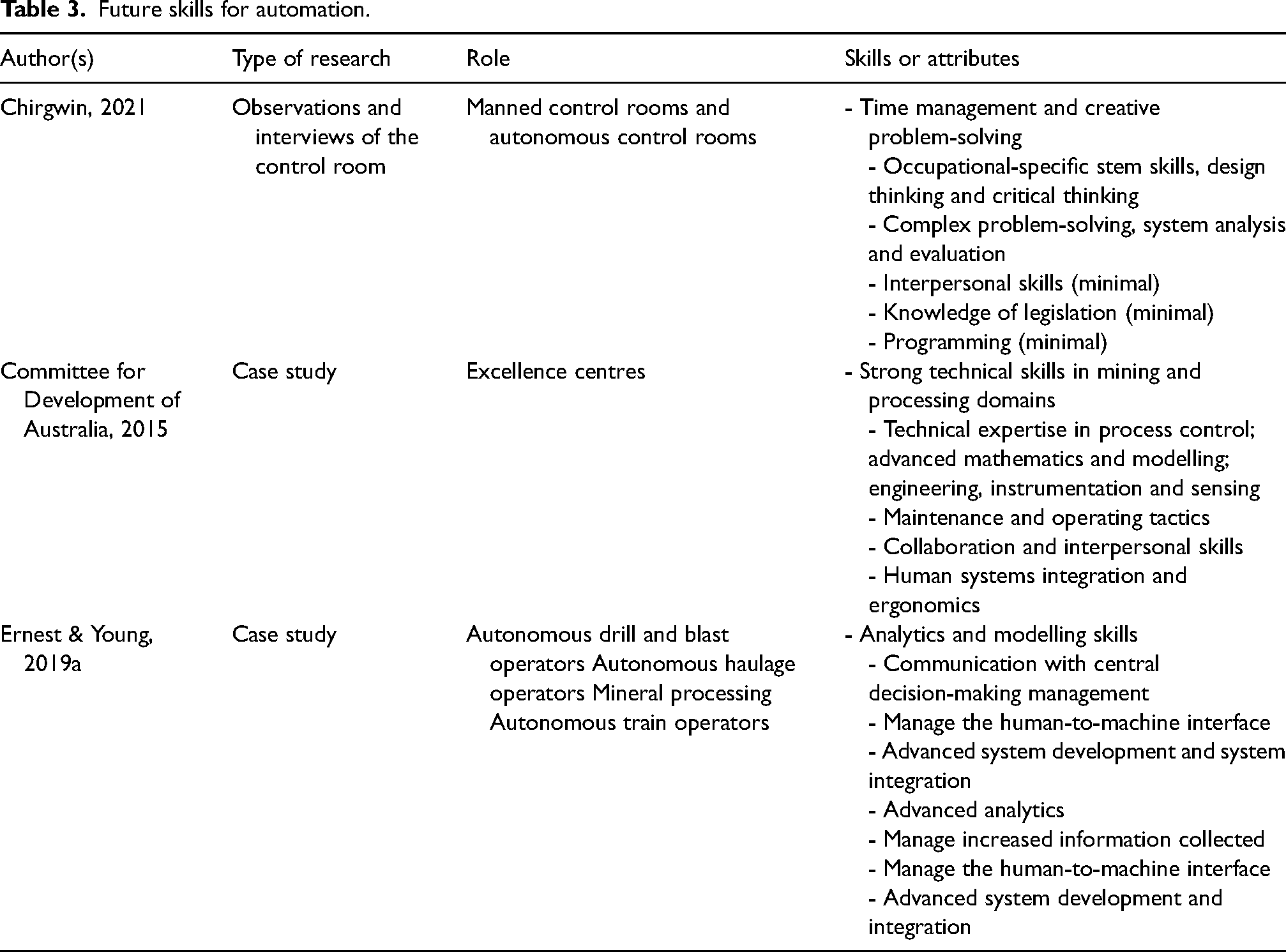
Regarding specific skills depending on occupations, few studies have identified the skills and attributes required for operator control rooms, excellence centres and several occupations in crossing the stages of the mining value chain, Table 3.
Future skills for automation.
Training
Training in the implementation of automation has had different approaches, Table 2. Some Australian mines were primarily delivered by the system's manufacturer, who focused mainly on the technological aspects. Learning from more experienced co-workers, on the job, or lifelong learning was also relevant for dealing with automation (Chirgwin, 2021). Furthermore, a similar situation was seen in processing plants where most operators recognised that system control knowledge was acquired through other, more experienced workers (Li et al., 2011).
In this sense, the question is how future workers will be trained if they do not have practical experience (Cloete and Horberry, 2013) or no longer have direct contact with the rock, which is relevant because operators, based on their expertise, discover manners to guide technology for optimum performance (Sanda et al., 2014). This issue also leads to other challenges for future operators, such as how the information has to be presented in the control rooms and how they will make decisions (Johansson and Johansson, 2014).
Organisational-level impacts of automation in the mining context
Several documents have identified issues at the organisational level due to automation. Safety was the most prevalent topic in 16 articles, as shown in Table 2, discussing the potential benefits and risks associated with automation in terms of safety. Other documents focused on productivity, cost savings, task allocation and organisational culture.
Safety
In addition to human factors, roles and skill issues, organisational problems have also been identified in the literature, Table 2. Deeper deposits and complex environments that incrementally increase safety risks reinforce the emphasis on advancements in automation (Fisher and Schnittger, 2012). First, automation removes humans from hazardous and hostile areas around machinery and unstable ground (Cunningham, 2004; Darling, 2011; Kumar, 2021; Lopes et al., 2018; Marshall et al., 2016; Paraszczak and Planeta, 2004; Ralston et al., 2014). Also, autonomous loaders have reduced operators’ exposure to injury risks, mainly whole-body vibration and musculoskeletal injury risks (Burgess-Limerick et al., 2017).
Case studies of mining automation have proven to benefit the industry. For example, Rio Tinto reported zero sprain and strain injuries in 2014 due to autonomous haulage and drilling operations (Committee for Economic Development of Australia, 2015). A similar situation happened in a coal mine in Russia when the operations control centre was introduced in 2010, reducing the number of accidents by two-thirds (Kazanin et al., 2021). Another case is longwall automation, which has brought several safety benefits, moving humans to operate the longwall from the surface and developing sensors to measure geological changes, proximity sensors or safety lockout, intelligent water spray systems and anti-collision technology between the shield and the shearer (Peng et al., 2019). The Longwall Automation Steering Committee (LASC) has been successfully implemented by over 70 per cent of mines in Australia (Paraszczak and Planeta, 2004).
However, automation adds complexity to mine production systems. Increasing the level of automation, while useful in many cases, does not necessarily reduce the number of human failure-related accidents (Shaikh and Krishnan, 2012). Consequently, automation also creates new risks and failures that require new approaches from technical workers and maintenance crews. In addition, inconsistency between the design and real working conditions could lead to operational unreliability and production risk (Ghodrati et al., 2015). Some accidents related to AHS in surface mines are mentioned by Jang and Topal (2020). One was a collision between AHS trucks and a human-driving water car that caused the integrated remote operation centres to fail to update the AHS trucks’ routes.
Autonomy and artificial intelligence applications present opportunities and risks. According to Gamer et al. (2020), unlike machines, humans are affected by tiredness, stress and distractions; therefore, assistance systems of autonomy can help eliminate those human factors issues. In contrast, most artificial intelligence technologies function as a black box, and it is impossible to analyse their behaviour across all the operational states. Another risk is that these tools must cover sufficient operating conditions for training data. If this is not possible, they cannot handle situations not experienced during training.
Productivity
Productivity, as shown in Table 2 with 11 articles, is another benefit of automation that has been reported from different points of view, including the reduction of autonomous trucks’ idle time (Bellamy and Pravica, 2011), production consistency (Darling, 2011), or through maintenance diagnosis, and reduction of equipment downtime (Ralston et al., 2015) by eliminating breaks and shift changes (Ishimoto and Hamada, 2020). A case study at China Molybdenum Co. Ltd mines reported that the continued operation of autonomous loaders eliminated shift changes and blasting, resulting in a 23 per cent improvement in production (ton/day) (Burgess-Limerick et al., 2017). Additionally, Rio Tinto reported that haul trucks have a 14 per cent higher effective utilisation than human-crewed trucks, and autonomous drilling systems, compared to manned drills, have 15 per cent more availability (Committee for Economic Development of Australia, 2015). The productivity of longwall automation technology has increased by at least 5 per cent, improving the working conditions and safety of coal mine workers (Ralston et al., 2015). Furthermore, automated mineralogical techniques improve fault diagnosis and process monitoring (Jämsä-Jounela, 2001), reduce human error in mineral processing, increase analysis speed and continuous performance and improve characterisation efficiency (Goodall and Scales, 2007).
Nevertheless, there are also some contradictions in the literature regarding productivity benefits due to automation. Dragt et al. (2005) found that load haul dump vehicles teleremotely operating had decreased productivity because the sensory perception of the driver was affected; hence, the running speed was lower, leading to lower production. Furthermore, Gustafson et al. (2015) indicated that in similar conditions, the short-term productivity of manually operated was higher than that of autonomous load haulage systems; however, significant productivity is achieved in the long term. According to Paraszczak et al. (2015), productivity in load haulage systems has increased from 25 to 50 per cent, but without sufficient documentation and support, these indicators should be cited with caution.
Cost saving
The literature, Table 2 in four documents, indicates potential cost savings on labour, fuel and tyre life due to automation. Cost saving is related to the salaries of trucking supervisors, operation room truck dispatch operators, superintendents for the fleet and services such as transportation, accommodation and food for the employers (Bellamy and Pravica, 2011). Chinese coal mining reported that underground operators were reduced from 30–50 to 5–7 persons due to longwall automation technology during 2011–2015 (Wang and Huang, 2017). In the case of fuel, no scientific evidence of overall cost-saving fuel use was found; however, a potential cost saving in automated trucks could be avoiding hold-ups and maintaining an efficient speed for conserving fuel instead of human drivers that tend to drive at a maximum pace (Bellamy and Pravica, 2011; Fisher and Schnittger, 2012). Lastly, some discrepancies in the literature regarding tyre life cost saving have been found. For instance, Bellamy and Pravica (2011) indicated that automated trucks cannot avoid rock spills, which will decrease the tyre life and consequently lead to an extra tyre cost per year, while Gustafson et al. (2013) emphasise that longer-life tyres still need studies because roads also affect tyre deterioration.
Task allocation
Task allocation is discussed in three documents, Table 2. Implementation of automation, in principle, can give rise to changes in tasks that need to be analysed previously to address any issue in the organisation (Lynas and Horberry, 2011a). Some problems with new tasks and the changes at the organisational level are limited in the literature. In this sense, two studies identified some issues in task allocation with the introduction of automation (Chirgwin, 2021; Li et al., 2011).
Organisational culture
As shown in Table 2, four documents dealt with culture in the organisation. The introduction of automation affects the organisational structure, the main changes that affect work processes, information flow, document circulation, and, ultimately, the work culture (Palka and Stecuła, 2019). In this regard, interactions between operators and colleagues, management and designers are affected (Rogers et al., 2019), influencing their decision-making processes, employee engagement and the required skill sets across the workforce (Marszowski and Iwaszenko, 2021).
Organisational work practices could influence workers’ evaluation of technology. According to Swanson et al. (2019), cultural factors could influence workers’ confidence. Attitudes, beliefs and safety culture can also impact the workers’ perceptions and evaluation of technology. In this sense, the authors argue that research is still required to explore cultural factors in the perception of technology.
Regarding cultural and identity issues, new technologies, work tasks and qualifications can challenge old behaviours and attitudes in the organisation. For example, the study by Abrahamsson and Johansson (2008) of over 50 years of the transformation from underground manual work to automation and remote control at an iron ore mine in Kiruna, Sweden, describes how workers tried to retain traditional workplace culture despite the technological changes. Workers moved from underground to the control room in a building and saw themselves as ‘underground miners’, and those who still worked with manual tasks were seen as ‘real miners’.
Community-level impacts of automation in the mining context
Within articles that discussed the community impacts due to automation, the most prevalent topic was Employment with nine documents, Table 2. These articles focused on the effects on regional development. The other documents focused on indigenous and social licence-to-operate issues.
Employment
The social implications of automation in the mining industry are also essential since the mines operate in the surrounding communities that must deal with the impacts of the technology transformation. These issues are beyond the technology development and include employment and work location in the mining communities, Table 2. Currently, an all-encompassing assessment of the social impacts of cutting-edge technologies is not readily available (Lynas and Horberry, 2011a). Besides, Cucuzza (2021) claims that the mining industry has to prove that advanced technology will not eliminate job opportunities; instead, it will create more.
Advanced automation in mining and its effect on employment remains controversial. Semi-automation and full automation reduce the number of operators required (Knights and Yeates, 2019). Meanwhile, Paraszczak et al. (2015) stated that in some cases, each autonomous load haulage system needs an operator and more maintenance technicians; therefore, job reduction is not a real scenario. However, the rise in skilled workers for autonomous mines is unlikely to offset the decline in traditional operating positions (Saydam et al., 2019).
The concern of unemployment would differ for developed and developing countries. In countries with low-skilled workforces, automation is seen as a threat due to increased unemployment, which could be disastrous (Ali and Rehman, 2020). For example, a survey of key stakeholders’ mining sector in Pakistan found that half of the respondents consider automation affecting the country adversely. In India, communities were against introducing technology because they mainly depend on mining activities through direct and indirect employment and perceive that automation will threaten their job security (Kumar, 2021).
In developed countries such as Australia and Canada, mining companies’ productivity incentives result in jobs with higher salaries and overcome the problem of skill shortages. Remote operation centres have been implemented in several capital cities, which facilitate the incorporation of a mining workforce of women, older workers and parents who may not be willing to move to mine towns. Conversely, it could reduce the proportion of workers living in regional areas that are not prone to move to urban centres (McNab et al., 2013). Nevertheless, the impact on the workforce could significantly affect employment in towns or regional areas where mining companies operate. For example, the resident or fly-in/fly-out (FIFO) workforce will diminish services associated with retail, educational and health care for mining families that will no longer be necessary (Keenan et al., 2019). Similarly, a simulation estimates a decrease of 20 per cent in the resident workforce at Newman Town, Australia, where 43.5 per cent of workforce employment is related to the mining industry (Bellamy and Pravica, 2011).
Indigenous community issues
Factors related to indigenous communities, as shown in Table 2, are also relevant in the automation process, especially in Australia and Canada, with high participation of indigenous people in the mining workforce. Some implications are highlighted in the literature. Mine sites are located in remote areas (Keenan et al., 2019) and on the lands of indigenous people, where mining companies provide employment opportunities and enhance local demand and business development.
In this context, local services provided for aboriginal companies in regional areas, such as food services, accommodation, transportation and recreation, will be disrupted due to automation (Sam-Aggrey, 2020). The indigenous workforce is in remote regions, where the mining industry is a relevant source of jobs (Holcombe and Kemp, 2019). Role changes, the evolution of skill-based employment and the loss of manual and semi-skilled jobs will pose risks to indigenous employment. In Australia, more than half of indigenous communities work in manual and semi-skilled roles; thus, transitioning to new roles could be difficult due to educational and skill gaps (McNab et al., 2013). Furthermore, as remote centres are located in larger cities far from mine sites, workers will have to relocate, which might not be an option for them (Sam-Aggrey, 2020).
Social licence to operate
The impact on indigenous communities is also critical for social licence to operate (SLO), Table 2, regarding the relationships and agreements established to strengthen regional development (McNab et al., 2013). In Canada, agreements between the territorial government, aboriginal governments and organisations include employment and business opportunities and cultural and community well-being. These agreements could be affected due to the acceleration in mine automation (Sam-Aggrey, 2020).
Results from natural language processing techniques
Unsupervised clustering
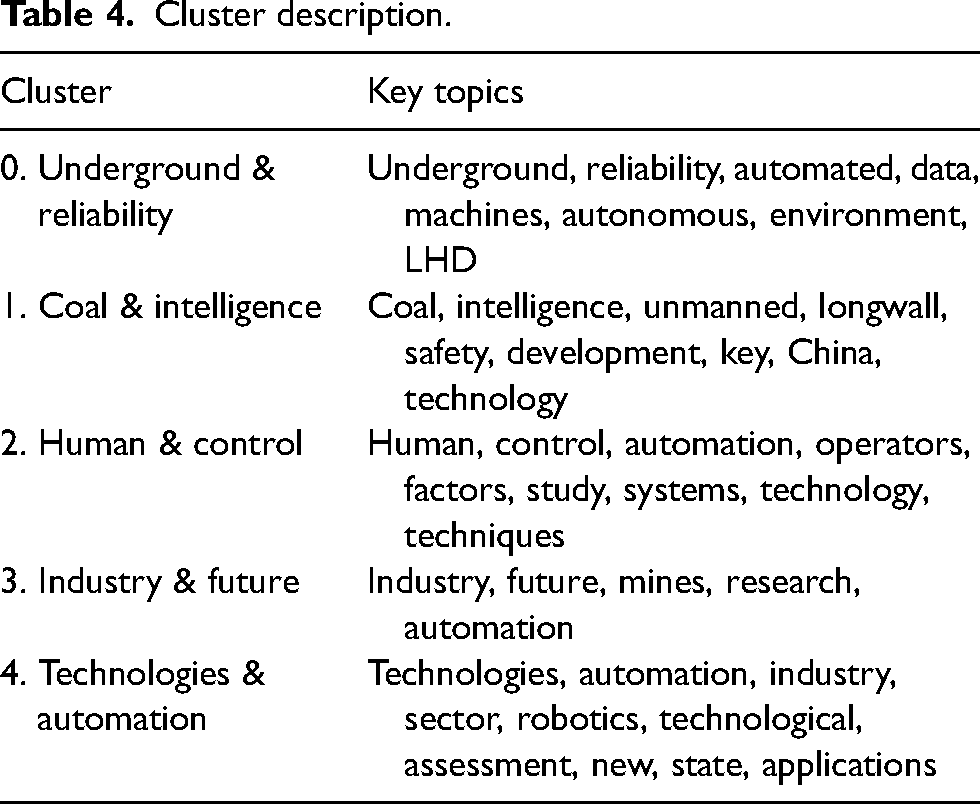
For this study, the Silhouette score provided an empirical foundation to discern the optimal number of clusters. The one yielding the highest average Silhouette score was deemed optimal by assessing a range of cluster numbers. This methodology was favoured for providing an objective measure of cluster cohesion and separation, ensuring that the derived clusters were meaningful and distinct. A description of the clusters is presented in Table 4 and Figure 6.
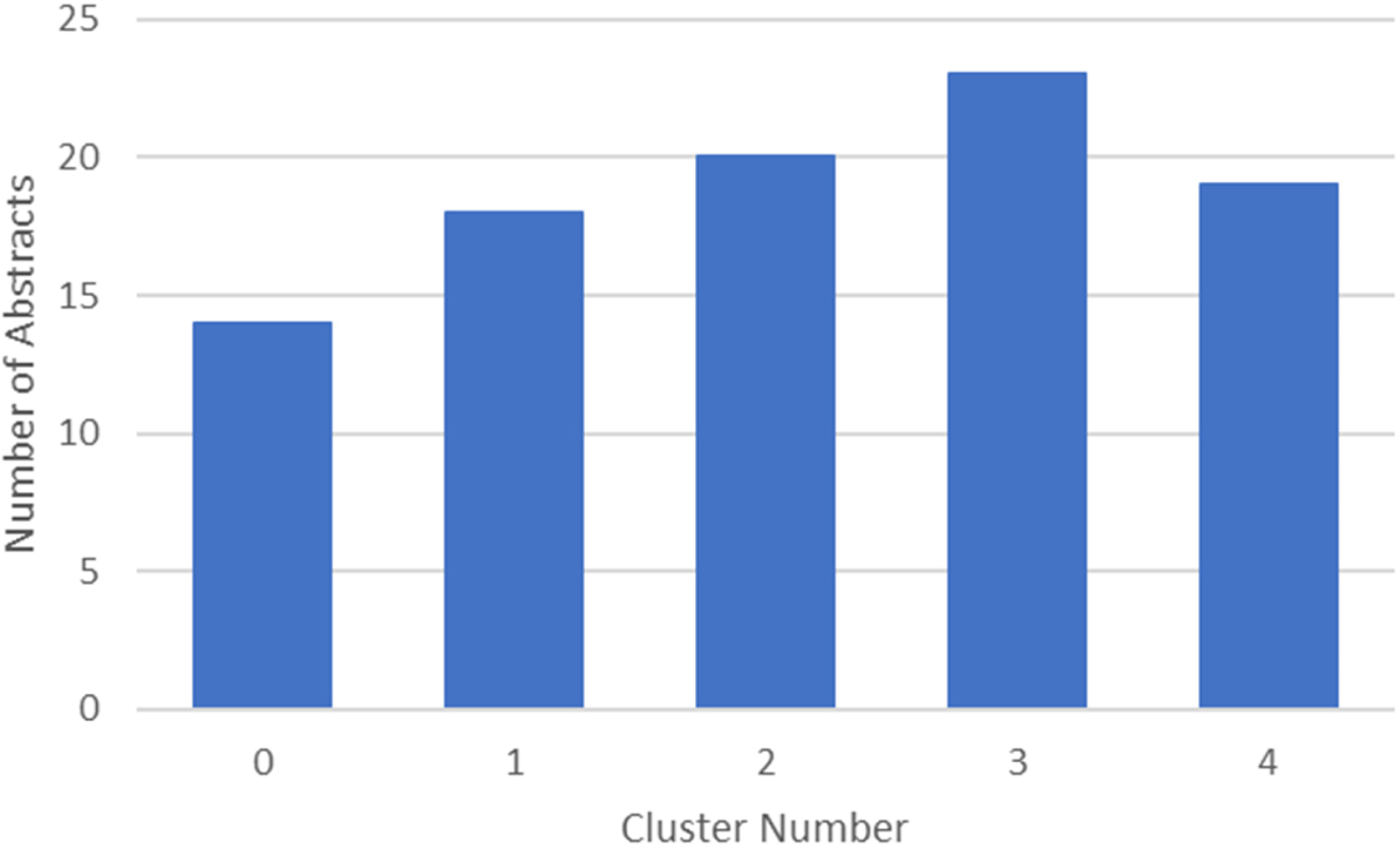
Distribution of abstracts across cluster number.
Cluster description.
Anomaly detection in mining publication abstracts
The Isolation Forest algorithm identified a subset of the abstracts as outliers. These were publications whose content significantly diverged from the main corpus, making them potential candidates for experts’ attention. The most unique articles are presented in Table 5.
Themes and aspects of the most unique articles.
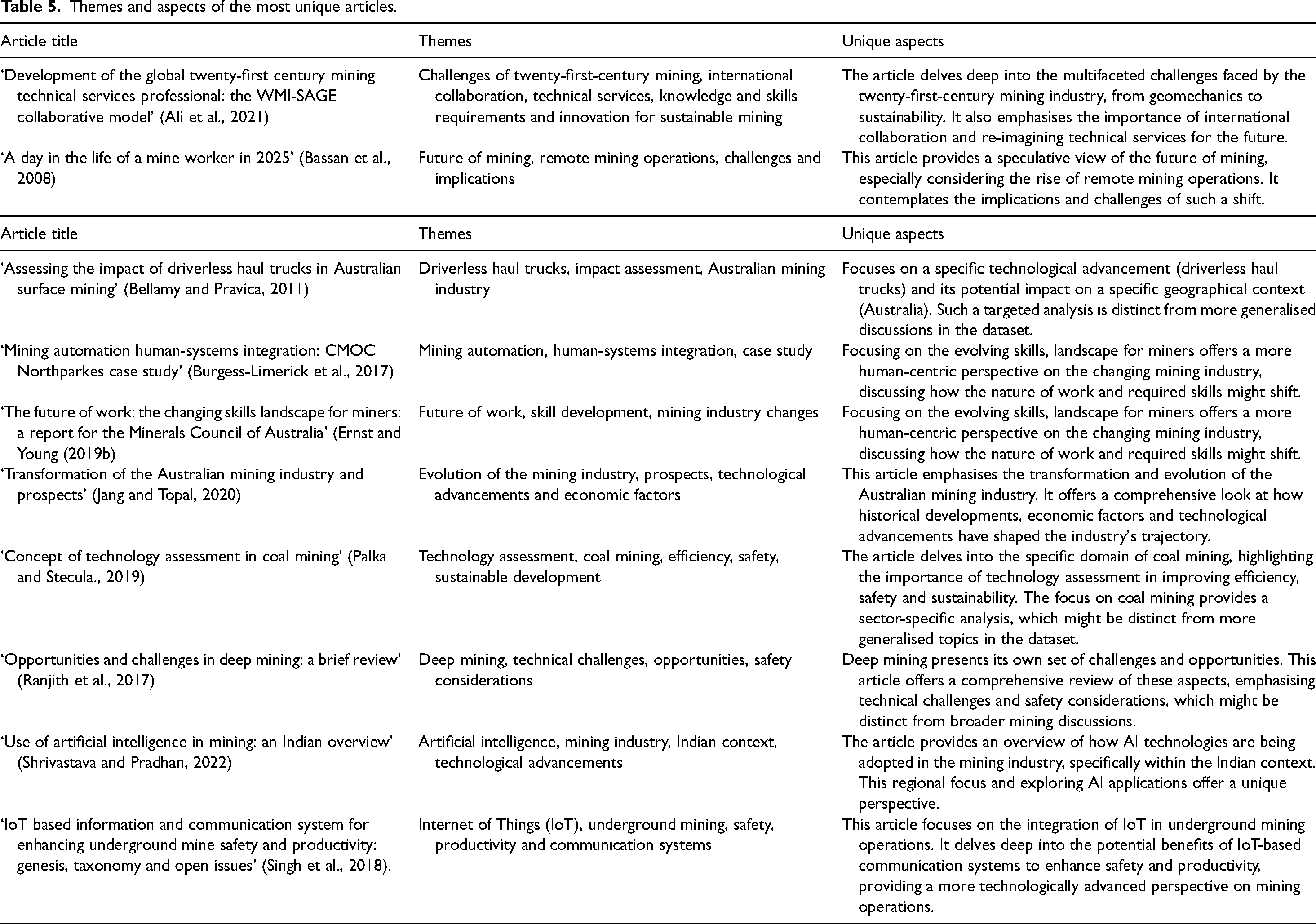
The articles seem to address niche topics or specialised areas within the broader mining context. For instance, the first paper focuses on the challenges of twenty-first-century mining and emphasises international collaboration for knowledge and skill development. The second paper contemplates the future of mining in the Americas, considering the rise of remote mining operations. Some of these abstracts discuss novel technologies or unique challenges not commonly addressed in the main corpus. The language and concepts presented in these abstracts diverge from most of the dataset's more general and common themes. Some of these abstracts discuss novel technologies or unique challenges commonly addressed in the main corpus of papers.
Discussion
The existing evidence in the mining industry was examined through a thematic analysis to obtain a comprehensive approach that aggregates a new framework of all variables that might be considered in the automation analysis beyond the technology's implementation. However, this research has some potential limitations. One of them is that the review was restricted to documents published in English, which may have inadvertently excluded important publications such as those from Chile and China. Further research should explore non-English publications. Environmental issues due to automation have not been addressed in this study, which may limit the findings regarding the impacts on the community. There is another limitation in the scarce field research available; therefore, this study may not have captured all the real-world complexity of the implications of automation in the mining context. Furthermore, the publications may present a biased picture because companies implementing automation may not want to publicly reveal adverse information about the implementation of their automation. The findings could not be generalised because most of the studies are qualitative-oriented, but this research provides a rich, contextualised understanding of automation in the mining industry. Further research should be conducted from a sustainable mining perspective that captures not only community and environmental impacts, but also climate and circular economic effects.
The literature synthesis brought out several relevant insights and allowed for recommendations for further research. In the first research question – what are the main concerns mining must face for a successful automation process? It was found that challenges in advanced technologies and interoperability are among the most significant challenges. Regulations concerning managing big data, IoT, machine learning, etc. (Qi, 2020; Singh et al., 2018) need to be clarified to ensure privacy, security, data quality, authorship and governance (Ali et al., 2021). These issues are still present in the daily operation of mine sites, and it will be necessary to address them to remove humans from the mining face completely.
The emergence of advanced technologies such as robotics, IoT, drones, big data applications and sensors has significant implications for mining companies. As they plan to create smart or intelligent mines, mine sites will need standardised technological infrastructure, ICT platforms and unmanned systems in hazardous locations that support and connect every stage in the value chain. Also, interoperability has relevant implications for the mining industry because it poses a technical barrier in automation implementation and will require collaborative effort between stakeholders and manufacturers to address these challenges.
In the second research question – what research themes have been addressed at the individual, organisational and community levels – the findings indicated that automation implementation has focused on the technology progress without a comprehensive analysis of its impacts, which have been observed on workers, in the organisation and beyond the mine site. These impacts have become more evident due to mining companies’ faster adoption of technologies and automation in recent years. The research highlighted issues related to workload, cognitive load, communication, overreliance, acceptance of automation, trust and mental well-being. Deskilling and upskilling issues were also identified; the question that arises here is how future workers will be trained if they do not have the practical experience relevant to better performance with technologies. Even though there is no quantitative data to generalise the issues found, this review contributes to understanding aspects of automation experience that must be addressed to improve safety and productivity in the current mining context. Future research in human factors, specifically situation awareness and workload, is essential to avoid risks. Furthermore, future work is needed to determine short-term and long-term risks for health, fatigue, stress and teamwork due to automation.
At the organisational level, safety benefits such as removing workers from hazardous environments, reducing accidents and exposure to injury risks and reducing whole-body vibration and musculoskeletal injury risks are the most prevalent in the literature. Productivity in terms of idle time, production consistency, availability and crew reduction has not been deeply studied, and there are opposing points of view. Regarding the impacts on tasks and organisational culture, there is a need for research with a comprehensive approach that includes the design of the system's work organisation.
Fisher and Schnittger (2012) and Lynas and Horberry (2011a) argue that mining experiences the same issues as in aviation, transportation or other common automation industries, such as overreliance, trust, deskilling and poor operator acceptance. About 10 years ago, Li et al. (2011) claimed about the nascent human factor perspective in the mining industry. However, human factor principles in the design and evaluation of automation in mining have not become a common practice, unlike in medicine, aviation or defence, where this discipline has become relevant.
Emerging topics such as human-automation interaction, workload, cognitive workload, trust, training, deskilling, physical and psychological well-being, task structure and workplace culture must be understood as critical areas of research and practice in the mining industry.
Human factors issues at the individual and organisational levels have far-reaching implications for safety, productivity and organisational culture. Findings from studies on automation in aviation, land transportation and process control demonstrate that the rise in automation may lead to unforeseen consequences on both the safety and efficiency of systems unless the human aspect is methodically taken into account. In mining, incidents regarding the interaction between human operators and automated systems, as mentioned (Burgess-Limerick, 2020b), will continue to occur or increase because automation is becoming increasingly complex.
Exploring innovative solutions and best practices from other industries (e.g., medicine and aviation) to address human factors is essential for sustainable development in mining. As these issues evolve, companies must adapt their strategies to consider a systemic view in the automation implementation. Moreover, policymakers and regulators are critical in ensuring responsible human factor principles are applied in the mining industry.
Community impacts as a relevant aspect of automation implementation have received little attention at the industry level. No studies analyse and quantify the socio-economic effects of the digital transformation of mines. Issues such as a reduction of regional employment remain controversial. Furthermore, indigenous communities will also be impacted not only by the reduction of employment, but also by role and skill gaps.
To quantify community impacts, it is necessary to understand the scale of changes in employment, regional economics, training and indigenous communities. Some major mining companies have pledged their support for the Sustainable Development Goals (SDGs), and the mining sector has taken a leading role in integrating the SDGs into their sustainability plans (Holcombe and Kemp, 2019). The implications of addressing community impacts are crucial to help companies meet their SLO commitments. Moreover, recognising community impacts of automation as complex and interconnected challenges requires coordinated efforts across multiple actors, governments, local communities and mining companies.
The third question considered what further insights can be obtained from applying natural language processing techniques to automation literature. KMeans algorithm and the Silhouette method were used to determine the optimal cluster count. This technique facilitated a comprehensive understanding of the primary research themes in the domain. This structured approach will enable researchers and industry professionals to quickly identify areas of interest and emerging trends in mining research. Subsequently, for anomaly detection in documents, the Isolation Forest algorithm allows us to identify papers with abstracts with distinct or less common content compared to most of the dataset. These articles might be fascinating because they address unique or emerging topics.
The use of NLP complements and adds value to thematic analysis. It is important to note that the clusters found are different from the themes of the thematic analysis findings. One reason may be that NLP alone cannot understand the context of articles (Guetterman et al., 2018). NLP here delivered a different point of view of the automation literature; the techniques applied are helpful to generate research areas or to detect emerging fields (Suominen and Toivanen, 2016). Machine learning tools are growing in the performance of systematic review, which indicates increasing recognition of the potential value of these methods to simplify their performance in terms of human resources and time effort (Cierco Jimenez et al., 2022).
Lastly, the diverse issues found in the literature reinforce the idea by Ali et al. (2021) that all challenges must be faced with a socio-technical approach covering the entire mining and mineral chain. There is a growing need for a holistic vision of the mines of the future, in which the developmental approach for the intelligent automation system should not be viewed only from the perspective of designing systems/automation adaptable to humans. Humans should rather be considered as integral resources whose integration can enhance the possibility of designing better systems (intelligent automation) (Sanda et al., 2014). In this context, the mining industry will need to take a strategic, forward-thinking and innovative approach to the future of work. This work should begin with undertaking further field study research to better understand the complexity of the interaction not just between individuals and automation, but also among distributed teams and automation and advanced technologies with focus on tasks, cognitive processes, collaboration, communications, problem-solving, decision-making and their effects on performance and safety.
Conclusion
This systematic review established a holistic approach to the implications of the introduction of automation by reviewing articles and reports in the last 20 years. This research has analysed the literature on the impacts of automation, focusing on individuals, organisations and communities beyond technology implementation. Key themes and essential gaps in these aspects have been identified. The main concerns of automation implementation, interoperability, inadequate wireless networks, real-time positioning and cyber safety emerge as the predominant. Issues related to workload, cognitive load, communication, overreliance, acceptance of automation, trust and mental well-being were also highlighted in the literature. Besides, tasks and organisational culture show limited research. The socio-economic effects of the digital transformation of mines in regional areas and indigenous communities are relevant to the social licence to operate. Finally, the socio-technical approach is necessary to tackle automation challenges in mine site communities. Therefore, further research is recommended to incorporate system approach methods to understand all the relationships and interactions between individuals/teams and automation that contribute to a better human-centred design, performance and safety.
Supplemental Material
sj-doc-1-mtg-10.1177_25726668241270486 - Supplemental material for Exploring the impacts of automation in the mining industry: A systematic review using natural language processing
Supplemental material, sj-doc-1-mtg-10.1177_25726668241270486 for Exploring the impacts of automation in the mining industry: A systematic review using natural language processing by Loreto Codoceo-Contreras, Nikodem Rybak and Maureen Hassall in Mining Technology
Supplemental Material
sj-xlsx-2-mtg-10.1177_25726668241270486 - Supplemental material for Exploring the impacts of automation in the mining industry: A systematic review using natural language processing
Supplemental material, sj-xlsx-2-mtg-10.1177_25726668241270486 for Exploring the impacts of automation in the mining industry: A systematic review using natural language processing by Loreto Codoceo-Contreras, Nikodem Rybak and Maureen Hassall in Mining Technology
Footnotes
Acknowledgements
This research was supported by the National Agency for Research and Development (ANID)/DOCTORADO BECAS CHILE/2020.
Declaration of conflicting interests
The authors declared no potential conflicts of interest with respect to the research, authorship, and/or publication of this article.
Funding
The authors received no financial support for the research, authorship, and/or publication of this article.

Supplemental material
Supplemental material for this article is available online.
Notes
References
Supplementary Material
Please find the following supplemental material available below.
For Open Access articles published under a Creative Commons License, all supplemental material carries the same license as the article it is associated with.
For non-Open Access articles published, all supplemental material carries a non-exclusive license, and permission requests for re-use of supplemental material or any part of supplemental material shall be sent directly to the copyright owner as specified in the copyright notice associated with the article.
