



Abstract
Good mental health is obligatory for a high quality of life. One’s wellness is tested by the daily life-challenging situations relating to family, work and environment. Everyone experiences stress and strain throughout their life. Mental health issues continue to be a sombre issue that affects individuals of all age groups and communities throughout the orb. The fundamental cause of mental health issues is societal and cultural norms and practices that affect the individual as well as their relatives. This article highlights the factors contributing to mental illness and socio-economic, cultural, religious and legal challenges in dealing with mental health. The article also discusses all the significant provisions along with their real spirits with which they have been made under the Mental Healthcare Act, 2017. The Act not only makes the provisions in the light of nationwide scenario but also takes into account the global perspective concerning mental health. Also, this article provides some suggestions that will help deal with the issues of mental illness.
Introduction
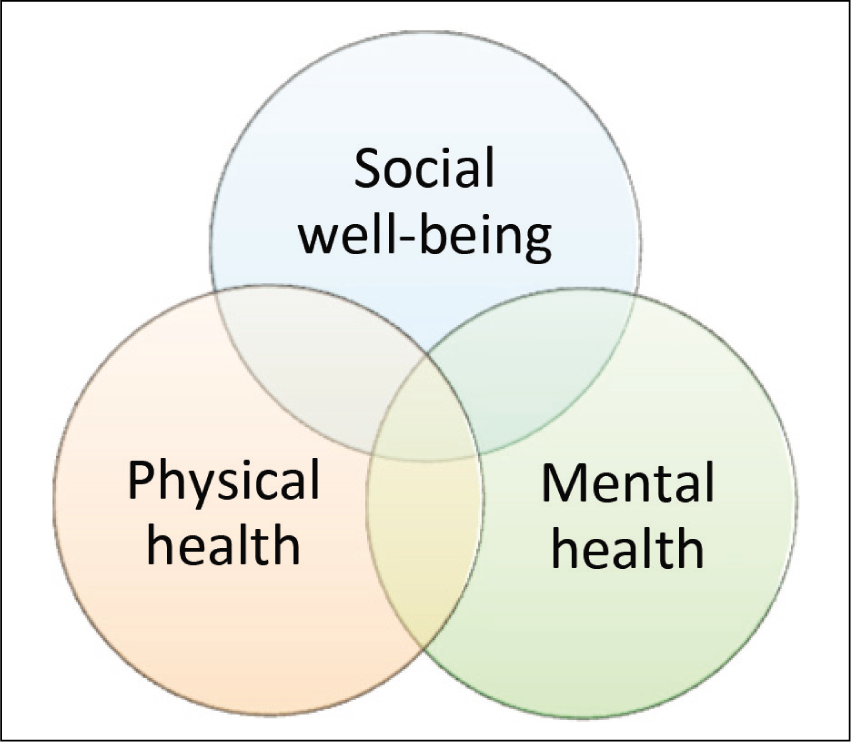
There is an old saying that personality is not mere personal appearance, it is the sum total of all the attributes of mind, body and soul. Likewise, to quote the words of the World Health Organization (WHO) about the word ‘Health’: ‘It is a state of complete physical, mental and social well-being and not merely the absence of disease or infirmity.’ 2 As per the health pyramid, there are three kinds of health covered under the meaning of health as shown in Figure 1.
Health Pyramid.
Mental health is one of the major aspects of healthiness. Violation of human rights of mentally ill people in developing nations is a growing concern. 3 One’s wellness is challenged by everyday life in challenging situations relating to family, job and environment. Everyone experiences anxiety, but occasionally it gets out of control. The term ‘well-being’ refers to a broad range of coping mechanisms and resilience-building techniques. Thus, wellness and mental health are supported by both ‘coping and building resilience’. 4
The first National Mental Health Survey (NMHS) published in 2016 has focused unprecedented public attention on the issue of mental well-being in India. Assessing the prevalence of mental diseases, treatment gaps and impediments to the nation’s mental health care system were the goals of the NMHS. It is a stark and compelling finding that nearly 11% of Indians above 18 years suffer from mental disorders. According to the survey, there exists an overall treatment gap of 83% for any mental health problem and ‘nearly 1 in 40 and 1 in 20 suffer from past and current depression respectively’. 5
The WHO conceptualizes mental health as a ‘state of well-being in which the individual realizes his or her own abilities, can cope with the normal stresses of life, can work productively and fruitfully and is able to make a contribution to his or her community’. 6
In the International Classification of Diseases-10 (ICD10), the WHO declared:
Mental disorders refer to the existence of a clinically recognizable set of symptoms or behaviors associated in most cases with distress and interference with personal functions. Social deviance or conflict alone, without personal dysfunction, should not be included in mental disorder as defined here.
7
Mental illness under the Mental Healthcare Act, 2017, is defined as
a substantial disorder of thinking, mood, perception, orientation or memory that grossly impairs judgment, behaviour, capacity to recognise reality or ability to meet the ordinary demands of life, mental conditions associated with the abuse of alcohol and drugs, but does not include mental retardation which is a condition of arrested or incomplete development of mind of a person, specially characterised by sub-normality of intelligence.
8
Factors Contributing to Mental Illness
No one is to blame when someone has a mental disease, and there is no one specific reason for mental illness. There are numerous reasons that might cause mental illness in a person. 9
The genomic and hereditary makeup of a person might have a probability of mental illness, and brain damage can occasionally cause personality changes as well as the onset of sickness symptoms. A person’s diet and inappropriate use of substances such as alcohol or narcotics, as well as a deficiency in specific vitamins and minerals, can all contribute. 10
In a person who has a genetic propensity for mental illness, anxiety, abuse or a traumatic event may have an effect on or promote an illness. Mental illness itself is caused by the interaction of numerous genes with these other circumstances, as well as with other genes. 11
Sometimes physical conditions including sickness, accidents and other physical problems may lead to poor mental illness. Some physical conditions may directly affect brain chemistry and result in mental illness, such as birth trauma, brain injury or drug misuse. Poor physical fitness, which has an adverse effect on one’s ability to attain objectives and one’s feeling of self-worth, is the most common cause of depression.
Inadequate nutrition might also aggravate mental health issues. Even though it is unusual for nutrition to be the sole cause of a mental disease, it may do so if other factors are also playing a role in the overall condition.
Endocrine glands secrete hormones, which have a significant impact on biological functions. The endocrine system’s glands have an impact on metabolism, mood, sexual function, growth and development and reproduction. Hormonal abnormalities can occasionally have an impact on mental health.
Abuse of substances has been linked to a higher chance of developing mental diseases or triggering their start. Long-term drug or alcohol misuse is a prevalent characteristic of those with mental problems.
Challenges in Dealing with Mental Health
Socio-economic, cultural and religious challenges
Legal challenges
Socio-economic, Cultural and Religious Challenges
Stigma and discrimination against people with mental illnesses may seriously hinder their ability to get appropriate care and treatment as well as other facets of life like job, edification, wedding and housing. Because they are afraid of being diagnosed as having a mental disease and of the anxiety that comes from the fear of being rejected by family, friends and society, many with mental illnesses avoid or oppose seeking advice from or receiving treatment from mental health experts. Numerous researches have also shown how stigma and inequity pose serious challenges to assisting the needy with mental treatment. 12
A huge percentage of both literate and illiterate populations hold the belief that mental illness is caused by a variety of supernatural forces, including the devil, ghosts, past-life karma, witchcraft, magic spells and so forth. 13 Going to religious locations for faith healing is a common spiritual, cultural and ritual in India for those who are ill mentally. The non-existence of formal mental well-being services in the community is one element that may contribute to this attitude, along with traditional sets of faiths, spiritual convictions, cultural influences, lack of education, destitution and ease of accessibility.
Keeping in mind the diverse socio-cultural reality of India, it is important to develop a suitable and detailed tool for the assessment of mental health problems. The level of distress or problem may vary from culture to culture and individual to individual. An individual’s level of tolerance can be affected by environmental factors. 14
Legal Challenges with respect to Mental Health Service
The use of consent has a long history in many fields, including law, moral philosophy and medicine. It has a strong connection to the philosophical ideas of respect for people and respect for personal autonomy. The case law system has played a significant role in the development of the legal doctrine of consent to treatment. According to bioethicists, permission represents respect for people and for their inherent autonomy in daily life. Self-government, freedom and privacy are all concepts that fall under the umbrella of autonomy. In Samira Kohli v. Dr. Prabha Manchanda,
15
a significant Supreme Court of India decision, the topic of consent was covered as:
A doctor has to seek and secure the consent of the patient before commencing a ‘treatment’ (the term ‘treatment’ includes surgery also). The consent so obtained should be real and valid, which means that the patient should have the capacity and competence to consent; his consent should be voluntary; and his consent should be on the basis of adequate information concerning the nature of the treatment procedure, so that he knows what is consenting to.
If therapeutic practice in psychiatry is to be morally and legally acceptable, it is crucial to state with clarity these requirements for giving valid informed consent.
Another important concept with respect to consent is proxy consent. For all biomedical research involving human subjects, informed consent of participants would include obtaining the prospective participant’s approval or assent of a legal guardian in the instance of an individual who is not able to offer informed consent.
16
According to Section 81(2) of the Indian Mental Health Act of 1987:
No mentally ill person under treatment shall be used for purposes of research unless the patient has given his written consent and is a voluntary patient, or if the patient is not competent due to minor status or other reason, the custodian or other individual capable to give assent on the patient’s behalf, has given written assent for such research.
Admission to Mental Hospital
Forced hospitalization and treatment of mentally ill individuals are key issues in mental health care which pose another legal challenge. Patients are frequently admitted voluntarily (and with the patients’ consent), in which case they are referred to as voluntary admissions. However, some people with severe mental illness can be topic to an involuntary commitment by the treating psychiatrist if they pose a serious risk to themselves or others. All hospitals offering mental health care must have a licence or government approval. Without following the correct legal procedure, it is unlawful and punitive in many nations to admit a person to a mental hospital. Admission must follow recognized legal guidelines. Involuntary admission is a legal procedure that permits an individual with serious mental disease symptoms to be admitted against his or her will to a mental hospital. This established law differs from country to country.
Legislative Framework on Mental Health in India
The two English Acts of 1853 served as the foundation for the first mental health laws passed in India in 1858. The Lunacy (Supreme Court) Act, 1858, The Lunacy (District Courts) Act, 1858, and The Lunatic Asylum Act, 1858, introduced three independent pieces of legislation in India that dealt with the guardianship of lunatics and the administration of their assets. 17 The terms and conditions for the admission and care of lunatics were expanded when this statute was revised in 1883. 18
Besides the development of mental healthcare laws, the number of mental hospitals also rose over the second half of the nineteenth century in various regions of India. Naturally, they did not meet the needs of the country. With extremely little hope of recovery and discharge, patients were detained in these asylums for an indeterminate amount of time. Due to overcrowding and its effects on patients’ living conditions, these asylums had become a genuine inferno by the end of the century. The Mental Health Act was approved by Parliament in 1987, but it was not implemented in each Indian state and Union Territory until April 1993. The Act succeeded the Indian Lunacy Act of 1912, 19 which itself had succeeded the Indian Lunatic Asylum Act of 1858.
In lieu of the terminology used in the Indian Lunacy Act in the past, new ones were adopted in the Mental Health Act of 1987. It substituted psychiatric for nursing home asylum, mentally ill individual for lunatic and mentally ill prisoner for criminal lunatic. In order to form central and state authorities, psychiatric hospitals and nursing homes, oversee their operations, provisions for custody of mentally ill people, protect rights, avoid unnecessarily long-term detention of citizens, regulate admission and discharge procedures and cover the maintenance costs of those with mental illnesses, the Mental Health Act of 1987 set out to do all of these things. Because of two significant developments at this time, the Mental Health Act of 1987 modification is seen as being extremely important. The Protection of Human Rights Act of 1993 and the definitions of ‘Human Rights’ and ‘International Covenants’ have undergone some of the most remarkable reforms at the nationalized stage, which have expanded the concept of human rights that the Indian courts may uphold. The necessity for changes to the Mental Health Act, 1987, is made even more urgent on a global scale by the attempt to ratify the Convention on the Rights of Persons with Disabilities in October 2007. The convention ensures civil and political liberties, the freedom to live in a community, participation and integration along with social security, job and access to health care and education. The convention has made the paradigm shift by considering the disabled as subjects with all rights. 20
In India, over 50 million people, or at least 5% of the population, suffer from a mental condition. 21 The Mental Healthcare Bill, 2016, got the consent of the President on 7th April 2017 and came into force on that date. This Act complies with the U.N. Convention on the Rights of Persons with Disabilities, which was marked and sanctioned by India on 1st October 2007. Several provisions are made for mental attention and amenities for mentally sick persons as well as to ensure, advance and uphold their rights.
Significant Elements of Mental Healthcare Act, 2017
The decriminalization of suicide is the most laudable clause in the Mental Healthcare Act, 2017. The Act assumes that the individual who tried suicide was suffering from mental stress and/or sickness, and as a result, they are not subject to the Indian Penal Code’s (IPC) sanctions. The respective governments have obligations to make sure they give the individual who tried suicide the care and protection they need in order to prevent repeat occurrences. 22
The Indian Psychiatric Society (IPS) was called and discussed different aspects of the Act at various times. However, they were not allowed to take part in the creation of the Act. Although the IPS has some legitimate concerns regarding the Mental Healthcare Act, 2017, it has specifically noted that the single most significant reform has been the decriminalization of suicide (based on their recommendation). 23 The IPS believes that better reporting of suicide cases will benefit from a reading down of Section 209 of the IPC (which would be advantageous both legally and socially).
Chapter III of the Act, from Sections 5 to 13, deals with the appointment of the ‘Advance Directive’. An individual who is a major having cerebral capability can provide directive as indicated by mental wellness authority with respect to specifying how they wish to be treated or not treated, and can choose ‘nominated representative’ irrespective of whether they have a history of illness or have undergone treatment for mental health issues.. Nominated representative needs to sign if the name is referenced in the advance directive, along with signatures of two witnesses. If a person with mental illness arrives alone and has not composed or given advance directive, he might be given treatment after assent and might be conceded as in-patient admission. If a person with mental illness needs to be treated only at a corporate clinic and a relative is not a financial position to provide treatment, the relative or caregiver may apply to the board for review of advance directive. Persons experiencing psychosis due to mental illness may see that mischief can be done by known individuals such as relatives or unknown individuals, prompting them to compose advance directive so that they cannot get treatment. In these circumstances, the relative may approach the board for review of advance directive. As the concept of advance directives may not be known to illiterate or unskilled people, they could not use these sections in their arguments. Literature shows that the execution of advance directives has been challenging. 24
According to Section 21(4) of the Act, insurers are required to give medical insurances (for treating patients who are mentally ill) on par with other insurances that are supplied for illnesses. The Insurance Regulatory and Development Authority of India has instructed health insurers across the country to cover mental illnesses in medical insurance plans, which is a very encouraging step.
The decriminalization of homosexuality in India in 2018 has been made possible by the joint efforts of the IPS and the Mental Healthcare Act, 2017. While closely aligning with the Mental Healthcare Act, the IPS has consistently maintained that homosexuality is not a mental disease. The IPS declaration and pertinent Mental Healthcare Act, 2017, provisions paved the way for them to become a portion of the ruling in this historic verdict. The verdict included the non-discrimination provisions from the Mental Healthcare Act, 2017. 25 Additionally, it is recognized that Section 377 violated the Constitution as it in conflict with the Mental Healthcare Act of 2017.
The government is required to develop and carry out programmes that aim to increase mental health awareness and lessen its stigma under Section 29 of the Mental Healthcare Act of 2017. 26 Section 30 suggests ensuring that the government shares crucial data regarding mental health with as many people as possible. The widespread advertising of the Mental Healthcare Act, 2017, provisions is also a part of this dissemination. Additionally, it has become mandatory for appropriate government officials to participate in regular training and sensitization campaigns related to mental health care issues. 27 There is a connection between this provision and Principle 3 of the U.N. Principles as Section 31 strengthens the government’s obligation to make sure that medical and mental health treatment specialists working in public hospitals or prison sects have adequate training that complies with internationally recognized standards. As a result, the Mental Healthcare Act, 2017, now has a stronger international dimension than the Mental Healthcare Act, 1987. A person who has a mental disease and is involved in a court dispute (as a result of exercising his rights under the Act of 2017) will be given necessary lawful assistance to pursue their instance under the Act of 2017. 28
A comprehensive description of mental sickness is provided in Section 2(s) of the Mental Healthcare Act, 2017, on the basis of both societal and medical factors. 29 It broadly refers to any significant disorder that affects a person’s emotions, thinking, perception, memory or orientation and significantly impairs his or her ability to make decisions and act appropriately. In addition to having trouble performing everyday duties, such a person could also have trouble understanding and recognizing reality. The mental problems that result from alcohol and drug misuse are also included in this definition of mental disease. But ‘mental retardation’ is not covered by the definition’s scope. The Mental Healthcare Act of 2017 mandates the establishment of the Central Mental Health Authority. 30 The State Mental Health Authority must be established according to Section 45. These authorities would be in charge of organizing and creating programmes for mental healthcare as well as successfully implementing the Mental Healthcare Act, 2017.
Criticisms to Mental Healthcare Act, 2017
The Mental Healthcare Act, 2017, likely took the IPA’s and mental healthcare experts’ perspectives into account; nonetheless, the IPA was not involved in the drafting process. One of the most contentious and contested elements of the Mental Healthcare Act in 2017 has been this. Section 5 of the Act makes no mention of a set method for providing advance directions. Due to the procedure’s absence from the Act, confusion over how to exercise the right itself arises. The legislative goal to give the option of issuing advanced directives is defeated by such ambiguous wording.
Surprisingly, there is not even a single clause in the Mental Healthcare Act of 2017 that addresses the removal of a nominated delegate. Even when their suggestions are not the ideal ones for the patient, medical personnel do not have the authority to dismiss such a representative. Although it is a challenging obstacle to overcome, this provision appears to have been crafted in a hurry. Particular agreements between the parties may be created to regulate the eventual termination of a nominated representative.
Electroconvulsive therapy is prohibited under Section 94 of the Mental Healthcare Act of 2017, 31 even when used as an emergency measure to save a patient from dying or suffering irreparable harm. This is a traditional, life-saving urgent treatment for people with mental illnesses (especially for those with higher suicidal tendencies). Numerous mental health specialists have sharply condemned this provision of the Mental Healthcare Act since electroconvulsive therapy could be of vital help in managing and controlling individuals during emergencies. The Central and State Mental Health Authority may investigate the situation quickly if mental health experts make a collective request to them.
The Mental Healthcare Act of 2017 has not specified any uniform requirements for practitioners in medicine and mental well-being. In the name of trust and the possibility of recovery, this lowers the threshold for mental health treatment and raises questions about the workforce’s capacity to manage the minds and brains of this country’s residents. Investigating this crucial gap requires immediate action. However, long-term changes regarding standard qualifications should be implemented.
COVID-19 Effects on Mental Health
The coronavirus pandemic has adversely impacted everyone’s mental health in some way, costing countless lives and lakhs of money to families nationwide. The employees were compelled to transition to remote labour, and many of them were even fired from their jobs as a result of the substantial fiscal losses incurred by businesses. Sports and exercise facilities of every type were closed down. Students of schools and universities were compelled to take classes online, missing out on numerous extracurricular activities.
The Act talks about the creation of Central and state mental health agencies, each of which will have the authority to license and oversee mental health facilities within its own jurisdiction. Section 115 of this Act stands out because it declares that anybody who tries suicide must be deemed, until proved otherwise, to be in extreme anxiety and that it shall be the obligation of the government to provide for his cure and therapy. This segment decriminalizes attempts to commit suicide under Section 309 of the IPC. The appropriate government must particularly establish and implement unique initiatives to advance mental health and reduce suicide rates in the nation, according to Section 29(2) of the Act.
Unfortunately, the Central and many state governments have shown ignorance in the execution of this progressive Act. Up to August 2019, just 19 states had established state mental well-being authorities. Only Tripura established a Mental Health Review Board, and the Central Government consistently allows far less money than is necessary for mental well-being services. 32 People with mental illnesses are stigmatized by a sizeable percentage of society. The lack of interest shown by governments in creating state mental well-being authorities and mental well-being assessment boards is hindering people from getting the help they need.
Judicial Attitude Towards Mental Illness
Less than 30% of the approximately 14% of the people in India who suffer from a mental disorder receive the necessary medical care. 33 In many instances, individuals are abused by society and given labels like crazy or lunatics. If a person is experiencing a mental health problem, classmates, colleagues and family provide appropriate support and care. In such situations, the issue might have been resolved at an early stage itself, but the situation is exacerbated due to ignorance.
Even the Hon’ble Supreme Court, maintaining its decision in Navneet Kaur v. State (NCT of Delhi), 34 delivered in a review appeal to convert the death penalty of a death-row inmate to life imprisonment on the basis that he had been afflicted with mental disarray for approximately 12 years and that it would not be just and reasonable for a patient of a mental disarray to be given death penalty. Following the correct guidelines of the Mental Healthcare Act, the Court directed the government provide adequate care to the prisoner.
In the case of Krishabh Kapoor v. Sardar Vallabhbhai National Institute of Technology, 35 the Gujarat high court observed that depressive state of mind and depression both amount to serious illness. It held that:
The depressive cycle which the petitioner suffered was during the period of COVID-19 pandemic itself. It was a period of widespread despondency. It is reasonable to believe that the situation brought about by the pandemic created an adverse effect on the tender mind of the petitioner, who disengaged himself from the studies.
In another case, the high court of Madras 36 took suo moto cognizance of the rise in teen addiction to online gaming. A habeas corpus case involving a missing girl whose addiction to playing the internet game Free Fire was subsequently discovered and was heard in court. The court further stated that these kids frequently missed out on sleep and missed out on what was going on in the outside world because they were so engrossed in their online games. Additionally, the lack of sleep had an impact on their physical and mental well-being.
Justice Prathiba M. Singh of the Delhi high court in Shreyus Sukhija v. GNCTD 37 has requested regular feedback on the operation of the Mental Health Review Board and the State Mental Health Authority in response to a complaint from a 19-year-old man who claimed that there was no complaint handling system in place in Delhi under the Mental Health Care Act, 2017. The 19-year-old asserts in his appeal that he saw a doctor at the Vidya Sagar Institute of Mental Health (Neuro & Allied Sciences) [VIMHANS] after being identified with OCD in 2016. During their consultation, the psychiatrist learned that the patient was ‘exploring his sexual orientation and was afraid of his parents’ reaction to his sexuality’. Then, during one of the meetings where the young man’s mother was present, the psychiatrist allegedly told her specifics about man’s sexual orientation in response to her inquiry. The plea stated that the 2017 Mental Health Care Act’s provisions were allegedly violated by the psychiatrist’s actions, which also violated man’s right to confidentiality and the doctor–patient privilege. Therefore, the Delhi high court took a progressive step and ordered the implementation of the Act effectively.
Mental Health Within the Contours of Criminal Justice System
Due to administrative indifference and legal quagmires, prison has become a propagation site for infringements of human rights and prisoners are a vulnerable group. The convict’s mental health is negatively impacted by overcrowding, violence in the prison, forced solitude, a lack of privacy and inadequate medical care. Administrative entities should deploy resources in the framework of the legal system to fulfil the goals of the 2017 Act, rather than overflowing the jails with inmates with poor mental health.
The Model Prison Manual, 2016, recommends assigning a physiotherapist for every 500 convicts. The reality of the jail mental healthcare system is, however, extremely grim. According to the National Crime Records Bureau’s Prison Statistics, as of 31st December 2019, 18 states and 5 Union Territories lacked vacancies for psychiatrists or psychologists. Without conducting any hiring, positions have been sanctioned in states such as Assam (2), Haryana (2), Punjab (4) and Union Territories like Chandigarh (1). The Act mandates that prison medicinal staff receive training in basic emergency mental healthcare.
In acknowledging the goals of the Act of 2017, and under the auspices of the parens patriae principle, the courts have taken the initiative to lay a foundation for a functioning ecosystem of mental well-being treatment inside jails. Numerous examples have drawn attention to the state government’s need to create a mental well-being facility in the medicinal division of at least one jail in each state and UT, and courts are promoting the transfer of convicts with mental well-being issues to such mental well-being facilities. 38
In the case of Suo Motu v. State of Kerala and Ors., 39 the Kerala high court mentioned that even when an individual having a mental health issue is judged to be suitable for release or acquittal, they frequently must remain in jail or a mental health facility until a member of their family offers to take them home. The mental well-being calamity is a medical emergency that demands immediate state intervention rather than a legal matter, as even after release, individuals are permitted to die in prisons and mental hospitals. The high court had instructed the state government to put ameliorative elements of the Act of 2017 into action as soon as possible because it was concerned that a ‘mentally ill’ detainee may not be accepted by society and might bear in jails for years. However, as long as the executive effectively performs its responsibility through the brightness of the juridical and legislative discursive, which is well-versed and up to date with the most recent advancements in the field of psychiatrists and associated areas, all of the courts’ noble purpose would carve down to mere verbiage.
Conclusion and Suggestions
Undoubtedly, the new Mental Healthcare Act of 2017 is a major leap forward from the Act of 1987. It is an endeavour to ingest dynamic perspectives and rules that are currently embraced by the worldwide network. It should change the basic methodology on mental well-being issues including reasonable patient-centric, rather than criminal-centric, healthcare. It is judicious for the lawmakers to represent the culture of life of the land, more up-to-date scientific advancements in the mental well-being arena, dissect the neglected issues of the patients and families and make arrangements to connect the treatment gap. The new Act is likewise a thoughtful endeavour by the state to elude its responsibility and impose liability on families.
In order to address a variety of mental health concerns, India developed the National Mental Health Programme in 1982. The programme vigorously advocated for the inclusion of mental health services in general medical care. The idea was original, but it has not really been put into practice. The National Institute of Health and Family Welfare has given many justifications for the same. One of them is that mental health professionals lack the incentive to take part in this programme, as well as a shortage of programme expertise and qualified personnel. The following suggestions will be useful in this regard:
The definition of ‘mental illness’ is very wide. It is crucial to guarantee legal protection for two distinct subgroups of serious psychotics, even when defining mentally ill people in a way that excludes the greatest number of people possible. Laws with protective provisions are required for chronic psychotics, who run the risk of being neglected, mistreated or exploited, sometimes even by their relatives, and legal protection is required for acute psychotics who refuse treatment while posing harm to themselves or others. Another equally hazardous feature is that the law delegated the power to step in during conflicts, make decisions on its own concerning the patient’s condition and decide on management. This body is a lay organization called the District Mental Health Board. In this type of decision-making, the board should seek the expert advice of a psychiatrist. Also necessary, at least occasionally, is the use of forced admittance without a patient’s agreement. Taking into account the many sincere worries expressed by a patient’s family and using his or her best judgement are both expected of a psychiatrist when doing this task. The Act also decriminalizes suicide and forbids electroshock therapy on children. If previous year reports are taken into consideration, students in schools and colleges commit suicide because of academic or peer pressure. Mental health care facilities should exercise caution when treating patients, and children or their legal guardians should be given advance directives. This obstacle must be overcome. Electroconvulsive therapy ought to be outright prohibited. There are solutions, Ayurveda and other traditional Indian ways of treatment are safer than electroconvulsive therapy and other contemporary approaches. There are mental health tribunals in nations such as Australia and England. Mental health courts should be formed in India as well to settle disagreements over how to treat people with mental illnesses. We anticipate that the law will be correctly applied in the near future to fulfil the requirements of the Mental Healthcare Act of 2017. It is widely accepted that a barely effective method to address mental well-being issues is to integrate them into basic well-being care plans, which calls for skilled monitoring and counselling at the foundation phase for early finding. The goal of basic well-being care is to provide necessary medical services near to homes of the people, to one and all in society. It speaks about care that is provided in accordance with the population’s needs. Enhancing the structural and operational elements of mental hospitals in India is likely to be the way of the future. These might include boosting hospital funding allocations and making an effort to alter the bureaucratic mindset regarding mental hospitals more generally. One of the actions to be done to improve the running of mental hospitals by decreasing bureaucratic and procedural delays is to give them more administrative autonomy. Additionally, measures for need-based decision-making are required in order to reduce administrative delays. General hospitals also need to include psychiatry departments.
40
The analysis of a survey found that mental well-being services are not readily available. The addition of services into general health services is required. Many people who visit regular hospitals with physical concerns actually have underlying psychiatric illnesses. According to MCI guidelines and the Mental Health Act, there is a significant difference between the required number of competent psychiatrists and the authorized positions in government organizations. Most of the time, authorized positions are also unfilled. In private institutions, full-time faculty is present only when MCI inspections are taking place. The professors should receive enough pay and benefits and have comfortable working conditions. Promotions ought to have a deadline. These will prevent doctors from travelling to other countries. Since many people with mental illnesses take medications that have unfavourable side effects, and because some substances can develop mental illness after years of chronic consumption, mental illness is widespread among people who abuse drugs and are addicted to them. The patient should be engaged in a treatment programme that simultaneously addresses both issues when they have a dual diagnosis of a mental health disease and a substance misuse problem.
Footnotes
Declaration of Conflicting Interests
The authors declared no potential conflicts of interest with respect to the research, authorship and/or publication of this article.
Funding
The authors received no financial support for the research, authorship and/or publication of this article.