




Abstract
This paper aims to systematically address the differing experiences of men and women across the process of victimization and to situate the findings in terms of gendered differences in coping behaviours. The significance of gender and related emotional responses across four stages of victimization—risk, reporting to the police, service use and satisfaction—are explored via a series of logistic multi-level models of Scottish Crime and Justice Survey (n = 16,000) data, each one examining the impact of gender and emotional responses at subsequent stages in the process of victimization. Variables representing negative emotional responses to crime felt by respondents were included as proxy measures indicating poor or unsuccessful coping. These consisted of eight binary variables measuring anger, shock, fear, depression, anxiety, vulnerability, having difficulty sleeping and crying/being tearful. Findings demonstrate that men have significantly greater odds of personal crime victimization (excluding domestic and sexual violence) yet have lower odds of reporting their victimization to the police. They are also less inclined to take up victim support services than women and find services less helpful when they are in fact used. Also evident is the comparative importance of the emotional impact of crime and coping strategies on further involvement with the criminal justice system.
Introduction
When discussing gender from a victimological perspective, a small number of issues tend to dominate the discourse; particularly popular topics include women as victims of male violence, but also gaining traction is the topic of men as victims. Historically, the clash between the image of the hegemonic ‘invulnerable man’ 1 and the concept of the ‘ideal victim’ 2 has led to the frequent failure to ascribe male victims of crime legitimate or real victim status leaving them largely invisible as victims 3 and has been described as the ‘failure of victimology’ by Newburn and Stanko. 4 On the other hand, women are more readily associated with victims, perhaps as they are, not without controversy, more easily perceived to be innocent, undeserving, weak and in need of protection. Even the word victim itself is feminine, as in, for example, the French ‘la victim’. 5
Although gender differences in, for example, victimization and reporting rates are routinely reported in large-scale survey research (see for example the Crime Survey England and Wales, Scottish Crime and Justice Survey (SCJS), National Crime and Victimization Survey), little has been done to establish a more coherent picture of how gender affects the entire process of victimization. That is, although we may now know that men are more likely to be victims of violent crime (excluding sexual and/or domestic violence), or that some research suggests the users of social and mental health services, and self-help groups are also most often women 6 an incident of crime does not occur in a vacuum. Rather, it occurs as a single step or incident in an ongoing process which includes not only the incident itself but the events and factors leading up to it, as well as those that follow. Thus, it is necessary to model this process in its entirety, including factors which affect the original risk of victimization, reporting an incident and seeking out help and support. Additionally, within criminology, little research addresses gender differences in coping with crime or directly links patterns of psychological consequences of crime to coping and stress. 7 Deleterious psychological and emotional consequences may impact the coping strategies and stress levels experienced by victims and thereby will have important repercussions for support provision; a better understanding of these relationships could lead to more successful prevention and engagement with service providers.
In light of the relevant literature regarding gender differences in stress and coping styles, this paper seeks to address these issues by examining the impact of gender at four stages of the process of victimization: the risk of victimization, the likelihood of reporting, using support services and satisfaction with services received. Four binary logistic multi-level models will be introduced, each one examining the impact of gender at subsequent stages in the process of victimization. A discussion of the findings taking into account the literature will conclude.
Literature
The concept of victimhood and its associated characteristics are easily understandable as both socially and personally undesirable. 8 Personally ‘victim’ is associated with vulnerability, weakness and loss, while socially victims may be derogated, shunned or even blamed for their ordeal. 9 Additionally, as Western society is still largely patriarchal, it is this group that provides the model for so-called normal behaviour. 10 It follows that behaviours traditionally considered to be masculine in nature are accepted and encouraged, whilst more feminine behaviours which differ from the masculine norm are devalued and discouraged 11 thus the failure to explore men’s particular experiences of violence is often attributed to men’s reluctance to report weakness or to disclose vulnerability. 12 As the prototypical characteristics of victims are largely feminine in nature (meek, vulnerable and passive), motivation to avoid victimhood is arguably doubly strong for men. 13 This pattern of devaluing feminine characteristics can also be seen in the tendency to consider more feminine, emotional ways of coping as less effective than their masculine counterparts.
The psychological concept of coping provides a framework from which to explore individual reactions to crime. This context is important for understanding gendered reactions to crime and providing support for men and women experiencing victimization. 14 In particular, the Cognitive Theory of Stress and Coping, 15 an appraisal-based model, posits coping processes are initiated in response to the assessed demands of a stressful situation. Appraising a situation as a threat may trigger certain coping strategies and distress experiences. 16 Lazarus and Folkman 17 further suggest that the ‘relationship between emotion and coping is reciprocal, a cognitive appraisal is made by the individual about the crime, and this appraisal generates an emotion, this emotion then affects the coping mechanism, which regulates the emotional outcome’. 18
The existing literature on gender differences in the experience of psychological distress and depression provides two main hypotheses as to the origin of the difference. The first, often referred to as the differential exposure hypothesis, 19 posits that women suffer more depression and psychological distress 20 than men because their social roles expose them to higher levels of negative and chronic stressors such as social conflict and negative life events. This hypothesis has been supported by Matud, 21 who found that women scored significantly higher than men in chronic stress and minor daily stressors but also rated their life events as more negative and less controllable than men.
The second of these hypotheses, the differential vulnerability hypothesis, alternatively suggests it is a difference in reactions to stressors (particularly that women are more vulnerable to the negative effects of stress/resources) rather than more frequent exposure to stressors themselves, that is responsible for higher rates of disorders such as PTSD amongst women. 22
But why would women react differently to stress than men? The explanation may lie in the approaches to coping employed most often by men and women. Instrumental styles of problem-focused coping are used more in situations where something can be done and seek to directly change the stressor or stimulus itself by, for example, removing, controlling or diverting it. 23 This coping style is most often associated with men who more often externalize problems (which may result in substance abuse and aggressiveness) and are characterized as being stoic and strong. Stanko and Hobdell 24 suggest male victims view their victimization through a ‘male frame’, which sees victimization as ‘weak and helpless’ and thereby creates difficulties for men in expressing feelings, leaving them isolated and unable to ask for support (p. 402).
Emotion-focused coping on the other hand, rather than seeking to change or address the stressor itself (which may not always be possible), is used to regulate distress in situations that have to be accepted, through changing one’s perceptions about the stressor. 25 This type of coping is said to be most often employed by women, who are more likely to internalize problems and to engage in behaviours such as rumination, which may help to account for greater depression, anxiety and other forms of psychological distress with several studies demonstrating a correlation between emotion-focused coping and depression. 26 Some researchers, in particular Folkman and Lazarus, 27 have further suggested that emotion-focused coping is less effective and more likely to be associated with psychological distress than is problem-focused coping. However, it is easy to see how certain instances of crime, for example minor theft or damage to property, may be more suited to coping in a problem-oriented manner by taking actions such as improving security, getting a dog or moving to a better neighbourhood. For other cases, such as sexual assault, it is much more difficult to imagine successful coping that does not encompass addressing the emotional impact of the crime. In fact, some research 28 has found positive relationships between emotion-focused coping and well-being, where victims utilizing this approach reported higher levels of well-being than those who used a problem-oriented coping style. Green et al. argue that ‘the emotional consequences resulting from crime and the choice of coping strategy chosen to deal with said crime depend on how well the chosen strategies match the situational demands’ and that the strategy employed will become increasingly important as the situation increases in the severity of stress. 29
If women do in fact find incidents of crime to be more stressful than men and thus experience greater distress as a result of employing emotion-focused coping, this pattern could help to explain why women more frequently report crimes and make use of support services. This extension of the hypothesis is supported by the research. For example, Maguire and Bennett, in a study of burglary victims, noted men were more likely to express anger than distress or shock in contrast to women’s more severe emotional reactions. 30 Golding et al. 31 found the use of support services to be mediated by distress; that is, those who experience more distress were more likely to utilize available services. Additionally, Kaukinen, 32 in a study on help-seeking decisions among victims in Canada, found that females were twice as likely as males to go to the police rather than not seeking help. Truman and Rand 33 also revealed female victims of violent crime to be more likely than their male counterparts to report crime to the police, though neither study went so far as to link their findings with the coping technique employed. This paper, thus, seeks to systematically address the differing experiences of men and women across the process of victimization and also to situate the findings in terms of gendered differences in coping behaviours.
Design and Analysis
The evidence on which this paper is based was part of a larger project investigating the process of victimization (see Fohring 34 ). The study utilized data from the SCJS 35 in a series of multi-level statistical models designed to understand four successive stages of victimization: the victimization itself, reporting crime, using victim services and evaluating services received. This is necessary in order to fully understand the experiences of victims; where crime is conceived as a series of sequential steps that form a process, both preceding and following a victimizing incident.
Like many large-scale surveys, the principal focus of the SCJS is to monitor the extent of victimization in the previous year by eliciting information from respondents about their experiences of personal and household victimization. 36 The survey is hierarchical in nature (incidents nested within individuals nested within geographical regions) and uses a nationally representative stratified random sample. The SCJS allows each victim to report up to five incidents of crime against them, resulting in a total of 1,177 incidents of personal crimes. The 2008/2009 sweep is used in this analysis as it provides the largest sample (n = 16,000).
The hierarchical structure of the survey, together with the binary nature of the dependent variables (e.g., 0 = non-victim and 1 = victim) required the use of binary logistic multi-level models. 37 Modelling was carried out in MLWiN and used Markov Chain Monte Carlo estimation. Model fit was assessed via the Diagnostic Information Criterion (DIC), lower values of which estimate the model that will make the best predictions. 38
Models were constructed using a four-stage process, where the null model, including only the IV gender, was tested and the DIC recorded. As no direct indicator of coping method is available in the SCJS data, variables representing negative emotional responses to crime felt by respondents were included as proxy and taken to indicate poor or unsuccessful coping. These consisted of eight binary variables (yes the emotion was felt/no) measuring anger, shock, fear, depression, anxiety, vulnerability, having difficulty sleeping and crying/being tearful. These responses are commonplace among trauma survivors and are typical of diagnoses including post-traumatic stress disorder. 39
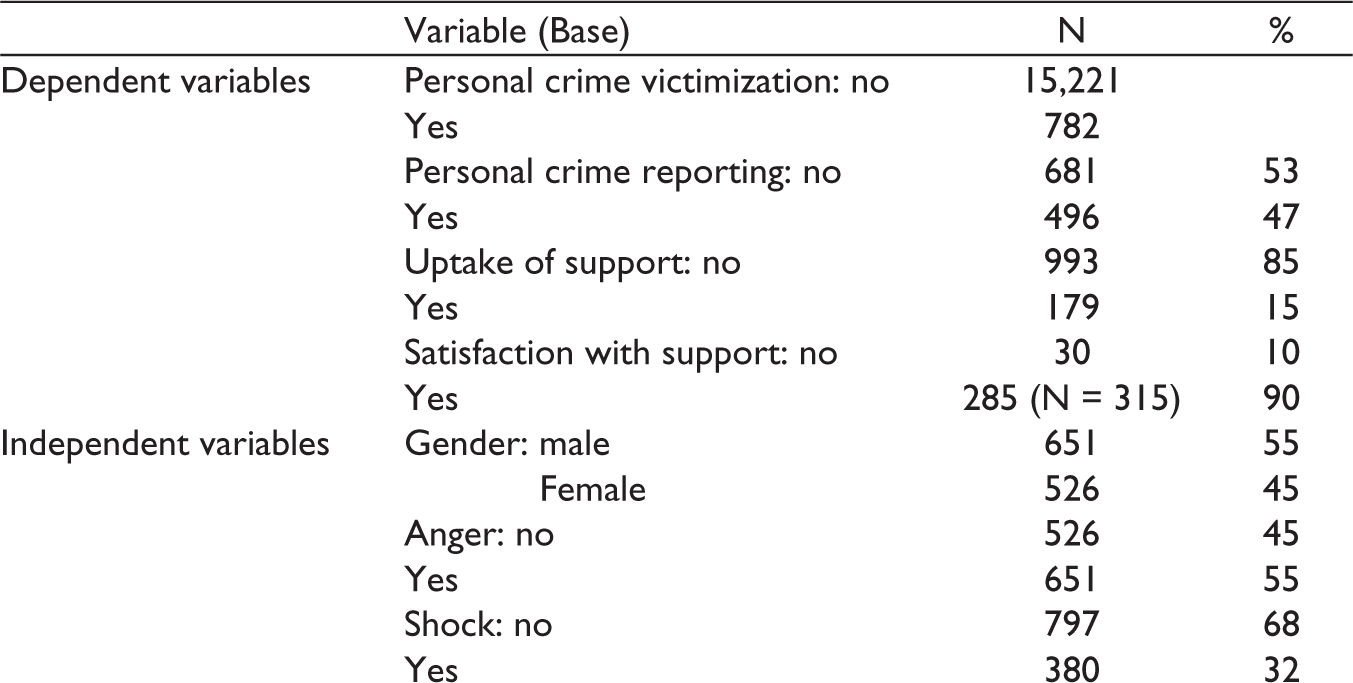
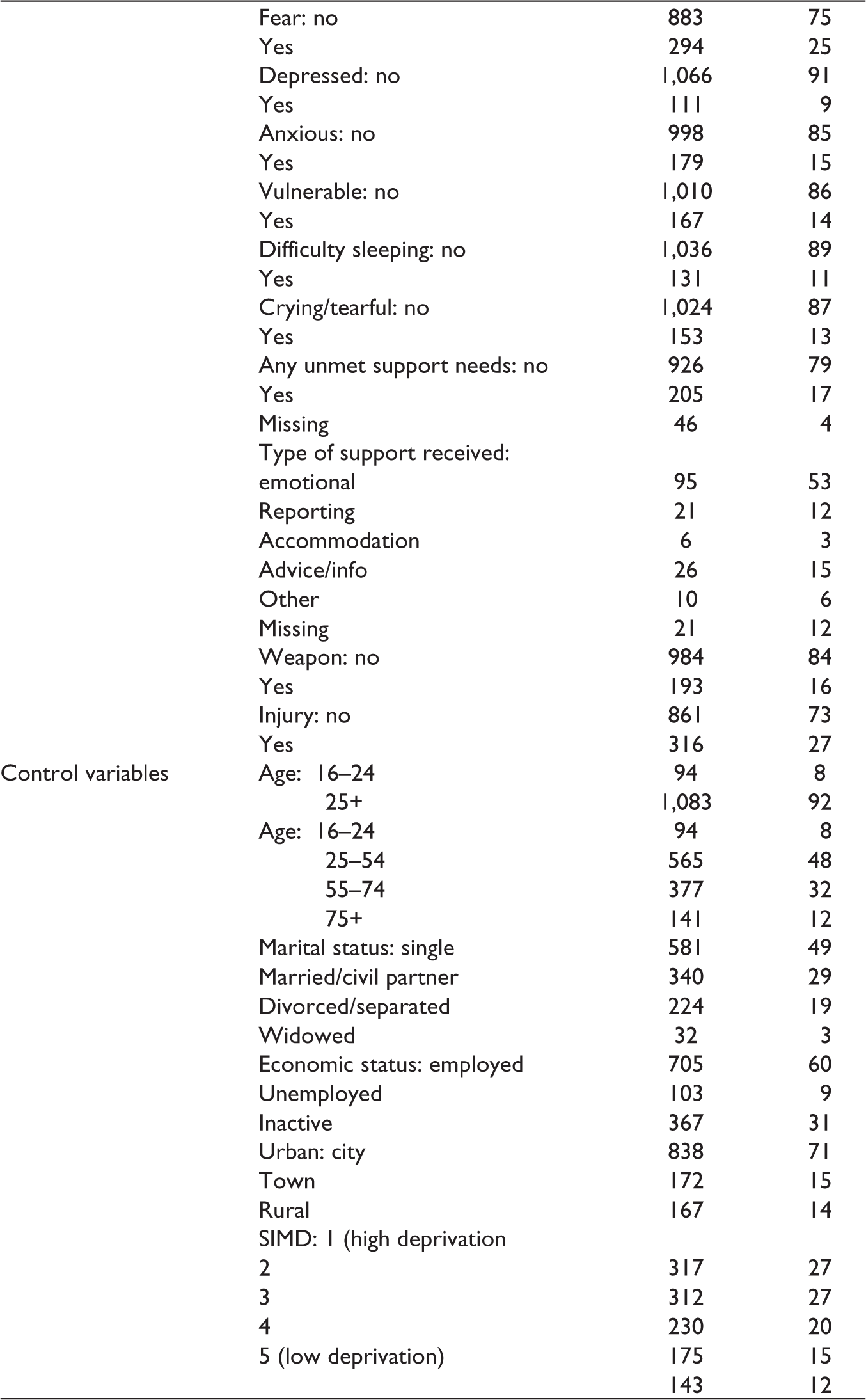
Following this, a model was created including gender as well as a number of control variables, and again DIC was recorded. Finally, interactions were tested between gender and the control variables. DIC values for each model are compared and the best model is decided upon. Control variables were based on the literature, as well as bivariate analysis reported elsewhere (Fohring, note 34). Controls included age, either in four categories (16–24, 25–54, 55–74, <75+) or two (16–24, 25+), an urban/rural indicator divided into three categories including urban city, town and rural. Marital status was broken down into four categories representing married couples, single people, those divorced and/or separated and widows/ers. Economic status was controlled for by including another categorical variable including employed, unemployed and inactive categories. Finally, a measure of deprivation, the Scottish index of multiple deprivation (SIMD), was included. The SIMD combines data on income, employment, education, health, access to services, crime and housing into a single indicator. Here it is broken down into five categories where 1 = the highest level of deprivation and 5 the lowest. Models of reporting, service use and satisfaction included the additional controls of injury, and the presence of a weapon as proxy measures for the seriousness of the incident as again the SCJS does not ask respondents directly about their perception of this. A table of descriptive statistics for all variables is included in Appendix 1.
Results
This section will present the results from four binary logistic multi-level models: personal crime victimization, the reporting of personal crimes to the police, victim support service uptake and satisfaction with services received. Throughout the analysis, the key independent variable is the binary indicator of gender, where men are used as the reference category. Secondly, eight further binary variables measuring emotional impact (anger, fear, shock, depression, anxiety, vulnerability, crying/tearfulness and difficulty sleeping) are included in the analysis of reporting, service uptake and satisfaction.
Step 1: Personal Crime Victimization
In this investigation of victimization, the logical starting point was the first step in the process, an examination of moving from non-victim to victim. In this model, the dependent variable was a binary indicator (0 = no, 1 = yes) indicating whether or not the respondent had been a victim of personal crime as defined by the SCJS. Only 782, or 4.1%, of the total 16,003 SCJS respondents reported having experienced an incident of personal crime. Personal crimes or crimes against the person included both serious and minor assault, sexual offences, robbery/theft from the person and threats made against the person; domestic or intimate partner violence in not included here. As victimization is measured at the individual level, no incident-level data were available for this model, resulting in a single-level model.
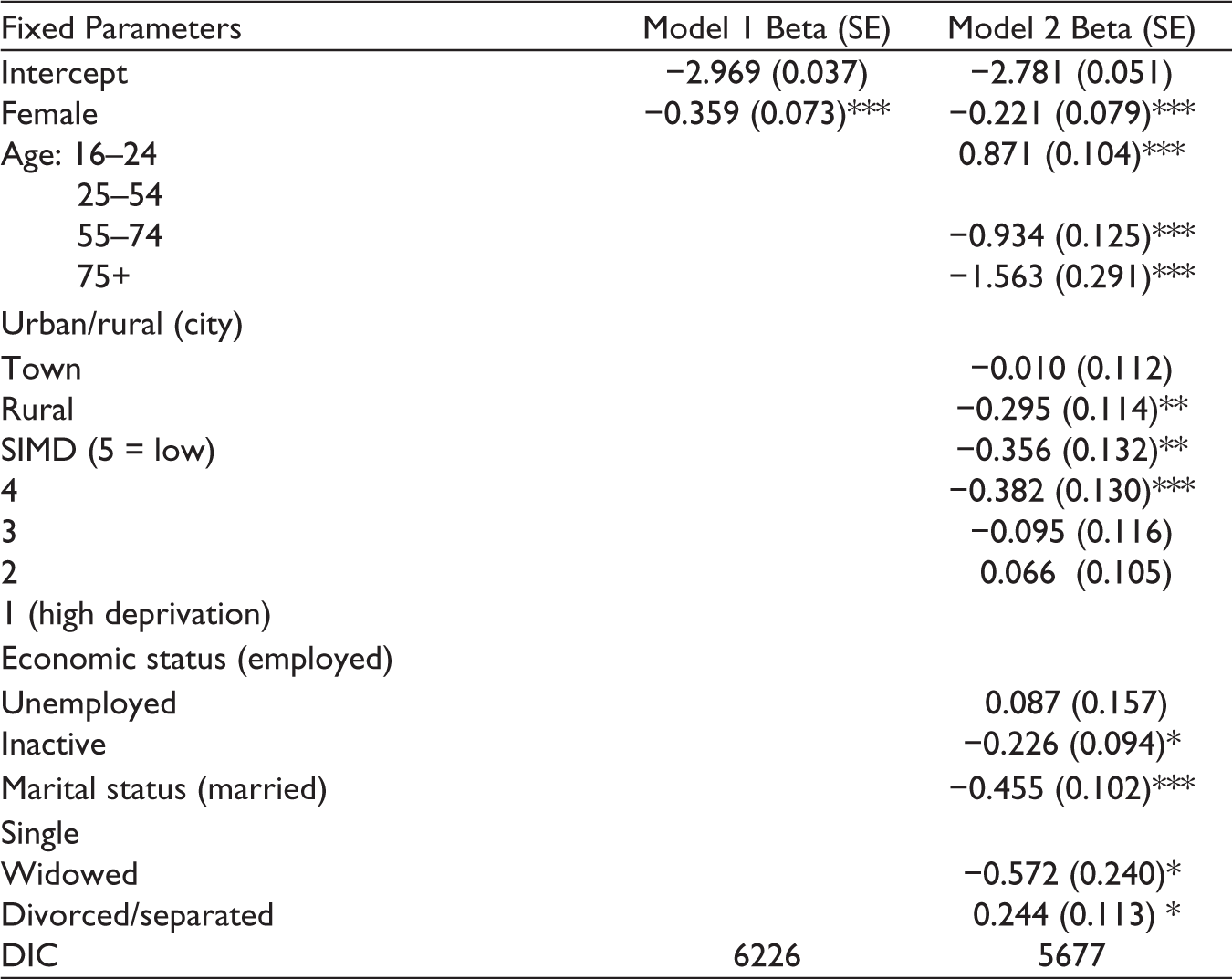
Model 1 in Table 1 shows the results of the null model containing only the intercept and the independent variable gender. The coefficient for being female −0.359 (0.07) is significant at α < 0.000. The negative value of the coefficient indicates that women have significantly less risk of violent victimization than men. Model 2 shows the results once all control variables have been added to the analysis. The effect of being female continues to have a highly significant negative impact on the risk of personal crime victimization (ρ = 0.008), with women having odds of victimization only 0.68 those of men.
Personal Crime Victimization.
*P < 0.05, ** P < 0.01 and ***P < 0.001.
A number of control variables were also found to have a significant impact on risk. Age was found to have an inverse effect, with those younger than the reference category (25–54; the most numerous age group) found to be at greater risk of victimization while those in the two higher age groups of 55–74 and 75+ had a significantly lower risk than the reference category (all significant at α < 0.000). If the respondent resides in a rural locale versus a city, they were also found to have significantly (ρ = 0.025) lower risk of victimization. The effect of town versus city was non-significant. When looking at deprivation as an indicator of risk, it is found that those are the SIMD categories 4 and 5, representing the least deprived, had a significantly lower risk (ρ = 0.01 and ρ = 0.005 respectively) than those in the most deprived category. Being inactive as opposed to both being in employment or unemployed was found to have a small significant negative effect on risk (ρ = 0.14). Being married also acts as a highly significant (ρ < 0.000) protective factor as opposed to being single, with married respondents having only 0.79 odds of victimization of those who are single. Peculiarly, being widowed also had a significant benefit over being single while being divorced or separated slightly increased risk.
DIC for the model including only the intercept and gender is calculated as 6,226, while for the model including gender as well as the control variables DIC equals 5,677, representing an improvement of 549 where typically any change greater than five is considered enough to warrant the dismissal of a previous model. 40 In summary, men who may also be young, single, deprived and urban dwelling are at the greatest risk of personal victimization in Scotland.
Step 2: Reporting Personal Crime
When looking at the effect gender has on reporting crime to the police, it is possible to include characteristics of a particular incident in the analysis, thus resulting in a two-level model. This results in a total of 1,177 incidents of personal crimes, including 619 assaults, 14 sexual offences, 122 incidents of both robbery/theft from the person, and 422 threats; 47% (496) of these incidents were reported to the police. The dependent variable remains a binary indicator though in this case 0 = not reported and 1 = reported.
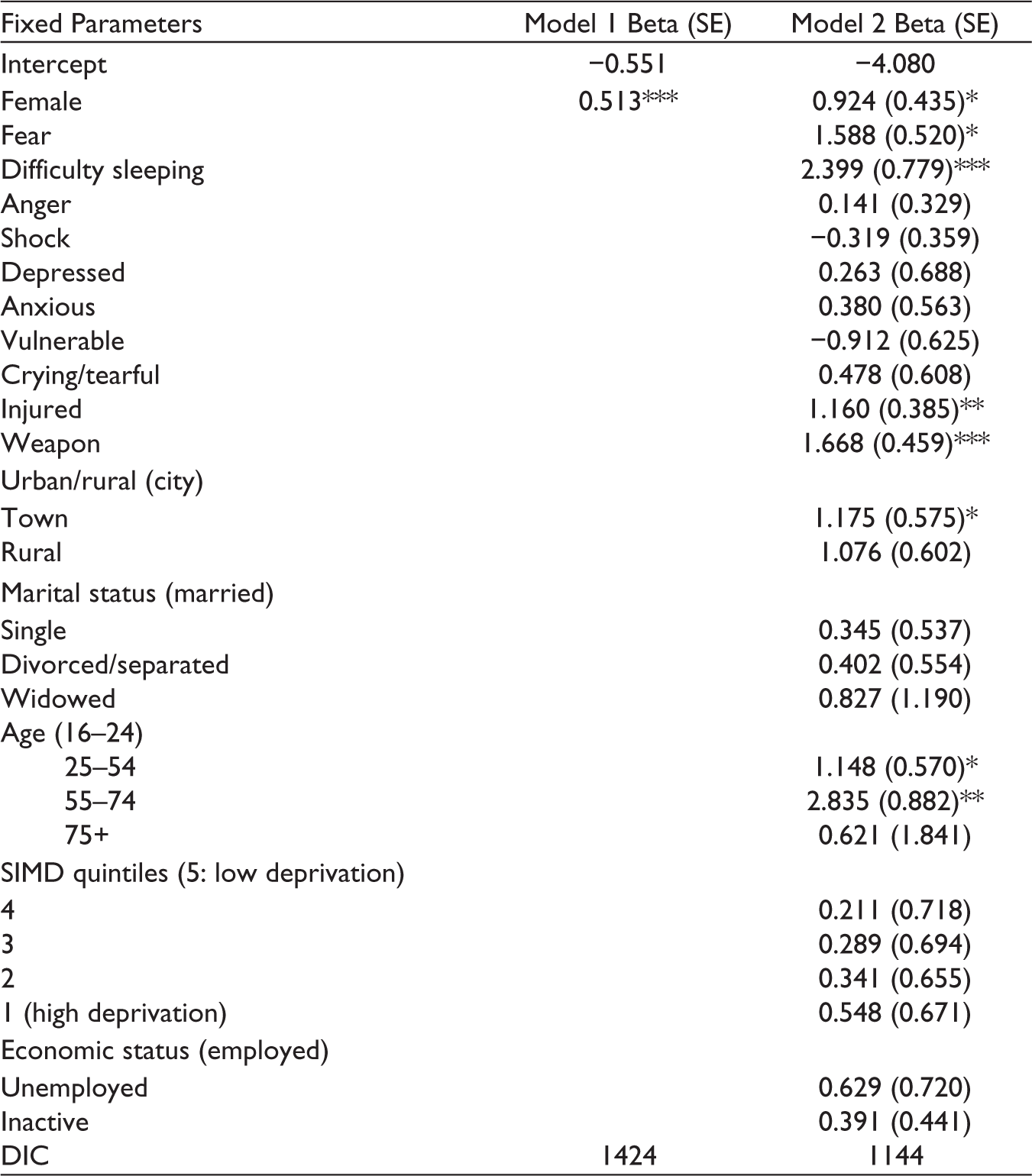
Model 1 in Table 2 shows the results of testing the null model containing only the intercept and the independent variable gender. Again, as in the analysis of victimization risk, gender is found to have a highly significant positive effect (α < 0.000) on the reporting of personal crimes. Following the testing of this null model, a number of control variables were again entered into the analysis. At the individual level, these controls are the same as those used in the above analysis of victimization. However, as reporting is measured at the incident level, it is now also possible to control for a number of incident-level variables. As such, two binary variables indicative of the seriousness of the incident are included, namely whether the incident involved a weapon (yes/no) and whether the incident resulted in injury (yes/no). It is also possible at this stage to enter our proxy coping variables, which indicate poor or unsuccessful coping. These eight binary variables measure the presence of anger, fear, shock, depression, anxiety, difficulty sleeping, vulnerability and crying/tearfulness.
The results of this analysis are presented in Table 2 model 2. Despite the inclusion of the numerous controls, gender remains significant 0.924 (0.43), α < 0.05, equating to women having odds of reporting an incident to the police 2.5 times greater than men. In addition to gender, it becomes apparent that the emotional/psychological variables used as indirect measures of coping are also playing a role in reporting behaviour. Specifically, being fearful 1.588 (0.52), and having difficulty sleeping 2.399 (0.78), significantly increased the likelihood of reporting, with difficulty sleeping being significant at α < 0.000 and increasing the odds of reporting by a factor of 11. Being fearful also substantially increased the odds of reporting by a factor of 5. All other emotional measures were unrelated to reporting.
Reporting Personal Crime to the Police.
*P < 0.05, ** P < 0.01 and ***P <0.001.
The two variables used as proxy measures for the seriousness of the incident, the presence of a weapon 1.668 (0.46) and injury resulting from the crime 1.160 (0.39), both significantly increased the likelihood of reporting an incident to the police. The presence of a weapon increased the odds of reporting by a factor of 5.2, whilst accruing an injury as a result of the victimization increased reporting threefold.
A number of interactions were also tested at this stage including gender × fear and difficulty sleeping, gender × weapon and injury, and injury and weapon × fear and difficulty sleeping; none were significant. DIC was calculated for this model as 1,144, an improvement of 280 over the null model value of 1,436.
Step 3: Uptake of Victim Support Services
The analysis of the use of victim support services follows the same procedure used in the previous two steps, with the exception that the dependent variable in this case (although still a binary indicator) here reflected whether or not the victim received support from any service provider following the incident. Service providers covered by the SCJS include Victim Support Scotland, Victim Information and Advice, Citizen’s Advice Scotland, Rape Crisis, the Samaritans, Women’s Aid, Police Liaison Officers and the Witness Service. Support is, thus, operationalized as using any one of these services. The total number of personal crime incidents reported was 1,177, though only 179 (15.2%) of these resulted in the uptake of any support services.
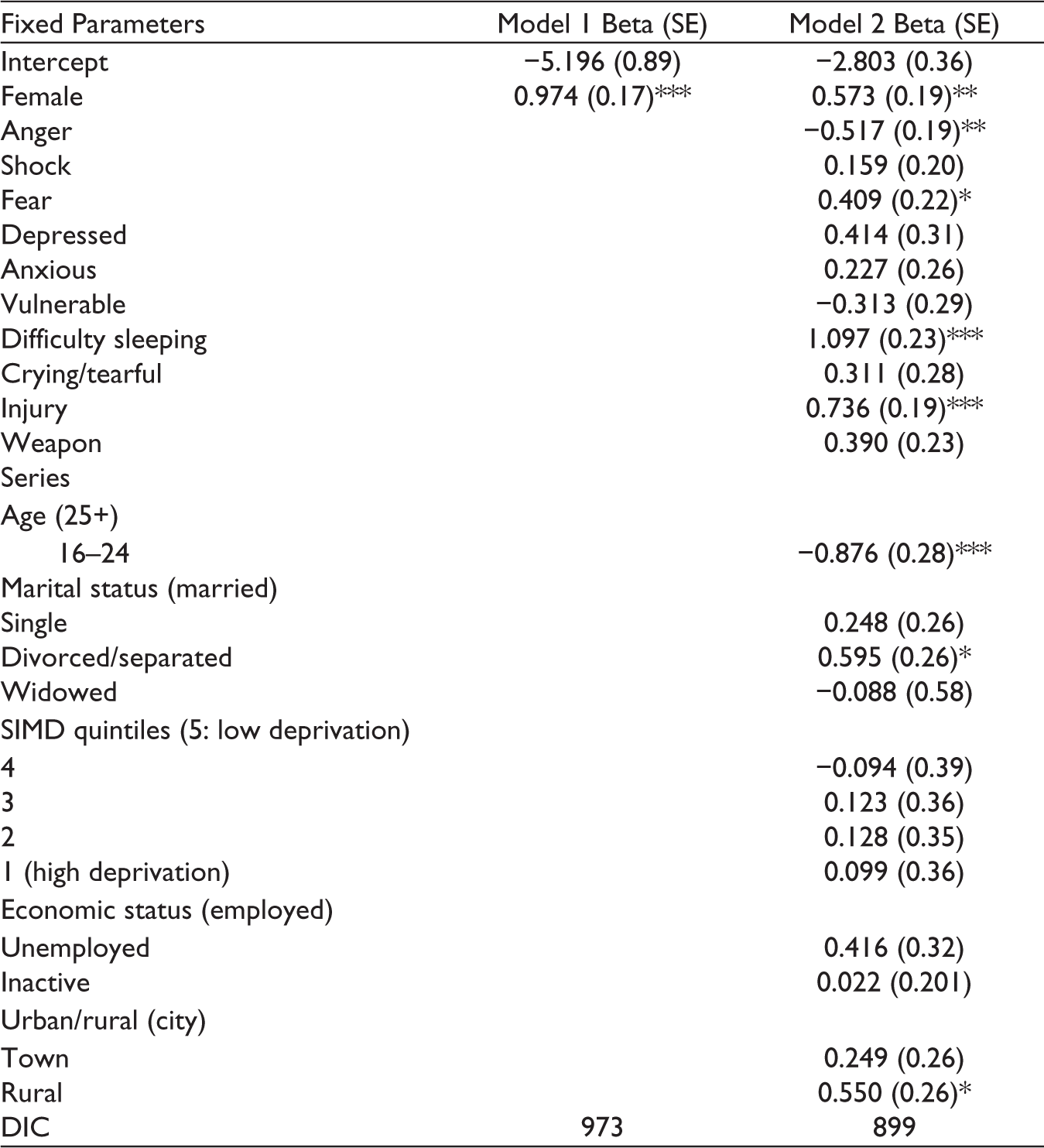
In the null model including only gender as a variable, being female was found to have a highly significant positive effect (ρ < 0.000). Similar to the findings discussed previously on reporting, women are also more likely to use services once they report a crime. Gender remained a significant predictor of service use following the inclusion of control variables, though the level of significance decreased to ρ = 0.004.
In addition to gender, three indicators of emotional response were also significant predators of service use: anger, fear and difficulty sleeping. Anger −0.517 (0.19) had a significant (ρ = 0.005) negative effect on support seeking, with those experiencing anger using services only 0.6 of time as compared with those who do not. On the other hand, fear 0.409 (0.22) and difficulty sleeping 1.097 (0.23) both had a positive impact on support use, with difficulty sleeping being particularly so, increasing the odds of service use by a factor of 2.57.
Additionally, acquiring an injury as a result of an incident 0.736 (0.19) significantly (ρ = 0.000) raised the likelihood of using support services, with injured persons having odds 2.68 greater than those who were not. Young people, specifically 16–24-year-olds, were significantly (−0.876 (0.28), ρ = 0.002) less likely to use support services than all other age groups. Finally, two control variables, being divorced and living in a rural area, had a small but significant positive impact on using support services. DIC for this model was calculated as 899, a change of 74 when compared with the null model value of 973.
Step 4: Satisfaction with Support Services
This final step of analysis explores factors affecting victims’ satisfaction with the support they received from any of the support services covered by the survey (listed previously). The dependent variable in this case is derived from the satisfaction measures used in the SCJS. These are categorical variables asking respondents to rate how satisfied they were with the services of any given provider on a scale of 1 to 5 with 1 being very satisfied, 3 being neither satisfied nor dissatisfied and 5 being very dissatisfied. Unfortunately, it was necessary to merge the very satisfied and satisfied categories of this variable, and their respective unsatisfied counterparts, and lose data in the ‘neither’ category as the sample size at this step in the analysis is so small (351 incidents nested within 277 individuals) as to render more complex models impossible. It was also necessary to include victims of household crimes in addition to victims of personal crimes to maintain the sample size, type of crime was however included as a control variable. The resulting model, as presented in Table 3, therefore, has as its dependent variable a binary indicator with 0 = not satisfied and 1 = satisfied. Of the 315 incidents that resulted in service use, respondents in 285 (90%) of these incidents indicated they were satisfied with the support they received following the incident in question. Two new control variables were introduced at this stage, type of support received and whether or not the respondent felt they had any unmet service needs. Type of support was derived from a much more complex variable (composed of 22 categories) in the original survey data. The derived variable contained five categories: help with reporting the incident, help with information and advice, accommodation-related support, emotional support and other.
Uptake of Support Services.
*P < 0.05, ** P < 0.01 and ***P < 0.001.
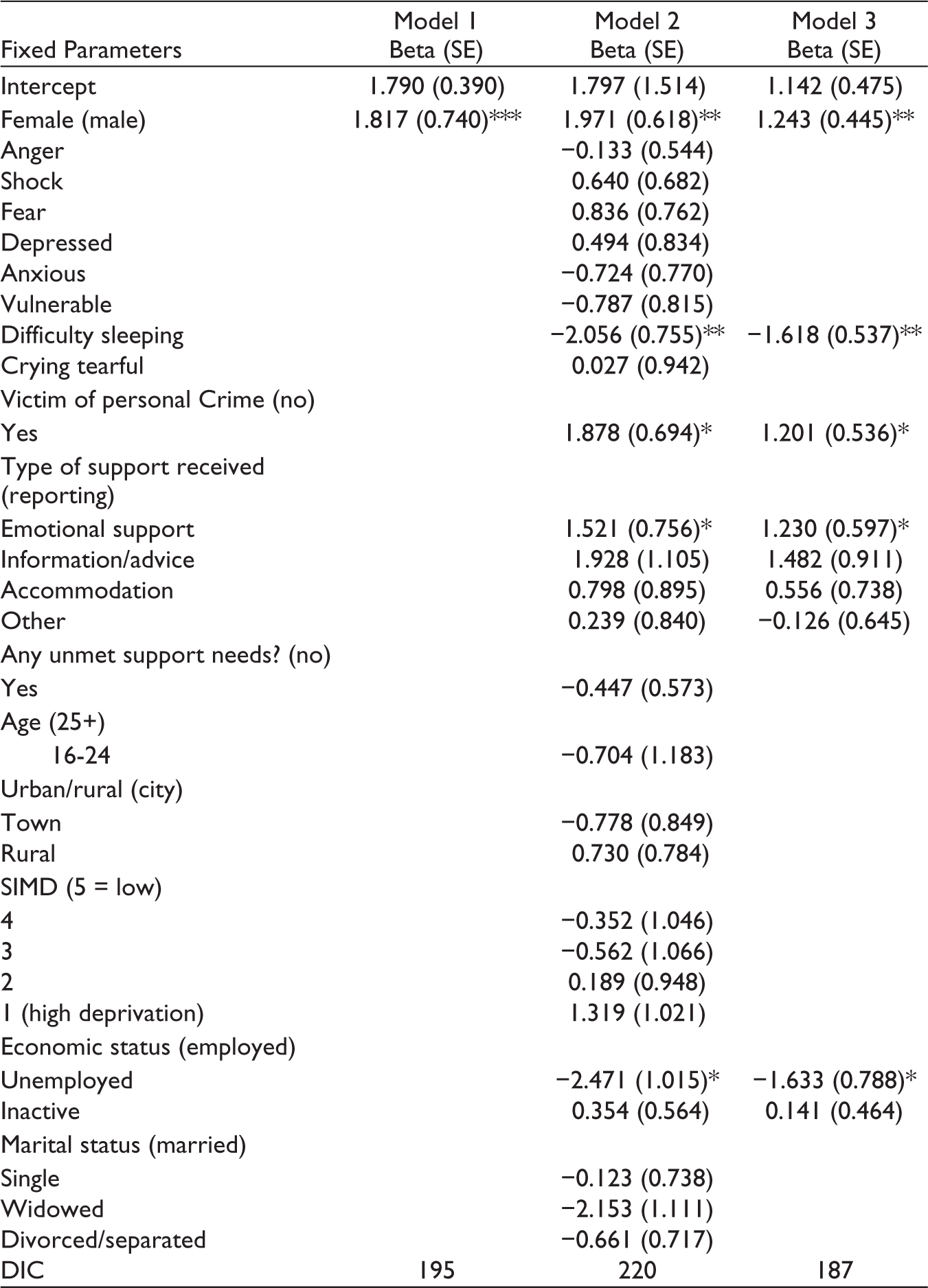
As in the previous steps of analysis, a null model was tested including only the gender variable and the intercept. In this instance, gender was again highly significant (α < 0.01); DIC was calculated as 196. Following this, control variables were entered into the model, the results of which are presented in Table 4. Gender 1.971 (0.62) remained significant at the α < 0.01 level with the inclusion of control variables in the model, indicating that women were more likely to be satisfied with support services they had received. Of all the emotional measures, only having difficulty sleeping −2.056 (0.76) influenced victim satisfaction, having a strong negative impact on satisfaction (ρ = 0.000). Anger, anxiety and feeling vulnerable all also had a negative effect on satisfaction, though the impact was non-significant. Receiving emotional support 1.521 (0.76) had a significant positive effect on satisfaction (ρ = 0.04) whilst other types of support did not. The control for crime type was significant (1.878 (0.69), ρ = 0.02), with victims of personal crime being more satisfied with support services. The only other control variable of note is employment status, where being unemployed significantly decreased satisfaction (−2.471 (1.02), ρ = 0.01). DIC for this model was calculated and found to be 220, suggesting that the model is in fact a worse fit to the data than the null model. This is likely due to a large number of control variables and small sample size. In order to test this theory, a third model was run, containing only the gender variable and those control variables found to significantly affect satisfaction. Results from this model are also presented in Table 4 where DIC is now much improved and equal to 187, an improvement over both model 2 and the null model.
Satisfaction with Victim Support Services.
*P < 0.05, ** P < 0.01 and ***P < 0.001.
Although based on a small sample, this model has resulted in some surprising findings, particularly the role of emotional support. Whereas previous research (see Shapland 41 ) has suggested that the priorities of service providers should be practical in nature, such as providing financial assistance or help securing a property, this finding supports the alternative standpoint that victims value the emotional support they receive, and that such receipt reflects in their assessment of service provisions. The negative impact of difficulty sleeping is in contrast to the positive effects this variable was having in previous models, where it increased the odds of reporting as well as service uptake. What this pattern may be indicating is that victims with more severe crime-related impairments, such as difficulty sleeping, may be more prone to report a crime and seek help, but that they are not getting the specific help they require. Such an interpretation is supported by existing literature, 42 which suggests the ineffectiveness of short-term crisis counselling for victims who may be in need of longer term support and counselling in order to overcome long-lasting or more emotional reactions to crime such as sleep disturbances.
Discussion
The above findings demonstrate that men have significantly greater odds of personal crime victimization yet have lower odds of reporting their victimization to the police. Additionally, they are less inclined to take up victim support services than women, and also find services less helpful when they are in fact used. In essence, those most commonly victimized are receiving the least help and support. Also evident in the above results is the comparative importance of the emotional impact of crime and coping strategies in further involvement with the criminal justice system.
The existing literature 43 suggests a general unwillingness of men to identify themselves as victims as they may face even more ‘social undesirability’ than women when it comes to the victim label. The inherent ‘femaleness’ of the term 44 and its associated characteristics (weakness, vulnerability) exert extra pressure on men to avoid being perceived in this manner. When coping with criminal victimization, men may find themselves in the paradoxical situation of reacting negatively to coping strategies they usually would use when coping with adversity, such as active, problem-oriented coping, as use of such strategies publicizes the victimization and its impact. 45 Some have explained this reluctance of men to consider themselves victims in terms of masculinity, however, as conceptions of masculinity and femininity are closely linked to the victim label, the explanation is not so simple. Protecting one’s masculinity and avoiding the ‘victim’ label are two sides of the same coin, yet as women too harbour powerful negative associations with victimhood, 46 there must be more to this avoidance behaviour.
As discussed previously, the literature has suggested emotion-focused coping to be less effective than problem-focused coping. However, the current paper clearly demonstrates the importance of emotions in determining the decision-making and actions of crime victims with, for example, fear being one of the strongest predictors of both reporting and service use. The purpose of emotion-focused coping is to change one’s perceptions about a stressor, which in this case is an incident of crime. The consequence of said incident of crime—becoming a victim—is undesirable for a number of reasons for both men and women, and both display cognitive behaviours and coping mechanisms aimed at avoiding victimhood. 47 Therefore, the most direct form of emotion-focused coping may be simply to change one’s perception about themselves as a victim. That is, when it is not possible to directly modify the stressor itself (problem-focused coping), as is likely in many cases of crime, the impact of the crime may be lessened by controlling the meaning of the problem by downplaying the significance of the event. The way an experience is recognized, and the meaning that is attached to it determine to a large extent the threat posed by the experience; by cognitively neutralizing the threats that we experience in life situations, it is possible to avoid stresses that might otherwise result in consequences such as a full-blown crisis reaction. 48 It, therefore, seems possible that, in contrast to the suggestion that coping strategies are sex specific, both genders may be engaging in problem and emotion-oriented coping; with men potentially using this type of coping as a means of avoiding the victim label. Of course, this assertion requires further research, particularly with larger samples, to clarify if men are in fact coping in this manner and do possess even greater motivation to avoid the victim label and thus not report incidents of crime or seek out help and services.
The style of coping employed may also be affecting the differing rates of satisfaction with victim support services between men and women. The results reported above show gender to be the strongest predictor of service satisfaction, with women having odds 3.47 times greater than men of being happy with the support they have received. Concurrently, emotion-focused support was more indicative of satisfaction than any other type of support, suggesting that rather than being a hindrance to recovery, emotion-focused coping strategies may leave victims feeling more positive and better supported. If women are more inclined to this type of coping, it follows that they would likely be happier with this type of support. Likewise, if men prefer more action-oriented support which may not be available, it again follows that this may be responsible for their lower levels of satisfaction. Of course, there is debate surrounding the difference between satisfaction and effectiveness in that satisfaction does not necessarily entail health and recovery, 49 but satisfaction in this sense is also important as it relates to procedural justice and the importance of feeling supported, believed and accepted.
Limitations
When considering these results, we must keep in mind the limitations inherent in the data used for this analysis. Firstly, although crime surveys provide the best available estimates as to the true extent of crime (as compared with police-recorded crime) they carry some weaknesses including the exclusion of young people, those living in institutions, and the loss of information which occurs when attempting to describe a deeply impactful life event using closed-ended survey questions. The data used in this research are limited to accounts of personal crimes and property crimes as measured by the SCJS and thereby exclude crime categories including domestic violence and sexual assaults. These data are not readily available, and additionally, make up a very small percentage of the crimes recorded by the survey. As women are more often the victims of these crimes than men, a separate analysis of these data is needed to see if the patterns observed here with property and personal crimes would be replicated.
Conclusion
This article has sought to address a gap in the criminological literature which considers issues of gender, particularly the influence it has on involvement with the criminal justice system and coping with crime. It has looked at the influence of gender across the process of victimization, not just as a risk factor for violence, but as a determinant of reporting crime to the police and seeking help and support services. It has uncovered a pattern of findings whereby women, though having demonstrably lower risks of victimization, have greater involvement with criminal justice agencies including the police and support providers, and also find support more useful than their male counterparts. Additionally, rather than simply focusing on gender as an end all explanation, this article has demonstrated how it is linked to much more complicated coping and labelling processes which influence the decision-making of crime victims. Both men and women must cope with the stigma attached to victimization, and both face barriers to effective support and treatment. Reporting rates and service uptake remain pitifully low, so better understanding of the cognitive mechanisms and coping behaviour unique to men and women is necessary in order to better tailor existing services to those most in need.
Footnotes
Declaration of Conflicting Interests
The author declared no potential conflicts of interest with respect to the research, authorship and/or publication of this article.
Funding
This work was carried out during a doctoral studentship funded collaboratively by the Economic and Social Research Council and the Scottish Government.
Appendix
Descriptive Statistics.
| Variable (Base) | N | % | |
| Dependent variables | Personal crime victimization: no Yes |
15,221 782 |
|
| Personal crime reporting: no Yes |
681 496 |
53 47 |
|
| Uptake of support: no Yes |
993 179 |
85 15 |
|
| Satisfaction with support: no Yes |
30 285 (N = 315) |
10 90 |
|
| Independent variables | Gender: male Female |
651 526 |
55 45 |
| Anger: no Yes |
526 651 |
45 55 |
|
| Shock: no Yes |
797 380 |
68 32 |
|
| Fear: no Yes |
883 294 |
75 25 |
|
| Depressed: no Yes |
1,066 111 |
91 9 |
|
| Anxious: no Yes |
998 179 |
85 15 |
|
| Vulnerable: no Yes |
1,010 167 |
86 14 |
|
| Difficulty sleeping: no Yes |
1,036 131 |
89 11 |
|
| Crying/tearful: no Yes |
1,024 153 |
87 13 |
|
| Any unmet support needs: no Yes Missing |
926 205 46 |
79 17 4 |
|
| Type of support received: emotional Reporting Accommodation Advice/info Other Missing |
95 21 6 26 10 21 |
53 12 3 15 6 12 |
|
| Weapon: no Yes |
984 193 |
84 16 |
|
| Injury: no Yes |
861 316 |
73 27 |
|
| Control variables | Age: 16–24 25+ |
94 1,083 |
8 92 |
| Age: 16–24 25–54 55–74 75+ |
94 565 377 141 |
8 48 32 12 |
|
| Marital status: single Married/civil partner Divorced/separated Widowed |
581 340 224 32 |
49 29 19 3 |
|
| Economic status: employed Unemployed Inactive |
705 103 367 |
60 9 31 |
|
| Urban: city Town Rural |
838 172 167 |
71 15 14 |
|
| SIMD: 1 (high deprivation 2 3 4 5 (low deprivation) |
317 312 230 175 143 |
27 27 20 15 12 |
N = 16,003 survey total, N = 758 victims of violent crime and N = 1,177 incidents of violent crime.