




Abstract
This case study explores how a chief executive officer (CEO)’s transformational leadership styles and emotional intelligence (EI) competence impacted the turnaround of a tertiary South African public hospital in crisis. This case examines the intricacies of public health governance in an emerging economy, by analyzing the CEO’s EI competencies and leadership behaviours using a mixed-methods approach. The findings highlight the importance of transformational leadership and EI competencies, including empathy, self-regulation, self-awareness and social awareness, in navigating change within complex systems, influencing employee well-being, workplace culture and overall organizational performance. This case provides insightful perspectives on how to develop public leadership competence and implement organizational change. In the current context, can the CEO, now the newly appointed leader of the provincial health department, utilize her personal attributes and transformational leadership styles— proven effective in driving positive change at a single hospital—to bring about transformation across an entire provincial health system that encompasses multiple underperforming hospitals?
Keywords
Introduction
Dr Rolene Wagner, the chief executive officer (CEO) of Frere Hospital in East London in South Africa, has consistently faced challenges within the public health sector. In August 2021, while travelling from East London to Bisho, the capital of the Eastern Cape province, she contemplated the considerable challenges and opportunities that awaited her in her new position as the head of the Eastern Cape Health Department (ECDoH). She was on her way to meet the Premier of the provincial government to officially accept this senior leadership position. The discussion will initiate a significant dialogue focused on her vision for revitalizing the ailing provincial public health system in one of South Africa’s most underprivileged provinces. Rolene had positioned herself as a notable leader and manager in the public health sector, acknowledged for her strategic thinking and keen social awareness.
As the landscape transitioned from a vibrant town to the vast stretches of the countryside, she contemplated her time as the CEO of Frere Hospital in East London, a position she held from 2012 to 2019. Until 2012, Frere Hospital, while regarded as an important tertiary hospital in the region, faced criticism due to various negative healthcare outcomes, including, high newborn mortality rates, low staff morale, and poorly maintained facilities and medical equipment. The hospital faced significant media attention due to the poor quality of its healthcare services. Rolene vividly recalled the anxiety she felt on her first day as CEO in 2012, confronted by around 1,000 disgruntled employees who were on an unprotected strike over unpaid wages and benefits (Mpofana & Ruiters, 2019). Only 6 years after this challenging incident, the International Hospital Federation honoured Frere Hospital with the Dr Kwang Tae Kim Grand Award for its effective quality improvement initiatives at the 42nd World Hospital Congress in Brisbane, Australia (TimesLive, 2018).
This case study details Dr Rolene Wagner’s efforts in revitalizing the Frere Hospital.
Background on Dr Rolene Wagner
Dr Rolene Wagner’s steadfast commitment to social justice, fairness, equity, respect, humility and compassion, echoing the legacy of the renowned South African leader, Nelson Mandela, has shaped her path. During her early years, she was influenced by the values imparted to her while living in the Cape Flats, an area that was designated for people of colour after her family was displaced from a suburb in Cape Town, which was reserved solely for white inhabitants. She expresses gratitude for the significant impact of her parents, whose steadfast support and guidance have moulded the core values that direct her decisions and actions today (Cape Times, 2015).
Her participation as a student activist during apartheid, a South African policy of racial segregation rooted in white supremacy, at the ‘coloured’ Harold Cressy High School deepened her dedication to social justice. Motivated by a quest for knowledge and a dedication to her community, the young Rolene embarked on her higher education journey at the University of Cape Town (UCT), where she pursued a degree in medicine. Subsequently, she continued her education at the University of the Western Cape (UWC), earning a Master’s in Public Health. Her exceptional talent in sports was evident, as she earned provincial colours in swimming, softball, varsity athletics and table tennis, while also establishing national records in breaststroke and freestyle swimming. She assumed various leadership roles in the realm of sports at both the school and university levels.
Rolene worked for the ECDoH for 16 years, rising from a medical officer in primary health care to executive management, before taking over as CEO of the troubled Frere Hospital in December 2012. Prior to joining ECDoH, Rolene worked as a medical practitioner at Mitchells Plain Community Health Centre, which served the ‘coloured’ community.
Background on the Eastern Cape Public Health System and Frere Hospital
Since the establishment of democracy in 1994, the South African public health system has encountered numerous challenges, such as budget overruns, labour disputes, excessive centralization, limited resources, inadequate management capabilities, insufficient budgets and staffing, and inconsistent leadership (Mpofana & Ruiters, 2019; RSA, 2018; Von Holdt, 2010; Von Holdt & Murphy, 2007). Over time, these challenges have led to significant stress within the public health system, ultimately resulting in suboptimal patient outcomes (RSA, 2018). The President and CEO of the South African Medical Research Council (SAMRC) (2024) has recently pointed out notable deficiencies in the healthcare infrastructure across South Africa. The issues encompass personnel shortages, malfunctioning equipment and insufficient medications, highlighting the critical necessity for strong and ethical leadership alongside innovative solutions.
The Eastern Cape province presents a history characterized by significant poverty, unemployment, inequality and underdevelopment, influenced by the lasting effects of apartheid and colonialism. The Auditor General of South Africa, in collaboration with various national entities, has highlighted a concerning assessment of the Eastern Cape’s performance, indicating that it stands among the lowest of the nine provincial governments (AGSA, 2021; Mpofana & Ruiters, 2019; RSA, 2018).
In 2013, the ECDoH began addressing the urgent healthcare issues present in the province. Their focus was distinct: to improve the health system’s efficiency through financial, supply chain and human resources (HR) management; lower maternal and child mortality rates; enhance public health facilities; and cultivate a new generation of healthcare professionals (ECDoH, 2013).
The difficulties faced at Frere Hospital reflected the broader issues present in the national and provincial public health systems, resulting in an unproductive, strained and unwelcoming work atmosphere, along with unsatisfactory healthcare results (Mpofana & Ruiters, 2019). Between December 2012 and July 2019, the institution functioned with approximately 900 beds and a team of 2,200 staff members. With an annual budget of R1.2 billion, it offered specialized medical services to the central area of the province, serving around 2.2 million individuals.
As December 2012 drew near, a surge of employee grievances emerged, highlighting a profound dissatisfaction with the hospital’s management. In an environment where internal departments functioned independently, the lack of collegial support and collaboration created a clear image of disconnection. In an environment filled with mistrust, the community’s confidence in the facility’s capabilities had significantly waned. In light of numerous public complaints about the standard of care offered, regulators like the Public Protector and the South African Human Rights Commission began investigations into the hospital’s practices.
The case study begins with Rolene reflecting on her difficult first week as CEO of Frere Hospital, setting the stage for her influential leadership over her 5-year tenure, during which she revitalized the facility through strategic, management and operational changes.
Rolene’s First Week as Frere Hospital CEO: Entering the Eye of the Labour Storm
During her first week as CEO, Rolene’s reaction to the hospital labour strike unfolds a captivating story that offers profound insights into her values, beliefs, skills, decisions and leadership style in the face of adversity. During this period, she encountered challenges that tested her leadership approach, influenced her relationship with the institution, and established the groundwork for her successful transition in the future.
On 1 December 2012, upon her arrival at the hospital for her first day as CEO, she faced a substantial gathering of around 1,000 discontented colleagues, including medical personnel, staff and members of the hospital administration. Driven by the dissatisfaction of unpaid salaries and benefits, the employees initiated an unprotected strike. As Rolene narrates,
It was very tense. I could hear the anger in the tone of their voice. I could understand why the managers did not feel safe going into that hall. I said, ‘We have to go in. These are our workers. We need to meet with them’. Our clinical managers were in the hall and they rarely participate in strike action. Even our professional teams, including doctors, were also there. Everyone was on the same side when it came to dealing with the accruals and monies owed to them. I was literally the only person on the other side. They questioned: ‘Who are you? Tell her to step aside, we don’t even know the CEO who’s come in, we want to speak to the HR people, because it’s their fault that we don’t have our salaries and benefits’. Earlier, the provincial Department of Health told me, ‘You’re on your own, and there’s no way we’re coming to the hospital’.
In her pursuit of transparency and to encourage active participation, Rolene sought the assistance of an interpreter fluent in isiXhosa, the predominant language in the province. Through her active listening and genuine effort to comprehend the challenges faced by her team, she showcases a profound sense of empathy, reflecting her core values of equity, respect and humility.
I always listen first and I try to understand not just what is being said but why they’re saying so. A lot of factors influence that [person’s] position. I always try to be developmental and understand the other person’s position first. Part of the engagement process is just listening and understanding their views. I try not to provide solutions on the spot.
Rolene, mindful of the hospital strike and the potential for heightened emotions among the strikers, calmed herself before entering the hall. She prepared herself for the intense discussion that was about to follow. She attentively noted her new co-workers’ facial expressions, emotions and behaviours.
It’s not just the verbal exchanges, it’s everything else that’s at play in the room. You have to pick up on the cues to guide you…there was a woman who was personal and very provocative. I tried to be in a calm space, to not be defensive…to try and understand their perspectives…making excuses is just one thing that triggers people, not recognising their pain and how it affects their lives, as people were sharing, in a big room, how this affected their lives.
Rolene arrived at Frere Hospital with a solid grasp of labour and fiscal matters, honed over 16 years in the provincial government’s health department, where she advanced to the position of Deputy Director-General. Even with her considerable management background, she was taken aback by the palpable anger and hostility of the striking workers. Confronted with this atmosphere of hostility, a new manager might instinctively respond with defensiveness or outrage. Rolene’s response to the surprising intensity of hostility turned out to be quite revealing.
When I heard [their grievances], my first reaction was just empathy…because for people to get to the stage where they’re willing not to see patients and put their reputation on the line and know the consequences of their action…they didn’t care that their salaries would be docked, they must’ve been desperate. I thought they have a right to their salaries. They shouldn’t have to take action, it’s their right. One time I actually cried in the meeting…it was a very traumatic time. I felt empathy with the staff; there was obviously pressure to deliver, they were very angry.
Rolene’s next step was to approach the four trade unions representing the striking workers, asking if they would allow her to briefly step out of the hall with her management team for a discussion, with the intention of resuming negotiations with the labour unions afterwards. Rolene’s decision to involve her management team at that moment underscores her willingness to listen, acknowledge varied perspectives, promote teamwork and adopt an inclusive approach to leadership. She articulated her strategy as follows:
Stepping out allows the [management] team to caucus and iron out all of our issues; so we go back as a united team, whereas previously the disadvantage was that they [the management team] didn’t discuss and thrash it out, so, they start disagreeing in front of organized labour, which is really bad.
Ultimately, Rolene chose not to implement wage deductions for the striking workers, even though the strike was unprotected. Given the debt owed to the strikers, she believed it would be unjust to reduce their salaries. At the conclusion of the first day, she had alleviated the strained atmosphere and put forth a persuasive proposal that garnered unanimous backing from all the hospital staff to resume work. The staff’s decision to return to work reveals a deeper narrative; it demonstrated that their new CEO would interact with them in a way that conveyed respect and understanding, highlighting their recognition of her leadership and their readiness to embrace the uncertainties of trusting her judgement and dedication to fairness.
After a few days, the management team reconvened to update the unions and staff on the resolution of the compensation issues. Nevertheless, the strike resumed, as the provincial government had not yet confirmed the budget. Rolene encouraged the strikers to return to their duties, promising to drive to the provincial office, 65 km away, to speed the process of personnel accruals and payments. Following the end of the strike, she engaged in extensive discussions with her management, and they jointly launched a detailed budget analysis. She skilfully managed the process of reallocating funds, leveraging her sharp intellect, skilled problem-solving ability, and extensive understanding of budget management.
After analysing 5,500 transactions, we found enough budget to pay everyone. We realized that within a year we could put everyone at the right salary levels, easing pressure on their pockets and preventing accruals from accumulating. However, the backlog of accruals was beyond the budget, and we had to negotiate with head office through a provincial project.
From the moment she assumed her role as CEO, Rolene began a journey to create a hospital community that values inclusivity and equity, with the well-being of patients and employees at its core. Her approach to the strike action established a foundation for this aspiration to flourish, even in the face of a challenging reception. The new CEO’s unwavering commitment to her values defined the essence of her leadership. Her colleagues and stakeholders quickly grasped her core values, setting clear expectations for the transformative journey that awaited them during her tenure.
Rolene’s Leadership at Frere Hospital During Her 5-year Tenure
Following the resolution of the labour dispute, Rolene committed herself to revitalizing Frere Hospital over the next 5 years, focusing on crucial HR management, leadership development and operational efficiency to foster trust and improve healthcare outcomes. This section will first outline the key aspects of the important hospital turnaround initiatives. Rolene aligned the priority change initiatives with the hospital’s vision of patient-centred outcomes and quality care by employing systems thinking, transformational leadership and lean management strategies. Second, key themes are presented, demonstrating how Rolene’s leadership during the turnaround process is shaped by her personal characteristics and their impact on the hospital’s organizational culture and social dynamics, leading to significant improvements.
Significant Hospital Revitalization Initiatives
Rolene’s leadership at the hospital transformed the environment from one of blame and silos to a commitment to patient-centred outcomes, teamwork and accountability. This required profound systemic changes, which took 5 years to cultivate trust and reshape organizational behaviour, as detailed below.
1. Strategic HR management initiatives for mitigating patient complaints
Rolene successfully transformed complaints into opportunities for improvement, increased trust among team members and trade unions, and strengthened the executive managers’ leadership abilities. Her initiatives reinforced teamwork, reduced conflicts, and created a culture of accountability and development, resulting in considerable improvements in healthcare outcomes.
Transforming complaints into opportunities: Rolene aimed to shift the perception of complaints from assigning blame to viewing them as opportunities for improvement. She promoted discussions across different functions, emphasized direct communication and advocated thoroughness for tasks. Rolene promoted a culture of collective ownership, encouraging everyone to share ideas beyond their roles and engage in enhancing the facility’s appearance and functionality. This inclusive approach also led to initiatives such as a knitting programme for patients with hand injuries and online training programmes for anaesthetists. She showed her own readiness ‘to roll up our sleeves’ and assist with tasks such as decluttering or ward changes.
Building trust and team identity in addressing tensions and divisions: Rolene, acknowledging a notable trust deficit, took steps to bridge internal divisions and address racial tensions within the executive management team (EMT) by eliminating ‘us and them’ language and promoting a team identity grounded in the principles of non-sexism and non-racism. She acknowledged that it took 5 years to build trust.
She maintained regular monthly meetings with organized labour and held quarterly performance reviews to inculcate accountability. A crucial step was bringing management and labour together in a workshop facilitated by an external third-party to clarify roles and rights. Five years later, organized labour joined the hospital’s social function with management, despite previously refusing due to fear of being perceived as ‘in bed with management’, indicating a maturing system where a constructive relationship had developed.
Enhancing the leadership capabilities of the EMT: Rolene stressed the need for improved leadership behaviour and introduced emotional and social competence assessments for the EMT. She provided group and one-on-one coaching sessions, supporting their personal development and encouraging reflection on their own behaviours, leading to a visible positive change.
2. Quality of care improvements
Rolene concentrated on improving patient outcomes by implementing quality care initiatives, decreasing preventable deaths, enhancing digital radiology efficiency, reducing pharmacy wait times and creating an electronic medical record system to facilitate comprehensive health information and governance.
Enhancing patient outcomes through a quality care approach: Rolene focused on enhancing the quality of care by transitioning from administrative changes to vital patient outcomes. She aimed to reduce preventable deaths and complications in adult and paediatric oncology and intensive care unit (ICU) services. Her strategic focus involved understanding why people were dying and analyzing performance reports to identify avoidable causes of death. Through the establishment of focused initiatives and the strategic allocation of resources, there was a notable decrease in death rates.
She emphasizes that:
Our focus was on what we were trying to achieve, and we all wanted to reduce deaths. We analysed our case mortality rates, examined why they were high, discussed what actions we were taking, and worked together with my managers to find solutions because I wasn’t going to solve everyone’s problems. Frere’s overarching vision centred on the outcomes for patients and their experiences of care.
Rolene noted that the annual commissioning of new wards and theatres represented an investment in infrastructure aimed at improving theatre capacity. However, she pointed out that ‘it’s not about the ward or the theatre as physical facilities; it’s about the service that was being upgraded’, which altered the conventional focus on infrastructure.
b. Digital radiology initiative enhances patient care and efficiency: A significant change initiative involved investing in digital radiology to enhance diagnostic capabilities. Through the digitization of radiology services, the hospital successfully ‘assists over 90 patients a day compared to 35’ and reduces X-ray waiting times from 2 h to under 30 min. This project was a priority for the EMT and required a cohesive governance strategy, which included the participation of the information technology (IT) unit and the procurement of essential equipment, such as printers, to enhance process efficiency. This project established a direct connection between infrastructure investment and enhanced patient experience and outcomes.
c. Significant reduction in pharmacy waiting time: An important project aimed to address a significant concern for patients: the lengthy wait times at the pharmacy for their medications. The initiative aimed at reducing pharmacy waiting times was a significant project for the EMT, incorporating various solutions: increasing the number of pharmacists from 6 to 13, introducing pill counters and implementing IT solutions, which effectively reduced pharmacy waiting times from 4 to 6 h to under 45 min.
d. Developing an electronic medical record system: Rolene identified the need for improving business intelligence and an automated performance dashboard, as traditional manual data interpretation was insufficient. She led the in-house, open-source development and implementation of systems like the healthcare management system 2 (HMS2) to produce management information and alerts, representing a significant step forward in creating a comprehensive health information system that provides a holistic view of the organization while enhancing effective clinical and corporate governance.
The Frere Hospital’s turnaround initiatives demonstrate transformational leadership’s ability to alter a blame culture to one of accountability and patient-centred outcomes through systemic change. Effective management requires building trust and team identity, resolving internal disagreements and collaborating with organized labour. Improving leadership abilities through emotional intelligence (EI) assessments and coaching is critical for executive teams. Implementing data-driven operational improvements, such as lowering fatality rates and decreasing pharmacy wait times, demonstrates how a strategic approach can greatly improve the patient experience.
This case illustrates to management students, practitioners and policymakers the significance of transformational leadership in driving organizational turnaround. It emphasizes that meaningful transformation is a long-term journey focused on people, integrating strategic HR with technical innovation.
The Central Themes in Rolene’s Leadership During the Turnaround Process
The author’s interviews with Rolene, along with feedback from her colleagues, uncover four key themes organised according to Wilber’s (2000) Four Quadrant Model, as shown in Table 1. Themes emphasise Rolene’s personal characteristics and actions, as well as the organisational culture, in the transformation of Frere Hospital:
Self-awareness in leadership: Rolene’s self-awareness highlights her dedication to social justice and ethical conduct, and her exceptional EI. Work ethic and accountability: Her actions embody transformational leadership principles, emphasizing a captivating vision and alignment of values with actions, while fostering accountability. Agile management structures and distributed leadership: Rolene promotes an inclusive and collaborative atmosphere through adaptable management structures that empower teams. Mentoring and coaching: Her commitment enables staff to reach their full potential.
Themes: Rolene’s Distinctive Personal and Leadership Attributes.
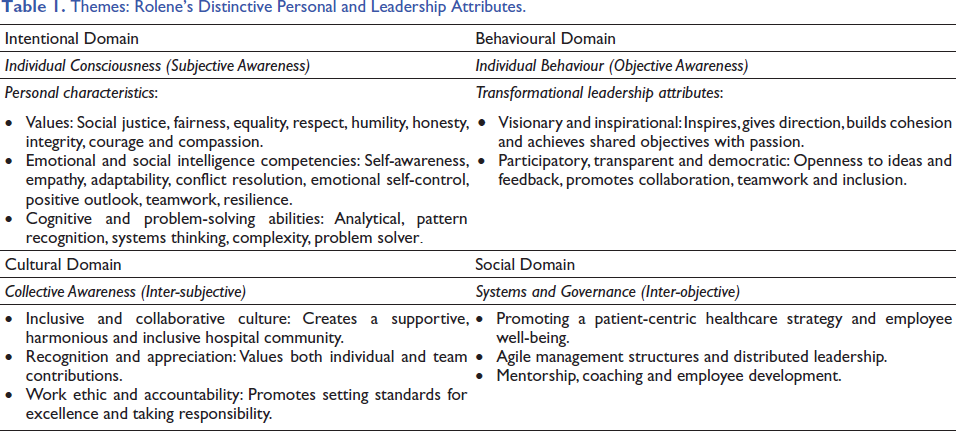
The subsequent sections will delve deeper into these four themes, emphasizing specific critical incidents that exemplify her leadership in the revitalization of the hospital.
1. Self-awareness in leadership
During her time as the hospital’s CEO, Rolene adeptly managed her emotions and showed a notable willingness to sincerely express her feelings to those around her. She demonstrated a profound awareness of others by being sensitive to their emotions, feelings and viewpoints in her interactions, as she shared below:
People generally are not comfortable talking about how they feel…I’m never shy. I don’t hesitate to say how I feel or why, whether it’s a positive emotion or negative emotion. I listen and try and understand their position. I don’t personalize issues. I usually have reflected on it. I think about what I want to say, how I want to say it. I never just e-mail something off.
Her willingness to listen to everyone, no matter their position, combined with her sensitivity to her colleagues’ feelings, demonstrates her capacity to connect meaningfully with others, acknowledge their experiences and comprehend their unique challenges, reflecting her deep empathy. These qualities are clearly demonstrated in a distressing incident she describes regarding a worker’s financial difficulties during one of her walks through the hospital.
A HR [human resource] department woman said to the worker, ‘What are you making fuss about, it’s just fifty Rand [2.6 USD] extra per month’, and he said, ‘Doc [Rolene], it might be a doughnut and coffee for them; but for me it’s mealie-meal [maize-meal, a staple food] for my family for the month, that fifty Rand’.
That really touched my heart, and so it’s people like that that stay in my mind, that makes me feel this is a cause, these are the people I’m trying to make a difference for. I understood it and I apologized that he’s in that circumstance. I’m never scared to apologize, if I think that we’ve done wrong…I’ve got to acknowledge their pain and I’ve got to recognize that, and I do say ‘I’m sorry that you feel that way or that you’re in the situation’…it was very traumatic.
Rolene frequently adopted a collaborative style of leadership; however, her strong drive for change occasionally prompted her to make decisions independently, without seeking input from her team. During those instances when she decided to take charge herself, she remained conscious of her actions, open to the viewpoints and impact of those around her.
One of my weaknesses is that I can run with something; but I’m not going to get there on my own, so I need to bring people with me. So, I need to feel that they’re also part of the solution and sometimes I must let something go, give them opportunity to do it their way. And sometimes it works out and sometimes it doesn’t; but at least we’ve tried it that way, so now we must do it the other way.
As a leader, Rolene demonstrates humility, acknowledging the significance of diverse perspectives, areas of expertise and talents in reaching the common goals of the hospital. She expressed her gratitude for the insights and perspectives of her lower-ranked colleagues, recognizing their essential contribution to the hospital’s revitalization efforts through a dedication to inclusion.
While I don’t always have all the answers, I have perceptive individuals around me—executive members, organized labour leaders, or workers on the ground—there are many intelligent people who see things differently.
Rolene’s willingness to embrace a variety of perspectives was fundamental to her leadership style, enabling those around her to feel appreciated and essential to the decision-making process.
2. Work ethic and accountability
Rolene began the process of revitalizing the hospital by initially concentrating on enhancing the functionality of the HR department and improving the standards of hospital hygiene. Rolene adeptly manoeuvred through the turmoil in the HR offices, executing a range of strategic initiatives that revolutionized the department’s operations and led to notable enhancements. She recounts the story of her initial visit to the HR department:
In the first week I wanted to clean out the HR section, because the strike was related to HR. When we walked into the HR section it was chaos, there were boxes, the systems were not in order; they operated in an environment that was not organized and ordered. I said, ‘This is the impression people have of how we’ve performed our HR functions’. We did a clean-up.
In the initial phase of her position, Rolene undertook a comprehensive evaluation of the hospital’s infrastructure. During the assessment, a specific incident occurred that highlights an important aspect of her leadership style. On that day, she reached out to the supervisor and ground staff to remove a pile of documents and waste. Even with the promise of clearing the areas by the end of the week, the items were still left untouched. Amid the frustration of inaction, Rolene maintained her composure during the inspection. She narrates the event in this way:
I had a meeting with the supervisor and cleaners and informed them how I felt. I explained that due to my recent arrival, they may have limited knowledge about me. I assumed that their behaviour may be attributed to cultural norms where individuals make commitments but fail to fulfil them without facing consequences. I informed them that under my leadership that will not happen. I was asserting my authority. A [union] shop steward came forward and thanked me for the honest communication and offered an apology from the group. It felt good to share my management and leadership style…what was acceptable behaviour to me and what is not. I’ve had such a good relationship with the ground crew since that incident.
Rolene’s assertive yet respectful manner in addressing the complacency of hospital staff led to enhanced productivity, improved relationships and a heightened readiness to fulfil their responsibilities. This sharply contrasts with the notable lack of consequence management in this province, as emphasized by previous national government performance audits. 3. Mentoring and coaching
In her former position as Chief Director of HR, Rolene embraced the opportunity to lead and motivate senior managers across the provincial health system. With her guidance, she enhanced their skills and uplifted their spirits, fostering an atmosphere that promoted development and positivity. Following her support in the personal development of the hospital’s cleaning services manager, Rolene observed a significant enhancement in the manager’s leadership skills and overall performance in her position.
I’ve seen her [the cleaning services manager] grow. I can see that she’s changed completely from where she was a year and a half ago through the series of incidents that have shaped her leadership abilities, not just her managerial competencies. The day I told her, ‘Thank you very much, that was a job well done’, she simply glowed. It was nice to watch her broad smile and know she was acknowledged and appreciated. You can see the change in her, and the ground staff’s, attitude and their willingness to do work. I enjoy making others happy, seeing the sparkle in their eyes, and watching them feel good about themselves.
4. Agile management structures and distributed leadership
Rolene championed an inclusive and collaborative workplace after observing the detrimental effects of rigid public sector hierarchies and rankings, along with her personal experience of how apartheid’s exclusionary practices impacted individuals. At Frere Hospital, she successfully implemented a distributed leadership model, breaking down the established hierarchical structure and lengthy management chain of command. Her recounting of events clearly illustrated this.
They [personnel at lower rank levels] are not used to a CEO engaging with them because normally the CEO only talks to the directors and the directors only talk to the deputy directors who only talk their assistant directors. So, I flattened the executive management structure and I brought in the assistant directors to the management team because it’s the function that is important, not your level or rank in the organisation.
The inclusive approach to management meetings enabled programme managers, alongside directors, to engage, fostering collaboration and unity within the team. Rolene cautioned against utilizing management meetings as a place for airing inter-departmental grievances and assigning blame for unfinished tasks to one another. They ought to address matters that need collaborative focus prior to the meeting. This method enhances mutual understanding and supports a collaborative strategy for addressing challenges, facilitating discussions and teamwork across different departments. Rolene offered her perspectives on integrated governance:
The government has been organized into silos, with branches for HR, Finance, SCM, clinical services, and so on, but they are interdependent. Through management meetings, cross-functional teams can be encouraged and organization-wide projects can be set up. For example, the pharmacy was struggling with quality improvement projects to reduce waiting time, but the team agreed to adopt the project as an EMT [Executive Management Team] project and work together to contribute to the overall improvement. This approach helps to ensure that all parties are involved in the process.
Employees Assessment of Rolene’s Leadership at Frere Hospital
Rolene consistently sought feedback from her colleagues to assess her performance and identify areas for personal growth. She took the initiative for Frere Hospital to participate in a study centred on public sector leadership. The study employed the Emotional and Social Competency Inventory (ESCI), a comprehensive survey tool designed to assess a leader’s 12 EI competencies as reflected in their leadership behaviours, following the framework established by Goleman and Boyatzis (2007). Rolene’s ESCI scores showcased impressive proficiency across all 12 EI competencies, highlighting her outstanding emotional and social intelligence, as presented in Exhibit 1.
The CEO’s Emotional and Social Competency Inventory profile (Source: Hay Group, 2014)
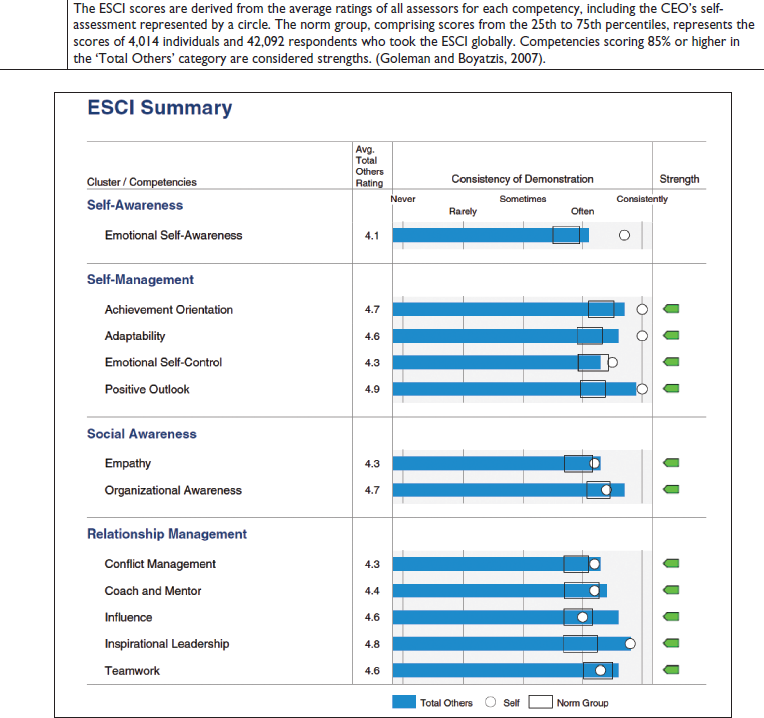
As part of the ESCI, anonymous feedback was gathered regarding her leadership strengths and areas for growth from colleagues at various levels within the hospital. Table 2 presents the categorization of inputs according to the 12 EI competencies defined by Goleman et al. (2002). The feedback from her colleagues affirms Rolene’s exceptional EI and impactful leadership, which correspond with her ESCI survey results.
Comments on Rolene’s Leadership from Her Colleagues and Stakeholders, Aligned with the Goleman et al. (2002) Emotional Intelligence (EI) Model (n = 23).
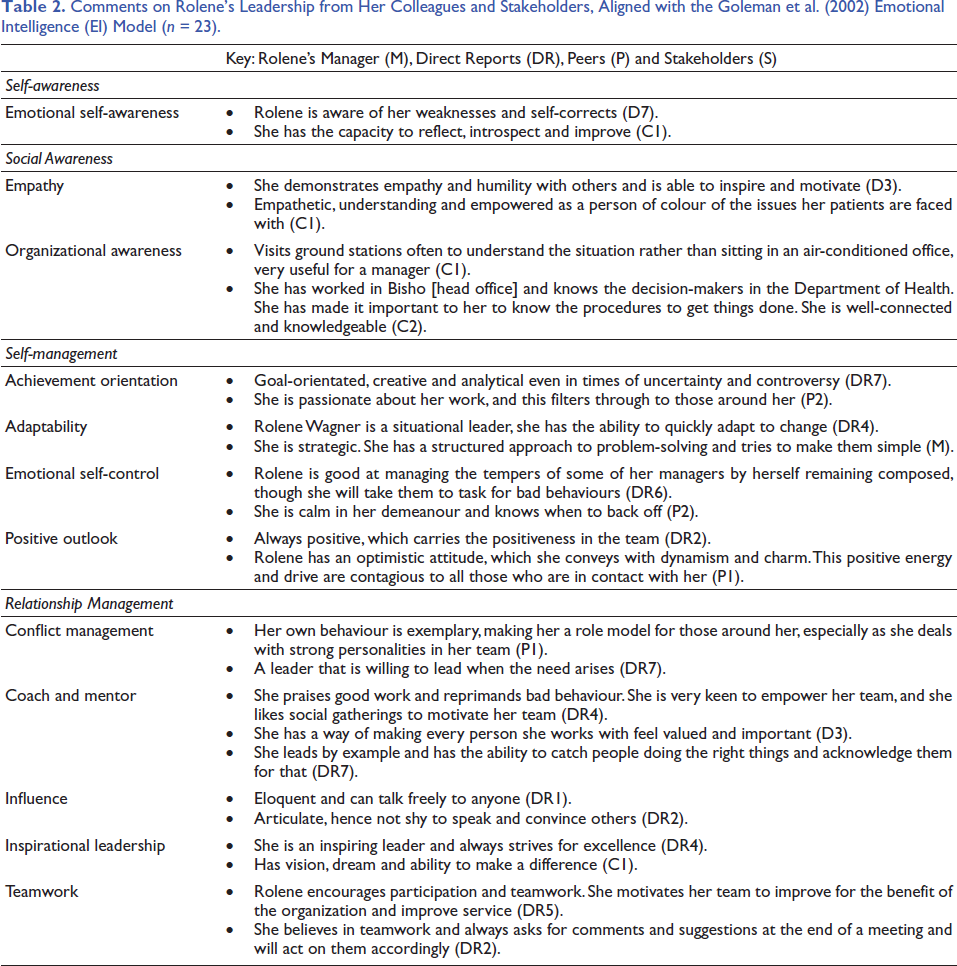
Rolene’s involvement in revitalizing Frere Hospital highlights her exceptional ability for transformational leadership and her skilful use of EI. She fosters an environment that appreciates and uplifts each person, improving organizational effectiveness and enabling everyone to achieve their utmost potential. EI plays a crucial role in decision-making, problem-solving and adapting to change (Goleman et al., 2002). It improves transformational leadership by incorporating EI competencies like self-awareness, empathy, teamwork, vision and relationship-building (Levitats et al., 2019; Mohammed, 2018). The combination of these competencies, along with expertise, experience and knowledge, is recognized as a key factor in fostering successful management and leadership performance (Boyatzis, 2009).
Her transformational leadership resonates with the insights of Sun Tzu in The Art of War, emphasizing the importance of the Tao, the pathway to success (Ford, 2024). The Tao represents the essential connection between a leader’s principles and their actions, fostering ethical balance and facilitating meaningful, empathetic leadership. In a healthcare system focused on quality patient care, improving health outcomes and maintaining medical ethics (Andersson et al., 2023), the concept of Tao is of great significance for public health leaders (Ford, 2024). In the challenging landscape of the Eastern Cape, transformational leadership is essential for effectively managing the intricacies of public health services and improving institutional performance.
Ford et al. (2021) emphasize two crucial elements in evaluating successful organizational change: the accomplishment of the change itself and the continuous well-being and integration of individuals within the affected social system. Effective coordination and collaboration create a positive work environment, crucial for attaining organizational goals via social integration. Rolene’s experience at Frere underscores the necessity of moving away from conventional public leadership and management methods towards fostering organizational change that enhances social integration.
Rolene’s transformational leadership embodies Ubuntu, an African philosophy that includes the core values of humanity, community, compassion, care, harmony, reciprocity, respect, relationships and responsiveness (Ogude, 2019). African public leaders in civic, political and bureaucratic spheres are expected to exemplify these qualities, particularly when entrusted with the responsibility of steering public institutions (Asamoah & Yeboah-Assiamah, 2019).
Impact of Frere Hospital’s Patient-centred Care Initiatives
From December 2012 to July 2019, Rolene embarked on a notable journey as CEO at Frere Hospital, driven by her unwavering commitment to patient-centred health services. Her innovative leadership sparked a transformation across management, administrative and clinical systems, leading to notable improvements in healthcare outcomes.
In her first 3 years, the outcomes of the hospital’s dedication to patient-centred care are striking: a substantial decrease in morbidity and mortality rates; a remarkable improvement in clinical facilities; a three-fold reduction in patient complaints; a four-fold rise in patient compliments; a significant drop in pharmacy waiting times from as long as 6 h to just 45 min; and satisfaction scores of 91% for inpatients and 85% for outpatients (Business Day, 2018; Cape Times, 2015; Mpofana & Ruiters, 2019; TimesLive, 2018; University of the Western Cape [UWC], 2017).
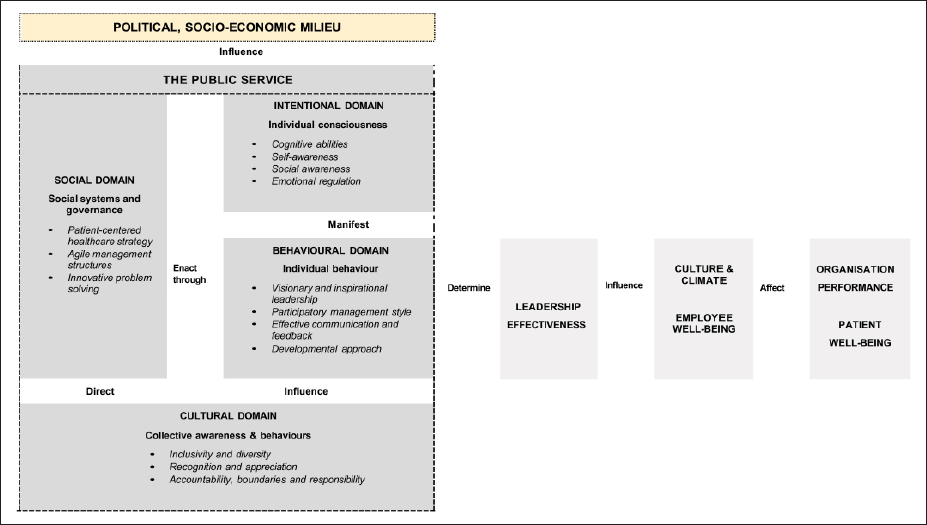
Table 1 illustrates the key themes and relationships among the four domains of reality at Frere Hospital. The relationships are graphically represented in Figure 1, illustrating how Rolene’s personal traits and behaviours influence shifts in the hospital’s cultural and social domains, impacting the climate, employee well-being, and subsequently, patient well-being.
Relationship Between Leadership Traits and Patient Outcomes.
Rolene and her team were acknowledged for their outstanding leadership and accomplishments in public health. Throughout her time in the position, she recognized the essential contributions of both managers and clinicians in attaining service excellence. Rolene has received numerous significant accolades, such as the University of Western Cape Jakes Gerwel Award in Public Health and the African Centre for eHealth Excellence (ACFEE) Leader in eHealth in Africa Award in 2017. She was honoured with the Southern African Development Community (SADC) National and Regional Most Influential Women in Business and Government awards in the Women in Government category. In 2014, she was honoured with the Business Women’s Association of South Africa (BWA) Regional Achiever Award and in 2016, she received the National BWA Award. Additionally, she was awarded the Rotary Paul Harris Humanitarian Award.
Rolene’s New Challenge: The Transformation of the Eastern Cape Provincial Health System
On a winter morning in 2021, as Rolene approached the provincial Premier’s Office, her reflections on her journey at Frere Hospital were briefly overshadowed by a wave of anxiety. In her position as the new provincial Head of Department, she would oversee a network that includes 92 provincial hospitals, 753 clinics, primary care facilities and ancillary services. She recognized the significant contextual challenges associated with reforming the provincial public health system, which encountered serious structural and systemic deficiencies. Among these challenges that required immediate action were tackling the second wave of COVID-19, settling medico-legal claims amounting to R5bn, managing debt as suppliers halted services, repairing health facilities affected by storms and addressing unprotected actions by workers.
As she absorbed the tranquil Eastern Cape scenery of undulating green hills, the origin of her hero, Nelson Mandela, with traditional rondavels and grazing cattle, a smile spread across her face. The powerful words of Mandela, ‘It always seems impossible, until it is done’, struck a chord with her. She was ready for the challenge that awaited her, enthusiastic about the opportunity to serve the people of the Eastern Cape province on a broader scale.
Rolene’s Dilemma: Scaling the Frere Hospital Successes Across the Province’s Healthcare System
In the current situation, can Rolene utilize her personal attributes and transformational leadership approaches—proven to be successful in promoting positive change at one hospital—to drive transformation across an entire provincial health system that encompasses multiple underperforming hospitals? The question that troubled Rolene as she stepped into the Premier’s Office.
Footnotes
Acknowledgements
The assistance offered by Dr Rolene Wagner in preparing the case study and sharing her leadership insights at Frere Hospital is greatly appreciated. Thank you to the Eastern Cape Department of Health for allowing permission to publish this case study.
Data Availability Statement
The transcripts cannot be provided because of the confidentiality of the interviews.
Declaration of Conflict of Interests
The author declared no potential conflicts of interest regarding the research, authorship and/or publication of this article.
Ethical Approval and Informed Consent
Approval for the study was obtained from the University of Cape Town (COM/00146/2023). Dr Wagner consented to take part in the study and to reveal her identity for the publication of the case study. The Eastern Cape Department of Health granted written consent for the publication of the case.
Funding
The author received no financial support for the research, authorship and/or publication of this article.
