



Abstract
Nagraj, the General Manager, Marketing & Sales at Comino Pharmaceuticals, has been a star performer consistently and is now one of the six participants in his division to be selected for the Business Leadership Programme at Comino Pharmaceuticals situated in Gujarat. The case describes his performance and evaluation in the assessment centre for the Business Leadership Programme. The case outlines the whole process of the Business Leadership Programme performed through a virtual assessment centre spread over four phases. While identifying his strengths and development areas and analyzing him on the Comino leadership qualities (CLQ), the case reflects on the feedback and suggestions for making his individual development plan (IDP). The case leaves the readers to ponder over the action plan that Nagraj has to include in his IDP for submission to the human resources department. Based on a real-life situation in the career of an employee, the case on ‘Assessment Centre: A Safe Room to Predict Credibility in Senior Leadership Position’ describes the performance and assessment of Nagraj, General Manager, Sales & Marketing, in the assessment centre as a part of the Business Leadership Programme of Comino Pharmaceuticals (name hidden). The case describes his assessment on CLQ through High Performance Trait Indicator (HPTI) conducted by Johnson International (Name hidden) and leaves the reader to help him derive an IDP. While presenting an analysis on the performance of Nagraj in the Business Leadership programme at Comino Pharmaceuticals, the article presents a detailed qualitative observation on Nagraj’s performance in the business case, ideation, situational judgement and the behavioural event interview. The more the employees are aware of their strengths and development needs, the better they are able to match their actual performance to their potential. The assessment centre at Comino had been planned in four phases on a virtual platform. While the first two phases include psychometric exercises and 360-degree feedback survey, the third phase subjects the participants to a series of individual and/or group simulations, and the fourth phase consists of feedback and IDP sessions, wherein each employee had a 75-min individual feedback session with their assessor (Johnson International, name hidden). Nagraj is left now to interpret the HPTI scores on his dashboard. A star performer and a go-getter, he now has scores assigned for his performance in the virtual assessment programme (VAC), on all six factors, including his conscientiousness, adjustment, curiosity, risk approach, ambiguity acceptance and competitiveness. His strengths as identified during VAC include innovative thinking and global and strategic mindset, while his weakness includes customer leadership and business and commercial acumen. Did that mean he was rated not too good in his ability to assume a business leadership role? Nagraj was a little perplexed. He was given pointers for framing his IDP. He read the report another time and pondered whether not having an MBA degree in any way made him less competitive. Should he enrol in one? Should he include a formal degree as one of his development plans? He wondered whether, with his kind of routine and travelling on a card every next day, this goal would be achievable. He had to make an IDP that was measurable and achievable. Based on a real-life situation of an employee, the case showcases how an assessment centre practically works and how IDPs are arrived at by an employee.
Introduction
It was 7:30
A hardworking and focused guy, Sukhil Nagraj has always been a committed employee of Comino Pharmaceuticals Ltd. With his sheer hard work and dedication, Sukhil had now reached the position of General Manager (Marketing & Sales) and was a star performer in the company. Situated in Gujarat, India, the multinational company Comino Pharmaceuticals Ltd has always been striving to set standards for safety, quality and value in the development, manufacturing and discovery of medicines for people. The company has always been committed to providing affordable and innovative medicines for a healthier, stronger and vibrant tomorrow. With the belief that access to quality healthcare is a right and not a privilege, the company has always been aiming to safeguard the accessibility of world-class quality medicines at reasonable prices across the world. The company was created by a team of youngsters who were determined to excel in every walk of life and were dedicated to working to create a healthier and happier world. The devoted, dynamic, daring and enthusiastic team was empowered and confident to meet the evolving challenges in healthcare. Sushil had been working for over 12 years with the company now.
He had been eagerly waiting for his next promotion as Vice President (VP) (Marketing), but he missed his chance, which had left him a little disappointed. But now he had to submit his IDP. As he switched on his system again to dig into his inbox, his thoughts were reflecting on the bright morning of 9 September 2021, when he had received a letter from HR stating that he was one of the six participants to be nominated for the Leadership Programme. He was more than happy as he felt the hard-earned star achievers award almost every quarterly and yearly to his credit, the never-ending travels and races after those targets were finally going to be rewarded as only performers whom the management found promotable were a part of the programme. Moreover, the programme was to be held in collaboration with an international agency, and the whole process would witness only a total of 48 participants from across 17 divisions of the company. And what was more, he was one of them. He had every reason to be excited to be a part of this virtual assessment programme (VAC).
But for now, things did not seem that bright as his feedback on assessment centre had marked him as moderate in a few traits. He was to submit his IDP, which looked at the milestones for improvement in the identified weak areas. Making an IDP did not seem very exciting to him as his dream of being promoted as VP (Marketing) was not as close as he thought. But the very next minute he realized that improvement in the weak areas might make him promotable very soon and that he should not give up. He was in a dilemma as there were many ideas suggested by HR to build his IDP that looked quite impractical to him, like enrolling in an MBA programme. But he knew he had to submit his IDP within a week’s time, and that meant a draft ready with him.
The leadership programme, as described in the mail, had assessed him on various aspects of Comino leadership qualities (CLQ) through 360-degree evaluation, psychometric exercises, general intelligence (GI) assessments and the High Performance Trait Indicator (HPTI). The programme had culminated in pointers for employees to work on their IDP.
He further reflected on the information he had received in his mail with regard to the VAC so as to enable him to understand better how to work on his IDP.
Assessment Centre: A Safe Room for Improved Performance
An assessment centre serves as a safe room for participants to demonstrate their skills, abilities and behaviours essential for success in the job, thereby enabling the management to nurture the potential of the participants, identify participants’ strengths, areas/opportunities for development, blind spots if any and provide development aids to improve current performance. While engaging in the selection and development of employees and leaders, assessment centres are interpersonal to the core as they involve interactive exercises (Kleinmann & Ingold, 2019). It also prepares the participants for shouldering higher levels of responsibilities.
The assessment centre at Comino was aimed at identifying and building a strong leadership pipeline that helped fill leadership positions internally. The programme provided the participants with an opportunity to gain exposure to diverse perspectives, engage with internal leaders at Comino, as well as work on strategic cross-functional projects, thereby prepping them to advance to the next stages of their careers.
The programme was being run for a critical cohort of Comino leaders, general managers and VPs who had consistently exceeded expectations in their performance appraisal. A customized flagship development programme driven by the concept of ‘learning in action’, the leadership programme at Comino aimed at nurturing the potential of Comino leaders—providing exposure to diverse perspectives, deploying proven models of business management, and creating a platform for cross-functional learning and guidance from the leaders, all in a safe space. Aimed at self-reflection and development, the leadership programme basically encouraged leaders to focus on and leverage the opportunity, thereby taking ownership of their development.
The assessment centre at Comino was planned in four phases on a virtual platform. While the first two phases included psychometric exercises and 360-degree feedback survey, the third phase exposed the participants to a series of individual and/or group simulations, and the fourth phase was more of feedback and inputs towards the IDP sessions, wherein each employee was given a 75-min individual feedback session by their assessor Johnson International (name hidden). Nagraj was now supposed to work on his IDP while reflecting on the feedback received during the assessment centre.
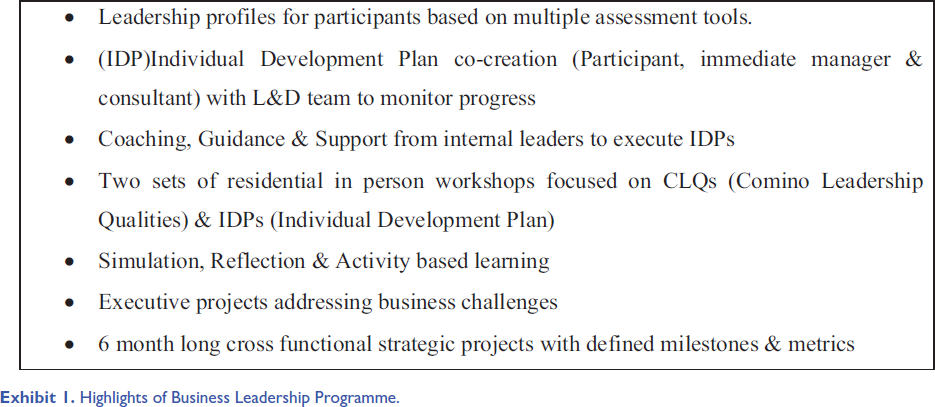
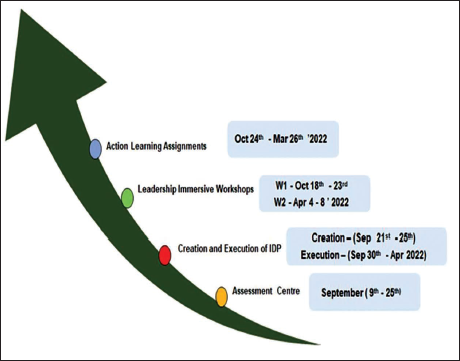
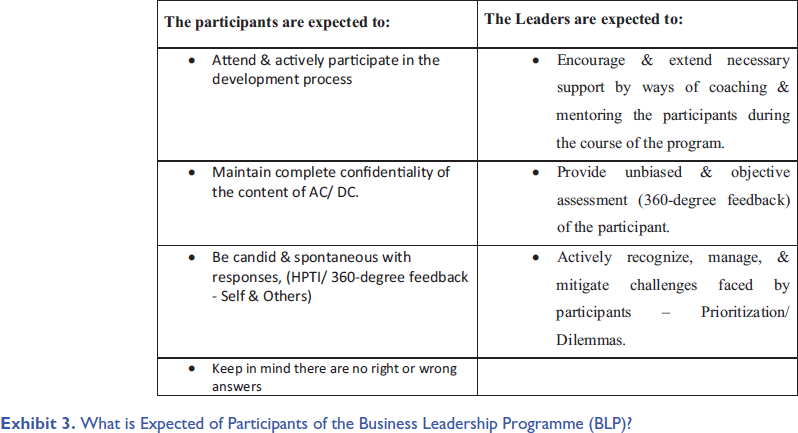
Nagraj skipped across the highlights of the development programme (Exhibit 1) shared with the participants, which mentioned the milestones through which the participants were expected to go through, along with the stages of the programme (Exhibit 2) and what was expected of them as participants during the programme (Exhibit 3).
Highlights of Business Leadership Programme.
Stages of Business Leadership Programme.
What is Expected of Participants of the Business Leadership Programme (BLP)?
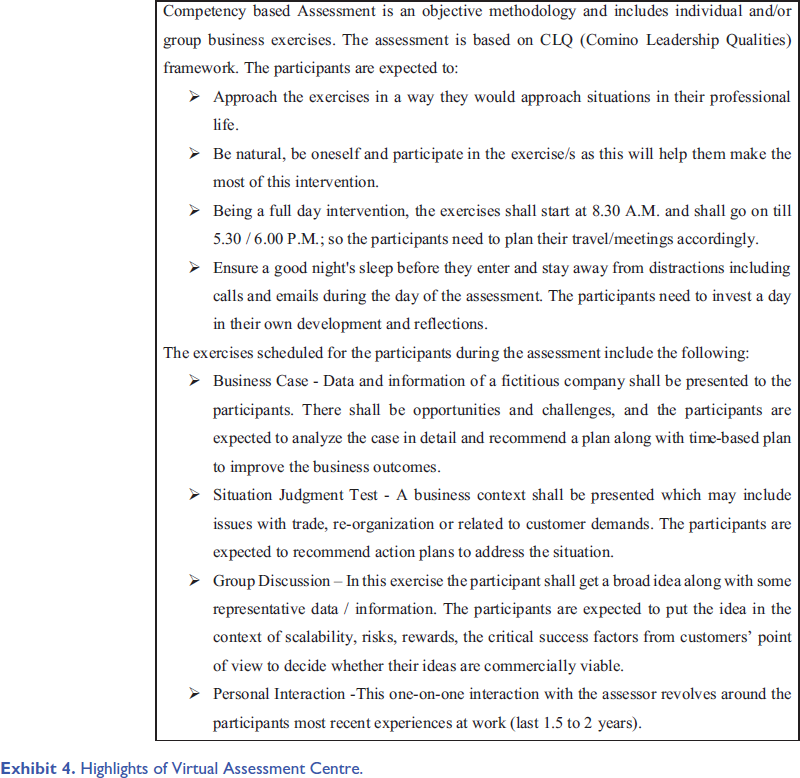
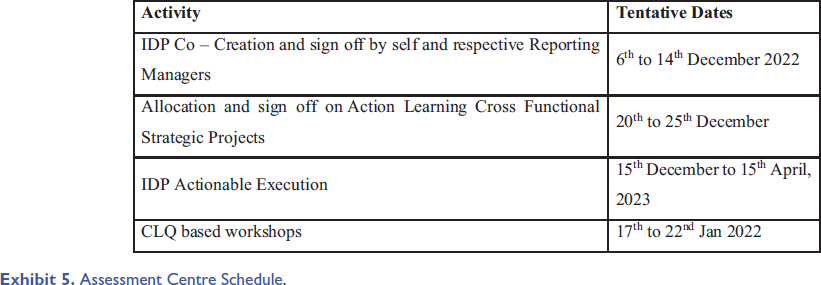
The assessments Nagraj went through had insights from specialists who observed and interacted with all the participants in the exercises like a ‘fly-on-the-wall’. The entire intervention aimed at getting a better understanding of employees’ strengths and areas of development, as well as enabling them to utilize their strengths and actively work towards their development by creating self-awareness. Nagraj reflected on the whole process, which included a business case, a situational judgement test, a group discussion followed by a personal interview (Exhibit 4), along with the schedule (Exhibit 5), which mentioned the activity that was to take place along with the dates which were shared with the participants.
Highlights of Virtual Assessment Centre.
Assessment Centre Schedule.
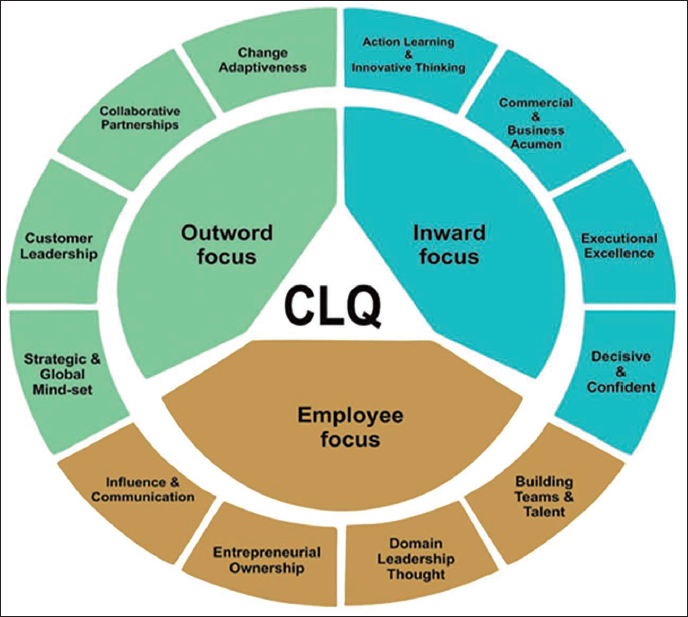
CLQ as the Guiding Factor Towards Growth
CLQ—(Exhibit 6) reflected the guiding principles (core competencies) towards individual and organizational growth. CLQ looked at their business leaders’ qualities, including external focus, internal focus and people focus. The ability of leaders to adapt to change, have collaborative partnerships, customer leadership, and a global and strategic mindset formed the essential qualities in external focus. The internal focus included innovative action and thinking, business and commercial acumen, executive intelligence, confidence and being decisive for business leadership. The third factor was the people focus, which included qualities like communication and influence, entrepreneurship, ownership, domain thought leadership, and building talent and teams. At Comino, emphasis had always been on applying science and resources towards improving well-being and health in all walks of life.
Comino Leadership Qualities (CLQ).
Nagraj Through the Safe Room: The Assessment Centre
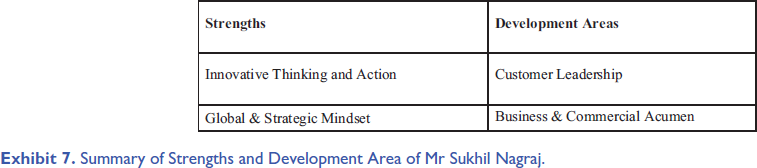
Nagraj recalled his experience in the first phase of assessment as a part of the 360-degree feedback survey. The participants were initially asked to submit feedback on their colleagues and their own feedback within the stipulated time. This was followed by Phase 2, wherein he went through GI assessment through a battery of psychometric tests, including business simulations, in-baskets, group discussions, questionnaires, role plays, case studies, individual presentations and interviews. His performance in business case, ideation and situational judgement was recorded as a detailed observation chart, which was finally wrapped up with a behavioural event interview. The battery of tests identified his strengths and development areas (Exhibit 7). Phase 3 comprised HPTI, a proven psychometric tool that had a list of questions which he was to complete and submit in the stipulated time. Phase 4 provided him with feedback and some pointers to work on his ‘IDP’.
Summary of Strengths and Development Area of Mr Sukhil Nagraj.
Nagraj further explored his inbox to have a look at his performance report in the leadership programme to work on his IDP.
Nagraj’s Performance Report for the Business Case
While identifying the need to bridge a gap of 600 crores in 3 years with the stiff competition from other multinational corporations (MNCs) and growth opportunities available and expansion required, Nagraj’s growth and expansion strategy were primarily based on replicating the current success model in other states while launching more products. He was able to evaluate the market potential of the various products while recommending entry into those categories. He was of the thought that the company must utilize its ‘Health’ platform to promote new products and advertise accordingly. The products he suggested included yoghurt, cheese, spreads and protein drinks, except colas. He preferred entry in all suggested categories and emphasized the need to spread awareness accordingly.
Since the products pertained to the health food and drinks category, he clarified that entry into the new product categories would not require repositioning. About entry into the global markets, he suggested strengthening the base in the UAE, as exports had already commenced there, which could now be followed by entry into African markets. Because of the stringent food laws and serious repercussions/penalties in Western markets, his logic was to enter the easier markets, ensure trials, launch there and grab a significant market share. About trade, he preferred more emphasis on multiple products in general trade and better offers and discounts to capture the modern trade to beat the competition. According to him, since all the plants were running at 100% capacity, growth could now only be ensured by expanding the capacity while ensuring close monitoring of the launches and course corrections.
Assessor’s Interpretations of Nagraj’s Performance in the ‘Business Case’
His prime focus was on new product launch, advertising and expansion into more states. He ignored the internal issues as well as employee-related concerns in his analysis even during presentations when asked for more inputs. He should have identified the specific markets wherein there was potential for growth and where presence was low. Also, he should not have ignored the product expansion and should have understood the need to increase profitability through stock-keeping unit (SKU) combinations. He should have contemplated the employee issues as well and adopted a region-wise approach in his action plan.
Nagraj’s Performance on Ideation Through Leadership Programme
Nagraj was of the opinion that there existed a large scope for ATMs, considering 9,000 retail stores that existed against a population of 1.8 crores in Mumbai. But he should have factored in the population of Mumbai while deciding, as ATMs were bound to provide the convenience of any time purchase to the consumers. Though he passingly mentioned the purchasing power of consumers, there was no elaboration or data in this regard. He mentioned that chemists going for door deliveries and high discounts can be a competition to ATMs, apart from e-pharmacies. He was not in agreement with some of the risks identified by other team members, including product range, replenishment of stocks and expiry, as he felt that they were common for all players and could be taken care of. He was in favour of the idea and ready to invest in ATMs but also said that only those customers who knew the exact medicine could make use of ATMs. However, he was unable to identify risks in a holistic method apart from other aspects such as revenue model for the start-up, critical success factors from the customer perspective, execution strategy and scalability.
Assessor’s Interpretations of Nagraj’s Performance in ‘Ideation’
Nagraj must understand the stated and unstated needs of customers to build a relationship that allows him to effectively influence the customers. He needs to stir up actions within the organization towards endorsing the voice of the customer and understanding business and market/industry, while ensuring a good grasp on applying financial acumen and commercial aspects while taking decisions. He should proactively ease out risks and create winning negotiations.
Nagraj’s Performance on Situational Judgement
The action plan given by Nagraj for growing the business, increasing profitability and resolving the current issues included: setting up more stores in tier two and three cities of Gujarat and Maharashtra; setting up stores in a phased manner in Rajasthan and Madhya Pradesh; focusing more on non-prescription items to increase the profit margin; recruiting more area managers in Maharashtra and Gujarat to capture the declining market of e-medi and extending support to them in the next 3–6 months; closing down nightshift operations in pharmacies, except those in hospitals which were contributing very less revenue; and adding more people for supply chain management (SCM), especially for home deliveries.
Assessor’s Interpretations of Nagraj’s Performance in ‘Situational Judgement’ of BLP
Mr Nagraj overlooked the number of stores to be set up, timelines and the funds required for the setting up of stores. Moreover, he was unable to give a logical explanation as to why he suggested the above expansion plans, and why he did not consider the e-commerce route. He also did fail to address issues including reducing the expenses of employees as well as losses and pilferages; training customer service employees and delivery boys; complaints from customers about late and wrong deliveries in case of home deliveries; setting up three more hospital stores in the next 1 month with proper manpower; opportunity provided by the private hospitals through outsourcing pathological testing services; tension and lack of coordination between old and new chemists; lack of incentive schemes; pharmacists not being trained enough to push and sell non-prescription items. He needs to invest time in mentoring and building talent and leaders and must build highly engaged teams that follow a high-performance ethic. He needs to have the mindset of an entrepreneur.
Nagraj’s Performance in the Behavioural Event Interview
As for business with the administration, he identified a potential for business with health services managed by the government. He also identified that they procured approximately 2,000 crores of medicines. His business idea was only 10–12 crores, while he aimed to tap the potential of health services and kept a target of 100 crores in 4 years. He made propositions to seniors, finance, SCM and his team. The challenges as identified by him included shifting from branded medicines to generic medicines; participating in the tenders, augmenting manufacturing and SCM.
He mentioned during discussions that he had got approval to start in one of the states in 2017 and then expand. And he had started the business in 2017 and is now covering all the states and expects to achieve a sale of 40 crores in 2023 with higher absolute margins, although percentage margins are less.
The challenges and the deviations he suggested for changing the status quo included: hiring experts for participating in government tenders; using experts for dealing with supply chain as any delay in supplies could create adverse situations; manufacturing generic medicines in the spare capacity; outsourcing manufacturing to bridge the gap; quality checks to ensure quality of supplies from the vendors; processes and systems to ensure timely deliveries. He identified potential in one of his colleagues and gave him additional responsibility for handling Telangana and also gave him full independence. He worked on improving his communication skills, created a platform for group discussions and generated multiple ideas to resolve issues. He implemented the ideas given by team members, like he used ideas as to how to get payment from defaulters.
Assessor’s Report on Nagraj’s Performance in Behavioural Event Interview of BLP
He needs to bring in a global perspective to his thinking and action and has to be on the lookout to create new and additional value for stakeholders.
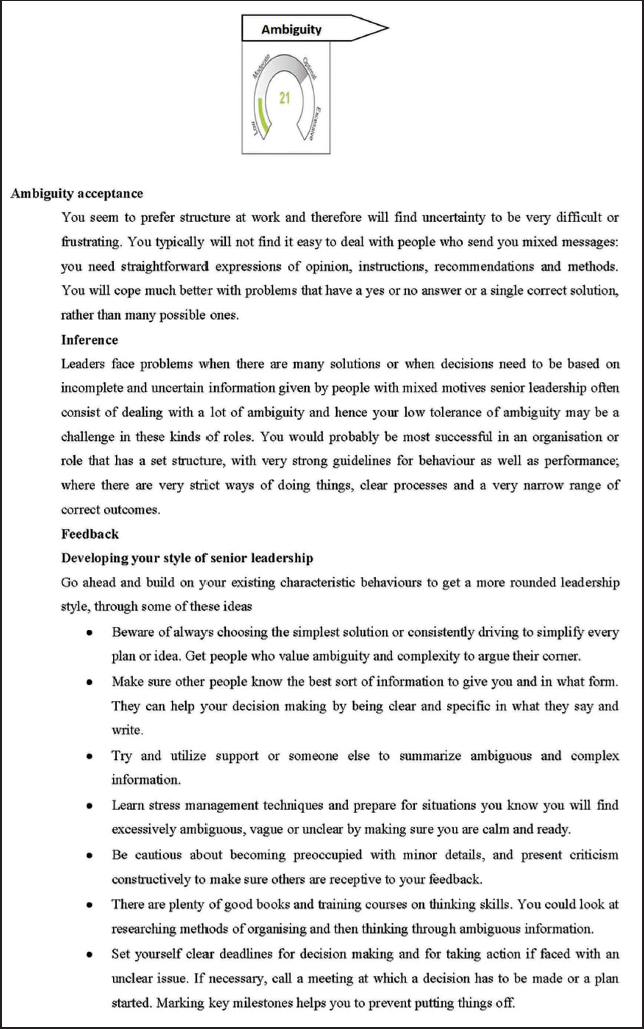
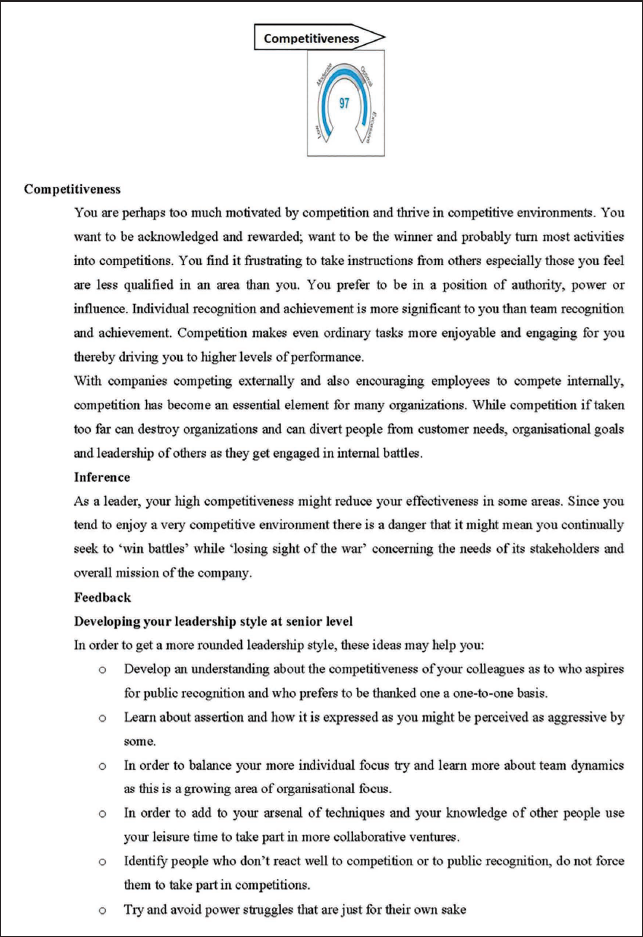
Nagraj was still not clear as to how he could frame his IDP, so he thought of exploring his performance indicator report, which was a part of Phase 3. He recollected how participants were asked to fill in a questionnaire and submit it within the stipulated time of 5 days. The tool measured six key qualities that affected performance at work. Most importantly, it indicated the kinds of approach someone could make use of if they attained a senior leadership position and suggested situations in which the style might be most effective.
‘High potential’ meant a high probability of success, and in the assessment phase, it meant the probability of succeeding in a senior leadership position. Personality, a stable psychological concept, impacts one’s thoughts, emotions and behaviour and is unlikely to change significantly throughout adulthood. Each trait measured in these tests was stable and consistent across career spans, although particular traits were less varying over time and more important to specific careers or situations than other traits.
It had been conveyed to all participants that performance indicator traits, though important, were not the only ingredients of senior leadership potential and effectiveness. The factors that influenced employees were a better understanding of their strengths and development needs in all areas, enabling them to match their actual performance to their potential. The tool discussed how personality traits were related to senior leadership capacity, including knowledge, motivation, skills, values and intelligence.
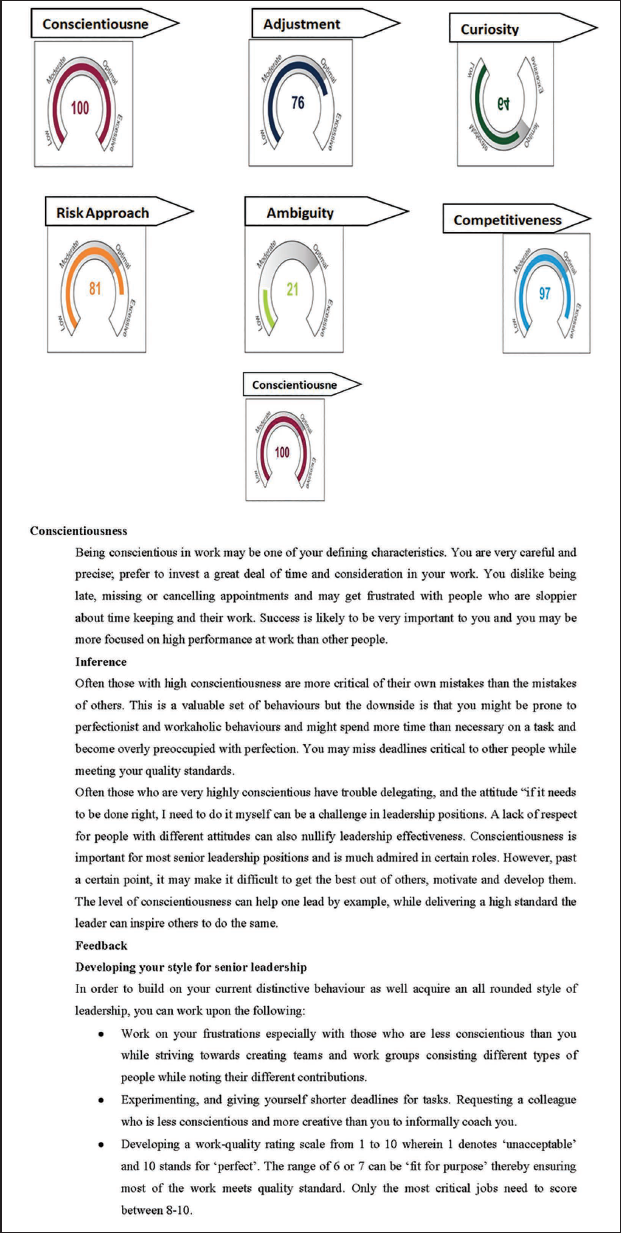
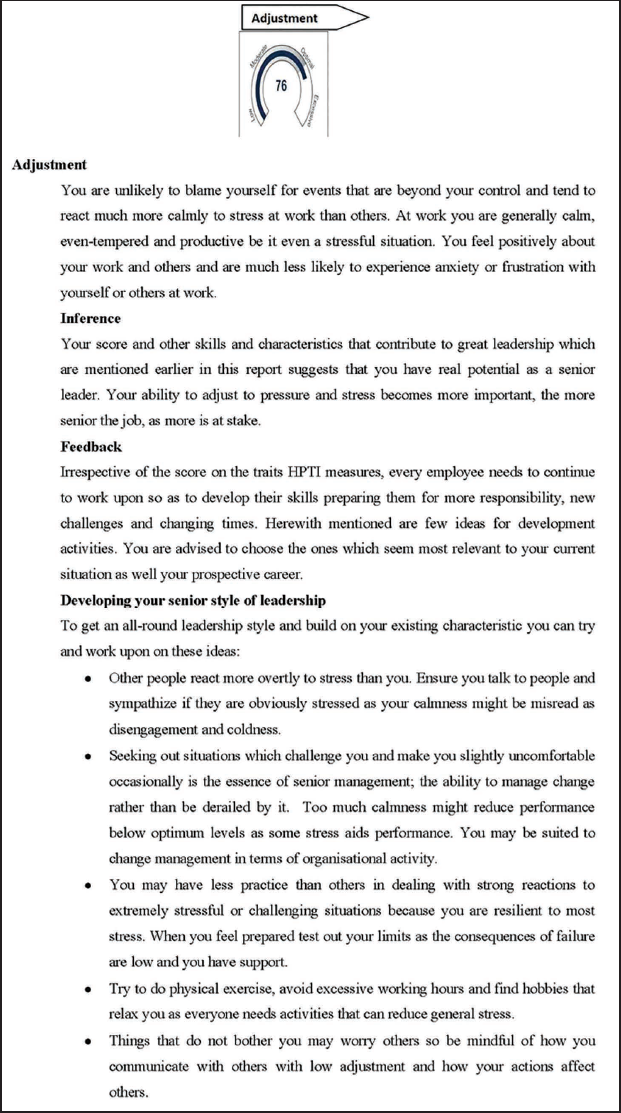
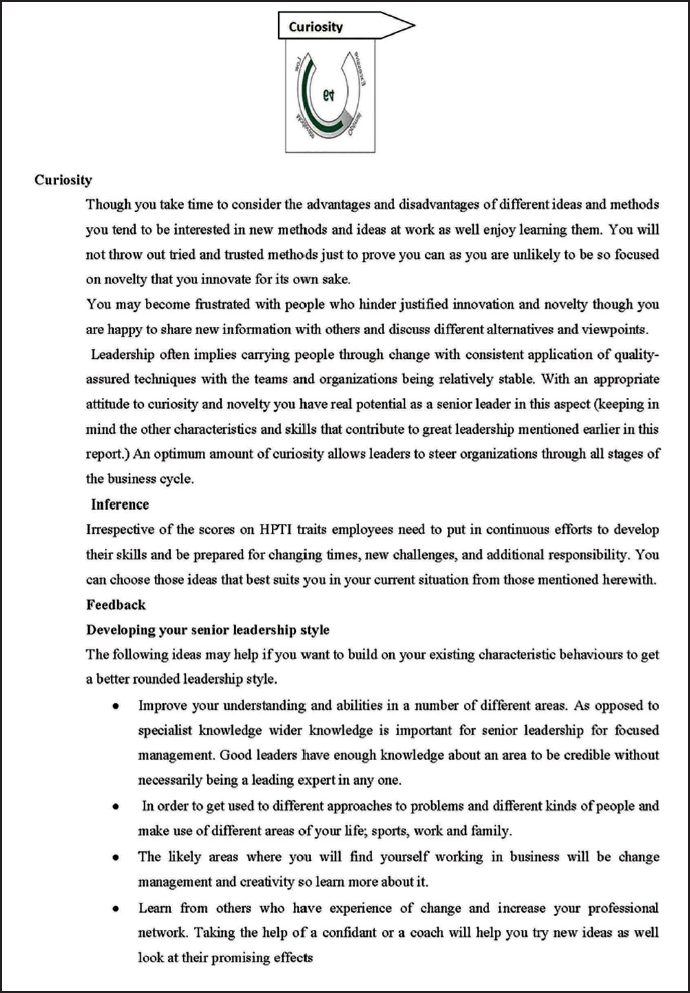
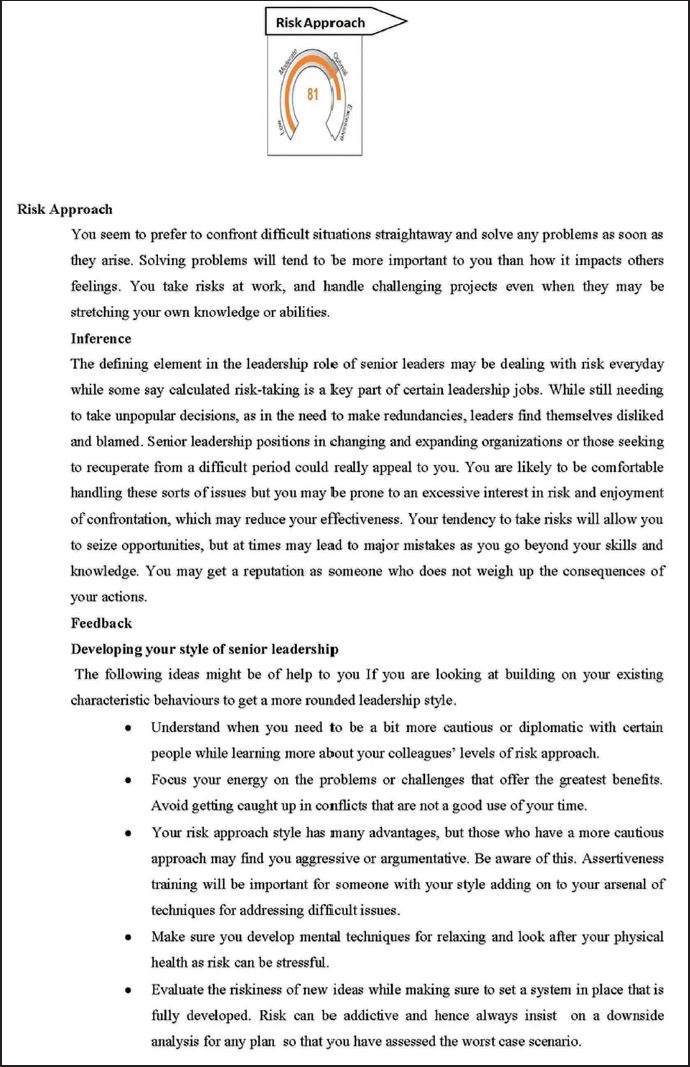
Also, Nagraj recollected that it was communicated to the group that, unlike other scales, this tool did not interpret high scores on tests as ‘good’ and low scores as ‘bad’ as in other scales. The scores on each trait fell in the category of ‘low’, ‘moderate’, ‘optimal’ or ‘excessive’. The optimal scores fit in very well with most senior leadership roles.
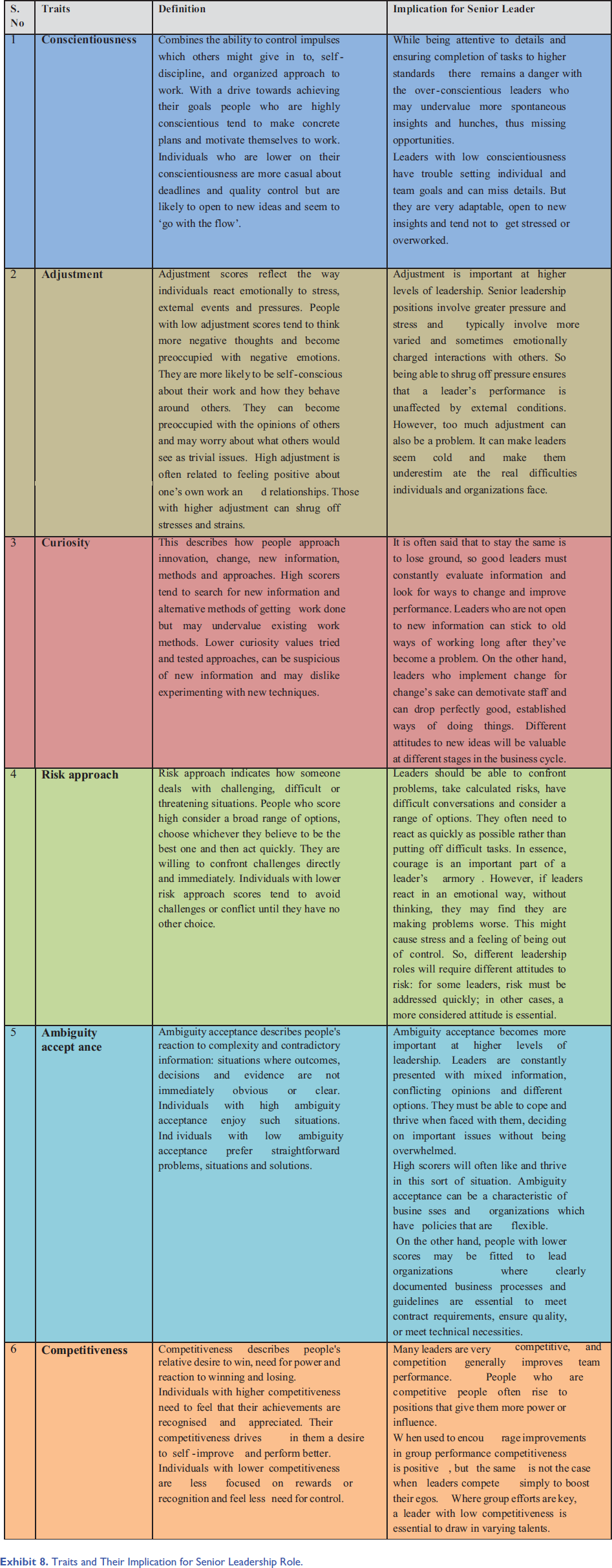
The employee may adapt moderate traits to senior leadership roles, particularly if they are quite close to the optimal zone, while a ‘low’ or ‘excessive’ personality trait may reduce the employee’s senior leadership effectiveness in certain contexts but may suit other specific roles. The key point was that every set of scores indicated a preferred leadership style, and the report of the employee offered some ideas which could help them develop leadership behaviours: just because one scores outside the optimum band does not mean they cannot be a leader. Nagraj reflected on his report that mentioned the six traits and their implications for senior leaders (Exhibit 8) from the perspective of identifying the areas which would need to be stressed in his IDP.
Traits and Their Implication for Senior Leadership Role.
As Nagraj scrolled through his evaluation report, his attention first went to the statement that ‘Performance indicator traits are essential, but are not the only constituents of senior leadership effectiveness. A potential and effective leader persistently puts in efforts towards his/her self-development’. It further mentioned that factors including knowledge, motivation, skills, intelligence, values and conscientiousness played a key role. It reflected that the more the employees were aware of their strengths and development needs, the better they will be at matching their actual performance to their potential.
Nagraj read through the competency-wise key inferences on his global and strategic mindset, customer leadership, innovative thinking and action, business and commercial acumen, building talent and teams, and entrepreneurial ownership as described below to further help him in framing his IDP.
HPTI as a Predictor for Nagraj’s Credibility in Senior Leadership: Phase 3
Global and Strategic Mindset
In his domain, he was able to identify opportunities for new business and take steps to align stakeholders’ needs with his ideas. He was able to identify gaps which had to be bridged for capitalizing on the opportunities. He was also able to overcome challenges and get a buy-in for his ideas. Additionally, while analyzing a business situation, he had an understanding of the global scenario and suggested cautious approaches. He also gathered relevant data to identify gaps and suggested a few measures to bridge them. However, he was unable to leverage all the opportunities available for business growth.
Customer Leadership
He had an understanding of some of the customer requirements; however, he could not develop strategies to deliver value propositions to customers. Additionally, he was not able to provide proactive services and was unable to think through and come up with comprehensive solutions to address all customer-related issues.
Innovative Thinking and Action
In his domain, he identified changes to be made to capitalize on new opportunities and presented ideas to overcome challenges and worked towards business growth. Additionally, while analyzing a business situation, he proposed recommendations to expand the business and acknowledged the need for new ideas; however, he was unable to present novel suggestions for implementation.
Business and Commercial Acumen
While exploring new business ideas with others, he did have an understanding of the dynamics of the market and the competitive scenario. However, he was not comprehensive in his approach and did not factor in all aspects that could help in making effective business decisions. While analyzing a business situation, he presented a few ideas for expansion; however, he did not have a data-driven approach and was unable to leverage available opportunities comprehensively to enhance business outcomes.
Building Talent and Teams
In his domain, he could identify potential and was able to guide and train teams for higher contribution to the organization. He was able to create an atmosphere for others to innovate and capitalize on the ideas generated. Additionally, while managing critical situations, he was aware of the need to develop team capability; however, he did not emphasize resolving their key concerns and was unable to provide training opportunities for them.
Entrepreneurial Ownership
While analyzing a business situation, he promoted the organization and worked on a few growth opportunities to align with the vision of the company. He also exhibited seriousness in his approach and identified certain gaps in operations. However, he was unable to consider internal issues and explore all areas for growth. Additionally, while managing critical situations, though he identified some areas to improve business, he was unable to resolve the existing issues and problems and could not focus on the financial aspects while making business decisions.
A report which detailed the various traits and how he had to work on them to improve his leadership skills (Exhibit 9) was also in his inbox. He tried to relate the same to the different areas which he probably had to focus on in his IDP.
High Performance Trait Indicator (HPTI) Report of Nagraj.
It was almost 9:00
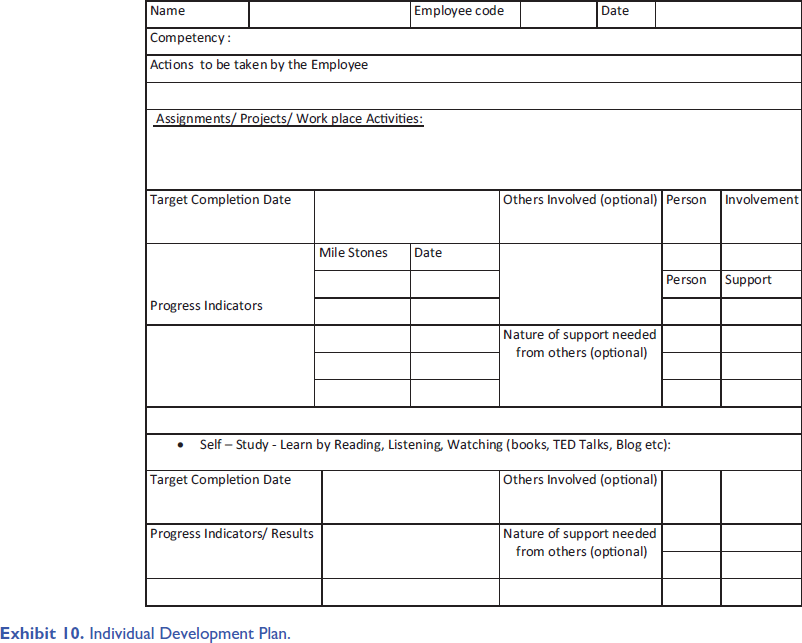
There were areas of competencies identified for his development and they were reflected in his IDP template (Exhibit 10). With many other feedbacks in his inputs for development, it was also mentioned that he should be enrolling in an MBA programme. It also read that he had to take the help of the HR/Reporting Manager while elaborating the IDP to kick-start the development journey. Moreover, his IDP had to be both measurable and realistic. There were two focus areas in his feedback—Developing competencies (Exhibit 11) and Action planning (Exhibit 12).
Individual Development Plan.
A broad IDP has been recommended based on your performance in the simulation-based assessment centre. This being the first step to build on your strengths and to work on your specific development areas:
A person who has not accepted a need or limitation or development opportunity cannot really develop a competency. While identifying the development actions, analyse how the action would help you to improve your effectiveness on the job and whether the actions will positively impact the critical success factors for the current role and future possibilities.
Numerous methods which apply to almost all of the competencies have been described below under four broad categories, while the selection of appropriate development methods is central to this process:
Formal training:
Courses such as those for presentations, time management, managing teams, assertiveness, negotiating and influencing can help develop most of the competencies. Courses, such as the Executive MBA, being longer than the general management programme can help develop other competencies.
On-the-job development:
i. Mentoring from your boss that includes continuous feedback on performance, timely advice and encouragement.
ii. Ensuring a broader perspective of the business or the external environment by taking on more work of a specific nature or a job move, lateral or upward.
iii. Action learning projects in a well-defined area. This methodology gives hands-on opportunities to practise the competencies. This is learning by doing. In addition to individual development, this methodology is also relevant to institutionalize the benefits from business impact projects. These could be in areas of new technology implementation, driving operational efficiencies or launching into new markets or new products.
iv. Learn from people you admire while observing and through discussions. Also, look out for role models in specific competency areas.
iii. Reading–listening–watching:
Reading about the changes in your company and industry by going through the annual reports, market research reports, as well as reading newspapers and periodical articles on business/management topics, particularly for competencies in the intellectual/cognitive area; books on specific subjects such as finance and economics are appropriate. General reading can also improve your vocabulary and, in turn, your written and oral communication.
While preparing a development action plan (DAP), you can consider the following: How do you plan to develop—which style suits you best? Who might be able to help you—role model/coach/mentor What kind of goals would you like to set and how do you propose to review your progress?—Time-bound plan with clear progress indicators helps you reflect and refine.
You will see that the competencies that were flagged in the report as the top two areas of development have been repeated again in your IDP template. While taking help from your HR/Reporting Manager, you are directed to elaborate on it further and kick-start the development journey. Remember, your DAP must be both measurable and realistic. The onus of your development and hence your success lies entirely upon you. Fill in the IDP template and mail it to your HR by this weekend.
Nagraj was in a dilemma. He had to decide between envisioning himself in a journey towards long-term career growth by enrolling himself in an executive MBA programme or integrating learning activities that might strengthen his competencies while allowing him to balance the workload, which included extensive travelling and his daily responsibilities.
It was 9:45
Questions
Using the case, analyse how assessment centre outcomes can create expectation gaps (promotion vs. development) and how individuals can respond constructively.
Based on the data in the HPTI report, devise an IDP plan for Nagraj, keeping in mind the dilemma between short-term career rewards and long-term growth, especially under work pressure.
What, according to you, are the trade-offs between accumulating success/development and aspiring for higher positions? What are the possible hurdles towards achieving the tasks that were proposed by the experts? How do you think Nagraj can ensure achieving them?
