



Abstract
As Great Lakes Safaris, a Ugandan tour and travel company, expanded, so did the needs of its clients. This prompted the company’s proprietor, Amos Masaba Wekesa, to diversify to closely related fields to accommodate this demand. He spotted opportunities in the Ugandan National Parks, where he built several eco-friendly lodges. Relatedly, he took advantage of the blue waters of Lake Victoria to branch into marine tourism and co-patterned with his friends to buy their first water bus—MV Kazinga. However, the advent of the COVID-19 pandemic devastated the tourism industry, pushing Wekesa into the unrelated agro-processing business. The birth of his new venture, PELA Commodities Limited (PCL), was circumstantial and a survival backup plan due to the COVID-19 disruptions. As life returns to normal, Wekesa has to think critically about his diversification strategy and ensure he is well-positioned for success in his tourism and agro-processing businesses. He is worried that his new PLC business could become a distraction to his core Tourism business. He wonders if this will not stretch his current resources or devalue the quality of his services.
Introduction: COVID-19 Pandemic
Amos Masaba Wekesa stood at the exit of Entebbe International Airport when the first announcement of an outbreak of the COVID-19 pandemic aired. Initially, the pandemic sounded like a fairytale that he and his friends joked about. In March, reality set in, and shortly after that, the country was under total lockdown. There was a stoppage of airline travel, with international and domestic client bookings cancelled. Wekesa’s company, Great Lakes Safaris, had full bookings and anticipated an exponential growth of about USD 3 Million for 2020. The entire tourism industry was at a halt! No tourist was ready for the burdensome quarantines, especially inbound tourists. Within six months of closure, 97.8% and 88.7% of foreign and domestic tourism bookings declined, respectively (Ministry of Tourism, Wildlife and Antiquities [MTWA], 2020). This drop created a surge in job losses across the country, more so for businesses in the tourism sector. Wekesa tried his best to pay his employees’ salaries fully for the first six months.
At the end of July 2020, I couldn’t handle it anymore. We started to reduce the number of our staff significantly, and those who remained were taken on half pay. This was the hardest thing I’ve ever had to do since opening Great Lakes Safaris. I remember signing papers half-heartedly. I couldn’t imagine my young employees returning home and having nothing to earn.
During the two-year lockdown, the ensuing events were psychologically torturing but interestingly provocative for Wekesa. For the first time since the inception of his company, he was forced to diversify outside of the tourism sector. He had to think of other businesses not too susceptible to similar economic shocks. He teamed up with three friends and launched PELA Commodities Limited (PCL), an agro-processing company in Soroti in Eastern Uganda. PCL buys, processes, packages and markets agricultural grain products in Uganda and other areas in the African Great Lakes region. The critical question is whether Wekesa will not be tempted to abandon his new PCL venture in favour of his tourism ventures. After all, the circumstantial disruptions of COVID-19 that motivated his decision to diversify into agro-processing have been elevated!
Wekesa’s Humble Beginnings
Amos Masaba Wekesa was born on 22nd April 1973, in Lwakhakha village in present-day Namisindwa District in Eastern Uganda (Bugisu sub-region). His village is at the border of Uganda and Kenya. As a child, Wekesa never dreamt he would become the entrepreneurial mogul he is today. He was born in abject poverty and did not start school until age 10. His family smuggled foodstuffs such as tea and sugar across the Kenyan border to survive.
We had genuine daily challenges of finding where the next meal was coming from and jostling to survive. There was always a chance my parents would get arrested by the Kenyan army. They had their goods confiscated many times. So, it would be easier for us kids to smuggle as there was less chance of being apprehended.
At 10 years old, the Salvation Army, a Christian organization, took Wekesa to a home for disadvantaged children. He lived here with 45 other boys for 13 years. Wekesa never liked school, so he failed the high school national examinations and only started advanced secondary education at age 23. After school, Wekesa tried his hands at various business ventures, sold second-hand shoes, and prepared tea that he hawked around small shops, but all were unsuccessful.
In 1998, Wekesa decided to study for a certificate in tourism for nine months and then worked in the hospitality business. He started as a casual labourer and a sweeper at Belex Tours, earning only USD 10 monthly. He then worked as an office messenger at Nile Safaris, then as a tour guide with Habari Travels, earning USD 1 a day, and finally at Afrique Voyage.
As a tour guide, I often witnessed many tourists shed tears at the airport at the end of every trip. They would wonder why Uganda is so poor yet gifted with magnificent beauty: water bodies, forests, beautiful animals, and excellent food. I became convicted and started thinking of solutions to these challenges.
This persuaded Wekesa to start Great Lakes Safaris shortly after his 27th birthday.
Great Lakes Safaris
With only USD 200 in his pocket, Wekesa started Great Lakes Safaris in 2001, a tour and travel company he operated in a briefcase for the first nine months. The company only had a receipt and invoice book with a phone number. From the briefcase, he rented a below-the-staircase office in the city centre of Kampala. Great Lakes Safaris did not get any business in the first three months, and Wekesa contemplated closing it. In January 2002, he got a tourist named Cynthia from the World Bank who was thrilled with her three-day visit and could not wait to tell anybody about Uganda. In May of that same year, a group that had been referred to Great Lakes Safaris by Cynthia toured Uganda. Little did Wekesa know that one of these tourists was an American journalist working with The Washington Times. Upon return to the USA, the journalist wrote a USD 340,000 story about his trip to Uganda that ran on 22 November 2002. This became the turning point for Great Lakes Safaris, and it started growing by leaps and bounds (
We appeared in ‘The Washington Times’ because I gave the tourists a good guide, driver, and service. I understood the trade because I practiced it. However, being reliable is also a good attribute for any business. Since then, clients have started coming in, newspapers have started writing about us, and we have started growing.
The business underwent rapid growth, with money coming in too fast. From earning USD 10 a month as an office messenger to a whooping monthly income ranging from USD 2000 to USD 3000, money he barely dreamt of. With this exponential growth and lack of formal management skills, Wekesa faced enormous challenges. Although hungry for growth, Wekesa confesses that he needed to prepare for this growth. He needed management and business acumen training, and he could neither hire the right personnel nor remunerate well. Consequently, some of his employees exploited his naivety and stole from him.
Some staff identified my incompetence and took advantage of these loopholes. A couple of employees I had charged with the company accounts completely messed me up. I woke up one day to realize that one staff member had set up a competing safari company. She hacked into the company system and stole important company information. Unfortunately, she was a close family member.
Another challenge came with the acquisition of travel vans. Great Lakes Safaris went from having no tour vehicle to owning a fleet of over 50 tour vans. Although this was a milestone, the acquisition of these vehicles came with its turns and twists.
I had barely made a 50% deposit on a UGX 13 million (USD 3500) four-wheel-drive minibus when it crashed. I didn’t have comprehensive insurance for it. I went to the car dealers, who gave me a grace period of six months. So, every month, I would make deposits for a smashed car that I wouldn’t eventually use. When I was done with these payments, the business almost went down. Then, I wished I had purchased insurance earlier. From then, I learned I could only own business property or assets like cars with insurance.
The preceding challenges made Wekesa realize the need to change strategies and make critical decisions. Wekesa’s company offers an all-inclusive tour and travel product. Tourists usually pay a comprehensive package: accommodation, feeding, transport, fuel, tour guide, park fees, and boat trips. The company has offices in four East African Countries, the United Kingdom, and the USA. As of December 2020, the company was valued at an estimated USD 8 million, employed over 200 staff and owned a fleet of over 50 travel vans. The company is a member of 1 DMC World, United States Tour Operators Association, African Travel and Tourism Association, Association for the Promotion of Tourism in Africa, Uganda Hotel Owners Association, Association of Uganda Tour Operators and Uganda Tourism Board.
I’ve spent over 20 years preparing myself. I am well positioned, so you must be super strong to move me. We offer a genuinely traditional African safari experience across East Africa. Our authenticity is a luxury, and our priority is clients’ experience. In almost all big tourism companies, you’ll notice that I have trained someone in tourism, and when they get bookings, I am given priority.
With skills and experience garnered in tour and travel, Wekesa decided to branch into lodging.
Eco-friendly Lodges
Wekesa applied to build his first lodge in a primate-infested Kibale National Park in western Uganda. After facing several challenges, he finally got permission to build Primates Lodge in 2006 (
Initially, I needed help to get support in getting started. I was written off by other lodge owners, tour operators and stakeholders in the tourism industry. But this only made me want it more. I had started Great Lakes Safaris without anyone’s help and support, so I was determined to do so. If people say I can’t do something, this becomes my biggest motivator. Slowly, people started to see that I was serious, and their support eventually came. This was a great feeling. I wanted Ugandans to see that this has nothing to do with one’s background– it is about striving for your goals and overcoming bias in the industry. I hope I have shown that Ugandans can do this and that I have left a path for others to follow.
He built three more lodges: Simba Safari Camp (
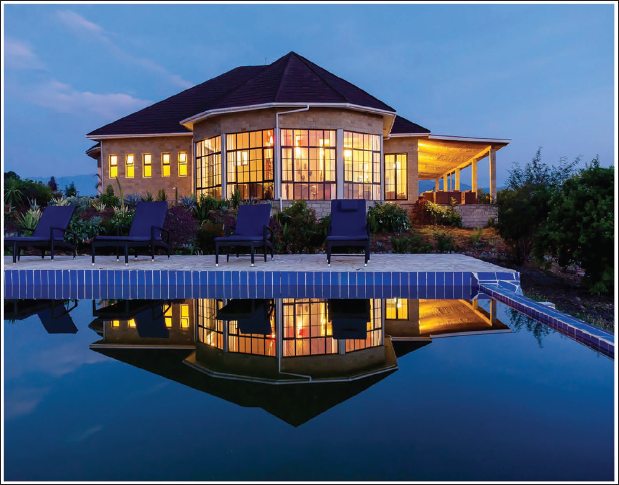
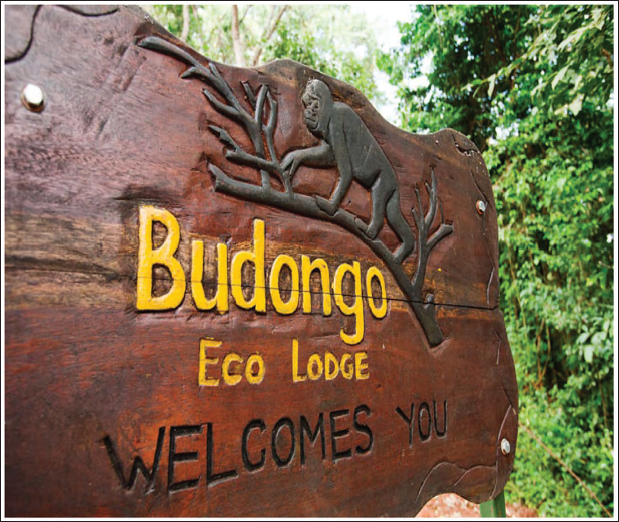
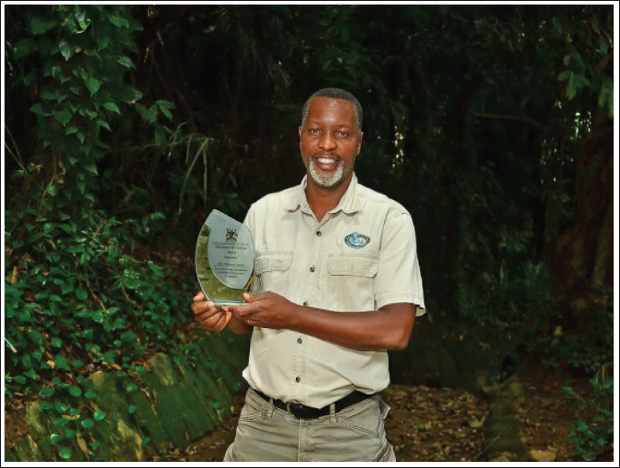
Wekesa partly credits his growing empire to the improved road network across the country, making major national parks accessible. In addition, he has created partners through his tours, travel, and lodge empire. His biggest partners are the wholesalers, particularly in Europe, such as Thomas Cook, whose database of big clients Wekesa has tapped into for over 16 years. He ensures he meets all their conditions, such as having a certain quality of travel vehicle and lodge and paying a certain amount in insurance. For instance, he must pay over USD 5 Million in insurance for tourists from the USA.
The wholesalers may sell as many as 120 companies. So, as a destination management company, Great Lakes Safaris negotiates with them to designate it as an agent. The wholesalers often make advance payments to Great Lakes Safaris, and Wekesa has stayed faithful in his partnerships with them. He ensures that once tourists arrive at the airport, a car with a driver is usually on standby. He also continues to partner with Ugandan tourism authorities such as the MTWA and Uganda Wildlife Authority (UWA). Wekesa pays ground rent of USD 10,000 per year to UWA whether he has business flowing in or not.
The relationship with these authorities has to be good. I was the first Ugandan to build accommodation in Ugandan National Parks. They previously believed that I could not pay my bills because I was Ugandan. But since 2006, I have been paying my rent faithfully, and UWA is changing their mindset. They now believe that Ugandans can do good business.
Interestingly, Wekesa confirms that he must invest time, money, and effort in maintaining partnerships with key stakeholders. He admits that for a business to thrive, the customer must buy into the entrepreneur’s character before committing to the product.
I fly out of the country at least 15 times yearly to meet with my partners. I have travelled with a couple of clients several times, and some have become family. I visit some European places and don’t have to stay in a hotel. For instance, I have a client in Holland who has a whole apartment, a car and a place for me to stay.
Leveraging his partnerships, Wekesa entertained expanding his empire into marine tourism.
MV Kazinga
Wekesa started the marine venture with his first cruise boat called MV Kazinga. The MV Kazinga operates on the Kazinga channel, a 32-kilometre-long natural channel that links Lake George and Lake Edward. The cruise boat has become a dominant feature of Queen Elizabeth National Park in Kasese district. The 65-seater boat (see Exhibit 4) was launched in August 2019, and the company was offered an operational licence by the Works and Transport Ministry, having met all the safety measures. The boat was the perfect diversification to Wekesa’s tourism investments to increase the retention capacity of tourists to that part of the country. He enlisted some friends to buy 20% shareholding and invest USD 200,000 each. His next strategy with the cruise boat is to invite more people to invest in the business.
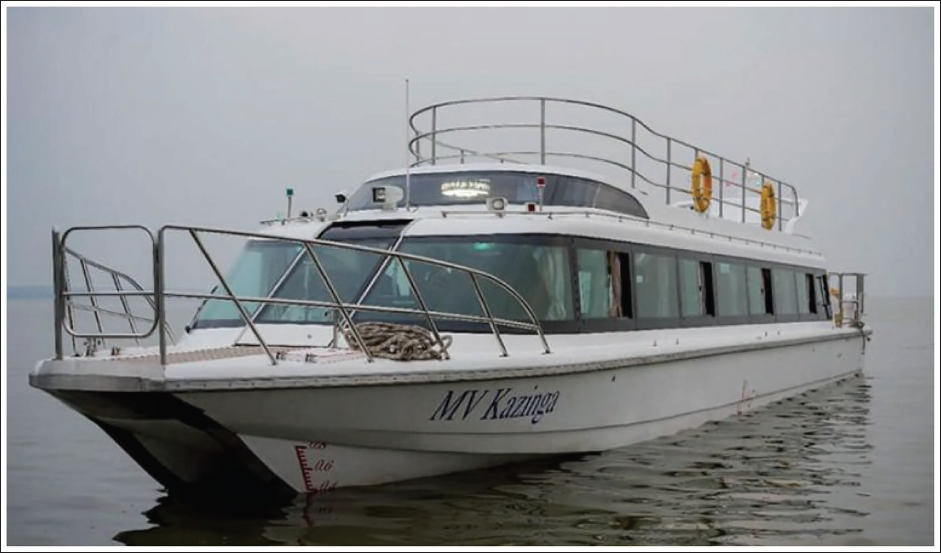
Despite its growing ventures in the tourism sector, Wekesa acknowledges that Uganda has yet to exploit its potential fully.
The Ugandan Tourism Sector at a Glance
According to the MTWA, the sector is the leading foreign exchange earner to the Ugandan economy, contributing USD 1.6 Billion in 2018, up from USD 1.45 Billion in 2017 (MTWA, 2019). The sector’s contribution to Uganda’s GDP continues to improve from 2.9% in 2017 to 7.7% in 2018, creating 667,600 jobs, a 6.7% input to the total employment (MTWA, 2019). Indeed, the country earned world recognition in 2011/2012 as the leading tourism destination by Lonely Planet, a reputable tourism site (
The country has over 30 lakes spread over all regions, the most famous being Victoria, Bunyonyi, Albert, Edward, George and Kyoga. Lake Victoria, co-hosted with Kenya and Tanzania, is the largest lake on the African Continent (68,800 sq./km), the largest tropical lake on earth and the second-largest freshwater lake in the world after Lake Superior. Moreover, Uganda is the source of the longest river in the world, the Nile River (6,650 km long), that journeys the entire country. The Nile River is known for its spectacular waterfalls, such as the Murchison Falls, one of the world’s most powerful falls between Lake Kyoga and Lake Albert. The country avowals seven bubbling natural wonders known as the hot springs in the western region. These include Kitagata, Ssempaya, Rwagimba, Amoropii, Buranga, Ihimba and Kibiro. Uganda is also endowed with several tropical forests, such as Bwindi impenetrable, the eco-friendliest park with more than half of the world’s population of endangered mountain gorillas, tropical forest elephants and other species of primates (MTWA, 2019). According to CNN Travels, ‘most beautiful places around the world’, Bwindi’s impenetrable forest was ranked the top most beautiful place globally (
Uganda is one of the few countries in the world that boasts of a historic tourism landmark, the equator. Despite its location on the equator, Uganda’s varying plateau gives it more pleasant weather than expected (MTWA, 2019). Uganda has a primarily tropical climate with two rainy seasons annually, March to May and September to December. Besides, Uganda has a beautiful mountainous vast terrain ranging from the Rwenzori Mountains, Mt. Elgon, Mt. Mugarura, Mt. Moroto, and the Virunga mountains, among others. The Rwenzori Mountains, also known as the mountains of the moon, are the only mountains in the world with a snow cap on the equator (MTWA, 2019). The above serene beauties make Uganda rich and offer vast tourism potential to entrepreneurs like Wekesa. It’s no wonder Winston Churchill named it the ‘Pearl of Africa’!
Nonetheless, in just a blink of an eye, the potential to earn from all this beauty stopped at the wreck of the COVID-19 pandemic. Wekesa realized that the only diversification he had done was not a cash-flow one, as he had bought many properties around Kampala. So, diversification outside tourism was vital for his long-term survival.
The Birth of PELA Commodities
Before the COVID-19 pandemic, one of Wekesa’s friends had interested him in agro-processing. However, Wekesa constantly showed disinterest. The only diversification outside of tourism that Wekesa had undertaken was to invest in land. He never saw any added value to unrelated diversification and wanted to stay in his comfort zone.
After feeling the pinch of COVID-19, I craved my friend’s idea of diversification, and we started discussions. We initially rammed into challenges, especially with the district leadership, where we had planned to construct our firm earlier. Although the construction of the factory commenced in mid-December 2020, it was delayed by the poor investment environment characterized by bureaucracy, lengthy procedures, corruption and delayed clearance of machinery by the customs offices. These challenges wasted over six months of our time! I eventually decided to call a Board member of the Uganda Investment Authority, Morrison Rwakakamba, who was very enthusiastic about our idea.
Previously, Wekesa had worked with a few members of the Uganda Investment Authority (UIA) as Chair of the Technical Working Group on Tourism under the Presidential Investor’s Roundtable (PIRT). So, they were more than willing to help when he interested them in his idea. They were familiar with his work ethic and good track record and were excited to find him land so he could operationalize his dream venture.
We started the paperwork, in which I had to show the UIA Board our ability to invest. I showed them our investment plan, evidence of money, and the bill of lading for the machinery, among other things. UIA, however, gave us only 10 acres of land in Soroti Industrial Park of the 20 acres we had requested. Nonetheless, this offer was more than we had hoped for, and we were happy to start with that.
Two months later, Wekesa and his partners were given the needed land and began constructing the PCL factory immediately. The factory’s first phase handles 18 types of cereals, and the available machinery can sort, clean, and dry 36 metric tonnes of grains per hour, that is, over 600 metric tonnes of cereals are processed in less than 24 hours. Wekesa is excited to have ventured outside tourism and is optimistic that his new venture will generate enough capital to invest in more tourism products.
Overall, Wekesa’s empire is valued at approximately USD 8 million and is still growing. With operations throughout the East African region, eco-friendly lodges, marine tourism, the Agro-Business venture and over 200 employees, Wekesa continues to transcend against all odds and change mindsets uniquely. He credits the breakthrough of his growing empire to several factors. He acknowledges that business requires grip, hard work, trust, consistency, honesty, and long hours, among other factors. Further, he credits that he had good mentors earlier in his life. As a young entrepreneur, he met a Norwegian couple who later became his mentors. This couple advised him to invest in properties outside Kampala’s capital city. Because of these earlier decisions to invest in lands, even when things are not going well, he is confident that he has a fixed asset somewhere. Also, Wekesa practices financial discipline, which drives his steady growth.
We survived the pandemic because of our saving culture. We had a surplus and managed to refund millions of dollars to our clients who had paid a year in advance. We continued to remunerate our staff much as we had some on half pay. We didn’t have any earnings during the two years of lockdown, yet we were never indebted.
Wekesa’s success story in tourism is a partial equation, especially with the menaces of pandemics and epidemics that often disrupt the Ugandan tourism sector. The country, for instance, suffered the Ebola scourge in 2022, shortly after lifting the two-year lockdown caused by the COVID-19 pandemic. The sector’s high susceptibility to disasters and pandemics has driven tourism entrepreneurs like Wekesa to look elsewhere outside mainstream tourism. Nonetheless, whilst diversification, particularly of an unrelated nature, can benefit Wekesa in growing its market share, spreading risks, finding new revenue streams and minimizing circumstantial changes due to unpredicted pandemics, it has its share of challenges. Diverted and stretched resources could limit growth in his already established ventures and diminish the quality of services. This could reduce Wekesa’s ability to meet customers’ expectations and mar its brand identity. Likewise, Wekesa needs more knowledge and expertise in the agro-processing business, or he could make costly mistakes and face more competition in unchartered waters.
Footnotes
Acknowledgement
The authors thank Mr. Amos Masaba Wekesa for sharing his tourism entrepreneurial story with them.
Declaration of Conflicting Interests
The authors declared no potential conflicts of interest with respect to the research, authorship and/or publication of this article.
Funding
The authors received no financial support for the research, authorship and/or publication of this article.
