



Abstract
This case study examines the challenges and opportunities faced by MicroEmbedded Technologies (MET), which manufactures and sells electronic trainer boards for engineering students, in the post-pandemic era. It explores the various options and trade-offs that the protagonist, Dipak, must consider to grow his business and diversify his customer segments and revenue streams. MET was one of the budding entrepreneurial ventures focused on designing and manufacturing embedded system boards. The company was founded out of Mr Dipak Gule’s entrepreneurial vision and had a steady start to its journey. Over the years, the company has shaped itself from just selling system boards to designing, manufacturing and selling system boards. As it reached its inflection point, MET was staring at a crossroads on how to progress further, and its founder had a dilemma on where to allocate the resources to identify a growth path and scale up. While several options were available, the next steps were critical for MET’s success as it needed to leverage its strengths in exploring opportunities. This case highlights the entrepreneurial journey of MET, how it reached its inflection point and the possibilities in front of MET to evaluate. Finally, it concludes by providing two options that MET can critically assess and decide how to craft its future growth strategy.
It was a sweltering hot mid-May summer in Pune, India, in 2023, and Dipak Ghule, the owner of MicroEmbedded Technologies (MET), was navigating the busy roads in Pune (India) to meet his prospective customer. As the traffic was moving slowly, so were Dipak’s thoughts as he was worried about the dwindling fortunes of his company. It would be a long day for Dipak, as he had to leave for Mumbai the next day to explore a dealer partnership. While listening to his favourite classical album, he mulled over how to bring his company into a growth path, and multiple questions crossed his mind. How to sell more of his current trainer boards to customers across India? Should he sell directly, collaborate with dealers or explore e-commerce? Any merit in participating in government tenders or exploring industrial customers? What innovations were possible in his current set of trainer boards? As the traffic cleared slowly, Dipak pondered over all these points and started pressing the accelerator.
Background
Dipak, an electronics engineer and a business management graduate by training, was more passionate about the business world and entrepreneurship. He started his career by working for Dynalog India, which had its headquarters in Mumbai, as a marketing manager, responsible for India, Nepal and Bangladesh markets. He then accepted a position as head of marketing and operations at Oasis Technologies in 2007 in Pune, as in charge of the Maharashtra region. By this point, he had gained valuable business operations expertise, but the entrepreneur in him was not content with the position. In 2010, he ultimately decided to launch his own business, and that led to the birth of MET (refer to Exhibit 1 for details about MET).
While the company was the brainchild of Dipak’s passion for entrepreneurship, with more than a decade and a half of experience in selling and marketing electronic products, he understood the need for low-cost trainer boards nationwide for various technical and engineering colleges. This realization of the need led to the birth of MET in 2010 with an initial capital of ₹3 lakh. At first, he managed manufacturing, sales and marketing alone, but as his company began to expand, he hired a few staff members and forged partnerships with a few Indian dealers.
Met’s Transition
MET initially focused on buying and selling electronic trainer boards from third-party manufacturers to its customers. However, the dependency on sourcing the trainer boards from other suppliers impacted his margins. Hence, in 2016 he started MET’s in-house manufacturing set-up in Pune and started manufacturing trainer boards. Though small, the in-house manufacturing of trainer boards enabled MET to be more reliable in its supplies and protect its margins. Most of MET’s customers were in and around Pune, Maharashtra, and it contributed ~80% of business.
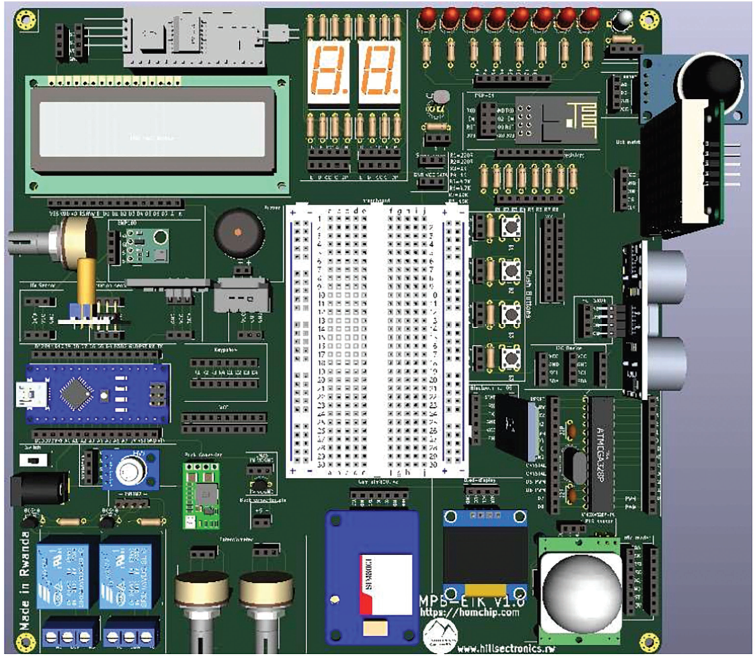
MET manufactured embedded technology trainer boards that were functional, practical, reliable and cost-effective integrated solutions widely used in engineering institutions to teach the basics of embedded systems, microcontrollers and IoT, as an experimental set-up for students. Teachers used these trainer boards to teach applications of technology by making students learn the basics of coding and translating the codes into practical applications. The application of these trainer boards, called ‘products’ hereafter, was in the lab demonstrations for students. For example, these boards helped students learn circuit design and its applications. The product helped students enhance their programming skills in C, Embedded C, C++, Python and Java (refer to Exhibit 2). These educational institutes expected the product supplier to provide training and after-sales service so the teachers were abreast of technological progress.
While the in-house manufacturing helped MET to carve its niche by leveraging customer relationships of Dipak, the scaleup of business during the initial years was erratic as he focused single-handedly on the front and the back end of businesses. As the product was standard, customers could buy it from anyone, and most of the customers had suppliers who could supply these products. MET struggled to sustain the business it secured initially. The onset of the pandemic further aggravated the situation, resulting in dwindling fortunes as MET catered to only one segment of customers. The closure of educational institutions nationwide during the pandemic impacted MET heavily. As the educational institutes were closed, there was little possibility of lab demonstrations for students, even though some institutions attempted to do it remotely. This closure deeply impacted MET’s revenues and margins (refer to Exhibit 3). However, MET survived on its reserves, though paltry, and waited for the rough times to get over quickly. Once the pandemic was through and education institutions opened slowly, MET started regaining its businesses.
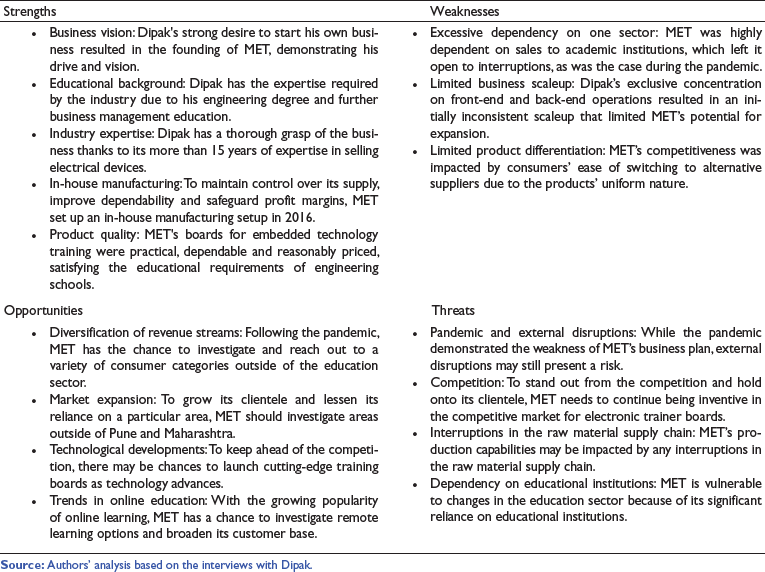
Post-pandemic, MET’s fortunes started looking up and regained most, if not all, of its initial businesses from its existing customers. However, since 2022, Dipak has been considering reducing this reliance on a single customer segment and scaling up the business through multiple revenue streams. The strengths, weaknesses, opportunities and threats (SWOT) analysis is as per Exhibit 4. He rued himself that he had taken a long time to think through, and the time was ripe for action.
Challenges
As MET managed to sail through the pandemic onslaught, it faced several challenges, and Dipak started pondering why he was struggling to scale up.
MET was self-funded by its founder, and it did not raise any funds from shareholders or banks. It adopted a self-sustenance approach from its initial days, starting small and earning to invest in new opportunities. This resource constraint from the early days made it take a risk-aversion approach when growth levers were necessary for the company. Dipak was aware of his small reserves and contemplated where and how he could use them to generate additional revenue streams. This delay led to little range in MET’s product offerings or identifying new customers far from his core market.
Dipak was concerned about the relationships and buying behaviour of the customers as all his customers were from educational institutions. While these institutions varied in size and shape, these institutions had different buying processes, varied decision criteria and multi-stakeholder decision-making. MET focused mainly on the direct selling approach, where Dipak led the sales efforts to manage every customer. MET also had a few dealer partnerships in Tamil Nadu, Gujarat and North Eastern states, where he could not deal with customers directly. These dealers call the shots in their territories as the MET’s cost of acquiring a new customer was more than the value of the business they got from an individual customer if approached directly. Further, dealers share excellent relationships with their customers as they sell multiple product lines to them. MET could not avoid dealers or had to think differently to tap these markets.
MET’s products were standard with little differentiation possibility. The durability of these products was of few years till the next new technology emerged in the industry when the next generation of trainer boards arrived. There was a proliferation of suppliers and customers for these products in the last decade, which led MET to be conscious of its pricing by balancing with its customer’s equity.
Since the product was standard, customers expected steady engagement from its suppliers. Further, several institutions needed training and lab demonstrations for their teachers on how to use these products for their students. Some institutions needed MET to run the demo sessions with students as teachers could not do so. All these weighed heavily on Dipak as he had to balance his selling efforts with these kinds of non-selling efforts. Furthermore, customers expected after-sales service of the products purchased as the product had to withstand the wear and tear of lab demonstration of students. Dipak rarely had time to engage in after-sales service activities.
As Dipak was pondering the challenges, realized that more than the impact of the pandemic, the challenges he faced and his inability to act early on these challenges were impeding MET’s growth.
Expansion Strategies
Despite carving its niche in the customers around the Pune area, MET needed to expand its presence across India. While Dipak himself did the direct selling, MET relied on dealers to reach out to customers in far east places like Tamil Nadu, Gujarat and North Eastern states.
His innate inclination in sales and marketing led him to think of betting on adding more customers while he was aware of the importance of focusing on product customization which can lead to avenues for new customers. As he was pondering on this, several options came to his mind.
Market Expansion
Market Penetration
Dipak knew that MET relied heavily on the customers in and around the Pune area. He achieved excellent market penetration partly due to his nativity and the rest of the network he built through his previous corporate experience. Dipak had seen all these institutes taking shape in the last couple of decades while wondering how to replicate this kind of success in other territories of India. Several education clusters in India can outnumber Pune in engineering institutions like Tamil Nadu, Andhra Pradesh and Karnataka were key big markets where MET had little or no presence. Similarly, the entire North India and North East India markets were untouched as well.
Market Development
The cost of acquiring new customers was always in his mind when he attempted direct selling in these markets in the past but had no impact. He also tried to forge partnerships with local dealers to tap these markets. He had enticed dealers with attractive offers to promote more of MET’s products but achieved little success as these dealers had their priorities, and MET was rarely in those. Dipak also thought through how he could tap the e-commerce that was booming in the business-to-business (B2B) space. But he knew the predatory approaches of these e-commerce companies from fellow business friends. He also heard about in-house digital platforms by a few companies which called for investment and unique capabilities for set-up and implementation.
MET explored new customer segments in the past to develop markets. Recently, it attempted to participate in government institutional tenders where procurement happened for all government institutions. While this was a huge opportunity, it had huge competition driving prices down. MET was yet to achieve any success in this. Dipak was aware of the pros and cons of working with government institutions. While it provides the security of steady business, it comes with payment delays, price pressure, bureaucratic workstyle, etc. There were several other avenues in the new customer segments, such as industrial training institutions, diploma centres and computer training institutes, to promote MET’s products. However, these customer segments come with their nuances and must be manageable for MET to seriously evaluate these segments.
Irrespective of the customer segment that he targeted, the voice of the customer convinced him that he must do something to enable training and after-sales services as value-added services for MET’s customers. Without these, customers rarely remember MET, and he was determined to set a protocol for implementation. Porter’s five-force analysis is as per Exhibit 5.
Product Expansion
Product Development
MET’s products were standard, and upgradation happens once the technology changes as this upgrade was more by force rather than by choice. However, Dipak was aware of the power of customization in the product leading to new markets for MET. MET developed a few customized products in the past for a few companies across industries. Industry partnerships were a risk–reward one where product customization involved an initial investment of resources, which can be recovered later once commercialization begins. In some cases, these companies partner with their suppliers to share the risk in the investment with the returns proportionate to the risks taken.
Furthermore, Dipak knew that his customers wanted to deal with a few suppliers who met their product requirements. He contemplated several times buying other standard products of interest to his customers and selling them with his in-house products. While this will provide short-term results, Dipak was aware of the operational difficulties involved in supply chain assurance.
Size and Structure.
With an average staff size of eight, MicroEmbedded Technologies (MET) is a microenterprise. It engages in the design, development, and manufacturing of digital signal processing (DSP), IoT, and embedded systems, with a primary focus on the education sector. Being a microenterprise, it operates out of a 750-square-foot rented workspace.
Three partners contribute to MET’s top leadership, each with a distinct area of expertise. While Mr Kiran Garibe and Mr Ashish Bhopale handle the design and development of hardware and software, respectively, Mr Dipak Ghule, a founding partner, concentrates mostly on business development. Assembly, testing and manufacturing are the tasks performed by the remaining company employees. The on-site customer support is also handled by Mr Ashish Bhopale.
Vision: The vision of MET is to be a top technical solution supplier at the national level for the education industry, specializing in embedded systems, IoT and DSP. To make education more accessible, MET designs, develops and provides inexpensive education trainer boards that are made entirely in India, promoting Atmanirbhar Bharat. It has currently decided to be placed among the top five vendors listed on the government e-market portal serving the market for educational trainer boards in the three years to come.
Market and Product Description.
Market
While many small businesses currently sell development boards or trainer boards based on microcontrollers, there are just a few enterprises in India that specialize in embedded systems and DSP trainer boards. Similar products are available from a few multinational corporations such as Texas Instruments, Microelectronika and Keil Software. However, they are usually priced higher and imported. These training boards are expected to have a market size of about ₹100 crores, mostly catering to university scientific departments and engineering institutions. Due to the exponential increase in microcontroller and DSP processor capability and the rapid advancement of electronics technology, clients are more likely to purchase advanced trainer boards every four to five years, turning prior boards obsolete. However, this also puts pressure on MET to create new boards every four to five years, which necessitates upfront financial contributions from MET.
Education trainer boards have profit margins between 15% and 30% even though the product is categorized as special purpose electronics systems, where profits are often over 50% as clients require training and after-sale support for three to four years. MET currently holds a 3% market share, and the dependability of its training boards has delighted all its current customers. MET still must deal with the challenge of maintaining its product lines in step with the evolving needs of electronics technology while also developing its presence throughout India.
MicroEmbedded Trainer Boards Information:
Example 1: ARM Cortex M4-based STM32F407 Development Board The Micro32F board is on the Cortex M4 architecture-based SOC from ST Microelectronics STM32F407. This is an effective learning tool for the controller architecture and advanced devices like the Ethernet, DATA FLASH, CAN, USB and LCDs. This device operates at 168 MHz and is used to prototype commercial products. Example 2: ARM Cortex M3-based LPC1768 Development Board The Micro1768 board is on the Cortex M3 architecture-based SOC from NXP, LPC1768. An effective learning tool for the controller architecture as well as advanced devices like the Ethernet, CAN, USB and LCDs. This device operates at 168 MHz and is used to prototype commercial products.
Usage of MicroEmbedded Trainer Boards:
Educational Institutes:
Embedded System Trainer Boards (based on Microprocessors and Microcontrollers like 8051, PIC, ARM, and Cortex) are widely used in engineering institutions to teach the basics of embedded systems, microcontrollers and IoT. As an experimental set-up for students to understand and apply embedded systems. Teachers can understand what innovations and features of the embedded system products. To hone programming skills in C, Embedded C, C++, Python, Java, etc. Industry: Micro, small, and medium enterprises use the trainer boards to design their products and software as they reduce the time to market. To test the embedded software developed for a specific application.
MET Financials.

SWOT Analysis of MET.
Product Diversification
The demand for MET’s products can be improved only if some product tweaking and customization cater to meet some unmet needs. However, any breakthrough innovation in MET’s products can act like wildfire, opening unimaginable market opportunities. The product customization opened new windows of thought, and a new idea was planted in his mind. ‘What if I can sell the products to consumers and institutions?’ But the question arose: Was the product ready for the consumer market? He went a few decades back and took the examples of computers. In the past when computers were used only in institutions and students used them to get a basic idea of Windows and other simple software. However, we all know the kind of transformation that happened in commercialization as it became a household product. His product and market were a perfect fit for this example, and early movers’ advantage will give him growth. Diversifying his product and targeting schools and children will promote his products in no time, and his product will be ready for business-to-consumer (B2C) sales in different geographical areas.
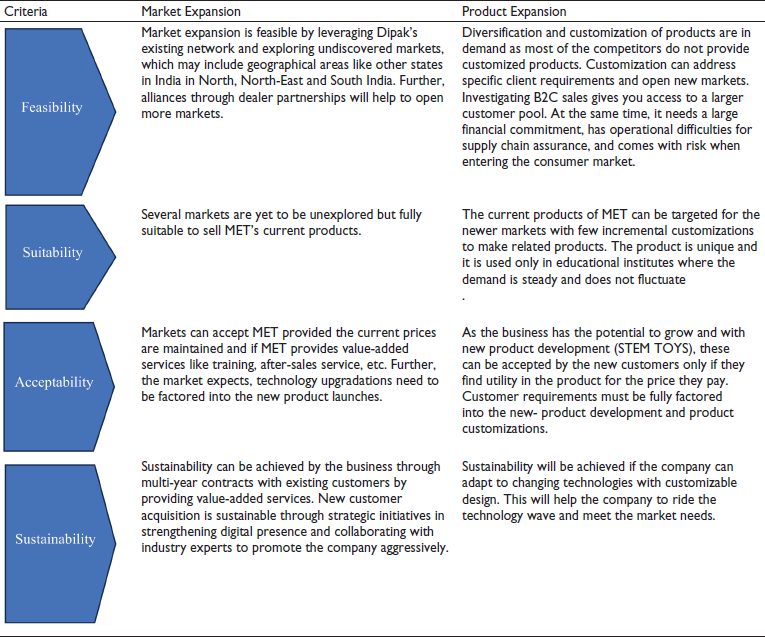
All these product innovation ideas must be explored sometime or the other. Product development decisions must be swift in tapping trends as they set the foundation for the future. There were several instances where just one right product rewrote the company’s fortunes, and Dipak was aware of those. However, the risk associated with product development loomed large in front of him as he needed enormous support to venture into this unchartered territory. A comparison between market and product expansion options is as per Exhibit 6.
Summary
Recap
In summary, despite resuming pre-pandemic business after 2022, MET is in dire need of expanding beyond its reliance on current markets, that is, Pune and the educational sector. Market expansion alternatives included entering previously untouched regions in North East, North and South India, investing in government bids, and exploring new customer segments, which presented cost and competition issues. Product expansion involves both incremental and disruptive customization of the product to enhance existing and acquire new markets, such as consumer markets. Dipak had to make critical resource allocation decisions, balance short-term gains with long-term growth and navigate hurdles, including dealer alliances, customer service and product innovation. The direction MET chooses will be critical to its future success, necessitating careful evaluation of market and product strategies, distribution methods and innovation efforts.
Porter’s Five Forces Analysis.
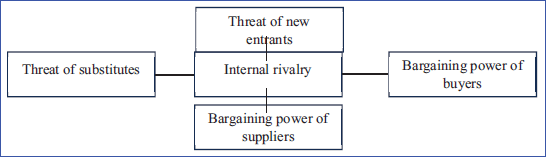
1. Threat of New Entrants
The threat of new entrants is low to moderate as the electronics sector, and more especially the creation of training boards for embedded technologies may need a substantial upfront investment in equipment and infrastructure. The entry obstacles are also created by experience in the sector, internal production setup and loyal customers. New competitors face some degree of entrance barrier due to pre-existing agreements with suppliers and Indian dealers.
2. Bargaining Power of Buyers
The bargaining power of the buyers is moderate to high as MET’s products are standard and undifferentiated. The low negotiating strength of suppliers like MET is because it relied on academic institutions only, resulting in a narrow customer base. Since the switching cost is low, the buyers usually shift to buy from the suppliers who usually sell multiple products to them (bundled products). However, MET could have some bargaining strength because of its distinctive and trustworthy goods.
3. Bargaining Power of Suppliers
The bargaining power of the suppliers is low to moderate. MET’s in-house manufacturing reduces dependence on external suppliers for trainer boards. However, the availability and cost of raw materials for manufacturing could still influence the operations.
4. Threat of Substitute Products
MET’s embedded technology trainer boards serve a specific educational purpose, and there may be limited direct substitutes in the market. The unique functionality, reliability, and cost-effectiveness of MET’s products could create a barrier against substitutes. However, given the niche demand for such products, few supplies can create a threat of substitute products. Some suppliers supply ‘bundled products’ and are preferred over MET’s single product.
5. Rivalry among Existing Competitors
The market for electronic trainer boards is competitive, with the potential for alternative suppliers. MET’s challenge lies in differentiating itself, as the standardized nature of its products makes it easier for customers to switch. The entry of new competitors or the expansion of existing ones could increase rivalry.
The above-mentioned strategies can significantly reduce dependence on a single industry and create new revenue streams, fostering business sustainability. Diversifying customer segments may lead to increased market share and resilience against industry-specific challenges. Combining direct selling with dealer partnerships can enhance MET’s market reach, leveraging local expertise and relationships. The above-mentioned strategies can significantly reduce dependence on a single industry and create new revenue streams, fostering business sustainability. Diversifying customer segments may lead to increased market share and resilience against industry-specific challenges.
Identifying and entering new customer segments requires a thorough understanding of their unique needs and dynamics. It might involve additional marketing and operational costs, and success may not be immediate. Managing and coordinating a hybrid sales model requires careful planning and effective communication. There might be challenges in aligning the strategies of direct sales and dealership channels, and initial resistance or hesitancy from dealers may need to be addressed. E-commerce platforms often involve increased competition and potential price pressures. MET may need to invest in digital infrastructure and marketing, and the dynamics of online sales might differ significantly from traditional channels. Implementing robust after-sales services may demand additional resources and personnel. Balancing the costs of these services with maintaining profit margins can be challenging, and customer expectations may vary.
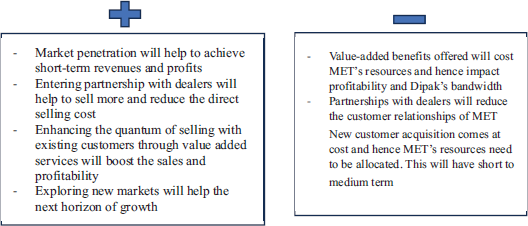
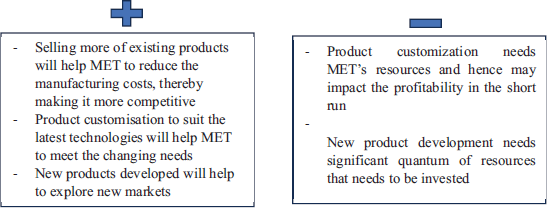
In conclusion, while these proposed solutions offer significant potential benefits, their successful implementation relies on MET’s ability to navigate and address the associated limitations. The pros and cons of both options are as per Exhibit 7.
Comparison of Market and Product Expansion Options.
Way Forward
As Dipak was gaining speed in his car, he thought deeply about how to wade through these complex and interlinked challenges confronting him. He realized that his decisions now would be a make or break for his company and hence needed to be careful. He was also mindful of balancing his company’s short-term versus long-term goals.
While the current customer base was concentrated mainly in the Pune area, was it time to go aggressive in pan India for new customer acquisition? But this customer expansion calls for significant investment either through hiring salespeople or forging dealer partnerships. In the case of dealer partnerships, was it possible to excite dealers to sell MET’s products more? Would adding more customers help to sell more of the current offerings? How to balance the cost of protecting new customers versus protecting profit margins? The direct selling approach of the past yielded great results in local markets but could not sustain it because of staffing constraints. Several dealers were signed up but received a muted response resulting in poor market penetration. In the past, he rarely focused on training and after-sales service for his customers because of various constraints. Was it time to create a dedicated training module and show them to customers as value-added services? Since it had come as the customer’s feedback, can he afford to ignore it? How to balance offering these services but still protecting the company’s profit margins?
Pros and Cons of Each Option.
Market expansion
Product expansion
Another choice the company faced was whether to pursue new customer segments. However, Dipak was aware of the requirements of new customer segments. Was it worth participating in the tenders of government institutions? Would it help push the volumes of trainer boards to help him cut down on operation expenses? How about finding new prospects in diploma institutes, vocational training institutes and computer system centres? Can a hybrid model of direct and dealership selling be better? How about exploring a B2B e-commerce platform? Would it help or further shrink the profits?
As product offerings were the lifeline of this business, what level of new product development that he need to go to? Every product development puts pressure on his resource levels. One sprouting requirement for customers was if a single supplier supplies all their products. While product bundling can help solve the immediate needs of existing customers, what kind of product bundling to be done needs a scrutiny. And operationalizing the product bundling calls for balancing his time between supply chain and sales efforts. The other way could be to pursue product customization suiting specific industry needs. What investments will it call for? Can customization be co-created with the customer? Will customers work on the risk-reward model? Dipak thought about the benefits of diversifying altogether. How about extending current products to new markets through innovation? While it calls for substantial investments, can he handle it? Does he have the capacity to explore it technically or explore partnerships? Can his recent experience help to navigate new markets?
Time is of the essence for Dipak as he needed to effectively utilize his resources and prioritize actions to steer the company on a growth path. The question was in which direction he needed to steer the company in the short, medium and long term. More specifically, how to balance out market expansion vs. product expansion to build revenue streams? Furthermore, how to prioritize the distribution choices, that is, direct vs dealer-based vs hybrid to tackle customer needs? And finally, should he be bold in bringing innovation to his products?
Some directions for future research could deal with the impact on the stakeholders, environment and society. First, measuring customer satisfaction and loyalty before and after implementing the proposed solutions and understand how these strategies affect the perception of customers. Second, exploring the possibility of forming partnerships with environmentally conscious suppliers or obtaining environmental certifications. Third, evaluating the generation of employment opportunities and customizing the products as per the needs and requirements of underprivileged students.
