



Abstract
There is an extensive literature on counterinsurgency strategy, its various campaigns as they were pursued in Afghanistan and the global war on terror that anchored the rationale behind them. But nearly all of this discourse has been steered by international experts and practitioners. The field lacks firsthand accounts and analysis from senior Afghan officials and military professionals. This account, which explores the Afghan government-led counterinsurgency campaign in Nangarhar province from February 2019 to July 2020, seeks to narrow that literature gap and to shed light on broader challenges and shortcomings facing the wider counterinsurgency campaign of United States intervention across Afghanistan for 20 years, which eventually ended up with recapturing of power by the Taliban in August 2021.
Introduction
There is an extensive literature on counterinsurgency strategy, its various campaigns as they were pursued in Afghanistan and the global war on terror that anchored the rationale behind them. But nearly all of this discourse has been steered by international experts and practitioners. The field lacks firsthand accounts and analysis from senior Afghan officials and military professionals. This account, which explores the Afghan government-led counterinsurgency campaign in Nangarhar province from February 2019 to July 2020, seeks to narrow that literature gap and to shed light on broader challenges and shortcomings facing the wider counterinsurgency campaign of United States intervention across Afghanistan for 20 years, which eventually ended up with recapturing of power by Taliban in August 2021.
The author was a firsthand observer of US-led military intervention in Afghanistan and a key participant in state-building efforts since 2001, holding various senior roles within international organizations and the Afghan government. The author, a careful student of international theory underpinning counterinsurgency doctrine and a native stakeholder in the politics and society of Kunar province, which borders Nangarhar, was intuitively familiar with the challenges posed to any effective military campaign in eastern Afghanistan. Many of these challenges were neither military nor based on the strength of forces opposed to the Afghan government. Instead, the greatest hurdles adhered to theoretical maxims: to not only combat insurgents but also drive them out and deny bases of support among a local population, a counterinsurgency force must earn and maintain legitimacy among those populations. Simple in concept, this was a delicate proposition in Nangarhar, a strategic trading hub and the cross-border node where provincial powerbrokers often undermined the state but possessed a degree of wealth and influence that just as often proved necessary to rally in support of government efforts. It also required a careful balance between employing the resources of the central government and its US military ally and ensuring the participation of local stakeholders. Finally, the plan of attack had to prioritize cutting off the logistical pipelines and escape routes for insurgent forces, all of which led across the Durand Lines into Pakistan’s restive frontier region.
The campaign—military, political and social—to counter Nangarhar’s crowded militant landscape illuminates what would have been required in a known successful counterinsurgency tactics against the Taliban and was lacking in so much of the country. Several critical lessons emerge:
Political, security and development initiatives must be planned and implemented in tandem, with various state agencies coordinating closely among themselves and with local stakeholders. This campaign required centralized coordination but decentralized implementation; achieving this balance required intimate contextual knowledge of political powerbrokers, their motivations and what might incentivize efforts to achieve mutually desired goals. The support capabilities of the US military, especially the combat support of aerial bombardment and reconnaissance, were an important force multiplier. The campaign benefited greatly from intrapersonal relationships between Afghan government and US military leadership.
This report assumes the following structure: It begins with an overview of Nangarhar province and its political and security landscape, followed by an exploration of the dynamics that made effective military action there difficult. These difficulties were mirrored by the wider US-NATO military intervention. The report surveys the theory behind successful counterinsurgency and then outlines the strategic planning behind the 2019 campaign in Nangarhar. The campaign’s implementation is covered as it first targeted the Taliban, and then pivoted to mopping up ISK. Finally, the report concludes by situating this provincial-level victory in the context of the Afghan government’s collapse a year later.
Nangarhar Province in Context
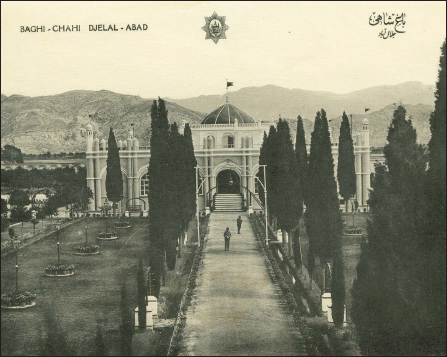
Nangarhar province is while home to fertile plains, the province is surrounded on all sides by mountainous and forested terrain. Jalalabad, the provincial capital and a bustling commercial hub, is surrounded by olive and citrus farms. Ten districts of Nangarhar produce lucrative crops of pine nuts and walnuts. The Kunar and Kabul rivers both pass through Nangarhar, giving it much more irrigated land than neighbouring provinces.
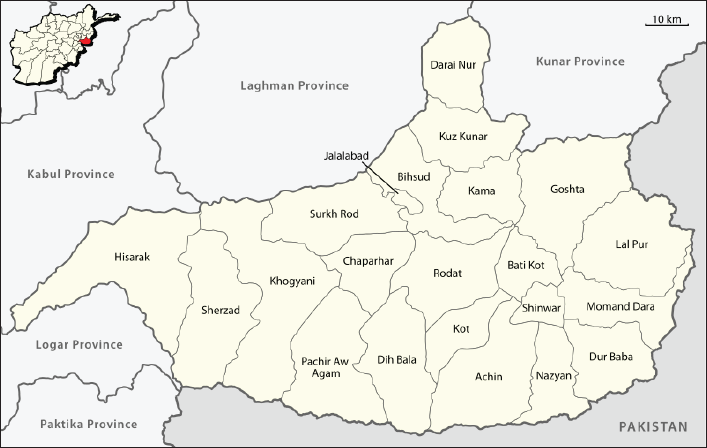
Nangarhar province is often dubbed as the ‘gateway to Kabul’ because its provincial boundaries are shared with four provinces of Logar, Kunar, Laghman and Kabul; the province connects the Afghan capital to Pakistan and South Asia, as well as routes to the central highlands and the southeast. After widespread displacement during the Soviet occupation of the 1980s and the brutal civil war of the 1990s, hundreds of thousands of returnees from Pakistan, when they crossed back into Afghanistan, remained in Nangarhar.
Prominent families and political figures from Nangarhar played vital roles in Afghanistan’s phases of conflict over the past 40 years, from the USSR-supported communist regime to the mujahedin, or holy warriors, that fought to eject the Soviet army. Nangarhar possesses about 125 miles of mountainous border along the contested Durand Line with Pakistan. The province was one node of a nexus for trade, politics and refugees, linked with the cross-border city of Peshawar of Khyber-Pakhtunkhwa of Pakistan—a hub for Afghan refugees, resistance fighters and political factions.
To put it in context, based on the Afghan government’s immigration data at the Torkham border crossing point, in 2019 about 20,000–30,000 people were crossing the border into Pakistan on any given day, both legally and illegally.
The border consists of complex geography and hilly terrain, historically facilitating illicit crossings for traders, criminals, insurgents and transnational militants. From the beginning, Nangarhar was strategically important for US and Afghan military forces, as a vital node for counterterrorism operations, a necessary hub for counterinsurgency and an area that required stabilization. In one highlight of the province’s importance, the US operation to kill Osama Bin Laden near Islamabad, which saw special forces conduct a daring midnight raid into Pakistan in May 2011, was launched from a US base in Jalalabad.
As of early 2019, over half of the border with Pakistan was not covered by Afghan government security forces. The notoriously porous border remained a hotbed of illicit trade of all kinds throughout the Islamic Republic’s existence; there had never been effective monitoring, much less contestation, of illicit crossing. Indeed, major powerbrokers in the province had profited from illicit trade and cross-border criminality before and during the 20 years of US-led intervention. These smuggling barons included powerful figures aligned with the government and figures affiliated with the Taliban.
The security situation in Nangarhar grew worse every year, especially after the presidential election of 2009. Taliban had control and influence in the western, eastern and southern districts of Nangarhar. By the time Islamic state of Khurasan (IS-K) had emerged and grown active across Nangarhar in 2015, the government’s authority in the province was on the verge of collapse. Security forces were in defensive positions in most of the districts, barely holding on to their posts. Taliban, IS-K, criminal groups and other militants could easily move from one location to another, without concern about interdiction by government troops.
By the end of 2018, IS-K had been able to extend its campaign of terror to the outskirts of the provincial capital of Jalalabad. The Afghan National Army (ANA) took over control of the city in order to prevent its collapse. Concrete barriers, additional checkpoints and sweeping security measures were enforced, but violence crept into every district of the city. Educational institutions became a recruiting hub for IS-K, even Nangarhar University. The group brazenly broadcast its extremist messaging over the radio waves from not far outside the city limits.
In the five years after becoming, IS-K committed numerous crimes and atrocities in Nangarhar province, including beheading and gruesomely executing local citizens. These harsh tactics did not win large group numbers of new followers but did shock and awe eastern Afghanistan’s militant landscape. In early 2019, IS-K had bases in five districts of Nangarhar province. At the time the National Directorate of Security (NDS) estimated that including foreign nationals, IS-K had 2,500–3,000 fighters in Nangarhar province. Not only would they conduct bombings, using Improvised Explosive Devices and suicide bombers, in Jalalabad City and other districts but used their base in Nangarhar to plan complex attacks in Kabul and other provinces. It is worth mentioning that Lashkar-e-Taiba (LeT) of Pakistan had a strong operational base along the Durand Lines in the Ghorakay area of Momand Dara district near Torkham border, which was captured by Afghan security forces in Spring 2020. LeT is a strong group supported by Pakistan Intelligence Services (ISI) operating against Indian interests in the region and work closely with the network of Taliban to conduct complex attacks in Afghanistan. LeT attacked the Indian embassy, consulates, companies and workers based in Afghanistan many times. In Nangarhar, the Indian consulates and Sikh community were attacked several times during these years. LeT was also blamed for the Mumbai attack in India in 2008.
Confirming that the local agencies of the Afghan government had settled into a destructive but profitable routine, the military council revealed that the counterinsurgency campaigns against IS-K and Taliban had devolved into little more than a mafia war over turf and profits. The government’s military operations were good opportunities for security institutions to claim extra bills for fuels and other costs, to sell off ammunition and other forms of fraud. Falsified reporting was rampant. It wasn’t clear how many—if any—concerted military campaigns had been launched, in prior years, with the sincere intent of disrupting the status quo.
Political Challenges
How the security environment evolved in Nangarhar cannot be separated from the broader timeline of the US-led military intervention in Afghanistan. After international military forces began their large-scale drawdown in 2014, the Afghan-led approach to counterinsurgency suffered. For years prior to the drawdown, the US approach to counterinsurgency was dominated by military considerations and operations. This influence prevented effective approaches to development, political reform and the delivery of essential basic services. To the extent these aspects of counterinsurgency were even considered, they were handled counterproductively: mechanisms such as provincial reconstruction teams, run by US military and aid officials who distributed significant funds and resources, grew into parallel structures that disincentivized the Afghan state at every level.
In short, for over a decade, the US counterinsurgency formula had consisted of direct military action and spending money. Based on the World Bank report, as of 2019, only 30% of public expenditure was spent through government institutions and 70% spent of them was spent off budget by donors.
When US- and NATO-partner militaries had drawn down and retracted to a token advisory force in late 2014, the dependencies and deficiencies of the security forces—and the Afghan state propped up for the primary purpose of fielding them—almost immediately became apparent. The Taliban were able to attack and intimidate polling stations across the country in the presidential elections of autumn 2014, and by late summer 2015, the Taliban managed to capture the provincial capital of northern Kunduz province successfully—the first urban centre the group seized since being driven out of power in 2001. Afghan security forces only managed to recover and slow down further losses thanks to the last-minute intercession of the US military—which extended and perhaps even worsened Afghan forces’ dependency on American airpower.
The heavy guiding hand of foreign troops, the vacuum they left as they drew down and the venom in Afghan politics that spread into the security sector had produced military and intelligence officials who didn’t hold a firm understanding of the conflict and political dynamics in Nangarhar. Dependency on international forces, resources and planning, no local initiatives and clear direction from the central government contributed to the above situation. Therefore, the basic information on the situation across the province was lacking, and at a local level, state officials and troops were given little reason to make waves.
At the Ministry of Defence in 2020, the author sat down with senior staffers in the policy department and asked how many had travelled to different provinces of the country, particularly the country’s security ‘hotspots’, to better understand the geographic and human terrain of the conflict. A handful had been to 5 or 10 provinces (out of 34 in the country), but largely only to provincial capitals—with no firsthand knowledge of the countryside. If they didn’t grasp the basic geography, much less the networks of local influential actors, it was difficult to envision crafting effective policy against an enemy that recruited from and sought sanctuary in rural areas. Even though these are tactical issues but from the very outset of establishment of the Afghan National Defense Security Forces, most senior leadership positions were filled by political relationships, which contributed to tactical failures on local levels.
During this briefing, exact numbers of fighters were provided to describe the disposition of the Taliban and other militant groups in the region. Yet when questioned, the corps command could not explain how they produced these numbers or any other facet of their assessment of enemy forces; indeed, they struggled to produce basic demographic information on villages situated close to the positions and bases of Afghan security forces and were unable to produce reliable records on the number of their own fighting force.
With US and various NATO militaries taking the lead in the first decade of reconstruction, stabilization and counterinsurgency operations, their personnel didn’t have anything close to the necessary local knowledge, skillset or experience to build long-term relationships that might have ‘won hearts and minds’. For all the complexity of the military intervention, its primary goal was defined as counterterrorism, and the approach really did come down to massively resourced manhunts and the distribution of large amounts of money—neither with any great deal of accountability.
Counter Insurgency (COIN): Theory and Practice in Afghanistan
Some American policymakers and scholars have argued that warlord politics is not necessarily bad for democracy or was at least acceptable in the case of the state-building project in Afghanistan. For years, strongman governance was de facto, if not officially, condoned by top US officials in Kabul and their military forces deployed around the country. This was true, even though the Bonn conference that established a roadmap to erect the Islamic Republic revealed a clear international preference for a strong, centralized state. Facing a fragmented society, post-conflict political landscape and lacking any real institutions, the interim head of state, Hamid Karzai, found himself isolated, without much legitimacy or leverage, and advised by US officials to simply buy warlords’ cooperation.
Many strongmen and provincial-level powerbrokers had lost favour with local communities in the 1990s, losing much of their power during the Taliban’s takeover of the majority of the country—but they restored their stature after the US invasion, jockeying for positions within the new state and funnelling Western funds into their militias and personal fortunes. They siphoned money from local resources, customs departments, drug trafficking and development projects. An entire generation of strongmen, many of them serving as governors, police chiefs and generals were never accountable to their local communities or to any oversight within the state. Very few were committed to strengthening institutions or improving governance.
The US Army’s counterinsurgency guide, published in 2009, describes insurgency as the organized use of subversion and violence to seize, nullify or challenge political control of a region. It is primarily a political struggle, in which both insurgent and the state use armed force to create space for their political, economic and influence activities. In order to be successful, insurgencies require charismatic leadership, supporters, recruits, supplies, safe havens and funding. The official definition of counterinsurgency (COIN) is a comprehensive mix of civilian and military efforts designed to simultaneously contain insurgency and address its root causes.
COIN’s basic formula can be characterized as ‘clear, hold and build’:
the approach involves clearing contested territory through security operations and then holding that territory so as to isolate and defend it from insurgent influence. The build phase, finally, involves economic, developmental or governance-related activity intended to increase the legitimacy of the counterinsurgents and the government they represent.
The US military never spent nearly as much effort on the ‘hold’ and ‘build’ components of the mission, which had much more to do with development, service delivery and local politics. In the first years of the intervention, the United States looked to its NATO partners to lead in these key areas of COIN; as time went on, the United States began to assume the Afghan government could take on more and more of the burden. Yet in the security sector, the Afghan government had been established and cultivated in the US and NATO’s image. Everything from organizational structure to expensive weapon systems and transportation platforms, which couldn’t be maintained without a steady stream of US funding and logistics, was mandated by the Pentagon in spite of years of warnings about ‘unsustainability’ from inspector generals.
The basic problem with ‘clear, hold and build’ was not in the theory or the stated objectives, but with US military and Afghan government’s inability to implement them. To effectively link security, governance and development objectives, strong, savvy Afghan leadership was required at the national and local levels, supported but not orchestrated by an international military force. In counterinsurgency, strengthening the government institutions and improving governance is the only viable option to deny insurgency the space to thrive, by bringing stability to a local area.
In COIN strategy, strategic communication is important to change the narrative and win insurgency. A lack of proper strategic communication and controlling narrative of the war was a main problem for government and coalition forces from the outset of the war on terror. Taliban and Afghan government opposition groups controlled the narrative against the government and coalition forces. The government was blamed for corruption, lack of transparency, nepotism, indecisiveness and so on. At the same time, the coalition forces and international intervention were portrayed as occupying forces by Taliban and the narrative promoted by the Taliban was Afghanistan war was a Jihad against the infidels. Taliban used religion, nationalism and local grievances as part of their strategic communication to control the narrative and strengthen their position among the people.
Government narratives not only failed to counter Taliban messaging; in the Republic’s last years, they actively did harm to the government’s key relationships and to its own forces’ morale. When he entered office in 2014, President Ashraf Ghani tried not to criticize the United States publicly, in fact going so far to restore relations with the United States that he was often attacked by political opposition for it. But by the time the United States began to pursue peace talks with the Taliban in early 2019, Ghani’s circle of advisors had begun to embrace similar messages of Western interference, offences against Afghanistan’s sovereignty, and an adversarial framing of Pakistan’s role in the war.
Strategy for COIN in Nangarhar
Factors for Success
Then-President Ashraf Ghani appointed the author as governor of Nangarhar province in February 2019. The job came with the explicit understanding that it would be a wartime leadership role; the mandate would be to finally implement a sound counterinsurgency strategy.
The author’s profile offered several advantages to implementing counterinsurgency in Nangarhar. Senior roles in the Afghan government’s security sector, along with the United Nations Assistance Missions in Afghanistan (UNAMA) and the United States Institute of Peace, had brought exposure to American and international military discourse on counterinsurgency theory, and the conceptual and practical pitfalls of security force assistance. The author had published policy views on a range of issues and was immersed in policy discussions among Afghan political elites. In the course of these experiences, the author established and strengthened relationships with political leaders, including then-President Ashraf Ghani. The personalized nature of the author’s access to the president was uncommon among provincial governors, even among strategic provinces the government referred to as ‘priority one’.
The author’s contacts within the most senior levels of security ministries also proved useful and not only for navigating Kabul’s support for the provincial administration. Access to national-level stakeholders was a form of political capital that proved critical in relationships with local stakeholders. Nangarhar-based security and civilian officials engaged deferentially with a governor that had direct access to ministers and even the Presidential Palace.
In terms of personnel, another element of the author’s approach to the governorship proved critical: he did not bring an entourage of loyalists or cronies to fill the halls of the governor’s palace or other agencies in Jalalabad. This practice, widespread among presidential appointees to high office, commonly bred resentment among provincial government officials. Working with existing civilian and military leadership, adapting/accounting for their strengths and flaws as needed, boosted credibility, increased a collective sense of ownership and provided reassurances that the governor’s palace was not being commandeered to serve a personally enriching agenda. This contributed to more harmonious coordination between the key players on the provincial military council.
Finally, the author had previously worked directly with the overall commander of the US military mission, at the time—and had professional connections with Regional Command-East (RC-E) of Resolute Support (RS) Mission. The US military already paid attention to Nangarhar for strategic reasons, including its border crossings with Pakistan and the presence of the Islamic State. However, as noted earlier, mounting counterinsurgency in Nangarhar was far from a purely military task. Counterinsurgency only had a chance of success if governance could be broadly improved. In order to improve governance and security together, the following issues were identified for special focus:
Blocking interference of local strongmen in governance and fighting corruption. Bringing harmony between security institutions to improve security. Providing service delivery and implementing development projects. All the above require modern communication and management to delegate responsibilities and empower provincial officials to make decisions.
Like most provinces, strongmen, elected officials and local economic mafia interfere in provincial administration and appointments. In order to prevent their interference, used the power of governorship not removing and transferring local officials by their recommendation. If in some cases if line ministries didn’t consult with provincial administration, as governor had the option to reject those appointments and ask for clarification. In some cases, sought support of the President to intervene and change the decision of the ministry for new appointments.
To achieve the above goals, extra resources were not required to a great degree. Rather, a great degree of institutional and cultural change was necessary: the attitudes, behaviour and practices of local officials, and a genuine intent to serve and respond to the people.
First, proper strategic communications were vital, to explain programs and plans to officials, who would then spread the messaging to local populations, to seek their support and work together to offer a preferable alternative to the insurgents. Social media was a pillar of this strategic communications strategy. A simple formula was applied across the board: promise less and deliver more, in order to build credibility.
Author Visits Girokhel Village Near Tora Bora, Pachie-wa-Agam District, 13 August 2019.
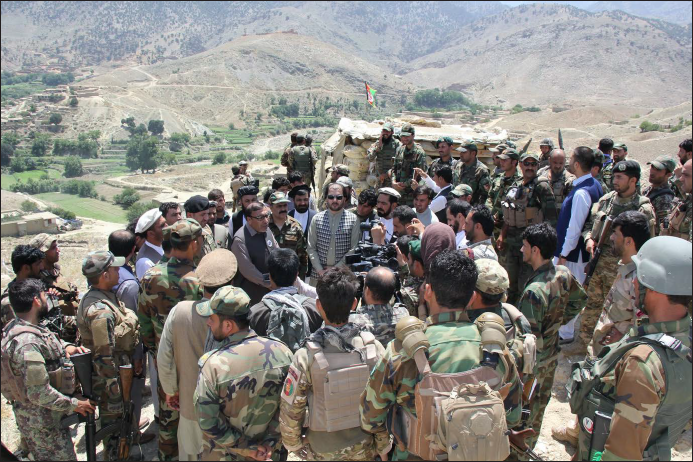
A second pillar of this new approach was to reset relationships with the historically powerful stakeholders in the province. A series of warlords and their networks, including armed militias acting with impunity, had controlled local politics for over four decades. Therefore, many area residents were tired of ‘politics as usual’, the status quo roster of strongmen whom—out of lack of capacity or even sheer laziness—the US and Afghan government had often relied on to ‘govern’ most of the province. They were tired of the violence that stemmed from the Taliban and IS-K, too. This pillar also circled back to strategic communications: the provincial administration adopted a motto: ‘no one is above the law and all should be accountable’. By setting this tone in public messaging, it limited strongmen’s options once measures were taken to reduce their influence over local administration and the process of security planning.
Third, the author’s personal family background, coming from the eastern region, belongs to immersion in local politics in addition to experience in national government and with international military advisors, bridged counterinsurgency efforts on multiple levels. The author good relations with security sector ministers, knew the commander of RS from his previous jobs and had access to President, helped to facilitate unity of efforts between security institutions and the US military’s RS mission, a relationship that had been lacking among some prior provincial governors.
Fourth, in order to improve governance, there was a dual-track plan for (a) gradually improving security in the main city of Jalalabad as well as improving security in the districts and (b) regularizing basic service delivery.
Fifth, in order to create conducive conditions for development activities, all the above activities were interlinked. Strategic planning took place to systematically align measures taken in the realms of security, governance and development—all of which required visible improvements in order to win over area residents.
Based on the above strategy in order to counter the strength of both Taliban and Islamic State insurgency forces, the following questions were considered and became the basis for an operational strategy:
Where did the Taliban and IS-K draw resources from, and how could they be cut off? How to expand government reach from the capital Jalalabad out to the districts and how military operations should be prioritized? How to boost morale of security forces and enhance confidence of people to support provincial and district administration? How to change perception of people through direct and indirect communication?
From the beginning, an institutional reset was required when deliberating on military operations. The core of all security activity should be the protection and betterment of civilians’ way of life. Without close cooperation with civilian institutions, the military by itself was not going to bring stability, governance and development to Nangarhar’s population.
The Politics of Planning
Planning military operations, coordinating them across provincial government, and resetting old habits among the full spectrum of actors involved was not a simple process. There was a constellation of security entities that ostensibly met together as the provincial military council, but most of whom acted independently, without coordinating among themselves, and without consulting civilian government departments at all. The US advisory presence, known as RC-E was an additional layer of differing priorities, preferences and awareness levels. RC-E engaged directly with the Afghan National Army Corps command, not regularly meeting with the provincial governor or other Afghan officials; this only amplified the historical precedent of overly militarizing the province’s approach to COIN. An entirely new framework was called for.
Even though, by law, the provincial governor was the chief authority in all matters including security operations, in practice, most civilian and military directors reported to central government ministries and departments back in Kabul. Coordination between these institutions was not easy and mostly there was tension among security institutions, both at the leadership and mid-staffer level. There were also precedents of tensions between the governor’s office and various departments, dating back to power struggles or the pursuit of self-interest. Nothing about the organizational structure, or the way the central government functioned back in Kabul, incentivized local officials to prioritize engagement with the governor. Better coordination at the provincial level began with regular, more focused and tightly controlled meetings to form consensus on a comprehensive plan which could be supported by all elements of the security sector, with roles and responsibilities clearly defined. Given Nangarhar’s strategic importance, the RC-E and ANA Corps Commanders were invited and encouraged to attend weekly council meetings regularly. Regular attendance of these senior-most officials would ensure that the ANA brigade commanders, who were vital at the operational level in Nangarhar.
Excluded provincial council members created a great deal of tension and strife; many of the region’s wealthiest and most influential powerbrokers had arranged to sit on the Provincial Council, and to cross them was to pick a heavy political fight. Their relationship with the governor’s office immediately deteriorated. These powerful figures sent complaints and lobbied with the Independent Directorate of Local Governance, Parliament, the National Security Council and even the President himself. It was only by virtue of the author’s preexisting relationships among senior leaders in Kabul that this pressure failed to reverse the decision. There is evidence a good number of Provincial Councilmembers attending military council meetings sought to remain aware of, and influence when necessary, security operations that might impact their stake in illicit economic activities. It also became clear, soon after strict rules on attendance were enforced, that the civilian attendees had often been the sources of leaks to the press, to the public or even directly to insurgency forces.
Pursuing the objective to deny insurgents access to resources, the second politically difficult decision that laid the groundwork for our counterinsurgency campaign was to ban the extraction and export of talc and other minerals. The money involved in this illicit industry was a primary driver of corruption and involved the entire spectrum of stakeholders in Nangarhar, including government officials and members of parliament. Certain powerbrokers obtained legal contracts with limited mining rights but would pursue mining in contravention of those terms.
After laying the groundwork in these early political manoeuvres, it was time for the military council to begin drafting an operational plan to restore security to Jalalabad city and expand secure conditions outward, to the districts—a number of which were completely dominated by the Taliban and the Islamic State. One guiding measure was that every operational tasking needed to be justified by clear expectations and intended objectives. In line with the basics of counterinsurgency theory, all proposed ‘clearance’ actions required ‘holding’ and ‘building’ activities to follow. In this regard, other government departments were approached as the planning for the campaign progressed; development assistance projects were planned to move into new areas, as soon as military advances had cleared them of insurgents.
After several weeks of intensive meetings and discussion, the provincial director of the NDS emerged as a savvy analyst and strategic thinker, with a detailed proposal for a military course of action. But bureaucratic politics threatened to stall forward progress; the ANA, police and Border Forces all refused to support the NDS plan, for a variety of reasons. There were additional concerns when it came to NDS’ role in counterinsurgency, which embodied dilemmas of the entire US military mission. NDS oversaw the operations of paramilitary strike forces, trained by US intelligence and special forces—who coordinated efforts and often undertook joint operations. These specialized forces, operating out of regional hubs and often only referred to by number (the eastern region unit based in Jalalabad was simply called ‘02’), had a reputation for top-tier military capabilities but also a consistently higher record of civilian casualties.
In order to align security and governance objectives across all offices and actors, the author made sure to consult and coordinate with Kabul, including meetings with ministers of defence, interior, NDS and the NSC, based in the Presidential Palace. The request was simple, and far from typical of newly appointed generals or governors. Normally, pleas would be made for additional forces and resources, but due to its strategic location, Nangarhar already had considerable resources. What an effective counterinsurgency campaign required was consistent political backing and support for decisions made in the provincial military council. US advisors at the national and regional levels were also engaged with the same request: give local authorities a chance to implement this campaign.
The response, across the board, was largely positive. But it is worth noting that the official line of communications, through departments back to ministries in Kabul, was almost always very slow—which could have impeded the implementation of time-sensitive decisions. The author’s personal relationships with key interlocutors among senior officials, including a personal relationship with Ghani, were a necessary element of moving key decisions forward.
Though it took a great deal of coordination and persuasion, the collective member organizations of the military council finally agreed to collectively implement the NDS-proposed plan. One key initial element of implementing this plan was the clearly defined, limited role of the provincial governor and his office. Although in principle, the provincial governor was the supreme authority over security affairs, in this campaign the author determined that the planning process within the military council should take place independently, without much engagement from the governor—other than to review and approve planning and to provide support where necessary, with a focus on public outreach or political interference. As a result, military and security sector leaders had vested ownership in their elements of the campaign; they were empowered through a principle that military scholars and theorists refer to as ‘mission command’.
The Counterinsurgency Campaign Plan
It was a comprehensive one-year military campaign plan. The key objective was to capture strategic locations in the east, west and south of Jalalabad City, most of them held by the Taliban, as well as to capture IS-K’s main stronghold in Achin District, where US forces in April 2017 notoriously used the Mother of All Bombs but could not eliminate IS-K or capture their control and command centres.
The plan was structured around a sequential timeline, and was comprehensive, with tasks and responsibilities allocated for a host of government departments in the event of military advances. In this case, in the planning process, NDS with the support of the district governor had contacts with local elders on how to establish permanent posts, how the local population provide recruitments for check posts under the People’s Uprising Program (PUP) and how the military can protect and support those posts. Maintaining security combined with the activities of service delivery departments to provide projects in fields of education, health, agriculture, irrigation and implement National Solidarity Program (NSP). This wide range of planned ‘stabilization’ activities included how to maintain law and order in recaptured areas, provide security for elections, being able to include residents in the so-called ‘peace Jirga’ of 2019, implementing the conversion of Pakistani rupees to Afghanis after several decades of dual-currency use across the province, and a centennial celebration of Independence Day. During one and a half years about 1,100 small and big projects in Nangarhar province started and most of them were completed.
COIN against the Taliban in Nangarhar
The first course of action was engagement with local elders in Lal Pura to convince them to support the government. This engagement tapped into local grievances with the Taliban’s presence, as well as the Tehrik-e-Taliban Pakistan (TTP). Consultations with elders and stakeholders were facilitated by NDS. After consultation with local stakeholders, it was decided that several military positions would be built and staffed after clearance operations were conducted, in order to better protect the People’s Uprising Movement (PUM) forces that would man checkpoints thereafter. Village elders had made it clear: if permanent military bases were not established to provide cover, protection and resources to the local defence forces, they were not confident in local residents’ ability to defend and hold the territory. The campaign required the buy-in of local communities, and the adjustment was therefore necessary.
On 30 March 2019, the military operation began from two directions in the Lal Pura district, without facing any initial resistance from the Taliban. On 3rd April, the government forces linked up in the Gul Dag area; most strategic locations of the district had already been captured by Afghan security forces without significant opposition.
What prompted such a swift and easy territorial takeover of the Lal Pura district? A combination of factors. Over time, local grievances against the Taliban and TTP presence had grown steadily; these groups had been present for years and failed to supply local communities with many real services or benefits. Local communities had perhaps been willing for some time to support a return of government control in the district, but held concerns that government forces might leave the area after temporary clearance operations (as had become standard procedure, over the years); if locals had supported the government only to watch its security forces return to Jalalabad, they would have been exposed and vulnerable to Taliban reprisal punishments. The historical pattern of short-term clearance operations, without much planning for ‘hold’ operations afterwards, may also explain the Taliban’s lack of resistance. They very likely believed the operation was just another clearance manoeuvre, after which their fighters could safely return to the area. However, the campaign plan quickly set to work constructing two ANA bases in the district, with supply chains and resources to support local defence forces. Civilian government departments had already prepared service delivery packages for local communities. The district governor had been involved from the beginning; his role in engaging local stakeholders, as well as helping administer follow-up operations and initiatives, was critical. District governors were empowered by the same principles that guided provincial government departments under governor’s office.
The military and stabilization (or ‘clear, hold and build’) plan for Lal Pura was adopted and tweaked for the following operations in other districts. Lal Pura’s takeover was also a test run of sort, in establishing closer coordination between security institutions and the civilian administration at both a provincial and district level. Morale was boosted among the security forces, and district governors began to establish more frequent communications with provincial officials and departments; media and social media engagements increased, and ‘interagency’ WhatsApp chat groups sprung up in newfound camaraderie.
The next district to secure was Chaprehar, where the government only barely controlled several buildings, referred to as the ‘district administrative centre’, and the main road to and from Jalalabad. The Taliban and IS-K were in control of the rest of the district. Chaprehar district was important because of its proximity to Jalalabad city. Most of the city’s targeted killings, explosions and kidnappings were planned by and staged in this district. Chaprehar district was also a major drug trafficking and logistic route for insurgents and criminals; it was key to the east-west routes through Nangarhar. Narcotics were harvested and produced in western districts of Nangarhar and nearby Paktia province; the route eastward to the Pakistani border ran through Chaprehar, which the lack of government presence made permissive.
According to NDS estimates, armed Taliban and IS-K did not number more than 150 men in the district; this was not an impediment to the security forces at the government’s disposal. As in Lal Pura, the plan called for establishing permanent bases and check posts. On 19 June 2019, the military operation commenced. Within two weeks the entire district was cleared and check posts were established in designated locations. This operation also ended without much resistance. Reports from the field were that the total number of armed IS-K and Taliban had not been more than 50 fighters, yet they had wrested control of the district and destabilized Jalalabad for more than a decade.
Following the successful clearance of Chaprehar, the military council determined they should conduct a clearing operation in Surkhrud district, to the west of Jalalabad; they also prioritized clearance of the road between Jalalabad and Sherzad district, which had been impassible due to insecurity for more than a decade. The Sherzad district centre remained under government control, but its security forces were surrounded and could only be supplied by air.
At this stage, the surge in popular opinion, the rising morale of the security forces and the streamlined coordination between government offices all contributed to a kind of momentum in the campaign. A similar operation was conducted in the Surkhrud district, and it was cleared without significant resistance. Shortly after, the Jalalabad-Sherzad Road was also secured, with a realignment of military positions and checkpoints to support these gains.
At this stage, the Taliban’s presence had been weakened and confined to pockets in the western areas of Nangarhar, their staging grounds used to attack Jalalabad and main roads largely cleared.
COIN: Against IS-K in Nangarhar
From the start, the military council had determined that the Taliban was the more serious insurgent threat over the long term; IS-K was less appealing to most of Nangarhar’s population, and its primary tactic was to mount complex attacks against the government or civilians in Jalalabad. The Taliban had a demonstrated ability to coerce and co-opt local communities. But with several key military objectives secured, the campaign’s focus shifted to combatting IS-K and degrading its territorial control. IS-K was present and held sway over the remote districts of Achin, Haska Mena and Pacher-wa-Agam in the south of Nangarhar, especially along the Durand Line in the Spin Ghar Mountains.
IS-K held territory in three mountainous locations of Spin Ghar: Tora Bora in Pachir-wa-Agam, Oghz Tangai in Haska Mena, and Bandar and Mamand Dara in Achin districts. In order to defeat and capture these last strongholds of IS-K, operations were postponed until the beginning of winter; IS-K fighters could not receive support from the Orakzai area in Pakistan, where their leadership and reinforcements were based. During the winter, the Spin Ghar mountains receive heavy snow, and traversing them becomes difficult. Transport of supplies slows to an ebb.
IS-K was a tightly hierarchal, secretive organization, even compared to the Taliban. Its foot soldiers didn’t know much beyond their own duties. The group’s units of fighting forces were called katiba, each of which had 60 fighters that could operate more or less independently. IS-K positions were located in mountainous areas, covered by forests—and separated from one another.
This was not terrain or an enemy force that could be easily engaged in swift, sweeping operations like those undertaken in prior months. This phase of the counterinsurgency campaign required additional air support, including from the US military, but chiefly the participation of Afghan special operations forces. Security actor coordination was even more vital. Tactics required adaptation to the Islamic State, too; government forces had to clear roads of landmines, and to take account of the group’s particularly brutal mode of fighting.
On 11 September 2019, the military operation against IS-K in the Bandar Valley of Achin district began. Achin was the top priority because it was the chief stronghold of IS-K in Nangarhar—perhaps in all of Afghanistan. By pushing into IS-K areas of Achin, government forces posed the group with a dilemma; one easy path to withdraw from the fight was into Taliban-influenced areas in Khogiyani and Sherzad districts, to the west. But their prior conflict with the Taliban made this option unappealing.
In years prior, IS-K and the Taliban had fought one another brutally. Earlier in 2019, the group captured much of the Taliban’s strongholds in Tora Bora and in Khogiyani district, but government forces and US airpower stepped in to contain their advances. Even before the campaign had begun, a basic approach was in place: the Afghan government and its US military advisors wanted to ensure neither group fully won out against the other. A mutually hurting stalemate between the Taliban and IS-K was optimal, as the province only had so many troops and resources at its disposal and could not undertake clearing operations everywhere at once. So, a status quo of contestation between the two insurgent forces prevailed in Khogiyani, Sherzad and Hisarak districts, until the 2019 campaign’s objectives were achieved.
After two days of stiff resistance, government forces broke the first line of defence in Bandar. In the mountainous terrain, there was only one road leading to their stronghold, which had been heavily mined by IS-K; this slowed progress. It took nearly two months of intensive operations before enough of the Bandar Valley was cleared for Afghan security forces and PUMs to erect new positions; eleven men died among government forces, mostly due to the landmines. In the end, some IS-K members had been killed, some escaped and some had no option except to surrender due to the shortage of food, ammunition and other supplies. The winter timing of the operation had paid off. Now, with the Bandar Valley secure, IS-K’s cross-border connection was cut-off.
After government forces’ capture of Bandar Valley, IS-K members from Tora Bora and Ozh Tangai began to surrender to the government; they were demoralized and logistically in a poor position; Bandar and the safe havens across the Durand Line had been their main source of supplies and support. Over 234 IS-K members, surrendered or were captured. In addition, a total of 1,186 women and children relatives of these fighters surrendered.
The author interviewed some of these fighters and their family members. Most were badly malnourished. They all had different reasons for joining IS-K, but all had been radicalized in similar ways, through pro-jihadi networks and connected individuals in their respective countries. Afghans who had joined were drawn from the small minority communities that embraced religious Salafism, along with some who had tribal or family ties to Pakistani members of the group. The NDS learned that many of these women and children suffered a great deal. For example, women were remarried to other members of IS-K after their husbands died in the fighting. This cycle of remarrying, in some cases multiple times, with children from multiple husbands had a taxing psychological impact on both women and children. One woman who was captured said she had been remarried 24 times. The foreign fighters of IS-K were from Jordan, Uzbekistan, Tajikistan, Kirgizstan, India, Maldives, Turkey, Tatars from Russia and big numbers from Panjab of Pakistan.
On 19th November 2019, President Ghani visited Nangarhar with the intention to announce the ‘defeat’ of IS-K; some critics suggested the announcement was for political benefit and premature, which history seems to have vindicated. He also instructed government and nonprofit institutions to provide humanitarian assistance to the affected women and children. Nangarhar’s government lodged all women and children in secure housing and provided all basic needs with support from humanitarian organizations. All male members of IS-K from Afghanistan and other countries were sent to Kabul for further interrogation. Women and children from other countries were also sent to Kabul. The central government had the final decision over their fate. Women and children from Orakzai and other tribal areas, along with Afghan women and children, were kept in Jalalabad to be handed over to their respective tribal elders after due process and proper identification of their relatives.
On the security front, another important challenge was that IS-K left behind thousands of land mines and ruined houses. All the villages in areas controlled by IS-K had been deserted. Thousands of displaced families were willing to return to their villages but couldn’t move back due to the risk posed by land mines. HALO Trust, a global demining organization, began the difficult work of surveying and destroying the mines in coordination with ANA anti-mine units.
In large part due to 2019’s counterinsurgency campaign, Nangarhar remained a stable province until the very final days of the Taliban’s takeover of the country. Save for Panjshir, Nangarhar was the last province to surrender to the Taliban on 15 August 2021.
Conclusions
Nangarhar’s counterinsurgency campaign of 2019 proved that militant groups can be defeated with the right combination of strategic planning, coordination among local security forces, civilian government and their foreign patrons and by carefully orienting planning around the needs of local populations. In essence, in spite of a decade of mounting scholarly and practitioner criticism of counterinsurgency theory, the basics of ‘clear, hold and build’ can work.
The Taliban’s takeover of the country, without much resistance, may reinforce in many observers’ minds a belief that the group holds some degree of popular legitimacy. But Nangarhar soundly disproved that impression. Where the Taliban had control or influence, most peoples’ lives were miserable under the Taliban and IS-K. They live under constant fear of violence carried out by those groups, as well as reprisal military operations. People could not travel to their own districts and villages; most of the populations in contested areas had been forcibly displaced for years. The abuses and insecurity of living under the insurgent groups were tolerated simply because many people saw little evidence that the Afghan government would support them, or might do any better. Since Taliban took over, it has been further proven that they do not care about the people nor they are accountable to the people. They have lost national and international legitimacy and credibility due to their repressive rules.
Footnotes
Declaration of Conflicting Interests
The author declared no potential conflicts of interest with respect to the research, authorship and/or publication of this article.
Funding
The author received no financial support for the research, authorship and/or publication of this article.
