




Abstract
Almarai is one of the well-known Fast Moving Consumer Goods brands in the region of Middle East, and is leading the market in majority of its product categories throughout the Gulf Cooperation Council (GCC). This case study aims to enrich our understanding about the success story of Almarai company in the GCC region. It focuses on analysing the dairy market in GCC and presenting SWOT analysis for the company. Additionally, this case study highlights the marketing mix strategies adopted by Almarai to maintain and grow its business in the GCC region. Finally, the key challenges faced by the dairy industry in the GCC region are presented. As a market leader in the region in dairy segment, the success of Almarai is attributed to its regular analysis of consumers’ demands and search of available options for introducing healthy items with high-quality nutritional values to satisfy their tastes and preferences. In order to achieve its vision, there is an emphasis on innovation at Almarai, and the company uses scientific methods to create new goods with the goal of expanding its product line and improving the lives of its customers.
History and Background
Established in 1977, Almarai Company is now recognized as the world’s leading producer of dairy products. It is headquartered in the Kingdom of Saudi Arabia. Almarai Company is the leading Fast Moving Consumer Goods (FMCG) brand in the Middle East and North Africa (MENA) region, and it holds the largest market share in all of its product categories in Gulf Cooperation Council (GCC). In the early phases of the firm’s existence, the Kingdom of Saudi Arabia had a lack of sufficient infrastructure for the production and marketing of milk. Prince Sultan realized that the production and logistics for higher quality milk could benefit the region and the wider Middle East. Almarai thereafter constructed many facilities throughout Saudi Arabia, which was initially vital for assisting local farmers in the production and distribution of milk. Almarai passed through a period of reinvestment and restructuring in the beginning of 1990s, by transitioning from a decentralized to a centralized structure (Naim, 2021). To replace five dispersed processing plants, a central processing plant was established. In addition, 10 smaller dairy farms dispersed throughout Saudi Arabia were consolidated into four larger dairy farms located in the Al Kharj region.
As of 2005, Almarai was no longer a limited liability business but rather a joint stock company. This was done in conjunction with the initial public offering (IPO), in which 30% of the company’s equity was offered for sale on the Tadawul in Saudi Arabia. In order to make a room for the IPO, all of the company’s shareholders, including The Savola Group had their shareholdings reduced. However, it was not disclosed publicly about how the percentages of the remaining 30% of shares were allocated. In 2006, Almarai expanded its marketing efforts not only in milk items, but also included additional dairy products. The company promoted its cheddar cheese throughout the Middle East in an effort to grow the number of customers who purchase cheese products. During the first months of 2007, Almarai and the authorized partners of Western Bakeries Company Limited signed a memorandum of agreement outlining the terms under which Almarai might purchase up to 100% of the company. The company’s capital was then increased to SR1.090 million.
In 2009, Almarai and PepsiCo made an announcement that they would be launching a joint venture that would be named as International Dairy and Juice Limited (IDJ). After that, they made the announcement that they were going to purchase Egypt’s International Company for Agro-Industrial Projects (Beyti). The company’s primary focus was on the production of dairy and juice items, such as ultra heat treatment (UHT) milk in both its original and flavoured forms, as well as cheese, yogurt and a number of other juices. The company continued to conduct its business under the same brand name even after it became a part of the IDJ joint venture. The brand name was well-known throughout Egypt. During that same year, Almarai entered the market for poultry products as well. This came about after the company called Hail Agricultural Development Co. had been purchased. To ensure a smooth closing of the deal, the poultry industry was purchased for a total price of $253.2 million in cash and stock.
In 2011, Almarai made another announcement that they planned to make significant investments in Saudi Arabia in order to raise the amount of dairy products produced in the nation. According to a report in Arab News, the company intended to increase the number of available employment in the country by 12,000 over the course of the following 5 years. Further expansion of the partnership with Pepsi came with the news from Reuters that the two corporations would invest about $345 million in Egyptian agricultural sector. As a result of the 3 years of economic turbulence that followed the revolution in 2011, this was generally viewed as a positive development in the country. Within the same year, they announced that they would be acquiring an Argentinean agricultural firm. In 2014, the firm took control of over 44% of the dairy business in the Persian Gulf region.
The company has further expanded quickly between 2006 and 2016. Almarai reported that the total number of its employee had surpassed 38,000, which indicates that it was supporting the economy by employing more than 30,000 new staff within a decade. In 2018, it was announced that Almarai has been chosen as the top brand in Saudi Arabia for the third consecutive year. This declaration was based on a survey that was conducted by YouGov, a UK firm that specializes in marketing research. In the latter part of that year, it was reported that Almarai had intentions for investment of $2.8 billion in industrial facilities located in Middle Eastern countries. Furthermore, from 2019 to 2023, it was reported that Almarai will be emphasizing on regional distribution and transportation networks as well as farm-based production facilities to make its geographical expansion throughout the Middle East easier. Recently, Bakemart’s operations in the United Arab Emirates and Bahrain were acquired by Almarai in March 2021.
Dairy Market in GCC
The rising demand for both fresh milk and processed dairy products has helped in driving the growth of the GCC dairy industry, which reached around USD 9.46 billion by the year of 2021. The expansion of the global dairy trade might be partially attributed to the increasing demand in the GCC market for imports. In the years between 2023 and 2028, the GCC dairy market is anticipated to expand at a CAGR of 5.3%, reaching a value of about USD 12.90 billion by 2027. The market for dairy products in the GCC countries is extremely competitive because there are many local, regional and international firms focusing on this industry. The most prominent producers include Almarai, Gulf & Safa Dairies, Al Ain Farms, Al Rawabi Dairy, Marmum Dairy Farm and Nadec. These market leaders have been responding to rising customer demand through a variety of techniques, including product developments, mergers and acquisitions, partnerships and expansion.
Currently, the online sales for dairy products in GCC market are expanding at an unprecedented rate because customers find shopping online to be both easy and convenient as a result of advances in e-commerce and shipping technology. Organic milk has also become more and more popular, especially among the younger consumers. Additionally, there has been a significant shift in the GCC market, with more attention being paid to the nutritional value provided by dairy products. The global spread of the COVID-19 pandemic has prompted an increase in consumer education on the need of maintaining a healthy diet and lifestyle. This has resulted in an increase in demand for dairy products throughout the GCC. Consumers have further become more demanding for high-quality and healthy products, such as rich in vitamins, less fat, or no sugar. After the pandemic era, consumers’ attention is projected to shift to preventive health management methods, which in turn will boost the dairy market.
In general, the market for dairy products in the GCC is segmented into the following categories: type, distribution channel and region. Regarding the type, the GCC market can be segmented into the following categories: dairy milk, yogurt, ice cream and milk cream, cheese and spread, ghee and butter and other categories. Due to their extended shelf lives and increasing demand coming from the food industry, it is anticipated that the ghee and butter category will enjoy the highest growth rate. In terms of distribution, the GCC Dairy Market is split into supermarkets, grocery stores, hypermarkets, e-commerce and other channels based on where people often buy their dairy products. Due to the wide demand for dairy goods that are readily available in supermarkets and hypermarkets, the supermarket and hypermarket segment currently holds the largest share of the global market for dairy products. Last but not least, the GCC Dairy Products Market may be broken down by region into Saudi Arabia, UAE, Bahrain, Oman and Kuwait. Among them, Saudi Arabia accounts for the largest portion of the market share.
The expansion in the GCC dairy market is largely attributed to consumers’ shifting consumption habits (Ben Hassen et al., 2020). People’s purchasing habits for dairy products have shifted, and they are gradually adjusting to new dietary norms. As a result, dairy items with extra value, such cheese, butter and a variety of other products are in more demand. That is, the growth of the GCC Dairy Products Market is anticipated to be driven in large part by the rising demand for dairy products among the young consumers who are striving to adopt a more active and healthier lifestyle. The younger generation is increasing its daily demand for dairy products because these goods are free from adulterants and chemicals and have a high nutritional value. The younger generation also favours dairy products because they do not include any chemicals and additives that are found in other types of foods. They believe that switching to the healthier dairy products would help in reducing the prevalence of lifestyle diseases. Consequently, the rising health concerns have created massive opportunities for businesses that can meet consumers’ demands in this area.
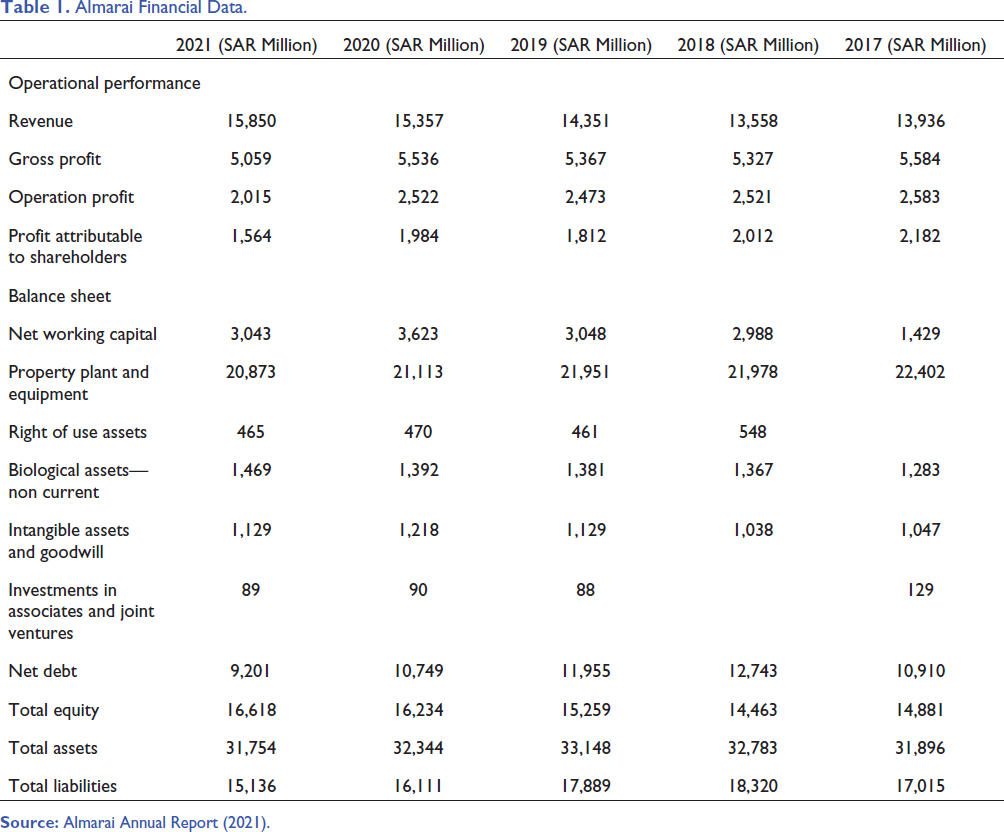
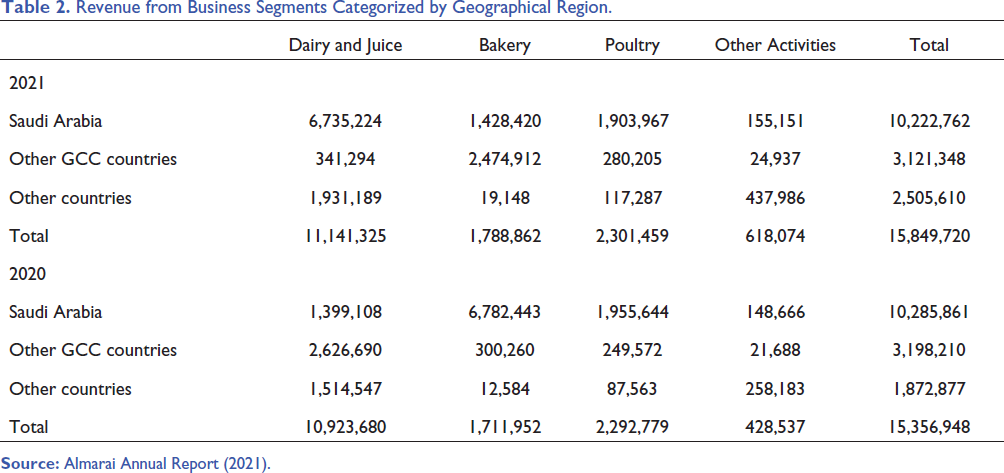
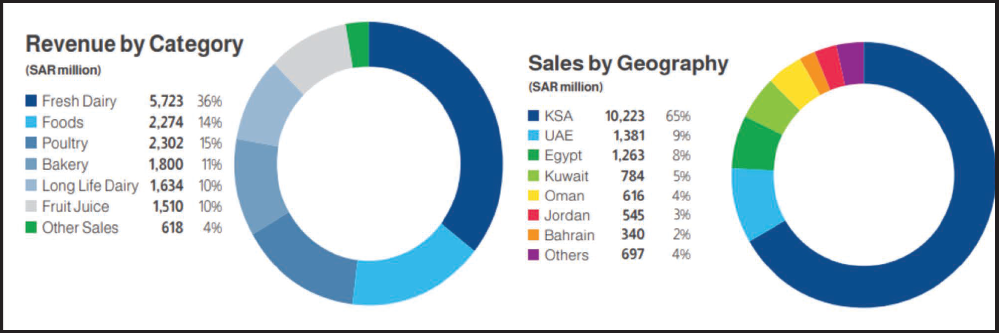
Despite the intense competition, as of 2021, Almarai has proven its worth by growing steadily and profitably, placing it ahead of its rivals. The firm’s value-share positions in dairy and foods—poultry and bakery—were stable. According to Almarai (2021), the sales in Egypt and Jordan, as well as an improvement in the performance of food service channels contributed to an increase in overall annual revenue of 3% in 2021, which brought the total to SAR 15.8 billion (see Tables 1 and 2). The company’s stockholders were entitled to a net income of 1.6 billion Saudi riyals in 2021, whereas the operational profit was 2.0 billion of Saudi riyals at the end of the year. This represents a reduction of 21.2% from the previous year. In addition, the majority of sales in GCC countries are contributed by fresh dairy products from Saudi Arabia (see Figure 1).
Almarai Financial Data.
Revenue from Business Segments Categorized by Geographical Region.
Dairy Market Trends in GCC
The production of dairy products has been witnessing a significant upsurge in the Middle Eastern region, particularly in Saudi Arabia. The elevating awareness among individuals regarding the nutritional value of fresh milk and yogurt is further driving market growth. Consumer preferences have shifted towards healthier and natural alternatives and are encouraging manufacturers to introduce organic variants to expand their consumer base, thereby acting as significant growth-inducing factors (Mohamad & Asfour, 2020). Besides this, the facilities of free home delivery, exciting offers, discounts and secure online payment methods are also contributing to the market growth. Furthermore, the wide availability of milk in numerous varieties, including low-fat, lactose-free, calcium and vitamin-fortified and organic fresh milk is creating a positive outlook for the market across GCC. Apart from this, several key market players are integrating innovative technologies for more efficient, upgraded and smooth handling of fresh milk processing this is anticipated to drive the growth of the GCC fresh milk market in the coming years.
Almarai SWOT Analysis
Strengths
Almarai is the largest vertically integrated dairy firm in the Middle East, as well as the largest manufacturer and distributor of food and beverages in the GCC region (Osland, 2021). It dominates the market throughout the GCC and is widely recognized as the best-selling FMCG brand in MENA. Almarai is known for the exceptional quality of its dairy products; nevertheless, the company has also broadened its product line to include poultry, juices and bakery goods. These products are sold under different brand names including Almarai, Albashayer, ALYOUM, L’usine and 7DAYS. In the meantime, the company maintains profitable joint partnerships with both PepsiCo and Chipita, and has a history of successful acquisition of some food and beverage companies in GCC market. Almarai leads the GCC market for fresh juice, providing a variety of beverages including drinks, juices and nectars aimed specifically towards children. One of the company’s strengths is the reliability of its distribution network. Well-coordinated sales and marketing skills, an effective supply chain, a cool distribution system and cutting-edge farming and manufacturing techniques all contribute to its impeccable quality control. In addition to that, Almarai’s division for transport and logistics is the largest in the Middle Eastern market (Almarai, 2021). At the moment, it has over 8,527 vehicles that can transport 2 billion kilograms of product without damage and on time.
Weaknesses
The pandemic of COVID-19 is still causing disruptions in supply networks as well as increases in costs and changes in consumer behaviour. As a result, Almarai’s brand impression among customers in GCC has suffered significantly in 2022 due to the increase in prices. It recently raised the prices on a variety of its milk products by 5–9% due to rising costs of electricity, fuel, feed and labour. After Almarai increased the price of a litre of milk by 0.25 riyals, or 7 cents, the company became a focus of a boycott by customers and a social media campaign circulated photographs of a popular yogurt drink plastered with a red X and the message ‘let it go sour’. The directors of the company explained in a statement that Almarai had to increase prices since its own costs had increased as a result of the government’s decision to reduce subsidies for the cost of energy and to implement new fees for workers from other countries. The company is also significantly reliant on the purchase of raw materials because, as was previously noted, Saudi Arabia relies heavily on its imports. According to Almarai annual report in 2021, the percentage of suppliers for Almarai across the GCC market accounts for only 51% compared to 95% in Argentina. Additionally, high geographical concentration may represent a major weakness of the company, as the majority of sales come from Saudi Arabia. Moreover, Almarai brand generates the most of the company’s income, indicating a high degree of brand concentration.
Opportunities
The food service market is a very important growth enabler for the organization. Because Almarai has increased the consumers’ awareness of the importance of maintaining a healthy lifestyle, there has been an uptick in the consumption of healthy beverages such as fruit juices, milk and Laban. This presents a significant opportunity for the company to expand its customer base throughout the Gulf region. The company is committed to continuing its innovative efforts to broaden its product offering, improve its operational efficiency and provide superior customer service. The success in GCC market and positive brand impression provides Almarai with numerous opportunities for entering new markets and growth in other important geographical regions. With such a strong track record of innovation, the company may look into producing other items, expanding its poultry division—in particular, its packaging of fish products—or entering new markets while continuing to make use of its decentralized dairy sources. Furthermore, Almarai is planning to penetrate the local branded beef market. Using the company’s established market infrastructure for bringing young cattle to market, the plan will allow it to provide its consumers with high-quality local meat. This decision will require an initial investment of SAR 250 million, which will come from Almarai’s operating cash flows. This investment will go towards the construction of a new end-to-end production plant, which will deliver retail ready packaged branded meat from the slaughterhouse all the way to the butchery.
Threats
Almarai faces intense competition in the GCC market. The most prominent competitors are Al Rawabi, Al Ain Dairy, Nada, Karim, Nestle, Al Safi, Saudia and Nadec. Due to decreasing consumer spending after tax implementation, a challenging economic environment and severe rivalry in the food and beverages sector in the Kingdom, the dairy market has already experienced slow growth. In the meantime, new difficulties are appearing in the form of growing inflation because of supply constraints and increased commodities’ costs brought on by the epidemic. Commodity price inflation and high freight costs are the only two of the many problems faced by the food and beverage industry as a result of the ongoing fallout from the COVID-19 epidemic. According to Arab News (2022), Almarai’s revenues and profits both fell in 2021 due to the pandemic and VAT. As a result of structural measures aimed at reducing subsidies, its gross profit has decreased. The previous year had been difficult for Almarai because of increasing COVID-19 ramifications and supply chain disruptions, as well as adjustments in purchasing due to VAT. The decline can be attributed in major part to higher cost of sales, which was principally driven by higher alfalfa cost and a rise in labour costs, together with discounting and promotions. Moreover, government policy shifts can have a significant impact on Almarai Company. Due to the large number of foreign nationals working for it, the government’s objective to boost local employment poses a serious issue to the business. In addition to that, the governments in GCC market may impose stricter recycling standards for packaging waste, which would drive up Almarai’s operational costs if the company will be required to pay for collecting and recycling the waste. In light of the persistently difficult economic conditions that prevail throughout the region, the company should put primary emphasis on enhancing its levels of productivity and cutting costs in order to maintain and grow its business in the GCC markets.
Almarai Marketing Strategies
Product
Almarai Company continually improves upon its products to ensure their high standard of quality throughout the value chain. Because Almarai directly owns the majority of the points along the supply chain, beginning with feed production, importing and continuing through production, packaging and distribution, all phases of product development can be tested extensively to guarantee both the quality and safety of the food that is produced. The Food Safety Management System (FSSC 22000/ISO 22000) is still being used throughout all of Almarai’s operations, guaranteeing that only the safest foods are provided to customers. Currently, more than 110 thousand retailers in 7 countries stock Almarai goods. The company generates over 3.5 billion kilograms of dairy items every year and around 42 million people in the Arabian Gulf, Egypt and Jordan use its products. To further ensure that its customers always obtain reliable quality, Almarai applies more than 10,000 quality tests on a daily basis. Almarai makes certain that all of its products are appropriately packaged and stored in refrigerators at the appropriate temperatures in order to preserve the products’ natural freshness and high level of quality. To prevent the spoilage of liquid goods in transit, only those vehicles equipped with a refrigeration unit are used. The packaging is also simple and straightforward, making the product easy to identify the brand (Bahlas, 2020).
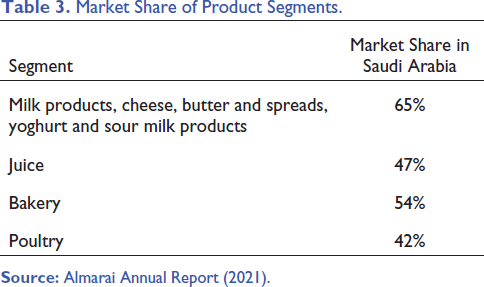
Almarai offers 622 products across seven brands. It is dedicated to remain an industry leader in terms of both food quality and safety. The culture of quality is fostered to ensure that the highest standards are applied to meet statutory, regulatory and customer requirements for the production of safe and superior food and beverage products that enhance the daily lives of its consumers and ensure the company’s long-term competitive advantage. The main products of Almarai include milk, yoghurt, juices cream, cheese and dairy desserts. Popular products include fresh milk, fresh laban, fresh flavoured milk, Hummus, labneh, mutabal, gishta and cheese. Besides producing high-quality dairy items, Almarai Company has broadened its product portfolio to include infant formula, poultry, juices and bakery goods. These products are sold under the brand names Almarai, Nuralac, 7DAYS, ALYOUM, L’usine, Farm’s Select, One Bean, Refresh, Vetal, Premier Chef and Ice Tea. The offerings of Almarai Company can be found in stores in different sizes. Generally, nearly 61% of Almarai’s total revenue comes from the sale of dairy products, followed by 10% from sales of juice products, 14% from sales of poultry, 10% from sales of bakery goods and 5% from sales of nutrition and other items (see Table 3).
Market Share of Product Segments.
Promotion
Almarai has a responsible marketing policy which applies to all marketing and communications aimed at consumers. This includes all forms of marketing communication, including but not limited to outdoor, print, television, digital (including company-owned websites and third-party websites), radio, social media, applications and online games; direct marketing; sponsorships; and all communication forms, including packaging. This responsible marketing policy is supported and reinforced by the Almarai Executive Leadership Team, overseen and governed by the Marketing and Communication Teams, and implemented across the organization through the direct support of employees. Communications on responsible marketing principles shall endorse selective initiatives that encourage healthy and active lifestyles and promote products that meet the health and taste preferences of the student population at schools. Almarai focuses on providing information to the intended audience in a transparent manner and portraying accurate information on products that is comprehendible by the audience. Furthermore, Almarai allows its customers and consumers to request a visit to its industrial facilities and farms in order to get acquainted with modern technologies in the production stages of products and to ensure a quality they can trust.
Moreover, Almarai has a media centre which presents all the official news issued by the company and visual content through creative videos that announce about Almarai’s innovations. The media centre is a communication channel with the media, consumers and customers. In addition, Almarai maintains corporate profiles across various social media networks and portals, allowing for direct interaction with customers. By interacting with its consumers directly, the company can better understand their wants, needs and expectations, and then incorporate those insights into its marketing and operational strategies (Alotaibi, 2019). Also, the company has a corporate website which features details about the business, its products and any available promotions or deals. Offering products at reduced prices as part of its promotional campaign can boost not just profit margins, but also a company’s reputation in the eyes of its clientele (Singh & Hagahmoodi, 2017).
Pricing
Almarai focuses on value-based pricing to gain optimum competitive advantage for its product offerings. The company uses premium pricing for several of its product offerings for the purpose of cultivating positive product quality and brand perceptions amongst its target consumers. The company’s success and continued expansion can be attributed in large part to the premium pricing structure it has developed. By using geographical pricing as well, Almarai was able to maximize its entry into various regional markets. Furthermore, through adjusting prices in different areas based on the value of local currencies, geographical pricing also enables it to cover the costs of shipping and customs for offshore sites and sustain steady revenue growth. Therefore, Almarai has some of the highest profit margins in the food and drink business, particularly in the dairy products sector, because of the premium price it charges for its strong local and regional brands and its commitment to vertical integration.
Distribution
Almarai has a very strong distribution network in the GCC market. The distribution network enables Almarai to reach its consumers daily, and the cooperation with other retailers has helped Almarai to intensively distribute its products to many consumers in the region. Almarai prioritizes supply chain efficiency and network optimization to guarantee the prompt and trouble-free delivery of all items. Almarai has four distinct sales zones, each of which provides daily support to around one hundred thousand clients. The zones include all areas in Saudi Arabia, and extend to Kuwait, Oman, Bahrain and UAE. Almarai has further established a fully functional website that allows for the online placement of orders and the tracking of those orders. It does this by promoting sales via social media channels, in which the company accepts orders via direct messages, as well as through a mini-shop concept. Additionally, the company maintains product inventory with major online retailers such as Amazon and eBay, in addition to smaller regional and national online shops (Sadi, 2006). The company’s sales have expanded as a result of the proliferation of online commerce and the use of the internet to make sales, which has also made the company’s items more readily available to customers. Besides that, Almarai distributes its products to supermarkets and hypermarkets located throughout the GCC market. Supermarkets and hypermarkets serve as shopping destinations for a significant number of target groups. The company also achieves greater cost efficiency as a result of its products’ presence in hypermarkets and supermarkets.
In places where the company does business, its long-haul distribution fleet moves finished, packaged goods from manufacturing facilities to local distribution centres. The distribution centres in GCC market are handled by subsidiaries in the UAE (Almarai Emirates Company LLC), Kingdom of Bahrain (Almarai Company Bahrain S.P.C), Sultanate of Oman (Arabian Planets for Trading and Marketing LLC) and an agency agreement in Kuwait (Al Kharafi Brothers Dairy Products Company Limited).
Community Participation
Almarai is a strong advocate for various humanitarian causes, contributing to them through a variety of philanthropic gifts and event sponsorships. Its community investment initiative focuses on various aspects such as health, sports, research and education. The company is dedicated to fostering robust relationships with charitable, social and cultural organizations that share its vision for the future of the nation. More than 400 students are trained annually at Almarai’s Dairy and Food Polytechnic, and the Graduate Professional Trainee programme places hundreds of recent college graduates in rewarding jobs. At the Almarai Sales Academy, the company creates and manages training courses based on specific skills and abilities (Almarai, 2021). The goal is to accomplish the organization’s succession goals while also maintaining the highest standards and helping people reach their full potential in their chosen fields. To accommodate the increasing number of trucks in the Almarai fleet, the company maintains a driving school where new hires can learn to operate the lorries and heavy trucks. The well-being of staff members is of paramount significance. Furthermore, Almarai follows global standards for workplace safety and health, implements measures to increase employee participation, conducts regular salary reviews and stresses the importance of open lines of communication. More broadly, community involvement seeks to promote education and excellence through programmes like Almarai Award for Scientific Innovation, Almarai Education Excellence Award for Arab students in the GCC and Almarai Award for Veterinary Excellence. In addition, the stakeholders’ value creation is at the heart of sustainability management, which is described as the coordinated oversight of a company’s financial, ecological and social outcomes. As such, Almarai regards it as a crucial component of its pursuit of operational excellence.
Challenges in the GCC Dairy Market
As a result of international supply chain disruptions and rising commodity costs, the MENA region’s inflation rate is forecasted to increase in 2023 (ICAEW, 2022). Marmore MENA Intelligence (2022) predicts that Almarai will have a difficult time in setting the prices of its products to ensure their compatibility with the financial constraints of consumers. Almarai may encounter another challenge with regards to managing the supply chain in order to ensure that food would always be available at appropriate times. Moreover, the production of goods at Almarai is almost entirely dependent on imports from all around the world. This not only drives up operating expenses but also enhances the risk of disruptions in the supply chain. Because of Almarai’s extra reliance on the Dairy and Juice industries, the company could suffer financially if those industries experience disruptions and fail to meet projections. Almarai has also made it a priority to expand its business operations into a wider variety of products and businesses (Osland, 2021). The company is vulnerable to hazards associated to climate change both in the short term and the long term. Profits can be affected both by increased fuel prices and the resulting greenhouse gas emissions. Furthermore, climate change poses threats to agricultural productivity, which makes it difficult to maintain current production levels while also expanding the output. The company has come up with a sustainability plan that details its plans to increase energy efficiency and generate renewable power in order to boost the company’s energy performance. The plan calls for using solar energy to generate power, conserve water and energy, practice sustainable arable farming, cut down on garbage sent to landfills, eliminate all chlorofluorocarbons (CFC) from the cold storage at the company’s main distribution centre and implement other measures to reduce fuel consumption, such as testing out alternative fuel vehicles.
Looking Ahead
Despite the challenges, Almarai comes out of this stronger and more determined than ever. Priorities for the future years will focus on bolstering poultry, food service and dairy operations—the backbone of the economy—and profiting on the uptick in tourism that is projected in the wake of the recent pandemic—driven by the government’s expansive initiatives in this field. Cattle production, aquaculture and alternative proteins are just some of the potential growth areas that Almarai plans to investigate. These activities prove that it is committed to developing and expanding in the future. Almarai’s long-term plan also involves growing into new markets and the purchase of advanced technologies that will help it to expand into the digital space. Moreover, Almarai has plans to grow into additional markets where the Almarai brand is well-known and respected among regional consumers. In addition to striving to increase its investments in its operations in Egypt and Jordan, the company intends to grow its activities in the UAE by increasing the capacity of its dairy facility to a total of two hundred million litres. Almarai will further stay focused on cost reduction and capital optimization in order to improve the overall efficiency of its business, while simultaneously increasing investment in marketing and innovation in order to reinforce its position in the market.
Footnotes
Declaration of Conflicting Interests
The author declared no potential conflicts of interest with respect to the research, authorship and/or publication of this article.
Funding
The author received no financial support for the research, authorship and/or publication of this article.
