




Abstract
The case focuses on analysing the top two Indian fertilizer companies’ performance in terms of revenue and income for 2019–2020, Coromandel International Limited (CIL) and Gujarat State Fertilizers & Chemicals Limited (GSFC). Based on performance appraisal, students are expected to select the better company for investment to get a better return. To make such a decision, students must analyse DuPont decomposition, modified (also known as additive or alternate) DuPont approach and Altman Z-score. The case aims to teach analysis of companies’ financial statements using financial ratios. It explains how the DuPont method and Altman Z-score can recognize the factors that affect a company’s performance through assessment of profitability, efficiency and leverage.
The case is appropriate for financial accounting courses, audit and assurance, financial modelling, accounting practice and regulations. After studying the issues, students should analyse the business models of CIL and GSFC by reviewing their history since incorporation, product and service offerings, revenue, margins, assets, borrowings and market capitalization (Bodie & Merton, 2000, Finance, Prentice-Hall). We are particularly interested in assessing the current financial position, market position and strategies of the companies and their peer group and evaluating the role of gatekeepers, such as business analysts, audit committees, external auditors, institutional investors and regulators, in enhancing the quality of financial reporting.
Teaching Purpose and Audience
The case aims to teach analysis of companies’ financial statements using financial ratios (Johnston & Johnston, 2015). It explains how the DuPont method can recognize the factors that affect a company’s performance through assessment of profitability, efficiency, and leverage (Anthony et al., 2016).
The traditional DuPont method can capture the performance of a company. Yet, it has some drawbacks, like the inability to differentiate between operating assets and liabilities and financing assets and liabilities. The modified DuPont framework removes such limitations and depicts efficient results, making it easy for students to understand the differences between operating and financing activities (Penman, 1996).
The case study can be used in undergraduate or graduate courses in the area of accounting and finance, and MBA courses as well. This case study can be used to analyse financial statements and other subjects related to this topic. It can also be used in different classes to show the other DuPont framework’s implication and applicability and in other courses involving financial ratio analysis.
Questions
Which company, Coromandel International Limited (CIL) or Gujarat State Fertilizers & Chemicals Limited (GSFC), was the better performer?
Based on this ratio analysis, which company would you recommend as a better investment option?
Based on NOPAT (net operating profit after tax) and DuPont decomposition, which company performed better and why?
Analyse the Altman Z-score for selecting the better company.
Teaching Plan
The case study can be divided into four segments to understand the concepts better, followed by a concluding remark at the end. The session can be of 80 minutes, comprising the following in order:
Financial ratio analysis (15 minutes); NOPAT and traditional DuPont decomposition (15 minutes); Computation of modified DuPont for CIL or GSFC (10 minutes); Analysis of performance using the traditional and alternate DuPont methods (20 minutes); Analysis of Altman Z-score (15 minutes); and Concluding remark (5 minutes).
Top 10 Largest Fertilizer Companies in India 1
Many private and government companies hold significant shares in India’s leading stock markets, that is, the Bombay Stock Exchange (BSE) and National Stock Exchange (NSE). We present a list of the highest-earning fertilizer companies among all the fertilizer companies in India in 2020:
CIL GSFC Chambal Fertilisers and Chemicals Limited Rashtriya Chemicals & Fertilizers Limited Fertilisers and Chemicals Travancore Limited Deepak Fertilizers & petrochemicals Corporation Limited Gujarat Narmada Valley Fertilizers & Chemicals Limited Zuari Agro Chemicals Limited Liberty Phosphate Limited Mangalore Chemicals and Fertilizers Limited
Coromandel International Limited Versus Gujarat State Fertilizers and Chemicals Limited
Industry and Company Overview
India’s economy has been based on agriculture, which provides resources for many industrial sectors, like fast-moving consumer goods (FMCG), and jobs for farmers. India is the second-largest country by population in the world after China. 2 The majority of the Indian community has been dependent on agriculture for their source of income. As India’s population increased, the demand for consumer goods, foods and grains also rose. The Green Revolution was started in India around the 1960s, so that India could become independent to fulfil the demand for food and grains in the Indian market. Extensive use of high-yielding variety (HYV) seeds, modern irrigation techniques, fertilizers and pesticides was started, which improved India’s agriculture. The contribution of agriculture to India’s GDP was 15% as of 2019. 3 India was the second-largest consumer of overall fertilizers and the third-largest producer of nitrogenous fertilizers in the world (after China and the United States) as of 2019. 4
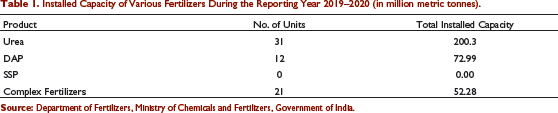
Installed Capacity of Various Fertilizers During the Reporting Year 2019–2020 (in million metric tonnes).
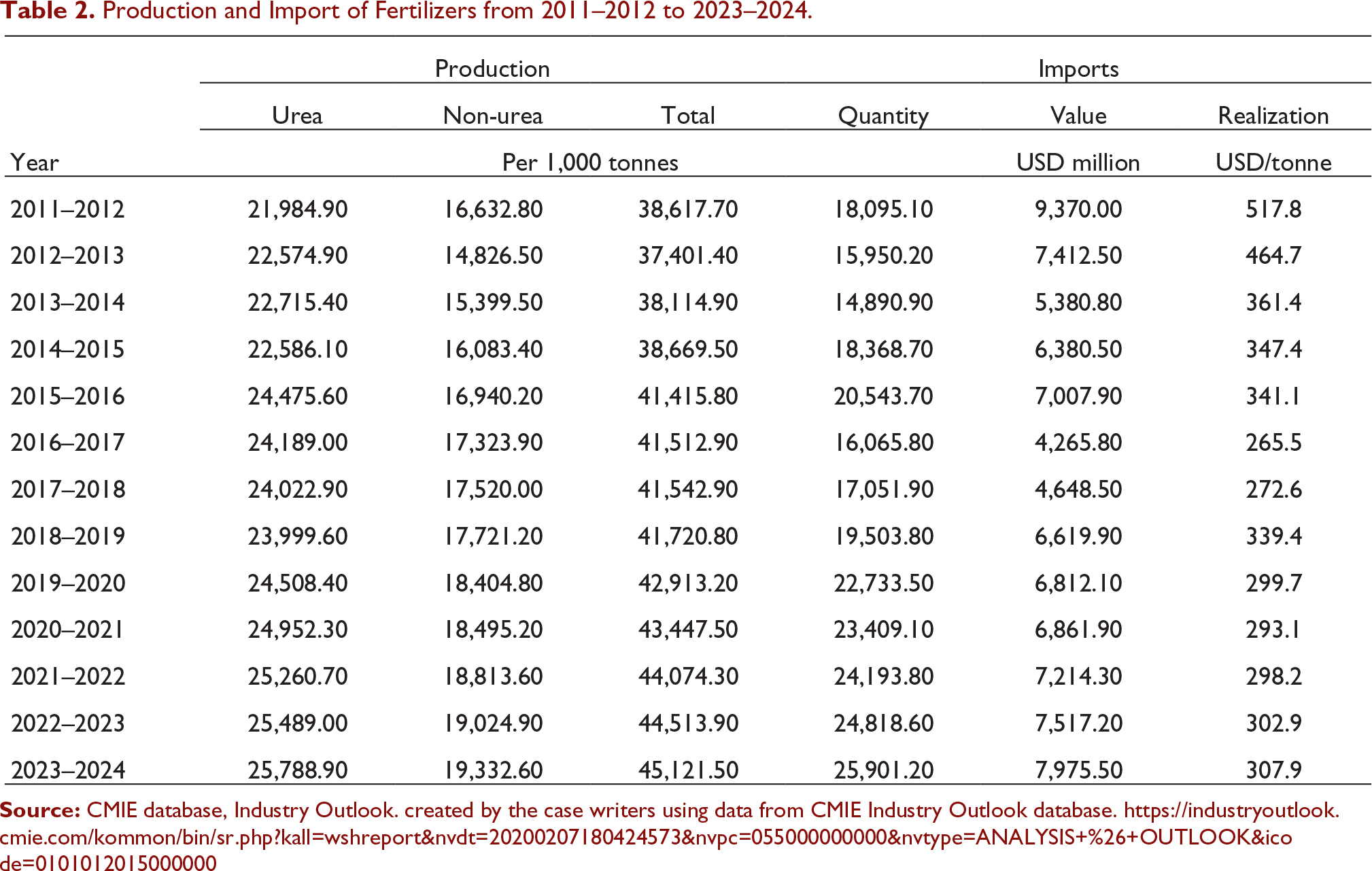
Production and Import of Fertilizers from 2011–2012 to 2023–2024.
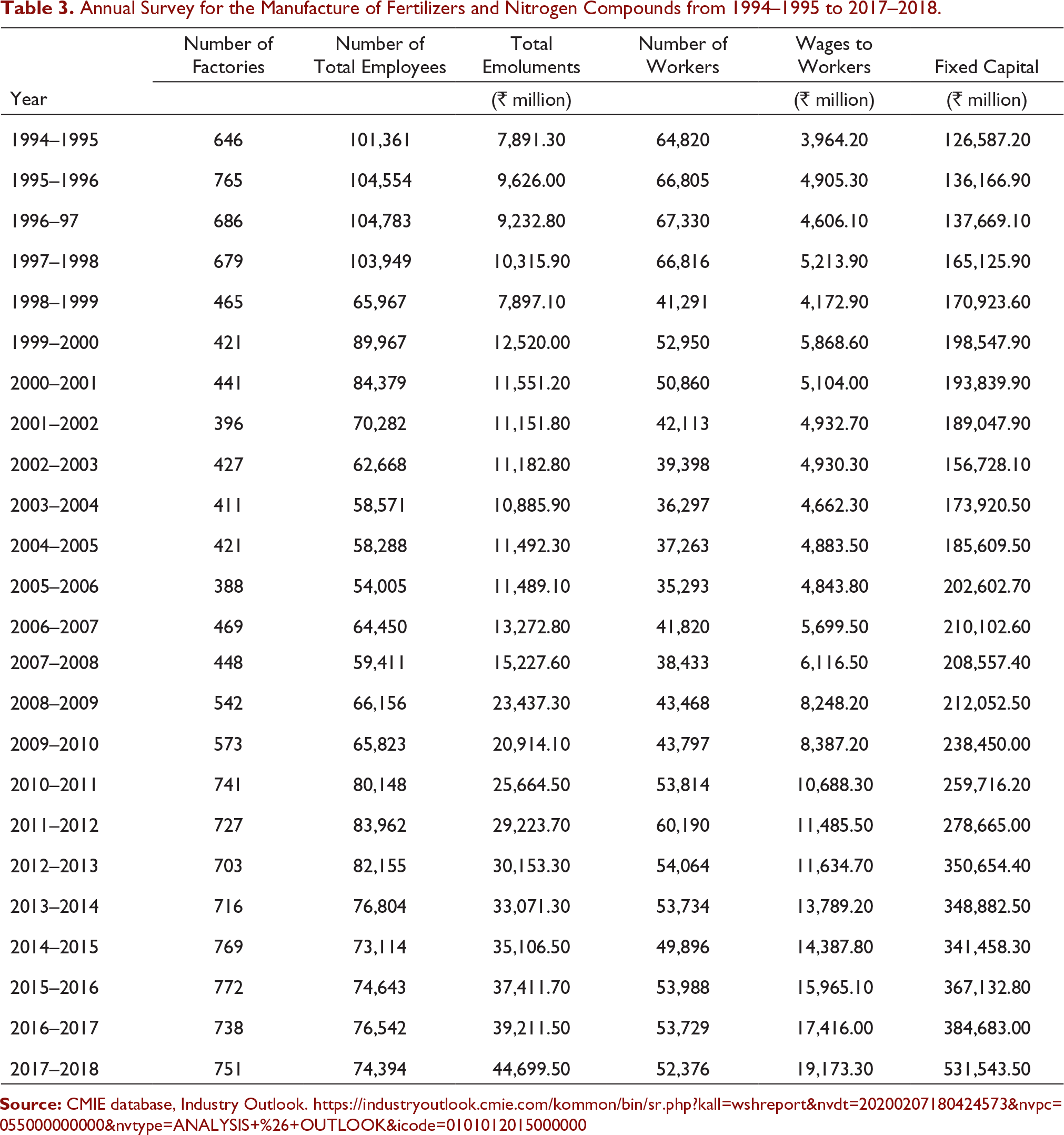
Annual Survey for the Manufacture of Fertilizers and Nitrogen Compounds from 1994–1995 to 2017–2018.
Classification of Fertilizers
Coromandel International Limited
CIL is the largest fertilizer company operating in India, and it ranks second in terms of the manufacture of Malathion. 9 It was established in early 1961 by two companies of the United States—Chevron Chemical Company and International Minerals and Chemicals Corporation—and is operated by its parent company, Murugappa Group. 10 It has established manufacturing units at Gujarat, Andhra Pradesh, Maharashtra, Tamil Nadu, Jammu and Kashmir. Gromor, Godavari, Pyramox, Parry Gold and Parry Super were the products of the company. The company diversified its products by manufacturing fertilizers, pesticides, insecticides and weedicides. The company also introduced one more product to its business, named Specialty Nutrients, to help crops grow.
Income Statements of Coromandel International Limited for 2015–2019 (all numbers in ₹10 million).
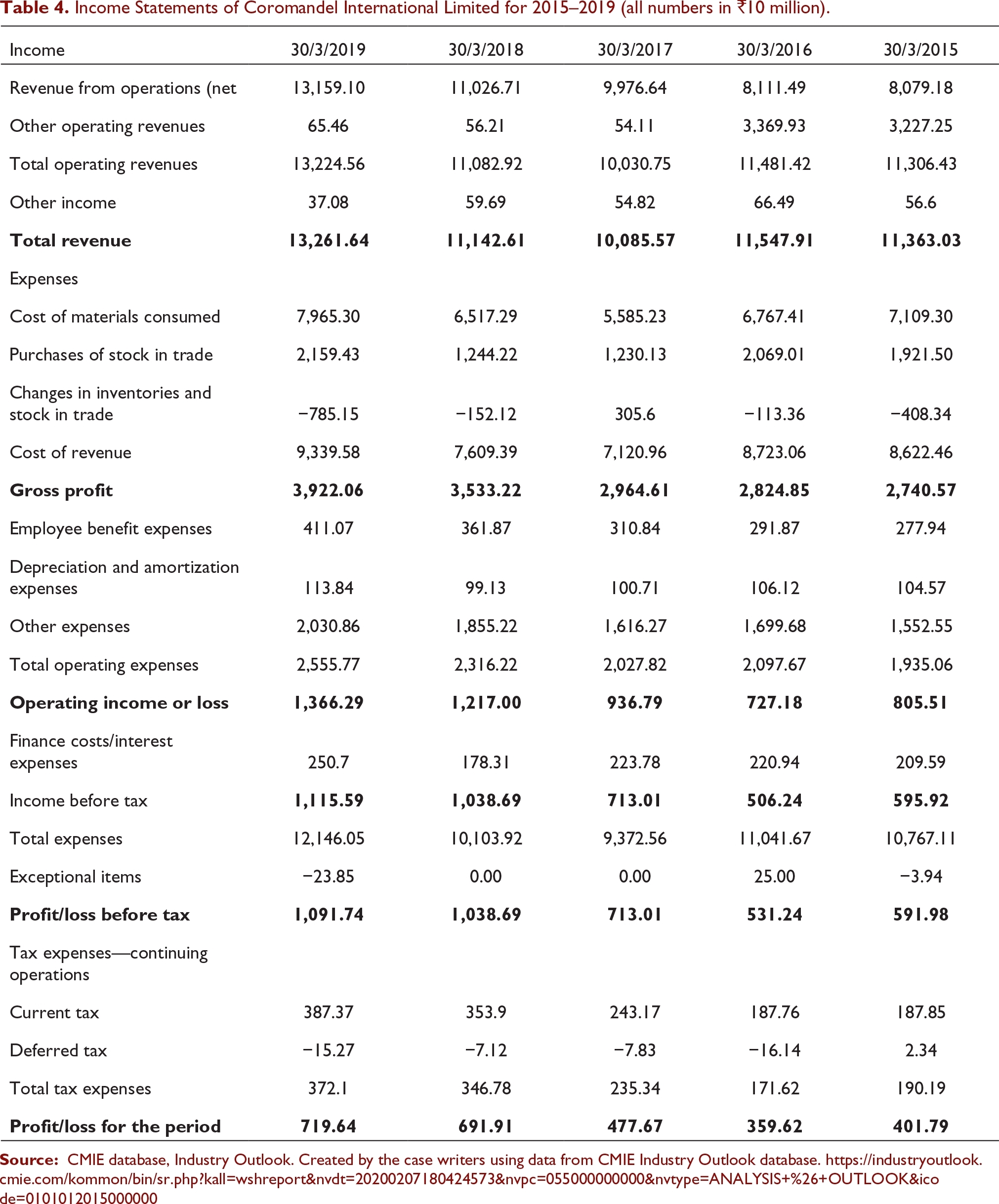
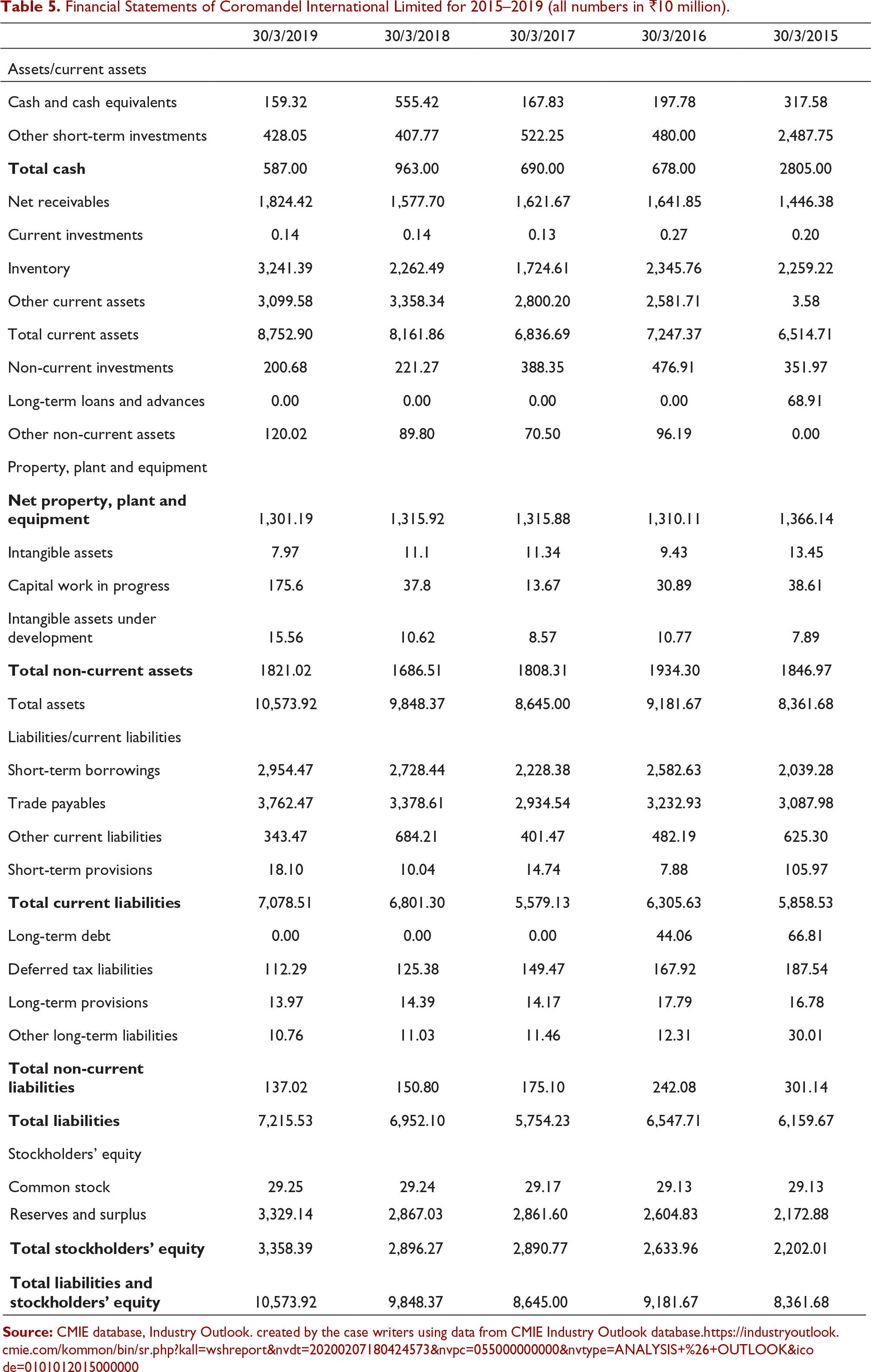
Financial Statements of Coromandel International Limited for 2015–2019 (all numbers in ₹10 million).
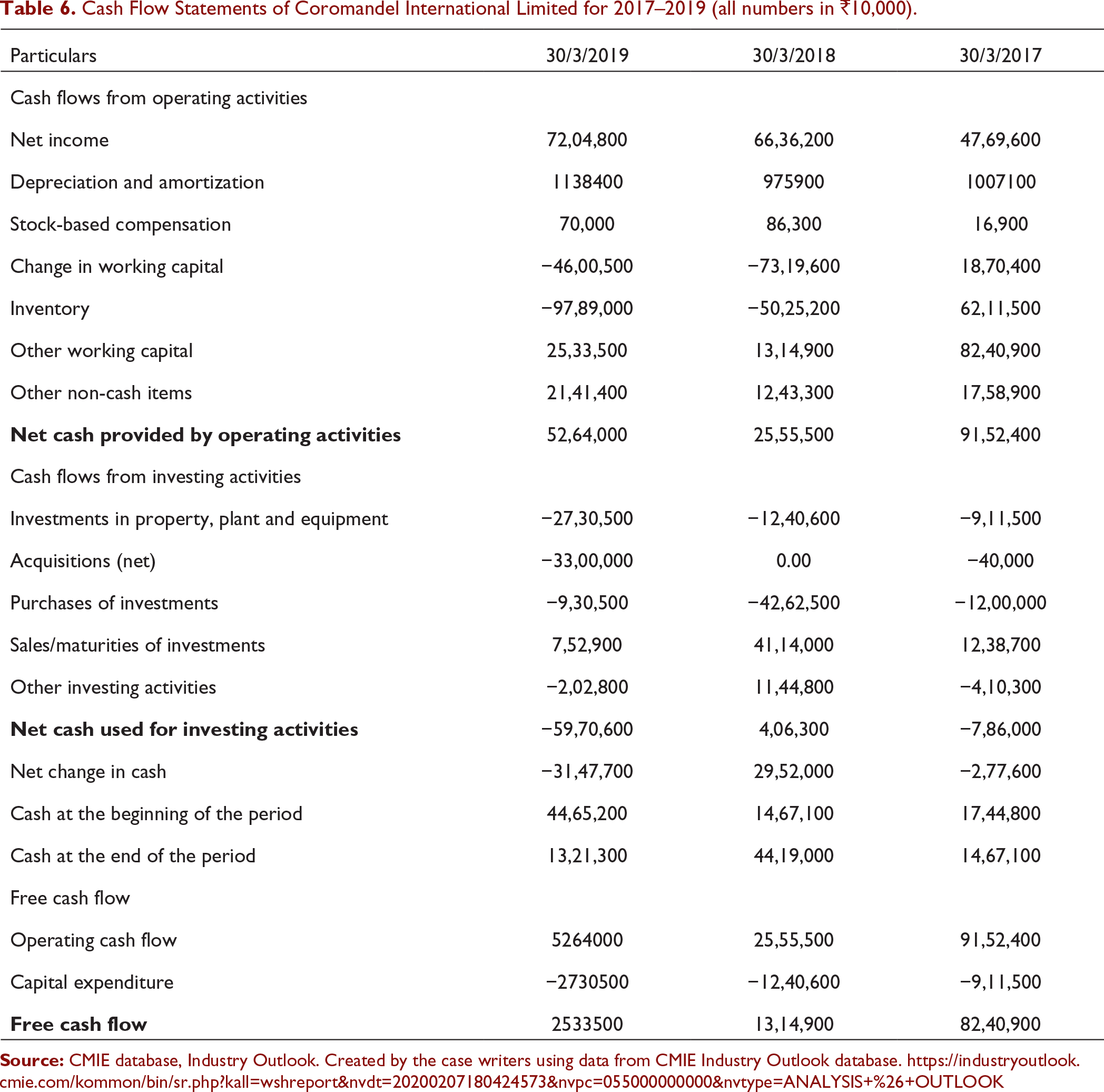
Cash Flow Statements of Coromandel International Limited for 2017–2019 (all numbers in ₹10,000).
A wide range of products and services are provided by the company, such as farm inputs, including fertilizers, seeds, organic manure, agrochemicals, animal feed and insurance, farm advisory services, which include soil testing in labs or through mobile kits, farmer seminars and touchscreen kiosks, and farm mechanization services, which include nursery operation, land preparation and transplanting and spraying services. 15
Gujarat State Fertilizers and Chemicals Limited
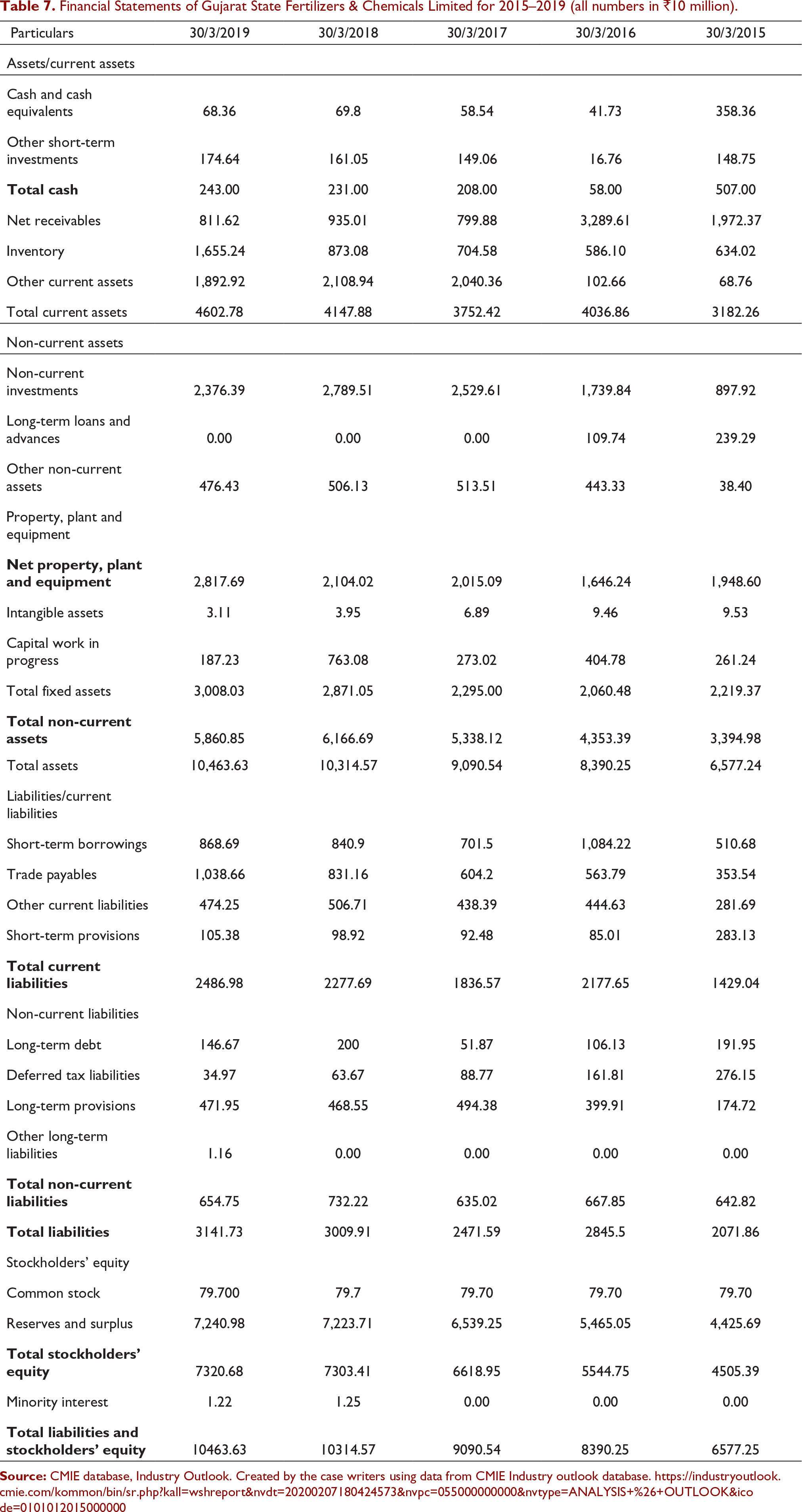
Financial Statements of Gujarat State Fertilizers & Chemicals Limited for 2015–2019 (all numbers in ₹10 million).
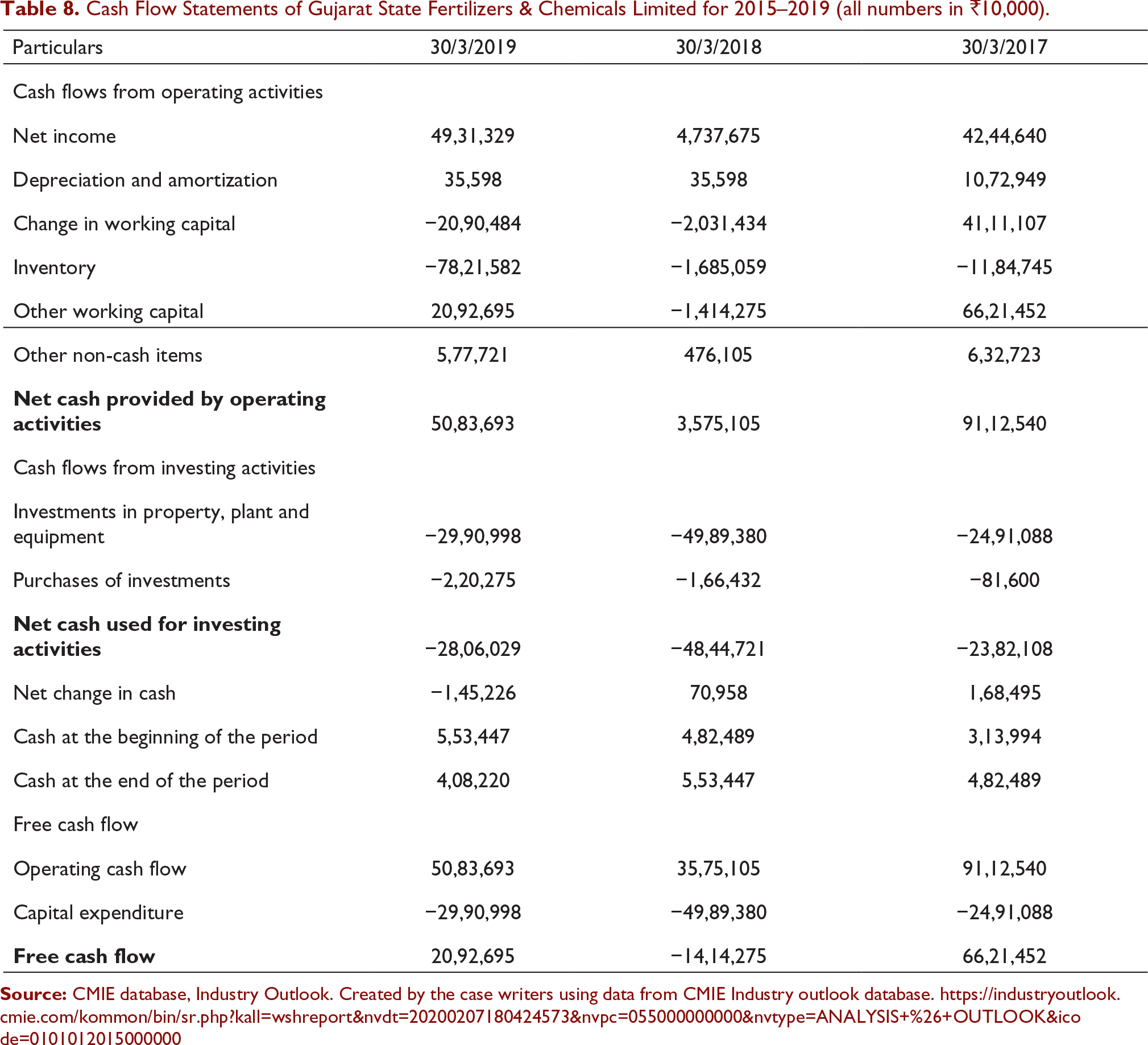
Cash Flow Statements of Gujarat State Fertilizers & Chemicals Limited for 2015–2019 (all numbers in ₹10,000).
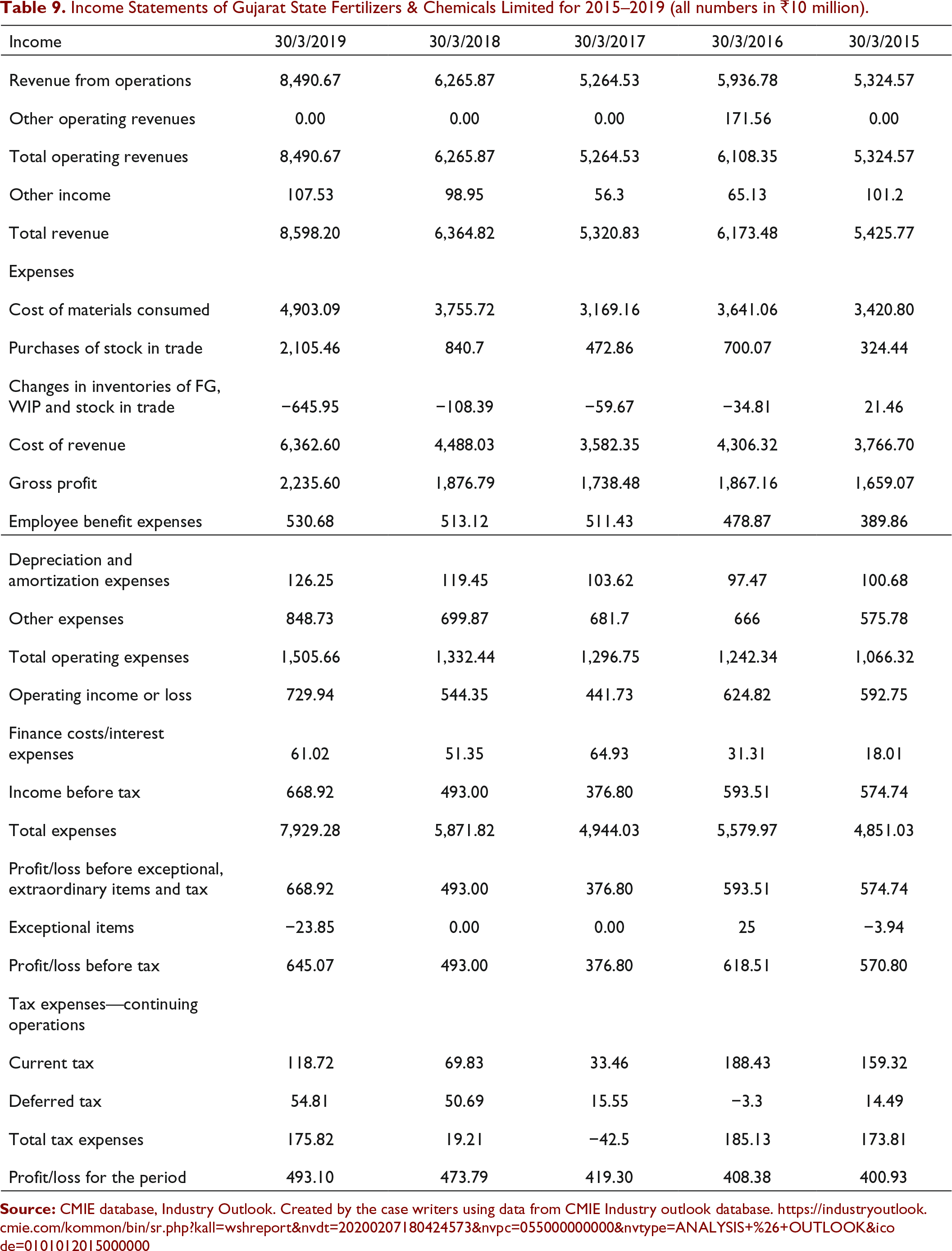
Income Statements of Gujarat State Fertilizers & Chemicals Limited for 2015–2019 (all numbers in ₹10 million).
Theoretical Background and Literature
Studying the movement of stock prices and identifying the right stock or company to invest in is considered to be the most challenging task in the financial market. Many academicians, analysts and researchers have been trying to identify the indicators moving the value of a stock (Kothari & Shanken, 1997), and investors are very interested in identifying the right stocks or companies for their investment. Investment should be based on some theory or fundamental factors for getting a better return at low risk. These factors could be accounting ratios, financial statements and other accounting information (Ross et al., 2019).
Dimitropoulos and Asteriou (2009) analysed specific financial ratios and their influences on the stock returns of 101 non-financial firms listed on the Athens Stock Exchange from 1995 to 2004. The results demonstrate that the ratios of working capital to total assets and net profit to sales negatively affect returns. Financial ratios work as indicators related to the selection of stocks. Filip and Raffournier (2010) examined the relation between accounting incomes and stock returns of companies listed on the Bucharest Stock Exchange and found a substantial effect of accounting ratios on stocks identification. Barnes (1987) explored the actual relationship between financial ratios and stock returns, since ratios are perceived as helpful in predicting future returns and impacting the returns and useful for creating an optimal portfolio. Trejo et al. (2015) explained that the financial ratios are used by equity analysts that have predictive power on future stock returns. Analysists use financial ratios as an effective tool for analysing companies’ performance and recommending the best companies to invest in (Bodie & Merton, 2000).
Emamgholipour et al., (2013) investigated the influence of financial ratios, that is, P/E (price/earnings) ratio and EPS (earnings per share), on the market return of listed companies in Tehran over the period from 2006 to 2010. They found that EPS is positively related to stock returns. Arkan (2016) investigated the financial ratios derived from financial statements to predict stock returns using a data sample of 15 firms of the kuwaiti Financial market over a period from 2005 to 2014. He found that some ratios show robust and significant positive associations with stock returns. Katchova and Enlow (2013) evaluated Du Pont ratios to compare the return-on-equity components of agri-businesses and all companies (Penman, 2010).
Altman Z-Score
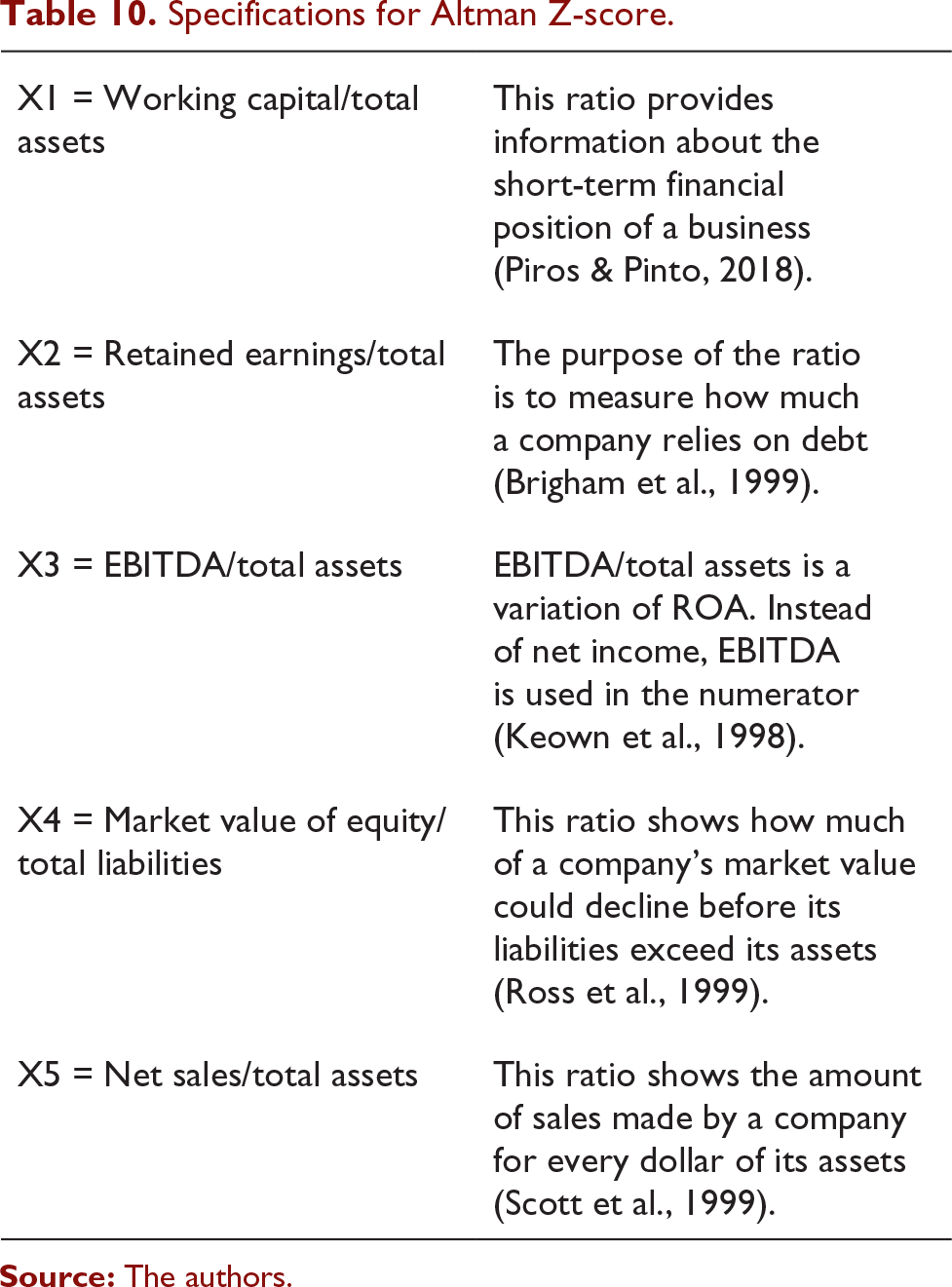
Specifications for Altman Z-score.

When Z is 3.0 or more, the firm is most likely safe based on the financial data.
When Z is below 1.8, the company is highly likely to be bankrupt. If a company is generating a Z-score lower than 1.8, serious studies must be performed to ensure the company can survive. A low Z-score indicates that a firm is gradually approaching insolvency or bankruptcy. Thus, firms with low scores are higher-risk investment options.
The Altman Z-score is based on five financial ratios that can be calculated from data found on a company’s annual report. It uses profitability, leverage, liquidity, solvency and activity to predict whether a company has a high probability of becoming insolvent. DuPont analysis uses three variables—profitability, leverage and liquidity—(with the Altman Z-score) for getting better results. A company that has a high ROE would be able to achieve a high Z-score, and a high Z-score for a company indicates that it is a good investment option.
