




Abstract
This case is based on the company InGreens, which is an agri-mobile platform, one which works in connecting the rural B2C and G2F service space (those related to agriculture—soil health card, farm insurance, online licensing for seeds, pesticides, fertilizers, etc.). It was incubated from Science and Technology Entrepreneurs’ Park (STEP), IIT Kharagpur and supported by the Government of West Bengal. The key motive was helping the farmers and the agricultural process as a whole, using technology for better and efficient connectivity between the government people and the farmers, on a real-time basis. They were facing dilemma on the ways to expand their functioning, through their third-party recruits (Gram Doots) and the case brings forth these challenges. InGreens was planning to utilize the reach of the Gram Doots for venturing into rural m-commerce, in the agricultural as well as the consumer products sectors. The case was written keeping in mind the students of HRM and entrepreneurship.
‘Where do we go from here?’ This question remained unanswered, even after 6 hours of discussions (sometimes heated). As the team started dispersing at the end of the day, there were more confusions than clarity about the path ahead in their minds. However, that is the excitement and attraction of a start-up, especially one which is growing exponentially in tandem, keeping in pace and sometimes even outpacing one of the fastest growing sectors of the Indian economy.
In the general body meeting (GBM), which is held quarterly, the top management team met up for a whole-day session with the consultants, reflecting on the results (the targets achieved as well the ones not met with), ideating about new directions, brainstorming about the challenges and the tentative way ahead. These meetings are supposed to be an eye-opener, figuring out the next important step in creating the success story for the company. However, increasingly, these GBMs are becoming more abstract in nature—with varied opinions, diverse priorities and the external pulls. In simple words, InGreens is coming of age, facing those growth pangs every start-up face, and those which cannot be ignored anymore.
Background
As per the UN’s 2019 demographics data, Indian population stands at 1,367.9 million, out of which roughly around 33% lives in the urban area (about 450 million). 1
In India, electronics and information technology has been one of the fastest growing industry segments. The Indian IT software companies have become global stalwarts and provide an efficient solution with both cost and quality as an advantage, which is achieved by the availability of meritorious students at cheaper costs. The engineering colleges, which ensure a steady supply of employees, and also the attractiveness of the industry (white collar job, higher pay, foreign assignments/postings/relocation, etc.) both have aided in the booming of the industry. In addition, the global technological advancements, and easy and fast knowledge transfer and sharing, have changed the landscape of how and what businesses to run. In fact, the rate of change has been accelerating over the past few decades, if we do a comparative analysis over the years. This is aided by the government support, through continuous efforts, to make India a front-runner in the age of information revolution. E-governance is one such step towards digitalizing India, keeping in line with the global information revolution. It is estimated that by 2020, over 329 million people in India are expected to buy goods and services online, which is almost a 60% rise from 2016 (130.4 million). 2
Till date, the Indian economy is predominantly rural based (2/3rds of the population settled in the rural areas). The rural population contributes over 46% towards the national income. In line with the digitalization boom in the country aided by the government’s Digital India program, rural India is getting into the digital ecosystem faster than anticipated. Social media, content sharing (Facebook, WhatsApp, tiktok, etc.), mobile wallets (BHIM, RuPay, etc.), data penetration at reduced costs (Reliance Jio), and decreasing the cost of smart devices (low-cost smartphones)—all these are contributing towards the transformational changes in rural India. The easy and ready access to information is influencing the spending patterns and purchasing behaviours quite radically for rural consumers. This is resulting in a huge window of opportunity for agri-business as well as consumer product/service firms to reach over 910 million buyers beyond the reach of conventional e-commerce with innovative consumer outreach models.
E-commerce in India
E-commerce in India is considered as the fastest and dynamic channel for commercial transactions. The sector is growing at an annual rate of 51%, with revenues to reach USD 120 billion by 2020 (USD 39 billion in 2017). 3 Studies have shown that the major portion of this growth can be attributed to the increasing internet and smartphone penetration. This growth is also accentuated more in rural areas. Most of the farmers in India own a mobile phone, out of which around 40% are possessors of smartphones with internet connections.
E-governance in India
India has been steadily rising in ranks in the e-government development index. As per the United Nations E-Government Survey, 2018, India ranked 96th out of 193 countries. In 2016, India’s rank was 107th, while in 2010, it was 119th. 4
Initiatives for e-governance started around the mid-1990s in India, which had wide sectoral applications, emphasizing on providing citizen-centric services. In the early information and communication technology (ICT) initiatives, at the central level, major projects included computerization of the railways, land records, etc. Aided and inspired by the central government, the states started their own individual e-governance projects, for providing services to citizens through the e-platform(s). However, in the initial days, these were mostly isolated and less-interactive systems, having major lacunae, and thus, hindering successful adoption along with the whole spectrum. Thus, to fulfil these needs, National e-governance Plan was introduced in 2006, with 31 Mission Mode Projects (MMP) covering areas including courts, municipalities, police, commercial taxes, agriculture, land records, health, education, passports, etc (Chauhan, 2009). The current plan is called e-Kranti (National e-governance plan 2.0). As of date, there are 44 MMPs, including new sectors like e-Bhasha, women and child development, social benefits, financial inclusion, urban governance, etc. The Digital India website (
M-governance in India
The number of mobile phone users across the world is expected to cross 5,000 million by 2019. In India, it is not an exception, with 58 million users in 2014, and the number of users is expected to reach 80 million by 2019. 6 India is one of the fastest growing mobile services economy, and this is also substantiated by the rising interest and boom in e-commerce and various other related sectors to tap into this huge consumer segment. The Digital India initiative, aimed at providing government-to-citizen, citizen-to-government and government-to-government connect (real time and direct), is another substantial proof of the importance of this exploding sector.
Thus, the combined effect of digitalization, easy, fast, secure, reliable and cheap access to internet connectivity along with the growing smartphone penetration in the rural areas of India, has encouraged m-commerce models focussing on agri-business, which, supported by the government digitalization programmes and initiatives, are rapidly revolutionizing the Indian agriculture sector (Gupta & Sharma, 2018). In this milieu, InGreens was incepted, focussing on being a stable, secure and reliable platform for a smooth transition of information between the government and the farmers.
Company
InGreens is the fastest growing firm in Rural B2C (Business to consumer) and G2F (Govt. to farmer) service space with its robust field team. It is recipient of “Rural innovation fund” from NABARD. Having incubation support from STEP IIT Kharagpur, InGreens has developed and managing India’s one of the largest Agri mobile Governance platform on cloud, Matir Katha. It is closely associated with Soil health card, Farm insurance, Online licensing platform (Seed/Pesticide/fertilizer) etc. core Govt. projects, as well as products/services distribution in last mile. (
With the NABARD grant, a small prototype of Matir Katha was built, and then the prototype was introduced to three or four state governments. The West Bengal government took keen interest and supported the pilot project (end of 2013). Post the pilot project, interactions with the farmers were done (independently), and then the final rollout was done.
Starting off with rural m-governance, InGreens is venturing into rural m-commerce (agricultural as well as consumer products), tapping into the yet-hardly explored rural market of India.
Projects
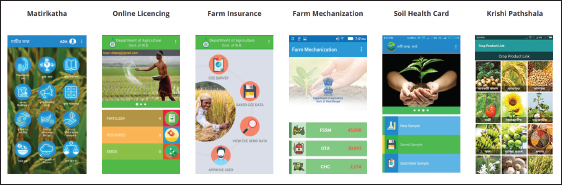
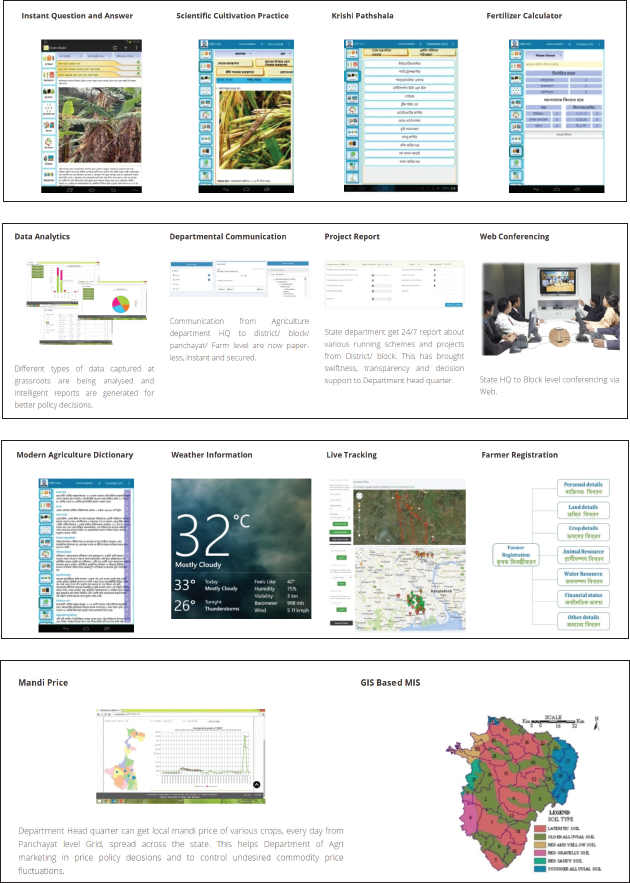
InGreens started with the accoladed project, Matir Katha (2013–2014). This is one of India’s first smart-device based agriculture extension projects. It is a single window government service delivery platform for West Bengal. The platform also includes areas covering end-to-end process automation for soil health card, farm mechanization scheme and online licensing for seed/pesticide and fertilizer dealers. The existing government projects include matir katha, soil health card, krishak bandhan, crop culture experiments (CCE), licensing/testing/certification, geo-tagging, farm mechanisms, and Bangla Fasal Bima Yojana (BFBY)-insurance. Exhibits B–D give a snapshot of the projects (as displayed in the website).
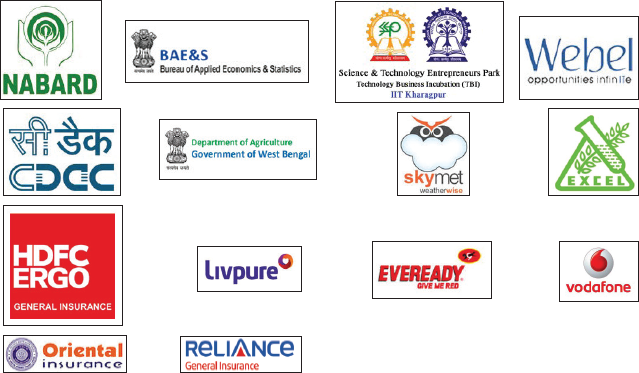
Apart from the West Bengal government as a partner, the private partners associated with InGreens include Vodafone, Centre for Development of Advanced Computing (CDAC), Reliance general insurance, HDFC ergo general insurance, Eveready, Livpure, etc. The complete list of associations (partners and clients) is given in Exhibit E.
Leadership Team
InGreens was incepted by Ranadeep Das (IBS Kolkata, Bidhan Chandra Krishi Vidyalaya (BCKV)) and his friends (professionals from IIMs, FMS, TIFR and other reputed institutions of India) as a NABARD-funded small prototype, ending up in 2013 as a pilot project, supported by the West Bengal government (Matir Katha). The key motive was helping the farmers and the agricultural process as a whole, using technology for better and efficient connectivity between the government people and the farmers, on a real-time basis.
There are around 100 people employed full-time in the pay-roll of InGreens. Apart from the top management team, there are few external consultants, hired on a part-time/contractual basis, who act in advisory roles. The rest of the team comprised software developers and some junior executives handling sales, customer services, liaison, etc.
The top management team members and their brief profile is given in Exhibit F.
Footprint
Currently, the length and breadth of West Bengal is covered, 23 districts, 127 municipal towns, 341 blocks, 3,500 panchayats, by engaging over eight thousand foot-soldiers (these people are better known as Gram Doots). The districts of West Bengal are Alipurduar, Bankura, Birbhum, Coochbehar, Dakshin Dinajpur, Darjeeling, East Medinipur, Hooghly, Howrah, Jalpaiguri, Jhargram, Kalimpong, Kolkata, Malda, Murshidabad, Nadia, North 24 Paraganas, Purulia, Purba Burdwan, South 24 Paraganas, Uttar Dinajpur and West Medinipur.
Gram Doot
These areas (23 districts of West Bengal) are covered by over seven thousand foot-soldiers, or Gram Doots, as they are called fondly. They are mostly higher secondary (12th standard) passed, and/or graduates, residing in the towns/municipalities/villages, who actually go and do the legwork. The criteria to be a Gram Doot are to have a smartphone (and the ability to operate various apps, etc.) and a means of commuting (cycle/scooter/motorcycle).
The main work of the Gram Doot is to collect the data through the app (specially to help the farmers, who are unable to access/not conversant with the various government initiatives available to them). This is also a part of the digitalization process of the Government—that is, the data (like soil health, crop produce, etc.) are collected via the various online portals. The subsidies, insurances and other support (monetary or otherwise), which are available to the farmers (given by the government), are notified to the farmer, hence ensuring information flow and communication is seamless. There is also a helpline for any kind of assistance (regarding agricultural produce and related scopes) that could be provided to the farmers. Through this, the government ensures that corruption, false data, misleading information, non-information and other vices are eradicated.
The Gram Doots are paid for their work by the government, and in addition to the extrinsic motivation factor (money), they have a sense of pride for doing ‘government job’ (intrinsic motivation), especially in the semi-rural and rural areas, where unemployment is very high and there is dearth/limited scope of getting a job. The work is seasonal, eternal and regular in nature, and hence, there is stability factor playing in their minds too.
In general, the Gram Doots are recruited by word of mouth. They are managed/monitored by business executives (those who are responsible for handling the business projects) and district coordinators (those who are responsible for handling the government projects). Both are on the company payroll, that is, they are direct employees of InGreens. Mostly, the District Coordinators started off as Gram Doots, and as the company expanded, they asked their friends and family members to join in. Slowly, as more villages/blocks got integrated, the District Coordinators were assigned supervisory role of managing the Gram Doots belonging to their block/villages. The role of the district coordinator (some districts may have more than one, owing to the size/population) is that they act as the intermediary between the Gram Doots and the team in InGreens. In addition, they look at the timely disbursal. Most of them have been associated with the company for over 3 years, and they are a motivated and energetic lot. All in all, they believe in the company and its vision, and they also show a sense of pride and belongingness to be associated with the company.
The Confusions—What to do Next?
InGreens is planning to utilize the reach of the Gram Doots for venturing into rural m-commerce, in the agricultural as well as the consumer products sectors.
There are lots of ideating happening on how to tap the strength of the Gram Doots and expand the business into multitude of areas. One option is that of venturing into other related areas such as fisheries, horticulture and animal resources, which are again mostly unstructured, and hence, the problems faced, issues, challenges and requirement are somewhat similar to those existing in the agricultural sector. Another option is using the Gram Doots and tapping into the semi-rural and rural consumer market through e-commerce (with tie-ups with companies wishing to reach the rural market, but unable to do it themselves due to economies of costs). Areas that can be explored are insurance, retail, FMCGs, etc. Yet another option is to have its own in-house developed products (service or otherwise) and utilise the Gram Doots for direct selling. These can be in areas having direct social impact like skill development, healthcare, e-education, etc.
InGreens is aspiring to utilize as well as expand the Gram Doots base, by engaging them in sales of agricultural as well as consumer products. Thus, in addition to the information gathering (for government) work that the Gram Doots are doing, they are also expected to don the hat of a sales person. The dilemma is how to transform these Gram Doots to utilize their relational level and field level expertise and convert into sales. Even before the ‘how’ part, comes the assessment, such as understanding whether they ‘want’ to do it (willingness/inclination), ‘what’ are their skill levels, ‘whether’ they can be trained, etc.
If yes, then next comes assessing the training needs’ requirement post a need-gap analysis. Also, the content/module/length and breadth of the training requirements have to be formulated. If no, then hiring has to be done. The costs and other implications have to be borne in mind before taking a decision.
In addition, with the growth (and hopeful success), hiring of future people (outsiders) will become inevitable. That will also require a comprehensive and robust hiring methodology, to match up to the forecasted growth plans. Hiring for not only the sales force but also other functions in the company will be required. For this, role assignments, job specifications, etc. have to be laid down; basically, some kind of structure and order need to be put in place in the organization, such as deciphering the culture of the company, ensuring a person-job fit as well as person-organization fit and laying down employee life cycle (benefits, promotions, career management, etc.). It seems to be the time to shed the ‘kid’ persona and don the ‘young adult’ role.
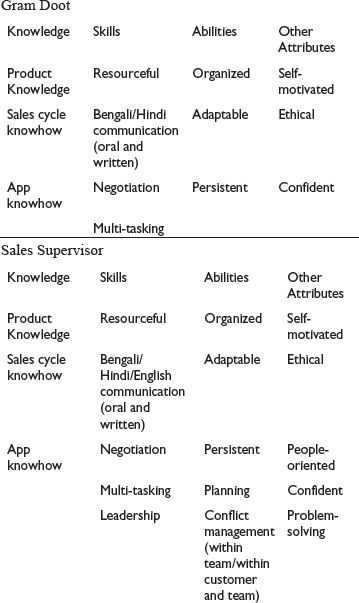
In the GBM, the external HR advisor had presented the current knowledge, skills, abilities and other characteristics (KSAO) of the Gram Doots and their supervisors, which was arrived at after in-depth interviews with the core management team, the gram doots and their supervisors. These are given in Exhibit G. The management team agreed to the fact that for any level of hiring, the identified soft skills are non-negotiable, and all future recruitments would be done keeping in mind the same. This is essential so as to retain and incorporate the company culture among all the employees, present and future alike.
The challenge with InGreens can hence be explained as two-fold, one pertaining to managing the employees—the “human resources management” aspect, for both the existing people as well as future ones (hiring the right fit of people). The other pertains to the strategic angle—that is, which way to expand—diversify portfolio, expansion of existing products in other markets, be a rural e-commerce platform for other private players, etc.
‘Where do we go from here?’ The question seems to be etched in the minds of the team—a solution has to be found, and it has to be found soon.
Agriculture Sector—e-Governance in India.
Provides services, documents and forms as well as news and policy information. Farmers and fishermen are able to renew licenses for crop protection, apply for subsidies, apply for agricultural income certification and request land.
e-Panchayat is an e-governance initiative for the rural sector aiming to function as a self-governance system. The platform aims to enable local voices to share practical stories and challenges.
Farmer Portal aims to provide information and services to improve existing delivery channels by the Department of Agriculture. It aims to bring together market information; details of production, storage, and sales, and a feedback module for responding to queries.
The fertiliser monitoring system is funded by the government of India and captures information for the different stages of the value chain. It links farmers with product information from private companies.
Kisan Suvidha, a Digital India initiative, is a mobile app providing information to farmers. Farmers can be informed on the weather alerts, market prices, availability of seeds and fertilisers, agro-advisories, etc.
Pusa Krishi is an app designed for farmers to use in the fields. It provides information on the weather, on new crop varieties, resource conserving practices and farm machinery.
mKISAN is a mobile based advisory service linked to call centres connected to research centres. It provides information in farmers local language.
Soil health card promotes integrated nutrient management through the use of chemical fertilisers and organic manures. Provides soil test based recommendations and ensures quality control of fertilisers. It is widely used.
National Agriculture Market (eNAM) is a pan-India electronic trading portal creating a national market for agricultural commodities through a government platform. It includes commodity arrivals and prices.
AgMarknet provides agricultural market information and price trends through a government platform.
Crop insurance mobile app
m-Governance—InGreens.
India with its 1,146 million wireless telecom subscriber (Aug 2018, TRAI) and 500 million active internet users (June 2018, IAMAI) is one of the fastest growing mobile service dominated economy.
Going by the trend, the Government of India has aggressive plans of serving citizens with various G2C services as part of USD 16 billion, Digital India initiative. G2C/C2G/G2G services will change the way government and citizens connects with each other, real time, without intermediary. All e-government applications will be remodelled into m-government apps to allow government departments to reach to last mile. That is the best public service model a vibrant democracy such as India with its edge on information technology should offer to its citizens.
In this backdrop, InGreens has bagged one of India’s first Smart-device based agriculture extension project in 2013-14, Matir Katha. Eventually this cloud and mobility application has become single window government service delivery platform for one of the most agriculturally important state of India, West Bengal. End to end process automation for critical government projects like soil health card, farm mechanization scheme and online licensing for seed/pesticide and fertilizer dealers were also integrated into this platform.
Rural m-Commerce (Agri)—InGreens.
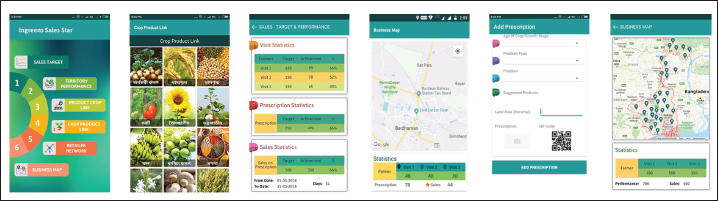
SalesStar is a unique combination of well trained, feet-on-street who champion their localities and a sales process management (Lead conversion) platform that tracks, records and analyses their activities in real time. The benefits of this system include lead generation from new territories by field level experts and real time tracking the movement of these leads, from generation to conversion, through products, crops, farmers, distributors and dealers.
This enables the client to access real time, last mile data at their fingertips, for a vast geography, without any long-term cost overhead liability against thousands of sales resources. InGreens data encapsulation and analytics engine (IDEA) is a mashup of primary and secondary data on domain knowledge (package of practice, plant protection, weather) and individual farmer level information (crop, soil, KCC, etc). This engine, combined with InGreens’ years of excellence in execution makes Salestar a perfect growth engine (see the tree diagram). Farmer relationship centre, manages customer profile and persistently ensures sales closure with well-defined process.
Rural m-Commerce (Consumer Products)—InGreens
SalesStar is a unique combination of old school, well trained, feet-on-street who champion their localities and a sales process management platform that tracks, records and analyses their activities in real time. The benefits of this system include lead generation from new territories by field level experts, and real time tracking the movement of these leads, from generation to conversion as well as payment processing and Last mile logistics support (LML). This enables the client to operate and access real time data at their fingertips, for a vast geography, without any cost on long term ground level resources.
InGreens data encapsulation and analytics engine (IDEA) is a mashup of lead profile, product variant fitment, CRM and sales closure activities. This engine, combined with InGreens years of excellence in execution makes Salestar a perfect growth engine for its client’s products. (See the tree diagram). Customer relationship centre, manages customer profile and persistently ensures sales closure with well-defined process.
Partners and Clients—InGreens.
Leadership Team—InGreens
PGDBA-IBS, BSc (Agri)—BCKV
As CEO at InGreens, he is entrusted to shape-up InGreens into a robust and scalable social entrepreneurship business model combining m-commerce and m-government for Rural India.
PGDABM, IIM Ahmedabad, B.Tech, BCKV
At InGreens, Swayantan is heading mobile governance vertical and finance.
MBA, FMS-Delhi University, B.Tech, BCKV
At InGreens, Manas is heading partner development initiatives and HR.
Post Doc, TIFR Mumbai, National Physical Laboratory, Delhi
He is responsible for IT enabled systems design and analytics applications with a dedicated IT & process innovation team.
PGDABM—IIM Ahmedabad, B. Sc. (Ag.)—BCKV
In InGreens, he is engaged in partner development initiatives.
M.Sc. Agro Chemistry, MBA Marketing
In InGreens, Asish is looking after Agro Inputs.
P.G—Integrated Rural Development & Management, RKMVU
At InGreens, Azhar is responsible for coordination with the ground team to deliver different projects.
Lead Content (BCKV)
B.Sc. (Ag)—BCKV
At InGreens, Sudipta is responsible for curation and localization of content keeping latest local trends, methods and practices.
PGDM, IIM Calcutta, BE (Mech.), Jadavpur University
As a Director, he is overseeing Strategy & Government liaison at InGreens.
KSAO.
Footnotes
Declaration of Conflicting Interests
The author declared no potential conflicts of interest with respect to the research, authorship, and/or publication of this article.
Funding
The author received no financial support for the research, authorship, and/or publication of this article.
