



Abstract
On the morning of 1 January 2019, Shivansh Chauhan was bustling through the city traffic on the way to his office, but his mind was continually drifting on a different lane. He was the head of operations of Paisley Coatings Limited (PCL). A few months ago, Shivansh had a casual conversation with his boss, Ms Jha, about the idea of starting a new original equipment manufacturing (OEM) plant in their only manufacturing unit in Gujarat. She found the idea practical enough to promise him a slot in the board meeting as soon as he comes up with a solid proposal. The only condition she asked was to back his proposal with the results of a feasibility analysis.
Shivansh straightaway lined up meetings with operations, finance, human resource and research and development teams. These meetings were held for almost two months to collect sufficient data to conduct the feasibility analysis and make a proposal. Today was the day he was going to propose the board members to build a new OEM plant for PCL.
Company Overview
PCL is a coating company headquartered in Greater London, Europe. It develops and manufactures coatings for light and commercial vehicles, industrial and refinish applications. In India, it has its headquarter in Gurgaon, a marketing office in Mumbai, and the only manufacturing unit in Anand, Gujarat, with a full capacity of 5,000 kilolitres.
The company also has several training centres located strategically across the country that give product awareness training to paint shop people to enable them to use their products. With its existing plant, PCL is capable of catering to the Indian refinish market and certain industrial coatings (such as fans, locks, etc.).
Market Scenario
The Indian economy was growing at a steady pace, with an inflation rate of 3.8%, and expected to grow at a rate of 7%–8% in the next ten years. Based on the projections that appeared in Paint India periodical, the Indian coating market size was of ₹40,299 crores primarily divided into two segments based on purpose. One was an architectural coating segment with a total share of ₹26,626 crores and another was the transport and industrial coating segment which had the remaining share of ₹13,673 crores. The later included automotive coating, high-performance coating, refinish coating, coil coating, marine coating and so on.
A study, ‘Market and Market’, conducted by an external agency forecasted the automotive market to grow by 7%–8% year on year. In addition, two major automotive companies, Tata Motors and Ford, had announced the new production facilities in India by 2020, and India is being looked at as an export hub by the European and the US car manufacturers.
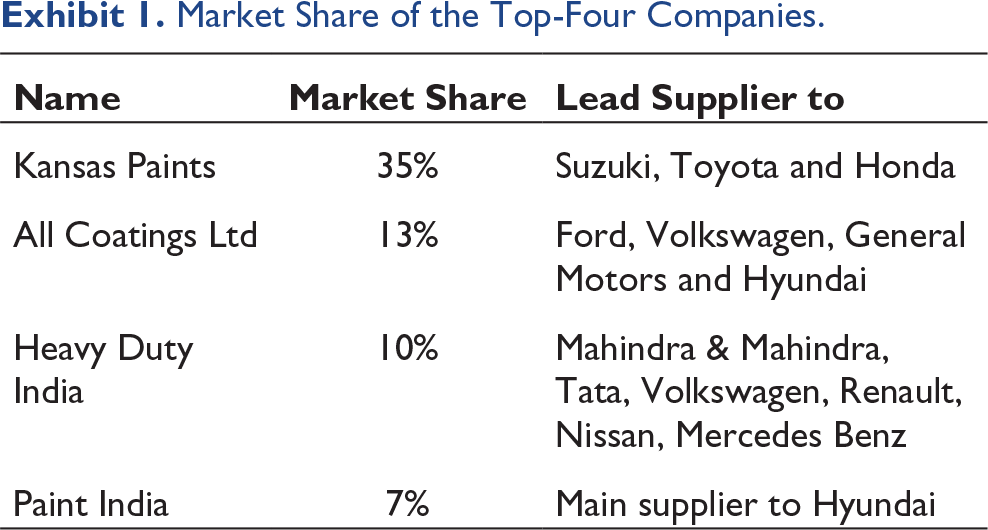
Although there were more than a couple of dozens of noticeable players, most of the Indian automotive paint industry was controlled by a few big players, and the top-four companies alone contributed to almost 65% of the total market share (see Exhibit 1 and Appendix).
Market Share of the Top-Four Companies.
Current Scenario
Paisley Coatings had the technology and global presence in high bake body coating systems. It had global approvals in place with major auto OEMs such as GM, Ford, VW, Honda and so on. It could, therefore, leverage the global relationship with these accounts and grow their business in the OEM segment through local manufacturing of high bake technology products in the Gujarat plant. Local car manufacturer, Tata Motors, had a plan to start manufacturing its premium car brand, Jaguar, in India, and based on Paisley's reputation for quality and reliable products, it may succeed to obtain a market share with local manufacturers.
PCL had a prominent presence in the Indian refinish market and also served the transportation and industrial markets by supplying low bake technology products. However, the existing technology centre was not equipped to design, develop and test the OEM products.
The Indian team had a plan to focus on key business segments to accelerate the growth in the next five years. One of those key segments was transportation with a potential of ₹497 crores targeted at capturing a 7.5% market share in light vehicle and 5% in commercial vehicle and general industries. At the same time, continue to focus on the strong refinish market.
Meeting the Teams
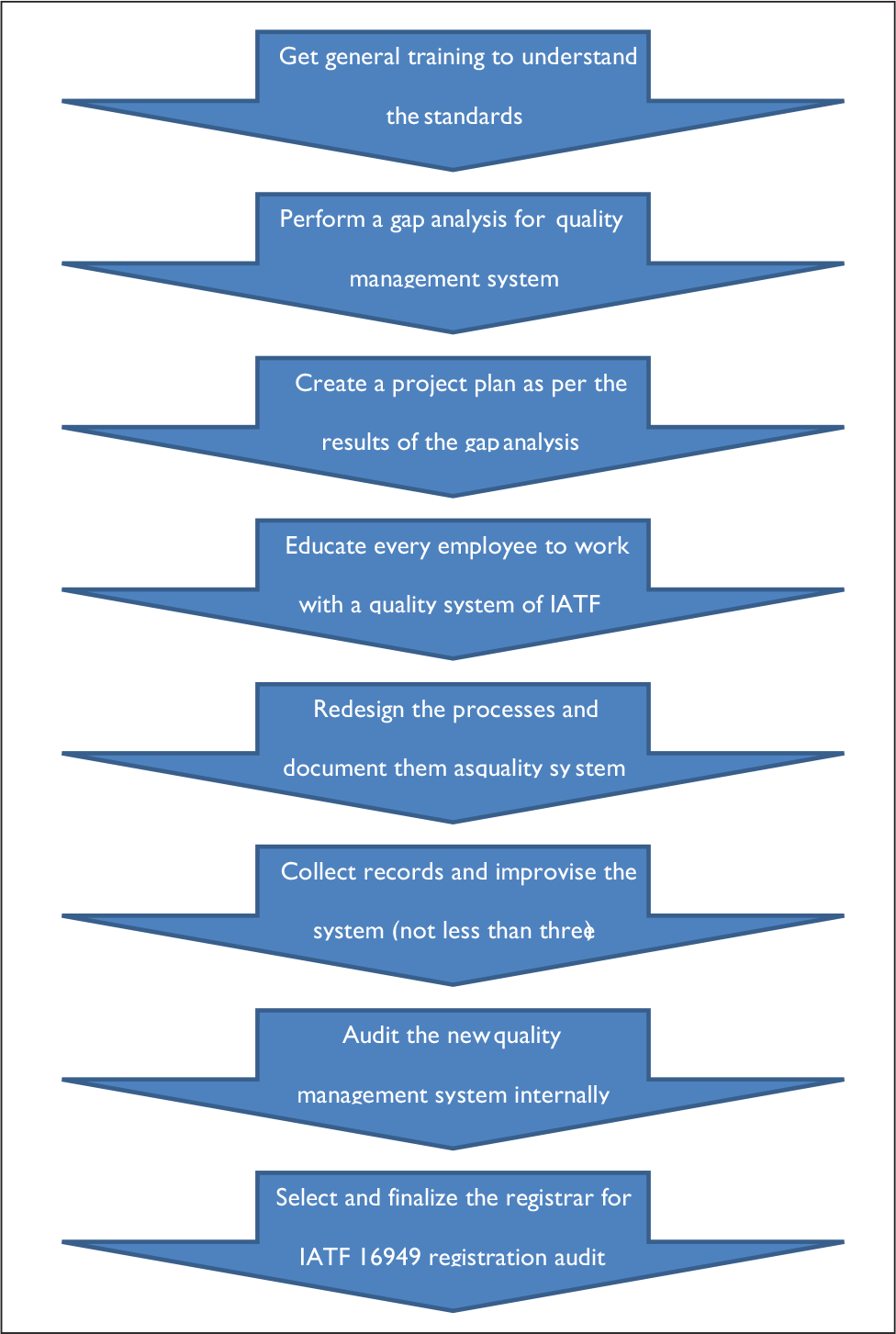
After meeting the senior executives of the four teams, Shivansh knew he had a hectic time ahead until the management approves the project. The research and development (R&D) team had eight years of average experience, which means the younger employees had replaced most of the experienced ones, and with this went away the technical expertise. The team was only good enough to replicate and localize the formulas. In the past years, they were able to develop only one new formula and that, too, with the assistance of the global R&D team. The R&D head, Kapil Thakur, also pointed out to him that they lacked the International Automotive Task Force (IATF) 16949 certificate, a certification that is mandatory to enter the OEM market. Obtaining an IATF 16949 certificate is not an easy task and needs sufficient time and rigorous efforts (see Exhibit 2). Shivansh knew that it is challenging for this team to understand the rigor that the OEM business demands, at least not by then. OEM standards have narrower specifications and even tighter timelines to deliver the product.
Steps for IATF 16949 Certification.
Shivansh, now, was really worried about the capability of the existing team. The operations team was the only one that showed a positive graph in terms of performance. The HR works were either outsourced or taken care of by a central team in Gurgaon. The local team was only the doers. The finance team looked a newbie, too, and most of Shivansh’s questions were not answered appropriately.
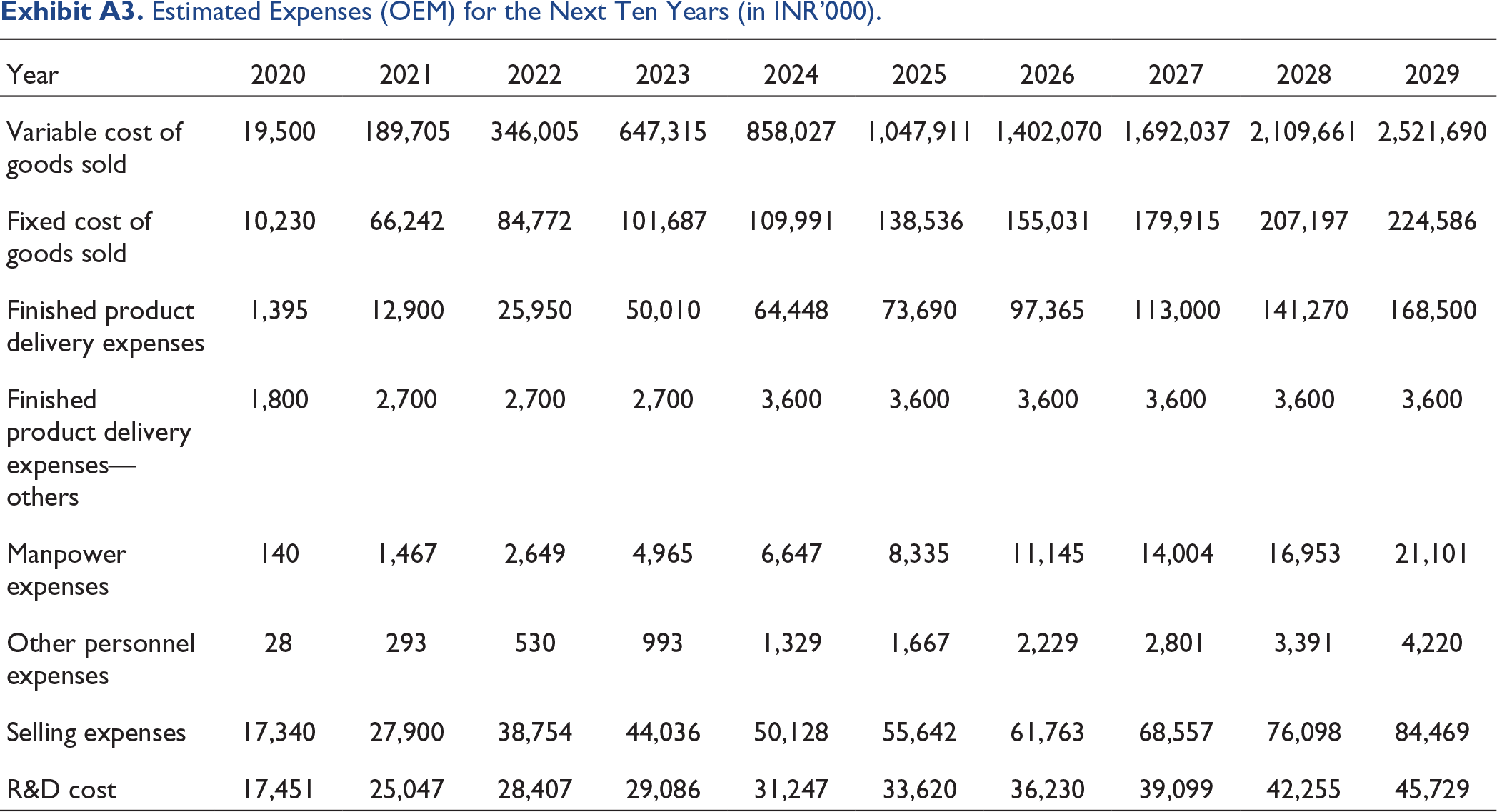
However, Shivansh was provided with the data of estimated sales and expenses of the project for the next ten years. The total capital expenditure was estimated to be ₹20.1 crores in the year 2019 and ₹54.6 crores in the year 2020 with a salvage value of ₹95,735,681 at the end of a total life span of 15 years. Additionally, the project would also need ₹1.8 crores in the initial year and ₹4.5 crores in the next year for other miscellaneous expenses.
Dilemma
Shivansh had worked really hard to materialize his idea, and today, as promised by Ms Jha, he finally had the chance to on-board the higher management for the cause. However, the details of the feasibility analysis were giving him second thoughts and Shivansh was now afraid if his proposal of the new OEM plant would get the board approval.
Footnotes
Declaration of Conflicting Interests
Funding
The authors received no financial support for the research, authorship and/or publication of this article.
Appendix
|
|
|
|
|
|
|
|
|
|
|
|
|
|
19,500 | 189,705 | 346,005 | 647,315 | 858,027 | 1,047,911 | 1,402,070 | 1,692,037 | 2,109,661 | 2,521,690 |
|
|
10,230 | 66,242 | 84,772 | 101,687 | 109,991 | 138,536 | 155,031 | 179,915 | 207,197 | 224,586 |
|
|
1,395 | 12,900 | 25,950 | 50,010 | 64,448 | 73,690 | 97,365 | 113,000 | 141,270 | 168,500 |
|
|
1,800 | 2,700 | 2,700 | 2,700 | 3,600 | 3,600 | 3,600 | 3,600 | 3,600 | 3,600 |
|
|
140 | 1,467 | 2,649 | 4,965 | 6,647 | 8,335 | 11,145 | 14,004 | 16,953 | 21,101 |
|
|
28 | 293 | 530 | 993 | 1,329 | 1,667 | 2,229 | 2,801 | 3,391 | 4,220 |
|
|
17,340 | 27,900 | 38,754 | 44,036 | 50,128 | 55,642 | 61,763 | 68,557 | 76,098 | 84,469 |
|
|
17,451 | 25,047 | 28,407 | 29,086 | 31,247 | 33,620 | 36,230 | 39,099 | 42,255 | 45,729 |
