




Abstract
Abstract
The case is about the dilemma faced by Mr. Keith Gregor, MD of JagRover Warehouse Operations when he realizes that the technology which they are using is soon going to get obsolete. Currently, the warehouse operation is supported by SAP Warehouse Management System which is going to get obsolete in few years according to the product roadmap of SAP. SAP has introduced a new product known as the extended warehouse management system which is embedded in their suite for High Performance Analytic Appliance (HANA) product. This would mean changes for the warehouse operations, not only in terms of the product but also changing their current database management system. These changes will have huge cost implications. Mr. Keith Gregor is under the dilemma whether to invest on the new product or look for some other options. Cost and analytical abilities are the two heads which will majorly drive his investment decision.
It was the 3 December 2018, Mr Keith Gregor had just arrived at his office located in Mahwah, NJ, in the USA. Keith is the Managing Director of JagRover Operations. He was about to head for a meeting with the commercial team when he received a call from Mr Greg Pawsat. Greg is the Senior Vice President of IT product solutions in SAP. Greg informed Keith that as part of a strategic decision taken by the company, SAP is not going to support any of the previous SAP versions which uses a database other than SAP high-performance analytic appliance (HANA) after 2025. After the conversation, Keith realized that the warehouse management solution which the operations had been using for 6 years will become obsolete by 2025 as the system uses a DB2 database.
During the conversation, Greg also spoke about their upgraded product of warehouse solution known as the extended warehouse management (EWM) which now comes as an embedded system with the S/4 HANA product (SAP Suite for HANA). He claimed the upgraded system to be highly efficient with additional functionalities which the traditional warehouse management system (WMS) lacked. The standard EWM system is also loaded with many analytical tools. He spoke about significant improvements in the planning module of SAP known as the advanced planner and optimizer (APO) in their upgraded S/4 HANA product.
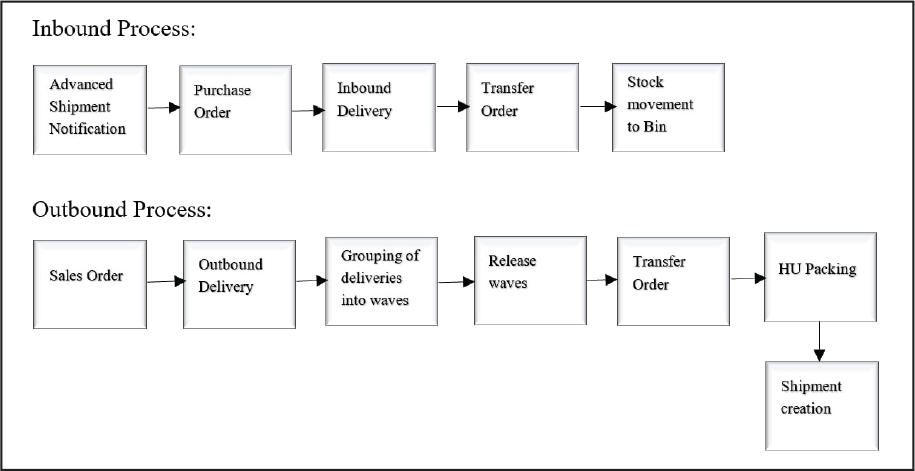
Changing the entire process from the point of view of JagRover will have huge implications. There will be significant changes in the warehouse management and the planning system. The warehouse associates have been using the inbound and outbound operational transactions for many years which will now become obsolete. This will also have impact on the various dashboards for reporting purposes used by the warehouse associates and the inventory management teams. Overall, the process will involve huge cost to the company and Keith was under the dilemma whether it would be a good decision to invest on S/4 HANA or to think of some other alternative.
About the Company
JagRover is a British multinational automotive company with its headquarters in Leicester, UK, and is a subsidiary of an Indian automotive company. The principle activity of the company is to design, develop, manufacture and sell luxury and sports utility vehicles. The history of the parent companies goes back to the 1930s and 1940s, respectively, for each parent company. The two parent companies came together in 1968 as part of a conglomerate, but later again became independent and subsidiaries of two large automobile companies. One of the parent companies between the two acquired the entire company in 2000. JagRover has been a subsidiary of an Indian automotive company since they acquired it from the parent company again in 2008. The operations of the parent companies merged and was later renamed as JagRover Automotive PLC on 1 January 2013.
The company has been known for design and technology innovations in the automotive sector worldwide. Though the manufacturing plants are mostly located in the UK, JagRover has an incredible global reach. More than 80 per cent of the vehicles are currently sold outside the country through a comprehensive distribution network they have a presence in more than 178 markets. The company has 10 manufacturing and assembly plants across the globe which are responsible for the assembly of the wide range of products of the company. The company has 12 warehouses globally for JagRover, including a global master facility in Milwaukee, WI, USA. These warehouses supply the spare parts to the various plants of the company. The ERP system used for the warehouse operations is an SAP WMS.
The Current IT Infrastructure
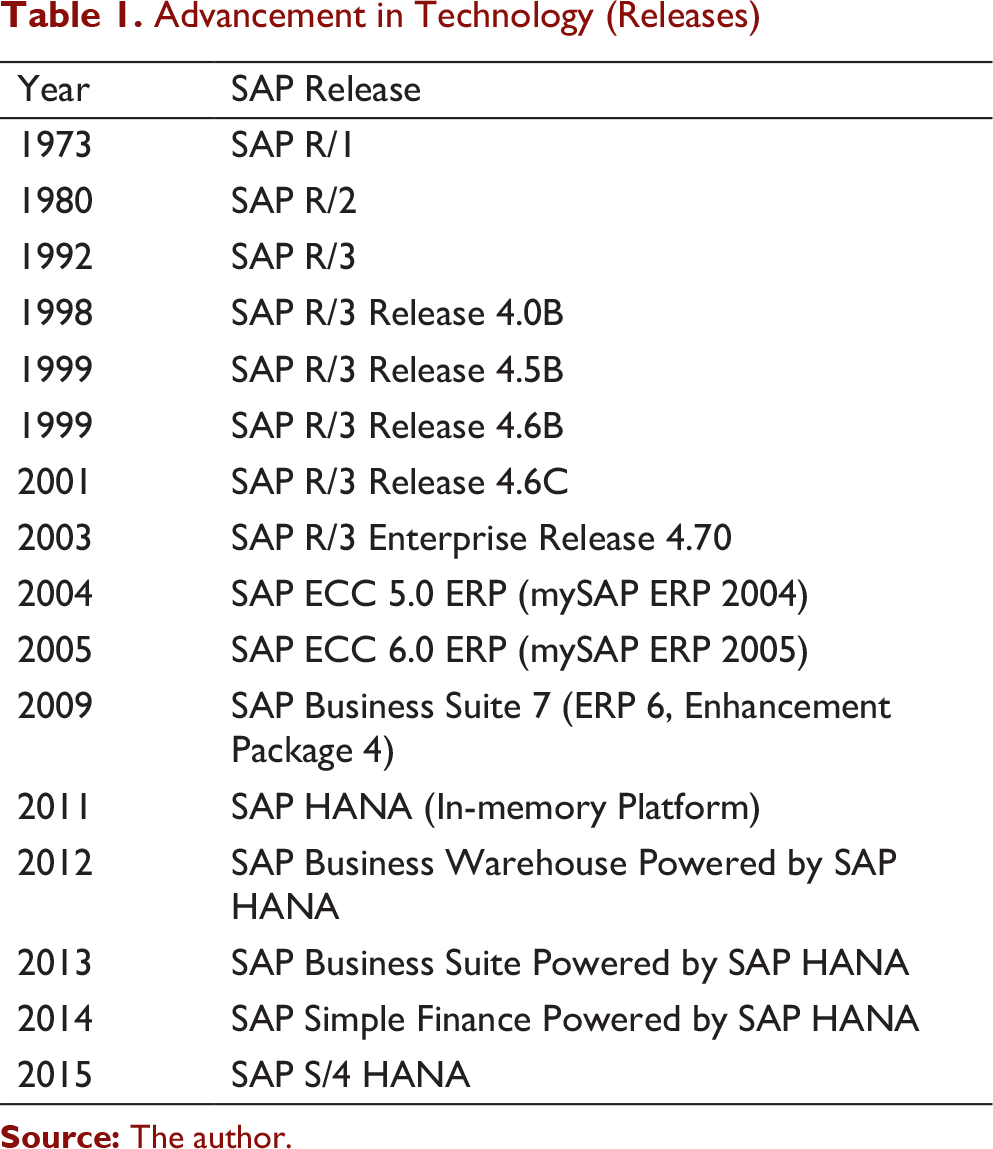
Advancement in Technology (Releases)
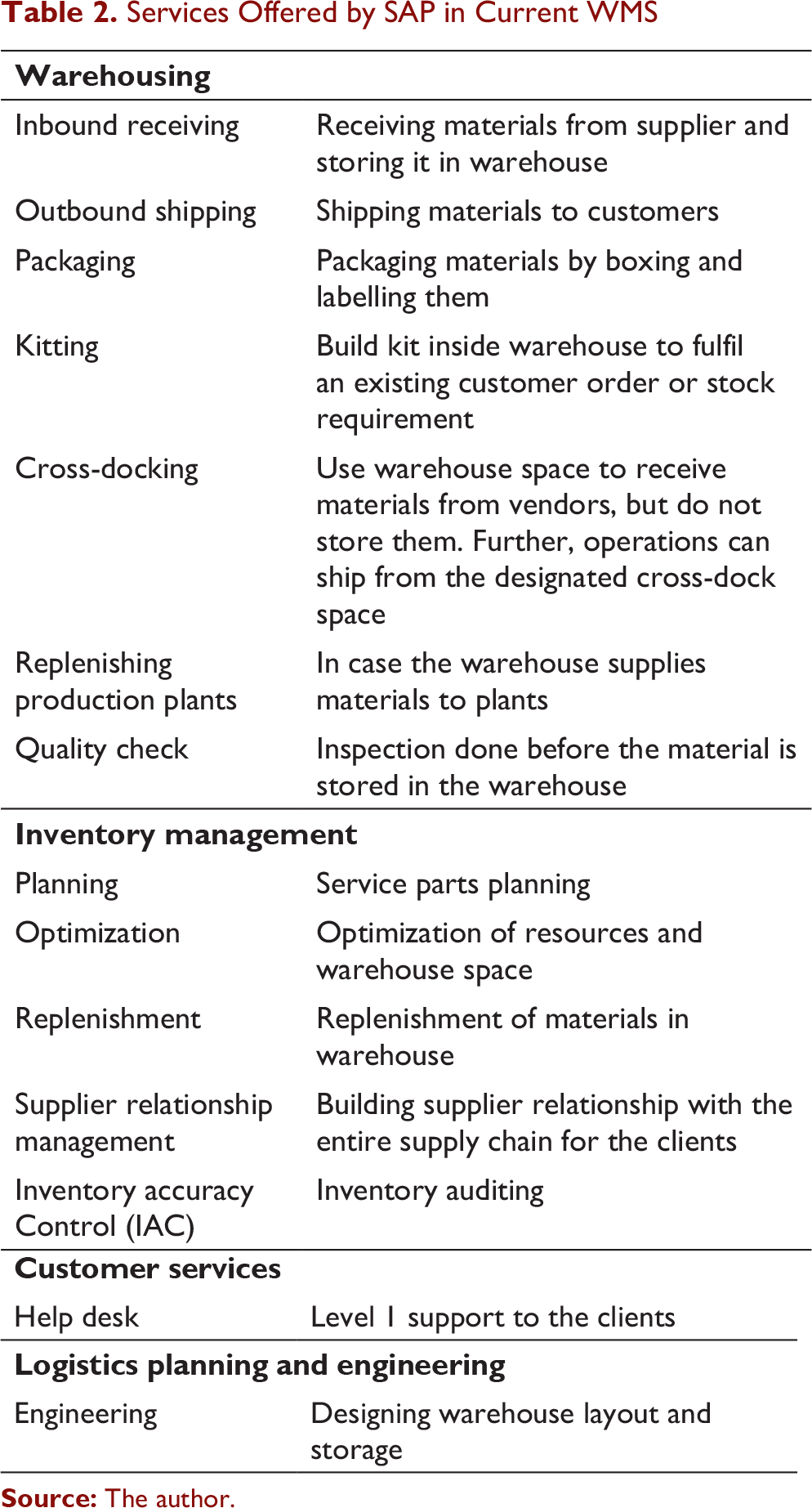
Services Offered by SAP in Current WMS
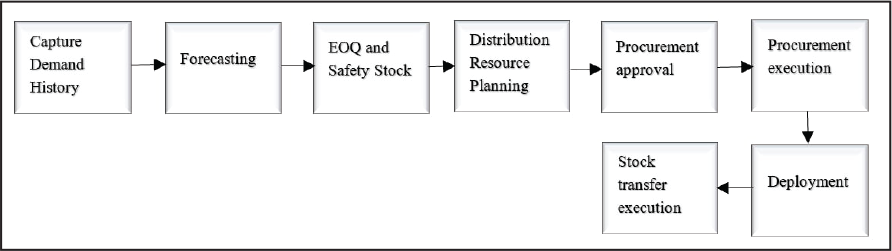
The current system also has a planning tool known as spare parts planning (SPP) which is built on top of SAP APO with few customizations. SPP is a forecasting tool (Figure 2) built on few in-built models which standard SAP provides. The order data from SAP WMS is transferred to SPP using core interface (CIF). Once the data is available in SPP the demand for the materials are forecasted using the models. After the calculation of economic order quantity (EOQ) and safety stock, some jobs known as the distribution resource planning (DRP) calculates the time-phased inventory requirements and sends the procurement requests to SAP WMS Inventory management via CIF again. The procurement requests before converting into purchase requisitions in SAP goes through a procurement approval process and finally the purchase requisitions are sent to appropriate vendors. SPP also runs some jobs known as the pull and push deployments in order to procure materials from other parent warehouses before releasing the procurement requests to vendors. The SPP system uses DB2 database which is a different one from the SAP WMS one. Also, there is another database known as the MaxDB database where the live cache is stored. There are regular syncs between the two databases to maintain the data integrity.
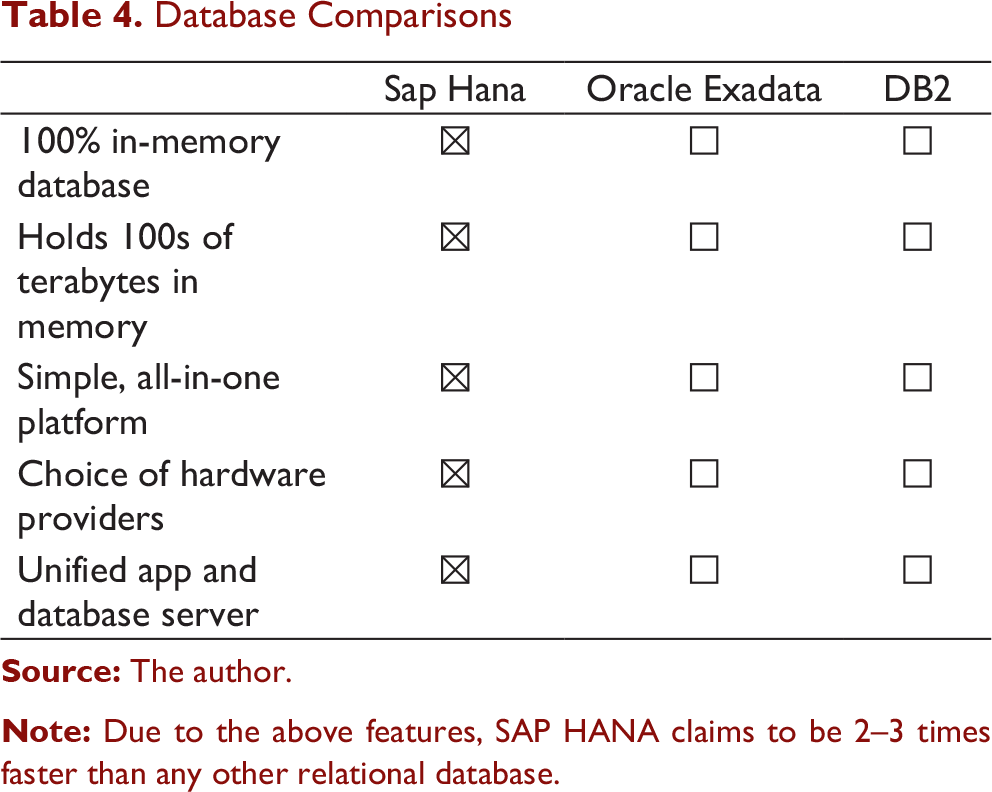
To keep pace with the rapidly changing technology, SAP has introduced their new standard product to support warehouse management known as EWM. The latest EWM version is embedded with SAP S/4 HANA (SAP version 7.5) which uses the HANA database. HANA claims to run ERP applications 2–3 times faster than any other traditional relational database. SAP’s application server is currently compatible with any other databases such as Oracle or DB2. In 2011, SAP launched their in-memory database HANA which is a column-oriented relational database management system. This combines the on-line transaction processing (OLTP) and on-line analytical processing (OLAP) into a single database eliminating bottlenecks and offering very high performance. Historically, first came SAP HANA in the year 2011 followed by Suite on HANA, followed by SAP simple finance and finally to SAP S/4 HANA (Table 4). SAP is gradually upgrading and moving to the newer technologies and at the same time they want their clients to keep up the same pace with their products. SAP has announced that by 2025 they are not going to support systems which are not using the HANA database. Basically, this means that they will not support any SAP releases including ECC 6.0 and prior to that after 2025 (Table 1).
Challenges to Keith
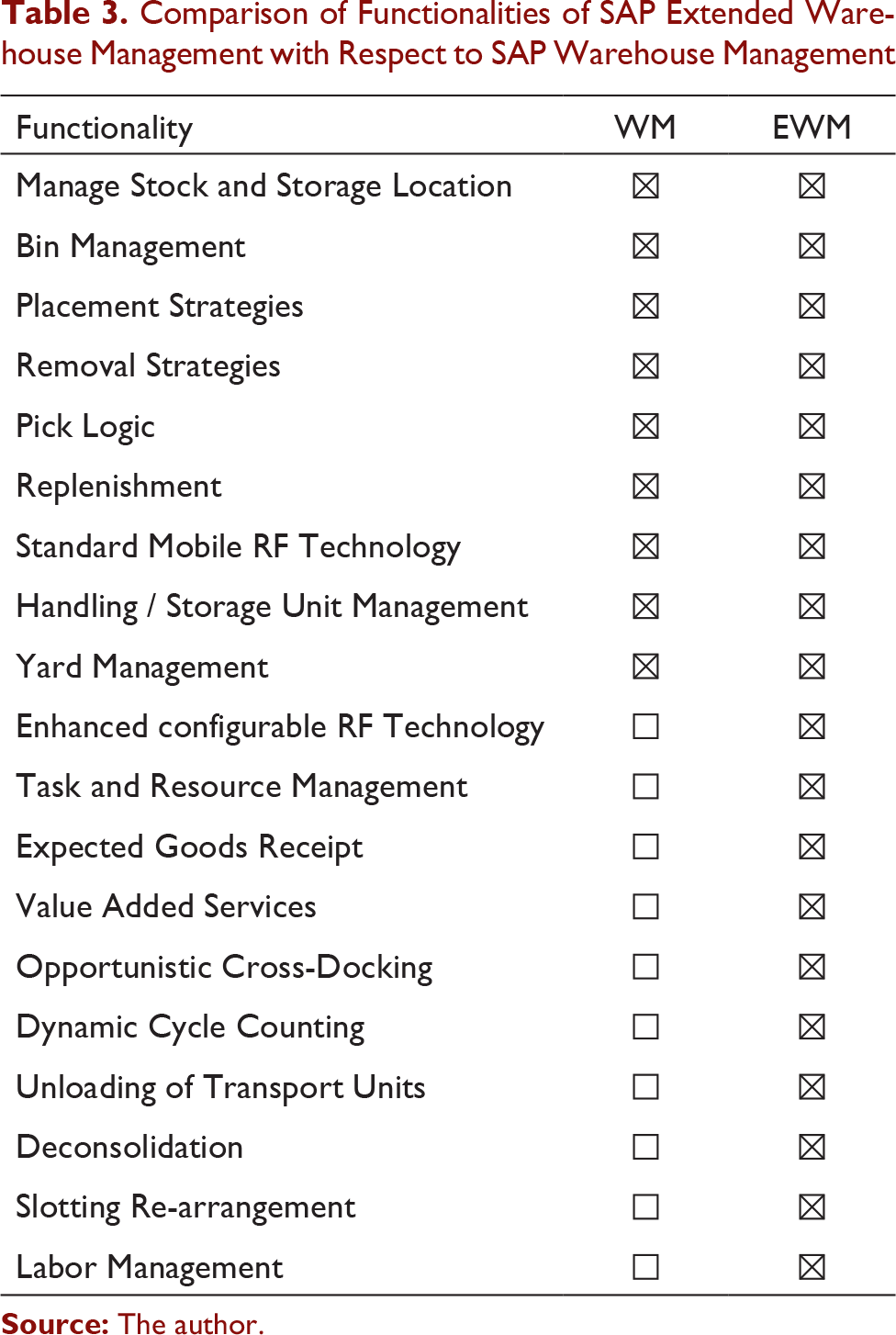
When driving back from office that night, Keith’s thoughts were occupied with the discussion he had with Greg. This reminded him of the various investment decision case discussions from his MBA days. He tried to think through the various alternatives. Renewing the contract for the same solution is not an option for him because eventually SAP will not support the current solution. So, he should either upgrade the system to S/4 HANA or implement a comparatively low-cost ERP solution like JDA WMS (RedPrairie). He did not consider Oracle or any other high cost ERP solution because their current system has many custom solutions such as cross-dock, kitting and dynamic cycle counting which will involve huge investment to implement them in a high-cost ERP package solution. In that sense, the custom solutions are already available in EWM module of S/4 HANA or can be implemented at a low investment cost in JDA WMS (RedPrairie). He then tried to think through the various decision criteria on which the options should be measured against and narrows down to three major criteria, namely cost involved in the migration, operational efficiency and advanced reporting, and analytic tools which is of paramount importance for the warehouse supervisors.
He realized that the current solution being on SAP there will be less training cost if they migrate to S/4 HANA. But he was not sure about the potential of S/4 HANA in terms of its analytical capabilities. On the other hand, RedPrairie is compatible with Oracle database and Keith was aware that it could run ERP applications as efficient as the current relational database (DB2). There are 12 warehouses globally for JagRover which have almost same volume, so he decided to take anyone of the warehouse data randomly and do the study. He took the warehouse data of the facility in Milwaukee, WI, USA, and started with his analysis by speaking with John Roe who is the warehouse supervisor of the same warehouse.
About JagRover Facility in Milwaukee, WI, USA
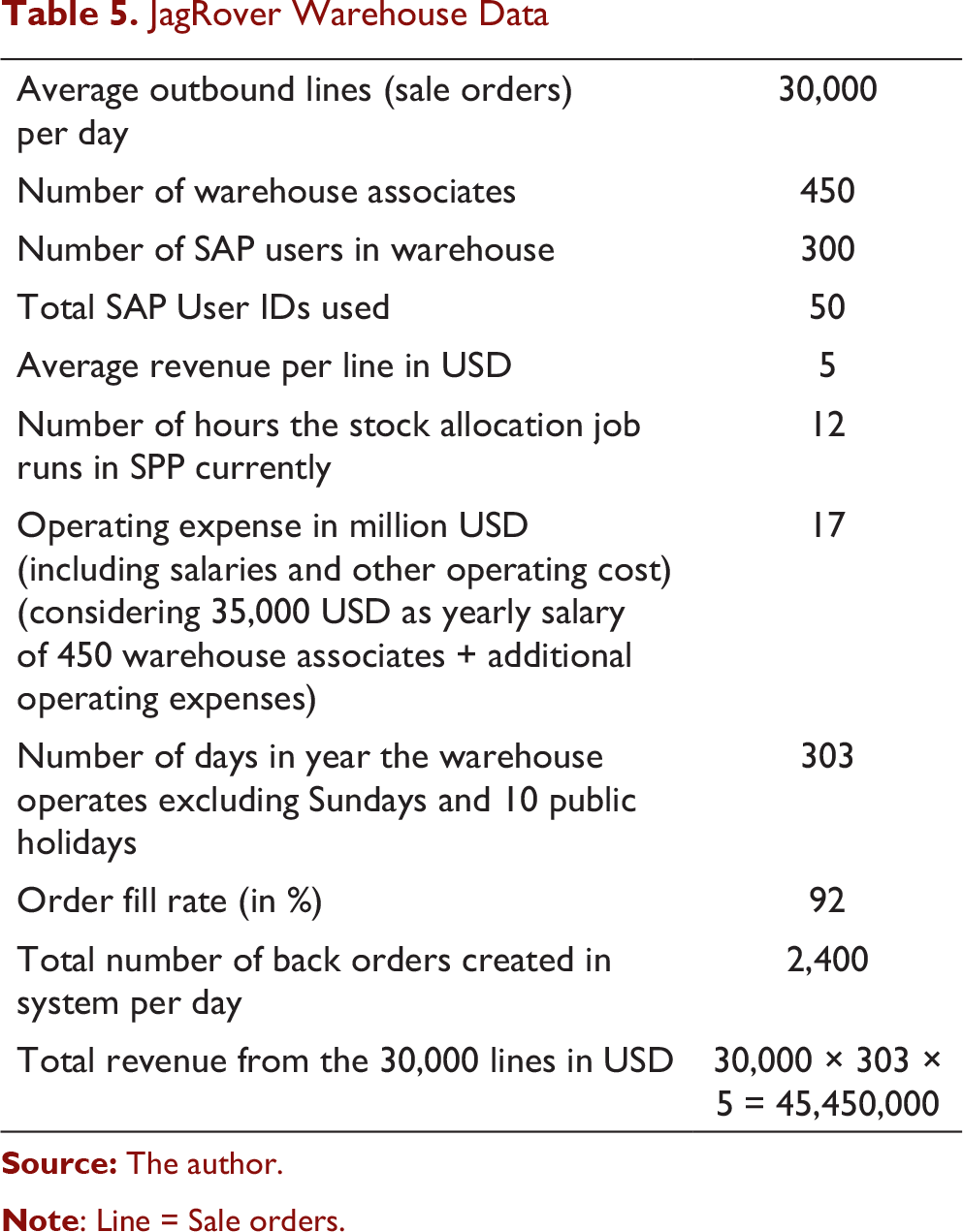
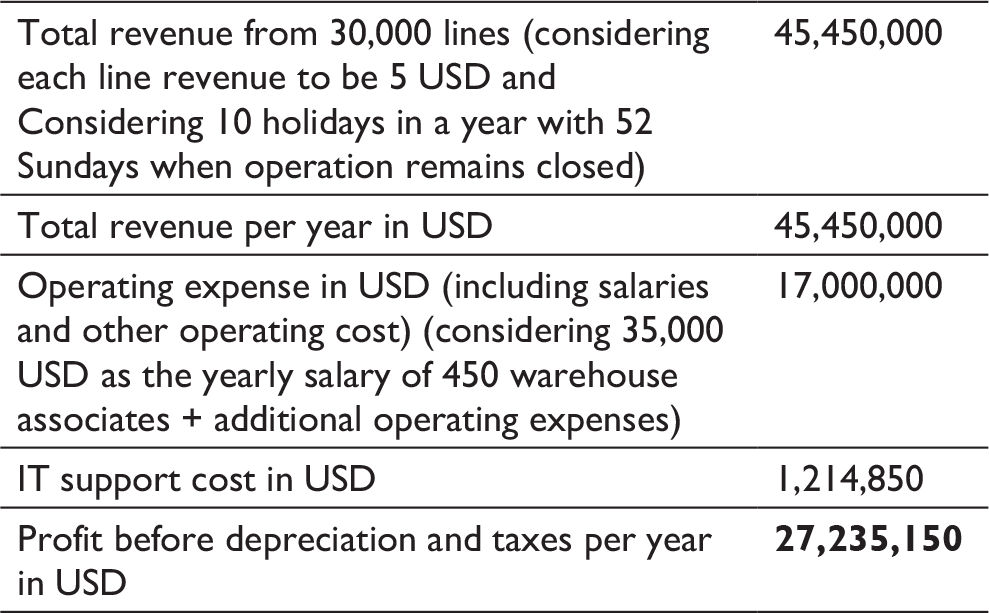
SAP operates 12 facilities globally for JagRover, including a global master facility in Milwaukee, WI. The warehouse has 450 warehouse associates and the facility is spread across 1.4 million square feet. Out of the 450 warehouse associates, 300 are SAP users who work on the daily operations. Their SAP access is very limited and restricted to the particular job they are entitled to. They work in three different shifts and close to 50 SAP user IDs are shared across shifts. The total revenue per year from the 30,000 outbound lines of the warehouse is more than 45 million USD.
Comparison of Functionalities of SAP Extended Warehouse Management with Respect to SAP Warehouse Management
Next Steps
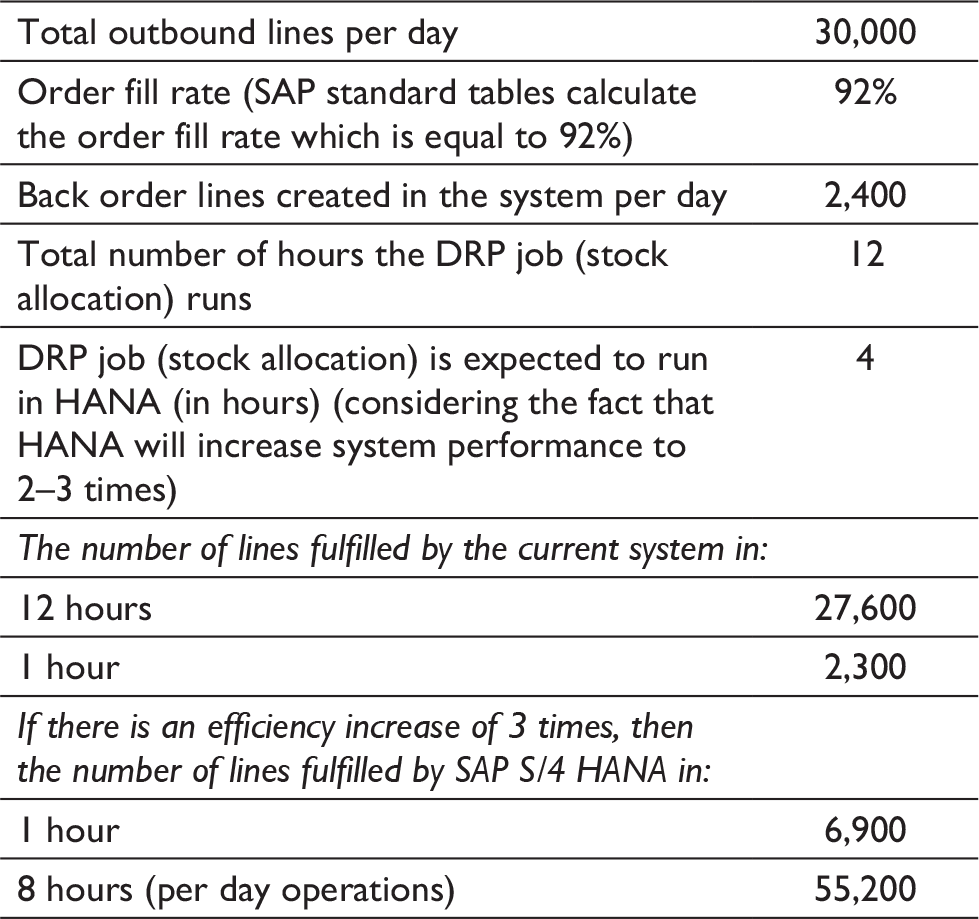
After getting all the data from the facility in Milwaukee, Keith felt well equipped to start his analysis. He has to evaluate the two options based on the financial aspect and the analytical aspect and finally he should arrive at a better investment choice between them. He also knows that the company considers 10 per cent as the minimum acceptable rate of return for screening investment proposals and the rate of changes of cash flows is constant. HANA being a column-store in-memory databasing architecture fetches data 2–3 times faster than any other relational database. Therefore, the DRP jobs can run much faster and hence there will be an improvement in the order fill rate. So, he decides to target the order fill rate and tries to find out in which option he will have a better cash inflow.
Questions
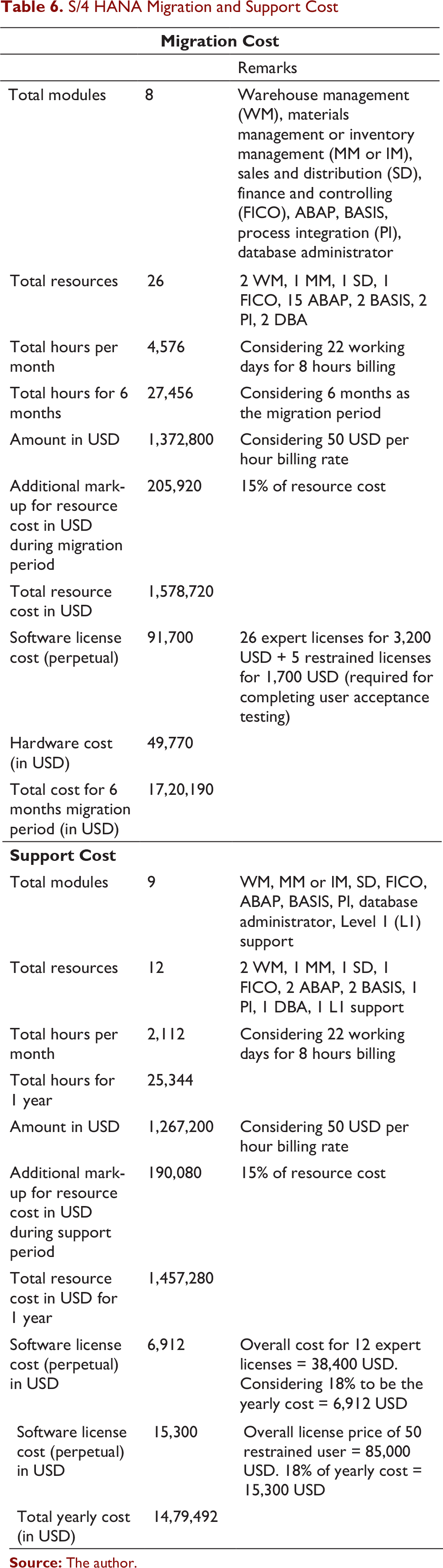
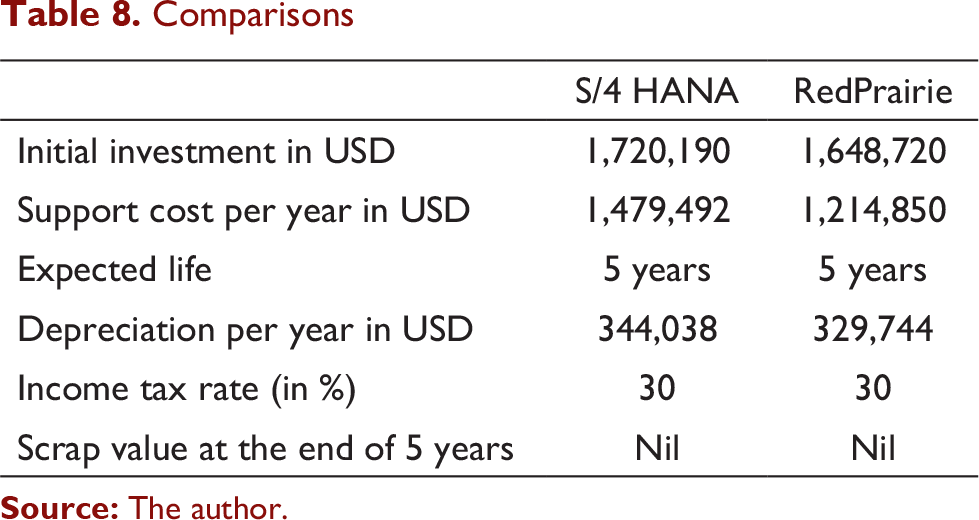
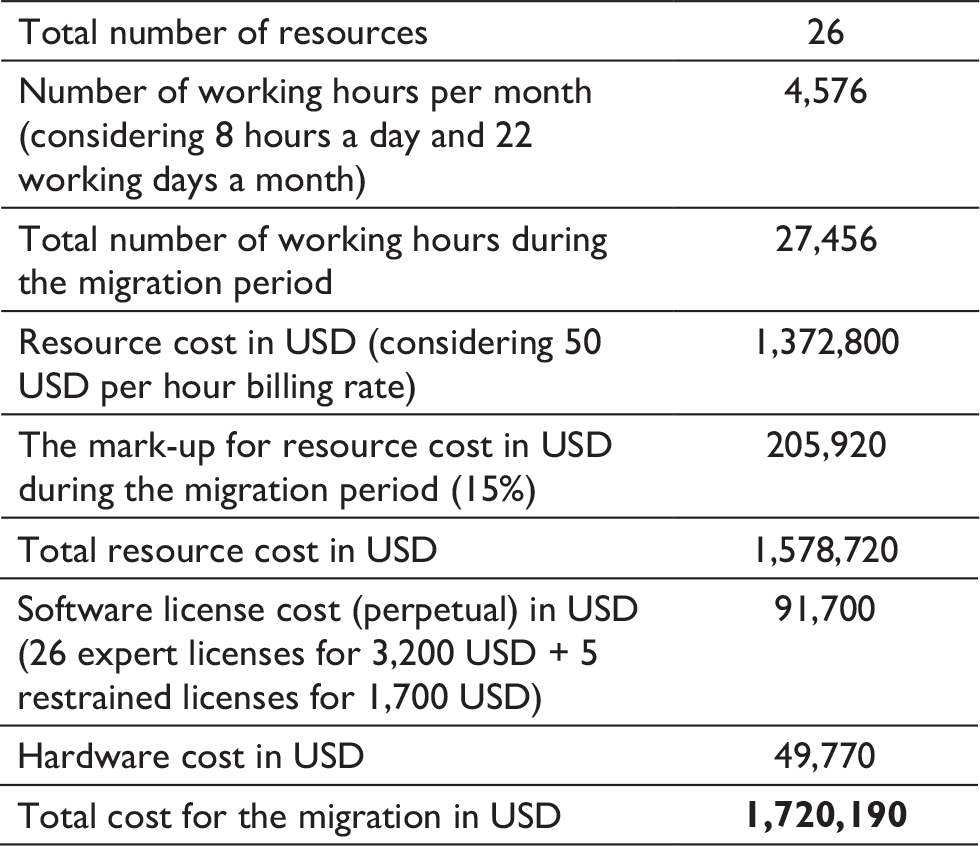
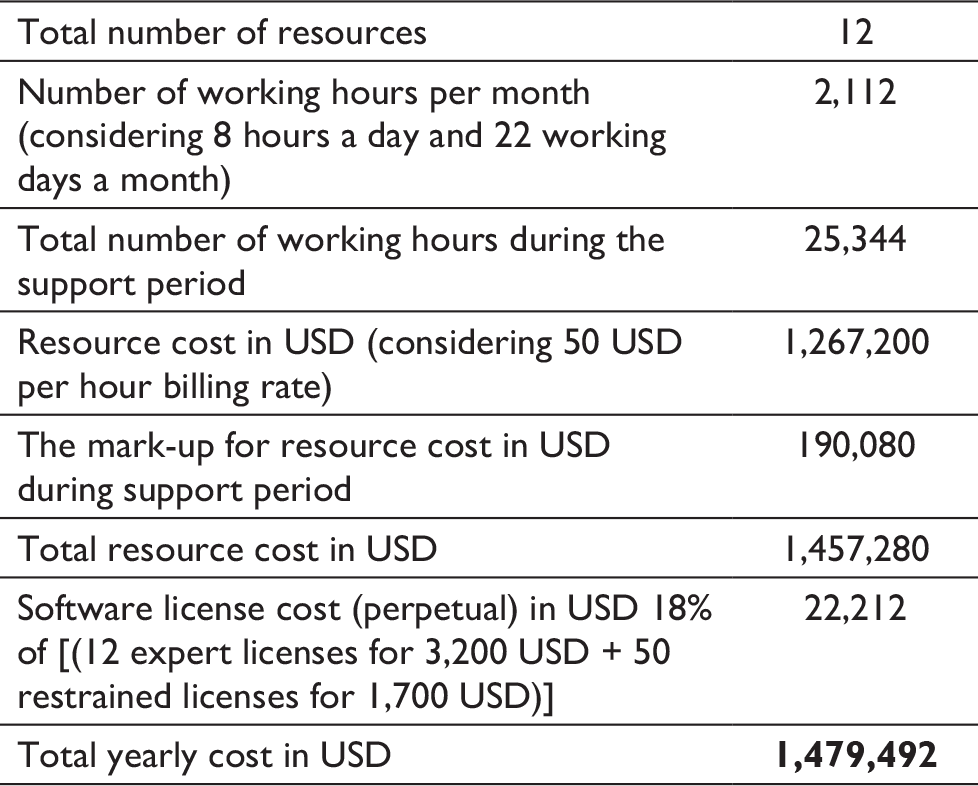
From financial perspective, which is a better investment choice for Keith—SAP HANA or RedPrairie? (Refer Table 5, 6, 7 and 8).
Considering the IT infrastructure, which is a better choice in terms of technology solution and database design—SAP HANA or RedPrairie?
Database Comparisons
JagRover Warehouse Data
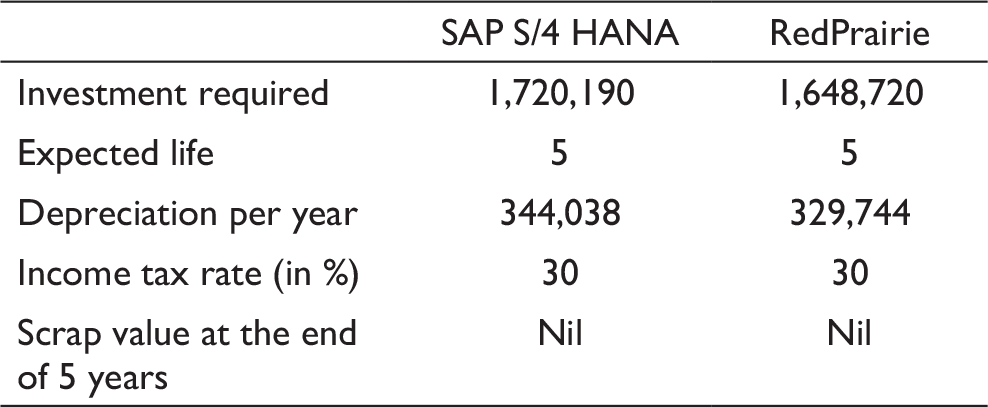
S/4 HANA Migration and Support Cost
JDA WMS—RedPrairie Migration and Support Cost
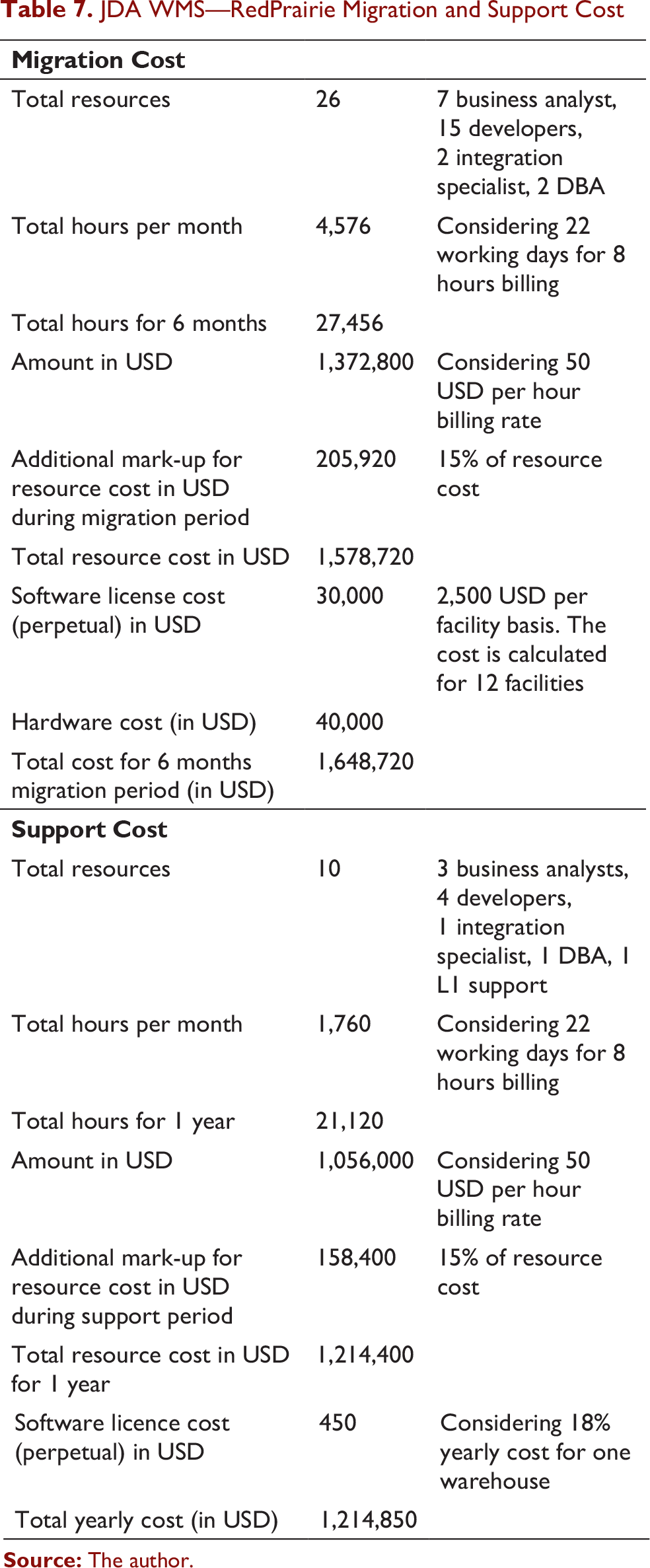
Comparisons
Case JagRover—Solution
After getting all the data from the facility in Milwaukee, Keith felt well equipped to start his analysis. He has to evaluate the two options, namely migrating to S/4 HANA or implementing a comparatively low-cost ERP solution JDA WMS (RedPrairie) based on the financial aspect and the analytical aspect and finally he should arrive at a better investment choice between them. He also knows that the company considers 10 per cent as the minimum acceptable rate of return for screening investment proposals. HANA being a column-store in-memory databasing architecture fetches data 2–3 times faster than any other relational database. Therefore, the DRP jobs can run much faster and hence, there will be an improvement in the order fill rate. So, he decides to target the order fill rate and tries to find out in which option he will have a better cash inflow.
Financial Section
SAP S/4 HANA
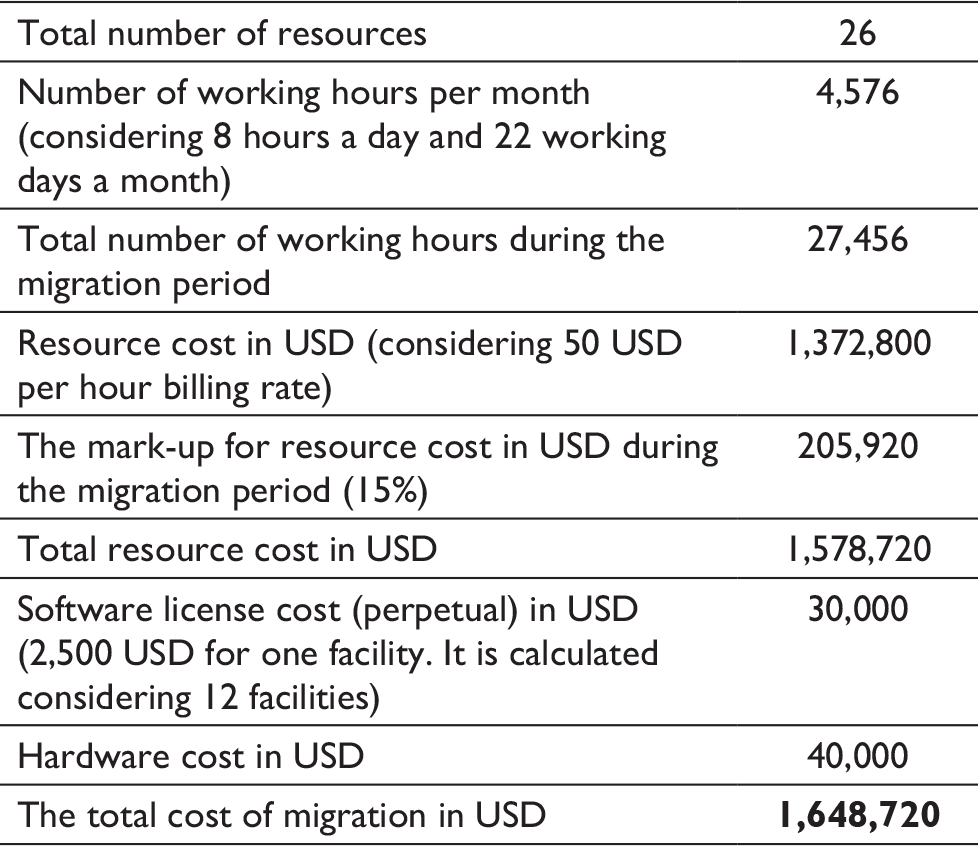
Migration Cost
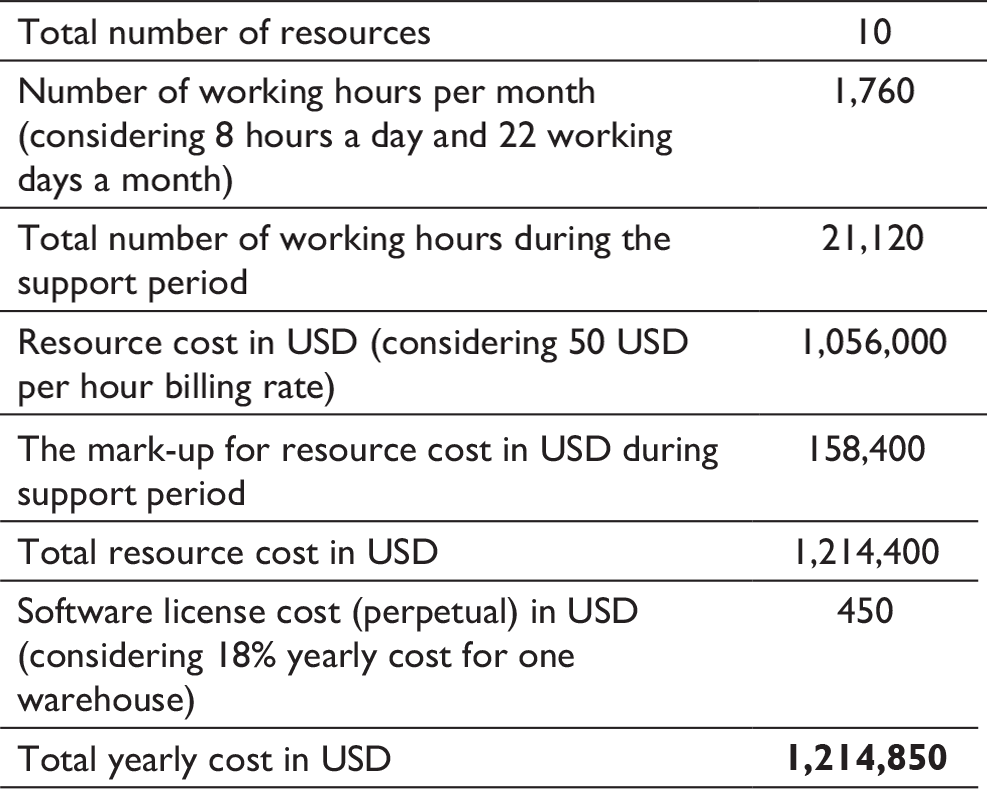
Yearly Support Cost
JDA WMS—RedPrairie
Migration Cost
Support Cost
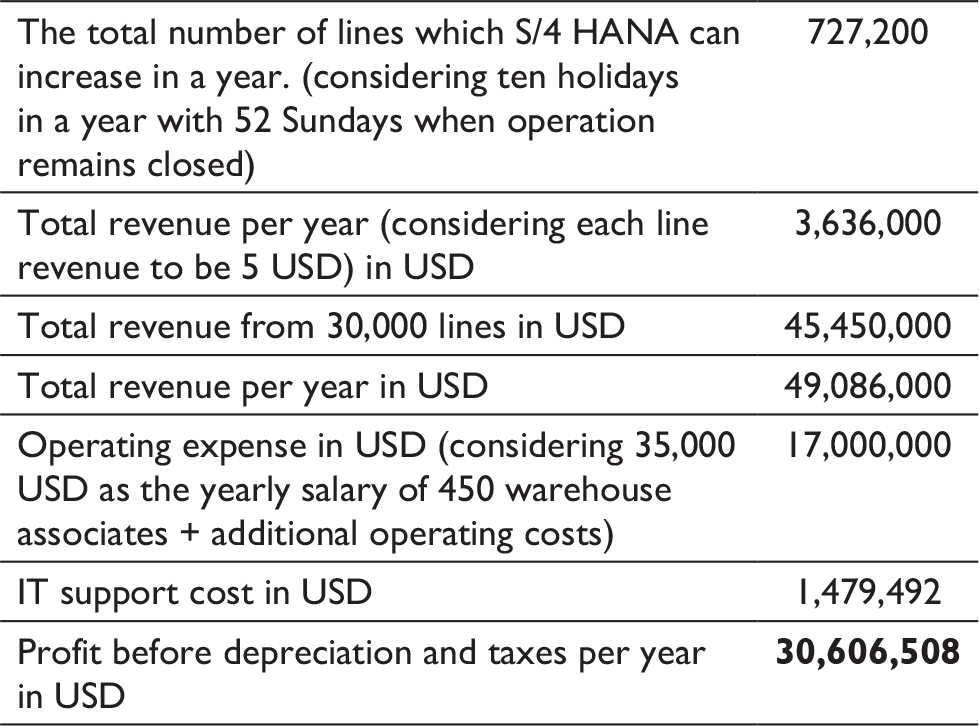
Profit Before Depreciation and Taxes in Case of SAP S/4 HANA Per Year
Profit Before Depreciation and Taxes in Case of JDA WMS—RedPrairie Per Year
Relative Comparison Between the Two Proposals Using Net Present Value (NPV), Internal Rate of Return (IRR) and the Payback Period Methods
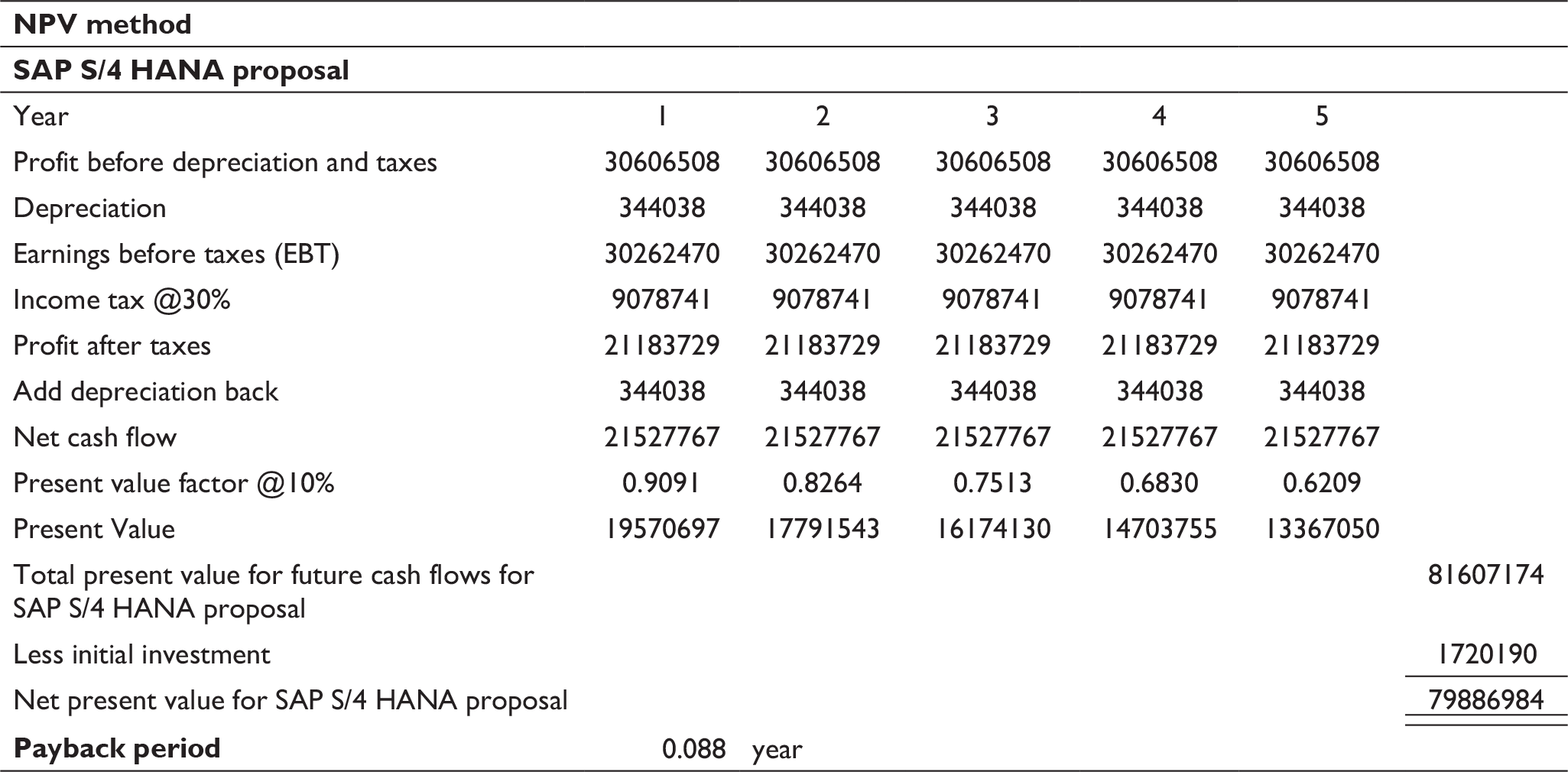
NPV and Payback Period Method
SAP S/4 HANA Proposal
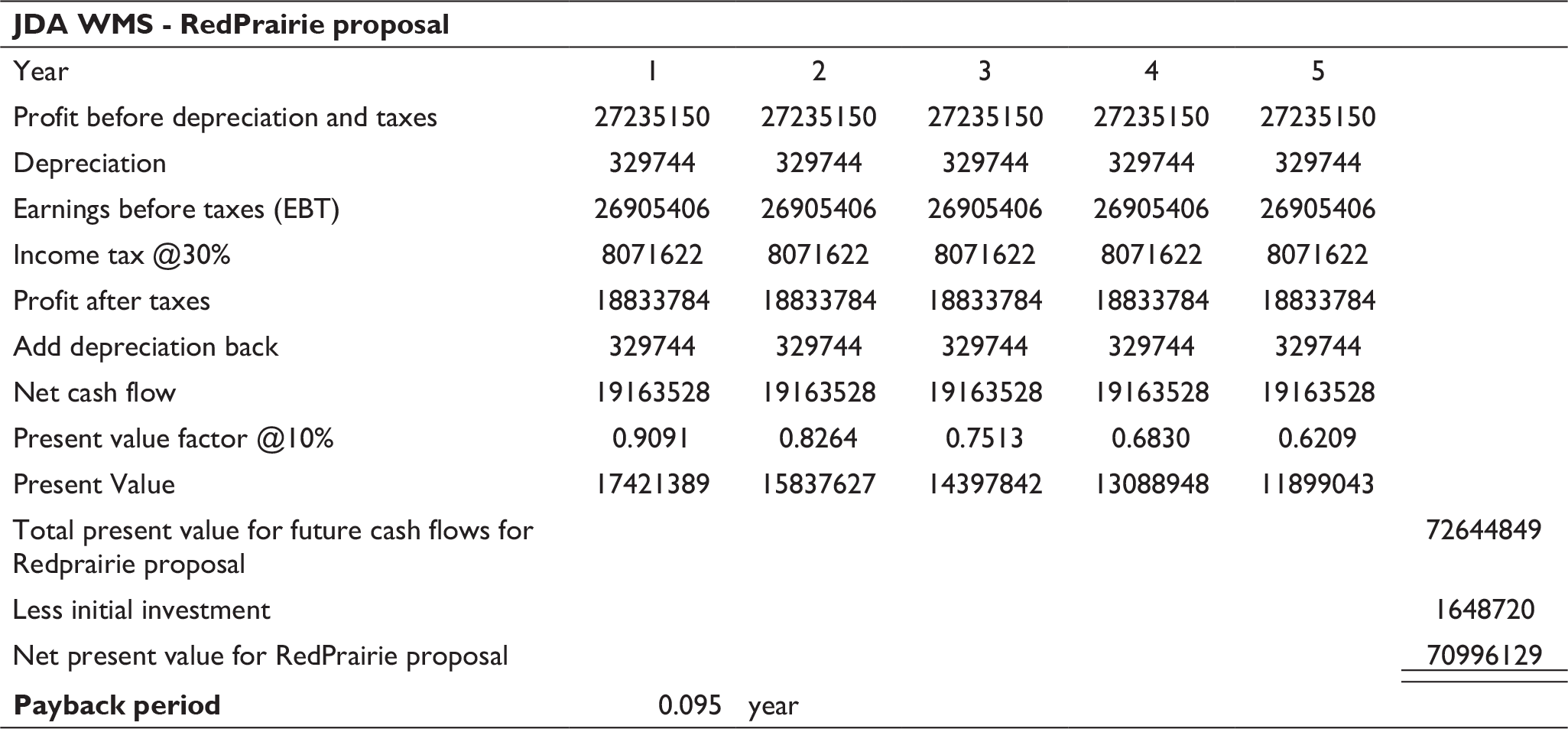
DA WMS—RedPrairie Proposal
IRR Method
SAP S/4 HANA
As a basic rule, we calculate IRR by trial and error method. We will try to determine that discount rate which gives NPV = 0.
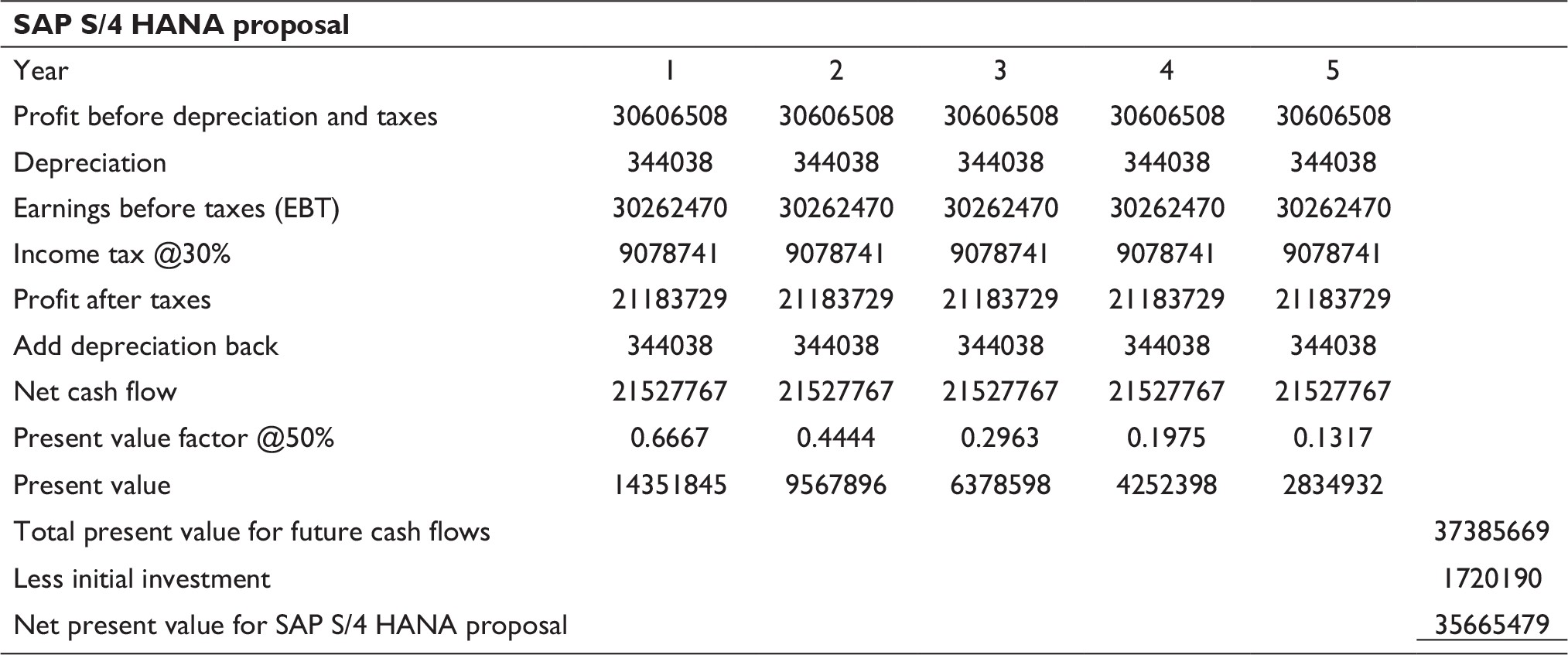
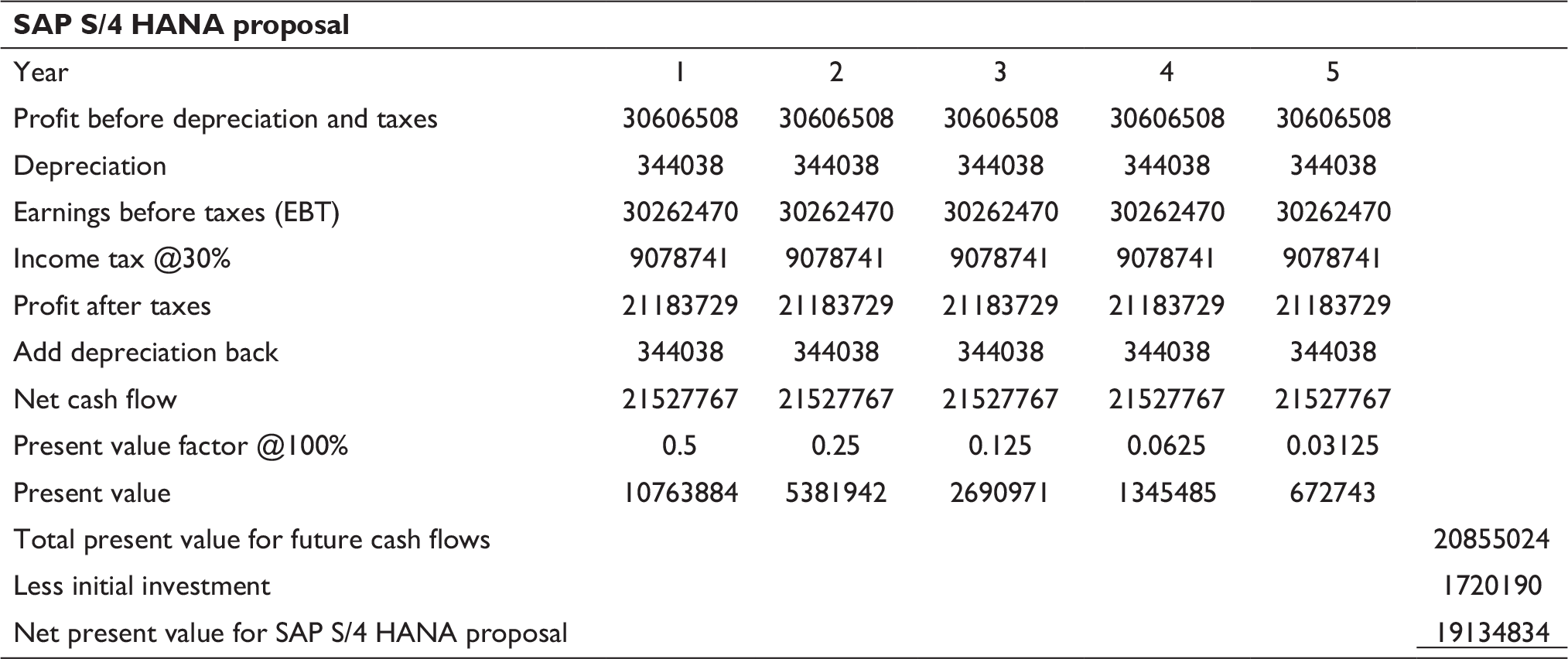
Even for an interest rate of 100 per cent, we can see that the NPV is greater than 0. The IRR is way ahead of the expectation of the company, so there is no question of rejecting this proposal.
JDA WMS—RedPrairie
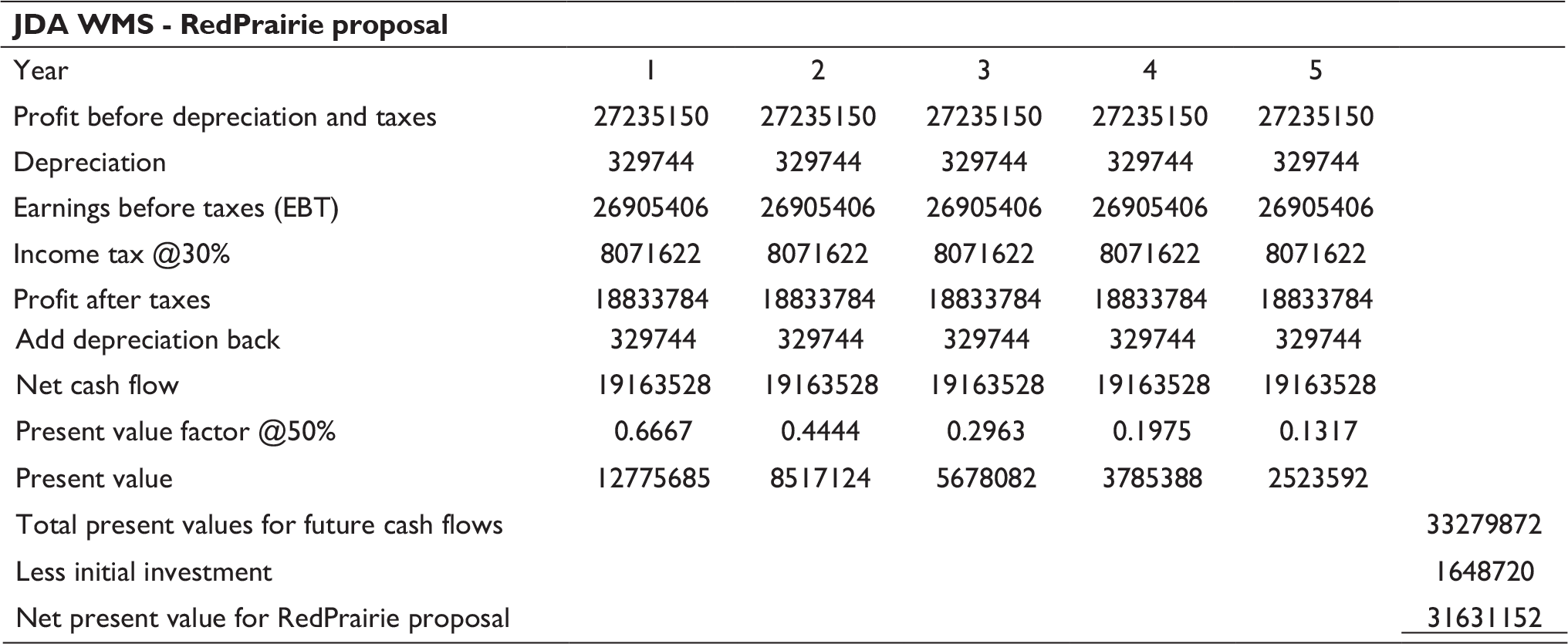
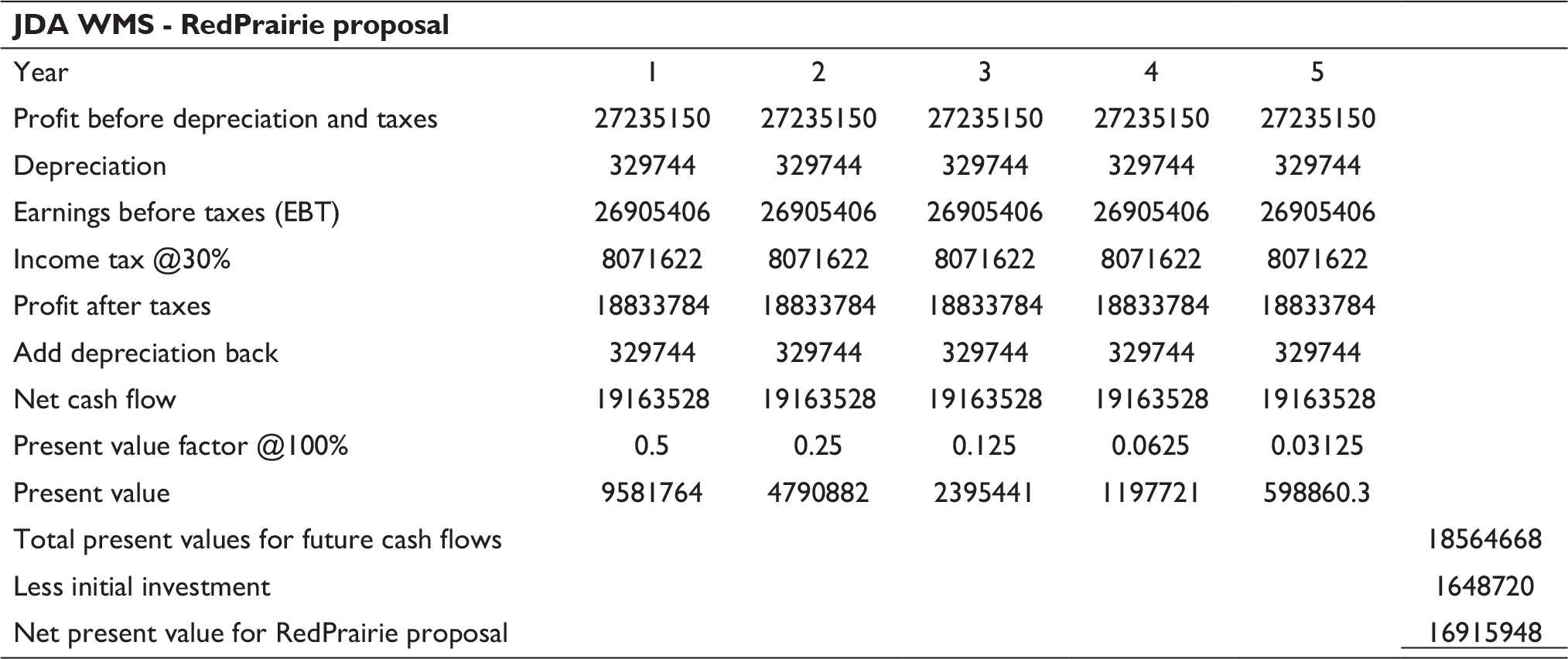
Even for an interest rate of 100 per cent, we can see that the NPV is greater than 0. The IRR is way ahead of the expectation of the company, so there is no question of rejecting this proposal.
Conclusion
As we compare both the proposals in the IRR method, we can say that there is not much difference between them, as both IRR is showing value more than 100. So, both can be accepted. But when we compare the two options in terms of NPV method and Payback Period, we see some difference. SAP S/4 HANA is better than RedPrairie by an NPV of 8,890,855 USD. Also, the payback period for SAP S/4 HANA which is 0.088 year (1.06 months) is better than the RedPrairie proposal which is 0.095 year (1.14 months), although the difference is not very significant.
Technology Section
Comparison in Terms of Analytical Abilities
In the analytics section, SAP S/4 HANA has a clear edge over its competitor, RedPrairie because of the various factors mentioned below.
EWM provides inbuilt warehouse analytic tool known as the EWM also provides functions wherein you can define your warehouse key figures supported by the system known as the Proof of delivery (PoD) in SAP ERP is a data which can be entered in the system by the warehouse operator. It is the deviation of physical quantity reported by the ship-to parties and the quantity on the delivery slip. EWM provides an in-built feature in the EWM monitor which provides a detailed There are various other analytic tools available in EWM build on SAP S/4 HANA which gives EWM an edge over RedPrairie analytics.
S/4 HANA comes with
Conclusion
Except for labour management, RedPrairie does not have any state-of-the-art analytical dashboard. Though RedPrairie offers the normal warehouse functions such as inbound and outbound logistics, inventory management, order processing, asset management and RFID enablement, still it lags EWM built on S/4 HANA in analytics. RedPrairie solution is for the small number of decentralized warehouses wherein different warehouses work in silos. For many bigger warehouses where centralization is the core business need, SAP’s EWM is way ahead of JDA’s RedPrairie.
Footnotes
Declaration of Conflicting Interests
The author declared no potential conflicts of interest with respect to the research, authorship and/or publication of this article.
Funding
The author received no financial support for the research, authorship and/or publication of this article.
