




Abstract
The Metaverse incorporates the immersive benefits of online technology to achieve a digital approach to learning in higher education, and within it, sub-verses are being born, that is, the Eduverse System (ES). Educational institutions, such as Pearl Academy, see more investment in this and are now looking to apply platforms such as the ES to current practices in teaching, learning, and training. However, employing Eduverse for classroom teaching will not be a quick process and comes with many challenges. This research contributes to the existing body of literature on the examination of learners’ perceptions of the incorporation of the Eduverse System into existing pedagogical approaches across all five campuses of Pearl Academy in India. The research model embraces the adoption of four variables that consider diverse aspects of this predicted migration by higher education learners, that is, willingness, perception, convenience, and capability, which will help gauge student responses in relation to the level of satisfaction and intention to adopt ES. Empirical conclusions are calculated by means of an online questionnaire using a 5-point Likert scale, with a sample size of 500 students from the fashion design programs offered at Pearl Academy. Factor and regression analysis tools, including weighted average score and mean score, help to analyze findings and to ascertain the level of satisfaction in students.
Introduction
The term ‘meta’ encompasses the concepts of precedence, commencement, significance, and culmination. On one side, it symbolizes a fresh commencement; on the other hand, from a comprehensive standpoint, its connotation encompasses not only the virtual and historical realms but also the tangible and forthcoming realms. At the technical level, it encompasses various emerging technologies such as big data (Chen et al., 2022), virtual reality (Hu et al., 2021), augmented reality (MacCallum, 2019), mixed reality (Nevelsteen, 2017), blockchain (Chen et al., 2021), digital twin (Jones et al., 2020), artificial intelligence (Merabet et al., 2021), and others. Essentially, it refers to the extensive amalgamation of human, virtual, and physical elements across different periods and locations, such as cyberphysical space. The Metaverse can be defined as a virtual realm that has a strong connection to the physical world (Mystakidis, 2022). Its objective is to construct a digitized realm comprising digital media. The integration of real and virtual realms signifies the capacity of virtuality to exert influence on reality through everyday activities and commercial endeavors. The research conducted by Kye et al. (2021) defines Metaverse as a virtual environment that is based on three dimensions, where avatars that represent real individuals carry out daily activities. Put simply, the individual will experience greater ease in locating their place inside the Metaverse compared to the physical world. Furthermore, the research conducted by Lee et al. (2021) presents an alternative conceptualization of the ‘Metaverse’ that delves deeper into its meaning. The concept being described is that of a realm where virtual and physical realities engage in mutual interaction and development, while also facilitating social, economic, and cultural endeavors aimed at creating value. In essence, as previously elucidated, the Metaverse posits that the actual world and virtual reality are interconnected entities rather than distinct realms. In a broader sense, the Metaverse might be conceptualized as a realm where everyday living and commercial operations are harmonized (Sun et al., 2022). There have been efforts by several firms and groups to incorporate the Metaverse into other domains, such as employee training, student education, and entertainment.
The pandemic served as a push for the education industry to surmount the challenging circumstances, and fortunately, the sector underwent significant changes and advancements in all dimensions. The process commenced with video conferencing and remote instruction, where assignments were transmitted by e-mail and shared network storage. A new endeavor, known as the Eduverse, has emerged.
The Eduverse refers to a versatile conceptualization of educational advancements that leverage web3 and interactive technology. It is a three-dimensional interface that allows individuals to navigate, communicate, and participate in educational tasks—a platform facilitating communication among educators, enabling the exchange of ideas, best practices, and educational resources. Within the Eduverse, individuals have the opportunity to exhibit inventive pedagogical approaches tailored to the needs of contemporary learners. One of the primary objectives of the Eduverse is to transform learning into an exhilarating experience.
The Eduverse is a genuine Metaverse advancement, a practical implementation of many state-of-the-art technologies with the sole objective of enhancing education.
Imagine a classroom with whiteboards and seats that can be moved around. Excited learners in a costume history class are fascinated by the fashions of the 1940s, when the war disrupted and dislocated the fashion industry in Britain and the era became known as the ‘Dictated Costume’ era. The projection of a timeline onto the center of the floor occurs unexpectedly. Learners quickly get out of their seats and stand in the present, getting ready to drop into the past to the year 1942, where they will experience something quite different. They enter the Metaverse of the forties’ West End of London, where they see vintage cars and routemasters go about their daily business, as they notice four young ladies, in their utilitarian, austere styles, enjoying a stroll in the spring sunshine along Oxford Street. Learners get to explore, they ask questions, they ponder, and they learn. The experience is designed to whet the appetite of the learners, who are each given a chance to be part of the forties’ British society and to use their avatars to find answers to questions as they witness the past while nested squarely in the present. The avatars are equipped with a camera, a dictaphone, and a notebook to document their findings. They become part of a forgotten society and get buried in its upheaval and chaos, wherein each encounter is like a story book that they can uncover and piece together. They can move their avatars from one fashion store to another, from the work laboratories of Norman Hartnell to the offices of the Board of Trade, in a careful and inquisitive way. After 30 minutes of individual discovery, they get to share their findings with others in the class.
As another example, consider a class of fashion design learners in a physical garment construction lab; they would gather around the tutor and listen to or watch 2D patterns, diagrams, or videos to understand the cutting and stitching procedure. But now, with immersive learning backed by VR, they can each have their own personal avatar (body) to check garment fittings, drape, and fall of the fabric while the avatar moves around in 3D 360◦ rotation, and watch and observe every detail. This can be repeated, and alterations made, till they are satisfied at no additional cost. Further, since every learner’s need is different, they can do it as per their requirements. Opportunities for group study and joint production are woven throughout their digital and physical classrooms. In contemporary times, the Eduverse Systems (ES) offer a novel epoch for education, encompassing decentralized instructional spaces and immersive learning experiences.
Objectives and Research Questions
The social ideals of generation Z underpin the present conception of the Eduverse, which holds that one’s virtual self is equivalent to one’s ideal self. To put it another way, people believe that their digital identities on the internet accurately mirror who they are in the real world. Real-world experiments where the ES is used as a tool to solve a problem are emphasized to highlight the significance of integrating the ES into different fields of study around the world.
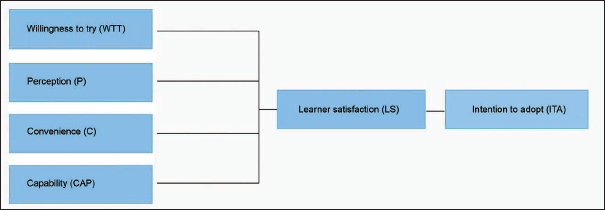
Therefore, it is important to construct a research model, as illustrated in Figure 1, that takes into account ES’s persuasive function from the learners’ points of view. The success of ES is studied using this methodology, which places special emphasis on the varied perspectives of the learners involved. In order to create a research model that takes into account the two most important aspects, namely, student satisfaction and student adoption intent, the current study is conducting surveys and interviews. A learner’s willingness to experiment, their perception of the ES, and their level of comfort with the ES all have a role in their level of satisfaction. On the other hand, the intention to adopt an element is dependent not only on the satisfaction element but also, to a large extent, on the capability of the learner. The higher the degree of the learner’s willingness, perception, and convenience, the higher the level of satisfaction. Likewise, the higher the capability of the learner, the higher the chances for the intention to adopt ES. However, the lower the degree of the learner’s willingness, capability, perception, and convenience, the lower the degree of satisfaction. And finally, the lower the capability of the learner, the lower the chances for the intention to adopt ES.
Research Model.
The purpose of this research is to:
Understand the factors affecting the uptake of ES across the learners of the Pan-India Pearl Academy Campuses. Analyze the correlations between learner satisfaction and the aforementioned characteristics.
It is hoped that by paying attention to aspects such as the learner’s willingness to try, the learner’s perception, the level of ES convenience, and finally, the learner’s capability, a correlation may be established between user happiness and the use of ES.
Learner Satisfaction
The term ‘learner satisfaction’ refers to the good feelings that users generate as a result of using new technology. It is because users believe that it satisfies their expectations and can be used for a variety of academic purposes in the future. Moore (2009) posits that many aspects, including the utilization of learning methodologies, challenges encountered throughout the learning process, support from peers and tutors, the capacity to apply acquired knowledge, and the attainment of learning outcomes, are indicative of the elements that influence the overall satisfaction of students engaged in online learning. A learning strategy refers to a collection of activities that learners employ to strategically plan and structure their involvement in order to enhance the process of acquiring knowledge and achieving comprehension (Ismail, 2018). According to Thanh and Viet (2016), the use of suitable learning strategies has the potential to enhance the learning process, leading to improved outcomes and performances. According to the findings of Aung and Ye (2016), there exists a favorable correlation between student satisfaction and students’ success and achievement.
Willingness to Try
Is the degree to which users are willing to accept new forms of technology. In a nutshell, it refers to the degree to which users are prepared to utilize and embrace new technologies. Nevertheless, as technology becomes more prevalent, students are faced with the challenge of determining their desire to experiment with these technologies and their level of acceptance and tolerance toward them. These challenges are significant and should not be overlooked (Arning & Ziefle, 2009). This is particularly accurate when considering the variety of learners from rural backgrounds who typically lack both subject knowledge and technical expertise, as well as a comprehensive understanding of the practical implications of these technological advancements. The topic of willingness has been extensively studied from several angles for a considerable duration. This statement delineates the endorsement, positive reception, and continued utilization of recently introduced products and systems. The prevailing theoretical frameworks pertaining to technology acceptance mostly focus on the inclination to embrace novel knowledge (Davis, 1989). Traditional willingness theories suggest that users’ choice to adopt a new technology is mostly influenced by their perception of the technical system’s ease of use and its usefulness (Venkatesh & Davis, 1996). The efficacy of these theoretical models has been demonstrated in numerous studies, albeit limited to individual compact devices such as computers and mobile phones within the professional setting (Wilkowska & Ziefle, 2009). It can be argued that the acceptance of technology and the readiness of educators to use large-scale technologies in their learning settings are very intricate (Kowalewski et al., 2013).
Perception
The utilization of digital technology to facilitate learning at any time and location, disseminate information, and establish connections among learners is on the rise (Henrie et al., 2015). However, achieving optimal advantages and comprehending what is considered valuable continue to pose significant challenges. Over the past 20 years, scholars have identified both advantageous and detrimental consequences of students’ ongoing engagement with technology (Rashid & Asghar, 2016). Balakrishnan and Gan (2016) have identified empirical data suggesting that students employ diverse technological tools to enhance and enrich their educational endeavors through the retrieval and dissemination of knowledge, as well as engagement with both faculty members and peers. The advantages of technology encompass a wider range of educational opportunities, more equity in accessing higher education, enhanced efficiency in delivery, and the facilitation of tailored learning processes (Cohen & Baruth, 2017; Cohen & Nachmias, 2006; Goodfellow & Lea, 2013; Luckin et al., 2012). In addition, it is anticipated that digital technologies will undergo more advancements in the areas of personalization, remoteness, adaptability, and data-driven approaches (Johnson et al., 2012). While several scholars contend that technology has significantly altered the landscape of teaching and learning in higher education (Beetham & Sharpe, 2013; Kennedy & Dunn, 2018), an opposing viewpoint posits that universities are confronted with a disruptive technology that poses obstacles (Anderson & McGreal, 2012; Losh, 2014). Detractors have also contended that the utilization of technology may place specific demographics in a position of disadvantage. The utilization of technology by students is influenced by various factors, including socioeconomic position and institutional resources (Chen et al., 2010). Furthermore, it has been argued by certain scholars that the absence of in-person contacts could potentially diminish the efficacy of educational methods (Porter et al., 2016).
Convenience
According to Berry et al. (2002), learners perceive two types of convenience: time and effort. In this study, convenience is defined as the ability of a technology to save time and effort for a student. Additionally, convenience might be seen advantageous when it reduces the cognitive, emotional, and physical strains experienced by learners. The convenience of a product or service was investigated by Brown (1990) through the analysis of five dimensions: time, place, acquisition, usage, and execution. Nevertheless, Yoon and Kim (2007) argued that the ease of accessing technology does not necessarily correlate with the intention to use technology. Furthermore, convenience in technology usage is comparable to ease of use in the technology acceptance model (TAM). Yoon and Kim (2007) investigated the convenience of wireless LANs using the convenience perspective proposed by Brown (1990), focusing on three specific dimensions: time, place, and execution. According to Yoon and Kim (2007), convenience can be defined as the perceived level of suitability in terms of time, place, and execution when utilizing a technology. This might be inferred from the mention of ‘ease’: ‘the absence of difficulty or significant exertion’. It is believed that effort is a limited resource that individuals can distribute among the several activities for which they have responsibility. Assuming all other factors remain constant, it is posited that students are more inclined to accept a technology that is viewed as being easier to use compared to another. Therefore, convenience could be an important predictor of acceptance of technologies generally (Wang et al., 2009).
Capability
The extent to which a learner is capable of adopting ES is mostly determined by their emotional and social aspects, aspirational level, individual mental level, expectations, and requirements. When it comes to new technology, the capability argument is very noticeable. It is possible to draw parallels between the ‘competent’ technology user and the investigation of self-taught technology-driven teachers that was presented by Chandler (2000). Chandler discusses educators who have acquired the ability to adapt to technology as a result of their own excitement, without receiving significant classroom instruction. The majority of them are not scared by new technology, and they are eager to ‘have a go’ with learning any software. They are also comfortable with learning any software. The ability to adapt to change, the use of self-directed learning methodologies, the willingness to experiment, the recognition of relevant routes for integration, and the willingness to persevere are all characteristics of a skilled user of technology.
Intention to Adopt
The user’s inclination to either accept or reject technology serves as the definition of their intention to use technology. Numerous research studies have demonstrated that individual learner’s attitudes and beliefs about technology have an impact on their intention to adopt it (Huang et al., 2020). The examination of attitude and adoption of technology has been conducted using the Theory of Reasoned Action (Ajzen & Fishbein, 1980) and the Theory of Planned Behavior (Ajzen, 1991). Attitude, as per theories, serves as a reflection of an individual’s interior emotional or psychological condition. The behavior or activity of an individual toward an object can be predicted by their attitude. According to Yang and Tsai (2008), those who possess a positive attitude or belief regarding the worth of technology are more inclined to adopt and utilize it when this notion is applied to its usage. Conversely, individuals who have unfavorable sentiments toward technology are more likely to exhibit resistance toward it (Rahimi & Yadollahi, 2011) or would refrain from acquiring proficiency in its usage (Mac Callum & Kinshuk, 2014).
However, Davis (1989) provides a rationale for the inclination to embrace technology within his information TAM, which has been widely utilized in the research by Huang et al. (2020).
When students see technology as having the potential to boost their academic engagement, they are more likely to exhibit a strong inclination to adopt it. Nevertheless, demographic factors such as age (Staddon, 2020) and area of expertise (Verhoeven et al., 2010) can influence these impressions. Hence, it is vital to acquire a more profound comprehension and awareness of learners’ inclination to embrace technology.
These characteristics are used as a yardstick to evaluate not only how satisfied users are with ES but also how likely they are to actually use it. The survey results are an attempt to address this void by looking into how these factors affect learners’ opinions of and use of ES. And so we form the following hypotheses:
H1: A learner’s willingness to try has a significant impact on their degree of intention to adopt.
H2: A learner’s perception of Eduverse systems has a significant impact on their degree of intention to adopt.
H3: A learner’s convenience has a significant impact on their degree of intention to adopt.
H4: A learner’s capability has a significant impact on their degree of intention to adopt.
Literature Review
The term ‘Metaverse’ was coined for hypothetical purposes, referring to a simulated online environment where users assume the identities of avatars or pseudonyms and engage in simulated interactions with one another. Users of the Metaverse can participate in computational social and economic activities regardless of their physical location (Arcila, 2014; Daz et al., 2020; Ma’rquez, 2011; Va’zquez-Cano & Sevillano-Garca, 2017). When compared to other teaching aids, Metaverse stands out, thanks to its unique blend of ‘interactivity, corporeality, and persistence’. Users of the virtual learning platform can communicate with one another in an online setting. The dynamic nature of this environment is enhanced by its interactive qualities, which set up a new educational scenario of individual and group study with full access to all materials. Through the use of the Metaverse technology, users can stay permanently connected to the digital realm without ever having to leave their homes. The introduction of the limitless avatar brought about by the corporeity feature makes the virtual world appear more accurately defined, since the shape of avatars is on par with or even better than that of 3D games. The persistence feature is crucial because it keeps track of user interactions, data, and objects even after they log out of the virtual space (Ando et al., 2013; Castronova, 2001; Daz et al., 2020; Tarouco et al., 2013). Educationally, new management and organizational leadership models are needed so that businesses and industries can employ a trained workforce that can adapt to the challenges of the metaverse (Ahmad et al., 2021). In addition, human behavior in various learning settings is described and analyzed so that discrepancies can be identified (Salloum et al., 2021). Similarly, universities can benefit from a variety of approaches, thanks to the platform they provide for faculty, staff, and learners to collaborate in an open, adaptable learning environment. It is easier than ever for learners to reach out to their instructors online. This way, the Metaverse can serve to encompass a physical school, making it into a digital space where hybrid and collaborative learning can take place among teachers, learners, and other forms of education (Ando et al., 2013; Tarouco et al., 2013).
Previous research utilized structural equation modeling (SEM) for simple linear data analysis (Sohaib et al., 2019). One major flaw of this method was that it failed to adequately account for non-linear interactions between the model’s constituent parts. A simple SEM analysis did not aid in making complex decisions (Sim et al., 2014). This issue can be effectively solved by employing a combination of SEM (discovery-oriented statistical analysis) and artificial neural network (ANN) techniques in parallel (Al-Emran et al., 2021; Khan & Ali, 2018; Leong et al., 2013). However, the most popular ANN is really simplistic, with only one underlying layer of intricacy (Huang & Stokes, 2016). In particular, for non-linear models, an ANN architecture with multiple hidden layers may aid in improving model accuracy (Wang et al., 2017). As a result, the accuracy of the generated models is improved in this study by employing a combined SEM-ANN strategy and an ANN architecture inspired by deep learning. The TAM model, the primary conceptual model of earlier studies, is supplanted in this investigation of the Metaverse system’s deployment with a hybrid conceptual model. The architecture of the Metaverse is intertwined with collaborative learning systems powered by artificial intelligence, which are in turn being used to transform traditional teaching methods and the outcomes for learners. Recent research has focused on a wide range of themes, including the similarities and variations between student perspectives across countries and across the sexes. Evaluating the teaching process is given a lot of thought in the context of blended learning. Studies have proven the need for new tools that measure the improvement of learners’ skills and performance; as a result, educators are turning to eye-tracking techniques to assess learners’ comprehension of texts and visuals as they read. The current interest in virtual reality is indicative of the impending impact of the Metaverse system. Recent studies have made substantial use of virtual reality, shedding light on the technology’s potential good and bad effects on the classroom (Chen et al., 2020, 2022).
Failing to achieve educational objectives in the classroom can have a negative impact on everyone involved (Al-Maroof et al., 2021). Through the employment of appropriate educational methods, such as the Metaverse, these requirements can be met. The absence of temporal and geographical constraints in the Metaverse system solves the issue of completing educational objectives. Problem-based learning, then, has great potential as an ancillary method of instruction in a fully immersive Metaverse. It is believed that the problem-based method will be crucial to learners’ success in a future where virtual classrooms and computer-generated characters will replace traditional ones (Farjami et al., 2011; Han, 2020; Kanematsu et al., 2013). Several educational goals, such as those in engineering, technology, and material science, have been successfully attained through the use of problem-based learning (AlQudah et al., 2021). This tactic is built right into the Metaverse setting, in which learners face problems and must provide answers. To adapt their knowledge to the virtual world, learners must place it in the hands of their avatars. Teachers in the Metaverse system give their learners unstructured, real-world scenarios to practice their skills in. Learners, in the role of virtual avatars, look into the situation and try to come up with solutions. Typically, the efficacy of the proposed solution is determined through student–teacher discussions or offline questionnaires. The teacher must be ready for a learning environment in which the student proposes the problem. When learners have been given explicit instructions and a firm grasp of the problem at hand, they can engage in productive discussions about it using Metaverse chat. Preparation can lead to a more in-depth comprehension of the problem and a more fervent wish to find a solution. The results indicate that the success of problem-based learning in the Metaverse is influenced by the learners’ level of preparation and grasp of the Metaverse system. Countries such as Malaysia, Japan, and Germany have found success with the implementation of Metaverse systems within their educational institutions (Barry et al., 2009, p. 6066; Farjami et al., 2011; Kanematsu et al., 2012, 2013).
The educational value of the metaverse system has been the focus of previous studies, with an emphasis on massive experiences. The fundamental goal of MacCallum and Parsons’s (2019, pp. 21–28) research was to bring attention to the importance of AR. The teachers were given the Metaverse AR tool to build mobile augmented reality experiences for use in the classroom. The findings showed that teachers were more interested in the subject matter than they were in the AR technology. The purpose of this discussion is to determine if teachers and learners were adequately informed about augmented reality’s (AR) function within the metaverse and its significance to the educational process. Studying the flexibility of synchronous and asynchronous information access, Daz et al. (2020) investigated the implementation of a virtual or Metaverse system in a classroom. Through the utilization of library resources, museum trips, etc., the research paves the path for authentic educational experiences that encourage communication between learners and teachers. They used learners in a sort of experimental investigation. A survey was given out to test how content learners were with the online classroom. While the study’s overarching goal was to improve mathematics education at the University of Cundinamarca by incorporating cutting-edge technology, its scope was strictly limited to that discipline. In this regard, it is possible that the diversity of student opinions is reflected in the variety of theoretically grounded course formats. Learners’ opinions and degrees of contentment may change from one class to the next based on the content covered.
The flexibility and individualization of the Metaverse make it a successful platform. Researchers offered a case study of virtual education that integrated these two elements as a solution to the issue of a unified resource allocation strategy (Gaafar, n.d.; Ng et al., 2021).
According to the results, utilizing a virtual environment can help users save both time and money while also improving their knowledge and resolving their uncertainties (Ng et al., 2021). This means that the Metaverse has potential as a tool for education across a wide range of disciplines, from aviation training to engineering and science. When used in aviation training and maintenance, the use of virtual airplanes in the Metaverse has immense potential for enhancing educational and training opportunities and the interaction with virtual things in mixed reality. On the other hand, Kab’at (2016) and Kefalis and Drigas (2019) argue that integrating the Metaverse into STEM education through networking enhances the ability to provide appropriate applications. The widespread belief that the Metaverse and inspiration are intimately related arises from the phenomenon’s apparent effectiveness in several arenas. Researchers have discovered that introducing the Metaverse platform into the classroom or workplace can increase engagement and productivity. Given that it meets the needs of both parties, this mode of communication is widely favored (Jeon & Jung, 2021). Recent research has shown how critical context-based collaborative learning is going to be in supporting the Metaverse system. How situational awareness can be used to boost learning outcomes via technological means is the focus of this research. The potential advantages of a stimulating learning environment in a digital classroom were investigated by Fu et al. (2019). The study found that both intra-group and inter-group competitions led to a more positive learning environment and increased knowledge retention (Chen et al., 2020, 2022; Fu et al., 2009).
Research Gap
Individuals possess diverse learning objectives. There are two primary objectives associated with this endeavor: first, to attain a personal learning objective, and second, to accomplish an interpersonal learning objective through the exchange of ideas, interaction, or collaboration with peers or tutors. There is a lack of comprehensive knowledge regarding whether students in higher education distinguish between personal and interpersonal learning objectives based on their willingness to attempt, perception, convenience, and competence. Various factors may impact the utilization of technology. Recent studies have indicated that the aforementioned variables have an impact on students’ levels of happiness and their inclination to embrace technology. Identifying the most influential construct(s) could assist educators in directing their attention toward encouraging the use of technology for English for specific purposes (ES) learning in university education. To date, there has been a lack of comprehensive analysis of the correlation between willingness to try, perception, convenience, and capability. Numerous research investigations have documented the substantial influence of these elements on the utilization of technology. Nevertheless, there is limited knowledge regarding the potential variances in the utilization of technology for advanced learning among university students from several disciplines of study.
Adoption of Eduverse in Higher Education
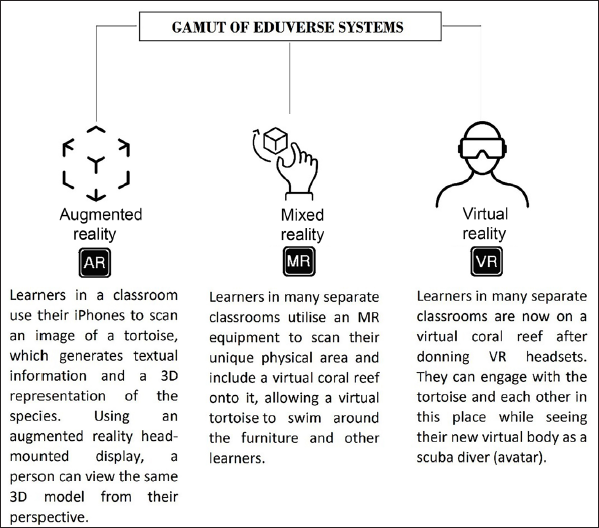
Immersive technologies such as AR/MR/VR are used to enter the Metaverse, and ES is a catch-all term for all of these methods. ES also represents a spectrum along which various technologies can be positioned, as illustrated in Figure 2, with high virtuality (a totally computer-generated virtual environment) on one extreme and the real world on the other (no virtuality). All of the sense impressions we can make in a particular environment make up what we call ‘physical reality’. The degree of virtuality, or the ratio of virtual to physical material perceived, places consumers along the ES continuum when such settings are viewed or processed in real time via audio-visual devices such as smartphones and headsets.
Range of Eduverse Systems.
Understanding the barriers that have stymied earlier attempts to modernize education through the use of technology is essential for effective implementation of ES in the classroom. In order to comprehend why teachers are often skeptical of new technologies and the firms that create them, it is helpful to examine the often-unsuccessful history of technology in education. In order to maximize the positive effects of ES in the classroom, it is important to develop a sense of compassion for the educators who will be using it. ES has the potential to make significant contributions to both formal and informal education, notwithstanding the complexity and multidimensionality of learning. Although ES has the potential to revolutionize schooling, it is not the first technological advancement of its kind. However, there are many traps that have been encountered in the past that must be avoided if we are to fully realize the educational potential of ES. Thomas Edison was confident that movies would transform classroom instruction a century ago. He also believed that educational films would be completely effective and that this new technology would eventually replace textbooks. In 2021, the Metaverse was also said to be a location where anyone could learn about anything on the globe just by bringing it closer to them. In light of these two cases, it is reasonable to inquire into whether or not the employment of technology in schools has always been surrounded by utopian aspirations. Although separated by a century, these two samples are not anomalous. But if we can identify and analyze these challenges, we can build more effectively in the future.
Identifying the Learners
It is essential to consider the learners while designing learning experiences and selecting ES technologies and applications to employ (if any).
Not all student populations can benefit from hardware and software due to the people who develop them. The great majority of ES content and technology is produced by corporations in Silicon Valley, which are located at the top of the global income distribution and employ individuals who have historically led the most affluent lives. Consequently, augmented reality tools and content are not created with all users in mind. For example, a previous study suggests that female learners are more prone to feel motion sickness when using virtual reality. It has been hypothesized that this is due to the fact that women often have a shorter inter-pupillary distance than men, which is an essential condition for comfort and vision in virtual reality. Despite the fact that the majority of VR headsets allow users to adjust the distance between their eyes, those with smaller faces and women are less likely to do so, hence increasing their risk of motion sickness.
In addition, certain virtual reality experiences are intended to draw attention to tragedies and difficult living conditions, which may be educational and empathetic for more privileged audiences but distressing and even dangerous for those who are more personally invested in the stories being told. Educators must approach with caution and provide careful consideration to their kids, since we do not yet know how learners from diverse backgrounds will respond to the numerous XR applications already accessible. The XR industry as a whole must strive for professional diversity so that traditionally marginalized student populations can have their ideas and abilities considered from the outset.
The subsequent examples illustrate a range of learners from varied backgrounds at Pearl Academy. Priyanka, a first-generation college student from a low-income background, has historically had challenges in accessing academic resources due to her status as a PGFD Year 2 student at the Jaipur campus. As a consequence of her parents’ employment commitments, she has been unable to attend a convent and lacks prior exposure to computer technology. Ashish, a final-year PGFD student at the Pearl Mumbai campus, is a scuba diving enthusiast who is fluent in English. He was born in Delhi to a family of considerable wealth. Given his proficiency in computers and up-to-date software and technology, it is logical to infer that he also appreciates acquiring new knowledge and expanding one’s perspectives. Toshi, a graduate of Pearl Jaipur campus, is encountering challenges in securing employment in the field of fashion journalism as a result of her limited proficiency in digital abilities. This deficiency serves as a deterrent for her to pursue art and design as a means of enhancing her preparedness for a career in this domain. Finally, Muskan is a shy student who has lately moved from the Delhi campus to the Bangalore campus. She excels in classrooms with fewer participants. She expresses apprehension regarding the potential constraints on her academic and career opportunities due to her deficient communication abilities.
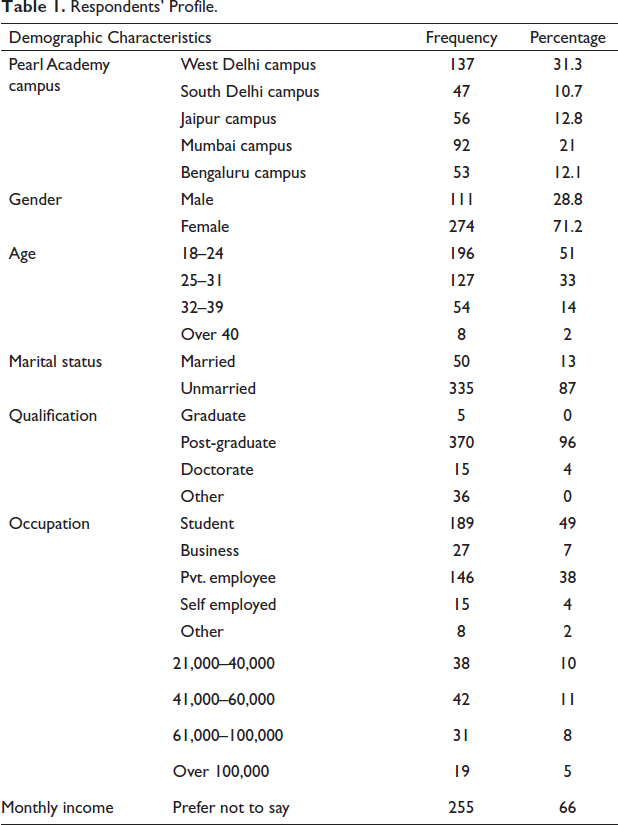
Respondents’ Profile.
Significance of Learning Outcomes
Before deploying ES in the classroom, teachers must be certain of their goals, as the technology may conflict with certain learning objectives. For example, ES-enabled learning experiences can provide learners with detailed 3D representations that are otherwise unseen to the naked eye, thus enhancing their spatial awareness. But this plethora of information can also contribute to cerebral overload, making it harder to remember any one piece of information in the future.
Using a framework such as Universal Design for Learning can aid in ensuring that all content is accessible to learners with diverse abilities and interests. Again, before putting a VR headset on a student’s head, teachers should establish their goals and determine if the technology can assist them.
In the 1990s and 2000s, schools lived up to their name by embracing and integrating cutting-edge technologies such as televisions, interactive whiteboards, and iPads. There were fears that computers would ‘blow up the school’, but instead of rendering classrooms obsolete, computers have contributed to the global dissemination of education. In a nutshell, techno-utopians contend that technological improvements hold the key to improving student results and resolving other issues afflicting the educational system. However, these predictions betray a reductionist understanding of learning, which is notoriously nuanced and complex.
On the one hand, educators in higher education must be in a position to understand what key performance indicators are essential to consider for their students’ learning experience and the extent of diverse approaches and processes for assessing their knowledge comprehension, reflection, and application. Likewise, tutors across diverse disciplines must be able to define what they want the learners to produce as evidence of comprehension of ES and how they (tutors) themselves can assist their learners in building and applying their knowledge (via timing, artifact creation, etc.). Higher education institutions need to establish the expenses associated with incorporating ES into their teaching and learning curriculum and how they can assist both their tutors and learners in building and applying their knowledge with ES.
On the other hand, learners must be able to ascertain what ES has to offer that they cannot acquire with their current classroom resources. They need to know the extent to which they have access to detailed instructions for updated software, technologies, and gadgets and what tools and resources are at their disposal to create individual ES content (e.g., 360-degree cameras, game engine software, content creation tools, hardware, and programming support). Further, the level to which learners adapt to ES also depends on their individual backgrounds and experiences, as well as how the learning material is modified to accommodate their many cultural backgrounds. Subsequently, their parents would want to know how ES could be utilized to enhance students’ education and how their wards can maximize their learning before and after using the technology.
Research Methodology
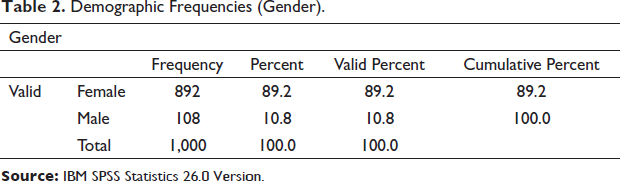
An online questionnaire was administered to determine the factors that influence the adoption of ES at five Pearl Academy campuses across India. Participants in the study were both undergraduate and postgraduate learners, the majority of whom were in the age group of 18–29 years, as illustrated in Table 1. The questionnaire focused on questions based on the framework of ‘Universal Design for Learning’ to ensure responses were received from learners with diverse abilities and interests. The statistics on the demographic frequencies are illustrated in Tables 2 and 3.
Demographic Frequencies (Gender).
Demographic Frequencies (Location).
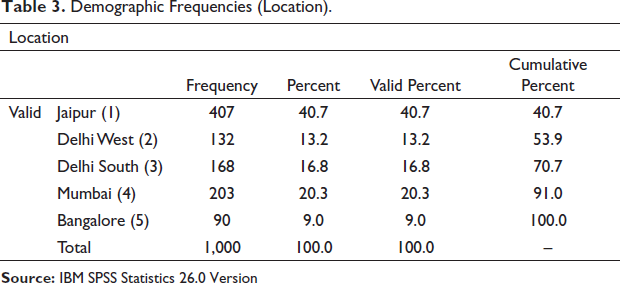
According to the data presented in Tables 2 and 3, female learners make up 89.2% of the sample size, whereas male learners make up only 10.8%. All respondents are under the age of 29, and they are all enrolled at one of Pearl Academy’s five campuses. The number of respondents from the Jaipur campus is the highest, while it is lowest from the Bangalore campus. To assess learners’ propensity to adopt ES, we developed a questionnaire consisting of 21 items organized along four dimensions: willingness, perception, convenience, and capability. Respondents were asked to rate their level of agreement or disagreement with each of the 21 topics on a 1–5 Likert scale, where 1 represented significant disagreement and 5 represented strong agreement.
Data Analysis
Correlation Analysis
The independent factors were ‘willingness to try (WTT), perception (P), convenience (C), and capability (Cap)’, whereas the dependent variable was ‘intention to adopt’, as illustrated in Table 4. According to Sekaran (2005), in any study with multiple variables, after computing the means and standard deviations of the dependent and independent variables, researchers are keen to learn how one variable is related to another. The direction, nature, and importance of the bivariate association of the variables used in the study are revealed through intercorrelation analysis. The link between dependent and independent factors is examined in this study. To determine the link between the dependent and independent variables, the Pearson correlation was used, as illustrated in Table 5. There could be a perfect positive correlation between two variables, which is represented by 1.0 (plus 1), or a perfect negative correlation, which is represented by −1.0 (minus 1).
Correlation Table.
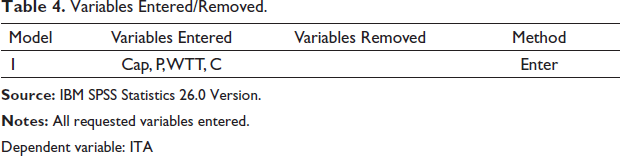
Correlation analysis is carried out in order to establish a link between constructs. ‘Correlation coefficients vary from −1 to +1, with −1 indicating perfect negative correlation and +1 indicating perfect positive correlation.’ According to the correlation table’s findings, the majority of the factors have a strong association with the dependent variable, intention to adopt.
Willingness to try was correlated with a value of R = 0.412, while perception was correlated with a value of R = 0.136. Similarly, convenience was found to be correlated with a value of 1.518, and lastly, capability was correlated with a value of 0.224. According to the correlation analysis, the strongest correlation was revealed with convenience, while the lowest correlation was found with perception. It is hypothesized that all four characteristics have a substantial association with the intention to adopt, showing a clear indication in favor of linear regression.
Correlation Analysis
ITA has been chosen as the study’s dependent variable. As illustrated in the Research Model (Figure 1), the dependent variable in the summary table that predicts learners’ intention to adopt is ITA, whereas the independent variables are WTT, P, C, and Cap.
Table 6 illustrates an ‘R value of 0.974, R square value of 0.948, and adjusted R square value of 0.948’, suggesting that the independent variables WTT, P, C, and Cap can be forecasted using ITA’s 77.5% variance, as illustrated in Table 7. Despite the fact that it is mentioned that a decent fit will be able to anticipate a variation of the dependent variable of not less than 60%, this model is ideal because the results of this regression fall within the minimal rate.
Variables Entered/Removed.
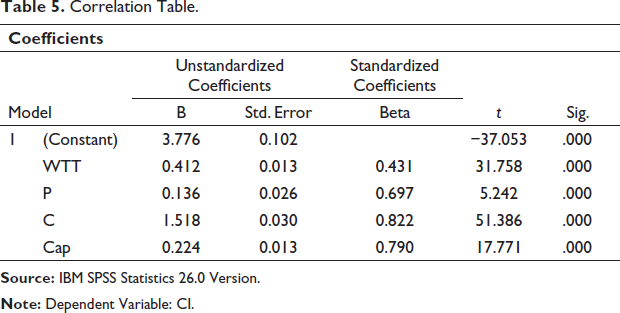
Dependent variable: ITA
Model Summary.
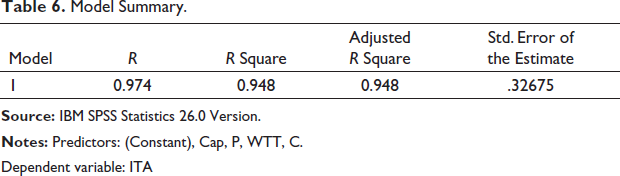
Dependent variable: ITA
ANOVA.
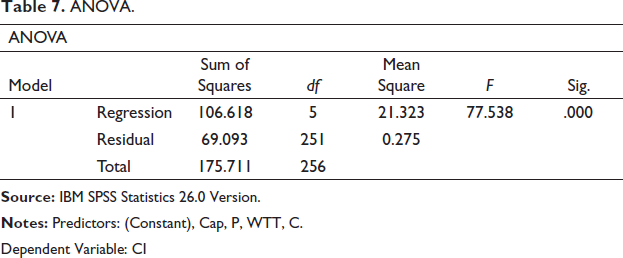
Dependent Variable: CI
Results and Discussions
As a matter of tradition, learners have been given grades for their classroom work, which typically necessitates them to be physically present in the classroom for a minimum of a given number of hours. Life’s unpredictable rhythms might make it tough to adhere to the strict schedule required by a school or university. The Metaverse is keen on the concept of ‘transparent accreditation’, which would record only the level of expertise attained rather than the number of hours worked or the location of the provider. This is a more useful lens through which to examine each student’s unique learning preferences, strengths, and weaknesses. The various attention spans of different learners are taken into account in an open accrediting system. Not everyone thrives in the traditional classroom setting, and with the rise of technological advancements, many are finding it especially difficult to stay interested. Who would want to settle for less after spending so much time communicating in virtual spaces? The Metaverse has this going for it since it is equipped with the same kinds of cutting-edge equipment that makes video games, television, and other forms of entertainment so appealing.
In what ways, then, will the Metaverse facilitate this goal’s actualization? Understanding the motivations behind the current push to reform education is the first step. It is impossible to deny that the COVID-19 pandemic is the primary explanation for the reduction in sociability in education. To what end, then, should we seek to enhance the social aspects of education? Numerous studies show that children of all ages are lacking important social skills, which are frequently utilized outside of the classroom. These ‘soft’ or ‘transversal’ talents are receiving a lot of attention, and researchers are exploring how best to teach them. Even with the limitations that lockdowns and isolation periods offer, the Metaverse can generate high levels of socialization in learning. It has the potential to teach us how to apply what we have learned in the workplace to our lives outside of it. The Metaverse is a thriving online community that uses virtual reality and other digital tools to construct new worlds. Because of its immersive nature, it will appeal to and interest learners of all ages, but especially those in higher education who are more likely to be financially invested in their education.
Practical Implications
The education sector has made significant progress in the 21st century, and the emergence of the ES has far-reaching consequences for enhancing skills and abilities. The present utilization of this technology demonstrates promising learning prospects that have the potential to democratize education through many means. Below, we outline six ways in which the ES may exert practical implications on the process of learning.
Immersive Educational Setting
The transition from traditional physical classrooms to virtual and integrated learning environments had already commenced prior to and during the COVID-19 pandemic. The Metaverse enables a fully immersive college experience, where students utilize virtual reality headsets to access a virtual campus or institution for educational purposes, exploration, and social interaction. Within this virtual realm, learners have the opportunity to explore various learning pods, explore libraries and breakout rooms, interact with coaches and counselors, and socialize with their classmates.
Digital experiences have the potential to effectively democratize education by facilitating the convergence of individuals from diverse geographical places and economic backgrounds, enabling them to engage in learning activities within a cost-efficient, adaptable, and expedited timeframe.
Real-world, Virtual, and Hybrid Expertise
The ES offers immersive and embodied skill development chances through the utilization of real-world events and high-pressure settings, allowing individuals to freely make mistakes without facing any negative repercussions. The integration of virtual reality (VR) with data science and spatial design has the potential to enhance student engagement, confidence, and application when executed effectively.
Visualization and Storytelling
Visualization and storytelling are essential components of ES, which is particularly important in the current era following the abundance of tedious Zoom encounters during the COVID-19 pandemic. VR technology enables learners to immerse themselves in a distinct environment or assume the perspective of another individual. Learners are provided with the opportunity to engage with significant global development concerns, such as climate change, education, gender, urban development, international trade, and public health, through the utilization of bite-sized 360-degree tales, virtual tours, and visualizations.
Capabilities in Difficult Situations
Developing proficiency in soft skills, such as effective communication, leadership, active listening, and empathy, poses significant challenges in terms of both attainment and assessment. The ES enables learners to engage in authentic disputes and enhance their soft skills within a secure setting, such as engaging in sensitive or challenging conversations with educators and peers.
Accessibility for Specially Abled
The concept of ES has potential for enhancing educational and social opportunities for learners with impairments. As an illustration, an immersive setting provides young adults with special needs, autism, and challenges in social interaction with the opportunity to enhance their interpersonal and occupational competencies. This can be achieved by activities such as visiting a shopping center or grocery store, organizing merchandise on shelves, or loading goods into a truck. VR applications enable individuals to engage in skill development and social interaction within a secure setting, alleviating feelings of being overwhelmed or anxious.
Enhanced Data Collection
By utilizing ES, educational institutions can gather hitherto unexplored data to analyze learner behavior, monitor progress, detect deficiencies, and consistently enhance the learning experience. The collection of valuable data pertaining to learner behaviors encompasses several aspects such as usage, performance, attention and engagement, sentiment, and predictive analysis. Teachers might also have a more proactive role in gathering data and evaluating lessons regarding the efficacy of such learning settings.
Limitations
First, only students who attended Pearl Academy and resided in close vicinity to the author were included in the analysis. Second, the author was limited to collecting data from students due to the age distribution of the participants throughout the five campuses. Finally, the author admits that their perspective on the collected data may have been influenced by their eight years of teaching experience at Pearl Academy’s Postgraduate School of Fashion and Textiles. Given the limited sample size of 500 participants, it is likely that the findings cannot be extrapolated to a broader population.
Conclusion
It is evident that the Eduverse is able to transmit a stronger sense of interest in education when compared to the conventional offline style of instruction. This is so because there is a greater breadth of information available through the Eduverse. It will allow educators to create a virtual setting that feels just like a physics lab, historical site, industrial district, or even the surface of another planet and immerse learners in learning experiences that would be impossible in the actual world. Due to this, we can provide more immersive educational opportunities. Being digital makes it simple to alter to better suit the needs of each individual learner. As a result, it is a method of teaching that does not break the bank and keeps learners engaged.
If Eduverse is able to provide the same experience to everyone, it may be able to democratize education and reduce the disparity between urban and rural educational options. If this happens, the disparity between urban and rural areas in terms of educational opportunities will begin to shrink. Teachers can now establish a virtual classroom where learners from all walks of life can learn and eventually collaborate to find workable answers to real-world problems. Experts in the field of educational technology are optimistic about the prospects this brings for learners’ ability to be creative while learning.
Pearl Academy in India has begun experimenting with new methods and has built virtual reality and augmented reality labs to give its learners direct access to the benefits of this revolutionary approach to education and training. You may use it to transport any classroom from any university right into your living room, making it possible to create an immersive experience. For those who wish to further their education but are unable to relocate, this could be a viable option.
Users of the Eduverse have access to numerous possibilities, such as fostering the development of STEM education in India and enhancing education through methods such as immersion and project-based learning. Learners who have access to immersive technologies such as augmented and virtual reality can be transformed into a ‘creators and producers’ workforce through Metaverse skilling.
This data was collected by posing a question to the respondents designed to elicit their thoughts on the potential benefits and drawbacks of Eduverse technology in the future. This was done so that the respondents could express their opinions on the matter. Two major topics were brought to the attention of the reader in these written comments. To begin, many learners expected that by the year 2040, augmented and mixed reality technologies will be at the center of academic acceptance of extended reality, rather than the more entirely immersive virtual reality environments that many people today refer to as ‘the Metaverse’. Answering the question ‘What will be the most popular kind of extended reality in academic settings?’ this forecast was developed. We made this prediction in response to the question ‘What technology will be at the center of academic acceptance of extended reality in the year 2040?’ Second, they voiced concern that the unprecedented conditions would magnify every part of human nature, both positive and negative. And this was their second-biggest worry. They were especially worried that those in charge of the curriculum could use similar strategies in the future to stifle learners’ rights to autonomy and expression in the classroom.
Footnotes
Declaration of Conflicting Interests
The author declared no potential conflicts of interest with respect to the research, authorship, and/or publication of this article.
Funding
The author received no financial support for the research, authorship, and/or publication of this article.
