



Abstract
The definition of beauty has undergone a profound transformation, breaking free from established conventional standards and embracing a broader spectrum of attributes. Historically, societal beauty ideals have been defined by cultural, historical, and geographic influences, perpetuating prejudice and discrimination. In recent years, there has been a shift in the fashion industry as inclusivity and diversity have become buzzwords. Diversity encompasses age, skin tone, ethnicity, sexual orientation, and body size. Achieving inclusivity requires thoughtful consideration of fabrics, styles, and silhouettes suitable for India’s distinct diversity. This study delves into the perceptions of inclusivity within the Indian fashion landscape. Employing a mixed-methods approach, this study explores how inclusivity is comprehended, embraced, and practiced in Indian fashion. The literature review highlights topics such as size inclusivity, promotion of body positivity, social media’s transformative effects, and influencers’ role in reshaping the fashion industry. It also discusses how brands embrace inclusive approaches in their marketing and the overall shopping experience. The survey among the Indian population revealed that respondents were aware of inclusivity in fashion, linking it to the idea of ‘Fashion for All.’ They highlight that inclusive brands consider factors such as different body sizes, economic backgrounds, physical abilities, sustainability, and cultural diversity. Brands such as H&M and Zara were often mentioned when discussing the inclusivity of the Indian fashion industry. Respondents indicated a readiness to support and potentially pay more for inclusive brands. The industry embraces diversity, challenges existing norms, and supports inclusivity. Despite some progress, significant gaps exist in creating authentic, inclusive fashion experiences that cater to a diverse spectrum of individuals. As the industry continues to evolve, embracing diversity, challenging conventions, and promoting inclusivity will continue to shape the future of fashion, rendering it a more accessible and empowering space for all.
Introduction
The concept of beauty has evolved significantly in today’s interconnected and diverse world, transcending traditional norms and embracing a broad range of attributes. For centuries, societal beauty standards have perpetuated a narrow ideal, particularly for women. An attractive woman was always defined by her slender build, full and generous bosom, narrow waist, curvy bottom, well-defined jawline, high cheekbones, full lips, rosy complexion, and thick, long, flowing hair. These standards have been shaped by cultural, historical, and geographical factors, reinforcing notions of beauty that are deeply rooted in bias and discrimination. A slight deviation from these standards was considered exotic, and a more significant deviation would render the women unattractive (Suradkar, 2021). Consequently, these individuals were marginalized and excluded from mainstream narratives.
The fashion industry has always held a prominent position in society as a powerful platform for self-expression, cultural representation, and identity formation. Fashion is for everyone, short or tall, black or white, young or old. Fashion has become a worldwide subject, a language understood and spoken by many. Fashion has experienced tremendous change, with diversity and inclusion becoming the buzzwords Diversity in fashion means bringing in a diverse group of people who share clear distinctions such as age, skin color, race, orientation, and body type. People want to be heard, seen, and represented (Patel, 2022).
Over the years, the impact of the industry on shaping societal norms and influencing individual perceptions has been immense. As fashion evolves, so does the call for inclusivity, urging the industry to embrace diverse perspectives, challenge prevailing stereotypes, and celebrate individuality. Recently, the concept of inclusivity in fashion has garnered increasing attention to foster a more equitable and representative industry that transcends traditional boundaries and norms.
Inclusion can be defined as ‘the act of including someone or something as part of a group, list, etc., or a person or thing that is included’ and as ‘the idea that everyone should be able to use the same facilities, participate in the same activities, and enjoy the same experiences, including people with a disability or other disadvantages’ (Bullock, 2021).
The Oxford Language Dictionary defines inclusion as the practice or policy of providing equal access to opportunities and resources to people who might otherwise be excluded or marginalized, such as those with physical or mental disabilities or those belonging to other minority groups. From a historical perspective, access to clothing products has not belonged to any class for centuries (Altunkan, 2022).
Problem Statement
This study aims to address the level of inclusivity within the Indian fashion industry, specifically how it incorporates various body sizes and genders. India is known for its diversity, yet there is concern that its fashion sector may not fully represent or cater to this heterogeneity, potentially failing to meet modern consumers’ expectations of inclusivity.
Research Gap
As the fashion industry moves toward inclusivity, considering the diversity in society, there seem to be significant research gaps in understanding this transition from consumer and brand perspectives. Key areas that lack depth include consumer perceptions of inclusivity and its impact on brand loyalty and purchase intentions. While the role of social media in promoting inclusivity is recognized, there is less research on its practical use for inclusive marketing and comparing inclusivity practices between luxury and mass-market brands. In addition, the measures brands undertake to be more inclusive; beyond size and gender, need further exploration. Addressing these gaps is vital for generating strategies that make fashion accessible and representative, thus providing actionable insights for brands to meet the diverse expectations of a global consumer base.
Rationale Behind the Study
The rationale behind this study originates from the necessity to bridge the identified research gaps by providing detailed insights into perceptions of inclusivity in Indian fashion. Understanding these perceptions and attitudes is crucial to enable the fashion industry to adapt and become more inclusive, aligning better with evolving consumer expectations.
Research Questions
After examining the research gaps and problem statements, the following research questions can be devised for this study:
How do consumers’ perceptions of inclusivity in Indian fashion vary? What role do social media play in influencing perceptions and attitudes toward inclusivity in the fashion industry? How do inclusive practices of Indian fashion brands impact consumer loyalty and purchase intentions?
Objectives
Based on these research questions, this study aims to fulfill the following objectives:
To assess the level of inclusivity in global and Indian fashion industries by reviewing the existing literature on inclusivity. To explore the impact of social media on shaping perceptions of inclusivity in the fashion industry through a review of existing literature. To analyse perceptions of inclusivity within the Indian population and how it impacts consumer loyalty and purchase intentions through an online survey.
Review of Literature
The fashion business has long promoted an ideal size, color, gender, and shape. Fashion publications and catwalks have advocated for a ‘perfect’ size, color, and shape. However, some consumers do not conform to this standard. The goal of inclusion is to embrace everyone, regardless of size, ethnicity, gender, or other characteristics. This is about making different identities feel appreciated and welcomed (Bagga & Mehta, 2023).
In the last few years, collective consumer consciousness has demanded that brands cater to their bodies as they are. There is an increasing need for fashion brands, mainly women’s fashion brands, to be size-inclusive. Size inclusivity refers to the incorporation of plus sizes (3XL or above) and smaller sizes (XS and below), along with a height ranging from petite to tall (Gudwani, 2022).
Inclusivity goes far beyond simply considering the body in the clothing. In recent years, consumers have become accustomed to seeing various faces, skin colors, and styles on catwalks and brands, instead of a uniform perception of beauty (Altunkan, 2022).
Body Positivity
Body positivity has emerged as a social movement focused on accepting all bodies, regardless of size, shape, skin tone, gender, and physical abilities, while challenging today’s beauty standards as an undesirable social construct. The constant demand of traditional modeling agencies to be ‘white, skinny, young, and female’ was one of the first aspects of fashion inclusivity to be highlighted in public. The body positivity movement is ‘the biggest revolt against the lack of diversity and positive self-image in the fashion industry.’ Simultaneously, eating disorders, diets, and perfection, which have increased with the influence of social media, have been replaced by different currents that encourage people to love their bodies (Altunkan, 2022).
Body positivity refers to appreciating ‘real bodies’ (i.e., those that do not conform to narrow beauty ideals). It seeks to challenge the unrealistic representations of ‘perfect’ bodies as the standard of feminine beauty. With the body-positive movement, women’s self-acceptance of their bodies is increasing, motivating more women to support body-positivity-based fashion brands (Hakeem, 2021).
Size Inclusivity: Plus Size Fashion
Nearly 15% of the business in the fashion industry comes from plus size. Plus-size fashion is no longer characterized by dull colors and boring silhouettes in loose, ill-fitting styles. Brands should retain their design aesthetics for offerings of all sizes by selecting fabrics and styles for people based on their body shape. Obtaining the right fit is as essential as having a plus-sized collection. In addition, the difference in the Indian body type and sizing compared to the US or UK sizing means that brands offering a size-inclusive range should invest in research to obtain data for developing good fits for all sizes (Gudwani, 2022).
Along with having a collection of plus sizes, creating a good shopping experience so that customers do not feel excluded at any point in their purchasing journey is pivotal. Customers looking for plus-sized clothing often deal with insensitive sales employees or are looked down upon for being oversized. The sensitization and training of store staff is crucial in this case. Brands in European and American countries have taken some steps that help in providing a positive shopping experience for a plus-size consumer, such as segregation of clothes not based on size but based on styles or colors so that a person shopping for sizes 4 and 20 can shop from the same space within the store and not feel restricted to one rack at the back of the store, or showcasing mannequins of different sizes in a shared space, which makes the store a welcoming and visually inclusive space for the shopper. Usually, for people belonging to a bigger or smaller than usual size, online shopping experiences are more acceptable, where they can filter items based on sizes and fits, making searching easy and efficient (Gudwani, 2022).
Steps Taken by Brands to Be More Inclusive
Inclusivity must be reflected in the brand’s marketing strategy. Including people of different sizes and shapes in promotional materials is crucial, so that each customer can visualize themselves in that product. When collaborating with influencers and digital creators, brands should reach out to those of various sizes, genders, and body types. The more diverse their influencer reach is, the more diverse a customer group brands can aim to reach and engage with (Gudwani, 2022).
Size-inclusive principles should be applied to all related ancillary industries and functions. Modeling agencies should recruit models of different sizes, skin colors, and heights so that no one feels outnumbered. Mannequins must also be produced in various sizes. The default needs to move beyond smaller sizes (Gudwani, 2022).
Fashion likes to play with gender, often inversing their roles. Many people have started challenging the notion of gender and identifying themselves as nonbinary. The luxury industry has attempted to include these people. Brands include men in areas usually reserved for women, such as makeup areas. Chanel launched a makeup for men in Korea and recruited a transgender model, Theodora Quin Livan, to represent the cosmetic brand (Dumargne, 2021).
Like the minimal representation of black people in the fashion world, where very few black models were shown in makeup, it was challenging for black people to find a perfect foundation because the diversity of colors was very restrictive. Nowadays, the diversity in makeup is developing thanks to brands like Fenty offering more than 40 different colors for its foundations, and luxury brands like Dior followed it with the creation of a new range of makeup called ‘backstage,’ also including more than 40 different colors of foundations (Dumargne, 2021).
Luxury must also adapt to new clients from all types of social background. Many fashion houses tend to lower the price of goods. Luxury brands collaborate with bridge brands, such as the one between Kenzo and H&M, allowing people to buy a Kenzo product at a cheaper price. Another strategy used is to create a second brand, a ‘sister’ brand, to target a less wealthy class who still wants to buy luxury goods, like Marc by Marc Jacobs, Must de Cartier, or See by Chloe (Dumargne, 2021).
Certain brands such as Pierre Cardin and Ralph Lauren adopted a ‘pragmatic’ vision. They know that their clientele has changed and decided to adapt by lowering their prices or offering other types of goods to attract customers from the middle class. In the United States, there is a generalization of brands called the ‘affordable luxury brands,’ represented by Michael Kors, Coach, Kate Spade, etc. This sector is highly appreciated by the young generation, allowing them to buy a ‘luxury’ bag for a way lower price than what is found in European luxury (Dumargne, 2021).
Luxury is a part of Chanel’s or Dior’s identity; destroying it would be synonymous with the end. The brands then have no other choice but to intelligently democratize themselves. When Dior launched its ‘backstage’ makeup collection with a lower price and a great diversity of foundations, it also launched the possibility of personalizing the item by writing the client’s name. For these iconic brands, inclusion must go hand-in-hand with exclusivity and uniqueness (Dumargne, 2021).
Role of Social Media in Promoting Inclusivity
Over the last decade, social media has become an effective marketing tool. This has created a new dimension of marketing, providing opportunities for marketers to create brand awareness among consumers. It is now considered the most transparent, engaging, and interactive form of public relations (Ahmad et al., 2015). Influencer and creator communities also play a crucial role in educating and spreading awareness, further bolstering the collective voice to seek inclusion from brands. A significant advancement was marked through the discussion surrounding the ‘fat tax,’ or the practice of charging an additional fee for designs larger than a specific size (Gudwani, 2022). An array of LGBT+ and plus-sized influencers aim to educate, remove stigma, showcase different people, and use social media as a platform to spread messages (Rose, 2021).
Social media has completely changed the fashion landscape, giving visibility and a voice to communities; the fashion world has historically been ignored (Kent, 2019). The fashion industry uses social media to research trends and forecast consumer behavior. Social media, which has increased significantly over the past several years, has made the fashion industry more accessible to the general population (Ahmad et al., 2015). Welcoming different body types and speaking out about mental health on social media to remove stigma is a step in the right direction. If consumers cannot remove the one-size-fits-all fashion stereotype, they can use the social media platform to support people who feel that there is none (Rose, 2021).
Over the last decade, fashion and beauty communication has been at the center of pivotal change. Editorial policies of traditional fashion magazines are starting to move toward inclusion. Socially engaged, fashion magazines are gradually opening to the visual representation of those excluded from the ‘social stage.’ The lenses of both established and emerging photographers increasingly focus on imperfect faces, curvy bodies, disabled physiques, and fluid identities, educating our gaze to overcome its limitations and include otherness (Pompa, 2021).
Methodology
This study employed a mixed-methods approach to comprehensively investigate perceptions of inclusivity in the context of Indian fashion. By combining open- and close-ended questions, a holistic understanding of the subject matter can be achieved, encompassing the nuances of individual perceptions and broader trends within the population.
A survey was designed and administered to a diverse sample of the general population using a Google form link to capture a broad spectrum of perceptions. The survey was composed of three sections, beginning with demographic information to collect data on participants’ age, gender, location, occupation, and socioeconomic background, followed by the section on awareness and perception of inclusivity to evaluate participants’ understanding of inclusivity in fashion, their perceptions of its importance, and their familiarity with inclusive fashion brands, and finally, the last section about purchase intention and preferences to assess participants’ willingness to purchase from inclusive fashion brands, their preferences for size diversity and gender inclusivity, and the willingness to pay a premium price for inclusive brands.
Sample Size and Selection
Profile: Anyone over 18 years of age could participate in the survey.
Sample size: 150 questionnaires were sent, and 122 responses were received. The study sample was selected using convenience sampling.
Results and Discussion
The fashion industry’s historical promotion of a narrow ideal encompassing size, color, gender, and shape has been challenged by growing demand for inclusivity. This movement aims to embrace individuals irrespective of their diverse attributes and identities. Body positivity, emerging as a powerful movement, confronts conventional beauty standards and emphasizes the acceptance of all bodies. Social media has played a pivotal role in challenging stereotypes and advocating for inclusive representations. Brands realize the importance of offering inclusive designs and creating a welcoming shopping experience for all customers. The influence of social media on fashion marketing has been transformative, enabling diverse voices to gain visibility and reshape industrial norms. The evolution of fashion magazines toward inclusive representation and authenticity reflects an ongoing shift toward embracing a more comprehensive range of faces, bodies, abilities, and identities.
Results of the Survey
The literature review provided valuable insights into the evolution of inclusivity within the fashion industry. Drawing from this literature, the research focused on collecting primary data through a survey distributed among the adult population. The primary objective of the survey was to examine the awareness, perception, and acceptance of the term ‘inclusivity’ in the context of fashion among the Indian population. Participants were asked about their preferences for inclusive fashion brands and purchase intentions, which provided valuable insights into consumer behavior regarding inclusivity in fashion choices.
The survey was shared with 150 people and 122 respondents responded. The response rate was 81.3%.
Regarding the demographic profile of respondents, 77.8% were from Maharashtra, and 10.6% were from Delhi and the NCR. The remaining respondents were from Kerala, Gujarat, West Bengal, and other states. Of the respondents, 82.8% were female, 16.4% were male, and the others did not prefer to reveal their identity. Regarding age group, 41.8% of the respondents were 35–44, 30.3% to 18–24, and 13.1% to 25–34. About 25.4% of respondents have a monthly family income of more than ₹500,000, 23.8% of respondents have a monthly family income between ₹100,000 and 250,000, and 21.3% have a monthly family income between ₹50,000 and ₹100,000. Of the respondents, 45.5% were postgraduates and 27.3% were graduates. Regarding occupation, 32% of the respondents were in service, 30.3% were students, and 22.1% were entrepreneurs.
Respondents were asked if they identified themselves as one or more of the ‘socially different’ categories, such as plus size, dark complexion, transgender, skinny, person with disability, and bald. Here, they could select more than one option. About 54.9% selected the ‘none of the above’ option, while others selected plus size, skinny, and dark complexion.
When asked about how important fashion is for them? Of the respondents, 27.9% responded Very Important, 41.8% responded important, and 25.4% were neutral about fashion, while only 4.9% said that fashion was not important.
Of the respondents, 36.1% closely followed fashion and the latest trends, 37.7% were aware of the latest trends, 19.7% were somewhat aware of the happenings in the fashion world, and only 6% were unaware of the latest happenings in the fashion world.
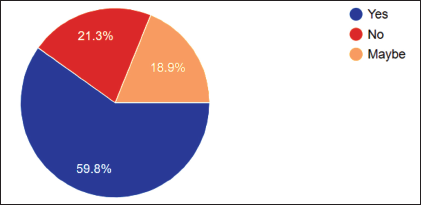
As shown in Figure 1, when asked about Inclusivity (with respect to fashion), almost 60% of the respondents were aware of the term Inclusivity, while 21% were unaware.
Are You Aware of the Term ‘Inclusivity’ with Respect to Fashion?
When asked what inclusivity in fashion means to them, varied responses summarized ‘fashion for all’ as the essence of inclusivity. Some responses were, ‘Inclusive fashion is when a garment is designed to be useful to everybody, including the disabled community.’ ‘To provide the clothing in all sizes, colors, etc. equally.’ ‘To me, it means it could be worn by any person irrespective of age color or sometimes gender,’ ‘When a garment is designed in such a way that the design is thoughtful and can accommodate fashion needs for all. It is not specifically designed for one type of body. It is important as it is a step toward democratization of fashion.’ ‘Fashion opportunities for the people who might otherwise be excluded’, ‘For me, inclusivity in fashion refers to every fashion for every style. The inclusive fashion world involves where no individual is left out of the fashion world because of his body, color, size, or features. It is a way toward evolving diversity in fashion.’ ‘Inclusion is welcoming, celebrating a diverse group of people, making them feel included and valued. Making people feel that they are given equal opportunity to not just feel good but also look stylish.’
When given options about what makes a brand inclusive (multiple options could be selected here), most of the respondents, 66.4% felt that it was about catering to a wide range of sizes, 57.4% felt inclusivity is about catering to all economic classes, 52.5% believed that the brands are inclusive if they can cater to people with disability, 45.9% related inclusivity with sustainability, 43% and 44% felt inclusivity is when a brand can cater to a broader color spectrum and various cultural groups, respectively.
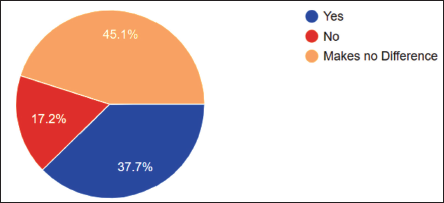
When asked if they were more inclined to buy from a brand that markets itself using models that are similar in age, gender, and body shape, the majority (45.1%) said that it makes no difference to them, while 37.7% said yes, and 17.2% said no, as depicted in Figure 2.
As a Consumer, Are You More Inclined to Buy from a Brand That Markets Itself Using Models Who Are Similar in Age, Gender, and Body Shape to You?
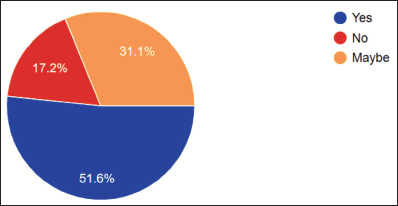
As shown in Figure 3, when asked about the willingness to purchase genderless clothing, 51.6% responded with yes, 17.2% with no, and 31.1% were unsure.
Would You Purchase ‘Genderless Clothing’?
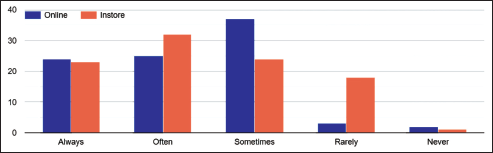
When asked how often they find trendy clothes that fit them in terms of size, color, budget, etc., 28.6% felt that they always find such clothes online, while 22.1% always find them offline. Only 5% were rarely able to find such clothes online or offline as shown in Figure 4.
How Often Do You Find Trendy Clothes That Fit You in Terms of Size, Color, Budget, etc.?
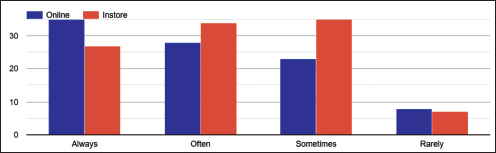
Figure 5 shows the responses regarding finding clothes that express their identity, the majority (30.3%) said they found such clothes sometimes online, while 26.2% said they found them often in stores. Around 19.6% find clothes that express their identity always, either online or in-store, while another 19% rarely find such clothes online or in-store.
How Often Do You Find Clothes That Express Your Identity?
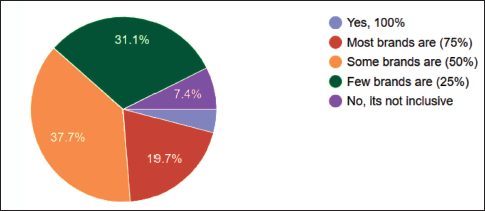
Discussing the Indian fashion industry (brands), 37.7% of the respondents felt that some brands were inclusive, 31.1% felt that only a few brands were inclusive and diverse, and 7.4% felt that the Indian fashion industry was not at all inclusive and diverse as seen in Figure 6.
Is the Indian Fashion Industry (Brands) Inclusive and Diverse?
When asked about the brands that the respondents felt were inclusive, some brands that were frequently mentioned were H&M, Westside, Amydus, Zara, Marks and Spencer, TrueBrowns, Doodlage, Biba, AND, Global Desi, and House of Masaba.
Although 52.5% of respondents rated the inclusive brands higher than the other brands, and 36.1% would ‘maybe’ like to rate the inclusive brands higher, only 23% would want to pay a premium price for an inclusive brand, and 48.4% would ‘maybe’ pay a premium for an inclusive brand.
Practices That Indian Fashion Brands Can Follow to Be More Inclusive
The survey revealed that Indian consumers are inclined toward inclusive brands that can cater to a diverse consumer base. To be inclusive, brands must follow certain practices.
First, brands can develop and offer a wide range of sizes that cater to all body types, from petite to plus-size and tall. This involves not just expanding the size range but ensuring that the designs are flattering and accessible for every size.
They could then focus on diverse representations using marketing and advertising campaigns that feature models of various sizes, ages, genders, skin tones, and physical abilities to reflect the diversity of the customer base.
Because consumers are keen to explore gender-neutral options, brands can offer gender-neutral or unisex clothing lines that cater to consumers who prefer not to conform to traditional gender-specific clothing.
Brands can also focus on the availability of their merchandise through accessible stores and online platforms. They should ensure that physical stores and online shopping platforms are accessible to everyone, including people with disabilities. This could involve adaptive designs in physical stores and user-friendly website interfaces to accommodate diverse needs.
Another area on which brands can focus is sensitization and staff training. This can be achieved by conducting regular programs for store staff to foster an inclusive and respectful shopping environment for customers from all backgrounds and identities.
Partnering with influencers from a broad spectrum of backgrounds will help brands promote inclusivity and reach a wider audience, ensuring that the brand’s marketing efforts resonate with consumer groups.
Lastly, brands should invest in research to understand the unique sizing needs and preferences of the Indian population, which may differ significantly from Western sizing standards, to produce better fitting garments.
Theoretical Implications of the Study
This study enhances the theoretical framework of inclusivity in fashion by exploring its multidimensional nature, including size, gender, cultural diversity, and economic accessibility. It integrates consumer perceptions specific to the Indian context and offers a more comprehensive understanding of inclusivity for the Indian population.
This study highlighted the transformative power of social media in promoting inclusivity. It focuses on how social media platforms serve as pivotal spaces for advocacy, community building, and challenging stereotypes, contributing to a broader discourse on media’s role in shaping industry standards.
This research further highlights the efforts of luxury brands to become more accessible, aiming to serve a broader range of customers. These brands maneuver through the challenge of incorporating inclusivity into their offerings while preserving their unique exclusivity.
Practical Implications of the Study
The findings offer insights for fashion brands in India to implement inclusivity in their practices. This includes developing diverse product lines, adopting inclusive marketing strategies, ensuring accessibility across physical and digital shopping environments, and training staff on sensitivity.
The research suggests that brands can enhance consumer engagement and loyalty by aligning themselves with the values of inclusivity and diversity. This indicates a need for a strategic shift toward more authentic representations in advertising, inclusive size ranges, and recognition of the varied needs of a diverse consumer base.
Emphasis on the unique sizing needs of the Indian population calls for research and development efforts to create garments that cater to a broader range of body types. This has practical implications for design, manufacturing processes, and quality control, ensuring that products meet consumers’ diverse needs.
Limitations of the Study
This study while offering valuable insights into the inclusivity dynamics within the Indian fashion industry also presents several limitations.
Given the rapidly evolving nature of fashion trends and societal norms around inclusivity, this study’s findings capture the situation at a specific time. Continuous development in consumer expectations and industry practices could render these insights less relevant. For instance, the rise of digital platforms has changed how fashion is consumed and discussed, influencing the pace at which inclusivity is integrated into the fashion culture. This fluidity suggests that insights from current research might become outdated as new trends emerge and consumer attitudes evolve. Therefore, there is a need for ongoing research in this area to keep pace with these changes, ensuring that strategies for inclusivity remain relevant and effective.
In addition, while size and gender have been focal points in discussions of inclusivity, they are not the only dimensions that matter. Ethical practices in the fashion industry, encompassing fair labor conditions, sustainable production methods, and transparent supply chains are becoming increasingly integral to inclusivity. Consumers are more conscious of the environmental and social impact of their fashion choices, prompting a broader definition of inclusivity. Racial and cultural diversity are another critical aspect of inclusivity, particularly in recruitment and career advancement within the fashion industry. There is growing acknowledgment that inclusivity must extend beyond the runway and retail spaces to boardrooms and creative teams where decisions are made. This includes nondiscriminatory hiring practices that represent diverse backgrounds and perspectives. Furthermore, career advancement opportunities should be equitable to ensure that all individuals, regardless of their racial or cultural background, have the opportunity to influence and shape the industry.
Summary and Conclusion
The exploration of inclusivity within the Indian fashion industry sheds light on evolving perceptions and practices that aim to accommodate a broad spectrum of identities and preferences. The transition toward a more inclusive fashion market is inspired by and reflective of a broader societal transformation, where diversity in size, gender, cultural diversity, and economic accessibility is celebrated.
The study takes a mixed-methods approach, combining a comprehensive literature review with primary data collected through a survey to investigate how inclusivity is perceived, valued, and implemented in an Indian fashion. The findings reveal a growing awareness and appreciation for inclusivity among consumers, indicating a shift toward ‘fashion for all.’ This encompasses a desire for brands to cater to diverse body sizes, economic backgrounds, physical abilities, sustainability, and cultural diversity, with notable mentions of brands such as H&M and Zara leading the charge of inclusivity within the Indian market.
Despite the progress observed, this study uncovers persistent gaps in creating authentic inclusive experiences that cater to the vast array of individual needs and preferences. As the industry advances, it faces the dual challenge of broadening its inclusivity efforts while maintaining the unique appeal of brands, especially within the luxury sector. This balance between inclusivity and exclusivity remains critical for future exploration and development.
The theoretical implications of this research contribute to a deeper understanding of the multifaceted nature of inclusivity within the fashion industry, emphasizing the transformative role of social media and the strategic adjustments of luxury brands to embrace inclusivity without sacrificing exclusivity. On a practical level, this study offers insights for brands, suggesting the adoption of inclusive design and sizing, diverse representation, accessible shopping platforms, sensitivity training for staff, and partnerships with a broad spectrum of influencers. These strategies enhance consumer engagement and loyalty by aligning with the values of inclusivity and diversity.
However, this study has limitations in that it reflects a specific timeframe and may soon be outdated with the changing dynamics of digital platforms and consumer expectations, highlighting the need for continuous research. Additionally, inclusivity extends beyond size and gender, encompassing ethical practices and the need for racial and cultural diversity in the industry’s recruitment and advancement, urging a broader and more dynamic approach to inclusivity in fashion.
This study highlights the importance of continuing to push the boundaries of inclusivity in fashion. By embracing diversity, challenging norms, and promoting inclusivity, the fashion industry can establish more accessible and empowering spaces for all individuals. As we look to the future, the transition toward a fully inclusive fashion industry is ongoing, driven by a collective commitment to celebrating and representing the full spectrum of human diversity.
Footnotes
Declaration of Conflicting Interests
The authors declared no potential conflicts of interest with respect to the research, authorship, and/or publication of this article.
Funding
The authors received no financial support for the research, authorship, and/or publication of this article.
