



Abstract
Introduction
The pandemic caused by the coronavirus disease (Covid-19) has had a negative impact globally on individuals’ physical health, mental health, and overall sense of well-being (Ali & Kunugi, 2020). To control the spread of the disease, countries worldwide responded with mandatory lockdowns (including school closures), quarantines, and individual social regulations. Although a majority of families experienced disruptions from these public health measures (Gadermann et al., 2021), those involved with child welfare have been considered to be more vulnerable to negative outcomes (Sistovaris et al., 2020). While resource parents (foster or kinship) experience the same stressors as other families, these may be compounded by additional factors associated with parenting a young person in out-of-home care (Miller et al., 2020).
Covid-19 and families
In Canada, provinces and territories have jurisdiction over their health care regulations so Covid-19 responses were determined based on rates of infections and outbreaks within each province and territory. In March 2020, the provincial government of Ontario declared a state of emergency due to the Covid-19 pandemic and implemented measures directly affecting families, such as the closure of elementary and secondary schools and childcare centres, closure of outdoor recreational amenities including parks and playground equipment, and stay-at-home and social distancing measures. Since this initial response to the pandemic, the provincial government has adjusted the regulations regionally according to rates of infection, which has resulted in vacillating policies related to in-school and virtual learning for school-aged children and youth (Canadian Institute for Health Information, 2020).
These unprecedented measures have disrupted family dynamics because of such stressors as social isolation, working/attending school from home, concerns about child supervision, financial strain, as well as fear of the virus itself (Cluver et al., 2020). Parents have reported a decline in their mental health due to increased feelings of anxiety, stress, and boredom (Gadermann et al., 2021). According to Children’s Mental Health Ontario (2020), 60% of parents reported an increase of behavioural issues in their children, such as emotional outbursts, rapid mood and personality changes, and disruption to sleep patterns. The pandemic has caused a major mental health crisis, exacerbated by the long wait times for children to access mental health services (Children’s Health Coalition, 2020). While there have been several studies examining the pandemic’s impact on parents, there has been little research in Ontario specific to resource parents who may have some unique experienced by virtue of their role in caring for child welfare-involved young people who often have significant histories of trauma and adversity.
Covid-19 and resource parents
In addition to the increased demands due to the pandemic, resource parents face the challenge of caring for young people who have been removed from their biological homes because of risks to their safety and development, all of which are typically associated with increased mental health, behavioural, emotional, and academic needs (Horwitz et al., 2010; Romano et al., 2015). The well-being and functioning of young people have been further affected during the pandemic because of social isolation, limited contact with peers, change in routines, and uncertainty about the future (Singh et al., 2020). Other unique resource parent stressors related to the Covid-19 pandemic are directly a function of the child welfare system in Ontario, including disruptions to services and resources (Sistovaris, et al., 2020).
A qualitative analysis using Reddit social media data from U.S. foster parents found that many expressed difficulties in communicating with child welfare staff and filing complaints before the start of the pandemic. After the pandemic, foster parents reported that child welfare agencies were having problems with their daily operations, so communication issues had worsened (Lee et al., 2021). Support from agencies, such as psychological services, are crucial for resource parents to fully care for their young people (Chanchlani et al., 2020). Pisani-Jacques (2020), noted such disruptions in foster care services and activities have exacerbated feelings of isolation and instability among young people and their foster families and have put strain on the entire child welfare system.
According to the Foster Parent Society of Ontario (2021), resource parents also experienced challenges with child welfare and government policies on access visitation with birth families for young people in their care. Throughout the pandemic, the allowance of in-person access visitations has fluctuated, which is problematic because regular and positive contact with birth families often is important for the well-being of young people (Foster Parent Society of Ontario, 2021; Kiraly & Humphreys, 2016). These disruptions to access visitations during the pandemic have also stalled the process of reunification of young people and birth parents (Goldberg, et al., 2021). The problem of access visitation during the pandemic is complicated because there are potential risks associated not only with lack of contact but also with contact. In a U.S. sample of resource parents, 30–50% expressed concern that such contacts might also place themselves and the young person in their care at risk of catching Covid-19 (Langley, et al., 2021).
A study that examined Reddit data on U.S. foster parents found that the pandemic also created disturbances to the process of becoming a foster parent. Potential foster parents experienced increased delays to starting placements because many of the processes involved, such as home visits and trainings, were postponed. Foster parent discussions around permanency also decreased, and there were concerns about the impact that prolonged separation from birth families could have on the young person in their care (Lee et al., 2021).
Although there is limited Ontario-based research, several U.S. studies completed during the pandemic indicated that foster parents experienced an increase in parenting stress, lack of control in regard to parenting, and decreases in parenting satisfaction. These conditions were found to be exasperated by individual parent characteristics, such as being a sole caregiver and experiencing poorer mental health and greater financial insecurities (Miller et al., 2020). Another U.S. study found that foster parents engaged in fewer personal self-care practices since the beginning of the pandemic and that determinants included parental older age, poorer mental health status, and greater financial insecurity (Miller & Grise-Owens, 2021).
Protective factors
The research on resource parents, while limited, has tended to focus on risk factors but there has been an emerging emphasis on the importance of protective factors (Semanchin Jones & LaLiberte, 2017). Possible parent protective factors that have been found to influence families, including those involved with child welfare, during stressful times include a combination of external (social supports and caregiver/practitioner relationship) and internal (family functioning/resilience and parent emotion regulation) characteristics (Benzies & Mychasiuk, 2009; Sprague-Jones et al., 2020). Concerning possible external protective factors, social support is essential during a time of stress, such as a pandemic, and is important for maintaining or enhancing positive mental health for all parents and young people (Benzies & Mychasiuk, 2009). Social support refers to formal and informal interpersonal relationships within a parent’s life and can involve emotional support from a friend or advice from a local mental health professional. Moreover, social support has also been cited as a protective factor in preventing child maltreatment and positively influencing families involved with child welfare (Sprague-Jones et al., 2020). More recently, a U.S. study examining parent protective factors during the pandemic found that greater parental and emotional supports were associated with lower perceived parental stress during the pandemic (Brown, et al., 2020).
The caregiver and practitioner relationship refers to the quality and level of engagement that is shared between a parent and child welfare worker. The quality of this relationship has been linked with parental participation in child welfare services and retention (Sprague-Jones et al., 2020). Foster parents are more likely to commit to a placement when they have responsive communication with their child welfare agency (Rhodes et al., 2003). Although foster parents acknowledge that the child welfare system and its workers are often overwhelmed, they highlight the importance of working with child welfare workers who are continually responsive and consistently provide concrete and emotional support when needed (Geiger et al., 2017). When foster parents and child welfare workers maintain a positive relationship, it directly impacts the well-being of the young person by creating a stable placement that promotes their healthy development (Ramsay-Irving, 2015).
Concerning possible internal protective factors, emotion regulation abilities are essential in determining positive outcomes for parents under stressful conditions (Deater-Deckard et al., 2016). Emotion regulation refers to a parent’s ability to manage their emotional responses through impulse control and delayed gratification, which allows them to react appropriately during times of stress (Benzies & Mychasiuk, 2009). In a Romanian study that introduced an emotion regulation component to a foster parent training and compared the training to a wait list control group, found a significant decrease in externalizing behaviours in the young people cared for by the parents who completed the training. As a result of the new component, foster parents also reported reduced levels of parental distress and parenting dysfunction (Gavita, et al., 2012). Shorer & Leibovich (2020) found that when parents had difficulties with emotion regulation and experienced high levels of stress, their children also experienced higher levels of stress. When parents exhibit effective emotion regulation skills, it helps their children regulate their feelings, behaviours, and coping during times of stress (Kliewer et al., 2004). Moreover, young people’s ability to self-regulate can also help sustain positive peer relationships (Benzies & Mychasiuk, 2009).
Family functioning is another important variable that has been found to impact parental well-being in terms of stress for families involved with child welfare (Sprague-Jones et al., 2020). Family functioning refers to the overall well-being of a family and the effective functioning of family members as a unit. Healthy functioning can be captured by way of positive and supportive interactions, management of positive and negative events together, and problem solving. When families involved with child welfare demonstrate higher functioning and resilience, it is more likely they adapt and cope together through a stressful time (Sprague-Jones et al., 2020).
Study objectives
The objective of the present study was to examine the association between potential protective factors among resource parents in Ontario and their perceived stressor levels during the Covid-19 pandemic. This study is novel as to our knowledge, there is limited literature on the effects of the pandemic on resource parents in Ontario, particularly protective factors that may affect their experienced stress. This study adopted a strengths-based research approach, as opposed to a deficit approach, which may be preferred when working with vulnerable populations as it contributes to the narrative that promoting strengths can lead to positive change. An example of a strengths-based approach is the protective factors framework (Thurber et al., 2020). This framework has become more popular in guiding child maltreatment prevention strategies as it focuses on promoting strengths and resilience, as opposed to solely eliminating risk factors within family systems. Protective factors in this framework are not defined as simply an absence of risk, but rather as prosocial factors that are capable of change over time and that can have a positive influence on challenging young person behaviours (Dickens & O’Shea, 2017; Sprague-Jones et al., 2020). This protective factor framework is preferred within the context of child welfare because it creates an environment of support and warmth for families, instead of a focus on their faults (Counts et al., 2010). In this study, variables were chosen to reflect a strengths-based approach, which included re-framing some variables of interest into a strength rather than a risk. While some have argued that protective factors are more than the reverse of risk factors, there is still merit to adopting this approach as some research has found that regardless of whether variables are worded as risk or protective, they often yield the same statistical results. (Thurber et al., 2020).
Methods
Sample and procedures
The data were collected from January - May 2021. At that time in Ontario, Covid-19 rates were increasing and triggered a third wave which led to a lockdown in early April 2021. The participants were foster and kinship parents who were currently caring for a child or youth aged 4–17 years within a child welfare agency in Ontario. Adoptive parents were excluded because our objective was to explore potential protective factors of pandemic-related stressors among resource parents involved with child welfare. Recruitment of participants was done through two social media platforms (Facebook and Twitter) where information about the study was presented. A recruitment poster was also provided to several child welfare agencies and foster parent organizations, such as the Ontario Association of Children’s Aid Societies (OACAS), Practice & Research Together (PART), and the Foster Parent Society of Ontario. The recruitment poster included all relevant study details and a link directing participants to an online consent form and questionnaire. Participants also had the chance of winning a $25 gift card. Ethics approval was granted through our University’s Office of Research Ethics and Integrity (# H-10-20-6213).
Demographic characteristics of resource parents (N = 47).
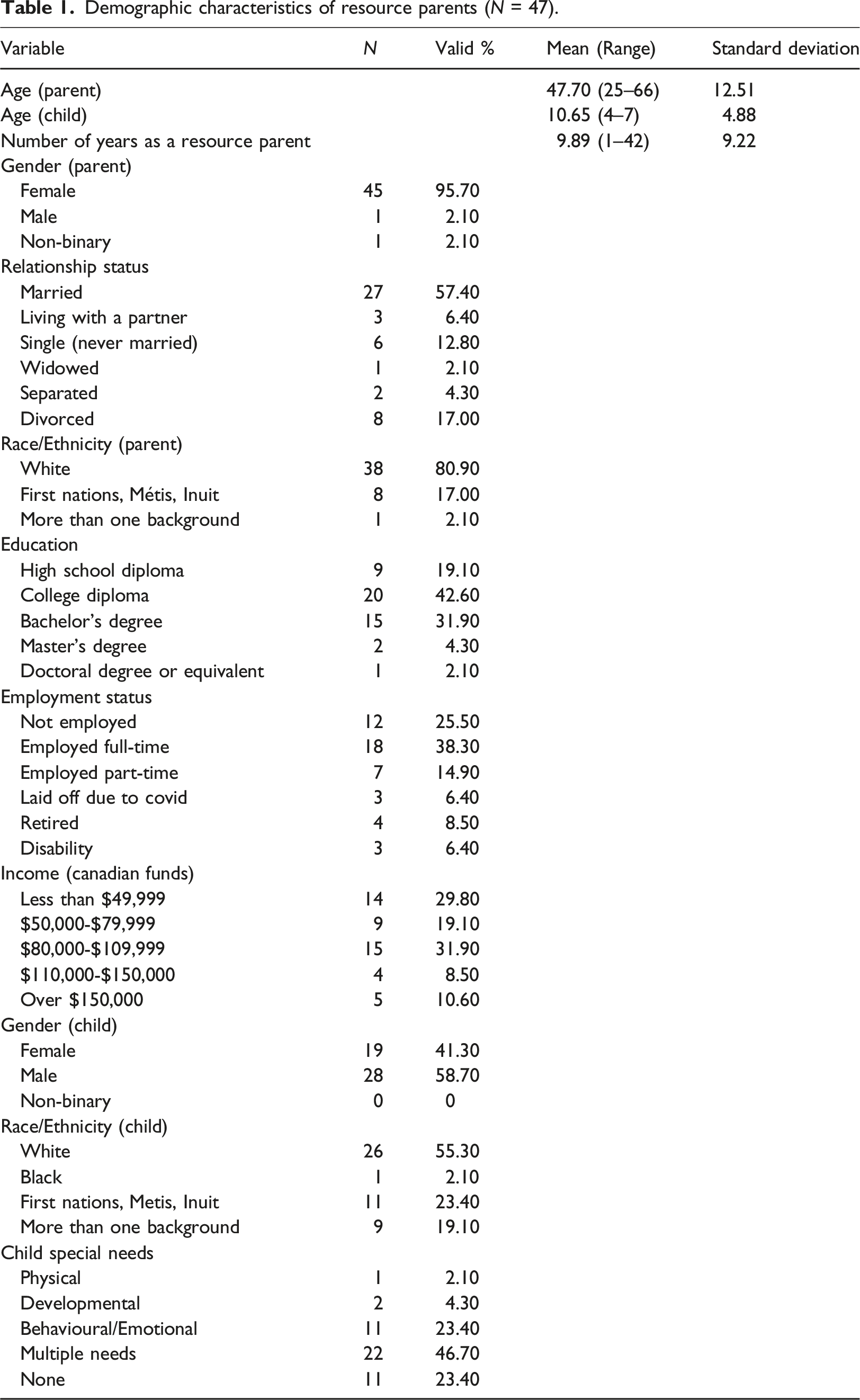
Although the sample size is low, is it relatively representative in terms of some of the demographics. When compared to the Ontario Looking After Children (OnLAC; Millier, 2019) provincial report, our samples were similar. For example, in our sample, 41.3% of young people cared for by resource parents were female and 58.7% were male. Similarly, OnLAC data from children and youth aged 6–16+ were 44% female and 55.9% male. These findings are consistent with child welfare research, as a greater number of young people in care are males. Another similar finding is that 23.4% of the young people in our sample were First Nations, Inuit, or Métis compared to 18.8% in the OnLAC data. This is an important consideration as Indigenous children are highly overrepresented within the child welfare system, so it is imperative that they are similarly represented within our sample.
Measures
The concrete support and nurturing parenting subscales were not included in our study because they were not deemed pertinent to the main research question. We relied on the three subscales of social support, family functioning/resilience, and caregiver/practitioner relationship which totaled an 11-item questionnaire. The social support total score ranges from 0 to 20, with higher scores reflecting higher social support received by the parents during the pandemic. The family functioning total score ranges from 0 to 12, with higher scores reflecting higher global functioning of the family. Finally, the caregiver/practitioner relationship total score ranges from 0 to 16, with higher scores reflecting a higher quality relationship between the resource parent and child welfare worker. The internal consistency for these three subscales were all in the acceptable range (social support α = .75; family functioning α = .65; and caregiver/practitioner relationship α = .66; Taber, 2017).
Data analysis
The sample was initially composed of 49 parents, but two were excluded because of incomplete data for more than half of the items. Missing data among the remaining 47 participants, which ranged from 0.5 to 2.2%, was imputed using the Expectation-Maximization algorithm. Variables were screened for departure from multivariate normality along with skew and kurtosis coefficients. Cut-off scores for skewedness and kurtosis were < ±2 (George & Mallery, 2009). In addition, mean total scores and standard deviations were examined for all study variables. For descriptive purposes, the Covid-19 stressor items were grouped into the two categories of “extremely/somewhat affected” and “not affected”, and percentages for each category were reported. Pearson correlations were also conducted among all study variables.
A multiple regression analysis was conducted to examine the impact of potential protective factors (family functioning/resilience, social supports, caregiver/practitioner relationship, and parental emotion regulation) on perceived pandemic-related stressors. Given the small sample size and requirements around needing an absolute minimum of 10 participants per predictor (VanVoorhis & Morgan, 2007), we had to rely on total scores for most of the measures to maintain adequate statistical power. A probability level of .05 was used to establish statistical significance. Semi partial correlations assessed the unique contribution and effect size of each significant variable. Effect sizes of .02 were considered small, .15 medium, and .35 large (Cohen, 1992). Analyses were conducted in SPSS 28.
Results
Pandemic-related stressors
Description of pandemic-related stressors and needs (N = 47).
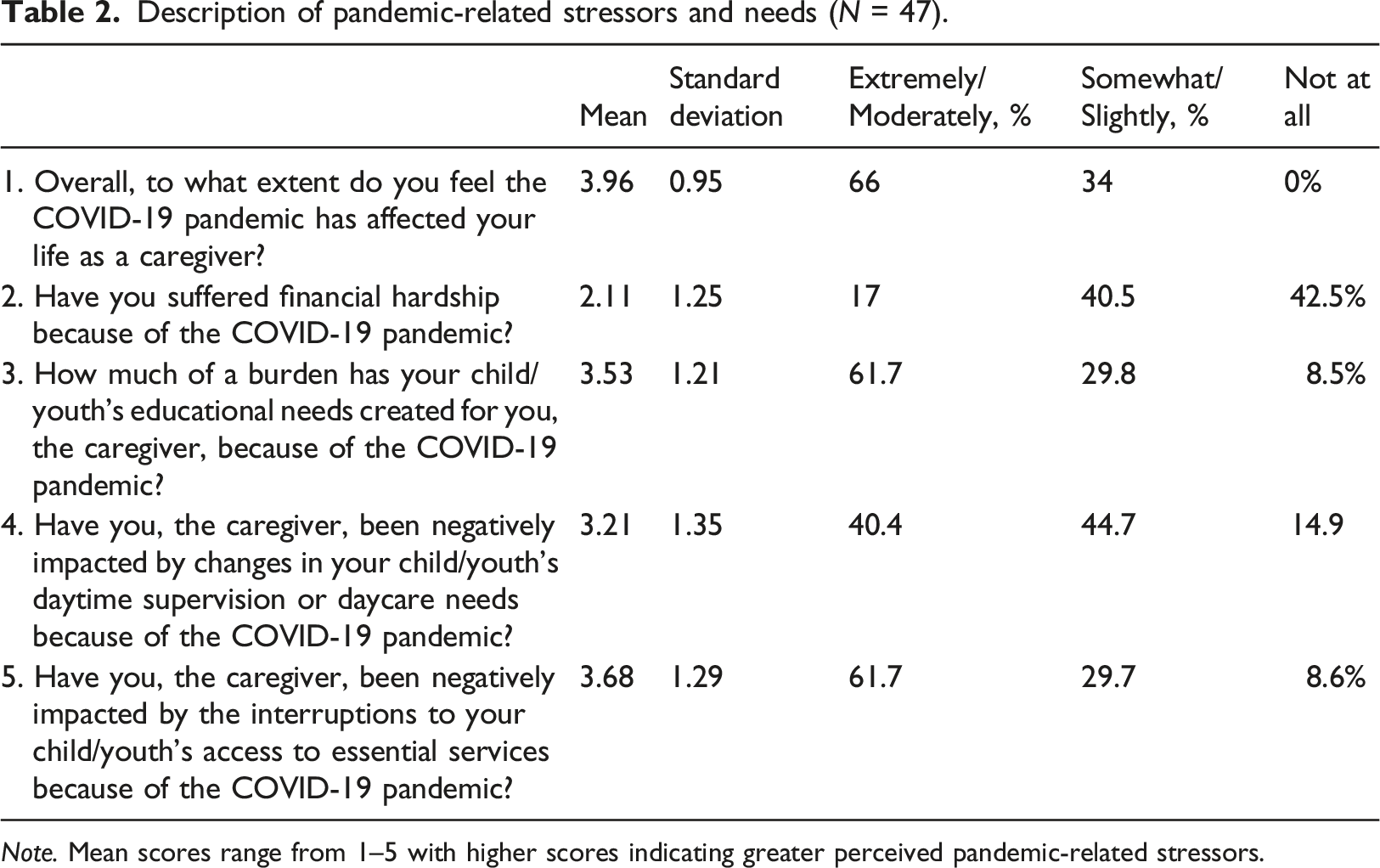
Note. Mean scores range from 1–5 with higher scores indicating greater perceived pandemic-related stressors.
Correlations among all study variables.
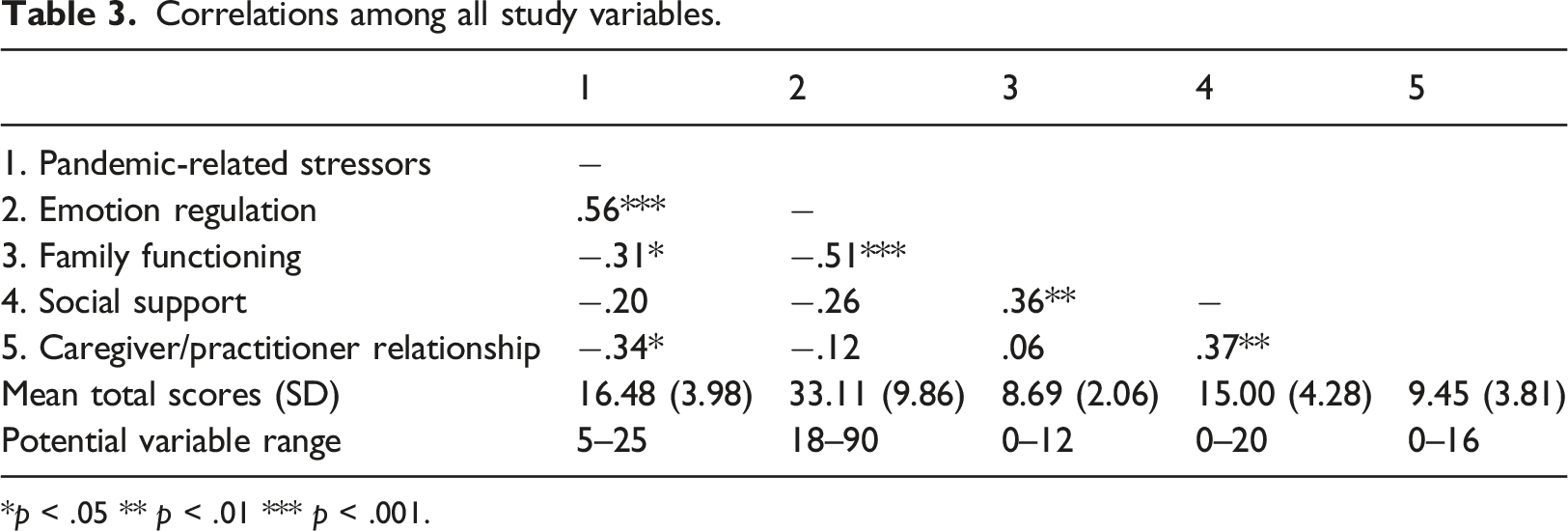
*p < .05 ** p < .01 *** p < .001.
Associations between potential protective factors and pandemic-related stressors
The impact of protective factors on resource parents’ perceived stressors during the Covid-19 pandemic (N = 47).
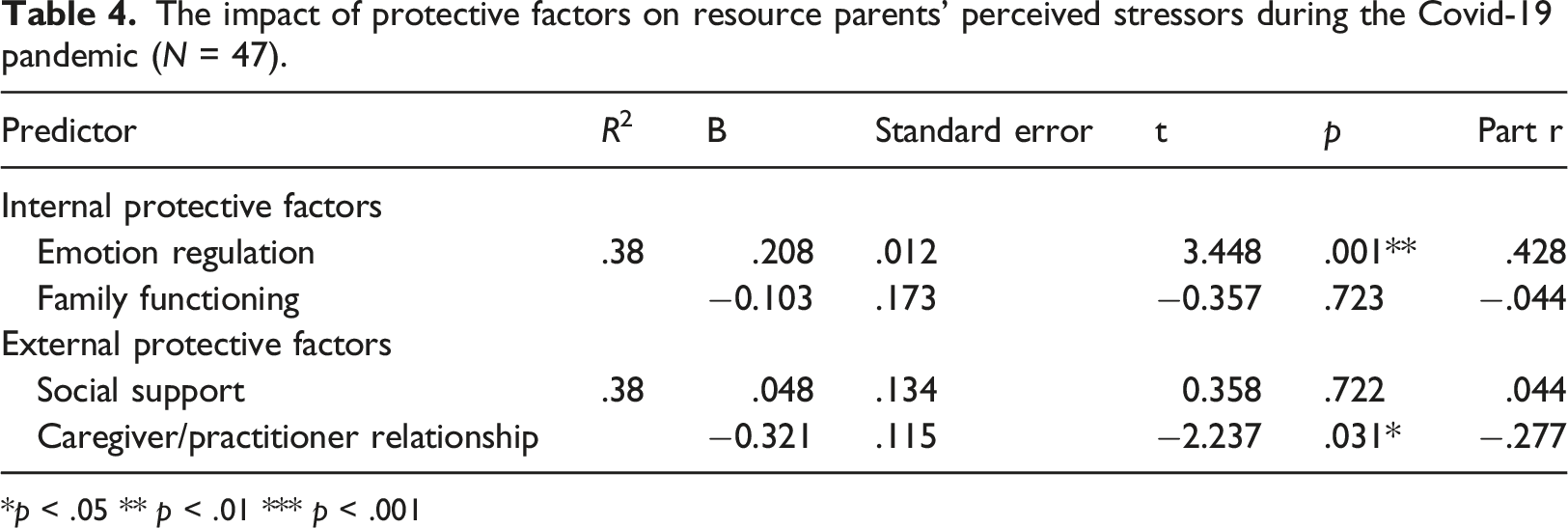
*p < .05 ** p < .01 *** p < .001
Discussion
The Covid-19 pandemic has had detrimental effects on almost everyone worldwide, and one particularly vulnerable group maybe resource parents and the young people in their care (Ali & Kunugi, 2020; Miller et al., 2020). Young people in Ontario are currently facing a mental health crisis due to the pandemic, and it is imperative that families, especially those caring for vulnerable young people, receive the supports they need for their own well-being and that of their children (Children’s Health Coalition, 2020). Currently, there is limited research on the pandemic’s impact on resource parents and how protective factors can influence the level of resource parents’ perceived pandemic-related stress.
The present study examined how potential external (i.e., social supports and parent/child welfare worker relationship) and internal (i.e., emotion regulation and family functioning/resilience) factors are associated with pandemic-related stressors among resource parents. Results showed that most resource parents experienced high levels of stressors due to the pandemic, particularly in respect to their young person’s increased educational needs, lack of daytime supervision or childcare, and reductions in access to essential services. These stressors are consistent with what is being reported by many families including child welfare-involved families (Cluver et al., 2020; Sistovaris, et al., 2020).
Among the external factors that we examined, findings were in line with expectations in showing that a shared good quality relationship between resource parents and child welfare workers was associated with lower levels of perceived stressors. In a previous study, Sprague-Jones et al. (2020) reported on the importance of the quality of the relationship between parents and child welfare workers in determining parental participation in child welfare services. In a related vein, the presence of responsive child welfare workers who offer resource parents concrete and emotional supports in times of need undoubtedly helps parents in providing the best care to their child (Geiger et al., 2017). This past research is consistent with our findings in suggesting that resource parents’ maintenance of a positive relationship with their child welfare worker can be related to a reduction in stressors. These past findings are also consistent with our correlation analysis that found a significant relationship between caregiver/practitioner relationship and social supports.
Turning to internal factors, our findings indicated that resource parents who reported higher emotion regulation abilities also reported less perceived pandemic-related stressors. This outcome was in line with our hypotheses as emotion regulation is, by definition, related to stress management (Deater-Deckard et al., 2016). As such, it is important that resource parents maintain a sense of emotional stability for themselves as their well-being will, by extension, impact the well-being of young people in their care (Benzies & Mychasiuk, 2009; Kliewer et al., 2004). In fact, Shorer & Leibovich (2020) found that children experienced increased stress levels when parents experienced increased stress and had difficulties with emotion regulation.
Contrary to expectations, neither family functioning nor social support showed a statistically significant relationship with pandemic-related stressors. This finding might be due to the shared variance between these two predictors and the outcome variable. All variables were entered together in the multiple regression model so these two predictors may be partialing each other out. However, the bivariate relationships from the correlation analysis found that resource parents who reported lower levels of emotion dysregulation also reported higher levels of family functioning. This correlation between emotion regulation and family functioning was expected as both relate to perceived stress given that family functioning can be defined as how well families are able to adapt and problem solve during stressful times (Deater-Deckard et al., 2016; Sprague-Jones et al., 2020). Moreover, the current correlation findings indicated that greater family social supports were related to higher family functioning, and also that poorer family functioning was related to greater pandemic-related stressors. This finding suggests that families experience fewer stressors and are able to function better together when they have access to the supports and resources they need. This finding is consistent with the literature suggesting that, when child welfare-involved families experience better functioning, they are more likely to also adapt and cope better during stressful periods (Sprague-Jones et al., 2020). Also, recent findings during the pandemic have indicated that families had lower levels of parental stress when they had greater parental and emotional supports (Brown, et al., 2020).
Limitations
The major limitation was the small sample size. Researchers have experienced difficulties with participant recruitment throughout the pandemic, and this study was no exception. The low participation rate really speaks to the nature of this study as it perhaps demonstrates how resource parents are experiencing such stress from the pandemic, the thought of completing an online survey was too much on them. The difficulties in recruitment were compounded by the fact that our target population was quite specific (i.e., resource parents in Ontario). The small sample size did not permit for more complex data analyses and limited our ability to generalize findings to Ontario resource parents as a whole. This study may have benefited from a qualitative component that allowed resource parents to share their circumstances and, in this way, better situate their pandemic-related stressors as well as protective factors.
Another limitation was the potential for variability in pandemic-related stressors experienced by resource parents and young people in out-of-home care. The data collection occurred over 4 months while the province of Ontario went through fluctuations of strict and more physical distancing regulations as well as remote versus online learning for students. These fluctuations would likely have affected the degree of perceived stressors on the part of resource parents. Again, this could have been captured more effectively with a qualitative component to gain a better understanding of the state of the province while also providing individual reasons why participants experienced certain levels of stressors.
Finally, another limitation was the internal consistency of the developed Covid-19 stressor questionnaire. Although the internal consistency was deemed acceptable, it may have not accurately captured the construct of pandemic-related stressors. When this study first began, there was no such measure available so, one had to be created based on a content analysis of resource parent comments. Further research should attempt to develop and validate measurement instruments that can be used to better assess the impacts of COVID-19 on the well-being of resource parents.
Implications
As the pandemic is still ongoing, families continue to experience pandemic-related stressors. Although our findings were specific to the Covid-19 pandemic, they may also be applicable to other times of stress in the lives of resource parents. Our findings suggest that two possible resource parent protective factors are effective emotion regulation skills and a higher quality relationship with their child welfare worker. Child welfare workers need to have collaborative and supportive relationships with resource parents and put strategies in place to help assess and support parents when they are in need. Previous research has shown that the pandemic has caused increased exhaustion in child welfare agencies and workers, and there have been disruptions to services and resources for families as well as a decrease in communication (Lee et al., 2021; Pisani-Jacques, 2020). These findings also illustrate the need to advocate for additional resources for child welfare agencies (and child welfare workers) to ensure they can fully support families in their care.
Many child welfare agencies have adopted a strengths-based approach to their interventions with families so that efforts are made to focus on families’ resources and to promote protective factors in their lives (Counts et al., 2010). This study furthers the literature on the importance of applying a strengths-based approach to research. Applying this framework to a research setting involves re-framing the factors of interest into a strength rather than a risk. This approach can be valuable as an exclusive focus on risk factors can reinforce the idea that vulnerable populations have something wrong with them, which can create bias and stigmatization. Instead, using a strengths-based approach in research can contribute to the scientific literature that promotes the narrative that identifying strengths can be effective in working with vulnerable populations (Thurber et al., 2020).
Footnotes
Declaration of conflicting interests
The author(s) declared no potential conflicts of interest with respect to the research, authorship, and/or publication of this article.
Funding
The author(s) received no financial support for the research, authorship, and/or publication of this article.
