



Abstract
This study examines secondary traumatic stress (STS), burnout and compassion satisfaction (CS) in Flemish foster care workers (FCW) during the COVID-19 lockdown. Even though child welfare workers are at increased risk for STS and burnout, these constructs have not been studied in FCW so far. Additionally, the COVID-19 measures severely impacted Flemish FCW’s work, personal and client environment, possibly stimulating the onset of STS and burnout and weakening CS. Moreover, this study aims to identify the work, client and personal factors determining high levels of STS and burnout and low levels of CS among FCW during the lockdown. STS, burnout and CS levels from 434 Flemish FCW were inquired with the Professional Quality of Life Scale. Low mean levels of STS and moderate mean levels of burnout and CS were reported during the lockdown. FCW who experienced a negative impact of COVID-19 measures on their work, had a high amount of worrisome placements due to birth parents in their caseload and low emotional stability are an at-risk group for both STS and burnout during the lockdown. CS was strongly determined by the impact of the COVID-19 measures on work and personality traits. Emotional stability determined the three outcome variables, making this a key characteristics for FCW during the lockdown. Consequently, during adverse circumstances, foster care agencies should pay extra attention and offer additional support to those FCW they estimate emotionally less stable and who struggle with the birth parents in their caseload.
Keywords
Introduction
The COVID-19 pandemic pushed governments all over the world to implement drastic measures impacting us on an individual, organizational and societal level (WHO, 2020). Among other sectors, Flemish foster care agencies had to reorganize drastically to comply with the measures taken. For example, prohibiting house visits forced foster care workers (FCW) to find alternative ways to provide optimal care to their clients (Agentschap Opgroeien, 2020). In normal circumstances, child welfare workers are already at increased risk for developing burnout and secondary traumatic stress (STS) (Dagan et al., 2016; Rienks, 2020). To date, no research has examined STS, and burnout in FCW. Additionally, the restrictive measures impacted the work, client and personal environment of Flemish FCW, which could negatively affect their professional quality of life (ProQoL) and increase their vulnerability to burnout and STS (Stamm, 2010). Therefore, this study assessed the ProQoL of Flemish FCW 6 weeks into the COVID-19 lockdown.
First, a theoretical framework of the ProQoL is explained (Stamm, 2010), followed by a literature review on the ProQoL in child welfare work. Next, the impact of the implemented COVID-19 measures on the (professional) well-being of Flemish FCW is illustrated. Finally, the method and results of our study are presented and a discussion and conclusion are formulated.
Professional Quality of Life
ProQoL stands for the satisfaction one experiences performing a job as a professional helper and is made up of both negative (i.e., Compassion Fatigue (CF)) and positive aspects (i.e., Compassion Satisfaction (CS)) of providing care (Stamm, 2010). As presented in Figure 1, factors from the work, client and personal environment of the helper can impact his/her ProQoL. Both CF and CS can be present at the same time and can be influenced by one and the same factor (Stamm, 2010).
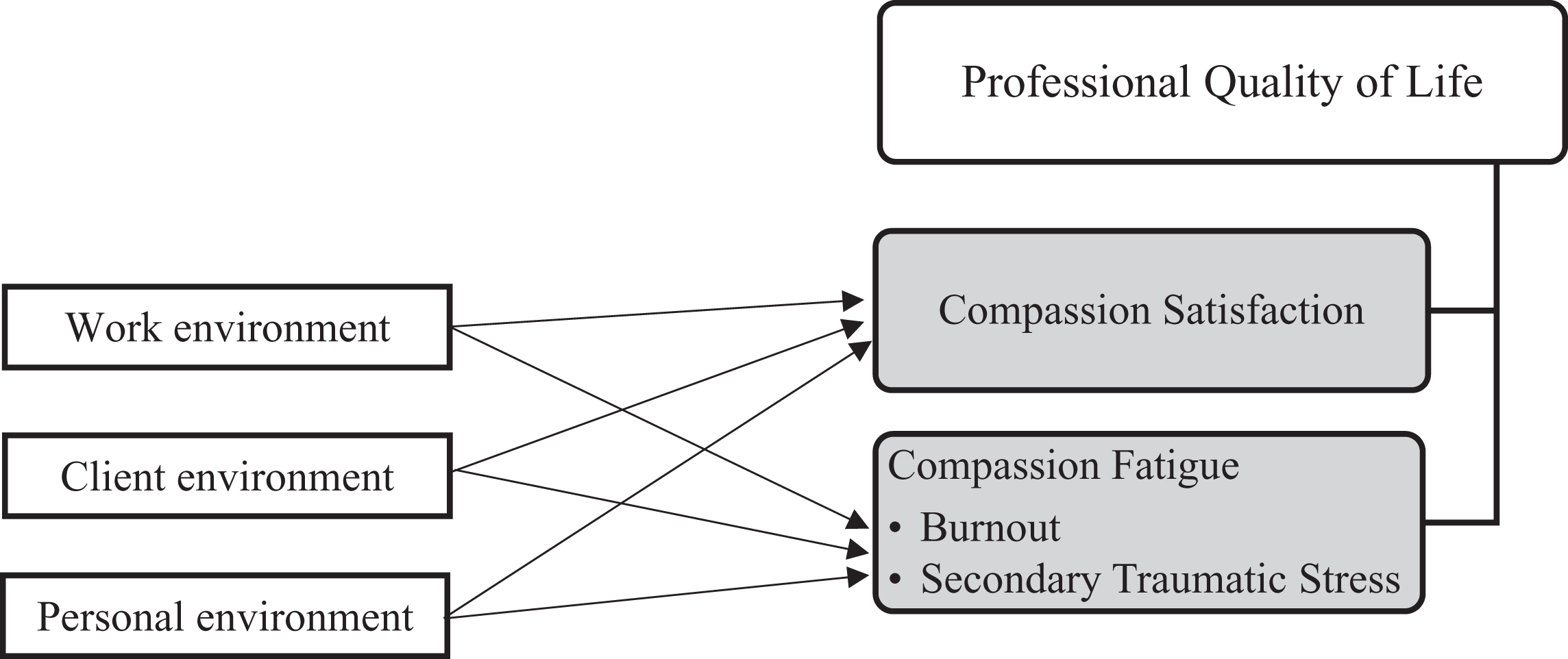
Professional Quality of Life model. Note. This model shows the structure of the Professional Quality of Life and the influences of the work, client and personal environment on both the positive (i.e., compassion satisfaction) and the negative (i.e., compassion fatigue) aspects of caregiving. Adapted from “The concise ProQOL manual,” by Stamm (2010).
CF is made up of two distinct phenomena (Adams et al., 2006; Stamm, 2010). The first, burnout, includes feelings of extreme emotional and physical exhaustion, depersonalization, frustration, anger, hopelessness, loss of passion for one’s job and reduced personal accomplishment. It develops gradually over time in response to persistent and chronic emotionally demanding and stressful situations at work (Figley, 1995; Lizano & Mor Barak, 2012; Maslach et al., 2001; Stamm, 2010). The second, STS, can occur after a single exposure to someone’s traumatic experience and is characterized by symptoms similar to a Post-traumatic Stress Disorder (PTSD), such as anxiety, fear, intrusive thoughts, panic attacks and sleep difficulties (Bride et al., 2007; Figley, 1995; Showalter, 2010; Stamm, 2010). Regardless of the similarities, burnout and STS are two separate constructs that both find their onset in the working environment (Adams et al., 2006; Maslach et al., 2001; Rienks, 2020; Stamm, 2010).
One can also derive pleasure and gratitude from performing a job as a professional helper. CS comprises a certain kind of altruism and includes feelings of satisfaction and pleasure of being able to perform a meaningful job and help people effectively (Figley, 1995; Stamm, 2010). Research evidence supports the assumption that CS helps to counteract CF and is a protective factor for STS and burnout (Baugerud & Vangbæk, 2018; Bridger et al., 2020; Conrad & Kellar-Guenther, 2006; Hamama, 2012; Stamm, 2010; Van Hook et al., 2008).
STS, burnout and CS in child welfare work
Compared to other helping professions, child welfare workers (CWW) have been found to be at greater risk for STS and burnout (Meyers & Cornille, 2002; Sprang et al., 2011; Van Hook et al., 2008). Various studies have confirmed the presence of high or severe levels of STS and burnout in American CWW (Conrad & Kellar-Guenther, 2006; Rienks, 2020; Salloum et al., 2015). Their vulnerability is due to particular work challenges (e.g., high work pressure, complex cases) (Bride et al., 2007; Lizano & Mor Barak, 2012; Maslach et al., 2001; Strolin et al., 2007; Zlotnik et al., 2005), the nature of their work (e.g., daily exposure to traumatized individuals and traumatic material) and their vulnerable clients (Dagan et al., 2016; Figley, 1995; Meyers & Cornille, 2002; Sprang et al., 2011; Van Hook et al., 2008). All these aspects add to job stress and to the possibility of experiencing burnout and/or STS (Bride et al., 2007; Meyers & Cornille, 2002), which has negative consequences for the CWW, the organization and the clients. STS and burnout lead to problematic staff turnover (costly for organizations), intent to leave, increased workload, reduced effectiveness, suboptimal care and poor client outcomes (Bride et al., 2007; Flower et al., 2005; Meyers & Cornille, 2002; Middleton & Potter, 2015; Prost & Middleton, 2020; Showalter, 2010; Strolin et al., 2007; Van Hook et al., 2008; Zlotnik et al., 2005). On an individual level, the emotional and physical well-being of the professional helper is impaired (Lizano, 2015; Maslach et al., 2001; Meyers & Cornille, 2002; Showalter, 2010).
Nonetheless, moderate to high levels of CS are common in CWW (Prost & Middleton, 2020; Salloum et al., 2015; Van Hook et al., 2008), counteracting the negative effects of STS/burnout and leading to positive outcomes for the CWW, organization and clients (Prost & Middleton, 2020; Stamm, 2010).
Risk and protective factors in CWW
Determining risk and protective factors of STS, burnout and CS enables organizations to increase the ProQoL, improve client outcomes and identify vulnerable employees. This is necessary to prevent the development of STS and burnout, optimize the recruitment process and implement interventions effectively. Research has already identified several work, client and personal factors of CWW associated with higher levels of STS and burnout and lower levels of CS.
Within the workplace, social support is a protective factor for STS and burnout and is positively associated with CS. Higher symptomatology of STS and burnout was associated with low levels of social support and CS (Baugerud & Vangbæk, 2018; Bride et al., 2007; Hamama, 2012; Lizano & Mor Barak, 2012). Mixed findings were reported regarding the association between workload and STS; both a positive (Bride et al., 2007) and no association (Meyers & Cornille, 2002; Rienks, 2020) were found. Burnout, however, was positively associated to workload (Baugerud & Vangbæk, 2018; Maslach et al., 2001).
With regard to the clients, higher and longer exposure to traumatized clients and traumatic material was associated with high levels of STS and burnout (Dagan et al., 2016; Meyers & Cornille, 2002; Sprang et al., 2007).
Personal characteristics such as young, female, personal trauma history and little social support from family and friends are associated with high levels of STS and burnout (Barford & Whelton, 2010; Baugerud & Vangbæk, 2018; Boyas & Wind, 2010; Bride et al., 2007; Bridger et al., 2020; Dagan et al., 2016; Hamama, 2012; Lizano & Mor Barak, 2012; Meyers & Cornille, 2002; Rienks, 2020; Salloum et al., 2015; Sprang et al., 2011; Van Hook et al., 2008). Both more (Meyers & Cornille, 2002; Salloum et al., 2015) and less professional experience (Boyas & Wind, 2010; Dagan et al., 2016; Hamama, 2012) were associated with high levels of STS and burnout. Regarding personality, low levels of burnout were reported for emotionally stable, agreeable and conscientious CWW (Barford & Whelton, 2010). Finally, high levels of CS were associated with older age, less professional experience and female gender in CWW (Prost & Middleton, 2020; Salloum et al., 2015; Sprang et al., 2007).
COVID-19 lockdown in Flemish foster care
As of March 11, 2020 the COVID-19 outbreak officially reached the level of a pandemic (WHO, 2020). Stringent measures were adopted all over the world to contain the spread of the virus. Youth healthcare work, including foster care, had to reorganize completely (Agentschap Opgroeien, 2020). Challenges emerging within the work, client and personal environment due to these measures heightened the risk on the onset of STS and burnout and the weakening of CS in FCW.
Due to teleworking and the prohibition of physical contact, FCW could feel incapable to provide adequate care to their clients (e.g., no house visits), resulting in a decreased level of CS (Stamm, 2010). Moreover, working from home without proper facilities and/or in combination with the full-time care of children could impair the professional effectiveness of FCW. Additionally, teleworking increases social isolation (Mann & Holdsworth, 2003) which can result in less social support at work. Low levels of CS and social support at work are both associated with high levels of STS and burnout (Bride et al., 2007; Bridger et al., 2020; Conrad & Kellar-Guenther, 2006; Hamama, 2012; Lizano & Mor Barak, 2012; Stamm, 2010; Van Hook et al., 2008).
Regarding the living situation of foster children, a choice between the foster and birth family was made (Agentschap Opgroeien, 2020). This led to unprepared, accelerated reunification of children and increased the risk of maltreatment (Goldman et al., 2020) which augments during crises and when children are permanently at home (Cluver et al., 2020; Galea et al., 2011; Neria et al., 2008). Birth parents were not allowed to have physical contact with their children, possibly leading to frustrations. Additionally, children were continuously at home without any leisure activities, adding to the burden of care of (foster) parents. The inability of getting the necessary help (e.g., psychological guidance), in combination with the additional psychological challenges of the lockdown can have drastic ramifications for already vulnerable foster children and their (foster) families (Achterberg et al., 2020; Wilke et al., 2020). Furthermore, some (foster) parents were unreachable during the lockdown as they did not engage in alternative ways of communicating (e.g., (video)calls). All of these aspects could have caused FCW to be more worried about the safety and well-being of the foster children, foster carers and/or birth parents during the lockdown, resulting in STS and burnout (Figley, 1995; Lizano & Mor Barak, 2012; Maslach et al., 2001; Stamm, 2010).
Finally, the restrictive measures may impact FCW’s psychological well-being, making them susceptible for STS and/or burnout (Barford & Whelton, 2010; Regehr et al., 2004). Psychological consequences of precedent quarantines (e.g., SARS outbreak) included anxiety, stress, insomnia, PTSD and depressive symptoms (Brooks et al., 2020; Hawryluck et al., 2004). Studies about the psychological impact of the early stages of the COVID-19 pandemic and the social isolation, confirmed these findings with individuals reporting insomnia, anxiety, stress and depressive symptoms during lockdown (Gualano et al., 2020; Kazmi et al., 2020; Rossi et al., 2020; Wang et al., 2020).
Research questions
Even though the work of FCW is characterized by the same vulnerabilities (i.e., complex tasks, job stressors, client population) as that of a CWW, no studies have examined STS, burnout and CS in FCW so far. Additionally, the current COVID-19 pandemic impacts FCW’s work, client and personal environment, possibly leading to lower CS, higher STS and burnout. Therefore, we examined the ProQoL of Flemish FCW 6 weeks into the lockdown to answer the following research questions (1) what are the levels of CS, STS and burnout in Flemish FCW during the COVID-19 lockdown and (2) which factors (work, client, personal) are associated with more STS and burnout and with less CS during the COVID-19 lockdown.
Method
Procedure
At the end of April (6 weeks after the lockdown was instated in Belgium), all FCW were asked to participate in the study by the management boards of all provincial foster care agencies in Flanders. All procedures were approved by the boards of the participating foster care agencies and the study was conducted in accordance with the Declaration of Helsinki Ethical Principles and Good Clinical Practices. Directions forwarded an anonymous survey link by email to 691 FCW, with no insight into the collected data afterward. Participants were informed that they could end the survey at any time and gave a written consent to the researchers to process and report their results in a confidential manner. In a period of 8 days, 451 FCW (65.3%) filled in the survey. Seventeen participants were categorized as non-responders because they broke down the survey early and no outcomes could be calculated. Therefore, the final data set comprised of 434 Flemish FCW (63%).
A comparison between the responders and non-responders on the data gathered before the surveys were broken down, was performed. This comparison revealed that responders did not significantly differ from non-responders when it comes to the negative impact of the COVID-19 measures on their work situation, the fact that they are more worried about either foster children, foster carers and/or birth parents since the beginning of lockdown, the percentage of worrisome placements due to foster children, foster carers and birth parents in their caseloads and their professional experience. However, responders had significantly higher caseload sizes (t = −3.072, p = .002, r = .144) and non-responders had more often an enclosed space to work from home than responders (χ2 = 6.858, p = .010, r = .117).
Measure and study variables
The online survey measuring the outcomes (STS, burnout, CS) and independent variables (work, client and personal factors) consisted of four parts: personal information, work-related information, client-related information and the outcome measures.
Personal information
Personal information collected was: age, gender, ethnicity (western/other), living situation (single/cohabiting), children at home during lockdown (yes/no), function, personal trauma history (yes/no) and professional experience (years working in child welfare).
Social support was measured with three statements developed by the researchers and scored on 5-point scales (1 = totally disagree, 5 = completely agree; sample item: In case of problems, I can go to friends/family/significant others). The total social support score is the sum of these items (α = 0.71).
Fear of COVID-19 contamination (for household members, family members and self) was measured with three questions developed by the researchers and scored on 5-point scales (1 = not worried at all, 5 = very worried; sample item: how worried are you of getting contaminated with COVID-19?). The sum of all items represented the total fear of COVID-19 contamination (α = 0.76).
The Dutch version (Hofmans et al., 2008) of the Ten-Item Personality Inventory (TIPI; Gosling et al., 2003) was used to measure personality of FCW. This 10-item questionnaire measures the dimensions of the Five-Factor-Model of personality (Costa & McCrae, 1992). It consists of 2 items per dimension (Extroversion, Agreeableness, Conscientiousness, Emotional Stability and Openness to Experiences). Participants are asked to indicate on a Likert 7-point scale (1 = disagree strongly, 7 = strongly agree) to which extent the traits in the items apply to them. The TIPI has satisfying psychometric properties (Furnham, 2008; Gosling et al., 2003; Hofmans et al., 2008).
Work-related information
The negative impact of COVID-19 measures on the work situation of FCW was measured by 4 statements developed by the researchers and scored on 5-point scales (1 = do not agree at all, 5 = completely agree). The potential negative consequences covered by the statements were: reduced quality of provided care and super-/intervision, less support by colleagues and feeling more alone since teleworking was instated. The sum of all items represented the total negative impact of COVID-19 measures on the work situation (α = 0.71).
Other work-related information collected was: enclosed space to work from home (yes/no), caseload, and to what extent FCW are disturbed by their children while working from home scored on a 5-point scale (1 = not disturbed at all, 5 = very disturbed).
Client-related information
FCW had to indicate the number of placements about which they were more worried regarding the well-being of the foster children, foster carers and birth parents, since the lockdown started (i.e., worrisome placements due to foster children, foster carers and birth parents).
Outcome measure
The Professional Quality of Life Scale Version 5 (ProQOL; Stamm, 2010) consists of 30 items grouped into three scales measuring respectively STS, burnout and CS (each scale consists of 10 items). The original instructions were modified and respondents were asked to rate how frequently they had experienced each statement since the beginning of the COVID-19 lockdown on a 5-point scale (1 = never, 5 = very often; sample items: I am preoccupied with more than one person I help (STS); I feel trapped by my job as a helper (burnout); I get satisfaction from being able to help people (CS)). After recoding reversed items, total scores were obtained by adding up the item scores. Scores were categorized as low (≤22), moderate (23–41) and high levels (≥42) of STS, burnout and CS using the recommended cut off scores in the manual (Stamm, 2010). Good internal reliability, construct, convergent and discriminant validities have been reported across various helping professions (Adams et al., 2006; Stamm, 2010). Exploratory structural equation modeling revealed an acceptable model fit (CFI = .914, RMSEA = .050) 1 in the present data (Marsh et al., 2004).
Data analysis
All data was imported into SPSS 26.0 for data analysis. The scale scores (STS, burnout, CS) and the percentage of worrisome placements due to foster children, foster carers and birth parents were computed (i.e., number of worrisome placements due to foster children, foster carers and birth parents over the caseload). First, descriptive analysis were done to present a picture of the FCW and their levels of STS, burnout and CS. Next, Pearson correlation and t-test were used to assess the associations of work, client and personal factors with the outcome measures and the association between CS, STS and burnout. Effect sizes r were computed (Cohen, 1988). Finally, a multiple regression was done for each outcome variable, including all independent variables significantly associated with the dependent variable (i.e., STS, burnout or CS) at a p ≤ .10 level (Bursac et al., 2008). Multicollinearity was avoided by including only one independent variable of variables with a high correlation and standard errors were bootstrapped when standardized residuals were not normally distributed.
Results
Descriptives of sample, independent variables and outcome measures
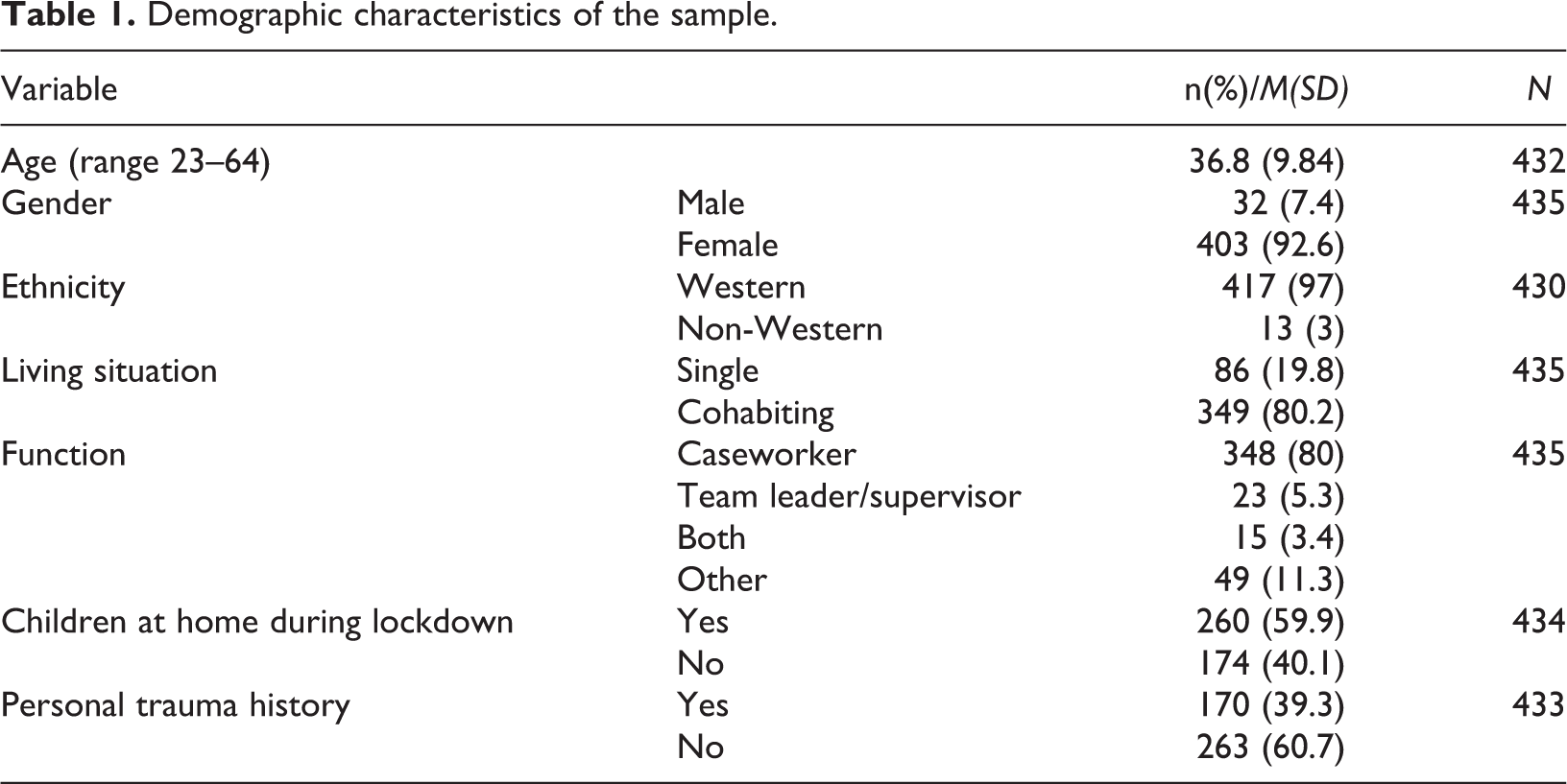
Demographic characteristics of the FCW are presented in Table 1.
Demographic characteristics of the sample.
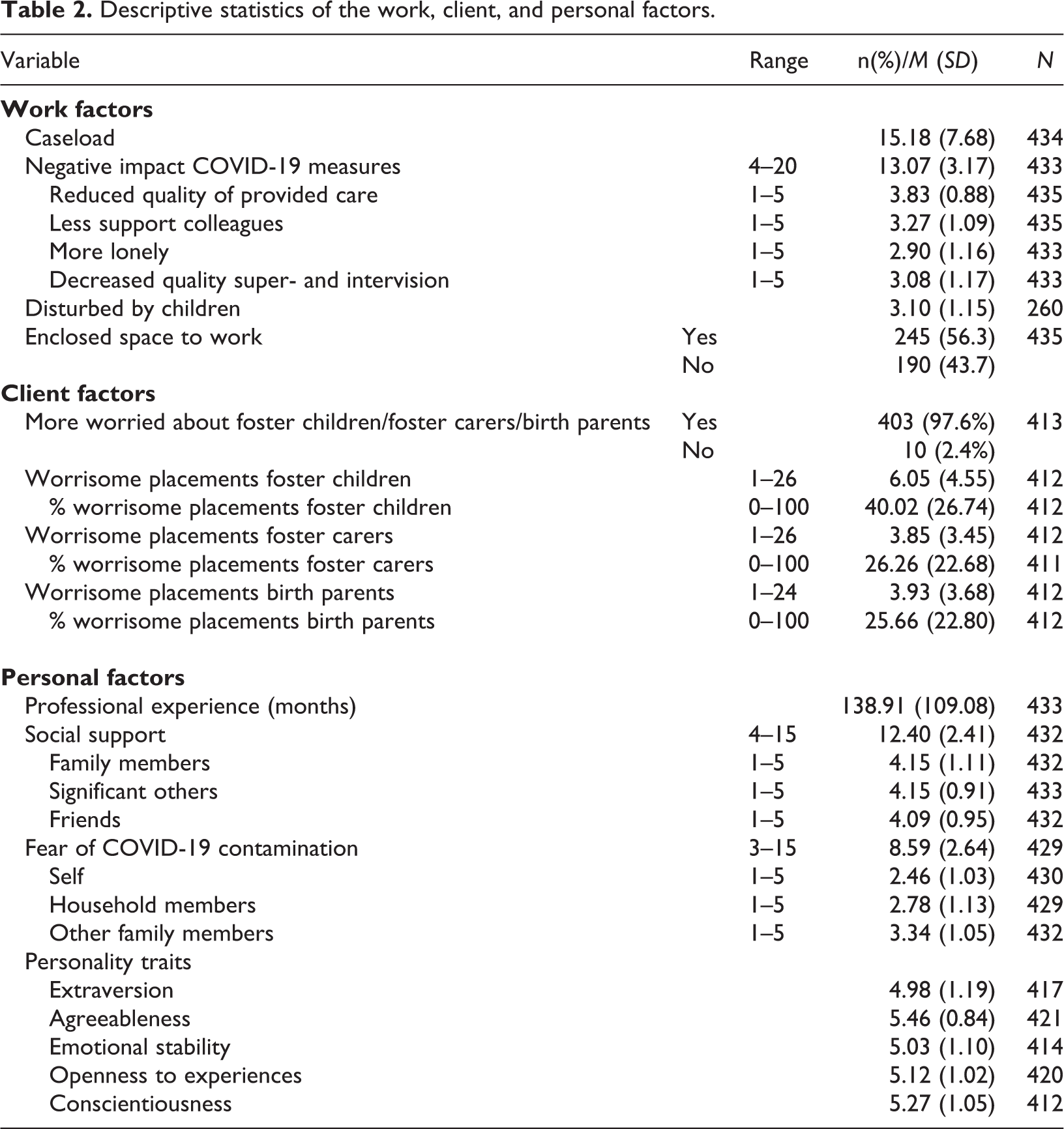
As presented in Table 2, FCW experienced a negative impact of the COVID-19 measures on their work situation (M = 13.07), compared to the anchor points (min 4 and max 20). A slight majority of the FCW (56.3%) disposed of an enclosed space to work from home and were somewhat disturbed by their children while working (M = 3.10, min 1 and max 5). With regard to their clients, 97.6% of the FCW reported to be more worried about either the foster children, foster carers or birth parents they supervise since the lockdown started. On average, 40.02% of placements were worrisome due to the foster children, 26.26% due to the foster carers and 25.66% due to the birth parents. FCW have been working for 11 years on average in child welfare work. Compared to the anchor points (min 4 and max 15), FCW experienced social support (M = 12.40) and slightly feared COVID-19 contaminations (M = 8.59, min 4 and max 15) during the lockdown. Moreover, FCW described themselves as extravert, agreeable, emotionally stable, and conscientious individuals who are open to new experiences (M extraversion = 4.98, M agreeableness = 5.46, M emotional_stability = 5.03, M conscientiousness = 5.12, M openess_new_experiences = 5.27).
Descriptive statistics of the work, client, and personal factors.
Flemish FCW reported low mean levels of STS (M = 21.51, SD = 4.75) and moderate mean levels of both burnout (M = 23.61, SD = 4.36) and CS (M = 35.47, SD = 5.32) (Table 3). Additionally, as indicated in Table 4, CS was strongly associated with burnout (r = −.629, p < .001) and had a small association with STS (r = −.245, p < .001).
Outcome measures.
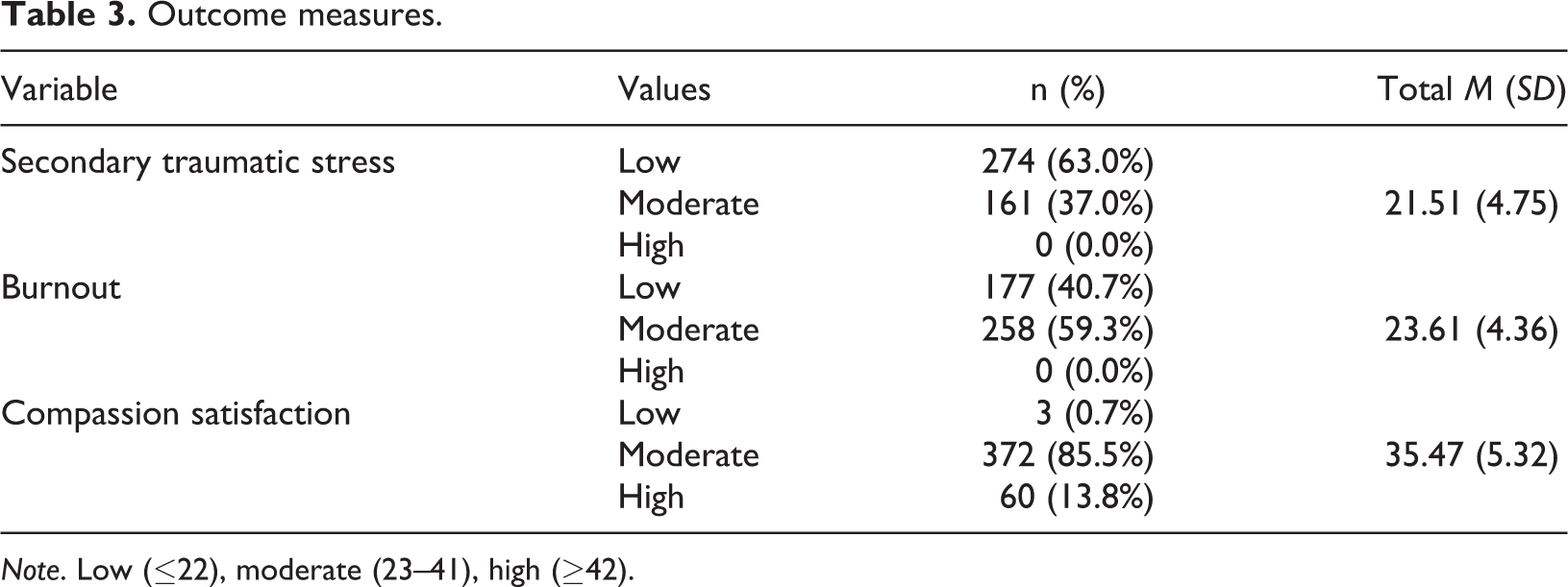
Note. Low (≤22), moderate (23–41), high (≥42).
Determinants of STS
As indicated in Table 4, the following factors were significantly associated with a higher level of STS: negative impact of COVID-19 measures on work, percentage of worrisome placements due to foster children, foster carers and birth parents, female gender, having a personal trauma history and fear of COVID-19 contaminations. Social support and emotional stability were significantly associated with a lower level of STS. Except from the moderate association between emotional stability and the level of STS (.30 < r < .50), all significant associations were small (.10 < r < .30).
Subsequently, all significant factors were entered in one multiple linear regression model, resulting in a significant model (F(9,383) = 14.723, p < .001) explaining about 26% of variance with four significant variables (Table 5). FCW who experienced a negative impact of the COVID-19 measures on their work, feared COVID-19 contaminations, had low levels of emotional stability and a high percentage of worrisome placements due to birth parents, reported higher levels of STS. Emotional stability contributed most to the model, explaining almost twice as much variability compared to all other significant variables in the model (β = −.302, p < .001).
Determinants of burnout
Negative impact of COVID-19 measures on work, percentage of worrisome placements due to foster children, foster carers and birth parents, female gender, and fear of COVID-19 contaminations were all significantly associated with a higher level of burnout. Having an enclosed space to work, professional experience, age, social support, agreeableness, emotional stability, openness to experiences and conscientiousness were significantly associated with lower levels of burnout. Apart from the moderate associations between both emotional stability and burnout and negative impact of COVID-19 measures and burnout (.30 < r < .50), all statistically significant associations were small (.10 < r < .30) (Table 4).
With exception of professional experience, all significant factors were entered in one linear regression model resulting in a significant model (F(13,375) = 14.717, p < .001) explaining about 34% of variance with six significant variables (Table 5). Young FCW who experienced a negative impact of COVID-19 measures on work, had little social support, a high percentage of worrisome placements due to birth parents in their caseload, low levels of emotional stability and conscientiousness, reported higher levels of burnout. The negative impact of the COVID-19 measures on work contributed most to the model (β = .248, p < .001).
Determinants of CS
Negative impact of COVID-19 measures on work and a high percentage worrisome placements due to foster children in one’s caseload were significantly associated with lower levels of CS. Professional experience, age, having a personal trauma history, social support, extraversion, agreeableness, emotional stability, openness to experiences and conscientiousness were significantly associated with higher levels of CS. All statistically significant associations were trivial (r < .10) or small (.10 < r < .30) (Table 4).
Associations of independent variables with STS, burnout and CS.
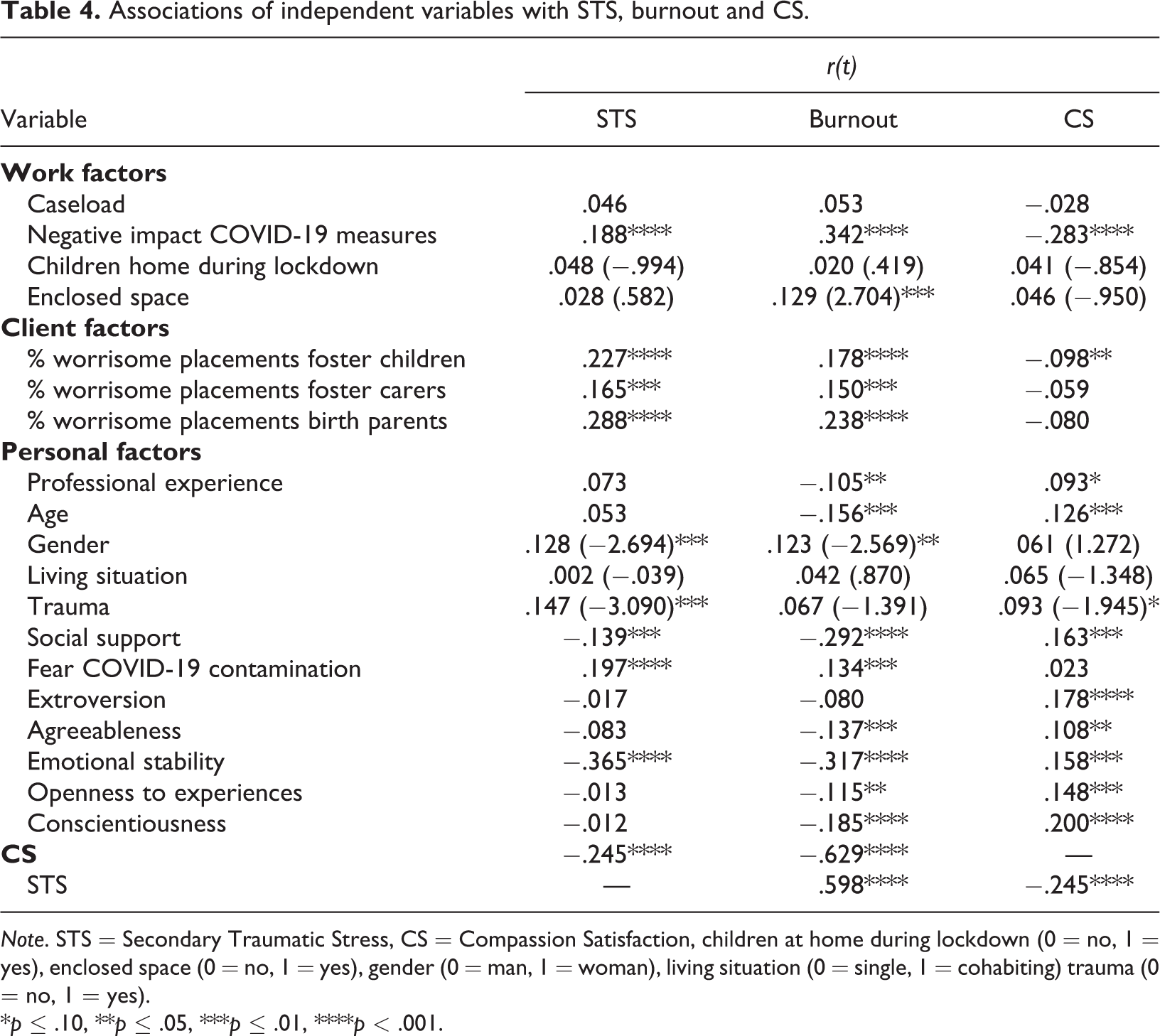
Note. STS = Secondary Traumatic Stress, CS = Compassion Satisfaction, children at home during lockdown (0 = no, 1 = yes), enclosed space (0 = no, 1 = yes), gender (0 = man, 1 = woman), living situation (0 = single, 1 = cohabiting) trauma (0 = no, 1 = yes).
*p ≤ .10, **p ≤ .05, ***p ≤ .01, ****p < .001.
Apart from professional experience, entering all significant factors in a linear regression model resulted in a significant model (F(10,379) = 9.389, p < .001), explaining about 20% of variance with five significant variables (Table 5). Young FCW who experienced a negative impact of COVID-19 measures on their work, had low scores on extraversion, emotional stability and conscientiousness, reported lower levels of CS. Negative impact of COVID-19 measures on work contributed most to the model (β = −.231, p < .001).
Multiple regression models with STS, burnout and CS as dependent variable.
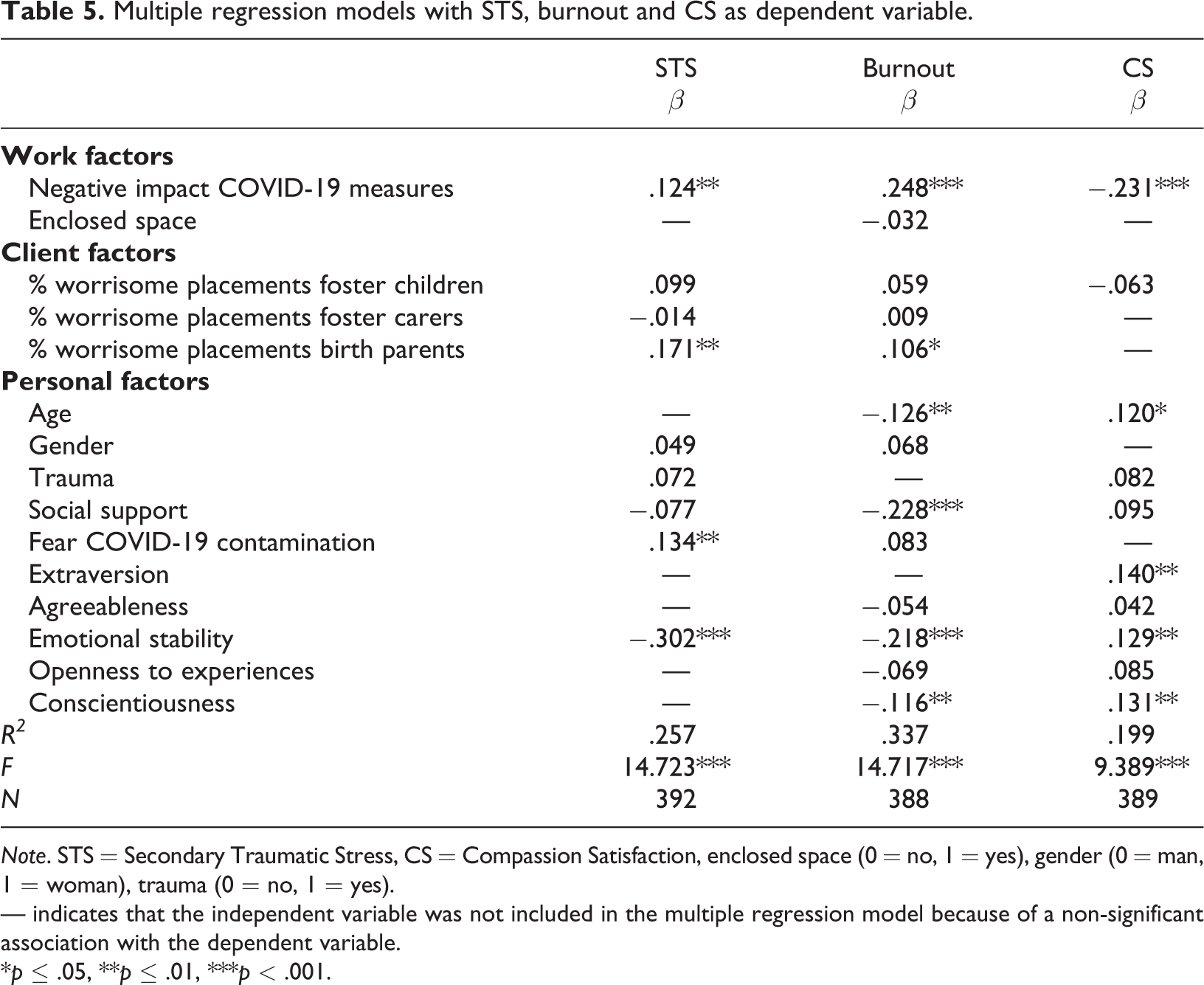
Note. STS = Secondary Traumatic Stress, CS = Compassion Satisfaction, enclosed space (0 = no, 1 = yes), gender (0 = man, 1 = woman), trauma (0 = no, 1 = yes).
— indicates that the independent variable was not included in the multiple regression model because of a non-significant association with the dependent variable.
*p ≤ .05, **p ≤ .01, ***p < .001.
Discussion
In this study STS, burnout and CS were studied in Flemish FCW during the COVID-19 lockdown. To date, no study has addressed these issues among FCW. The COVID-19 pandemic heightened the risk of STS and burnout and low CS in FCW. Knowledge about the prevalence of STS, burnout and CS is important to increase ProQoL, improve client outcomes and identify vulnerable employees.
Surprisingly, low mean levels of STS and moderate mean levels of burnout were reported by Flemish FCW during the lockdown. Even though these rates correspond to those found by Baugerud and Vangbæk (2018) among Norwegian CWW, higher levels of burnout and STS were expected due to the additional challenges of the lockdown. Moreover, high levels of STS and burnout were found among American CWW in non-COVID-19 times (Conrad & Kellar-Guenther, 2006; Rienks, 2020; Salloum et al., 2015). These low to moderate levels of STS and burnout are reassuring and pointing out that Flemish FCW generally did fare well during the lockdown. However, it is possible that FCW with high levels of burnout and STS already earlier resigned their jobs (Baugerud & Vangbæk, 2018; Conrad & Kellar-Guenther, 2006). In addition, STS occurs when exposed to traumatic material. During the lockdown, FCW were not allowed to meet their clients, decreasing this exposure and the possibility of getting secondarily traumatized (Dagan et al., 2016; Figley, 1995; Meyers & Cornille, 2002; Stamm, 2010). Furthermore, as burnout develops gradually (Stamm, 2010), these levels could further increase as they were measured only 6 weeks into the lockdown. Nonetheless, approximately 37% and 59% of FCW did report moderate levels of STS and burnout, respectively. These FCW are at risk of developing clinical levels of STS and burnout and thus should be monitored closely.
Several statistically significant associations were found between STS, burnout and CS on the one hand and work, client and personal factors on the other hand. Moreover, CS was also found to be negatively correlated with both STS and burnout, confirming the assumption that CS is a protective factor for CF (Baugerud & Vangbæk, 2018; Bridger et al., 2020; Conrad & Kellar-Guenther, 2006; Stamm, 2010; Van Hook et al., 2008).
Some factors were significantly associated with both STS and burnout. The negative impact of the COVID-19 measures on work and the percentage of worrisome placements due to birth parents were associated with higher levels of STS and burnout, while high emotional stability was negatively associated with STS and burnout. These findings show that FCW with a high percentage of worrisome placements due to birth parents in their caseload, who experience a negative impact from the COVID-19 measures on their work and have low levels of emotional stability are an at-risk group for both conditions during the lockdown. Supervisors should pay special attention to emotionally less stable FCW who indicate to have difficulties with birth parents in placements they supervise, especially during a crisis.
The negative impact of COVID-19 measures on work was associated with higher STS and burnout scores, suggesting that the lockdown had an impact on the ProQoL of Flemish FCW. Moreover, the COVID-19 measures were also negatively associated with CS. The imposed measures resulted in important changes in the workplace (e.g., teleworking) which may add to overall job stress and emotional strain, resulting in burnout and STS (Figley, 1995; Lizano & Mor Barak, 2012; Maslach et al., 2001; Stamm, 2010). Additionally, this negative impact also incorporated decreased social support from colleagues, which has been associated to both burnout and STS (Bride et al., 2007; Hamama, 2012; Lizano & Mor Barak, 2012).
Interestingly, even though FCW were more worried about foster children, and equally about foster carers, only the percentage of worrisome placements due to birth parents in one’s caseload was associated with the level of STS and burnout. FCW possibly felt like they had less control over the outcome of birth parents, which has previously been associated with higher post-traumatic distress (Regehr et al., 2004). While they may be confident that foster children and foster carers will end up safe and sound under their guidance, birth parents are possibly more difficult to control, contain and guide. Subsequently, this inability to control the outcome of birth parents may lead to STS and burnout.
In contrast to burnout, fear for COVID-19 contaminations did determine STS in FCW. This may be due to the operationalization and measurement of these constructs by the ProQOL. As Stamm (2010) characterized STS by fear-driven feelings with symptoms similar to PTSD, the STS scale contains items measuring fear, whereas the burnout scale does not.
In line with previous findings, burnout was also associated with age, social support from friends and family and conscientiousness (Barford & Whelton, 2010; Boyas & Wind, 2010; Hamama, 2012; Lizano & Mor Barak, 2012; Sprang et al., 2011; Van Hook et al., 2008). Young FCW might not have the necessary experience to cope with the challenging work demands of a CWW resulting in higher levels of burnout (Maslach et al., 2001). Moreover, both social support from family and friends and high levels of conscientiousness buffer against burnout (Barford & Whelton, 2010), decreasing its likelihood among FCW during the COVID-19 lockdown. Additionally, higher levels of compassion satisfaction in conscientious, extravert and emotionally stable FCW may protect them against developing burnout.
Finally, in line with some previous findings in non-COVID-19 times, moderate levels of CS were reported by Flemish FCW (Salloum et al., 2015; Van Hook et al., 2008). Less than 1% of FCW scored within the low category of CS pointing out that most of the FCW in the present study moderately derived pleasure and satisfaction of working as a professional helper (Stamm, 2010). The negative impact of COVID-19 measures on work in general, and the reduced quality of care provided to the clients experienced by the FCW during the lockdown, may explain these moderate levels as their satisfaction and sense of accomplishment were mitigated (Baugerud & Vangbæk, 2018; Figley, 1995; Stamm, 2010). Additionally, CS was also determined by age (Sprang et al., 2007) and personality traits. This indicates that, in addition to work factors (Baugerud & Vangbæk, 2018), personal factors are also important determinants of the professional well-being of FCW. Especially emotional stability, which determines the three outcome variables during the lockdown, is a key characteristic for FCW during adverse circumstances.
Practical implications
This study has some important implications for practice. First, during adverse circumstances (e.g., lockdown), supervisors should pay extra attention and offer additional support to those FCW they estimate to be emotionally less stable and who indicate to have difficulties with the birth parents in placements they supervise. Our results show that emotional stability in FCW is associated with higher levels of CS and lower levels of both STS and burnout. Moreover, CS was mainly determined by personality traits. FCW characterized as emotionally stable, extravert and conscientious derive more pleasure and self-fulfillment from their job as a professional helper and are, therefore, at lower risk for developing STS and/or burnout during the lockdown. Next, as a higher percentage of worrisome placements due to birth parents in one’s caseload was associated with both higher STS and burnout levels in FCW, placements with birth parents who are more difficult to monitor, should be spread over FCW in order to achieve an optimal caseload mix. Finally, as younger age and less social support are related to higher burnout levels, implementing a buddy-system where younger FCW are supported by more experienced FCW can be beneficial.
Limitations and future research
This study has some limitations. First, interpretation of scores are based on cut-offs derived from American helping professionals (Stamm, 2010). As norms can differ across countries, these interpretations should be treated with caution. Second, no baseline measurement is at disposal. Therefore, conclusions can only be made about the ProQoL of Flemish FCW during the lockdown. Third, this study was conducted only 6 weeks into the lockdown. Subsequently, the results reflect the initial impact of the lockdown. Replicating this study in a later stage of the lockdown might give insight if the measured effects are sustained and might reveal different patterns of impact. Fourth, this study used a cross-sectional design, making it difficult to determine causal inference in associations between the independent variables and outcome measures. Additionally, the results are solely based on self-report, possibly resulting in underreporting sensitive information including symptoms of STS and/or burnout. Finally, the instruments used to measure social support, fear of COVID-19 contaminations and the negative impact of COVID-19 measures on work were developed by the researchers and their validity was not examined.
Conclusion
During the COVID-19 lockdown, Flemish FCW reported low levels of STS and moderate levels of both burnout and CS. FCW who experienced a negative impact of the COVID-19 measures on their work, had a high number of worrisome placements due to birth parents in their caseload and scored low on emotional stability are an at-risk group for both STS and burnout during the lockdown. Additionally, FCW who feared COVID-19 contaminations reported higher levels of STS. The risk of burnout was also determined by a younger age, low levels of social support and conscientiousness. Finally, apart from the negative impact of COVID-19 on work, CS was strongly determined by personality traits. Young FCW with low levels of extraversion, emotional stability, openness to experiences and conscientiousness reported higher levels of CS during the lockdown.
Footnotes
Declaration of conflicting interests
The author(s) declared no potential conflicts of interest with respect to the research, authorship, and/or publication of this article.
Funding
The author(s) received no financial support for the research, authorship, and/or publication of this article.
