



Abstract
In the research field of entrepreneurship education, role models have been extensively studied. However, the other party in the role modeling process, role aspirants, has received less interest in terms of research. This article argues that without entrepreneurial role aspirants who strive to identify with potential entrepreneurial role models, there would be no such role models. Entrepreneurial knowledge and a positive perception of entrepreneurship are necessary elements in the formation of a role aspirant. Hence, this study discusses the formation of entrepreneurial role aspirants by examining the significance of school and entrepreneurial family background in the creation of entrepreneurial knowledge and a positive perception thereof. Data used in this article was gathered from 15-year-olds in Finland (N = 26,063). The results indicate that an entrepreneurial family background creates role aspirants by delivering entrepreneurial knowledge and creating a positive perception of entrepreneurship. In contrast, school can deliver knowledge of entrepreneurship, but it does not create a positive perception of it. This article discusses how this might affect the planning and implementation of entrepreneurship education.
Introduction
Role models are widely used in entrepreneurship education, and their impact on the development of entrepreneurial skills and intention has been extensively studied (e.g., Adesola et al., 2019; Amofah & Saladrigues, 2022; Sirelkhatim & Gangi, 2015). However, a role model requires a counterpart, a role aspirant, who, based on prior knowledge and a positive perception of entrepreneurship, adopts the role model. Despite this, the perspective of role aspirants in entrepreneurship education research is rarely examined. To fill this research gap, this article builds on existing research by Morgenroth et al. (2015) and argues that there are no entrepreneurial role models without role aspirants.
Research on entrepreneurial role models mainly focuses on adult target groups and higher education students (e.g., Adesola et al., 2019; Hägg & Gabrielsson, 2020; Rahman & Day, 2014). Additionally, entrepreneurship education research predominantly examines the impact of various role models on the development of students’ entrepreneurial skills and intentions (e.g., Moreno-Gómez et al., 2020; Zozimo et al., 2017). However, this is not enough, and there is a need to look more closely at the perspective of the role aspirant in entrepreneurship education research in order to better understand the impact of entrepreneurial role models in educational settings. Previous studies in other fields of research have also highlighted opportunities to expand role model research to new contexts (e.g., Adesola et al., 2019) and to consider the role aspirant’s perspective in different educational settings (Hu et al., 2020).
According to Morgenroth et al. (2015), to become an entrepreneurial role aspirant, one must have prior knowledge of the phenomenon and a positive perception of entrepreneurship. Perception is defined as the way individuals interpret and understand the world around them (e.g., Crane, 2009; Dehghanpour Farashah, 2013; Garner et al., 1956). To further develop the theoretical and practical foundations of entrepreneurship education methods and to create a better understanding of role models and role aspirants in entrepreneurship education, this research poses the following research question: What is the significance of school and an entrepreneurial family background in developing teenagers’ entrepreneurial knowledge and shaping their perception of entrepreneurship?
The data for this cross-sectional quantitative study was collected through a survey conducted between 2020 and 2022 in Finland, involving 26,063 respondents, all 15 years of age, who were in their final year of primary education (ninth grade). This article introduces the concept of the role aspirant in entrepreneurship education research, adding a new dimension to the literature on entrepreneurial role models and addressing a significant research gap. By focusing on role aspirants, the findings presented provide valuable insights for the development and implementation of entrepreneurship education.
This research positions itself within the field of entrepreneurship education methods, adopting a slightly critical perspective (e.g., Kakouris & Liargovas, 2021) by questioning the “taken-for-granted” pedagogy of entrepreneurship education (e.g., Loi et al., 2022). Although there is extensive literature on entrepreneurial role models (e.g., Bosma et al., 2012; Rahman & Day, 2014; Zozimo et al., 2017), discussions about the actual role modeling process and role aspirants in entrepreneurship education research are scarce. Understanding the factors that influence the development of entrepreneurial knowledge, perceptions of entrepreneurship, and the formation of role aspirants can help educators design more effective methods that engage students in the role modeling process. Furthermore, there is limited research on the factors affecting the effectiveness of entrepreneurship education methods. Hence, this study also explores whether family or school-related factors influence the view of entrepreneurship education methods designed to create role models.
The structure of the article is as follows: first, the previous research literature is reviewed, followed by the formulation of the hypotheses. Second, the data collection process and the data obtained are described. The third section presents the analysis and results, along with a discussion based on these findings. Finally, the article concludes with recommendations for further research and an outline of the study’s limitations.
Theoretical Framework and Hypothesis Development
Motivational Theory of Role Modeling
The motivational theory of role modeling connects expectancy-value theories (e.g., Atkinson, 1957; Eccles et al., 1983; Eccles & Wigfield, 2002; Gartzia et al., 2021; Vroom, 1964) with the literature on role modeling. According to the theory of Morgenroth et al. (2015), there are role aspirants and role models in the role modeling process. A role aspirant is defined as an individual who makes conscious or unconscious, intentional or unintentional decisions about whom to follow, imitate or identify with. In contrast, a role model is a person who is followed, imitated and identified with by the role aspirant (see Bell, 1970; Gibson, 2004).
The role modeling process involves observation and reflection. The first phase of the process is called the “anticipatory socialization” phase and includes all the values, attitudes, skills, knowledge, expectations and information sources that the individual has or needs to adapt to a role model (Fondas, 1992). In the process, the learner needs to pay attention to the role model’s behavior, remember the observed behavior and feel capable of replicating it (Andersson & Hammarstedt, 2011; Bandura, 1977; 1986; Bell, 1970; Gibson, 2004; Schunk & DiBenedetto, 2016; 2020). Additionally, according to Morgenroth et al. (2015), the role aspirant needs knowledge of the phenomenon the role model represents in order to be able to adapt to role model (see also Gartzia et al., 2014).
Morgenroth et al. (2015) also argue that a role model can affect an individual’s goals and motivation in three different ways. First, they can act as a behavioral model, demonstrating behaviors that others consider worth imitating. To function as a behavioral model, the role model must embody the values, norms and existing goals of the role aspirant. The role model changes when the role aspirant has achieved the goal, necessitating a new role model that corresponds to new goals. Second, role models create images of future possibilities for the role aspirant. Third, a role model can act as a source of inspiration. If the role model fulfills these three functions, the role aspirant’s motivation increases, their goals are reinforced, and they adopt new and more ambitious goals.
According to expectancy-value theory (Vroom, 1964), three factors motivate individuals to strive to achieve a goal: expectancy, instrumentality and valence. Expectancy is the belief that one can achieve a desired goal through effort. Instrumentality refers to the perception that a certain performance is necessary to achieve that goal, while valence is the evaluation of the goals and outcomes of the activity (see also Hsu et al., 2014). When learners see themselves as competent in entrepreneurship and believe they can achieve similar goals, they are more likely to emulate the behaviors of their role models (e.g., Bandura, 1977, 1986). Therefore, it is crucial that role models share the workloads and setbacks they have encountered in their entrepreneurial journeys, making their stories more accessible and relatable (Hu et al., 2020; Lockwood & Kunda, 1997).
The role modeling process involves the alignment between the expectations, goals and values of the role models and role aspirants (Bandura, 1977, 1986; Hu et al., 2020; Lockwood & Kunda, 1997). Morgenroth et al. (2015) argue that the attributes of the role aspirant and the role model affect how the former perceives the latter and how effective the role model is. Similarity with regard to characteristics and interests makes the role model’s activities seem more applicable, inspiring and achievable to the role aspirants (Hu et al., 2020; Kourilsky & Walstad, 1998; Lockwood & Kunda, 1997) and motivates them to imitate the role model (e.g., Krumboltz et al., 1976; Scherer et al., 1989).
Entrepreneurial Role Models in the Family
An entrepreneurial family background has been found to be crucial in terms of entrepreneurial knowledge and the perception of entrepreneurship (e.g., Bourgeois, 2002; Carr & Sequeira, 2007; Chlosta et al., 2012). Parents act as role models for their children, who adopt their entrepreneurial attitudes and behaviors (e.g., Dryler, 1998; Hoffmann et al., 2015; Matthews & Moser, 1996; Moreno-Gómez et al., 2020; Rosique-Blasco et al., 2016; Van Auken et al., 2006). Within the family context, there is time and space to observe entrepreneurial behavior and processes, forming an image of entrepreneurship. Furthermore, given the similar cultural background within the family, entrepreneurial family role models are easy to identify with (e.g., Bandura, 1977, 1986; Hoffmann et al., 2015; Laband & Lentz, 1983; Maccoby, 1992; Parsons et al., 1982). Interestingly, an entrepreneurial family background has been found to have a greater impact on women’s entrepreneurial interests than on men’s (e.g., Entrialgo & Iglesias, 2018).
The previous research has identified that the role model’s attributes are important from the perspective of their effectiveness. For example, role models who are familiar to learners are more effective than those with whom they have had no prior contact (e.g., Andersson & Hammarstedt, 2011; Geldhof et al., 2014; Gladstone & Cimpian, 2021). However, Laviolette et al. (2012) stated that positive role models are more effective than negative ones in fostering identification with the entrepreneurial role model. Role models who foster positive attitudes and feelings enhance entrepreneurial self-efficacy and intention (e.g., Chereau & Meschi, 2022; Fellnhofer & Puumalainen, 2017; Mack & Honig, 2023; Scherer et al., 1989).
Moreover, by observing entrepreneurs, learners can form either a positive or negative perception of the entrepreneurial career path (e.g., Abbasianchavari & Moritz, 2021; Scherer et al., 1989; Zozimo et al., 2017). Schröder and Schmitt-Rodermund (2006) pointed out that children from entrepreneurial families do not automatically adapt to entrepreneurship and that role conflicts can arise within the family context. Hence, the family does not necessarily create a positive view of entrepreneurship (e.g., Memili et al., 2013). This study therefore examines the role of family background in the formation of entrepreneurial knowledge and a positive perception of entrepreneurship to further develop research on entrepreneurship education and the practical methods used in it. The following hypotheses are developed:
H1: An entrepreneurial family background positively influences the perception of entrepreneurship.
H2: An entrepreneurial family background fosters the creation of entrepreneurial knowledge at school.
H3: Prior entrepreneurial knowledge acquired in the family context positively influences the perception of the benefits of company cooperation.
Role Models and Entrepreneurship Education
Entrepreneurship education is a goal-oriented educational activity that has permeated all levels of education (e.g., Henry et al., 2005; Hytti & O’Gorman, 2004). Its aim is to strengthen the knowledge and skills needed not only to start and run a business, but also for broader applications in working life. Entrepreneurship is considered to increase the economic well-being of society and, as a result, entrepreneurship education has gained a foothold in school systems around the world. (e.g., Bacigalupo et al., 2016; Kuratko, 2005; Lackéus, 2015; Ripollés & Blesa, 2023; Samwel Mwasalwiba, 2010) Role models are a central component of entrepreneurship education methods at all educational levels and have been extensively studied in entrepreneurship education research (e.g., Amofah & Saladrigues, 2022; Rahman & Day, 2014; Ruskovaara & Pihkala, 2013; Samwel Mwasalwiba, 2010; Tarling et al., 2016).
The aim of using role models in entrepreneurship education is to provide students with authentic images of entrepreneurship and enhance their interest in following a similar career path (e.g., Fellnhofer, 2017; Liu et al., 2019; Rahman & Day, 2014; Schuhmacher & Thieu, 2022; Zozimo et al., 2017). Role models can be introduced in various ways, such as discussing entrepreneurship-related topics with learners and providing hands-on learning experiences with companies that promote active participation in entrepreneurial learning processes (e.g., Cooper et al., 2004; Fayolle, 2013; Liu et al., 2019; Löbler, 2006; Motta & Galina, 2023; Neck & Greene, 2011).
It is worth noting that role models may sometimes convey values or practices that learners find unethical or undesirable (e.g., Baden, 2014). This can make it difficult for learners to adapt to the role models. Additionally, using particularly successful entrepreneurs as role models can sometimes dampen interest in entrepreneurship, as their success may seem unattainable to learners (e.g., Lockwood & Kunda, 1997).
In general, entrepreneurship education has been found to influence the growth of entrepreneurial intention among university students (e.g., Matlay, 2008). On the other hand, there are also some contradictions in the results of different studies, and the effectiveness of entrepreneurship education has been questioned (Nabi et al., 2017). Previous research has stated that attention should be paid to methods and content if the positive impact of entrepreneurship education is to be increased or ensured (e.g., Daneshjoovash & Hosseini, 2019; Gibb, 2003; Kassean et al., 2015; Sherman et al., 2008; Sommarström et al., 2020).
Based on the literature presented above, the following hypotheses were developed:
H4: Entrepreneurship education positively influences the perception of entrepreneurship.
H5: Entrepreneurship education enhances the development of entrepreneurial knowledge.
H6: Prior entrepreneurial knowledge acquired through discussions and company cooperation positively influences the perception of the benefits of company cooperation.
Method
Research Context
In Finland, entrepreneurship education is integrated throughout the entire educational pathway, from early childhood education to higher education (e.g., Eurydice, 2016). Working life competence and entrepreneurship are among the seven transversal competencies outlined in the national core curriculum for basic education (Finnish National Agency for Education, 2016; Halinen, 2018). The goal of entrepreneurship education is to foster the development of entrepreneurial skills and knowledge, as well as a positive attitude towards entrepreneurship, and to motivate learners to consider an entrepreneurial career path. The pedagogy emphasizes practical learning experiences, such as projects and company visits, and learning in authentic entrepreneurial environments (Eurydice, 2016; Finnish Ministry of Education and Culture, 2017; Finnish National Agency for Education, 2016; Heinonen & Poikkijoki, 2006; Samwel Mwasalwiba, 2010).
The GEM 2021–2022 report highlights entrepreneurship education as one of the strengths of Finnish entrepreneurial development (Björk et al., 2022). The strong societal commitment to developing entrepreneurship (e.g., Autio, 2009) has bolstered the position of entrepreneurship education within the Finnish school system. For instance, the Finnish Ministry of Education and Culture has issued guidelines to promote entrepreneurship education at all school levels (e.g., Dal et al., 2016; Finnish Ministry of Education and Culture, 2017).
Other factors promoting entrepreneurship in Finland include the availability of financing, R&D transfer, access to infrastructure, and support for women entrepreneurs. However, it has been argued that women entrepreneurs can encounter issues with regard to entrepreneurial culture and funding opportunities (e.g., Galloway et al., 2002). In addition, Autio (2009) has described Finnish entrepreneurship as paradoxical, noting that, while resources are available for research and development, they do not necessarily lead to high-growth entrepreneurship.
Conducting the Survey
The data used in this article was collected as part of a large-scale national entrepreneurship education research project. Given Finland’s long-standing implementation of entrepreneurship education guided by the national curriculum, various stakeholders, including the Finnish Agency for Education and Junior Achievement Finland, sought to explore different perspectives on entrepreneurship education within basic education. In Finland, there is a rich tradition of both quantitative and qualitative entrepreneurship education research (e.g., Dal et al., 2016; Eurydice, 2016) and a strong cooperation network for research implementation. This led to a national entrepreneurship education project, from which the data examined in this article was partially derived.
The survey is a browser-based online questionnaire. Since the research uses self-assessment data, the possibility of common method bias must be considered, that is, respondents may not always respond honestly or may answer in ways they believe are socially expected (e.g., Adcock & Collier, 2001; Davis, 2008; Kamakura, 2010; Podsakoff & Organ, 1986). In an effort to avoid this bias, the survey tool was developed through a participatory process (see Raappana, 2024). Target group representatives (N = 260) and their teachers were involved in the development of the survey tool and the aim was to ensure the surveys were easy to use and understand. Approximately 2800 15-year-old leaners (attending the last grade of primary education) participated in the pilot study. After the pilot survey the data was tested using IBM SPSS Statistics. Confirmatory factor analysis and tests for skewness and kurtosis showed acceptable limits (e.g., Field et al., 2012) and confirmed that all variables were normally distributed.
The questionnaire includes nine background questions and 26 research statements, using a five-point Likert scale: 1 = “Completely disagree,” 2 = “Disagree,” 3 = “Neither agree nor disagree,” 4 = “Agree,” and 5 = “Completely agree.” The survey was conducted three times (in 2020, 2021 and 2022). The respondents were born in 2005, 2006 and 2007. Therefore, this research is not a longitudinal study. The survey approach and questions remained consistent across all rounds. In each survey round, the Finnish National Agency for Education sent the survey link to all secondary schools in Finland. This study did not require ethical approval or an informed consent statement. The data does not contain any personally identifiable information, such as the IP address of the respondent’s device. Individuals cannot be identified from the data. The study was conducted in accordance with good scientific practice and the guidelines of the Finnish National Board on Research Integrity (TENK).
Description of the Respondents
The total number of respondents is 26,063. Over half have an entrepreneur in their family (53.7%, n = 13,997). Approximately 24% (n = 6294) have a father who is an entrepreneur, while 11% (n = 3076) have a mother who is one. Roughly 5% of the respondents said that both of their parents are entrepreneurs.
Of the respondents, 50.5% (n = 13,171) are female and 49.5% (n = 12,892) are male. This gender distribution corresponds to the gender distribution of young people attending the last year of basic education in Finland (Statistics Finland, 2023). Furthermore, the data is well distributed across the country and the respondents cover the whole of Finland effectively, including small and large schools, as well as rural and urban areas. After the pilot study and after the three survey rounds, the profile of the respondents was compared to a large national school health survey (Finnish Institute for Health and Welfare, 2023) to ensure that the data covers the group of young people in the ninth grade in Finland.
Independent Variables
In this article, family background, entrepreneurship-related discussions in the family, gender, and entrepreneurship education implemented by the school (entrepreneurship-related discussions and company cooperation) are used as independent variables. These are described below.
Entrepreneurial Family Background
This article examines respondents who have an entrepreneur in their family and those who do not. In the original survey, the question about entrepreneurial family background included five response options: father, mother, grandparent, sibling, and another closely related person. The respondent could choose one or more options. If the respondent chose “There are no entrepreneurs in my family or close circle,” no other options could be selected. This article only considers those who do or do not have entrepreneurs in their close circle. A closer examination of the role of different family members was not carried out. The indicators for entrepreneurial background were encoded in the data as follows: No entrepreneurs in the family or close circle = 0. There are entrepreneurs in the family or close circle = 1.
Entrepreneurship-Related Discussions in the Family Context
The survey includes an item designed to determine whether entrepreneurship is discussed at home: “We often discuss issues related to entrepreneurship at home.” This item is based on a Likert scale ranging from 1 to 5. In this study, it is used as a background variable in a linear regression model. The aim is to examine the formation of entrepreneurial knowledge in the home context (e.g., Fellnhofer, 2017; Liu et al., 2019; Rahman & Day, 2014; Schuhmacher & Thieu, 2022; Tarling et al., 2016; Zozimo et al., 2017).
Entrepreneurship Education Methods
Company cooperation and entrepreneurship-related discussions are established methods in entrepreneurship education and considered important sources of entrepreneurship-related knowledge (e.g., Ruskovaara & Pihkala, 2013; Samwel Mwasalwiba, 2010; Sirelkhatim & Gangi, 2015). The items in the survey are of the Likert 1–5 type: “We have a lot of company cooperation in our school,” and “We often discuss issues related to entrepreneurship at school.”
Gender
Previous research has identified entrepreneurship as a gendered phenomenon (e.g., Coleman, 2016; Guzman & Kacperczyk, 2019; Malach-Pines & Schwartz, 2008; Minniti, 2009; Mueller & Conway Dato-On, 2008; Schröder et al., 2011). This gendered nature of entrepreneurship is also evident among younger age groups (Hintikka et al., 2022; Schmitt-Rodermund, 2004). Hence, gender is incorporated into the analysis (e.g., McNamee, 2005). For the purposes of this study, gender is operationalized as a binary variable, coded as female = 0 and male = 1.
Dependent Variables
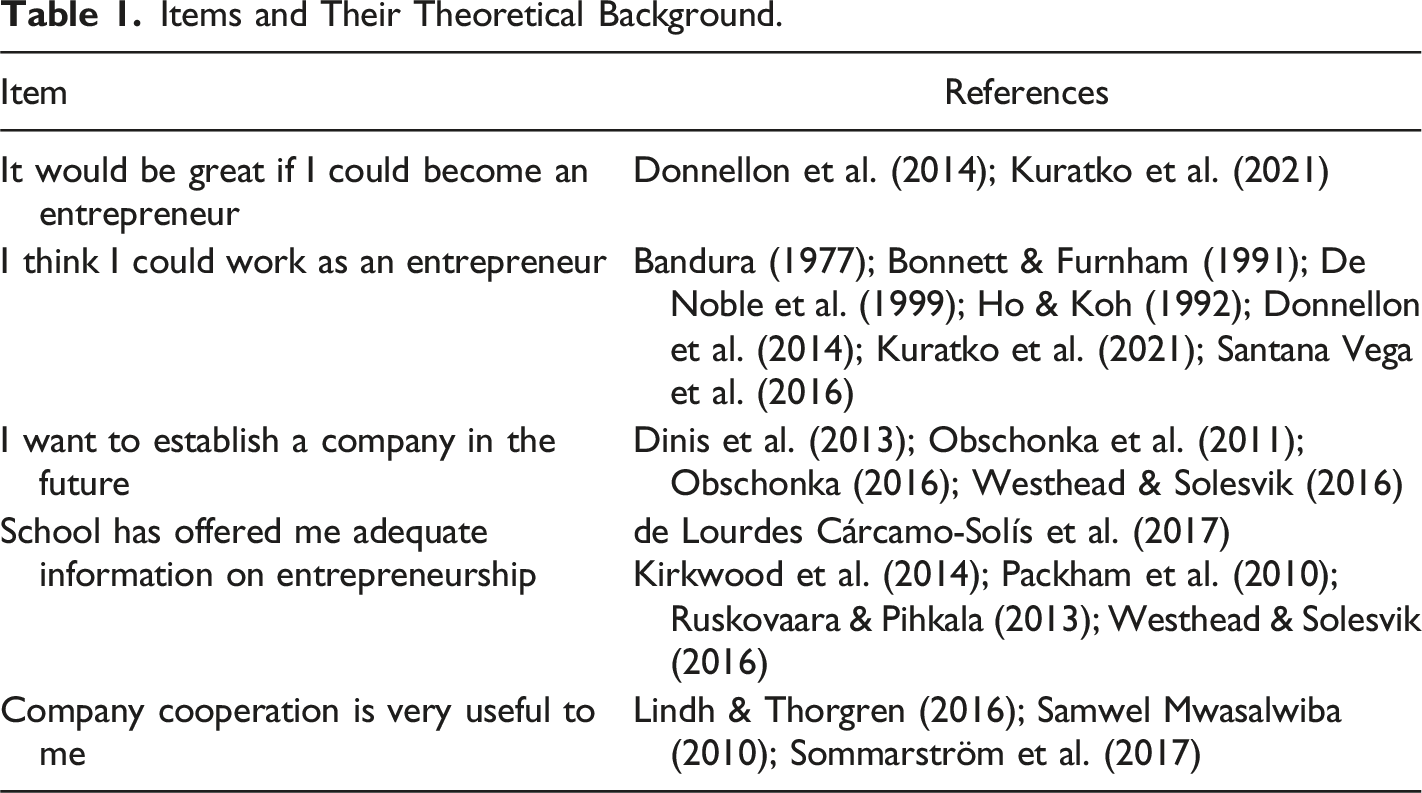
Items and Their Theoretical Background.
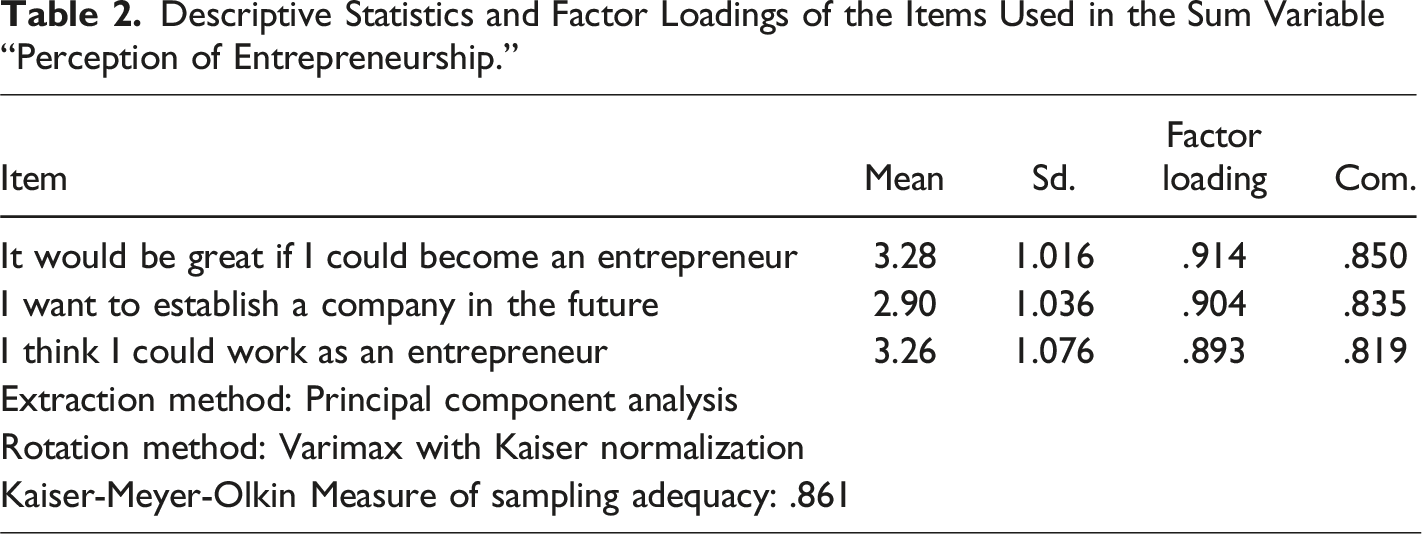
Descriptive Statistics and Factor Loadings of the Items Used in the Sum Variable “Perception of Entrepreneurship.”
Data Analysis
The analysis was conducted using IBM SPSS Statistics software and included three phases. The first was the implementation of the analysis of variance (ANOVA) to compare differences in responses between teenagers from families with an entrepreneurial background and those without. This revealed a statistically significant difference between the two groups.
Given the large sample size, it was crucial to ensure that differences between variables were truly statistically significant (e.g., DeVaney, 2001). A Levene’s Test for Equality of Variances was performed, indicating a statistically significant difference between female and male respondents. This suggests that the observed difference is not due to chance but reflects a real difference between the groups (see Nordstokke et al., 2011).
To further analyze the effect of family and school on the creation of entrepreneurial knowledge and the perception of entrepreneurship, a linear regression analysis was conducted. Linear regression analysis is a statistical method used to model and analyze the relationship between two or more variables, allowing for the prediction of the value of a dependent variable based on one or more independent variables (e.g., Pal et al., 2019; Von Eye & Schuster, 1998). This method was used to examine the importance of different sources of entrepreneurial knowledge in shaping the perception of entrepreneurship. The R-squares of the models were moderate (e.g., Colin Cameron & Windmeijer, 1997; Ozili, 2023), indicating that the chosen variables explain the dependent variables reasonably well.
Results
Comparison of Responses Between Respondents With and Without an Entrepreneurial Family Background (Means and ANOVA).
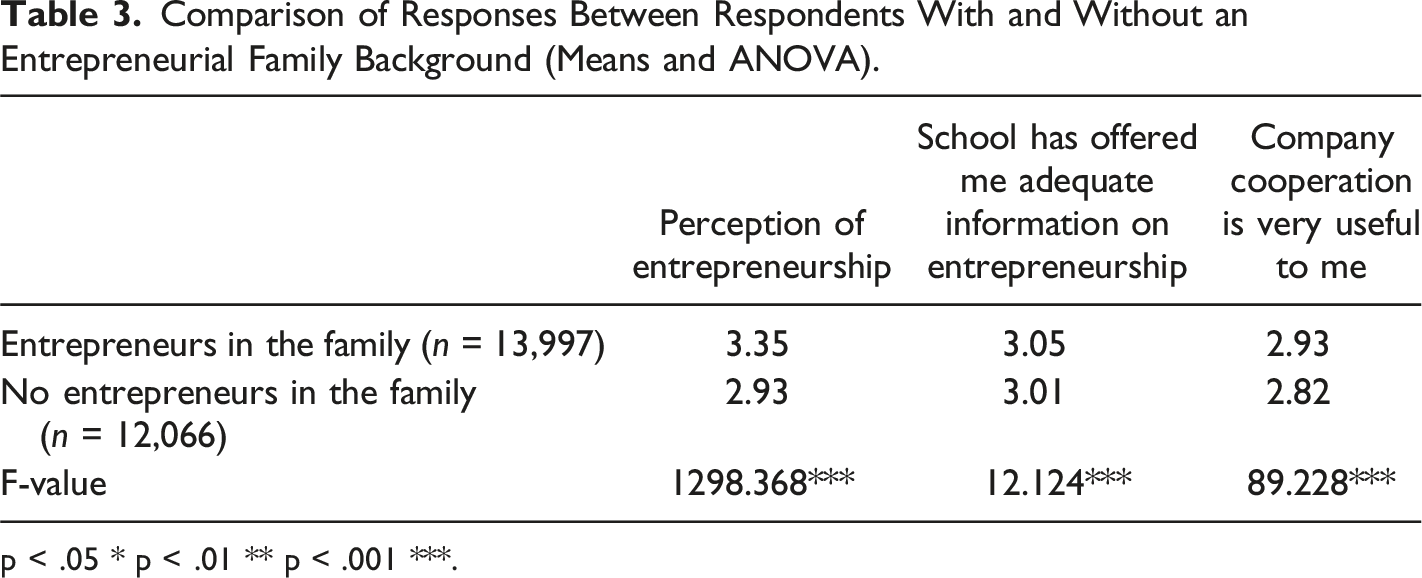
p < .05 * p < .01 ** p < .001 ***.
Gender Difference in Responses (Means and ANOVA).
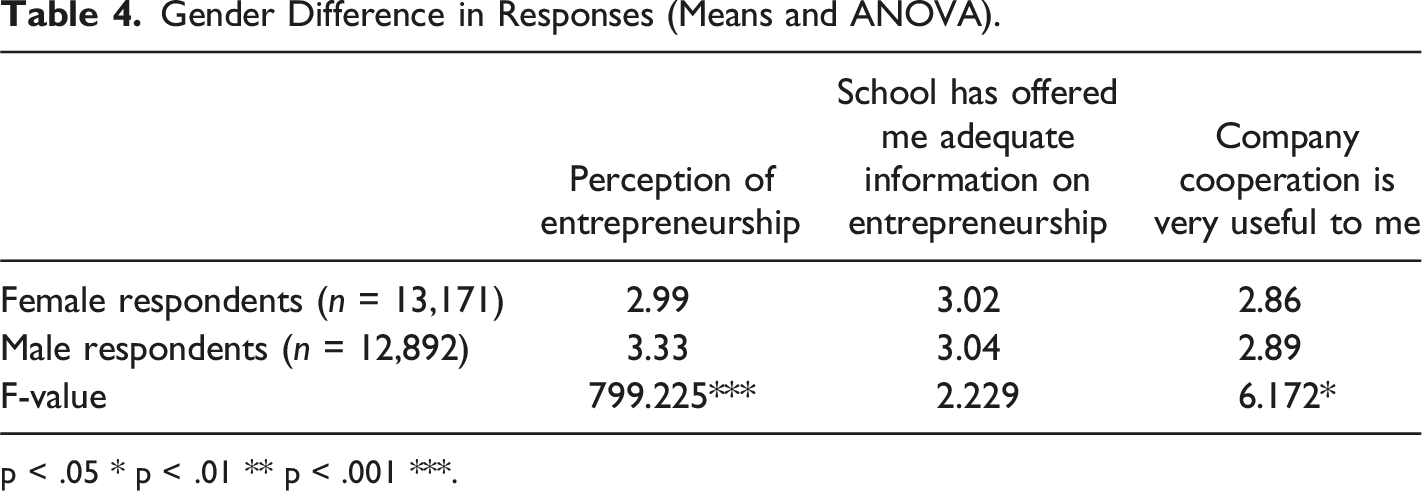
p < .05 * p < .01 ** p < .001 ***.
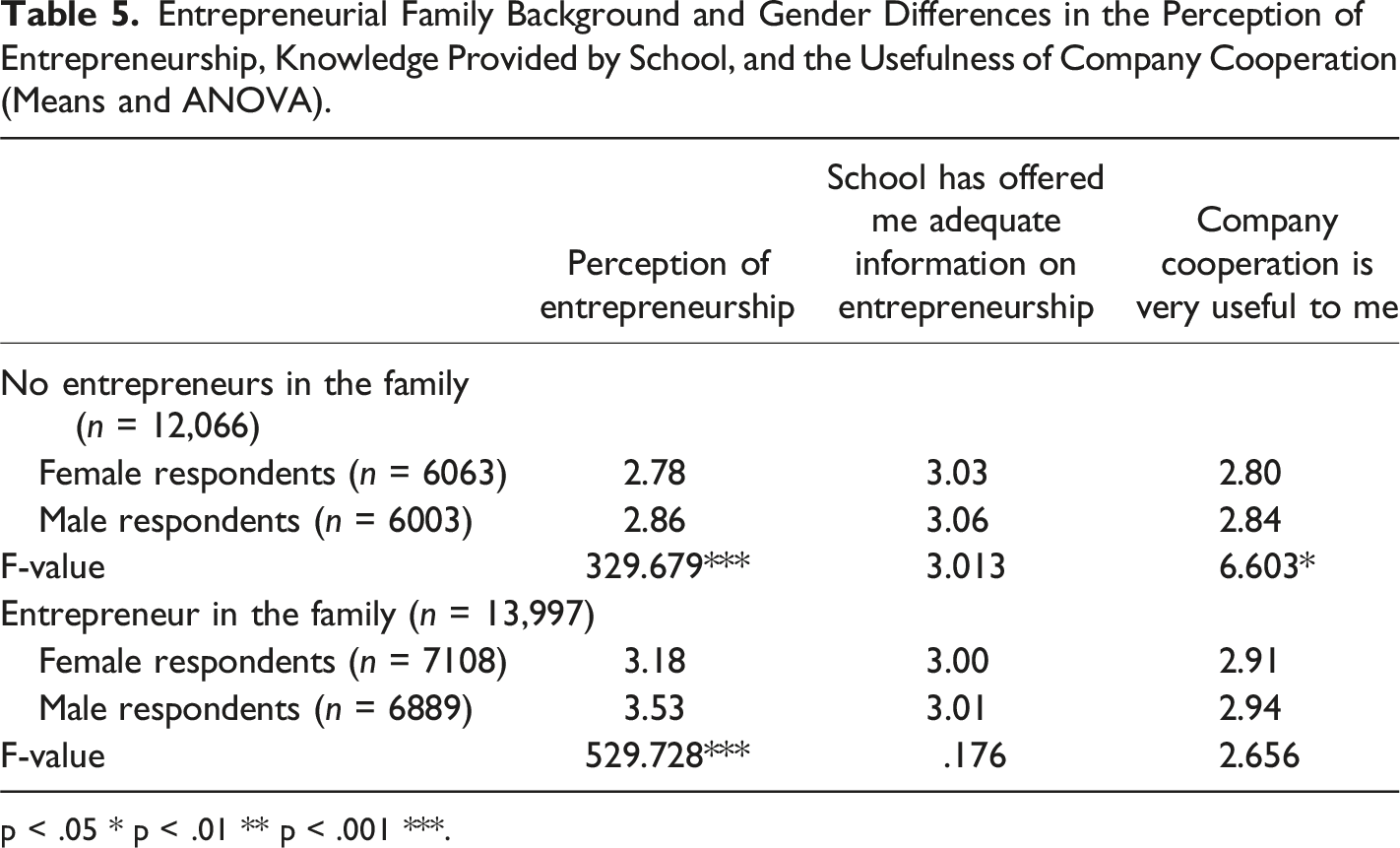
Entrepreneurial Family Background and Gender Differences in the Perception of Entrepreneurship, Knowledge Provided by School, and the Usefulness of Company Cooperation (Means and ANOVA).
p < .05 * p < .01 ** p < .001 ***.
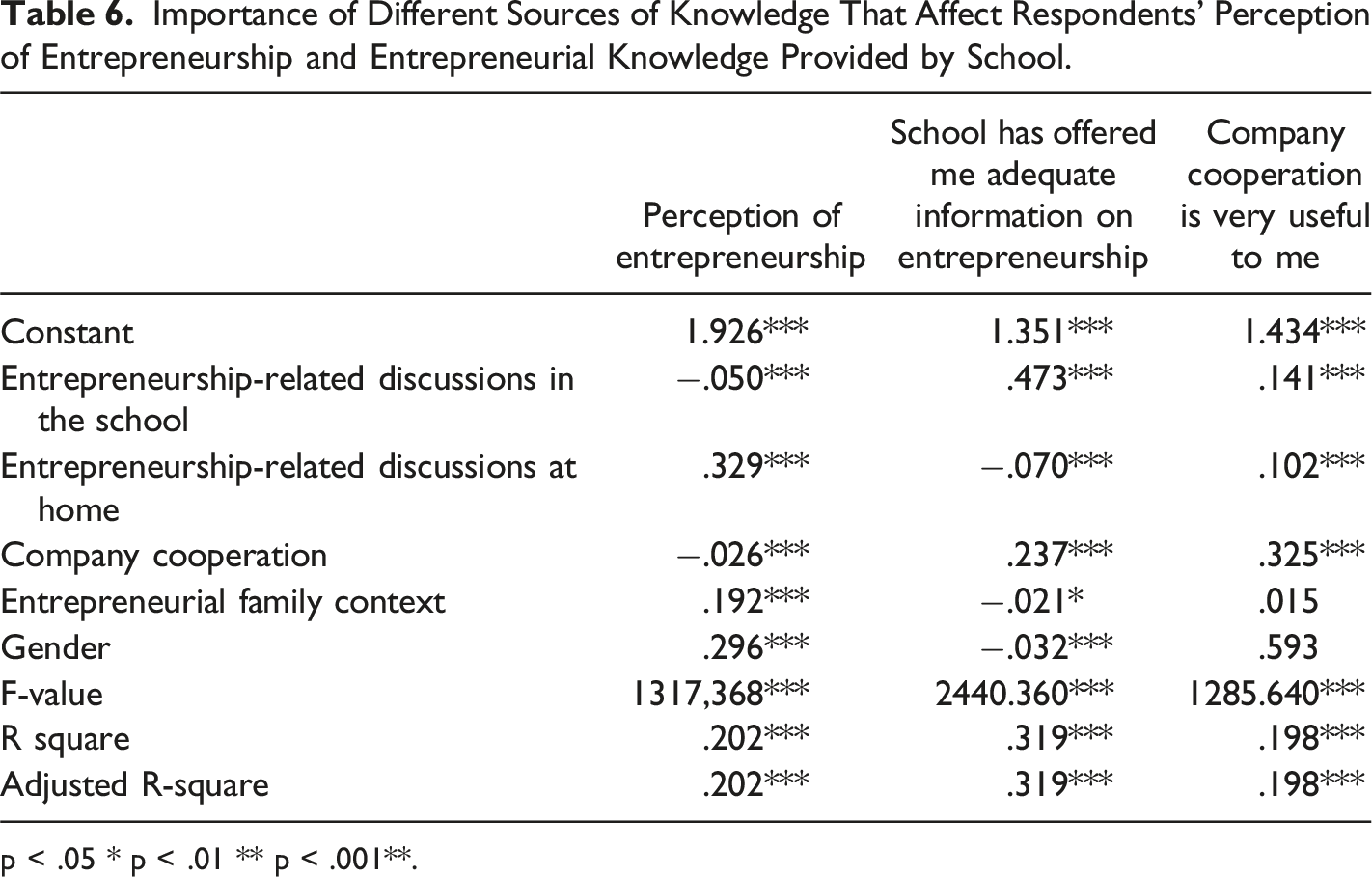
Importance of Different Sources of Knowledge That Affect Respondents’ Perception of Entrepreneurship and Entrepreneurial Knowledge Provided by School.
p < .05 * p < .01 ** p < .001**.
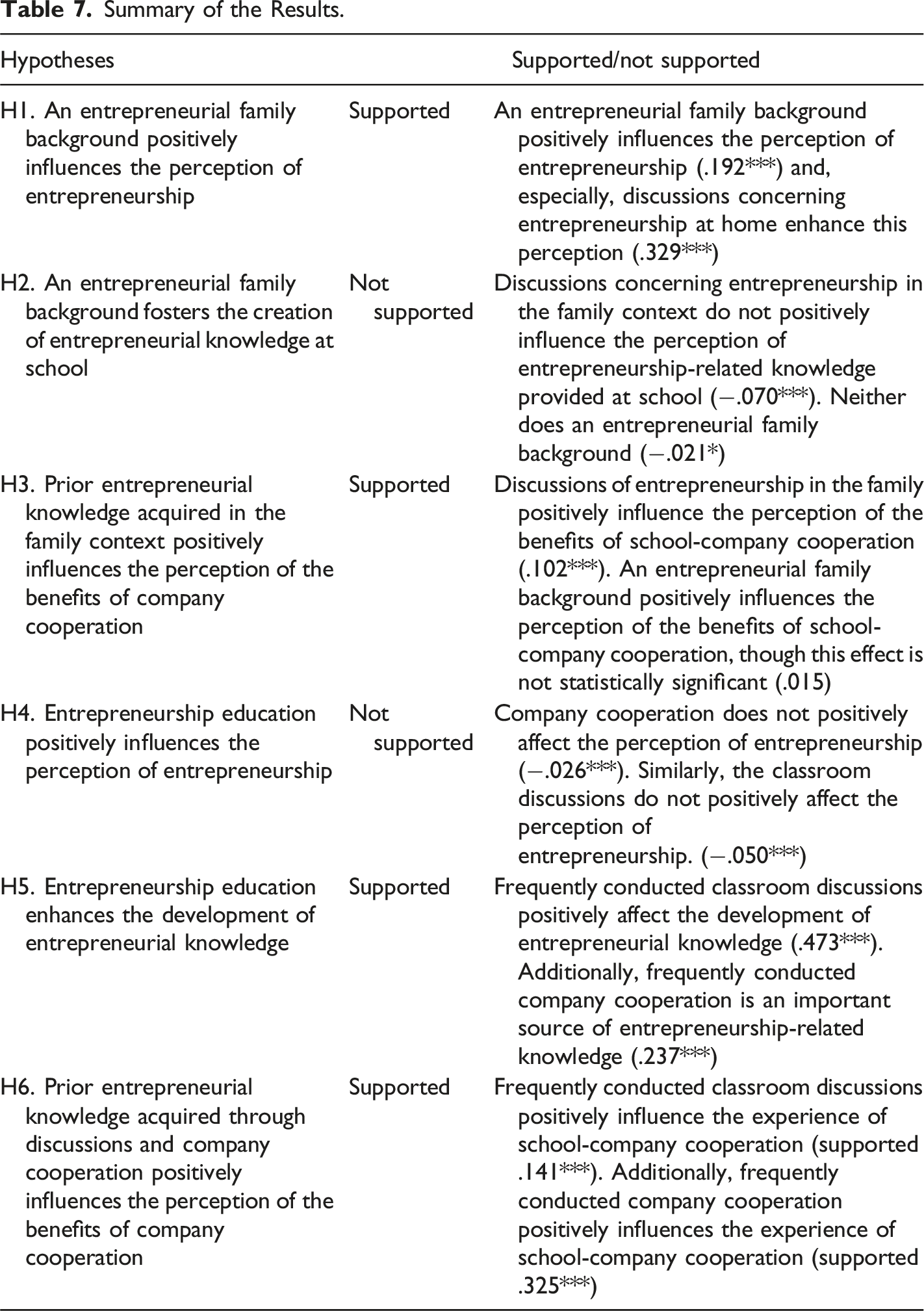
Further, the second model shows that schools can deliver entrepreneurial knowledge through entrepreneurship-related discussion (.473***) and company cooperation (.237***). This means that hypothesis H5 is strongly supported. However, interestingly, schools are not able to further add entrepreneurial knowledge if there is entrepreneurship at home (−.021*) and, especially, if there are regular discussions about entrepreneurship in the family context (−.070***). Therefore, hypothesis H2 is not supported.
With regard to the gendered nature of entrepreneurship (Hintikka et al., 2022; Kourilsky & Walstad, 1998; Minniti, 2009), it is slightly worrying that gender strongly influences how young people perceive entrepreneurship (.296***) and that boys have a more positive perception than girls as early as age 15. Additionally, based on these results, gender influences the experience of entrepreneurship-related information provided by the school.
The perception of the benefits of company cooperation is affected by prior knowledge of entrepreneurship. First, prior entrepreneurial knowledge acquired through discussions in the school context positively influences the perception of the benefits of company cooperation (.141***). Second, frequent company cooperation (.325***) positively influences the perception of the benefits of company cooperation. Third, an entrepreneurial family context positively influences the perception of the benefits of company cooperation, although the beta is not at a statistically significant level (.015). However, if there are entrepreneurship-related discussions at home (.102***), the effect on the perception of the benefits of company cooperation is rather high. Hence, it may be stated that hypothesis H3 and H6 are supported.
Summary of the Results.
Discussion
Previous research has highlighted the significance of entrepreneurial role models in promoting entrepreneurial career paths (e.g., Amofah & Saladrigues, 2022; BarNir et al., 2011; Entrialgo & Iglesias, 2018; Hägg & Gabrielsson, 2020; Hopp et al., 2019). However, as Morgenroth et al. (2015) argue, role models require the presence of role aspirants to fulfill their function as role models. Within the entrepreneurial role modeling process, a learner can become a role aspirant only if they possess an understanding of entrepreneurship and hold a positive perception of it.
Hence, this study examined the role of school and family in shaping entrepreneurial knowledge and perceptions, and addressed the following research question: What is the significance of school and an entrepreneurial family background in fostering teenagers’ entrepreneurial knowledge and shaping their perception of entrepreneurship? In addition, this study examined how different factors influence learners’ experiences of entrepreneurship education methods. This is relevant to the development of role aspirants, as the potential benefits of collaboration with companies may remain unrealized if learners are unable to adapt to the role models presented to them.
To summarize the findings of this research, role aspirants are primarily shaped by their home environment rather than through discussions or company collaboration in school, although school-based activities can increase entrepreneurial knowledge. The results of this study suggest that entrepreneurship education should initially focus on building knowledge of entrepreneurship and fostering a positive perception of it, before introducing role models. Consequently, entrepreneurship education should be viewed as a process in which different methods and activities serve distinct but interconnected purposes (see also Jones & English, 2004; Sommarström et al., 2020; Welsh et al., 2016). Furthermore, a one-size-fits-all approach is ineffective in the role modeling process, as the formation of role aspirants depends on learners’ prior knowledge and perceptions of entrepreneurship (see also, e.g., Kassean et al., 2015; Nowiński & Haddoud, 2019).
From a theoretical standpoint, this study contributes to entrepreneurship education research in two key ways. First, it emphasizes the need to view entrepreneurship education as a multifaceted process involving diverse methods and content. Second, this research introduces the concept of the role aspirant into the research field of entrepreneurship education, offering a novel viewpoint to the development of entrepreneurship education theory. Further, this study demonstrates that an entrepreneurial family background provides children with a significant advantage in the role modeling process.
Practically, if role models are integrated into the entrepreneurial learning processes and the learner lacks an entrepreneurial family background, the school must compensate by addressing gaps in entrepreneurial knowledge and by enhancing a positive perception of entrepreneurship before introducing role models. The results of this research suggest entrepreneurship education that is based on learners’ agency in the learning process (e.g., Code, 2020). Learners should have the ability and opportunity to regulate their own learning in interaction with the learning environment, act according to their own values, and draw on their prior knowledge and skills (e.g., Hopp et al., 2019; Hu et al., 2020; Morgenroth et al., 2015). This means that teachers also need skills to guide learners based on their learning needs (see, e.g., Kolho et al., 2024; Oksanen et al., 2023).
For example, the gender differences observed in the data suggest that girls and boys may be motivated by and respond to role models based on different characteristics. Considering individual differences in entrepreneurial role modeling processes could help reduce the gap between female and male learners in terms of interest in an entrepreneurial career path (see, e.g., Hintikka et al., 2022; Karimi et al., 2013; Kourilsky & Walstad, 1998; Minniti, 2009). Additionally, Johansen and Foss (2013) have pointed out that using stereotypical role models might even decrease female learners’ interest in entrepreneurship. Therefore, a variety of role models and time to adapt to different ones are important and provide an opportunity to challenge negative perceptions of entrepreneurship (Ratten & Usmanij, 2021).
Furthermore, when different role models with diverse educational and professional backgrounds are involved in the learning process, learners can be taught that entrepreneurship offers a wide range of possibilities (see, e.g., Bandera et al., 2021; Henderson & Robertson, 2000; Holienka et al., 2013). Moreover, Bandera et al. (2021) highlight that entrepreneurship education can sometimes present an overly heroic image of entrepreneurship. In a family environment, entrepreneurial role models do not promote “superhero” thinking, although parents can also be objects of admiration and appreciation (e.g., Sentuti et al., 2024). However, parents may act as more realistic entrepreneurial role models, showing all sides of entrepreneurship. Children from entrepreneurial families are role aspirants within the family context, but the question remains whether they are also role aspirants in the school context and whether schools can create new role models for them. Regular discussions at school and the entrepreneurial knowledge formation may be particularly important for learners whose family has passed on a negative perception of entrepreneurship.
Based on the results of this study, entrepreneurship education needs a diverse and broad use of role models and a deeper understanding of role model processes. However, entrepreneurship education is guided by general goals and methods (Aly et al., 2021; Brentnall et al., 2021; Samwel Mwasalwiba, 2010; Thomassen et al., 2020), which do not necessarily take into account the individual differences of learners (Hytti, 2018; Salavou et al., 2023; Walter & Dohse, 2012). On the other hand, in Finland, teachers have an autonomous position (Erss, 2018; Oksanen et al., 2023; Seikkula-Leino et al., 2019) and can decide which methods are used in entrepreneurship education. This provides an opportunity to implement diverse entrepreneurship education, benefiting all types of learners and increasing the effectiveness of entrepreneurship education (Dutta et al., 2011). It also further highlights the need for planning and managing entrepreneurship education, aspects which have already been identified as challenges in previous studies (Leitch & Harrison, 1999; Ruskovaara et al., 2016).
Finally, there are limitations in this research that need to be considered. First, the data used in this article was collected in a single country. Thus, the results are culturally limited to one school culture and entrepreneurial culture in general. Second, the study is cross-sectional and cannot confirm the causal connection between family background, entrepreneurship education methods and the formation of an entrepreneurial role aspirant. As this research is based solely on quantitative self-reflective data, it does not take into account the qualitative aspects of entrepreneurial knowledge creation during adolescence. While this research increases understanding of the phenomena, it does not explain how role aspirants are formed. Hence, further qualitative and quantitative research on role aspirants in the entrepreneurial role modeling process is needed. Longitudinal studies on the formation of role aspirants at different stages of the career path and their influence on career choices would also be beneficial for research on entrepreneurship education.
Thirdly, the study has only examined the importance of family and school in the production of knowledge related to entrepreneurship and does not consider the other contexts in which teenagers operate in their daily lives. However, the research serves as a starting point for a more in-depth study of role models and role aspirants in the context of entrepreneurship education. While the study does not question the importance of role models in entrepreneurship education, it highlights the need to further explore the perspective of role aspirants in role modeling processes.
It should be acknowledged that learners may be at different stages of entrepreneurial understanding, for example, during a company cooperation process: some are role aspirants, some know nothing about entrepreneurship, and others fall somewhere in between. Hence, a single meeting with one entrepreneur cannot meet the entrepreneurial learning needs of all students (see also Adesola et al., 2019; Lockwood et al., 2002). This underscores the need for a deeper understanding of the position of role aspirants in the role modeling process in entrepreneurship education.
Footnotes
Declaration of Conflicting Interests
The authors declared no potential conflicts of interest with respect to the research, authorship, and/or publication of this article.
Funding
The authors received no financial support for the research, authorship, and/or publication of this article.
