



Abstract
Entrepreneurship education (EE) includes the processes of learning and teaching entrepreneurship. Studies on EE have traditionally focused on the outcome and its variances, while process studies have the potential to capture processual understanding. This study explores how processes are examined in EE research, and its insights provide a foundation for future directions for process studies in EE research. The study includes a systematic literature review of process studies in EE research and the subsequent mapping of 101 process studies. The identified process studies are grouped into those focusing on students’ learning, module design, study program evaluation, and the development of entrepreneurial universities and ecosystems. For enhanced clarity on how learning takes place and how processes unfold in EE, this paper details the process content, mechanism, and sequence, as well as the methods applied to study these processes. Moreover, the paper offers a research agenda on how to use the potential of process studies in EE. Improved use of process studies implies better answers to how learning takes place and how processes unfold in EE, thus improving educational practices and enabling the more efficient use of public funding for education.
Keywords
Introduction
Entrepreneurship education (EE) involves several intertwined processes at various levels. These range from students’ learning to the development of educators’ teaching practices, as well as the creation of ecosystems and infrastructure in universities facilitating EE at higher education institutions (Heinonen & Hytti, 2010; Jones & English, 2004; Leitch & Harrison, 1999; Neck & Corbett, 2018). The literature on EE often focuses on modules (i.e., self-contained units of study within a study program) (Baggen et al., 2022; Blenker et al., 2014) and study programs (i.e., structured collection of modules leading to a degree or certification, hereafter named programs). These studies emphasize students’ engagement in learning processes that include maturing and transforming entrepreneurial competencies (i.e., a combination of knowledge, skills, and attitudes that enables entrepreneurial action) (Gielnik et al., 2015; Nabi et al., 2017). These EE processes should be captured and analyzed through process studies.
Process studies enable the exploration of questions about “how and why things emerge, develop, grow, or terminate over time” (Langley et al., 2013, p. 1). In EE, process studies examine the dynamic and interconnected development of teaching and learning entrepreneurship. These studies focus on how students, modules, programs, entrepreneurial universities, and ecosystems evolve over time. They emphasize the interactions and transformations across these levels, highlighting the inherent links between the development of EE, the growth of students, and the broader evolution of entrepreneurial universities and ecosystems. Thus, process studies could be appropriate for responding to scholars’ increased call for more research on how learning for entrepreneurship actually happens through various pedagogical interventions (Baggen et al., 2022; Nabi et al., 2017) and the role of the local context in this process (Brentnall et al., 2023).
Process studies in EE provide novel insights into crucial research questions, such as how students become more entrepreneurial and develop entrepreneurial skills by participating in EE. Moreover, a more profound understanding of the learning process is necessary to design pedagogical interventions for teaching entrepreneurship and to manage expectations regarding potential outcomes in relation to stakeholders and policymakers. Providing an overview of the status of process studies in EE is essential for advancing scholarship and the practice of EE. Therefore, this study addresses the research question: How are processes studied in the EE literature?
To this end, this paper presents a review of process studies in the extant EE literature. The focus on process studies complements other important literature reviews that can help to gain an overview and understanding of the EE field. Seminal literature reviews on EE (e.g., Mwasalwiba, 2010; Nabi et al., 2017; Pittaway & Cope, 2007; Rideout & Gray, 2013) have made important contributions that enable researchers to participate in the accumulation of knowledge in the field. For example, Pittaway and Cope’s (2007) thematic framework, which maps out the field of EE, not only provides an overview of the sub-topics within the field but also illustrates how these sub-topics are interrelated as factors contributing to EE. Building on the overview of the field, Nabi et al. (2017) and Rideout and Gray (2013) focused on the effects of EE and called for additional studies on pedagogy, entrepreneurial behavior, the impact of context and stakeholders, and improved research designs. Hägg and Gabrielsson (2020) laid the groundwork for the response to the call for pedagogical details by reviewing how pedagogy has evolved in EE research, while Thomassen et al. (2020) reviewed the EE literature on context at the micro, meso, and macro levels. According to these previous literature reviews, temporality matters in EE, but so far, this part of the literature has not been reviewed specifically.
The contributions of the present review of process studies in EE are threefold. First, by synthesizing the current state of process studies in the EE literature, this review offers an essential categorization of EE knowledge currently available from process studies. Second, a research agenda for further study of EE processes is suggested. The research agenda provides a foundation to increase the understanding of how teaching and learning in EE occur, develop, and change over time, as well as teaching and learning processes that engage students, educators, modules and programs, ecosystems, and stakeholders. Third, the synthesis and analysis herein provide new insights into and clarity regarding the confusion and inconsistencies in process studies and process-based research as two distinct but related concepts.
Process Studies and Entrepreneurship Education
Process studies differ from the more commonly used variance studies because their epistemological approaches are fundamentally different (Langley et al., 2013; Payne et al., 2017). Process studies apply an event- or narrative-driven approach, while variance studies use an outcome-driven approach. Moreover, while process studies are designed to explain the sequences of activities and events, variance studies focus on the relationships between variables and provide explanations by studying the antecedents and consequences of variances between variables (Payne et al., 2017).
Process studies focus on how and why an entity (i.e., relevant constructs of interest) changes, evolves, develops, or moves over time (Langley et al., 2013; Payne et al., 2017). These studies typically aim to understand a series of activities or events that come with distinct outcomes, for instance, to understand the link between events and patterns or to specify the stages that follow a distinct temporal order (Sabherwal & Robey, 1995). These processual insights can be gained by following the processes of different time spans, such as short-term decision-making processes or long-term strategic entrepreneurial processes (Burgelman, 1983). The sequences of events are often explained as narratives or stories (Payne et al., 2017; Steyaert, 1997). In this study, process studies are defined as studies that examine processual elements of the process phase (Figure 1) to analyze change, evolution, development, or movement as a series of activities or events within a process. The elements of a process inspired by Fleming (1999). Source(s): Adopted from Fleming (1999).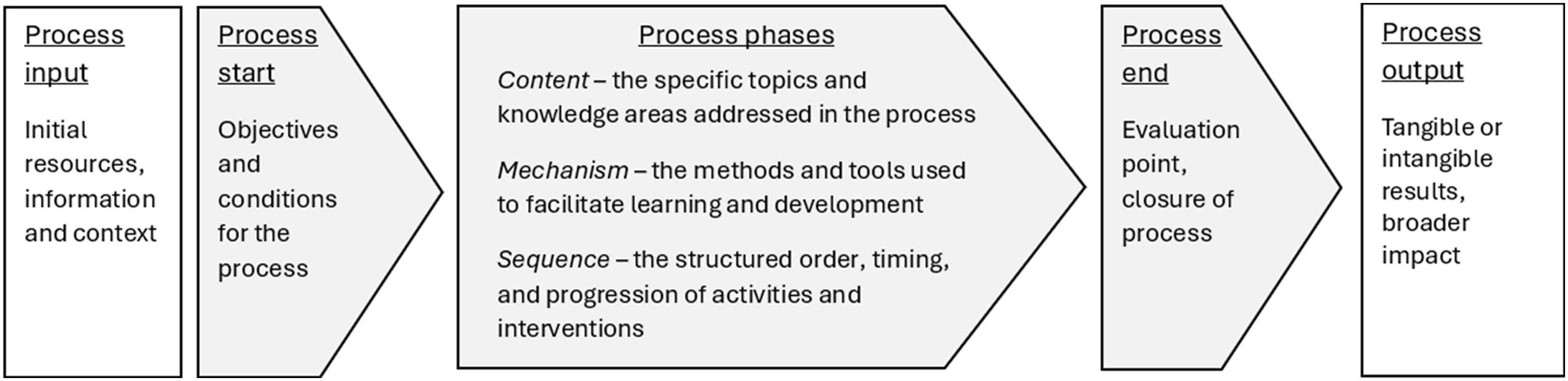
Drawing on this broader definition of process studies, in the context of EE, we understand process studies as those examining the processual elements within distinct phases of a process. These studies analyze the ongoing development and interactions within and between different levels of EE, such as students, modules and programs, entrepreneurial universities, and ecosystems. Specifically, they focus on the content (e.g., the specific topics and knowledge areas taught and learned), the mechanisms (e.g., the methods, tools, and interactions that facilitate teaching and learning), and the sequences (e.g., the structured order, timing and progression of activities and interventions). By examining these elements, process studies uncover the transformational processes within EE at the individual, module, program, and systemic levels, as well as across these levels.
Indeed, EE is often understood as a process. Processes must be considered when designing and using teaching and learning methods (Leitch & Harrison, 1999) to support learning, such as competence development in entrepreneurship students (Williams Middleton et al., 2020) or the evolvement of entrepreneurial universities and ecosystems (Harris, 2008). Fleming (1999) highlighted the components of EE processes, emphasizing learning mechanisms that connect the evolving or changing content with measurable outcomes, such as pedagogical interventions or other initiatives aimed at developing entrepreneurial skills and beliefs among graduates. Fleming (1999) also outlined the processual aspects of EE in a process model of EE, categorizing them into inputs (students), process (content focus and teaching focus) and outputs (intangible/tangible) (p. 406).
Building on Fleming’s (1999) process model for EE, this study introduces additional elements to enhance the understanding of EE processes. Specifically, the proposed model (Figure 1) comprises five interconnected stages: process input, process start, process phase, process end, and process output. The process input includes the initial resources, information, and context that feed into the process. The process start establishes the objectives and initial conditions, setting the foundation for the process. The process phase is subdivided into three key components: content, the specific topics and knowledge areas addressed in the process; mechanisms, the methods, tools, and interactions used to facilitate learning and development; and sequences, the structured order, timing, and progression of activities and interventions. The process end involves evaluating and reflecting on the outcomes, providing closure to the process. Finally, the process output represents the tangible and intangible results and broader impacts of the EE process. This expanded model not only highlights the distinct phases and components of EE processes but also underscores the importance of studying processual aspects throughout the process—whether in the short term or across its entire duration.
The central objective of this study is to critically examine the types of processes and methodologies employed in the study of EE processes. The lack of research opening the “black box” of EE is puzzling, as many preconditions are in place in the teaching setting to conduct process research in EE. To build a knowledge base on process studies in EE, this study conducts a literature review of the current state of these studies.
Review Method
Existing research on processes within the EE literature was identified and critically appraised to determine future research priorities. A systematic literature review (SLR) was conducted in accordance with the PRISMA 2020 guidelines (Page et al., 2021). The SLR followed four steps: (1) sample generation, (2) sample screening, (3) coding, and (4) analysis. As this article does not contain any studies with human or animal participants, informed consent was not required.
Sample Identification
The first step in the SLR was to identify the search terms and assess the inclusion criteria. The authors initially screened prior EE literature and reviews to identify the relevant search terms. For the selection of papers, a comprehensive and systematic keyword search using the following search string was conducted: ([entrepre* educat*, enterpre* program*, entrepre* school*, entrepre* course*, enterprise educat* enterprise* program*, enterprise school* or enterprise* course*] and [learn* or process*]). Studies at the module, program, and university levels were included. Wildcards were used to account for both singular and plural forms, as well as variations in American and British spelling. Additionally, terms encompassing both entrepreneurship and enterprise education were used to ensure the inclusion of articles from across the broad discipline of EE, recognizing that these terms are often used interchangeably. The search term “university” was deliberately excluded, despite its relation to higher education, to maintain inclusivity regarding the geographical context of higher education institutions.
To be included in this systematic review, a study had to be an original research article published in an English peer-reviewed journal. Reports, presentations, working papers, articles that have not been peer-reviewed, articles in a language other than English and articles in journals discontinued in Scopus and/or owned by Molecular Diversity Preservation International (MDPI) were excluded. Another selection criterion was that the main topic should be related to EE. Articles that made passing references to EE, such as an entrepreneurship study with implications for EE, were excluded. Although EE was originally focused on business and taught in business schools, its scope has since been broadened to encompass various disciplines, and it has become a scientific field (Landström et al., 2021). Therefore, articles on EE across all subject areas were included. All publication years were included.
Scopus, the world’s largest abstract and citation database of peer-reviewed literature, was selected to sample articles meeting the inclusion criteria. Scopus covers a wide range of disciplines, which is a critical aspect, given the interdisciplinary nature of EE across various fields (Crișan et al., 2023). The search was performed on October 21, 2022, and 1674 articles were identified within the automated inclusion criteria.
Sample Screening
The 1674 identified articles underwent double screening. During the first screening, the titles and abstracts of the articles were manually reviewed to identify those that could be classified as process studies. Given that entrepreneurship is often defined as a process, sample screening was performed manually, as search terms such as “process*” generated irrelevant and undesirable results. To ensure a rigorous sampling process, a shared understanding of “process studies in EE” was established, referring to research on the dynamics of how and why phenomena evolve, develop, grow, or change over time (Langley et al., 2013) within the context of EE.
The process papers included in this study explore processual aspects including at least the “middle” of the process as well as the start, the end, and/or phases within the process middle. Articles were excluded if they merely highlighted differences between the start and end of a process without addressing how these differences were achieved or when changes occurred during the process. To exemplify, we have excluded studies, such as Vorley and Williams (2016) and Klapper and Farber (2016), that capture the start and the end of the process without considering the “middle” (see Fleming, 1999). Other examples of studies that were excluded are research that explores the impacts of a process without focusing on the processual aspects (e.g., Wood et al., 2022; Huq & Gilbert, 2013) or studies that investigate variations between variables, such as competencies and demographics (e.g., Chiu et al., 2021; Secundo et al., 2020). While these studies make important contributions, they were excluded based on the definition of process studies in the context of EE adopted in the present study. Consistence during the sampling process was maintained through regular discussions among the authors. Abstracts that raised uncertainties related to whether the works presented were process studies were subjected to a thorough examination of the full paper and/or discussed collectively by the author team. The sampling approach ensured that only studies that investigated some form of processual evolution, changes, or dynamics were included.
The second screening consisted of a full reading of the 200 articles, which resulted in 99 additional exclusions. Each paper was reviewed by at least two authors throughout the review process to check for consistency. Article data were stored in MS Excel and included author names, publication year, article title, abstract, source title, volume, issue, and number of citations. A full list of the articles included in the analysis can be found in Table A1 in the Appendix. Figure 2 presents a flow diagram of the search strategy and screening process. In total, 101 articles were included in this review. Flow diagram of the study’s sample screening process following the PRISMA 2020 Standard. Source(s): Figure created by authors.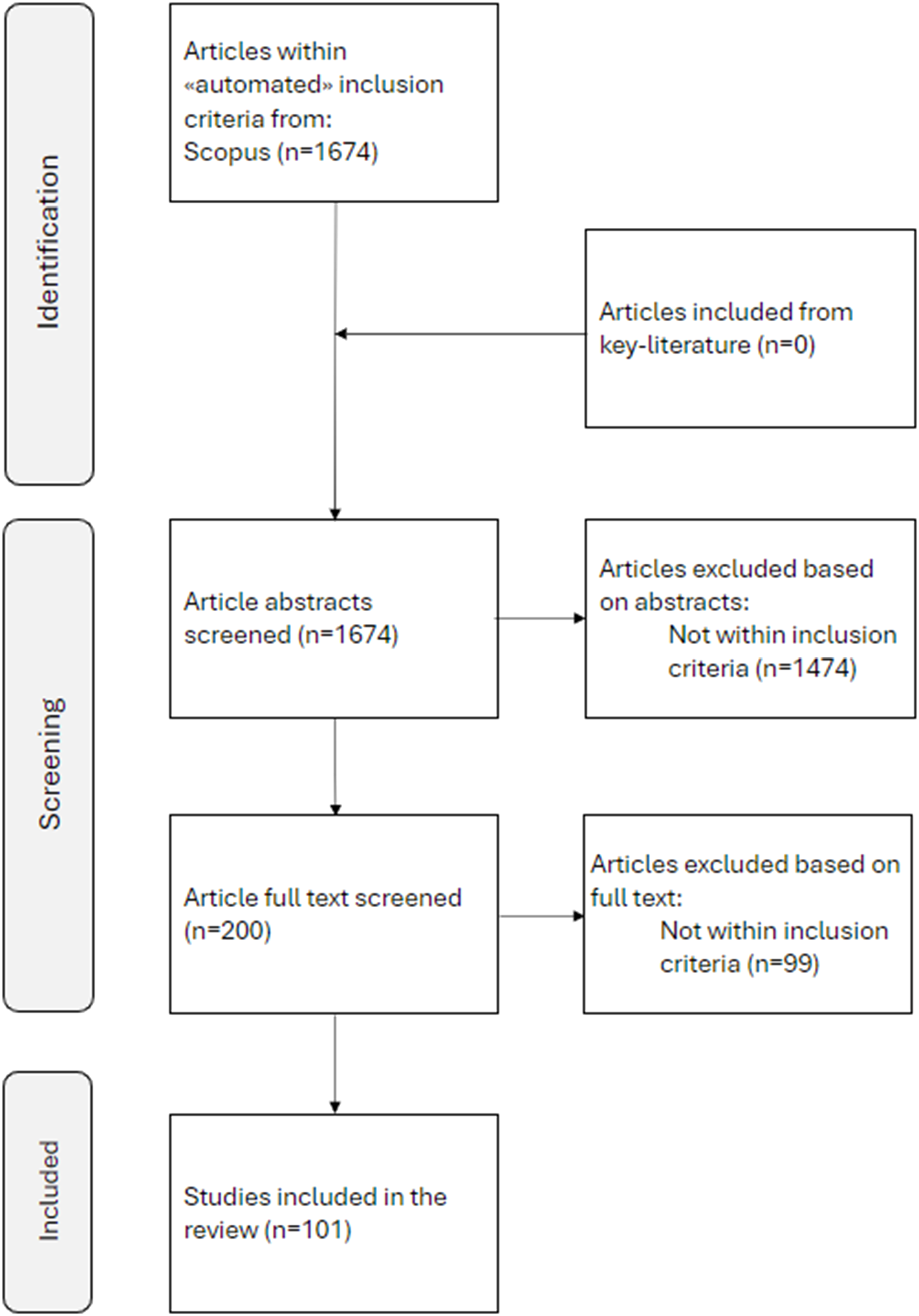
The Empirical Context of the Studies in This Review. a
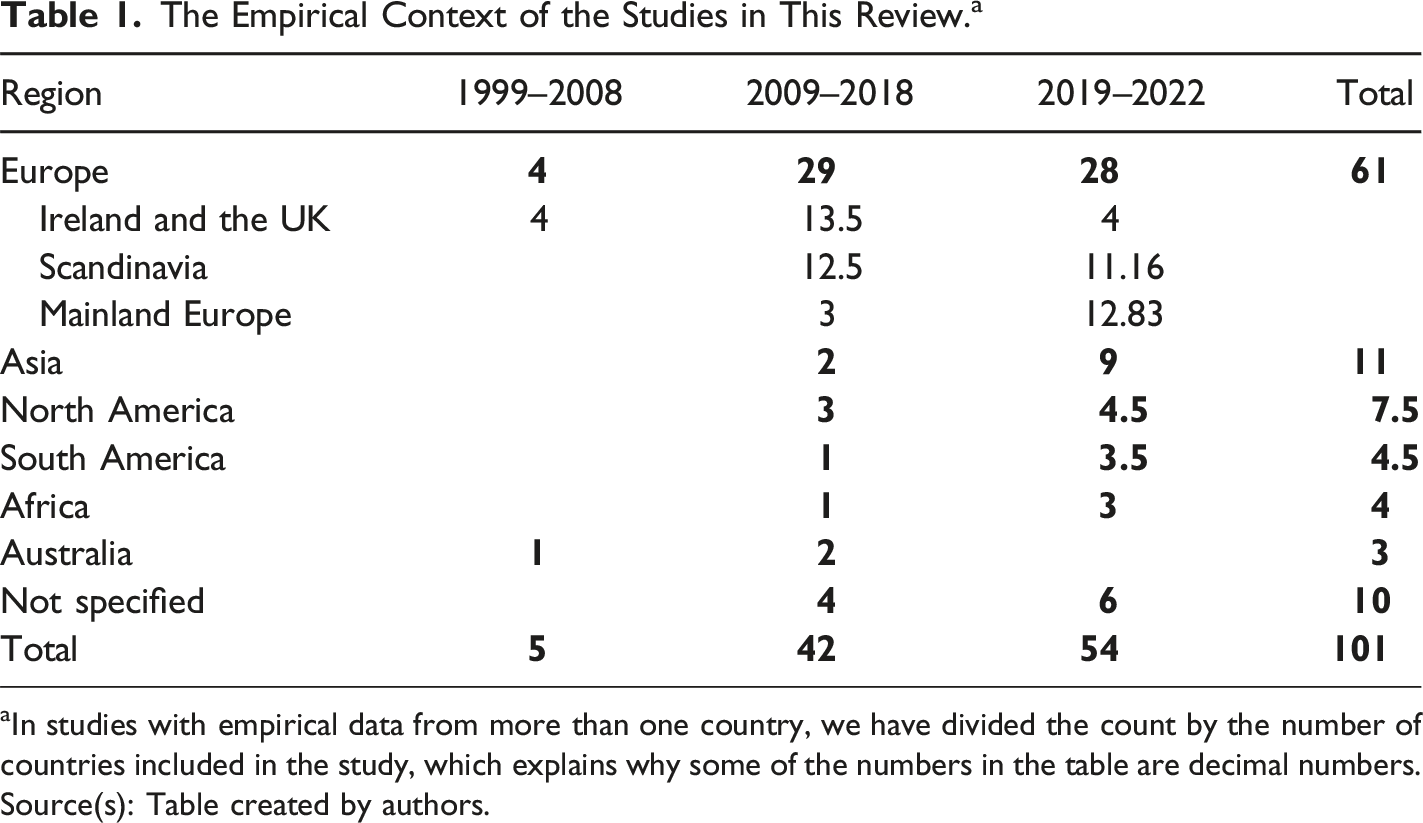
aIn studies with empirical data from more than one country, we have divided the count by the number of countries included in the study, which explains why some of the numbers in the table are decimal numbers.
Source(s): Table created by authors.
Analytical Strategies
The analysis was conducted in two distinct but related parts. First, the literature was synthesized using a recursive stepwise categorization approach. Second, the studies were identified and mapped based on the gaps in process studies within the field of entrepreneurship.
Categorizing the Process Study Literature
A consensus-based coding approach was applied to the initial data analysis. When there was uncertainty, the authors read the paper and held a discussion, which mostly concerned the differences between processes and process methodology. This methodological approach facilitated the creation of a collective understanding of what constitutes a process study. Additionally, we developed a codebook, outlining the critical aspects to focus on when coding the paper in detail. The codebook included the purpose of the process study, the topic being studied, the start and end of the process, content, mechanism, sequence, theory applied, unit of analysis, number of units studied, method of data collection, main findings, and suggestions for future studies. In the next step, the sample studies were grouped and categorized (Jones & English, 2004; Leitch & Harrison, 1999) into four thematic areas: (1) students’ learning process, (2) modules, (3) programs, and (4) entrepreneurial universities and ecosystems. These areas are discussed in the Findings section.
Identifying Gaps and Suggestions for Future Studies
A common way to identify a research agenda in literature reviews is to use the suggestions and call for future studies in the reviewed papers. However, this was not a feasible strategy in this review because only a few of the reviewed studies included theoretical and methodological rigor from which to build, and very few of the studies offered such suggestions. Following Sandberg and Alvesson (2011), gaps were identified, and issues were highlighted from the reviewed literature to provide suggestions for future research. Suggestions for future studies were collected using comparisons (Eisenhardt, 2021) and an incompleteness strategy (Sandberg & Alvesson, 2011). For instance, comparisons were made between the sum of the coded papers and existing process studies in entrepreneurship (e.g., Hjorth et al., 2015; McMullen & Dimov, 2013) to identify missing perspectives on entrepreneurial education (EE) processes. Additionally, the four themes were compared to determine whether process studies present in one theme were absent from another. Moreover, the same two types of comparisons were employed, with a particular focus on the methodologies used to study the processes in a robust manner.
Findings
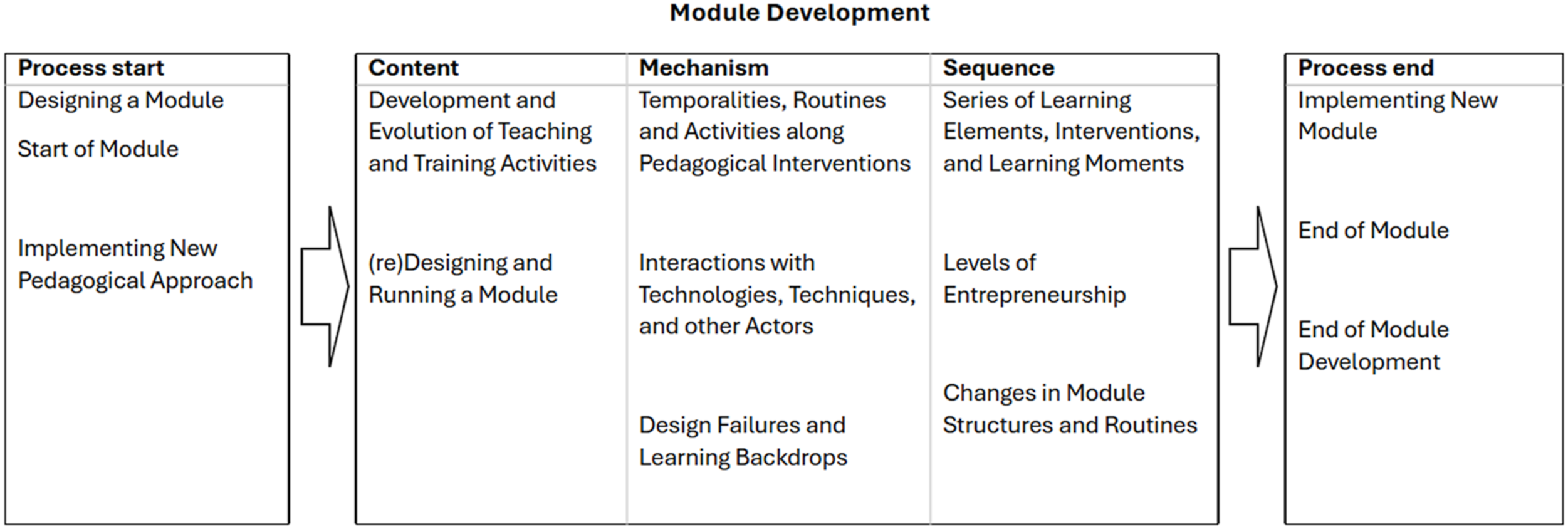
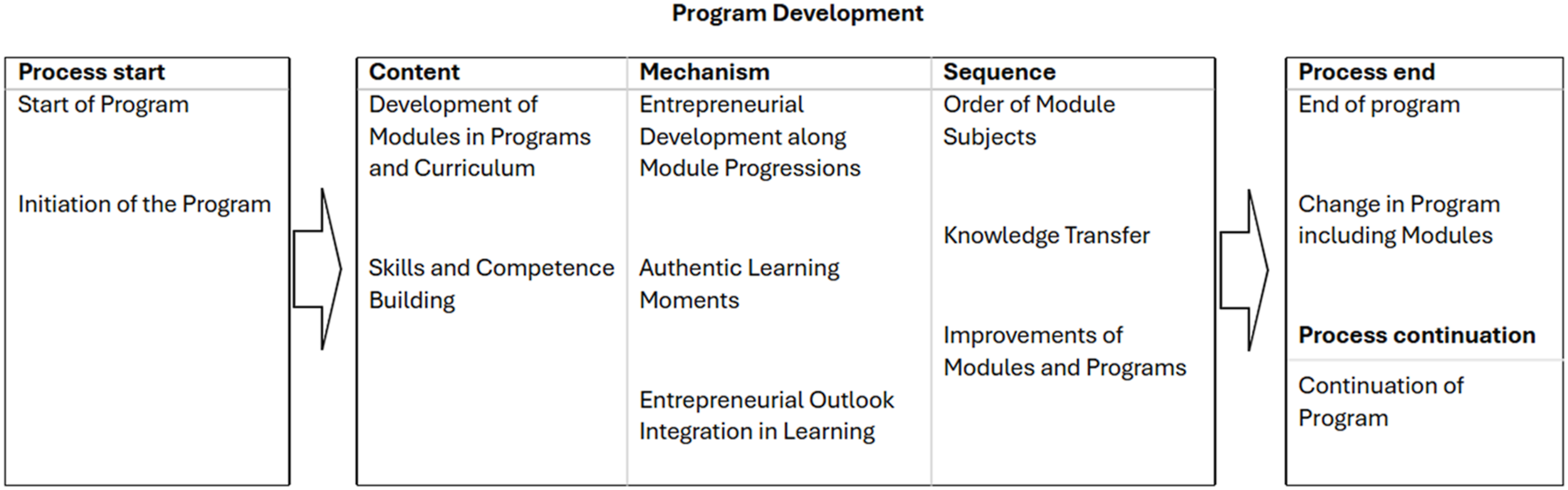
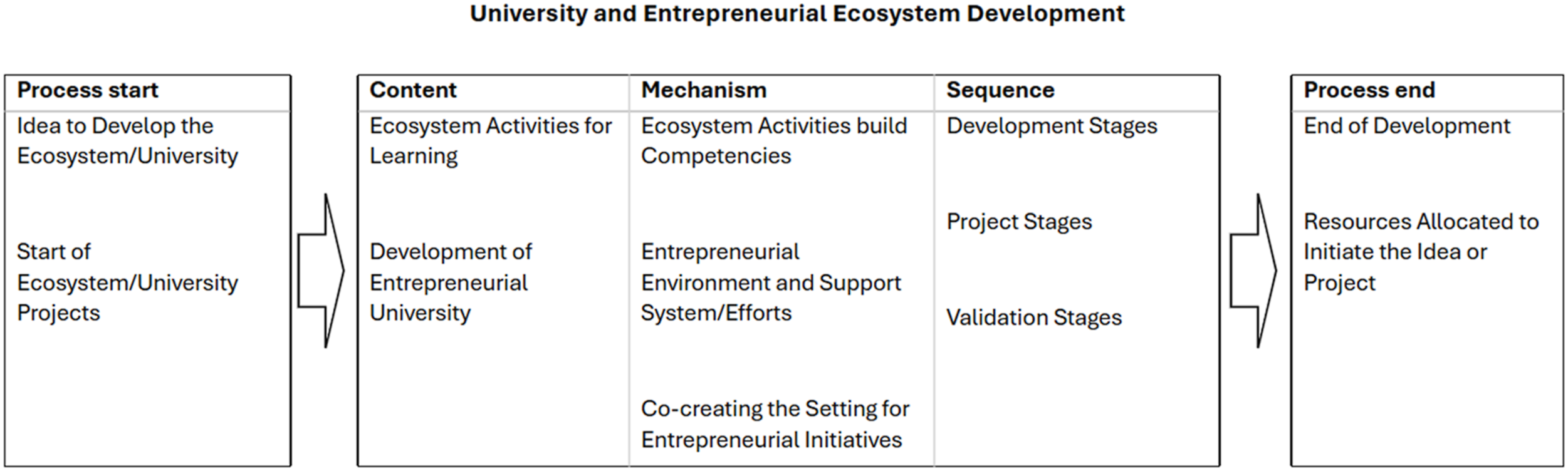
The subsections herein discuss the process studies identified according to the following thematic areas: (1) students’ learning, (2) modules, (3) programs, and (4) entrepreneurial universities and ecosystems. The process model (Figure 1) provides the framework shown in Figures 3, 4, 5, and 6, with each including an overview of the aspects addressed by prior process studies in EE, such as the research methods applied. Overview of the process elements related to student learning. Source(s): Figure created by authors. Overview of process elements related to entrepreneurial modules. Source(s): Figure created by authors. Overview of process elements related to programs. Source(s): Figure created by authors. Overview of process elements related to entrepreneurial universities and ecosystems. Source(s): Figure created by authors.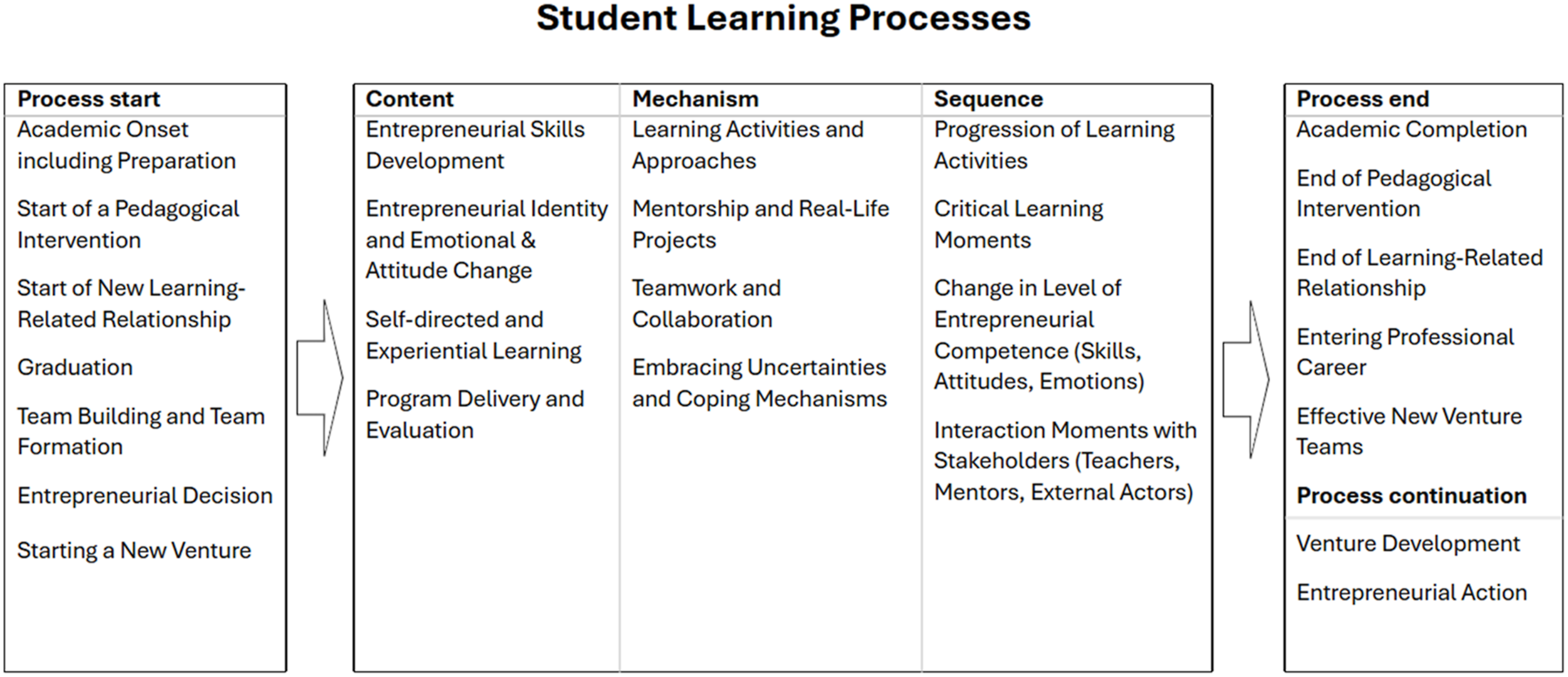
Students’ Learning Processes in Entrepreneurship Education
Process Aspects Studied
Overall, 54 studies examined students’ learning processes with the majority (48 studies) using students as the unit of analysis to capture the learning process within modules or programs. These studies often start sequentially, focusing on the learning process’s beginning, such as the start of a module or a pedagogical intervention. However, a few studies have investigated processes starting at different points, such as after the students graduated (e.g., Matlay, 2008) or following an entrepreneurial decision (e.g., Gordon et al., 2012). Of these studies, 43 analyzed the learning experiences of individual students, while only five examined team-level learning. The remaining six studies investigated students’ learning process from alternative perspectives: mentors (e.g., Radu Lefebvre & Redien-Collot, 2013) and educators (e.g., Pais Zozimo et al., 2022) and at the broader levels, such as the modules (e.g., Secundo et al., 2021), pedagogy (e.g., Barnaby et al., 2021), or programs (e.g., Blackwood et al., 2015; Rose et al., 2019). Figure 3 provides an overview of the aspects examined with the help of process studies in students’ learning in EE.
The content of these learning processes was about the development of entrepreneurial skills, entrepreneurial identity and emotional and attitude change, and the learning model or content related to the module, program, or other form or pedagogical interventions. For example, Williams Middleton et al. (2020) focused on the effects of formal and informal learning on the development of entrepreneurial competencies among students, while other studies examined students’ processes of entrepreneurial identity development (Hytti & Heinonen, 2013; Mei & Symaco, 2022).
Studies exploring the learning process investigated mechanisms related to teaching tools or learning approaches, and those that examined a distinct entrepreneurial learning process were also identified. For example, five studies focused on the mechanism of learning in teamwork when working with project work (Warhuus et al., 2021; Winborg & Hägg, 2022) or real-life venture creation (Chen et al., 2021; Pazos et al., 2022; Steira & Steinmo, 2021). To grasp the process dynamics, the process was captured in sequences studied, for example, in the form of progression in learning activities, distinct interaction moments, or change in the level of entrepreneurial skills.
Most of the studies included the end of the process, and half of the processes ended with academic completion (26 studies). Other processes ended with the end of a learning-related relationship (e.g., Radu Lefebvre & Redien-Collot, 2013) or the end of a pedagogical intervention (e.g., Wu & Martin, 2018). In some studies (e.g., Rusko et al., 2019), the process continued after the study.
Process Study Methods Applied
Retrospective qualitative interviews and analysis of reflection logs were the most applied methods for data collection; these methods connect the “start” and “end” of the process studied to the start and end of an EE module (e.g., Lynch et al., 2021; Rasiah et al., 2019). Only a few studies have conducted longitudinal assessment studies (e.g., Murray & Crammond, 2020) or qualitative longitudinal interviews at several points in time (e.g., Steira & Steinmo, 2021). Among the longitudinal studies, Joensuu et al. (2013) assessed the development of intentions among 192 students over time in three waves, from the beginning of the first year to the end of the third year of a program. Similarly, Arpiainen and Kurczewska (2017) followed 13 students over 5 years, from when they started their EE program to 3 years after graduation.
Processes Related to Modules
Process Aspects Studied
In total, 30 articles focused on modules, with most of them discussing only one module. The processes related to modules typically started with the module design, the start of a module, or the implementation of new pedagogical approaches. Figure 4 illustrates the key elements related to processes in an entrepreneurship module.
The content of process studies related to modules is concerned with either the designing and redesigning of a module or the development and evolution of pedagogical activities within a module. Fourteen of the module-related articles included theories connected to learning and pedagogy to explain the mechanisms related to the development of module-related process elements. Williams (2015) used game-based learning frameworks to highlight the learning that takes place when games are included in modules. Martina and Göksen (2022) studied the design of game-based modules to identify their essential elements. Similarly, from a Deweyan perspective, active pedagogy enabled Pischetola and Martins (2021) to show the unfolding of experimental thought. The sequences captured by these process studies are, for example, changes in the module structures and routines and a series of learning elements.
For studies involving modules, the process study ended with the implementation of the new module, the completion of the module, or when the module is developed. None of the articles in this thematic area extended the time span of the studied processes beyond the module itself. Colombelli et al. (2021) made an attempt toward that direction by collecting publicly available information long after the module had finished.
Process Study Method Applied
The extensive use of action research, participatory observations, and data collection consisting of module reports, assessments, and various notes suggests that many of these articles are primarily descriptions of the authors’ own modules. Most of these articles are centered on the module and the data collected from the students in the module. There were some exceptions, such as Penaluna et al. (2015) and Pischetola and Martins (2021), who gathered data from educators, and Elia et al. (2017), who examined how a new module contributed to the development of an entrepreneurial university. There seems to be a recent trend in studies with more structured data collection. Wettermark (2020) took a critical approach to data collection by problematizing how students’ reflection notes tended to relate to grading and time pressure. Snihur et al. (2021) used 7 cohorts of their module, while Robinson et al. (2016) used 10 cohorts. By increasing the number of students, these studies were less dependent on specific factors that influence individual cohorts.
Processes Related to Programs
Process Aspects Studied
In this review, 12 articles focused on processes on the program level. As shown in Figure 5, the processes in these studies started with running or initiating a program and ended when the program was completed, change was undertaken, or the study ended while the program continued.
The studies in our sample were mainly interested in developing the program and curriculum or in the skills and competencies that could be built as students completed the program. The sequences were related to the building and improvement of the program and to instances where knowledge was transferred.
Half of the sample in this thematic area did not have a clear theory on which to build. Those articles that stated which theories they used were collaborative learning and action learning (Kujala et al., 2022), entrepreneurial competencies (Treanor et al., 2021), and constructivist learning (Kleine et al., 2019). However, there seemed to be a clear development over time, as the earliest contributions in this category (2015 and earlier) were inductive or did not connect the evaluations of the programs to a clear theory. Moreover, the earliest contributions dealt with the evaluation of their own programs (Fleming, 1999; Ollila & Middleton, 2011), while the later contributions were more specific on the special contributions of their evaluations, such as guidance on how EE efforts could be better assessed (Cualheta & Abbad, 2021) and the long-term effects of pedagogical tools, such as a start-up sprint (Hilliard, 2021) or an entrepreneurship competition (Treanor et al., 2021). Only Chandler and Broberg (2019) conducted an experiment to evaluate the program over time. Most of the programs were directed toward “regular” students in higher education, except for an EE program for prisoners in a high-security prison (Keena & Simmons, 2015) and an EE program that could prevent substance abuse and suicide among American Indians (Tingey et al., 2016).
Process Study Methods Applied
Six of the studies used active participation methods to follow the processes related to the entrepreneurship program. Most of the authors were simultaneously the teachers and coordinators of the program investigated. Other methods applied by the reviewed studies were retrospective interviews (Keena & Simmons, 2015; Kleine et al., 2019), multi-stage surveys (e.g., Brodie et al., 2009; Tingey et al., 2016), and autoethnography (e.g., Treanor et al., 2021).
Processes Related to Entrepreneurial Universities and Ecosystems
Process Aspects Studied
Our mapping of the process studies in EE resulted in five process studies related to entrepreneurial universities and ecosystems. Figure 6 shows the process elements studied.
These studies followed the process from either the idea or the actual start of an initiative developing an entrepreneurial university or an ecosystem to the end of the development or until the resources were allocated to implement the idea. Rae et al. (2009) examined, through a document study, the development of the entrepreneurial university over five years and illustrated the complexities of the different elements developed or redeveloped, ranging from modules to support divisions, such as innovation offices and technology transfer offices. Rae et al. (2009) further argued for the importance of developing entrepreneurial skills, values, and methods at the university.
Process Study Methods Applied
The processes of developing the ecosystem or the entrepreneurial university were studied through ethnography and qualitative longitudinal interviews. The process studies focused on the process itself and some crucial elements (specific processes), such as knowledge transfer (Harris, 2008), student ventures in a co-curricular business model lab (Hasche & Linton, 2021), and social entrepreneurial engagements (García-González & Ramírez-Montoya. 2023).
Potential Avenues for Research on Processes in Entrepreneurship Education
Based on the analysis of the existing research on process studies in EE literature, potential avenues for future research are identified, and potential improvements in methodological rigor are discussed.
Processes That Have Not Been Studied
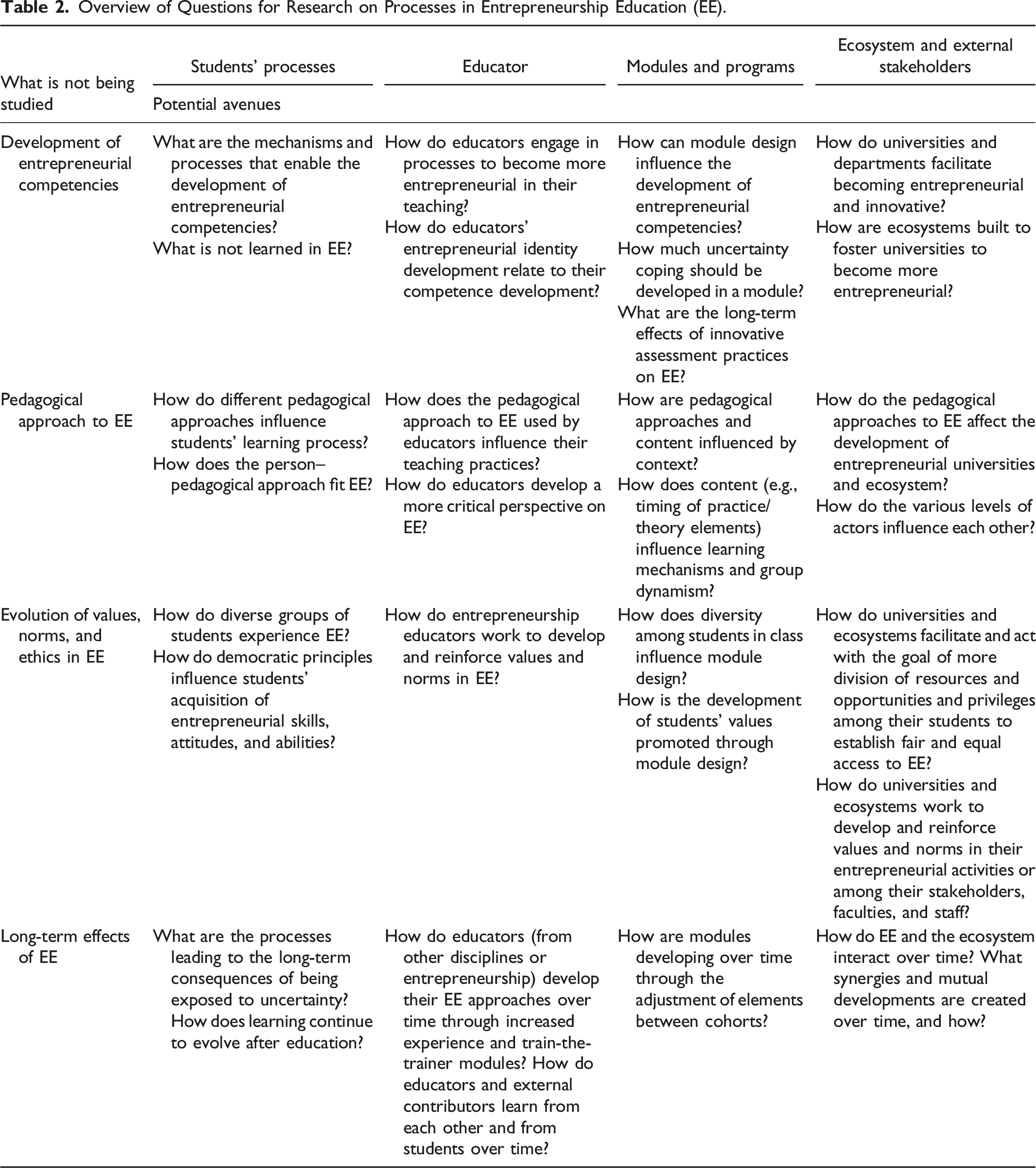
The review showed which processes have been studied so far, and the suggestions for future research are the processes that are not being studied thus far. Most process studies focus on student learning processes in modules and programs. However, two themes are not sufficiently addressed in these process studies: (1) details of how students develop entrepreneurial competencies and change their thinking and (2) how contextual and institutional forces influence pedagogical choices.
Overview of Questions for Research on Processes in Entrepreneurship Education (EE).
Detailed Process Studies of How Students Develop Entrepreneurial Competencies and Change Their Thinking
Despite the 43 identified articles on students’ learning in modules, there is still a need for deeper insights into how students’ thoughts and actions change when they are exposed to EE and how entrepreneurial competencies are developed. Entrepreneurial competencies have become a key concept in the field of entrepreneurship, and the outcome of competence development has been examined in various variance studies (Ferreras-Garcia et al., 2021). However, this exploration has yet to be extended to process studies in the field. Given that the primary objective of education is to develop students’ competencies—often framed as entrepreneurial competencies in EE (Sánchez, 2011)—there is a need for future studies to explore the mechanisms, sequences, and processes that enable the development of these entrepreneurial competencies from the perspective of both individual students and student groups. Examples of such endeavors could include delving into individual learners’ journeys to explore what specific experiential and instructional elements effectively foster these competencies, as well as those aspects that remain elusive in EE. Specifically, researchers could investigate how students develop competencies in teacher-led education, with the aim of translating this knowledge into approaches for student-centered learning. (Robinson et al., 2016).
The design of EE modules and programs also plays a pivotal role in shaping the educational experience. Thus, based on the review, a potential avenue for future studies is to address how module design influences the development of entrepreneurial competence. Entrepreneurship is often defined as a process involving uncertainty and risk (McMullen & Shepherd, 2006). However, few efforts have sought to understand the extent to which uncertainty coping mechanisms and risk elements should be incorporated into the curriculum and how these affect students’ competency development.
Process Studies of How Contextual and Institutional Forces Influence Pedagogical Choices
Different processual approaches to studying EE can also shed light on contextual and institutional forces and how they influence EE content. Recent research in the field has suggested that EE worldwide has undergone a homogenization process characterized by similar activities, such as pitching exercises, competitions, and student companies (Brentnall et al., 2023; Hytti, 2018). The “one size fits all” approach, which often overlooks contextual considerations, has consequences for the quality of education, the inclusion of various actors, and equality within the field. The need for questioning and developing current practices is also in accordance with the findings of this review, which identified a scarcity of critical studies on events that influence pedagogical choices and processual dynamics in the classroom. Additionally, further exploration is needed into how and why educators modify their pedagogical content, particularly in terms of classroom dynamics, due to contextual and institutional factors. The timing of practice and theory may have an influence on group dynamics within the classroom and how pedagogical content affects students. Lastly, the university and academic departments are instrumental in shaping the EE and entrepreneurial culture landscape at their respective universities and in society (Audretsch, 2014). Collaboration with external stakeholders serves to bridge the gap between academia and practice, thus enhancing the practical relevance of education. Therefore, it is worthwhile investigating the dynamics of these external collaborations and their effects on EE through process studies.
Long-Term Effects of Entrepreneurship Education
For sustained outcomes, EE processes need to continue as embedded processes in the lives of students beyond the module. Studies on long-term effects in general are very few, and these studies are criticized for their lack of methodological rigor (Aadland, 2023). Process studies on long-term effects are even fewer, as they have specific challenges and potential. It is more difficult to collect data from students after they have left university, and it is also challenging to determine what can be traced back to specific module-related activities that took place several years earlier. Few researchers have the persistence to conduct extensive data collection over an extended period. Alsos et al.’s (2023) study is a recent example of an attempt to continue studying students beyond the program. Future research should connect competencies to specific learning events in the program and collect data at several data points to capture how students continue to develop their competencies after the program. A follow-up study could also examine the effects of the captured post-program activities.
The Evolution of Values, Norms, and Ethics in Entrepreneurship Education
The values and norms of EE have long been a central topic in EE (Jones, 2010). As the findings are mainly derived from variance studies, there is a need to understand the processes underlying these values and norms to gain deeper insight into their sequences and temporal aspects. Furthermore, there is a lack of understanding of how values are created and shaped through pedagogical practices. Therefore, a valuable exploration could be the evolution of values and norms in EE, with a focus on the processes driving this transformation. Additionally, examining how the evolving images and perceptions of entrepreneurs influence educational practices and policies could provide valuable contributions to the field.
Grand challenges and the ongoing movement toward more sustainable societies are increasingly debated and integrated into EE (Kickul et al., 2018). How such societal movements and other trends are captured and evolve in the values and images of EE requires a process design that can help us understand how the integration of sustainability principles into EE evolved in general while unfolding the details compressing this process (e.g., analyzing how curricula adapt to the incorporation of sustainable entrepreneurship concepts).
A promising research avenue is the exploration of ethical transformation in EE and its societal implications. This may be related to the overall perception of the desired value to create, with the societal understanding of the EE context as practices in terms of time and sequences, which can be captured by using a processual research design. Relevant questions for EE process studies may focus on the departure from profit-driven motives to a more holistic view of entrepreneurship, emphasizing social engagement and integrating a sense of purpose into the underlying ideology and values inherent in EE.
The contextual values and ethics projected on EE may go beyond the understanding of sustainability as a societal movement by focusing on general ethical and societal evolutions. Studies of EE processes would thus be contributing to recent discussions of ethics in entrepreneurial processes (Hägg et al., 2024). Related processes of interest include ecological consciousness, ethical considerations, and inclusive collaborations in EE.
Research Methods for Studying Processes
Process studies in EE are in an early phase, which explains the lack of a collective understanding and established design of process studies. To strengthen future process studies in EE, it is recommended to employ multiple-timepoint methods using several data sources collected for research purposes, distinct from the assessment of student learning and the evaluation of the module. Multiple-timepoint methods enable researchers to track changes and development over time in EE processes, thus offering a more comprehensive understanding of their evolution. Single-timepoint methods that have been prevalent so far typically include those that can be used to look backward or forward to cover aspects of a process (e.g., interviews) using a narrative approach to reflect on a process or reflection notes. For example, Kleine et al. (2019) conducted retrospective interviews with program coordinators, teaching staff, and alumni and combined the collected data with document analysis to study an engineering degree. Such retrospective interviews are facilitated by using techniques such as critical incidents and the narrative method (Kubberød & Pettersen, 2017). As research methods evolve, innovative technology, software, and digital tools, can further enhance the collection and management of data from many participants across multiple timepoints, thereby simplifying and enriching the research process (Lackéus, 2020; Lackéus & Sävetun, 2023). Multiple-timepoint methods could also be combined with tools such as pre- and post-test surveys to explain the changes over time or with a minimum of three data collection points, including a series of interviews, participation and observations, and diaries, to follow the EE process longitudinally and gain deeper insights into its evolution.
Qualitative interviews with a series of data collection points are applied to examine the team development process in student ventures (Steira & Steinmo, 2021) or the involvement of stakeholders (Secundo et al., 2021). Longitudinal interviews are an emerging method in EE process studies with the first paper applying them was published as recently as 2021. Diary writing is a method that typically includes a series of data points. Hytti and Heinonen (2013) used the diary method to investigate how students develop an entrepreneurial identity. In the reviewed literature, diaries have primarily been used to investigate students’ learning processes within a module, shorter pedagogical interventions, or venture–creation programs. Unfortunately, most studies that employed reflection logs relied on either students’ logs, which are often part of their assessments, or on interviews regarding students’ construction of their learning experiences. To enhance future process studies, it is recommended that objective measures of learning be included when exploring students’ learning processes in EE. These measures can offer a more comprehensive understanding of the events, activities, and choices that shape students’ learning processes. Observations and participations are typically conducted in classroom and student venture–creation settings, often by researchers who are also the teachers or developers of the module or program. This dual role may introduce bias, leading to an overly positive perspective in the observations. The review showed a strong tendency for researchers to study their own students, which may result in potential conflicts of interest. Therefore, there is a need for more research on processes in EE that extends beyond researchers’ own modules and host institutions.
Finally, process data are known to be difficult to analyze (Langley, 1999). The present review revealed that most studies relied on process data. However, when discussing and theorizing their findings, these studies often focused on explaining the variances rather than the underlying processes. In terms of coding and the studies’ analytical approach, some studies were inspired by Gioia, Corley, and Hamilton (2013) or used thematic pattern analyses. None of the studies seemed to draw on the principles of widely used process methodologies in entrepreneurship research, which are renowned for their rigorous and iterative approaches. For example, Langley’s process methodology (Langley, 1999) emphasizes multiple strategies for analyzing process data, such as temporal bracketing and visual mapping, to make sense of complex, dynamic phenomena over time. Similarly, Pettigrew’s processual research designs (Pettigrew, 1992) focus on the interplay between contexts and actions and their temporal interconnectedness, providing a framework for understanding how organizational changes unfold which can be translated to other contexts, such as entrepreneurship education. Consequently, future studies are encouraged to apply methodologies suited for analyzing process data, inspired by entrepreneurship, innovation, and strategy research.
Furthermore, according to Steyaert (2007), there are several process approaches to entrepreneurship, namely, developmental, evolutionary, complexity theory, interpretive, phenomenological, dramaturgical, discursive, social constructionist, pragmatist, practice-based, actor–network theory, and radical processual. These different approaches are also relevant to process studies in EE, and future studies should highlight the potential of using these approaches. These approaches can create a better understanding of the processual dynamics between the various levels of actors, as well as how content, context, and timing influence students’ learning.
Limitations
This study provides an overview of process studies in EE research, thereby contributing to the further development of such studies. However, several limitations should be acknowledged. Scopus was the only database used to screen studies for the literature review. As a database that comprises many papers, Scopus also has a lower threshold for including papers. Therefore, the literature review ran the risk of including unnecessary “noise,” which made the coding process more complex. Furthermore, the review highlights the significant improvement in the quality of EE research in recent years. Applying a structured framework to earlier research that did not follow the same structure and standards as those used in recent times poses a risk of inconsistency in the analysis. Finally, suggesting future research based on what was not previously studied carries the risk of overlooking topics that were not analyzed. Nevertheless, efforts were made to mitigate this risk by approaching the findings in a structured manner, identifying gaps, and using more recent developments in process studies within entrepreneurship research for comparison.
Conclusion
This systematic literature review of process studies on EE shows that the majority of studies focus on students’ learning in modules, programs, entrepreneurial universities, and ecosystems. Using the Fleming (1999) process model with the addition of sequences of activities, the review provides a fine-grained understanding of the content and mechanisms that have been studied in the processes. A future research agenda is presented based on the review, focusing on four types of processes that require further exploration and understanding: (1) detailed process studies of how students develop entrepreneurial competencies and change their thinking; (2) process studies of how contextual and institutional forces influence pedagogical choices; (3) long-term effects of EE; and (4) evolution of values, norms, and ethics in EE. The research agenda also emphasizes the need for more robust methods, such as multiple-timepoint methods.
The main implications of this study are related to the transparency and assessment of processes and their temporal dimensions in EE. The review highlights the importance of distinguishing between content, mechanisms, and sequences in process studies, as this provides insight for advancing the process and, thereby, opening the “black box.”
Supplemental Material
Supplemental Material - Process Studies in Entrepreneurship Education
Supplemental Material for Process Studies in Entrepreneurship Education by Iselin Kristine Mauseth Steira, Lise Aaboen, Karin Andrea Wigger, and Sølvi Solvoll in Entrepreneurship Education and Pedagogy
Footnotes
Declaration of Conflicting Interests
The author(s) declared no potential conflicts of interest with respect to the research, authorship, and/or publication of this article.
Funding
The author(s) received no financial support for the research, authorship, and/or publication of this article.
Ethical Statement

Supplemental Material
Supplemental material for this article is available online.
References
Supplementary Material
Please find the following supplemental material available below.
For Open Access articles published under a Creative Commons License, all supplemental material carries the same license as the article it is associated with.
For non-Open Access articles published, all supplemental material carries a non-exclusive license, and permission requests for re-use of supplemental material or any part of supplemental material shall be sent directly to the copyright owner as specified in the copyright notice associated with the article.
