




Abstract
This article introduces shade as an elemental actor of more-than-human geography, related to the crises of urban heat stress and shade inequality in Western Sydney, Dharug Country, Australia. While urban geography, health, and environmental planning literatures have largely framed shade in human-centric terms, we advocate for more nuanced understandings that integrate Indigenous relational and more-than-human dimensions. Recognising the interconnectedness of ecological communities, we examine shade not as a passive asset or product of urban planning, but as an active participant in the urban ecosystem. This shift encourages a deeper consideration of shade's qualities, dynamics, temporality, and labours–including cooling, water retention, and habitat creation–while also acknowledging its agency to restrict flows of movement or limit the productivity of urban green spaces. We demonstrate the practical applications of a ‘lively shade’ approach through a case study of Western Sydney, illustrating how holistic understandings of shade in this region can inform more inclusive and adaptive climate futures.
Introduction
On a scorching summer day in Western Sydney, Dharug Country, shade slips across concrete, cooling bodies, sheltering species, and shaping the rhythms of the city–yet its role in urban geography remains curiously overlooked. In this article, we recast shade as an actor that ‘becomes with’ (Haraway, 2008) and responds to changing urban atmospheres and ecologies. Geographies of weather, heat, light, and darkness have, to date, been focused on human perceptions, aesthetics, and responses to urban atmospheres. Recent scholarship describes textural, affective, emotional, and communicative effects of light and air in a visual world, mixing with other elements including temperatures, sounds, aromas, weather, and encounters to create ‘atmospheres of place’ (Albertsen, 2019; McCormack, 2025; Sumartojo and Pink, 2018a, 2018b). In contrast, environmental planning and health governance perspectives treat ‘shade’ as a quantifiable value, with the function of cooling ambient temperatures, reducing heat stress, and minimising ultraviolet (UV) skin-burning radiation. In this paper, we consider how understandings of light and shade inform how humans ‘manage’ their environments. We acknowledge the colonising history of shade architectures in Australia (Keys, 2020), and illustrate how contemporary approaches to shade–packaged as an asset, by-product of planning, or installed as a guardian of human health, have led to flat and anthropocentric visions of the city. With a focus on relational approaches, we then invite entire communities of sunlight, plants, insects, animals, soils, waters, and infrastructures that make up a city to conceptualise ‘lively shade’, relating socio-cultural, political, material, temporal, spatial, and experiential factors. Finally, drawing on a case study of Western Sydney we demonstrate shade as an elemental force that both shapes and responds to the escalating crises of urban heat stress and shade inequality.
More-than-Human elemental geography in urban geography
In human geography and environmental humanities, a body of work attends to the presences and relational agency of non-human actors in the urban space. More-than-human framings are rooted in Indigenous knowledge systems and cosmologies (Cooke et al., 2020), feminist care ethics (de La Bellacasa, 2017; Forlano, 2017) and animistic traditions. “Animists are people who recognise that the world is full of persons” religious scholar Graham Harvey explains, “only some of whom are human… Animism is lived out in various ways that are all about learning to act respectfully (carefully and constructively) towards and among other persons” (2005: xi). More-than-human geographers adapt and integrate these ontologies to understand and story the radically altered landscapes of urban infrastructures today. Human-animal encounters in the urban environment have been studied with penguins, flying foxes, cockatoos, kittiwakes, feral cats, macaques, bears, bees, coyotes, peregrine falcons, and countless other animal species (Barua and Sinha, 2019; Booth and Ryan, 2019; Howell, 1982; Hinchliffe and Whatmore, 2006; Kirksey et al., 2018; Phillips, 2020; Van Dooren and Rose, 2012; Wilson, 2022; Van Patter and Hovorka, 2018). Relationships with plants as ‘friends’ and ‘weeds’ have been explored (Atchison and Head, 2013), and soil identified as an “under-acknowledged urban inhabitant” (Robertson, 2020: 307). The sociality of undergrounds and water infrastructures are brought to life (Coyne, 2023; Heyns, 2025; Melo Zurita, 2020), and Kemmer and Farías (2024: 4) describe a city that is “haunted by the elements it has tried to ban; by their overflows and burning presences”.
The elemental actors of air and light have been well recognised in urban geographies, with attention paid to the cultural connotations, conflicts, and governance of air (Adey, 2015; Gandy, 2017) and the socio-ecological effects of artificial illumination (Bennie et al., 2014; DarkSky International, 2024; Ebbensgaard and Edensor, 2021; Entwistle and Slater, 2019; Schroer et al., 2019; Schwabe et al., 2024). Geographies in defence of darkness and the night have addressed issues of human health, labour, cultural economies, architecture, and the processes of urban change (Bille and Hauge, 2022; Dunn and Edensor, 2024; Edensor, 2015; Högström and Philo, 2023; Shaw, 2022). In Naarm, Melbourne, Edensor and Hughes (2021) were the first to name shade as a more-than-human agent, describing a ‘place ballet’ of shade through pedestrian movements and sensory attunements to place. Another intriguing article from Mackey et al. (2023) in Amsterdam describes the journey of two authors seeking to attune with solar energy in embodied, entangled, and situated ways–in their words, to radically “become solar” (p249). In an experiment with ‘becoming thermotropic’, McHugh and Kitson (2018) use visual heat detection (infrared thermography) to playfully explore the effects of heat as it moves through people and places in Arizona, United States. This novel literature sets the stage for understanding more-than-human entanglements with weather and other invisible (or invisibilised) energies in the urban space, towards a ‘politics of conviviality’ (Hinchliffe and Whatmore, 2006) that values coexistence, mutual shaping, and the “messy business of living together” (p134). Elemental geographies can be further developed with attentiveness to the politics of climate change. Shade offers an excellent lens through which to explore the complex relationships of changing elemental atmospheres and more-than-human life in the urban space.
Colonising shade
Understandings of light and shade inform how humans ‘manage’ their environments. The present crisis of urban heat and poorly designed shade in Australia is tangled up, Cathay Keys (2014, 2020) explains, in the country's colonial history connected with ideas about race, thermal comfort, and the health of white bodies. In the early days of colonisation, European settlers were unused to the intensity of the Australian sun and frequently suffered from sunburn, dehydration, heat stress, and blindness. The architectural styles and materials (e.g., canvas, galvanised iron) that settlers brought with them were ill suited to a southern hemisphere climate. Following the precept of terra nullius (no man's land), settlers firstly appropriated the intelligent shade structures used by Indigenous peoples throughout the country. One such example is the malurnpa shelter, built by Warlpiri people in the Tanami Desert. Positioned near vegetation, with low ceilings and screened walls, these structures incorporated angled tree branches, shimmering leaves, and spinifex grass to reflect sunlight, reduce sky exposure, and maintain airflow–features now recognised best practice in contemporary shade design. While Warlpiri peoples built malurnpa into the late 1990s, settlers to Australia were soon deforesting land and building houses. Initially, their architectural designs were reactive to serious health concerns about the sun's actinic (UV) rays on white bodies, leading to the use of verandahs, awnings, ventilated understories, and fabric curtains to block out the “un-English climate” (para 30). But by the 1920s, attitudes had shifted. Sunlight was reframed as hygienic and health-giving, prompting house designs with north-facing windows, sunrooms, and sundecks, often at the expense of deep shade. Despite the expertise of First Nations Australians in creating shade structures, and the effectiveness of early settler designs like the Queenslander house, Keys argues that contemporary Australian architecture remains characterised by the control of sunlight as opposed to sun shade (para 1).
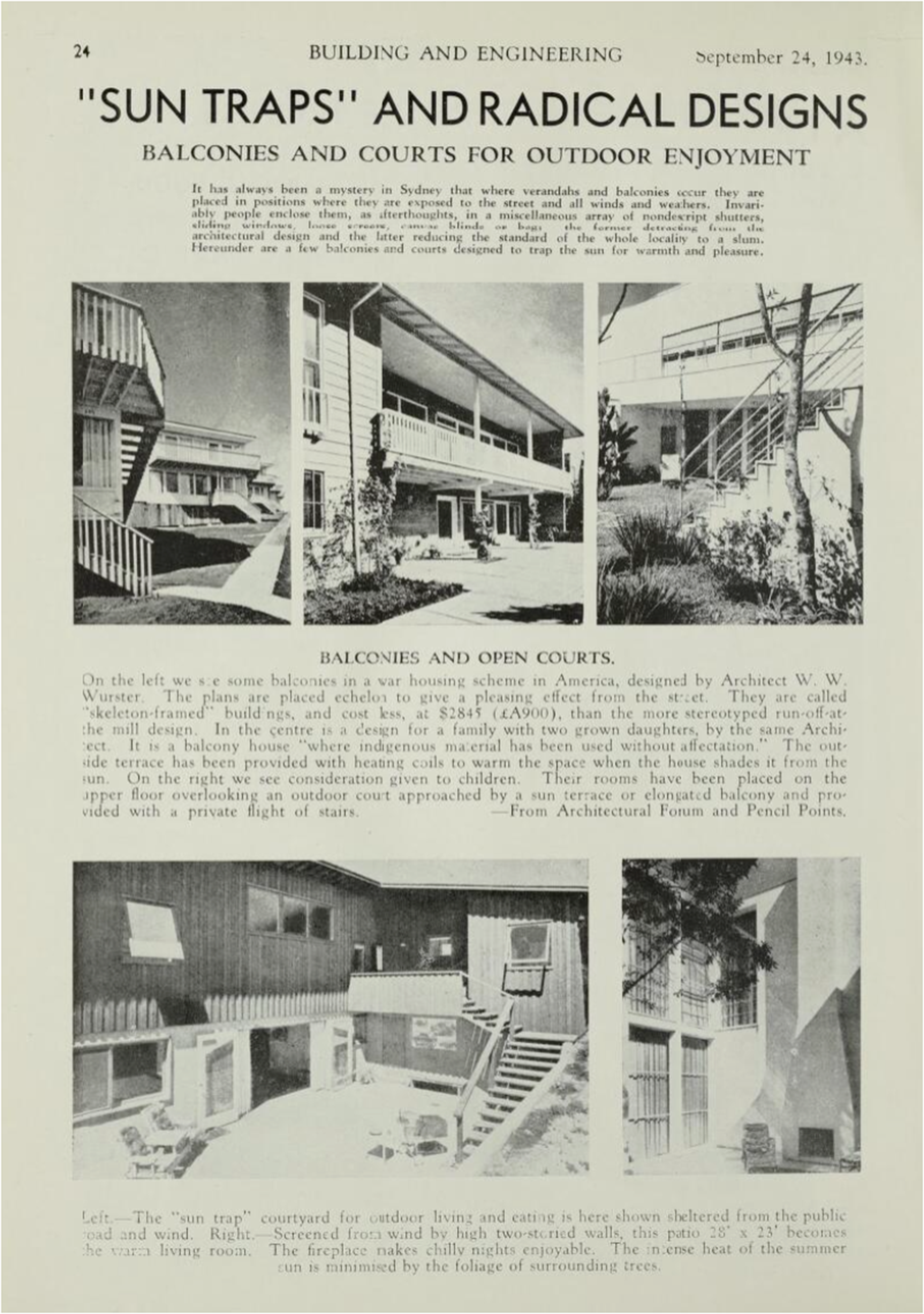
Magazine article on sun traps (Master Builders’ Federation of Australia, 1943).
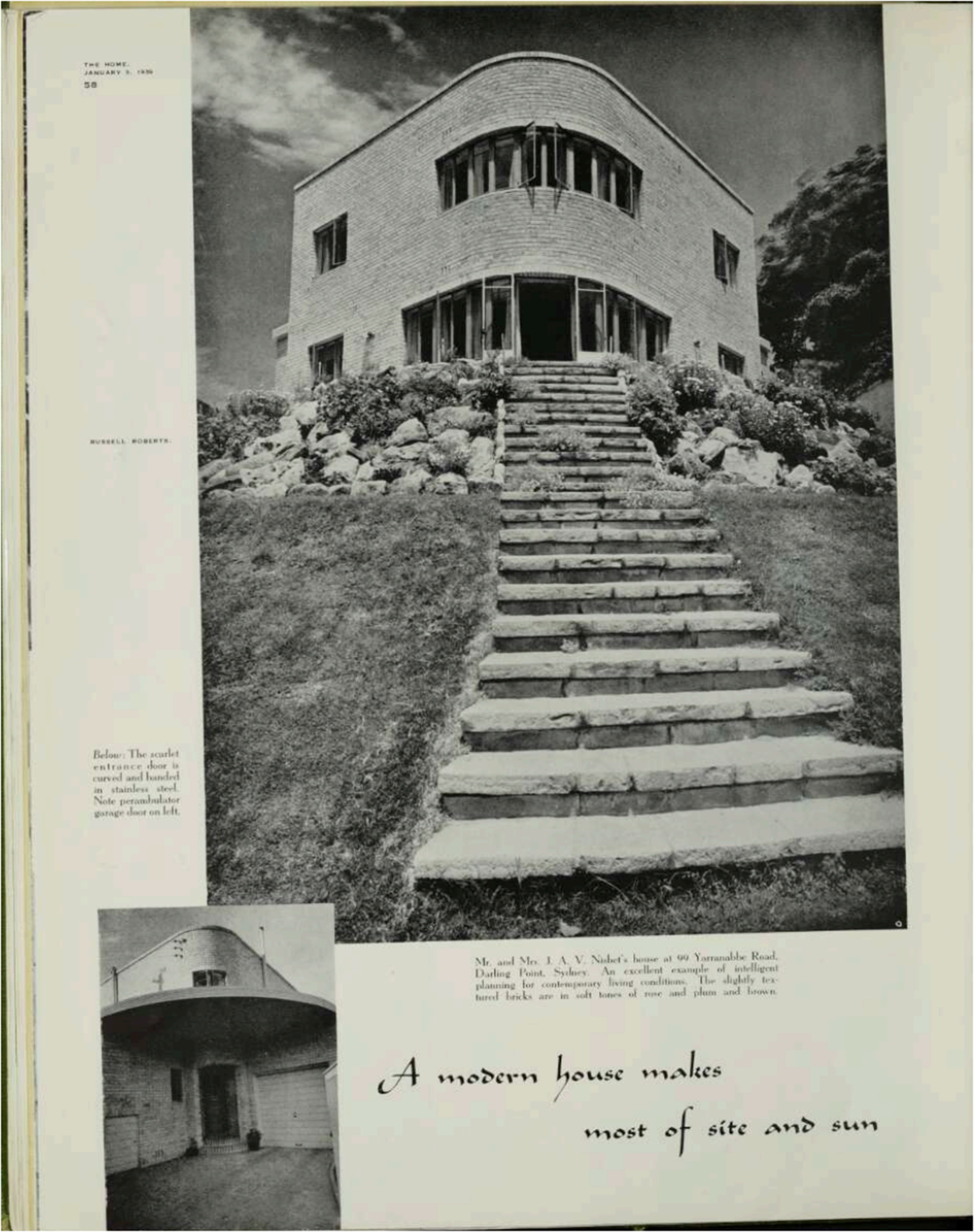
“A modern home makes most of site and sun” in The Home: an Australian quarterly (Roberts, 1939).
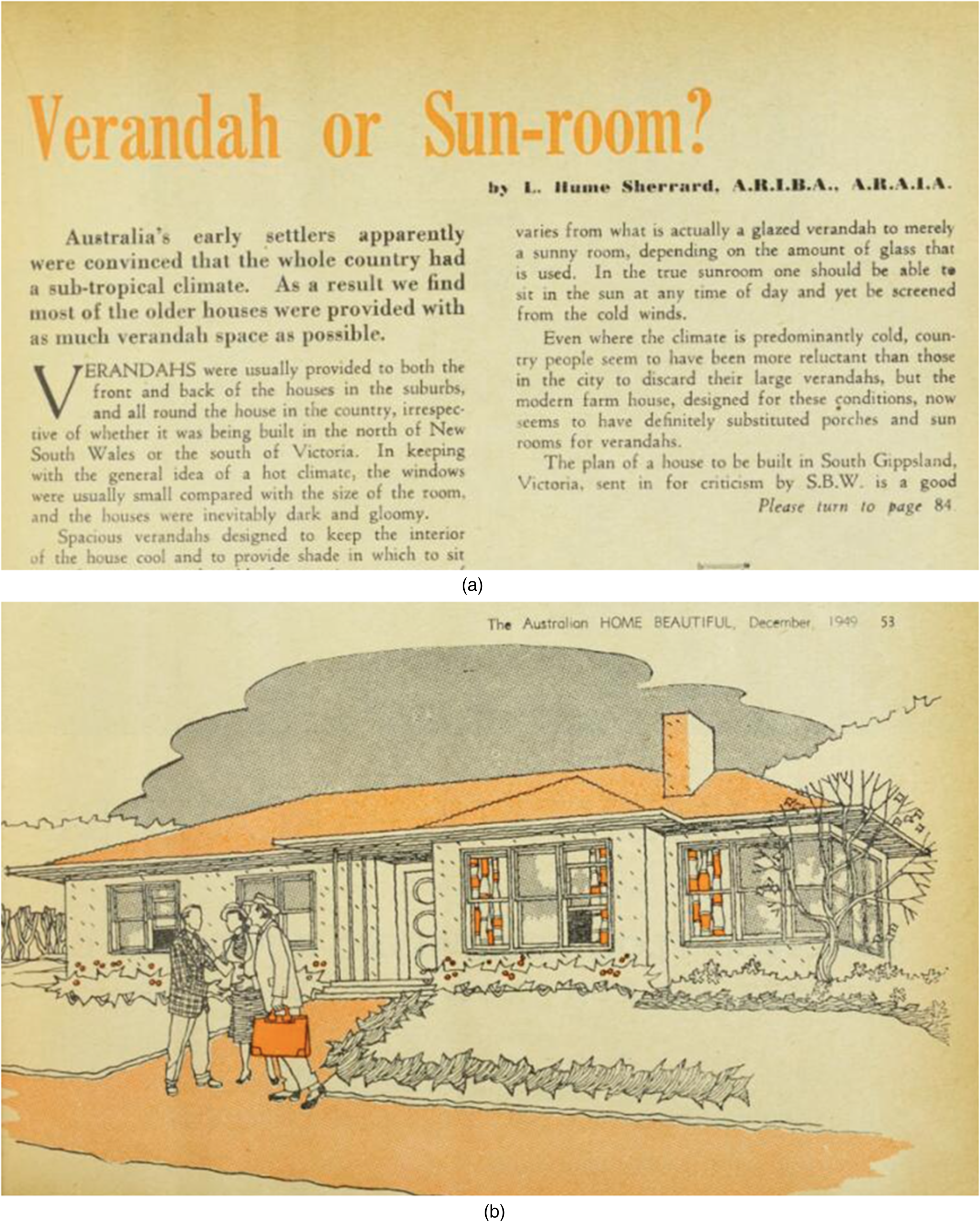
Magazine article on verandahs and sunrooms, The Australian Home Beautiful (Sherrard, 1949).
In our case study region of Western Sydney, there has been little written about Dharug shade cultures specifically. However, the story of Baramaddagul peoples moving through Dharug Ngurra (Country) at night, guided by yanada moon and constellations of ancestor birrung and gimbawali stars (Redpath, nd) reveals that Dharug peoples used darkness to navigate and journey across land, in attunement with shifting seasons and solar-lunar cycles, rather than seeking a world of continuous light. An expression in the Dharug language gauwa gadyiminga meaning ‘you shade me’ (Dharug Dictionary, nd) foregrounds responsiveness and reciprocity between people as both creators and recipients of shade.
Why shade matters: heat stress and the city
Beyond the “tightly woven modernist fabric” (Balducci et al. in Metzger, 2016: 583) of urban life, urban spaces contain the internal energy of heat–an energetic transfer–stored at high temperatures (Day et al., 2010) and expressed in bodily sensations, expressions, and imagination; “vibratory currents that enervate, and sometimes overwhelm, bodies human and non-human” (McHugh and Kitson, 2018: 157). Recently, the Australian Bureau of Meteorology reports that each decade in Australia since the 1950s has been warmer than the last, with years 2013 to 2020 ranking among the hottest on record (BoM, 2021). Increased temperatures and heat events are felt across the country, the impacts of which are specific to localised climates, environments, and their inhabitants. Built environments which are largely made of synthetic and mineral materials (concrete buildings, asphalt roads) consistently record higher temperatures than their rural surroundings, in a phenomenon known as the Urban Heat Island effect (Croce and Vettorato, 2021; Kamruzzaman et al., 2018; Mahmuda and Webb, 2016; Mohammad Harmay et al., 2021; Santamouris et al., 2018; Yenneti et al., 2020). Environmental planning controls include the use of remotely sensed temperature data, urban geometry (building layouts) to alter microclimates, green roofing, cool pavements, reflective materials, spray systems, vertical garden walls, the preservation of urban water bodies, tree planting, and built shade structures (Bartesaghi-Koc et al., 2020; Chaston et al., 2022; Duncan, 2015; Han et al., 2023; Imran et al., 2018; Mahmuda and Webb, 2016; Mohajer et al., 2022; Patton and Pojani, 2022; Santamouris et al., 2018; Thom et al., 2016). In the environmental planning literature, shade is defined as an area of relative darkness and cooling, away from direct sunlight, measured through simulation models like SOLWEIG, RayMan, ENVI-Met, and the Open-space Shading Index. These models aim to quantify shade together with metrics like ‘Sky View Factor’, ‘Leaf Area Index’, and ‘Building Shadow Ratio’ (Buo et al., 2023; Chen et al., 2023; Fadhlurrahman and Nasrullah, 2020; Gál and Kántor, 2020; Lindberg et al., 2018; Liu et al., 2021; Peeters et al., 2020; Tsoka et al., 2018). This body of literature also reveals that shade can be “susceptible to intrusion” (Parsons et al., 1998: 329) by scattered UV radiation, bounced through the atmosphere in particles of dust and water vapour, and reflected by shiny or light-coloured surfaces like sand, concrete, and vehicles (Turnbull and Parisi, 2004, 2006). The cooling benefits of shade are also cumulative, best analysed “along a spectrum, rather than on a dichotomy of shade versus non-shade” (Park et al., 2023: 12). Shade is revealed to be a lively actor hidden within these models.
Relational, lively shade
Rooted in Indigenous epistemologies, relationality emphasises interconnectedness and kinship among all forms of life (Tynan, 2021). Thinkers from more-than-human urban geography and posthuman design show that relational values are central to the goal of more inclusive and ecologically just cities (Forlano, 2017; Heyns, 2025; Pineda-Pinto et al., 2022). It is invigorating, while living in the Anthropocene, to see the world anew as a vivid, entangled place where beings and forces not only human, plant, and animal but microscopic, subterranean, aquatic, chemical, and atmospheric are making themselves known. The challenge multiplies in urban settings where synthetic, constructed, and so-called ‘cultured’ beings dominate the visual space and human consciousness.
Shade, through a relational understanding, is a rich and lively actor borne from “a particular arrangement of objects, light, climatic conditions and bodies” (Hughes, 2023: 1). In contrast to Plumwood's (2008) ‘denuded’ and ‘monocultural’ shadow places, shade is a mobile site of encounters made in relation to the sun, seasonal and temporal cycles, urban forms, infrastructures, governance, and flows. Used as a noun (shadow, shelter), shade is visible in the urban environment; but as a verb, the active energy, labours, and placings of shade in cooling heat, screening light, retaining water, and creating habitat are not always seen and at times invisibilised. On Bawaka Country, in the far north of Australia, Sandberg et al. (2017) reveal an active appreciation of walu–shade–as a verb, rather than a noun, to describe specific relationships and interactions of place. Walu tells us the time. Do you want to know the time? Look where walu is, look at the shadow, the shadow of the tree and the shadow of yourself. Or when it's about two or three o’clock you might hear a garrukal bird (kookaburra) singing, telling you the time, telling you it's nearly sunset. When the garrukal sings, the people remember that sunset is coming. … When we were little girls we’d use the walu at sunrise on dharpa (wood, tree) to measure ourselves. So walu is the sun, walu is the day, walu is time. Walu is very important for Yolŋu people; it is made by our ancestors.
There is an immediacy and transience to the embodied experiences of shade that reveal continuous, patterned, and cyclical changes in material worlds, inseparable from time. For example, in their journey of “becoming solar” Mackey (Mackey et al., 2023) watches the daily shadows cast by her neighbour's chimney as a ‘clock’. By looking at shadows for direction, Mackey comes to understand why flowers grow on one side of a bush, and moss grows on the south facing side of a tree. Plants communicate the quality, intensity, longevity, and geometry of shade in an environment, as well as the availability of water and where microclimates exist. Embracing a decolonising urban design agenda, Clarke et al. (2019) suggest, might draw on Indigenous epistemologies to build new alliances with spirits. This is fertile ground for learning about the energetic qualities of shade and shadows, noting that the historical literary use and Latin word for shade umbra means ‘ghost’ (Matasović, 2021). Thinking with shade in these ways demonstrates the complexity of urban entanglements, nonhuman services, trade-offs, and the myriad of more-than-human needs in a warming city. Such urban ecological and atmospheric relations are both ethical and political, as geographers Wright and Tofa (2021) demonstrate: “The way weather is felt, lived and responded to is mediated by, and itself mediates, power relations” (p1127). Shade is rarely expressed in terms of bodily sensations (Alaimo and Hekman, 2008) yet “a desire for cooling is what makes a shadow shade”, Hughes (2023) explains, “Perhaps this is why we feel a kind of gratitude mixed into the relief, the whole-of-body relief, on entering shade in the heat of the day” (p1). Yet the burdens of heat stress and affordances of shade remain unevenly distributed between urban populations, affecting human and non-human inhabitants in ways that reflect and reinforce existing disparities (Cook and Hughes, 2015). In its complexity, shade provides the vital service of cooling cities, while also restricting flows of pedestrian movement at night (Edensor and Hughes, 2021), increasing depression and anxiety during the winter (Bodden et al., 2024), and limiting the productivity of urban greenspaces (NSW Government, 2021). Planning for urban heat with ‘lively shade’ means gazing upwards into atmospheres and downwards into the roots, waters, and undergrounds of urban sites, attending to movements and verticalities, temporalities, dependencies, accessibilities, patterns of individual and differentiated embodied experience, and the ethical and political dimensions of how shade is distributed and moves across space.
Lively shade differs from technocentric concepts of shade, light, and thermal comfort in several key ways. Rather than treating shade as a static asset or measurable by-product, lively shade emphasizes: (1)
Western Sydney as a site of lively shade
To illustrate the value of a lively shade approach, we now turn to Western Sydney on Dharug Country, where urban heat stress and shade have entangled socio-material, political, and ecological consequences. Positioned at the foothills of the Blue Mountains, the urban heat island of Western Sydney covers an expanse of 9000 square kilometres (Itaoui et al., 2024). The region can experience temperatures of 8°C to 10.5°C higher than Sydney's coastal eastern suburbs (Melville-Rea and Verschuer, 2022: 2). This temperature differential is due to trapped air, intensive development, a high proportion of synthetic and impervious surfaces, and limited vegetation (Sweltering Cities, 2022; WSROC, 2021). On a hot day in Western Sydney, the sensory experience of many residents would be characterised by overwhelming, enervating heat and a distinct lack of cooling or relieving shade. The affective and dynamic qualities of shade are then pertinent for understanding the mobilities and pathways of Western Sydney residents during summer seasons, and in particular how people commute, respond to, and seek shelter during heatwaves.
Home to approximately 2.8 million people, 41% of Western Sydney residents are immigrants and almost half speak languages other than English (including Arabic, Mandarin, Vietnamese, and Hindi) at home (.id, 2021). The population of Western Sydney is young, with a median age of 35 (.id, 2021) and over half of residents (56%) are active in the labour force, employed in industry sectors such as health care, social work, scientific and technical services, and retail. Significantly, almost a third of people leave their homes during hot weather, because it is too uncomfortable to be there (Sweltering Cities, 2021). This correlates with relatively high household vehicle ownership (92%) (.id, 2021), where people are disincentivised to walk unshaded streets or use unsheltered, unreliable, and largely unavailable public transport (Sweltering Cities, 2021). While most Western Sydney residents (87%) report feeling uncomfortable during hot weather, Sweltering Cities (2021) finds that a quarter of residents’ health conditions are made worse by extreme heat. Health impacts can range from dehydration, insomnia, and heat stroke to kidney failure, respiratory and cardiovascular disease, worsened mental health conditions, and adverse pregnancy outcomes (Ebi et al., 2021; Thompson et al., 2018; Zhang et al., 2023). Impacts are felt most acutely by vulnerable populations, including those who are elderly and isolated (Adnan et al., 2022; Coates et al., 2014; Hondula and Barnett, 2014) recently arrived migrants (McManus, 2017), and groups identified by Cooling the Commons researchers (Lopes et al., 2016) including women aged over 55, people living with disabilities, and Aboriginal and/or Torres Strait Islander mothers of young children. Among these groups, many peoples’ homes are inadequately insulated from heat, while at-home air conditioning systems and public venues like shopping centres and cafes are financially prohibitive. When asked about shade provision in Penrith city, Cooling the Commons participants were critical about the lack of suitable trees and shelters in outdoor public spaces, playgrounds, and along public transportation pathways. This significantly reduced the mobility of all groups through the city during hot weather. The consequences can be dangerous when incidents of seizures increase with heat stress, children's playgrounds log surface temperatures above 80˚C (Climate Council, 2021), and people stay at home with coping strategies like lying “as still as possible” on the bathroom floor (Lopes et al., 2016: 24). In policy contexts, extreme heat is often treated as an acute emergency rather than as a chronic stressor on populations in need of long-term planning solutions (Bolitho and Miller, 2017). By posing a series of questions, we trace how a lively shade approach can challenge the existing paradigms of health and environmental planning for urban heat, and draw attention to the qualities, distributions, and temporalities of shade as they are felt, made, and contested across this landscape.
In Western Sydney, shade whether grown, manufactured, or incidental to urban infrastructures has been packaged as a resource or technical fix; static, engineered, atemporal, and largely human-centric. To address the lack of shade in Western Sydney, local governments are prioritising data collection and planning tools for heat reduction and resilience, including the ‘Urban Heat Planning Toolkit’ (WSROC, 2021), the ‘Cool Suburbs Tool’ (WSROC, 2022), and ‘Penrith City Heat Sensors’ project (Pfautsch et al., 2020). The Heat Sensors project is novel in its use of thermal imaging technology to visualise how shade moves, alters, and cools the urban space. However, ‘smart city’ initiatives like these may be short-sighted in their timescales (Clarke et al., 2019) and follow a technocentric logic “looking to fill the physical gaps in the canopy, rather than the gaps in the socio-ecological fabric of and between places” (Hughes, 2023: 1). In many cases, humans are uncritically used as the yardstick for measuring shade in terms of height, placements, and usefulness. Technologies also fail to capture, or may distort and intrude upon, the embodied, sensorial, and relational knowledges (Ciobanu and Juhlin, 2022) of heat and shade. A lively shade approach invites more inclusive framings and questions, such as: What are the spatial qualities of shade in Western Sydney? How is shade encountered, moved through, or felt? Where and how does shade change over time? Who are the recipients of shade, and who is excluded?
Heat stress impacts and alters a wide range of ecological communities and infrastructures beyond the human. In Western Sydney, mass flying fox deaths have resulted from extreme heat (Heathcoate, 2018), making visible the vulnerabilities of non-human inhabitants that conventional planning metrics often overlook. A lively shade approach reveals that a lack of green shade has cascading effects for multispecies communities, habitats, and health. In Melbourne, temperature shifts have been attributed to the proliferation of ‘pest’ species like native mistletoes, elm leaf beetles, and aphids, and the decline of peri-urban butterflies (Braby et al., 2021; Moore and Lefoe, 2020). At broader scales, Australian plants such as native grasses, eucalypts, and acacias are sensitive to increased temperatures (Andrew et al., 2024; Butt et al., 2013; Davies et al., 2018), and bird and fish species are dying in more frequent heat waves (Cook et al., 2021; McKechnie et al., 2012; Roberts et al., 2019). Studies from Europe, Asia, and the United States similarly report species population declines, explosions, and adaptations in wild bees, fungi, freshwater fish, cicadas, lizards, ants, black widow spiders, mosses, birds, and snails, due to the selection pressures of urban heat (Cai et al., 2023; Campbell-Staton et al., 2020; Hamblin et al., 2017; Johnson et al., 2020; Kerstes et al., 2019; McLean et al., 2005; Menke et al., 2011; Nguyen et al., 2018; Oishi, 2019; Pagliaro and Knouft, 2020). At the infrastructural level, roads and pavements can crack, highways melt, train tracks warp, rubber seals break, buildings leak, and power grids fail in extreme heat (Hussein, 2023; KPMG, 2024; NSW Government, nd). Shade distribution is therefore key to more socially and ecologically just cities. Emphasising the effects of climate emergencies, Tschakert (2022) suggests that multispecies justice, meaning “fair processes and outcomes for all”, requires recognising and nourishing the everyday relationships between “innumerable known and unknown beings” (p279). This can be enacted through situated partnerships, such as urban beekeepers who must be attuned to the needs and precarious conditions of bees and their habitats (Hyvärinen, 2019). It follows that shade justice for the protection of more-than-human health requires recognition, participation, and the interdisciplinary efforts of actors at many scales (Pineda-Pinto et al., 2022). There is an opportunity for geographers to contribute to this work by weaving diverse, place-based knowledges of the urban ecosystem into more relational and dynamic understandings of urban heat and lively shade. In this framing, shade becomes not only a product of ecological design but a vehicle for urban solidarity.
Following Ernwein (2020) we ask ‘who counts’ as a living worker in the city? What materials, species, or systems produce shade? How do shade sources give texture to the city? What co-benefits might there be from different shade sources? In Parramatta, Western Sydney, Bartesaghi-Koc et al. (2020) find that tree shade is highly localised and varies throughout the day, but can reduce surface temperatures like roads and footpaths by 10–15°C. More than ‘undead commodities’, trees are illuminated as nonhuman labourers, who work to reduce ambient temperatures, soften noise, absorb pollutants, provide food, create habitat, and contribute to the emotional wellbeing of urban people. In a creative project with Melbourne City council, Phillips and Atchison (2018) assigned trees their own email addresses to which people could report damages like fallen branches. However, many of the city's residents began writing to the trees as people; sharing memories, thanking them for their gifts, and apologising for injuries caused. The ‘value’ contribution of trees should therefore be accounted for not only in terms of financial investment and maintenance that they require, but in the urban ecological and health benefits of shade provision. Recognising the more-than-human labours of lively shade calls for a shift in values from utility to reciprocity, asking How might cooling be shared, distributed, and beneficial across more-than-human communities?
This is not simply to advocate for more trees and urban greenspaces. In Western Sydney, regional councils have already implemented tree planting programs including ‘Greening our City’ (Penrith City Council, 2022b) and the ‘Playspace Shade’ program (Penrith City Council, 2022a). Yet the benefits of such programs may be counteracted by the continual loss of mature trees through spatial politics, urban deforestation (e.g., the removal of plane trees in St Marys), aesthetics, and the prevalence of ill-suited tree species (Bolger, 2024; Bowring, 2023; Lopes et al., 2016). Participants in Cooling the Commons, for example, held strong opinions and preferences about which tree species were appropriate and where, with some trees described as dirty, unsightly, explosive, or dangerous, leading researchers to conclude that “more work needs to be done to facilitate a change in attitude toward trees” (Lopes et al., 2016: 30). A lively shade approach shows that shade is made and unmade; inseparable from socio-cultural dynamics of belonging, purity, and fear. Tree planting may also create costly infrastructural challenges such as root damage to sewers (Filmer, 2021), leaf litter, falling branches, and height interference with electrical wires. Related concerns were expressed about water scarcity and the bushfire risk of trees. In the state of New South Wales the ‘10/50 vegetation clearing code of practice’ allows residents in bush fire prone areas to clear any trees within 10 metres of their property or vegetation within 50 metres of their property, without seeking approval (NSW RFS, 2024). In this instance, one climate resilience strategy (bushfire prevention) is counterproductive to another (tree shade for urban heat), and a lively shade approach foregrounds the temporal and political tensions embedded in decisions made about shade provision. Built shade solutions are equally problematic. In the Greater Sydney Parklands of Western Sydney, a ‘Shadow Modelling study’ by the NSW Government (2021) describes how the shade cast by buildings is detrimental to dappled, sunlit recreation spaces. The study aims to prevent the overshadowing of parklands by adjacent urban developments, emphasising that “people's use and enjoyment of parks has a direct relationship with the extent of direct sunlight” (p7). Here, shade is revealed as a dynamic force of varying textures, from dappled to dense, that both enables and constrains urban life. Rather than optimizing for a singular vision of the cool shaded or warm sunlit city, a lively shade approach asks us to attend to shifting and increasingly unpredictable climate rhythms. These examples reflect cultural tensions around visibility, control, and aesthetic order asking What kind of city is desirable, and for whom? Understanding shade as lively means reckoning with these frictions, drawing attention to the sacrifices, compromises, costs, and trade-offs made for shade, and asking Who should pay?
Shade futures will require negotiation, not only of physical space but of cultural and political values. Effective solutions for urban cooling will also require openness to hybrid materials and forms, as in the recent initiative at St Mary's where vine-covered lattice infrastructures are being installed over car parks, utilising a combination of green and built forms of shade (Bowring, 2023). Roof gardens and vertical garden walls are other hybrid shade solutions. Such urban design approaches recognise changing seasonal requirements for light and shades, with co-benefits for plant life, animal life, and cooler infrastructures. These approaches signal a shift towards more adaptive, relational, and ecologically attuned shade infrastructures which respond not only to climate pressures, but to the diverse needs of urban life.
Conclusion
In this article, we have introduced shade as an elemental, more-than-human actor of urban geography. Shade is a vital agent that helps to make cities liveable, but which needs to be understood in the context of its rich spatio-temporal, socio-political, and ecological complexity. By blending functional understandings of shade with relational approaches that re-animate urban life and changing climates, we can begin to uncover the social, emotional, sensorial, and political responses that shade produces in the city, for many kinds of inhabitants.
By applying concepts of lively shade to the case of Western Sydney, Dharug Country, we demonstrate both the necessity and complexity of shade politics. Heat stress in Western Sydney is largely the result of human spatial politics, commercial interests, building codes, aesthetic preferences, and risk governance, without much consideration for the co-benefits or more-than-human labours and requirements for shade. As bodies move through Western Sydney, shade manifests, moves, and interacts with the built environment. This agentic process can be thought of as a potential element when rethinking strategies for urban heat management. Socio-economic factors are overlaid with geographic ones, and the unequal distribution of cooling shade within and across such urban environments is a concern for both human health and ecological justice. Rather than a passive by-product of planning, shade here is revealed as relational, political, uneven, and full of potential. Recognising this liveliness can inform more just, responsive, and inclusive cooling futures.
While this paper argues for greater recognition and distribution of shade, shade is not universally desirable. We remain attentive to the limitations of thinking with shade, which centres visual ways of knowing, and which inevitably excludes or compromises hidden actors and elements in the city. Solutions for the creation and maintenance of purposeful shade is an interdisciplinary and transdisciplinary project, through which the concerns of many voices should be heard and related towards more just, cool, diverse, resilient, and lively urban ecosystems. Further areas of enquiry for ‘lively’ shade might include shade cultures for First Nations and migrant communities in Western Sydney, residential shade politics and policies in Western Sydney, the privatisation of shade infrastructures in the urban space, the impacts and effects of urban heat and shade on non-human communities, and the dimensions and effects of shade in rural or regional settings. Attending to the liveliness of shade invites us to reimagine urban futures not only as cooler, but as more caring, collective, and ecologically entangled. In doing so, shade becomes not just a shelter from heat, but a site for reconfiguring the relationships that shape our cities.
Article highlights
Shade is an overlooked elemental actor of urban geography, closely linked with the increasing socio-political pressures of urban heat stress.
Strategies used to address urban heat stress in Australia are largely human-centric, and frame shade as an asset or tool.
Indigenous epistemologies, like the Yolŋu concept of ‘walu,’ offer fluid and relational perspectives on shade as an agent or process.
The creation and maintenance of ‘purposeful’ shade requires attentiveness to movements, verticalities, temporalities, dependencies, and connections in the urban space.
We offer a series of prompts for thinking with urban heat and lively shade in complex, connected, and relational ways.
Footnotes
Acknowledgements
The research project was developed and implemented with funding from the Sustainable Development Reform Hub at University of New South Wales in Sydney, Australia. We acknowledge the contributions of partners and residents in Western Sydney, Dharug Country.
Data availability statement
Not applicable.
Declaration of conflicting interest
The authors declared no potential conflicts of interest with respect to the research, authorship, and/or publication of this article.
Ethics approval and informed consent statements
The project obtained ethics clearance to conduct this research (HC220453) from the Human Research Ethics Committee at the University of New South Wales in 2022.
Funding
The authors received no financial support for the research, authorship, and/or publication of this article.
