




Abstract
This article analyses the 2019 dredging operations conducted as part of the Mombasa Port Development Program (MPDP) and focuses on the political-ecological conflicts generated by this flagship project of Kenya's Vision 2030. Adopted in cooperation with the Japan International Cooperation Agency (JICA), the MPDP aims to adapt to rapidly evolving global logistics standards and reinforce Mombasa Port's position as a leading regional logistics hub. The article highlights how the extraction of offshore sand along the southern coast of Mombasa for land reclamation has generated important ecological uncertainties around dredging's impacts on coastal ecosystems and local livelihoods. It demonstrates how these uncertainties became eminently political as they were reframed through dominant planning paradigms, leading to eventual contestations by marginalized and peripheral actors in Mombasa when expert narratives revealed their limits and biases. I highlight how, fundamentally, this process crystallized an epistemic rift between different actors and social groups with variegated socio-spatial trajectories and uneven political-economic power, resulting in conflicting representations of coastal environments. The article emphasizes two main conflicting representations of coastal landscapes that underpin this rift: one favored by powerful domestic and foreign actors who frame coastal areas as exploitable spaces of logistics circulation and the other emerging from peripheral and marginalized communities in the city who perceive coastal areas as endangered spaces of preservation. Empirically, these translate into three interrelated areas of contestation that culminated in legal disputes surrounding the impacts of dredging: knowledge controversies resulting from the questioning of dominant expertise on the impacts of dredging, rent and economic distribution conflicts around uses of coastal environments, and conflicting visions of coastal development.
Introduction
On March 8, 2019, sand harvesting operations for the construction of phase two of Mombasa Port's Second Container Terminal (2CT) – the main facility of the Mombasa Port Development Program (MPDP) –, began off the south coast of Mombasa. Conducted by the hopper dredger Willem Van Oranje 1 – a vessel operated by the Dutch dredging company Boskalis – the harvesting would allow land reclamation within the port's harbor. The vessel's presence was particularly noticed by South Coast residents, who became aware of its alarming proximity to the shoreline, sparking protests, and eventually legal action over sand harvesting's potential detrimental effects on coastal ecosystems. By March 17, the concerns had escalated to social media, with a ‘#Stopsandharvesting’ campaign spreading on Twitter and garnering support from prominent local figures who scrutinized every movement of the vessel. This event set the stage for a conflict that would stretch throughout the construction of the 2CT's phase two, involving local civil society actors, project promoters and constructors, as well as Kenyan courts.
Despite the protests and court cases, the second phase of the 2CT was concluded in 2022 and marked a significant milestone for the MPDP. As plans unfold for the third phase, the 2CT is poised to enhance the port's capacity by 1.5 million TEUs, 2 elevating its overall capacity to a substantial 2.6 million. The MPDP is a project undertaken in 2008 under the Mwai Kibaki administration as part of the country's Vision 2030, in cooperation with the Japan International Cooperation Agency (JICA). It strives to solve persistent issues of overcapacity, adapt to rapidly evolving international logistics standards, and provide new horizons of development for Mombasa. However, during the last decade, the MPDP's implementation has been fraught with anxieties of exclusion and marginalization in the city, both regarding the construction of the new terminal, and its planned concession.
These anxieties stem from long-standing socio-spatial inequalities and ethno-regional tensions, both between hinterland and coastal Kenyans and among different social groups on the Kenyan coast regarding the distribution of land, political power, and economic benefits (Chome, 2014, 2020; Willis and Mwakimako, 2021). Scholars have highlighted how Vision 2030's megaprojects have, in various ways, exacerbated political tensions, while often reproducing colonial modalities of space-making and infrastructure development (Aalders, 2021; Enns and Bersaglio, 2020; Kimari and Ernstson, 2020; Lesutis, 2021; Lesutis, 2022a). More generally, it has been underscored how the global turn towards infrastructure-led development (ILD) has fuelled an ‘infrastructure scramble’ around key urban spaces of circulation in southern contexts (Kanai and Schindler, 2019), a trend that is increasingly manifesting as a race to expand port infrastructure across Africa's littoral (Reboredo and Gambino, 2023). In this context, a diversity of state and non-state actors competing to have access to Mombasa's strategic position are drawn into the port city in pursuit of various (state) capitalist objectives, exacerbating anxieties of dispossession and socio-spatial conflicts in the city.
Recent research on Mombasa (Cyuzuzo, 2024: 2) has stressed how these dynamics of competition around infrastructure are producing Mombasa as a gatekeeper city, understood as ‘a contested strategic urban space of transboundary logistical entanglements’. The notion of gatekeeper city extends the gatekeeper state framework beyond centralized elite power struggles over the control of resources circulating between the national and international spheres (Cooper, 2002; Dorman, 2018). While not downplaying the importance of struggles within the state apparatus, it highlights recent domestic redistributions of power and increased foreign interferences in Kenya, resulting in the uneven decentralization of struggles over economic resources and their increased concentration around strategic nodes of transnational connection. In this context, ‘gatekeeping’ increasingly takes the shape of spatialized struggles for logistical power – understood as ‘inter-institutional tensions between the priorities and outlooks of different actors, each wrestling to exercise control and capture value’ (Gregson et al., 2017: 384; see also Hönke, 2018). Through the case of the 2019 sand harvesting operations, this article examines the way current trends in ILD, along with the gatekeeper city's politics of contestation, intersect with the urbanization of coastal environments, a process that remains generally understudied in African port cities.
In other parts of the world such as Central America (Carse and Lewis, 2017), the United-States (Carse and Lewis, 2020; Lewis and Ernstson, 2019), Europe (Gustafson, 2021; Hein and Hilder, 2023; Hein and Thomsen, 2023; Nogué-Algueró, 2020), or South-East Asia (Cipriani, 2022; Jamieson, 2021), political ecologists have emphasized the uneven socio-ecological implications and ‘ecological distribution conflicts’ (EDCs) (Martinez-Alier, 2002) fostered by dredging and infrastructure-driven coastal transformations. Echoing studies on seaborne extraction, scholarship on land-based sand mining in West Africa has highlighted how the political ecologies of sediment circulation reveal rapidly expanding southern cities as contested ‘geosocial formations’ (Dawson, 2021). Against this backdrop, asymmetrical relations of geopower determine who shapes the ‘granular frontiers of urban livelihood’, who reaps the benefits of their exploitation, and who bears the ecological burdens of sediment extraction (Jamieson, 2025). This article builds on this literature and focuses on Mombasa to mainly ask: What are the ecological distribution conflicts generated by dredging? How do they intersect with long-standing and emerging socio-spatial tensions, uneven power relations, and strategic contests over the distribution of rents, economic benefits, and logistical power? What do the controversies surrounding the 2019 sand harvesting for the 2CT reveal regarding how infrastructure-driven coastal transformations interact with politics of gatekeeping in Mombasa?
Building on urban political ecology (UPE) and critical infrastructure and logistics studies (CILS), this article argues that the encounter of gatekeeper contests in Mombasa with complex and unpredictable coastal ecosystems leads to an epistemic rift between different actors and social groups that have variegated socio-spatial trajectories and uneven political-economic power. This rift produces distinct EDCs as coastal landscapes and infrastructures are infused with competing visions of coastal development, variegated economic objectives, and conflicting knowledge claims. Analyzing the case of the 2019 sand harvesting operations, the article emphasizes two main conflicting representations of coastal environments defined by underlying power asymmetries and unequal socio-spatial relations: the first, is promoted and imposed by powerful domestic and foreign actors, and casts coastal environments as exploitable spaces of logistics circulation; the second, arises from peripheral actors and marginalized communities in Mombasa who perceive coastal environments as endangered spaces of preservation. Empirically, these translate into three main and interrelated areas of contestation that culminated in court disputes opposing different narratives on dredging: knowledge controversies regarding scientific expertise and ‘who is in the know’ when it comes to the impacts of sand harvesting, rent and economic distribution conflicts around uses of coastal environments, and conflicts around territorial visions of coastal development.
The article proceeds in four sections. Building on scholarship in CILS, UPE and marine ecology, I first give an overview of how the competitive pressures of global logistics determine the specific dynamics of urbanization of nature involved in the process of port-making through dredging, while underscoring how dredging interacts with uncertainties inherent to complex coastal ecosystems to produce EDCs. Second, I focus the discussion on Mombasa, and how its status as a gatekeeper city is central in fostering the epistemic rift. The third section examines the multifaceted distribution conflicts surrounding sand harvesting for the 2CT, which encompass knowledge controversies regarding its impacts, rent distribution conflicts related to the use of coastal environments, and conflicting visions of coastal development. The conclusion summarizes the findings and contributions of the article.
Port-making, dredging, and the contested urbanization of sediments
Scholars have analyzed how port-making has historically involved a process of port-city-making, where maritime and urban development have been tightly interwoven (Dua, 2023; Hepworth, 2014). As such, global trade's reliance on logistics proliferation also fosters logistical imaginaries envisioning port cities as frictionless sites of commodity flow, that organize the socio-metabolic interfusion of local territories with planetary networks of trade and circulation (Arboleda, 2016; Cowen, 2014). However, as emphasized by Hepworth (2014: 1121), port cities also ‘embody latencies and frictions that emerge in their attempted refiguring as urban logistics system[s]’. Beyond capitalist dreams of seamlessness, logistics circulation is thus fundamentally shaped by different forms of friction and interruption, which are not ‘aberrations or external shocks but part of how value is made and captured’ (Gregson et al., 2017: 383). These frictions not only arise as cargo moves through splintered and uneven urban spaces (Graham and Marvin, 2001), intersecting with socio-political fault lines rooted in contingent and open-ended trajectories of urban and nation-state formation (Cyuzuzo, 2024; Guma, 2025), but also as the socio-technical constraints of ‘infrastructure standardization’ meet complex and often unpredictable coastal ecosystems (Carse and Lewis, 2017). Indeed, coastal landscapes, as spaces where land meets sea, exhibit ecological and geo-physical properties that require distinct modalities of urban and infrastructure territorialization. Campling and Colás (2018: 2) refer to this process as ‘terraqueous territoriality’, emphasizing ‘the distinctly capitalist articulation of sovereignty, territory, and appropriation in the capture and coding of maritime space and how environmental conditions matter to these incursions of capital’.
The capture and coding of the land-sea nexus is a key feature of contemporary logistics expansionism, which remains influenced by the shipping industry's ‘calculative reason’ (Chua et al., 2018). Scholars have emphasized how the shipping industry’s calculations of space are premised on ever-growing economies of scale, optimized freight movement, and capitalist fantasies of boundless growth, exerting downward pressures on governments and port authorities to continuously adapt their intermodal facilities, harbours, and waterways to ever-larger vessels (Gustafson, 2021; Hein and Hilder, 2023; Mezzadra and Neilson, 2019; Nogué-Algueró, 2020). As a result, Ultra Large Container Vessels (ULCVs) that surpass 14,500 TEUs in capacity are increasingly commonplace, exceeding the 5000 to 14,000 TEUs range of post-panamax and neo-panamax vessels which, less than fifteen years ago, were the largest ships navigating the seas (Jungen et al., 2021). The 2021 Suez Canal obstruction by the Ever Given, a behemoth ULCV with a capacity of 20,000 TEUs, illustrates how the rapid escalation in vessel size and capacity results in technological and operational mismatches, notably relating to sediment management and challenges around infrastructure upgrading in ports and canals. At the same time, recent studies show how the continuous drive toward logistics expansion and optimization exacerbates logistical encroachments into maritime spaces, driving a pervasive ‘urbanization of the sea’ (Couling and Hein, 2020), for which navigational dredging and land reclamation function as key instruments (Sengupta and Lazarus, 2023). The (in)ability of port authorities to adapt their facilities to rapidly evolving logistics standards also participates in reproducing the uneven geographies of global supply chains. In terms of sediment management, Gustafson (2021: 4) underscores how ‘a port must dredge deeper and wider fairways for increasingly larger vessels, but a port unable to effectively manage sediment either in their shipping channels before dredging or by effectively circulating and dispersing it after dredging stands to lose preferred access to global shipping routes’.
In the last decade, these structural pressures have pushed governments to seek new financial avenues for port expansion beyond traditional multilateral sources and private investors. Jensen (2023) analyzes how, faced with the shipping industry's competitive pressures, the state-owned Valencia Port Authority – in pursuit of commercial state capitalist objectives – has leveraged investments from COSCO, a leading Chinese state-owned shipping and terminal operator, in a bid to gain a competitive edge in the trans-shipment market over regional rivals. This has resulted in a process of synergistic development that ‘increases the competitiveness of Spanish ports vis-a-vis other ports in Europe, and expands the presence of Chinese State-owned enterprises in Europe’ (Jensen, 2023: 638). Similarly, the Kenyan state has leveraged Chinese and Japanese loans, investments, and expertise to respond to the continued pressures of infrastructure standardization and logistics expansion. As the empirical section illustrates, this has inevitably drawn Chinese SoEs, along with Japanese development agencies and private firms, into Mombasa's contested political-ecologies of dredging and port-making.
While global logistics trends and state spatial agendas shape port-city expansion, such dynamics are ultimately mediated through the material politics of place, where they depend on the reengineering of contingent coastal socio-ecologies. Consequently, the techno-politics of port-making depend on the production of coastal environments and subjectivities receptive to the expansionist nature of logistics (Carse, 2012), often creating ecological distribution conflicts (EDCs) when global logistics encounter contested urban ecologies (Carse and Lewis, 2017, 2020; Hein and Thomsen, 2023). This is due to how, as a socio-metabolic process, port-making operates within pre-existing socio-spatial asymmetries in port cities, often reproducing historical fragmentations and disparities between urban centers and their peripheries. Lewis and Ernstson (2019: 6) analyze this process as central in defining socio-ecological cleavages through which ‘the political processes involved in achieving ecological projects in the urban periphery are embedded in historical patterns of political power (…) [that] can exhibit spatial and social cleavages between the urban core and polities in peripheral communities’. Urban peripheral communities that directly depend on coastal ecosystems are often the primary losers of the ecological changes fostered by logistics-led development, particularly in regard to the effects of dredging. In contexts as diverse as Hamburg (Hein and Thomsen, 2023), Malacca (Cipriani, 2022), or Pondicherry (Schüpf et al., 2024), political ecologists have highlighted how dredging particularly affects and disrupts fisherfolk's livelihoods, erodes their landscapes, and undermines cultural imaginaries and practices of place-making. More generally, dredging and other types of coastal reengineering often overlap with highly unequal distributions of environmental hazards, disproportionately exposing urban peripheries to risks such as flooding, coastal erosion and sea level rise, as starkly illustrated by the controversial Eko Atlantic City project in Nigeria (Ajibade, 2017; Mendelsohn, 2018).
These cleavages may then foster radical dissensus and knowledge controversies when logistics projects intersect with complex and dynamic coastal ecosystems that make it challenging, even for scientists and planning experts, to truly be ‘in the know’ (Lewis and Ernstson, 2019: 6). Studies in marine ecology have consistently highlighted the diverse impacts of dredging-related stressors on marine ecosystems – which include elevated turbidity, sediment contamination, hydraulic entrainment by dredgers’ suction pipes, and underwater noise. To various extents, which are often site-specific and species-specific, these stressors can adversely affect seagrasses (Erftemeijer and Robin Lewis, 2006), coral reefs (Erftemeijer et al., 2012), and fish populations (Borland et al., 2022; Wenger et al., 2017). Additionally, scholars have argued that dredging can accelerate coastal erosion, particularly when it serves land reclamation projects, resulting in a net removal of sand from littoral ecosystems, and disrupting their natural sediment balance (Demir et al., 2004). However, important uncertainties remain regarding the ecological impacts of dredging, most notably in terms of distinguishing its effects from other human-induced ecological disturbances, or even natural dynamics within coastal ecosystems ( Erftemeijer et al., 2012). More generally, the study of the impacts of dredging presents challenges that relate to the complexity of marine ecosystemic shifts, which can have variegated causes and unpredictable consequences. Approaches that favor non-equilibrium understandings of marine ecosystems underscore how anthropogenic drivers such as coastal development and climate change can cause ecological regime shifts 3 that remain ‘largely unpredictable, often occurring unexpectedly and carrying large economic implications’ (Möllmann et al., 2015: 3). Overall, and as noted by Hein and Thomsen (2023: 157), the environmental issues fostered by dredging are ‘characterized by a high level of uncertainty and consequently by multiple and competing knowledge claims’.
Situating this scientific uncertainty in the context of Mombasa, the following section analyzes the contested political ecologies of dredging and highlights how the intersection of global competitive pressures of logistics expansion, complex marine ecosystems, and gatekeeping practices produces an epistemic rift between actors concerned by dredging operations and port-making. I demonstrate how this rift arises as scientific uncertainty reaches a public space characterized by intensely polarized politics of contestation and uneven power relations, typical of the gatekeeper city (Cyuzuzo, 2024).
Locating the epistemic rift in Mombasa: The gatekeeper city and the contested epistemic politics of dredging
Urban political ecologists have consistently theorized cities as being defined by variegated metabolic processes through which ‘all socio-spatial processes are invariably also predicated upon the circulation and metabolism of physical, chemical, or biological components’ (Swyngedouw, 2006: 118). The notion of ‘metabolism’ in UPE has historically been used in a metaphorical and material sense. By leveraging the evocative expression of ‘urban metabolism’, UPE scholarship has sought to destabilize entrenched social-natural binaries, while capturing the complex network of biophysical and ecological processes involved in the uneven development of modern capitalist cities (Heynen et al., 2006). The notion's metaphorical dimension has underpinned its conceptual malleability, enabling an ‘evolving relationship with ostensibly disparate fields ranging from systems theory to the neo-Marxian analysis of urban space’ (Gandy, 2025: 1485). However, as argued by Coutard and Shove (2024: 213), UPE has often allowed ‘the metaphorical trope [of urban metabolism] to supersede its material counterpart’, while tending to ‘play down or skate over the implications of ecosystemic change’ (see also Gandy, 2022, 2025). To some extent, this critique resonates with an earlier challenge directed at the broader field of political ecology, summed up in the question ‘where is the ecology in political ecology?’ (Vayda and Walters, 1999; Walker, 2005).
This section argues that acknowledging the material dimensions that underpin logistics-led development and their inherent epistemic complexity can enrich our understanding of the political-ecological implications of port-making in cities such as Mombasa. As illustrated in the previous section, the complex biophysical and ecosystemic shifts triggered by dredging involve considerable scientific uncertainties. These uncertainties, however, become eminently political as they are invested with knowledge claims and narratives that serve dominant policies and planning paradigms. Situating these uncertainties is crucial, as they underpin what may be described as the contested epistemic politics of sediment metabolism. Given how dredging and logistics development ‘enrol territories to facilitate certain forms of mobility and connectivity’ (Lewis and Ernstson, 2019: 5) centered around global logistics integration, geopolitical competition, and infrastructure-led development, they often foreclose and exclude other forms of socioecological connectivity. In doing so, such infrastructure practices are ‘made to work politically for some parties and not for others’ with peripheral communities usually bearing the socioecological costs of coastal development agendas (Gustafson, 2021: 2; see also Hein and Hilder, 2023; Jamieson, 2021). This also means that the planning paradigms, technical standards, and expert knowledge dispositifs that underpin the metabolic enrolment of sediments – far from being neutral technical tools – are influenced by the structural and uneven realities of global trade, shipping, and geopolitics on one hand, and by historically layered and situated relations of territorial inequality on the other.
On the former, scholars have highlighted how tools such as cost-benefit analysis, central to neoliberal techno-managerial approaches of infrastructure planning (Flyvbjerg, 2009), tend to obscure the uneven and multiscalar relations of social, economic, and (geo)political power involved in large-scale infrastructure development, while systematically downplaying the complex web of biophysical and ecosystemic shifts they foster (Carse and Lewis, 2020; Khalili, 2020; Lewis and Ernstson, 2019; Shafiee, 2020). Furthermore, the empirical section illustrates how increasingly influential foreign state actors such as JICA or SoEs such as the China Road and Bridge Corporation (CRBC), while pursuing strategic objectives that often compete, align when it comes to appropriating and repurposing neoliberal planning paradigms in service of state capitalist agendas. This illustrates how, as highlighted by Alami et al. (2024: 353), the current proliferation of state capitalist spatial agendas ‘complements, repurposes and blends with the macroeconomic trajectories of neoliberalization, rather than replaces them’.
In this article, the epistemic rift aims to locate the contested political ecologies that emerge when peripheral and marginalized actors question the expert knowledge dispositifs and planning paradigms that organize the ‘metabolization’ of sediments. Given how these approaches prioritize logistics expansion in pursuit of variegated political-economic objectives, they often reveal their limits and biases, leading to knowledge controversies ‘that can be generative in undermining regimes of sense-making, to redistribute expertise and open for new forms of knowledge construction to shape planning’ (Lewis and Ernstson, 2019: 7; see also, Whatmore, 2009). I locate this rift within the Kenyan context, characterized by intensely polarized politics of contestation, rooted in both long-standing and emerging power struggles that define differential subject positions and contrasting ways of relating to infrastructure. Whereas the central government is pursuing grandiose high-modernist ambitions of infrastructure territorialization (Lesutis, 2021) and foreign state actors are increasingly embedding Mombasa's urban space with competing and intersecting geopolitical agendas (Cyuzuzo, 2024), peripheral actors articulate conflicting visions of infrastructure. These visions blend enduring anxieties and lived experiences of marginalization and ruination, with anticipations of development and economic opportunity (Aalders, 2021; Chome, 2020; Kimari and Ernstson, 2020; Lesutis, 2022a; Lesutis, 2022b).
Thus, the epistemic rift extends beyond knowledge controversies to include historically situated and multiscalar relations of territorial power. These become particularly evident as variegated actors invest logistics development with layered, uneven, and contested representations of coastal environments. The competing representations are held by a variety of national and international actors that participate in producing Mombasa as a ‘gatekeeper city’ (Cyuzuzo, 2024), a status that results from different overlapping processes, and enacts the city as a contested urban space of transboundary logistical entanglements. These processes include the recent decentralization of political and institutional power in the aftermath of the 2007 political crisis in Kenya (D’Arcy and Cornell, 2016; Gichochi and Arriola, 2023; Suberu, 2013), the adoption of Vision 2030 in the context of infrastructure-led development and globally integrated logistics networks (Cowen, 2014; Josse-Durand, 2021; Schindler and Kanai, 2021), and the increased presence of foreign state actors against the backdrop of reemerging forms of assertive state capitalism (Alami and Dixon, 2023).
In what follows, this article argues that these variegated actors, transcalar processes and competing visions intersect and unevenly combine to shape both the urbanization of coastal environments and the epistemic politics of dredging and port-making. To characterize the epistemic rift, I identify two predominant territorial visions of coastal environments that enact distinct regimes of sense-making, and have cascading effects on different levels of contestation around dredging and port-making (see Figure 1). The first vision, favored by dominant state and non-state actors, prioritizes coastal environments as exploitable spaces of logistics circulation. Individuals and organizations close to the state apparatus or part of foreign organizations predominantly hold this conception. These include domestic state institutions - mainly the central government, the KPA and the National Environment Agency (NEMA) -, foreign state actors such as the Japan International Cooperation Agency (JICA), state-owned enterprises such as the China Road and Bridge Corporation (CRBC), or foreign private actors such as Boskalis and Toyo constructions. The second vision - generally held by peripheral and marginalized actors in Mombasa - prioritizes coastal environments as endangered spaces of preservation and involves local NGOs, different groups of residents, and local businesses.
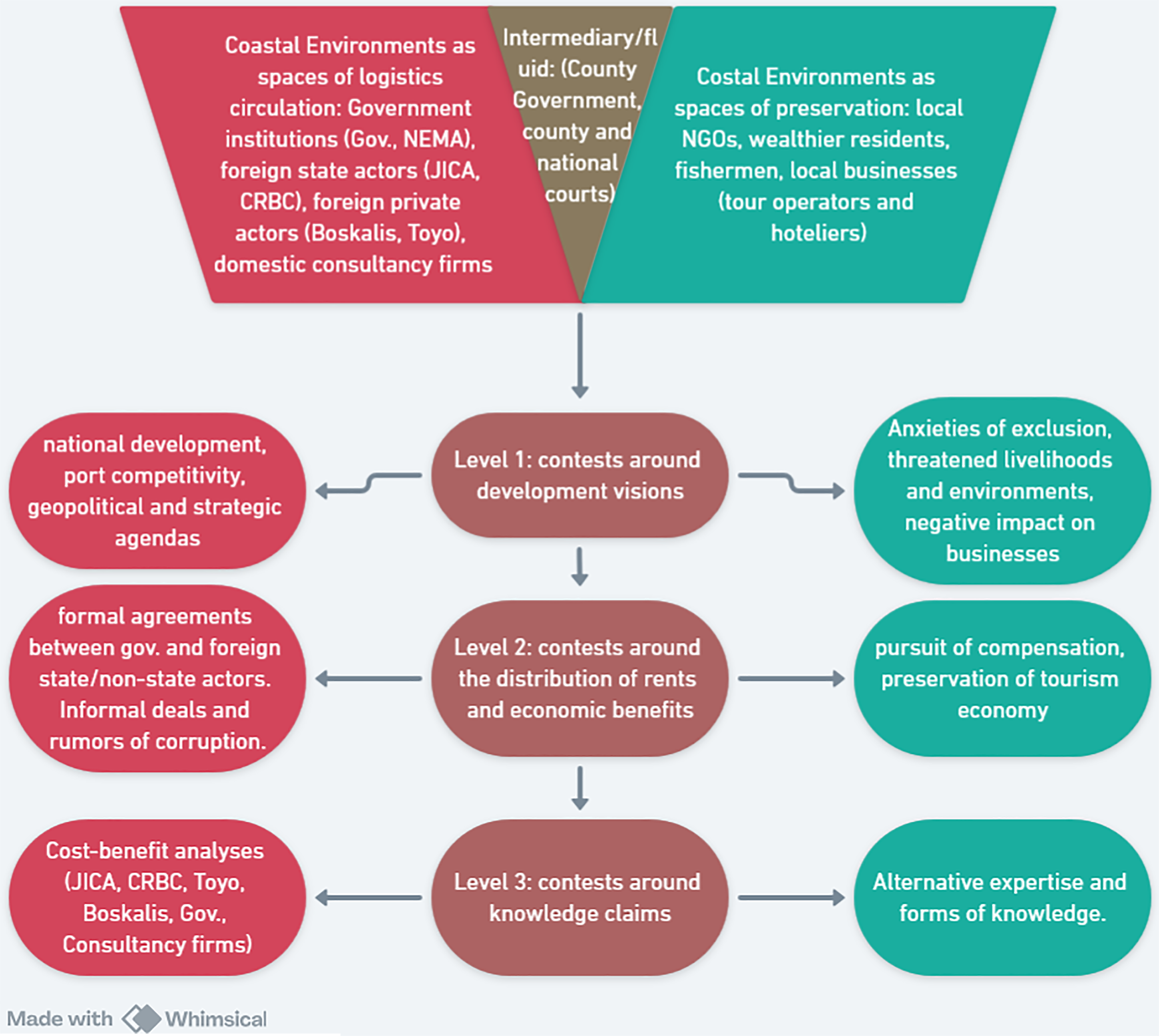
Illustration of the epistemic rift. (Source: Author).
In this article, these territorial representations are merely ideal types that serve analytical clarity, given how in practice, they may overlap to varying degrees depending on the actors considered and may even be in tension within one group or individual. For instance, categorizing actors such as the Kwale County government or the different judges involved in the court cases proves challenging as their position may vary considerably – both individually and over time. However, as the first vision is usually favored by more powerful actors with closer ties to elite coalitions or foreign entities, whereas the second is more commonly embraced by historically marginalized groups, they constitute a case of situational dissensus. Lewis and Ernstson (2019), highlight how this form of political opposition arises from deeply rooted, historically place-based dynamics that are challenging to resolve through deliberative planning. In the case of Mombasa, the historical socio-spatial tensions and logistics-related power relations that define the gatekeeper city influence the dissensus (Cyuzuzo, 2024).
Additionally, both groups of actors do not necessarily share similar socio-economic backgrounds and interests or (geo)political objectives. For instance, the variegated peripheral social groups involved in the controversies around dredging have different socio-economic and ethno-racial backgrounds that shape distinct relationships with coastal environments and place-making, and that can result in underlying tensions. Nonetheless, they share common experiences of territorial and urban marginality, highlighting how in Kenya, like in other African contexts, uneven territorial and regional dynamics usually outweigh class cleavages in explaining social power relations (Boone, 2024; Willis and Mwakimako, 2021). Thus, the empirical section particularly resonates with situated UPE scholars’ call to extend our focus beyond capitalist relations of class and to ‘reformulate our understanding of power as relationally constructed and enacted’through historically contingent sociopolitical conditions (Lawhon et al., 2014: 508). On the other hand, while politically and economically powerful actors such as the central government, JICA, CRBC, or Toyo mobilize neoliberal planning paradigms and share a similar vision of coastal environments as sites of logistics circulation, their visions fit into broader dynamics of regional and global geopolitical competition that involve underlying strategic rivalries (Lamarque, 2022; Schindler et al., 2024).
Between exploitable spaces and endangered spaces: Layers of the epistemic rift
This section gives a brief overview of this article's research methodology before analyzing the different levels of the epistemic rift illustrated in Figure 1. First, I demonstrate how the epistemic rift arises when peripheral and marginalized actors – being the first to experience the detrimental effects of sand harvesting – contest dominant planning paradigms and knowledge dispositifs, while advocating for alternative forms of knowledge able to change dredging practices and reframe the socio-ecological impacts of the 2CT. I then illustrate how these knowledge claims also tie to historical dynamics of territorial power relating to uneven distributions of economic benefits, and to conflicting visions of territorial development that articulate the relationship between fisherfolk, residents and businesspeople, county and national institutions as well as foreign actors.
Research methodology
The data for this article was gathered through qualitative interviews, technical documents produced by JICA, Toyo, Boskalis and the Kenya Ports Authority (KPA), newspaper articles, social media posts, and court decisions from the 2019 lawsuit cases filed by Kwale fishermen, residents and business owners. Out of 31 interviews conducted in 7 months of fieldwork in Mombasa between November 2022 and June 2023 as part of my PhD, 7 were specifically focused on sand harvesting in Kwale County and included five interviews with residents and conservation NGO members, and two interviews with managers from Toyo Construction and a local consultancy firm involved in the sand harvesting project. In addition, four focus group discussions were conducted and involved 8 to 20 participants part of the fisherfolk. These were done with the aid of a research assistant with different communities in Waa, Tiwi, and Likoni. Interview and focus group questions focused on actors’ perceptions of dredging and its impacts, their position on the various controversies that it had created, their opinions on the court decisions, and whether they saw possible synergies between the imperatives of conservation and logistics development. Court documents, as well as policy briefs and maps provided by Cordio East Africa, a local marine ecology NGO, were essential in clarifying the timeline of different events, while allowing triangulation of the information gathered from interviews and newspapers. Both the 2015 and 2019 court case documents were kindly provided by interviewed residents.
While the focus of the empirical section is mainly on the 2019 sand harvesting case, additional insight was gained from a previous court case filed in 2015 against the CRBC as part of the land reclamation project for the SGR's marshalling yard within the port's harbor (Figure 2). Ideally, this case would have been fully included for comparative purposes, however the lack of data made it challenging to develop a comprehensive case study. Instead, the 2015 case is used as a complementary background, providing useful context for understanding the 2019 dredging controversies. While the 2015 court case led to the victory of local actors and the stoppage of harvesting, the 2019 case saw the KPA and its collaborators prevail.
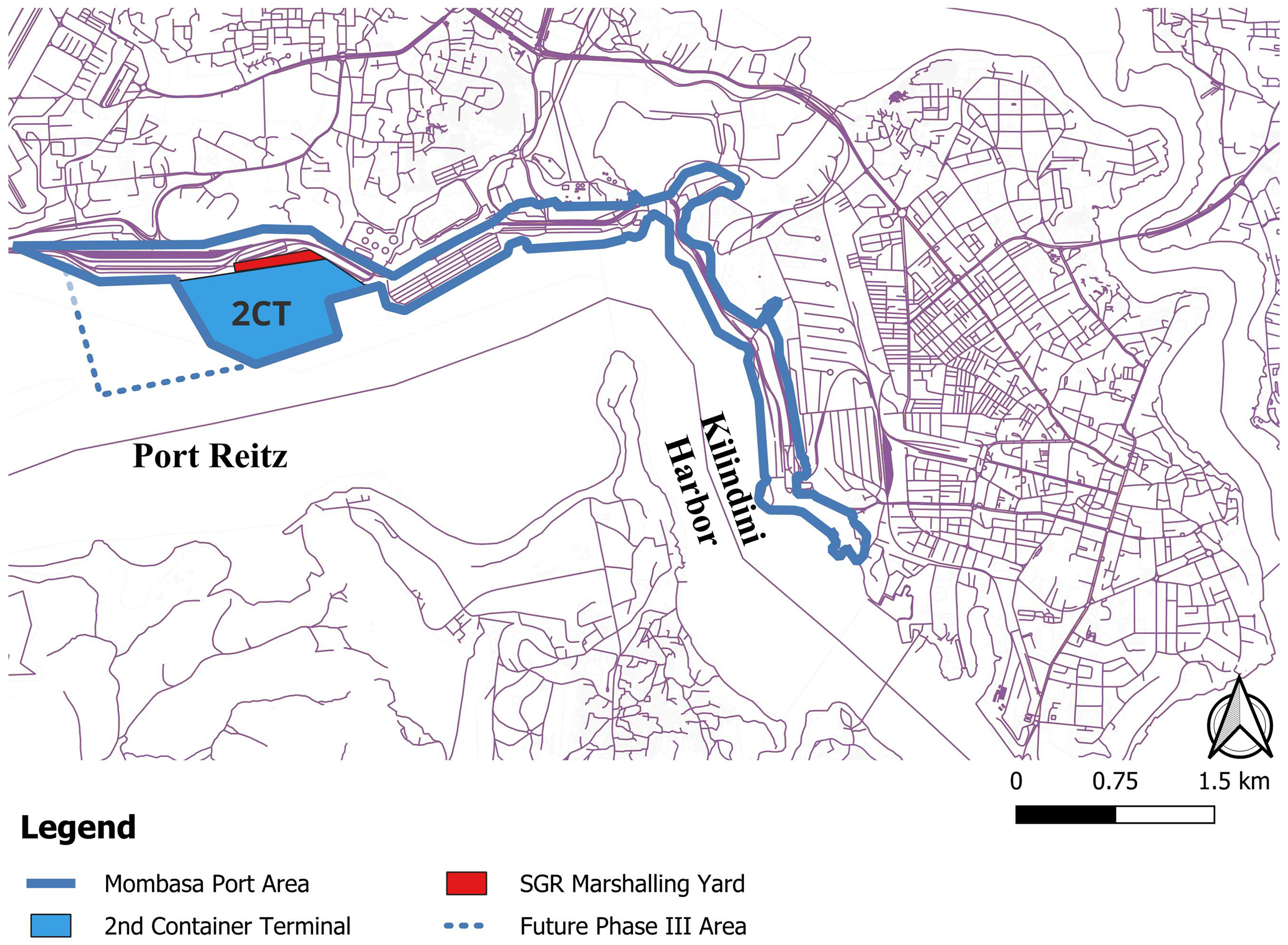
Mombasa port Harbor. (Source: Author).
Who is ‘in the know’? Identifying competing knowledge claims
Following the beginning of sand harvesting operations in March 2019, two petitions were filed before the Environment and Land Court at Mombasa (ELCM). The first on the 4th of June 2019 by a Kwale residents’ association and a local conservation NGO, and the second on the 9th of September by the Association of Hotelkeepers and Caterers (AHC) and a fisherfolk's beach management unit. 4 The petitions mainly insisted on how the Environmental Impact Assessment (EIA) for the project was not only outdated, as the study was conducted in 2006, but also failed to include meaningful public participation. Additionally, they claimed that the disruptions caused by dredging to coastal ecosystems and shorelines endangered the local tourism industry and fisheries, both of which are essential to the livelihoods of coastal residents (Figure 3). In support of their case, petitioners had commissioned alternative expert evaluations that notably included an examination of the impacts of sand harvesting on beach erosion and a visual assessment by marine ecologists of the impacts of harvesting on marine ecosystems. On the other hand, respondents to the petition – that included the Ministry of Infrastructure, the KPA, and NEMA – leveraged the EIA to argue that ‘the project [was] being implemented in an environmentally, socially, and economically sustainable manner’ (ELCM, Petition 22/19, p.14).
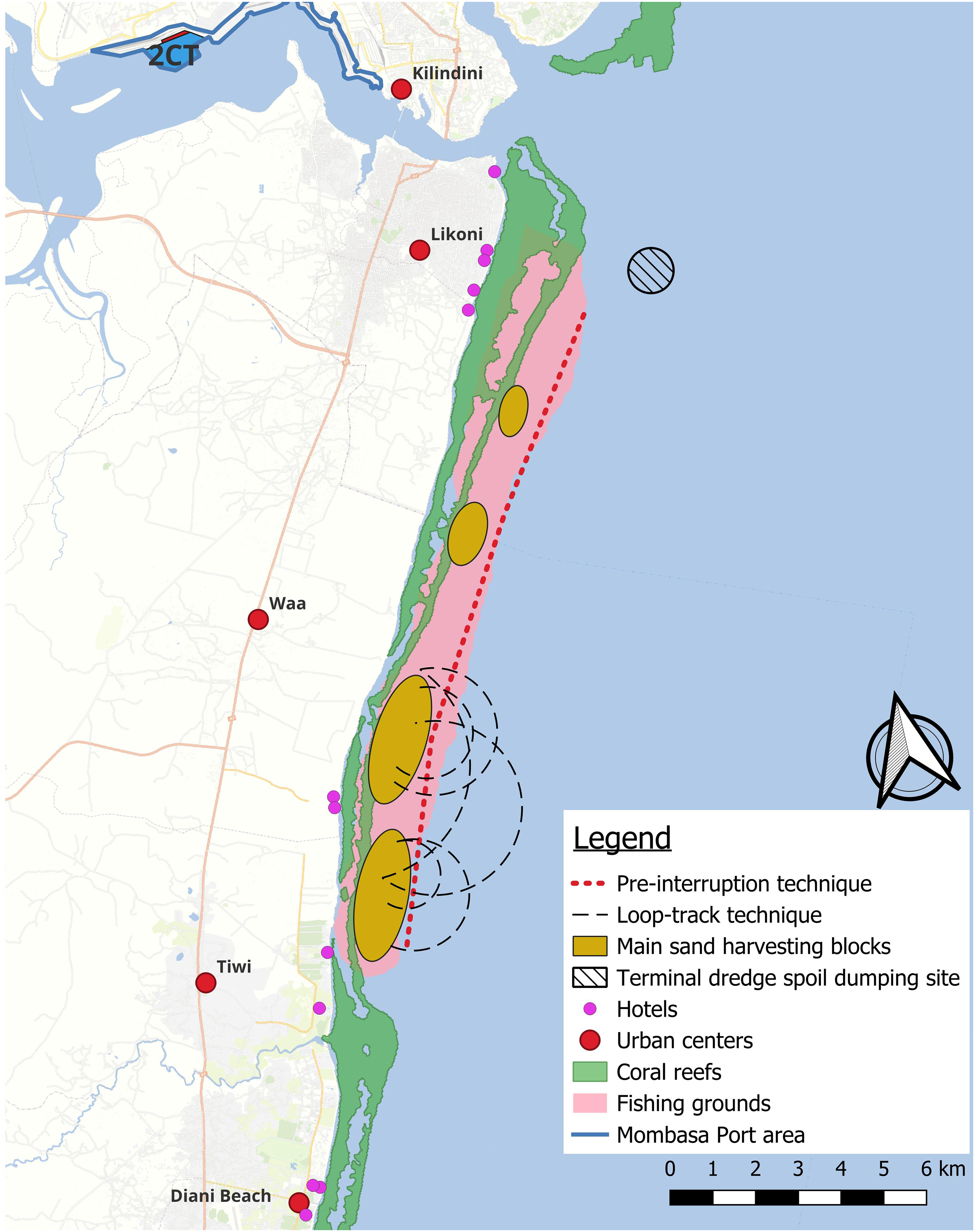
Sand harvesting area. (Source: based on Obura, 2020, adapted by author).
The opposing narratives mobilized in these court cases reflect underlying knowledge claims and differing methods of inquiry regarding the effects of sand harvesting on the Southern Coast. These contrasts became especially evident in interviews conducted with various participants. When I began investigating dredging for the MPDP, my first contact was Shannon, 5 with whom I connected through a well-known social media platform, where she is a member of a Kwale residents’ group. During our online interview, the affable and articulate lady almost immediately insisted on the rapid degradation of the coastline that she attributed to dredging, speaking with a sense of urgency and concern: ‘I am literally on the beach and I have been noting for the past three years the impact [of dredging] on sea quality, the seaweeds, and the destruction of corals because my husband is a diver. (…) The way the beach has changed is completely dramatic. We've lost around 6 or 8 meters of treeline in the last 3 years, while the beach has been washed away and has eroded, probably because it has replaced the sand that has been dredged in the Ocean’ (Interview, 8/12/2022). Shannon – like many members of the association – is a white Kenyan who has lived in the country for many decades. Her knowledge of the coast is rooted in her everyday experience of the shoreline, where she owns a house directly along the beach in the affluent town of Diani, a renowned tourist destination on Mombasa's South Coast. On the other end of the socio-economic spectrum, Peterson, a Mijikenda elder of an interviewed fisherfolk community in Waa, also highlighted an experiential knowledge of the effects of dredging, albeit through the lens of declining fish catches. He argued, his voice tinged with a touch of desperation, that ‘we used to catch 30 to 50kgs of fish, now because of these works, we are lucky if we can catch 1 to 5 kgs 6 ’ (Focus Group, 2/2/2023).
Others, however, were more sceptical towards such experiential knowledge. Stephan, another interviewed resident part of the association, who ‘fell in love with Diani during some holidays’ over twenty years ago, seemed puzzled by the scientificity of residents’ observations regarding the effects of dredging, despite being an active participant of the 2019 court case: ‘We could never prove anything a 100%. For example, the fishermen were saying that they couldn’t catch fish anymore, how do you prove that scientifically? Great question’ (Interview 16/12/2022). While the residents had mobilized alternative expertise, the studies presented in the court cases were more preliminary observations of the impacts of dredging rather than comprehensive, in-depth analyses and were thus riddled with uncertainty. A more detailed study was commissioned by the AHC which uncovered an acceleration of coastal erosion between 1999 and 2019 (Fulanda, 2019). However, it did not allow alleviating uncertainties regarding the primary cause of shoreline change. Using satellite imagery and physical mapping of the shoreline, the study avoided singling out sand harvesting, highlighting instead how coastal erosion can be attributed ‘to anthropogenic activities comprising beach developments [notably from the tourism sector] as well as the increased activities of sand harvesting (…) especially during the 2013–2019 period’ (Fulanda, 2019: 33). 7
In a rather dismissive tone, Martin, a manager at Toyo Constructions, criticized the KPA for insufficient engagement with the residents, which he believed contributed to misunderstandings about the sand harvesting process. He noted, with a complicit chuckle to his Japanese counterpart Ryuta – who was present during the interview but remained silent throughout – that residents’ concerns about beach erosion and declining fisheries were unfounded because ‘sand was being harvested at 50 to 60 meters deep, so very far away from the beaches. Because of their lack of understanding of how sand harvesting works, they imagined that the sand was being drained from the beaches’ (Interview 20/02/2023). He also summarized rather elegantly how the cost-benefit analysis for this type of project works: ‘the process followed before an EIA licence is issued, is that there are pros and cons that are balanced and if the pros exceed the cons then the project is conducted’. This, however, led me to ponder on what happens when the ‘cons’ exceed the ‘pros’.
In response to this, Raphaël, a director at the consultancy firm in charge of the EIA, naturally responded that ‘if the result [of the monitoring] deems the project to have a major impact, then the contract between the client and the contractor is very clear and in this case everything would have to be stopped completely’ (Interview, 24/02/2023). However, when asked whether in his extensive experience as a consultant he had ever encountered a situation that required halting a project, he responded ‘not in this case and not in my experience’. Raphaël further emphasized that, contrary to the fishermen's assertions, the firm's studies did not find evidence to support claims of declining fish catches, even stating emphatically that ‘we looked at the fish catch data and in some cases, it even went up!’ Daniel, a local marine ecologist who had been active in a #stopsandharvesting social media campaign against dredging, played a great role in providing alternative expertise regarding the negative impacts of sand harvesting. While introducing himself, he shared that he used to conduct EIAs for various projects but eventually stopped due to their ‘terrible’ quality from a research perspective, further noting that ‘it was just an administrative obligation that they [consultants and clients] had to get through as quickly as possible’ (Interview, 13/01/2023). In 2019, he ultimately avoided participating in the residents’ court cases and instead collaborated with the KPA to reconsider and improve the methods of sand harvesting.
Daniel had a rather straightforward response to the question of establishing the scientificity of fishermen's claims: ‘That's easy, because the plum is visible (…) there is also a lot of satellite imagery now (…).When I was campaigning against dredging on twitter I was also preparing science briefs and policy briefs showing some of this imagery and what it looked like before and after dredging and you could see what some of the fishermen were saying regarding the lack of visibility while fishing’ (Figure 4). However, he expressed a degree of impatience with some of the wealthier residents’ complaints about the damage caused by dredging to the shoreline: ‘I know that it's a concern of theirs and it's a valid one, but they have been concerned by that for 30 years (…). Now with sea level rise and climate change, there is going to be coastal erosion, there is no avoiding that right now. And I don’t think you can see any signals of the sand harvesting effects against this backdrop of regular shoreline change and erosion that they’ve worried about for the last few decades’. In substance, Daniel highlighted the complexity and scientific uncertainty involved in disentangling the effects of sand harvesting on coastal erosion from the broader effects of climate change and sea level rise. Ultimately, the campaign he had participated in allowed interrupting harvesting operations between the 28th of March and the 7th of April 2019. During this period, he engaged in negotiations with the KPA to adopt what he regarded as a more effective mitigation measure, referred to as the ‘loop track’ technique 8 (Figure 3). This new harvesting method was implemented until the end of harvesting works in August 2019.
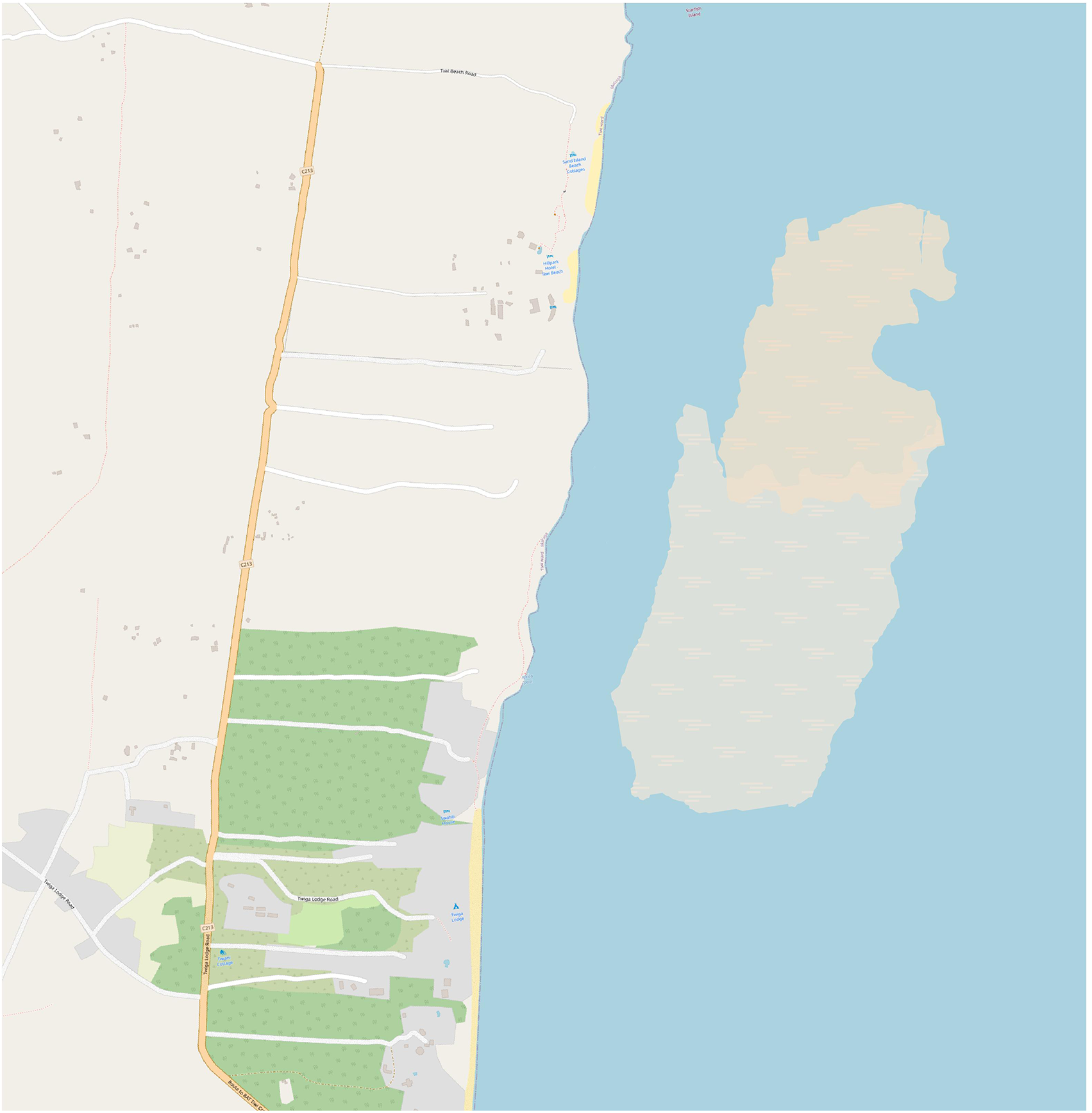
Fine silt discharged by the Willem Van Oranje pre-interruption. (Source: based on Obura, 2020, adapted by author).
These interview vignettes manifest how competing knowledge claims have been at the center of dredging operations for the 2CT. They highlight the tensions between a cost-benefit analysis framework employed by project proponents and alternative forms of knowledge and inquiry used by local actors. Importantly, Raphaël's admission of never having encountered a situation where a project was halted, along with Daniel's rejection of EIAs, both point in different ways to the underlying limits and biases of cost-benefit methods. As mentioned in the previous section, given their deep entanglement with powerful actors’ political and economic interests, these approaches tend to underestimate costs, overestimate benefits (Flyvbjerg, 2009), while displacing potential ecological burdens on peripheral and vulnerable actors, in this case – south coast residents and fisherfolk. On the other hand, residents’ experiential knowledge was riddled with uncertainty and dismissed by expert approaches due to a perceived lack of rigor. Yet, even more rigorous approaches such as the studies conducted by the AHC and Daniel were not devoid of a level of uncertainty regarding the main causes of coastal environmental change. Here, dredging is cited as a cause along with other anthropogenic factors such as climate change, sea-level rise, or urban development. While Daniel's research was instrumental in redistributing expertise and changing harvesting practices, his collaboration with the KPA also raised suspicions among residents. During our interview, he mentioned that some residents speculated that he had been ‘paid off’, as they remained unsatisfied with the new mitigation measures and continued preparing their court cases.
Contesting the distribution of rents and economic benefits
During interviews, accusations occasionally surfaced about various actors being co-opted or ‘paid off’, though these claims varied in their level of verifiability. The case of the former Kwale County governor, Salim Mvurya, particularly raised eyebrows among interviewees. Mvurya was initially a vocal opponent of the 2015 round of sand harvesting conducted for the SGR marshalling yard, during which he argued that sand harvesting ‘[would] destroy the beaches and reefs (…) and take away livelihoods for fishermen and ultimately turn tourists away’ (aggregates business, 2015). However, he turned unexpectedly silent during the 2019 round, although it required a much larger quantity of sand to be harvested. 9 In the interim, he had left the opposition party to join the Jubilee Alliance ticket for the 2017 general elections, eventually being appointed as the cabinet secretary of mining and maritime affairs in 2022. Political co-optation through the distribution of public resources and favors in exchange of loyalty is a common occurrence within gatekeeper institutional environments (Dorman, 2018). On the other hand, the 2019 sand harvesting project also reveals how actors excluded from state-led patronage networks can deploy various strategies to contest their marginalization and reframe the distribution of rents and economic benefits. The process of political decentralization initiated by the 2010 constitution has played a particularly important role in this process (Chome, 2020; Cyuzuzo, 2024; Gerzso, 2023).
Participants from various backgrounds on the south coast consistently conveyed sentiments of exclusion and neglect by the state, while being keenly aware of their marginality vis-a-vis informal patronage networks. For instance, Brian, an ‘expat’ also member of the aforementioned residents’ association, remarked with a hint of bitterness that ‘If you are not Kenyan, you can’t do anything… you need to have connections’ (Interview 10/12/2022). This lack of ‘connections’ was also expressed by a fisherman, Abduul, during a focus group discussion. When questioned about why his community had not approached their local MP to advocate for their case regarding the impacts of sand harvesting, he responded with visible frustration that ‘they would not listen to us, we do not know any big man’ (Focus group, 16/02/2023). Despite their vastly different economic capital and ethno-racial backgrounds, Brian and Abduul shared a common sense of marginalization from the state that crystallized around the claims made during the 2019 court cases.
The 2019 court cases, along with 2015 one, manifest how peripheral actors increasingly leverage independent Kenyan courts to oppose perceived injustices from the state, particularly regarding infrastructure development. The 2015 case against the CRBC resulted in a decision by the National Environment Tribunal at Nairobi of January 2016 to revoke the Chinese company's NEMA licence that was provided without a full EIA. Some fishermen expressed how, aside from the case, they had also managed to receive financial compensation from the CRBC during the project's implementation. However, during a focus group discussion, one of the participants precisely recounted how for some fisherfolk, after countless back and forths, the funds never came through. He suspected that, at some level of the compensation process, officials involved in the scheme had embezzled the funds (Focus Group, 2/2/2023). On the other hand, the compensation schemes implemented by Toyo in 2019 were not financial in nature, except for the areas within the port harbor where land reclamation caused a permanent loss of fishing grounds as confirmed by Rapahël, the director at the consultancy firm (Interview, 24/02/2023). Raphaël also emphasized how ‘Every time KPA has to implement a project there is some aspect of livelihood intervention and CSR or compensation. We find that one fisherman is affected by 2 or 3 projects and is being catered to by all of those projects’. Although these projects can deeply disrupt fisherfolk's livelihoods, they have also evolved into opportunities for capturing small rents related to compensation schemes, albeit in a precarious and uncertain manner. Employment was also at the center of fisherfolk's concern, who expressed frustration over unfulfilled promises of job creation (Focus Group 16/02/2023).
For hoteliers and tour operators, dredging posed a direct threat for tourism. Both on social media and during interviews with residents, calls for the preservation of marine ecosystems were often closely related to the defence of the tourism industry. In their September 2019 petition, the AHC insisted on how ‘ocean water has become cloudy thus obstructing tourists from going for diving, resulting in huge losses in terms of employment and earnings for beach operators’ (ELCM/41/2019). Here, gatekeeper rents are not linked to the spoils of political patronage within state office (Cooper, 2002; Dorman, 2018), or logistics-related rents in and around ports (Hönke, 2018; Lamarque, 2019), but to competing forms of coastal land-use. Specifically, they are directly tied to the preservation of natural resources and coastal environments that are critical for attracting foreign leisure capital in affluent areas such as Diani beach, illustrating how the zero-sum political dynamics common in gatekeeper environments can also extend to contested socio-ecologies. As forcefully emphasized by Shannon during our discussion ‘Diani Beach [was] voted as the best beach in Africa for seven consecutive years (…), so yes, we need to dredge sand, but how do we do to not destroy one of our greatest tourist attractions?’ (Interview, 8/12/2022). Whereas wealthier residents focused their claims of coastal preservation through the lens of the relatively lucrative tourist economy, fisherfolk were more concerned with how these projects ‘denied them the possibility of being a public of the national development vision’, in a similar way to those excluded from the future promised by the SGR (Lesutis, 2022b: 304).
Mapping conflicting development visions
Following a focus group session with a fisherfolk community in Tiwi, a participant kindly offered to escort my research assistant and I to the nearest road. Along the way, he extended an invitation to visit his home which was under construction – a humble structure made of brick walls and covering approximately 20 square meters. Part of the roof was patched together with sheet metal, while the rest was left exposed. Adjacent to his home, was a small patch of fruit crops, some of which he generously shared with us for our journey back to the city. In contrast to how actors connected to the state or to foreign entities often emphasized infrastructure's ‘promises of modernity’ (Harvey and Knox, 2012), fisherfolk consistently voiced forms of frustration and despair, reflecting what has been acutely described as the ‘devastating afterlife’ of infrastructure's ‘here and now’ (Lesutis, 2022a: 943). Participants often expressed how they felt these projects were not only designed without them in mind, emphasizing the central government's disregard for their hardships and basic needs, but also how they were a source of ongoing harm. During the discussion in Tiwi, I inquired about how they felt about a comment made by Raphaël. In our interview, he had emphasized that, while fisherfolk communities may not feel the immediate benefits of the MPDP, these would ‘trickle down eventually’ as the project aims to advance ‘the greater good of the country’ (Interview, 24/02/2023). As a response to this, Abduul, emphatically and pragmatically stated that ‘what we need is to feed ourselves and our children now! We have been told time and time again that we would see the benefits of these projects, but we never see them.’ (Focus group, 16/02/2023).
Anxieties of environmental destruction were a recurring theme in discussions with fisherfolk and were associated with historical rounds of dredging and port-making. As such, current grievances of economic exclusion overlapped with painful memories of ruination, notably relating to alleged uses of explosives in the 1970s for harbor deepening. Some of the participants recalled how this event led to widespread coral deaths that directly affected their livelihoods. While this study did not allow verifying these claims, the story remains a testament to the enduring traumas associated with port-making for historically marginalized Mijikenda communities of the southern coast. 10 On the other hand, Raphaël's ‘greater good of the country’ narrative was particularly prevalent among actors close to or associated with the state apparatus. This narrative was also present in the ELCM 2020 court decision for the 2019 petition, in which the Judge emphasized how the 2CT was ‘an important national facility being developed by the Government (…) for the economic and social benefit of the country and the public at large whose interest surpass the private and sectarian interests of the petitioners’ (ELCM, PET 22/19, p.31). Here, and in contrast with the 2016 decision for the 2015 petition, 11 National interest is mainly framed through logistics development of the coast within Vision 2030's framework, taking priority over concerns about environmental preservation, reduced to ‘private and sectarian interests’.
For actors connected to the state apparatus or foreign companies, discourses of logistics development were often associated with imperatives of regional competitiveness. For instance, Martin, the manager at Toyo, underscored how ‘the benefits [of the 2CT] are immense in terms of improving the storage capacity of the port and in terms of TEUs. It places Mombasa as a gateway for landlocked East African countries such as Uganda, South Sudan, and Rwanda and it makes the KPA more competitive compared to Tanzania, Mozambique or Djibouti. So it brings more opportunities for trade in Kenya’ (Interview 20/02/2023). Martin's statement should be viewed within a larger context defined by regional corridor rivalry, particularly between Kenya and Tanzania (Lamarque, 2022). Against this backdrop, fierce competition to capture cargo circulating between hinterland countries and the coast drives rapidly evolving logistical landscapes, further intensifying the pressure for continuous dredging and port expansion. On the other hand, foreign state actors such as JICA are advancing state capitalist visions around logistics development, that notably involve strategies to secure contracts for ‘national champions’ (Alami et al., 2024). As highlighted by Martin, ‘JICA usually requires that some projects be constructed by a Japanese contractor through government to government financial agreements. That's how Toyo ventured into the East African Market’.
This approach has been a key aspect of Japan's state capitalist infrastructure policy since the 1970s (Katada and Liao, 2020). Following a period of reduced foreign loans and investments, the growing global influence of China's infrastructure and urban policies (Apostolopoulou et al., 2024) – that successfully drew inspiration from Japan's policies (Liao and Katada, 2022) – has fostered a renewed Japanese emphasis on infrastructure exports, with a growing focus on Africa (Croese and Miyauchi, 2022; Hirono, 2019). In a 2017 master plan for the Northern Economic Corridor, JICA consultants argue for the importance of developing ‘logistics hubs’ around Mombasa port through ‘cargo-oriented development’ (JICA, 2017: 2–13). The report notes how ‘Mombasa port is expected to be one of the hub ports in the world in the long term, and will need to be able to handle more than 3 million TEUs per year’ (JICA, 2017: 2–24), particularly highlighting how additional dredging works for phase III will be necessary to reach this objective. As such, and similar to the organization's involvement in Dar es Salaam (Croese and Miyauchi, 2022), JICA aims to produce Mombasa as a logistics node within wider networks of commodity circulation, loosely connected to its Free and Open Indo-Pacific framework (Hirono, 2019). In terms of representations of dredging and coastal environments, not much seems to connect fisherfolk's daily realities of precarity, exclusion and ruination, with JICA's geopolitics of infrastructure development. Yet, these actors increasingly coexist within the same socio-spatial coordinates that define the gatekeeper city's politics of contestation and inform the epistemic rift.
Conclusion
Through a study of the 2019 sand harvesting operations for the Mombasa Port Development Program (MPDP), this article has analyzed how the encounter of global logistics trends, gatekeeper politics, and complex and unpredictable coastal ecosystems in Mombasa has produced an epistemic rift between the different actors involved in this flagship project of Vision 2030. It has emphasized two main competing representations of coastal environments that define this rift – namely, a vision of coastal environments as exploitable spaces of logistics circulation favored by powerful actors, or as endangered spaces of preservation present among peripheral and marginalized residents. These representations have been empirically examined through three levels of contestation: knowledge controversies regarding ‘who is the know’ when it comes to the impacts of sand harvesting, rent and economic distribution conflicts around the usage of coastal environments, and conflicting visions of coastal development.
While the analysis of knowledge claims has revealed the limits and biases of cost-benefit approaches and their tendency to obfuscate power relations and scientific uncertainties in service of dominant planning and political-economic objectives, it has also highlighted how alternative forms of knowledge mobilized by local actors, notwithstanding persistent uncertainties regarding the main cause of coastal change, played a key role in redistributing expertise. Although harvesting practices were changed as a result of mobilizations, the persistent defiance by residents toward the central government and foreign actors involved in dredging illustrates how the epistemic rift extends beyond knowledge controversies. It effectively ties to complex ethno-regional tensions in Kenya that lead many inhabitants of the coast, in a similar way to other regions of the country, to ‘see the state as a powerful and even foreign entity that exists to control and punish rather than to sustain and include’ (Enns and Bersaglio, 2020: 19). Thus, the article has demonstrated how historically rooted and uneven relations of territorial power in Kenya, as well as the broader competitive pressures of global trade, shipping, and geopolitics, determine the sometimes radically different regimes of sense-making through which various participants apprehend dredging and port development, and how these inform the contested epistemic politics of sediment metabolism.
The article makes three main contributions to the broadly defined fields of political and urban geography. First, it contributes to recent scholarly debates on infrastructure-led development in Kenya (Chome, 2020; Cyuzuzo, 2024; Enns and Bersaglio, 2020; Kimari and Ernstson, 2020; Lesutis, 2021) through a case study of the political-ecological implications of the MPDP which – along with Mombasa more generally – remain understudied. It demonstrates how the acceleration of logistics development under regional and global competitive pressures inevitably generates frictions with alternative ways of inhabiting coastal landscapes and conceiving coastal futures, as marginalized actors fear both exclusion from the MPDP's promises of modernity, and exposure to the ecological burdens resulting from degraded coastal environments.
Second, it highlights how studying sedimentary processes in general – and their interactions with coastal infrastructure transformations more specifically – provides urban political ecology with a valuable opportunity to engage more deeply with the materiality of urban metabolism, in line with other recent studies in the field (Carse and Lewis, 2017; Dawson, 2021; Gustafson, 2021; Hein and Thomsen, 2023; Jamieson, 2025; Lewis and Ernstson, 2019). Through the concept of epistemic rift, the paper highlights the contested epistemic politics emerging from the ‘metabolization’ of sediments, showing how the scientific uncertainties surrounding complex biophysical and ecosystemic shifts become entangled with historically situated territorial power struggles and the broader realities of global political economy. Finally, the article highlights how the gatekeeper city acts as a critical space of encounter where the dynamics of global logistics expansionism (Chua et al., 2018; Cowen, 2014; Gregson et al., 2017; Khalili, 2020; Mezzadra and Neilson, 2019), the uneven and combined development of state-led spatial agendas (Alami et al., 2024; Katada and Liao, 2020; Schindler et al., 2024), and colonial and postcolonial dynamics of urban and territorial formation (Cooper, 2002; Dorman, 2018; Hönke, 2018) converge to shape the contested political ecologies of port-city development. Thus, the article calls for further transdisciplinary dialogues able to make sense of how these intersecting processes deepen political-ecological struggles, particularly across coastal urban peripheries in Africa and beyond.
Highlights
I analyze how dredging for the expansion of Mombasa Port has created an epistemic rift between different actors in the city.
This rift involves two conflicting representations of coastal environments: as spaces of logistics circulation and as spaces of preservation.
These are embodied by competing knowledge claims, development visions and rent distribution conflicts.
Footnotes
Acknowledgements
I would like to extend my heartfelt gratitude to my supervisors, Prof. Seth Schindler, Prof. Kevin Ward, Prof. Julie Miao and Prof. Patrick Cobbinah for their support and comments during the writing process of this article. I am also thankful to the participants who have provided valuable documents for this article, to David Obura from Cordio East Africa for providing valuable maps, and to my research assistant Nevil Aguessa who introduced me to fisherfolk communities and aided in the translation of interviews. Finally, I am thankful to my thesis examiners: Dr Charis Enns, Prof. Shahar Hameiri, and Prof. Henrik Ernstson. Their careful reading and insightful feedback were crucial in improving this article and my thesis as a whole.
Declaration of conflicting interests
The author declared no potential conflicts of interest with respect to the research, authorship, and/or publication of this article.
Funding
The author disclosed receipt of the following financial support for the research, authorship, and/or publication of this article: This research was supported by the University of Manchester as part of the ‘New Cold War’ Dual PhD Program, in collaboration with the University of Melbourne.