



Abstract
This paper examines the complex relationships between humans and invasive species through an ethnographic study of the Common Myna (Acridotheres tristis) in Israel. Drawing on ethnographic fieldwork at the Israel Center for Citizen Science, interviews with birdwatchers, and analysis of public discourse, I explore how the myna has become embedded in Israeli society through three distinct but interrelated representations: as an invasive threat, as a socio-cultural Other, and as a reflection of Israeli identity itself. The study reveals how invasion narratives emerge through complex interactions between scientific classification, cultural context, and the species’ own agency, demonstrating that the binary between ‘native’ and ‘invasive’ species operates on a spectrum shaped by multiple factors including temporality, behavior, and cultural reception. While scholarship has often positioned invasion biology either as objective science or colonial discourse, this study argues for approaches that can hold both the material reality of ecological threats and their social construction in view simultaneously. Through examining how different social actors engage with and make sense of the myna's presence, this study contributes to our understanding of how societies grapple with environmental change and the increasingly complex relationships between human and non-human actors in the Anthropocene era.
Introduction
My two-year-old daughter runs excitedly toward a group of Common Mynas (Acridotheres tristis) gathering on the lawn of a neighborhood park. “Hello Myna!” she shouts gleefully, waving her small hands at them. The mynas show no fear, nor attention to her excitement. When I was her age, there were no mynas in Israel, except, perhaps, in zoo enclosures and amateur aviculturists’ homes. During the past 30 years, this bird has become one of the most common birds in Israel. My daughter's relationship with the myna—officially declared an invasive species 1 and a symbol of threat to Israeli nature—reflects a perspective quite different from that of most adults around her. For her, mynas are simply fellow Tel Avivians, an integral part of the Israeli landscape in which she is growing up.
What does it mean for an organism to simultaneously hold such contradictory positions—being both common and a newcomer, both an integral part of the everyday Israeli landscape and a significant threat to that very same landscape? The interaction between a toddler and these controversial birds is the backdrop of this study—inviting us to reconsider the complex relationships between humans and invasive species, and how belonging and foreignness are shaped and transformed over time. In the Anthropocene era, where human activity has become a dominant force shaping ecological systems, traditional distinctions between natural and artificial, native and invasive, become increasingly blurred and contested.
The scientific discourse around invasive species often focuses on ecological impacts and management strategies. However, as political ecology scholars have shown, invasive species are deeply embedded in political and cultural contexts. The way we perceive and respond to these species reflects not only ecological realities but also our own anxieties, ideologies, and values (Helmreich, 2005; Robbins, 2004; Salih & Corry, 2022; Trigger, 2008). The Common Myna is more than just another invasive species. It is one of the 100 worst invasive species listed by the International Union for Conservation of Nature (IUCN). It poses a real, persistent threat unto ecological systems (Lowe et al., 2000). Yet, it has emerged as a powerful symbol onto which various social and political narratives are projected. From being portrayed as an “invasive menace” threatening the local ecosystem, to being reimagined as a mirror of Israel Jewish society itself, the myna embodies multiple, often contradictory, meanings.
This paper examines these complex relationships through an ethnographic lens, focusing on three distinct but interconnected ways the Common Myna exists within Israeli society. First, I analyze how it has become understood as a threatening invasive species. Second, I explore how the myna has been associated with various social groups perceived as threats to the established order. Finally, I examine an emerging counter-perspective that sees the myna as mirroring Israeli identity itself—adaptable, resilient, and often misunderstood. Beyond contributing to discussions about invasive species management, this paper offers insights into how societies navigate environmental challenges and how these experiences shape both public understanding and the lived reality of inter-species relationships in the Anthropocene.
This analysis builds upon recent theoretical developments in environmental anthropology, science and technology studies, and political ecology, while also engaging with scholarship on invasion biology. By examining how different social actors engage with and make sense of the myna's presence, this study contributes to our understanding of how societies grapple with environmental change and the increasingly complex relationships between human and non-human actors in contemporary, constant changing, and fragile environments.
The more-than-human turn
The more-than-human turn in anthropological theory fundamentally transforms how scholars conceptualize and study relations between humans and other species, moving beyond examining humans as separate from and dominant over nature, instead exploring how species co-create shared worlds through complex webs of relation. This approach claims to challenge traditional anthropocentric views, through acknowledging the agency and significance of non-human actors in our common world, arguing for a more inclusive perspective that considers the experiences of non-human beings with whom we are entangled, and to work towards building more just and sustainable ways of living together (Haraway 2008; 2016; Kirksey & Helmreich, 2010; Ogden et al., 2013; van Dooren et al., 2016). Haraway (2008, 2016) argues for the need to develop new forms of kinship that extend beyond the human realm. This approach allows us to imagine alternative ways of world-making that might foster more equitable and sustainable futures for all beings involved (Haraway, 2016; van Dooren et al., 2016).
This study takes stage in a Citizen Science (CS) center. CS is a common term describing participatory research in many disciplines, involving actors from both professional and non-professional spheres. Studies that focused ecological CS noticed that participants derive by, and often develop, emotional connections and attunements to other organisms (Charvolin, 2022; Dunkley 2023). In the repertoire of the more-than-human turn, there is an increased usage of terminology that emphasize love—e.g., the Harawanian kinship, the “love for monsters” of Latour (2011) and Tsing et al. (2017), gratitude and generosity (Kimmerer, 2013), or the ecology of care (Singh 2018). However, as Smith (2022) demonstrates, this scholarship's narrow emotional repertoire, focused on positive affect and intimate custodianship, fails to capture how peoples maintain more complex relationships with the non-human world that include hate, fear, violence, and ambivalence—alongside love, care, and respect. Evidently, more-than-human interactions may produce more complicated affective consequences. Logics of love and care can lead to much broader and varied affective and ethical consequences (Bocci, 2017; Dave, 2022; Govindrajan 2021).
Invasive species—global debates
Invasive species and their management have become a global environmental challenge, garnering increasing attention from conservation biologists, scientists, decision-makers and the general public. Invasive species are defined as non-native organisms that, once established, can threaten biodiversity, compete with native species for resources, and cause substantial ecological and economic damage (Simberloff et al., 2013). However, responses to invasive species management have grown increasingly complex and contentious, as different stakeholders—from scientists and conservation managers to local communities—often disagree about appropriate management strategies (Crowley et al., 2017).
Humanities and social science scholars have raised extensive critiques of how scientists and policymakers determine and implement policies regarding invasive species (Frawley & McCalman, 2014). Warren (2007, 2023) points out that the native/invasive terminology used reflects xenophobic perceptions, leading to violent actions against organisms. Pauly (1996) noted that invasive species regulation synchronized with legislation on immigration. Mastnak et al. (2014) arguing that native/invasive distinction relies on colonial perceptions of “pure” nature and warning of historical connections to nationalist movements, calling for “botanical decolonization.” Probyn-Rapsey (2015) demonstrated how in settler colonial contexts like Australia, invasion discourses intersect with historical logics of racial purity and elimination. Helmreich (2005) highlights how the discussion of invasive species on the islands intersects with complex questions of Indigenous identity and cultural heritage. Exposing tensions between traditional Hawaiian knowledge and the Western scientific approach, he proposes to view the concepts of “native” and “alien” as a more flexible spectrum, considering historical, cultural, and ecological contexts. These critiques take on complexity in contexts where questions of invasion, belonging, and Indigenous rights intersect with territorial disputes and competing claims to nativeness.
Recent ethnographic studies reveal how conservation projects produce complex forms of care, violence and betrayal. On Guadalupe Island, Mexico, Wanderer (2015) examines how scientists used “Judas goats"—sterilized and radio-tagged goats that would lead hunters to their herd members—as part of an eradication program. Similarly, Probyn-Rapsey and Lennox (2022) analyze an experiment on Pelorus Island, Australia, where scientists implanted dingoes with delayed-release poison capsules, intending for them to first eliminate the island's goat population before dying themselves. Both cases demonstrate the “biology of betrayal” (Wanderer, 2015), where scientists develop intimate knowledge of and care for animals, while simultaneously planning their destruction. Bocci's (2017) ethnography of Project Isabela in the Galápagos illustrates what he calls “tangles of care"—how caring for one species necessitates violence toward another. His study shows how scientists engineered hormone-implanted “Mata Hari” goats with extended estrus periods that helped eliminate over 200,000 feral goats threatening endangered Galápagos tortoises, revealing how conservation efforts can require both intimate care and systematic destruction.
Another complexity emerges in the ongoing debate between invasion biologists and their critics. Simberloff (2003) argues that while critiques of invasion biology as xenophobic have some historical merit (e.g., regarding Nazi Germany's stance on non-native plants), most invasion biologists and conservationists are motivated by documented ecological and economic harms rather than xenophobia or racism. He emphasizes that concerns about invasive species are based on readily documented damage, including threats to endangered species, economic costs, and impacts on human health. He points out that modern conservation efforts do not target all introduced species, but rather focus specifically on those that cause demonstrable harm. Along with Simberloff and Meyerson (2024), he notes that critics often ignore or minimize the well-documented negative impacts of invasive species while overstating their benefits. They argue that these impacts disproportionately affect local and Indigenous communities. Rather than reflecting xenophobia, they contend that current scientific and policy responses to invasive species represent legitimate attempts to address serious ecological and economic threats.
The discourse surrounding invasive species thus extends beyond ecological science and critical theory into practical questions of the relationship between human societies and their environments. Critics calling for decolonization of ecological practices (Mastnak et al., 2014) sometimes advocate for local populations to accept non-native species introduced through colonial transitions (Ritvo, 2018). When these species threaten agricultural and ecological systems (Schwindt et al., 2024), such demands may themselves constitute a form of neo-colonialism (e.g., Smith 2022). An environmental policy, celebrating a critical and complex approach while demanding that these populations will not take the necessary steps to defend their agricultural and ecological systems from threats, would be no less oppressive than the policies that such critical approach criticize. Instead, we need approaches that can acknowledge both the political dimensions of invasion biology and the concrete impacts of invasive species on local communities and ecosystems.
Invasive species—Israeli case
Israel's social and ecological diversity make it an excellent case study for examining different interpretations and actions toward invasive species. Hamaarag, Israel's National Ecosystem Assessment Program, warns that invasive species are becoming one of the key factors driving biodiversity declines and changes across Israel (Grossbard & Renan, 2024). However, certain invasive species have become deeply culturally significant such as the prickly pear, which serves as a shared symbol for both Israeli and Palestinian nativity (Bardenstein, 1998; Wallach et al., 2017). Management policies do not treat these species as invasive, as they are culturally perceived as natural and native (Ilany et al., 2022).
These debates take on particular significance in colonial and post-colonial contexts. As Braverman (2021) claim, nature conservation in Israel/Palestine remains entangled with national and colonial projects and imagination. For example, Novick (2023) documents how the treatment of goats transformed dramatically through early Israeli statehood. While Palestinian villagers and Bedouins relied on goats for subsistence, British and later Israeli authorities increasingly viewed them as destructive invaders that needed to be controlled or eliminated. The 1950 “Black Goat Law” specifically targeted Palestinian goat herding, revealing how species management discourse can intersect with colonial control and ethnic discrimination. The racial and ethnic dimensions became explicit as white European goat breeds were deemed acceptable while black local goats were targeted for elimination (Johnson, 2019; Novick, 2023).
Liron Shani's studies on invasive species management in Israel reveal the complex interplay between ecological and cultural dimensions. His work in the Arava region (2023) demonstrates how predatory fleas used as biological control challenge simple alien-native dichotomies, while his analysis of the prickly pear (2024) shows how non-native species, that became culturally significant for both Israelis and Palestinians, can become a subject of “Anthropocene concern”, with contrasting management approaches focusing on its conservation: risk-biased approaches favoring intervention versus risk-averse approaches emphasizing caution. This framework helps us understand the myna's position in Israel, where the intensive urbanization and landscape transformations that advance Zionist vision are simultaneously creating the disturbed habitats that allow species like the myna to establish and thrive. This raises complexities around the socio-ecological intersection where questions about belonging, adaptation, invasion, and transformation apply to both human and avian inhabitants.
Methods and context
This study draws on my ongoing three-years-long multi-sited ethnographic fieldwork (Marcus 1995), focusing on the Israel Center for Citizen Science (ICCS), a center operating in the Steinhardt Museum of Natural History at Tel-Aviv University, which leads many Israeli CS projects in the field of ecological research. Crucially, my fieldwork focuses on multispecies contact zones—spaces where humans and non-humans meet, interact, and mutually shape each other (Haraway 2008), drawing on participant observation in CS groups, analysis of public discourse, interviews with birdwatchers, as well as my own experience with mynas.
Aiming to understand how mynas are perceived and discussed in the media, this research also involves digital ethnography (Pink et al., 2015), incorporating digital platforms and media. I pay particular attention to the social media discourse, especially on platforms like Facebook and WhatsApp, both of ICCS's and independent communities.
To enrich my insights, I conducted in-depth interviews with 7 birdwatchers (5 men and 2 women) through snowball sampling, most of them are participants in ICCS projects, aiming to unpack their attitudes, experiences, concerns, and interpretations regarding the Common Myna, as well as how they all perceive their encounters with it. I also seek feedback from participants on my interpretations, engaging in a reparative, dialogic process, opposed to “paranoid reading” (Sedgwick, 1997). Rather than approaching the field with suspicion or seeking to unmask hidden truths or “false consciousness,” I aim to co-create knowledge that honors complexities. Hence, deliberately, I focused my interviews on birdwatchers, rather than targeting scientists, policymakers, and other institutional actors. This decision stems from a need to foreground the everyday, embodied experiences and perspectives of those most directly encountering the mynas in their local environments, rather than searching for scientific facts, or seeking to undermine them as culture biased. While the views of scientists and decision-makers certainly have an important role to play, this study privileges the grounded, relational understandings that emerge from the birdwatcher communities’ engagements with the more-than-human world.
Reflecting on the process of the study as a Jewish-Israeli researcher, I am keenly aware that it was produced within a particular geographic and temporal context—namely, Israel during a period of ongoing military conflict. This unavoidably shaped both the content and framing of the analysis in ways that merit further consideration. By focusing solely on the Israeli experience of the myna's invasion, this article necessarily underscores certain aspects of a much broader and more complex geopolitical reality. The Palestinian populations in Israel and the Occupied Palestinian Territories, who face their own forms of ecological disruption and displacement, are absent from this analysis. Their perspectives, struggles, and relationships with mynas and other invasive species would undoubtedly provide critical counterpoints and added nuance, however, they remain out of the scope of this article.
Mynas in Israel
The Common Myna represents one of the most significant biological invasions in Israel's recent history, first documented in the Yarkon Park at Tel Aviv in 1997 (Holzapfel et al., 2006; Roll et al., 2008). The story of the species’ arrival from its southern Asian origin is well-known among Israeli ecologists and birdwatchers, who typically blame the Tzapari—a bird zoo at the Yarkon Park—which allegedly released mynas from their cages, due to reasons that change between narrators (in some versions, the mynas managed to escape by themselves). Wild nesting of Mynas was first documented in 2000 (Sapir, 2003). Rapidly, they spread from the Tel Aviv region throughout the country, following an increase in their population size in Israel (Magory Cohen & Dor, 2019). A comprehensive study showed that the myna is currently one of the most common species in Tel Aviv area (Colléony and Shwartz, 2020), and according to the Backyard Bird Survey data, the Myna is the second most common bird species in Israel in 2024. 2
Mynas are listed by the IUCN as one of the world's 100 worst invasive species (Lowe et al., 2000), due to several characteristics that make it particularly successful as an invader. These include its high reproductive rate, aggressive territorial behavior, broad dietary flexibility, and remarkable ability to adapt to human-modified environments. Globally, mynas are known to compete with native cavity-nesting birds for nesting sites, predate on local species’ eggs and chicks, and can cause significant agricultural damage (Orchan et al., 2013).
The species has shown remarkable success in adapting to Israel's environments. Mynas thrive in city parks, gardens, and trees, taking advantage of artificial nesting sites in buildings and infrastructure. Their omnivorous diet allows them to exploit various food sources, from garden fruits to waste. This adaptability, combined with their aggressive territorial behavior, has enabled them to establish dominant positions in urban bird communities. Studies have shown that mynas display remarkable behavioral adaptations in urban environments, including modified foraging strategies and enhanced problem-solving abilities (Magory Cohen et al., 2020), suggesting their success in Israel stems not just from ecological opportunity but active adaptation to local conditions.
Of particular concern to conservation biologists is the myna's impact on the diversity and composition of native Israeli bird species, especially cavity-nesters like the Hoopoe (Upupa epops)—Israel's national bird. Studies have documented direct competition between mynas and hoopoes for nesting cavities, with mynas often displacing hoopoes from their traditional nesting sites. Monitoring data from urban areas shows declining hoopoe populations in locations where myna populations have increased significantly, though establishing direct causation remains challenging due to multiple environmental pressures affecting urban bird populations (Colléony and Shwartz, 2020) (Figure 1).
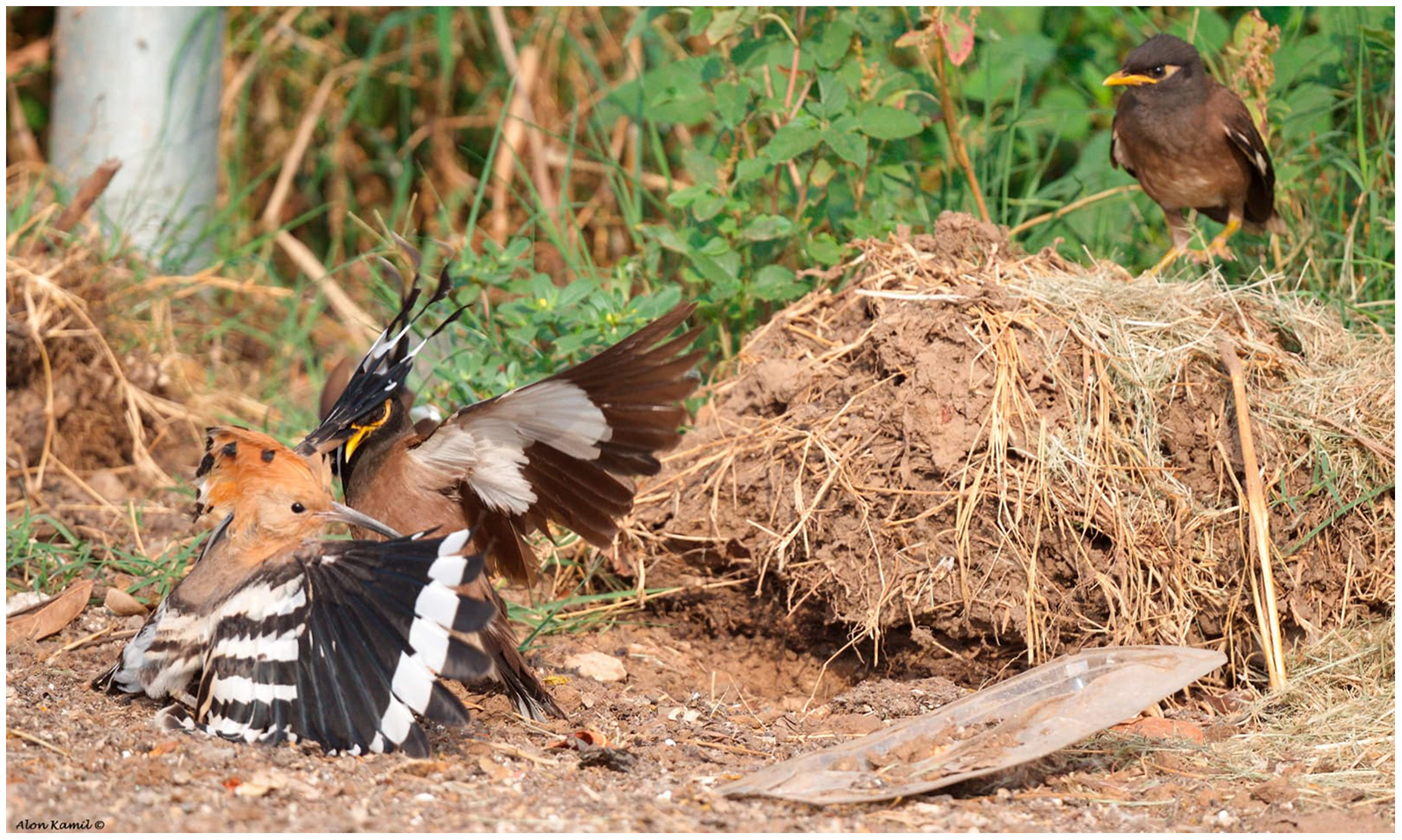
Myna showing aggression toward a hoopoe (by Alon Kamil).
The rapid establishment and spread of mynas in Israel exemplify the challenges of managing invasive species in the Anthropocene. Traditional control methods, such as population culling, face practical and ethical challenges in urban environments, making them impossible. Meanwhile, the species continues to expand its range, adapting to new environments and establishing itself as a permanent feature of Israel's landscape. This invasion narrative, however, represents only one facet of the myna's story in Israel. As subsequent sections will explore, the species’ presence has generated complex social and cultural responses, challenging simple categorizations of “invasive” versus “native” and raising deeper questions about belonging and identity in contemporary urban environments.
Mynas as invader
…we were sitting in the living room and saw a gecko… I said, ‘Alright, here's a lesson for the girls,’ we chased after it, I caught it in a cup, put it outside and said, ‘Alright girls, let's say goodbye, let's let it fulfill its role in the world, it will protect us from all sorts of pests and such.’ Right? I lift the cup, they say bye to it, it takes two steps, and then, you know that black bird with the yellow beak?
Myna?
Nukhba, Nukhba. Those are the Nukhbas. The gecko didn't take two steps, poof, it picked it up, and the girls started, ‘Daddy, it's eating it, it's eating it.’ Well, that's life, girls. See how it turned out, I wanted to teach them one thing, I taught them an even more important lesson. (Kutti Sabag, an Israeli celebrity, on “Ma SheTagidu,” Season 4, Episode 2, Israeli Public Broadcasting Corporation).
The Nukhba is the special forces unit of the Al-Qassam Brigades, the military wing of the terror organization Hamas. The Nukhba unit led the invasion to Israel on October 7, 2023, murdering, raping and kidnaping Israeli civilians—which further developed into an ongoing Middle Eastern crisis. By referring to mynas as ‘Nukhbas,’ Sabag employs a form of dark humor characteristic of Israeli coping mechanisms during periods of conflict. This rhetorical move functions in two important ways: it characterizes the myna as a violent and dangerous invader, while simultaneously establishing the Nukhba as a metonym for evil. This gallows humor reflects a widespread perception of the myna as threatening and destructive, mapping security anxieties onto ecological concerns. In one of the Israeli birdwatchers’ WhatsApp groups, during the 2024 Iranian missile attack, one wrote: “the mynas are invading, get a shelter.”
At first glance, this seems to follow a well-worn path in the critique of invasion biology. The basic argument is familiar: species classified as invasive are inevitably portrayed through militant and hostile tropes, reproducing the very language of invasion embedded in the scientific discourse. According to this critique, the aggressive rhetoric of invasion biology leads to the demonization of non-native species (Frawley & McCalman, 2014). However, the particular way the myna is perceived and portrayed—exemplified by its association with militant groups and characterization as an existential threat—emerges from a unique constellation of the bird's own aggressive behavior, its rapid population growth, its high visibility in urban environments, and the broader sociopolitical context of security concerns in Israel. This makes the myna case particularly valuable for understanding how invasion narratives are co-produced through scientific classifications, cultural contexts, and the agency of the species itself.
A quick lookout in Israeli news headlines, reveals the myna's interesting nicknames and public profile: “The cute myna chirping on your balcony is an existential threat to Israeli nature” (Haaretz), “Angry Birds: The hostile birds taking over Israel” (Makor Rishon), “Evil beak: How to get protected from the myna bird attacking residents in Israel” (Timeout Tel Aviv), “A little bird told me: I will eliminate you” (Zman Israel), and of course “Hitchcock—Holon version: The invasive bird spreading terror and also returning for revenge” (Mynet Holon).
As Daston (2019) argues, scientific debates about nature often mask normative debates. The description of the myna invokes imagery of foreignness, threat to proper order and local nature, takeover, violence, hostility, evil, and aggression—reflecting broader patterns in the racialization of animals in Israel/Palestine (Braverman, 2021; Novick, 2023). However, we must ask: why the myna specifically? Israel has encountered many invasive and introduced species, some of which have become culturally important or even legally protected. Understanding this requires moving beyond treating the myna as a simple McGuffin or literary device (sensu Watson, 2016). If we merely project tropes of foreignness onto invasive species, we cannot explain the varying intensities of public and scientific concern they generate. Not every introduced species is labeled an invader (Simberloff, 2003; Simberloff and Meyerson, 2024), not every invader becomes perceived as an existential threat, and not every invasive species makes it onto the IUCN's 100 worst invasive species list. The accounts of birdwatchers reveal this complexity. As Dror (20), a birdwatcher and tour guide, explains: Every bird has character. When I'm in the field, I think I can identify a bird just by its behavior… There are all kinds of birds where you really feel there's different behavior for each bird, so I think that mynas also has different behavior.
Aggressive, domineering, many traits we don't like in humans… There are birds like it, but it differs from most bird. It's much smarter, at least from my experience. It's noisy, it's aggressive, it knows how to manage in places where most birds wouldn't manage. It also has strategies… very smart bird.
It takes control over the area. When a myna is there, you'll know it's there. There are birds you need to search for, you walk around in very specific groves with specific branches that are just right, and still, you won't find it, despite it probably being there. A Myna if it's in the area You'll know. Usually, all the birds will fly away from it, or you'll see birds reacting to its presence. It will make a lot of noise, it will steal food from other birds, maybe it will even fight with them, like physically fight. That happens too.
Like to a predator … The bulbuls [Pycnonotus xanthopygos] for example, suddenly you hear lots of bulbuls making their alarm noise, things like that.
These descriptions align with the expected characterizations of the myna as invasive bird. However, as another birdwatcher, Yona (19), describes, not all invasive species share these characteristics: Well, the Laughing Dove [Spilopelia senegalensis] is also an invasive species, but it invaded very long time ago and in a more natural way, and it's also much less harmful than the Mynas. but Laughing Doves are also essentially an invasive species.
The Laughing Doves are gentler, because their invasion happened a very long time ago. They've already established themselves as a truly Israeli bird. Throughout all these years, this happened quite a long time ago, there wasn't any harm done by Laughing Doves to other birds. They did push out the Eurasian Collared Dove [Streptopelia decaocto] and the European turtle dove [Streptopelia turtur] a bit, but it reached a kind of moderate threshold where they learned to get along with each other, and there aren't any conflicts, the Laughing Dove gets along very well with all the other birds in Israel.
It is not surprising that the foreignness and danger spectrum align with seniority, but I tried to understand if it is simply the seniority, or a characteristic trait that mynas have:
I think so, because it erupts in a very exceptional way and spreads much faster and in much larger numbers. For example, the Burmese Myna, which is very similar to the Myna, also an invasive species, but they hardly ever erupt. They're only common in the Tel Aviv region and no harm other species, remain much limited and small, not invading and spreading like the Mynas. They're much calmer.
I think it's differences in the character of the species, of the bird. There are birds that find it easier to invade, and there are birds that don't.
The origin story of the myna in the Yarkon Park is not isolated to the myna—narrators often tell the same story, in the same years, about parakeets, parrots, and Burmese Myna (Acridotheres leucocephalus)—the myna's “calmer cousin.” It looks like white myna, but it is much less common, and, following Yona's descriptions, it does not displays aggressive behavior as much as the myna, and do not catch public fire as the myna do—actually, most of Israelis do not know this bird. Two birds from the same genus, who looks almost the same and introduced in the same manners and in the same years—but differ in everything (Figure 2).
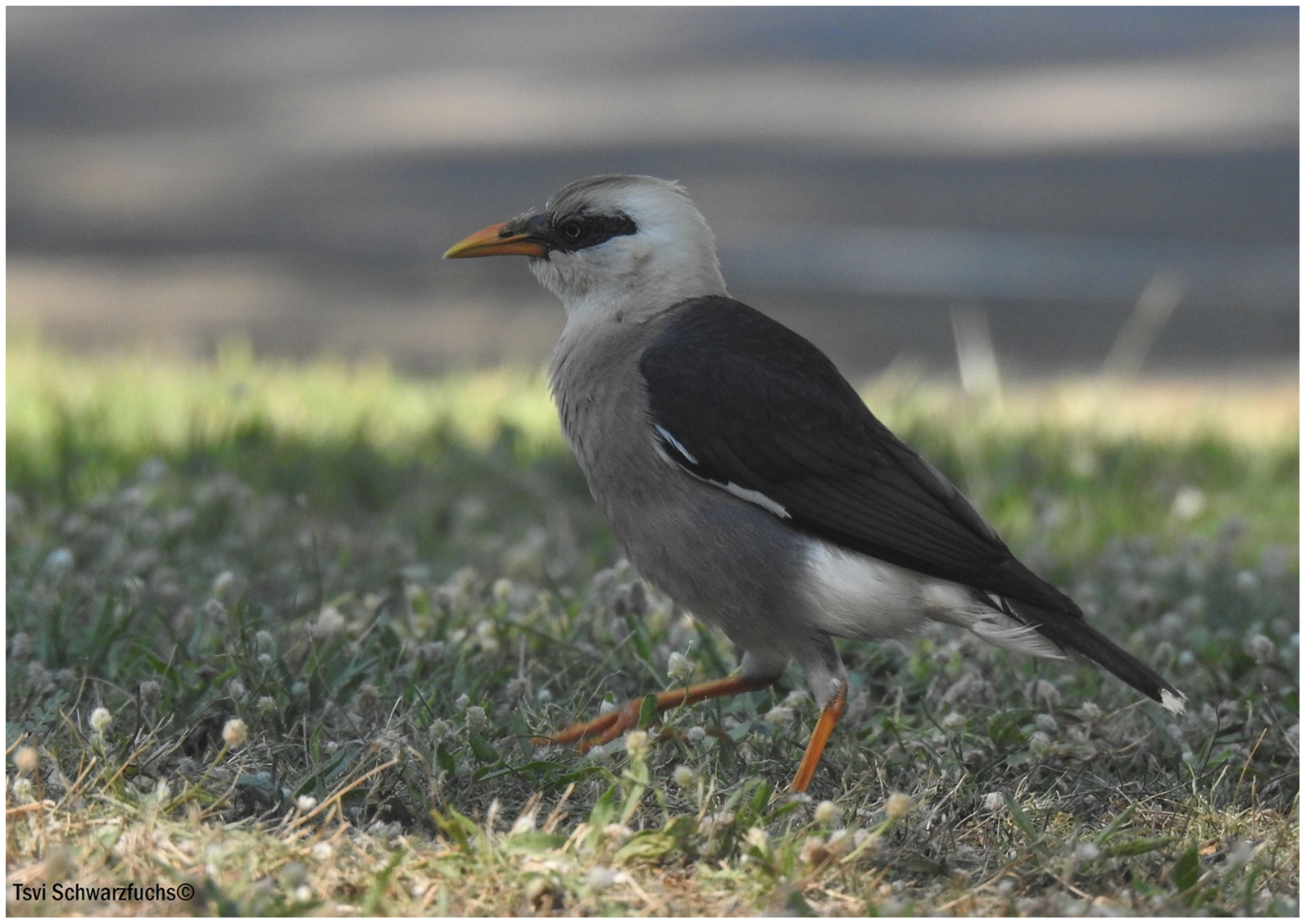
Burmese Myna (by Tsvi Schwarzfuchs).
The case of the myna reveals how the seemingly rigid binary between native and invasive species actually operates on a spectrum (Shani, 2023; 2024; Warren, 2007, 2023). There are degrees of invasion and levels of threat, which are determined not only by scientific and public affect—but the species’ own agency. The myna's status as a particularly problematic invasive species emerges through the bird's own characteristics and actions. This demonstrates that invasion biology is necessarily a more-than-human issue, where the material agency of the species itself plays a crucial role. The myna is not merely acted upon as an object of scientific study or public concern; rather, through its aggressive behavior, territorial expansion, and interactions with other species, it actively participates in shaping its classification as one of the world's worst invasive species (Law & Mol, 2008). However, being aggressive, territorial and smart species does not necessitate negative rhetoric, nor extermination. As one of my interviewees described: … The bird by itself, most people don't like it at all. Me too. But after encountering your research I started thinking, and I saw this bird in a different light. As if until then, I thought it was the myna's fault, that it chooses to be so bad and aggressive. Today, I look at it in a much better way. First of all, I do believe that the myna is now taking over—and it is taking over—but one day our ecosystem will change. There are so many mynas, and I believe it will balance out. It may be that there is no basis for this at all, but this is what I hope will happen. And that in the end, our ecosystem of will learn to get along with it, just as it learned to get along with the Laughing Dove or with any other species that came here—and a lot of species came here, so many birds and plants and I don't know what. Because Israel is a land that throughout the years of history was always populated, and there was a lot of movement and immigration.
For a moment, one cannot be sure what we are discussing—Israel's nature or Israel's society? Multispecies coexistence or multicultural diversity? This complexity came to a head in one of the Israeli birdwatchers’ WhatsApp groups, which was subsequently muted for a week, and ultimately split, due to heated arguments about mynas, which further developed into political disputes. Group members distributed along the spectrum between those who saw mynas as a threat requiring elimination—calling to “deport all mynas to Gaza” and labeling them “Hamas”, “Demons” etc.—and those arguing for coexistence. Others suggested that only “war or transfer” could solve the “myna problem.” This rhetoric directly invokes the controversial concept of ‘transfer'—a euphemism for the displacement of Palestinians that has periodically emerged in Israeli discourse, gaining popularity with Trump Gaza plan. This ambiguous dark jokes about mynas and actual political positions reveals how discussions about invasive species can reflect and reproduce broader political and security anxieties (Braverman, 2021; Gutkowski, 2021; Novick, 2023; Shani, 2024).
The case of the myna reveals how the seemingly rigid binary between native and invasive species operates on a spectrum (Shani, 2023, 2024; Warren, 2007, 2023). There are degrees of invasion and levels of threat, which are determined not only by scientific and public affect—but the species. The myna's status as a particularly problematic invasive species emerges through its own actions, specifically its aggressive territorial behavior, rapid population growth, and competitive interactions with other species. These behavioral traits directly contribute to the cultural analogies drawn between mynas and invade-threatening groups like Hamas, as the bird's visible aggression provide a material basis for such metaphorical associations—unlike other invasive species that remain behaviorally less dramatic or culturally less conspicuous. This demonstrates that invasion biology is necessarily a more-than-human issue, where the material agency of the species itself plays a crucial role. The myna is not merely acted upon as an object of colonial discourse, scientific study, or public concern; rather, by its own agency, it actively participates in shaping its classification and perception (Law & Mol, 2008) (Figure 3).
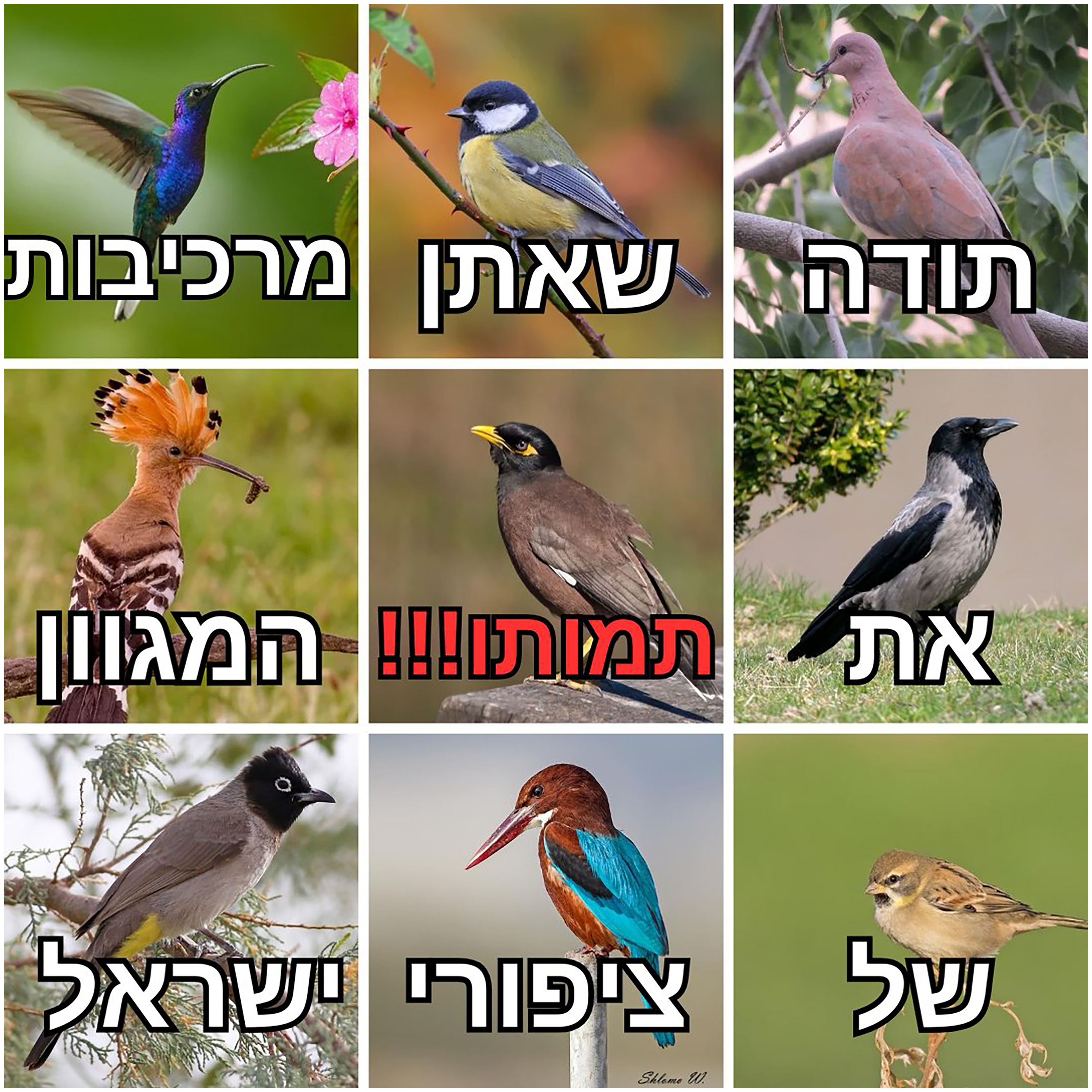
An image went viral on social media, showing various local bird species with the text “Thank you for incorporating the diversity of Israel's birds.” However, the myna in the middle was highlighted in red with the text “Die!!!” written over it. It is worth noting that in the upper right corner of the image, there is a laughing dove. When commenters pointed out that it is also an invasive species, the author replied that she does not hate foreigners, just mynas (https://x.com/nitz_pitz/status/1795511126815281648).
Mynas as the socio-cultural other
Besides the construction of the myna as biological and security threat, this section reveals a distinct but related dynamic: the myna's transformation into a symbol of unwanted social change. Unlike the militaristic invasion rhetoric, these representations focus specifically on demographic anxieties and cultural transformation, positioning the myna as embodying particular social groups perceived as disrupting the established social order. The othering of the myna does not merely tell us about the myna itself—but rather produces both the myna and the Other as entities that share certain characteristics (as described by Daston, 2019). This joint production, and the attributes it attaches to the myna, has brought it to less expected realms in recent years, if we were to follow the classic line of the criticism of invasion biology. Here, for example, an advertisement of a pest control company draws explicit parallels between myna invasion and human migration:
3
Where did these mynas come from? After all, there wasn't even a single bird here 30 years ago! So, the assumption is that someone brought them to the Tzapari, and they escaped from there. Do you realize they arrived only 30 years ago? It's as if they came with the Russian Aliyah. Imagine that in Tel Aviv area today, there was a Russian majority, and on every street corner there was some Russian deli with those cheap Russian popsicles for 3 shekels, and you'd walk in saying “Пожалуйста, Пожалуйста” [please] … It's destroying the biodiversity we have here in Israel. There are birds that are now very difficult to see. The time has come for us to decide—do we want the beautiful and diverse nature of the Land of Israel, or the nature of India?
This advertisement references the mass immigration of Jews from the former Soviet Union to Israel in the 1990s—the ‘Russian Aliyah’. Aliyah (עליה), literally meaning ‘ascent,’ is the Hebrew term for Jewish immigration to Israel. This wave brought approximately one million post-soviet Jewish immigrants, who significantly transformed Israeli demographics and culture. The advertisement's Russian deli imagery evokes stereotypes about these immigrants maintaining separate cultural enclaves rather than integrating into Israeli society. These delis, which became ubiquitous in the 1990s and typically sell non-kosher products, symbolize in Israeli discourse both the immigrants’ persistence of Soviet cultural practices and their perceived distance from Jewish religious traditions—a particularly charged issue given that their Jewish identity was often questioned upon arrival.
The mynas—originating from India—are portrayed here as the Russian Aliyah—threatening not just ecological but cultural diversity. This reflects a nostalgia for “good old Israel,” typically represented by the Ashkenazi [Jews of European origin], secular, socialist, and Zionist population. The mynas (and by extension, immigrants) are cast not as contributing to diversity but as destroying it, both culturally and ecologically, through the destruction of “the beautiful and diverse nature of the Land of Israel.”
The construction of the myna as the socio-cultural other, representing wind of change both in Israeli society and nature, leads to another, greater anomaly of its representation: the mynah as a right wing, nationalist bird. The association of the myna with Mizrahi (Middle Eastern and North-African) Jews is vast, and many described it as “the ars bird"(ערס)—a derogatory and highly criticized Hebrew slang, used to refer to low-class Mizrahi men, associated with machoistic, vulgar, and sometime semi-criminal subculture. This term emerges from Israeli society's ongoing negotiation between different Jewish cultural traditions—European, Middle Eastern, and North African—each bringing distinct practices and values. While early decades saw significant cultural clashes and socioeconomic disparities, contemporary Israel increasingly celebrates Mizrahi culture in music, food, and politics. “Ars” remains a loaded cultural term that can be used both as an insult and, increasingly, as a reclaimed identity of pride and authenticity. In a Facebook post in the community “Israeli Nature,” showing a hawk catching myna, one wrote: “finally, someone is teaching those arsim a lesson." 4 Many talk about urban mynas as “gangs” or “mobsters,” and on a different Facebook post, in the community “Birders and Birding,” describing social structure of the mynas, one of the commenter said that they resembling “La Familia" 5 —the notoriously right-wing, predominantly Mizrahi fan base of Beitar Jerusalem football club. 6
These associations are further developed in political cartoons by illustrator Dana Bar-Lev, who depicts right-wing coalition members and their supporters as mynas. Through this imagery, both the myna and Israeli nationalism are constructed as invasive forces threatening the fabric of Israeli society. Accordingly, Bar-Lev Bar-Lev balances this portrayal by depicting moderate, typically left-leaning Israelis, as doves. This does not simply transpose the traditional hawk-dove political dichotomy onto native versus invasive birds. Rather, it creates a new symbolic framework where mynas represent disruptive nationalism, while doves embody an idealized vision of harmonious coexistence. Through this imagery, both the myna and Israeli nationalism are constructed as invasive forces threatening the fabric of what is perceived as the Israeli social and ecological order (Figure 4).
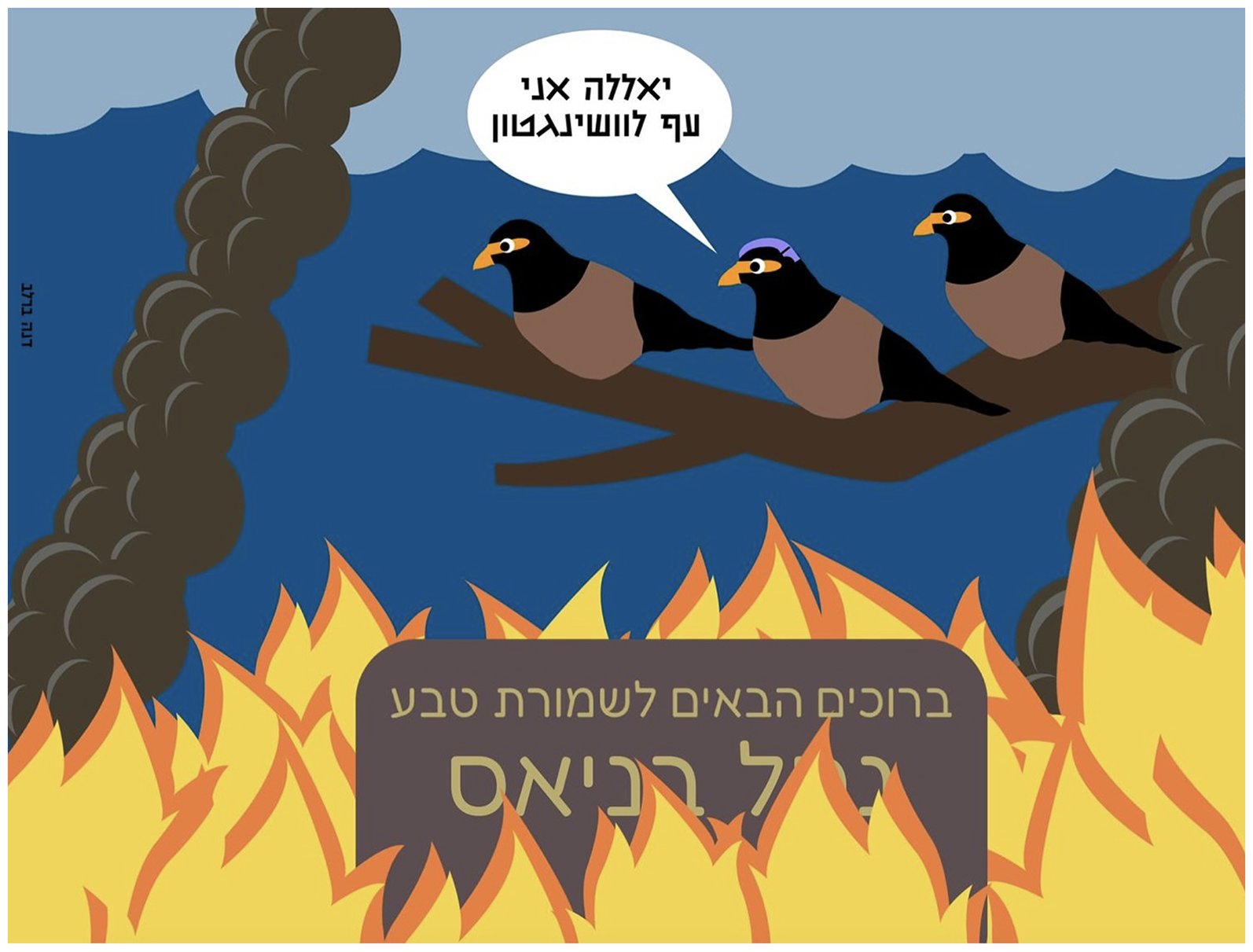
One of Dana Barlev's cartoons, posted prior to Netanyahu's flight to Washington, depicted the Banias nature reserve fire as a result of Hezbollah missiles. The cartoon showed three mynas perched in a tree above the Banias, with one of them—sporting Netanyahu's distinctive hairstyle—saying “Well, I'm flying to Washington”https://www.instagram.com/p/C9t6J7-IgPB/).
Referring to an article in Haaretz about mynas, the journalist Haim Levinson tweeted that it is “the best text anyone has ever written about the phenomenon of the Gar'in Torani [גרעין תורני, groups of Religious-Zionist families who strategically inhabit neighborhoods to increase religious presence in secular areas, as part of a broader ideological project to shift Israeli society toward religious observance] and the Religious-Zionism takeover of Israeli cities. An accurate description of the dangers, the practices, the difficulty in waking up. Must-read." 7 reflects broader anxieties within Israel's secular left about changing demographics and power structures. These concerns center on the perceived transformation of Israeli society from its secular, liberal roots toward a more traditional, nationalist orientation. Others, holding to a different version of the “good old Israel,” describes it as the pre-Russian Aliyah era. These cultural and political shifts mirror ecological concerns about invasive species replacing native ones. The mynas are not merely serving as a metaphor for social change—they embody a concrete social model that parallels political processes, blurring the line between biological invasion and sociopolitical transformation.
This tension is particularly evident in the relationship between the myna and the hoopoe, Israel's national bird. The hoopoe, selected as the national bird in 2008, represents the idealized image of native Israeli nature. The hoopoe is portrayed as particularly vulnerable to the myna's aggressive territorial behavior. As Roi (64), an experienced birdwatcher said: I see what's happening around me. There is an amazing decline in sparrows. The hoopoe has become rare. The bulbuls that used to nest in my trees have diminished. The hoopoe's nest in my garden has been empty of chicks for 3 years now. I've now dismantled it because I saw mynas trying to take over this real estate as well. The bulbuls have decreased. What remains stable and is even growing in numbers are the pigeons, and the number of crows has increased in recent years to large numbers. I try to feed the sparrows, and immediately the mynas arrive and snatch the food from them, and dozens of mynas chase them away. This is a large-scale environmental disaster. I've seen a bulbul's nest that was looted and destroyed. This has never happened before… No one has any illusion that we can eradicate this bird from Israel. But we need to fight for the right of the local population to exist. The hoopoes are less harmful to other species, it's true they eat and damage various crops throughout the year, but they are not harmful or aggressive… Keep ignoring, and in five years you will see only Mynas.
The hoopoe-myna dynamic, posed along with the portrayal of the myna as representing the socio-cultural other, serves as a powerful metaphor for perceived threats to Israeli nature and identity. The hoopoe's struggle against the myna parallels anxieties about the preservation of the “good old Israel.” This conflict between the two birds thus becomes emblematic of larger cultural and political tensions within Israeli society, where ecological concerns become intertwined with debates about national identity and social change (e.g., Shani, 2024). As commenters on an article describing the myna's damages stated:
8
Moshiko: Like in politics, so it is with the mynas. The good ones left, we're left with the vocals, the verbally violent ones, and with those who weren't supposed to reach their current status. Yoni: 20 years ago, Israel was flooded with sparrows, sunbirds, hoopoes, bulbuls, kingfishers, larks, and many more beautiful and amazing species. Following the takeover of the Arsim—the crows, the mynas, the parakeets—the birds of our childhood are disappearing from the landscape. I know why, you all know why!
Mynas as the Israeli self
“I know that we serious conservationists are expected to dislike invasive species, but isn't Common Myna simply stunning?” (Yoav Perlman, Director of BirdLife Israel). 9
A wildlife video began circulating on Israeli social media in August 2024, shot by an Israeli birdwatcher named Shachar Atias and shared by the journalist Rubi Hammerschlag, shows a myna feeding young Scops Owls (Otus scops) in a nesting box. 10 Hammerschlag wrote “Coexistence: A remarkable story from Israeli nature—watch this Myna that adopted a Scops Owl chick abandoned by its parents. Every day, she comes to the nesting box to feed it. If they can do it, so can we. Shabbat Shalom.” The comments section quickly sparked with responses.
The first type of responses focused on behavioral interpretation—some viewers questioned whether the owls were truly abandoned, suggesting instead that the Myna might have taken over the nest after predating the parent owls, possibly mistaking the owl chick for their own offspring and raising it after it hatched. The second type of responses engaged with the political messaging, questioning whether Hammerschlag was suggesting coexistence with enemies. He later clarified he meant an internal peace within Israeli society. Throughout the discussion, many commenters noted this was their first time seeing a Myna engaging in nurturing behavior. “This is the first time I've seen a Myna doing something good,” “How amazing is this Myna—simply incredible,” “This just proves how little we know about them and how we've unfairly given them a bad reputation.”
Against the perceptions of the myna as an invader and as the sociocultural Other, a third narrative has emerged that positions the myna as a reflection of Israeli identity itself. While the association between animals and Israeli nationalism has been explored in other contexts (Alloun, 2018; 2020), the myna's particular trajectory from threatening invader to national mirror represents a unique case of symbolic transformation. The peace with the myna, in Hamerschlag's metaphor, is a national-internal peace. Through my research, I witnessed an emergence of myna defenders in CS groups—further illustrating this shift. These advocates (although some of them are purely trolls) emphasize the bird's intelligence, sociability, and adaptability—traits often celebrated in Israeli self-perception. They created WhatsApp stickers coronating the myna, and used these images strategically whenever conflicts about mynas erupted in the group (Figure 5).
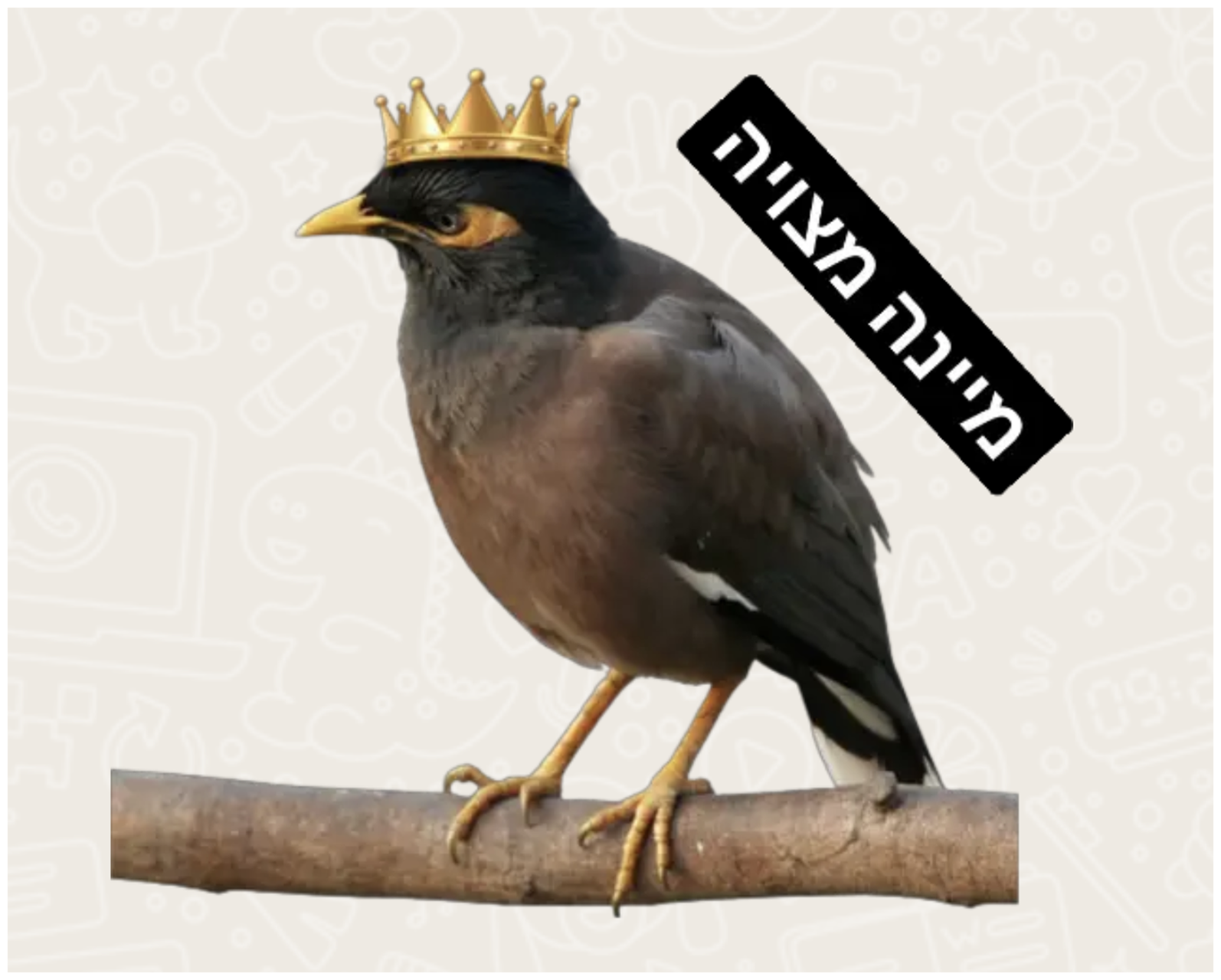
A WhatsApp sticker celebrating the myna, the text is simple: Common Myna.
Similarly to Tsing et al.'s (2017) arts of living in a damaged planet, many of them highlight how mynas manage to thrive in the chaos humans have created. As one informant told me, perhaps there's something optimistic in the fact that certain species manage to exploit the ruins we create, flourishing despite our efforts to eliminate them.
As Ilany et al. (2022) suggests, the myna's characteristics—its adaptability, resilience, and controversial status—mirror core aspects of Israeli self-perception and national experience. The myna's story powerfully parallels aspects of Jewish diaspora experience: both were dispersed across various countries, demonstrated remarkable adaptability and resilience, achieved prominent positions in their new environments, and faced hostility from local populations who viewed them as invasive and disruptive. This parallelism transforms the myna from a symbol of threatening otherness into a mirror of Israeli Jewish experience and identity. As one commenter on the above-mentioned article about the myna's damages wrote: “It's all just antisemites’ defamations.”
The controversy surrounding the myna's relationship with the hoopoe takes on new significance in this context. Rather than seeing their interaction solely as invasive displacement, one myna lover participating in a CS project flipped it over in one of the WhatsApp discussions: [20.6.2024, 23:12:54] ∼ Dan: An interesting detail about the hoopoe that isn't discussed much. Our national bird was actually a summer visitor and not a permanent resident in Israel. 140 years ago (1884), zoologist Henry Baker Tristram, one of the first European zoologists to study wildlife in Israel, noted in his book “The Flora and Fauna of Palestine” that the hoopoe leaves Israel in winter and returns in early March (meaning it's a summer visitor). 38 years later (1922), zoologist Israel Aharoni, the first pioneer in Hebrew literature to study wildlife in Israel, noted in his book “Torat HaChai” that the hoopoe returns to our land from afar in the month of Adar (corresponding to March, as Tristram noted). It turns out that at least until the time of Aharoni's book 102 years ago (a situation that continued for about 20 more years), the hoopoe wasn't a permanent resident in Israel but only a summer visitor. Over time, it became a permanent resident with a large number of individuals that adapt well even to the Israeli winter, and all generations born into this new situation are certain it was always here year-round. In conclusion, we know very little about so many changes. Speaking in terms of thousands of years regarding what was or wasn't in nature in Israel is mere pretension. It's questionable how much we know about processes that occurred here just less than a hundred years ago. [21.6.2024, 8:20:34] ∼ Maya: Correct and enlightening… thank you! You're invited to read an expanded article on the subject by Dr Uzi Paz at the link http://www.birds.org.il/he/article-page.aspx?articleId = 186 [21.6.2024, 8:42:38] ∼ Noa: In short, the hoopoe also made an Aliyah [21.6.2024, 10:01:45] ∼ Tamar: I agree with the facts, and I agree with the analysis. In my opinion, this fact teaches us all a lesson in humility and modesty in all areas of life and also in science!!
The flip of the hoopoe's narrative exemplifies the fluidity of biogeographical borders, but also the fluidity of Israeli identity itself—the tension between established symbols and emerging realities. The hoopoe's movement across the native/invasive spectrum it is described as Aliyah—reflecting that the “good old Israel” was once also newcomers, changing the identity and the society in Israel/Palestine. Similarly, in a popular science podcast for children by the Weizmann Institute, an episode dedicated to invasion biology includes a myna character who points out the parallels between Israelis and mynas: …People have been angry at us and blaming us for years. Enough, it's not fair! We've been here for 30 years. I love falafel, I love playing backgammon, I stand still during the memorial siren [on the Holocaust Remembrance Day and Yom HaZikaron, Israel's Memorial Day], I barbecue every Independence Day, I'm completely Israeli. Every time I hear Hatikvah [Israel's national anthem], tears come to my eyes, you know that? [Sings an Israeli patriotic song:] Here I was born, here my children were born, here I built my home … Actually, you should make me your national bird. I'm tough and I'm a survivor just like you Israelis, not like that princess hoopoe with its fancy crest [“Baduk,” episode 1, by the Davidson Institute for Science Education at the Weizmann Institute].
The mynas, the hoopoes, and the Israeli society, where all established by what may be called as an Aliyah, an immigration, an invasion, a colonization, or whatever—all are repositioning across the native/invasive spectrum. This perspective does not negate ecological concerns about the myna's impact, but demonstrates how species can acquire multiple, sometimes contradictory meanings that reflect and shape social debates about identity, belonging, and change. Through the myna's evolving position in Israeli society—from threatening invader to mirror of national identity—we glimpse the complex entanglements between invasion biology, cultural narratives, and the formation of both ecological and national identities in contemporary Israel.
Discussion
This study reveals how invasion narratives emerge through complex interactions between scientific classification, cultural context, and the species’ own agency. The case of the Israeli myna demonstrates that the native/invasive binary operates on a spectrum shaped by multiple factors including temporality, behavior, and cultural reception. Previous scholarship has often focused on critiquing invasion biology as a colonial discourse (Mastnak et al., 2014; Warren, 2023). Here, I suggest that rather than dismissing scientific or critical perspectives, we must develop more nuanced approaches that can hold both the material reality of ecological change and its social construction in view simultaneously (following Latour, 1993), moving beyond simple cartoons of Western, objective science, versus critical, Indigenous wisdom (Agrawal, 1995).
The myna's status as one of the world's worst invasive species cannot be reduced to either purely scientific facts or purely cultural projections. Instead, it emerges through what Latour (1993) hybrid networks, where scientific classification, cultural meaning, and animal agency are mutually constitutive. The myna's aggressive territorial behavior, rapid population growth, and high visibility contribute to its success as invasive species, while simultaneously shaping cultural narratives about it.
As shown, the politics associated with mynas shoots in all directions and lacks consistency. The myna serves not as a simple stand-in for specific political positions, but rather becomes imbued with characteristics that reflect social tensions and anxieties in Israeli society. These projections are not merely one-directional—humans imposing politics on nature—but rather create a reciprocal relationship where both human society and perceptions of nature are transformed through these metaphorical associations. The anxieties, dark humor and political metaphors attached to mynas reveal as much about Israeli self-perception and internal tensions as they do about attitudes toward the birds themselves.
These contradictive narratives reflect broader tensions around belonging and legitimacy in contemporary Israel. They reveal how debates about nature are often debates about norms and values (Daston, 2019), and ecological belonging is inseparable from questions of social and political belonging. Yet, what emerges from this study is not simply a call for more nuance, but a recognition that effective engagement with invasive species requires us to hold clashing truths simultaneously: the material reality of ecological disruption and the cultural construction of belonging both matter profoundly. Israelis are simultaneously playing out anxieties about their own nativeness and the threats of home invasion through the myna, while resorting to human analogies to understand nature. Both nature and culture are mutually transformed through these interactions.
Braverman (2021), Johnson (2019), and Alloun (2018, 2020) works suggest that Palestinian understandings of animal politics may offer different frameworks for thinking about invasion, belonging, and coexistence. A crucial limitation of this study exists in understanding how Palestinian citizens of Israel and Occupied Palestinian Territories perceive and interact with mynas. While conflict-related sensitivities presented practical and ethical barriers to a more comprehensive study, this research's emergence from wartime Israel remains significant for interpreting the cultural politics surrounding the myna. The bird's symbolic associations stand out brightly against a backdrop of ongoing conflict, territorial disputes, ethnic tensions, and national insecurity, as environmental anxieties intersect with sociopolitical ones.
Drawing on Haraway's (2016) call to “stay with the trouble,” this study suggests that addressing invasive species requires neither wholesale acceptance nor complete rejection, but rather careful attention to the specific contexts and consequences of human-wildlife encounters. This means moving beyond both uncritical embrace of invasion biology and wholesale dismissal of ecological concerns. The myna's case demonstrates the need for what Smith (2022) calls a broader emotional repertoire in more-than-human scholarship—one that can acknowledge both positive and negative affect in human-wildlife relationships while remaining grounded in empirical observation.
As Haraway (2016) suggests, we should linger in the problem. Not to invalidate it with the claim that it is a mere product of discourse, and not to go out to fight the windmills of eradicating species that are well-established—ecologically and culturally. “Loving the monsters” (Latour 2011) does not necessarily mean ignoring their monstrosity, and learning to live in the ruins (Tsing et al., 2017) does not simply mean giving up the possibility of repairing them. We must learn to live in a hybrid world, where the boundaries between nature and culture are fluid and blurred—without focusing our gaze on one side of the spectrum alone.
Highlights
Mynas in Israel perceived simultaneously as invasive threats, socio-cultural Others, and reflections of Israeli identity itself.
Contradictory metaphors attached to mynas reveal complex intersections between ecological and social anxieties and Israeli identities.
The myna is not merely a metaphor but a material actor co-producing its social and ecological position through its own agency and behavior.
Rather than consistent political symbolism, mynas embody multidirectional cultural projections that transcend simple native/invasive binaries.
Understanding invasive species requires approaches that address both material ecological threats and their social construction simultaneously.
Footnotes
Acknowledgements
This research would not have been possible without the contribution of the informants whom I observed and interviewed. While their names have been omitted from this article to protect their privacy, their thoughts and experiences are invaluable to this study. The research was conducted as part of my Ph.D. studies at Tel Aviv University's Department of Sociology and Anthropology, in the International Graduate School for Social Science Excellence Fellowship Program, with support from the Israel Pollack Fund and the Jonathan Shapiro Fund. I wish to express my profound gratitude to the Israel Center for Citizen Science and the Steinhardt Museum of Natural History at Tel-Aviv University for enabling me to conduct my fieldwork within their institutions and platforms. I am also grateful to my supervisor, Professor Michal Kravel-Tovi, and to Professor Tamar Dayan, for their mentorship. I extend special thanks to Dr. Shira Shmuely, Dr. Liron Shani, and Prof. Erica Weiss, who provided insightful comments that significantly improved this work.
Declaration of conflicting interests
The author declared no potential conflicts of interest with respect to the research, authorship, and/or publication of this article.
Funding
The author received no financial support for the research, authorship, and/or publication of this article.
