



Abstract
The paper examines Mumbai's unfinished sewage infrastructure and aims to deepen the understanding of how infrastructural ‘delays’ are lived. Drawing on post-developmental frameworks, I provide empirical insights into the lived realities of infrastructural delays. Challenging linear infrastructure development, I apply the concept of unfinishedness to reveal improvised arrangements that emerge through gaps arising from prolonged delays. By reading policy documents in conjunction with interviews with key stakeholders, including professionals working on/with sewage in Mumbai, I demonstrate how sewage infrastructure remains perpetually unfinished – always in the process but never reaching the presumed end goal defined within the policies. I supplement this with a case study of the Bhimnagar basti to understand how long periods of waiting are lived. These show the neighbourhood improvisations that emerge around unfinished systems over time. Thinking through Bhimnagar, I offer a close reading of how the city is influenced by and shapes itself around unfinished infrastructure, revealing the arrangements that emerge through everyday processes of inhabitation.
Introduction
Sewage Disposal Project set for further delays, since it was first planned in 2002.
Laxman Singh, Indian Express, May 4, 2022
Recent media coverage in Mumbai has called attention to the problem of untreated sewage being released into water sources such as canals, rivers and seas. The reports have also revealed the difficulties and delays in building wastewater treatment facilities and achieving 100% sewer coverage. The National Inventory of Sewage Treatment Plants by India's Central Pollution Control Board (CPCB, 2021) showed a 72.7% gap between sewage generation and installed sewage treatment capacity. Less than 50% of existing centralised systems in major cities with underground piping, treatment facilities and pumping stations are reported to operate efficiently. The prolonged delay in upgrading Mumbai's sewage treatment capacity to adequately handle the city's wastewater – despite facing contempt petitions and fines imposed by the Supreme Court for untreated sewage polluting waterways – exemplifies the sluggish pace of improvement of Mumbai's wastewater infrastructure.
Through a focus on sewage infrastructure, this paper aims to deepen the understanding of how infrastructural ‘delays’ are lived. I rely on post-developmental frameworks to deepen the empirical insights into the lived realities of infrastructural delays, building on recent scholarship exploring infrastructures that remain unbuilt, unfinished, incomplete or temporarily non-operational (Carse and Kneas, 2019; Guma, 2020, 2022). This work draws on an ongoing body of scholarship focused on how infrastructure can offer insight into the social realm (Amin, 2014; Anand et al., 2018; Angelo and Hentschel, 2015; Larkin, 2013). Challenging the conventional notion of a linear process of infrastructure development and the perception of the permanence of infrastructure once built, I position myself within the framework of incompleteness to reveal the improvisations and arrangements that emerge in the gaps that arise during delays. This approach highlights the different time frames involved, including the stages of construction, usage, malfunction and repair (Ramakrishnan et al., 2021).
Taking as the empirical case Mumbai's bastis 1 (Bhan, 2017) I demonstrate how sewage infrastructure remains perpetually unfinished – always in the process but never reaching the presumed end goal defined within the policy. By tracing how the communities experience and navigate unfinished infrastructure across extended timeframes, I provide insights into the incremental coping mechanisms and material improvisations produced by infrastructure delays. Additionally, I show the ways that policies unintentionally enable certain adaptive actions by community members while also intentionally or unintentionally constraining others. This perspective elucidates how the city is influenced by and shapes itself around unfinished infrastructure, revealing the arrangements that emerge through everyday processes of inhabitation.
I begin the paper by introducing the temporality of infrastructure and Southern urbanisation. Inspired by Tim Ingold's (2019) conceptualisation of the ‘unfinishing of things’, which embraces the open-endedness and unanticipated outcomes, I wish to move away from the term incomplete. I want to refrain from the developmental and teleological connotations that impose predetermined completion. Instead, I appreciate the emergent state, where objects are not limited to anticipated functions but take on new uses and meanings, exceeding original imaginations of their purpose. I explore unfinishedness at two scales: the city-level policies that perpetuate delays and the neighbourhood improvisations that emerge around unfinished systems over time. Theoretically, in this paper, unfinishedness allows for the exploration of various actors and interpretations of objects, revealing how the city is lived through the ‘in-betweens’. Focusing on the in-between spaces created by unfinished infrastructure exposes the multiple meanings and entanglements that exist, challenging notions of linear infrastructure development.
By reading policy documents in conjunction with interviews with key stakeholders, including professionals working on/with sewage in Mumbai, I explore unfinishedness at the city level, tracing the sites of unfinishedness of the sewage infrastructure to locate the openness within the formal policy and practice. I supplement this with an ethnographic case study of the Bhimnagar basti to understand how long periods of waiting are lived. These show the neighbourhood improvisations that emerge around unfinished systems over time. Thinking through Bhimnagar, I offer a close reading of multiple habitation practices that are crafted through an interconnected web of actors.
Literature review
In this section, I review infrastructural temporality through three interrelated lenses. First: I discuss the idea of unfinishedness, which challenges linear development (Infrastructural temporality – unfinishedness section). Second: the temporalities of urban peripheries show the dimensions of permanence and transitoriness (Peripheral urbanisation and transitoriness section). Finally, the interconnected temporalities of home and the city highlighting formal planning temporalities and lived everyday rhythms (Infrastructural entanglements between planning and everyday practices section).
Infrastructural temporality – unfinishedness
The infrastructural turn in urban studies emphasises that infrastructure is a crucial component of society's foundation rather than just a background element (Larkin, 2013). Advocates of the infrastructural turn believe that more is needed to recognise the significance of infrastructures than highlighting their remarkable nature. Instead, they must be analysed to reveal their political and societal interdependencies, making the politics behind them visible. Studies on urban infrastructures in South Asia have shown that infrastructural development is diverse (Jaglin, 2014), hybrid (Mulligan et al., 2020) and heterogeneous (Lawhon et al., 2018), particularly in uncertain and precarious circumstances. This shift from understanding infrastructure as splintered (Graham and Marvin, 2002) to being heterogeneous (Lawhon et al., 2018) has opened conversations about infrastructure being incomplete and unbuilt, foregrounding what exists (Guma, 2020) rather than defining infrastructures and related practices as lacking, defective, or underdeveloped. The idea of incompleteness opposes the notion of a linear process for the development of infrastructure by highlighting the various time periods involved, such as construction, use, failure, and repair. In their special issue, Ramakrishnan et al. (2021) theorise infrastructural decay, maintenance, and repair by conceptualising temporal fragility, and they invoke the dynamic nature of infrastructure's material condition and its social interactions where temporalities encompass more than just moments in time. Each phase creates different material conditions, social perceptions and labour practices, power structures and policies and socio-ecological relationships that challenge infrastructural determinacy.
Each phase across time not only challenges infrastructural determinacy but also shows how the state leverages infrastructure decay and breakdowns as tools of dispossession. By dwelling on decay, Chu (2014) explores the state–citizen relationship and shows how the state strategically uses decay to hasten eviction, dispossession and abandonment processes. In a similar vein, Truelove and O’Reilly (2021) work focuses on how the Indian state strategically allows infrastructure to decay as a tool for controlling marginalised people. Their article focuses on the Swachh Bharat Mission (SBM) and elaborates on the deliberate neglect – infrastructural violence – that it embeds by evicting urban poor settlements to achieve open defaecation-free status. In another work (Dewoolkar, 2022), I have explored how focusing on temporality, particularly–suspension (Gupta, 2015), helps to explore both structural and embodied facets of violence perpetuated by waiting for infrastructures to come and their lack, or in some cases, never-ending crumbling.
With respect to stalled sewage infrastructures and slow violence (Nixon, 2011), Stamatopoulou-Robbins (2021) in the context of the West Bank, talks about the idea of ‘failure to build’ and sheds light on the power dynamics between the Palestinian people, Israel international donors and the Palestinian Authority. Failure to build highlights how the Palestinians’ perceived lack of knowledge and skills allows actors ruling Palestinian life to justify their control over construction projects. This is followed by Anand (2022) who demonstrates through the case of Mumbai's sewage how the state produces slow violence by using ambiguity to evade toxicity as an actionable problem. Across contexts, the authors show the violence and harm produced by the state through the delay, suspension, and decay of infrastructures. While I agree with the violence and harm produced, in this paper, I am particularly interested in how the city is inhabited through the delays and the in-betweens, turning unfinishedness into generative possibility. Although acknowledging the structural violence perpetuated through infrastructural delays and decay, this paper additionally examines how urban life unfolds within these conditions. The concept of unfinishedness allows us to understand both the impact of perpetual delays and the ways people craft liveable conditions despite structural constraints. Rather than viewing these as competing frameworks, this perspective helps reveal how violence operates alongside residents’ everyday improvisations and adaptations. This dual lens captures how structural inequalities persist while also showing the generative practices through which communities navigate and reshape infrastructure gaps. Building on studies of infrastructural violence, an unfinishedness framework extends our understanding and helps examine the full spectrum of how infrastructure mediates urban life.
Thus, I foreground how cities are continuously made and lived through incremental arrangements emerging around unfinishedness. As a conceptual frame, ‘unfinished’ helps focus on the process of making, stressing the open-endedness, unknown outcomes and unpredictability of producing material things. I use the word unfinished to place emphasis on the processual, evolving nature of infrastructure. I pay close attention to the temporality of sewage infrastructures by understanding their open-endedness, and show the new entanglements and meanings that get materialised around what already exists and how the city gets re-infrastructured around it (Iossifova et al., 2022; Kourri, 2023).
Peripheral urbanisation and transitoriness
Scholars working on the global south have highlighted distinct temporalities involved in policy making and urban planning, which accelerate (Bhan et al., 2018) and/or delay (Burte and Kamath, 2023; Lombard, 2013) urban transformations. Attention to infrastructural temporality requires attention to the temporalities of policy process as well. Burte (2018) notes how the pace of infrastructure development reflects political agendas, bureaucratic efficiencies, and technical expertise. Bhan (2019) analyses India's housing policies, arguing that categorisations of housing generate abstract objects disconnected from grounded realities. He examines bastis as spaces that are perpetually evolving and unfinished, challenging static policy representations. Building on Caldeira (2017) concept of peripheral urbanisation, Bhan contends that city-making largely involves marginalised communities incrementally constructing homes in peripheries over time. Rather than consumable finished products, these neighbourhoods remain in continual making, with residents envisioning gradual improvements. Caldeira (2017) describes the distinctive temporality that peripheral urbanisation involves, where homes and neighbourhoods develop gradually over time through continual development under the direction of their own occupants. She highlights that people inhabit these spaces with an expectation that one day they will look like the wealthier parts of the city, urging the study of peripheries across time to capture the simultaneous processes of improvement and the reproduction of inequality and precariousness (Caldeira, 2017).
Kamath and Kotal (2023) critique the territorially fixed, bounded, notions of peripheral urbanisation through the study of Santosh Bhavan, a migrant settlement in the city of Vasai–Virar, a city adjacent to Mumbai. Focusing on migrant lives, they highlight varying orientations of transience and permanence. They argue that the lives of migrants in Santosh Bhavan reveal multiple, overlapping temporalities rather than linear trajectories (Kamath and Kotal, 2023). Their work builds on the concept of transitoriness to contend that peripheral urbanisation analysis must go beyond place-based improvement narratives to capture more complex lived realities among migrant communities. They call for expanding understandings of urbanisation to encompass the multiple agencies and temporal frameworks interwoven across dwellings in the urban periphery.
To show these dimensions of permanence and transitoriness, I provide an ethnographic study of Bhimnagar basti from 2014–2023. Tracing Bhimnagar allows me to connect the temporal frameworks operating at multiple scales: from the citywide delays in sewage infrastructure, to upgrades to the everyday rhythms, and incremental adaptations unfolding within the Basti. Analysis reveals how the temporalities of policy, infrastructure, and practice intersect. Through this analysis I aim to enrich the framework of peripheral urbanisation by showing how citywide uncertainties around infrastructure provision shape the everyday improvisations and arrangements within low-income neighbourhoods. I believe that the idea of ‘unfinishedness’ challenges the notion of a predetermined path showing deviation from a predictable trajectory and emphasises the intricate and evolving nature of urban infrastructures, exposing their interconnectedness in conditions of perpetual uncertainty. In addition, it highlights the evolving nature of the bastis, challenging static policy representations.
Infrastructural entanglements between planning and everyday practices
Urban policy and planning operates according to formal temporalities – timelines, targets, and projected completion dates; for geographers, on the other hand, space and time are mutually constituted (see space-time (Massey, 2004); time–space compression (Harvey, 1989; Thrift, 1977). The foundational work of space–time analysis of daily routines is rhythm analysis (Lefebvre, 2013). He analyses the rhythms inherent in everyday life and their influence on how we experience and interact with our surroundings. Focusing on how the mechanical repetition of the cycles of capitalist production is imposed over our circadian rhythms, he showed how linearity and the daily cyclical routines are embedded and permeated by the broader organisation of socioeconomic space–time.
McFarlane et al. (2014) have built a rich understanding of everyday practices and their relation to sanitation in Mumbai. They stress sanitation as a process and how the attention to the everyday reveals practices, geographies, rhythms, perceptions, experiences, politics and power relations that they reproduce and disrupt. Feminist geographers and political ecologists highlight the significance of home spaces and domestic spaces reflecting the ‘complex and multiplex nature of time’ (Ho, 2021; Liu, 2021). In their work on temporalities of the home being shaped by competing temporalities at multiple sites (work, school, childcare), they remind us of the plurality of time. In order to build a pluralistic understanding of time, Blunt et al. (2021) focus on home-city biography. They examine the ways in which the connected temporalities of home and the city are formed by recollections of recent and more distant pasts, regular rhythms and routines, and aspirations and anxieties for the future.
Building on these conceptual frameworks, I highlight how various temporalities are lived and how official (administrative) schedules for infrastructure provision shape daily practices when delays are encountered, reconstituting routines and reshaping rhythms. This examination extends beyond individual lives, delving into how home and neighbourhood temporalities intersect, revealing the intricate evolution of the city and its interwoven connections. Amidst this exploration, the concept of unfinished allows us to uncover the dynamics and meanings that develop around the existing elements.
Methodology
This paper primarily uses a case study of Bhimnagar; it leverages the author's decade-long (2014–2013) association with Bhimnagar (started in 2014 with Transforming M ward project at TISS), which helps position the current paper against longitudinal insights into sanitation issues. Additionally, recent supplementary fieldwork was conducted from 2021 to 2023, combining remote and in-person data collection due to COVID-19 travel restrictions. Some data was collected with the help of a field researcher in Mumbai while the author was in the Manchester and connected through a video call. The in-depth ethnographic research data collection methods, including observation, informal interviews with 12 residents (seven males and five females), and photographic documentation were used. Additionally, 10 semi-structured interviews were conducted with relevant stakeholders (see Table 1). This included municipal officials at different levels and journalists reporting on sanitation projects.
Study participants.
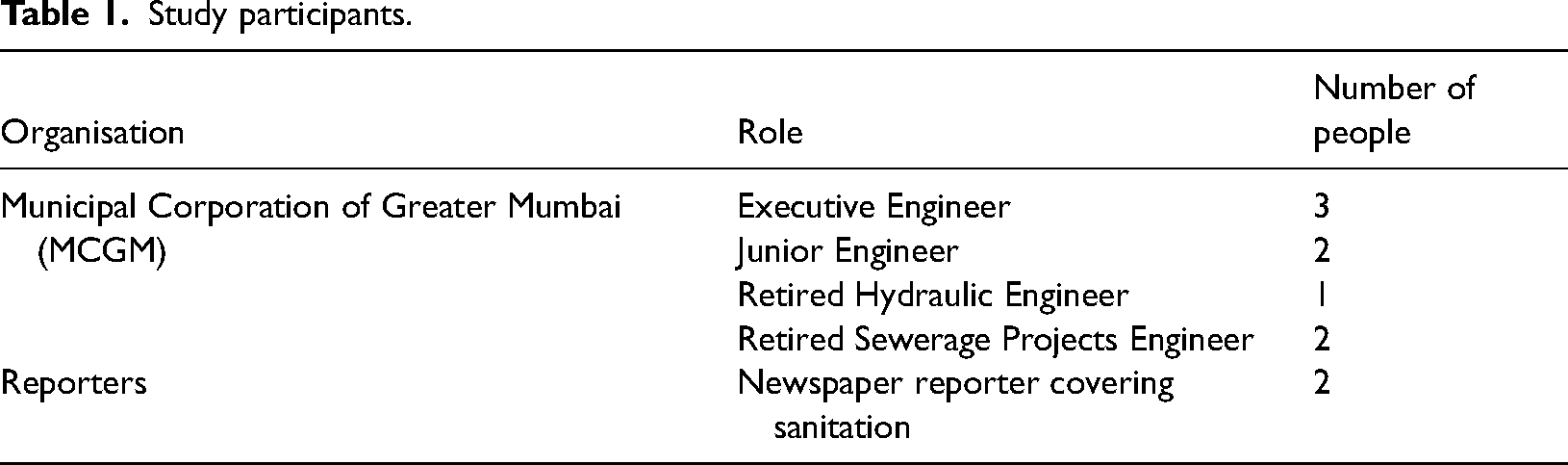
Extensive desk research was conducted by reviewing relevant urban planning and water and sanitation project documents from 1970, the start of the Mumbai Sewerage Disposal Project (MSDP). Documents analysed included plans, budgets, World Bank documents on the project and reports prepared by MCGM. Recent (2014 onward) online sources, including media articles, NGO publications, and social media commentary, were analysed to understand public discourse on delays in sewage projects. The mixed methods provide a rich longitudinal perspective on Mumbai's sanitation infrastructure issues grounded in the lived experiences of urban residents. Pseudonyms are utilised for all personal names to protect participant confidentiality.
Empirics of the unfinished
This section traces unfinished infrastructure in Mumbai's sewage system through two interconnected perspectives – a historical overview of sewerage policies and projects, followed by an ethnographic account of infrastructure access and improvisation in the basti of Bhimnagar. Tracing unfinishedness in mumbai's sewage systems section provides insights into the perpetual unfinishedness across Mumbai's century-long sewage policies and infrastructures. Writing through bhimnagar section zooms into Bhimnagar and illustrates how the unfinishedness of Mumbai's sewage infrastructure is lived.
Tracing unfinishedness in mumbai's sewage systems
The sewage system in Mumbai, which has been in operation for more than a century, was initially motivated by concerns about the spread of disease. In colonial Bombay, the sewerage system initiated in the 1880s institutionalised unfinishedness through selective development – creating a comprehensive network in the southern and south-eastern areas of Bombay while systematically excluding working-class neighbourhoods (Srivastava, 2012). This produced infrastructure became a mechanism for sustaining social hierarchies, as evidenced by the health officer's 1875 report documenting how disconnected mill workers’ tenements led to disease breeding (Srivastava, 2012).
The 1896 plague outbreak revealed how this engineered exclusion generated consequences beyond intended boundaries. While the subsequent formation of the Bombay Improvement Trust (BIT) in 1898 presumably aimed to address these gaps, it actually reinforced unfinishedness through new institutional arrangements (Arnold, 2012; Chaplin, 1999; Kidambi, 2016; McFarlane, 2008; Satam, 2022). As Kidambi (2016) emphasises the failures of these experiments by highlighting the incomplete and inadequate execution of sanitary housing projects, reflecting on the complexities of colonial bureaucracy and conflicts between local real estate interests and the colonial state. In 1918, Turner, the then health officer, underscored the direct correlation between the persistent absence of sanitation in the northern regions of Bombay and the lack of cooperation between two local bodies, namely BIT and BMC (Bombay Municipal Corporation) (Srivastava, 2012). Even attempts at intervention, like the Development Department's 1920s housing initiatives, reproduced patterns of partial provision by limiting infrastructure expansion to the elite, upper-caste commercial and residential parts of the city. This historically produced unfinishedness – manifest in spatial inequalities, institutional divisions and differential resource allocation – became the foundation of Mumbai's infrastructure development. Rather than a failure to complete, it represents a particular mode of infrastructure provision that actively maintains certain areas and populations in states of unfinishedness while extending services to others.
In the post-independence era (the 1950s), the administrative boundaries of Mumbai were expanded twice, first to include the suburbs and again in 1957 to include extended suburbs. This meant more areas needed to be serviced; these events necessitated a complete re-orientation of the sewerage system. While this expansion created new challenges for infrastructure provision across the city, slums 2 faced particularly acute exclusions – a pattern visible today in settlements like Bhimnagar. This infrastructural pattern echoes the post-1957 approach when, following Mumbai's administrative expansion, slums were systematically displaced rather than integrated into the city's infrastructure networks. Meanwhile, the narrative of unsanitary settlements continued; slums were largely perceived as spaces of diseases and crime. However, they were to be remedied through demolitions under the Slum Clearance Act of 1957 (Khanolkar, 2016). Large-scale clearances were taken, and families were displaced from various parts of the city (see Indorewala, 2018). In 1969, the World Bank was approached by the MCGM to finance the development of the city's water supply and sewerage system. As a result, an integrated project for water supply and sewerage was formulated. The 1970s saw World Bank investment facilitating the cost-efficient ‘site-services’ schemes, including community toilet blocks (Sarkar et al., 2006; Sharma and Bhide, 2005). At the same time, the Maharashtra state government began to think of slums as a possible solution to defer the housing shortage in the city temporarily (Weinstein and Ren, 2009). Facilitating this, the state government launched various self-help and self-build housing programmes as well as slum improvement programmes to upgrade basic infrastructural facilities through funds allocated to the local politicians (Khanolkar, 2016). However, in Bombay, 3 the state adopted clearance and relocation mechanisms, focusing on ‘cleaning’ the city and making inner-city areas slum-free. This meant slums were to be moved from the inner city to the outskirts, with the provisioning mainly of community toilets and roads.
In the 1990s, liberalisation deepened the existing inequalities. Modes of sanitation infrastructure production changed from long-term plan-based to short-term project-based (Bhide, 2009). Problems of urbanisation and inadequate supply of basic services such as water and sanitation gained limelight during the eighth and the ninth 5-year plans (1992–2002) (Batra, 2009). During the same time, the local administration reviewed the progress of the Bombay-II and Bombay-III Sewerage Projects. The focus on water supply works resulted in only a few sewers being installed and some pumping stations being constructed for the sewerage (Bank, 1997). The water supply system was given priority (Sarkar et al., 2006). The Bombay Corporation again approached the World Bank to complete incomplete sewage works of Bombay-II and -III. That resulted in dedicated sewage disposal projects from 1995–2003 called Bombay/Mumbai Sewage Disposal Project I (MSDP). MSDP I initiated in 1995, focused on the tertiary treatment of wastewater.
On paper, all major works of MSDP-I were satisfactorily completed except the construction of certain community toilet blocks in the slum area of Mumbai, giving rise to MSDP-II (Bank, 1997). The MSDP II, launched in 2005, had a wider scope, including rehabilitation of old sewer lines, pumping stations upgrades, new treatment plants, and slum sanitation. MSDP II's timeline was to complete the project by 2025, but the project was delayed. According to Mr Kothari (Sr Engineer MSDP) (February 21, 2022), The BOD (Biological Oxygen Demand) level norms have become very stringent; they were not as stringent before. The upgrades to existing Sewage Treatment Plants and the construction of a new one in Dharavi have faced multiple delays, including changes in pollution norms, consultant delays, legal cases, tendering issues, etc. Fresh tenders were floated in 2022, but the construction costs have significantly escalated.
In the pursuit of achieving comprehensive sewage coverage for the entire city, the local administration also prepared the Mumbai Sewerage Improvement Programme (MSIP) in 2016–2017. While MSDP II focuses on treatment infrastructure, MSIP specifically focuses on laying sewer networks across Mumbai. Mumbai's sewerage network spans a total length of 2006 km, encompassing 83% of the developed urban area (MCGM, 2017). MSIP consists of four components that correspond to the different stages of road development, for those roads that have already been constructed and for those that are yet to be developed by the local administration. During the initial stage of MSIP, the main objective was to install sewer lines along the already-built Development Plan (DP) roads. 4 The second stage addresses the roads that are marked in the DP but are yet to be developed. The third stage includes interception and diversion of dry weather flow in the sewerage system; this entails capturing and redirecting the wastewater that flows in the nallahs, lakes and rivers and redirecting them to the sewer system. The fourth component focuses on the construction and maintenance of toilets in slum areas under the SBM. However, this component falls under the authority of the Chief Engineer of Solid Waste Management rather than the sewerage division.
Mr Bhole (sewage project engineer, MCGM) explained the system priorities in an interview on May 23, 2023: ‘The rule for laying a sewer line is tied to the presence of a DP road– a six-meter-wide’. He went on to note that this causes problems in slums: Unfortunately, in slums, DP roads are often not available, making it impossible for the planning department to propose a sewer line. The slum huts are temporary; their layout keeps on changing, and the sewer line can only be on permanent roads. Once a road is built, the alignment and layout become fixed under MCGM's ownership of the land.
The ongoing delays in Mumbai's sewage treatment infrastructure exemplify the perpetual unfinishedness across policies and projects. Despite the city's century-old sewage system, only 65% of sewage is being collected, highlighting the need for new lines and the continuous deterioration of the existing system. For slums specifically, Mumbai’s approach to slum sanitation has evolved distinctly from its larger sewerage plans. While the colonial and early post-independence periods focused on slum clearance and relocation, the 1970s marked a shift toward site-services schemes, including community toilets. The World Bank’s involvement in the 1970s introduced cost-recovery models for slum sanitation, leading to the Slum Sanitation Program (SSP) in the 1990s, emphasising community-managed toilet blocks. However, this approach perpetuated the treatment of slums as temporary spaces requiring only interim solutions rather than integration into the city's main sewerage network. The reluctance to extend underground sewerage to these settlements reflected both technical constraints around narrow lanes and the broader policy ambivalence about slum permanence. These policies created a two-track system: permanent sewerage infrastructure for formal areas and temporary solutions for informal settlements. This bifurcation has become more pronounced over time. For post-2000 settlements like Bhimnagar, this unfinishedness manifests through multiple exclusions: temporal (post-2000 status), spatial (peripheral location), and administrative (lack of DP roads). While some aspects of infrastructure projects are marked as completed on paper, others remain perpetually open-ended, creating conditions that residents must navigate through incremental adaptations. In the next section, I write about Bhimnagar, which illustrates that it is constantly evolving, characterised by incremental changes, and never finished.
Writing through Bhimnagar
Bhimnagar is a post-2000 5 basti located in Mankhurd, M East ward of Mumbai (Figure 1). The M East ward has the lowest Human Development Index in the city (MCGM, 2009). M East ward is a site of multiple deprivations—insecure and inadequate housing, high environmental risks and it has the lowest human development parameters in the city. These deprivations have been exacerbated by ongoing use of this periphery of Mumbai for pushing polluting activities like waste dumping grounds and the location of polluting industries. Due to these uses, the area attracts vulnerable social groups (beggars, children in need of institutional care, and relocation of slums) from other parts of the city. The M East ward is an area of extended poverty and experiences disinvestment from the state (Bhide, 2020).
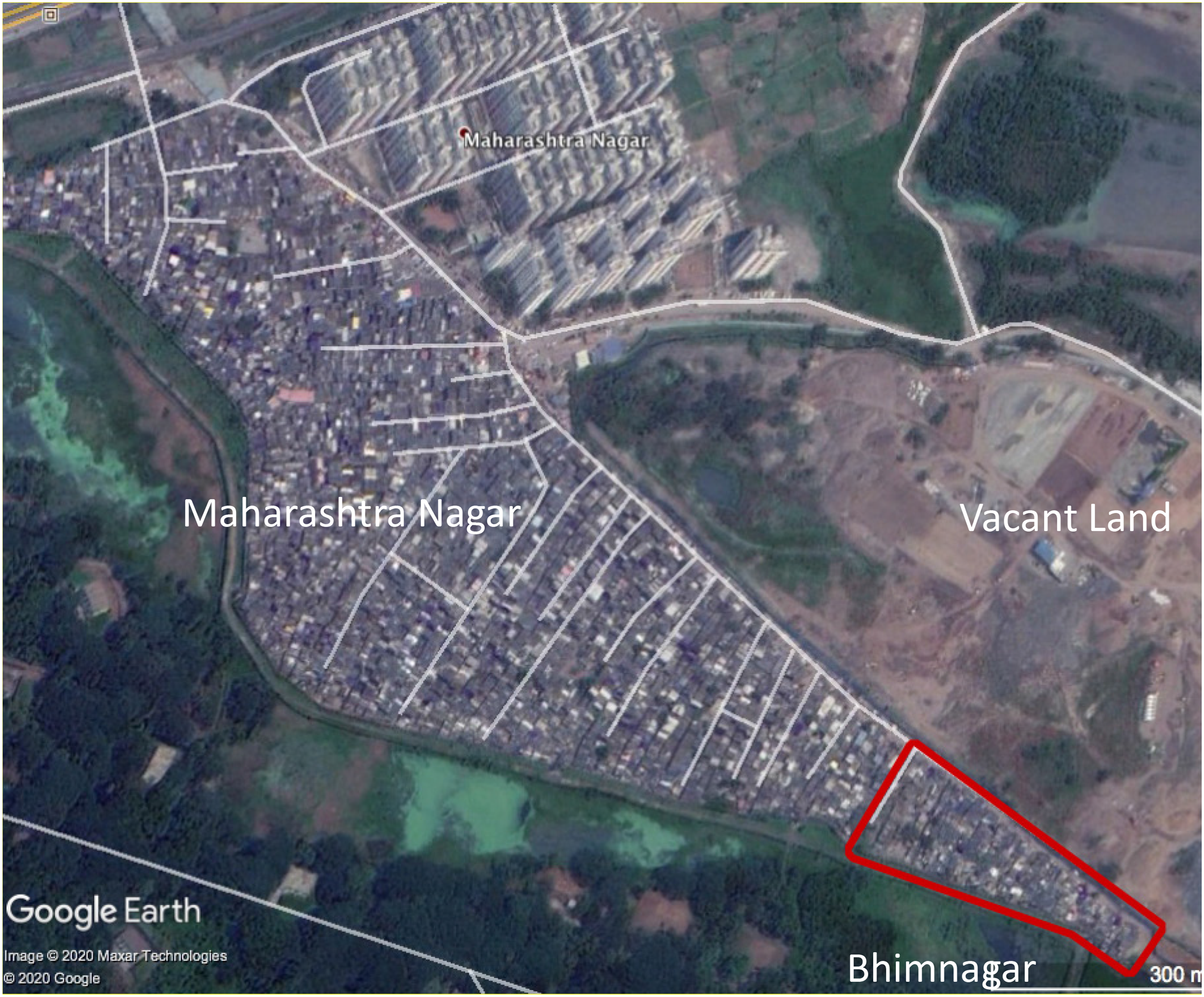
Google Earth image showing Bhimnagar.
Bhimnagar is an extension of a pre-2000 legally sanctioned settlement known as Maharashtra Nagar, which has been confronted with a series of demolition notices, with a recent demolition of the whole settlement in 2017. It is a settlement of approximately 750–800 households, both Hindus and Muslims in nearly equal numbers, employed chiefly as labourers or running small businesses. Many ply rickshaws and taxis, and others, particularly women, work in Jari weaving to earn a living (TISS, 2013).
Water and sanitation access
In 2020, after a decade-long battle, Bhimnagar secured access to legal water connections. Residents first applied for water connections back in 2010, but their application was rejected on the grounds that the settlement was built after 2000. 6 Until 2014, the local corporation could provide basic services only to the bastis built before 2000. Pani Haq Samiti (PHS), a right to water campaign, has been working with the residents to facilitate these applications since 2010. It was with the support of bastis such as Bhimnagar that PHS filed a public interest litigation in 2012 that overturned the 2000 cut-off date policy (Court, 2014). In 2014, the High Court decisively ruled that access to water must be separated from the legal status of the built structure. This meant water provision could no longer be denied based on when a basti was built and under right-to-life sanctioned water for all. However, this ruling came with riders, amongst others, that bastis that might be demolished or resettled because of large infrastructure projects should not be given access to water. This rider is important in the context of Bhimnagar as Asia's largest metro car shed was proposed adjacent to it in 2015. At the same time, the SBM promised that every household in the country has access to sanitary latrines. Recognising the interdependency of water and sanitation infrastructure, residents leveraged the momentum of the national SBM sanitation campaign unfolding alongside their ongoing fight for legal water connections as an opportunity to negotiate for access to both toilet facilities and piped water supply, but none of the individual toilet applications were successful.
Prior to 2020, residents utilised different sources of water to meet their requirements as they lacked legal piped infrastructure. With no drinking water supply inside the basti, residents manually fetched water from nearby areas—Maharashtra Nagar and Trombay—in drums (blue drums Figure 2) carried on foot or bicycle. They also collected water that spouted from the pressure valve of the primary water supply that ran underneath the main access road of Bhimnagar. Additionally, there was an unfinished underground sewer line that had been never completed or connected to the main line. This porous unfinished line instead facilitated the holding of groundwater that had seeped into the pipe. Residents relied on this unintended groundwater source for washing clothes and utensils, not for drinking. By holding groundwater, this porous unfinished sewer pipe, though not commissioned for use, provided essential additional water that residents used for washing purposes (see Figures 2, 3 and 4).
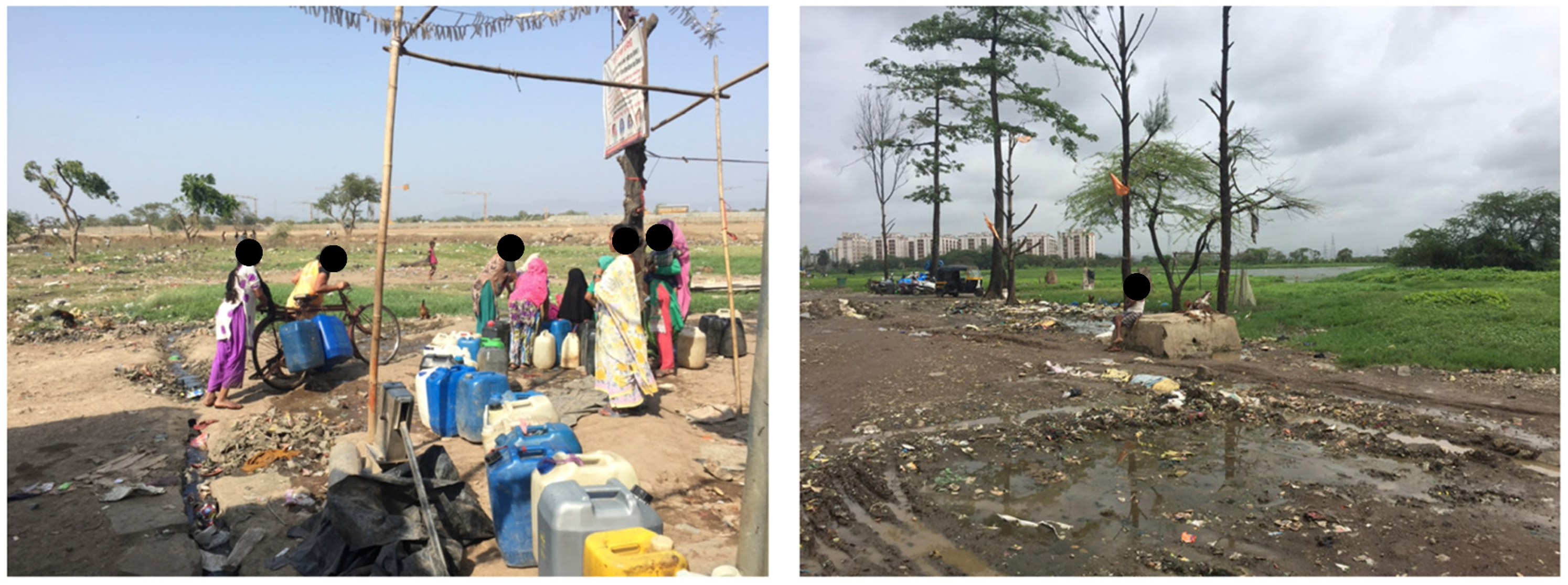
Water Access in Bhimnagar in 2015.
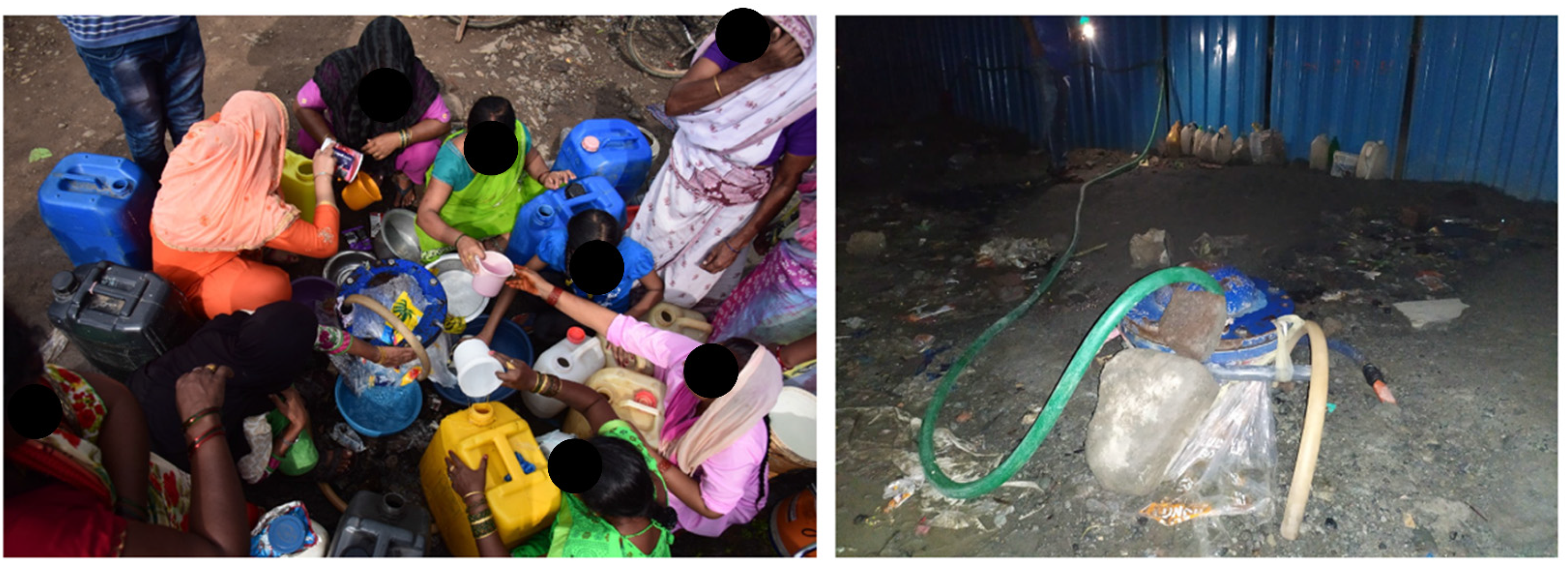
Residents filling water through the pressure valve.
Children often use the vacant land across the road adjacent to the settlement as a playground (see Figure 1 for the vacant land), while some women use it as a place to relieve themselves. On Sundays and holidays, women had to wake up early to complete their personal hygiene routine, as the open land was occupied by young boys and men from nearby neighbourhoods for playing. This open land also acted as a sponge for the city (Mathur and da Cunha, 2020) during monsoons and the highest high tides. Residents also used a public toilet constructed by MCGM on the edge of Maharashtra Nagar. This public toilet defined the starting point of the settlement of Bhimnagar. In addition to the public toilet, before the demolitions in 2017, a social worker from an NGO brought a plastic septic tank and a stainless-steel toilet seat to Bhimnagar (as shown in Figure 5). However, without an installation manual and a superstructure to attach it to, the steel piece appeared to be useless. In November 2017, state authorities carried out a demolition drive targeting housing structures. Many homes were demolished, and in the process the steel pan was lost.
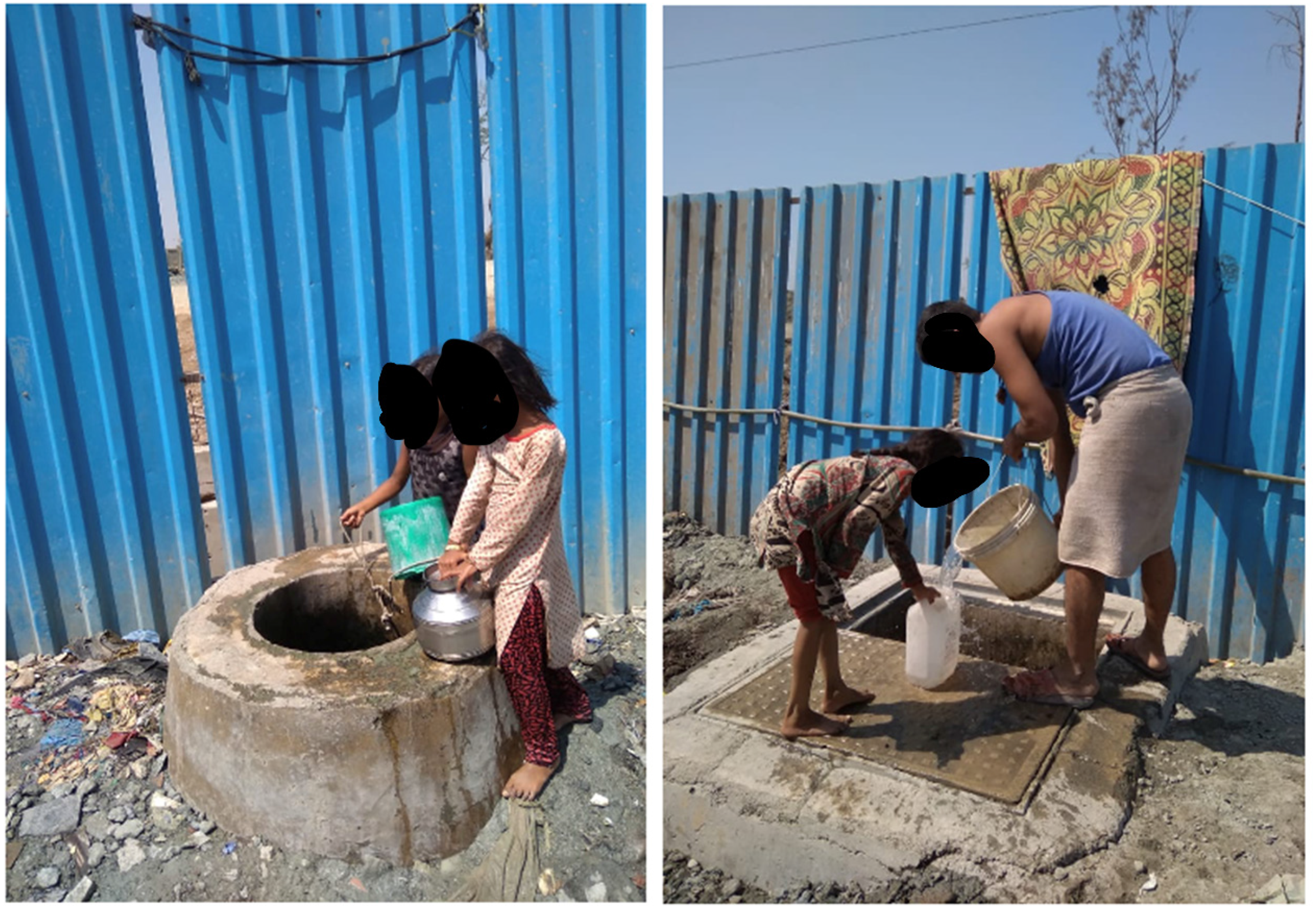
Residents are filling water from a sewer line that was not yet commissioned.
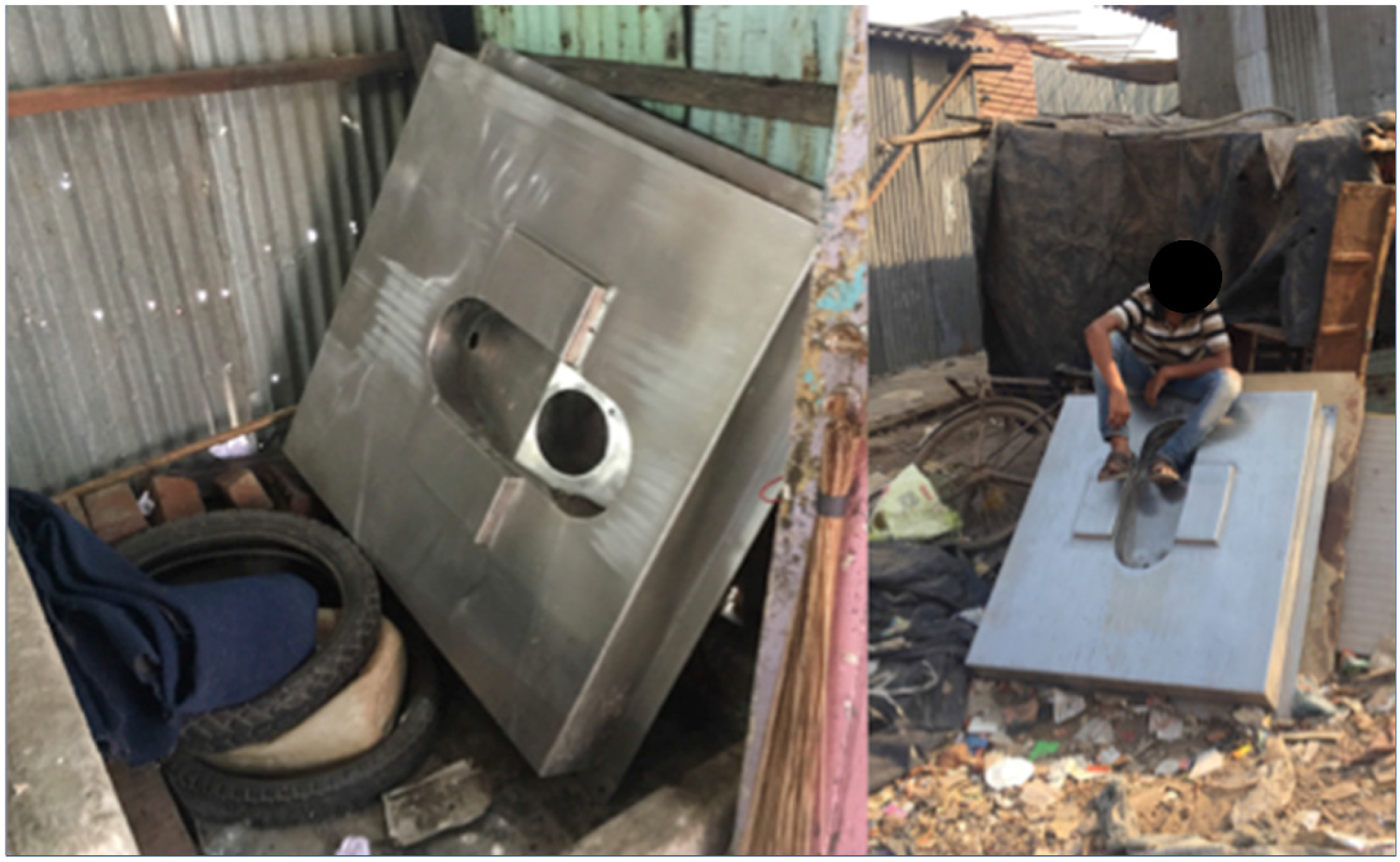
Bhimnagar showing toilet seat donated by an NGO under its corporate social responsibility (CSR) – SBM mandates to spend a portion of CSR on sanitation.
The stated reason for the demolition was that the basti was a threat to the nearby sensitive naval armament depot. During the demolitions, that vacant land became a refuge (see Figures 1 and 6) for residents who lost their homes, providing them with a temporary space as they figured out their next moves, a place to hold on. Within a year, the residents returned to the previously occupied area managing their way through the police, political leaders and local administrators. Despite the active presence of the state authorities, residents continued to rely on these innovative, self-engineered ways to use groundwater (see Figure 4) and the pressure valve (see Figure 3) for water access.
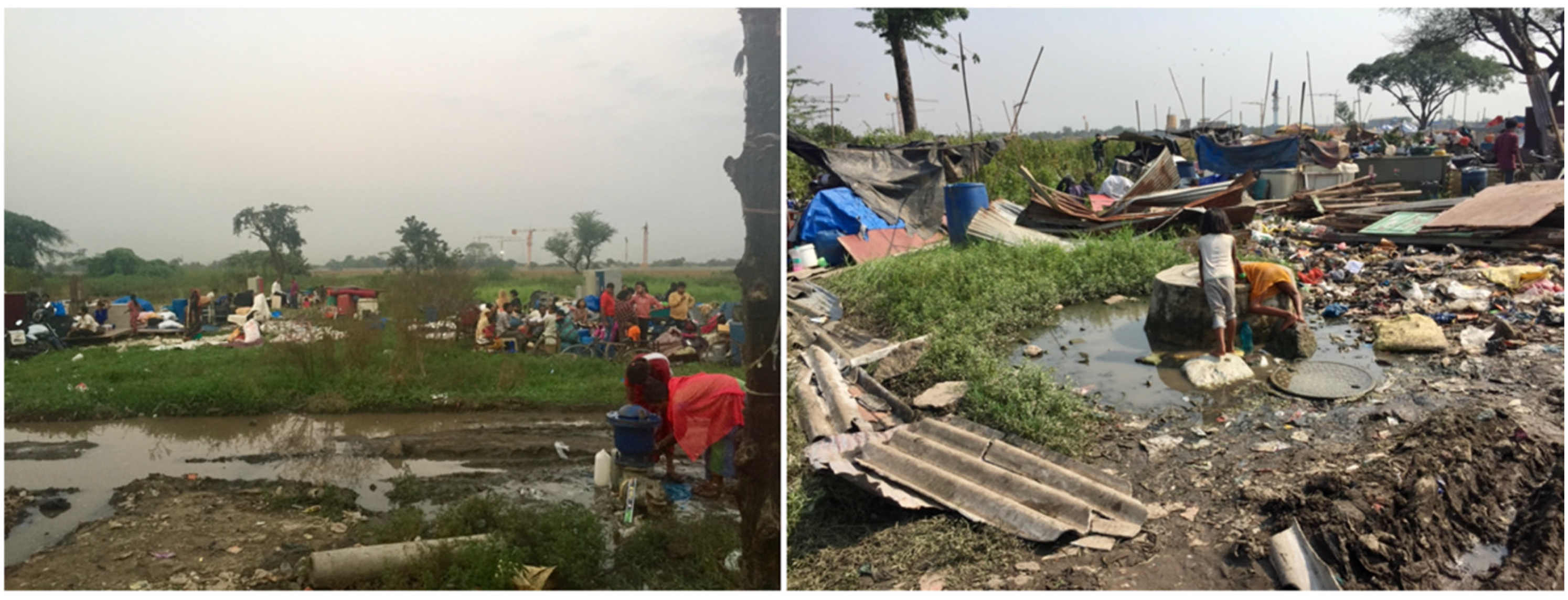
Demolitions: Residents continued to depend on the ground water and collecting water from nearby areas – water access systems that they had devised for themselves.
Within five months of demolition, a Mumbai Metropolitan Region Development Authority (MMRDA) survey had begun in Bhimnagar, and that is when people began to understand that the vacant land was to house the metro car shed/car park. The vacant land where the children used to play and women relieved themselves was to be taken over by the state (MMRDA + MCGM). Here, MCGM and MMRDA worked together. MMRDA is responsible for the construction of Metro lines. Both these agencies follow different policies for resettlements. Unlike MCGM, MMRDA does not follow any cut-off date (see Note 3). By getting enumerated in MMRDA's surveys, residents hoped to establish official recognition that their basti exists. Eventually, MMRDA restricted access to vacant land adjacent to the basti by fencing it off with blue metal sheets (see Figure 3 (right side) and 4). This was done to demarcate the land for an upcoming metro line project.
After 10 years of advocacy, residents of Bhimnagar obtained 23 metered water connections in 2020. Finally, the campaign could advocate for people's existence in spite of the big infrastructure project. However, this coincided with COVID lockdowns that made travelling to other neighbourhoods difficult, and if caught by the police, people had to pay hefty fines. The only nearby public toilet, relied on by many, was demolished for reconstruction in 2019, just before the COVID-19 pandemic and substantially limited sanitation access. As shown earlier, by this time, the access to the vacant land previously used for open defaecation was also cordoned off. To augment these sanitation needs during the pandemic, MCGM installed four portaloos at the other end of the settlement. Four toilets for 800 households (Figure 7).
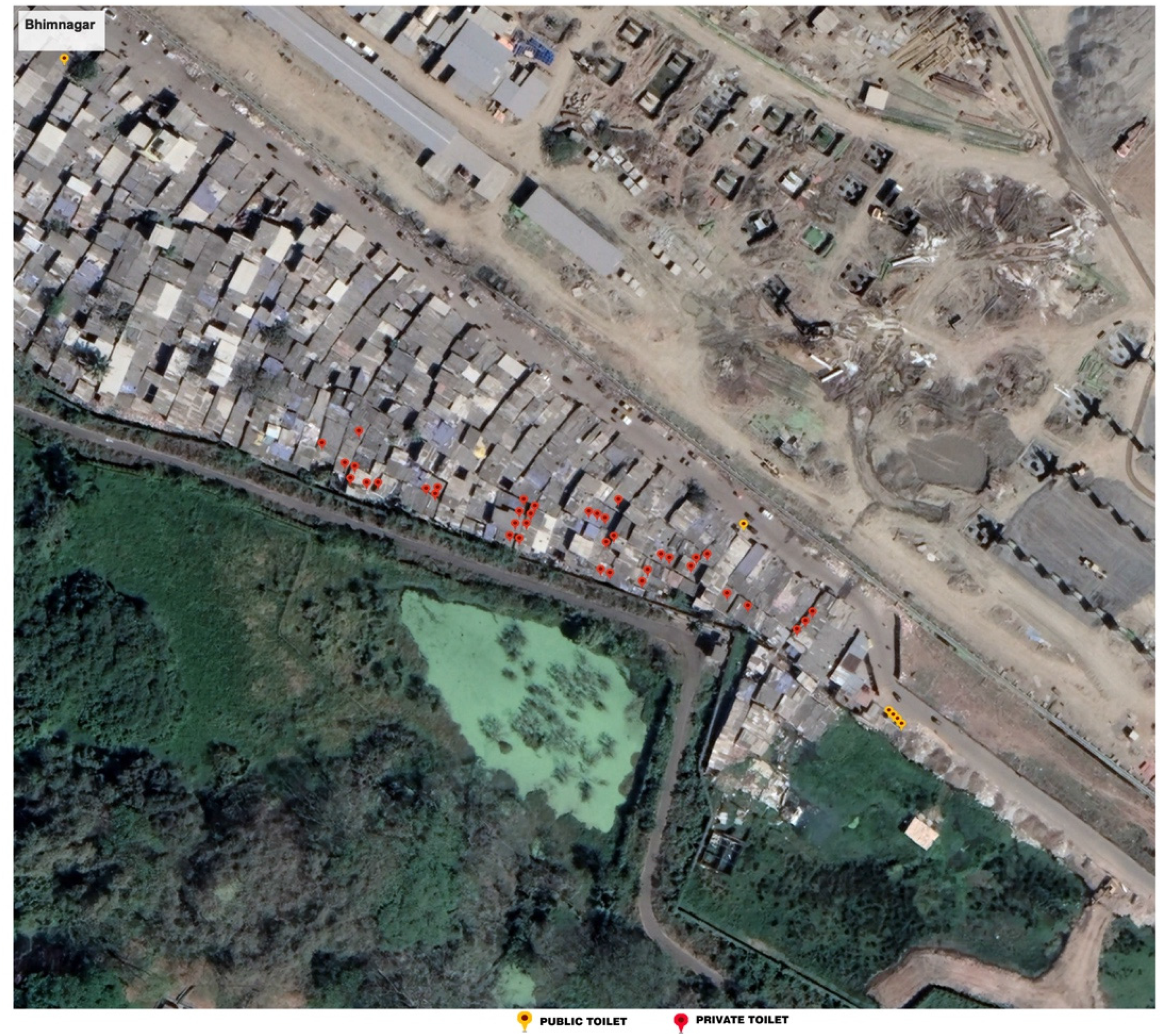
Toilets in Bhimnagar.
The infrastructural unfinishedness in a time of great sanitation and hygiene needs led to the improvised construction of toilets and baths by the local community. For example, community members created spaces for personal hygiene within their homes with available resources like tin sheets, plastic drums, and bamboo to create enclosures. The toilet pots (see Figures 8 and 9) were connected to the pipes and let into the nallah. 7 The lack of access to open defaecation space compelled residents to create spaces within their homes that discharged waste directly into the nallah. The nallah was a stormwater drain, but during this period, it started being used as a drain for sewage. Along the nallah area, most houses had adapted interiors to create hygiene spaces within their home, enabled by access to nallah from one side of the settlement. The recent legal water connections further facilitated sanitation improvements. Geeta's toilet carved out of the family's single living-sleeping-cooking room shows how domestic space becomes entangled with the city's rhythms.
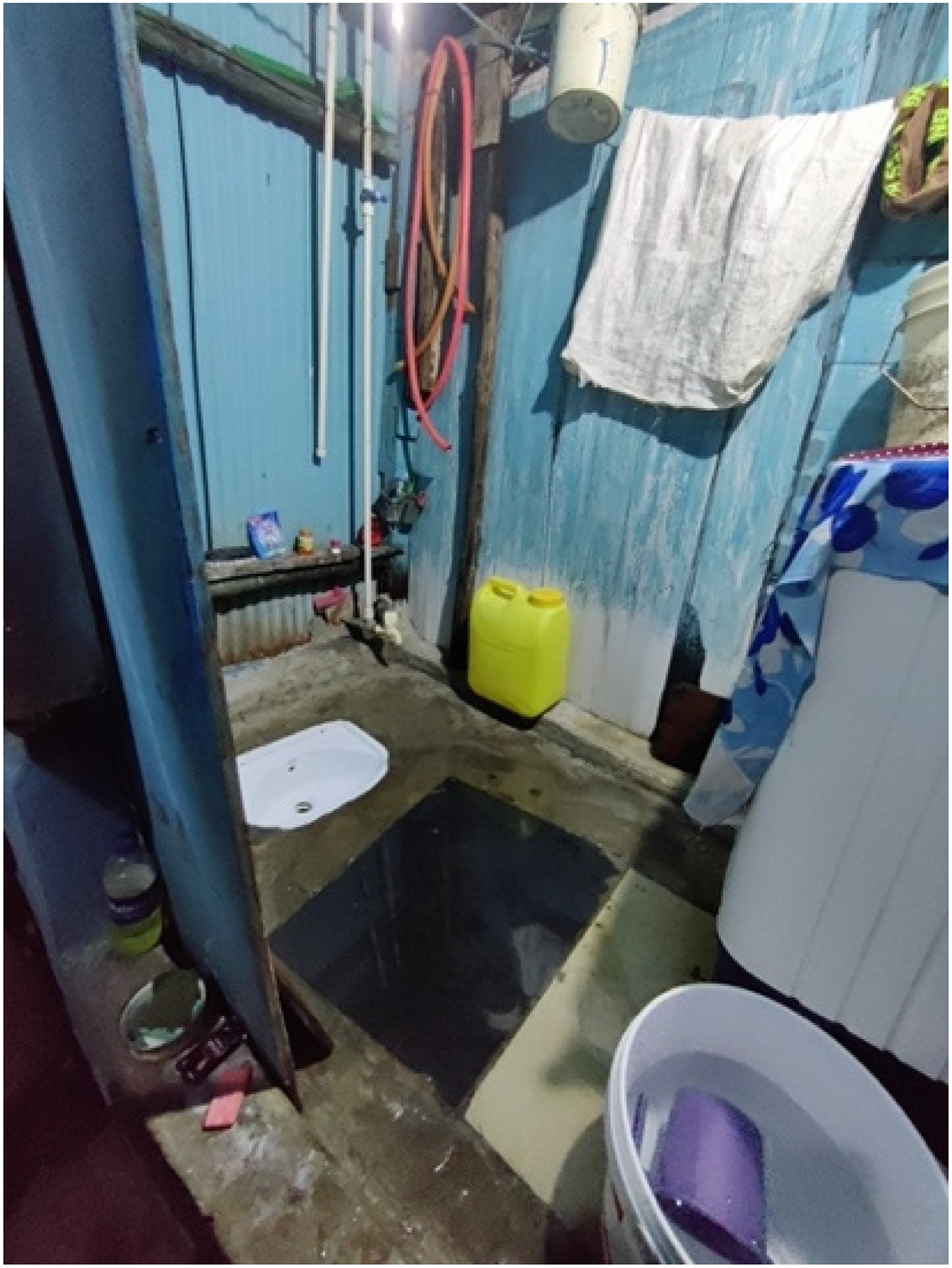
Geeta's Toilet.
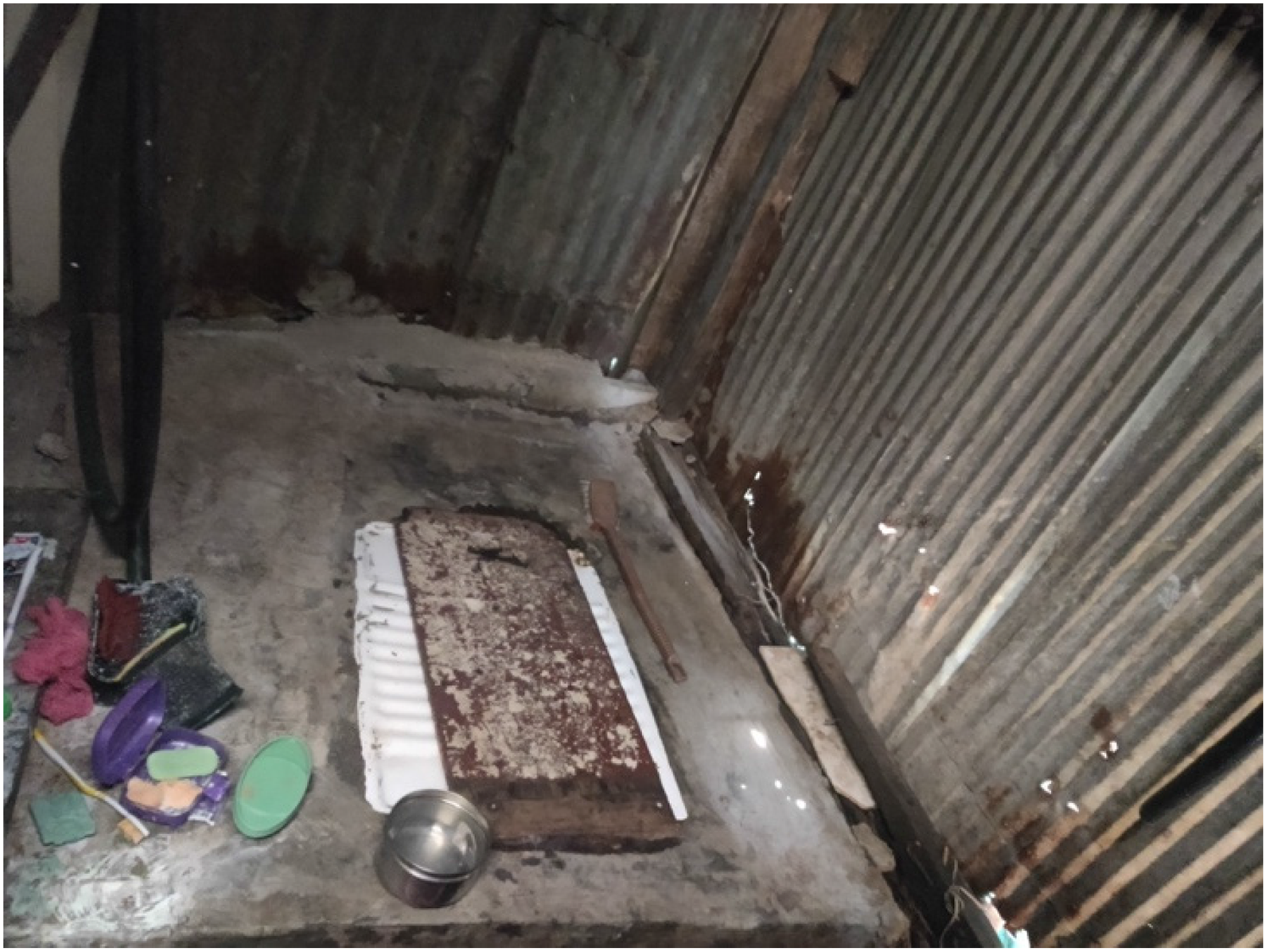
Mehroz's Toilet.
Geeta's toilet
Geeta's toilet shows a wash basin retrofitted as a toilet seat. When asked why it was constructed, Geeta, whose husband Ramesh is a Mistry (In this context, the title indicates he comes from a socially disadvantaged caste associated with construction labour), explained: ‘The ground (vacant land) was not accessible, and the public toilet was too far. The gutter (referring to the nallah) runs right by our home, so it is easy to dispose the waste into it’. Referring to the space constraints, she mentioned that the basin occupied a smaller space and served the same purpose with less surface area to clean, and a smaller pipe to drain the water was thoughtfully used. The Kota stone, a durable material that is resistant to wear and tear caused by soap and water, was laid to prevent the floor from getting damaged while bathing or cleaning utensils.
Geeta and Ramesh moved here from a village 15 years ago. Since then, their family of four has lived in this approximately 10 × 8 feet room, which has a kitchen space and a multipurpose room in addition to this newly constructed wash space. When I asked if they encountered any problems with this toilet, Geeta revealed, When the connecting pipe leaks, we can tell because that area gets wet and smelly. We immediately stop using it until Ramesh can fix it. Space is tight with so many of us, so I have to clean the basin often. But we make do with what we have. At least here we have some privacy now.
Mehroz's toilet
Mehorz's house had a cover on the pot to prevent chickens and hens from falling into the hole. She explained that when the toilet space is temporarily covered with a lid (as seen in Figure 9), it doubles up as a clothes and utensil washing space. She described that the toilet is drained into a nallah behind their home, the same nallah where Geeta's house lets their waste out. Mehroz and Geeta mentioned that their neighbours also use the toilets in their homes, given the lack of public facilities in the neighbourhood.
Bhimnagar today
At the end of my fieldwork in early 2023, Bhimnagar again received a demolition notice, this time for nallah widening. As Geeta shared, ‘If it gets demolished again, we will reconstruct it – this is what my husband does for a living’, stressing the cyclic nature of (re)making. Her statement highlights the persistent precarity of sanitation access amid recurring demolitions but also the continuous improvisation required by residents to sustain hygiene spaces despite the teardowns. In early 2023, along the Metro car shed, a new road that houses the main water pipeline and sewer line was also under construction. The construction work for the diversion of the nallah beyond the settlement boundary was also underway. The manhole and water pressure valve are now hidden below the road's surface, and there seem to be no more leaks in the official system. People have stopped using the groundwater from the unfinished sewer pipes. The new manhole covers (see Figure 10) visually acknowledge the existence of the infrastructures for an underground sewer line; however, the portaloos placed by the MCGM at the other end of Bhimnagar sit on a septic tank, that deposit the waste directly in the nallah.
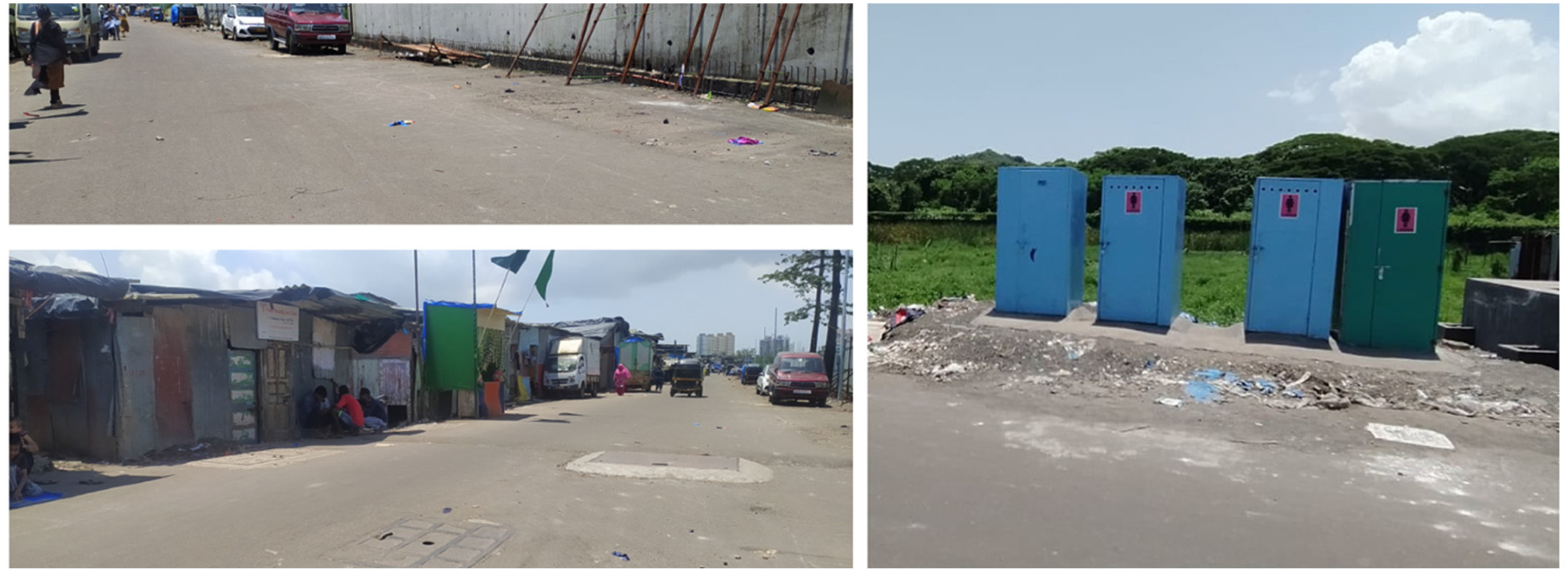
Bhimnagar in 2023.
Discussion: temporality, difference, competing universals and infrastructural entanglements
According to Guma (2020), the concept of incompleteness challenges the notion of infrastructure as lacking, defective, or underdeveloped, emphasising its existing state instead. Inspired by Ingold's (2019) concept of unfinishing as an ongoing generative process, I use the term unfinished to build on Guma's work examining incomplete infrastructure. For me, unfinished emphasises the continual process of making rather than the definitive completion of objects. In contrast, incomplete suggests patched, partial systems, evoking a deficiency mindset focused on lack. While incomplete is more of a retrospective understanding from the realised forms and end products, judging them against idealised states, unfinished spotlights the present moment of making as it unfolds, embracing the ongoing trajectories of materials. Reading the sewer landscape through the lens of unfinishedness, I draw attention to the processual nature of infrastructure, highlighting its ways of becoming to address the immediate needs, the need for repairs and maintenance to keep the system functioning, the gradual degradation over time, and the labour involved. Additionally, it allows us to shift the focus from an understanding of permanency to recognising its inherent transitoriness.
The colonial development of Mumbai's sewer network centred on areas that were elite, orderly, and hygienic while bypassing many neighbourhoods seen as chaotic or unsanitary. The contemporary construction of sewers has also prioritised areas where DP roads were constructed. That bastis like Bhimnagar with urgent sanitation needs were neglected aligns with colonial planning visions. Mumbai's sewerage proposals frequently overlooked the complexity of incremental systems, aiming to replace these with uniform technocratic plans. The emphasis on the proposals of renewal often followed a standardised approach aiming to reset the existing incremental changes. The focus here is on creating a final product that conforms to standardised norms rather than considering the specific needs and characteristics of the areas in question. This approach often disregarded the complexities of the existing infrastructure and the importance of tailored solutions (Lawhon et al., 2023).
I understand the dominant ways of city–making are where the subaltern incrementally makes the city. The slums (the dominant mode of making the city; see Caldeira, 2017) are often out of the preview of policy. Over the years, the projects of World Bank MSDP I/II are complete on paper, but within the sanitation imagination, the slums or areas where city makers (borrowing term from the Hamara Sheher Mumbai Abhiyan, 2016) live are seen as temporary and out of the ambit of the policy creating spaces of in-between where the infrastructure is neither complete nor absent. This policy-constructed imagination of temporariness (Bayat, 2013) keeps bastis in a state of unfinishedness where permanency will set in with the re-development/settlement. The policy creates a binary of slum and other, succumbing to one-world explanations (Law, 2015).
In this paper, I have highlighted the temporal patterns of urban infrastructures – the long durée of short-lived infrastructure where the multiple meanings of objects expose the unfinishedness of things, where objects extend beyond their intended meanings, and where objects have new meanings. In Bhimnagar, the unfinished sewage pipe that ran along the main road generated new uses and meanings for residents beyond its intended purpose. Though planned as a future conduit for wastewater, the unfinished pipe had started accumulating groundwater through its porous material. Residents appropriated this leaking water for washing clothes and utensils. As completion of the sewage line was perpetually delayed, this improvised function became an entrenched part of everyday water practices in the basti. The object's prescribed meaning as a sewage channel was exceeded by its alternative use as a water source. Its unfinished state opened unanticipated possibilities. The sewage pipe's unfinished trajectory continually generated reinterpretations as residents’ needs moulded its meanings.
On the other hand, most of the houses along the nallah constructed toilets in their homes to dispose of waste; plastic pipes were inserted from these toilet pots into the open nallah. This allowed the nallah to act as drainage for both solid and liquid waste. The nallah, though originally intended just for stormwater, took on new meaning as wastewater drainage in the absence of proper sewage lines. The terms nallah, drain and gutter became interchangeable to residents as the material object exceeded its planned singular purpose. The porous boundaries between stormwater and wastewater drainage highlight the potential of infrastructural elements whose meanings remain in flux.
With limited space in her home and no nearby public toilets, Geeta repurposed a wash basin as an excreta pot. The open land previously used for defaecation was now cordoned off for the Metro car shed construction. Faced with this lack of sanitation options, Geeta adapted the wash basin to create a makeshift toilet solution within her small home. The basin, which is meant for washing face and hands and brushing, was given a new meaning and function. Though small and basic compared to a proper toilet, the repurposed basin met the need for private sanitation and used less water to clean. The object's meaning shifted from hand washing to excreta removal, which was also tailored to spatial and resource restrictions. While constrained, Geeta took pride in the DIY sanitation modifications and marginal upgrades her family created to carve out a small degree of safety, dignity and functionality in the absence of adequate public provisions. But the fragility of the setup also means recurring disruptions and constant maintenance struggles. Mehroz's toilet relied on both human and non-human elements, improvising with available materials. Mehroz adapted the pot in the ground by covering it with a wooden plank when not in use. It shows how non-human actors, like animals, shaped the toilet's modifications. The covered pot's usage and form emerged through entanglements between human needs, material constraints, animal behaviour and spatial limitations.
In this paper I demonstrate how the years long delay in providing water and sanitation infrastructure is lived, revealing how the city influences domestic routines within the basti. The construction of Asia's largest metro rail car maintenance depot and parking facility altered the houses of Bhimnagar from within. Among many things, this infrastructural megaproject, which took over vacant land near Bhimnagar, further restricted the available open space that was used for defaecation and playing. People had to modify their homes to accommodate bathing, washing and toilet needs within reduced space, showing how individual lives, domestic spaces and neighbourhood temporalities intersect. This illustrates the intricate evolution of the city and its interwoven connections as massive transit upgrades transformed the landscape right outside the basti. The making of the metro rail facility, which would improve connectivity across the city, ended up altering life within Bhimnagar from the inside out.
The case of Bhimnagar reveals the intimate entanglements between housing security, water access, and sanitation infrastructure – and how large transport infrastructure projects can fundamentally reshape these interconnected aspects of everyday life. While the impacts of mega-infrastructure projects on housing displacement are well-documented, this case highlights their effects on water and sanitation arrangements that often go unexamined. The construction of the metro car shed not only restricted access to open spaces used for defaecation but also triggered a cascade of changes in domestic water and sanitation practices. As homes were modified to accommodate internal toilets in response to lost open spaces, this, in turn required water access and storage. The case thus contributes to our understanding of how large-scale transport infrastructure projects reverberate through the intimate spaces and essential services of informal settlements, forcing a renegotiation of the relationships between housing, water and sanitation.
Examining Mumbai's sewage systems through the lens of unfinished reveals the complex realities of infrastructure provisioning. The cases of the porous sewage pipe providing water, Geeta's washbasin toilet and the multi-use nallah show how new meanings and arrangements emerge in the gaps created by unfinished infrastructure. Tracing the lived experience of delays reveals the profound disconnect between policy timelines and on-the-ground realities. As decades-long delays become normalised, life re-arranges itself around partial systems in varying states of disrepair and adaptation. Rather than viewing infrastructure as a linear process, recognising it as an ongoing negotiation shaped by everyday tactics demonstrates how life persists.
Footnotes
Acknowledgements
I am thankful to the residents of Bhimnagar, the engineers from the Municipal Corporation of Greater Mumbai (MCGM), and newspaper reporters for speaking with me about sewage. I am grateful to Richa Bhardwaj for the conversations on the earlier draft of the paper. This project and paper were supervised by Professor Deljana Iossifova, Professor Alison Browne and Dr Nate Millington and funded by the School of Environment, Education and Development (SEED) Studentship at the University of Manchester.
Funding
The author disclosed receipt of the following financial support for the research, authorship, and/or publication of this article: This work was supported by the School of Environment, Education and Development (SEED) Studentship at the University of Manchester.
