Abstract
The Veluwe is considered as one of the most important nature areas in the Netherlands. Its public appeal in part derives from the presence of large ungulates, such as red deer and wild boar. These populations of red deer and wild boar are caught up in management practices and spaces of control that have emerged as part of the history of the Veluwe as an elite hunting reserve, including material practices and imaginations of nature and culture. Historically, these deer and boars were considered to be hunting animals, but now they are killed under the name of wildlife management. Yet, the hunting histories of this space persist through certain landscapes, particular animal species and breeds, discourses and symbolic meanings, resulting in the production of particular biopolitical subjects and objects. In this article, we draw on an ethnography of these hunting landscapes and historical and archival research to trace the genealogy of the ways in which certain forms of bio-, necro-, and sovereign power are inscribed into the landscape of the Veluwe and how these forms of power continue to play a role in the lives and deaths of these animals today. The case of the Veluwe contributes to a growing understanding of how conservation in many places has emerged as part of elite hunting practices.
“It is raining heavily when we walk towards the castle. I see flocks of men in green outfits, some accompanied by their families. Today the annual ‘fauna day’ is held at estate Middachten, a recurring event where “fauna managers voluntarily give account for their responsibilities to each other and society at large”. The antler exhibition is the main event; here skulls of stags and roe deer, mouflon skulls with horns and tusks of wild boar that are shot this year are exhibited. The antlers are classified into: ‘justified culling’, ‘justified according to classification but according to the committee too beautiful and young’, ‘necessary culling’, ‘roadkill victim’, and ‘predation victim’. Not all shot animals are displayed here, only male animals are present and the hunters themselves decide whether to display them in the exhibition. Some hunters dislike the display because they feel they are being judged. Even though it is an exhibition organized by WBE's (Wildlife Management Units) of the Veluwe, the Royal estate ‘Kroondomein’ has a stand too where the largest antler of the exhibition is presented, the one with the most protrusions (‘enden’). I ask one of the information officers what ‘predation victim’ means. ‘Killed by the wolf’ he says. I do not have to ask how he feels about that, since he continues ‘they help us out you know, but they mostly kill young animals and this is why we as hunters prefer to be the ones that select the animals that should be killed.” (Fieldnotes, 25-03-2023)
The halls decorated with skulls reminded me of visits to other European estates and castles with hunting chambers ornamented with stuffed exotic animals and trophies of all kinds (Figure 1). The presence of these dead remnants of animal bodies evokes elite, colonial, and gendered associations of a bygone era. However, the skulls displayed here are not historical curiosities, they belonged to animals that were alive earlier this year, and they are not considered trophies but rather the result of “good” management. And the Veluwe is currently not seen as hunting grounds but as nature. As such, the antler exhibition demonstrates a peculiar combination of historical hunting and present-day nature management practices, centered around the symbol of the stag and his antlers. At the same time, wild boars, members of another large ungulate species that roams the Veluwe, are relatively absent in this public event, even though they are hunted in much larger numbers. Drawing on discussions of biopolitics, sovereign power, and necropolitics, this article explores the multiple reverberations of hunting histories in contemporary nature conservation at the Veluwe. By focusing on the blending of diverse motives and traditions, this field site offers insights into the forms of power, spatial orderings, logics, and tensions involved in determining what animal lives are to be optimized or terminated. What results is a landscape that together with its nonhuman inhabitants is haunted by its past as a hunting ground.
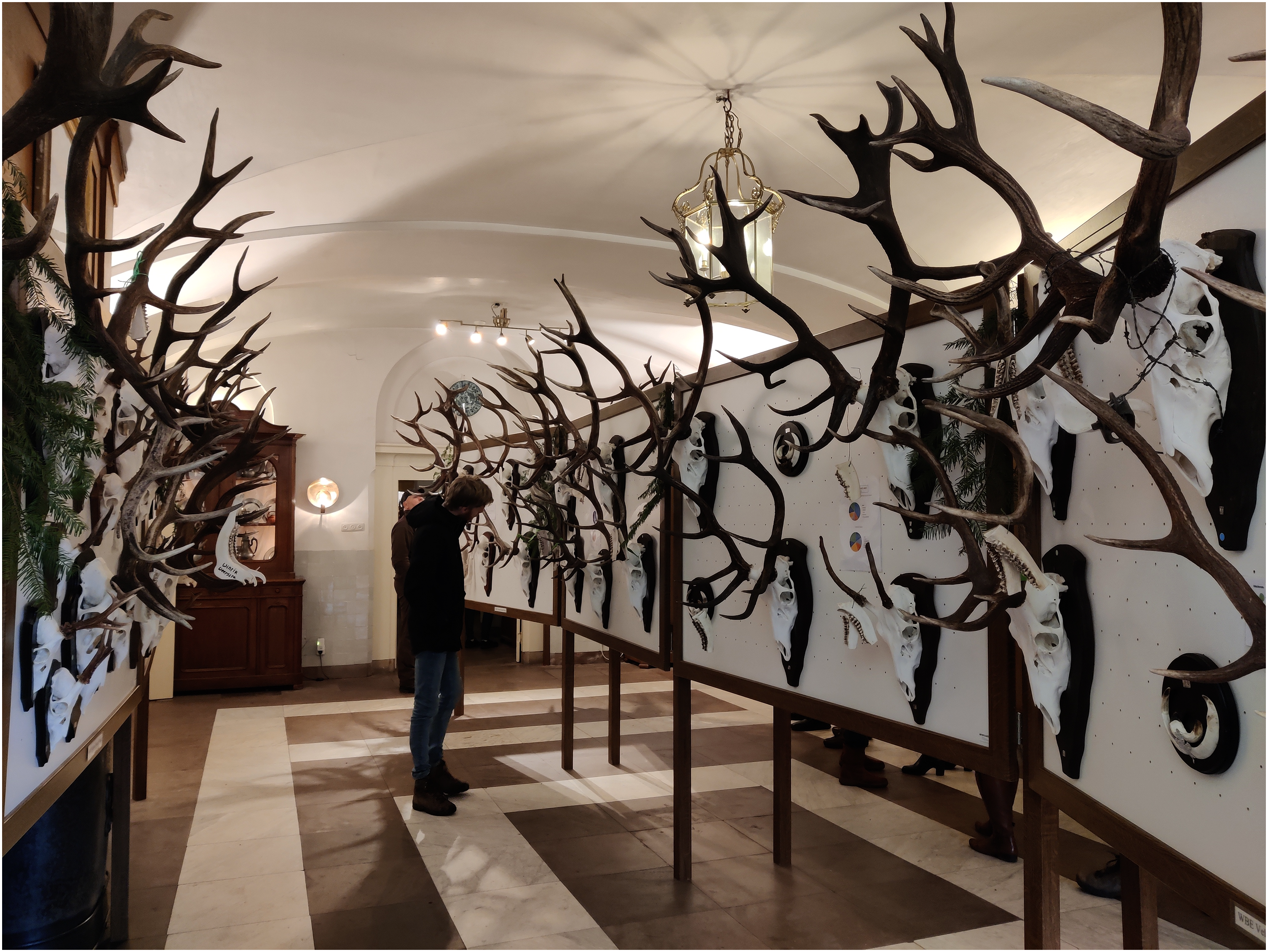
Antler exhibition at estate Middachten, on the occasion of the yearly fauna day 2023.
Hunting histories and presents
“It lyes in the Middle of a large Heath of many Miles, wherein you have staggs, wild boares, foxes & Hares in great Plenty, as alsoe good store of shooting Game. This Country is called the Veluwe in ye Province of Gelderland, and one of the best hunting Countrys in ye World, but good for Little else.” (Southwell in Fremantle, 1970: 51)
Edward Southwell (1671–1730), at the time a young English diplomat who would later become minister for Ireland, wrote the above in his diary during a visit to the Dutch Republic and the court of Stadtholder-King Willem III in 1696. Willem III was a fanatic hunter and horse rider with a particular passion for hunting large game during so-called par force hunts. With a small equipage and with the use of relatively modest hunting houses, he would roam the Veluwe, a vast expanse of heathland and a few forests, chasing a red deer with hounds for several hours on end. One chase, in 1684, has even been reported to last for 9 hours. This example is not exceptional; in Europe and beyond, the lives of what are deemed huntable animals as well as the landscapes they inhabit are often entangled with the passions of (mostly male, and in many places predominantly elite or royal/aristocratic) hunters. In fact, many of the landscapes that are currently preserved as nature areas have previously functioned as hunting reserves for large ungulates such as red deer and wild boar. Other examples include Białowieża Forest (Samojlik, 2005), now the last remaining remnant of the once far-reaching lowland forest of Central Europe, and New Forest in England that was established as a hunting ground by William the Conqueror in 1079 (Stover, 1985).
Currently, wild boar and red deer on the Veluwe inhabit a landscape that is made up of a series of separate nature reserves managed by different organizations, dotted with villages, and crisscrossed by roads. 1 The Veluwe is a relatively dry, sandy and nutrient poor area with woodlands, patches of heather, drift sands, and agricultural fields. It is regarded as one of the most important nature areas of the Netherlands (Turnhout et al., 2004) and it is the only place where all of the (historically) huntable large ungulates that are considered native to the Netherlands—wild boar and red deer, roe deer and fallow deer—reside collectively. 2 Of these, the red deer Cervus elaphus, and especially the male red deer—the stag - is particularly invested with symbolic meaning across European cultures. Images of a stag crowned with heavy antlers can be found in coats of arms, crests, art, and historic buildings and they also figure in legends, poetry, and songs (Geist, 1998). The Dutch name for red deer is “edelhert,” which literally translates as noble deer. The term noble might refer not just to their charismatic appearance and “noble” character, but also to the historically exclusive right of nobility to hunt these animals. Next to red deer, also wild boar Sus Scrofa, have historically been considered highly desirable to hunt. Across Eurasia from Antiquity onwards, wild boar have been celebrated as fearless and dangerous forest dwellers. The “wild” in wild boar, might refer to its “wild” behavior—in contrast with their domesticated counterparts—and also supports the spatial imagination of their dwelling places as wilderness.
Despite the fact that the Veluwe is no longer considered a hunting ground but a nature conservation area, killing practices continue. Even more so, under the label of nature management, numbers of wild boar and red deer at the Veluwe, and numbers of animals being killed, have never been higher. These killings take place as annual cullings (“afschot”) and they are considered necessary for conservation and for population and damage control. These cullings are executed by so-called Wildlife Management Units (“Wildbeheereenheden” or WBE). The members of these local organizations consist of hunters who implement the target numbers that are set by the provincial Fauna Management Units (“Faunabeheereenheid” or FBE) in their own hunting field. Legally, throughout the Netherlands in total 285 WBEs are responsible for the execution of fauna management plans set by the FBEs. The seven 3 FBEs base their management plan on the fauna policy of that particular province. By counting the existing wildlife population and in conversation with other formalized stakeholders, a plan is made that serves as a legal ground for an exemption to the provincial prohibition of killing. In 2022, the members of these WBEs, who self-identify as hunters, were tasked to kill 3,000 red deer and 8,800 wild boar (FBE Gelderland, 2021). Although these numbers may be small compared to neighboring country Germany, where roughly 700,000 wild boar and 75,000 red deer were culled in 2022 (Deutscher Jagdverband, 2023), they do amount to a total of around 65% of the red deer population, and 87% of the wild boar population.
The example of the Veluwe is not unique; also more generally, conservation continues to be haunted by hunting histories. Modern wildlife conservation emerged from a desire by hunters to stop the demise of hunting animals. On the African continent, colonial European hunters had slaughtered an extraordinary quantity of “game animals” (Cranworth, 1919) after which imperial hunter-naturalists set up conservation policies by restricting the access of others in Game Reserves, much like the protected hunting forests of medieval European kings (MacKenzie, 1987). In the United States, President Theodore Roosevelt, a hunter himself, institutionalized the conservation movement by appropriating lands for the protection of large game animals, as well as by implementing laws for hunting wildlife (Reiger, 1975). Thus, while contemporary conservation is often thought to have emerged with the Romantic movement's appreciation of North American wilderness, its motives, spatial logics and wildlife management practices have in many cases been profoundly shaped by hunting.
As we will discuss in more detail in the next section, we follow scholars that have conceptualized current wildlife and conservation management in terms of biopolitics (Srinivasan, 2013), in which killing is justified for the sake of the population, as a necessity “in the name of life” (Foucault, 2008: 136). As we will show in our analysis, this biopolitical regime operates at the Veluwe by means of specific techniques, particularly fencing and culling, that it has inherited from the historical hunting practices by Dutch nobility. We will also show that in addition to incorporating biopolitical logics of caring for populations, wildlife management at the Veluwe continues to perform a particular subjectivity of the sovereign hunter-manager that controls nature and society. At the same time, these hunter-managers find themselves subjected to—and executors of—what we argue to amount to necropolitical logics that require the culling of large numbers of animals resulting in a dominance of a form of management that operates through death, and in the erasure of the agency of those subjected to necropower.
Bio-/sovereign/necropower in landscapes of care and killing
For Foucault, biopolitical power emerged in Europe in the eighteenth century, when institutions started to focus on the fostering and disciplining of life: “to make live and let die” (Foucault, 2003: 241). He juxtaposes biopower with the classical, premodern right of the sovereign to take life: “to make die and let live.” Even though Foucault sees the transition from sovereign power to biopower as a historical shift, other scholars have questioned the idea of a clear-cut “origin” of biopolitics (Prozorov, 2022) and it fully replacing earlier forms of (sovereign) power.
Post-/more-than-human scholars have explored biopolitics in conservation and wildlife management practices. As Biermann and Anderson (2017) argue, nonhuman individuals and populations are “disciplined, aggregated, and optimized in conservation projects” (Biermann and Anderson, 2017: 3) that are shaped by biopolitical logics. The harms and deaths involved are justified for ostensibly serving either the wellbeing of animal collectives, such as species, populations, or ecosystems (Srinivasan, 2014), or the wellbeing of humans, when wildlife numbers are deemed too high (Connors and Short Gianotti, 2023) and result in harm or nuisance for human populations. These justifications are informed by concepts of normality and abnormality and associated ideologies of biological diversity and purity (Biermann and Anderson, 2017). Even though harm and killing take place, the presumed focus on life instead of death is why biopolitics can be seen as “care of life” (Rose, 2001) in pursuit of vitality and not of mortality (Rabinow and Rose, 2006). Yet, these notions of harm and care and the ways they are entangled are deeply ambiguous.
The practices of death in wildlife management and conservation at the Veluwe involve an intensity of killing that is undertheorized in accounts and analyses of more-than-human biopolitics (Margulies, 2019). As opposed to “letting die” in order to make live, what can be seen here is the active making of death. We are inspired here by Achille Mbembe who describes how certain racialized human groups are subjected to regimes of necropower that involve “the creation of death-worlds, new and unique forms of social existence in which vast populations are subjected to conditions of life conferring upon them the status of living dead” (Mbembé, 2003: 40). Mbembe developed the concept of necropower in the context of colonialism and slavery, where certain spaces become managed through racialized violence that produced death beyond a level that could be rationalized or justified in name of population wellbeing. We acknowledge it is not obvious to directly transpose this notion of necropolitics—developed to describe the hopelessness and collective mental states of humans subjugated by violent colonial occupation and plantation slavery—to account for processes producing nonhuman deaths. Nevertheless, drawing on this analytic for wild animals emphasizes that while death in the name of life can be understood as part of biopolitics, the culling of animals can assume such an intensity that it becomes a “necropolitical strategy” even when it is employed “to enable a biopolitical vision” (von Essen and Redmalm, 2023: 2). Employing the notion of necropower, our analysis will demonstrate the creation of a continued state of exception where killing is normalized and letting live becomes the exception, subject to sovereign decision making. We will explore the extent to which necropower may help understand how so many nonhumans are rendered killable in the name of conservation and control, including how this may affect their mental dispositions and experience of spaces.
We investigate the Veluwe as a “hunting landscape” (e.g. Crowley et al., 2018) made up of intersecting logics of sovereign, bio- and necropower (cf. Biermann and Anderson, 2017). With Nustad and Swanson (2022), we are “thinking Foucault through landscapes” (Nustad and Swanson, 2022: 937) by considering landscapes “far more akin to Foucauldian institutions than to timeless nature” (Nustad and Swanson, 2022: 938). This includes considering animals both as lively agents and as themselves deeply shaped by efforts to govern them and make them productive in landscapes that project and instill certain uneven power relations. In our analysis, we will consider how landscapes are ordered spatially, for example by means of fences and barriers, and how these reinforce dichotomies such as nature-culture or wild-domesticated (Braverman, 2014; Cronon, 1996; Hinchliffe, 2007). These ordered spaces, then, subject their inhabitants to different regimes of management and care (Woodroffe et al., 2014) that constitute particular forms of nature (Hawkins and Paxton, 2019) and involve “different valuations of life and selections of which forms to foster and which to let die or kill” (Biermann and Anderson, 2017: 9). As these barriers create spatial structures of exclusion and control (Lulka, 2004), they thereby make specific animals killable when these can be considered to be out of place or when they exceed quantitative objectives (Jerolmack, 2008). Landscapes, thus, become the infrastructures through which bio-, sovereign, and necropower is exercised (Poerting, 2023). Yet, these landscapes involve dynamic more-than-human relations that result not only in the subjection and shaping of animal bodies and cultures, but also in the constitution of specific hunter-manager subjectivities that enact what is considered good wildlife management (von Essen and Allen, 2021). The animal and human subjectivities constituted in these landscapes thereby start to perform the hunting landscape as well, and are, as we will illustrate, manifested in the antler and the agential subjectification (Srinivasan, 2014) of the hunter.
Methodology: Landscape genealogy
In our analysis of the hunting histories—and presents—of the Veluwe, we draw on Foucault's (1984) notion of genealogy as a “methodology of suspicion and critique” (Hook, 2005: 4). Specifically, we analyze the historical development of the landscape and the practices, (power) relations and logics enacted in it. Drawing on Nustad and Swanson's (2022) Foucauldian take on landscapes as akin to institutions, we can trace the patterns through which humans and nonhumans are assembled in political arrangements in which technologies and legitimations of knowledge emerge together with governing practices and traditions. While we present key historical figures, we consider them not as central agents but rather as conduits of broader developments in power relations that are caught up in practices and landscapes that themselves are the outcome of a series of path-dependent shifts in how spaces were conceived and what in these has been thought to be good ways of knowing and governing life. Resonating with work in STS (e.g. Latour, 2007); as well as (more-than-human) geography (e.g. Lorimer and Driessen, 2016), we do not write this history starting from a distinction between the material and the discursive as separate elements but chart the material semiotics in which mutually interpreting human and nonhuman bodies, practices, and landscapes are shaping the resulting relations. We aim to develop a landscape genealogy in which we trace the making of human and nonhuman subjectivities—hunters, red deer, and wild boar—in relation to shifts in more-than-human spaces. As we also alluded to in the previous section, our landscape genealogy will focus on the ways in which specific manifestations of sovereign, bio- and necropower have historically emerged and continue to emerge in parallel in and through landscapes.
For multiple years, the first author has immersed herself into the ways in which hunting becomes manifested in the Veluwe. Conducting the research was an effort that became embodied and personal: living at the Veluwe, weekly walks in nearby forests and the multiple encounters with wildlife have all shaped the research and positionality of the researcher. For the first author, the mundane experience of being in these spaces changed when considering what it means to live here as a historically considered game animal. In addition to these daily (arguably (auto-) ethnographic) immersions, the first author has also employed a number of other methodologies, including: accompanying a hunter during two nightly stand hunts (“aanzit”) for wild boar, one in what is called a zero-tolerance zone and one in an area inside the Veluwe; joining a counting evening at National Park the Hoge Veluwe where red deer were counted; driving around and walking in the area to map and document the range of barriers in place at the Veluwe; attending the faunaday at Middachten; conducting several semistructured interviews with hunters, gamekeepers, game management experts and nature management organizations; conducting historical research based on archive material, maps, newspaper archives, journal articles of periodical “The Dutch hunter” (“De Nederlandse Jager”) and publications by historians; studying contemporary texts such as policy documents, newspaper articles and websites; following and initiating conversations with hunters on social media; and following the theoretical part of the hunting course that is obligatory for anyone who aspires to become a hunter. This variety of methods and sources 4 enabled us to situate contemporary practices in historical developments and to consider landscapes not just as specific historical and cultural constructs but also as lively, animated, and complex geographies involving diverse more-than-human actors. Our methodological approach did not result in full symmetry between red deer and wild boar; management practices vary and red deer and wild boar are also not equally present(ed) in historical sources. Instead of offering fully parallel accounts for both animals, we use examples to illustrate the complex geographies of hunting and the lives and materialities involved.
The next two sections present our findings. First, we discuss the dynamic relations between landscape, hunters and red deer, illustrating the operation of a biopolitical regime, with a specific focus on antlers as a symbol of good management and a manifestation of sovereign power. We then move to wild boar, drawing attention to how biopolitics shifts into a regime of death that normalizes high rates of killing, with sovereign power manifested in decisions to let live.
Red deer
Red deer spaces
The Veluwe is comprised of numerous separate nature areas managed by different organizations. Out of these, the National Park the Hoge Veluwe is arguably the most intensively managed red deer space. The park is privately owned, fully enclosed and charges an entry fee to visitors. Red deer are fed when they are lured towards hunting spots, or where they are made visible to the visiting public. The management of the Hoge Veluwe is based on a strict separation between the game keeper (“jachtopzichter”), who oversees the hunting and the hunters who execute the kill. They are only allowed to kill animals that meet predefined characteristics (based on age, gender, and health) and they mostly do so from a specific high seat (“hoogzit”) from which wildlife is shot. Hunting is legitimized by the conservation rationale that in order to obtain the envisioned ecosystem, a hunter needs to step in to replace the large predators that are missing in the ecosystem. Thus, hunting becomes an ecological matter: not only is the hunter inscribed into a predator–prey relationship, (s)he also has the “job” to restore and maintain what is presumed to be an ecological balance. Paradoxically, actual predators are not welcome in the park. The Hoge Veluwe has become one of the largest antagonists of wolf presence in the region, 5 based on the perspective that hunters, as proxy-predators, are superior in fulfilling this ecological function because wolves select the wrong animals to kill.
The specific logics that inform these practices derive from the Veluwe's hunting history. During the Carolingian period in the Frankian era, the whole of the Veluwe and its uncultivated lands belonged to the sovereign. The term wildernisregaal referred to this landownership and the term foreest refers to the user rights of which hunting was an important (if not essential) part. The term forest was from its inception inextricably bound to the hunting rights of sovereign kings all over Europe (Buis, 1985; Stover, 1985). In the fourteenth century, certain nobles were appointed by the sovereign as so called wiltforsters and their estates became wiltforstergoederen. During that period, so called wildwallen (Scholten, 1998) were created throughout the Veluwe. These wildwallen were earth mounds planted with shrubs and trees with a ditch on one or both sides that could be up to 1.80 m high (Keunen and Renes, 2004). They were often built between the forest and arable lands (de Rijk, 1992) to protect arable lands from red deer, roe deer, and grazing livestock (Bouwer, 2012). 6 It was the job of the farmers whose lands were adjacent to the wildwal to construct and maintain these structures and even at times patrol them at night. This was needed to make sure wildlife would not cross and prevent damage caused by red deer. They could not kill the red deer, since this was the exclusive right of the sovereign. As such, both the spatial physical constructions as well as the user rights concerning hunting laid sovereign claim to red deer deaths. By the seventeenth century, the landscape of the Veluwe mostly consisted of heather fields alternated with patches of woodland. This vast landscape was ideal for the par force hunts of Stadtholder-King Willem III, whom we introduced earlier. This way of hunting, in which a red deer is chased on horseback with hounds, can be considered a sovereign act in its very foundation since it is based on the animals’ “will to prefer life to death; that is what founds sovereignty” (Foucault, 2003: 95). When the deer run away from the hunter to avoid death, they show their ultimate will to live. And it is the expression of this will that makes the chase a worthwhile hunting effort.
At the Veluwe, red deer lives were spatially claimed and controlled as a collective. Whereas wildwallen were erected to keep animals out of agricultural spaces outside the Veluwe, other barriers were constructed to keep the red deer population inside. Inspired by medieval deer parks, which emerged throughout Europe in the sixteenth and seventeenth centuries (Renes, 2021) as “essential adjuncts” to large estates (De Belin, 2013: 51), Stadtholder Willem II, the father of Stadholder-King Willem III, commissioned the creation of an enclosed deer park between 1648 and 1649. This deer park, called the wildbaan, was about 1200 to 1400 hectares and was fenced-off by wooden posts and planks. Deer parks can be seen as symbolic spaces, intended as ideal aristocratic hunting grounds (Pluskowski, 2007). 7 Their design evokes a certain esthetic of nature as a “park”-like landscape with wooded areas, ponds, and arable fields that ultimately provide for a big population of red deer. To populate the park, three English “keepers” were tasked to transport 300 red deer from Honselaarsdijk on the West coast of Holland by boat and release them onto the wildbaan. The deer were fed from at least three feeding stations (Everdingen, 1984), and several ponds were installed as well. After the death of Willem II in 1650, the wildbaan degraded rapidly due to neglect in maintaining the wooden palisades. In 1660, what remained of the wooden fences was sold and torn down. The structure of the wildwallen remained in the landscape, as did the deer and the imagination of the Veluwe as a hunting ground.
Fencing gained renewed importance at the end of the nineteenth century when wealthy hunting elites were able to acquire large pieces of land as a result of the redistribution of the former “markegronden” (common grounds). The introduction of barbed wire at the end of nineteenth century (Netz, 2004) gave a further boost to fencing, which now could be done much more quickly, cheaply and durably. At first, a part of the royal hunting ground “het Loo” at the Veluwe became fenced off: “Many thousands of poles and meters of wiring were needed, since the poles are spaced three meters apart and the height of the fence is two meters” (Apeldoornse Courant 9 November 1895). Shortly after the demarcation of het Loo, other landowners, including at what is currently known as the Hoge Veluwe, Deelerwoud, and Varenna, also started to fence-off large forest and heathland areas. Demarcation was deemed “a last resort to maintaining a good red or roe deer stock” (Beijer, 1897) and fences allowed gamekeepers to protect the animals from poachers (Boissevain, 1934). Moreover, they were easy to patrol and the confined space enabled gamekeepers to anticipate where the animals (and therefore the poachers) would be expected. Thus, fencing served as a biopolitical technique that rendered deer populations controllable and enabled the exercise of power over animals and humans (“poachers”). As we will explore in more detail below, biopower aimed at creating optimal red deer populations which came to be known by the state of the stags and their antlers.
The stag and his antlers
‘Het Loo’, the hunting palace and estate built by Stadtholder-King William III, owns a collection of 300 red deer antlers that were hunted during his reign (1672–1702). This amounts to an average of 12 stags killed annually at the Veluwe (Wassenaar, 1995). Relying on his correspondence with the courtier Bentinck between 1691 and 1695, William III had a particular preference for hunting stags; there is no mentioning of does (female deer). But not any stag would be chased. In 1693, May 1st, he writes that in the absence of a sufficiently ‘large deer’ at Doorwerth, they continued their search. ‘Large’ might indicate the size of the stag himself, but it is more probable that he refers to the size of their antlers. For example, in 1697, he mentions chasing two large deer, one of a size he has never seen before, carrying ‘16’ and the other ‘14’. These numbers refer to the amount of protrusions, or ‘enden’, on the antlers.
Just as the appropriation of hunting territories and the red deer living in them expresses a sovereign mode of relating to land and its inhabitants, the practice of hunting to obtain or seize the most beautiful stag can also be conceived as a sovereign act. While trophy hunting is generally frowned upon in contemporary Dutch society and is considered an unjust motivation for killing wildlife, the antler exhibition presented in the introduction shows the ongoing appreciation of the stag. However, obtaining the most beautiful stag is not the officially proclaimed purpose anymore. Rather, the antlers play a role in what is now considered good management of nature and forests. This appreciation of antlers emerged in the end of the nineteenth century when concerns were raised over the quality and quantity of the red deer population at the Veluwe. Their population numbers were deemed low and the antlers were considered poorly developed (low in weight and with few protrusions). According to a theory developed by German forester Ferdinant Von Raesfeld (1855–1929), this was caused by centuries of selectively hunting large stags. This means that the previous sovereign gaze on the landscape and the objective to seize worthy stags came to be recognized as ultimately destructive to populations and the health of individuals.
To foster what were considered healthy deer populations, a new hunting strategy of selective shooting became popular. This strategy included a shooting plan (“planmäßigen Wahlabschuss”) based on an annual count of the animals and an estimation of the average age and gender ratio or the population. By actively sparing “well developed and strong specimen” and killing “weaker” wildlife, the intention was to create both “capital” hunting animals and a strong population (Berni, 2015: 113). Achieving this desired state of red deer populations relied on two categories of killable/huntable individuals: the ones that needed to be killed through selective shooting in order to improve others, and those that were intended to emerge from the selective shooting; capital stags to be killed at their prime. As such, the obsession with acquiring good, trophy-worthy stags remained, but it became complemented with the interest to create the ultimate individual hunting animal. The introduction of “fresh blood” to prevent inbreeding was a crucial aspect of this process and, consequently, trade in game animals with what were supposed to be high quality antlers intensified across Europe. At the Veluwe, selected female red deer and stags arrived from Prussia, Mecklenburg, Spain, the Carpathians, Czechoslovakia, and Scotland and were also exchanged between different estates at the Veluwe. With this development, the meaning of the antler changed from a trophy of sovereign pursuit or decoration in stately homes, toward a manifestation and symbol of biopolitical power. Antler trophies became celebrated in exhibitions and presented in contests where a jury would use a point system to decide which was the best antler. 8 Importantly, this contest was not just about who killed the best deer as a sovereign act, but also about who, and what landscape, created the best red deer. Thus, the antler reflected not just the state of wellbeing of the animal population but also the quality of the landscape in providing for these animals as visible achievements of the good manager.
Managing populations
The hunting of red deer at the Veluwe is now called management, “beheer” in Dutch. The etymology of the word beheer stems from being “master” or “lord” over something (de Vries, 1971), meaning to “control” or “supervise” (Van Wijk, 1936). This logic of management is historically closely related to the influence of German culture on the Veluwe that intensified at the end of the nineteenth century. 9 Specifically, this concerned an approach called Hege, a term that originally refers to the demarcation and protection (Hermans, 1947: 143) of animals in a game reserve and also involved the provisioning of nutritious food, protection, water, and breeding opportunities. While gamekeepers were historically mainly hired to prevent poaching, 10 they increasingly also became stewards or wardens of the animals, responsible for “good” hege practices. For this purpose, game pastures (wildweides) and feeding places (voerplaatsen) were constructed throughout the Veluwe. Here, the animals would be fed with all kinds of nutritious food, 11 including special branded concentrate feed (Ziegemeyers krachtvoer) that was supposed to improve antler growth (Maassen and Maassen-te Brake, 2011: 58). Gamekeepers were not only assigned to care for and protect animal lives, but also tasked to secure high numbers of huntable animals. “Keeping [wildlife numbers] at a high level or even increasing them was the rationale behind the idea of ‘protection’” (Dahles, 1990). As such, the hege approach became one of the cornerstones of what we nowadays call forest and wildlife management or conservation (Dahles, 1990), together with the approach of selective shooting that we introduced earlier.
Selective shooting can be understood as a biopolitical technique that focuses simultaneously on individual red deer bodies and on red deer as a populations and species (Biermann and Anderson, 2017). The antlers play an important role in deciding which animals to shoot. For example, the “Vereniging Wildbeheer Veluwe” (n.d.) distributes sheets with classifications of deer based on the shapes of their antlers. Male stags between 2 and 3 years of age can be killed independent of the state of their antler. “This offers the opportunity to select on body development and less on antlers.” Animals aged between 4 and 12 years with deviant antlers are shot, while animals with “good” antlers are spared. Animals older than 12 years can again be shot independent of the state of their antler, but this mechanism assumes that by that age only animals with “good” antlers remain (cf. Paulides, 2007). At National Park de Hoge Veluwe, stags between 3 and 4 years old often receive names that are inspired by their antlers, such as “the crooked” (de kromme). When the stags start to cast off their antlers, the gamekeepers become enthusiastic collectors. The antlers are stored and registered and become tools to monitor the wellbeing of individual stags in name of the population and to inform decision making on who is to be killed and who is to be let live.
Consequently, antlers profoundly affect how red deer populations are managed. For example, at national Park de Hoge Veluwe, gamekeepers focus their gaze exclusively on the male red deer: “females are not interesting” (Interview 7-3-2017). This focus on antlers is not the only remnant of historical hunting norms and practices. While younger males and females are killed from high seats that overlook areas to which the animals are lured with food, “capital” stags are mostly killed by means of stalking. This is considered a more exciting practice; a sovereign experience that relies on the “the will to prefer life to death” (Foucault, 2003: 95) similar to that of the par force hunts of the past, and involves a competition between the skill and knowledge of the hunter and those of the stag. As such, hunters navigate between enchanted sovereign wild killings in sovereign spaces, in which hunters want to be empowered to take life in ways they see fit, and rationalized killing for population control as part of a biopolitical regime. We will explore these blended power relations and the violence they entail further in the next section about wild boar.
Wild boar
Wild boar spaces
Even though wild boar historically have been and continue to be valued as hunting animals, their lives and deaths seem relatively obscure compared to red deer. There are no seventeenth century reports by William III to his friend about thrilling chases of wild boar. Nor are there as many trophies of boars compared to deer. During the field visit at the “fauna day” in the introduction, the few tusks displayed on the walls were completely outnumbered by the red deer antlers.
Nowadays, in designated nature areas such as the Veluwe, wild boar are valued as “ecosystem engineers”; key stone species that are deemed essential through their behavior or decomposition to fulfill crucial functions in ecological processes (Ramirez et al., 2019), thereby actively shaping the ecosystem (cf. O'Mahony, 2022). They do this by so-called “rooting”. By digging their snout in the soil to smell and search for food, they create openness in the forest vegetation, allowing trees to regenerate. Also, by spreading seeds, manure, and their dead bodies, they form the base from which other biological lives emerge. These behaviors of animals become especially valued under management and conservation approaches that value ecological processes rather than close management of habitats to preserve biodiversity (e.g. Lorimer and Driessen, 2016). However, this does not mean that wild boar are allowed to regulate and control their own population numbers. Induced deaths by hunters are considered necessary for nature and for the wellbeing of wild boar themselves: “… hunters of the Veluwe, you have a societal task in relation to the species diversity in our forest and nature reserves. But do realize that low densities of boars also lead to a better quality of habitat for our boars! We all want vital and healthy pigs that find everything they need in the Veluwe” (Vereniging wildbeheer Veluwe, 2023: 43). Yet, what an acceptable population size is, is ambiguous since the Veluwe area is seen to have both an ecological and a societal “carrying capacity for wild boar”: “In general, the ecological carrying capacity of the area that applies to wild ungulate species in the Netherlands will rarely be achieved because social interests are already being compromised too much at an earlier stage and require reduction of the number of ungulates to the level of social carrying capacity” (Groot Bruinderink et al., 2022: 18). Thus, the maximum number of wild boar is determined by how much the area can “carry” without the animals causing a nuisance, and not by how much wild boar are needed in the Veluwe to fulfill their role as ecosystem engineers.
Officially, wild boar are protected by law and can only be culled when an exemption, dispensation or commission is given by the provincial government. To obtain such an exemption, a fauna management plan is required that includes the yearly counts of the animals and the calculations of how many can be killed that year. Inevitably in this approach, hunting emerges as the key act of management, whereby the biopolitical strategies employed are aimed at managing death at the level of the population (Biermann and Mansfield, 2014). When wild boar move outside of their designated spaces, another regime applies. To prevent damage to agricultural fields, gardens, and public green spaces, and to keep the population at an acceptable level, the combination of culling and partial fences (Figure 2) aim to physically restrict wild boar to the Veluwe. For outside these barriers, wild boar will enter so called “zero tolerance zones.” In these zones, wild boar become subjected to a regime of “damage control,” which means that they are to be killed regardless of periodical or population-based restrictions. However, even though they are supposed to be shot immediately, this policy is not enforced by the government. Rather, if wild boar start to cause damage, the landowner or land user might address the hunter of that field to step up his/her game. This is in sharp contrast with how red deer are allowed to move beyond these spaces; many of the fences are made to keep wild boar out, while red deer are able to jump over. As Connors and Short Gianotti (2023) identify, in these landscapes the boundaries between residential and conservation areas for deer are more permeable.
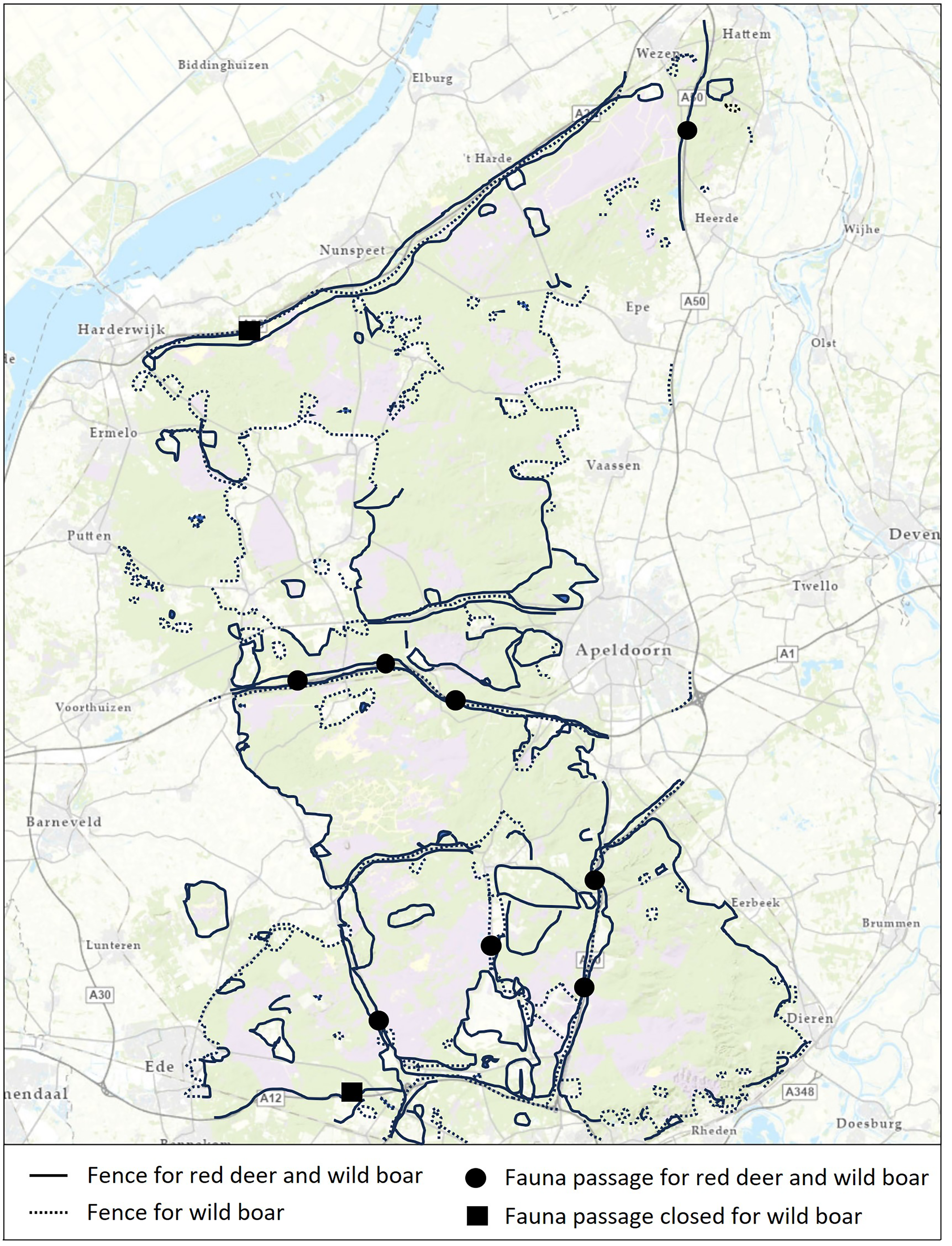
A map of the Veluwe visualizing the fences meant for red deer and wild boar and only wild boar. Fauna passages (“faunapassages.”) are gateways through the fences. Red deer can cross all of these, while some gateways are open or closed for wild boar (adapted from Faunabeheereenheid (2019: 93)).
Thus, wild boar are both seen as a pest and as a valued ecosystem engineer, depending on where they are. This is a product of a strict spatial division between nature and culture. Around 1800, the status of wild boar as pest had led to the extermination of the entire wild boar population in the Netherlands. Sometimes stray animals would traverse the country, but these were quickly eradicated because of the damage they caused to agricultural fields. Even though the increased number of strays in the second half of the nineteenth century might suggest that the Veluwe would be a potentially suitable habitat, wild boar remained intolerable until the end of the nineteenth century (de Rijk, 1987). At that time, the landscape of the Veluwe changed from largely heather to a forested landscape. This was based on a highly rationalized and production focused discourse dictating that wastelands such as the Veluwe needed to be utilized. And since agriculture was not profitable on the sandy soil, this meant that it became forested (Buis, 1985). With the introduction of the so-called silvan culture that promoted a romantic ideal of forests as key cultural landscapes (Schama, 1995), hunting and the forest became inextricably linked. Subsequently, the ideal of the perfect hunting forest inhabited by magnificent (supposedly) forest dwellers became widely shared in the Dutch (elite) hunting community. For elite hunters, such as (the German born) prince-consort Hendrik, wild boar were an essential component of this ideal and in 1904, Hendrik started to import wild boar, against the wishes of both farmers and foresters. 12 They were placed in an enclosed area called the Soerensche Bosschen, after which also other grounds were bought and forested to enclose wild boar. However, wild boar were not so easily contained by the fences. They started to make use of the roads and entered agricultural fields, causing discontent amongst farmers of the surrounding villages about the damage caused by the wild boar on their fields (Apeldoornse Courant, 14 juni 1913). To the Dutch public, therefore, Hendrik's actions to import wild boar, fence-off large areas, and organize drive-hunts 13 were considered elitist and feudal, which landed him the nickname “Varkensheintje” (little Heinrich of the pigs). The fencing-off of areas by elites was also in sharp contrast with the commonly held utilitarian view that the landscape should provide for the Dutch population (see Figure 3). Relatively soon after the reintroduction of wild boar, the hunting law changed in 1923, labeling wild boar as pests. Now, wild boar became highly killable; they became both exterminable by farmers (Dahles, 1990) and huntable by elite hunters.
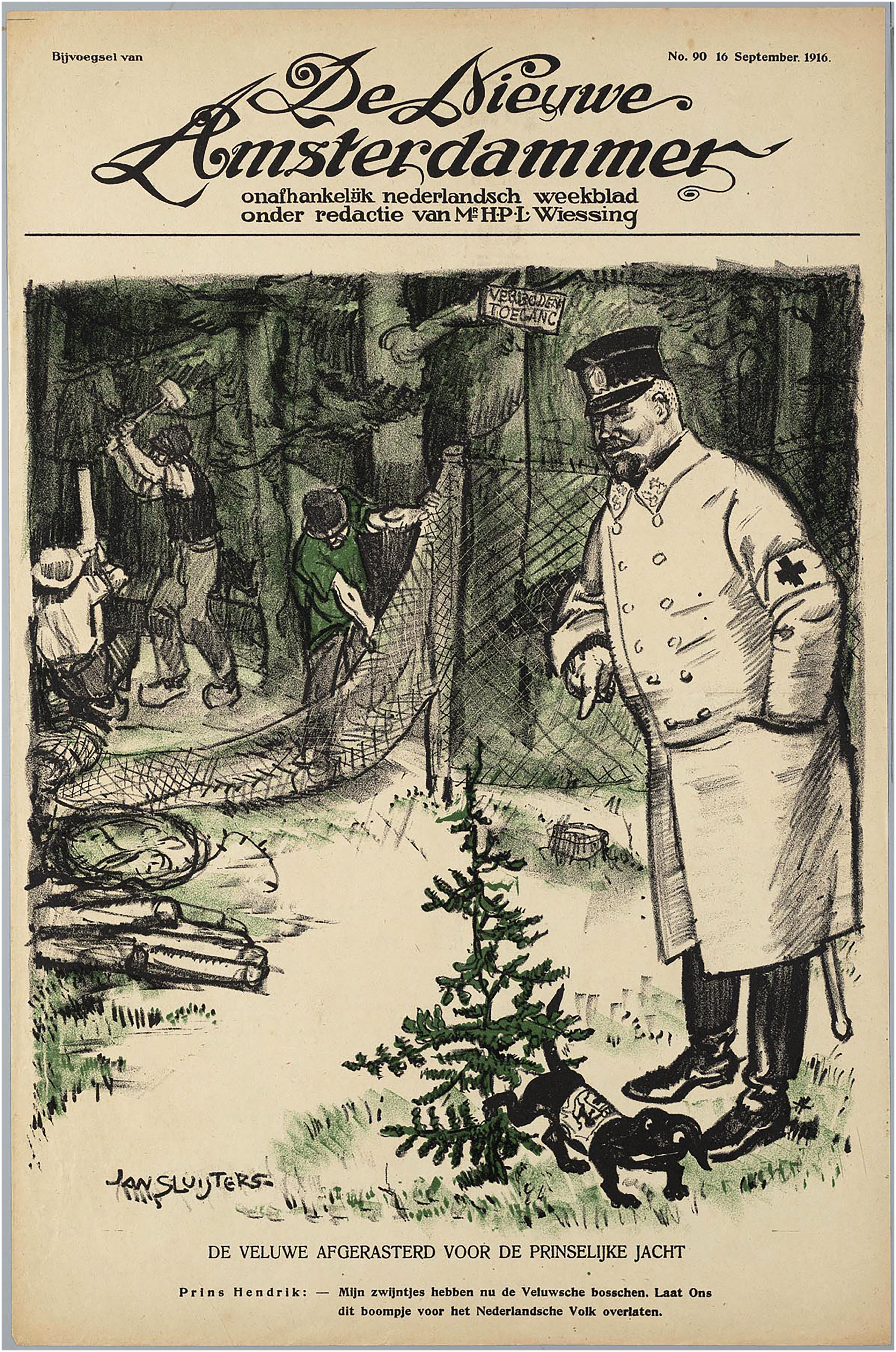
The front page of periodical De Nieuwe Amsterdammer (Sept 16, 1016) runs the heading: “the Veluwe demarcated for the princely hunt.” The figure displayed is Prince Hendrik, who says “my piggies now have the Veluwe forests. Let us leave this tree for the Dutch people.” This cartoon illustrates the conflicting land use interests that emerged when the wild boar were reintroduced.
Regimes of death
Even though, currently, wild boar are no longer designated as “pests” and are protected by law, the characterization of wild boar as undesired in (agri)cultural space and desired in designated natural space still plays an active role in how the lives and deaths of wild boar are governed. In the zero tolerance zone, hunters are expected to shoot all boar that venture outside of the Veluwe—although in practice they may sometimes decide to let an animal live. Meanwhile, inside the Veluwe, notwithstanding their status as ecological engineers, they are “ecologically eliminated” to prevent damage (Keulartz and Bovenkerk, 2021: 13). Thus, both within the Veluwe and outside in the zero tolerance zones, the ending of wild boar lives has become the rule, to the extent that up to 90% of wild boar living in the Veluwe is killed every year (Faunabeheereenheid Gelderland, 2019).
We suggest that the sheer scale of death entails a form of violence in which wild boar become subjected to what Mbembé (2003) has called necropower; “the power of death.” Mbembé (2003) has developed this notion drawing on postcolonial theory to understand how racism has contributed to the production of zones of exception in which humans are rendered killable, and even nongrievable. Necropower emerges when populations are made to exist in a space between life and death which not only allows for exceptional killing but also instills a persistent threat of death that shapes people's existence and movements. Without meaning to equate the experience of racialized human subjects to wild boar, wild boar lives seem to have become inscribed into a regime of death based on a generalized state of exception in which killing has become normalized. This regime denounces the agency of wild boar, who are not recognized as autonomous beings with preferences, habits or relationships. Instead, they need to be restrained by means of fences in “nature” to prevent habituation and domestication outside the Veluwe reserve. Wild boar are not considered participants in negotiating space (von Essen et al., 2023) while fences serve as a unilateral tool to restrict and micromanage wild boar movements (Poerting, 2023). Yet, regardless of whether wild boar stay inside or leave areas defined as nature, they can be and are routinely killed in both spaces. As such, they are under a precarious and constant threat of death. The boar can even be seen to show awareness of this. Throughout the Veluwe and in the zero-tolerance zones, the landscape is scattered with high seats installed for shooting. Several hunters expressed to the first author that wild boar are aware of the presence of these cabins and the potential danger they hold, even while hunters seek to lure them to these shooting spots with food. For example, during a hunt, a hunter explained that sometimes sows will only let her piglets come near the hunting seat while she stays hidden. According to the hunter, the sows do this because they have probably already experienced the death of a family member and are aware of the danger of this place. Piglets do not have this experience yet, and the sow either takes the risk assuming that her piglets will be spared or accepts the possibility of their death.
In Foucault's analysis of the Panopticon, power is manifested in the ways in which the prisoner becomes self-disciplined by an unverifiable gaze. Since these cabins are not constantly occupied, wild boar do not know whether a hunter is present in the cabin and are subjected to a precarious threat of death in these spaces (see also Forssman and Root-Bernstein, 2018). Thus, the spatial organization of the hunting cabins and fences aim to control the movement of animals through fear and conditioning (Anderson et al., 2023) and this arguably generates a form of life that is ‘constantly rendered in its precariousness, a life that is always potentially under attack and therefore always an exceptional life” (Thacker, 2011: 158)
The lives of wild boar piglets exemplify this precarious status: “Harry does not shoot sows with piglets. He says that he’d rather not have screaming piglets running around the forest and shooting them means that through the impact there will be nothing left of them. He says that some hunters do do this.” (Fieldnotes, 01-11-2018)
This quote explains that while adult animals leave traces of a life lived, for example when their killed bodies are being eaten or their antlers or tusks are used for decoration, piglets are completely obliviated. There is no testimony of their lives lost, apart from the hunters’ and mother boars’ memory and the report in which hunters register their kills. Arguably, piglets become nongrievable subjects that are invisible to the public in this regime of regulation and control. This is important “for if life is not grievable, it is not quite a life; it does not qualify as a life and it is not worth a note. It is already the unburied, if not the unburiable” (Butler, 2004: 34). Even though Butler refers here to a human context, the killing of piglets exemplifies how these lives become extinguishable. As such, hunting becomes a technique that instills terror in populations (Mbembé, 2003), not only by deaths themselves, but also by the harm inflicted through preventing the emergence of intergenerational learning by erasing (the emergence of) their collective minds (Boonman-Berson et al., 2019). Practices of hunting in regimes of population management and damage control of hunting create subjectivities in an in-between of life and death; for wild boar, the experience of living in the Veluwe is imminently bound to a (necropolitical) regime of death.
Yet, the quote also shows how animal lives can be subject to sovereign power of hunters like Harry, who may decide to let them live. We will further elaborate on this point below.
The power to let live
“Harry explains that when there is a group of wild boar, he will never shoot the first or the last of the group. They are important for the social structure of the group, so he does not want to disturb the social hierarchy.” (Fieldnotes, 01-11-2018)
Just as Harry refuses to kill sows with piglets, he also refuses to fully comply with the regime of population management and damage control. Rather, he actively chooses to let the piglets and other specific members of wild boar families live. Within the regime of death that govern wild boar at the Veluwe, sovereign decision making by hunters shifts from shooting to “letting live”: “The power to kill implies the power to let live, since those who survive the wrath of the sovereign's sword only do so at the mercy of a sovereign power not deployed” (Wadiwel, 2015: 122). Deciding on who to let live is based on knowledge of the social structure of these animals, as well as on a particular hunting ethos that is called weidelijkheid, the hunter's code of sportsmanship. This ethos prescribes a form of just killing and caring for animals. Hunters are expected to incorporate hege principles to care for and attend to the needs of animals. At the same time, killing must be done well. This means that the execution must minimize animal suffering, but also that animals must be given a fair chance of escape. As illustrated with the par force hunts on red deer, experiencing the fleeing behavior of animals can be interpreted as a will to live by the animal. However, the practice of hunting wild boar from a hunting cabin as described before does not give much space for the animal to express their will to live. Therefore, to some hunters, the practice itself is even considered unethical (Dahles, 1990). For others like Harry, weidelijkheid transformed into “letting live” piglets and pregnant sows and placing a good shot so that the animal is killed instantly. According to hunters, such codes of conduct are what separates their practices from those of the slaughterhouse (Marvin, 2006) in which nobody is let live. Accordingly, in management regimes aimed at maximizing control, weidelijkheid requires that hunters are not completely in control and that huntable animals remain wild and agential (Dahles, 1990).
All in all, the remnants of hunting norms and practices in current-day management create specific subjectivities of hunter-managers, or manager-hunters that are riddled with paradoxes. Management has even become an integral part of the hunters identity to legitimize hunting practices. As the director of the Royal Dutch Hunting Association explains: “In the Netherlands, we do not hunt for fun. Especially in the case of wild boar, this is about management when the number of animals increases above what has been agreed, society asks us to shoot them” (Bolhuis, 2023). However, hunters are not just ecosystem stewards (Holsman, 2000). In their daily practices in the Veluwe, they balance the competing logics of hunting and nature management. While nature management is currently the main external justification of killing, prevalent hunting logics and norms require hunters to act against biopolitical prescriptions of what it means to do this nature management effectively and efficiently. This tension may explain why in some contexts hunters refrain from managing wild boar and refer to it as “somebody else's problem” (Keuling et al., 2016) or as “dirty work” (Dahles, 1993; Emond et al., 2021). With increasing numbers of boar—and increasing numbers of culling—hunter-managers have started to complain they are like slaughterhouse workers or a shooting servant (“schietknecht”) in unpaid service of the government (von Hebel, 2014).
Conclusion
The stories of the Veluwe, the landscapes, the animals, and the hunters presented in this article illustrate the persistence of hunting as a symbolic and material practice in wildlife management and biodiversity conservation. We started this article showing how biopolitical control of red deer has become invested in the male stag. The enclosing of spaces in the Veluwe facilitates a specific type of biopolitical care toward red deer that revolves around their antlers. Here, the subjectification of hunters happens in tandem with a particular imagination of proper spatial management and the nature of space: an ideal hunting landscape where skilled hunters maintain an ecosystem and a healthy population reflected in good antlers. Both the construction of enclosed deer parks as well as the exercise of hunting practices emerged as part of the spatial imagination of sovereign power. In the Veluwe, we can observe how the elite—sometimes literally “sovereign” (royal)—hunter has transformed into a hunter-manager. Nevertheless, the antler and the interpretation of its quality persist as a signifier of good practice also in the new subjectification of the sovereign hunter as a good manager, as well as in the biopolitical optimization of the red deer population exemplified in the figure of the stag: antlers with many ends, here designating the deer that carry them, shot at their prime. Thus, even though discourses and rationalities change, the elite hunting landscapes endure through their materialities and meanings.
Through the wild boar, we illustrated how the contemporary landscape of the Veluwe reflects a mixture of intersecting regimes of power. Whereas red deer are killed in the name of their (or their antlers’) flourishing, wild boar lives in practice seem to revolve around their deaths. We have illustrated how wild boar spaces appear as a dichotomy of being in- and outside nature, which has historically normalized and legitimized their killability. By the ubiquitous and imminent threat of being killed, together with the creation of nongrievable subjects such as piglets, wild boar are subjected to a regime of death. The extent of killing in these spaces and the experiential and bodily violence this entails for wild boar we argued to produce a form of necropower, the power of death over life. In a necropolitical regime, the subjectification of hunters as cullers or managers shifts focus toward the power to “let live,” whereby the agency of hunters again reflects a form of sovereign power.
Living is an exception, not the norm in these spaces (inside and outside the Veluwe), especially for the wild boar but also for the young and old male red deer. The landscape surrounds these animals with technologies of death (guns, hunters, fences, classification systems, high seats, and fauna day) while subsuming technologies of life-making, such as food and shelter. This results in ambiguous human-animal relationships that are tied to both hunting and management. Yet, these animals are generally viewed to naturally belong at the Veluwe. For common visitors hoping to spot a red deer or wild boar, the Veluwe is mostly thought of as a set of landscapes, ecologies and animals that are the last remnants of wild nature; nature that unfortunately has to involve population management, including culling, to maintain its biodiversity values. However, these areas—their spatial layouts, their physical and ecological features, their ownership, their still dominant cultural meaning, their boundaries and borders and the species of wildlife in them—as well as the motives, traditions, categories, and knowledges that inform their management are all the outcome of, or informed by, the histories of these areas as “hunting grounds.”
What we have shown in our analysis is that what nature is considered to be, what management is seen to be required to conserve nature, and how this management is to be performed and by whom, are shaped by hunting. While in the wider international context of nature conservation, scholars have criticized conservation logics, focusing on the often violent conflicts and injustices these entail in postcolonial societies, they have tended to shy away from analyzing spaces of nature conservation in contemporary Western societies with a similar critical repertoire (von Essen, 2018). This asymmetry points to the naturalization of these Western conservation spaces and the normalization of their management, while other spaces and practices in the Global South remain contested. For example, western countries and NGOs 14 put pressure on African governments to limit the culling of elephants because of their biodiversity value despite human wildlife conflicts due to crop raiding (Evans and Adams, 2018). While in the Global South, humans are expected to accept being exposed to danger for the sake of biodiversity (Margulies, 2019), mere damage or nuisance is apparently sufficient to justify the routine culling of the largest remaining fauna in Western countries. This article has addressed this asymmetry by problematizing these naturalized landscapes and normalized practices and by demonstrating the extraordinary extent to which wild boar and red deer have been rendered killable at the Veluwe.
Much has changed since Stadtholders Willem II and III roamed the Veluwe as “one of the best hunting countries in the world,” but the red deer and wild boar that live here are caught up in a landscape that still inscribes them into deadly relationships with hunters, managers, cullers; humans who themselves on occasion also feel trapped in this landscape when the assigned numbers of to be culled animals generates a sense they operate a slaughterhouse. The future of these spaces seems inescapably linked to the asymmetric biopower of human–animal relations as inscribed in these hunting landscapes. As Srinivasan (2014) shows, biopower becomes affirmative “in times and spaces of social change where there is an effort to ethically improve Self-Other relationships” and can also be harmful when “they are embedded in older, established ways of being and thinking which can be antagonistic to the efforts of change” (Srinivasan, 2014: 514). As this article has argued, biopolitical and necropolitical hunting regimes have a tendency to obscure the dominance and harm inflicted on wildlife populations. Even though population management sounds harmless and is portrayed as a necessity for both human and animal lives, this regime is violent in the ways in which sovereign power merges with a normalized politics of and powers over life and death. This leads to a landscape of near ubiquitous death in which most of the red deer and wild boar population have death quotas. Whereas wild boar remain present at the Veluwe, the majority of individuals run a high risk at premature state-sanctioned death. While for red deer, there have been initiatives to limit the number of barriers, specifically fences and roads, for wild boar no such efforts have been made, leading to an intensification of control in the form of killing. Our genealogy of this landscape brings into focus “the political outcomes that inherently challenges what it means to ‘belong’ or to ‘pertain’” (Buller, 2014: 314). As such, the lives of red deer and wild boar, the landscapes they inhabit and their relationships with humans continue to this day to be haunted by the way they figured in historical hunting practices.
Highlights
Every year 60% to 90% of wild boar and red deer are culled at the Veluwe Red deer and wild boar conservation in the Veluwe nature reserve is shaped by its past as a hunting ground. Understanding the persistence of historical imaginations and material practices of nature conservation requires a landscape genealogy. Management of deer and boar at the Veluwe reflects a blend of biopolitics, necropolitics, and sovereign power. Hunters themselves are caught up between competing rationales of being a sovereign hunter or an instrument of necropolitical culling.
Footnotes
Acknowledgements
The first author is grateful for the human and more-than-human encounters at the Veluwe that shaped this research. The author would like to thank the hunters, gamekeepers, game management experts and nature management organizations for their contributions. A very early version of this article was presented at the Porcine futures 1 workshop: “re-negotiating ‘wilderness’ in more than human worlds” in Prague 2018 and the first author is very appreciative of the feedback and discussions received here. The authors are also very grateful to the editor and three anonymous reviewers for their insightful and constructive comments.
Data availability statement
The data that support the findings of this study are available from the corresponding author, E. van Heijgen, upon reasonable request.
Ethical statement
The ethical procedures for this study have been executed according to the Wageningen School of Social Sciences (WASS).
Funding
The authors disclosed receipt of the following financial support for the research, authorship, and/or publication of this article: The first author received financial support for the research of this article as part of the PhD project “Hunting landscapes” funded by the Wageningen School of Social Sciences (WASS).