




Abstract
The paper examines the role of maintenance and repair in the multispecies city as central to understanding the relationship between non-human life and infrastructure. The focus of the paper is the black-legged kittiwake, a pelagic species of gull. Kittiwakes have long-used artificial structures for nesting, but the rapid growth of seabird colonies in UK towns and cities has seen their inhabitation of urban infrastructure pose new challenges. Drawing on ethnographic research from the eastern coast of England, the paper develops the notion of ‘maintenance as compromise’ to capture how forms of infrastructural maintenance reflect an adjustment or coming to terms with new ecological proximities. Through three cases, namely, non-human inhabitation of an iconic infrastructure, routine infrastructural work in the form of street cleaning, and transformational repairs that support the use of buildings by breeding birds, the paper argues that undertaking maintenance as a form of compromise not only allows for messy co-presence, but demonstrates an understanding of infrastructure that takes the lifeworlds of non-humans seriously. However, while such a coming to terms indicates a shift in the politics of knowledge, attending to the collective life of infrastructure reveals the simultaneous constraints and tensions that make radical propositions for alternative futures difficult to imagine. The paper thus concludes by underlining the complex motivations that shape practices of repair and maintenance in the multispecies city, the problem with taking such works as a sign of shifting ethical relations, and the expertise and unknowns that are involved in responding to non-human inhabitations of infrastructure.
Introduction
Every September, a team of abseilers make their way down the side of BALTIC Centre for Contemporary Art on the banks of the River Tyne in Gateshead, North East England. Over a three-day period, the abseilers clean the windows, jet-wash the walls, and clean and inspect the sandstone ledges where over 200 black-legged kittiwakes (hereafter kittiwakes) spend the breeding season. Using industrial rope access and dangling at heights of around 140 ft, the annual maintenance of the north-facing wall is a key event in the management of the facility and considered essential to ensuring that kittiwakes can continue to nest between March and August without detrimentally impacting the building's integrity. Nest material and mud are removed; guano is cleaned off; and the mortar of the former flour mill is examined for signs of deterioration and any remedial work that might be required.
Kittiwakes are a pelagic species of gull; they winter out at sea and return to the coast to breed. While they have long used artificial structures for nesting, this use has historically been restricted to coastal villages and harbours rather than built-up urban environments. As ocean surface-feeders, kittiwakes are especially sensitive to changes in marine systems, with global numbers suffering a sharp decline over the last four decades (Birdlife International, 2019; Coulson, 2011). Kittiwakes are thus routinely enrolled in debates that concern the cumulative effects of a series of chronic conditions, including climate change, overfishing and, more recently, avian flu (Wilson, 2024).
It is against this backdrop that I examine responses to kittiwake inhabitations of urban infrastructure and the role that practices of repair and maintenance might play in supporting non-human life. Kittiwakes have been nesting along the River Tyne since the 1940s and on the building that houses BALTIC since the 1980s, where they have gained notoriety as the farthest inland colony in the world. Over the last two decades, kittiwake numbers in Gateshead and the adjacent city of Newcastle upon Tyne have steadily increased to form an urban colony of over 2000 breeding pairs that now nest on different forms of urban infrastructure, including street lighting, drainpipes, and bridges, as well as commercial property and warehouses. As urban numbers have increased, so too have contestations over kittiwake use of the built environment (Wilson, 2022a). In this respect, Newcastle and Gateshead are not alone. Other towns and cities along the eastern coast of England and the coast of Troms and Finnmark in northern Norway have seen kittiwakes moving away from their traditional breeding cliffs to make use of the built environment, posing challenges for local businesses, residents, and councils while reworking and repurposing urban compositions and form (Barua and Sinha, 2023; Benjaminsen et al., 2022).
Despite a relatively short history of urban inhabitation, breeding success would suggest that kittiwakes are doing well in cities, while their numbers continue to fall at the cliffs and decline overall. Readily distinguished from so-called ‘adaptive generalists’, such as crows or other gull species, the becoming urban of some kittiwakes has not yet resulted in any documented changes in feeding or breeding behaviours, and urban numbers are too small for them to be considered a synurbic species (Francis and Chadwick, 2012). In socio-cultural terms, these sea-faring birds are further unusual in that they are increasingly shaped by conservation discourses and charisma at the same time as they are discursively constituted as ‘trash’ species on account of being a member of the gull family and thus demonised as ‘problem’ birds (Trotter, 2019; Watson, 2013).
Staying with this fundamental ambivalence, I examine forms of maintenance and repair that have become part and parcel of the multispecies city to intervene in two bodies of work: (1) infrastructural studies and debates on infrastructural futures and repair; and (2) research on planning for multispecies cities. While non-human use of infrastructure ‘against the grain’ has been celebrated as evidence of the liveliness of cities (Hinchliffe and Whatmore, 2006: 124), less has been said about the maintenance that is associated with such living together and what such maintenance signals – if anything. With this in mind, I examine a form of maintenance and repair that is itself a politics of the multispecies city that, while not necessarily equating to an ethical commitment to living better with others, makes such living together possible nonetheless. In doing so, I develop the notion of ‘maintenance as compromise’ to capture how different forms of urban maintenance, including structural repairs, street cleaning, and building alterations, reflect a coming to terms with the presence of nonhuman others. Compromise requires an adjustment of principles, a lowering of expectations, or a partial surrendering of position. To understand maintenance as a form of compromise is to recognise how maintenance supports ‘messy copresence’ (ibid) while demonstrating an understanding of infrastructure that takes the lifeworlds and affordances of non-humans seriously (Barua, 2021). However, while compromises reflect a shift in the politics of knowledge, the new forms of urban composition that arise as a result are not necessarily borne out of intent. As I will suggest, a focus on the life of infrastructure – its aesthetics, politics, and form – and the tensions that exist around different formulations of collective life simultaneously reveals the constraints, juxtapositions, and occlusions that make radical propositions for alternative futures difficult to imagine.
The paper arises from six years of ethnographic research that began along the Tyne, but grew to incorporate Scarborough and Lowestoft on the east coast of England, along with collaborative research in Tromsø and Vardø in Norway as part of a broader ‘urban kittiwake project’ (Reiertsen et al., 2019). Observation of breeding sites, planning meetings, talks, and tours, were supported by interviews with members of the public, wildlife organisations (focused on both welfare and conservation), local councils, business owners, ornithologists, and marine scientists. Discourse and content analysis of local and national reporting examined how kittiwakes and ‘seagulls’ have featured in local and national debates. This paper predominantly draws on interviews conducted with people involved in urban planning and maintenance in the UK, including ecologists, business and building owners, as well as wildlife officers involved in consultancy work. The issues covered are relatively sensitive and are frequently the subject of fraught and protracted debates. As such, some minor details pertaining to the timings and location of works have been omitted. While important, their omission does not change the arguments made.
The paper begins with debates on urban infrastructure, maintenance, and repair, which I connect to a growing body of research on planning for the multispecies or ‘wild’ city (Barua, 2023; Steele, 2020). Drawing on examples from Gateshead, Lowestoft, Newcastle upon Tyne, and Scarborough, the remainder of the paper then examines how different forms of maintenance and repair respond to the unintended use of urban infrastructure by breeding kittiwakes. The paper develops in three parts. The first examines the inhabitation of iconic infrastructure through the case of the Tyne Bridge and juxtaposes the poetics of infrastructure with the incorporation of the bridge into kittiwake lifeworlds. The second considers routine infrastructural maintenance in the form of street cleaning and its role in both reducing more-than-human conflict and sustaining the myth of the sanitised city. And then, finally, the third turns to examples of ‘transformational repairs’ that tentatively rework urban relations. To conclude, I underline the complex motivations that shape repair and maintenance in the multispecies city; the problem with taking commitments to urban maintenance as a sign of shifting ethical terrains; and the unknowns that are involved in infrastructural work and challenges to official city narratives.
Infrastructure, non-human inhabitations and the wild city
As Aya Wilson (2016a) puts it, ‘infrastructure's chief referents lie in transportation, energy, communications, and water and waste’ (p. 247–249). The pipelines, power plants, phone lines, sewers, roads, and ports that have been at the heart of infrastructural studies are the ‘material forms that allow for the possibility of exchange over space’ (Larkin, 2013: 327) or more simply, ‘the matter that moves matter’ and facilitates the flow of people and ideas (329). Given infrastructure's framing as a network or instrument that is essential to the functioning of something else (Star, 1999), it is unsurprising that it is conceptually elastic. Indeed, Hetherington argues that the notion of infrastructure is significant precisely because it continues to define the ‘stakes’ of argumentation despite its fluid, contested meaning, and instability as a site of analysis (2018: 4; Bosworth, 2023). This can be seen in work attentive to the social relations that build support systems (Alam and Houston, 2020; Barua, 2023; Simone, 2021) or conceptualisations of infrastructure that include families, norms, and food chains alongside the frequently cited cables, wires, pipes and roads (Berlant, 2016: 393; Graham and Thrift, 2007).
Central to this paper are the material forms of urban infrastructure and their social systems of maintenance and repair. It works with the premise that the life of a city can be read through the social, political, and symbolic lives of its material infrastructures and the differentiated experiences and futures they produce (Amin, 2014; Anand, 2017; Stokes and De Coss-Corzo, 2023), but with a specific concern for a more-than-human reading of city life. Like much infrastructural work, this premise understands infrastructure as a terrain of power and contestation (Anand et al., 2018) and deploys a form of analysis that foregrounds the so-called ‘background’ or ‘backstage’. In understanding infrastructure as that which might appear to be the background to something else (Star, 1999), much of this work takes its leave from the radical feminist work of Susan Leigh Star whose seminal questions on infrastructure and method posed challenges for the study of infrastructures that are readily envisioned as systems of substrates or ‘sunk capital’ that are embedded within and between something else (Graham and Thrift, 2007). As Star (1999) argued, that things only become visible when they become inoperable highlights the need to better attend to the hidden inner workings of things that otherwise remain unseen (Graham and Thrift, 2007). While this is a critical move, which has made the invisibility of infrastructure a common thread of analysis, Larkin (2013) has stressed the importance of recognising that invisibility rarely relates to all aspects of infrastructure. Infrastructure might be taken for granted, despite being highly visible, or may be politically visible despite being physically hidden. Thus, (in)visibility is not only situated – as can be seen in work concerning inequitable infrastructural provisioning or normalised disruption (Desai et al., 2015) – but differently mobilised to different effects.
The work of maintenance and repair is central to the endurance and functionality of infrastructures that would otherwise be prone to decay and eventual collapse, with significant ramifications for urban life, social difference, inequity and political transformation (Anand et al., 2018; Buser and Boyer, 2021; Carter and Acker, 2020; Graham and Thrift, 2007; Ramakrishnan et al., 2021; Wilson, 2016b). However, that maintenance and repair are automatically desirable has been challenged by scholars who have underlined how, in keeping things in order, infrastructural work can become a technique of governance that perpetuates the problems of past systems and makes cities ‘in the service of some, while systematically expelling others’ (Gordon and Byron, 2021: 856). This is especially apparent in instances where infrastructures are implicated in contemporary crises such as climate change, dispossession, or economic breakdown (Berlant, 2016; Carter and Acker, 2020; Henke, 2007; Lemanski, 2020).
For Ramakrishnan et al. (2021), attending to the particularities of infrastructure's temporal phases – decay, maintenance, and repair – is key to understanding how materiality is connected to infrastructural labour (p. 678) and how those involved attach political meaning to their work. Here, it is useful to consider what distinguishes maintenance from repair. In de Coss-Corzo's (2021: 238) detailed account of the work that repair does, he underlines the value of ‘analytically separating the question of repair from that of maintenance’ to avoid assuming that that the two are always a ‘joint practice and logic’. Staying with repair as a practice ‘called upon’ in response to breakdown centres the practical knowledges that are deployed to realise fixes or improvisations that are often adaptive and thus responsive to changing conditions and socio-material contexts (p. 239). While maintenance is often understood to be preventative, and repair is considered a response to failure or disruption, conceptualisations of repair that identify its ‘emancipatory potential’ are further helpful (Graham and Thrift, 2007: 6; Usher, 2023). As Henke (2007: 138) argues, where repairs fail to amount to any operational change or systemic overhaul, they might be considered more akin to maintenance, whereas ‘repairs’ that facilitate a structural reordering of relations between culture, practice, and environment are distinct because of their transformational intent. In this respect, repair as transformation demonstrates an attunement to the pressing problems of the present that is simultaneously capable of envisioning (alternative) urban futures (Amin and Thrift, 2017).
Attending to the adaptive or transformational character of repair sits well with endeavours to support infrastructural experimentation in the context of contemporary crises, especially where present infrastructural realities make alternatives difficult to imagine (cf. Jensen, 2019). When addressing the configurations of multispecies cities, this notion of experimentation amid restrictive infrastructural realities is particularly relevant. Here, I connect an understanding of repair as transformation/adaptation with feminist scholarship that has positioned maintenance and repair as a form of care work that can provide important pathways for justice and change, where care is understood ‘as everything that we do to maintain, continue, and repair our world so that we can live in it as well as possible’ (Buser and Boyer, 2021; Fisher and Tronto, 1990: 40; Ramakrishnan et al., 2021). Of course, what constitutes ‘as well as possible’ is a matter of opinion and raises further questions about who is responsible for the decision-making of infrastructural work, its labour, and financing (Stokes and De Coss-Corzo, 2023). I take up these questions with a concern for a more-than-human understanding of ‘we’ and for the relationship between infrastructure and more-than-human life more specifically. In doing so, I draw attention to the tensions that are inherent to narratives of care and infrastructural labour when they are examined in a multispecies context, which expands the notion of collective life that is often centred in debates on infrastructural repair.
While not focused on the ‘conceptual unruliness’ of infrastructure (Larkin, 2013), Barua has argued that within the infrastructure literature, there is a relative dearth of attention that has dealt more specifically with the relationship between infrastructure and more-than-human life. In calling for an ‘expanded articulation of the constitution, effects and promises of infrastructure’, which is freed of a residual anthropocentricism, he notes three primary points of entry: non-human life as infrastructure; the relationship between infrastructure and animals’ mobilities; and infrastructure as a medium of life (Barua, 2021: 1469). It is the latter to which I turn in developing the notion of maintenance as compromise. The argument that infrastructures are more than ‘background substrates’ that subtend human life (Barua, 2021: 1469) builds on long-standing research that has posed a challenge to urban analysis by examining the heterogeneous ways that non-humans have inhabited infrastructures with and against the ‘grain of urban design’ (Barua, 2023; Hinchliffe and Whatmore, 2006: 124; Jørgensen, 2019). For Hinchliffe and Whatmore, non-human inhabitations signal a shift in the politics of knowledge, in that so-called expert designs for urban space are contested, reworked, and resisted by city inhabitants ‘whose ecological vernaculars have been learnt and honed through their everyday practices of making themselves at home in the city’ (p. 134; Barua and Sinha, 2019; 2023).
More than a shift in the politics of knowledge, non-human inhabitations of the city have the potential to reset the coordinates of ethical decision-making if their comings, goings, and fidelities are taken seriously (Houston, 2021). When situated within debates on climate change and environmental destruction (Bulkeley, 2021; Narayanan and Bindumadhav, 2019), much has been made of the opportunity – and necessity – for urban planning, politics, and policies that are capable of better embracing socio-ecological complexity and giving ‘substance’ to equity (Steele, 2020). However, as I have argued, while ethico-political imperatives might be shifting, they do not always align with the complex and ambivalent relationships that constitute the multispecies city (Wilson, 2022a), even when ‘the life and death stakes’ of the specific ways in which people are ‘bound up with and exposed to others’ are made apparent (Gibbs, 2021; van Dooren, 2014). At the same time, reconciliation infrastructures and the emergence of new possibilities for living together do not necessarily address the structural part that cities play in climate change, environmental degradation, and injustice, which can too readily be concealed by celebratory accounts of flourishing or community (Arcari et al., 2021).
For birds, cities increasingly built of glass increase the likelihood of fatal collisions, especially during migration, while light and noise pollution can disorientate and disrupt biological rhythms to deleterious effects (Wilson, 2022b). At the same time, energy infrastructure, such as wind turbines, not only impact acoustic communication, but can fatally injure birds, requiring compensatory schemes to ‘mitigate’ for losses, which reduce lifeworlds to abstractions. This is a particular problem for seabirds, with kittiwakes being especially impacted by offshore windfarms because of the height at which they fly. Even those reconciliation infrastructures that are designed to foster non-human life, promote non-human mobilities, and support habitats, can become another form of greenwashing (Barua, 2021), or create new contestations that demonstrate a failure to rework existing relations. As Hunold (2019) has argued in the case of US cities, despite the rise of green infrastructural projects, habitat is rarely mentioned, while analysis of urban biodiversity policies demonstrates a limited conception of biodiversity that tends to privilege human use-values. Such a privileging can also be seen in instances where non-human life has itself been rendered infrastructural. For example, while an urban future with oysters or ‘oystertecture’ has been seen as a sign that cities like New York can ‘heal their relationship’ with nature, the real value of oysters lies in their potential to protect cities from the turbulence of the ocean and climate volatilities, in what Wakefield and Braun (2019) have described as a ‘biopolitical doubling’, where ‘other life is managed to secure human life’. Like oysters, kittiwakes are considered to be indicators of environmental change, but unlike oysters, an urban future with kittiwakes is rarely celebrated as an opportunity to ‘heal relations’ or think the future differently (p. 195).
Staying with the idea of differently imagined futures, I turn now to my first example, which examines how an iconic infrastructure, the Tyne Bridge, has been incorporated into kittiwake lifeworlds with implications for infrastructural maintenance.
The Tyne Bridge: A potent symbol?
The iconic Tyne Bridge is a Grade II* 1 listed structure and a key part of the North East's transportation infrastructure, connecting the city of Newcastle upon Tyne with the town of Gateshead via a suspended deck some 26 m above the River Tyne. It was built with the support of a government subsidy partly because it promised to improve the chronic unemployment levels that were associated with the decline of shipbuilding on Tyneside (Historic England, 2021a). Officially opened in 1928, it was the world's longest single span bridge. Based on the method of construction that was used for the Sydney Harbour Bridge in Australia, which was not completed until 1932 (Manders and Potts, 2001), the Tyne Bridge offers a clear example of how the repetition of infrastructural projects shaped a common understanding of what it meant to be modern in the early twentieth century (cf Dalakoglou, 2010). It is therefore a reminder of the enchantments of infrastructure (Harvey and Knox, 2012; see also Bosworth, 2023; Wilson, 2023) and is listed on account of its special architectural interest, which not only includes its steel arch design, but its status as a ‘potent symbol of the character and industrial pride of Tyneside’ (Historic England, 2021a).
Kittiwakes have been nesting on the bridge since the 1990s. High above the quayside, the steel ledges and cast-iron parapet are ideal for a bird that usually nests on narrow cliff ledges. Kittiwakes have short legs and thus a low centre of gravity, with strong toe muscles and curved claws that enable a strong grip (Coulson, 2011; Turner, 2010). The birds also use the north and south abutment towers. These steel and concrete towers, faced in granite, were originally designed as warehouses comprising five storeys, although the floors were never installed, and they remained incomplete. Lifts and staircases were put in to provide access to the quayside for people and goods but are no longer in use. With the windows boarded up, their narrow-bracketed balconies are opportune sites for nest building, while almost impossible for other birds or predators to land on at only a few inches wide (Figure 1). While extreme weather events and predation have impacted the breeding success of kittiwakes at the coast, the bridge offers them relative protection.
At various points in the last 40 years, netting has prohibited access to the bridge, although netting has not been in place for more than a decade. Some of this netting had been installed to prevent pigeons from gaining access to a gap between the road deck and the abutment towers and was to later prove deadly when kittiwakes got their feet entangled in the mesh. Kittiwake mobilities have largely proven difficult to manipulate, but over the last decade, there has been a general acceptance of the kittiwakes’ use of the structure as a compromise for keeping them off some of the neighbouring buildings, including nearby hotels. As one ecologist suggested: We’ve taken most of the dangerous netting off… but we’ve always said that the birds can stay on the bridge, and on the Tyne Bridge tower, that's their favourite bit… so that's always an area that we’ve always said, that is a hotspot and it remains so and the council are committed to… because there has been pressures in the past from engineers or our regeneration people to get rid of them because they say they damage tourism, they damage buildings, they make a noise, all the usual things er but luckily over the last few years or decades they’ve come round to thinking, okay, maybe they’re not so bad … they seem to have now finally accepted that the kittiwakes will stay on the bridge. Which was a relief because it was always a worry. There was no alternative, they have to otherwise if you take them off the bridge where do they go? They go to all the buildings around, which would mean masses of complaints and then we lose that big inland colony that defines the city. (Interview, council 2019)
It would seem that just as infrastructural projects are repeated, so too are conflicts around their non-human inhabitation. In Scarborough, kittiwake use of the stone abutments and decorative ledges of the Cliff Bridge (formerly the Spa Bridge) is also a source of contestation. Completed in 1827, and also a listed structure, the bridge is away from the main town centre and supports a footpath that crosses a busy road. Despite being out of the way of residential and commercial properties, there have been repeated calls for the bridge to be netted. As one council employee put it: ‘we keep trying to say to people, to members of the council and officers of the council, if you net the bridge, you’re just going to displace them [the kittiwakes] somewhere else, which will likely be more in people's way, so the bridge is really ideal’. In 2023, this is exactly what happened when the council placed ‘deterrents’ on the bridge, prompting some of the displaced birds to disperse and move further into the town centre. After some of the deterrents were later dislodged or fell off, some birds were able to nest on the bridge anyway, and the works were deemed a failure at a cost of £30,000 (Numminen, 2023).
With or without nesting birds, maintenance and repair are central to the endurance and functionality of infrastructure (Buser and Boyer, 2021). After more than 20 years without repair, the Tyne Bridge requires steelwork, stonework, and masonry repairs, as well as repainting, waterproofing, and bridge joint replacement to maintain its load capacity – a suite of work that will take four years to complete. While this level of maintenance and dynamic materialism is to be expected, the visible presence of rust has nevertheless been taken as symbolic of neglect, which takes on especial meaning in light of the structure's status as a mark of pride and connection for the region. When central government approval for the works was delayed, the work required to ‘stabilise’ the infrastructural landscape was not only made public, but a matter of ‘collective concern’ (Amin, 2006). Such concern demonstrated how inequality is sensed through infrastructure and (in)decision (Ramakrishnan et al., 2021), with the leader of the local council citing the importance of preserving the bridge for future generations. Concern over funding was further politicised by the context of the then Conservative government's ‘levelling up’ agenda (Department for Levelling Up, Housing and Communities, 2022), which had promised to build more equitable ‘post-Brexit futures’ by supporting infrastructure and regeneration priorities across the country (on Brexit futures see Anderson et al., 2020).
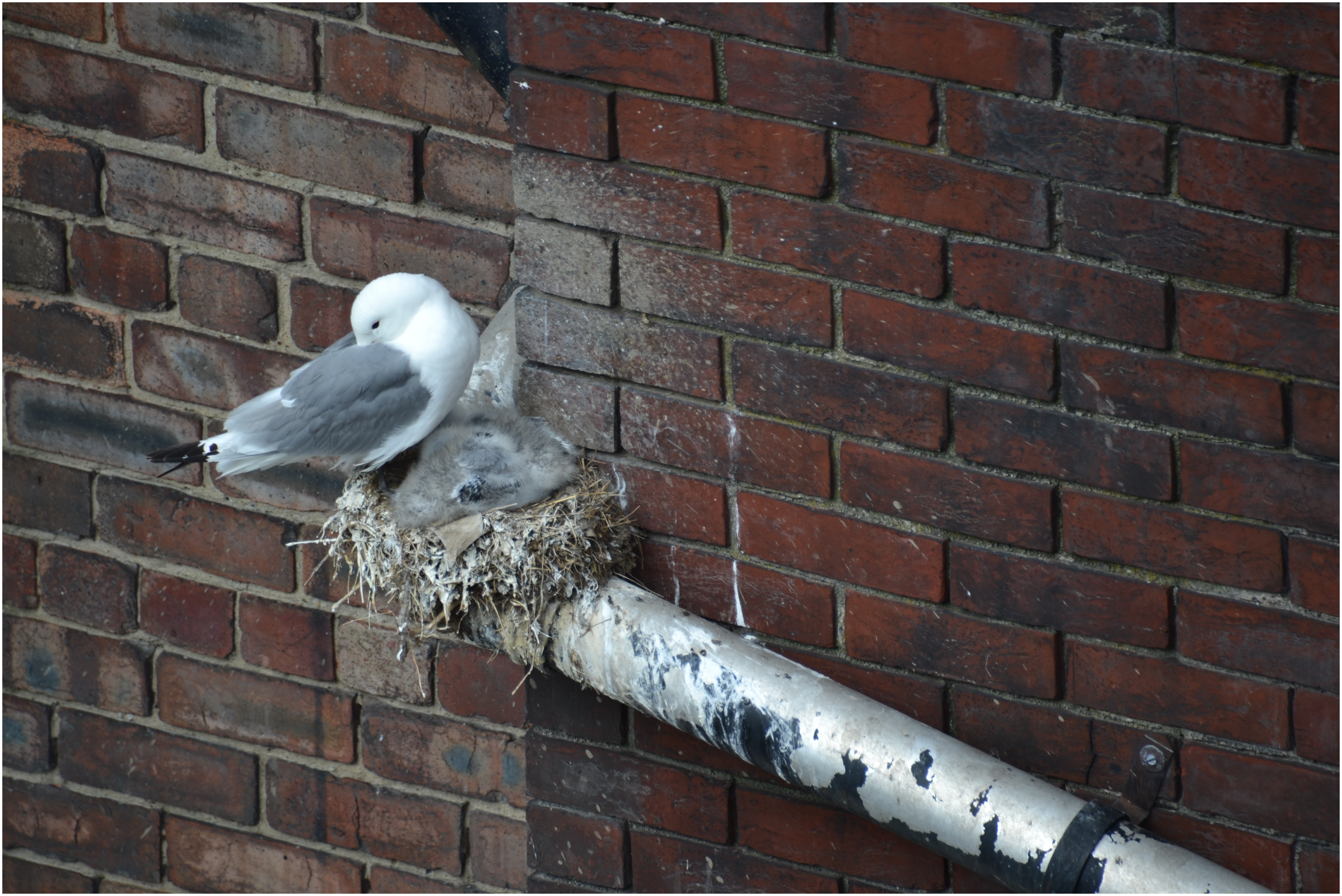
A kittiwake makes use of a drainpipe during the breeding season.
The ‘poetics of infrastructure’ – or the loosening of form from function – demonstrates how the political is ‘constituted through different means’ (Bosworth, 2023; Larkin, 2013: 329) and how the foreclosure of futures – or the threat of foreclosure – is differently sensed. However, there are other futures at play that are not addressed by this particular poetics. The repair and maintenance of the Tyne Bridge are deemed essential to its continuation as an integral part of the region's transport infrastructure and cultural heritage. Yet, at the same time, the bridge has been cited as a hotspot for road traffic emissions – especially high concentrations of nitrogen dioxide – that exceed legal limits. This has required plans for a radical overhaul of how the bridge is used, including the prioritisation of public transport and the introduction of tolls as part of council plans for clean air zones. Like many of its kind, the bridge is thus implicated in the perpetuation of present and looming threats that are experienced inequitably (Boyer, 2018; Carter and Acker, 2020). Indeed, the kittiwakes’ very use of the structure is a visible reminder of a very different set of foreclosed or threatened futures, which are deeply entangled with the perpetuated threats associated with the bridge and the region's history as one of the largest coal exporters of the 19th and 20th centuries. Here, two competing systems of categorisation, protection, and value coexist uneasily. While the bridge is a Grade II* listed structure of national architectural importance and regional identity, the kittiwakes are a red-listed species of global concern that have been drawn into very different systems of value and categorisation on account of their vulnerability to extinction.
Strikingly – and in contradiction with the council's plans – in the early planning stages, the former leader of the council cited the need to net the bridge and protect it ‘from the birds’ as essential to the bridge's preservation for ‘future generations’ (BBC, 2021). His statement about the preservation of the structure was an explicitly anthropocentric one, but also one that foreclosed the possibility of an urban future more responsive to environmental crises (Bulkeley, 2021). Elsewhere in the council, however, the required maintenance works are seen as an ‘important opportunity to take the kittiwakes’ use of the bridge seriously’ (interview, 2018). Working in phases to undertake maintenance around the kittiwake breeding season and building in resources for mitigating disruption, the colony's presence in the city has been treated as a matter of fact (cf. Brown, 2023). While the maintenance of urban infrastructure is routinely required to ‘fit around the rhythms of city life’ (Buser and Boyer, 2021), the planned works on the Tyne Bridge reflect an expanded understanding of city rhythms that takes the seasonal comings and goings of kittiwakes seriously while recognising that some compromises must be made (Houston, 2021).
Over the years, the rationale for effectively ‘legitimising’ the kittiwakes’ use of the structure has been complex (including the challenges of using deterrents on a Grade II* listed structure) and has involved complicated negotiations between ecologists, engineers, transport planners, and wildlife organisations, but this moment of rupture has become an opportunity for the councils to publicly signal their commitment to ‘supporting’ the colony in a context where its presence has been frequently contested (interview, 2018). While the character of the repair work is dynamic, the statement from the council's leader is a reminder that ‘the council’ is not a monolithic entity, but rather composed of different departments with competing priorities, as well as individuals with markedly different positions and outlooks that can have a significant impact on public perceptions of the city and who it is for (Trotter, 2019). In highlighting contingency, infrastructure not only offers insights into the practices of local authorities and government bureaucracy at different levels (Larkin, 2013), but also the parameters for differently imagined futures. It centres questions around who decides what or whom deserves care and how official scripts concerning the use of infrastructures can be resisted and reworked (Alam and Houston, 2020; Ramakrishnan et al., 2021).
‘Getting the basics right’: Maintaining the look and feel of the city
Like a number of species, the most significant point of contention around kittiwakes is their ‘defecating presence’, to borrow Heather Phillipson's description (2018) 2 . Kittiwakes defecate onto or outwards over the edge of their nests, which can result in long white streaks down the sides of buildings and the accumulation of guano on pavements.
The mess associated with the Tyne colony has been a frequent feature of local news stories, making the national news in 2011 when a report identified it as a barrier to regeneration (Wilson, 2022a). Tasked with maintaining ‘the look and feel of the city’, the business improvement district company, NE1, is responsible for jet-washing the pavements of Newcastle with increased regularity during the breeding season. Focusing specifically on the areas along the quayside directly under the nesting birds, including those on the Tyne Bridge, the daily jet-washing of streets is part of the company's commitment to ‘getting the basics right’ (NE1, 2024). As this statement suggests, this routine maintenance is neither spectacular nor glamorous, but the high-pressured loosening and removal of guano plays a critical function. Like much of the so-called urban ‘back-stage’ (Amin, 2014), its significance is most apparent when it fails, as was noted by a council worker when they reflected on the variability of its success: I went down last summer, a very hot summer, and it [the Quayside] did smell. I had never noticed that before and it was really strong, and I could smell it long before I reached it but then I went down a week or so later – whether it was about the weather or what – it was really not bad at all. There is an argument about whether or not there is enough cleaning going on… (Interview, 2019)
The highly visible nature of this routine infrastructural work is politically important, but also unusual. As scholars have argued, ordinarily, routine street cleaning often goes unnoticed, which should be considered a contingent political achievement (Gordon and Byron, 2021). For example, in Newcastle, which is known for its nightlife, night-time excesses are largely accepted as part and parcel of night-time economies, and while night-time cleaning is relatively prominent, its work is largely hidden from view on the basis that it falls outside the normal rhythms and routines of urban life. While this account of infrastructural work might appear to be tangential to the kittiwakes, there are two points to be made. First, this kind of infrastructural work, which is invisible to many, maintains the fiction of urban order and cleanliness against which the city's wilder inhabitants are pitted, demonstrating the banal ways in which urban imaginaries take shape (Gordon and Byron, 2021). Second, it demonstrates how maintenance routinely absorbs the excesses of the city and how some forms of excess are accepted as standard, while others are politically contentious.
The fiction of cleanliness was raised by Ian who works early shifts along the Quayside and suggested that the mess made by the birds paled in comparison to the mess made by its human occupants: ‘You wannna go down Bigg Market first thing on a Saturday morning – that's where the real shit is’ 3 . Larger gulls, such as herring gulls, were also noted to play a role in removing food from the streets before it could become waste and drawn into ‘wider waste assemblages’ (Shaw, 2014). Flyers, food, take-out packaging, and cigarette butts are written out of the city's story by night-time cleaning and ‘response teams that manage an ever-increasing flow of materials’ (p.180). As Shaw demonstrates, amongst this flow of materials are bodily fluids, such as urine, blood, and vomit, which are also a routine focus for night-time infrastructural work. Like guano, the removal of bodily fluids from the streets or grease from fast-food establishments requires a power washer, while the city's brickwork is also beginning to show their corrosive effects.
Given that dirt is one of the main sources of contention and justification for the kittiwakes’ non-belonging, other forms of maintenance that are central to producing the myth of the ‘sanitary’ city are an important part of the story. While the visibility of guano jet washing ensures that the council is seen to be ‘doing something’, the conspicuous nature of this infrastructural work has prompted questions about the economic costs. In the context of council budgets, especially those that have been hard hit by austerity, these questions are not insignificant. But, as one officer pointed out, ‘people often forget that there are normally far greater costs associated with deterrents’…‘people often think that nets are an easy option, but we have to remind people that they have a legal requirement to maintain and repair them to ensure they’re safe, which can be very costly’.
The cost of maintenance and infrastructural work relative to deterrence and eradication methods was a point made evident in Scarborough, where egg oiling was adopted as a means of responding to public concerns about the presence of herring gulls in the city (where herring gulls and kittiwakes are frequently conflated) 4 . Over a two-year period, significant resources were invested in the programme despite concerns about the impact on a UK red-listed species and similar programmes elsewhere having proven unsuccessful. As one member of Scarborough council noted, ‘unfortunately, when there is public or strong political pressure, there is a tendency to want to reach for the response that is most visible or attractive, publicly, when in reality the money would be far better spent on rather more boring things like gull-proofing bins, education campaigns and cleaning the streets’. While the unwillingness to adopt policies less attractive to the public might demonstrate the significance of demands made by political constituents (Ramakrishnan et al., 2021), public consultations on ‘the seagull problem’ (Performance and Governance, 2015) suggest that there is a wider range of views than these accounts of public pressure would suggest.
The maintenance costs associated with breeding birds was also raised by BALTIC Centre for Contemporary Art. As a charitable organisation, the cleaning costs are not insignificant, but they were positioned as a ‘price worth paying for accommodating a red-listed species’ that many in the building have developed a deep affection for (Interview, 2021). Indeed, for one of the maintenance team that grew up along the Tyne, the BALTIC's role in ‘housing’ kittiwakes was described as a ‘source of immense pride and pleasure’ (ibid). In 2019, BALTIC ran its first public campaign to raise funds for the annual maintenance. Framed in terms of care, it asked members of the public to help BALTIC keep the habitat of their ‘feathered friends clean and safe’. The ‘cleanliness’ of the ledges is of no concern to the birds, but the public deployment of care discourses in a context that has been historically fraught legitimises the colony's presence and alters the terms of engagement. Maintenance and repair works, which are carried out as an alternative to netting the building, thus respond to non-human agency (and the futility of deterrence) and are carried out in order to enable the continued use of urban infrastructure for non-human inhabitation.
Scholars have recently sought to understand maintenance and repair as a form of care work, which is accomplished through multiple collaborations, such that the urban backstage might be considered ‘an entanglement of caring bodies’ (Buser and Boyer, 2021: 74). In their examination of the maintenance and repair of urban water infrastructures, Buser and Boyer have highlighted how maintenance work not only demonstrates a care for matter, but can give rise to forms of care – for humans and human comforts – even in the absence of moral intention (Puig de la Bellacasa, 2017). In BALTIC's case, care for the colony is not necessarily an unintended consequence of care for matter, but this care is undoubtedly shaped by a wider set of motivations that complicate narratives of intent. This includes a desire to engineer kittiwake mobilities to keep them away from other parts of the building where their presence would pose a greater challenge to the building's critical functions, the opportunity to meet corporate sustainability goals by housing a red-listed species, and a recognition of the futility and costs of deterrence. On the basis of these considerations, as with street cleaning, routine maintenance to limit the impacts of nesting birds becomes the best option.
Given the popularity of the birds, it is worth noting that the facilities team was disappointed when the campaign ‘fell considerably short of its ambition to reach its target’. However, it was noted (with good humour) that there were ‘some savings to be made’ elsewhere. During the breeding season, window cleaning on the north face of the building is impossible and so while there is a maintenance bill for cleaning the pathways and ledges, the bill for window cleaning is dramatically reduced (Interview, 2021).
Between displacement and reconciliation
In 2021, British Telecomm (BT) found itself on the receiving end of a public backlash when it covered its entire Lowestoft building in netting ahead of the kittiwake breeding season. The netting followed concerns that nesting kittiwakes and herring gulls were having an impact on the building's operations, with BT citing their obligation to ‘maintain critical networks, including the 999 [emergency] network’. This required them to have sufficient access to their roof space as well as functioning cooling systems: all their air conditioning units, to keep those units at the right temperature, are outside, and what was happening was, a lot of mess from the kittiwakes was getting into the air conditioning systems. So, the reaction was: “oh we just need to stop the birds nesting”. So, they’ve gone and put up blanket netting over all the faces of their building. (Marine wildlife officer, interview, 2021)
In noting the attempt at a ‘simple fix’ in the form of ‘blanket netting’ and the simplification of the problem (‘we just need to stop the birds nesting’), a lack of knowledge is highlighted. As de Coss-Corzo (2021) highlights, repair work often involves practical knowledge that is shaped relationally as socio-material environments change. In this case, kittiwakes are part of the changing socio-material context of infrastructural life, but an understanding of kittiwake lifeworlds did not inform the ‘fix’. Because the birds are faithful to their nest sites, videos of kittiwakes trying and failing to access their former nesting spots resulted in public pleas for an approach that recognised the ‘climate and extinction emergency’ and ‘gave space to birds’. This prompted a quick reassessment from BT. As one marine wildlife officer suggested, these videos of them flying at netting and trying to get through it is quite an emotive way to present what is going on, and people are seeing those videos and have just been outraged by it, really. (interview, 2021)
Lacking the necessary expertise, BT approached the Royal Society for the Protection of Birds (RSPB) to help them find an alternative solution. Within a week, netting on part of the building was removed, and artificial wooden ledges were installed on one side of the building to facilitate nesting kittiwakes while protecting the parts of the building that were deemed essential to the functionality of the building's operations in what was described as a ‘pragmatic approach’ to the issue. In the local press, BT was hailed for ‘working with nature rather than against it’ and for ‘choosing nature not nets’, a rallying cry that has been popularised on social media by a series of high-profile examples of nets being used to cut off avian access to trees, buildings, and cliffs deemed important to development or the value of real estate (Laville, 2019).
In this example from Lowestoft, the glitch (the threat to critical networks) and the public response to netting prompted new forms of collaboration and consultation that allowed different forms of expertise to inform building alterations and repair. When things break down, new solutions can be invented, and repair and maintenance can function as a form of learning. The addition of ledges might be considered a form of transformational repair, in that it responds to the risk of operational disruption in a way that appears to adapt to socio-environmental change and reorder relations, even if only superficially (de Coss-Corzo, 2021; Henke, 2007: 138; Stokes and De Coss-Corzo, 2023). Infrastructural glitches might draw attention to infrastructures that would otherwise go unseen (Star, 1999), but in this case the initial response to the glitch and the subsequent scrutiny that it attracted had the additional effect of drawing attention to the prevalence of anti-bird netting in the town. This not only put pressure on other businesses to find their own alternatives to bird ‘deterrents’, but also highlighted how normalised (and thus invisible) avian ‘deterrents’ had become.
In talking about a reordering of relations, care should be taken not to assume that such consideration or transformational repair necessarily indicates a reworking of ethico-political relations or a willingness to fully embrace non-human inhabitations, even while it keeps the possibility for change or transgression open (Ramakrishnan et al., 2021). In this case, a capacity to attune to urban futures while responding to pressing problems is about recognition of the futility of netting and concern for reputational damage as much as it is a consideration of ecological vulnerabilities and other claims to the city. As with the examples in the previous sections, the ledges are a form of compromise – a partial giving up of one's position (and control of the building's use). It is also important to recognise the infrastructural labour required: BT had the financial resources to undertake the work, which involved ‘quite a lot of people-power and time, a cherry picker, the materials, and having someone out at the weekend to do it in a matter of days’ (Interview, 2021). This is often not an option for domestic properties or smaller businesses, where ‘the solutions are a lot harder to come by’.
Unlike reconciliation infrastructures that are installed with the accommodation of non-humans in mind and the specific aim of attracting and supporting (desirable) wildlife (Barua, 2021), the ledges in Lowestoft are more responsive and shaped by different imperatives. Even while they attempt to locally steer kittiwake mobilities, they respond to how the building has been incorporated into kittiwake lifeworlds, rather than aiming to engineer new forms of inhabitation (Metzger, 2016). As more companies and councils look for solutions to the challenges posed by breeding seabirds, the addition of such ledges and experimentation with different materials and design has become something of an opportunity for learning between cities and towns with growing colonies. However, attending to the practice of repair in a multispecies context also reveals some of the contradictions that exist around formulations of infrastructural work. At face value, the initial work undertaken to secure a critical network upon which people rely – including the cleaning of the air conditioning units – might be read as a form of care work (Alam and Houston, 2020; Buser and Boyer, 2021). Yet, this care for matter warranted the expulsion of non-human inhabitants, demonstrating how care for different forms of urban life often exist in tension. While the solution demonstrated a form of compromise that was responsive to the pressure exerted from some members of the public, the newly located ledges on the other side of the building brought the colony into new forms of intimacy with a residential street. This raises questions around who has the ability to exert pressure and whether new lines or sites of contestation will render the adaptations fragile.
BT's response to kittiwake inhabitation is not the first of its kind in Lowestoft. Indeed, when one of the oldest colony sites, which was established on the South Pier in the 1950s, was demolished, the town's North Pier had ledges added to it in the 1980s to replicate cliff-like conditions and accommodate the displaced birds. After being an important breeding site for many decades, the wall was abandoned by the kittiwakes in 2017, and they moved into the town centre where their presence was far more difficult to manage. This prompted the port operator, Associated British Ports, to ‘upgrade’ the wall in a bid to entice the birds back to their previous spot away from the town's shops and restaurants. There were several theories as to why the ledges had been abandoned, but predation and the build-up of old nests were cited as potential causes. The ‘essential maintenance’ work thus involved a thorough clean-up of the ledges and the installation of wire meshing above the ledges to protect the birds from predation.
The North Pier is recognised as a County Wildlife Site 5 , but the maintenance or ‘upgrading’ of the wall was also described as an important part of the preparation for Lowestoft Eastern Energy Facility. The facility, designed to ‘take advantage of the opportunities available in the Southern North Sea’ (which has one of the largest clusters of offshore wind farms in the UK), is intended to develop the port as a significant hub for the renewable energy sector, critical to the maintenance of operations and the construction of further offshore wind sites. The port's re-engineering includes not only the kittiwake wall, but also the installation of three kittiwake hotels. These installations are a stark reminder of the compensatory programmes that are required of energy companies to address the collision risks that offshore wind farms pose to seabirds, often by reducing the impacts of other pressures that are affecting seabird numbers, such as predation or habitat loss. Indeed, as part of their compensatory programmes, in 2023, the European energy company, Vattenfall, provided £50,000 to support the routine cleaning of guano in Lowestoft town centre in a move that underlined how significant cleaning programmes are to kittiwake breeding success in urban centres. As the previous section highlighted, addressing the problems posed by guano makes cohabitation possible by reducing conflict and thus the likelihood of displacement or disturbance. In this case, the investment also reveals how different forms of finance can reconfigure maintenance and repair while enrolling kittiwakes into value-making processes that see the flourishing of some ‘compensate’ for the deaths of others. These entanglements with wider infrastructural projects and contracts complicate any understanding of who infrastructural repairs are for.
Conclusion: Urban maintenance as compromise
It is evident that complex motivations shape the repair and maintenance work that supports the diverse forms of cohabitation seen in Lowestoft, Gateshead, Newcastle, and Scarborough. Nevertheless, repair and maintenance work is central to reducing contestation, to opening-up the grounds for encounter, and thus enabling the proliferation of urban futures, even if these are not always desired or intended. There is therefore a deliberate ambivalence to my reading of ‘maintenance as compromise’. The kinds of maintenance and infrastructural adaptations that I have described should not be taken as assurances of an ethical impulse or a commitment to alternative urban futures (although such commitments are certainly present in some of the examples I have described). Some of those responsible for maintenance and repair made explicit statements about more-than-human care, while others offered up more cynical readings. These acknowledged the pressures of corporate responsibility, pragmatic deliberations of costs, as well as a fear of public scrutiny or reputational damage at a time when climate change and extinction are at the forefront of public concern. At the same time, attending to compromise also draws attention to the competing imperatives and responsibilities that make up organisations that are sometimes treated as monolithic entities. This includes local councils, where people from ecology departments, transport and planning, environmental services, and engineering are variously involved in planning matters that in some way concern non-human inhabitations often while working with different, sometimes conflicting, remits and budgetary pressures. Techniques of maintenance are, after all, highly bureaucratic (Gordon and Byron, 2021). At the same time, local councils in the UK have been hit especially hard by austerity and cuts to local budgets, while seeing costs for essential services, such as social care, soar. Coastal towns, such as Lowestoft and Scarborough, have some of the highest levels of deprivation in the country (Bunting, 2024), raising important questions about who bears the costs of accommodating a vulnerable species and the limits that have to be negotiated. Whatever the motivations or remit, while the examples drawn on do not necessarily represent ‘radical propositions’ for moving towards a post-humanist or wild city (Wolch, 2002: 734), these examples of repair and maintenance do create possibilities for a gradual movement towards something less anthropocentric.
In describing ‘maintenance as compromise’, I suggest that the decision to undertake maintenance that facilitates kittiwake presence reflects a partial and pragmatic surrendering of position that indicates a (sometimes reluctant) coming to terms with a changing urban environment. Thus, in foregrounding compromise, it is possible to talk about the potentials and alternative futures that infrastructural work carried out by multivarious actors can open up while questioning the degree to which ethical coordinates have been reset. Certainly, while the compromises that I have described might change the grounds for living together, they are not an indication of any wider structural change or intent. In attending to the lives and histories of urban infrastructure, its construction and maintenance, aesthetics, form, and politics, attention is drawn to the continued role of cities in the chronic conditions that are responsible for seabird declines and the continued contestations that make any compromise fragile.
The kind of infrastructural experimentation that is evident in urban centres with breeding kittiwakes might not reflect an active pursual of alternative futures. Yet, as Jensen (2019) argues, in contexts where the odds are stacked against alternative futures, it is important to identify the ‘cracks’ in present realities where pathways to different futures may be found, and alternative ways of relating to the world might be allowed. Building modifications, altered cleaning regimes, and collaborative forms of infrastructural maintenance are experimental in that they are taking place in contexts where there is little experience to draw on against a backdrop of uncertainty around what the future holds for urban areas where kittiwake numbers continue to grow. While it is well understood that deterrents displace birds to neighbouring sites, there is relatively little understanding of what kinds of futures might be enabled by different kinds of infrastructural accommodation, what further interventions might be required, or what lived experiences might arise as a consequence of ‘shifting infrastructural configurations’, whether human or otherwise (Ramakrishnan et al., 2021: 681).
Just as maintenance and repair work should not be taken as a commitment to alternative urban futures, the installation of ledges and pledges to support breeding kittiwakes should not be taken as indication of growing public support for the birds. Even while the public mood on climate change and extinction might be shifting, new affordances in the city and shifting geographies of encounter can open new lines of contestation that remain unpredictable (Narayanan and Bindumadhav, 2019; Wilson, 2022a). As Hunold (2019) has argued, while urban investment in green infrastructure might suggest that cities are being redesigned with urban wildlife in mind, the consequential proliferation or increased visibility of wildlife in urban areas is not always welcomed. Indeed, as Francis and Lorimer (2011: 1435) have argued in relation to urban reconciliation projects, the management of expectations is fundamental to their success, for the biodiversity that emerges ‘is likely to be in untidy, unexpected and non-traditional forms’. In short, it is often not the kinds of biodiversity that people hope for. While it has been argued that urban crittercams can play a role in shifting how people think about the place of the ‘wild’ (Hunold, 2017; Searle et al., 2023), these mediated encounters – even if sometimes gruesome – are not the same as negotiated, bodily proximity, and the more messy olfactory and aural experiences that comprise the multispecies city and its unpredictable forms of encounter (Wilson, 2022a). Indeed, they can actively conceal a far more ambivalent politics that is always precarious and subject to change.
Finally, attending to questions of infrastructure in towns and cities with breeding kittiwakes not only attends to how infrastructure has become a medium of non-human life (Barua, 2021), but how diverse agencies shape urban politics and planning, the comings and goings of the ordinary city, and infrastructural experiments, maintenance, and repair. It throws a spotlight on the different knowledge required to find compromises that take multiple considerations into account, including the integrity and functionality of structures, the lifeworlds and affordances of non-human inhabitants, regulatory frameworks, and public interest. In the case of kittiwakes, this is done in contexts where there is little precedent for seabird accommodation, often falling to people who have never worked with seabirds before (and never imagined that they would). As contemporary crises continue to shape animals' mobilities, the capacity to compromise and respond to new (perhaps unimaginable) ecological proximities will only become more urgent.
Highlights
Examines the role of maintenance and repair in multispecies cities to understand the relationship between non-human life and infrastructure.
Develops the notion of ‘maintenance as compromise’ to capture how infrastructural maintenance reflects a coming to terms with non-human inhabitations.
Argues that complex motivations shape practices of repair and maintenance in multispecies cities
Draws on ethnographic research on black-legged kittiwakes that charts the urban growth of seabird colonies in the UK and their use of infrastructure.
Footnotes
Acknowledgements
I am thankful to three anonymous reviewers and to the many people who have participated in the research. Thanks also to Rosemary Collard for her editorial support and to Jonathan Darling and Colin McFarlane for their comments on earlier drafts. All errors remain my own.
Declaration of conflicting interests
The author declared no potential conflicts of interest with respect to the research, authorship, and/or publication of this article.
Funding
The author disclosed receipt of the following financial support for the research, authorship, and/or publication of this article: This work was supported by the Department of Geography, Durham University.
