




Abstract
This article aims to frame the state violence and socio-ecological injustice perpetrated against prisoners through the lens of both critical environmental justice studies and the concept of the Wasteocene. We seek to uncover the socio-ecological relationships that have historically shaped the enforcement of the prison and waste systems through a focus on the Italian context during the Covid-19 pandemic. We explore the case of a jail in Campania, a region in the South of Italy infamous for its troubled waste management that has caused uncountable and entangled health, social, and economic harms. The jail is adjacent to an area with a long history of waste disposal practices and numerous legal conflicts and corruption scandals: all characteristics that make this case emblematic of the broader problem of carceral environmental injustice. We argue that carceral institutions are generative sites for examining the dynamics of violence, expendability, and wasting relationships that are built into their structures and core functions We also maintain that the Covid-19 pandemic has both uncovered and exacerbated such dynamics and therefore stands as a framing device that further corroborates our argument. We conclude with lessons and observations for scholars studying environmental concerns and carceral systems through a multidisciplinary lens.
Introduction
Grown in batteries in concrete hives
We were all carefully selected
As nature creates
The law then destroys
Inside this genetically modified cycle
That my people live
(….)
Neighborhoods programmed for crime
Neighborhoods programmed to produce convicts
Families condemned together with convicts
Families condemned to maintain the state prison.
(…)
Because inside these cells,
you can't find embezzlement
and aggravated fraud against the state,
false accounting, fraudulent bankruptcy, corruption of judges and tax evasion,
but you can find Pasquale, armed robbery
Vincenzo, drug dealer
Renato, mugging and extortion
Or Diego, brawl and aggravated damage
99 Posse, Cattivi Guaglioni 2
These are the lyrics of a powerful song—and even more powerful music video—of the radical leftist rap band 99 Posse. The song is a pointed critique of the social injustices within the carceral system. The capitalist system produces neighborhoods programmed to provide inmates, resulting, in the fact, that impoverished people (what Marx terms the lumpenproletariat) are far more likely to end up in prison than rich people. In the following pages, we establish a connection between the wasting of subaltern lives outside and inside the carceral ecosystem.
This paper aims to examine and untangle socio-ecological wasting relations behind the injustices perpetrated in and through prisons by drawing on the concepts of the Wasteocene (Armiero, 2021) and critical environmental justice (CEJ) (Pellow, 2016, 2018). We seek to uncover the socio-ecological relationships that have historically shaped the enforcement of the prison and waste systems through a focus on the Italian context. Drawing on diverse sources (e.g. scientific and gray literature, newspapers, government reports, online interviews, governmental data, etc.), we explore the case of the jail (“casa circondariale”) 3 situated in Santa Maria Capua Vetere (SMCV) in Campania, a region in the South of Italy that is well known for its waste mismanagement and its associated health and social problems. This case can be considered emblematic of the broader problem of carceral environmental injustice as the jail is located next to an area that has a long and troubled history of waste disposal practices. It also reflects the limitations of the dominant approach to criminal justice through state violence and punishment rather than rehabilitation since a recent investigation has unearthed how a series of riots carried out by prisoners at the beginning of the pandemic were brutally suppressed by police. The overlapping of the riots with the Covid-19 pandemic was not a coincidence; rather we argue that the pandemic has revealed the relations of dominance behind the distribution of privileges and burdens between those who deserve care and those who are deemed expendable.
The next section of the paper presents a brief review of the literature on the links among environmental justice (EJ), the Wasteocene, and prisons, arguing that prisons are an emblematic example of wasting socio-ecological relationships. The third section features the case study of SMCV within the chronic environmental harm inside and outside the jail and how the pandemic amplified them. The final section is dedicated to discussion and concluding remarks.
Prisons as an emblematic example of wasting socio-ecological relationships
Prisons have inspired novels, books, and self-publications that chronicle the cruel routines and daily insults that incarcerated persons live with. Many of these stories were written by intellectuals imprisoned for political reasons (Abu-Jamal, 2017; Gramsci, 1971) 4 . These autobiographical accounts exist alongside a rich academic debate on prisons that has concentrated on the power and punishment logic behind the formation of the carceral system (Foucault, 1975; Fassin, 2018), as well as around arguments in favor of prison abolition (Davis and Rodríguez, 2000; Gilmore, 2022). Recently, an increasing number of scholars have built on this foundation by linking prisons to environmental impacts and, even more recently, to EJ concerns, with particular reference to the U.S.
Ashby et al. (2020) demonstrate that there is a geographical pattern between the location of some juvenile detention centers and hazardous waste sites, which is a significant finding considering that juvenile detention centers disproportionately house youth of color, lesbian, gay, bisexual, transgender, and queer youth, and disabled youth. The experiences of political prisoners and politicized prisoners (Pellow, 2018) confirm the relevance of looking at the intersections of EJ concerns with the U.S. prison system, as many of these incarcerated persons have publicly documented and exposed a range of environmental health threats in carceral facilities. Purdum et al. (2021) find that incarcerated persons are more likely to face threats associated with natural disasters and climate change, and therefore maintain that the abolition of the prison industrial complex is necessary to mitigate the harms of the carceral state and environmental injustice. Baker et al. (2021) explain how the development of the U.S. carceral system is inextricably linked to chattel slavery at its foundation, how the late twentieth century saw the development of laws that targeted Black people, and why policing and the carceral system must be viewed through an EJ lens. In other words, carceral system geographies are racialized. Prison studies bring to light that carceral injustices are rooted in the same histories, legacies, and continuing practices of racism, settler colonialism, enslavement, and domination underpinning environmental injustices. The concept of abolition ecology underscores the idea that if we desire ecological sustainability and justice, we must build radically inclusive democracies, and if we desire radically inclusive democracies we must confront histories and legacies of settler colonialism, enslavement and conquest associated with racial capitalism and the ways in which these systems have produced unequal and violent land-based geographies. Therefore, prison abolition is linked to abolition ecology (Heynen, 2018; Heynen and Ybarra, 2020) because both embrace antiracist, anticolonial, and anticapitalistic politics. Some scholars maintain that examining social injustice through the lens of abolition theories helps unveil the deep history and the geographies of the tremendous uneven processes perpetrating harms against various marginalized communities inside, outside and through prisons (Pulido and De Lara, 2018; Pellow, 2019). A CEJ perspective extends abolition ecology through a focus on an ethic of indispensability, a topic we turn to below.
This paper contributes to this emergent body of work by framing the violence and socio-ecological injustices perpetrated against prisoners through the lens of both CEJ (Pellow, 2016, 2018) and the Wasteocene concept (Armiero, 2021). As widely discussed in literature, the concept of environmental injustice addresses structural questions that focus on social inequality—i.e. the unequal distribution of power and resources in society—and environmental burdens, most of the time to the detriment of a marginalized population such as people of color, Indigenous people, low-income, disabled, and/or LGBTQ+ individuals. Pellow and Brulle (2005) coined the concept of CEJ in order to address a number of limitations and tensions within EJ studies, advancing a range of urgent realities, including the unjust carceral system. Pellow (2016, 2018) expanded that framework through the introduction of “four pillars,” the last of which contends that all humans and more-than-human actors are indispensable for building sustainable and just, resilient futures. Indispensability is the mirroring concept of what Márquez (2013) has called “racial expendability,” referring to the fact that some people and bodies are undervalued and deemed unworthy of protection. According to Armiero (2019), the concept of expendability can be linked to what Bauman (2004: 12) wrote on wasted lives: “to be ‘redundant’ means to be supernumerary, unneeded, of no use—whatever the needs and uses are that set the standard of usefulness and indispensability.” Both Pellow and Bauman unveil that this expendability is built on a radical “otherness” that hides the deep connections between “what is seen as pointless and what is not” (Armiero, 2019: 116).
Tyner (2013) reminds us that the various terms like “disposable,” “expendable,” “precarious,” “waste,” or “abandoned,” used by scholars to describe the ways in which certain groups are marginalized by institutional and structural forces, all have in common the fact that they refer to populations that have been legally rendered as surplus. The susceptibility of some populations to be relegated to the realm of surplus, and thus rendered expendable and bare life, is based upon the violent intersectionality of unjust discriminations (sex, gender, etc.) which varies across different times, spaces, and societies and is legally shaped and enforced within the current capitalist system. The practice of incarcerating people—and, therefore the process of producing incarcerated persons as a social category—is an instance of how a population's surplus status is manufactured, how their disposability, expendability, and experience under the banner of “bare life” comes into existence (Agamben, 1998). And, as Mbembe reminds us, the “control of vulnerable, unwanted, or surplus people” is essential to present capitalism (2019: 97). In Tyner's words (2013), the historical processes by which surplus populations come into existence provide a framework for reconfiguring the concepts of disposability and survivability and for connecting them with structural violence. Tyner and Inwood (2014) highlight that many scholars have avoided theorizing violence and instead tend to focus on its representations. By doing so, they fall short of examining how violence is historically and spatially produced and contingent. By contrast, Tyner and Inwood argue that scholars should engage with violence in ways that facilitate a better understanding of social and spatial relations. Moreover, we agree with the feminist geographers who have emphasized that violence is first and foremost an embodied and personal experience (England and Simon, 2010; Woon, 2011).
A critical analysis of the unjust socio-environmental relationships underpinning our current capitalist society is at the core of the concept of the Wasteocene. Born within the debate around the limitations of the Anthropocene narrative, the Wasteocene argues that capitalism relies on and produces toxicity and othering certain human and nonhuman communities. Armiero and De Angelis (2017: 345) note that, whereas the Anthropocene narrative does not speak of structural injustices, economic progress, or revolutions, the Capitalocene reveals intertwined unjust relationships. They propose to overturn the angle of observation (and action) by looking at the Anthropocene from place-based struggles over contamination that illuminate the stratification and the embodiment of the Anthropocene's violence. By inflecting the concept of the Anthropocene with what they have named the Wasteocene, they aim to stress the contaminating nature of capitalism and its perdurance within the socio-biological fabric, and its accumulation of toxicity inside both the human and the Earth's body. The Wasteocene is a narrative that reveals how waste can be considered the planetary mark of our present epoch. “What makes the Wasteocene are the wasting relationships which produce wasted people and places” (Armiero, 2021: 2). In this conception, the waste is not (only) a thing to be placed somewhere but rather is a set of wasting relationships that result in wasted and expendable human and nonhuman beings, as well as the places they inhabit and the stories they embody. Waste as a (wasting) relation produces the targeted community rather than solely selecting it as the ideal place for an unwanted facility (Armiero, 2021: 2). As Armiero explains that “the practice of “othering,” which is inherent to the colonial project, rests at the heart of any wasting relationship (2021: 2), Liboiron develops more thoroughly the identity of colonialism and pollution, arguing that the structures that allow pollution are “based on colonial land relations, the assumed access by settler and colonial projects to Indigenous lands for settler and colonial goals” (2021: 5). The Wasteocene concept is in dialogue with discard studies theory as well (Liboiron and Lepawsky, 2022). Centered on explaining waste's relationship to power, discard studies pay attention to the way any system discards people, places, and things that threaten its order or, conversely, find ways to include them so they are neutralized as threats. Discarding is a technique of power that creates many kinds of unevenness. For instance, stereotyping is a discarding strategy that maintains the status quo of dominant groups by casting “others” as deviant, and as a consequence, less worthy of human rights, less human, more disposable.
Both imprisonment and wasting effectively represent the practice of “othering.” In fact, as Pellow (2018) argues, the foundational problem of dehumanization, which occurs through wasting socio-ecological relationships, is at the root of how prisoners are perceived and treated as expendable and necessarily separate from society. At the same time, subaltern people living in non-carceral residential sacrifice zones are also conceived of as expendable, which means that they are more frequently exposed to health and environmental risks. Thus, othering and wasting occurs on both sides of the prison wall. As a member of the Italian non-governmental observatory on prisons, “Antigone,” 5 affirmed during a phone conversation with one of the authors, “the point is that people don’t want to see both prisons and waste in their daily life.” For these reasons, both of these objects are often located out of the city, and both are considered as redundant, leftover, and outcasts of society. This is a global trend, and Italy is not exceptional. 6
Wasting relationships spawn, accentuate, and corroborate this condition of exclusion of prisoners. The disrespect of any basic relational, environmental, and psychological needs and rights makes prison an exemplary place of eco-systemic violence. And while a number of scholars (Heynen and Ybarra, 2020; Márquez, 2013; Tyner, 2013) have engaged with concepts related to the institutional othering and violent repression of marginalized populations, this paper offers a unique approach in its focus on incarcerated populations facing repression under conditions of expendability and wasting relationships. Carceral settings are particularly important for understanding these dynamics in the context of socio-environmental violence because unlike most residential communities, prisons are total institutions that restrict physical mobility, limit one's agency, routinely violate basic human rights, and are spaces where virtually any form of resistance invariably intensifies state repression. In other words, carceral facilities are sites where expendability and wasting relationships are deliberately built into the function and structure of these institutions and even openly celebrated by authorities. This means that forms of state violence and repression are normalized, while efforts to secure human rights and EJ by incarcerated persons are viewed with contempt and only allowed in the rarest of circumstances. These conditions are unique to prisons and jails and therefore must be theorized as such.
We argue that the Covid-19 pandemic has made more apparent the wasting socio-ecological relationships shaping the carceral system.
In the name of the global “health emergency,” governments exercised power over life, “making live” certain populations and “letting die” others (Randolph, 2021), such as prisoners. Already stripped of their political lives, prisoners have been considered othered, wasted, and bare lives to be left without statehood protections. Such biopolitical actions and/or measures over prison population have been further legitimized by discourses of otherness (Ristić and Marinković, 2022). Several publications have focused on the unpreparedness and inadequacy of prisons (Burki, 2020), including Italian facilities, due to the overcrowded conditions and the lack of suitable spaces for quarantine (Cingolani et al., 2021). Other studies have scrutinized the Covid-19-related mental health impacts (Johnson et al., 2021), experienced more or less severely depending on staff and management practices (Garrihy et al., 2023). Other scholarship analyzes the biopolitical consequences of the state of emergency in prisons during the first phases of the pandemic (Schliehe et al., 2022). Instead, this article intends to frame the biopolitics of Covid-19 consequences inside prisons as interrelated with the pre-existing forms of ecosystemic violence targeting disposable people and places. In this view, Covid-19 is a window on state emergency powers that elucidates the normalized ecosystemic violence generated by wasting relationships. As we will illustrate in the next section, the pandemic made clear that part of the population was worthy of protection through drastic quarantine and prophylactic measures, while the others, such as those in jail, were disposable.
The case of Santa Maria Capua Vetere jail
Preamble: toxic narratives on the Italian prisons during the Covid-19 pandemic
Between March and May 2020, Italy was the first European country to face an abrupt increase of cases of Covid-19. The Italian government responded by enforcing a state of emergency 7 and a strict lockdown that concentrated executive power. The prison already historically a closed parallel reality became even more isolated from the rest of the world.
The decision taken by the Ministry of Justice, which provided for the suspension of award permits and in-person meetings between inmates and their families, sparked an escalation of fear and tension. In a sudden and underestimated fashion, violent riots began within Italian prisons that continued throughout the weekend of 8 and 9 March, and with sporadic episodes lasting until May. Nearly 70 prisoners attempted to escape, while others committed acts of violence against penitentiary police.
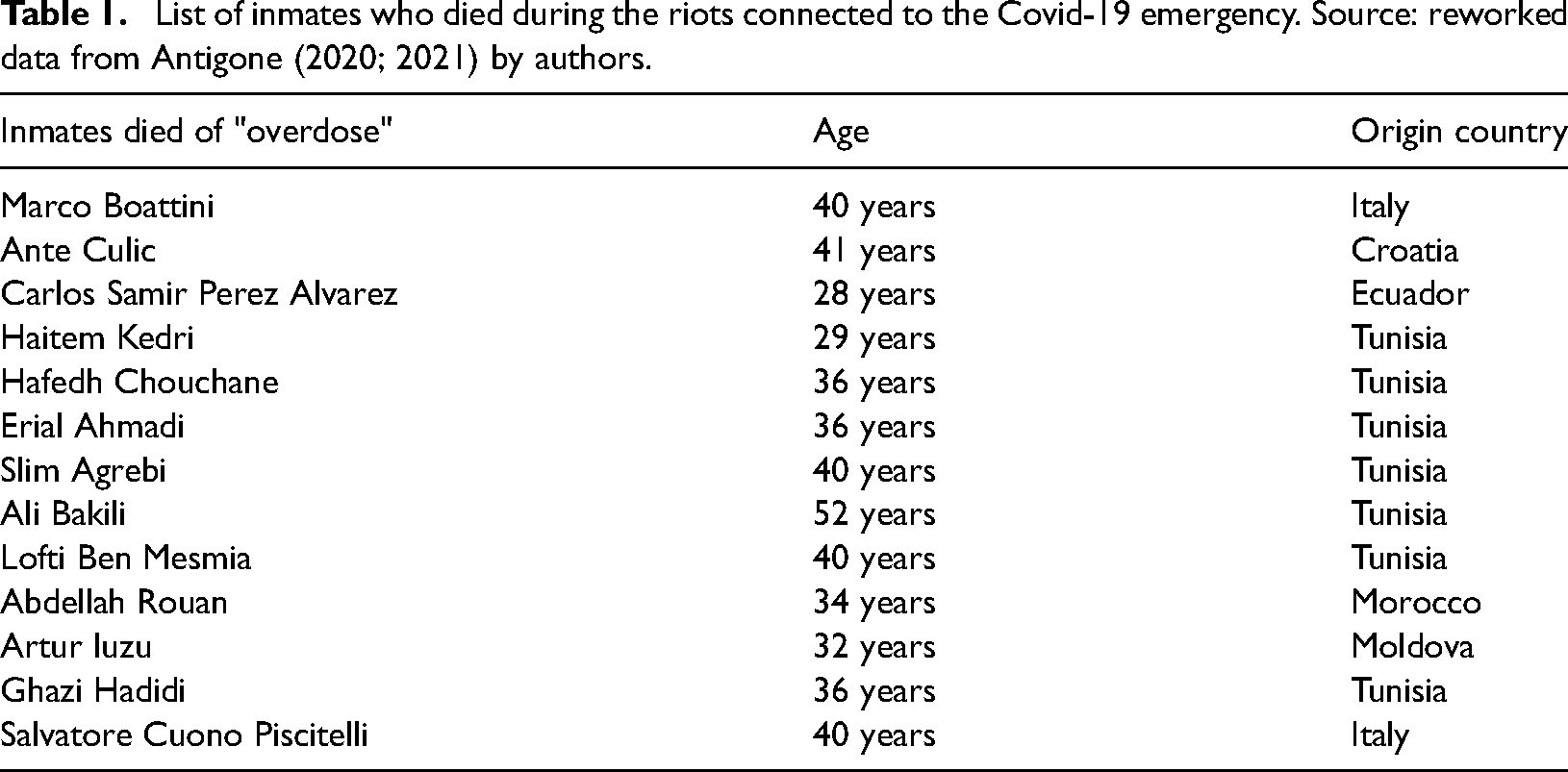
The unfortunate result of those two days of riots and suppression by police is not limited to material damage to the cells but also to the lives of 13 inmates who officially died due to “overdose” (Table 1).
List of inmates who died during the riots connected to the Covid-19 emergency. Source: reworked data from Antigone (2020; 2021) by authors.
This troubling news did not spark any strong reactions or investigations from the state. At that moment, there were too many other “important” lives to care for to have enough time to investigate these deaths, so, as a consequence, the topic of prisons simply reverted to its marginal position in the public sphere, i.e. “out of sight out of mind.” Most of the politicians and the media accounts depicted these series of events as a dramatic danger for public security. For instance, alarming videos that showed prisoners slamming their beds on the walls of their jail cell or worse, showing the prisoners trying to break out of jail or attacking the penitentiary police, have spread and easily became viral in an escalation of insecurity, fear, and hate. Whatever action the state took would have been justified as long as it was framed as necessary to interrupt this collective panic. In such a context, it can be easily understood how the dominant public narrative concerning what was happening inside jails was easily silencing, or, at least, not providing sufficient space, to the few alternative voices who were trying to offer a different reading of the causes of the riots.
Covid-19 represented an explosive moment in which the permanent crisis of the Italian carceral system became visible through the health emergency. As several reports and data from nongovernmental associations reveal, Italian prisons have high rates of overcrowding (114.5%) 8 , low percentages of inmates involved in professional rehabilitation programs (around 20%), low numbers of instructors per prisoners (around 1 instructor per 90 prisoners), and high rates of suicide (around 29 times higher than the average non-incarcerated Italian rate) 9 .
Furthermore, the primary reason for a person's incarceration in Italy is for the crime of using and/or possession of illegal drugs (around 33-34% of total crimes). 10 Thus, prison overcrowding could be avoided by pursuing alternative solutions such as rehabilitation for persons with substance abuse disorders. The prison health system addresses inmates’ drug addictions mainly through pharmaceutical treatments. As declared by two doctors working in an Italian prison “the best alternative to 90% of the pharmacological assistance provided in prison, would be the greater presence of specialized operators in support of inmates (…) to date, all the ‘holes’ in healthcare are filled with prescription medications” (Morelli, 2002). Having benzodiazepines, anxiolytics, and other pharmaceutical drugs as part of the daily prisoners’ routine worsen the inmates’ psycho-physical conditions. The general health conditions are further deteriorated by the brutal spatial and environmental characteristics, such as irregular water sanitation, small prison cells, and inadequate direct sunlight and ventilation (Antigone, 2021)—all characteristics demonstrating that the Italian prison turned into an “outcast institution,” i.e. a “social dump” (Verdolini, 2022). In the face of such conditions and despite the activism of several grassroots organizations, the proposal of radically renovating the Italian prison system to align with restorative justice principles has never been embraced by the public or elected officials. Rather, in the last decades, occasional pardon grants, intensification of punishments, and new prison construction have been the main policy pathways.
Thus, when the health emergency from Covid-19 arrived, Italian prisons 11 found themselves in a health and social condition that was already precarious.
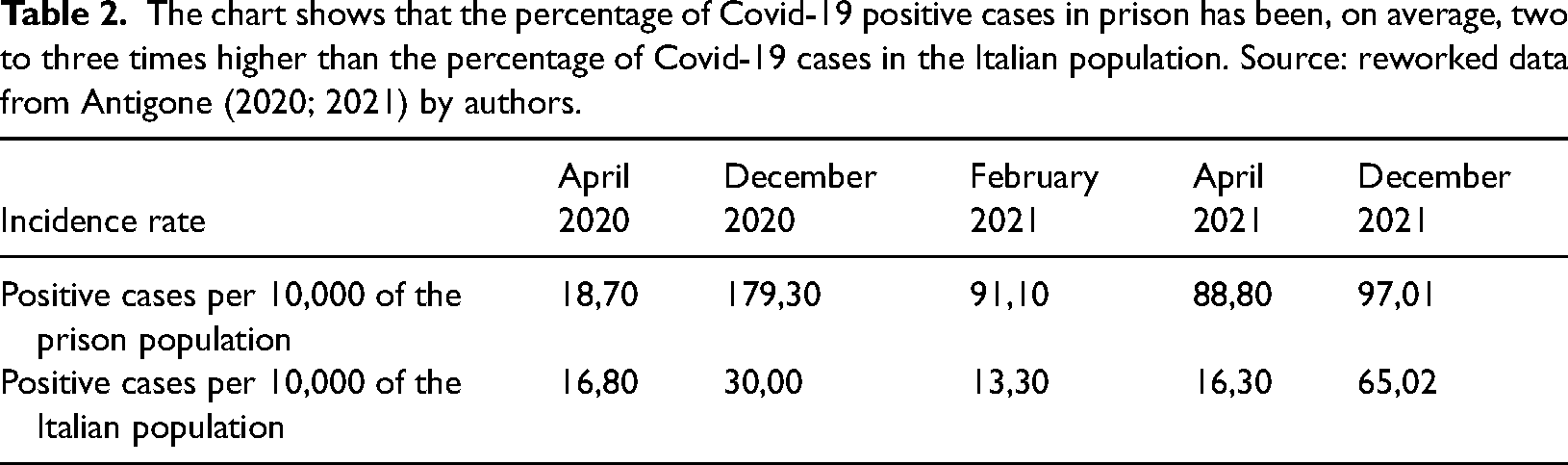
When, in 2021, videos showing moments of punishment against the SMCV prisoners were published in Italian media outlets, another account of the conditions that triggered the riots and, above all, the violent response by the police, came to light. Prisoners were protesting against unilateral and exclusionary decisions by the government and were desperately asking for minimum health protection rights, such as the provision of masks, gels, and the reduction of the number of inmates per cell, so as to minimize the risk of positive cases (Table 2).
The chart shows that the percentage of Covid-19 positive cases in prison has been, on average, two to three times higher than the percentage of Covid-19 cases in the Italian population. Source: reworked data from Antigone (2020; 2021) by authors.
The marginalized status of prisoners was intensified and reproduced through wasting relationships that neglect basic needs and rights, converting the prison into a theater of socio-environmental injustice. This condition was further amplified by the powerful toxic narrative that dominated the public discourse, reducing the spaces for deep dialogue around these events, and silencing the voices of prisoners. The clash between powerful and powerless narratives that took place after the prison riots during the first phase of the Covid-19 pandemic in Italy (Privitera, 2022) is typical of wasting relationships producing and reproducing the Wasteocene and was emblematic in the case of the SMCV jail.
Santa Maria Capua Vetere jail: an environment of (eco) systemic violence
The SMCV jail concentrates the characteristics of an environment of eco-systemic violence. It opened in 1996 in a peripheral area of the city where a composting plant was already located and other waste practices had occurred over years (Figure 1). According to the datasheet filled out by the activists of Antigone 12 , in 2021, there were 933 inmates (despite the maximum allowed capacity of 809 people, that is, an overcrowding rate of 115,3%, exceeding the already high national average of 114%). Likewise other Italian prisons, in SMCV, the percentage of foreign inmates is considerably high (around 20%), compared to the percentage of foreigners in the general Italian population (around 9%).
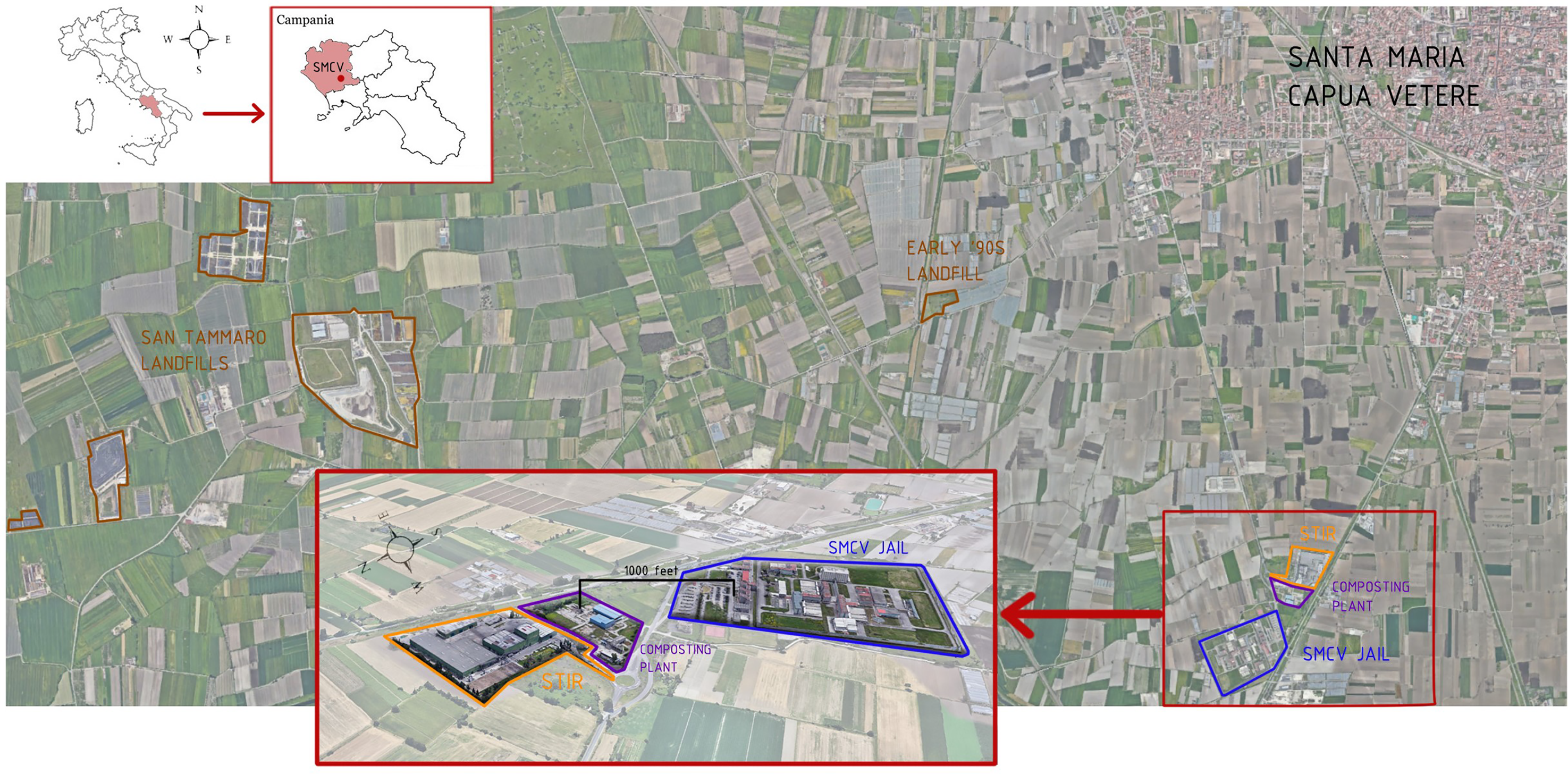
Area of detail, Campania and SMCV in Southern Italy (on the top left of the figure); the map depicting the landfills, the STIR, the ex-composting plant, the SMCV jail, and the town of SMCV (in the center of the figure); zoom on the distance between the STIR, the ex-composting plant, and the SMCV jail (on the left down of the figure). Source: reworked view from Google Earth, by authors.
NGOs defending the rights of detainees often describe the prison of SMCV as poorly maintained, unhygienic, and infested with insects. In particular, the structure has a series of sanitary and environmental problems 13 . The first important concern regards the absence of a water supply, substituted with an obsolete well. The drinking water used to be provided to each prisoner through the allocation of two bottles of one liter each per day. Only in 2022 a water pipeline connecting the prison with the local water infrastructure was completed. Unfortunately, it was discovered that the water is non-potable because it contains ferrous materials and is turbid in color.
Not only is the water unhealthy—a common problem in prisons and jails around the world (Pellow, 2020)—but the air quality is also very poor due to the proximity to waste disposal areas, as some complaints about the presence of miasma demonstrate 14 . The cells do not provide, kitchen or mirror, they are equipped with a cot, a table, a chair, and a toilet, making the already highly punitive characteristics of carceral segregation even more difficult. The isolation section has an almost total absence of re-education activities and a very small area for socializing.
All these antecedents clarify why this jail took on the reputation of being an “inhuman prison” 15 where forms of violence have taken a systemic and chronic shape, creating a daily reality of punishment and conflict.
In this context, all the restrictions that were enforced during the pandemic amplified a situation that was already highly stressful.
As previous research and media reports explain (Bernd et al., 2017; Pellow et al., 2020; Kojola and Pellow, 2021), the carceral system and the waste dump are already evidence of an ongoing violence against the ecology and the humans on site. The state response to a series of prison riots that occurred during the Covid-19 pandemic have further amplified such conditions.
While the first riots arose between 7 and 9 March 2020, as in other Italian prisons at that time, the tipping point in the SMCV jail occurred around 5 and 6 April 2020 when an inmate tested positive for Covid-19. In an overcrowded prison where masks and basic sanitizers were not yet sufficiently provided, and after 1 month of acute tension in all national prisons, the fear of “dying like a rat” (Romano, 2022: 27) skyrocketed and panic quickly ensued, as described by an ex-inmate who recently completed his sentence and decided to sue the penitentiary police: We learned through other inmates that there was a case of Covid-19 in another department [of the jail]. I won't tell you the fears we had, we thought “now we're all going to get infected!” […] You know, we just wanted to make the swabs, get the masks and hand sanitizer […] So we started a peaceful protest.
16
The riots occurred on the evening of 5 April 2020 and involved around 150 inmates. A large group of inmates occupied the corridors at the end of the free hour break, preventing the officers from entering a section of the facility. The rioters took over two entire wards normally kept under control by the penitentiary police. Shortly afterward, a negotiation began with the head of the jail, while the police arrived outside the structure in riot gear. Eventually the protests calmed down while inmates went back to their cells.
What happened after the riots was revealed several months later when some inmates sued the penitentiary police and when shocking videos were published.
According to one account by prisoners and a grassroots advocacy association, well after the riot had stopped, about 200 prison police officers entered the prison to carry out a “special search” of 300 detainees. As an ex-inmate recalled: We started a few riots when we were kept from talking to our families. We made some small protests, like knocking on the wall and making noise, etc. After the protests, we came back to our cells, cleaned everything, and went to bed. After an hour, God's what happened! A madhouse came to be! They massacred us.
17
According to the public prosecutors, the evidence indicates that the police officers engaged in a premeditated brutal mass beating of detainees that lasted around 4 hours. Videos released after the incident show police beating, kicking, slapping, and repeatedly punching inmates. As one disabled ex-prisoner stated
18
: I was as I am now, that is, in a wheelchair. They took me out of the cell, treating me worse than they treat animals, and then started to hit me with a truncheon for 15 continuous minutes! They started by hitting me in the face and all over the head, and from then on, I did not understand anything! […] Then after me, they took a detainee in front of me, and so on through all the open cells and slaughtered us one by one!.
19
The physical impairment of some inmates instead of serving as a deterrent to violence resulted in further violence, as this recent deposition confirms: I had the orthopedic corset due to serious back problems, I said [to the police] that I couldn't stay without it [and despite this] an officer hit me even harder with a truncheon on the back
20
.
This account exemplifies that disabled prisoners were doubly unwanted and discarded, and therefore doubly expendable. Recent groundbreaking studies exploring the intersections of animal justice and disability rights studies demonstrate how people with disabilities have often been referred to derisively as animal-like or having animal characteristics because of their non-normative presentations. Taylor (2017) explains that animal and disability oppression are entangled, as well as their paths to liberation. The use of language and violence linking marginalized humans and nonhuman animals can also be found in the testimony of another ex-inmate who revealed to a media camera the scars he incurred from that night: It was a wild thing! They insulted us with words such as “you are nobody”, “you are just the scum of society”, “you are just munnezza (rubbish)” and then they beat us…and not even animals are treated like this!
21
This frequent juxtaposition between the discard and the animal world in prisoners’ expressions to account for the mistreatments they suffered well reflects what Pellow has defined as the racial discourse of animality—“a term meant to capture the language that people use to describe human behavior using nonhuman analogies, signaling a set of assumptions surrounding what we view as acceptable ‘human’ versus nonhuman behavior and how different bodies are valued” (Pellow, 2016: 226). After all, according to Kim (2015) race and species operate as conjoined logics, or mutually constitutive taxonomies of power. Even if in this case the prisoners were not violently treated because they were expressly part of a despised racial group, the fact of being imprisoned marks them as expendable bodies deserving of violence usually directed at nonhumans.
The extreme violence left a profound mark on the inmates’ mental health, as the words of these two ex-inmates illustrate: I was traumatized by this thing, at night I suddenly woke up with a start […]. I still need to put painkiller cream in my back every day.
22
Since then I have been taking the medical drops because I no longer feel well. They destroyed me, mentally they really killed me […] I know that we are criminals and we have to pay for what we have done, but it is not right to pay with our skin, with our lives. In your opinion is this right? In my opinion no.
23
The violent repression perpetrated by an institution—the jail—jeopardizes the already weak trust in public institutions and casts doubt on who is really seeking justice: [Officially] we are the criminals and they are the “good” ones. And that's how they treat people? […] They are the ones who run the crime!
24
The video evidence reveals an organized display of brutality, dehumanization, and humiliation, dubbed “the horrible massacre of the Holy Week” (Romano, 2022) because it occurred during the week leading up to Easter Sunday. Texts on the police suspects’ personal phones are consistent with the display of brutal violence shown in the video: “we'll kill them like veal calves” and “tame the beasts"—also examples of the racial discourse of animality. Other police officers’ texts sent after the violence contained phrases like “four hours of hell for them” and “no one can get away from us.”
The responses from the state and police officers to the concerns and requests by prisoners have been delivered through the language of oppression. This language reveals who has power over whom, and which lives and bodies are valued versus those that can be subjected to institutional othering and harm. In our view, the direct physical violence is reflective of the systematic and pervasive violence that takes place through daily health and environmental threats. Such a condition is heightened by the waste-related issue in Campania.
The context: the Italian wild waste west
The SMCV jail is around 1000 feet from an area whose history well mirrors the main phases of the waste crisis in Campania (Figure 2). Waste (and wasting relationships) are a burning and complex topic in this region. For being in the Global North, Campania is an “odd object” (Armiero, 2021: 31). Often perceived as a space in between, neither modern nor poor enough to claim a definitive and exclusive identity (Armiero, 2021: 31), Campania is a quintessential case from which to scrutinize the entanglement of wasting socio-ecological relationships made of power, corruption, and chronic political and socio-environmental crises. Flooded by trash, Campania has become an icon of urban waste mismanagement for a whole spectrum of industrialized countries (Armiero and D’Alisa, 2012: 97–98), but also a metaphor of the EJ struggles.
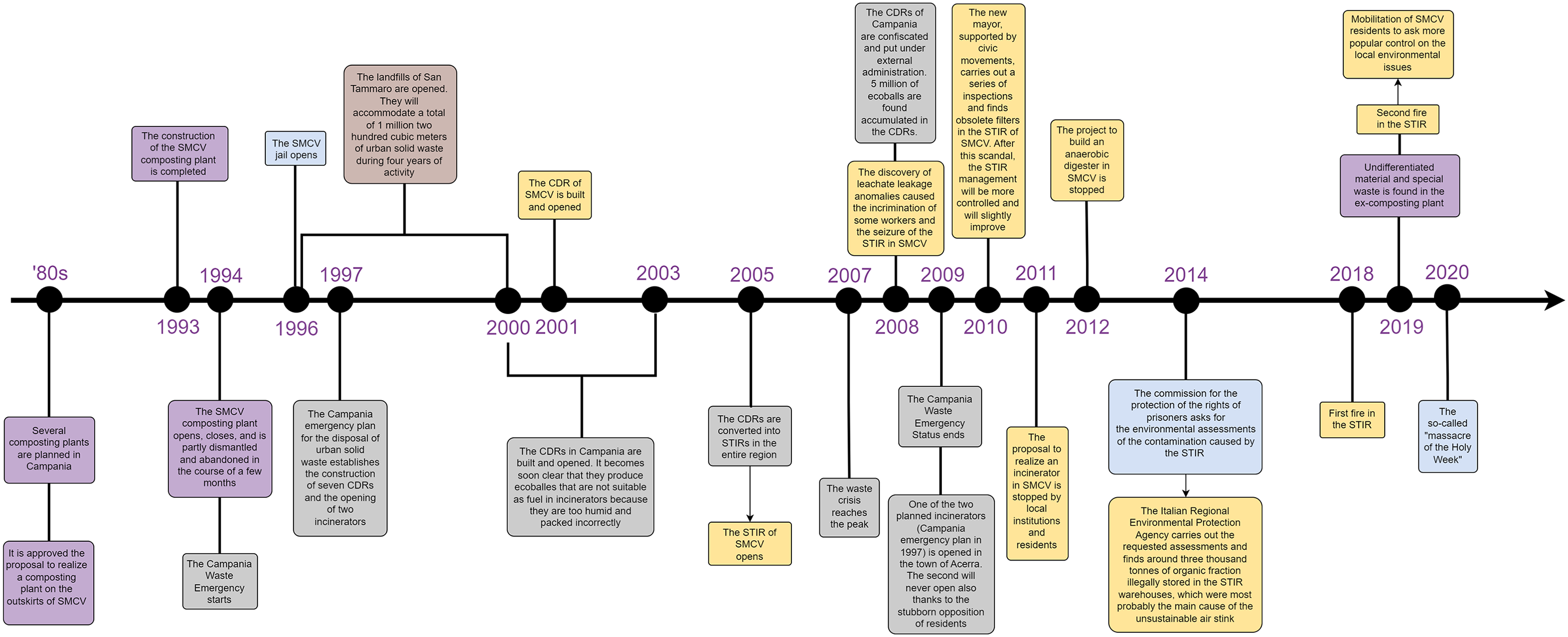
Timeline of the main events regarding the Campania waste emergency (gray boxes), the landfills of San Tammaro (brown boxes), the STIR (orange boxes), the ex-composting plant (purple boxes), and the SMCV jail (blue boxes). The colors of the boxes in Figure 2 match the colors of the perimeters of Figure 1 on purpose to facilitate their interpretation by the readers.
The Campania waste emergency officially began in 1994, when criminal investigations revealed the inadequacy of the landfills operating in the region. The waste started to overflow in the streets of Naples, inducing the national government to declare a state of emergency, which led to the creation of a special waste management agency the Commissariat for the Waste Emergency in Campania. This agency deprived local elected bodies of their authority while entrusting the solution to the waste crisis to technocrats with exceptional resources and power. The disposal of waste took place in a chaotic and nontransparent fashion way in the name of the emergency. The enforced top-down emergencial policies, as the regional plan for the disposal of urban solid waste, included the re-opening of obsolete landfills to accommodate the overflowing municipal solid waste and the realization of seven waste-derived fuel facilities (from now on CDR 25 ). The CDR mechanically separates municipal solid waste that cannot be recycled or composted, removing inert contaminants and then shredding and drying before converting them into ecoballes to be sent to incinerators for energy production 26 . Citizens and activists opposed the construction of the incinerators, with just one successfully built in 2009. The CDRs were then converted into waste shredding and screening facilities (from now on STIR 27 ) where waste materials are shredded and screened for various purposes, such as recycling or disposal.
Several scholars have maintained that the environmental struggles in the region should be analyzed as a crisis of democracy rather than a case of waste emergency (Iovino, 2009; Armiero and D’Alisa, 2012; Berruti and Palestino, 2020). The very idea of an emergency—though a peculiar one lasting for almost 20 years—implied the implementation of special measures, not subjected to the standard norms and procedures of government oversight and accountability. Armiero (2021: 38) has highlighted that the Campania case is an example of how “capitalism continuously reproduces itself through the creation of states of exception that accelerate the othering processes as means of capitalist accumulation.” The fact that the emergency regime contributes dramatically to the unleashing of market forces has been defined by Demaria and D’Alisa (2013) a process of “accumulation by contamination.” What the Wasteocene does to this state of affairs is to normalize it through a toxic narrative that blames the victims while naturalizing the socio-ecological relationships producing wasted people and places. In the Campania waste emergency, this process aims to transform subaltern communities into socio-ecological dumps where waste infrastructures are added to pre-existing contamination: waste layered upon waste. In fact, it was quite common that new landfills and other waste facilities were built in close proximity to existing dumps or in areas already affected by contamination. As the ordering principle of the Wasteocene is “to reproduce privilege through the wasting of subaltern communities” (Armiero, 2021: 40), it makes sense to reinforce the existing socio-ecological inequalities to produce what Pellow (2022: 40) defined as “environmental warfare” because it entails violent institutional actions intended to harm, subdue, and incapacitate a population.
Although officially the emergency status ended in 2009, the legacy of several years of waste mismanagement, in terms of crisis of democracy, environmental toxicity and social wounds, lasted considerably longer. The history of the facilities located right in front of the jail is profoundly interweaved with what might be called the “Campania Wild Waste West” and representative of its muddle of injustices and inefficiency.
Waste and ecological violence in Santa Maria Capua Vetere
SMCV is a very small cell of a rotten system. 28
These words ending a blog piece by a SMCV's resident well-described our interpretation of the case of SMCV as a litmus test of all the wasting relationships underpinning both the Campania waste crisis and the prison system crisis.
SMCV is a town in the province of Caserta in Campania whose recent environmental history reflects the injustices derived from the dysfunctional waste management system noted above. Having predominantly an intensive farming-based agricultural economy, SMCV is a territory characterized by a high vulnerability to nitrates of agricultural origin and other toxic matter (Pacella and Parrella, 2020: 132).
SMCV became one of the theaters of the socio-environmental struggle over garbage in Campania, even assuming the name of “capital of munnezza” (rubbish) 29 . The patchwork of waste practices includes an ex-composting plant, a CDR converted into STIR, a series of landfills opened during the peak of the waste emergency, and several illegal and diffused dumps.
The first waste facility was a composting plant that, despite being highly technological at that time, came into operation only for a few months in 1994, before soon being closed and dismantled since the waste emergency plan gave priority to other facilities. Abandoned and located in the outskirts of the town, this area soon became a dump where, for years, tons of hazardous special waste have been stored illegally. 6.5 km North-West away from the ex-composting plant and the jail, the obsolete landfills of San Tammaro were reopened. Between the 1996 and the 2000, they accommodated the emergencial urban solid waste coming from the entire Campania for a total of 1 million two hundred cubic meters. The long-term pollution caused by the landfills is an object of uncertainty both among people and scientists. After several formal requests and protests, a landfill mining recovery intervention is underway (Buccella et al., 2018). At the beginning of 2000, right next to the ex-composting plant, a CDR was built in accordance with the waste emergency plan. Activists and opposition council members underlined the pointlessness of a new plant from scratch, while there was already an existing composting plant that could have been converted to this purpose
Around 2005, the CDR was converted into a STIR. Although “the waste emergency was supposed to erase any public debate and contrast, 30 ” the top-down choice to open a CDR and then a STIR in SMCV raised a few concerns from local residents. Not being built for waste storage, the STIR plant was unsuitable for dealing with the problem of significant quantities of “emerging leachate,” i.e. the liquid that originates mainly from the infiltration of water into the mass of waste or from its decomposition. A letter of complaint from the Scientific Committee of Legambiente 31 in 2007 reveals that truckloads of tires were buried underground on the site and the non-existent maintenance and cleaning and to the leachate “in the sun” scattered throughout the entire perimeter of the area 32 . Despite requests by activists 33 , the probable pollution of the aquifer due to the landfilling of hazardous waste has never been addressed. In 2008, leachate leakage anomalies caused the incrimination of some workers, the seizure of the plant and the temporary entrusting of its management to an extraordinary commissioner, a general from the army. When in 2010 a new mayor took office and citizens’ protests were at their peak, a few inspections inside the STIR were finally carried out and it was discovered that the plant's biological filter had not been changed in years. The stricter controls of the STIR biological filters requested by the mayor and the citizens led to a slight improvement in air quality. As an activist told us: “before, everytime I passed by this area the smell was terrible even if the windows of my car were closed; nowadays there is that stench just a couple times per year.” 34 For the incarcerated persons who are literally trapped in the nearby jail, the environmental threats remain constant. During the scorching summer of 2014, the president of the Commission for the Protection of the Rights of Prisoners requested that the director of the SMCV jail intervene in order to mitigate the unbearable miasma coming from the STIR to which inmates were exposed every day 35 . Following these solicitations, the Italian Regional Environmental Protection Agency found around 3000 tonnes of organic remains illegally stored in the STIR warehouses, which was probably the main cause of the oppressive stench in the air. These events led to questions about whether “a plant intended for waste processing has become a dump” whose stench regularly worsen with the summer heat 36 . This is an example of how the thermal inequities experienced by incarcerated populations (Colucci et al., 2023) are worsened by the waste (and wasting relations) and produce forms of slow violence (Nixon, 2011) that can be intercepted through the body, allowing the tracing of the sensorialscapes of injustice (Armiero and De Rosa, 2017).
The opening of a CDR—then converted into a STIR—was not the only top-down decision by the government officials in SMCV. The crisis of democracy underpinning the Campania waste crisis can be found also in the succession of other troubling industrial projects imposed on citizens, such as, a proposal to build a waste incinerator, a plan to construct an anaerobic digestion system, and an initiative to convert the STIR into a composting facility. All of these proposals were halted by grassroots mobilizations and the popular viewpoint that “the obligatory and only path for citizens is to oppose death programs.” 37
Over time, many warnings, investigations, and complaints have been directed not only at the problem of environmental pollution, but also at the illegal and/or inefficient management of waste disposal.
In the last 20 years, several illegal dumps, often containing hazardous materials such as cathode ray tubes, old televisions, and asbestos, have been found and reported both in the urban and rural areas of SMCV, including close to the STIR and the jail. The socio-ecological degradation is further aggravated by the state's inability to address corruption both in the public and private sector due to the prevalence of a local mafia system.
Concerns about possible environmental crimes were in the limelight when, in November 2018 and in October 2019, a fire broke out inside the STIR plant, releasing toxic dioxin and furans into the air (Gisec, 2019) with flames reaching as high as 40 meters. The fire made the air unbreathable. Local newspapers narrate how “residents in the areas near the fire have locked themselves in their homes to prevent the acrid smell of smoke from penetrating inside.” 38 We can only guess how much both events have affected the SMCV prisoners located just a few hundred meters from the waste facility. After more than 10 days during which the toxic stench filled the air in the neighboring areas, local residents and community organizations took to the streets to protest, with banners that read “Enough! Stop toxic fires!” (Figure 3).
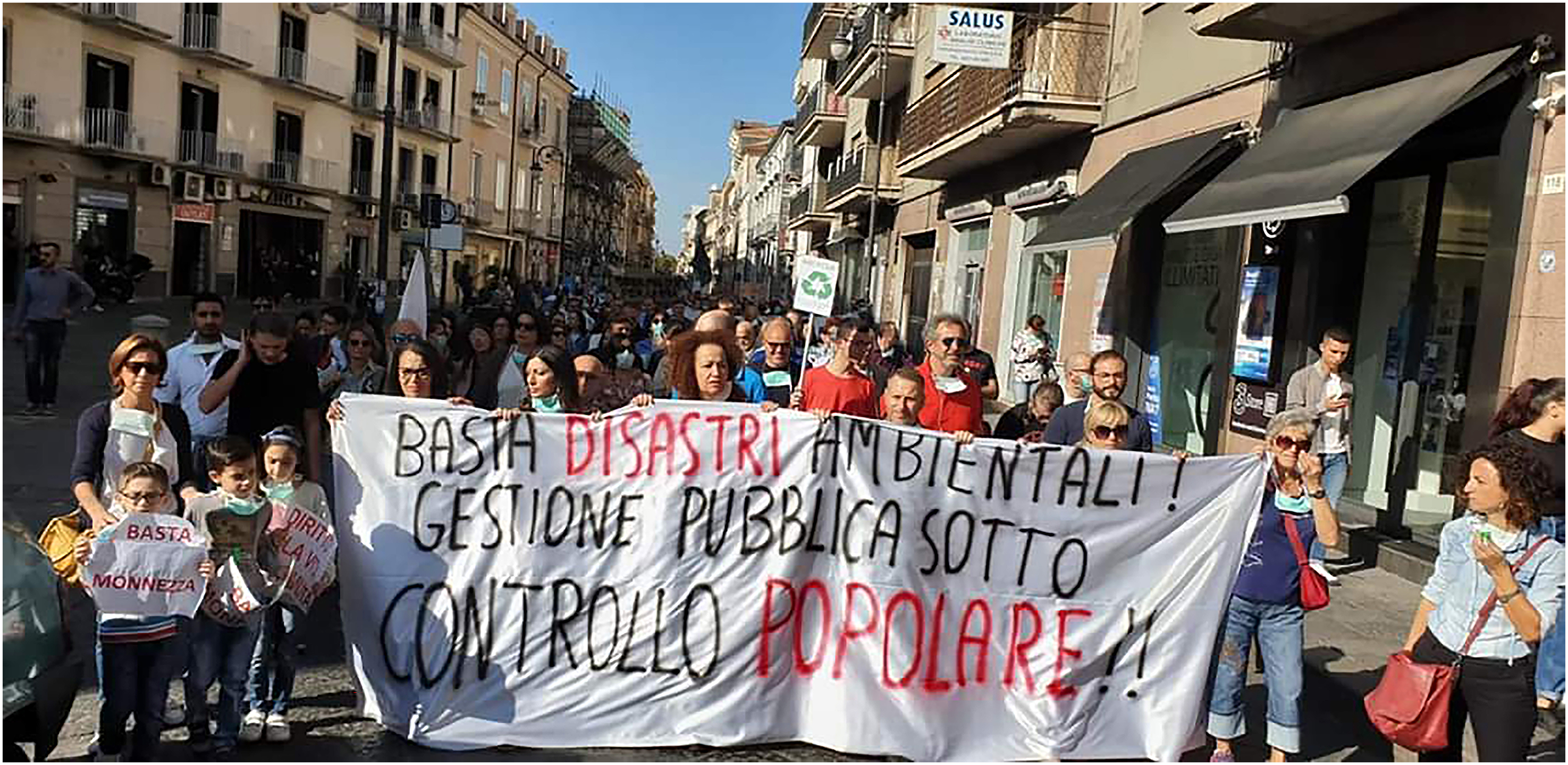
“Stop environmental disasters! The management of the public good should be under popular control!”. One of the banners during the parade of SMCV residents in 2019. Source: https://www.teleradionews.it/2019/10/26/santa-maria-capuavetere-salute-e-stir-stamattina-il-corteo-ha-attraversato-la-citta/
The SMCV jail and the waste-designed area adjacent to it are sacrifice zones of our capitalistic society. They have been produced, neglected, and marginalized through wasting relationships that have slowly and violently worsened their socio-ecological conditions. They are the litmus test of the inability of the state to value all humans and more than human communities as indispensable and to guarantee socio-ecological justice.
The prison as an epiphany of the interconnections between CEJ and Wasteocene
The SMCV case reveals a series of intersections between CEJ and the Wasteocene framework. We have interpreted such linkages through the lens of the fourth pillar of CEJ, regarding indispensability and the wasting relationships underpinning the Wasteocene.
Bauman's definition of surplus populations fits perfectly with the conditions of incarcerated persons we have described: a “surplus population is one more variety of human waste.” Unlike homini sacri, the “lives unworthy of living,” the victims of order-building designs are unintended and unplanned “collateral casualties” of economic progress (Bauman, 2004). While the fourth pillar of CEJ framework centers on the idea that we are all indispensable and that no one should be left behind in our struggles for EJ, either outside or within jails, this case demonstrates that the current carceral system is based on forms of eco-systemic violence whose targets—both human and nonhuman—are indeed considered expendable.
The case of the SMCV jail offers a generative angle from which to add another layer of reflection into scholarly debates around abolition and EJ concerns. The facts of the SMCV jail attest the pervasiveness of the prevailing capitalist logic of expendability according to which some sectors of our socio-ecosystem, such as incarcerated persons, are deemed less essential than others or are even valueless. As a consequence of this view, prisoners—including the ones in the SMCV jail—do not deserve healthy environmental conditions (e.g. clean air, clean water, adequate living space, etc.) and are co-located near dangerous and contaminated industrial facilities.
The Covid-19 pandemic has further reinforced uneven power relations within human populations and between humans and the more than human world and, for this reason, the recent pandemic can be considered a particularly acute example of environmental injustice (Pellow, 2020). According to Madeeha Dean (2022), by treating incarcerated individuals differently from other communities dealing with environmental injustice and Covid-19, the state perpetuates the narrative that certain groups of people are more expendable than others. The status of incarcerated persons as citizens of second rank normalized the state's lack of appropriate equipment and protection from the Covid-19 emergency. The rhetoric of the state of emergency during the pandemic further accentuated the erosion of basic human rights for prisoners.
Just as the imposition of the emergency regime has been a legal and operational dispositive to deal with the waste crisis in Campania in the past decades, the Covid emergency was the narrative deployed to violently suppress pre-existing and new tensions within prisons. Any form of resistance aimed at securing better conditions has been repressed by the state with both narrative and physical violence.
The story of SMCV is a case of repression and resistance that speaks to the normalization of state violence. It confirms the vicious cycle connecting forms of slow violence with structural socio-ecological injustices, making some lives and bodies more expendable than others. As argued elsewhere (Dillon and Sze, 2016; Pellow, 2016, 2018), police brutality can be framed as an EJ issue because it is an example of how (racist) state violence is experienced and embodied within particular spaces, bodies, and populations, resulting in harm and control over them. This story, indeed, reflects a systemic organization of violence that involves all the decision-making levels of the Italian penitentiary system in carrying on a process of othering prisoners. The punitive practices indicate macabre and sadistic dynamics, in which the prisoners are deemed enemies of the state. The videos of the “horrible massacre of the Holy Week” made public the eco-systemic violence that is actually practiced on a daily basis in prisons. These actions of psychological and physical violence repress any forms of resistance and reinforce the hierarchical order between those who have the power to dehumanize bodies and the dehumanized, who are just surplus and can be abused and even annihilated. They go through a process of othering that converts them into the socio-environmental dump of our society: that part of the society that can be excluded and neglected. They are out of our sight and pushed into more marginalized and contaminated places, where waste disposal facilities are also often located (Bradshaw, 2018; Cepero, 2015; McDaniel et al., 2014).
Through the mechanism of punishment, prisons train inmates to pursue violence as the only way to survive, to react, and to interact. In this sense, the pillars of wasting relationships such as dominance and othering are reiterated and reproduced through the way the prison functions.
Practices of othering underpin wasting relationships within and outside the prisons. As the Wasteocene is centered around socio-ecological relationships that generate wasting of both people and ecosystems, the prison complex embodies its essence producing the ultimate dump where the othering principle becomes the ordering practice of reality. The spatial proximity of the jail and the landfill at SMCV is a symbolic confirmation of the Wasteocene logic with extreme material corollaries made of pests, stench, poor air, and water quality.
As Armiero (2021) argued regarding the pandemic, also in the prisons Covid-19 acted as an epiphany of ongoing wasting relationships unveiling the disposability of some humans vis-a-vis the mobilization to save those who are considered worthy to be saved.
The harsh police repression of the prison riots, which did not result in any acceptance of the prisoners’ demands, embodied the essence of the Wasteocene regime: the spillover of the pandemic must be contained and the border between a safe “us” and a disposable “other” restored. The violence of the prison repression is the continuation of the socio-environmental violence that has blended and mapped a waste dump, a prison, and a global pandemic into the subaltern bodies of the inmates.
The case we have presented confirms that the state routinely chooses punishment and violence instead of embracing a rehabilitation approach to incarceration. It is the state that decided to place a prison and a landfill side by side, and it is again the state that chose how to react to inmates’ demands for improvements in health and safety, especially facing the pandemic. The events at SMCV corroborate that “the current social order stands as a fundamental obstacle to social and environmental justice” (Pellow, 2018: 22) and that prison is a “particularly vicious and tangible site and form of state repression” (Pellow, 2018: 104). The state is all too often the first generator of wasting relationships, as well as the first to treat some socio-ecological categories as expendable. Nevertheless, this case also shows how the state is multifaceted and ambiguous. As argued by Harrison (2022: 1), reductionist characterizations of the state as a wholly and inevitably repressive instrument of capital, “dismiss the ways in which states also serve other ends, can be made to do so more meaningfully, must be made to do so, and are being made to do so.” In our case, under the pressure of grassroots organizations and disturbing evidence in published videos, the state has started a path of self-critique through a legal trial against 105 public officers (penitentiary police, doctors, etc.). While the trial seeks an official remedy of justice and the punishment of the “culprits,” the shortcoming of this judicial approach is the absence of any public discussion about reforming the carceral system. This latter point is crucial because the implications of this case study go well beyond the outcomes of the criminal case concerning the SMCV jail. Although the evidence, images and testimonies regarding the police's brutal repression seem overwhelming, we cannot assume that the defendants will be found guilty by the court. Furthermore, we believe that justice (including EJ) is a political question, not only a legal one. For this reason, relegating the demand for justice entirely to the trial may undermine the possibility of transforming specific conflicts into a broader mobilization, as has already occurred with a range of other EJ struggles. Instead, we envision the trial as an opportunity for unveiling the limitations of the Italian carceral system, the intertwined social and environmental injustices, while opening up a broader political quest to radically change it. Likewise, it can spawn public debate on how to put into practice abolitionist care that, going beyond security and containment, points to the construction of an anti-carceral society, characterized by caring institutions, nursing homes, treatment centers, therapeutic communities, and an embrace of a non-profit medicine regime. Although there was not enough space to thoroughly articulate a vision for a future Italy without incarceration, we hope that this paper can represent a step toward this direction.
Finally, this paper confirms what Pellow (2017) argues previously, i.e. that connecting the idea of prison abolition to CEJ creates a path toward the abolition of environmental injustices. Applying the EJ movement's interdisciplinary approach to the Covid-19 crisis in prisons may force reform in a system that leaves incarcerated individuals vulnerable to environmental harm. It may also serve as an impetus for recognizing the right of incarcerated individuals to live in a healthy environment, even in a post-pandemic world: i.e. for recognizing the lives of incarcerated people as socio-ecologically indispensable too.
Highlights
We explore the heuristic possibilities of the convergence between the critical environmental justice studies (CEJ) and the concept of Wasteocene
The paper expands the abolition studies by framing the prison as an epiphany of the interconnections between CEJ and Wasteocene
We adopt the lens of expendable/indispensable lives to examine socio-ecological injustices and ecosystemic violence perpetrated in and through prisons
Through an in-depth case-study on an Italian prison, we reflect on the connections between environmental injustice and the carceral system
The paper analyzes in-depth the increase of State violence and socio-ecological inequality in an Italian prison during Covid-19 pandemic
Footnotes
Acknowledgments
Thanks to all reviewers and editors for their helpful comments. We would like to express our deepest gratitude to Enzo Tosti and Raffaele Zito of the grassroots organization StopBiocidio for their time and insights, and Antigone Campania for its support in searching for environmental data regarding the jail of Santa Maria Capua Vetere. Nonetheless, we remain the only responsible for the content of the article. Finally, we thank the US-Italy Fulbright Commission for supporting Elisa Privitera at the University of California Santa Barbara as a Fulbright – Falcone Foundation – NIAF fellow during the 2021-2022 academic year. Without such an academic exchange, this article would not have been possible.
Declaration of Conflicting Interests
The authors declared no potential conflicts of interest with respect to the research, authorship, and/or publication of this article.
Funding
The authors received no financial support for the research, authorship, and/or publication of this article.
