




Abstract
India's high mountain, van panchayat forests are a long-standing example of community-led forest governance. These provide vital support for mountain communities’ wellbeing, yet little is known about how environmental and social change is currently perceived or addressed, despite many claims that characterize van panchayats to be in crisis due to policy interventions by state forest actors and erosion of local management institutions. This research investigates how changes in forest dependence, governance, and health drive forest management decisions. Using open-ended interviews with 41 forest stewards and knowledge holders in a high mountain valley in Uttarakhand, our analysis describes managers’ perceptions of environmental and social changes and their implications for management choices. We found that van panchayats are currently navigating stewardship pathways in response to: (a) population shifts and changes to historically forest-dependent livelihoods; (b) a shift in governance regimes across van panchayats, affected by both regulatory changes and local institutional capacity; (c) the effects of global environmental change as it intersects with local influences on mountain ecosystems. Forest stewards’ perceptions of the drivers, trends, significance, and appropriate management responses to these changes varied widely. An overall decline in rightsholders’ dependence on forest resources was commonly reported, as was improved forest health in van panchayats in relation to other forest types. However, van panchayat managers disagreed on whether declining dependence positively or negatively affects forest health, whether the state is absent or actively wresting control from communities, and if successful forest restoration efforts will continue. A lack of shared understanding of these issues complicates forest stewards’ efforts to cooperate towards mutually desired ends, exacerbated by a co-management policy which isolates forest councils’ efforts from neighbouring forests. Accordingly, we encourage policy changes to enhance collaborative decision-making and to address implications of diverse perceptions, priorities and practices of care in mountain forests.
Introduction
Mountains are hotspots of biological and cultural diversity (Stepp et al., 2005). In tropical mountain forests, the combined effect of steep altitudinal gradients, varied climates, and topographical diversity produces ecosystems exhibiting extraordinary species richness and high rates of endemism (Dimitrov et al., 2012; Korner and Spehn, 2019), in turn supporting diverse human cultures. Forests are crucial to the livelihoods of many of the one billion people who live in mountain regions globally, providing resources to heat homes, feed livestock, and support household agriculture. Mountain forests filter water and mitigate the impacts of drought; they stabilize the soil, buffering communities and their infrastructure from the impacts of flooding and erosion. For rural mountain communities, these places hold deep spiritual and cultural importance, nurturing distinct identities, languages, practices, and belief systems.
In the Hindu Kush Himalayan region (HKH), as in many other tropical montane places, local communities manage forests as common pool resources, relying on longstanding customary institutions to make day-to-day decisions and strategically plans for long-term resource stewardship (Wester et al., 2018). Community forests across the region rely on local managing bodies to monitor forest resources, set and enforce use restrictions, and undertake restoration (Barnhart, 2011; Mukherjee, 2014; Stevens and Krishnamurthy, 2022). Some community forest institutions are formalized in legislation and/or co-managed with state institutions, while others persist informally. With or without legal recognition, local forest stewards’ decisions can heavily influence the state of the forests.
Local stewardship intersects with and responds to larger processes of global and regional changes. People living in mountain areas experience heightened vulnerability to climate change impacts—including increasing frequency and severity of extreme weather events (e.g., flooding), shifts in precipitation and temperature regimes, and persistent social, political, and economic barriers to effective adaptation (Adler et al., 2022; McDowell et al., 2021; Palomo et al., 2021). Concurrently, trends of urbanization, outmigration, and resource commercialization in mountain regions cause profound social upheaval (Gagné, 2019; Naudiyal et al., 2019), in turn affecting forest commons institutions that sustain mountain biodiversity and livelihoods. When making management choices, forest stewards face the challenge of adapting to these changes, based on their understandings of the trends and drivers involved.
This article explores perceptions of the relationship between shifting livelihoods and governance, and environmental change within community forests in the Kumaon region of Uttarakhand, India, in the HKH. Forest councils elected at the village level are responsible for managing community forests, known as van panchayats (VPs). Established in 1931 under British colonial rule in India, a VP is an unusual example of formalized co-management between communities and a colonizing nation-state (Agrawal and Ostrom, 2001; Gadgil and Guha, 1993). The institution considerably predates the period of forest decentralization which expanded globally in the 1970s–1990s (Bulkan et al., 2022; Sikor and Stahl 2011), although resource co-management agreements under Indigenous and local legal orders emerged much earlier (e.g., Takeda and Røpke, 2010). As legally inscribed, VPs are intended to provide a decentralized governance framework to manage forests for both local people's needs and forest conservation. This dual mandate presents inherent tradeoffs between goals as community and state decision makers weigh the need for resource use against its impacts on forest ecosystems given their respective values and priorities.
We begin by situating the study in the literature on environmental change in the HKH and discuss changes in prevailing scholarly theories of forest degradation and forest protection over the last half century, highlighting scholarship in political ecology and environmental governance on the VP. We introduce the case study region—the remote, mountainous Johar Valley in Uttarakhand's northeast corner—and detail our methods, justifying the mental models approach used to characterize local forest stewards’ perceptions of change. Following an overview of the four distinct models of change that emerged, we then examine the trends observed by local forest stewards and their relationship with participants’ stewardship responses. We conclude with recommendations for policies and practice to support effective collaboration across diverse understandings of change among community forest stewards.
Theorizing environmental change in the Hindu Kush Himalaya
Considerable scholarship has posited explanations for environmental change in the HKH, where forest ecosystems are seen as particularly vulnerable (Puneeta et al., 2020). Until the late 1980s, the predominant Theory of Himalayan Degradation attributed environmental change to local anthropogenic factors, asserting that population growth, expanding agriculture on fragile slopes, overexploitation of forest resources, and increasing densities of livestock accelerated erosion, causing increased downstream exposure to flooding, and predicted catastrophic declines in forest cover (Rieger, 1978). The focus on smallholder farmers’ land and forest use driving degradation has since been widely critiqued as simplistic and overstated, with scholars highlighting the role of non-anthropogenic drivers of erosion, policies promoting state-led extractive industries, and economic expansion as primarily driving deforestation, while indicating that patterns of change are spatially complex (Blaikie and Brookfield, 1987; Metz, 1989; Mukherji et al., 2019). Moreover, “explanations in terms of human causation drew upon notions of backwardness, technological incompetence, and neo-Malthusianism” (Blaikie and Muldavin, 2004: 521). Social scientists have challenged these narratives for justifying dispossession of local communities from their lands and forests (e.g., Satyal et al., 2017). Questions about data reliability and gaps in research in the Himalayan region persist (Singh and Thadani, 2015), but more nuanced and context-specific explanations of environmental change in the region account for the entanglement of social–ecological drivers of change, including but not limited to local anthropogenic factors (Adler et al., 2022; Mukherji et al., 2019; Thakur et al., 2020; Wester et al., 2018).
As new explanations have emerged, the Theory of Himalayan Degradation is generally rejected in academia, yet less so across dominant state development paradigms, often focused on achieving conservation through alternative livelihoods (Baland et al., 2010; Blaikie and Muldavin, 2004; Satyal et al., 2017). Pursuant policies work from the assumption that biodiversity and forests are best protected by removing people where possible and otherwise by reducing rural people's dependence on natural resources (Baland et al., 2010). This narrative motivates enhanced rural engagement in market economies and non-forest-based livelihood options at the household level, including promoting technologies which replace forest products (e.g., Liquified Petroleum Gas (LPG) instead of fuelwood). Proponents of alternative livelihood approaches highlight the development potential to lift rural people out of poverty, improve quality of life and social equity, and secure livelihoods (DeFries et al., 2021; Roe et al., 2015).
A livelihood transition is indeed effectively underway in the HKH (Asher et al., 2002; Wester et al., 2018). Outmigration from mountains to plains, particularly among young men in search of employment and educational opportunities, is occurring across mountain regions globally (McEvoy et al., 2012; Ng’ang’a et al., 2016) and specifically in the Uttarakhand hill regions (Daehnhardt, 2019; Joshi, 2018; Naudiyal et al., 2019; Prateek, 2017). As a result, Uttarakhand's rural agricultural population is shrinking, and families who remain are increasingly reliant on remittances sent from cities (Everard et al., 2019; Mamgain and Reddy, 2017). Subsistence agriculture is substituted by high-value market crops, while the emergence of lucrative medicinal plant markets disrupts local resource management institutions (Hopping et al., 2018; Laha et al., 2018; Wester et al., 2018). Such changes are accelerated by increased market access facilitated by expanding road networks. On discussing similar changes in Ladakh, Gagné (2019) argues that even as the mountainous frontier becomes more accessible and less remote, a gulf widens between generations and genders, as predominantly older people and women are left behind in the villages (Gagné, 2019; Prateek, 2017). Those who remain are left isolated, struggling to sustain smallholder agricultural and pastoral livelihoods amid labor shortages, increased climate-induced variability, and a sense of cultural loss (Gagné, 2019).
These changes shake the foundations of forest Peoples’ lifeways, which have effectively sustained local environments through governance grounded in notions of interdependence and reciprocity with forests (Govindrajan, 2018; Jolly et al., 2022; Singh, 2015). Community-based conservation and natural resource management approaches emphasize this relationship between dependence and stewardship, arguing that good governance is predicated on sustaining relationships with place through continued use and reliance (Kothari et al., 2013). Accordingly, the above-cited alternative livelihood approaches are criticized for justifying the alienation of people from forest homes, disrupting longstanding relationships of stewardship and care (Agrawal and Redford, 2009; Kabra, 2020). The consequent erosion of local environmental institutions and associated loss of knowledge encoded in languages, stories, and cultural practices, directly imperils ecosystems reliant on this stewardship.
In Uttarakhand's VPs, a documented decline in local governing capacity has been linked to increasing state overreach in community institutions, despite decentralization policies (Agrawal and Chhatre, 2007; Negi et al., 2012). Agrawal (2005) illustrates how the state originally consolidated control through the legislative remaking of forests, bringing VP institutions into the growing forest bureaucracy and thereby expanding its power and influence over rural life. Moreover, forest councils’ authority over VPs is reportedly declining as a function of recent policy changes (Negi et al., 2012; Ojha et al., 2019). As Mukherjee (2014) reports, “Unfortunately the Forest Department's tendency to monitor the functioning of these institutions through generalized rules and regulations in the name of ‘participatory governance’ has crippled these institutions, reducing them and the communities to the level of mere implementers or at best non-official managers with no substantial powers (p. 104).” Broadly, these analyses point to the VP as an institution in crisis: centrally important to mountain lifeways in the region but destabilized by the confluence of transitions away from forest-based livelihoods and a failing governing model.
Despite this superb work on erosion of forest governance in the literature on mountain regions and Uttarakhand's VPs in the HKH specifically, less is documented about the perceptions of change co-occurring among local forest stewards, diversity across attributed drivers of change, and associated responses. Several scholars have called for closer examination of heterogeneity within local natural resource management (e.g., Horowitz et al., 2018; van den Broek, 2018) and engagement with environmental perceptions as an important evidentiary basis for decision making on conservation (Bennett, 2016; Reyes-Garcia et al., 2019). Case studies across various sectors, from biodiversity conservation (e.g., Boubekri et al., 2023; Dencer-Brown et al., 2018) and agriculture (Below et al., 2015; Carmichael et al., 2023) to the effects of glacier recession (Gagne et al., 2014), have demonstrated the value of these insights for enriching understanding of social-ecological systems. Understanding, then, how stated perceptions relate to patterns of environmental behavior is a pressing concern for both scholars and practitioners (Laverty et al., 2019; McGinlay et al., 2023; Nzau et al., 2018; Santana et al., 2023). By illuminating the complexity of how people understand changes they observe and act on this knowledge, research centering diverse local perceptions of environmental change can counter monolithic narratives of communities as disempowered, romanticized, or misguided.
We thus investigate pluralistic understandings of and responses to environmental change as defined by the values and perceptions of forest users. Our focus is on attending to differences in understanding while identifying important points of convergence and commonality. We ask: how do local forest stewards themselves understand the relationship between changing forest dependence, forest governance, and forest health in VPs? And how do these understandings of change affect stewardship priorities? We answer these questions by articulating four primary mental models of change, revealed below through analysis of forest stewards’ explanations of observed changes. These models thus reflect plural and competing understandings of relevant trends and processes in environmental management (Biggs et al., 2011; Moon et al., 2019).
Study area and methods
Study area
This study was conducted within Pithoragarh District, Uttarakhand, India (Figure S1.1). Characterized by dramatic elevation gradients, Johar Valley's eastern peaks reach over 6300 m, while the Gori Ganga river plunges to 1200 m below the township of Munsiari (Asher et al., 2002). Local microclimates vary by slope and aspect, hosting considerable biodiversity. Eighty villages in the valley are home to approximately 50,000 residents, with most practicing smallholder agriculture (Bergmann et al., 2008) and many also engaging in livestock herding, tourism, medicinal plant markets, military service, and manual labor. Families with agricultural and livestock-based livelihoods are heavily forest dependent, relying on leaf litter, grass and grazing land, and fuelwood.
An estimated 60–70% of the land in Johar Valley is VP forests, compared to 15% of forested land under VP management in Uttarakhand overall (Uttarakhand Forest Department, 2018; Malika Virdi, personal communication, 2019). Decisions made by community forest stewards thus have significant bearing on the landscape. VP forests are managed for protection of forests and local livelihoods, organized into forest user groups which typically include long-term residents of one to three villages. VP forest rights are held by households and passed down through families, mostly by male inheritance. Newer households may apply for VP membership after several years of residence. Management decisions are made by forest council members (panch) from each village, elected by the forest user group, with a lead council member (sarpanch) holding primary authority. Two separate government entities have statutory co-management roles in VPs: the Revenue Department is responsible for oversight and dispute resolution, while the Forest Department provides and manages funding, and approves VP plans, participating directly in forest management decisions.
Data collection
This research draws on in-depth fieldwork involving interviews and forest walks conducted from November, 2019 to January, 2020 in ten villages in Johar Valley (see also Stevens and Krishnamurthy, 2022; methods’ summary in Appendix S1). The on-site team for this study involved the first author and two field assistants, who translated and offered expertise in forest and wildlife management. A collaborating local civil society organization contributed contextual knowledge and facilitated introductions where needed. Together we engaged 41 participants across a series of 32 open-ended interviews focused on forest management. The sampling strategy was purposive, capturing a diverse range of perspectives among forest knowledge holders (forest council members, elders, local ecotourism operators, and environmental NGO staff). All participants were members of their respective VP forest user groups and familiar with community forest reserve management; most had decision-making roles, with 27 (66%) in elected forest council roles (Table 1). Participants in 10 villages included women (18) and men (23) of ages 26–77 belonging to a range of castes, livelihoods, and socioeconomic status. Many participants held multiple forest stewardship roles, detailed in Appendix S1. We conducted interviews in Hindi (supplemented with Kumaoni dialect) and then translated audio recordings or notes into English.
Interview participants by demographic characteristics (n = 41)
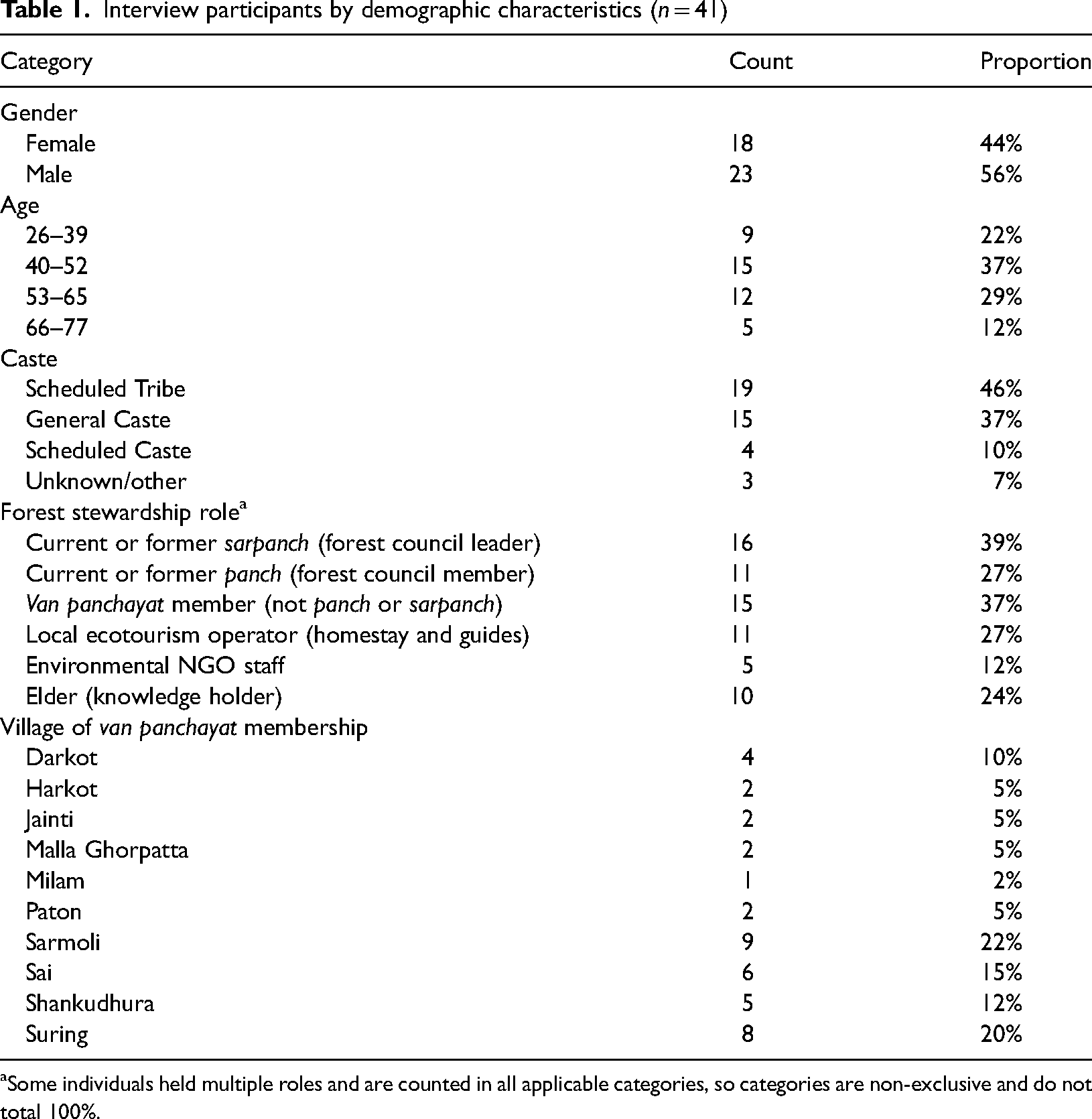
Some individuals held multiple roles and are counted in all applicable categories, so categories are non-exclusive and do not total 100%.
Interview questions were loosely structured under four overarching themes (Appendix S2) related to forest use and governance, ecosystem health, changes in culture, livelihoods, and political participation; and more (Charmaz, 2006). The explorative in-depth interviews were designed to elicit participants’ perceptions of community forests, including observations of changes affecting forest systems across the valley. We also conducted six forest walks to gain basic familiarity with different villages’ VPs. The study team engaged in participant observation throughout fieldwork, including at VP meetings, collecting forest products, assisting with daily chores, and more. The study received ethics approval from the UBC Behavioral Ethics Review Board (Ethics ID #H19-02964), consistent with Canada's Tri-Council Policy Statement: Ethical Conduct for Research Involving Humans.
Data analysis
This study followed a multi-step analysis process beginning during interview translation and transcription, where we identified emergent themes to determine when we reached theoretical saturation and clarified meanings of key terms (Step 1; Figure S1.2). Starting with these themes, we coded each interview using NVivo 12 software by following an inductive grounded theory approach (Charmaz, 2006) (Step 2) to produce a complete set of themes (listed in Table S3). When these exploratory analyses revealed considerable diversity among participants’ views, we chose a mental models analytical pathway to characterize these differences in perceived relationships between co-occurring changes in system dynamics, their effects on forest health, and the stewardship responses they deemed appropriate based on these models.
Theories of mental models—cognitive frameworks that people use to make sense of the world—have been widely applied to understand how diverse perceptions of social-ecological systems impact choices and decisions, both individual and collective (e.g., Abel et al., 1998; Horowitz et al., 2018; Serenari et al., 2015). By characterizing underlying frameworks through which observations of system dynamics are understood, and built on personal experiences and socio-cultural norms, mental models move beyond capturing values or attitudes to reveal how people conceive causal relationships and prioritize management actions, thus providing key insights into connecting environmental values with associated behaviors (Eakin et al., 2019; Jones et al., 2011; Moon et al., 2019).
Mental models can be developed using either direct (e.g., participant-produced diagrams) or indirect elicitation, in which models are derived from documents or transcribed text, such as interviews (Jones et al., 2011); both depend on interviewees’ abilities to articulate their understanding of system dynamics, which can lead to inconsistencies in completeness and accuracy as participants’ fluency with describing these concepts varies (Jones et al., 2014). Qualitative indirect elicitation methods can partially address this concern by reducing simplification and capturing holistic relationships among drivers and effects, particularly for participants unfamiliar with conceptualizing systems as networks of related variables (Jones et al., 2011; LaMere et al., 2020). However, indirect elicitation approaches rely on analysts’ interpretation, inherently distancing them from participants’ “true” mental models (LaMere et al., 2020). Mental models are thus best understood as “incomplete representations of reality,” offering a useful, but limited, picture of people's cognitive frameworks and decision-making (Jones et al., 2011).
Using our existing interview data on forest social-ecological system dynamics, this study followed analytical standards developed for indirect elicitation of participants’ mental models (see Abel et al., 1998; Masinde et al., 2018; Verkerk et al., 2017). We conducted a second round of qualitative coding of each interview transcript for themes related to change (Step 3), and used them to develop individual mental models of the relationship between changes in forest dependence, forest governance, and forest health (Step 4). We categorized participants discussions of the relationships between variables as either “increasing” or “decreasing” trends with either “bad” (negative) or “good” (positive) effects on forest health. Individual statements were coded by trend, and the narrative mental model produced from each overall interview was then represented visually. For example, as shown in one participant's visual mental model in Figure 1, population growth was described as “bad” for forest health because it led to increased forest dependence among outsiders (coding criteria and examples in Appendix S4).
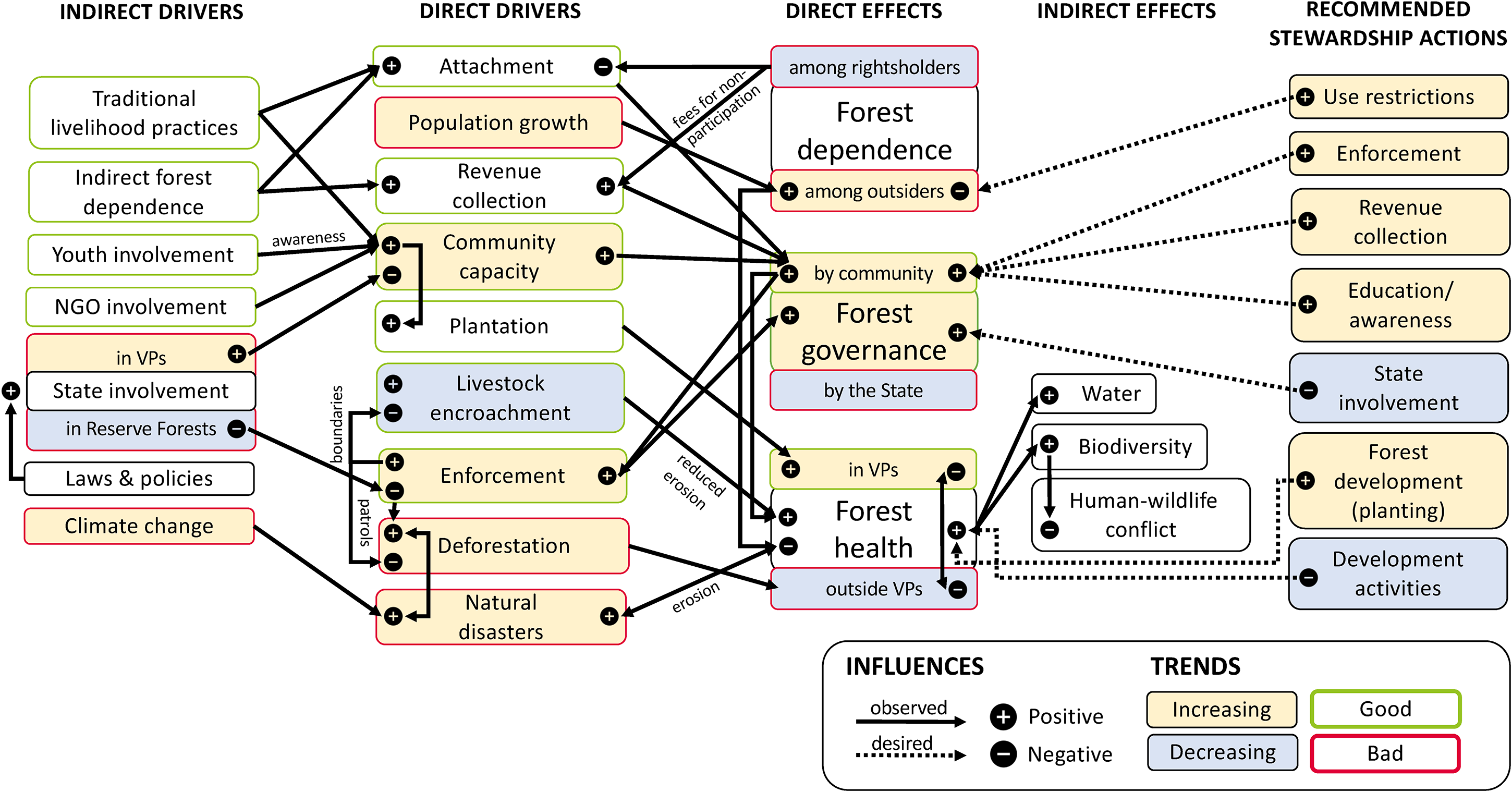
Example of a mental model for Participant 1, describing a positive trend in forest health primarily as a function of active governance by the community. Indirect and direct drivers of change are situated on the left, effects (direct and indirect) effects in the center, and recommended stewardship activities on the right. She sees forest dependence as declining amongst rightsholders (white and blue boxes, under direct effects). Other drivers of good governance such as traditional livelihoods (white box, green outline, upper left) and indirect forest dependence (white box, green outline, below previous) are seen as supporting community capacity to care for VPs. State involvement in management (white and blue boxes, red outline, lower left under indirect drivers) is seen as having a bad influence on forest health. The participant also expressed concern about climate change (yellow box, red outline, lower left under indirect drivers) and population growth (yellow box, red outline, under direct drivers), causing forest degradation through increased incidence of natural disasters and deforestation (yellow boxes with red outlines, bottom of direct drivers), which in turn affect forest health.
Recognizing that variation among individuals can exceed variation between stakeholder groups (Abel et al., 1998; Horowitz et al., 2018), our approach first helped to clarify the heterogeneity of participants’ individual perspectives. Categorizing participants’ models using a grounded theory approach based on the relationships they described (instead of grouping them initially based on stakeholder category or demographic characteristics) then allowed us to derive and describe common patterns. We sorted different managers’ perspectives into the summarized mental model most closely aligned (Step 5), each simplified mental model addressing how one subset of local forest stewards explained the changes occurring and, accordingly, what stewardship responses they believed were most appropriate. We placed these in matrices for each dimension of change to visualize patterns across observed trends (Step 6). These diagrams do not represent quantitative interpretations of the data, nor imply certainty about the exact position. Instead, they are intended to visually illustrate patterns among responses, to provide a more coherent view of where we found agreement and disagreement.
Results and discussion
Here, we first describe four overarching models, identified by categorizing participants’ responses to the question: what is driving changes in forest health? We reflect on these categories with reference to academic theories about environmental change introduced at the outset of this paper. We then consider: what trends are participants observing across drivers of change and consequently in forest health? In the Changing forest dependence section, we present evidence related to drivers of change in forest dependence, showing that changing livelihoods and migration trends prompt uncertainty, with perceptions of their effects on the future of VPs notably divergent. In the Changing forest governance section, we then report on substantial heterogeneity in perceptions of community involvement in forest governance, but observe agreement among local forest stewards in critiquing state actors for failing to meet their co-management obligations in VPs. In the Changing forest health section, we detail perceived trends in forest health as a function of these and other drivers, arguing that despite uncertainty, many local forest stewards view VP forests as sites of restoration and regeneration, particularly as compared to government-managed forests. We then revisit the models presented at the outset to explore: how do these perceptions relate to stewardship responses (see the section on Responding to change)? We describe how different groups of local forest stewards prioritize management responses, and conclude by recommending policy changes to support communities in communicating and collaborating at the landscape scale.
Mental models of relationships between forest dependence, governance, and health
Altogether, participants’ unique perspectives on the relationship between forest dependence, forest governance, and forest health allowed for four overarching models of change (Figure 2). Each model summarizes primary reasons for change, with negative, positive or uncertain trends. Briefly, the models explain forest health as a function of forest use (Model 1; n = 5), governance (Model 2; n = 12), the effect of forest use-dependent attachment on governance (Model 3; n = 8) or forces outside of local control (Model 4; n = 3). They are not strictly exclusive, and many participants expressed perspectives that could fit multiple models; however, we categorized their mental models based on the drivers and relationships emphasized most strongly during interviews despite acknowledged complexities and uncertainties. Table S4 summarizes each participant's views to show the variation in response behind each overarching model.
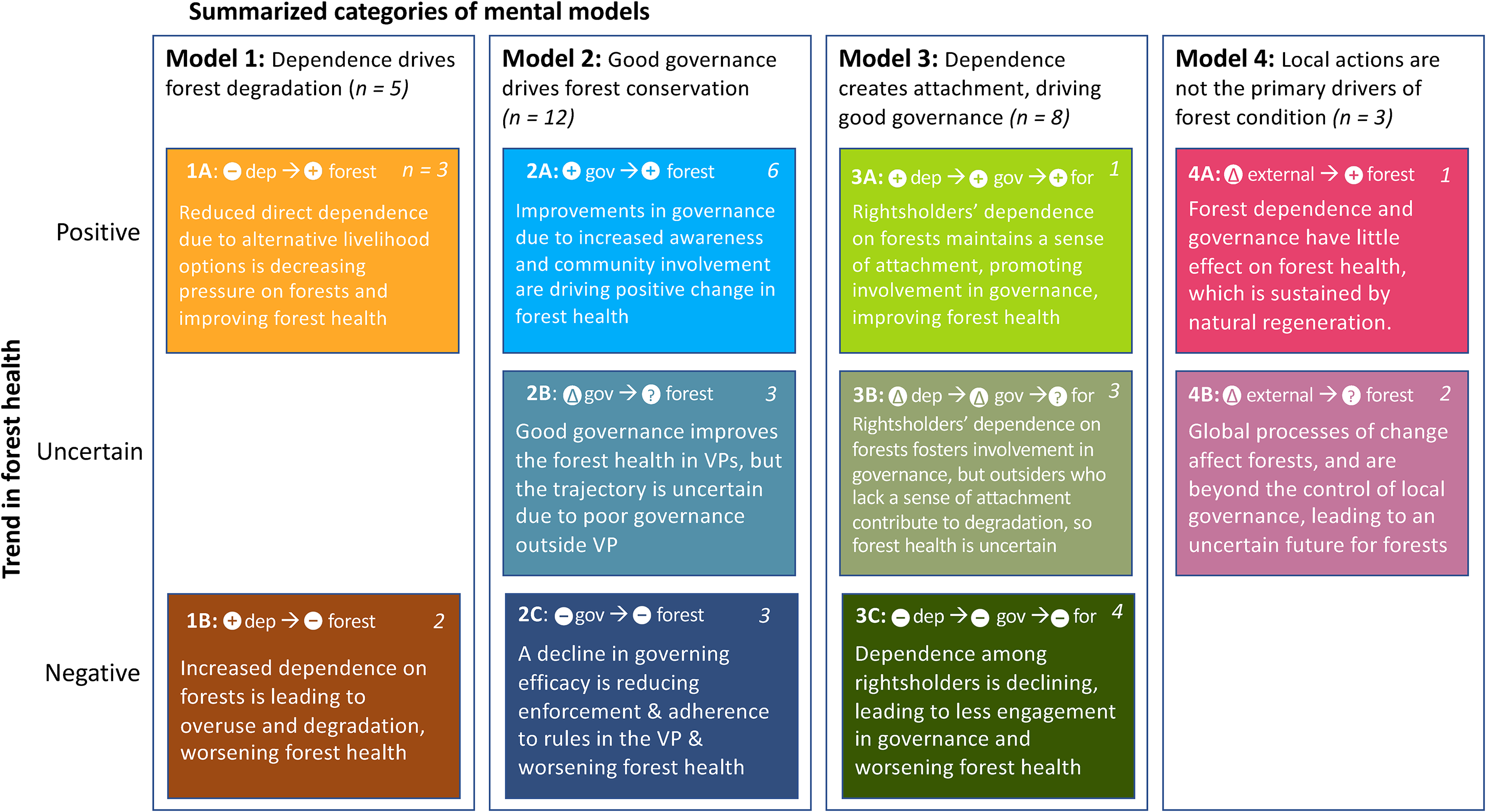
Summarized mental models of relationships between forest dependence, forest governance, and forest health in van panchayats, according to local forest stewards (n = 28): (1) the alternative livelihoods model, (2) the good governance model, (3) the dependent stewardship model, and (4) the external forces model.
Model 1: The alternative livelihood model
The alternative livelihood model emphasizes a negative relationship between forest dependence and forest health, suggesting that direct resource dependence negatively impacts forest ecosystems. When forest-based livelihoods are replaced by alternative sources of energy (e.g., LPG instead of fuelwood) and employment (e.g., wage labor replacing agriculture), the associated reduction in disturbance and resource extraction improves forest health. Conversely, local increases in population and corresponding demand for wood, livestock fodder, and medicinal plants drive degradation. As such, the five participants whose mental models aligned with Model 1—across multiple genders, ages, villages, and forest stewardship roles—proposed reducing or eliminating forest dependence to protect scarce resources. However, perspectives on the continued importance of conservation varied considerably. For example, Participant 19, a female panch (50s) from Darkot village, emphasized the salience of ongoing forest protection to support indirect dependence on forests for clean air and water, whereas Participants 17A to C (two women and one man, 40s–50s, all panch in Suring village) suggested that new livelihood options would render forests largely irrelevant to human wellbeing, and conservation efforts are thus unnecessary (Appendix S5).
Among the models, Model 1 is perhaps most obviously aligned with a well-established academic narrative and policy approach. Prominent in development practice and conventional conservation strategies, the alternative livelihood theory suggests, respectively, that the environment can be protected by alleviating poverty and facilitating access to non-forest-based livelihoods to reduce forest reliance, and separating people from “wild” places. This principle strongly underlies the once-prominent Theory of Himalayan Degradation, and remains common discourse among India's environmental management institutions, including the Forest Department (Agrawal and Chhatre, 2007; Kabra, 2019; Roe et al., 2015). Arguably, local articulations of this model are informed both by (1) exposure to these narratives consistent with Agrawal's (2005) Governmentality theory of local environmental awareness, empirically grounded in the study of Uttarakhand's VPs and (2) lived experience observing the connection between unregulated resource use and degradation.
Model 2: The good governance model
Model 2 emphasizes the role of governance—by communities and the state—in shaping forest outcomes. Here, the level of forest dependence is less relevant than high community capacity for governance, effective enforcement, and sufficient revenue collection. Community involvement in governance is understood as motivated by people's awareness of indirect forest-derived benefits: protecting water and air quality, and mitigating disaster risk, disease, and human–wildlife conflict. A sense of attachment to the forest exists without direct resource extraction, which can be detrimental to forest health. Strong institutions and cultural norms sustain good governance; if rightsholders are unaware and uninvolved they will compromise their own wellbeing and forest health by neglecting forest stewardship. Those attributing positive trajectories of forest health to an awareness of indirect forest dependence were predominantly those involved in local environmental activities, through either ecotourism or NGO-led projects, but otherwise shared no clear demographic similarities.
Principles of good governance for environmental management are well-articulated in academic discourse, including its importance for establishing legitimacy and sustaining local support for conservation (Bennett et al., 2019; Ojha et al., 2019); however, Model 2 is less closely aligned with a theoretical framework than Model 1, although participants across both groups promoted restricting forest resource use. The good governance model differs meaningfully as its proponents argue that merely reducing forest dependence cannot address environmental degradation without robust environmental management institutions. Here, we do find parallels with the forest governance literature, including emphases on effective enforcement mechanisms, community involvement, and efforts to address corruption and mismanagement (Ballabh et al., 2002; Gupta, 2014; Nagahama et al., 2019). The views of these local stewards diverge from academic discourse, though, in arguing that community involvement in governance is not contingent upon continued forest-based livelihoods, but can persist where good governance and environmental awareness remain socially valued. Among this group we heard the strongest expressions of hope for the future of forests (Model 2A)—this optimism was notably gendered, however, with women most hopeful and men more commonly decrying a trend towards institutional erosion (Model 2C).
Model 2 also differs from prevailing theories on the role of the state in forest governance, which have widely critiqued the institutions of forest bureaucracy for seizing control of local resources. While some participants did espouse this view, most holding negative opinions of the status quo, perspectives were polarized on ideal roles for the state. For example, Participant 1, a female sarpanch (40s) in Shankudhura village, indicated that the state should have no role in VPs, but Participant 15A (male sarpanch, 60 s, Suring village) preferred a model in which the Forest and Revenue Department actively oversee each aspect of forest management. Describing pathways for achieving and sustaining good governance, local forest stewards’ views differed considerably from common academic critiques of forest management; these are addressed in the Changing forest governance: community capacity and the role of the state section.
Model 3: The dependent stewardship model
Like Model 1, Model 3 emphasizes the connection between forest dependence and forest health, but argues that the relationship is fundamentally positive. According to proponents of Model 3, dependence on resources motivates forest conservation. Collecting resources from VPs provides community members with a direct livelihood-related incentive to engage in governance. Dependence imbues a sense of attachment and responsibility for stewardship among rights-holding community members, and supports revenue collection in the VP to fund stewardship activities. Thus, forest rightsholders should continue to enjoy the use of forest products.
However, this relationship does not extend to non-rightsholding bahaari, “outsiders,” perceived to lack the attachment to place (even among forest-dependent households) and therefore should not hold forest rights. Access to VPs should be controlled to prioritize the fulfillment of rightsholders’ needs and forest relationships, with pass-based extension of privileges to outsiders as resources allow. Dependence can be managed compatibly with conservation if rules are strictly enforced, and community members remain dependent on the forest. This model shows least variation in response, with most participants concerned about the trajectory of forest health, but includes differing perspectives on whether ecotourism engenders attachment. Though occurring across genders, ages, and castes, views aligned with Model 3 were most common among residents of Sarmoli and Shankudhura, both places where forest-based ecotourism is a relatively more important livelihood and environmental NGOs are more active than residents of other villages.
Model 3 also echoes popular environmental narratives, now widely articulated, which emphasize the role of attachment in fostering environmental awareness, involvement in governance, and the persistence of cultural values for reciprocity among humans and other beings, such as forests, wildlife, and water (Diver et al., 2019; Jolly et al., 2022; Santana et al., 2023). These have seen increased attention alongside widespread affirmation of the value of indigenous and local knowledge (Bohensky and Maru, 2011; Brondizio et al., 2021), and critiques of conservation models predicated on displacement and dispossession (Agrawal and Redford, 2009; Kabra, 2020), and contributed to the recent proliferation of organizations dedicated jointly to environmental protection and sustainable livelihoods. Notably, many participants who did not have strong connections with environmental NGOs also attested to the importance of continued forest use among rightsholders for maintaining the function of VP governing institutions. As with Model 1, participants expressing views consistent with Model 3 may reflect both these more recent environmental theories, shared by NGOs and in educational settings, as well as cultural values embedded in the storied history of grassroots activism and forest protection in Uttarakhand dating back to the 1930s and earlier traditions of forest care (Agrawal and Chhatre, 2007; Guha, 2000).
Model 4: The external forces model
Model 4 de-emphasizes the role that any of these local activities play in determining forest health. Although environmental change discourse suggests that many of the pressures affecting forest health are beyond community control, most participants attributed forest degradation to local rather than external forces. Those participants who expressed views consistent with Model 4 emphasized more positive outlooks for forest health going forward, a surprising divergence from the academic literature resoundingly attesting to the likelihood of extreme destabilization of ecosystems and social orders associated with climate change and biodiversity loss, particularly in mountain environments (Adler et al., 2022; Johnson et al., 2017). Rather than focusing on negative impacts outside of communities’ control, participants in this group indicated that natural regeneration and resilience could, over time, overcome the impacts of development activities and human disturbance. However, only three participants’ mental models were categorized into this model, and their explanations of change varied considerably (see Table S5).
Changing forest dependence: migration and livelihoods
The nature of local people's dependence on forests is shifting due to youth outmigration from the mountains to the plains, related declines in agriculture and livestock husbandry, and increased availability of alternatives to forest resources (e.g., LPG and electricity). Although participants disagreed about the effects of livelihood change on forests, most expressed a sense of uncertainty associated with demographic changes and migration patterns disrupting traditional forms of engagement in VP governance. Outmigration from villages and the decline of forest-based livelihoods were seen as threatening forest health by destabilizing forest governing institutions, corroborating recent studies (Naudiyal et al., 2019; Prateek, 2017). Such changes in the type and degree of dependence on forests can affect forest health either directly (Model 1), or by reshaping the relationship between people and forests (Model 3). Figure 3 illustrates each participants’ description of the trend in forest dependence (directly among rightsholders and non-rightsholding “outsiders”, and indirectly) and its relation to positive or negative impacts on forest health in VPs. As shown in Figure 3, most participants (20/28; 71%) indicated declining direct dependence on community forests among VP rightsholders. Forest stewards reported mixed effects of reduced forest use, with 9/20 (45%) suggesting a negative impact and 11/20 (55%) arguing that reduced direct dependence positively impacted forest health.
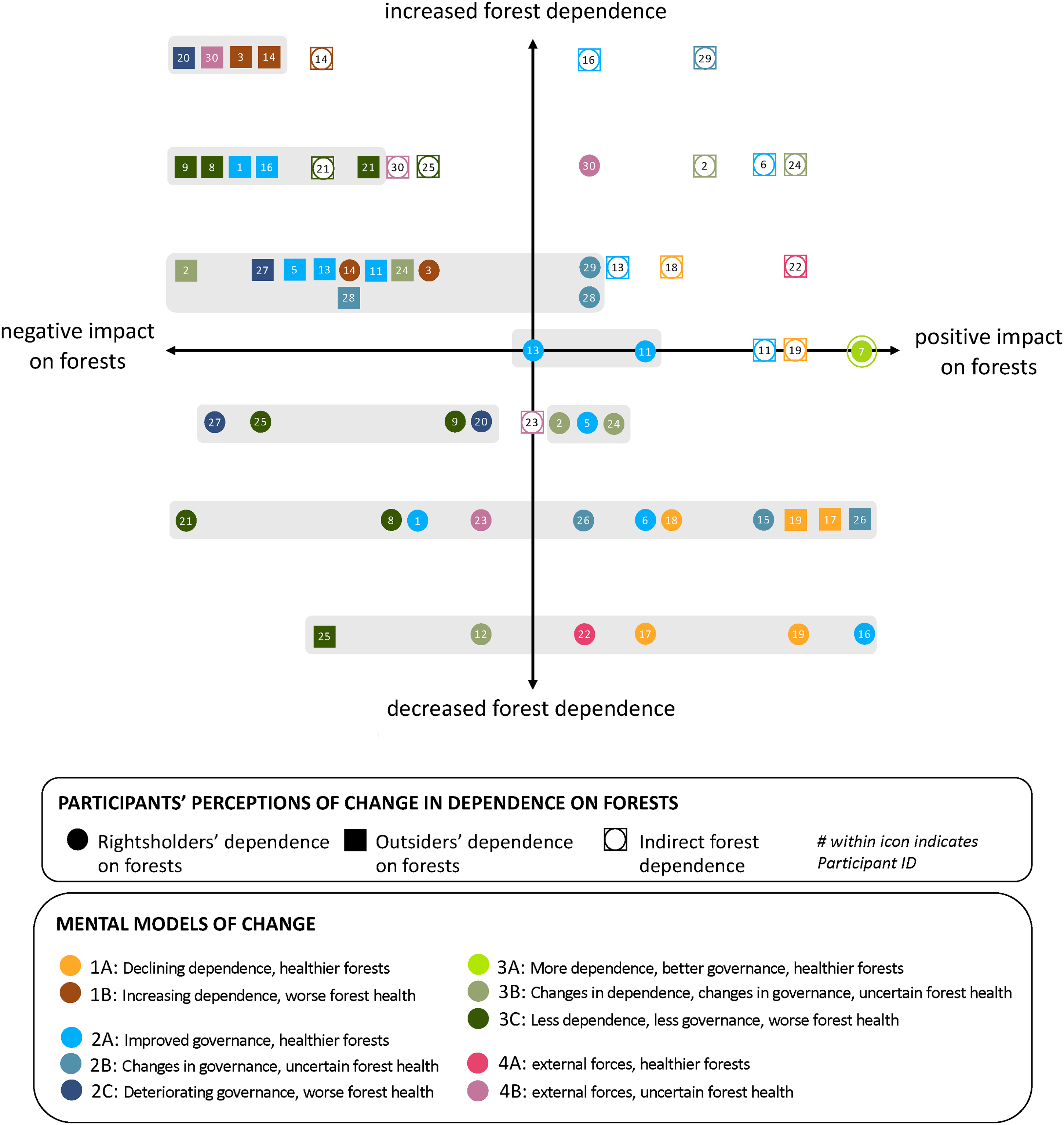
Change in forest dependence & impacts on forest health. The figure depicts participants’ views of the impacts of direct forest dependence among rightsholders (circles) and non-rightsholding outsiders (squares) and indirect forest dependence among both groups (circle inside square). The colored icons correspond to mental models described in Figure 2, with different shades representing perceived trends. Each icon plotted within the diagram represents the viewpoints of one or more participants during an interview. The position of icons within each quadrant indicates the strength of claim made about the relationship between changes in forest dependence and forest health. For example, Participants 3 and 14 (upper left) view increased forest dependence of all types as contributing to forest degradation, though both see increased dependence among outsiders as significantly more damaging for forest health than among rightsholders. Participant 24, however, views rightsholders’ slightly decreased forest dependence as slightly beneficial for forest health; outsiders’ slightly increased dependence as considerably damaging; and moderately increased indirect dependence among both groups as contributing positively to forest health.
Those highlighting positive effects of rightsholders’ decreased forest dependence associated declining agricultural and livestock-based livelihoods with increased employment and educational opportunities inside and outside the valley, access to alternative energy sources (e.g., LPG and electricity), and development activities (e.g., roads) increasing access to services. As a female panch (50s) from Darkot village (Participant 19) described: “If you go to see the VP [now], you’ll see that that forest is lush with bamboo. […] Nobody is cutting the trees these days [because] now everyone uses LPG instead of firewood […]. In the past, there was a trail to go into the forest here, and we used to go there for fuelwood. But now, we cannot find any trails there,” making illicit resource extraction more difficult and less likely to occur.
Among those highlighting negative impacts of declining dependence (primarily Model 3), outmigration and changes to traditional livelihood practices were understood as pressing threats. As rightsholders’ livelihoods become less dependent on the forest, they are less likely to exercise stewardship or engage in forest governance, because these values are waning, reducing enforcement, revenue collection, and adherence to customary norms and rules. As a male sarpanch in his 40s from Malla Ghorpatta (Participant 21) explained, “Previously the VP was in good condition. But the health of the VP is now decreasing, because in earlier days, everybody had cows to feed; now nobody has cattle, so they don’t care about the VP. […] Now, people couldn’t care less, if somebody cuts the grass, cuts the trees, nothing affects them.” With forest-based livelihoods declining, some suggested that ecotourism could foster a sense of attachment and dependence while transitioning towards less extractive forms of forest reliance. Most participants distinguished between rightsholders’ dependence and resource use among “outsiders,” referring to non-rights-holding residents and migrants, who they described as lacking forest attachment. Forest dependence among outsiders is broadly perceived to be rising, with negative implications for forests (16/20; 80%; Figure 3). Accordingly, population growth among non-rightsholders concerned many forest stewards across genders, age groups, and castes.
Here, as in other rural mountainous regions, there is a widespread sense of disconnect between younger and older generations, altering the functioning of local environmental management institutions (Gagné, 2019). The shift from predominantly subsistence agriculture and pastoralism to cash- or remittance-based labor fuels youth outmigration and urbanization, prompting both hope and apprehension among forest stewards. Some envision a promising future in which educated youth return to the mountains, now dedicated to forest conservation, to continue their forebears’ work. Others, however, see recent gains in forest health as fragile, particularly forest stewards who emphasize the connection between forest-based livelihoods and participation in governance (Model 3).
With less direct reliance on forests for agricultural inputs, some saw VPs as an unused land base that should support viable livelihoods for youth through industrial development. Particularly for those advocating alternative livelihoods (Model 1), continued VP forest dependence among younger generations was perceived to reflect low levels of development, technological alternatives representing progress and better livelihoods. VPs were considered a relic of the past, emblematic of missed opportunities for development, and forest-based livelihoods characteristic of poverty, so VP land and resources should be monetized to maximize residents’ development opportunities.
In contrast, many view forest dependence as key to communities’ resilience and adaptive capacity. Agriculture—particularly lands occupied by longstanding resident families—providing a safety net, a backup option should employment in the plains prove elusive. As a female panch and local ecotourism operator in her 30s in Shankudhura suggested, “We want children to continue their education and move forward (for jobs). And if they don’t find anything there, then they should come back and work for their forest. If they come back, then they shouldn’t feel hopeless, saying that ‘oh, our parents and elders did nothing for our forest.’ Saying, ‘our elders kept nothing for us here’ (Participant 8).” Forests ensure a freely available resource base for poor and vulnerable individuals to meet basic needs without expending meager household income. Participants also emphasized indirect dependence on forests for wellbeing, both locally and downstream, characterized as likely to increase as global change processes (e.g., pollution and climate change) affect the availability of clean air and water. Women in particular often argued that indirect dependence supports forest health, motivating care and stewardship of forests (Figure 3, upper right quadrant).
Changing forest governance: community capacity and the role of the state
Uttarakhand's van panchayat has been theorized as an emblematic commons institution (Agrawal, 2005; Gupta, 2014). Given its long history of community–state co-management and its widespread implementation across the region, the VP is an ideal case to investigate the efficacy and evolution of such governing arrangements. The prevailing academic narrative suggests that the VP is an institution in crisis, characterized by declining community involvement in governance and an encroaching state (Agrawal and Chhatre, 2007; Ballabh et al., 2002). Our analysis complicates and to some extent refutes this narrative of decline, demonstrating that for many local forest stewards, VP forests are beacons of hope for restoration in an otherwise threatened landscape. However, forest stewards also cautioned that VPs are not islands, and the success of one forest can be imperiled by ecological degradation in nearby parcels due to other managers’ decisions, including state actors.
Community involvement
Figure 4(a) illustrates that most participants perceive a strong causal relationship between community involvement and forest health (see Models 2–3 in particular). Though most (18/28; 64%) described current involvement as high, projected future trends were more uncertain, 39% (11/28) anticipated positive forest health outcomes from ongoing community involvement (this group included predominantly women, and three male environmental NGO staff) and 43% (12/28) suggested the opposite. Those who felt current involvement was low were primarily men; all but one were pessimistic about the future. These views, across all ages, often reflected participants’ distinct opinions about the changing roles of elders, youth, and women in forest governance.
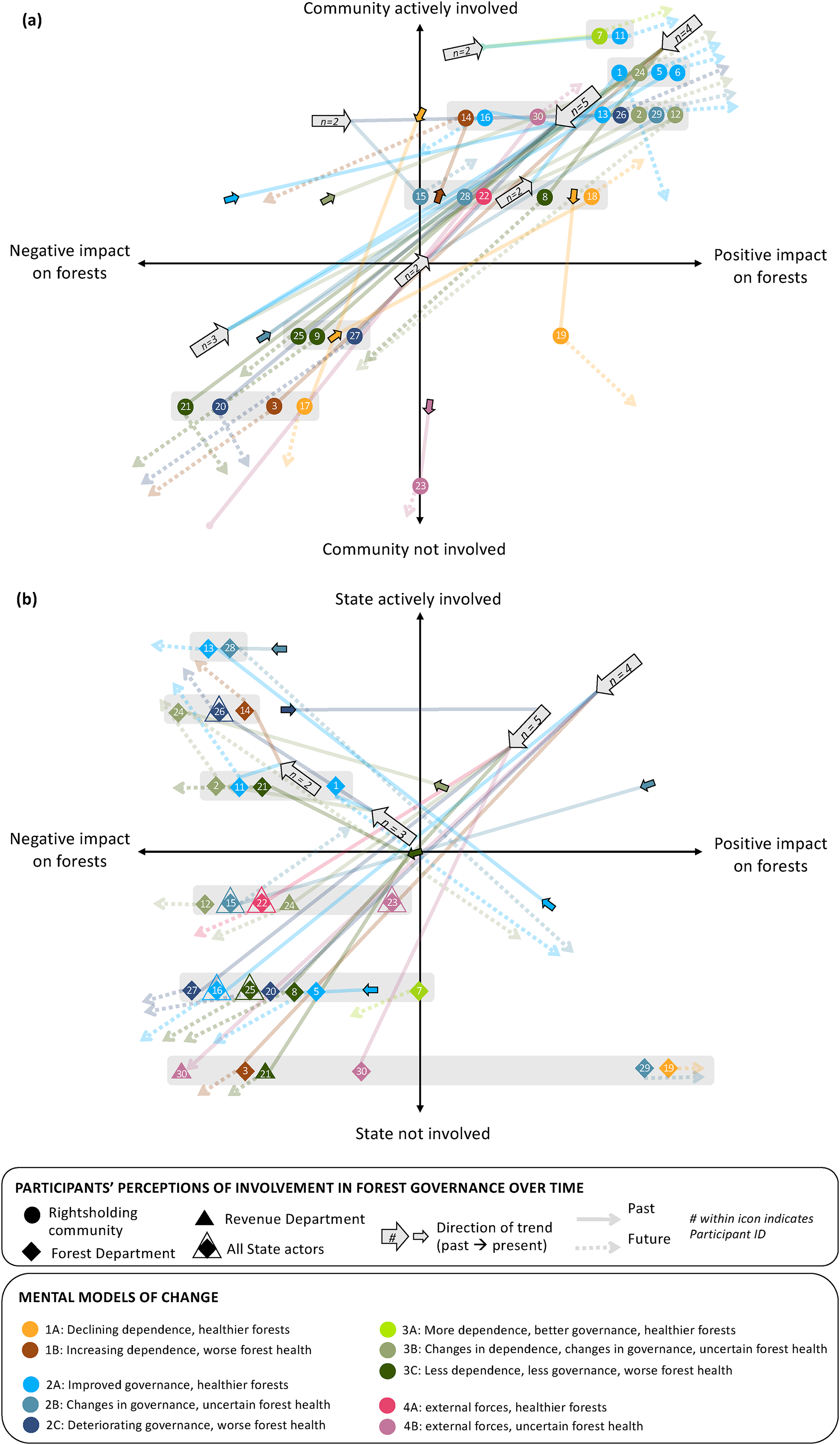
Involvement and impact of (a) community and (b) state actors in van panchayat management. The Figure shows interview participants’ perceptions of the role of communities (4a) and state actors (4b) in community forest management over time. Each individual in either figure is represented by a numbered icon indicating their views on the current level of active involvement by the community (a) or the state (b), and its effects on forest health. Arrows denote the direction of trend described. For example, in (b), one cluster of participants (3, 16, 20, and 30) views the state as having been moderately active in VP management in the past, with moderately positive effects on forest health. For Participant 30, declining involvement of the Forest Department has had slightly negative consequences for forest health, while sharp decline in Revenue Department involvement has had a significantly more negative effect. Participant 16 identifies a negative trend in involvement and efficacy of management by both state actors.
Some participants felt strongly that elders and previous generations have stewarded the forests effectively for many generations. As a male sarpanch in his 40 s in Harkot village (Participant 25) explained, “Our elders saved this jangal (forest), and they told us you have to protect the forest, and so we’ll tell the same thing to our children.” Here, knowledge transmission associated with established social norms crucially influences perceived governing trajectories. According to some (Model 3C), traditional practices and so community involvement in VPs are seen as declining or discarded, exacerbated by outmigration and declining youth involvement.
Others (Model 2A) saw the return of educated youth—aware of global environmental trends, cognizant of this inherent dependence, and equipped with tools to improve management—as a potential boon for environmental governance. According to a male panch and environmental NGO staff member in his 40 s from Sai (Participant 13), “children's mindsets are better than their elders. These days the work is going very well. They destroyed the whole forest, our grandparents and their elders. […] We have protected that forest for the past ten years, and […] regeneration is now happening naturally.” In this view, traditional practices which contributed to forest degradation are contrasted with a growing prioritization of forest protection and restoration.
Forest stewards who indicated increased community involvement often attributed this to changing gender roles, including greater decision agency among women (e.g., Participants 6 and 24, the latter a panch and both female ecotourism operators in Sarmoli, 50s and 30s, respectively; and 23a, a male government employee in his 40s from Darkot). This perception is evident in a few villages in particular (Sarmoli-Jainti, Shankudhura, and Darkot), with strong local women's associations and NGOs focused on extending VP inheritance rights to women. Recent policy changes reserving forest council seats for women appear useful but less impactful than empowerment efforts towards inclusive VP governance.
Most participants highlighted strong enforcement of use restrictions as VP councils’ central role, said to be compromised by insufficient funding. Participants whose views aligned with Model 3B/C attributed this dual problem to declining forest dependence, which directly reduces revenue; whereas Model 2B/C participants blamed increases in illicit use or poor external funding support (e.g., from the Forest Department). The outliers in Figure 4(a) projected reductions in community involvement but improved forest condition given the effectiveness of dedicating forests to a local god (devi), reducing the need for active governance by deterring illicit use. This was seen as a last resort when community involvement had declined: effective in the short term, but vulnerable to changing demographics and cultural norms.
Roles of the state
Despite prevalent mistrust of government actors in Johar Valley, forest stewards’ perceptions of the activities and appropriate role of state actors in forest governance diverged widely (Figure 4(b)). These perspectives fit broadly into two categories: those envisioning the state as encroaching on communities’ authority and mismanaging its forests (9/27, 33%), and those describing an abdication of responsibility and seeking more government involvement and support (15/27 55%). Participants whose views fit in the top left of Figure 4(b) described active government involvement as destructive to community capacity and governance: “If someone takes a [forest] product, then the government wants the royalties, […] so, three or four times, they have decreased [communities’] rights. From elections to the use of products [they have changed rules] to weaken the van panchayats and decrease their rights” (male NGO staff member, 40s, from Sai village, participant 26). However, many characterized the Forest Department's activities in the valley as diminished, rather than encroaching. Participants often described FD officials as ‘sunbathing’ on the job, simply absent, or to a lesser extent ‘eating’ funds, whereas managers in the vicinity of Munsiari township were said to have left Reserve Forests as functionally open to encroachment, with degradation rampant.
Participants more often preferred sharing power with the Revenue Department, whose role in overseeing elections and conducting audits was perceived as a legitimate and potentially welcome form of increased involvement in VP governance. These views contrast with serious misgivings about Forest Department activities in and around VPs, where “[corrupt] government schemes” (often ecotourism or tree planting initiatives) may bring temporary employment, but also harmed VP ecosystems. One male sarpanch in his 50 s from Sai village described his experience with a government plantation scheme: ‘They planted tamarind, bay, and chestnut… trees which are not suitable for this climate […] If they had planted Manipuri baanj [a local oak variety] there would be a big forest here now. But they let us down. The van vi bhaag (Forest Department), they are the worst […] they just eat our budget […] So the next time they came [with a scheme], we said we will not give you [any forest land], because of what you did last time… the Forest Department dhoka [cheated, deceived] us.’ (Participant 28)
In sum, many Johar Valley VP managers perceive the Forest Department as incapable of managing their own forests, let alone participating usefully in VP management.
Recent policy changes diminishing local autonomy regarding land and resource management have alarmed both local forest stewards and scholars (Mukherjee, 2014; Negi et al., 2012; Pathak et al., 2021). However, the regular absence of Forest Department authorities suggests neglected co-management responsibilities, rather than an encroaching state. The Uttarakhand State budget for VPs has reduced significantly, (Naaz and Sahu, 2018) and in 2018, one-third of Uttarakhand FD posts were reportedly vacant; this is likely higher in remote regions like Johar (Negi et al., 2012; Uttarakhand Forest Department, 2018). Whether participants sought more or less state involvement, an overwhelming majority agreed that the current VP co-management relationship is flawed. These findings corroborate the literature elsewhere documenting increased state recentralization of forests, even while the actual presence of state authorities on the ground has not demonstrably changed (Forsyth and Walker, 2014; Ribot et al., 2006).
Changing forest health: Degradation or restoration?
Conversations with forest council members and other VP decision-makers illuminate changes in forest health across generations, telling a story more complex than steady degradation at local hands. They described significant spatial variability in forest health, usually distinguishing between within VP forests and outside, particularly in Forest Department-managed Reserve Forests. As Figure 5(a) illustrates, 89% of participants (16/18) described forests outside VPs as degraded. All projected future deterioration, primarily due to poor governance of Reserve Forests, with market forces, population growth and outsiders’ use of unmonitored forests as key.
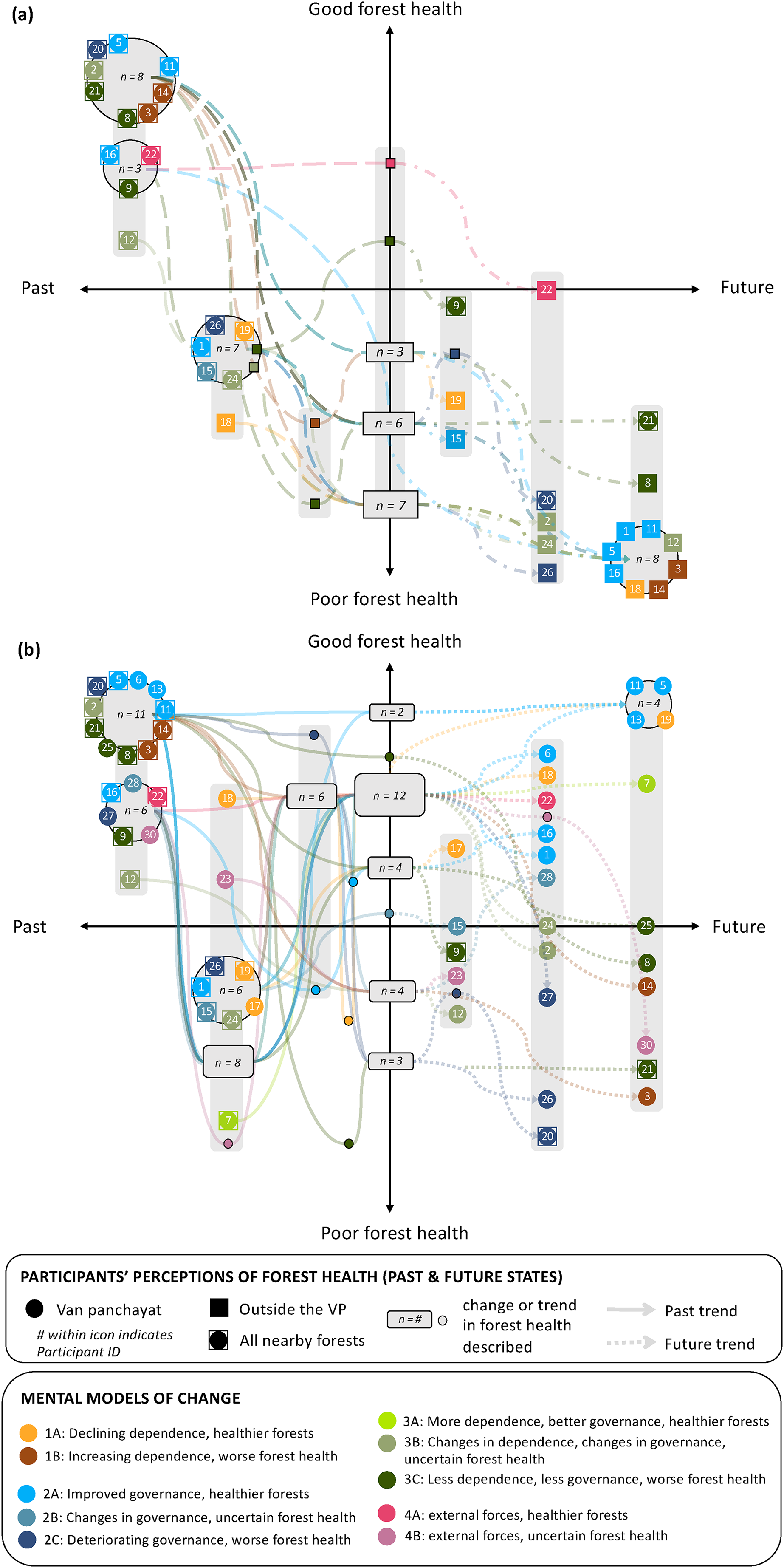
Perceptions of forest health (a) outside and (b) inside of van panchayats. Each figure (a & b) explains reasoning about the health of the forest outside the VP (5a), and inside the VP (5b) over time. Each plotted individual can be traced in reference to their specific views. For example, Participant 2 in (a) is one of many participants who saw past forests outside the VP as in good shape (Participant 2's trajectory begins in the top left), but then described a steady decline (moving to very poor health at the present in the lower center, one of n = 7) which she anticipates to continue into the future (continuing towards the bottom right), due primarily to Forest Department mismanagement. Within the VP, Participant 20 perceives the forest as having been degraded significantly in the recent past and currently in moderately poor health (one of n = 3). Participant 20 anticipates temporary improvements (indicated by a dark blue icon in the near future, showing slightly poor forest health) because the community had recently dedicated the VP to a goddess, but suggested that further degradation was inevitable in the long term (continuing to very poor in the lower right).
Forest stewards’ perceptions of VP forests (Figure 5(b)), however, comprise diverse understandings of recent trends and future predictions. Strikingly, 74% (20/27) described the current state of the VP forest in good or relatively stable health due to continued traditional governance. More commonly, participants (particularly Model 2A—1, 5, 6, 13, and 16; three female council members and ecotourism operators in their 40s–50s from Sarmoli-Jainti and Shankudhura, an environmental NGO staff member from Sai (40s), and one male sarpanch from Suring (60s)) described a pattern in which earlier generations’ ignorance of their impacts caused widespread deforestation; whereas recent community-led reforestation has markedly improved forest health. These forest stewards often expressed optimism and pride in their successful restoration efforts: “We have more hope … when we used to go into the forest there was nothing. […] We [restored] that jangal in our village—building boundaries, planting work, development—we took time for these things. After, when we stopped, we saw that the forest had been restored. We felt that we had new life.” (Participant 5).
However, perspectives on the likelihood of maintaining improvements in forest health diverged: for another group (Participants 2, 9, 24, and 27a and b: two female panch and ecotourism operators from Sarmoli in their 30s–40s, a male sarpanch in his 40s from Harkot, and two male sarpanch—40s and 70s—from Sai), the improvements of recent decades felt tenuous, even futile, subject to pressures beyond communities’ control (Model 3). They worried about deteriorating forest health as forest-based livelihoods and resultant forest attachment wane, and saw improvements in forest health as localized and vulnerable to mismanagement elsewhere. Many noted increased landslide risk and water insecurity from deforestation-driven erosion in Reserve Forests above VPs. Figure 5(a) shows few participants hopeful about forest health outside their own community forest, which could not sustain the needs of resource users (rightsholders and others) indefinitely and absorb spillover without ill effects.
Several paths shown in Figure 5(b) indicate consistently deteriorating forest health caused by population growth and declining attachment. A male sarpanch in his 40s from Malla Ghorpatta described, “when we were young, more people were dedicated towards the forest. Now people are the worst. What was there before, now it isn’t there. The forest health is getting worse” (Participant 21). According to these diverse participants (12, 20, 21, 26, and 29; men and women aged 20s–70s across multiple forest stewardship roles), previous generations stewarded the forest and enjoyed the benefits of a thriving ecosystem, but these efforts now suffer from lack of youth participation in governance, low capacity in VPs, and increasing outmigration.
Eroding cultural norms were also described as drivers of degradation: some perceived environmental shocks such as landslides and extreme precipitation as caused by failure to uphold responsibilities to the forest. Particularly among male participants (across age groups), this reportedly included disrespecting customary taboos related to menstruating women, religiously prohibited from visiting certain places, especially water bodies. These norms justify continued male control over forest spaces, constraining opportunities for participation in community forest management among women and girls in mountain communities, particularly at the sarpanch level. Such comments were much less common, however, in villages near the market center and where local civil society organizing around women's rights and livelihoods is active.
In this mental model, unsanctioned human activities have not only direct, but also indirect, influence on the forest. According to the son (30s) of a sarpanch in Suring, “Because nature has been disturbed, the environment has become degraded. Nature repeats its own rules, right? Whatever you do in nature, it will do the same thing to you. […] Whether it's you or me [ignoring rules], the illegal deforestation or the collecting of medicinal plants, or people now going to places they haven’t gone before (Participant 16C).” The environment is seen as responding to transgressions by punishing residents of the valley—not only specific offenders—with environmental harms. Conversely, good stewardship and adherence to norms are rewarded with bountiful forests. Many participants expressed concern about global and regional environmental changes, yet most still emphasized local determinants of forest health. Among those few who viewed forest health as primarily outside communities’ control (Model 4, Participants 22, 23, and 30), the agency of the forest itself—self-restoring and ultimately unmoved by human presence—overshadowed local decisions.
Although forest health in the region has not recently been assessed, many believe that careful community-led management has brought species richness and lush canopy cover back to previously degraded places, and community forest health continues to compare favorably with state-managed parcels. Despite declining dependence among rightsholders, communities’ monitoring and enforcement efforts effectively mitigate encroachment and overuse in at least some villages. This may also indicate, however, that well-managed VPs are being protected at the expense of nearby forests with less active oversight. As such, non-rightsholding households (and those with small VP forests) must have legitimate ways to access resources to prevent a type of community-led fortress conservation in which those with privileged access override those trying to meet basic needs.
Responding to change: Stewardship activities
The landscape of Johar Valley comprises a complex mosaic of environmental change, where forest stewards’ varied perceptions of trends and patterns shape management decisions. Most forest stewards prioritized improving enforcement, whether emphasizing use restrictions (Models 1 and 2) or outsider access (Model 3). Accordingly, most agreed that communities must increase revenue collection and active involvement of rights-holding VP members; options varied from new livelihood opportunities through maintaining traditional practices (Figure 6).
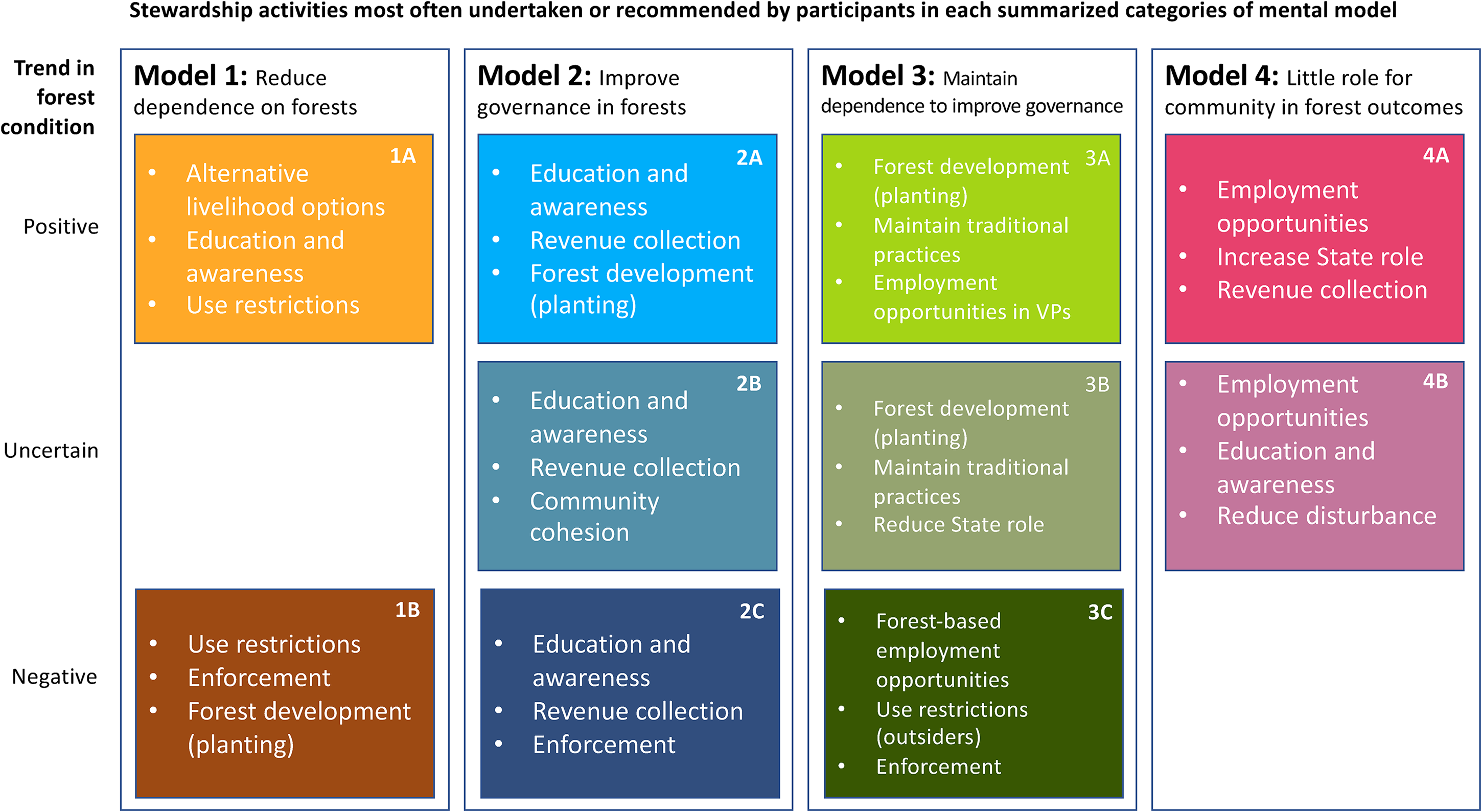
Forest stewardship responses by model. Priorities for stewardship activities among forest stewards, according to mental model of relationships among forest dependence, governance, and health. Stewardship priorities listed in the boxes are the three strategies most frequently mentioned by participants whose views closely fit each model.
Model 1 participants frequently prioritized alternative (future) development or livelihood options alongside strict use and access rules for resource harvest. VPs could support livelihoods through non-extractive projects like ecotourism, but use should be avoided; this approach has been commonly promoted by the Forest Department and other state entities. Those aligned with Model 2 prioritized awareness and education to encourage VP involvement, coupled with increased revenue collection to support good governance. Particularly among community members and outsiders believed to be less forest-aware, it was presumed that educating young people and spreading awareness would prompt forest protection while securing non-extractive revenues.
In addition to participation in governance, Model 3 emphasized reforestation and active stewardship, coupled with supporting forest-dependent livelihood strategies instead of promoting market-based employment. A female panch and local homestay operator in her 30 s in Shankudhura village observed, “If our children don’t have any other source of income, then they’ll conserve our forest, and our forest will be protected. If they have some other kind of employment then it's very difficult.” (Participant 8). Some saw these strategies as potentially replaceable by ecotourism or medicinal plant markets, others disagreed. Participants who focused on the role of external forces (Model 4) usually emphasized priorities unrelated to forest health, such as fostering employment opportunities to stem outmigration and improve access to services, while allowing natural regeneration processes to continue.
Participants were also divided on the question of appropriate roles for state co-managers. A minority suggested that there should be no government involvement in VPs, whereas many forest stewards expressed an interest in state actors more actively supporting VPs given their limited capacity and poor revenue generation. Those seeking a reduced role for the state government primarily wished to strengthen forest councils’ autonomy and position the state in supporting roles only.
Although many participants expressed concern about their vulnerability to global environmental change, most saw themselves as comparatively active and impactful agents of change. These results echo other studies affirming local communities’ capacity to effectively manage surrounding environments, for example, a large n study of community forestry in Nepal which found that local efforts significantly reduced forest degradation and poverty (Oldekop et al., 2019); case studies in Canada and Australia where indigenous communities are enacting traditional legal systems to care for human-forest interdependencies (Doyle-Yamaguchi and Smith, 2022; Melendez and Kanowski, 2022); a systematic review of climate adaptation in mountains indicating that two-thirds of adaptation responses are autonomous (initiated by communities without external support) (McDowell et al., 2021); a global review of community forests suggesting that under appropriate governance regimes with secure rights, communities frequently manifest positive ecological and social outcomes (Gilmour, 2016). In our case, forest stewards identified both positive and negative effects of local activities on forest ecosystems, and predominantly emphasized these over external influences on forest health.
Management and policy recommendations
Facilitating shared understanding among diverse stakeholders has been identified as a core challenge for effective common pool resource management (Armitage et al., 2020; Carlsson and Berkes, 2005; Horowitz et al., 2018). Our results show considerable heterogeneity even among members of the same stakeholder group, ostensibly observing the same changes in the same valley. To realize more prosperous futures, many participants urged community cohesion around a shared goal of conserving forests. However, common understanding of the drivers of change remains elusive, and forest stewards struggle to reconcile diverse theories of change in the absence of established fora for collaboration. In contexts like Uttarakhand's VPs, efforts to collaborate are complicated by capacity limitations and significant spatial variability in the changes occurring. As a result, many forest stewards described their experience navigating stewardship pathways as isolated and frustrating.
This helps explain the lack of consensus or large variation among mental models found here, and imposing a single approach would likely exacerbate inequities along lines of gender, caste, economic status, and other axes of difference as the narratives of more powerful local elites override others (Robbins, 2000; van den Broek, 2018). However, fostering opportunities for dialogue among nearby VPs and with state actors could help forest stewards coordinate management, potentially helping to avoid the spillover effects of conflicting management strategies across shared landscapes. Indeed, community leaders expressed keen interest in working more closely with neighbouring communities to coordinate efforts.
Their work could be better supported by implementing two key management changes: Firstly, the state could financially compensate forest council leaders for their time-consuming and knowledgeable conservation labor. The lack of salaried positions for local forest caretakers currently presents a tradeoff for those who often undertake this work at the expense of their own livelihoods. Appointed Forest Department officials who rotate geographically every few years cannot replace the labor or site-specific knowledge of local forest stewards (e.g., Pandian, 2022). Furthermore, local stewards could benefit from reliable funding and technical support from the Forest Department for community-led reforestation and management projects and consistent monitoring by Revenue Department officials. Secondly, VP co-management policies are written as isolated state-community arrangements, neglecting relationships among neighbouring VPs. This institutional model treats each community forest as a discrete unit rather than a series of ecologically and culturally entangled places, preventing effective landscape-scale governance. Accordingly, these policies could support collaboration by recognizing, funding, and codifying a multi-party co-management model among the landscape of interdependent communities.
Study limitations
Our study possesses limitations related to the mental models approach and practical constraints given the study's scope. First, nine of the interview-derived mental models describe the amalgam of multiple individuals’ perspectives articulated during a group interview. While aggregating models is common in mental models research (Moon et al., 2019; van den Broek, 2018), this limits our ability to discuss variation due to gender, age, and other individual characteristics. Second, because interviews were not designed to only represent mental models, these reflect the researchers’ secondary interpretation of interview data gathered through indirect elicitation. While we are confident in our analysis of the larger patterns among responses, this approach inevitably raises the risk of misinterpretation; we thus recognize the possibility that we have missed elements or over-interpreted trends in any given model. Third, we discussed local resource managers’ perspectives about their relationships with Forest Department or Revenue Department decision-makers, but did not interview forest officials directly. For this reason, we cannot comment on these changes from the perspective of state actors.
Our analysis relied on local knowledge and expertise, coupled with the academic literature, to identify patterns in the perception of environmental change. Representative ecological or livelihood surveys which could usefully triangulate these results were outside our scope, as this study was not designed to infer causal relationships between forest governance, forest dependence and forest health—although we highlight this key area for future research. We encourage foundational analyses of forest health, ideally using field-based as well as remote-sensed data to capture diverse indicators of forest health beyond forest cover. Broadening the scope of future inquiry to include a broader set of management actors could shed additional light on decisions affecting forest health; likewise, further demographically disaggregated studies on this topic would elucidate the effects of identity and power on local forest stewards’ perceptions of change.
Conclusions
Like mountain peoples throughout the Himalayas and worldwide, communities in Johar Valley are coping with unprecedented change. Individual resource managers and knowledge holders express diverse ways to understand current conditions and plan for the future. These perspectives lead forest stewards to divergent stewardship paths, even in in close proximity. Rather than constructing a single narrative of change and response, this study has used a mental models analysis to illustrate this complexity, while finding common patterns among participants. Complicating existing theories in environmental change, we have argued that (1) declining dependence is not seen as a clear driver of either forest recovery or degradation, but meaningfully depends on the user group and context, (2) the prevailing narrative of crisis in the VP governance literature disempowers local forest stewards by poorly reflecting their sense of agency and capacity for effective restoration and forest management, and (3) the current co-management arrangement hinders cooperation and fragments management, harming the capacity of ecosystems and human communities to adapt to changing circumstances. In articulating these points, we highlight the need to include diverse perspectives on the drivers of environmental change in forest management decisions, to support policy changes that promote effective and durable collaboration across a broader landscape.
Highlights
Van panchayat-managed forests in Uttarakhand, India are confronting rapid changes in demographic, legal, and environmental conditions, challenging established practices.
A novel mental models approach for analyzing forest stewards’ perceptions of change using interview data illustrates patterns in observations and responses.
The van panchayat co-management model as currently enacted isolates communities’ efforts and underserves managers’ expectations for state partnership.
Complicating prevailing theories characterizing erosion of commons institutions, many managers perceive significant progress in community-led forest restoration in recent decades.
Diverse perceptions of change and associated management responses among community forests present challenges for collaborative stewardship across large landscapes.
Supplemental Material
sj-docx-1-ene-10.1177_25148486231225042 - Supplemental material for Many mountain paths: Perceiving change in the management of community forests in the Hindu Kush Himalaya, Uttarakhand, India
Supplemental material, sj-docx-1-ene-10.1177_25148486231225042 for Many mountain paths: Perceiving change in the management of community forests in the Hindu Kush Himalaya, Uttarakhand, India by Madison Stevens and Terre Satterfield in Environment and Planning E: Nature and Space
Footnotes
Acknowledgements
We gratefully acknowledge fieldwork assistance provided by S. Rawat, M. Virdi, R. Krishnamurthy, and N. Srivastava, and constructive feedback from P. Nayak, J. Bulkan, D. R. Boyd, and B. Radulski during manuscript preparation.
Declaration of conflicting interests
The author(s) declared no potential conflicts of interest with respect to the research, authorship, and/or publication of this article.
Funding
The author(s) disclosed receipt of the following financial support for the research, authorship, and/or publication of this article: This work was supported by the Mitacs, University of British Columbia Graduate School (grant number F19-03366, F21-02193).

Supplemental material
Supplemental material for this article is available online.
References
Supplementary Material
Please find the following supplemental material available below.
For Open Access articles published under a Creative Commons License, all supplemental material carries the same license as the article it is associated with.
For non-Open Access articles published, all supplemental material carries a non-exclusive license, and permission requests for re-use of supplemental material or any part of supplemental material shall be sent directly to the copyright owner as specified in the copyright notice associated with the article.
