



Abstract
This article investigates the relationship between the socio-historical representation of the environment and socio-metabolic regimes in the case of the Spanish state. For this purpose, 70 interviews and three focus groups were conducted with different social actors. This qualitative study has been complemented by reconstructing per capita trends in the material footprint. The results show three differentiated regimes. First, before the 1960s, we found an era predominantly characterized by an agricultural economy, and the environment was understood as a source of livelihood. Material use was between 3 and 6 tons/capita/year. After the 1960s, economic modernization started, and natural resources were considered unlimited. The transition from an agrarian to an industrial socio-metabolic regime was inherently linked to a surge in material use per capita. In the 1980s, political modernization began, and the consumption of materials on average is currently between 14 and 27 tons/capita/year. However, when the material footprint has reached the highest amount, the environment is considered a product of economic growth and a post-material value. Post-materialism's historical and social specifics promote a social representation of the environment that hinges on separating lived practices from the environmental impacts these practices have produced. The resulting environmental concern may not benefit the environment. Conclusions highlight a need to rescue social representations of the environment that relate to the environmental impact of lifestyles.
Keywords
Introduction
There is substantial anthropological evidence that how we understand nature depends on who we are, what we know, the people we meet (Adams, 2004), and the socio-historical context in which we live. Nevertheless, the findings of studies arguing that the socio-historical context has a vital role in affecting not just what we think about the environment but also how we treat it has often been in conflict.
A substantial part of classical social thought, which studied the process of modernization, has tended to characterize modernization as a progressive diminution of traditional structure—usually valued in a negative way, as something to be overcome—and “modern” structures, which are valued more positively.
Modernization theory, based on e.g., Rostow (1959), proposed a push for a specific brand of economic development, suggesting that economies’ evolution from agrarian to industrial and then to post-industrial would equate to societal progress. In general, modernization theory postulates that economic development brings significant changes in values from material survival values to the post-materialist quality of life concerns (Inglehart, 1977; Bell 1974) such as environmental protection (Inglehart, 1995). From this perspective, environmental consciousness is a product of not just economic growth but also the process of modernization. However, if the economic situation worsens, the environment will once again become a secondary priority (Inglehart & Norris, 2017).
Similarly, the Ecological Modernization theory posted the idea that continued economic expansion is compatible with our planet's ecology because technological change and substitution will allow us absolutely to decouple GDP growth from resource use and carbon emissions. Although agreeing that modern societies have caused substantial environmental problems in the past, ecological modernization theory argues that further modernization can solve those problems as nation-states and industrial firms come to recognize the importance of environmental sustainability to their long-term survival. More recently, the Ecomodernist Manifesto used similar arguments and recalled the idea that “knowledge and technology, applied with wisdom, might allow for a good, or even great, Anthropocene” (Asafu-Adjaye et al., 2015: 6).
The ecomodernist vision of ecological salvation through technological progress and post-materialism have commonalities with other concepts, like “green growth,” the dominant policy response to climate change and ecological breakdown (Gómez-Baggethun, 2020).
Ecomodernism and post-materialism claim that growth is not the problem but the solution to the environmental crises (Gomez-Baggethun & Naredo, 2015). These ideas combine to promote a particular form of environmentalism that is characteristic of wealthy and modern societies; it is both produced by and justifying of the economic growth that creates it (Requena-i-Mora & Brockington, 2021). It assumes an elastic supply of material goods and that technological change and post-materialism can decouple economic growth from using natural resources.
However, very little evidence suggests that decoupling is happening at the scale needed to deal with environmental breakdown and at the necessary pace (Hickel & Kallis, 2020; Parrique et al., 2019). Instead, ecomodernism and post-materialism, in a similar vein to “green growth,” presuppose the perpetuation of colonial arrangements, where continued growth in the North—which is also modern and has embraced post-materialist values—is only possible at the expense of the Global South (Hickel, 2021). According to Quijano (2007), such colonial domination is even assumed to be “objective,” “scientific,” categories, then of historical significance. That is, ecomodernism and post-materialism are assumed “as a natural phenomenon, not referring to the history of power. This power structure was, and still is, the framework within which operate the other social relations of classes or estates” (Quijano, 2007: 1968).
These theories and ways of understanding the environment have been contested by other theories claiming the opposite and seeing a contradiction between socio-economic development and environmental sustainability and arguing that societies were more sustainable in the past. For instance, Polanyi (1957) explained how the growth of the capitalist market involved “the destruction of family life, the devastation of the environment, forest clearance, pollution of rivers, professional disqualification, breaking the popular traditions and the general degradation of human existence” (ibid.: 221). Deeply embedded in this theory is the assumption that the socioeconomic development of current societies would be less environmentally sustainable than in past societies.
Fischer-Kowalski & Haberl (1997) argue that social metabolism 1 has significantly changed during human history. They distinguish three main socio-metabolic regimes: hunter-gatherers, agriculturalists, and industrial society. These regimes share specific fundamental characteristics in their interactions between society and nature, energy systems, and material use patterns. At least hunter-gatherers and agriculturalists have remained in dynamic equilibrium over long periods. Krausmann et al. (2008) analyzed the metabolic profiles of these regimes in more detail and investigated long-term trends in energy and material use. They estimate that hunters and gatherers extracted less than a ton of material annually, almost exclusively biomass, to provide food and heat. A sedentary lifestyle and livestock use increase agrarian societies’ material use to an average of 3 to 6 tons/capita/year, with biomass still accounting for more than 95% of material use. In contrast, on average, modern industrial societies use between 15 and 25 tons/capita/year and massively extract non-renewable materials from the lithosphere, with biomass accounting for less than one-third of material use. The Industrial Revolution marked the start of a significant transformation of social metabolism in human social and economic systems. As argued by Georgescu-Rogen (1971), the move away from energy derived from solar radiation to finite stocks of concentrated minerals, combined with economic growth, has led to the social metabolism of industrialized human societies rapidly depleting the “entropic dowry” upon which it depends. From this perspective, continuous growth is impossible over a prolonged period. Industrial social metabolism merely transforms low entropy into waste (Georgescu-Roegen, 1971). According to Dunlap (2022), at the root of the modernization process, theorized by Rostow, is the continuous and systematic process of natural resource extraction, which is called capitalist ecocide.
These ideas help to develop the concept of economic degrowth. The main idea behind the concept challenges the “growthmania” (Georgescu-Roegen 1977: 270) of orthodox economists and has latterly been defined as an equitable downscaling of production and consumption that increases human well-being and enhances ecological conditions at the local and global level in the short and long-term (Schneider et.al, 2010)
Similarly,, other currents of thought claim that the subaltern classes, indigenous people, and the poor in general, in various populations and contexts, are social categories that favor the conservation of the environment in their customs and uses of natural resources. They act not out of sacred reverence for nature but from a material interest in the environment as a source of sustenance, out of a concern not so much for the rights of other species and future human generations but for today's humans (Martínez-Alier, 2003).
The interest in having an inhabitable world is materialistic. For this reason, Martínez-Alier (2009) rejects the interpretation of environmentalism as a new mono-thematic social movement typical of a modern society and a post-materialist era.
In this sense, we find some studies arguing that, despite the impressive rise of environmentalism and post-materialism over the past years, the pace of ecological degradation has rapidly increased.. Dauvergne (2016) argues that much of the blame for this disassociation between pro-environmental attitudes and pro-environmental behavior can be placed on modern environmentalism itself. According to the author, individuals can purchase their way to sustainability by simply buying more efficient products and taking small steps to reduce energy and water usage. Dauvergne (2016) claims that, while these minor changes are laudable as individual acts, they can be pretty harmful when promoted as a substitute for real action and resistance. Similarly, Chen et al. (2016) discovered that pro-environmental attitudes were significantly correlated with well-marketed, but low-impact behaviors identified as green consumerism but were not correlated with high-impact behaviors driving household electricity or vehicle fuel consumption.
To sum up, this second theoretical framework emphasizes that neither the wealthy nor socioeconomic development has brought environmental consciousness that is effectively translated into practice.
In light of these arguments, this paper considers how the socio-historical context, and the process of modernization can explain different sorts of understanding of the environment, as well as different socio-metabolic regimes. Here we analyze the case of the Spanish state. Spain is a unique case of modernization, as it modernized rapidly and much later than most of its European neighbors. 2
The paper is structured as follows. First, we describe our methodology. We have used a mixed methods approach, complementing interviews and qualitative fieldwork with the study of the historical trends of the material footprint. Second, we explain how the process of modernization and the socio-historical context have shaped not just the way we understand the environment but also the way we degrade it.
Methodological approach
This article's theoretical and empirical work is part of a larger project that analysed social representations and environmental discourses concerning the Albufera Nature Park and the Ebre Delta Nature Park, (Requena-i-Mora, 2015) two wetlands and protected areas located in València and Catalonia, respectively (for more information, see the supplementary document) (Figure 1).
Our qualitative sample includes variables such as age, gender, ethnicity, occupation, level of education, and income. Between December 2009 and June 2018, 70 in-depth interviews and three focus groups were conducted with different social actors, namely municipal officials, environmental technicians, members of environmental organizations, academics, industrial workers, domestic workers, CEOs, self-employed entrepreneurs, representatives of agricultural unions, councilors for agriculture, representatives of traditional economic sectors (peasants, hunters, fishers) and government managers. Although fieldwork was conducted during 2009−2018, respondents discussed the past. They explained not just the process of the environmental degradation of their surroundings but also different ways of understanding the environment.
To complement the qualitative analyses, we analyze the historical trends of material footprints. The term ‘material footprint’ refers to the total amount of raw materials extracted to meet the final consumption demands of a given economy. Accounting for material flows has proved to be a powerful tool to describe the material relationships between territories and describe the process of consumption of resources, the means of appropriating those resources, as well as socioecological transitions (Sieferle, 1982; Fischer-Kowalski et al., 2010; Kraussman et al., 2008; Bringezu et al., 2000).
We have projected material footprint per capita backward using a regression method following equation (1). The model has been calculated with data for the material footprint and the other variables from 1970 to 2019. To avoid negative material footprint values, we have used logarithmic variables.

Independent variables.
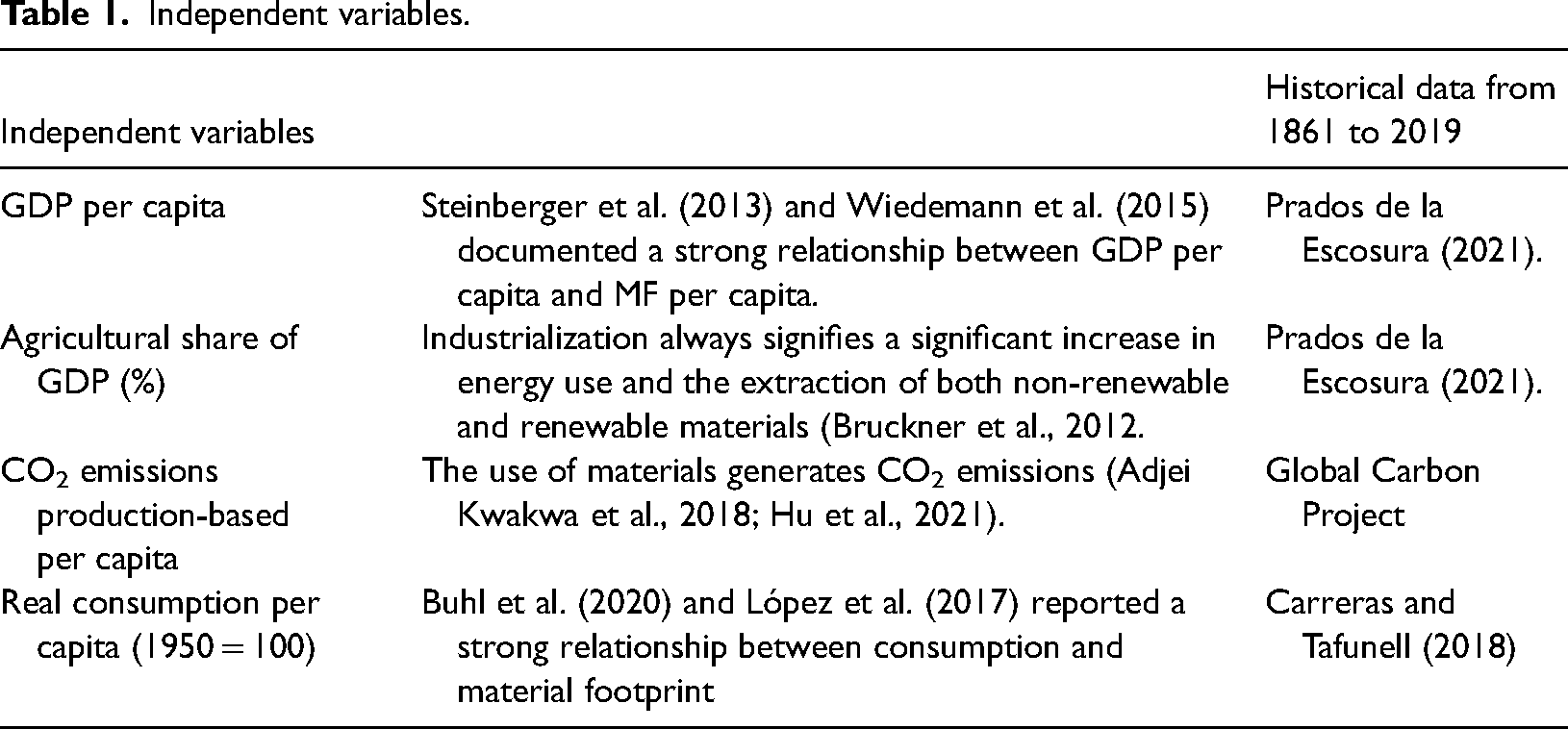
The predicted power of the model is high—the adjusted R-square is 0.92—and its variables are cointegrated. The main problem in projecting the data is that we assume the relationship between the independent and dependent variables is linear and stable. However, our estimate aligns with Infante-Amate et al. (2015), who reconstructed the material consumption per capita for the same period using more direct indicators of material consumption. Infante-Amate et al. (2015) applied EW-MFA methodology and estimated a raft of indicators, especially domestic extraction (DE). Imports and exports in physical terms were also estimated. This allowed them to calculate domestic material consumption. To carry out this work, Infante-Amate et al. (2015) used current and historical sources on the extraction of resources and trade. The results of this study are offered in Figure 5 (see the yellow points). Another relevant analysis of the metabolism of the Spanish economy between 1955 and 2000 was done by Carpintero (2005). Our results are also in line with this study.
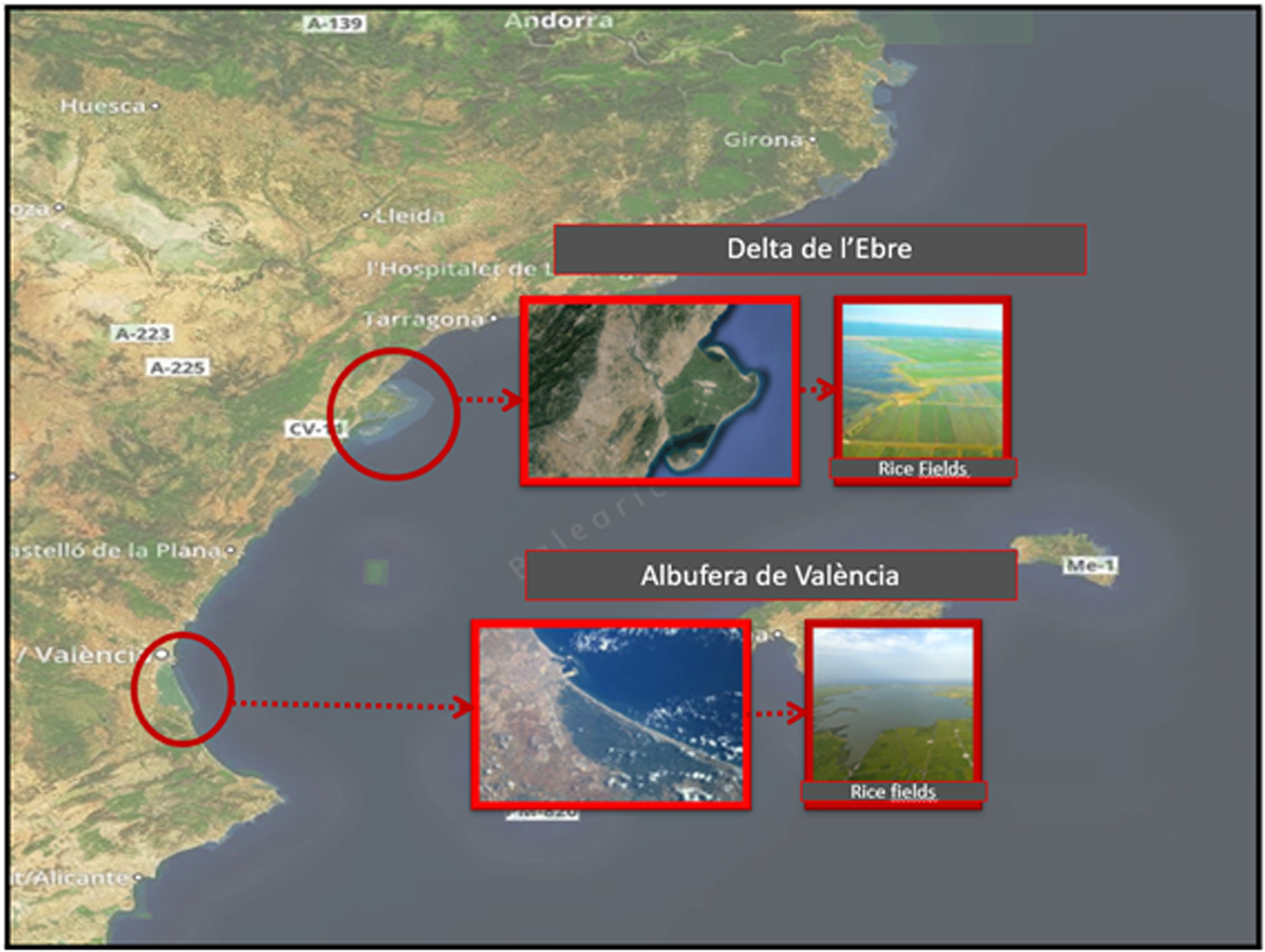
Geographical locations of the study areas.
However, the studies above reconstructed domestic material consumption per capita. Domestic material consumption does not include the material impact involved in the production and transport of imported goods (Wiedemann et al., 2015) nor considers the materials needed along the supply chains of traded goods. The material footprint, in contrast, accounts for the amount of materials required along the supply chains of all the goods and services finally consumed in a country. Thus, the material footprint is better at capturing the broader role in the global economy played by any one country (Requena-i-Mora & Borckinton, 2021).
Analytical approach
To explain how socio-historical context influences social representations of the environment, we have used the “analysis of systems of discourse” (Conde, 2009). Conde (2009) suggests developing a set of procedures, including narrative configurations and semantic spaces, to carry out this analysis.
The analysis of narrative configurations consists of creating the structure of the text around dimensions that organize the qualitative data. The sport of “tug of war” is an example of narrative configurations. The rope is the thing that unites both teams but separates them at the same time. The narrative configuration would be equivalent to the rope that holds the text while simultaneously showing the tensions and conflicts. In our case, different sociohistorical periods and forms of environmental degradation were the main dimensions organizing the qualitative data.
Constructing a semantic space is not only a discursive operation but also requires many social, historical, and even political conditions for its configuration. Semantic spaces’ categorization consists of configuring circles that encompass a set of expressions and closely related themes. Semantic spaces are linked to narrative configurations and aid in understanding different opinions about the environment.
Social representations of the environment, socio-historical context, and socio-metabolic transitions
Regarding the socio-historical context, our interviewees drew a timeline (horizontal axis) to explain the degradation of the wetlands (vertical axis) where they are living (Figure 2). On the horizontal axis, they talked about three moments in time that match three historical periods in the Spanish state. Furthermore, these periods are associated with different socio-metabolic regimes. Neither culture nor social metabolism can reproduce themselves in isolation.
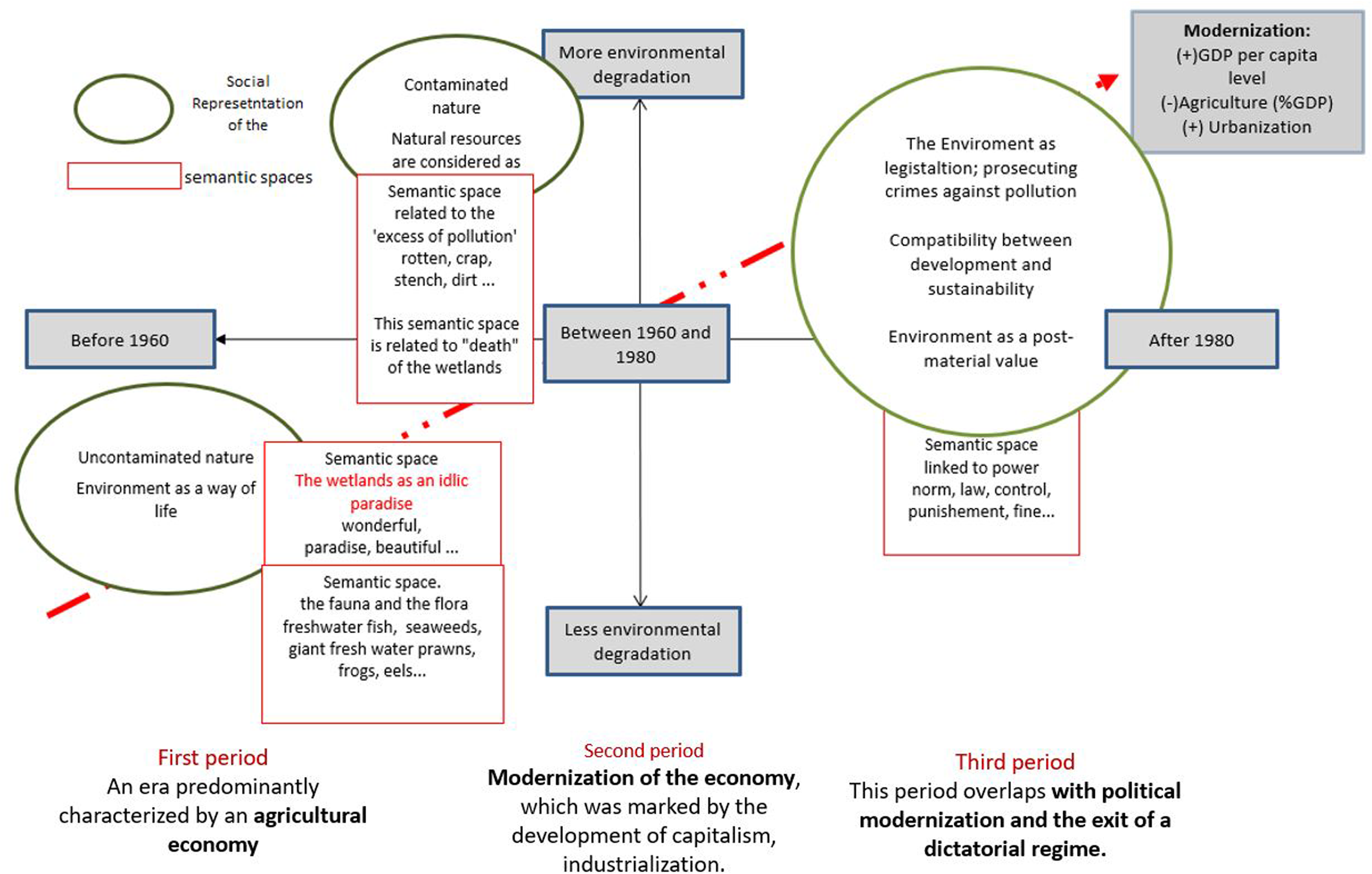
Narrative configuration: social representations of the environment, semantic spaces, and socio-historical periods.
The first period occurred before the 1960s, an era predominantly characterized by an agricultural economy. Agrarian societies are fueled by a solar-based energy system and rely on the energy conversion provided by plant biomass (Kraussman et al., 2008). Agrarian societies tap solar energy flows to sustain their energy needs rather than exploiting stocks of fossil energy carriers. A low metabolic rate characterizes such types of societies.
The second period started in the 1960s and coincided with the modernization of the economy, which was marked by the development of capitalism, industrialization, and the economic opening up of the country to the rest of the world. The transition from an agrarian to an industrial socio-metabolic regime not only facilitates economic growth, structural change, and a certain worldwide uniformity in social forms and institutions, but it is inherently linked to a surge in material and energy use per capita (Fischer-Kowalski et al., 2010)
Finally, the last period started in the 1980s and has lasted until today. This period overlaps with political modernization and the exit from a dictatorial regime. It is characterized by an increase in the use of energy and materials, especially when considered in terms of consumption.
The participants talked about these three periods to explain the environmental status of the wetlands (vertical axis). Moreover, they connected these historical moments with different conceptions of the environment. These conceptions were built based on three ideal types and linked to a diagonal axis marked by socioeconomic development and modernization.
First period: economy primarily driven by agriculture and the environment as a way of life
According to the interviewees, this first way of understanding the environment started before 1960. In this period, the Spanish economy was primarily driven by agriculture, which between 1940 and 1950 represented around 30 percent of GDP (See Figure 3) (Carrera and Tafunell et al. 2018).
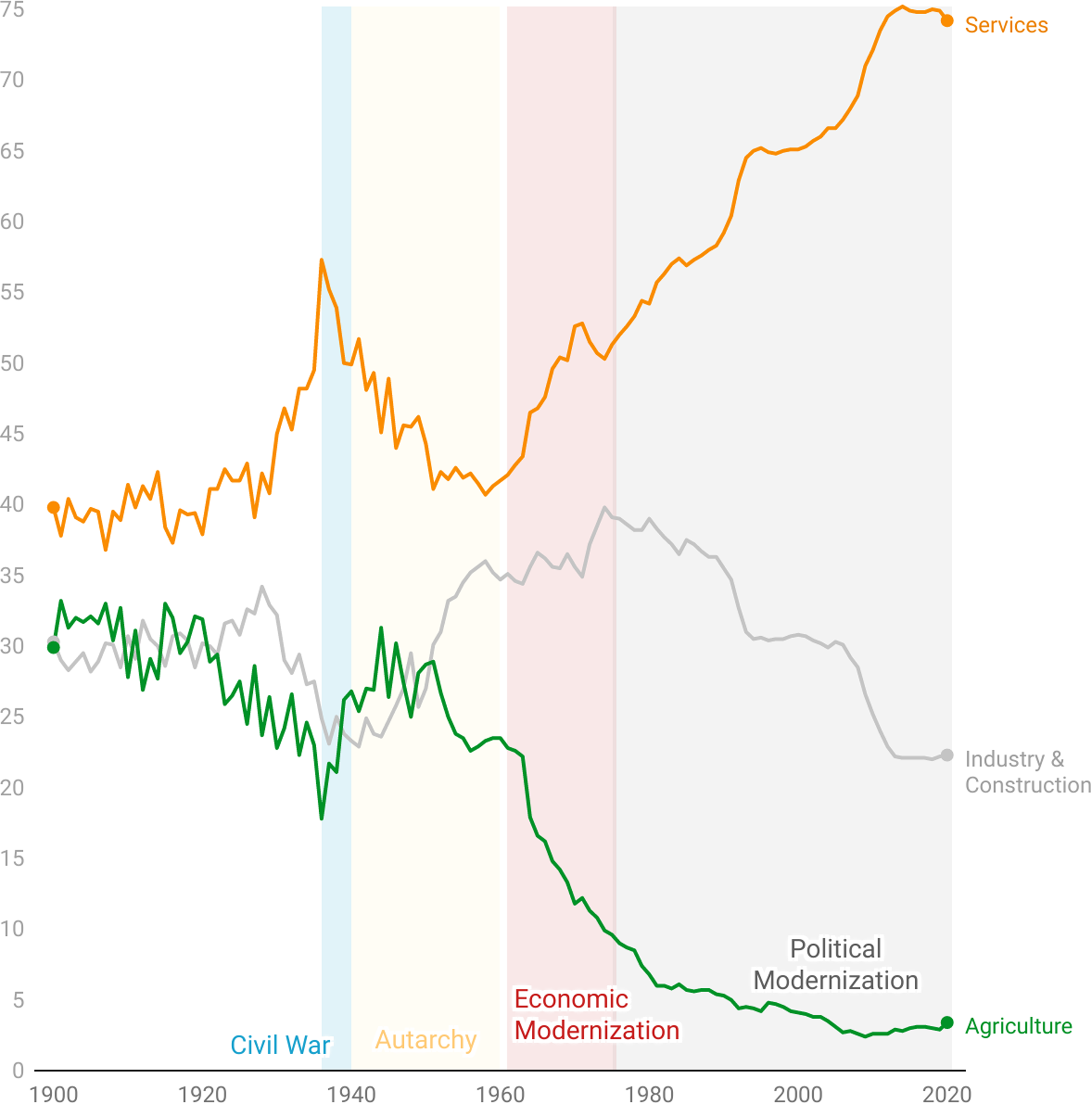
Share of economic sectors in the gross domestic product (GDP) from 1900 to 2020: Spanish state.
Moreover, after the Civil War, Spain adopted an inward-looking development model, a form of autarky, by closing its frontiers to the entry of goods and services and foreign capital. The autarky policies aimed at economic self-sufficiency through the state control of prices and industrial development within a protected national economy cut off from the international market. This autarky held back the country's industrial transition.
The first social representation of the environment was associated with this period. Interviewees explained that nature was unpolluted by humans. In the collective and historical memory of the inhabitants, the good environmental condition of these wetlands was associated with their ancestors’ ways of life. The interviewees described the way of life of the previous generation as opposed to today. As was explained by a self-employed worker of Sueca “In the past, it was all different; everything was done manually. It is not like now … we breathed pure and fresh air… everything was more natural than now.”
Two semantic spaces were linked to this conception and were used to explain the conservation of these wetlands before the 1960s (see Figure 2). The first semantic space was related to a lost paradise. Words such as “paradise,” “wonder,” and “pristine” were used to describe the “idyllic” condition of these wetlands. The second semantic space describes the flora and fauna that used to be in these parks but are no longer seen there, such as frogs and flamingos.
Consequently, at this stage, the environment was related to lived practices and was considered a material value because one's survival depended on it. Somehow, this representation of the environment was linked to the “environmentalism of the poor” (Martínez-Alier, 2003). Because the environment was regarded as a source of livelihood, people had a more intimate understanding of what was at stake in not managing it carefully (Guha, 2000). Alternatively, in the words of a local housewife : “Everything was made by hand…and you could breathe fresh air…now we abuse technology, chemical products.” However, the elderly described these ways of life not just nostalgically but also realistically, in a way that recognized their difficulties at that time.
Taking care of the environment was understood as a condition in which they had been socialized, and it was, therefore, a kind of inherited practice. For this reason, respondents explained that their environmental consciousness was a habitus, an ethos regulating all social practices (Bourdieu, 1990). For them, environmentalism was not a voluntary action; it was a way of living left to them by their forefathers’ socialization. However, they rarely saw themselves as “environmentalists,” as was argued by different interviewees.
It seems that we carry environmentalism within, you know? The people who live here… few people will tell you that they are environmentalists, okay? However, instead, we act as if we were, you know? But you do it because that is how you have always lived (public administration worker, interview, Sant Jaume d’Enveja).
You live with it […], And people living in the delta de l’Ebre already have this environmental consciousness. And now, depending on which conservation project we have to change our consciousness […] I think the public administration, environmental the NGO…come to do some studies that cost money… But the results of these studies show things that we already know’(fisherman, Sant Jaume d’Enveja).
Second period: economic modernization and industrialization of the country. Natural resources are considered unlimited
In 1959 economic nationalism, protectionism, and state intervention characteristic of autarky were abandoned in favor of a market economy and Spain's opening up to international trade and much-needed foreign investment. The stabilization plan was followed in 1963 by an economic development plan based on setting targets for the public sector and encouraging the private sector.
The new policies produced unprecedented economic growth averaging 6.9% per annum during 1960−1974 (Powell, 2015), aided by rapid increases in tourism, foreign investment, and the remittances of emigrants, who were hit hard by the immediate results of the 1959 stabilization policies, had sought employment in other European countries. There was a rural exodus from the impoverished countryside and a dramatic fall in the active population engaged in agriculture from 48% to 22%. In comparison, those employed in the industry and the service sector rose to 38% and 40%, respectively (ibid.). The industrial sector's share in GDP increased by more than 10% between 1940 and 1960, while the share of agriculture in GDP fell by around 15 percent (Prado de la Escosura 2021; see Figure 3). Spain was rapidly becoming a modern industrialized country. This era was called the “Spanish economic miracle” (for more detail, see Harrison, 1980).
A second representation of the environment was held during this period and is interpreted as hearkening back to when natural resources were thought to be unlimited. During this period, many industries and nuclear plants were built around these wetlands, causing much pollution. In the semantic spaces, words such as “paradise” and “wonderful” were replaced by “stench” and “rotten” (see Figure 2). Upon reflecting on the degradation of these protected areas, respondents explained how economic modernization had wantonly damaged natural land. According to a local peasant:
“Many factories were built. . . and all the factories drained into the lagoon, and there was no sewage treatment plant. . . .And what happened? The lagoon was killed”
The words “alive” and “dead” were used to characterize these places’ past and present. As Polanyi (1957) explained, interviewees perceived how “the growth of the capitalist market impaired or destroyed its own social and environmental conditions” (cited in O’Connor 1988: 12). Similarly, a local fisherman from El Palmar explained how “the change of the lagoon was produced forty years ago. The lagoon received everything drained by the factories and towns, and it killed her (the lagoon). Now, from being dead, it is difficult to recover…”
Empirical evidence of this claim can be found in the growth trends in the material footprint per capita. What stands out in Figure 5 is that material footprints increased exponentially during economic modernization (1960–1975). The exponential growth of this footprint implied a heavier impact on ecosystems, as our respondents explained in the second representation of the environment. In this sense, the environmentalism of the poor and environmental justice movements has emphasized that there are clear links between the increasing flow of energy and materials, the growing amount of waste, and the environmental degradation of natural habitats (Martínez-Alier, 2008).
Interviewees described how the process of economic modernization produced a dramatic change in their lifestyles, which, in turn, led to deterioration in the ecosystem. However, the undisputed improvements in the quality of life since 1960 enabled some people to associate environmentalism with backward progress. Ways of life before environmental degradation arrived were seen negatively, as expressed by the manager of a food company “If we go back to a time before Christ, it was almost all ecological. (…) what happened is that many barbarities had been done, and it had to stop… farmers, factories…everybody was polluting without knowing the repercussions that it could have on health … but pure ecology means going backward…”
Some respondents reproduced the discourse of economic development, understood as a reductively linear and evolutionary process, which tended to characterize the past with adjectives such as “marginalized” and “anachronistic.”
However, as Franquesa (2018) explains and interviewees argued, these zones have partially left out of the modernization process and are living the worst part of it. In the case of the Ebro Delta, Franquesa claims that this zone became an energy hub 3 just as it experienced a massive exodus of population, a painful manifestation of a process of modernization—mythologized in the Spanish imagination as “the economic miracle”—that affected the whole geography of Spain. Since that day, Southern Catalonia—where the Ebro Delta is situated— has grown increasingly important in the field of energy production while also gaining a reputation as a remote, underdeveloped rural area. The agrarian livelihoods “here are becoming more and more precarious, and its social order is more and more fragile. As never-ending energy projects make their way into the region, Southern Catalans are largely left out of that modernization. They simply host and built the infrastructure that stands at its base” (Franquesa, 2018:7)
Interviewees also express regret and fatalism about the environmental impact of the modernization process that has left them only “rubbish.” According to a housewife from Amposta, “the river itself is running out… the water does not come as it came before[…] now, only rubbish comes… because there is much cancer here[…] between the nuclear plants from Ascó and Vandellòs, we are surrounded.” In this sense, according to Ibáñez (1991), we can say that the relationship between the rural and urban world is regulated by the class struggle: those who live in the villages are the oppressed class, and those living in the city are the ruling class. The city is a “crap factory”: the recipient of food and the emitter of excrement. The countryside, by contrast, is the emitter of food and the recipient of excrement.
Third period: political modernization, post-materialism, fetishism, and environmental protection as a norm
After the death of the dictator Franco in 1975, the accession of Juan Carlos as king opened a new era, culminating in the transition to democracy. The new constitution included provisions regulating the devolution of powers from the central government to the so-called autonomous communities. The new democratic state and the autonomous communities introduced new policies to control environmental pollution and degradation. One of these environmental policies was the establishment of protected areas. According to the IUCN, in 1980, just 183 sites were protected, while in 2021, this figure was 4108. The wetlands where the fieldwork was carried out were protected during the 1980s: the Delta de l’Ebre by the Catalan government in 1983 and Albufera de València by the Valencian government in 1986.
However, the most dramatic growth of protected areas coincides with the boom in real estate. The substantial increase in urban activity was accompanied by the transformation of an enormous amount of rural land (Burriel, 2008). As we will see in the following sub-section, the material footprint per capita peaked during political modernization.
That is, the third social representation of the environment is tied to the country's political modernization, the protection of the wetlands, and a high material footprint. According to our interviewees, in the 1980s, a differentiated socio-historical period began in which “pollution seems more controlled” (interview with company director, Catarroja). Interviewees deployed a semantic field that has as its reference point the power exercised by the new democratic institutions (e.g., Valencian and Catalan governments, Ministry of Health, Ministry of the Environment, Xúquer and Ebre hydrographic confederations 4 , etc.), which enforce compliance with the new environmental policies. They explained how the most polluting practices threatening the ecosystems had been controlled but not stopped. For instance, there is a control of certain toxic deposits, wastewater tipping, the use of fertilizers and pesticides and other polluting practices. In this way, interviewees associate the environment with the following words: control, norm, requirement, law, decree, regulation, and limit (see the semantic field, Figure 2).
One structural thought is a conception of the environment as a norm with which to comply for fear of punishment. Informants also associate the environment with using tools to punish offenders (explicit violence), such as denunciation or the closing of companies, or censoring, fining, monitoring, or inspecting (implicit violence). A corpus of knowledge, techniques, and “scientific” discourses is formed. It becomes entangled with the practice of the power to punish (Foucault, 1975): “if you are caught in a pollution crime, you will receive an expensive fine” (entrepreneur, interview, Catarroja).
Social representations of the environment revolved around two axes: the need to follow the norms and protect the environment against degradation and pollution understood as administrative control (the liberal version) and police control (the authoritative version), as well as the importance of educating people within those norms, understood as the inculcation of environmental standards from early childhood.
Our respondents explained that the capitalist economic development that was started produced a dramatic change in their lifestyles, leading to the deterioration of the ecosystem. They feel that they were both accomplices and victims of the environmental crisis. However, they put their hope in future generations who are receiving an environmental education. As expressed by a local housewife: “Our children are being given an environmental education at school . . . now we must educate old people.”
Therefore, during this period, interviewees “limited the environmental reality to legislation prosecuting crimes against pollution but set aside the modern lifestyle” (Vicens 2000 p. 79). This is a kind of knowledge that is learned at school and not from their ancestors’ way of life (as in the first social representation). This third representation of the environment is linked to mitigating or controlling the overexploitation of resources. Taking care of the environment was associated with fulfilling environmental regulations and with environmentally friendly actions that only seek to mitigate the effects of consumption, such as recycling or purchasing products with reusable packaging or other things that the younger generations are learning at school. However, the environmental impacts of lifestyles and everyday practices (cooking, traveling, heating) were ignored. Environmental concerns led to adopting isolated practices and not developing a holistic way of life.
In this sense, interviewees portrayed the environment as “post-material”; our survival does not depend on it, and as was argued by our interviewees during the financial crises, “there are more important things… do not get me wrong… certain things… because I believe that public health or unemployment is more important than the environment” (housewife, interview, Sueca). Environmental preservation and protection were (mis)understood as desires, which could only develop after the material necessities of life had already been covered and “if we could get out of the economic problems, that is, the lack of jobs and all of these kinds of things […] I think everything else (in reference to the environmental crisis) will be nothing” (bar owner, interview, Amposta).
In a way, this third-social representation resonates with the post-materialist thesis. The conventional explanation for the general trend toward concern for the environment was that it was based on economic growth. It was argued that once a country or individual attained a reasonably high level of consumption and economic welfare, citizens were assumed to be finally comfortable enough to indulge themselves in “less basic” concerns, such as the environment's health. However, as our interviewees also argued, if the economic situation worsens, the environment will again become a secondary priority (Inglehart & Norris, 2017). Ultimately, from this perspective, economic growth is good, if not necessary, for the environment.
Nevertheless, the growth in the material footprint accompanied the increase in GPD. Just as with economic and financial crises (e.g., the 1979 oil crisis and the Great Recession of 2007), we have seen the reversal of these trends (see Figure 4).
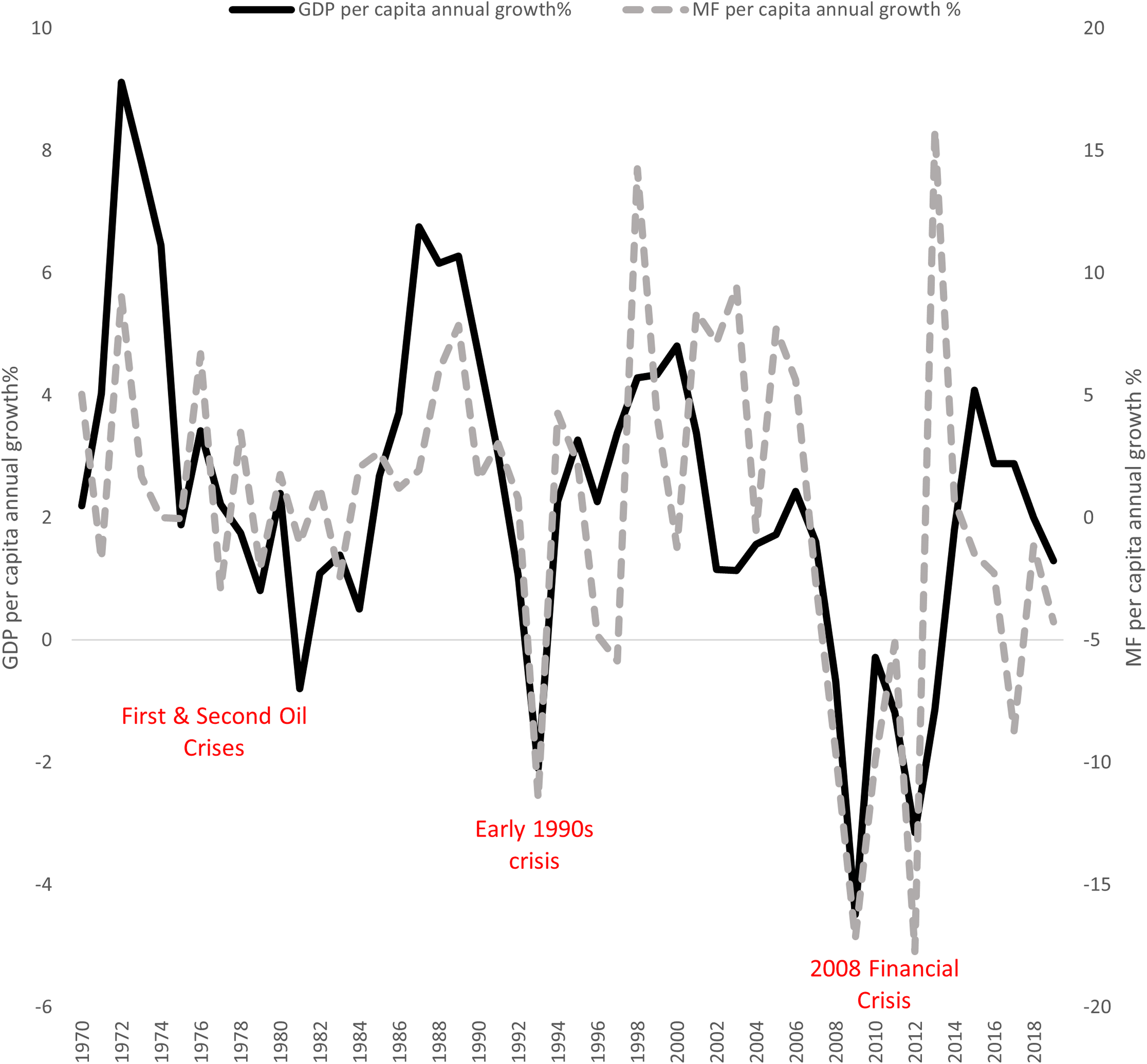
Relationships between material footprint per capita growth and GDP per capita growth. According to the Dicky Fuller test, these variables are stationary.
We found positive and significant correlations between both material and carbon footprints per capita annual growth and GDP per capita annual growth (r > 0.8; p = 0.00), as has also been highlighted by Tapia-Granados and Spash (2019) for the case of the USA.
Thus, if the environmental concern is a product of economic growth, this means that, paradoxically, people are more concerned about the environment when they have a high environmental impact. As Dauverger (2016) and Chen et al. (2016) suggested, we found a dissociation between concern for the environment and the facts of environmental change.
Socio-metabolic transitions and social representations
The results shown in Figure 5 offer a synthesis of how the structure of the economy has changed in physical terms and patterns of change in the per capita consumption of resources, and therefore of the specific impact, past and present, of the metabolic profile of the Spanish people on the planet.
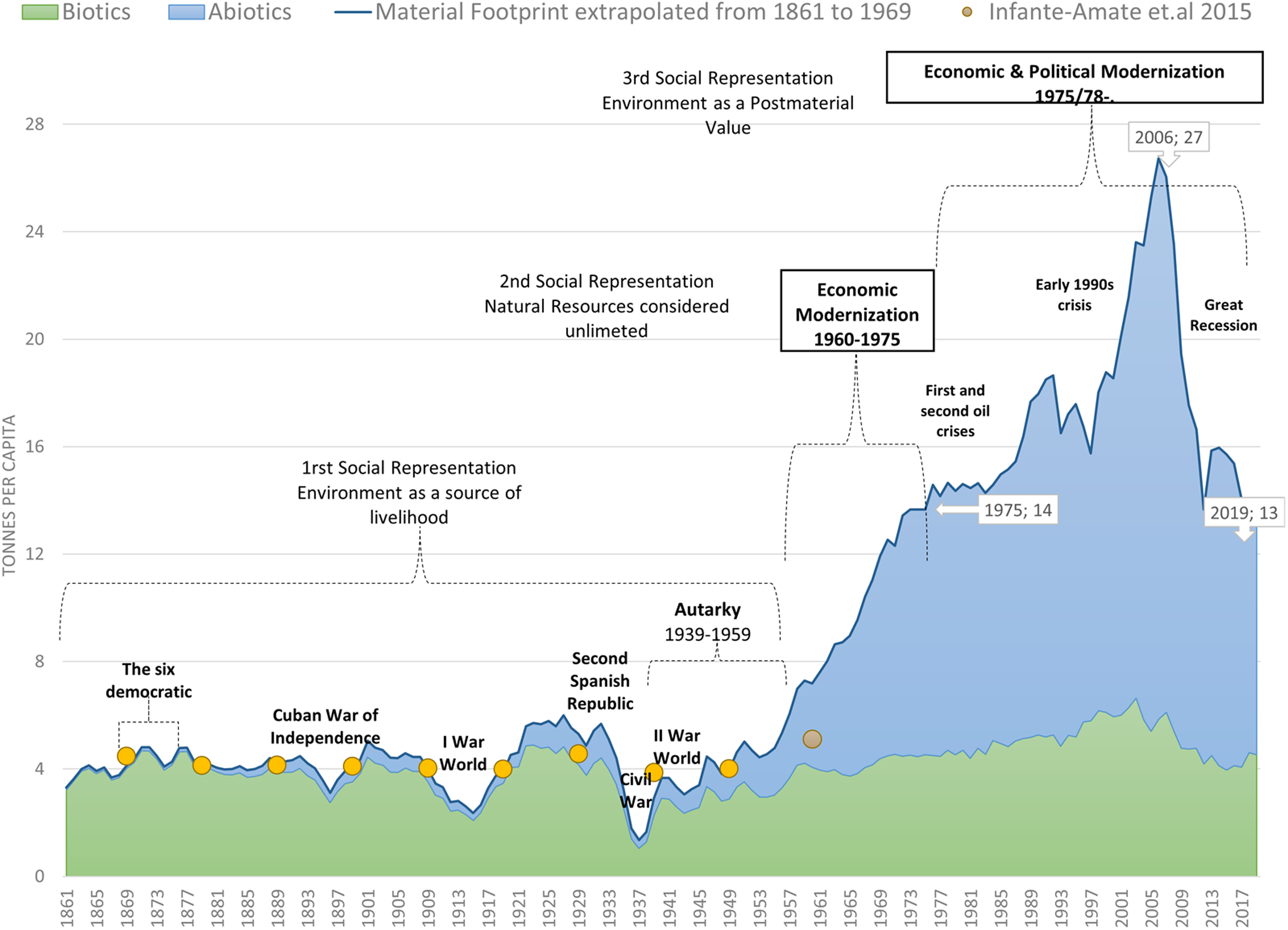
Material footprint per capita 1861−2019. The Spanish state.
To date, we have a reconstruction of material consumption and extraction indicators for Spain between 1860 and 2010 (Infante-Amate et al., 2015; see the yellow dots in Figure 5).
We have reconstructed material footprints per capita using a regression method (see equation 1). Our results do not differ much from those estimated by Infante-Amate et al. (2015). However, a considerable difference was observed in 1960; in our estimate, the material footprint per capita amounted to 7.2 tons. According to Infante-Amate et al. (2015), the consumption of materials was only 5.2 tons per capita, although this may be due to the displacement of material-intensive processes. Indeed, Infante-Amate et al. (2015) estimated that between 1950 and 1960, imports increased by more than 10 million tons. Consequently, the amount estimated by Infante-Amate et al. (2015) increases dramatically when the material impact involved in the production and transport of imported goods is included.
The main results indicate that from 1960 onward, the country saw a very rapid industrial transition. According to our estimates, the material footprint rose from 3.4 tons per capita per year in 1861 to 13.4 t/cap/year in 2019. A peak of 26.8 t/cap/yr occurred in 2006, and the subsequent fall is explained by the financial crisis of 2008. According to Infante-Amate et al. (2015), until 1930, Spain was a net exporter of resources, but since that year, and especially since 1960, it began to depend more heavily on overseas resources. This process also reveals the change in consumption patterns, which became increasingly dependent on abiotic resources. In 1860, 98.1% of resources consumed consisted of biomass (Infante-Amate et al., 2015), whereas in 2019, the figure was 34.7%.
Regarding the three periods differentiated in social opinions, we observe that during the first stage—before the 1960s—material footprint was less than half the size it is today. The yearly consumption of all materials between 1861 and 1957 ranged between 5 and 6 tons per person, of which biomass had a share of 80% to 90%. According to Kraussmann et al. (2008), this pattern of material consumption is typical in agrarian socio-metabolic regimes. This also indicates that people were not only more concerned about the environment, as our interviewees stated, but also behaved in accordance with that concern.
From 1960 to 1975, the material footprint per capita doubled in size. This period was one of industrial transition in other countries between the end of the nineteenth century and the present day, characterized by a significant increase in the extraction of resources—mainly abiotic—in international trade, as well as in total and per capita consumption (Krausmann et al., 2008). In energy terms, how the country underwent a later transition than other Atlantic European countries has also been documented (Gales et al., 2007). In this process, Spain became more dependent on third countries and the consumption of inorganic resources. The main results indicate that from 1960 onward, the country saw a very rapid industrial transition based on the domestic extraction of quarry products and the importation of fossil fuels and manufactured goods (Infante-Amate et al., 2015). Another relevant study of the metabolism of the Spanish economy between 1955 and 2000 has demonstrated the tremendous socio-metabolic transition that took place between 1950 and 2000 (Carpintero, 2005). During this period, interviewees talked about how natural resources were considered unlimited and how the environment was devastated as a result.
Finally, we observe a historical peak in material consumption per capita during political modernization. The material footprint per capita saw strong growth in the final decades of the twentieth century because of the Spanish real-estate boom (Schaffartzik, A., & Duro, 2022), owing to the fact that it was mainly quarried products that were used in construction, although another factor was the industrialization of the country in these years. The substantial increase in urban activity was accompanied by the transformation of an enormous amount of rustic land (Burriel, 2008). The total volume of housing construction from 1997 to 2006 amounted to 5 million and a half. This amount of growth was double that in the previous decade, 1987−1996. These 5,636,231 homes represented an average annual ratio of 13.3 homes per 1000 inhabitants when the European average rate was between 5 and 7 houses per 1000 inhabitants (ibid.). This also explains the significant fall in the material footprint in 2008 due to the Spanish real-estate crisis.
The environment is considered a product of economic growth during this last period. Nevertheless, Figures 4 and 5 show that the worst periods for economic growth (economic crises) were the best periods for environmental sustainability. As we have argued, environmental concern has been separated from material consumption.
Conclusions
Regarding the socio-historical context, interviewees talked about three periods related to three social representations of the environment and three differentiated socio-metabolic regimes. The first was based on the environment as a source and condition for sustainability and was described as nature uncontaminated by human action. The collective imagination of this nature was associated with their forefathers’ way of life. This social representation was framed in an era in which the economy was driven principally by agriculture, and economic modernization was not even started. Material consumption per capita was between 3 and 6 t/per capita/year.
The second representation coincided with the country's economic modernization and industrialization and began in the 1960s; it was reinterpreted as a time when natural resources were considered unlimited. Arising through reflection on the degradation of the environment, respondents explained how economic modernization had wantonly been perpetrated against natural land. During this period, the use of materials per capita oscillated between 6 and 14 tons per year.
In relation to the third representation, interviewees tried to reconcile economic development with environmental sustainability. The environment was identified with a norm that attempts to mitigate the effects of pollution while bracketing off the lifestyles that create that pollution.
The post-materialist thesis continues to influence current and dominant social opinions on the environment. Thus, pro-environmental behavior seems to be a product of economic prosperity. This way of understanding the environment underlines the assumption that the environment is a post-material need, a desire we can only satisfy when other “material needs” are covered. In other words, it is a need that we only worry about when economic prosperity is guaranteed.
Nonetheless, as Guha and Martínez-Alier (1997) have indicated, the term “post-materialism” is wrongly applied to societies where economic prosperity depends on using a large amount of energy and materials. As shown here, there are strong correlations between GDP growth and footprint growth. Moreover, at a time when the environment is considered a post-material value, this is precisely when our material footprint is at its highest in the historical period analyzed here.
Post-materialism's historical and social specifics promote a social representation of the environment that hinges on the separation of lived practices from the environmental impacts that these practices have produced (Requena-i-Mora & Moreno, 2019). The problem manifests in commodity fetishism, where people consume without knowing the socio-historical context in which things have been produced or the socio-material relations they come from. That helps explains how people can isolate their lifestyles from the environmental impact of these lifestyles.
Conversely, our study observed other kinds of social representations of the environment connecting with the environmental impact of lifestyles. In fact, prior to the 1960s, the interviewees understood the environment as a way of life, and the environmental impact was lowest in the analyzed period. Furthermore, our research has emphasized that economic growth and modernization were not and never have been compatible with protecting the environment. In addition, participants explained how the way of life of their ancestors was respectful toward the land, as demonstrated by the low consumption of materials.
Human beings cannot but act based on collective memories, present convictions, and anticipated futures (Bergthaller et al., 2014). Hence, there is a need to rebuild an alternative, emancipatory, collective memory from the society/environment relationship, which goes beyond a material understanding of the environment. This is where history (i.e., memories of past lifestyles) can play a role by helping to unearth metaphorical “axes of war” and “facilitating constructive collaboration in the interest of a sustainable future” (Fletcher, 2010, p. 180)
Against the alienation of memory, we propose that biographical and historical anamnesis, which means recovering historical memory, are preconditions for unblocking (Ibáñez, 1997) the current situation, as well as for connecting social representations of the environment with lifestyles and their environmental impacts.
The researcher's task is to recover this history, rescuing personal and collective experiences from the obliteration produced by mainstream historical accounts and unleashing powerful counter-narratives and liberation strategies. In other words, engaged research can help to decolonize historical knowledge from post-material visions. With that purpose in mind, in cultural terms, constructing a new productive and political rationality is needed; in terms of knowledge, we need to rework it so that it integrates different epistemologies and leads us to (re)construct an environmental habitus which would underpin a change in our lifestyles and environmental, social change.
Highlights
Sociometabolic regimes are related to social representations of the environment. Post-material environmentalism is a form of commodity fetishism. Environmental opinions have to be connected with environmental impacts.
Supplemental Material
sj-docx-1-ene-10.1177_25148486231169208 - Supplemental material for Social representations on the environment and socio-metabolic regimes: The case of the Spanish state
Supplemental material, sj-docx-1-ene-10.1177_25148486231169208 for Social representations on the environment and socio-metabolic regimes: The case of the Spanish state by Marina Requena-i-Mora in Environment and Planning E: Nature and Space
Footnotes

References
Supplementary Material
Please find the following supplemental material available below.
For Open Access articles published under a Creative Commons License, all supplemental material carries the same license as the article it is associated with.
For non-Open Access articles published, all supplemental material carries a non-exclusive license, and permission requests for re-use of supplemental material or any part of supplemental material shall be sent directly to the copyright owner as specified in the copyright notice associated with the article.
