




Abstract
This paper investigates how decentralised wastewater treatment initiatives experiment with ways to live in close proximity to wastewater and their potentiality for a future with less polluting wastewater. In the Netherlands, there is a contested political debate about whether centralised or decentralised technologies are better. Rather than engaging in this deliberative political debate, we articulate a less visible and more material politics by tracing different ways of ordering wastewater treatment in practice. Drawing on fieldwork with inhabitants, scientists, and engineers who have brought wastewater treatment ‘close to home’, we examine the turn to decentralisation as a material object of enquiry which, in turn, shapes our engagement with pollutants, technologies, and a range of non-human actors. We ask: What kinds of living together in close proximity to our waste do such decentralised experiments allow for?
I was taught that the sewer system was the most efficient way in history to increase the lifespan of humankind. But then we learned that other species were harmed because of our faeces (ecology of the water system) so wastewater treatment plants (WWTP) were built. Aiming for efficiency, they were more and more centralised. The goal was always to ‘eliminate and destroy’ the badness of what is inside the wastewater. Through these [decentralised] initiatives to look for the goodness of the wastewater, we gain better insight into how we should ‘design’ or live with the wastewater (treatment) for the future. Wastewater engineer
Introduction
Historically, sewage infrastructure was developed to rid humans of infectious and other diseases carried by our faeces. While this preserved the health of citizens, aquatic life suffered from an overload of organic pollution discharged directly in open water streams. To prevent threatening aquatic organisms (aquatic birds, plants, fishes and amphibians), the removal of pollutants present in wastewater such as nitrogen and phosphate therefore became imperative. To do so, wastewater treatment plants were built, operating far from residential areas, treating sewage and discharging it as effluent into larger water streams. This has been a social and engineering success as the infrastructure has managed to keep diseases at bay and avoided eutrophication of aquatic ecosystems. However, despite this success that continues to this day, new concerns have put pressure on conventional wastewater treatment infrastructures. Soils and its microbiome suffer from the excess and unbalanced nitrogen and phosphorus loads arising from years of intensive industrialised agriculture, and new pollutants have entered wastewater, including microplastics and contaminants of emerging concern (also referred to as ‘persistent organic pollutants’) such as pharmaceuticals, hormones, pesticides and herbicides. These new contaminants challenge the approach that conventional wastewater treatment plants take to purifying polluted water, and confront the everyday life of people living in an increasingly toxic environment. 1
One of the attempts to mitigate the increasing risks of wastewater for both people and ecological life is to treat wastewater ‘close to home’ and off-grid. 2 Such decentralised experimental initiatives are attracting attention in the Netherlands, where both authors have conducted ethnographic research with wastewater technologies implemented in and around various locations. The trend to decentralise wastewater treatment manifests itself in different experimental set-ups, ranging from individual treatment to the treatment of a collective of households, or even a whole village. 3 Instead of an infrastructure that separates people from their wastes and direct flows far away to a treatment plant and into the wider sea, these decentralised infrastructures keep the wastewater in close proximity to people's living environments and on-site.
This approach to waste, where wastewater disposal comes close to home and is ‘in the foreground’ contrasts with previous studies on waste ‘out of sight’. Waste studies predominantly focus on conventional waste management solutions which aim at separation, invisibility, and inconspicuousness of waste (Hawkins and Muecke, 2003). Lupton and Miller (1996) show how, conventionally, ‘social organisation is about distancing “decent” society from its wastes, through technologies that hide, remove, and expel’ (Lupton and Miller, 1996 in Gregson and Crang, 2010: 1027). To make these disappearances happen, a range of techniques are employed, including spatial and separation. Spatial techniques are effectively implemented when waste is quickly moved ‘out of sight’ and, as the saying goes, is ‘out of sight, out of mind’. The flush toilet is a case in point: when you flush, wastes disappear into invisible sewers underground and is taken far away from residential areas for treatment (Schwenkel, 2015). Separation techniques are further explored by Noélie Vialles’ (1994), who shows how the routine slaughter of animals in abattoirs far away from cities or urban areas is a way of desensitising ‘us’ to the violence of the meat industry, by way of our intimate separation from the killing of the animals. In our cases, though, people want to live with waste and are willing to learn and experiment with what those new ways of living with waste may entail. Instead of connecting with a centralised sewer to make waste quickly disappear, on-site decentralised infrastructures keep the wastewater in close proximity to people's backyards. Waste is thus not made to be ‘out of sight’, but made into an object of engagement in everyday life.
In the Netherlands, these two approaches to wastewater treatment, one in which the infrastructure is centralised and the other in which the wastewater treatment is decentralised, are currently dividing the political debate. Centralised systems collect wastewater from household appliances (sinks, showers, toilet, laundry, dishwasher, etc.) and industries through a piping system that goes into a sewage system where domestic and industrial wastewater mixes with storm water. Sewage flows thanks to gravity and pumping stations into a wastewater treatment plant where the incoming wastewater, or influent, will be treated and discharged. Those advocating for a centralised wastewater system approach argue that centralised systems are the safest and most convenient way to collect and treat wastewater. It is more efficient, they propose, to manage one central plant, where a large volume is treated, than to manage many different small initiatives which could cause substantial ‘chaos’, as one of the wastewater engineers we interviewed put it. Advocates for decentralised systems argue, in contrast, that the sewer infrastructure is too expensive and difficult to maintain. For one, the vast majority of sewers in the Netherlands, as elsewhere in Europe, are almost hundred years old and will need replacement soon (see Holmberg and Ideland, forthcoming). Maintenance is challenging. When a sewer blocks, blows out or leaks, reaching it underground and repairing the pipes is very expensive. Besides, advocates for decentralised systems maintain that they can be tailored to individual choices and specific types of pollutants produced at specific locations such as hospitals, making treatment more effective.
In this deliberative debate, the problem of waste is framed in terms of choosing which technological alternative is best, with ‘the best’ considered to be a technological solution where management is portrayed as a set of techniques to address particular problems (Gregson and Crang, 2010; Hawkins, 2006; Ureta, 2016). As noted in the definition by Alvesson and Willmott (2012), at the very centre of the concept of management is the notion that the problems faced in wastewater management are ultimately solvable, once and for all, if the right tools are applied. In the case of waste management, this implies that ‘the waste problem is presented as not only manageable but already being managed, thus solved’ (Gille, 2007: 18). As such, the problem of waste becomes ‘[c]aught within a teleological fix, that which is managed as waste is waste, and that which is waste is what is managed’ (Gregson and Crang, 2010: 1026). The problem of waste framed in deliberative ways, as either pros or cons of the decentralisation of waste treatment, figures technological choice as the only alternative and depoliticises the way ‘we’, including people and other creatures, engage with waste.
While ‘dirt’ tends to come with treatment systems (Douglas, 2002; see also Gabrys, 2009), promising restored order, scholars interested in waste and waste disposal have demonstrated that waste, as the stuff itself, often remains, lingers, and transforms (Grabrys, 2009). This is because ‘treatment technologies are not, in material terms, disposal technologies - as they are presented - but rather transformative technologies and storage/containment technologies’ (Gregson and Crang, 2010: 1208). The implementation of these technologies typically consists of attempts to ‘displace and delay the effects of pollution by, for instance, disposing of wastes in landfills rather than oceans, or shifting the height of coal smokestacks to clean the air, while simultaneously contributing to the problem of acid rain’ (Gabrys, 2009: 669). The focus on waste as a technological challenge thus ignores the disturbing material persistence of wastes, despite treatment. If we are going to seriously engage with the issues raised by the flows of waste and pollution, and the notion of ‘management’ limits such politicisation (Ureta, 2016: 153), waste, and its handling must become political.
The aim of this paper is not to provide a normative assessment of the political debate on the decentralisation of treatment technologies, but rather to explore a politics that is enacted through material engagements with waste and treatment practices itself. In doing so, we join Ureta (2016) when he argues that arguments for or against technical solutions overlook how waste is being ordered, composed, distributed and cared for in practices. Since, as Ureta and Flores (2018) argue, sociotechnical fixes are flawed projects – waste never disappears, just lingers, they invite us to approach waste in a ‘careful (and fearful!) consideration of our geological monsters’ (p. 1078) and propose analysing wastes ‘as entities embedded with a certain monstrous capacity, or an inner capability to affect massively and in strange ways other entities, close and far, among them human beings’ (p. 1064). 4 Caring for waste necessarily recognises that waste is not going to go away and demands a relational and material engagement from people living in close proximity with their wastes. Living in close proximity with our wastes thus demands shifting socio-material configurations of different ways of caring for waste. It is the different ways of caring to live together with persistent waste that we turn to in this article.
At stake, we maintain, is a politics to ‘waste itself’, in which the term ‘politics’ is not confined to a decision-making moment, but opened up to include a whole range of mundane negotiations involved in shaping the socio-material worlds of waste and its treatment. This particular kind of politics does not depend on arguments for or against decentralisation of waste management, rather it is a matter of ordering different ways of living with waste (Mol, 2021: 132). Such an empirical approach to politics allows for a nuanced understanding of the role of many other factors in shaping socio-material worlds (Mol, 2021: 77). What we have to offer, then, is an understanding of decentralisation as a material politics enacted through a heterogeneous set of relations, so not a figure to be taken for granted as a stable reference or analytic, but as an ethnographic conundrum emerging during and across the fieldwork encounter. In what follows, we show how living in close proximity with wastewater is variously ordered and constituted in the daily engagements of people with decentralised technologies. We identify three versions where living with waste is constituted as (1) a distribution of pollutants; (2) a demarcation of water flows and; and (3) a transformation of waste. Teasing out these three versions helps us to theorise waste as not just a ‘matter out of place’, but as matter carefully engaged and ordered in practice. Indeed, as we will show, such engagement does not come without tensions and conflicts, even though waste is kept ‘in sight’ and ‘close’ to home, the monstrous capacity of waste is not simply tamed.
Material politics
In political philosophy, conceptualisation of politics often takes as their object of analysis articulated struggles in ‘public space’ between agnostic entities (Mouffe, 2007; Rancière, 2009). Politics, in the agonistic model, unfolds through debate, contestation, and voiced disagreements. Recently, however, scholars advocating a material approach to politics have urged also taking into account how politics take place before articulation into words and debates (Barry, 2014; Jensen, 2015; Latour, 2005; Marres, 2008, 2012; Law and Mol, 2008). They take politics ‘to be a term for the alterity, not primarily between people, but between different ways of organising socio-material realities’ (Mol 2021: 132). They also argue that a division between the ‘public’ sphere and ‘private’ sphere fails to take into account how political effects are produced by domestic and mundane practices which can be encountered in such unlikely sites such as kitchens, waste disposal sites, or eco-homes (Ibáñez Martín and De Laet, 2018; Marres, 2008; Mol 2021).
The concept of material politics was coined by Law and Mol (2008) to articulate those practices that seem unrelated to the formal political arena or debate but generate political effects. Material politics, they explain, ‘may be understood as a material ordering of the world in a way that contrasts this with other and equally possible alternative modes of ordering’ (p. 141). They, for example, trace the politics of a judicial measure that regulates how waste food is to be fed to pigs. Boiling pigswill needs to be regulated as a means of preventing the spread of unwanted diseases through cattle. By describing how this measure is put into practice in farms, restaurant kitchens, commercial trade and other everyday sites of practice, Law and Mol show the diffuse, sometimes contradictory, political effects of material practice. Including material and domestic practices in the conceptualisation of politics provides three useful directions for exploring the politics of decentralised wastewater disposal.
First, it draws attention to non-discursive politics. Law and Mol argue that while politics might also include words, it does not need to take the form of an argument (p. 134). Including material practice in the study of politics allows us to zoom in on those practices that happen before a political argument is put into words. This is important, they argue, because it provides insight into which practices, at specific points in time and place(s), actually constitute political debate (p. 141). Second, it allows us to study how different orders co-exist in tension. It urges us to take a closer look at the practices that generate not necessarily one dominant order, but different material orderings of the world, and to trace how these orders generate political effects. These effects can all point toward the same direction or in different directions, and they can overlap, co-exist and even contradict (p. 141). Third, politics is about linking places and times. A focus on material politics helps to understand how material practices link up different times (historically) and different places (geographically) (p. 139).
In the experimentation with decentralised wastewater treatment practices, new orders are explicitly in the making. Questions of how waste disposal should be ordered, which ways of ordering are deemed good and which are regarded as bad, are made explicit. Analysing the kinds of orders made through waste disposal practices, and how they connect, add-up, or conflict, will thus help us to bring into focus the political engagement with wastewater treatment ‘close to home’. Such a notion of politics that includes the material is more than up to the task of including non-human activity and its monstrous capacity in our accounts of waste politics (Ureta and Flores, 2018). Or, as Law and Mol put it, attention to material politics enables us to specify global relations between a variety of human and non-human actors (p. 135).
An atypical waste case: Wastewater disposal practices ‘close to home’
We draw on fieldwork in two different locations in the Netherlands where inhabitants experiment with the decentralisation of wastewater treatment. 5 Each site presents a different empirical example of the day-to-day dealings of inhabitants with off-grid infrastructures and decentralised disposal practices. The first site concerns an example of decentralisation organised as a communal treatment infrastructure that connects all the households in a newly founded ecovillage. The second site, in contrast, concerns an example of decentralisation that figures wastewater treatment as an individual household responsibility.
Both authors conducted fieldwork at different intensities in Ecodorp Lommel (‘ecodorp’ is Dutch for ecovillage) between April 2017 and June 2019. The objective of the inhabitants of Ecovillage Lommel, a small, experimental circular-economy housing project in the South-East Netherlands, is to develop a housing community that reduces human footprint to the minimum. 6 In their effort to take ecological responsibility, ecovillagers see decentralisation as a pedagogic experiment to show that things can be done ‘otherwise’. To enable this, the community is involved in various developing technologies, of which the object of this paper, the experimental wastewater treatment system, is one. We initiated a collaboration between the inhabitants of Ecovillage Lommel, engineers and ecologists from the Netherlands Ecology Institute (NIOO-KNAW), social scientists from the University of Amsterdam (UvA), and three regional water authorities of the Netherlands, with the aim of studying the design and implementation of a new decentralised pilot system to treat domestic wastewater using microalgae living in a photobioreactor. 7
Between June 2018 and June 2020 one of the authors conducted fieldwork in a large-scale urban development project aspiring to ‘organic’ development and sustainable living. 8 The development project involves 4300 hectares of former agricultural land, divided into individual parcels and sold to prospective land owners. 9 The settlement ‘grows’ incrementally, as residents gradually purchase and develop plots of land and develop a collective infrastructure. This development scheme is unusual for Dutch urban planning: instead of implementing a top-down plan, the role of the local government is limited to defining a set of legal conditions, including the condition that households treat their own domestic wastewater. Each household is thus obliged to collect the dirty water from household applications (sink, toilet, shower, and washing machine) and arrange an on-site treatment facility to cleanse it before disposal.
In both sites, the responsibility for arranging wastewater treatment facilities lay with the residents, while the water authorities remained responsible for the quality of the disposed water and, as such, maintained an active role in monitoring the experiments. Besides learning from decentralised wastewater systems in these various set-ups, we have therefore also done joint fieldwork with municipal centralised wastewater treatment plants and sewage in the Netherlands. 10 In fact, four of the 21 regional water authorities (waterschappen) of the Netherlands were involved in our projects. 11
Ordering responsibility: Demarcating water flows
In an ecovillage in the south of the Netherlands, both authors did fieldwork with scientists, students, innovators, villagers, and water engineers, to monitor the experimentation of an innovative decentralised domestic wastewater treatment technology. For the villagers, the technology constituted an opportunity to enact sustainability by taking responsibility for their own wastes. As one of the villagers, Anna, explained: Here [in the ecovillage] we want to filter our own water. Because we want a wetland [heliophyte filter, or constructed wetland] we needed to separate grey water from black water. In the grey water there is a lot of fat, so we had to build a degreaser too, well, this is what the person that sold us the system [heliophyte filter + septic tank] told us. The good thing about filtering our own wastewater in the village is that we can be independent of the normal water system and then it makes you more careful of what you throw away.
Anne makes clear her wish to filter the ecovillage wastewater in their own backyard. She details the impact such a wish has on the technological design of treatment. In order to achieve their goal to filtrate their wastewater on-site and keep their waste close to home, they have to distribute the wastewater flow into two different streams. Separating the wastewater flows at the source makes them aware of what goes into each flow, in contrast with disposing all wastewater in one big stream through the sewage. This distribution makes them aware that gray water has a lot of fat, from the kitchen sink, the dishwasher, and the bath and shower, which is not good for the wetland. This awareness makes them more careful of ‘what you flush’ as wastewater treatment on site acts as a boomerang, it comes back to you, which is exactly the opposite of what goes on in central sewage systems, where waste flows away from you. Here, responsibility taken for pollution is thus not so much debated, as realised in day-to-day practice by avoiding pollutive household practices (see also Ibáñez Martín and De Laet, 2018).
While decentralisation in some situations inspires taking responsibility in household practices, in other situations it may give rise to questioning until where and when responsibility for cleaning polluted waters stretches. On a large plot of formerly agricultural land, a municipality in the Netherlands initiated an innovative sustainable urban development strategy and prescribed a set of principles along which the new urban settlement should develop in the future. One of the guiding principles stated that the prospective residents are to be responsible for the organisation of their own sanitation. In the ‘visioning’ document, wastewater treatment is ‘dreamed up’ by the municipality as a collective responsibility: Wastewater will also be treated and reused as much as possible in cycles within Westmeer. Initiators will organise their own sanitation in Westmeer, probably not on an individual but on a collective scale. Of course, this should not be at the expense of public health and the environment, every system must conform to public health aspects, surface water quality and soil quality.
12
Residents thus have to organise decentralised technologies that deal with the domestic wastewater generated by their own household practices such as cleaning, showering, and excreting, ideally, in collectives. However, after the first pilot years, another ordering of engagement presented itself: most households treated wastewater individually and the sum of the domestic wastewater discharged resulted in too high concentrations of nitrogen and phosphate, exceeding the legally established thresholds and polluting the surrounding surface water. The high concentration of individual household disposal practices in an area with increasing urban density thus constituted a problem to maintain healthy surface waters.
The municipality, together with the province and the water authorities, worried about the quality of the surface water in the area and, in order to attract both local residents and wastewater entrepreneurs, organised an event about innovative decentralised solutions to treat wastewater. The wastewater entrepreneurs, most young start-ups with international ambitions, were given a stage to present their decentralised technologies. A few residents were invited to present the ‘lay perspective’ of the current situation of wastewater treatment in the area. While the ‘area director’ hired by the municipality praised the merits of individual choice in Westmeer's planning, the residents also spoke of a lack of structure and collective action. They expressed a desire for a more collective responsibility provided by the municipality to tackle some problems that, by their ‘nature’, exceeded individual actions and solutions, such as the ecological challenges posed by maintaining healthy surface waters in a landscape that inherited high levels of phosphorus pollution from years of intensive agriculture.
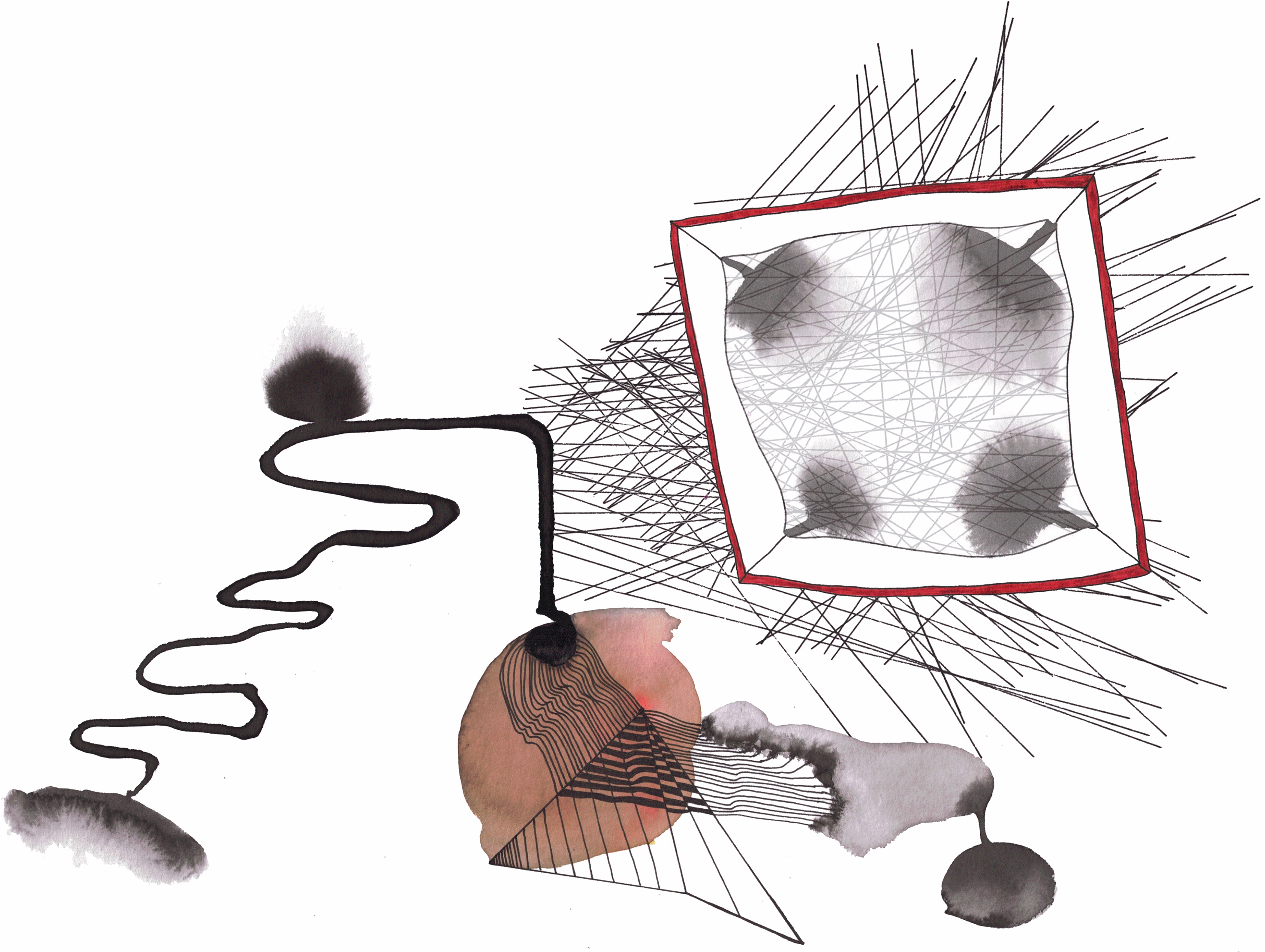
Demarcating water flows. Spilling over responsibility. Artist Sophia Tabatadze.
Decentralisation of wastewater treatment practices, thus, also involves demarcating responsibility for cleaning up (already) polluted water. This demarcation became relevant during the participation meeting at the moment when the problem of polluted water became a designated ‘local’ and contemporary concern. Or, in other words, decentralisation as a practice of demarcating flows of waste and water were made present in situations of deciding (until) where and when responsibility for pollution is allocated. May 2020. We are in a participation meeting again, labelled a ‘Workgroup: the future of wastewater treatment in Westmeer’. The residents participating in the deliberation on the selection of criteria for ‘good’ wastewater treatment technology in the future of the urban development plan express their worries about water that they consider ‘their own’: the domestic wastewater generated, treated, and discharged by their household. Some of the criteria discussed, however, raised complex questions about how to border ‘their own’ wastewater. Take, for instance, the criteria ‘water quality’. One of the residents pointed out that defining ‘water quality’ is a complex issue in this area because it remains unclear what, or more precisely, the quality of which water, we talk about when discussing ‘water quality’. The issue is not so much the unclearness of when the quality of water is clean enough to discharge (there are norms and measurements in place to ‘know’ the quality of water), but rather a question of how far (which waters and where located) such indications of cleanliness would stretch. In the following field note participating residents elaborated on this question of demarcation:
‘When we talk about water quality, are we talking about the quality of the water of your own pond, the place where you discharge your water? Or are we talking about the quality of the surface water? Where not only you, but also the neighbouring farmer discharges fertilizer’.
The complexity gave rise to mumbling and someone in the workgroup wanted to know ‘until where the surface water stretches pertaining Westmeer’. Another resident explained that it is hard to tell: ‘In principle’, he thought out loud, ‘the surface water of Westmeer contains the wastewater of the ditches and those discharge onto the rivers and the lakes. The questioner was not satisfied and pressed, ‘But where are the borders of the surface water that we will talk about today?’
Here living with wastewater emerges mainly as determining until where and when responsibility to clean polluted waters stretches. This was done by the residents’ attempts to demarcate the boundaries of ‘our’ water versus ‘yours’. But this was not an easy task: is ‘our’ water the water in your pond where you discharge your household wastewater? Or is ‘our’ water the larger surrounding surface waters, where not only you, but also generations of farmers have discharged agricultural wastes, including pesticides? 13 Such demarcation of responsibilities involves discursive attempts to disentangle waste and water flows from various times and places, but the fluidity of wastewater constitutes a problem for the geographical and temporal allocation of responsibility. While the residents try to demarcate the responsibility over polluted water, the fluid constitution of wastewater itself constantly defies these discursive attempts, waste and water mingle over time, flow, and spread from ponds to creeks and rivers, into wider surface waters (Figure 1).
Ordering risks: Distributing pollutants
Mitigating, or fully eliminating, the risks of wastewater for both people and ecological life cannot be easily resolved. Treatment technologies do not clean wastewater completely of pollutants and other toxicants, rather they are about treating pollutants up to a certain legally established threshold where effluent can be discharged (Mol, 2020: 389). Our interlocutors in the central wastewater treatment plant told us that ‘while a lot of pollutants are retrieved in the plant, the effluent is far from pure. It has been purified only to the extent that it meets the legal standards of clean – which have to do with low enough nitrogen and phosphorus concentrations, on average, over the course of a year’. Our interlocutors added that, in fact, the legislation decrees a discharge value of nitrogen of 10 mg/l in the Netherlands. The conventional wastewater treatment plants maintain, as a guideline, that they need to remove 70% of 6 out of a list of 11 compounds. Decentralised treatment systems thus need to comply with a stricter norm in the threshold classification. Still, toxicants such as ibuprofen, acetaminophen, diclofenac, tonalide, oxybenzone, triclosan, ethinylestradiol, bisphenol remain and cannot be easily dissolved nor transformed and given a new usage (Ávila et al., 2014). The allowable remaining micropollutants, then, need to be carefully distributed across different environments (Liboiron et al., 2018: 335). It is precisely this living in close proximity with wastewater's remaining toxicants that sparked a discussion about the geographical distribution of risks between the wastewater engineers and the residents experimenting with the decentralised technology. Take this example from our fieldwork notes. October 2019. We are at one of the regular meetings we hold to discuss the development of the decentralised wastewater pilot installed at the ecovillage. Three anthropologists, together with two ecovillage representatives, the chief engineer in charge of the implementation and research of the pilot, and the regional water authorities meet to discuss the latest developments and the future of the pilot. Daan, working for the national wastewater treatment institute, reflects upon the problems encountered in re-using wastewater by the ecovillagers:
‘It seems to me that it all comes down to this: you do not want to re-use the wastewater to flush the toilets as it colours your toilets yellow, and comes with a funny smell. But you also don’t want to use it for the edible crops to irrigate your vegetable garden because there might be health risks of infection and falling ill. The only option that remains, then, is to infiltrate it in the soil. And still there, you wonder: is it clean enough to infiltrate the soil and our groundwaters?’.
‘So’, Daan, continues, ‘In terms of circularity, you arrive at the same conclusion that we, as (a central) water authority, have been deriving at for years now. That is, it is best to keep the wastewater as far away as possible from the people.’
Laura, the environmental engineer and designer of the pilot technology, agrees stating that ‘dilution is the solution’. She chuckles, but repeats in a serious tone that when high concentrations of wastewater are diluted in the surface water - spread out over our rivers, lakes, and sea - the risks of pollution and infection are, quite literally, diluted across huge surfaces.
Bob, one of the eco villagers objects. He reasons: ‘That river in which the treated wastewater is disposed is probably much more polluted than any other river because all the wastewater, with all the medicinal left-overs, [of the central treatment plant], I mean, it all ends up in that particular river’.
‘Well, now’, he continues in a more optimistic tone, ‘If you filter it at a local level, then at least not everything ends up in that one particular river’.
During the meeting, Bob makes a case for treatment of wastewater in his own backyard, while the engineers present tell him how concentration of toxins and pathogens in one place may increase the risk of pollution. The engineers are concerned with preventing human diseases and ecological damage and argue that ‘dilution is the solution’ through diluting the risk of (remaining) toxicants, quite literally, over a greater water surface. Bob instead makes a case for distributing the risk of pollution among many different geographical sites (rivers, creeks, and soil), to relieve that one highly polluted river, and the organisms depending on that river, starting with his own backyard. As he wrote in correspondence with the authors and those present at the meeting: If the effluent infiltrates into the soil at a depth of 1 meter, not a lot of harm is done to organisms. From a climate resilience point of view, on-site infiltration of water is always better than pouring treated wastewater into a river that carries it towards the sea.
Local distribution is thus at stake with protecting other than human creatures from the persistent waste created by people, through spreading the risk of pollution across many different local soils (Figure 2).
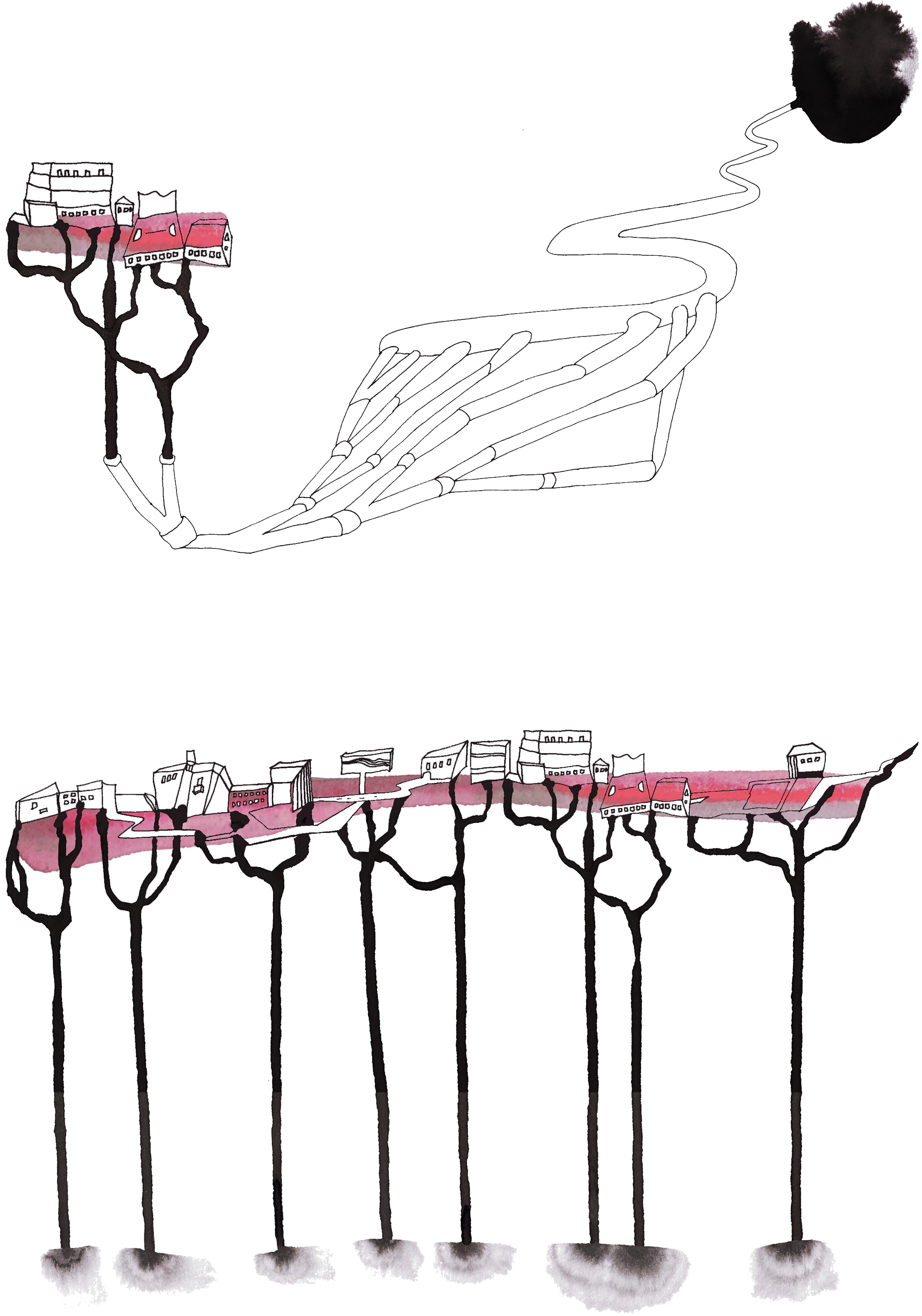
Distributing pollutants. Waste that stays close, waste that flows far away. Artist Sophia Tabatadze.
In fact, in both scenarios toxicants are not mitigated but differently ordered and distributed among various places and actors (including rivers, people, gardens, and oceanic waters). The two modes of ordering thus enact different spatial distributions of pollutants (waste that stays close to you, waste that flows far away from you). Keeping the wastewater flows close to the households that produce them distributes the risk among many local rivers, creaks, soils, etc., in different geological formations. However, whether a local distribution of toxicants is indeed the solution depends precisely on the geological responses to the disposed wastewater. In response to Bob's proposal for a distributed ‘local’ treatment of wastewater, Laura, reminds us that successful risk distribution depends crucially on these non-human actors. … yes, water infiltration into the soil is better than ‘losing’ it to the sea, especially when we need to mitigate the effects of climate change. However, this water needs to be sufficiently clean to keep soils and surface water healthy and that depends on many factors, such as concentration of pollutants discharged, retention time in the soil or water, composition of soil and characteristic of water, bioremediation of the soil water organisms and environmental conditions.
How the risk of wastewater's toxicants is distributed and spread across places thus not only depends on the technical specifications of the treatment technology, its specific decentralised design, implementation, and maintenance, but also, and maybe even more so, on the entanglements with geological actors, such as soil and water, on which each wastewater treatment system depends for its spatial distribution of wastewater's risks.
Ordering circularity: Transforming waste
As the engineer cited at the opening of this paper noted, the future of wastewater treatment poses a new challenge: how to retain ‘the goodness’ of the wastewater while also ensuring destroying what is bad so that ‘we’, both human and other creatures, can live well with wastewater in the future? This challenge points toward a third ordering of waste, one that transforms waste into a potential value.
Transforming waste, as a third way of living with waste, is closely associated with demarcating flows of water, because circularity through decentralisation is premised on keeping the water close to a specific location. However, the issue with transforming waste is not the demarcation of responsibility for pollution, but rather retrieving what is good and striving for the re-use of waste and the circularity of wastewater flows. Consider, for example, the appreciative words of engineer Laura: Decentralised sanitation systems (…) make us aware of what our wastewater is made of and how to close cycles. And personally, I find this awareness of its value a crucial step towards achieving a real circular society. But this does not need to be done at a decentralised scale alone and the algae technology that we are developing for resource recovery and pollutants removal has both decentralised and centralised application. So, the 'fight' is not decentralised vs centralised, but which one makes sense to apply where, it is location driven.
While living in close proximity with waste constitutes a problem for allocating responsibility, transforming waste is not so much about the stretching and breadth of responsibility, nor necessarily about the distribution of risk, but about the concern with what technology makes sense to apply where and when. This ordering of waste, done through the recovering of value, is, in the words of engineer Laura, ‘location driven’. Many of our informants, involved in different decentralised wastewater treatment experiments, explained that they wanted to keep the water on-site for anticipated future usage. As one of them pointed out in correspondence: We need to keep water on location as much as possible to deal with long term drought. [Our village] is situated on a slope, so it gets dry quickly. Keeping the water on location instead of discharging it in wider waters will create a much-needed water reserve in periods of drought.
And indeed, some residents in the urban settlement who had already experienced the perks of ‘keeping the water on your own parcel’ during an exceptionally dry summer appreciated the circular flow for reusing the effluent of wastewater to water the garden in periods of water scarcity.
Circularity for wastewater engineers, however, involves more than reusing water at specific places and timings. For these experts, it is about enabling a better process of nutrient recovery. Take, for example, the conversation between one of the authors and the project manager of an experimental wastewater treatment ‘living lab’. During the conversation, the project leader explained that he preferred to talk about local rather than decentralised wastewater treatment. When asked to elaborate on the difference, he explained that ‘with “local” you immediately start thinking more towards circularity’. He further elaborated his idea of the local as circular treatment by shifting the vocabulary of wastewater treatment, saying, ‘we are not water purifiers (waterzuiveraars), but water makers’. As a water maker you start asking about the future usage of treated wastewater. ‘Instead of where do we need to purify water, you look at where can we use wastewater’. Water making is not so much about a stable flow of circular water, but rather about a process of transformation, from waste to be disposed to value to be used: Sometimes the demand is for swimming water quality, then it is simply still discharging, but for swimming water quality. And sometimes you bring it back into the houses, to be used as water for flushing (…). But it can also be used as irrigation water and that [water] has different qualities. If I want to use the water for my kale, I would like to have that P [phosphate] and N [nitrogen] in it. So, keep the nutrients, but remove the pathogens.
Instead of discharging all wastewater (on large waters) and treating it according to the generalising ‘dilution is the solution’ method, the approach articulated here is to start wastewater treatment by specifying local future need. Decentralisation for the purpose of nutrient recovering thus also means taking the (potential) (re)usage of local water as a starting point for treatment: what you are going to do with (waste)water at that location, what to use it for, and by whom. Thus instead of ordering decentralisation as a source of, or solution for, pollution, in recovering nutrients, decentralisation emerges as a potentiality for a circular economy. 14 What becomes of wastewater (swimming water, drinking water, and irrigation water) thus depends on local (future) usages (Figure 3).
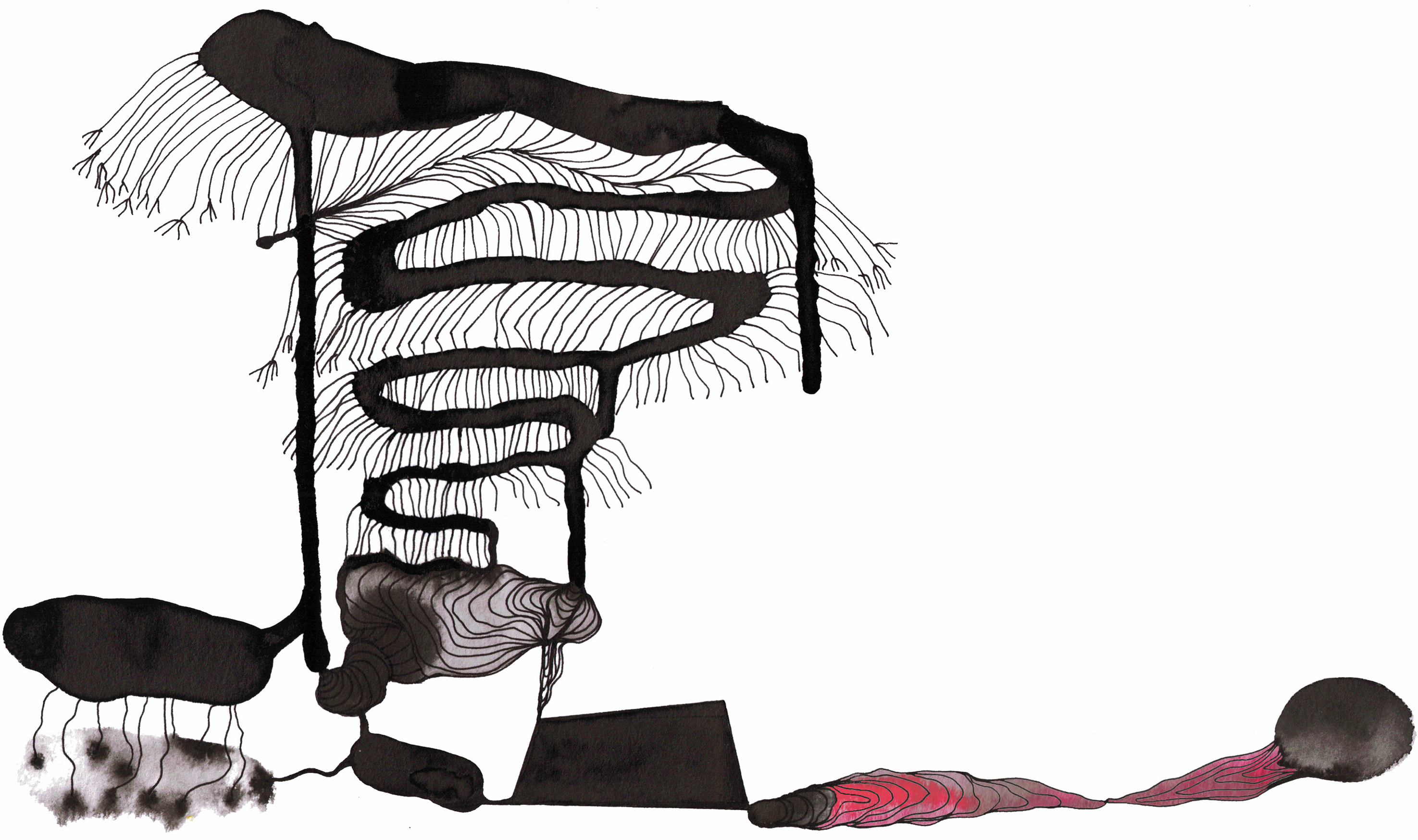
Transforming waste. Recovering what is good (or circulating what is bad?). Artist Sophia Tabatadze.
Different techniques of wastewater treatment (dilution or distribution) bring different orderings of risk. Decentralising wastewater treatment for the purpose of recovering ‘what is good’ in wastewater, certainly, also comes with new risks. Another wastewater engineer, also interested in the transformation of waste into nutrients, points out how the potential value of re-use on location can turn into a future risk: How can we reuse water when we cannot properly deal with (or cannot be certain of) the ‘safety aspect of it’? When we re-use (over and again) the same treated wastewater which contains medicines/drug residues, then what are you maintaining when re-using?
This example shows that different orderings of waste can coalesce, or even clash in practice. This happened, for example, in the ecovillage when they experimented with closing water circles. Keeping wastewater flows ‘close to home’ is one of the central ‘goods’ for different stakeholders involved in the pilot project. For the engineers testing the pilot, black water separation at source is key, because without diluting it with grey water or rain water, it preserves the nutritional richness present in black wastewater and makes recovering nutrients easier. For the ecovillagers, grey water separation is key as they can re-use treated grey water to flush their toilets and filtrate the recycled wastewater in their land. However, this ‘good’ became problematic for the villagers during the testing period: the recycled flush water is yellow, stains the toilets, has a faint unpleasant smell, and generally, disgusts visitors and guests who do not live in the ecovillage. Moreover, the villagers were reluctant to re-use the recycled water for irrigation of their crops as their garden is populated with edible crops. There is thus a tension here between decentralisation for the purpose of recovering and decentralisation as another distribution of pollutants. This tension was also the prime concern of the ecovillagers when they decided, in the end, not to re-use the recovered water to irrigate their edible garden. One of the residents articulated the fear of future contamination: ‘you don’t want to infiltrate water of bad quality into the soil. Otherwise, at some point in time, we will be living here on top of a mountain of hormones’. As such, in the ecovillage the recovery of nutrients remained a future potentiality.
Discussion: Living in proximity with wastewater technologies
The article began by highlighting an ongoing political debate in the Netherlands that divides experts in the wastewater treatment field, about the merits of decentralised systems versus centralised systems, which figures wastewater infrastructures in terms of technological fixes in a deliberative arena. We proposed another way of thinking through wastewater infrastructures by attending to the material politics of waste and approaching technology not as flawless managerial ‘fixes’(Bavington, 2011; Grabrys 2009; Tarr 1996), but as ‘careful engagements’ in which users are willing to learn about different ways of living with wastewater (Ureta, 2016; Ureta and Flores, 2018). We have presented three empirical examples that articulate the material politics of decentralisation in which wastewater practices become an explicit ‘foreground’ for their everyday users and in which living with waste is ordered as a distribution of pollution, a demarcation of water flows, and a transformation of waste. Attention to these different modes of sociomaterial ordering revealed that while dirt comes with systems (Douglas, 2002), and these systems promise a management and proper vanishing of waste, the stuff of waste itself remains, moves, mingles, and transforms. Thus, like Jennifer Gabrys (2009), we found that the recalcitrant mobility of waste undermines the dream of a stable technological fix. Instead, what unfolds in our case is a constant ‘recomposition’ of waste. Attending to various ways of living with waste offers several specific lessons for the politics of infrastructural experiments in discussions of waste, spatiality, and material politics.
First, decentralised wastewater treatment practices are of interest to waste scholars who critically assess the ‘ethos of distance from waste’ (Hawkins, 2006: 16). In our case, those who produce waste are no longer separated from their disposal. While large infrastructural systems for waste removal, such as garbage bins, trucks and sewers have reduced the demands waste makes on users, in our cases, waste was not taken away immediately but instead lingered, and was attended to, on site. Our interlocutors did not see this as a bad thing per se. Rather, they were eager to learn how to care for their wastewater. However, although the invisibility and inconspicuousness of waste is not sought after, the material problem of waste, its persistent toxicity, remains. Pollution, as we show, does not magically disappear when waste is treated, instead it moves around, reappears, and, sometimes, transforms (cf. Gabrys, 2009). When pollution does not disappear through technological fixes alone but persists, the question is how risks of pollutants and responsibilities to care for its monstrous capacities are balanced, composed, and distributed. Understanding the specific settings where and practices how waste assembles and transforms, and with effect to whom, is thus critical to explore alternative, and potentially better ways, to live well with our ‘geological monsters’.
Second, wastewater treatment technologies, and the careful engagements surrounding them, are a ‘practiced’ version of globalisation (Law and Mol, 2004: 141). The decentralised infrastructures studied here feature as local infrastructural interventions and, at the same time, as global actors in the distribution and coordination of the flows of pollution. Massey (2004), proposes thinking of space in terms of relationality, using Latour's (1993) example of the railway. While a train station is obviously a local place, a point in the map, a location in the city, it also serves as a global hub for connectivity. The same is true of the railway system. Rails and railways are local because they need local care, workers who take care of the functioning of the rails, lights and signals, and are also global in the way they are tasked with connecting people and goods, and spread out into space. Like rails and railways, wastewater and its treatment infrastructures are ‘utterly everyday and grounded at the same time as they may, when linked together, go around the world’ (Massey, 2004: 8). In other words, while wastewater treatment depends on particular (or local) engagements with the technology, when linked with flows of water, soils, mobile fish, waste and the (toxic) substances it is made of it is utterly global. Attending to the material politics of decentralisation makes visible how (local) initiatives of wastewater treatment enact globalisation in very different ways: decentralisation can be a solution for global problems of pollution, on other occasions, it can end up bordering ‘our water’ and, in effect, undermine global responsibilities. Thus, the infrastructure, and a careful consideration of our ‘geological monsters’ (Ureta and Flores, 2018) itself, asks us to reconsider (anew) global interdependencies in the distribution of risks, responsibilities, and values of waste treatment.
Lastly, what can a politics of waste itself teach us about infrastructures in response to problems posed by the Anthropocene such as micropollutants? Channelling wastewater flows requires a complex infrastructure where ecology, with all its complex interactions and environmental dependencies, plays a crucial role in linking distant places and various human and non-human actors. As such, pollution present in wastewater flows poses an interesting avenue to further rethink responsibility in other than territorial terms, as proposed by Doreen Massey (2004). Infrastructures mix and match our waste with those of other polluters and spread it across global surface water before we can neatly distinguish ‘our waste' and responsibility for its mess from other problematic elements. Besides the far being implicated in the near, and vice versa, decentralised wastewater treatment initiatives tasked with protecting surface waters, not only deal with pollution occurring in the present, they are also confronted with persistent pollution from the past and future potentiality of toxicity. Indeed, in wastewater treatment practices, time itself becomes fluid. We propose, therefore, rethinking territorial and temporal responsibility through a material politics of flows, in our case, flows of water, that carry, disseminate, dissolve and connect various times and places. Articulating water flows helps grasp the politics of wastewater as a ‘material ordering of the world in a way that contrasts with alternative and equally possible modes of ordering' (Law and Mol, 2008: 141). Attending to these modes of ordering through flows of water, but also filtration of soils, and other geological mobilities can thus help grasp how the ‘distant [is] implicated in our “here”’ (Massey 2004: 10).
Highlights
Drawing on fieldwork conducted in the Netherlands, we examine the turn to decentralisation as a material object of enquiry.
Instead of focusing on deliberative politics, we articulate a material politics with wastewater treatment practices.
We propose approaching technology not as flawless managerial ‘fixes’ but as ‘careful engagements’.
Pollution present in wastewater, when thought of as a composition of risk and responsibilities, helps to rethink responsibility in other than territorial terms.
We reconsider the interdependencies in the distribution of risks, responsibilities, and values of waste treatment.
Footnotes
Acknowledgements
This project has become possible because of a Dutch NWO-MVI Responsible Innovation grant ‘Normativities of Waste Water Treatment: Putting Microalgae to Work in Ecodorp Boekel’, Project Number 313-99-325/2345, led by Prof. Annemarie Mol. We are grateful to our interlocutors in fieldwork for their generosity to speak and think with us and to Christian Peter Medaas and Samwel Moses Ntapanta and other participants of the session ‘Waste. Locating, Learning From, and Living With the Lively Afterlives of Globalisation's Distributed Materialities’ of the EASST 2020 conference, where we presented earlier versions of the argument. We would also like to thank Elliot Hurst for his supportive and insightful comments on early drafts. Last, thanks to Amal Chatterjee and visual artist Sophia Tabatadze for her beautiful drawings, part of an art-science collaboration between the authors and her.
Author Notes
The authors would like to emphasise that their co-authorship is equal, in the sense that they have both led in the thinking, conceptualisation and writing of this article, doing a comparable amount of fieldwork for its elaboration. However, the reality of the social sciences is that the first author is always considered more important, and matters for individual career advancement, so the authors have a pact of co-authorship, whereby they exchange the first position.
Declaration of conflicting interests
The authors declared no potential conflicts of interest with respect to the research, authorship, and/or publication of this article.
Funding
The authors disclosed receipt of the following financial support for the research, authorship, and/or publication of this article. This work was supported by the Nederlandse Organisatie voor Wetenschappelijk Onderzoek (grant number 313-99-325/2345).