




Abstract
This paper explores the question of what traceability systems mean for the labour situation of fishworkers; for whom and in what respects is traceability effective, and what impact do these systems have? The limited social criteria in fishery governance is a core reason for recurrent problems of extreme abuse of fishworkers around the world, including trafficking, forced labour and so called modern slavery. New traceability systems, thus, now include social criteria to advance sustainable fisheries globally. Drawing from a Thai fisheries reform case study, we analyse how the new labour traceability system emerges and is perceived by migrant fishworkers. We base our analysis on interviews, documents and two periods of fieldwork in Thailand. We argue that labour traceability is a double-edged sword. While fishworkers have seen major improvement in limiting extreme abuse, labour traceability has a downsides of state surveillance and costs passed onto workers. Moreover, traceability does not solve underlying problems regarding the complex formalization of migrant workers, working conditions on fishing boats, freedom to change employer or the everyday vulnerability of being a migrant worker. Thus, while labour traceability has promising policy relevance for the integration of labour rights into fisheries governance, it requires contextual underpinning in migrant circumstances.
Highlights
The modern slavery scandal, which revealed violations of labour rights, has challenged sustainable fisheries globally.
Labour traceability, as an intervention mode of governance, has reshaped the space of fisheries governance.
Labour traceability shows promising policy relevance to integrating labour rights into fisheries governance, but it requires, as well, contextual implementations.
Our study reveals that, as a governing technique, fishworkers’ traceability is a double-edged sword with both positive and negative implications.
‘Finally, someone is paying attention to our lives!’
Introduction
Labour issues and unacceptable working conditions for migrant workers in industrial fisheries have become an increasingly recognized problem in recent years. One response has been a proliferation of traceability systems in seafood supply chains as regulators and consumers want to know when and where products are produced, from what, by whom and with what consequences. Traceability can be broadly understood as the ability to access and record information relating to a product's entire life cycle (Olsen and Borit, 2013). It has evolved from a tool to manage food quality and safety to a device for supporting claims of sustainability, environmental impacts and social responsibility (Islam and Cullen, 2021). While seafood traceability systems have evolved into a large field of informational governance, there is doubt that these interventions have significant potential to govern the sustainability of global supply chains (Bailey et al., 2016). Tracking the marine fisheries sector is particularly challenging since the industry is characterized by obscure and highly mobile supply chains, making it difficult to trace information about fish catch, fishing grounds, vessels and worker conditions (Bear, 2013; Vandergeest and Marschke, 2020).
Empirical studies examining what traceability means for workers have been scant, partly because traceability studies have focused on systems for tracing fish, not labour, and partly because traceability systems are often private and confidential and therefore difficult to study. This paper contributes to this knowledge gap by asking: what do traceability systems mean for fishworkers’ labour conditions; for whom and in what respects is traceability effective, and what impact do these systems have? We draw answers from a newly introduced traceability system that has impacted a small set of migrant workers in Thailand. Thailand is an important site for this kind of study because it has been subject to intense international scrutiny via media attention to its labour practices in fisheries (Kadfak and Linke, 2021; Molland, 2019), which received major pressure from consumers and supply-chain actors around the world (McDowell et al., 2015; Wilhelm et al., 2020). In particular, the infamous modern slavery scandal pointed to the non-existence of a traceability system for fishworkers, which was undeniably part of the troublesome situation. Thailand reform therefore provides a unique example that elaborates how the new traceability system includes the tracing of migrant fishworkers, who are a major part of the labour force, as part of effort to govern fisheries in an ethical and sustainable way.
This article outlines how the industry responded to demands for improved labour conditions by increasing the mechanisms by which migrant fishworkers are made traceable. We argue that traceability is a double-edged sword, with both positive and negative effects. 1 Traceability causes opportunities but also concerns; it intensifies tracking and monitoring, which can benefit workers, but traceability also results in more control and surveillance, which restricts workers’ mobility and their ability to change employers. This means that traceability cannot, in and of itself, be seen as a solution to unacceptable working conditions – in contrast to how traceability systems are often presented in the discourse on responsible and sustainable supply chains. Thus, to understand both the positive and negative impacts of traceability, it is important to understand workers’ experiences and perceptions as these systems are scaled up.
Hence, this article focuses on the fisheries traceability system that was introduced on a national scale in Thailand in 2015 and onwards. We describe how the emergent traceability system involves fish, fishing vessels and fishworkers, particularly migrant workers, and we elaborate on workers’ perceptions of this new system, drawing on interviews with migrant fishworkers in a major fishery hub. In the following sections, we describe our methods and provide a background on fisheries traceability systems and the motivations for placing work conditions and migrant fishworkers under purview. We then describe the Thai fisheries reform, as provoked by the modern slavery scandal and the dialogues between the European Union and Thailand on issues of illegal, unregulated and unreported (IUU) labour, followed by a more technical outline of how the traceability system works in Thailand. We then explore and analyse migrant fishworkers’ perceptions and experiences of the new traceability system. We outline key issues in terms of abuse, mobility, wages and grievance, and the ways that traceability can be seen to have both good and bad effects. In the final section, we offer some concluding observations on how the traceability system relates to the labour problem.
In doing so, we contribute to the wider question of what traceability offers in terms of improving labour conditions in the global seafood sector, as a kind of double-edged sword in sustainability governance (cf. Bailey et al., 2016). We highlight the ways that fisheries governance intersects with migration policies, partly because the traceability system reinforces the process of formalizing migration by making migrant workers legal and traceable. While much more could be said about these intersecting governance fields, our article highlights how these fields are co-evolving and how the push for traceability within the fisheries sector implies new challenges and new opportunities for migrant workers. In Thailand, the traceability intervention ties together fishing management and labour regulation, and it increases the traceability of migrant fishworkers. Ultimately, we call for greater integration between the literature on sustainability governance, traceability systems and migration, which we hope this article will stimulate.
Methods and context
Our analysis draws from interviews, secondary data, and two two-month periods of fieldwork in Thailand between 2018 and 2020. Fieldwork was conducted in Ranong, one of Thailand's major harbours. We selected Ranong to explore migrant fishworkers’ perceptions of the reform for several reasons. Ranong is located along the border with Myanmar and is one of the key cities in Thailand that receives Burmese migrant workers. Fishworkers stay and work in Ranong or they continue their journey to southern Thailand or Malaysia. Working in the border city of Ranong allows Burmese workers to move in and out of the country with ease via a minutes’ long boat ride and to benefit from temporary work permits, which allow them to commute between the two countries more easily than those working in inland provinces (see Figure 1). Additionally, the first author has four years of experience working in this area as a non-governmental (NGO) staff person and research assistant, which helped us establish a network of respondents/research subjects.
In this article, we primarily draw on interviews with 24 migrant fishworkers – all Burmese men with an average age of 31.5 years. The interviews were conducted by a local male research assistant who speaks Burmese. Eighteen of the fishworkers were asked questions about their life history and future livelihood strategies, how they were affected by the COVID-19 pandemic, and about their use of technology, such as social media and communication applications, to communicate with their peers and learn more about their rights. The other six respondents were asked specific questions in relation to the fisheries reform. Sixteen interviews were done face-to-face by an assistant between October and December 2020 at Ranong fishing harbour. During the pandemic in January 2021, the interviews with migrant fishworkers were conducted via phone or video call. Two focus-group interviews, with eight migrant fishworkers, were also conducted during the second period of fieldwork in March 2020, by the first author. We interviewed six key informants from the Thai government (see Supplemental Appendix 1), boat owners, and a satellites and artificial intelligence expert working with an NGO during the second fieldwork period in Thailand in 2020. The informants’ interviews provide a background story of how traceability systems were set up. In addition, we draw on secondary data, including Thai government policies and implementation documents, INGO and Thai NGO reports and news. We also use key reports and surveys (Coalition, 2018, 2020; EJF, 2018; ILO, 2018, 2020) to flush out the narrative of fishworkers during the reform. It is worth pointing out that the labour reform also includes labour in seafood processing plants, but this sector has been largely addressed by private sector initiatives and local NGOs that are concerned with issues such as representation, workers’ voices and grievances (Wilhelm et al., 2020). In this article, we leave the processing sector aside to provide a focused analysis on fishworkers’ perceptions.
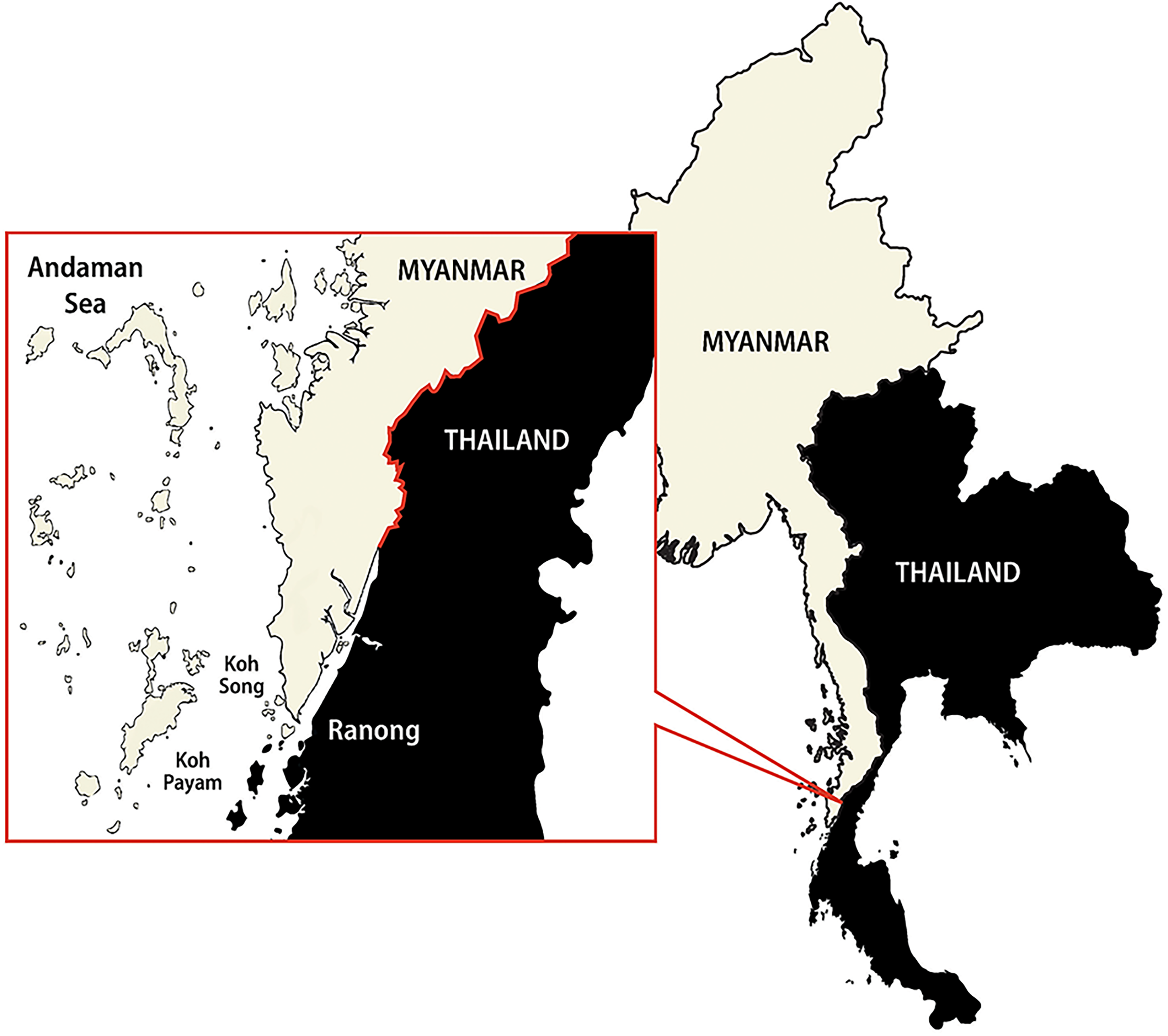
Map of Ranong, one of Thailand's major harbours, is located on the border between Thailand and Myanmar.
From tracing fish to tracing fishworkers
Traceability systems are the means to connect various elements of information pertaining to a product; they are thought to generate better control and understanding of the supply chain and to offer consumers visibility of it (Kumar et al., 2017). These systems have often been set up by a combination of private and government actors in the pursuit of systems that deliver accountability. For businesses, ‘being traceable’ has become as important as ‘being green’ (Mattevi and Jones, 2016), a trend illustrated by concepts such as from ‘farm-to-fork’, ‘well-to-wheel’ and ‘catch-to-consumer’.
In regards to the fishery industry, many issues have motivated expanded use of traceability within the global seafood sector. Concerns over unsustainable fisheries and IUU fishing have worked in good part by using new technologies to track both vessels and seafood. This urge to trace is now trickling into the social aspects of the industry. Fishing has been identified with some of the most egregious working conditions (Vandergeest and Marschke, 2020). Both human and labour rights abuses within the fisheries sector have received growing attention due to slavery scandals and numerous reports of poor labour conditions, forced labour and trafficking practices (Marschke and Vandergeest, 2016). In light of these concerns, traceability measures that collect and verify information are increasingly being introduced within seafood supply chains to make it harder for products associated with illegal, fraudulent, abusive or unsustainable practices to enter markets (Lewis and Boyle, 2017). Hence, labour concerns are expanding what is understood as sustainable fisheries governance, which has so far been focused on environmental sustainability and sustainable fish yields (Bailey et al., 2016; Toonen and Bush, 2020).
This makes the seafood traceability landscape complex. There are diverse actors, regulations, tools and services involved in traceability interventions, a fast-moving digital frontier of vessel-monitoring systems (VMS), electronic logbooks and electronic monitoring (for an overview, see Lewis and Boyle, 2017). The mobile and distant nature of fish, boats and sea have inspired a large body of work on how to understand the limits and opportunities of traceability systems with respect to sustainability and responsibility (Bear and Eden, 2008; Satizábal and Dressler, 2019; Steinberg and Peters, 2015). The possibilities for tracing sustainable practices along the fisheries chain are ever changing and evolving. The digital frontier in fisheries governance continually makes use of new fish-attraction devices, drones and satellites; and the distant, off-shore, invisible and frontier-like nature of the marine environment suggests that sustainable fisheries are, to a large extent, imagined and performed through these sensing technologies and information (Toonen and Bush, 2020). Surveillance at sea has been reliant on detecting the ships in vast open spaces. However, ships can also navigate the ocean in ways that avoid their being seen. Those who want to avoid governmental attempts at regulative control can shift boat size, speed and route planning in conjunction with strategic navigation of the 3D (i.e. width, length and depth) geography of the sea (Lepoša and Knutsson, 2022; Peters, 2014). The amplified use of technologies, including fish finder, GPS, sonar and camera, may reinforce unsustainable fishing practices, such as trans-shipment, which means that fishing vessels upload catch to another vessel or cargo to continue their fishing. Trans-shipment occurs in distant waters, which allows fishing vessels to stay longer at sea. These become the prime conditions for extreme forms of violating fishworkers’ rights (Ewell et al., 2017; ILO, 2013). As recent studies suggest, there is a correlation between the difficulty of accounting for fisheries practices and the prevalence of modern slavery (Clark and Longo, 2021; Decker Sparks and Hasche, 2019; Tickler et al., 2018). Fishing has long been largely an informal sector, with fewer regulations and restrictions than other industries (Vandergeest, 2019). Migrant workers in particular have fallen into a regulatory vacuum, as boats owners have had control over workers’ movements and often their freedom (HRW, 2018).
While traceability is bound up with positive connotations related to ecological and social sustainability, transparency, the right-to-know and accountability (Mol, 2015), questions remain as to what traceability actually does to improve sustainable and responsible supply chains (Kumar et al. 2017). Traceability in such a complex supply chain has many blind spots. The seafood industry is global and complex in nature, and the difficulty of monitoring mobile vessels and distant work conditions contributes to the problems. The desire to trace fish as well as fishworkers and their work conditions adds to the traceability challenge in the fisheries sector, not least because marine fisheries often employ migrant workers who may be undocumented and categorized as precarious or undocumented labour. Thus far, many studies have focused on the economic and environmental outcomes of traceability (Sterling et al., 2015) and the digital frontier following fish and fishing vessels (Toonen and Bush 2020). But we know little of how traceability serves as a means of improving working conditions or labour relations. Studies of the so-called full-chain traceability often miss the worker at the beginning of the chain; and more politicized issues of political economy and agrarian and livelihood transformation are also missed within these systems that are more concerned with having fully traceable supply chains in place (Carswell and De Neve, 2013; Riisgaard, 2009; Serrano and Brooks, 2019). A case study from the tuna industry shows that traceability may even reinforce the existing unequal power relations that structure the fisheries industry (Djelantik and Bush, 2020).
We wish to highlight that traceability systems have particular implications for migrant workers. Work in commercial fisheries is considered dangerous and difficult and largely unattractive for local or national workers. Migrant workers have thus become the core working population to fill the labour gap in many parts of the world (Stringer et al., 2016; Vandergeest and Marschke, 2020, 2021). East and Southeast Asian fisheries rely heavily on migrant fishworkers, most of whom are men and relatively young (ILO, 2018, 2019). Financial need and the lack of jobs in their home countries have pushed them to find work on fishing vessels in major hubs such as Taiwan and Thailand (Vandergeest and Marschke, 2021). That fishworkers work on vessels in countries where they lack citizenship means they are often mistreated by boat owners, captains or work leaders who, in contrast, often hold citizenship in countries where the vessels are registered. Studies show that cross-border migrant workers and seasonal migrants experience more exploitative working conditions than do local and/or full-time workers (Belton et al. 2019; Derks, 2010). Because they are deemed low-skilled or have precariously documented status, fishworkers experience discrimination and are vulnerable within what is generally perceived as a corrupted bureaucratic system, which offers short-term contracts and little in the way of social welfare (Chantavanich et al., 2016; ILO, 2018). The mobile and isolated location of fishing vessels on the deep sea makes inspection difficult (Vandergeest, 2019: 338). The consequences are that migrant fishworkers continue to work long hours that exceed legal requirements, with limited health care and poor living and working conditions on board (Vandergeest and Marschke, 2020, 2021). The length of fishing trips and the types of fishing gear shape working and resting hours for the worker. For example, some Thai long-haul multiday trawlers require up to three to four weeks per fishing trip (Chantavanich et al., 2016), and the workers labour between 9 and 14 h, and even as many as 22 h (ILO, 2020; ILRF, 2018; Vandergeest and Marschke, 2021). The mobile nature of the work further limits migrants’ ability to establish intensive social networks within local communities where they work, which also limits their access to important information on rights and safety (Marschke et al., 2020).
Migration policies have been one way to resolve this situation. However, a central problem is that migration policies tie workers to their employers. For instance, in the case of Thailand, migrant workers’ registration programs restrict migrant workers’ ability to change employers, and if a migrant worker does not find a new employer within a given period, the worker is required to leave the country (Vandergeest and Marschke, 2020). Bylander (2021) found that in Thailand, migrant workers face more risks and costs and are not free to find new employers or move around Thailand – concerns which migration studies have highlighted. Legal status does not automatically lead to better working conditions (Derks, 2010); instead, migrants continue to rely on informal social security systems tied to their home countries. The embodied experiences of fear towards everyday state representatives means that migrant workers may not feel any more secure after becoming legal workers (Franck, 2016). The temporal status of low-skill migrant workers implies that legalization processes even help keep migrant workers on short-term, temporary contracts. Host states can easily relocate or deport workers if they do not register or if they violate the law (Bylander, 2019; Kaur, 2010). In other words, migrant workers are still required to navigate precarious work situations (Campbell, 2018; Molland, 2022; Yea, 2017). Interventions to trace and legalize migrant workers may in reality do little to secure labour conditions or even worsen the situation for migrant workers.
How have various actors in the global seafood industry attempted to rectify this situation? Seafood traceability can mean tighter control of all processes impacting the industry, from food safety to broader issues such as eliminating the risk of sourcing illegal seafood (Sterling et al., 2015). Tied to the idea of tracing is the growth of standards and fisheries-certificate schemes, such as Friend of the Sea, or the involvement of other auditing actors and NGOs. International and national NGOs and the International Labour Organisation (ILO), in particular, have pushed for improved labour standards. Some large fish markets, such as the UK, Australia and California, have passed laws aimed at cleaning up the fisheries sector (Wilhelm et al., 2020). The EU has also taken a leading role in combating so-called IUU fishing activities and has pushed countries, such as Thailand, to eliminate IUU practices and adopt labour standards in fisheries (Kadfak and Linke, 2021). Given this, traceability is becoming an increasingly important tool and requirement by governments, such as providing the full-chain information required for seafood imported into the EU.
In these ways, traceability has become a key policy intervention, argued by practitioners and policy makers, to steer fishworkers’ labour conditions towards sustainable and responsible practices (Bailey et al., 2016). However, tracing fishworkers is not a quick fix to deep-running precarious labour conditions. Many scholars have shown how sustainability standards, eco-labels and certified seafood offer only a limited view of issues of sustainability (Vandergeest et al., 2015, Wilhelm et al., 2020). The object of concern has largely been the fish and other biological resources such as by-catch, birds, turtles, dolphins and marine eco-systems (Andriamahefazafy and Kull, 2019; Toonen and Bush, 2020: 128). Fish-traders and processors on land have also been a central focus of many traceability systems. Djelantik and Bush (2020) highlight that underlying many of the private seafood sustainability certification standards are demands for improved transparency over where, how and by whom fish are caught and traded. However, how well traceability systems perform depends on, in their case, how well local NGOs can adapt to local social interactions and practices, using trust and ability to mediate other actors (See also Eden, 2019). Yet, little is known of how systems put in place to create traceability for fish and seafood also affect the monitoring and enforcement of labour regulations. Does traceability have the potential to provide a mechanism for governing complex issues such as labour relations? Perhaps increased traceability will run against its own agenda and turn into surveillance, or otherwise worsen the situation for migrant workers. These are questions that speak to wider queries about sustainability governance (Boström et al., 2015). For whom and in what respects is traceability effective, and what impact do these systems have? In the next section, we present the background of Thai fisheries and the recent reform and outline how the issue of tracing both fish and fishworkers came to the forefront of the policy interventions, whereafter we turn to the perceptions of migrant fishworkers in Thailand.
Thai fisheries background and recent fisheries reform
Thai fisheries have undergone many changes over the years. Trawlers and mechanized fishing gear were introduced to Thailand in the 1960s, which quickly resulted in overfishing within the Thai Exclusive Economic Zone (EEZ). Thai trawlers were forced to travel further into neighbouring waters, often without permission, to fish. In the 1990s, with increased restrictions and the decline of fish stocks in the region, Thai fishing vessels started to sign official and private agreements to fish in neighbouring countries’ waters (Derrick et al., 2017). This decrease of fish, in turn, forced Thai boat owners to invest in improved fishing vessels and gear. Fishing trips have become longer and venture further out at sea. These changes also led to shifts in terms of labour. Migrant workers have become a solution for boat owners, due to their lower wages vis-à-vis Thai fishworkers. This switch is not a new trend, but the flow of migrant fishworkers from neighbouring countries has helped expand the Thai fishing industry since the 1990s. However, the growth of the industry has been largely unregulated. There has been weak enforcement of monitoring, control and surveillance of fishing vessels and also few efforts to manage the labour situation. Numerous reports and academic studies have highlighted the problems that migrant fishworkers have encountered in the Thai fishing industry, ranging from debt bondage and minor violations of rights to forced labour and trafficking (HRW, 2018; ILO, 2018, 2020; Marschke and Vandergeest, 2016; Vandergeest and Marschke, 2020, 2021; Wilhelm et al., 2020).
Thai government has introduced several campaigns to allow undocumented migrant workers to register themselves (Mon, 2010). Within the fishing section, the recruitment and documentation of migrant fishworkers have been complex. The country had gone to major registrations of undocumented migrants in 2004 and in 2010, which allowed workers to gain one-year work permits, with a renewal potential. These registration policies are supplemented by a formalised system of recruitment, hiring and transport and return of migrant workers via a memorandum of understanding (MOU) (Derks, 2010: 920–21). However, documented migrant fishworkers have declined in this period due to the high cost of the documentation process. Many undocumented migrant fishworkers continued to use the service of brokers to move between provinces and access local documents, which allowed them to work on fishing boats (Derks, 2010). Since the reform, Thai authorities have adopted stricter measures to ensure that migrant fishworkers are documented, resulting in more fishworkers being registered under the regulated channel of MOU and pink cards (ILO, 2020) and allowing workers to stay for two-year periods (see in detail in section 5).
The lack of long-term permits limited workers’ ability to plan their livelihood strategies, as they were dependent on their employers for visa extensions. Under these conditions, migrant workers had limited access to Thai social welfare and struggled to access social support for their family members. There was often a lack of schools and social spaces for migrants’ children (Ball and Moselle, 2015). Over decades, this lack of management led to a what, in 2014–2015, was coined a ‘modern slavery crisis' (Clark and Longo, 2021). The slavery scandal coincided with another problem identified by the EU (a major buyer of Thai fish): the environmental problem of IUU fishing activities.
In April 2015, the EU issued a yellow card to Thailand as a warning regarding IUU fishing. Officially, the EU's IUU policy aimed to address only issues of catch and environmental sustainability, but from the EU's perspective, the slavery crisis opened up the possibility for an official bilateral dialogue aimed at solving both the environmental and social problems of Thai fisheries (Kadfak and Linke, 2021). There is an EU IUU regulation which stipulates that any fishery products entering EU markets must be accompanied by a catch certificate. The catch certificate requires the flag state of the catching vessel to certify that the catches ‘have been made in accordance with applicable laws, regulations and international conservation and management measures' (European Commission, 2009: 16–7). Thailand was found to be in breach of this standard, which was the impetus for initiating a dialogue between Thailand and the EU (Kadfak and Antonova, 2021). A statement from the EU Commission declared that the EU IUU regulation does not specifically address working conditions on fishing vessels, nor human trafficking. However, due to extensive labour violations in the Thai situation, the EU initiated a Labour Dialogue in May 2018, which ran parallel to the Fisheries Dialogue (Kadfak and Linke 2021). While the EU's demand for a catch certificate influenced the Thai government to adopt a traceability system for fish, the Labour Dialogue pressured the Thai government to recognize, identify and trace workers and to avoid extreme cases of abuse and violation of rights. Taken together, the 2015 reform introduced two traceability mechanisms: tracing of fish and tracing of fishworkers. These new mechanisms involved many government authorities and affected predominantly fishworkers and other actors such as boat owners.
From 2015 onward, Thailand reformed its regulations to conform to the demands for higher labour standards and traceability mechanisms. A problem with tracing fish in Thai fisheries had been the lack of a boat-tracking system. To meet EU IUU regulations, the Thai government needed to set up a system that would allow Thai authorities to trace fish all the way from the ocean to the EU market (European Commission, 2009). Thailand agreed to introduce a tracing mechanism that was similar to the EU's catch-certificate instrument. This allowed for the identification and tracking of fishing vessels, and many technologies, such as a VMS and mobile transceiver unit, were introduced to monitor vessels. VMS, which uses satellite technology to track boats, became obligatory for all fishing vessels above 30 gross tonnage. The new fisheries law – the Royal Ordinance on Fisheries B.E. 2558, issued in 2015 – provided the legal umbrella for the formation and implementation of the Command Centre for Combating Illegal Fishing (CCCIF), an inter-agency taskforce that addresses IUU fishing practices. CCCIF created the port-in/port-out (PIPO) centres in the coastal provinces. PIPO is a multi-authority unit of CCCIF, which includes the Marine Department (similar to Port Department), Department of Fisheries (DoF), Department of Labour Protection and Welfare (DLPW) and PIPO officers. There are currently 22 PIPO offices covering 89 fishing piers in the coastal provinces of Thailand.
It is important to note that the governing mechanisms discussed in this section were implemented and driven by the Thai government. For example, the new replacement regulation of the Labour Protection Act 1998, revised in 2014, brought Thai labour regulations closer to international labour standards by using the ILO 188 Labour Convention as a template (Vandergeest, 2019: 334). This Act regulates recruitment agencies and reduces the cost and complexity of recruitment, especially in fisheries and seafood industries, with the aim of eliminating informal labour brokers and other forms of exploitation; and the collection of any fees from migrant workers is prohibited. Moreover, Thailand ratified two major conventions: the 1930 Forced Labour Convention (P029) in 2018 and the 2007 Work in Fishing Convention (C188) in 2019 (Kadfak and Linke, 2021; Vandergeest, 2019). The Thai government also received support from Oceanmind, an NGO with expertise in satellites and artificial intelligence funded by Seafood Task Force. Oceanmind applies a machine-learning algorithm to identify suspicious vessel behaviours, in order to monitor and detect high-risk activities. High-risk alerts are defined according to Thai government regulations. These include, for instance, fishing in a closed area, fishing in a licensed area without a license, fishing outside the EEZ or fishing for unlicensed species. When a vessel arrives at the harbour, the tracing system continues monitoring the catch as it moves to the market or seafood processing factory. This new system, with all its various technologies, opportunities and risks, warrants a closer look.
The VMS and onsite inspections enable the Thai government to follow fishworkers during their fishing trips. The next section outlines the technicalities of the traceability system. Worth noting however is that non-state actors have been keen to explore the connection between the increased traceability of fishing vessels and real-time working conditions. This involves the Independent Monitoring at Sea (IM@Sea) pilot project, launched by the International Labour Rights Forum (ILRF). The project installed vessel monitoring, electronic catch reporting, electronic video monitoring and an onboard WiFi network to create effective real-time, worker-driven monitoring at sea (ILRF, 2018). Second, a 36-week pilot project between Thai Union and USAID Oceans and Fisheries Partnership was created to test the usability and scalability of VMS technology, e-logbook and a mobile phone application called Hi-Chat in Thailand. This project included human welfare aspects through the Hi-Chat function, which allowed fishworkers to communicate with trusted persons on land (USAID Oceans, 2018).
Setting up the system for fishworker traceability in Thailand
Two parallel processes contribute to the traceability of fishworkers: one is fishworker identification, the other connects fishworkers with the fish and fishing vessel. The fishworker identification process taps into the migration policy, through which the Thai government legalises migrant fishworkers. The legalisation process relies on two mechanisms: either a state-to-state MOU with neighbouring governments or a pink card. The pink card registration scheme was introduced in 2014 to turn unregistered fishworkers working in Thailand at the time into registered ones, by offering temporary work permits. The pink card is tied to the fishworker's employment contract, and it allows fishworkers to access national health care services and to stay in the country for the duration of their work contract (HRW, 2018). The 2016 migrant-worker management regulation allows only four reasons for workers to change employers: the employer terminates the employment contract; the employer closes down the business or the unit that involves the migrant worker; the employer commits violence; or the employer delays wages and violates labour protection laws. The regulation further stipulates that ‘migrant workers who change employers with no appropriate justification will not be permitted to work in Thailand for a period of two years, and must return to their country of origin’ (IOM, 2016).
State-to-state MOUs, on the other hand, provide a legal pathway for employers to recruit directly from recruitment agencies in the countries of origin (ILO, 2020). Once migrant workers arrive in Thailand, the National Council for Peace and Order identifies the individual through the worker's immigration registration document, such as a travel document for Cambodians or a Certificate of Identity (CI) for Burmese. The individual is then required to register photos and fingerprints with the Department of Provincial Administration in the provinces where they plan to work. Moreover, migrant workers who want to work in the fishing industry need to apply for a seabook, 2 which is authorised by DoF. DoF checks the authenticity and validity of immigration documents, photographs, fingerprints and biographical information.
Once fishworkers have been identified, the Thai government, through four different authorities, continues tracing them at sea. Fishing boats are required to register under the Marine Department and DoF. This reform affords government the ability to connect fish stock with the individual fishworkers who are working onboard a particular boat. This is done by tracing fishing vessels via fishing logbooks, VMS and actual inspection by PIPO. In the implementation's first phase, the navy was put in charge of the operation to inspect workers, contracts, registration cards, licenses, catch records and more (Vandergeest and Marschke, 2020: 300). During the early stages of the reform, harbour inspections of boats and workers by PIPO officers were paper-based and time consuming. Thereafter, the so-called ‘fishing info system’ – a digitalized fish traceability system – was introduced. This system connects on-site inspections at the harbours to central control VMS located at the DoF in Bangkok, allowing DoF officers to trace the vessels in real time.
It is mandatory for the employer, who is often the boat owner, to register all documents, including the ID card, pink card, work contract and seabook, with the system before the fishing trip starts. Before and after the fishing trip, local PIPO officers inspect the fishing boat and the fishworkers at the harbour. Sometimes this inspection is conducted with officials from the other three key departments that are involved: Marine, Fisheries, and Labour Protection and Welfare. The officers use a biometric face-scan system to verify that each fishworker matches their registered photo (EJF, 2018). The detailed information on immigration status and work contract are also supposed to be double-checked onsite. Without full authorisation from these four authorities, the fishing trip cannot, in principle, set out or return (see Figure 2). In practice, however, there is a range of side-tracks and loopholes. In this article, we focus on fishworkers’ perceptions of the traceability system, but it is worth noting that the face-scanner system has not been widely used after the early phase of the reform – at least, not in our fieldwork area of Ranong. According to our interviews with fishworkers, they have never had their faces scanned. The everyday inspections conducted by PIPO have paid attention to documents and checked that the basic necessities were onboard (e.g. medicine, food and water). However, one may raise concerns regarding confiscation of fishworkers’ seabooks and identity documents since there have been no cases of complaint in 2017 (ILO, 2017). Similarly, the presence of employers and boat captains during seabook interviews and general PIPO inspections at the harbour as well as the absence of translators have limited fishworkers to access complaints to the authorities (EJF, 2019). These routine checks were conducted without respect to the actual fishing activities, which is pivotal for the labour conditions of long-haul fishing trips. NGOs have been very critical of the enforcement, suggesting that inspections are focused more on the control of migrant workers than on workers’ rights (EJF, 2019; Vandergeest 2019). But how do fishworkers themselves perceive the new traceability system?
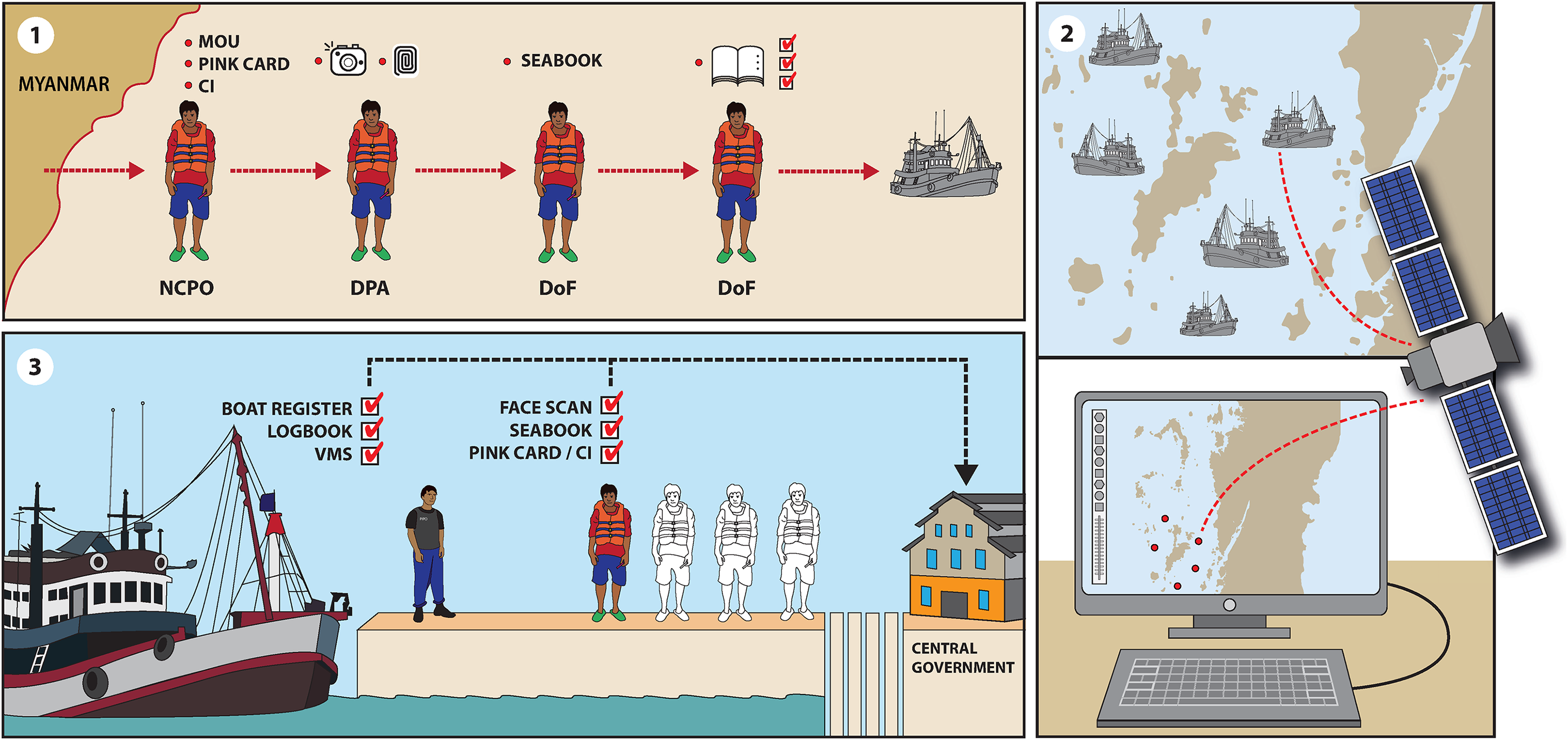
(1) Crossing the border to enter fisheries – migrant workers are required to register with different authorities before they are allowed to work on fishing vessels, (2) labour inspection by PIPO officers – PIPO officers inspect both fishing vessels and workers and then send the information to the central government, (3) real-time monitoring – the central government can check the location of any fishing vessel in real time using VMS technology.
How the traceability system affects fishworkers
This section presents our findings on migrant fishworkers’ perceptions of the reform and, in particular, how they experience the new traceability mechanisms. Drawing from 24 interviews and two focus-group discussions with migrant fishworkers in Thailand, we offer an analysis of how the traceability systems impact labour conditions and the lives of migrant fishworkers more generally. In order to build a wider knowledge base of how the traceability system affects fishworkers beyond those we interviewed, we combine our interview material with findings from key academic articles and reports (Coalition, 2018, 2020; Derks, 2010; ILO, 2018, 2020; Vandergeest & Marschke 2021). Our findings are organized according to common themes: abuse, mobility, wages and grievance. In each theme, we discuss both benefits and downsides of traceability.
Abuse
The majority of respondents think positively about the reform in terms of abuse. All of them said that they have not experienced or seen extreme physical abuse nor have they been captured by captains or boat owners in Ranong since the reform. Respondents expressed feeling safer from extreme abuse as a result of the increased inspections, the legalization process and the seabook. For instance, respondent #9, age 31, mentions that ‘now, captain does not dare to hit the crew or the employer does not dare to cheat on wages because, if they are doing like this, the crew can complain at the Department of Employment’. A respondent from Koh Song, a border town in Myanmar close to Ranong, had similar thoughts. He had begun working on a fishing boat around eight months before we interviewed him: In the past, I would have never thought I would go onto the boat because I heard so much about trafficked fishworkers who never saw land again. But now the work on a fishing boat feels normal; we get back to the harbour and we receive payments on time. We do not have to fear trafficking anymore. (#21, age 20)
This increased sense of security appears to extend from workers to crew leaders, as conveyed by another fishworker: I was working in the fishing sector since my childhood because my family was involved in the fishing industry. Ten years ago, I worked on the fishing boat back in my hometown [Kawthaung]. A long time ago, I saw some people who had been trafficked on fishing boats. Back then, if the fishing crews had a problem with their crew leader, they would kill the leader and throw him into the sea. I do not see such cases nowadays. The situation is much better today. (#8, age 29)
Increased traceability, or what might also framed as ‘surveillance’, appears to have reduced the worst labour violations. This is a positive trend that has been detected by other researchers. Bodies are counted when boats depart and return to the port, so now fishworkers face less risk than in the past in terms of physical harm, and they have begun witnessing less extreme violence (Vandergeest and Marschke, 2020: 300).
Fishing boats used to be an uncontrolled zone before the reform. Working on a boat was a way for migrant workers to stay clear of inspections or harassment from Thai authorities, especially the police and immigration officers. For instance, a respondent told us that he used to work as a construction worker. Not having a legal status, he had to stay alert to avoid the police. In this regard, conditions for new migrants in the fishery industry provide a safer haven: I was not happy in that situation. While working as a construction worker, in the first three years, I got caught more than five times. I lost a lot of money to the police. I then decided to work on the fishing boat. (#2, age 36)
The perception of fishing boats has shifted from a place where migrants hide from view to a workplace that offers security. Another respondent mentioned that since acquiring an identity certificate (CI), he no longer had to run away or hide from the police: ‘Before the reform, when the police came to inspect us at the pier, we used to run away and leave our jobs. We did not want to be caught. If we get caught, we lost a lot of money’ (#24, age 39).
Mobility
Mobility also seems to have improved with the reform. Respondent #21 shared that having a seabook gives him an advantage, compared to other migrants, to work on different fishing boats. The seabook appears to provide fishworkers with increased protection during fishing trips and the pink and CI cards provide more flexibility for migrant workers to move beyond the fishing boat into other sectors. As mentioned by Vandergeest and Marschke (2020: 300), workers can move beyond their space of work (the fishing boat) to the port area and around the province where they are registered. This is a major improvement in their freedom of movement compared to the situation prior to the reform. For instance, Derks’s (2010: 918) study shows that fishworkers’ mobility was severely constrained on shore regardless of their legal status due to fear of police arrests and fines. Workers often depended on their employers to protect them from unpredictable police harassment.
However, fishworkers also experience that traceability limits their mobility. This is because the traceability system relies on the connection between individual fishworkers and their specific fishing boat and employer. Workers’ legal status is also tied to their employment status. Therefore, in order to change employers, migrant workers need to ask permission from their current employer. This makes the migrant workers dependent upon the employer to a large degree. One of the respondents discussed the difficulties of changing employer: ‘If I want to change employer, I will have to find a new employer before informing my old one. I heard from a friend that if we do not find a new employer within 14 days, we will have to leave Thailand’ (#23, age 28). This finding aligns with a study by a Thai NGO coalition, showing that employers generally do not allow workers to change employment, even though the trend of this obstacle has improved from 48% in 2018 to 27% in 2019 (Coalition, 2020: 16, 48).
Moreover, there are still a range of problems tied to the pink-card solution. During our two focus-group discussions, held in migrant workers’ residential areas near Ranong harbour, it became clear that they still faced problems with accessing legal status to work on fishing boats. A younger fishworker mentioned this during the first focus group discussion: It is difficult to get a pink card or MOU since you need to find an employer who is willing to do all the documents for you. It is expensive to register for a pink card. This year the pink-card registration is not open yet, and if we miss applying this year, we do not know when the government will open it again.
Before the reform, this fishworker and his family had moved to Ranong, where he worked illegally on a Thai fishing boat. Due to the increased cost of paperwork, however, his former employers did not want to formalize his contract. This forced him to travel back to Koh Song to fish and to live at times in Thailand illegally with his family. This shows a trade-off between their improved labour rights and the confinement of their movement to a specific location and employer (cf. Bylander, 2019; Derks, 2010).
Wages
The monetary compensation that workers receive is further affected by the traceability system. Interviews conveyed that migrant fishworkers noticed a change in their wages after the reform, particularly in terms of a shift from irregular to regular payment. Before the reform, fishworkers received wages according to a verbal agreement, and the payment was often set in relation to the catch. This profit sharing on the basis of catch was not always done weekly or monthly on a lump-sum basis but could be calculated up to a period of 12–30 months (Derks, 2010). Today, fishworkers receive monthly wages, and often they receive a partial wage before the fishing trip begins, in order to buy food and necessities for the trip. Three of our respondents spoke about the improved wage situation: If you compare the past ten years to now, I think there is a big difference. For example, ten years ago fishworkers who worked on the fishing boats had no documents or card. Therefore, when the employers did not pay us, we did not go to police officers. With no documents and no language skills, we did not know who we could inform or complain to. Back then, there was absolutely forced labour, but there is nothing like that today. We receive our wages on time. (#2, age 36)
Since I started on the fishing boat four years ago, nothing has changed much. The only thing that has clearly changed is the improve wage. When I started working on fishing boats, I got a small amount, but nowadays I am getting a good wage. (#7, age 35)
Five years ago, I was working in Surat Thani [a province in southern Thailand] on a fishing boat. If I compare five years ago and now, the wages I received five years ago and my current wages are very different. When I was working in Surat Thani, I got a low wage because I was an illegal migrant worker. (#10, Age 38)
The fishery reform has further provided an opportunity for fishworkers to increase their negotiation power in relation to their employers. For instance, one respondent said, ‘If an employer does not pay wages, the fishing workers are able to sue at the Social Security office or the Department of Employment!’ (#11, age 29). We want to emphasize that better wages has been one of the most significant outcome noted by our respondents. Moreover, improvement in wages is the only subject they willingly report to the authorities. It is important to note that most respondents gave this answer of improved wages when we asked how working conditions on the boat had improved over the past five years. In contrast, general working conditions, the balance of work-rest hours on board, work-related injury and length of fishing trip were not mentioned.
While workers appreciated receiving a regular wage, they were less happy about the idea of tracing their salary via bank transfers. All six of the respondents we asked specifically about the reform mentioned that they had received an ATM card or had been informed about the possibility of receiving payments directly to an ATM card, but they all preferred to be paid in cash. On the subject of cash, it is worth mentioning that the reform has come with costs for both workers and employers; regarding employers, it seems they have pushed documentation cost and fees onto the workers. As one respondent noted: I used to work illegally until the reform. My boss paid and helped me apply for CI so I could continue working with him. Now he has deducted the cost from my monthly salary. … My employer deducts the cost of document management and fees from our monthly salary. Now I pay around 1000 THB, and I don't know how long I have to keep paying this cost since I don't see the slips for all the costs. (#22, age 39)
This cost displacement onto migrant fishworkers could counter the reform's intentions. These high costs that are transferred to fishworkers may end up creating a new system of debt to employers from this labour standard. Thus, the examples from Ranong are another testament to the gains and the limits of the labour reform.
Grievance
Harbour inspections and the long process of registrations at different government departments provide legible channels of complaint for fishworkers in relation to abuse and lack of compensation. However, official channels have not been favoured by fishworkers due to the poor relationships between state authorities and fishworkers. These channels remain ingrained in Thai structures and embedded in a long-term corrupt and racial system and discrimination by bureaucrats.
When we asked, ‘Do you feel that you can tell PIPO if something is wrong on the fishing boat?’, we received a lot of negative reflection and evidence of a lack of trust from fishworkers. One respondent answered: I feel that we cannot inform PIPO nor the police. If we are being physically abused on the boat, when we inform PIPO once we arrive at the harbour, PIPO will only ask what happened, and then negotiate with our employer. But when PIPO leaves, we are the ones facing danger from our employer. The police do not help either, since they are friends with our boss.’ (#19, age 35)
Another respondent shared this view: ‘If there is something wrong during the fishing trip, we do not want to inform PIPO. Often PIPO comes to ask us at the harbour in front of our employer. We do not dare to ask PIPO for help’ (#20, age 29). One of many underlying problem is trust in authority, as one respondent elaborated: ‘I do not trust PIPO because they are all Thai. The boat captains are also Thai, so they will just support each other’ (#22, age 39).
In contrast, when we asked the respondents, ‘What do you do if you have problems with an employer, or are being abused? Who you will ask for help?’ Most of the migrant respondents told us that they would rather ask their friends, families or the Burmese Embassy in Thailand for help if they had problems with their employers. Social media, such as Facebook, and online communication channels, such as Line, WhatsApp and Viber, have become important platforms where people communicate about immigration issues and rights. Only a few respondents mentioned turning to local NGOs or Thai authorities.
In this regard, our results aligned with a 2019 survey by the Thai civil society coalition, which investigated how workers report their complaints. In this survey, among 475 migrant fishworkers, only 3% used a grievance mechanism. Among the 3%, more than half filed the complaints or reported directly to NGOs, while PIPO or other government institutions received far fewer direct reports from workers (Coalition, 2020). These various experiences of the new grievance channels show that being seen by the state does not automatically mean that migrant fishworkers feel more secure or trust authorities enough to complain or seek help.
Summing up
Overall, the new traceability system is the double-edged sword for migrant fishworkers. We see major improvements in labour conditions resulting from the reform. Fishworkers shared that they feel safer from more extreme forms of abuse, in comparison to the horror stories of the past. The traceability interventions have formalized precarious work to some degree. Being seen, identified and documented offers extra assurance for migrant fishworkers, and it may help safeguard lives when they are at sea. PIPO's newly instituted harbour inspections to ensure the availability of food, water and medicine at sea are also a positive step towards achieving better labour conditions. The pink card provides migrants the legal right to work in Thailand, and it creates a crucial first step for them to be seen by and access support from Thai authorities. Being documented, workers may move around the harbour freely, in comparison to being undocumented workers.
However, like a double-edged sword, fishworkers also experience drawbacks from the reform. Our interviewees relayed that the freedom to shift between workplaces was limited by the bureaucracy and cost of the traceability system. The traceability requirements are also overly complicated by immigration policy for migrant fishworkers, which gives employers the upper hand in controlling fishworkers’ movements. The burden of cost and time required for the new registrations and documents might create a new kind of debt system in which workers are reliant and vulnerable to employers’ treatment of them. Others have also found that tracing fishworkers through employer contracts not only makes the employer an accountable agent for an individual worker, it also limits the possibility for fishworkers to move between employers and locations (Vandergeest, 2019). Moreover, the reform means that fishworkers’ legal status is tied to a specific workplace, which restricts fishworkers’ work mobility.
Concluding discussion
This article has sought to reveal what traceability systems mean for fishworkers, in particular for vulnerable migrant fishworkers, and their labour conditions. We find that traceability is a double-edged sword with both positive and negative implications. One reason that it is a double-edged sword is that the Thai traceability reform has prioritized technology as the solution to labour problem. This technified logic can only be understood if we acknowledge that the reform came as a response to the IUU issues and top-down decisions coming out of the EU-Thai fisheries dialogue (Kadfak and Linke, 2021). This included major reforms in the digitization of documents and personal-data collections, alongside the logic that if the government can trace a boat at sea, trafficking and abuse would not occur. Perhaps it is no surprise, then, that the traceability system and the legalizing of migrant fishworkers did not solve the problems connected to the creation of vulnerability, poor working conditions and workers’ restricted mobility. Instead, these reforms can be understood as quick policy responses that aimed at resolving Thailand's yellow-card situation and proving its efficiency in the eyes of the EU and private sector. Therefore, placing trust in technology runs the risk that we only ‘“watch” (observe) rather than “see” (interpret) what is going on in the oceans’ (Toonen and Bush, 2020: 134). To date, the Thai state has left many labour problems unseen and unaddressed. Fishworkers’ labour conditions remain a concern, due to the global sustainability narrative wherein social criteria are increasingly taking precedence. Therefore, governing fishworkers real problems is essential if Thailand would like to continue to be a regional hub for the fishery industry.
The new labour standard and traceability requirements are still far from addressing everyday work problems that migrant workers encounter (See also Auethavornpipat, 2022). For instance, harbour inspections and intensive document checking do not reveal nor solve the risk of fishing activities, sleeping conditions, and poor resting and long working hours during fishing trips. We concur with the notion that there is a risk that routine rights abuses go unchecked when officials are content with paper records without close inspection of the actual labour practices at sea (HRW, 2018: 3). Thus far, it seems safe to say that labour traceability does not solve underlying problems connected to the complexity of the legalization of migrant workers, their working conditions on fishing boats or to the dilemma of tying freedom of movement to a specific employer.
The Thai case further complicates the assumption that legal status is the most significant axis of concern for migrant workers, and that it necessarily expands safety and well-being. In countries like Thailand, where labour rights are limited and often unenforced, many things besides legal status enable greater freedom and protection for migrants. Among them are the right to change employers, the right to migrate with one's family and children, the flexibility to return home as desired, the ability to choose a place of residence and the ability to remain close to trusted friends and family (cf. Bylander, 2019). The new standard does not address the long-term problems of temporary work permits for Thailand's low-skill migrant workers (cf. Kaur, 2010). Other circumvented issues are political labour rights, such as the right to form unions and to bargain (Vandergeest and Marschke, 2020). Without understanding and improving the political rights of non-citizens, it is difficult to fully grasp labour rights issues. From our observations, labour traceability does not push forward political aspects in labour rights (e.g. gaining rights to engage in local politics, ability to form unions), nor create space for dialogue with the state. Hence, we would like to know much more about what it means to be traceable (or not) in Thailand, how traceability affects labour and life conditions and what room there is for more radical shifts towards improved labour conditions beyond being seen and traced. More generally, much more work is needed to fully grasp the everyday experiences of migrant fishworkers in Thailand after the labour reform.
These issues should remain at the centre of attention. Migrants continue to be the core workers in Thai fisheries, and still, the governance of migrant workers remains at the periphery of Thai policy making. Legal recruitment is also poorly managed in Thailand. Many migrant workers arrive at the Thai border with temporary legal status, and it takes time for them to fully understand their legal rights and to be able to navigate their way through an often-corrupted bureaucracy. As a result, many continue working and staying in the country illegally (Arnold and Bongiovi, 2013; Bylander, 2021; Molland, 2022).
Ultimately, the Thai case contributes to broader conversations in which traceability becomes a promising governing technique for private and state actors moving towards sustainability within supply chains. Instead of asking questions only about resource traceability, commonly prioritized in supply-chain studies and policy, we have taken on the question of labour traceability and connected this discussion to migration issues. The two systems of traceability, shaped by policies of migration and fisheries management, have provided a promising governing intervention for the Thai state and wider industry. Labour rights within Thailand's fishery industry have a long way to go, even if the reform seems to move labour conditions in the right direction. Much more scrutiny of what occurs on boats is needed, as well as how relationships among workers, employers and state agencies can be improved. With this we conclude that increased traceability does not automatically lead to improvements in working conditions; achieving this requires more contextual and politicized implementations to understand the everyday struggles the migrant workers face.
Supplemental Material
sj-docx-1-ene-10.1177_25148486221104992 - Supplemental material for From fish to fishworker traceability in Thai fisheries reform
Supplemental material, sj-docx-1-ene-10.1177_25148486221104992 for From fish to fishworker traceability in Thai fisheries reform by Alin Kadfak and Marie Widengård in Environment and Planning E: Nature and Space
Footnotes
Acknowledgements
The authors are grateful the two anonymous reviewers for the constrictive and insightful comments. We would like to thank Muriel Côte for the useful feedbacks on an earlier version for the manuscript. We would like to also thank all the informants who provided time to response to our questions.
Declaration of conflicting interests
The authors declared no potential conflicts of interest with respect to the research, authorship and/or publication of this article.
Funding
The authors disclosed receipt of the following financial support for the research, authorship and/or publication of this article: This work was supported by the Svenska Forskningsrådet Formas, Vetenskapsrådet (grant number 2019–00451, 2018-05925).

Supplemental material
Supplemental material for this article is available online.
Notes
References
Supplementary Material
Please find the following supplemental material available below.
For Open Access articles published under a Creative Commons License, all supplemental material carries the same license as the article it is associated with.
For non-Open Access articles published, all supplemental material carries a non-exclusive license, and permission requests for re-use of supplemental material or any part of supplemental material shall be sent directly to the copyright owner as specified in the copyright notice associated with the article.
