




Abstract
This paper examines the relationship between the diffusion of drip irrigation technology, state subsidy programs to encourage its adoption by farmers, and gendered labor dynamics. Drip irrigation is promoted globally as a water conserving agricultural innovation that enhances water-use and productive efficiency by increasing yields with less water, while freeing up “saved” water for other uses. India leads the world in its rate of expansion and in total area. Relying on analyses of government drip irrigation policies and ethnographic field research conducted between 2015 and 2020 in the Indian state of Rajasthan, I find the successful diffusion of drip irrigation is dependent upon state subsidies, farmer adoption decisions and the availability of female labor. I engage conceptual work on water conservation technologies, and from feminist political ecology and infrastructure studies to argue: (1) the diffusion of drip irrigation is better understood as a gendered process of infrastructuring; which (2) is an ongoing process of the assembly of state subsidies, the aggregation of decentralized individual farmer adoption decisions, and the availability of on-demand, underpaid female labor; where (3) female laborers provide a “feminine labor subsidy” that produces productive efficiency gains and lends drip irrigation infrastructure its durability. Conceptualizing drip irrigation as a gendered process of infrastructuring, renders visible its emergent and gendered material politics. The conclusion discusses prospects for reassembling drip irrigation infrastructure in more materially just ways and its implications for the political ecology of water infrastructure.
Introduction
Drip irrigation technology is being deployed globally to reduce demand for groundwater in irrigation, while enhancing productivity and resiliency to climate change. The technology enables the application of water directly to plant stems or roots and has been shown to double water-use efficiency, while increasing productivity, compared to conventional irrigation, such as flood or sprinklers (Worldwatch Institute, 2013). With nearly 70 percent of groundwater withdrawals going towards irrigation globally, the notion that irrigation must be made more efficient has become common sense (Boelens and Vos, 2012; Venot, 2016). Drip-irrigated area now totals over 10.3 million hectares across the world (National Geographic, 2013) and is expanding rapidly (Dieter et al., 2018). Yet its success tends to generate a myopic focus on the technology itself, obscuring its actual performance in the field from the social relations in which it is embedded (see Venot, 2017: for a critique). For instance, critical scholarship demonstrates that the expansion of drip irrigation has been driven by an assemblage of actors including government subsidies (Malik et al., 2018; Pullabhotla et al., 2012), development donors (Venot et al., 2014), equipment manufacturers (Misquitta and Birkenholtz, 2021) and through private farmers’ initiatives (Birkenholtz, 2017). So too, research has also shown that the introduction of drip irrigation exacerbates gendered social relations (Bossenbroek et al., 2017).
In this paper, I argue that the diffusion of drip irrigation is better understood as a gendered process of infrastructuring. To do so, I synthesize recent research from critical studies of water conservation technologies (Bakker, 2003; Zwarteveen, 2008) and drip irrigation (Birkenholtz, 2017; Venot, 2016; Venot et al., 2014) that critique notions of water-use efficiency; from feminist political ecology and agrarian studies that shows a “feminization of agrarian labor” as a result of new technological innovations (Pattnaik et al., 2018; Ramamurthy, 2010); and from infrastructure studies that conceives infrastructure as an emergent temporal process that embeds and reflects material politics (Anand, 2017; Carse, 2014; Colven, 2017; Cousins, 2020; Crow-Miller et al., 2017a; Paranage, 2018; Sultana, 2020; Truelove, 2019a). The concept of infrastructuring denotes infrastructure as a spatial-temporal process characterized by movement and emergence (Appel, 2018; Gupta, 2018), where the evolution of state and informal institutions, and labor are key components. The concept of infrastructuring decenters infrastructure as an object and instead approaches infrastructuring as a verb; it is an active driver of transformation with the capacity to effect change in the ongoing assembly of humans and technologies (Lawhon et al., 2018). In doing so, infrastructuring draws attention to state policies, decentralized farmer adoption decisions and gendered labor dynamics that enable infrastructure to come into being, embody a material discourse of efficiency, and to spread across the landscape, while rendering it durable to critique.
I seek to advance this scholarship by exploring the following three questions: (1) how does the infrastructuring of drip irrigation lead to specific configurations through their assembly with state subsidy policies, farmers adoption decisions and female laborers; (2) to what degree is this process and current infrastructural configuration dependent upon gendered social relations, specifically with respect to the realization of productive efficiency gains; and (3) how do these dynamics interact to inform the material politics of drip irrigation infrastructure?
I explore these questions through a case study from northwestern India, where nearly 90 percent of groundwater withdrawals go towards irrigation (Shah, 2009). This has resulted in severe groundwater overdraft and has prompted the Indian Central Government to offer significant subsidies to farmers to adopt drip irrigation (Misquitta and Birkenholtz, 2021). India currently leads the world in both drip-irrigated area with 2 million hectares and in its rate of expansion (111-fold over the past two decades) (National Geographic, 2013). The diffusion of drip irrigation is also occurring at a time of significant change in agrarian India around agricultural labor and work opportunities. Inflation-adjusted agrarian incomes are in decline (Kumar and Palanisami, 2010; Manjunatha et al., 2013) and men are increasingly engaged in circular migration between their rural homes and cities for work (Gidwani and Ramamurthy, 2018; Rai, 2019). The stress of declining agrarian incomes is being partly met with a growth in off-farm income-generating activities by women as farm laborers resulting in a feminization of agrarian labor (Lyon et al., 2017; Pattnaik et al., 2018).
The paper relies on textual analyses of government drip irrigation policies and programs, and repeated semi-structured interviews with farmers, irrigation dealers and government officials, and semi-structured interviews and participant observation with female laborers conducted in Rajasthan, India between 2015 and 2020 (See Figure 1). It proceeds in five further sections. The next section introduces the theoretical framework. The third section introduces the study area and methods. In the fourth section, I present findings from the policy analysis and ethnographic fieldwork. These findings are discussed in the fifth section in relation to recent theoretical debates in gender and water infrastructure. The conclusion presents the implications of this paper for future research on water infrastructure and for ways to reassemble drip irrigation infrastructure in more just ways.
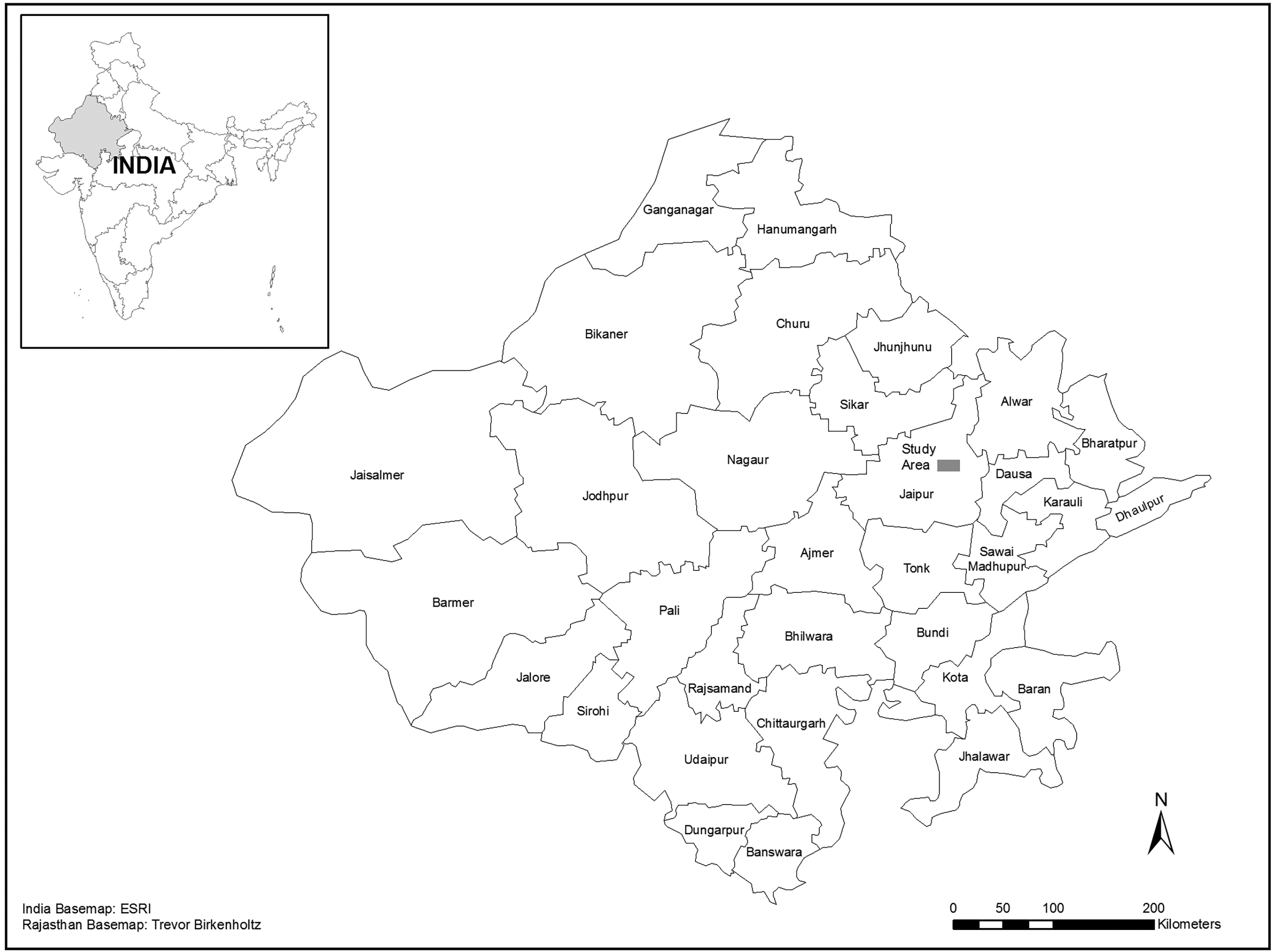
Map of Rajasthan, India with study area shaded.
Infrastructuring drip irrigation: Assembly, efficiency and gendered labor
Drip irrigation technology, efficiency and water conservation
There is growing attention focused on understanding the relationship between the deployment of water conserving technologies in irrigation (e.g. drip irrigation) and their impact on water-use efficiency, overall water use, and agricultural productivity (Lankford, 2006, 2012; Molle and Tanouti, 2017; Venot et al., 2017). Research in this vein has identified two main foci from proponents of drip irrigation with respect to efficiency: “technical irrigation efficiency” and “economic water allocation efficiency” (Boelens and Vos, 2012). The goal of the first is to enhance “beneficial use” of water by increasing the ratio of water consumed by plants to the amount of water applied, which minimizes water losses. This should also lead to increases in “productive efficiency” (i.e. intensification) as any given unit of water (e.g. m3) leads to more crop productivity. The focus of the second is to allocate water through market-based pricing mechanisms towards uses that lead to higher marginal economic returns per unit of water consumed.
Many have pointed to the flaws of this narrow understanding of efficiency. Boelens and Vos (2012) highlight three: (1) water-use efficiency discourses could dispossess farmers of water by transferring water to uses that produce higher economic returns; (2) water policies and development projects focused on these two forms of efficiency could undermine local water governance institutions; and (3) drip irrigation users may be rendered under-achievers by setting unachievable efficiency standards. Building on this critique, others (Birkenholtz, 2017) have argued that the dominant focus on these two forms of efficiency renders water-use in irrigation a technical problem, subject to technical solutions (See also Li, 2007). This focus also obfuscates the political economic conditions under which farmers make technology adoption decisions. For instance, farmers may adopt drip irrigation to expand production and increase profits, rather than to reduce water consumption (Birkenholtz, 2017; Misquitta and Birkenholtz, 2021). It also obscures the way that the adoption of the technology is both dependent upon and transforms gendered labor burdens. Yet the idea that drip irrigation will lead to water savings remains a powerful notion.
Venot et al. (2014) took up this issue by arguing that drip irrigation is brought into being by its ability to take on specific attributes (e.g. efficiency) through its associations with state institutions, development donor agencies and thinktanks. Drip irrigation's success depends on its ability to become enrolled in promotional discourses, which articulate “desirable futures” of water use and agrarian change (ibid). The power of these discursive constructions renders the success and continued promotion of drip irrigation immune from its actual outcomes. I advance this previous work by exploring the significance of plot-level, gendered labor practices in the realization of productive efficiency.
Feminizing drip irrigation through feminist political ecology
Research from agronomic engineering has shown reductions in male farmers’ labor inputs when switching from conventional (flood) to drip irrigation (Kumar and Palanisami, 2010, 2011; Woltering et al., 2011). Drip irrigation is often assumed to be a labor-saving technology for two reasons. First, in flood irrigation, sub-plots must be partitioned with small bunds for consistent irrigation over space. Once one of these sub-plots is flooded with irrigation water, the bunds must be rebuilt, and another bund must be breached to allow the water to flow to that sub-plot. It is very labor intensive and requires the (nearly always) male farmer to be present in the field during irrigation, which can last for hours.
Second, once drip lines are placed in a field (see Figure 2) tractors and other mechanized equipment cannot be driven in the area because of damage to the lines. This also reduces the demand for time spent on irrigation, which is traditionally coded as male. With drip irrigation, a farmer can simply switch on their borewell and let the technology do its work with very little human intervention. This research leaves a gap in which to consider the gendered character of the transformation of agricultural labor with the shift to drip irrigation.
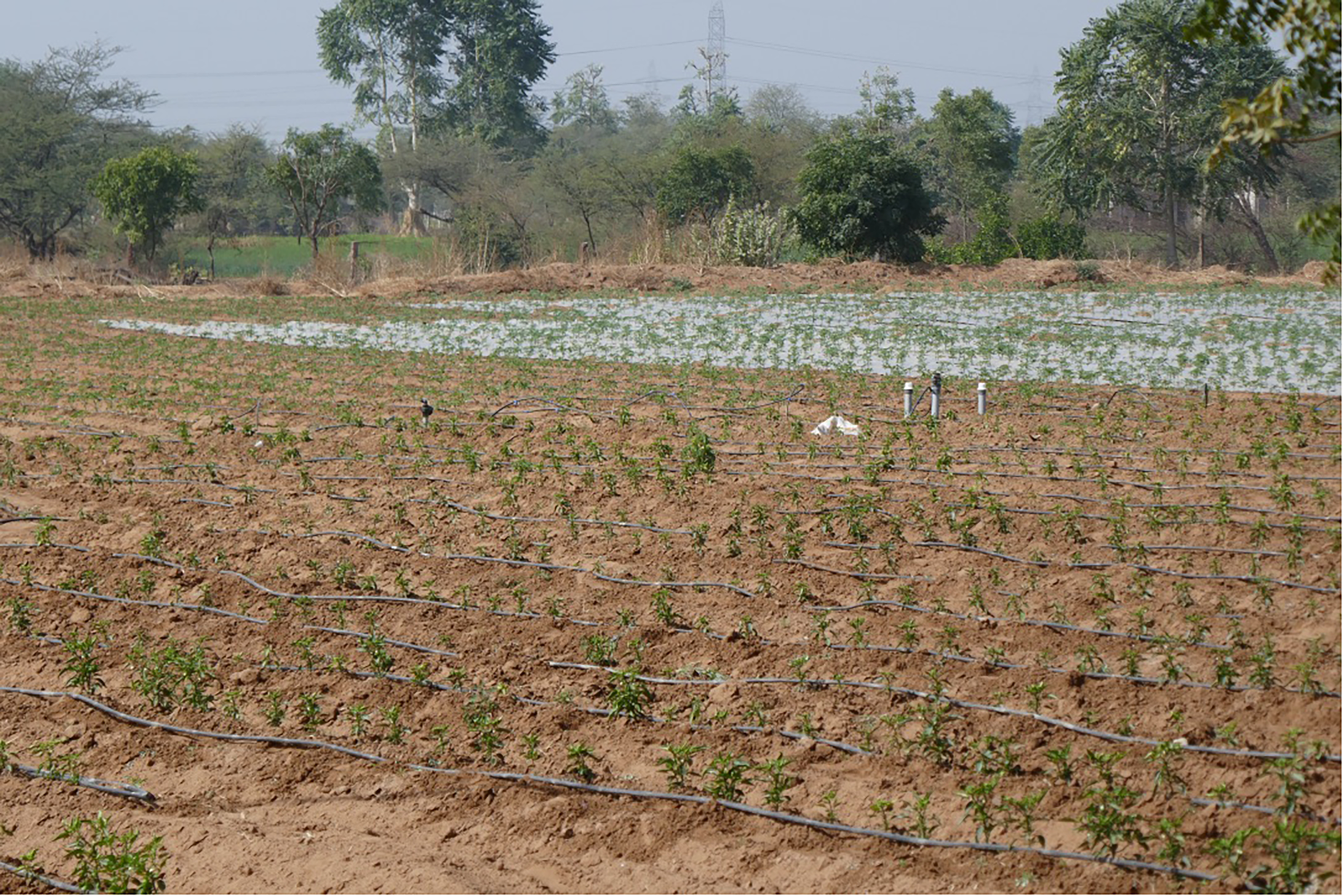
Agricultural field with drip irrigation lines.
Studies from feminist political ecology since the green revolution have shown increasing women's labor and responsibilities in agriculture with technological innovation (Rocheleau et al., 2013). Carney (1988, 1993) demonstrated how the introduction of green revolution technologies (i.e. high-yielding seed varieties, chemical fertilizers and pesticides) led to a more commercial orientation in agriculture. This shift in production for the market relied on a growth in labor contracting. The contracting landowners preferred hiring married men because they were more reliable than unmarried men but also because the landowner would also get the women and children's labor for free (see also Carney and Watts, 1991; Schroeder, 1993). Similarly, Beneria and Sen (1981) found that the introduction of green revolution agriculture resulted in new forms of male migration. This reworked the gender division of labor and exacerbated women's labor burdens as they became responsible for both production and household reproduction as their husbands migrated seasonally to work in contract farming.
Recent work has given renewed focus to the changing dynamics of women's labor as a feminization of agrarian labor, where the amount or proportion of farm-related work undertaken by women is increasing (Lyon et al., 2017; Pattnaik et al., 2018). In India, this is reflected in the latest Indian Census where female cultivators (the census category for landowners) declined by 14 percent (5.9 million women) between 2001 and 2011, while female agricultural laborers increased by 24 percent (12.1 million women) (Lahariya and Sethi, 2015). In parallel with these changes, Ramamurthy (2010), in a case from Maharashtra, India, demonstrated that there are more women wage earners in agriculture; there are more de-facto female headed farm households (even as women landownership is officially declining) as men engage in circular migration; and there is more underpaid female labor in increasingly commercialized agriculture.
This work on feminization is joined by a tradition of research on women's labor as it intersects with water provision in agrarian contexts. Here scholars have documented changing forms of subjectivity around access to water (Sultana, 2009), coerced participation in water and sanitation development schemes (O’Reilly, 2006, 2010), and uneven access to drinking-water across multiple axes of difference (Birkenholtz, 2013; Harris et al., 2017). The way that the introduction of new irrigation policies and technologies rework gendered social power relations in irrigation has received particular attention (Harris, 2006, 2008; Van Koppen and Hussain, 2007; Zwarteveen, 2008).
In early work from feminist agrarian studies, research demonstrated that new irrigation policies did not recognize women's involvement in irrigation, which led to policy interventions with perverse outcomes, including exacerbating gendered social power relations (Bastidas, 1999; Zwarteveen, 1995). Zwarteveen (1998), for instance, demonstrated how new policies that sought to decentralize irrigation water management based on projected efficiency gains did not take into account women's unpaid labor contributions to irrigation, which were shown to enhance irrigation performance. In a similar vein, irrigation projects that purported to involve women as governance participants, were shown to instead marginalize and disempower them (Groverman and van Walsum, 1994; Lynch, 1991; Meinzen-Dick and Zwarteveen, 1998; Van Koppen, 1998). Though when irrigation development programs included women as managers, women's economic prospects and irrigation productivity were shown to benefit (Van Koppen and Mahmud, 1995).
Most recently, the role of new small-scale irrigation technologies in the feminization of agricultural labor is receiving scrutiny. In a recent comparative study between Ethiopia, Ghana and Tanzania, Theis et al. (2018) demonstrated the introduction and subsidization of new plot-scale irrigation technologies (e.g. photovoltaic solar pumps and drip irrigation) exacerbated gendered asymmetries and undermined women's incomes. Similarly, Bossenbroek et al. (2017) demonstrated how the introduction of drip irrigation in Morocco benefitted absentee investors and exacerbated already gendered labor burdens.
This critical work on the gendered dynamics of agrarian technological change show how new irrigation technologies exacerbate already asymmetric gendered relations. Of particular concern in the present paper is how drip irrigation programs and the technology itself does not only exacerbate female labor burdens, but is dependent upon female laborers, whose importance has not been fully examined. The role of female laborers comes into focus when examining drip irrigation as a process of infrastructuring.
Infrastructuring drip irrigation: Assembly and gender
The critical scholarship on drip irrigation detailed above has mostly examined it as a technology or as part of a system (Kumar and Palanisami, 2010), which is connected to a variety of actors (e.g. development donor agencies) (Venot et al., 2014, 2017). Water infrastructure, on the other hand, is often conceived as an institutional and material assemblage of actors that facilitates the flow of water, ideas and social power, while reworking existing relationships between nature, society and technology in “an ongoing process of relationship building” (Carse, 2014: 4).
I advocate for conceptualizing the diffusion of drip irrigation as an active process of infrastructuring. Drip irrigation infrastructuring directs attention to the differential capacities of humans and technologies to effect change in the ongoing assembly of drip irrigation infrastructure. Infrastructuring becomes an active driver of transformation, which helps illuminate the range of actors with which drip irrigation is assembled and its material properties realized (e.g. productive efficiency). The concept of infrastructuring denotes the temporal and spatial processes through which the state, farmers, female laborers, and drip irrigation technology are assembled, which render visible the specific relationships between these actors and drip irrigation infrastructure's efficiencies.
I propose three conceptual advantages to understanding drip irrigation as an infrastructure, which come into being through a process of infrastructuring. These enable me to advance key debates on water infrastructure and drip irrigation. First, the bulk of research on water infrastructure has focused on large scale, centralized water projects such as dams and surface water diversions (Crow-Miller et al., 2017a, 2017b) or urban networked water supplies (Anand, 2017; Colven, 2017; McFarlane et al., 2017; Meehan, 2014). Drip irrigation infrastructure is noteworthy in that it covers millions of hectares globally. But rather than this diffusion taking on the spectacle-like character of “big” water infrastructure from centralized state coordinated action (Crow-Miller et al., 2017b), the scope of drip irrigation infrastructure is the result of state support but also the aggregation of decentralized individual farmer decision-making and adoption decisions. As Carse (2014) and others (Lawhon et al., 2018; Venot et al., 2014) remind us, these actors (e.g. state incentive programs, drip irrigation firms, groundwater, farmers, agricultural labor and commodity markets) are embedded within, but also reconfigure, existing socio-technical material relationships (see also Kroepsch, 2018).
Second, drip irrigation infrastructure's decentralized form enables an analysis of the iterative character of the labor practices of assembling and maintaining water infrastructure, which has not been taken up by previous studies of infrastructure (Yet see Stock, 2021). For instance, while recent research has demonstrated the centrality of government engineers in making water flow to particular neighborhoods in Mumbai (Anand, 2017) or the way that urban water infrastructure is contested by the everyday practices of water users (Björkman, 2015; Ranganathan, 2014; Truelove, 2019a, 2019b), it has not focused on the gendered labor practices of agricultural producers (i.e. farmers and female laborers). The agrarian context of drip irrigation directs scrutiny to drip irrigation infrastructure's labor dynamics and to the actual practices of non-experts that enable drip irrigation's ongoing infrastructuring. The creation and enactment of infrastructure is a process that is embedded within gendered social relations while also reproducing them.
Third, state-support policies and gendered labor practices are central to understanding drip irrigation's infrastructuring. Following Siemiatycki et al. (2020), infrastructural interventions are often driven by masculinist visions and are overwhelmingly inhabited by men (See also Wilson, 2016). This produces and reproduces gendered forms of social difference: “infrastructure creates smooth flows and connectivity for some, while producing barriers and exclusion for others” (p. 3). Water infrastructure is coproduced in “gray zones” through the practices of users that intersect gender, class, caste, and ethnoreligious difference to create uneven benefits and render infrastructure durable. As Larkin (2013) reminds us, infrastructure is successful when it delivers its intended object. In the present case, to understand the success of drip irrigation's infrastructuring in delivering water to crops and achieving productive efficiency is to crack open the intersectional gendered labor practices upon which these processes rely.
Methods and motivation for study
This paper relies on a qualitative methodological approach including analyses of government drip irrigation-related policies and ethnographic fieldwork. First, I examined discourses emerging from these policies to understand motivations and methods by the state to encourage drip irrigation, paying particular attention to the silences (e.g. discussions of farm-scale gendered labor dynamics). Second, I undertook ethnographic research to elicit opinions, viewpoints, motives and beliefs on drip irrigation from differently situated people. The epistemological goal of this research, therefore, is not with producing a large statistically representative sample but in being able to understand respondents’ experiences and subjective views through prolonged and in-depth engagement (Silverman, 2015).
In support of this goal, fieldwork for this paper was carried out through several months of field research conducted between 2015 to 2020 in Bassi Tehsil, Rajasthan India. Bassi is the center of drip irrigation expansion in Rajasthan due to its proximity to the capital city of Jaipur, and because it is well served with electricity and has adequate groundwater. The area has two cropping seasons, a summer (kharif) crop, which is rainfed, and a winter (rabi) crop that is irrigated. Winter, irrigated crops include market varieties of tomatoes and green chilies.
In-depth and repeated semi-structured interviews were conducted with 26 drip-irrigating farmers, 14 female day laborers, and multiple drip irrigation dealers and local government officials over the six-year period. The farmers were composed mostly of dominant caste groups (e.g. Jat, Rajput and Brahmin), while all women day laborers were from low caste, Meena, Meghwal or Mali, communities. Many were young mothers, and all were either illiterate or had low levels of literacy. Following Jeffrey, caste endures as an important social structure that continues to influence the flow of resources, status and social power (Jeffrey, 2001, 2010). Farmers, irrigation dealers and government officials were chosen for their involvement in drip irrigation. Female laborers were recruited through convenience and snowball, purposive sampling techniques. Interviews were conducted in Hindi language with the aid of a field assistant. Participant observation was also conducted with a sub-set of both the farmers and laborers to triangulate their professed practices with their actual practices, and to also elicit a thicker description of their rationale for actions and behaviors that enabled me to understand the processes of infrastructuring drip irrigation.
The motivations for this study were: a scholarly absence on the role of women and gender in irrigation in Rajasthan; a recognition in my own observations of the growing presence of women as farm laborers; and to critically examine the successful diffusion of drip irrigation as a process of infrastructuring. While conducting fieldwork in Rajasthan over the multi-year period, I was critically aware of my vastly different positionality as a white male from the United States. This, along with my previous fieldwork experiences in the area dating back to 2001, enabled me to access not only government offices, but the fields of farmers and courtyards of female laborers from marginalized caste communities. In previous research, I have had many conversations with women from these groups who are generally more visible in public spaces and outspoken than women from upper caste backgrounds in Rajasthan's agrarian contexts (Chhibber, 2002). I drew on these previous experiences and language proficiency, as well as critical reflexivity techniques, to refine my research questions and approach over the period, which reflect the evolving struggles facing the research participants and their positionality. My privileged position was never clearer, when fieldwork was cut prematurely short by the onset of the COVID-19 pandemic in India in March 2020. While this scuttled my in-progress efforts to enumerate the precise number of hours differently situated women were spending on production and household reproduction activities, I was able to avoid the extreme difficulties that many were about to face.
Findings: Drip irrigation's infrastructuring of India
Government and development donor agency support for drip irrigation
The Indian Central Government began promoting drip irrigation in the 1980s as a means to enhance productive efficiency in groundwater-based irrigation and to reduce agricultural demand for groundwater (Narayanamoorthy, 2010). In 2006, the central government created the Centrally Sponsored Scheme on Micro Irrigation (CSS) to support the diffusion of drip irrigation. But it was the 2010 National Mission for Sustainable Agriculture (NMMSA) that really gave drip irrigation a boost. The NMMSA discursively constructed Indian agriculture as threatened by climate change and inefficient water-use irrigation practices. Specifically, it framed “risks to [the] Indian agriculture sector due to climatic variabilities and extreme events” and set out a plan to “encourage adoption of technologies for enhancing water use efficiency” (GOI, 2010: 23). In 2014–15, US$ 235 million (US$ 124 million in 2013–2014) was allocated for irrigation subsidies under the NMMSA. Unlike similar central government programs that subsidize solar energy, which must be “gender positive” in their design (Stock and Birkenholtz, 2020), gender concerns were not addressed in the NMMSA.
As a sign of growing importance, the central government subsequently launched the National Mission on Micro Irrigation (NMMI), 2010–2015, with the goal to achieve India's full micro (drip) irrigation potential, which was estimated at 69 million ha. The NMMI promoted the diffusion of drip irrigation nation-wide on a “50:40:10” funding model. The central government paid 50 percent of the farm-level adoption costs, while beneficiary farmers and individual states covered 40 and 10 percent, respectively. The subsidy programs were administered by the states through a hierarchical administrative process. In most states, including Rajasthan, state-level Directorates of Horticulture oversaw the implementation of the subsidies through a dizzying array of public and private entities that began with the State Level Micro Irrigation Committee and ended five layers down with the village-level Panchayati Raj elected government institutions and local private irrigation dealers (Birkenholtz, 2017). To streamline implementation, the program continued to evolve seasonally over this period. For instance, by the year 2015 many states were requiring only 10 percent of the cost to be paid by farmers.
Today the NMMI has been subsumed back under the NMMSA and has been rebranded the “Pradhan Mantri Krishi Sinchayee Yojana-Per Drop More Crop” (Prime Minister's Agricultural Irrigation Scheme-Per Drop More Crop)—PMKSY-PDMC—with the slogan “Har Khet Ko Paani” (Water to Every Field). The focus of the PMKSY-PDMC is broader than the NMMI in that it reflects the central government's desire to not only foster drip irrigation but to expand irrigation, generally. The “Per Drop More Crop” sub-program focuses exclusively on the promotion of drip irrigation. This can be thought of as part of the institutional infrastructure (Meehan, 2014), which enables the infrastructuring of drip irrigation.
The PMKSY-PDMC has two main innovations over previous programs. First, it boosts funding significantly to increase the pace and scope of diffusion. For instance, in 2019–2020 there was a total outlay by the central government for drip irrigation of $399 million US (INR 3026.65 crore) and $16.46 US million (INR 125 crore) for Rajasthan alone. In many states, including Rajasthan, drip irrigation packages are subsidized at a funding rate of 90 percent, requiring only 10 percent from farmers. This has enabled smaller farmers to adopt drip irrigation, as evidenced in the results of my fieldwork.
Second, to speed the rate of adoption, it streamlines the application process by reducing the number of steps (Personal Communication with Drip Irrigation Dealer, February 2020). The process today proceeds as follows. The program allocates the funding to state governments, which charge state-level Directorates of Horticulture to implement the program. The Directorates work directly with pre-authorized local irrigation dealerships, which work with the farmers. The irrigation dealers either contact or are contacted by farmers. The dealer then performs a field-level assessment of drip irrigation needs and then applies to the Directorate of Horticulture for the subsidy. They act as an agent of the farmer. The farmer deposits their 10 percent contribution into a bank account that is also accessible by the irrigation dealer and the Directorate of Horticulture. The dealer fronts the remainder of the investment and then is reimbursed by the state. This process enables a quicker uptake of drip irrigation by farmers but is also fraught with power dynamics. For example, farmers must first provide proof of identity with a government issued Aadhaar card. Then they must provide certification of land title and an electricity bill to prove that they have a tubewell to power the drip irrigation system. This is often facilitated by the drip irrigation dealer: “we must gather these documents from the farmers and have them certified by the patwari [panchayat head] or tehsildar [tax collector] before we can get pre-sanction number for the subsidy. Getting the documents is difficult because the farmers do not always have them and it can be a problem” (Personal Communication with drip irrigation dealer, February 2020).
Female farmers, whether formal landowners or not, often lack these documents. Again, according to one drip irrigation dealer “I do not think women [farmers] will go in for the drip schemes because they do not do irrigation much … also they do not have the proper documentation” (February 2020). According to the three drip irrigation dealers interviewed and through farmer interviews, there were no female landowner adopters of drip irrigation in the area. While the policy processes described here enable the infrastructuring of drip irrigation, accessing the drip irrigation subsidy program is biased against women both in terms of the policy requirements for documentation of land title but also by the drip irrigation dealers who assume that landowners and adopters will be men. While this process acts to reinscribe asymmetries in gendered agricultural relations, drip irrigation is expanding rapidly.
Rajasthan is aggressively pursuing the expansion of drip irrigation with 146,000 hectares in 2016 and a goal of increasing this by 50,260 hectares by 2018 (PMKSY, 2017). The state has also signaled its support for drip irrigation in formal policy. While it has no formal groundwater regulations that limits groundwater extraction, the 2010 Rajasthan State Water Policy sets out a series of water reform objectives for the state. First, the State Water Policy calls for a reduction in irrigation water usage from 83 percent to 70 percent (GOR, 2010). Second, the policy promotes new water-conservation technologies to “optimize water” usage, stating “groundwater will be better utilized … by facilitating drip irrigation techniques’ (GOR, 2010).
Finally, it promotes private-sector participation to facilitate increases in productive and economic efficiency in irrigation. A recent report by the World Bank Group's International Finance Corporation reinforces these goals. In the report, Rajasthan's groundwater decline and irrigation inefficiencies are framed as a technical problem that brings opportunities: “Agriculture, which consumes 83 percent of the state's water resources, presents the single biggest opportunity for water reform [including] a range of water savings interventions by the private sector” (Hooda, 2014: 10). This is supported by a subsequent World Bank study that argues for the implementation of water-conserving technologies in agriculture to enable the re-allocation of “saved” water to more economically efficient uses (e.g. the service sector), which would have a larger impact on Gross State Domestic Product (GSDP) (Misra, 2017).
The central and state governments, as well as the World Bank, focus on the conditions necessary to enhance the diffusion of drip irrigation to achieve the twin goals of enhancing productive and economic efficiency in water consumption and allocation. Yet the policies, as well as the influential World Bank report, are silent on the gendered labor dynamics of agrarian technological change. They tacitly assume that farmer beneficiaries will be male, as evidenced by the perspective of drip irrigation dealers. As supported by the state and World Bank, infrastructuring drip irrigation is a gendered process that reinscribes existing social difference.
Farmer motivations for adopting drip irrigation
Farmers’ motivations for adopting drip irrigation are important to consider for understanding the gendered process of infrastructuring drip irrigation. Contrary to state goals of reducing demand for groundwater in agriculture, farmers invest in drip irrigation to raise productivity by expanding and intensifying production, rather than to conserve water (Birkenholtz, 2017; Veldwisch et al., 2017). Landholdings of 12 drip-irrigating farmers interviewed in 2015 and 2016, ranged from 1.38 to 6.33 ha, with an average of 3.7 ha. These farmers expanded irrigated area from 40 percent to 67 percent on average of their total cultivatable area. Landholdings of 14 additional drip-irrigating farmers interviewed between 2018 and 2020, ranged from 1.11 ha to 4.0 ha, with an average of 2.2 ha. These farmers expanded irrigated area from 36 percent to 83 percent on average of total cultivatable area. Following one farmer: “I got the drip this year with the government subsidy …. I plan to expand next year … with more drip … I hope to increase area under irrigation” (farmer interview, January 31, 2018). Farmers are allocating the “saved” water to expand production via increasing irrigated area. This is contrary to the goals of the World Bank and government subsidy programs that assumed water savings from drip irrigation would go to another economic sector. While the government has not released reliable data on changes in drip-irrigated area over the period, the findings presented here suggest that as drip irrigation infrastructure expands, overall irrigated area will increase too.
Drip irrigation also enables the intensification of production (i.e. productive efficiency) over space and time. With drip irrigation, the spacing between rows is decreased to 1 meter. This allows for increases in productivity per unit area under cultivation. Following one farmer, whose sentiment reflects the attitudes of those interviewed: “We went in for the drip to raise productivity. On average, we are getting double the production from previous [flood irrigation methods] … our labor needs have increased” (personal interview with landowner, February 2015). As this quote indicates, the adoption of drip irrigation and associated expanded production is leading to an increase in the demand for agricultural labor.
Drip irrigation permits the intensification of agriculture over time through enabling a reduction in fallow periods (a decrease in the amount of time between cropping seasons). Drip-irrigating farmers are now cultivating a third crop (between the summer and winter season) with the water savings from drip irrigation and via the adoption of greenhouses. 12 of 26 farmers interviewed had constructed greenhouses, which they utilize in the winter to grow off-season crops (e.g. okra). The greenhouses prevent frost exposure and allow farmers more control over their environment for pests. In the future, greenhouses will be an increasingly important actor in the infrastructuring of drip irrigation as government programs are likely to subsidize them too.
In all, farmers are incentivized by the political economy of agriculture to adopt drip irrigation to intensify and expand production. These aspects taken together—more land under irrigation, higher density of crops and reduction in fallow periods—are leading to increases in labor requirements. The availability of on-demand labor is central to realizing gains in productive and economic efficiency, as well as the stability of drip irrigation infrastructure.
Recruiting and enrolling female laborers
The infrastructuring of drip irrigation is dependent upon the recruitment and enrollment of female laborers. Female laborers are hired for weeding, clearing drip irrigation water lines of built-up debris and calcification, and harvesting. In 2015, the average daily wage rate in the study area for a 7–8-h workday for a female laborer was 80 Indian Rupees (INR) ($1.05 US). In 2020, this had increased to 200 INR ($2.63 US). All 14 female day laborers recruited in this study belonged to Meena, Meghwal and Mali low caste communities. In rural Rajasthan, as in much of northern India, women from marginalized caste communities, Scheduled Castes (SC) and Scheduled Tribes (ST) according to the Indian Census, are freer to mobilize in village public spaces without being accompanied by a male relative according to cultural norms (Chhibber, 2002). Their low-caste status and convention of working outside the home (compared to upper caste households in villages where women typically do not work outside the home), enables them to be recruited and hired by farmers. Of the 14 women interviewed, none owned land as official title holders, but 12 lived on family-owned land and 2 were tenant farmers. None had adopted drip irrigation on their own fields.
The processes through which farmers recruit labor is indicative of the precarity facing low-caste women and the way that drip irrigation infrastructure's assembly is dependent upon enrolling female labor. Farmers hire female laborers in three ways. Though all three ways were still common in 2020, the evolving character of these reflects the dynamic process of infrastructuring drip irrigation.
First, female day laborers meet at village public spaces (parks, town squares, water towers) that act as collection points. From 2015 to 2018, this was the most common way that day laborers connected with farmers. This was particularly true for women living in the village of Bassi, which in 2001 had a population of close to 12,000 residents (Indian Census). According to one female day laborer, “… We meet at the water tower. The large farmers have a tractor and trolley, and they collect us” (Female Laborer, 1/2018). This seems simple enough—women meet at collection points and are hired as day laborers. But it belies the complex relations through which low caste women come to be able to meet at these public spaces. Drip irrigation infrastructure, therefore, disproportionately depends on female laborers from marginalized caste communities.
Second, female day laborers walk to farmers’ fields in search of work. This is common for women living in the smaller villages or on small landholdings (less than 0.5 ha) in the study area. According to one laborer, “after our morning chores, we meet and begin walking to some farms for weeding work” (Female laborer, July 2016). A typical day for smallholder women farmers begins at sunrise with household and agricultural chores. These chores include things like feeding and milking the cows and goats, watering and weeding the garden, collecting fuelwood, preparing breakfast, washing clothes, cleaning the house and readying the children for school. This is particularly true for those whose husbands have migrated to one of the nearby cities for construction jobs. Once these activities are complete, children of school age walk or are picked up by autorickshaws employed by the school and taken to school, which begins at 10 am. At this point women begin to walk to farmers’ fields in search of work. They gather other women, some of whom are relatives, along the way. This is also a tenuous practice. Following one woman: “we bang on the gate and the farmer either hires us or waves us to go away” (Female laborer, February 2020). Women walk from field to field in search of work. If there is no work for them on a particular farm and day, they then walk to the next farm, sometimes walking for upwards of 2 h before they find day labor. This reduces their wages for the day via time spent looking for an opportunity. In this category, it is also common for women to bring their children with them. “We bring the children [not yet of school age] because who will watch them? They do the work also” (Female laborer, July 2016). Children's labor (weeding and clearing drip irrigation lines of mineral accumulation) goes unpaid and is another form of subsidy to drip irrigation infrastructure, enhancing economic and productive efficiency, while enabling infrastructuring.
Women's labor burdens are being exacerbated as their time is circumscribed between household reproduction tasks and their work as laborers for other farmers. According to one woman who was speaking for a group of laborers: “once we complete all the chores and ready the children for school, we go directly to the fields. We return late and then have our chores again. There is no time for anything, and [our] energy is completely gone too” (Female laborer, February 2020). Women laborers are squeezed between the need to provide for their families and the lack of childcare and better opportunities for income generation.
Finally, the last form of assembling female labor in drip irrigation's infrastructuring is through direct farmer to laborer solicitation via mobile phone. By 2020 this had become the most common form of connection. Both farmers and laborers prefer this method as it reduces contracting times and gives laborers some options. One farmer gave an overview of the process: I call them by mobile [phone] and they come. I have a few numbers [for women] and I call one or two. They gather others. I collect them [by tractor and trolley] or sometimes they come on their own. We decide the rate before, usually 200 [per day]. If I hire for multiple days, I pay when the work is complete. Otherwise, they take payment at the end of the day. They work from about 10 to 5 with a break for lunch … I hire the same from year to year” (Farmer Interview, February 2020).
From the laborers’ perspective, “Some farmers are good and some are irritable. They are not all the same. With the mobile, we can take a pass [on the work if we don't care for that farmer]” (Female laborer, February 2020). Enabled by mobile phones, female laborers experience more choice, but as the next section demonstrates this is not translating into better negotiating positions for wages. While the now common use of mobile phones enables the more effectual enrolling of labor into drip irrigation infrastructure, productive and economic efficiency are further generated on the field itself.
Female labor: Putting the efficiency in drip irrigation infrastructure
Drip irrigation infrastructuring, which produces an intensification of agriculture and expansion in irrigated area, is dependent upon the enrollment of female labor. Yet it is not only the enrollment of laborers but the particular character of the association of labor to the infrastructural assemblage that is important. This is expressed through the on-demand character of the labor, the inability of women to negotiate for higher wages, and the associated under and unpaid aspects of the labor relationship within drip irrigation infrastructure. These factors not only provide for productive and economic efficiency; they are central to the stability of the particular drip irrigation infrastructural configuration and the ongoing process of infrastructuring.
There is a temporality to drip irrigation's demand for labor. The preparation of the fields, the laying of the drip lines and the sewing of seeds is performed by the male landowner. Female laborers are then hired sporadically throughout the season for weeding and clearing the drip irrigation lines, and then intensively during harvest season (See Figure 3). According to one, “we work when needed for clearing the holes [in the drip lines] and weeding” (Mali female laborer, December 2015). This sentiment is echoed by another, “we work if needed …. The [drip] irrigation is giving us some work, but it's hard work” (Female laborer, January 2018). Women absorb precarity by being “on demand”, as well as the difficult nature of the work, which places them in full sun under hot, back-breaking conditions. On demand female labor allows drip irrigation infrastructure to remain durable over time by displacing infrastructural instability onto women. Farmers recognize this: “They [laborer women] come around and we hire them if we have work, usually on daily rate. It would be difficult to manage without the laborers” (Landowner interview, December 2015).
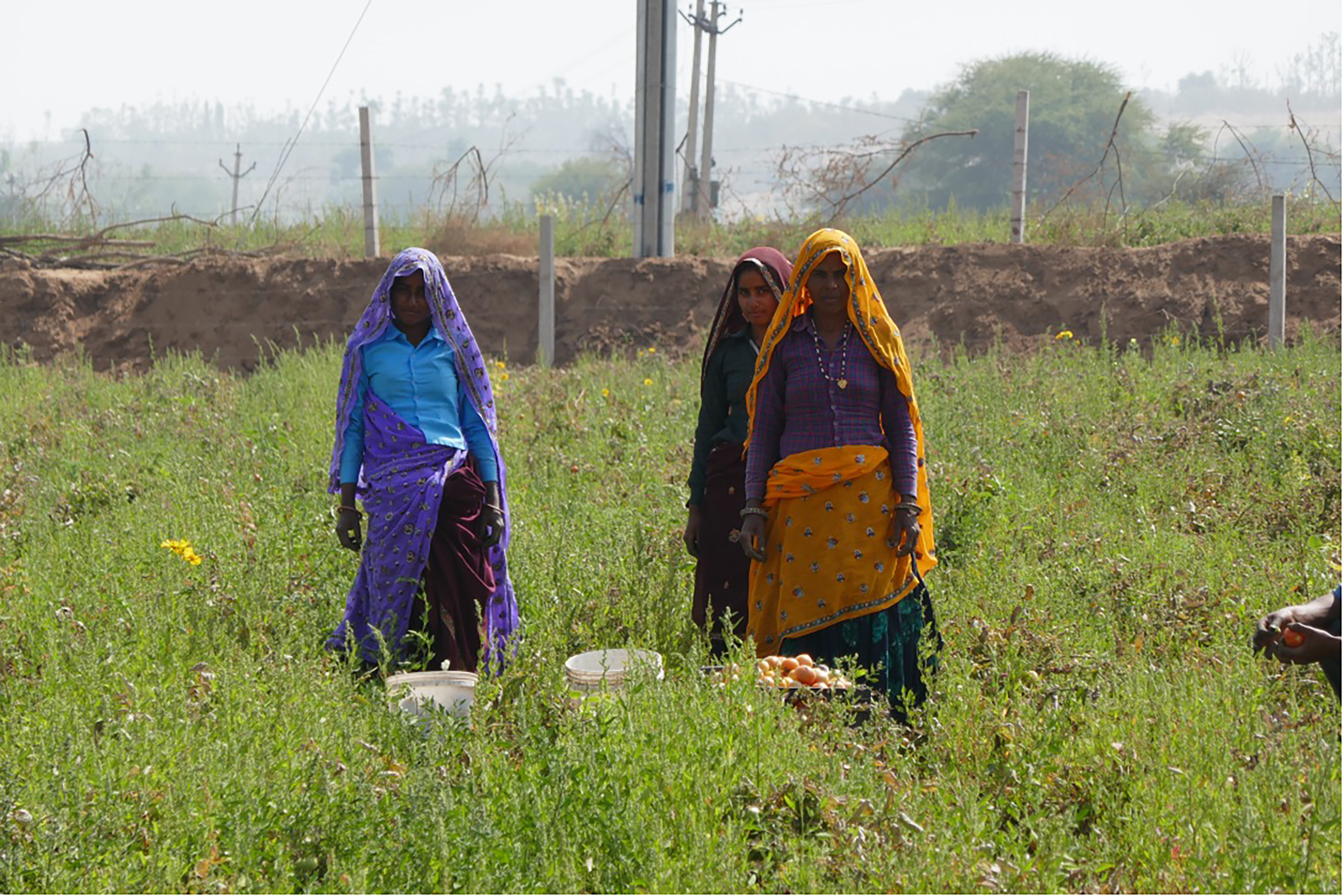
Female laborers working in drip-irrigated fields.
The uneven temporal character of labor demand is part and parcel of drip irrigation's infrastructuring. In addition to the sporadic demand for labor throughout the season, the end of the season harvest leads to an escalation in the need for labor. The increasing prevalence of the cultivation of tomatoes and chilis for commodity markets is a case in point. Following one farmer, “If we rotate every other year, then we can grow tomatoes every other year, alternating with chili. But chili is expensive to grow because you must harvest chilies six different times because they mature at different rates even on the same plant. … They require a lot of chemical and labor inputs” (Farmer interview, January 2018). Farmers prefer to grow chilis because they are profitable, but maturity rates vary between and on plants. This prolongs the harvest season and extends the demand for labor. Taken together, this makes chili producers vulnerable to fluctuations in the availability of labor, which makes the success of the infrastructure also vulnerable at this point. Yet despite the centrality of labor to the infrastructure, women have thus far been unable to negotiate for higher wages.
Rajasthan, like the much of northern India, has seen an increase in the number of available female laborers. Following one farmer, “[Finding] local male labor [to hire] is a problem but women are there [to hire]” (Farmer interview, February 2020). In general, this has weakened women's bargaining position: “so far, we have not been able to negotiate for higher wages.” (Female laborer, July 2016). This results in disempowerment, where women are underpaid and unable to negotiate a premium wage during harvest, for example. When asked about negotiating for higher wages, one female laborer expressed a general sentiment “we cannot bargain because the others might work at a lower rate” (Female laborer, February 2020). The temporalities and precariousness of agriculture within drip irrigation infrastructure are absorbed by women. Efficiency emerges from a feminine labor subsidy rather than from the technology itself as presented in state and development donor discourses. These dynamics interact to inform the material politics of drip irrigation infrastructure.
Discussion: Thinking through gender and infrastructuring drip irrigation
Drip irrigation's infrastructuring involves the assembly of state support programs, drip irrigation dealers, farmers, and female laborers in a spatial-temporal process that is transforming agrarian life and agriculture. But humans and technologies are assembled and re-assembled in specific ways. Of particular importance are the ways that infrastructuring (1) enrolls both farmers and female labor, (2) embeds notions of efficiency, and (3) circulates across the landscape.
Farmers are enrolled into the process of infrastructuring drip irrigation by their desire to increase productivity and offset declining agrarian incomes (Lerche, 2014). In so doing, farmers are creative in innovating methods to enable the labor recruitment component of the infrastructuring process to provide the much-needed labor to both intensify and expand irrigated area. The recruitment of female labor and their labor inputs enables reduced spacing between rows, the cultivation of green chilies that necessitate a long and repeated harvest season, the reduction in fallow periods, the addition of a third crop and the expansion of irrigated area. These are all components that illustrate enhancements to productive efficiency.
Infrastructuring is both dependent upon subsuming (low caste) female labor, while also transforming the livelihoods of female laborers. In accord with previous studies, this paper demonstrates that agrarian technological innovation is exacerbating women's labor burdens (Chant, 2008; Pattnaik et al., 2018; Ramamurthy, 2010). However, findings also show how the diffusion of drip irrigation as a process of infrastructuring is dependent upon the feminization of agrarian labor, while also deepening it, particularly for low caste women. In addition to increasing women's labor burdens in agriculture, scholarship from feminist political ecology notes a second form of the feminization of agrarian labor: the degree to which changing agrarian dynamics affect the “extent to which women define, control and enact the social processes of agriculture” (Pattnaik et al., 2018). As women's participation in waged labor increases, the question is whether this affords them more decision-making opportunities on the farm (e.g. cropping decisions) or in the public sphere (e.g. formal politics), or leads to increases in their land ownership. With respect to these aspects, I find no evidence of increasing women's participation in the public sphere or in farm-level decision-making. Indeed, women's time has become even more circumscribed; they have even less time for activities that fall outside of household reproduction and production, and their participation in drip irrigation: “we began working in the drip fields a few years back. Our husbands are going for construction work in Jaipur. Between the cows and the children, now with this, we are left with little time … and the pay is minimal to meet [household] requirements” (Female Laborer, February 2020). Following Pattnaik et al. (2018), this situation could be described as “the feminzation of agrarian distress.” Instead of benefitting from new opportunities for income generation (e.g. empowerment), women were found to absorb precarity that is embedded in the temporally uneven demand for labor inputs throughout the growing season and the infrastructuring of drip irrigation. On-demand female labor provides a feminine labor subsidy that underwrites the productive efficiency gains of drip irrigation infrastructure, while lending stability and durability to the process of infrastructuring.
Many have argued that infrastructure is a process (Anand, 2017; Carse, 2014; Colven, 2017; Cousins, 2020; Crow-Miller et al., 2017a; Larkin, 2013) that is composed of “institutions and other technologies, ideologies, and networks of institutions, their practices and the capital they are able to mobilize” (Crow-Miller et al., 2017b: 234). While I agree with the spirit of this work, from this perspective, infrastructure tends to be rendered ultimately as an outcome rather than a driver with capacities to effect change. The infrastructuring of drip irrigation illuminates the differential capacities that the range of actors (i.e. state subsidy programs, farmers, female laborers, drip irrigation dealers, drip irrigation technology) are able to mobilize in particular moments to affect the character of drip irrigation infrastructure. Examining the process of infrastructuring, enables the development of fresh insights into the discursive and material subsumption of female labor into the drip irrigation assemblage as it spreads across the landscape and efficiencies are realized.
Lawhon et al. (2018) view infrastructure as a “configuration” resembling a “verb” to “emphasize that infrastructure is dynamic, undergoing continuous change of construction, assembling, repair and maintenance (p. 726; See also McFarlane and Silver, 2017). Drip irrigation, as an assembly of humans and technologies, infrastructures across the landscape. In so doing, it comes together as a decentralized form of water infrastructure that takes on its spatially extensive character through an emergent assembly of these actors (Crow-Miller et al., 2017a), but where the components are in constant motion. Its material politics emerge by analyzing the process of assembly both from the perspective of major actors such as the state and development donor agencies, but also from the perspectives and practices of producers and female laborers who actively make infrastructure. The infrastructuring of drip irrigation, as an ongoing process of assembly, shows the origins of efficiency gains, which are enabled and sustained by female laborers (Bossenbroek et al., 2017). The findings here, expand and deepen research that has shed light the practices of urban water engineers or consumer-citizens (Anand, 2017; Ranganathan, 2014) to further demonstrate the way that infrastructure genders and relies on historically entrenched forms of gendered social differentiation. As Siemiatycki et al. (2020) remind us, gendered differentiation is an understudied aspect of infrastructure in that “unequal gender dynamics are a key feature of the production of infrastructure” (p. 297). These findings point to the need for more research that would enumerate the changes in female labor burdens brought by agricultural innovations (Pattnaik et al., 2018) and the specific infrastructural configurations they produce.
Conclusion: Reassembling drip irrigation infrastructure
The infrastructuring of drip irrigation is a highly gendered process that relies on the exploitation of female labor, but the form of the assembly at any given moment also creates constraints and opportunities for reassembly. Following Lawhon et al. (2018), “existing infrastructure power relations shape conditions of possibility: such relations can enable or constrain new opportunities as well as provide a focal point for new social relationships” (p. 729). Water infrastructure emerges not only through the support of state and development donor agencies but is assembled through the dynamics of agrarian change, including the cultural politics of gendered labor relations, migration and the political economy of agriculture (Birkenholtz, 2017). Likewise, situating drip irrigation as a water technology into an infrastructural assemblage both highlights the field-scale production of the infrastructure while also demonstrating the broader range of actors that are responsible for drip irrigation's success. Following Harvey and Knox (2015), these associations form the material politics through which drip irrigation infrastructure is brought into being, “sustained, or undermined, and the ways in which they, in turn, are constitutive of political power”( p. 5). Future research could examine more examples of the formation of water infrastructure through the assembling of institutional and material actors, specifically labor dynamics. This would yield new insights into the making and maintenance of water infrastructures globally.
The material politics of drip irrigation infrastructure emerge from these tensions and allow us to imagine how water infrastructure could be reassembled in more materially and socially just ways. First, as others have noted, development policies focused on the dynamics of women, gender and water development often conceive of women as consumers of water, rather than as agricultural producers (i.e. people who collect water and apply it to agricultural purposes) (Barnes, 2014; Birkenholtz, 2013). Clearly, women are producers as well as consumers. Internalizing this conceptual shift, would require policy to engage with the gendered dynamics controlling access to water and technologies by reforming policies to promote technology adoption by women (see Imburgia, 2019). Second, irrigation and agricultural development programs need to incorporate changing labor dynamics as an important variable in the successful diffusion of new agricultural technologies. The current narrow focus on the technology itself as having intrinsic properties of efficiency or conservation will continue to exacerbate already unequal, asymmetric social power relations. Addressing these points together, will begin the process of reassembling drip irrigation infrastructure, and water infrastructure generally, in more socially just ways.
Highlights
Many studies of water infrastructure focus on consumers and citizens. Critical insights on water infrastructure emerge from examining farmers and laborers.
Drip irrigation is a decentralized form of water infrastructure that is promoted to enhance agricultural water-use and productive efficiency.
Drip irrigation diffuses through a gendered process of infrastructuring as an active assembly of state subsidy programs, farmers and female laborers.
Female laborers provide a feminine labor subsidy, which enhances productive efficiency and lends drip irrigation infrastructure its durability.
Water infrastructure depends upon and entrenches the feminization of agrarian labor, which is not leading to benefits for female laborers.
Footnotes
Acknowledgements
I have accrued quite a debt during the research and writing of this paper. I received financial support for fieldwork from the University of Illinois at Urbana-Champaign, Penn State and through a Fulbright-Nehru Academic and Professional Excellence Award. This paper grew out of critical feedback I received during invited presentations at the University of British Columbia, the Northeastern Nature-Society Workshop hosted by Penn State, Bath Spa University, the Robert McC Netting Plenary Lecture sponsored by the Cultural and Political Ecology Specialty Group of the American Association of Geographers, the Indian Institute of Science Education and Research in Pune, India, and the Ashoka Trust for Research in Ecology and the Environment in Bengaluru, India. I thank three anonymous reviewers for their kind and generous feedback. I am particularly grateful to Leila Harris for her support and for sharing her expertize on gendered agrarian change in irrigated landscapes. I am forever indebted to my research participants and to my research assistant Jaywant Mehta. Finally, I couldn't have researched and written this paper without the support of my partner, Jessica Vantine Birkenholtz, who both managed our household and advanced her own academic career during all my gallivanting, even as we also navigated a move from Illinois to Pennsylvania in 2019. Despite all of this support, any shortcomings with the paper rest with me.
Declaration of conflicting interests
The author declared no potential conflicts of interest with respect to the research, authorship, and/or publication of this article.
Funding
The author disclosed receipt of the following financial support for the research, authorship, and/or publication of this article: This work was supported by the Fulbright-Nehru Academic and Professional Excellence Award.
