




Abstract
Drawing on the monopoly rent concept in the Marxist tradition, this study examines recent transformations in East Asian agriculture through a case study of edamame. The analysis develops rent as an analytical framework—edamame monopoly rents—by incorporating recent literature of “technoscience rent” and “value grabbing.” Based on empirical research of edamame industries in Taiwan and China, I conclude that before edamame industries adopted the World Trade Organization legal frameworks on patenting and intellectual property rights, edamame monopoly rents acquired more characteristics of value grabbing of heterogeneous edamame nature. After the World Trade Organization patented and established legal frameworks in the edamame sector, edamame monopoly rents acquired more characteristics of technoscience rent. Overall, this study identifies value politics and edamame rent regimes through which socio-ecological-technological breakthroughs under rentier capital accumulation have been paving new ways to internalize new commons and terrains in East Asian agriculture.
Introduction
The concept of rent has been discussed in human geography and rural sociology for decades (Andreucci et al., 2017; Bridge, 2008; Harvey, 1974, 2001; Purcell et al., 2019; Sheppard and Barnes, 2015 [1990]; Slater, 2017; Smith, 1979; Swyngedouw, 2012; Walker, 1974). Recently, scholars have begun to reconsider Marxian rent as an important conceptual framework for understanding how the circulation of capital in search of rent can commodify land and natural resources (Andreucci et al., 2017; Purcell et al., 2019; Swyngedouw, 2012). David Harvey (2010), for example, recently argued that ground rent “has to be brought forward into the forefront of analysis … [to] bring together an understanding of the ongoing production of space and geography and the circulation and accumulation of capital” (183).
A burgeoning body of literature has begun to address Marxian rent through empirical studies investigating, for instance, timber-wood industries in South Africa, fishery in the Pacific Ocean, land use and cocoa production in Latin America, and water resources in the United Kingdom (Campling and Havice, 2014; Gunnoe, 2014; Ioris, 2016; Kaplinsky and Readman, 2005; Purcell et al., 2020, 2018; Vergara-Camus and Kay, 2017). However, scholars in this vein have largely overlooked the East Asian context and the usefulness of the Marxian rent concept to further understand agrarian development in the region. To address this gap, I use the case of edamame production and trade in East Asia to explore the ways in which the state–capital–science complex (Moore, 2018) has shaped the appropriation of edamame monopoly rents in the World Trade Organization (WTO) era. This paper argues that the use of technologies, state institutions (agricultural research institutes), contract farming, and neoliberal institutions (patents and WTO regulations) all contributed to edamame monopoly rents.
Edamame export to Japan (from Taiwan and China) and Japan’s edamame production.
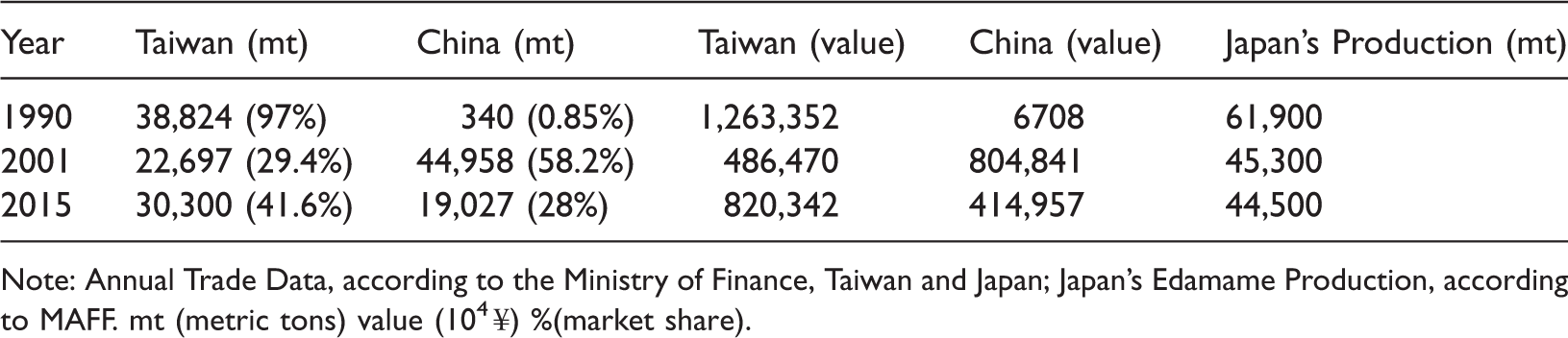
Note: Annual Trade Data, according to the Ministry of Finance, Taiwan and Japan; Japan’s Edamame Production, according to MAFF. mt (metric tons) value (104 ¥) %(market share).
In this context, Taiwan’s edamame beans have been able to command higher value than China’s, which has contributed to Taiwan’s ability to reclaim its market position. To understand the logic of the superior value of Taiwan’s edamame beans relative to China’s, micro-level and macro-level analyses of the production and reproduction of edamame are necessary. In this paper, I demonstrate how the edamame sector in Taiwan has appropriated monopoly rent through creating and producing unique hybrids of edamame varieties at specific locations. At the same time, Taiwan’s edamame sector has accumulated rentier capital by dominating patenting, contract farming, and intellectual property rights (IPRs).
The contribution of this study is to reconsider the usefulness of Marxian monopoly rent in the context of East Asian agriculture by drawing from recent literature of “value grabbing” (Andreucci et al., 2017) and “technoscience rent” (Birch, 2020). The goal of this paper is to shed light on the processes that gave rise to the extensive expansion of the capitalist frontier in which the edamame commodity circulates, and the intensive expansion into novel realms and asset classes of agriculture in East Asia. In terms of methodology, this research draws on long-term ethnographic fieldwork carried out from 2012 to 2019 at multiple sites of edamame production in Japan, Taiwan, and China. I conducted semi-structured interviews with farmers (n = 25), agronomists (n = 5), and agricultural business owners (n = 15), while relying on observations when researching farmers and agricultural producers in edamame factories.
In the following section, I first review recent discussions of rent in agrarian studies and critical human geography. I then describe how the edamame industries have been appropriated through monopoly rent. The complex rent relations shaping edamame form a web made up of agronomists, edamame producers, and traders, who interact with the specific biological nature of edamame as a plant species. The conclusion draws together my findings to highlight the politics of edamame monopoly rents in the context of edamame production and trade in East Asia.
The appropriation of monopoly rent in capitalist nature
Ground rent in the accumulation of rentier capital
Rent is typically understood as the price of non-reproducible resources, e.g. land and natural resources. That price “can be determined as a rent whose magnitude depends upon the relations of production and distribution” (Sheppard and Barnes, 2015 [1990]: 136). The appropriation of rent often involves the attempt to capture one’s share of existing wealth. Scholars have generally recognized that rent extraction is not solely an economic activity, in that, a rent regime provides legalities to private property and regulates the flow of capital across different sectors and scales (Campling and Havice, 2014; Harvey, 2006a, 2006b; Sheppard, 2016a, 2016b). In effect, legal innovations such as contracts and trade agreements have been necessary to make certain spaces and places accessible for rent capture (Haila, 2015; Sheppard, 2016a, 2016b; Watts, 1992).
In a contemporary context, a significant portion of rentier income is increasingly derived from the financialization of nature (Ouma et al., 2018), extending rent’s implications beyond land in the analysis of capitalism. In this context, scholars from political ecology and related fields, such as science and technology studies (STS), have developed new analytical frameworks for understanding Marxian rent. For example, drawing from STS, Birch (2020) highlights the notion of “technoscience rent” in which “rentiership” is grounded in the control (e.g. legal restriction) of ownership and rights to technological innovations. Patents on biotechnology, for example, enable the rentier to accumulate the value of a biotechnological asset. Influenced by Veblen, as well as by Marx, Birch (2020) treats assets as capitalized property. Accordingly, the appropriation of rent is ensured through assetization, i.e. transforming a thing into a “revenue-generating and tradable resource” (Birch, 2017: 469). Closer to the Marxist tradition, Andreucci et al. (2017) utilize the notion of “value grabbing” to address how the value of certain assets is appropriated through rent. They argue that “value grabbing—the appropriation of (surplus) value produced elsewhere through rent—rather than accumulation (the creation of value) is increasingly central to the reproduction of contemporary capitalism” (Andreucci et al., 2017: 4). Andreucci et al. (2017) see the distributional process as central to the reproduction of capitalism; as such, the assetization of things (including nature) through distribution generates exchange value in the form of rent (along with production). Kay and Kenney-Lazar (2017) also draw on Marx to address the production of value within “capitalist nature.” They focus particularly on the way nonhuman nature comes to be valued within capitalist society, increasingly by generating surplus value through financing nature and through rent. Although this area of scholarship still resides largely within the Marxist tradition, scholars have begun reconsidering the concept of rent in the context of rentier capital accumulation. 2 In the next section, I will return to the Marxian theory of rent and bridge the dialogue between Marxian monopoly rent and other recent discussions on the appropriation of rent in order to develop an analytical framework for examining edamame commodities in East Asia.
Reconsidering Marxian monopoly rent
The concept of rent has long been a convoluted topic in Marxian political economy (Purcell et al., 2020). Viewing landlords as a social class, Marx emphasizes landowners’ monopoly power to control non-produced commodities (Katz, 1986; Lefebvre, 1991; Sheppard and Barnes, 2015 [1990]) and extract the value of rent through various forms of private monopoly (Purcell et al., 2020). Marxian rent grows out of Marx’s critique of Ricardian differential rent. Briefly, Ricardo (1992 [1821]) used a corn-land model to explain how land rent is differentiated based on the fertility of the land and the amount of corn it can produce: “[rent is] that compensation which is paid to the owner of land for the use of its original and indestructible powers” (34). The “original and indestructible powers” of land, as Ricardo (1992 [1821]) identified, suggest that there is a permanent structure of differential productivity, wherein lands that are more productive (or fertile) earn a higher rent: When, in the progress of society, land of the second degree of fertility is taken into cultivation, rent immediately commences on that of the first quality, and the amount of that rent will depend on the difference in the quality of these two portions of land. (35)
For Marx, however, land rent is embedded in the landlord’s power to search for rent in agricultural production. Consequently, even if the fertility of the land is zero, landlords will still apply multiple strategies to extract rent from the land. Marx considers four types of rent in agricultural production: In the context of capitalistic competition, even if the value of land is measured by the productivity of marginal land where there exists a hierarchy of soil type with varying quality (the fertility of land for production), landowners will still search for rent by investing in lands to produce extraordinary profits. This process yields “Differential Rent I,” which is the result of equal quantities of capital applied to different plots of land in agriculture, and “Differential Rent II,” which is the intensification of investment in a single plot of land to derive surplus through technical efficiency and labor power. “Monopoly Rent” refers to the rent appropriated through the unique character of the land or location. In effect, the owner of a unique and/or limited resource can charge a monopoly price. “Absolute Rent” is related to the land property rights of landlords, secured through the power of class and technical barriers erected against competition (Marx, 1991 [1894]; also see Sheppard and Barnes, 2015 [1990]).
While studies on Marxian rent have pointed out that it was largely in line with “new rent theory” (Haila, 1990), it prioritized Marxian differential rent (Purcell et al., 2019), but recently, Marxian monopoly rent has gained more attention. For instance, Harvey (2001) applied monopoly rent to explain the heterogeneous strategies of globalized capitalism in extracting rents and profits from diverse places, for which certain regions are striving to produce “distinctions” to capture the flow of capital. In Harvey’s explanation, there are two forms of monopoly rent: Monopoly rent 1, which is derived from owning a specific commodity with a distinct quality or the special location of an industry (i.e. the unique character of an asset); Monopoly rent 2, which is realized through legal regulations, such as patents or commercial contracts (i.e. the denial of access) that establish monopoly rights. Birch (2020) argues that technoscience rent, which acquires characters of monopoly rent, is “made” through enforcing IPRs in order to legalize the rentier ownership of certain assets with unique quality or specificity. Purcell et al. (2020) apply monopoly rent to address the price control regulations governing the United Kingdom’s water services sector. According to their study, political regulation has established monopoly rent and monopoly pricing for users. At the same time, water’s biophysical—unique and non-substitutable—character largely complicates the politics of setting a monopoly price for water services. Purcell et al. (2020) conclude that the biophysical character of water mitigates price competition (such as natural monopoly) and facilitates vertically integrated monopolies on the water market that exercise control over the metabolic circulation of water resources (11–13).
That being said, monopoly rent is more relevant to the (idiosyncratic) materiality of land and certain natural resources. This material aspect of nature matters here because it is (almost) immovable and implies a recurring use of natural resources, which can provide future claims on revenues whereas other assets cannot, especially as it relates to their commodification or assetization (Birch, 2020; Christophers, 2016). Indeed, the complexities of the value–nature relationship have been uncovered through research on genetically modified seeds (Kloppenburg, 2005) and forestry (Prudham, 2003). Ultimately, the “nature” from which monopoly rent is appropriated is a living thing, and as such, “the living thing that we attempt to value and control can resist, escape, and overflow their value” (Kay and Kenney-Lazar, 2017: 304). The materiality of nature, including its specific locality, is non-negligible in making monopoly rent, and a more abstract value is derived from the heterogeneity of nonhuman nature or more-than-human actors (Andreucci et al., 2017; Kay and Kenney-Lazar, 2017; Ouma et al., 2018).
Responding to Kay and Kenney-Lazar’s (2017) call for future studies on value and nature to consider more-than-human actors, this paper connects Marxian monopoly rent with recent studies on the appropriation of rent to address the nonhuman materiality of things within the analyses of rent–value–nature relationships. Purcell et al.’s (2018) research on the global commodity chains of the cocoa industries in Ecuador has demonstrated that the quality of cocoa is pivotal in generating cocoa rent through upgraded commodity chains. The unique quality and high productivity of cocoa in Ecuador enable landlords and capitalists in the cocoa industry to capture rents for cocoa under global competition. Meanwhile, monopoly rent for cocoa has been largely generated by the state of Ecuador’s regulation of cocoa prices. However, most cocoa is grown on smallholder family farms through labor-intensive production. Therefore, the development of biotechnology in the agricultural sector and capturing rent through innovative property rights (Birch, 2017) have yet to be appropriately addressed in their research.
As capitalism relentlessly propels itself forward into new technological frameworks and across space under capitalist competition (Buck, 2007), the appropriation of rent is entangled within a socio-technological system driven by highly creative entrepreneurs and innovators. Neil Smith’s (2007) note on “nature as accumulation strategy” reveals capitalist strategic control over unintended consequences through the vertical integration of nature into capital. This process is facilitated by technologies and institutional innovations to create a regime for rent extraction. Recent works on the concept of technoscience rent have highlighted the assetization of innovations, or rentiership, through IPRs and biotechnology patents (Birch, 2017, 2020). Birch (2020) emphasizes the monopolistic character of technoscience rent, in that, the appropriation is a more proactive process involving “the active management, policing, enforcement, and reinforcement of property rights and their value by their holders and others” (9).
However, while the analytical framework of technoscience rent has emphasized the regulatory role of the state in granting “government fiat” (17), the state’s role in creating monopoly rent and hence fostering class conflict has been mentioned less frequently in the analyses of rentier capital accumulation. According to Andreucci et al.’s (2017) notion of “value grabbing,” the state is not only a regulator in establishing, modifying, or enforcing the property-right regime, but also a de facto landlord or asset owner grabbing the value (rent) in capitalist society. Parenti’s (2016) notion of geopower has contributed to the understanding of how capitalist states extract rent through the regulation of certain sectors, such as infrastructure, from which their rent profit results mainly from a “public” monopoly. Taken further, states are simultaneously the provider and the owner of infrastructure, which facilitate the circulation of capital while extracting surplus from infrastructure-based industries. Following privatization, rents can be extracted more directly from those sectors through state regulations.
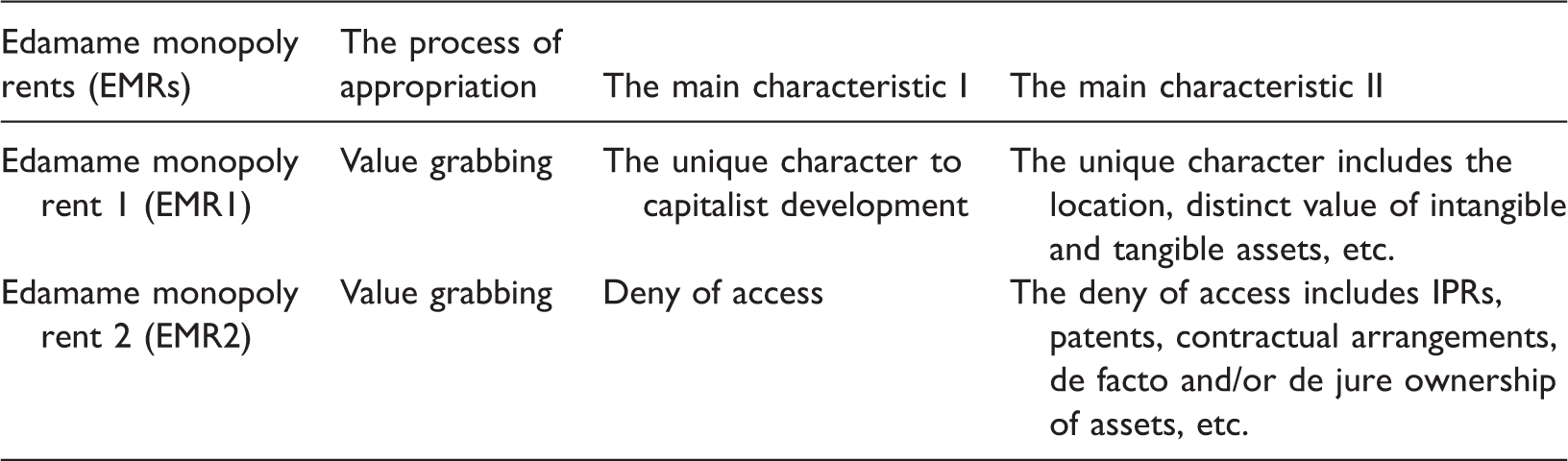
The analytical framework of edamame monopoly rents.
Qualifying edamame
Appropriating hybrid edamame seeds
Edamame is a preparation of young soybeans in the pod. Most commercial soybean varieties, including edamame, are the result of reasonably homozygous lines selected from the hybridization of strains. As a legume species and self-fertilizing crop, edamame is a perfect flowering plant in that its flowers contain both male and female reproductive organs. To create a new species of edamame, the flowers of the edamame must be artificially emasculated in order to prevent self-pollination. Therefore, effective selection for edamame seed yield is one of the foremost problems in its breeding.
During the Cold War, the U.S. led its allies to follow scientific farming principles, hybridizing grain and vegetable seeds to satisfy farmers’ needs in order to address emerging issues of international food security (Clapp, 2016). The hybridization of indigenous edamame varieties started in Japan’s Hokkaido area in the 1970s, using a soybean variety from the U.S. (Maturity group 00-III (USA)) and local varieties. Edamame bean breeding was accomplished through hybridization and pedigree selection, as well as mutation by radiation (Takahashi, 1991). In Japan, private seed companies produced almost all edamame varieties, with a few varieties produced through national or prefectural (public) experimental stations (Takahashi, 1991).
In the same period, due to the lucrative demand from Japan in the early 1970s, frozen food manufacturers and their intermediaries in Taiwan introduced a number of edamame varieties (primarily from Japan) and evaluated them for their adaptability specifically to the southern rural region of Taiwan. The variety Tzurunoko (commonly referred by farmers as 205) performed satisfactorily. A few years later, another variety, Ryokkoh (popularly referred to by farmers as 305), was also acceptable to the farmers, processors, and importers. The seeds of both varieties were imported from Japan, and after processing, Taiwanese edamame firms exported the frozen pods back to Japan.
China entered the edamame market in the early 1990s and became the main supplier in the late 1990s. In order to compete with China, Taiwan’s edamame industries collaborated with the Kaohsiung Agricultural Research and Extension Station to breed nine new species between 2004 and 2015, many of which were designed to be exported to Japan through contract farming. Unlike the former varieties, these contract edamame crops had to compete with products from China. As a result, the new varieties were specifically bred according to the appearance, taste, shape, and safety considerations that would differentiate Taiwanese edamame from Chinese edamame and ensure that Taiwanese edamame was desirable to Japanese traders. Producers were able to charge at least 30% more for the new Taiwanese edamame species that satisfied Japanese demand in terms of flavor and fragrance than for edamame beans from China. 3
Breeding new edamame varieties to satisfy Japanese tastes (e.g. the taro-flavor edamame) required extra effort to stabilize the quality of hybrid lines. For this reason, the agronomists at the Kaohsiung District Agricultural Research and Extension Station utilized some Japanese varieties to propagate newly bred (hybrid) edamame for 6–12 generations.
4
Each new varieties cost US$10,000–15,000 to breed. The Taiwanese Government covered the costs for the time and money spent on these operations, considering the effort to be a public service (see Figure 1).
Cross-breeding edamame beans (The translation of the sign: Title: Vegetable Soybean Breeding and F1 Generation Reproduction; Material: Kao 7 and 8 species; Experimental Methodology: F1 hybridization; Duration: 2011 (Jan–Dec); PI: Mr Kuo-Lung Chou, Chief of Crop Improvement Department. Source: Photo by author (2012).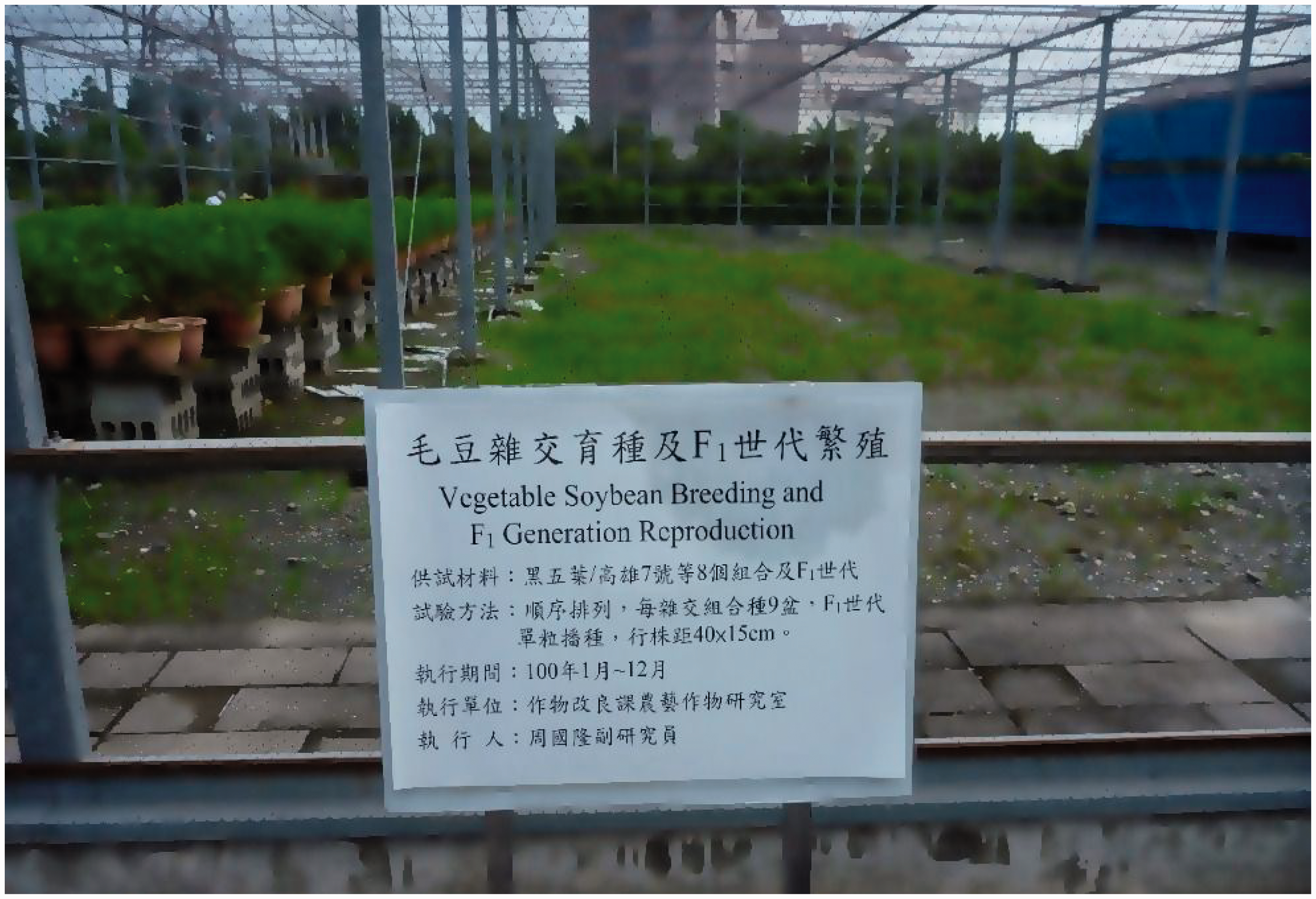
The government support not only stabilized the unpredictable nature of the species, but also offset the cost of producing qualified varieties for the edamame industry. This had two outcomes: First, it made the price of the raw material of Taiwan’s edamame production as low as possible and made Taiwanese edamame production cheap. Agronomists in the Kaohsiung District Agricultural Research and Extension Station transferred new edamame varieties to Taiwanese edamame farmers and industries free of charge under the title of “experimental use” before the seed patent law 5 was officially enforced in 2009. Even under the regulations of the seed patent law, producers in Taiwan’s edamame industry can easily obtain the right to use new edamame species at a reasonable price.
Second, before 2009, there was no legal regulation on edamame producers accessing the new hybrid seeds. Hence, the Taiwanese edamame sector owns the de facto right to access the new hybrid edamame seeds based on the geographical location (a sort of “immovable monopoly” coined by Marx (2009) [1844]) and the social networks that cluster most of the Taiwanese edamame producers where the breeder and the breeding center are located. As a result, Taiwanese edamame industries can actually appropriate a kind of edamame monopoly rents by growing specific edamame varieties with almost no cost (EMR1). This dynamic is reflected in the experiences of edamame producers in China who are competing with Taiwanese edamame: Losing the Japanese market to Taiwan is not the end of the world as the domestic market here [China] is booming and I can export my beans to the US and other places worldwide, though the profit of exporting to other places might be lower compared to exporting to Japan … the variety of edamame beans that we are using is still quite unstable and not very productive comparing to Taiwan … (Mrs Huang Liao)
6
Making edamame ranking system
The ranking system of edamame beans.
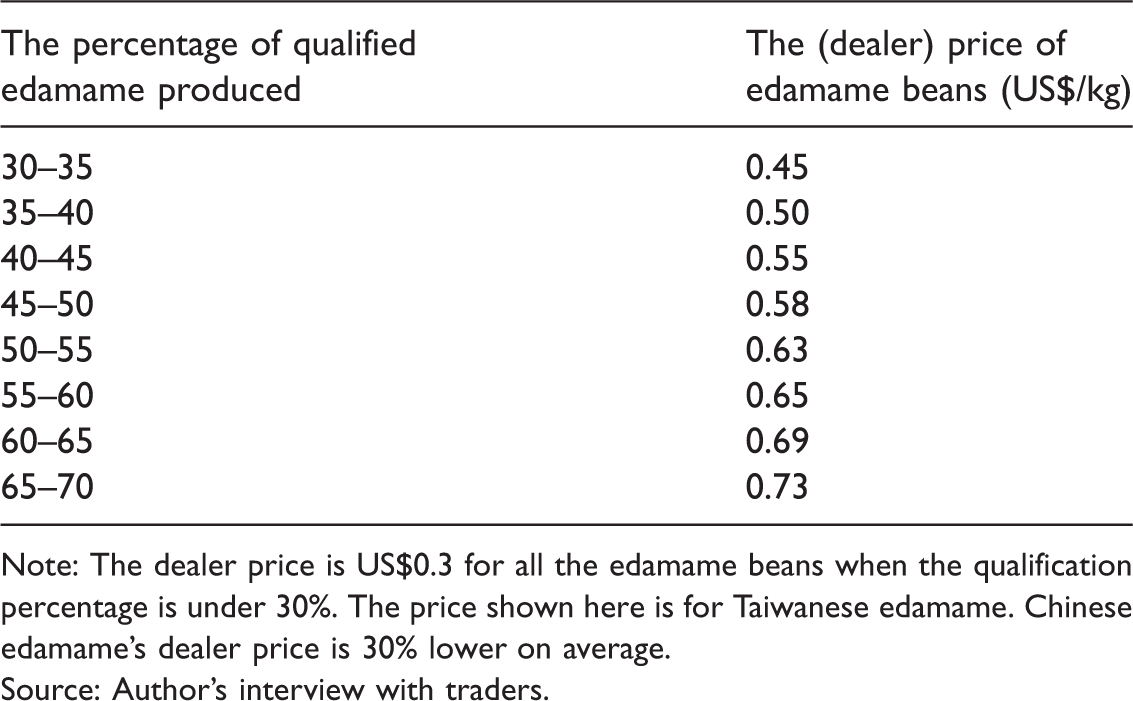
Note: The dealer price is US$0.3 for all the edamame beans when the qualification percentage is under 30%. The price shown here is for Taiwanese edamame. Chinese edamame’s dealer price is 30% lower on average.
Source: Author’s interview with traders.
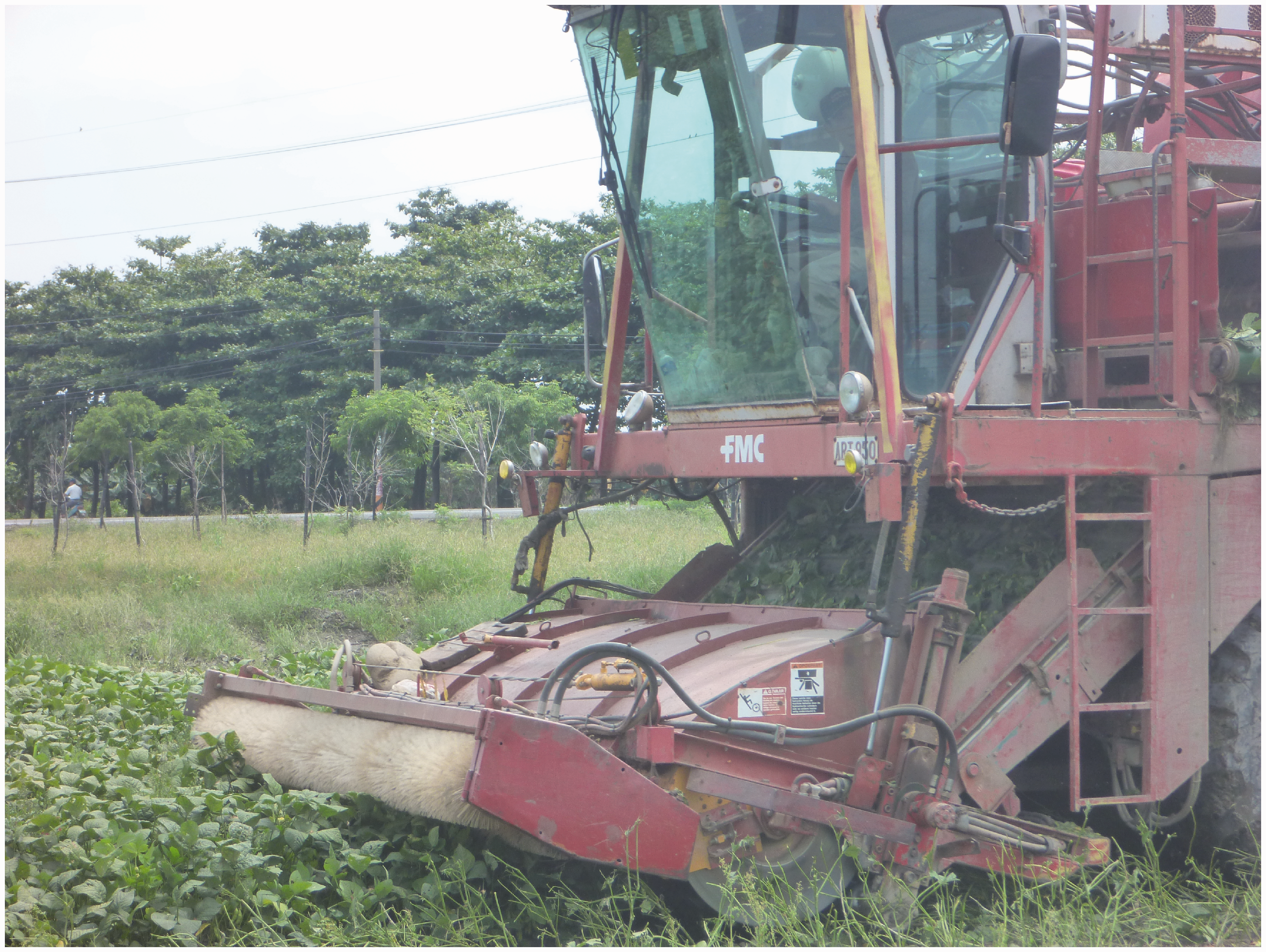
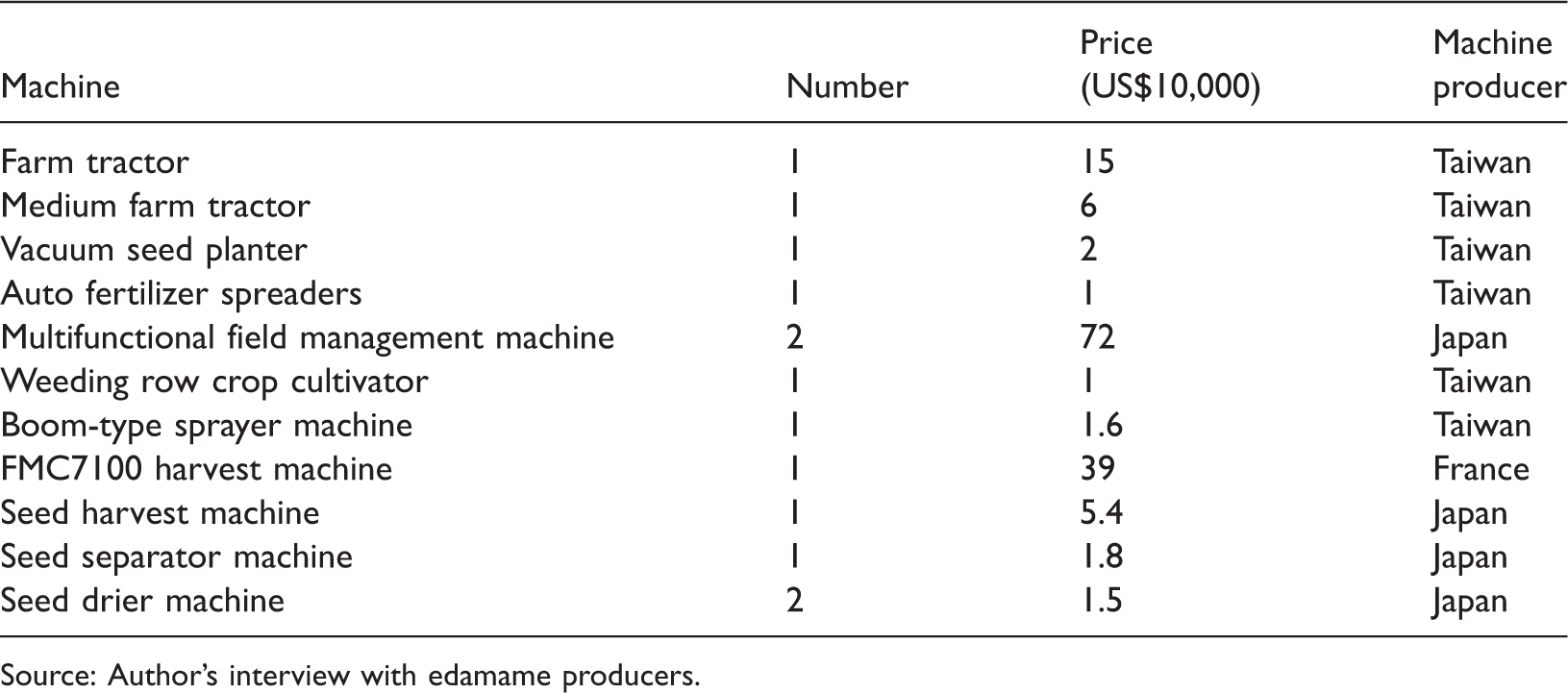
Since 2006, the Taiwanese government has gradually reorganized the farmland in south Taiwan to construct a special edamame production zone in an attempt to increase the scale of mechanized edamame farming (Figure 2). The mechanization of edamame production requires a significant amount of investment (see Figure 3 and Table 4). About 10 big edamame farmers are capable of investing in these modern machines and growing their edamame in the region
7
; by contrast, no edamame growers in China own any such machines. Mechanized production not only saves the labor power in edamame production (e.g. the productivity of one modern harvest machine is equal to the labor power of 500 people), but also speeds up the production process, through which, the whole production processes of edamame can be accomplished in just 4 hours, which is considered the “golden period” to maintain the quality of edamame beans.
8
As a result, the farmers who own modern equipment can produce edamame to garner the highest price, selling their edamame to processing plants and/or trade companies who desire the highest quality of edamame. Although the traders who set up the classification based on the quality of edamame beans and realized its value through contract farming did not directly involve production, they mobilized their power by setting the ranking system as a kind of de facto barrier to decide the value of edamame. To this extent, agronomists, traders, capitalist farmers, mechanization, and edamame species are assembled as an edamame rent regime, through which big capitalist farmers gain monopoly profit through production, while edamame traders appropriate edamame monopoly rents with the character of value grabbing (Andreucci et al., 2017) (EMR2).
The three edamame production zones in Taiwan. Mechanization of edamame production. Source: Photo by author (2014). The investment in mechanization for Taiwanese edamame production/100 (hectare). Source: Author’s interview with edamame producers.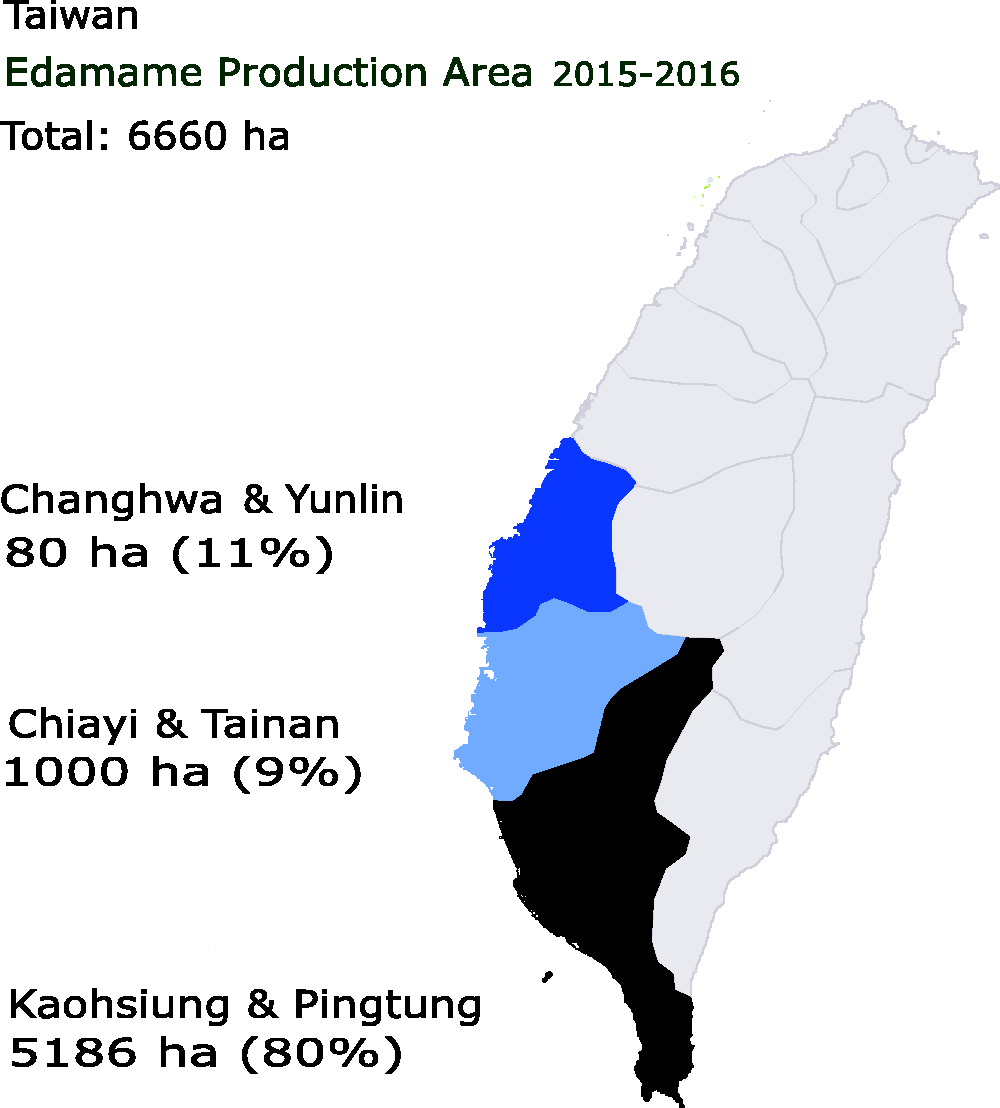
Patenting edamame
After 2000, Taiwan began to erect a legal and regulatory framework for biotechnology transfer, including a series of neoliberal reforms mandating intellectual property protection laws (Wong, 2005). For agriculture, this legal structure was developed in accordance with the WTO’s Trade-Related Aspects of Intellectual Property Rights (TRIPS) and the International Convention for the Protection of New Varieties of Plants agreements. Based on these agreements, in 2004, as what I have discussed in this article a reform seed patent Law (also see endnote 5) was mandated in Taiwan, authorizing legal persons to transfer their agricultural innovations to the private sector, and individual researchers and inventors to claim their patents with the institution to which they belong. Agricultural contracts also stipulate and enforce the proportions of profit-sharing stemming from technology transfers. With this new law, scientists who have invented a new species of plant or made seeds available in public databases are able to claim their patents and authorize third parties for contract farming.
During this period of time, in 2009, edamame became the first patented agricultural product in Taiwan through edamame-related patents that were originally owned by the state and public agrarian research institutions. For instance, the breeder of the new edamame species in Kaohsiung Agricultural Research and Extension Station co-claimed patents for nine varieties bred in the past 10 years. Both the breeder and the research institution have the right to authorize local and foreign farmers and processing plants to use their seeds. In the case of Kao 10, a variety bred in 2010–2011, the breeder and his institution received US$70,000 in profits with each transfer. Because this authorization is not limited in Taiwan, in terms of the domestic use of edamame seeds (not exclusive authorization in Taiwan), the new variety has been transferred 25–30 times to edamame industries in Taiwan. Transferring the patent of new varieties of edamame beans to actors in the edamame industry has helped to form a cluster of edamame production in south Taiwan (Pingtung County). 9 Through this process, the breeder (mainly agronomists working in public agricultural experimental centers) shares 20% of the profit, the associated institution shares 30%, and the other 50% becomes government revenue. 10
The breeder and the research institution also have the right to authorize foreigners and corporations from foreign countries to claim patents. Growing competition between China and Taiwan in the Japanese edamame market has forced Taiwan to seek monopoly power. With this aim, from 2010 to 2015, agronomists in the Kaohsiung Agricultural Research and Extension Station authorized exclusive foreign patents (with secret prices on transfers) of Taiwanese edamame—Kao 6, 7, 8, 9, and 10—to Snow Brand Seed Corporation, one of the biggest seed companies in Japan (see Figure 4 for the technology transfer contract of Kao 9).
The technology transfer contract of Kao 9. Source: Author’s field research.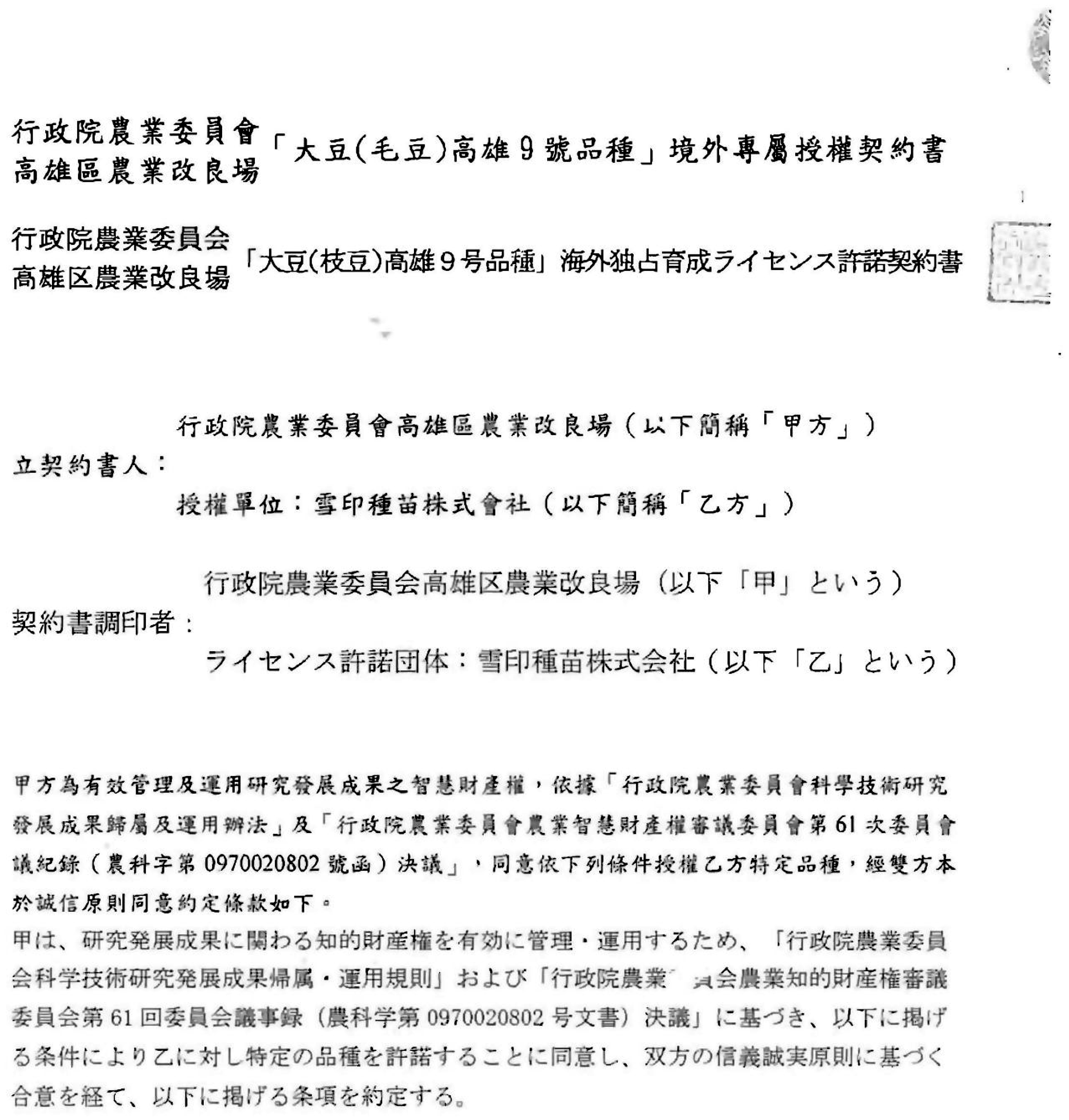
The objective of this move was to give the Japanese company the right to inspect imported contract edamame from China to see whether the products violated the patents of certain species originally from Taiwan. This act, in hindsight, forged an innovative partnership between Taiwan and Japan, especially for the Taiwanese producers who were able to control the exclusive foreign patents and thereby solidify their connection to the Japanese market. This arrangement also enhanced the efficacy of Taiwanese producers’ communication with Japanese consumers. In 2012–2013, Taiwan’s edamame industry made the decision to increase the production of Kao 9 as the flagship product for edamame export to Japan based on feedback from consumers overseas (especially from Snow Brand and their subsidiary corporations who own the biggest market share of dairy products in Japan).
11
As one of the main Taiwanese edamame producers mentioned: Kao 9 is more popular than other kinds of edamame varieties in Japan, and we [edamame industries] in Taiwan are committed to it as well. This is partially because the variety is productive and sweeter than other varieties, but the main reason is that we were informed by Japanese traders about their preference to Kao 9. The Kao 9 patent that we owned is for maintaining the communication between Japan and Taiwan in trading edamame. (Mr Tsai)
12
Conclusion
The appropriation of edamame monopoly rents.
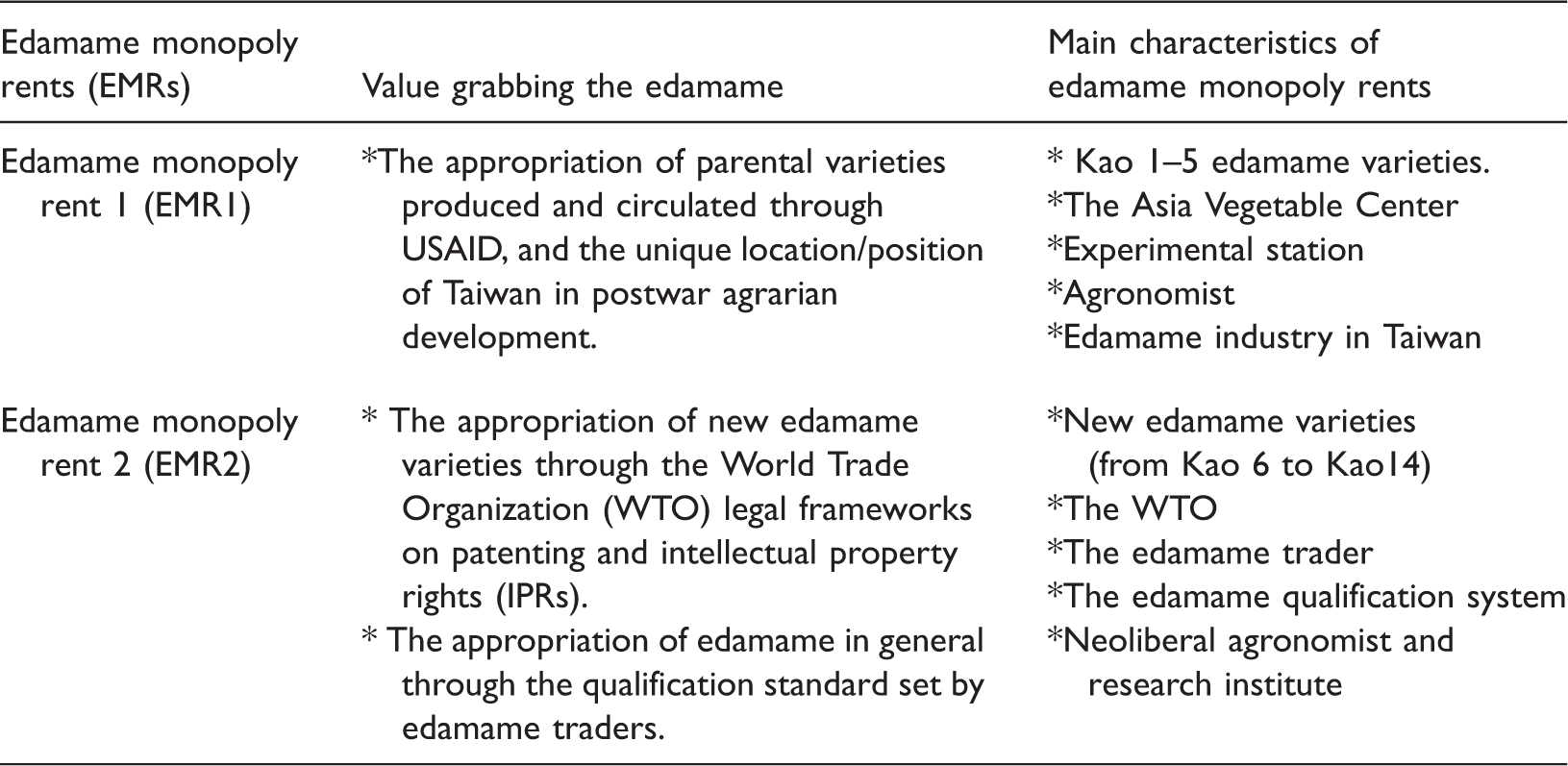
The story of edamame may help to shed light on other agricultural commodities in other parts of the world. The idea of edamame monopoly rent contributes to recent scholarly efforts to focus on single agricultural commodities and how their production and trade have underpinned a set of widening post-colonial connections on a global or regional scale in the neoliberal era (Beckert, 2014; Besky, 2014; Daviron and Ponte, 2005; Purcell et al., 2018). As Nick Lewis (2017) notes, the concept of rent “offers a platform for a coherent value politics across multiple sites” (334). My findings on edamame monopoly rents demonstrate how food production and trade are embedded within a web of rent relations in which the appropriation of edamame monopoly rents enables a polarized market that values Taiwanese edamame, while devaluing Chinese edamame. To this extent, edamame is a pseudo-commodity, conceptualized by Andreucci et al. (2017), which stresses that rent, determined by the property regime and entitlement, explains the appropriation of value that is not fully or directly produced. Also, in line with existing scholarship that demonstrates an emergent “effect” of relational states in controlling global resource flows (Bigger and Neimark, 2017), Japan has exerted its influence once again in the WTO era, playing a key role in repositioning Taiwan as the primary actor in the geopolitics and geo-economics of the edamame trade.
Taken further, this analysis of edamame monopoly rents demonstrates that it has the potential to address how rents were appropriated by capitalist states, accounting for international dynamics. The fixity and the fluidity of territories are both non-negligible parts of capitalist dynamics; they authorize a private monopoly of certain “things,” through which monopoly rents can be extracted. Considering the legal framework of the WTO, sovereign states occupy the de jure right in making international trade agreements, and hence, state regimes have actively engaged in phrasing the legal discourse of international commercial contracts. To this extent, not only are monopoly rents appropriated internationally, surplus value can be redistributed based on the power dynamics of international community. Given that this study is consistent with Loftus’s (2020) conceptualization of the “rentier state” as a promising approach in political ecology scholarship, recent literature on neo-mercantilism, which highlights an emerging competition state model in controlling resources (Tilzey, 2019), could also help to explain why rentier states use legally entrenched property rights to protect monopolies of natural resources.
Finally, the relationship between rentiership and its legal discourse requires much greater empirical and theoretical attention, for which Katharina Pistor’s (2019) The Code of Capital is particularly noteworthy. Pistor argues that, historically, people with power utilized the legal system and discourse to selectively “code” certain assets, enabling them to protect and produce private wealth, including rents. Hence, questions like who are the keepers of the “code” and how assets exist in law, seem necessary to answer when addressing how rents are made.
Highlights
The appropriation and production of rent is embodied in a rent regime The Marxian rent concept should be reconsidered as a result of the social–material and social–technological changes across time and space Edamame production and trade in East Asia provides a salient case to illustrate the rent regime and a new dimension of global food political economy
Footnotes
Acknowledgements
I sincerely appreciate the advices of Dr. Daniel Buck and Dr. Richard Walker on the preliminary ideas for this study. The very helpful comments of the three reviewers and the editor, Dr. Lyla Metha, are also acknowledged. I am responsible for any errors or mistakes.
Declaration of conflicting interests
The author(s) declared no potential conflicts of interest with respect to the research, authorship, and/or publication of this article.
Funding
The author(s) disclosed receipt of the following financial support for the research, authorship, and/or publication of this article: This work was financially supported from The Ministry of Science and Technology (Taiwan): MOST 108-2410-H-001-074.