




Abstract
We reviewed the ideas of Ivan Pavlov and his Russian forerunners (Ivan Tarkhanov and Maria Manaseina) and followers (Nikolai Rozjanskiy and Konstantin Bykov) on the functional role of sleep. This analysis led to the conclusion that the state of sleep is connected with functional operations that have not been considered in the past and are also not being investigated in present neuroscience. Thus, a real understanding of the function of sleep may only come with a new neurophysiological paradigm.
Despite the fact that sleep occurs in all organisms with strict periodicity and occupies an essential part of their lives, the functional purpose of sleep remains a matter of controversy. Thousands of studies performed over the past century have not been able to solve this problem. Undoubtedly, there must be a reason for this. It is very likely that sleep is associated with the manifestation of certain key mechanisms that were not previously encountered in physiological practice and therefore not considered by modern neuroscience.
We propose that by remembering the “well-forgotten old,” referring to the history of the development of hypotheses about the phenomenon of sleep, it would be possible to better assess trends in the development of scientists’ assumptions regarding the functional purpose of this state of organisms. This may also indicate the likely direction of further progress toward solving this problem.
In this article, we offer a brief overview of the works and ideas of the Russian scientist Ivan Pavlov and his predecessors and followers. In undertaking this review, we realized that these important studies were practically unknown at present, even in Russia.
Ivan R Tarkhanov—the forerunner of Russian somnology
Although few of Tarkhanov’s publications survive, in 1879 he posed the question, “Why should a person sleep if the brain continues to work even more intensely in sleep than in wakefulness?”
1
If we take into account that at that time nothing was known about the functions of neurons, and that the first penetration of microelectrodes into the brain of a sleeping animal, which confirmed the validity of the statement about the brain’s work during sleep, did not occur for another 70 years, this idea looks prophetic. From another source, it becomes clear what I Tarkhanov actually had in mind. He (Figure 1) wrote, The centers of breathing and circulation located in the brain do not sleep; the centers of speech do not sleep, because in dreams one may talk; the centers of attention do not sleep; hearing, smell, do not sleep. Finally, the cerebellum doesn’t sleep, as evidenced by the wonders of balancing acts manifested by sleepwalkers. So then, what is sleep? Only the centers in which our consciousness exists are inactive during sleep. All other parts of the brain work and even more intensively than during the day. (cf. Shoyfert
2
)
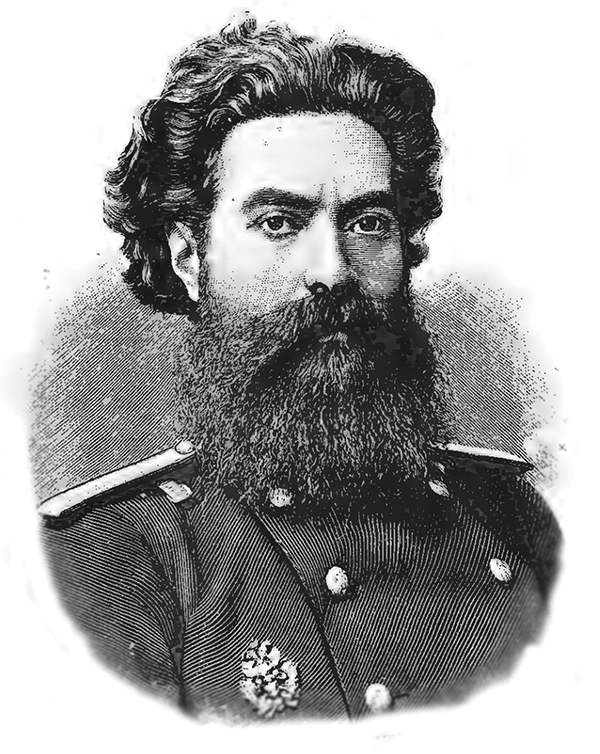
Member of the Russian Academy of Sciences, Prince Ivan Romanovich (Ramazovich) Tarkhanov (1846–1908).
In a subsequent publication, I Tarkhanov wrote that it is quite possible that the weakening of a number of functions during normal sleep is due to the depressing effect of the brain on the activity of automatic or reflex centers regulating these movements. 3 This idea found its development in the theory of “diffuse cortical inhibition” proposed later by Ivan Pavlov. 4
It is very likely that I Tarkhanov was the first experimenter to study sleep mechanisms in insects. He illustrated the above idea of the depressing effect of the brain on the activity of the underlying centers by experiments on the light-emitting apparatus of fireflies. During a trip to Italy, he noticed that fireflies glowed during active behavior, and when sleep was observed, the glow stopped. However, if the heads of the fireflies were removed, the glow did not stop, but continued for several hours. According to I Tarkhanov, the reason lay in the removal of “central inhibition, suppressing luminescence.” 5 However, we should keep it in mind that in these observations, I Tarhanov did not distinguish the probable sleep and immobile quiet wakefulness. The described state of animal was “presumed” to be sleep, and Tarkhanov’s hypothesis was based on this supposition.
The study of sleep was continued by the pupil of Ivan Tarkhanov, Maria M Manaseina (Figure 2). Her research, which laid the foundation for somnology as an independent branch of physiological science, was described in detail by V Kovalzon 6 and M Bentivoglio. 7

Maria Mikhailovna Manaseina (born Korkunova) (1841–1903).
Experiments of Maria Manaseina—The first direct demonstration of the functional role of sleep
As already mentioned, for many researchers, the function of sleep still remains a mystery, in spite of the fact that a direct and definite answer to this question was given by Manaseina 8,9 at the end of the 19th century. She deprived animals (puppies) of sleep to find out the consequences of sleep loss. For sleep deprivation, she used a method, which now we call “gentle handling.” The effect was extremely clear. Within 5 days, all the puppies that were not allowed to sleep died. In comparison, other puppies deprived of food survived up to 3 weeks.
It became clear that a period of sleep was needed primarily for ensuring the viability of an animal’s body.
However, this conclusion was not made at the time, because M Manaseina herself 8,9 as well as her followers, Italian researchers M Daddi 10 and G Tarozzi, 11 who repeated her experiments, and confirmed her results, intuitively believed that sleep was primarily necessary to ensure the functioning of the brain. As a result, they expected to see the effects of sleep deprivation in changes to brain structure, and they actually described such changes in the morphology of some nervous cells.
However, today the methodological approaches, which were used in their studies, allow us to doubt the reliability of their observations. This doubt was especially strengthened after a more recent study performed in rats. It was found that the rats also died after total sleep deprivation, but there were no obvious morphological changes to the cortical neurons after sleep deprivation. 12
Although I Pavlov and scientists of his school most likely knew about the data obtained by M Manaseina, the main conclusion concerning the importance of sleep first of all for viability of the body, but not the brain’s functioning, was not done by them. Intuitive belief in the importance of sleep to ensure brain performance continued to dominate the thinking of physiologists. This gives good support to the idea that scientific reality is often counterintuitive (see e.g. other examples in a recent theoretical analysis of the studies of local field potentials. 13 ).
The views on sleep function in the time of Ivan P Pavlov
It is known that in the 19th century, physiology was mainly aimed at studying visceral functions, and data were accumulated during acute experiments on isolated organs, or later on animals under anesthesia. Naturally, in this work, no attention was paid to sleep. In the laboratory of Pavlov (Figure 3), due to a number of new experimental techniques, the investigation of the digestive system in behaviorally active animals was undertaken. A study of digestion, and particularly the role of the nervous system in this process, brought Ivan Pavlov to worldwide recognition. In the course of these studies, the phenomenon of conditioned reflex was discovered. His classical studies of salivation in dogs became a powerful method in studies of the nervous system.

Member of the Russian Academy of Sciences, Ivan Petrovich Pavlov (1849–1936).
But, as often happens in science, the new method was ahead of the level of understanding of the possible principles underlying brain functioning. The general approach to brain function was largely based on ideas obtained during investigations of the neuromuscular apparatus. The pattern of activity of entire structures of the brain could be described in terms of tonic or phasic activation or inhibition, and these conclusions were made by observations of complex behavioral acts.
Decades separated these first experiments from the creation of information theory and the development of principles of universal computers. As a result, the understanding of the brain as an organ for information processing by physiologists was delayed.
The mechanism of the conditioned reflex was considered at that time as a mechanism of a huge “logical” complexity, which required a large “brain” mass. On the other hand, it was proposed at that time that this mechanism alone would be able to provide all forms of complex behavior, including consciousness and memory. As a result, it was natural to accept that it was in the cerebral cortex where mechanisms of conditioned reflexes related to consciousness were localized and that unconditioned reflexes or instincts and the sphere of the subconscious were associated with subcortical structures.
Soon after the beginning of intensive work on behaviorally active animals, experimenters at the Pavlov laboratory encountered a phenomenon that became a serious obstacle to research: as a result of prolonged monotonous experiments, animals began to fall asleep, and the realization of conditioned reflexes ceased. 14 Pavlov entrusted the study of this developing sleep, which interfered with their work, to his graduate student Nikolai Rozjanskiy (Figure 4). In 1913, Rozjanskiy defended a thesis, “Materials for the physiology of sleep,” which in 1954 was included in a book. 15

Member of the academy of medical sciences of the USSR, Nikolai Appolinarievich Rozjanskiy.
In the first chapter of the thesis, N Rozjanskiy compares three rather similar states, natural sleep, hypnosis, and hibernation. It is interesting that in the early work on the study of hibernation, an increase in body mass of the experimental animals was noticed, despite the fact that animals did not eat during the entire period. This fact was explained by the transition of fat to glycogen with the inclusion of oxygen molecules from the air.
In the third chapter, Rozjanskiy formulated his point of view on the mechanism of sleep. He recognized the cortical inhibitory mechanism of sleep and rejected the idea of a special sleep center. I Pavlov also always sharply opposed the idea of the existence of such a center. 4 It should be noted that I Pavlov and also N Rozjanskiy were aware of the anatomical studies of von Economo, who described local degenerations in the brain stem and hypothalamus in patients who died from lethargic encephalitis. 16 But they believed that as a result of such degenerations, the afferent pathways reaching the cortex were broken. This, in turn, disrupted the cortical inhibitory processes responsible for the onset of sleep. In this explanation, one can see the prototype of the idea of the brainstem-activating system that arose later. The variety of subcortical structures that have been discovered since that time, the activation of which leads to falling asleep or awakening, 17 rather confirms the idea of Pavlov, shared by Rozjanskiy, about the absence of a single center of sleep.
Further, N Rozjanskiy recognized that not all observations at the time could be explained from the position of diffuse cortical inhibition and concluded: The question of sleep and wakefulness needs to be discussed as a specific question of physiology. Its analysis must be based on three aspects: The recognition that states of sleep and wakefulness are both active. The basis of the sleep–wakefulness behavior as an adaptation to daily changes in illumination. The use of Pavlov’s doctrine about diffuse cortical inhibition.
In subsequent chapters, N Rozjanskiy describes the results of experiments made in 1913 to study the influence of sleep on the realization of conditioned reflexes. The thesis had 36 conclusions. Some of them gave recommendations on how to deal with animals’ sleep during the course of experiments. The final conclusion was, “the conditions that underlie the periodicity of sleep, still cannot be considered as clarified.”
N Rozjanskiy made another important observation. He noticed that during development of sleep conditioned reflexes to somatosensory stimuli disappeared first while reflexes to auditory and visual stimuli continued to work. He concluded that sleep spread from the somatosensory areas of the cortex. It seems that in Pavlov’s lab, the dynamics of sleep and the possibility of localized sleep in separate cortical zones were considered as entirely natural phenomena, and not worthy of special discussion or description.
In Pavlov’s clinical observations, 18 we found a case where, after the presentation of a patient with narcolepsy, who during cataplexy, could not see anything, but heard everything, I Pavlov noted that the patient was different from normal in that he could not see. This means that the work of the large hemispheres is limited and only certain regions continue to work. Partial drowsiness develops.
The phenomena of sleep dynamics and the possibility of local or partial sleep were reopened at a new technical level in the 1990s and have now become one of the popular areas of research. The overview of local sleep studies was presented in our recent article. 19 Unfortunately, at the time of preparing the previously published review, we did not know that this phenomenon was first described at the very beginning of the 20th century.
Last behavioral study of sleep before the era of electrophysiology
It seems that in the school of I Pavlov, it was understood quite well that the theory of sleep as a diffuse inhibition has a number of contradictions and that this theory could not explain many of the phenomena observed both in life and in experiments. But nothing better could be offered at that time. In the late 1930s, in the laboratory of Konstantin Bykov (Figure 5) in Leningrad, another attempt was made to study sleep experimentally. 20

Member of the academy of sciences of the USSR, Konstantin Mikhailovich Bykov (1886–1959).
However, the authors of this work did not formulate any new hypotheses, which they would like to test. In the introduction, they declared, It seemed to us important to continue the collection of material characterizing the state of the animal during prolonged sleep deprivation. We were particularly interested in changes in the activity of the central nervous system during prolonged insomnia and during the return of the animal to normal conditions.
In essence, their work was a repetition of the experiments of M Manaseina. 9 However, the study, on adult dogs, in the laboratory of K Bykov was carried out using new methods. Five dogs were used in this study. A large number of experimenters took part in the experiments, and special attention was paid to ensuring animals did not remain unobserved and could not fall asleep. Sleep deprivation was maintained “to the last opportunity” either until it was not possible to wake up the dog or when problems with the gastrointestinal tract, heart, or breathing reached critical levels for survival. It was noted that continued deprivation of sleep would certainly lead to the death of animals within the next few hours. But before this happened, the dogs were allowed to fall asleep and experimenters carefully monitored the dynamics of recovery.
In the course of sleep deprivation, unnatural postures appeared in the animals. Their legs became stiff, and animals often fell down. Dogs could take food in their mouths and then, without chewing, spit it out. Salivation in response to food was not observed; in the late stages of deprivation, dogs did not react even to sausages. Growing aggressiveness was reported, especially in relation to other dogs. With the cessation of deprivation, dogs immediately fell asleep in any position of the body and only with additional time did they adopt a regular sleeping position. Sleep was extremely deep, and the animals did not respond even to very strong pain stimuli. After a while, reactions to painful stimuli appeared, but the localization of the pain stimulus was disrupted. For example, when the front paw was irritated, the dog could start licking a back. This extremely important observation was completely forgotten, though it revealed a possible mechanism for the frequent motor errors of operators deprived of sleep. It was noted that the pattern of behavior of all dogs in these experiments was quite similar.
The process of sleep deprivation caused dramatic changes in physiology. On the second and less often on the third day of sleep deprivation, a decrease in appetite, diarrhea, sometimes appearance of vomiting, profuse salivation, and “foam from the mouth” were noted. The temperature of the body and heart rate decreased during the first two days of sleep deprivation, and the rhythm of breathing was disturbed. At the end of sleep deprivation, body temperature started to rise, pulse rate decreased, and respiration could change to a Cheyne-Stokes pattern, with pauses in breathing of up to 10 s. After the end of sleep deprivation, all these changes passed very quickly, and on following days, the appearance and behavior of dogs did not differ from normal.
In all dogs, food conditioned reflexes and differentiations according to the classical method of Pavlov were elaborated. After the first day of sleep deprivation, all reflexes were reduced, and the differentiations were disinhibited. From the second day, all the conditioned reflexes disappeared. The authors summarize this part of the study as follows: With prolonged sleep deprivation, there is a sharp drop in excitability of the cerebral cortex, up to the complete functional shutdown of it. Recovery of excitability of the cortex does not occur immediately after the cessation of sleep deprivation but has a wavelike character. At present the above material, as well as all the literature data does not allow us to state a general and definite view on the phenomenon of sleep. None of the existing theories can explain all the facts observed during insomnia. Perhaps it is impossible to explain all phenomena of sleep by the development of inhibition in the cortex. But it seems to us unquestionable that it is the primary point.
In the second half of the 20th century, when it became possible to use a variety of techniques to study the process of sleep, a huge amount of data were accumulated. However, we have to admit that, despite the tremendous growth of factual material concerning the various mechanisms of sleep at synaptic and molecular level, the general understanding of sleep function has not advanced very far since the time of I Pavlov. But the general view on structural and functional hierarchy of the brain also remained practically unchanged. Now, it is becoming clear that most likely understanding of sleep function is simply impossible within the framework of old ideas about the organization of the nervous system and requires their replacement. In turn, the new results of sleep studies do not fit into the generally accepted concepts but find a simple and natural explanation in the framework of other approaches to the organization of the nervous system. 21 We have plan to discuss all these questions in our next article.
Conclusion
Historical analysis of opinions concerning the function of sleep is helping to assess trends in this field of science and provide the direction of further progress toward the solution of this problem. This analysis allows us to conclude that sleep is associated with the implementation of functional operations that have not been examined in the past nor considered in modern neuroscience. Thus, we can expect that a real understanding of the function of sleep will only come with a new neurophysiological paradigm.
Footnotes
Acknowledgements
We are very thankful to Dr Mikhail Poluectov for the suggestion to write this article, to Irina Surikova for preparation of the illustrations, and to Dr Denys Garden for critical reading of the manuscript and helpful comments.
Declaration of conflicting interests
The author(s) declare no potential conflicts of interest with respect to the research, authorship, and/or publication of this article.
Funding
The author(s) disclosed receipt of the following financial support for the research, authorship, and/or publication of this article: This work was partly supported by the Russian Foundation of Basic Research grants no. 19-04-00215 and 18-013-00597.