




Abstract
Introduction
Our understanding of psoriatic disease has increased exponentially due to research advancements. The National Psoriasis Foundation (NPF) has funded key psoriatic research, including patient-driven research initiatives such as Citizen Pscientist, 1 which allows patients to test their own hypotheses using a NPF database. In 2016, the NPF developed a patient-centered research agenda to guide organizational goals and funding. We sought to develop an updated patient-driven guide based on an interactive session at the NPF 2025 IMPACT Volunteer Leadership Summit, where patient-volunteers, family, and staff discussed and ranked areas of psoriatic research most important to them. Findings may help guide future patient-prioritized research.
Methods
We conducted a thematic literature review on articles discussing patient priorities in regards to psoriasis research.1-5 We also consulted the NPF’s mission statement, 6 5-year strategic plan, 7 and key research initiatives. 8 From these findings, we compiled a list of 10 key research topics and presented an overview at the NPF Impact Summit. We then led breakout groups of ∼15 NPF volunteers, who were psoriatic disease patients, patient friends or family, or NPF affiliates. Attendees were asked to write down research topics (either ones presented on, or others not discussed) most important to them and why. Attendees then discussed their chosen topics and rationale, while an event volunteer took notes. All written and electronic notes were collected. Finally, we distributed an online REDCap survey asking attendees to rate 10 research topics on a 9-point scale (1 = lowest priority, 9 = highest priority). The survey also included 8 demographic questions, 7 psoriatic history questions, and a free-response question for additional input.
Results
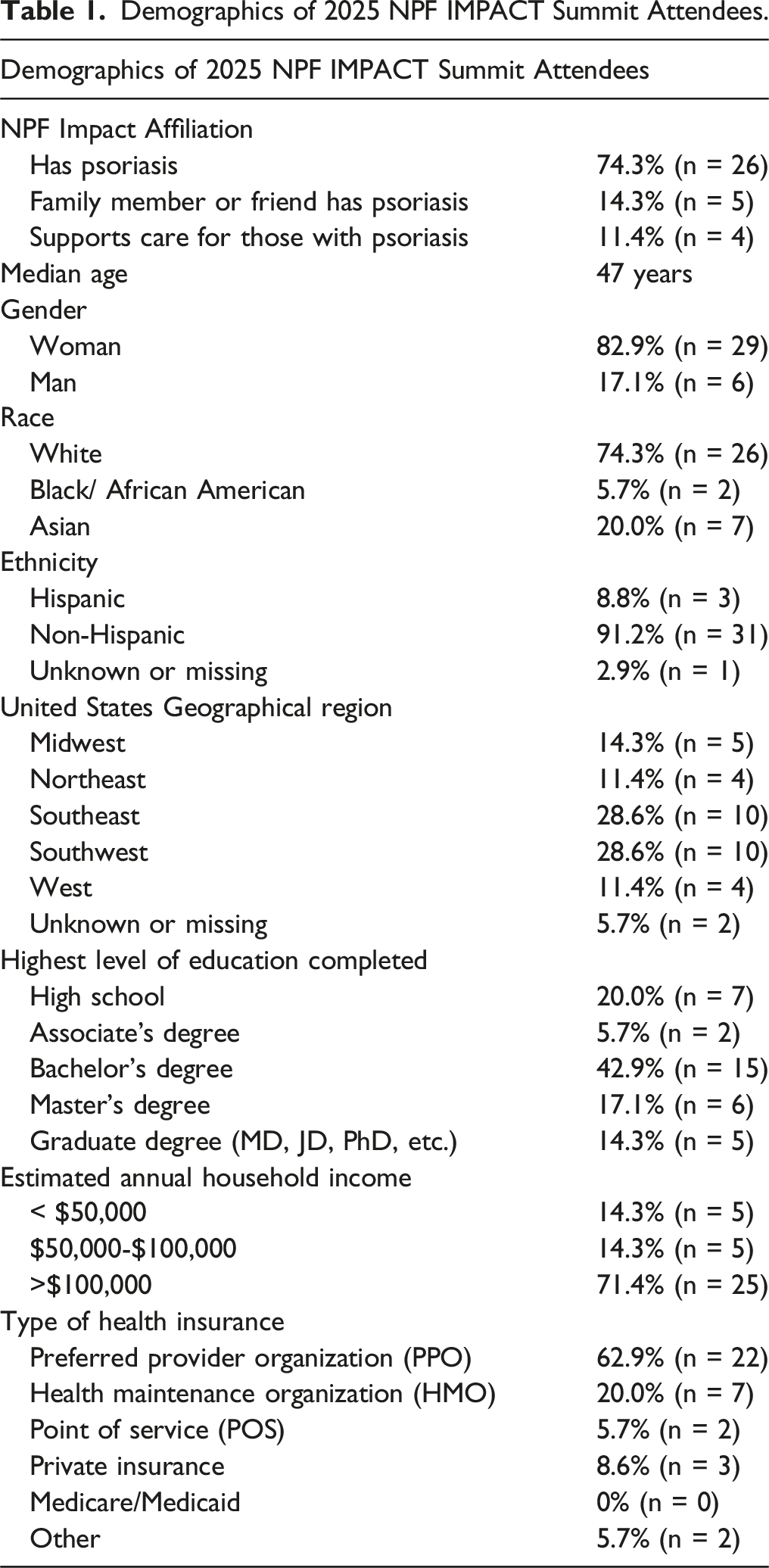
Demographics of 2025 NPF IMPACT Summit Attendees.
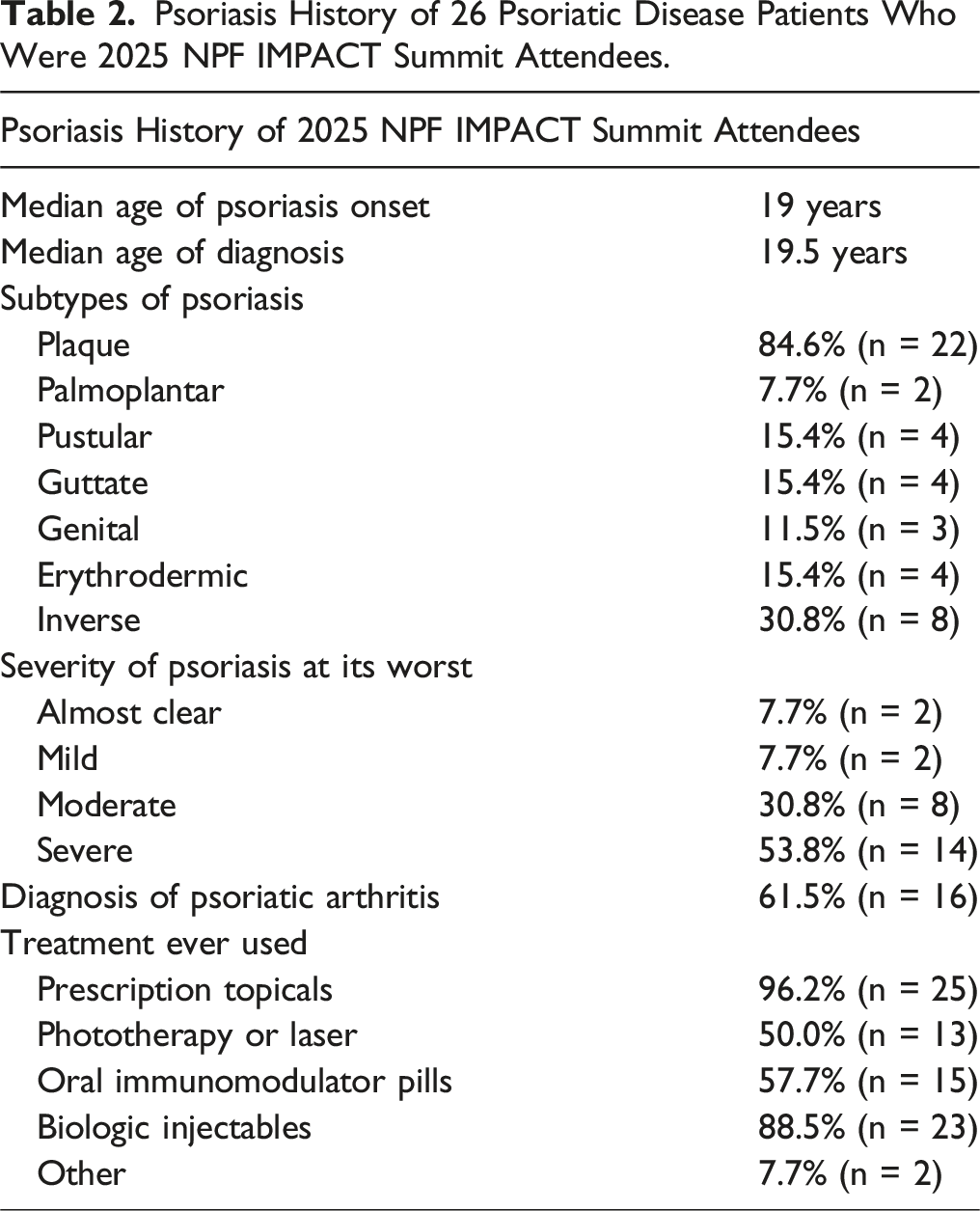
Psoriasis History of 26 Psoriatic Disease Patients Who Were 2025 NPF IMPACT Summit Attendees.
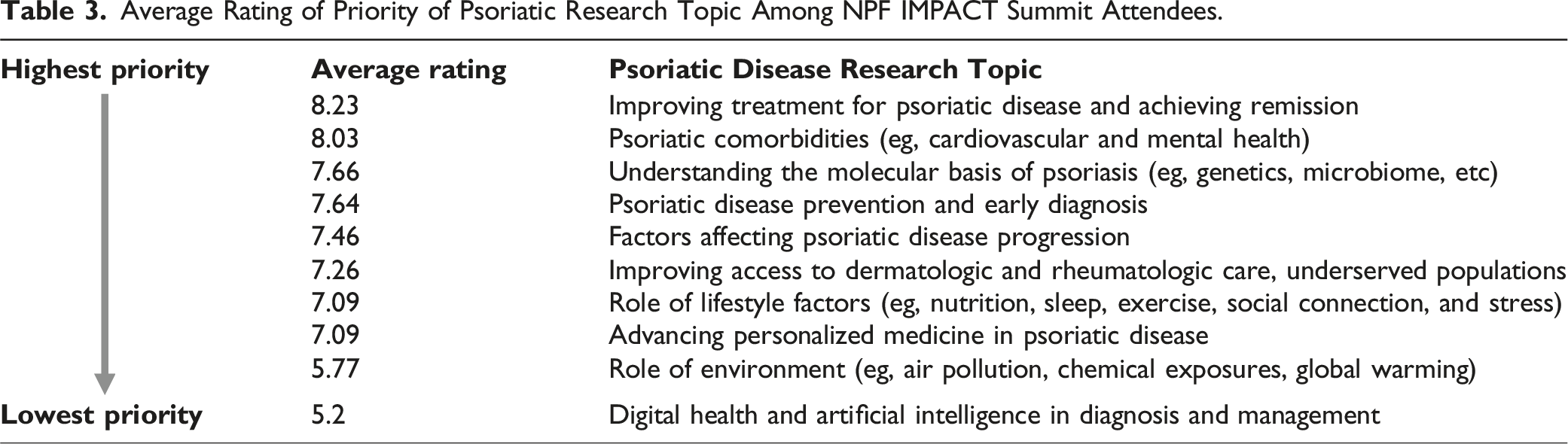
Average Rating of Priority of Psoriatic Research Topic Among NPF IMPACT Summit Attendees.
Number of Occurrences Each Research Topic was Mentioned in Breakout Session Notes, Attendees Handwritten Notes, and Free Response Questions on REDCap Survey, as Well as Representative Example Questions for Each Topic.
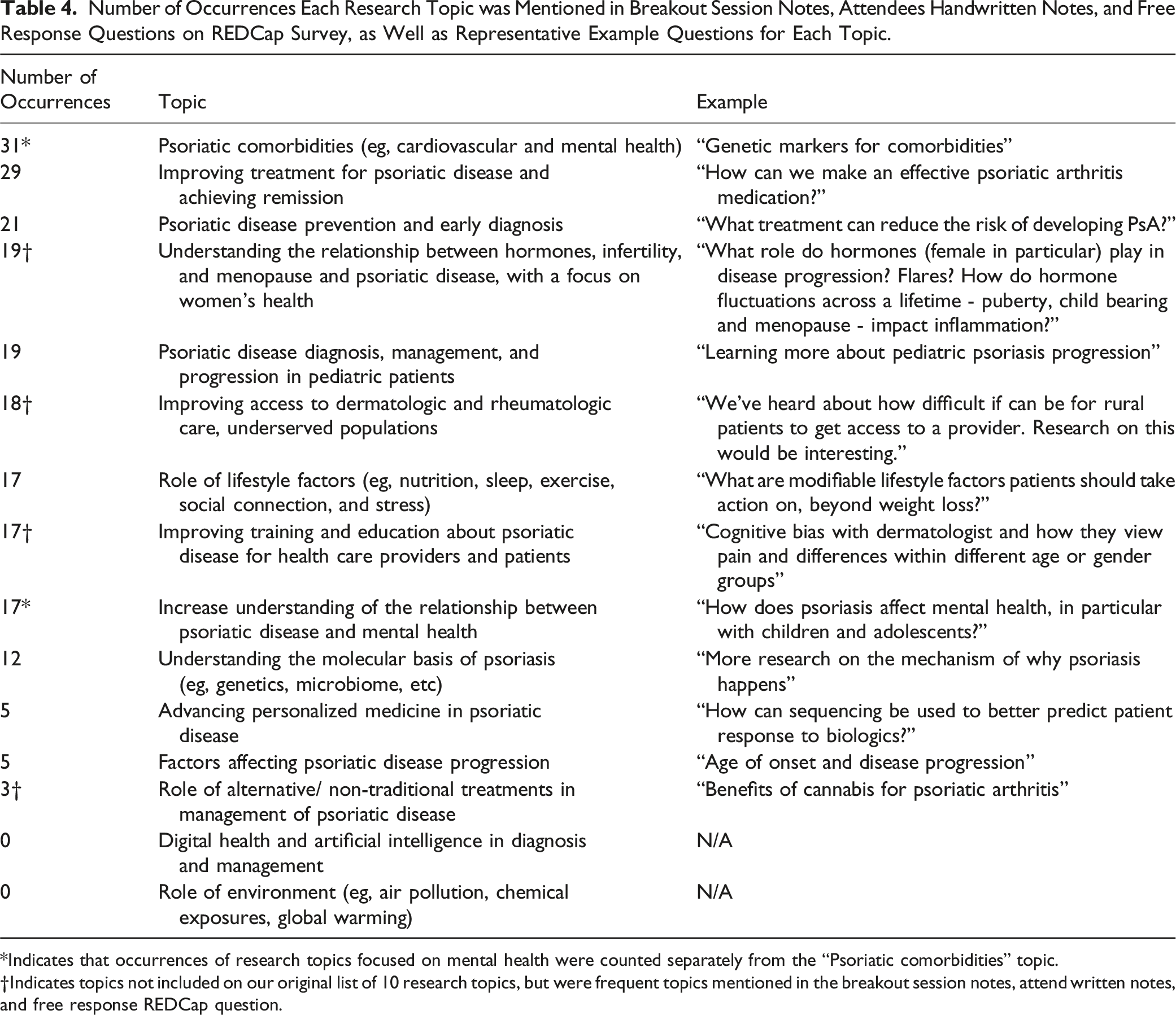
*Indicates that occurrences of research topics focused on mental health were counted separately from the “Psoriatic comorbidities” topic.
†Indicates topics not included on our original list of 10 research topics, but were frequent topics mentioned in the breakout session notes, attend written notes, and free response REDCap question.
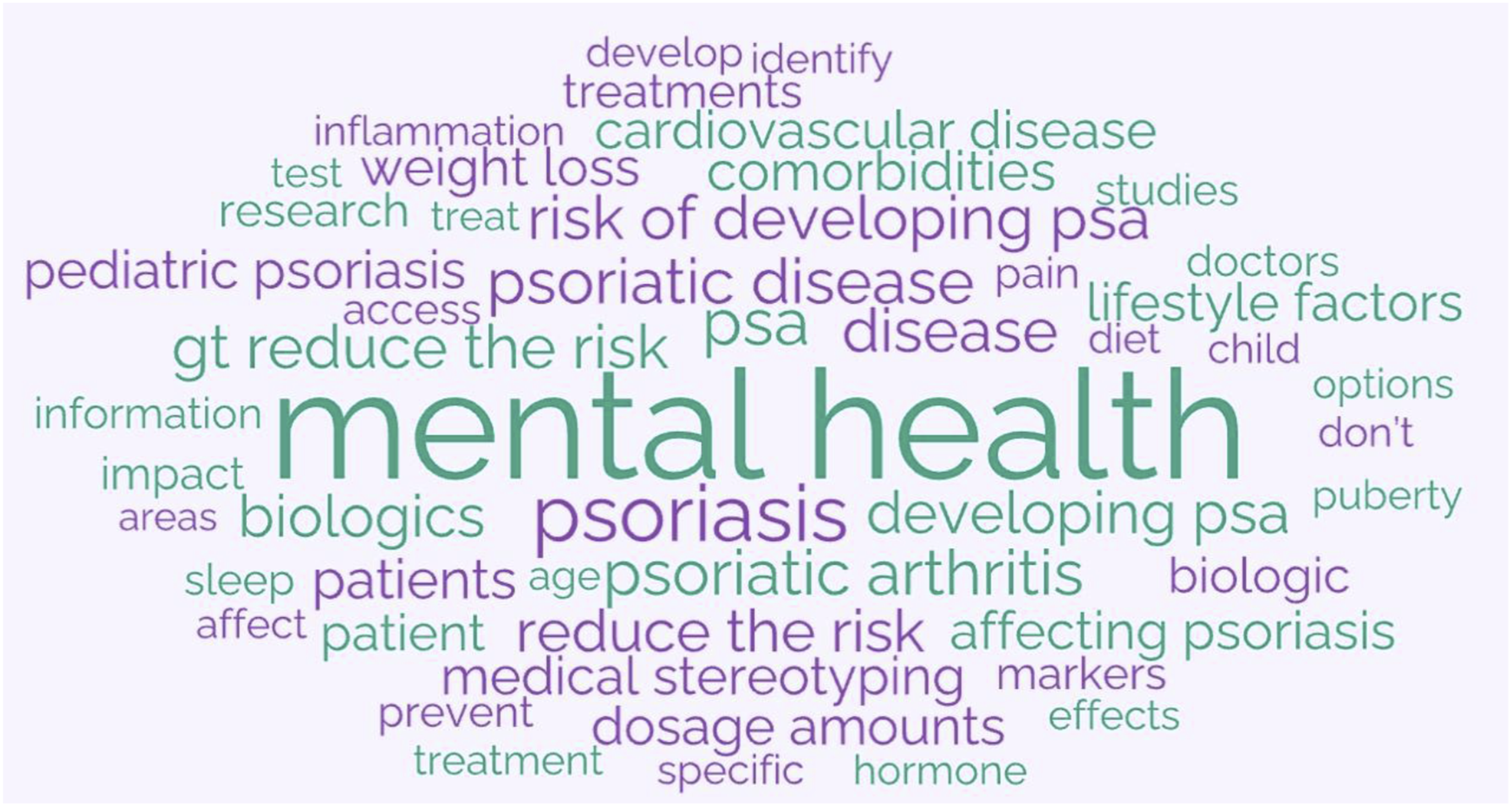
Word cloud from free response question (REDCap) and breakout session notes.
Discussion
Based on survey findings, the most patient-prioritized research areas were: improving psoriatic treatments, psoriatic comorbidities, and understanding the molecular basis of psoriasis. Respondents also provided examples of these research topics (Table 4). Psoriatic comorbidities was one of the highest prioritized topics, with suggested research ranging from exploring the connection between weight loss drugs and psoriasis improvement, the impact of psoriasis on sleep and mental health, and targeted psoriasis treatments based on individual patient’s comorbidities. Most respondents were female, which potentially contributed to the high interest in the relationship between hormones, infertility, and menopause and psoriatic disease. Mental health and the need for improved patient and provider training and education regarding psoriatic disease were also areas of high interest. Furthermore, more than 80% of attendees had higher than a high school level education, which may contribute to higher health literacy and therefore influence which research topics were of highest priority. One limitation of the study was the relatively low number of participants, which limits the generalizability of the findings to the broader population of patients with psoriasis.
Conclusion
Findings from our survey and session provide valuable insight into the topics most important to the psoriatic disease community and can help researchers design patient-centered research. This could ultimately increase study participation and retention, ultimately strengthening the patient-research alliance.
Footnotes
Declaration of Conflicting Interests
The author(s) declared the following potential conflicts of interest with respect to the research, authorship, and/or publication of this article: Wilson Liao has received research grant funding from Amgen, Janssen, Leo, and Novartis. Krystal Adkins, Jessica Smith, Alicia O’Neal, and Guy Eakin are National Psoriasis Foundation staff members. Georgia Marquez-Grap, Andrea Leung, and Allison Kranyak have no conflicts of interest to declare.
Funding
The author(s) received no financial support for the research, authorship, and/or publication of this article.
