Keywords: Total Ankle Replacement, Complications, Revision Total Ankle Arthroplasty
Introduction/Purpose: Conflicting evidence exists regarding the ability of surgical helmet systems (SHS) to reduce rates of infection after joint replacement. The purpose of this study was to investigate the use of SHS in total ankle arthroplasty (TAA) and their effect on postoperative infection rates.
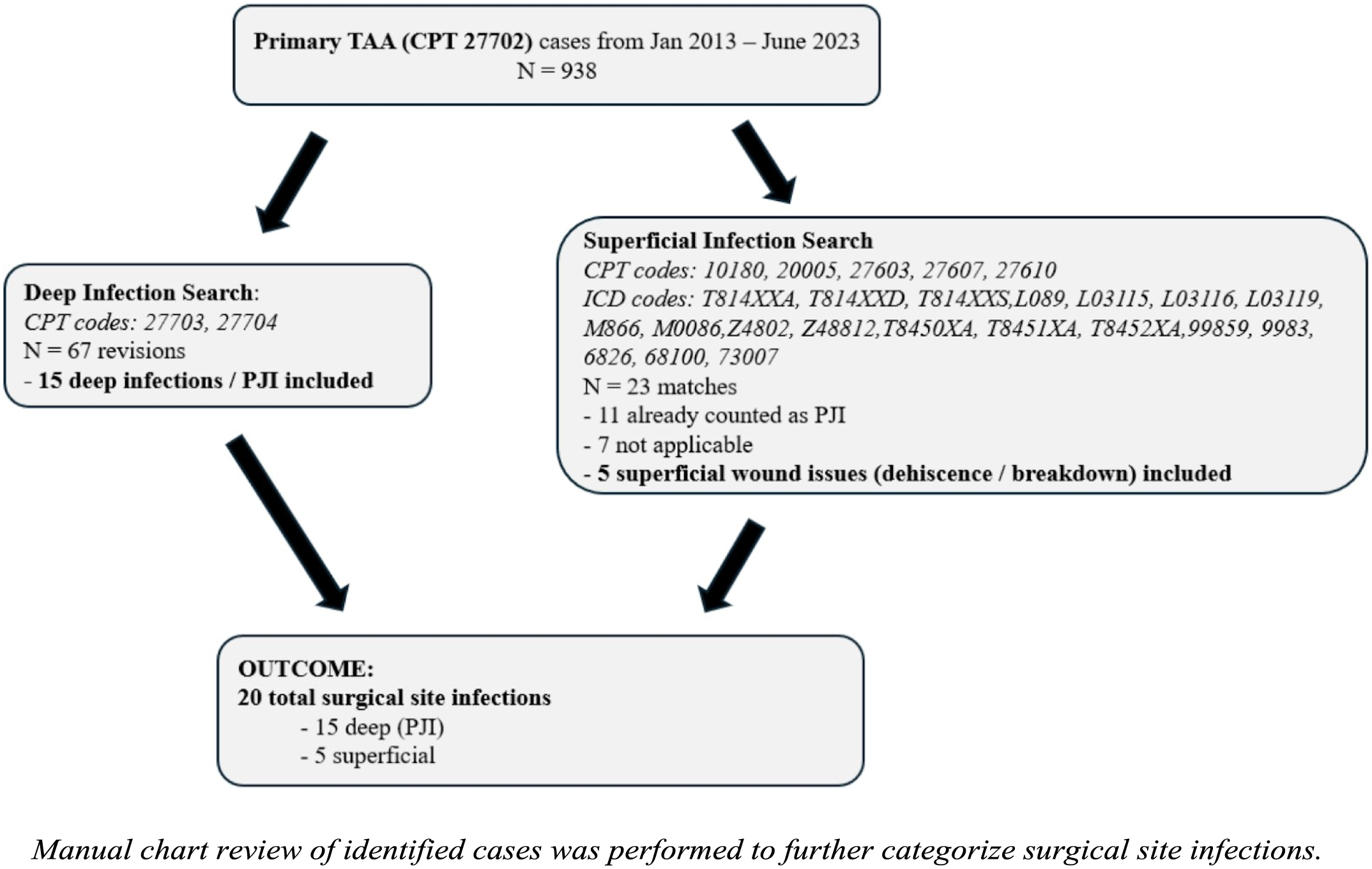
Methods: A retrospective cohort study was conducted on patients who underwent elective primary TAA with or without a surgical hood between January 2013 and June 2023 at a single academic institution.
Demographic characteristics, revision rates, superficial and deep infection rates, patient-reported outcome measures (FAAM, VAS), and implant survivorship were collected and compared between groups.
Results: A total of 938 patients who underwent primary TAA at our institution were included in this study, with 496 (52.9%) in the hood group and 442 (47.1%) in the conventional gown group at a mean follow up of 6.8 (range: 2 - 12.5) years. There were no significant differences found between the use of a surgical hood vs. conventional gowning with regards to overall surgical site infection (2.4% vs. 1.8%, p = 0.676) and deep prosthetic joint infection (1.6% vs. 1.6%, p = 1.000). A multivariable logistic regression model controlling for BMI, tobacco use, and diabetes found no association between the use of surgical hoods and surgical site infections after TAA (OR = 1.39, p = 0.47). Furthermore, no differences in FAAM, VAS, or implant survivorship were found between groups.
Conclusion: The use of surgical hoods did not demonstrate a protective effect against surgical site infection following TAA. Based on these findings, we cannot recommend the use of surgical hoods for infection prevention in total ankle replacement procedures.






 AbstractFirst published online January, 2026