Introduction/Purpose: Ankle surgeries have been found to be among the most painful orthopaedic surgeries, thus adequate pain control is imperative for optimal wound healing, reduction of hospital stay, and patient well-being. Recent studies have shown that administration of postoperative corticosteroids in arthroplasty surgeries reduced postoperative pain, improved rehabilitation time, and reduced postoperative emesis. The purpose of this study was to determine if there was any benefit to postoperative corticosteroids and tramadol over traditional scheduled II opioids alone (Oxycodone/Hydrocodone) after ankle fracture surgery.
Methods: A retrospective review was performed to identify consecutive adult patients with operative ankle fractures undergoing outpatient surgery by one orthopaedic trauma surgeon before and after adoption of routine prescriptions of a schedule 4 pain medication (Tramadol) in addition to steroid dose packs and NSAIDs postoperatively. Prior to this practice change the surgeon prescribed schedule II opioid pain medications (Oxycodone or Hydrocodone) in addition to NSAIDs. Patients undergoing open fixation of the posterior malleolus and patients who did not receive both Tramadol and a steroid dose back after the protocol change were excluded. Patients treated with and without Tramadol and a steroid dose pack were compared to terms of demographics, regional/local anesthetic blocks, controlled pain medications type, NSAID type, amount of pain medication pills, need for refills, emergency room visits for pain control in the first two weeks, two-week clinical follow-up pain scores, and superficial/deep surgical site infections (SSIs).
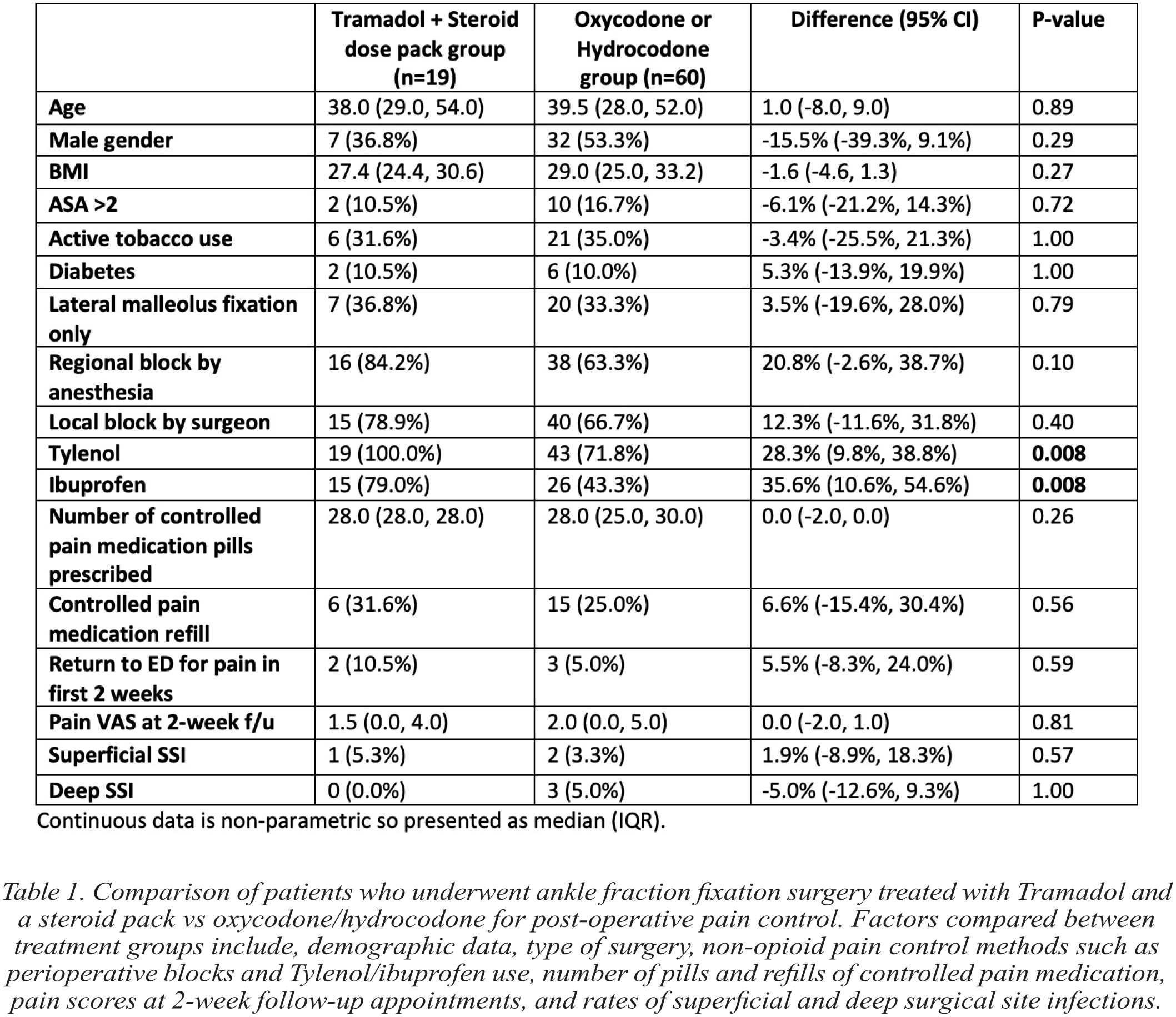
Results: The were 19 patients in the Tramadol + steroid dose pack group and 60 patients in the control group who received a standard scheduled 2 opioid medication (Oxycodone (n=32) and Hydrocodone (n=28)). The Tramadol/steroid group was more likely to also receive prescriptions for Tylenol and Ibuprofen postoperatively but did not have any differences in age, gender, BMI, ASA classification, tobacco use, diabetes, regional or local anesthetic blocks, number of controlled pain medication pills prescribed postoperatively (Table 1). In terms of outcomes there was no difference between groups in the need for controlled pain medication refills, return to the ED in the first two weeks for pain control, pain score at the 2- week follow-up appointment, or the rate of superficial or deep SSI.
Conclusion: This study found no difference in pain control, need for pain medication refills, or infections between the Tramadol/steroid group and the Oxycodone/Hydrocodone group. Considering the addictive potential of scheduled II opioid medications, Tramadol and postoperative steroids may be a reasonable alternative for pain control after ankle fracture surgery.






 AbstractFirst published online January, 2026