Introduction/Purpose: Posterior tibial tendinopathy (PTT) is one of the suspected causes of adult-acquired flatfoot deformity (AAFD), which affects 5 to 15% of the population. It is believed that during the early phase of the disease the posterior tibial (PT) tendon becomes inflamed. If true, early detection of PTT could allow for earlier and more directed treatment, improving outcomes or preventing the progression of AAFD. Current diagnostic methods identify PTT only after clinical onset. This pilot study aimed to establish the presence or absence an inflammatory biomarker profile for PTT using PT tendon biopsies.
Methods: In a prospective study, 87 study participants (45 with abnormalities in or around the PT tendon and 42 controls) underwent ultrasonographic assessment and biopsy of the PT tendon. Study participant demographics and medical history were collected from medical records. Of these participants, 78 biopsy samples (43 PTT and 35 controls) were analyzed for 37 inflammatory biomarkers with a Bio-Plex Pro Human Inflammatory 37-plex Panel. Comparisons were made using chi-square and t-tests for patient characteristics and identified inflammatory biomarkers among PTT and control participants.
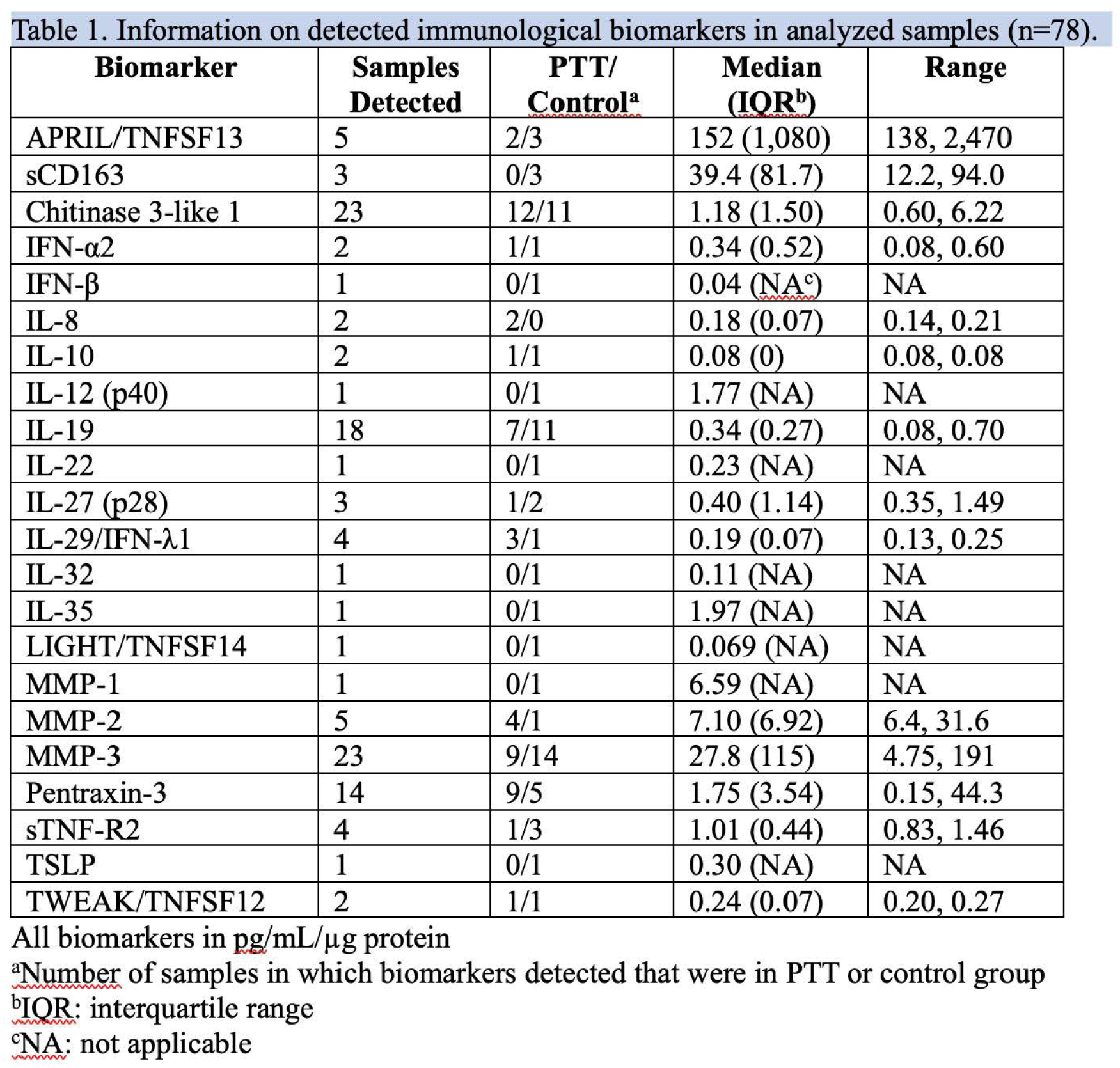
Results: Of 37 biomarkers, 22 (59.5%) were detected in at least one sample (Table 1). No significant differences were found in biomarker concentrations (in pg/mL/µg protein) between PTT and control groups (all p > 0.05), including for biomarkers sIL-6Ra, gp130/sIL-6Rβ, IL-8, IL-10, and MMP-2, which were hypothesized to be elevated. Patient demographics (age, BMI, sex) and comorbidities (hypertension, diabetes, prior trauma) were similar between groups (p > 0.05). However, participants in which either Chitinase 3-like 1 or MMP-3 was detected in the sample had a significantly higher prevalence of hypertension (p = 0.04).
Conclusion: This pilot study found that demographically and medically similar groups did not exhibit a distinct inflammatory biomarker profile for study participants with pathologic or control PT tendons. This suggests that PT tendon changes may not be due to an inflammatory process or that these biomarkers may not be effective for early detection. Alternative diagnostic strategies to detect tendinopathy without inflammation, broader biomarker panels and/or longitudinal studies are needed to improve early detection and allow for both possible intervention, earlier diagnosis or to prevent AAFD progression.






 AbstractFirst published online January, 2026