Introduction/Purpose: Controlled ankle motion (CAM) boots are commonly used after orthopaedic injuries, both during nonoperative treatment and in the post-operative setting. CAM boot use is not without complications, including pressure injuries. Prior studies have identified that dermal arteriolar capillaries collapse with a pressure of 32mmHg and that “floating” the heel (no direct contact with surface beneath) effectively reduces heel contact pressures in both plaster splints as well as CAM boots. No biomechanical studies have measured contact pressures on the dorsum of the foot in a rigid CAM boot. The purpose of this study was to quantify contact pressures on the dorsum of the foot with the CAM boot applied as per typical instructions as compared to without the anterior plastic component of the CAM boot.
Methods: Preliminary data of six legs from three healthy subjects was analyzed after Institutional Review Board (IRB) approval was obtained. A pressure transducer (Tekscan I-scan system) was placed over the dorsum of the foot at the apex of the medial longitudinal arch, between the talonavicular and first TMT joints. Peak contact pressures were measured with the CAM boot applied per typical instructions and with the anterior plastic component of the CAM boot removed. Subjects were instructed to tighten the straps of the CAM boot to a comfortably snug fit.
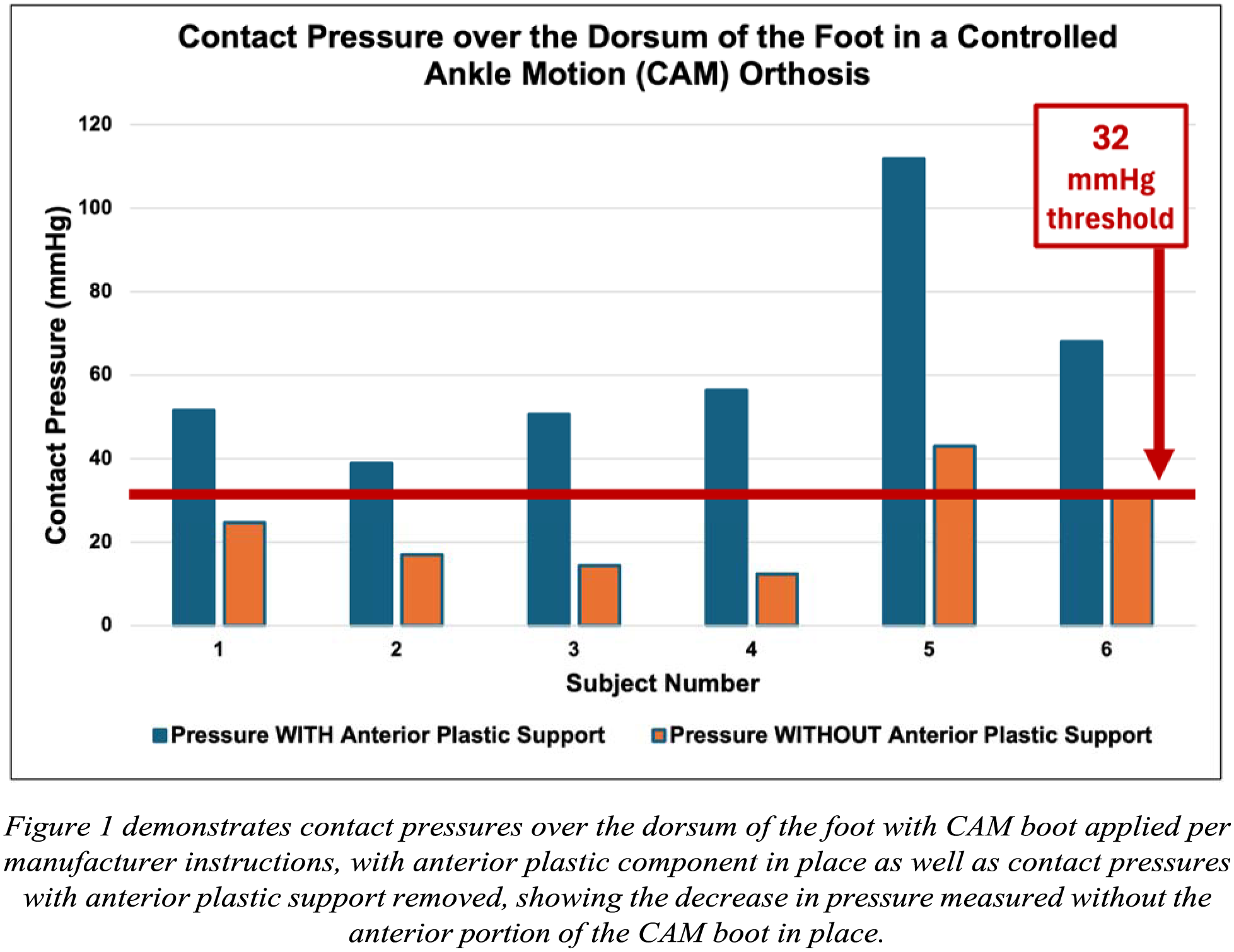
Results: For the six legs tested, the average contact pressure with the anterior plastic portion of the CAM boot in place was 62.95mmHg. With the plastic removed, the average contact pressure for the six legs was 28.82mmHg, indicating a 54.4% decrease in pressure. With the anterior plastic portion of the CAM boot in place as per manufacturer instructions, no leg reached below the critical 32mmHg threshold for vascular compromise. When the plastic piece was removed, 5/6 legs (83.3%) achieved contact pressures below 32mmHg.
Conclusion: Patients should be cautioned as to the risk of pressure-related injuries while wearing CAM boots for prolonged periods. While prior evidence demonstrates “floating” the heel is important to reduce heel pressure, the dorsum of the foot is also a source of possible pressure injury. Patients should be counseled that removal of the anterior plastic portion of the CAM boot, especially while at rest or when more rigid immobilization is not required, is beneficial in lowering the contact pressures to the dorsum of the foot, which can reduce the risk of pressure injuries, particularly in patients at risk for skin compromise.






 AbstractFirst published online January, 2026