Introduction/Purpose: The peripheral location of ankle fractures predisposes patients to postoperative wound complications, particularly in the setting of comorbidities that impair vascular function or immune response. Peripheral arterial calcifications (PACs) are radiographic markers associated with impaired blood flow, reduced tissue oxygenation, and increased ischemic risk. The purpose of this study was to report the incidence of radiographic PACs in operative ankle fractures and determine if they are a risk factor for wound complications and reoperations following surgical fixation.
Methods: A retrospective case-control study of all operatively treated ankle fractures at a single institution in a three-year period was conducted. Cases were identified via current procedural terminology (CPT) codes for ankle fracture open reduction internal fixation (ORIF). Preoperative radiographs of all injured ankles were reviewed for the presence of PACs. The clinical records of patients with PACs were reviewed for postoperative wound complications and reoperation rates. The same information was obtained for a propensity score-matched control group without PACs, accounting for patient demographics and comorbidities.
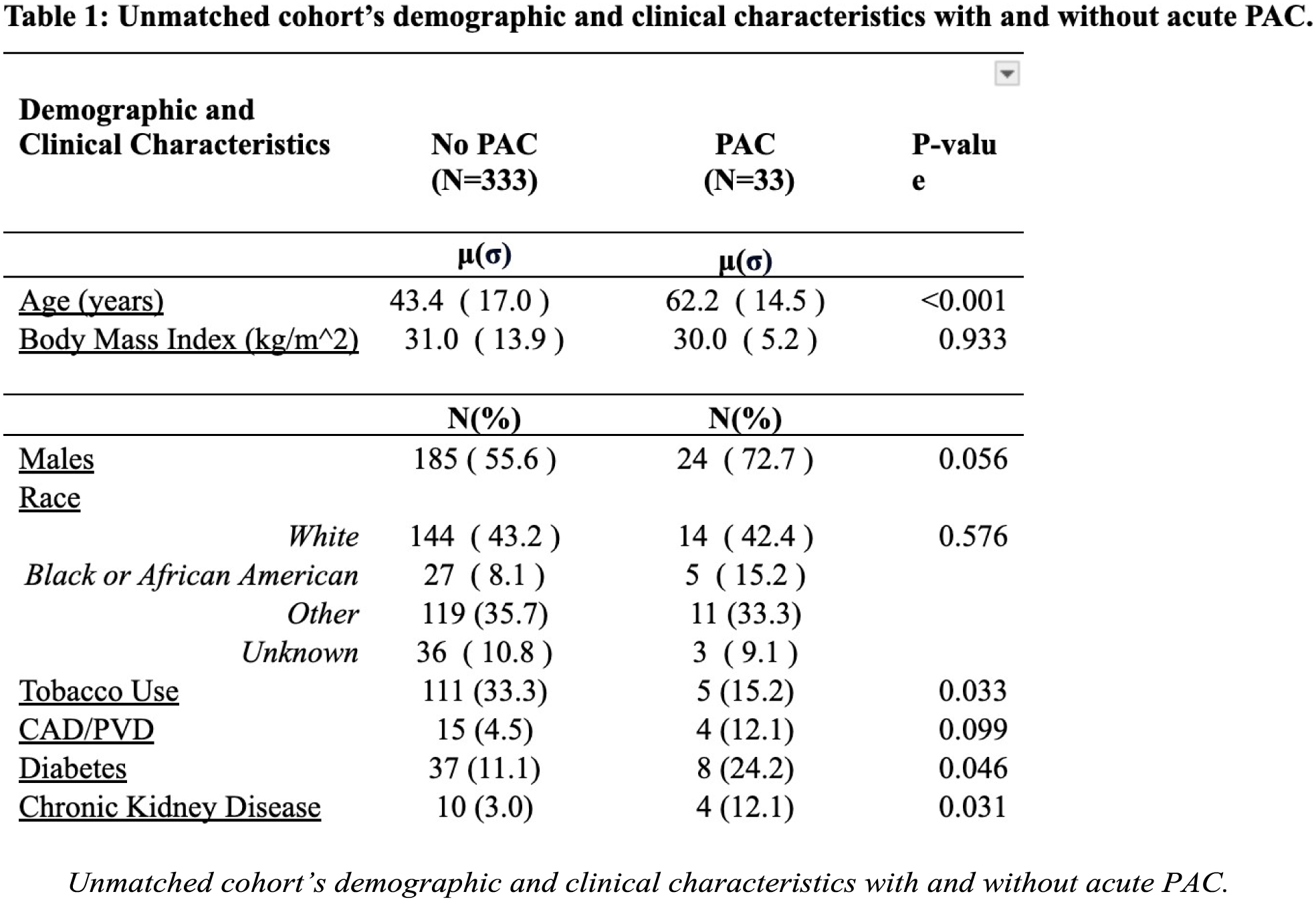
Results: A total of 430 operative ankle fractures were identified in patients aged 18-88 years between 2022 and 2025. 366 met the inclusion criteria. Of these, 33 (9.02%) had evidence of PAC on their injury radiographs. A propensity score-matched control cohort consisted of 59 patients. The average age was 62.2+/-14.5 years and 60.3+/-14.3 in the experimental and control groups, respectively (p=0.417). There were no statistically significant differences between the control group and experimental group with respect to their medical comorbidities, including BMI, tobacco use, CAD, PVD, DM2, and CKD. Of the 33 patients with radiographic PACs, 11 (33.3%, p=0.007) experienced postoperative wound complications, with 7 of 33 (21.2%, p=0.015) returning to the operating room for debridement and irrigation.
Conclusion: This study found that patients with PACs on injury radiographs are at an increased risk of wound complications and reoperation after ankle fracture surgical fixation. These findings suggest that radiographic evidence of PACs may serve as a useful preoperative risk stratification tool. Patients with PACs in the setting of a traumatic ankle fracture may benefit from a structured, multidisciplinary approach to perioperative care to minimize the risk of wound complications and optimize outcomes.








 AbstractFirst published online January, 2026