Abstract
Research Type:
Level 3 - Retrospective cohort study, Case-control study, Meta-analysis of Level 3 studies
Introduction/Purpose:
Arthrodesis of the first metatarsophalangeal (MTP) joint is a common surgical procedure to address arthritis or severe deformity. Previous literature has pointed to a higher complication rate in revision arthrodesis procedures. The primary aim of this study was to report the complication and union rates, including radiologic outcomes, for patients who underwent a revision first MTP joint arthrodesis.
Methods:
This is a retrospective series of revision 1st MTP arthrodeses between May 2013 and November 2023. Demographic information, co-morbidities, indication for primary and revision surgery, type of surgical hardware, union rate, complications, and patient-reported outcome measures were collected. Radiographic measurements of MTP dorsiflexion and hallux valgus angle (HVA) were also collected pre- and post-revision surgery.
Results:
Seventy-four patients (49 females, 25 males) with 76 feet were used for analysis. Average age was 63.0 (19.7-83) years old. Relevant patient comorbidities included 38% current/former nicotine use, 15% diabetes, and 27% inflammatory arthritis. The average time from the primary fusion to revision was 43.7 (range 1 month – 28 years).
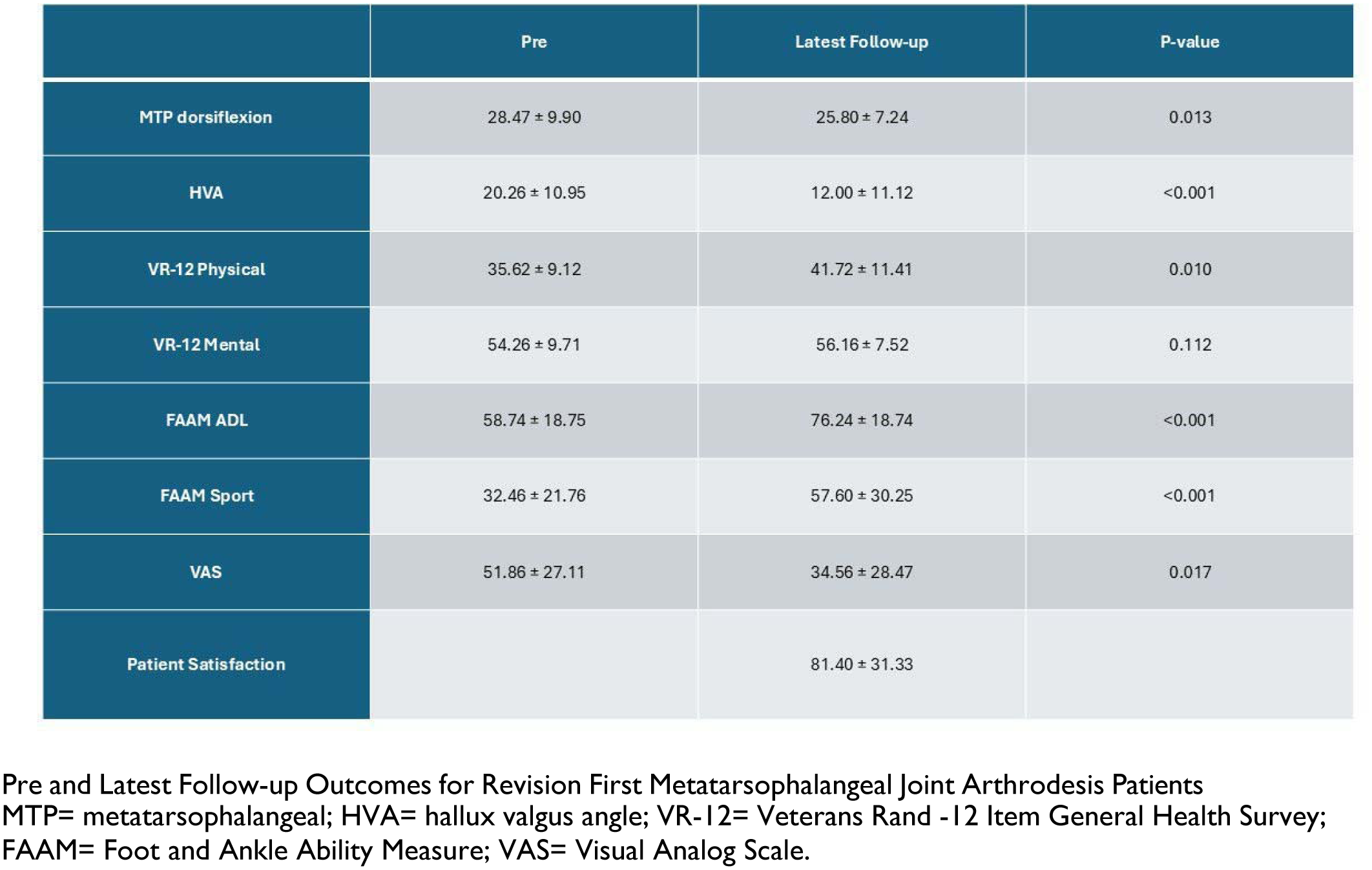
Isolated screws were used in 59% of primary cases vs. 37% in revisions; plates and screws were utilized in 33% of primary vs. 58% of revision cases . Non-union (68%) and malunion (30%) were the most common revision indications. There was a 34.2% complication rate following revision surgery including 6.8% hardware failure. The revision union rate was 88.9%. PROMS and radiographic outcomes significantly improved from pre- to post-revision (Table 1).
Conclusion:
Revision arthrodesis of the first MTP joint demonstrated a relatively high complication rate compared to primary 1st MTP arthrodesis, though achieved a high union rate and significantly improved clinical and radiographic outcomes.