Abstract
Research Type:
Level 3 - Retrospective cohort study, Case-control study, Meta-analysis of Level 3 studies
Introduction/Purpose:
Trimalleolar ankle fractures are challenging, especially in older adults with multiple comorbidities, however there are many options for operative management of these fractures. Tibiotalocalcaneal arthrodesis (TTCA) can be performed with smaller incisions, under local anesthesia, and in less operative time compared to open reduction and internal fixation (ORIF), highlighting its utility as a surgical approach to high-risk ankle fractures. Despite its appeal, outcome data comparing TTCA and ORIF remain sparse. This analysis assessed complication rates in high- and low-risk populations, aiming to determine if TTCA confers benefits or results in increased complications within these distinct risk cohorts.
Methods:
A retrospective analysis using the Nationwide Readmissions Database was performed on patients with trimalleolar ankle fractures who underwent either TTCA or ORIF. High-risk status was defined as age ≥ 60 years and at least one of the following comorbidities: diabetes mellitus, hypertension, chronic kidney disease, osteoporosis, obesity, morbid obesity, and heart failure. Low-risk status applied to patients aged less than 60 with none of the mentioned comorbid conditions. The sole outcome measure was overall complication rate, comprising wound dehiscence, cellulitis, thromboembolism, nonunion, malunion, infection, and hardware failure. Comparisons were made using Chi-Square tests between TTCA and ORIF within each risk group, as well as between high- and low-risk patients within each treatment modality. Statistical significance was set at p < 0.05. All analyses were performed using IBM SPSS, ensuring consistency in data management and reporting.
Results:
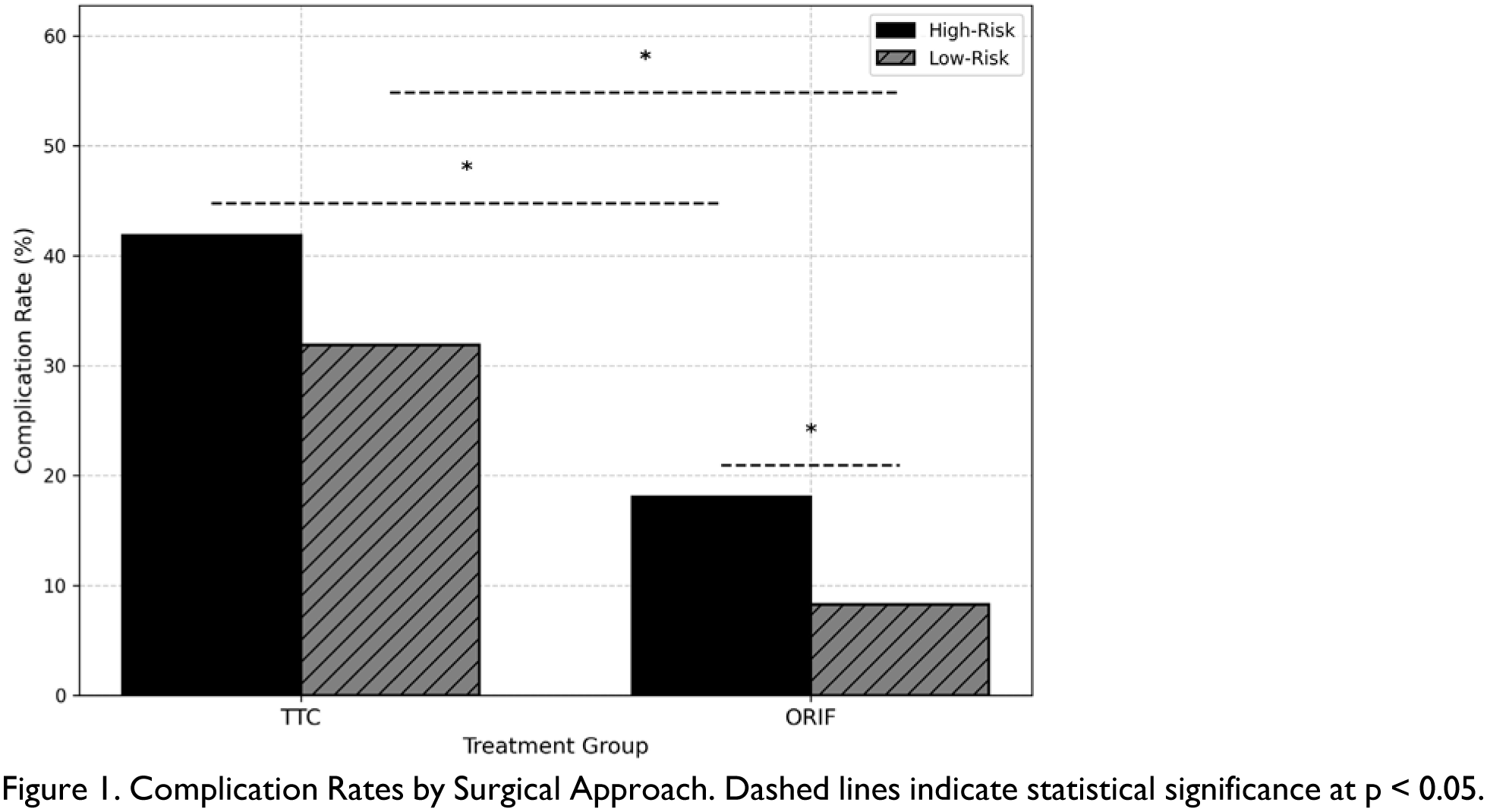
A total of 306 patients undergoing ORIF were compared to 252 patients undergoing TTCA. Of the 252 in the ORIF cohort, 134 were identified as high-risk, while in the TTCA cohort, there were 118 cases deemed high-risk. In high-risk patients, TTCA was associated with a significantly higher overall complication rate (42%) compared to ORIF (18%; p < 0.05). Among low-risk patients, TTCA also had a higher complication rate (32%) than ORIF (8%; p < 0.05). Within the ORIF group, high-risk patients experienced complications more than twice as often as low-risk patients (18% vs 8%; p < 0.05). Although high-risk TTCA patients likewise demonstrated higher complication rates than their low-risk counterparts (42% vs 32%), this difference was not statistically significant (Figure 1).
Conclusion:
Although TTCA may offer theoretical advantages for high-risk patients—such as a reduced incision size and potential for local anesthesia—this analysis found higher complication rates with TTCA. These findings suggest that TTCA may not be a better option than ORIF for operative repair of trimalleolar ankle fractures, although the results of this study may be influenced by the possibility that TTCA is reserved for cases of greater fracture severity as compared to cases that undergo ORIF. Ultimately, further research is needed to refine patient selection and reduce complication rates in high-risk populations.