



Abstract
Research Type:
Level 3 - Retrospective cohort study, Case-control study, Meta-analysis of Level 3 studies
Introduction/Purpose:
Hurricane Helene brought catastrophic damage to the southeastern United States in the fall of 2024. Augusta, GA was centered along the path of the storm, resulting in unprecedented damage to the region.
Our institution, Wellstar Medical College of Georgia Health, is one of six Level I Trauma Centers throughout the state. Further, it is the only center serving the Augusta area, which encompasses Georgia’s second largest metropolitan area. Beyond the initial damage and injuries caused by the storm, the subsequent recovery effort brought a substantial number of laborers and heavy machinery operators to the area, working in generally hazardous conditions. We reviewed the impact on foot and ankle injuries presenting to our institution following this event.
Methods:
We conducted a retrospective review of all emergency department consults received by the orthopedics department for the 30 days prior to and 30 days following Hurricane Helene passing over Augusta (September 27, 2024). We collected information regarding injury location, energy level (high versus low), mechanism, and patient demographics. We defined foot and ankle injuries as those involving the distal third of the tibia and distal. High energy mechanisms were defined as: motor vehicle collisions, falls from height, gunshot wounds, pedestrian versus automobile encounters, tree/limb crush injuries, chainsaw lacerations, and bicycle related injuries. Consults associated with incomplete/incorrect charts or without an associated orthopedic note were excluded.
Results:
511 unique injuries from August 28, 2024-October 27, 2024 were reviewed. 245 occurred during our pre-period (8/27/24-9/26/24), while 266 occurred during our post-period (9/27/24-10/27/24). 77/511 (15.1%) met our definition for foot and ankle. In the pre-period, 30/245 (12.2%) consults involved the foot and ankle compared to 47/266 (17.7%) post-period (P=.087). 37/77 (48.1%) foot and ankle injuries were sustained from high energy mechanisms, with 10/37 (27.0%) pre-period and 27/37 (73.0%) post-period (P=.04). Regarding foot and ankle fractures specifically, the proportion of open fractures to closed fractures increased, with 2/20 (10.0%) open fractures pre-period and 11/38 (28.9%) post-period (P=.1).
Conclusion:
Following Hurricane Helene, there were changes to foot and ankle related injuries presenting to our institution. We observed increases in the overall number of foot and ankle injuries, the proportion of open to closed fractures, and a statistically significant increase in high energy mechanism injuries. These findings can provide healthcare systems insights to how they can better prepare to care for patients following natural disasters and the resulting disaster recovery efforts.
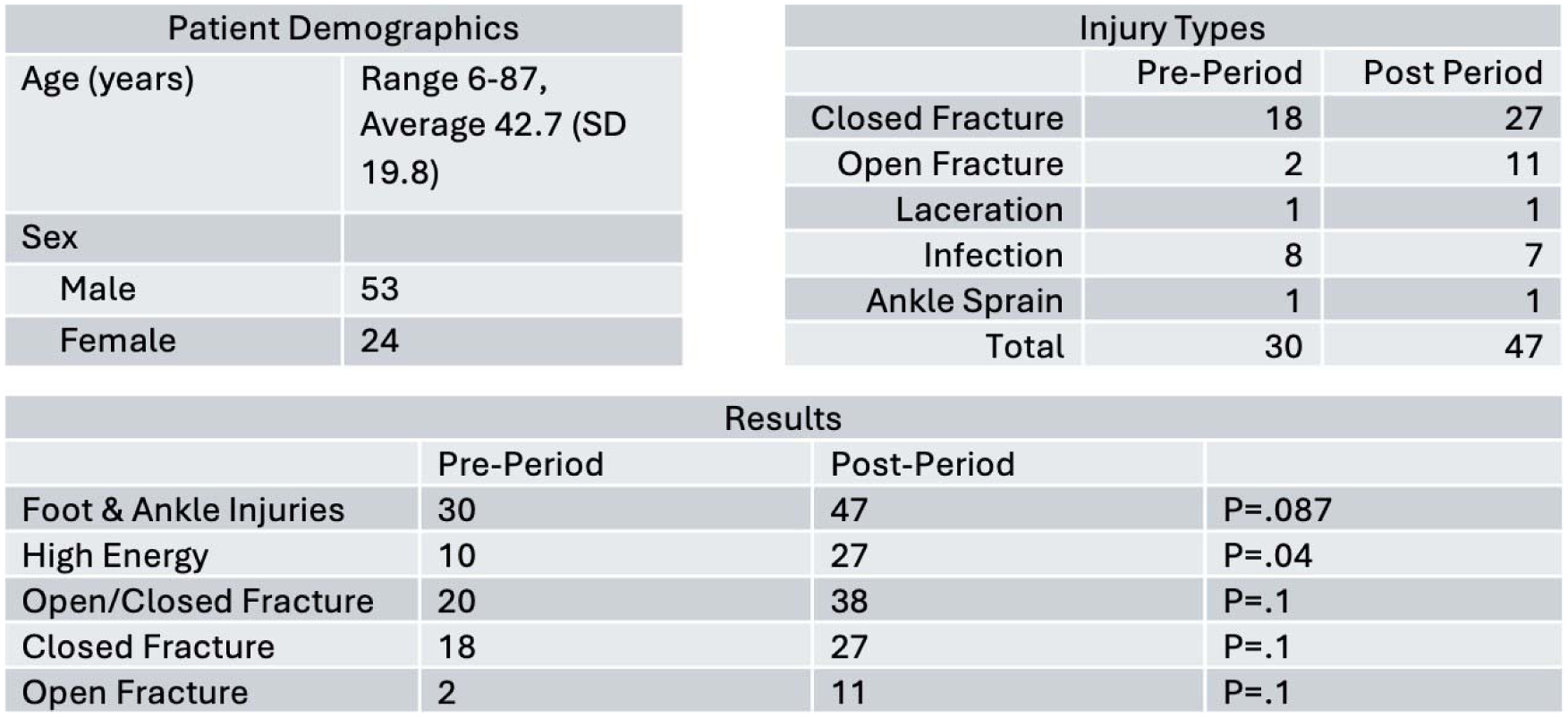
Patient Demographics, Injury Types, and Results