Abstract
Research Type:
Level 4 – Case series
Introduction/Purpose:
Prior studies in varying orthopaedic subspecialties have demonstrated possible inferior patient reported outcomes in patients with lower socioeconomic status. To date, there are limited reports assessing the effects of socioeconomic status in patients with acute foot and ankle injuries. Therefore, the purpose of this study was to evaluate patient characteristics and outcomes between socioeconomic groups in patients with acute ankle fractures.
Methods:
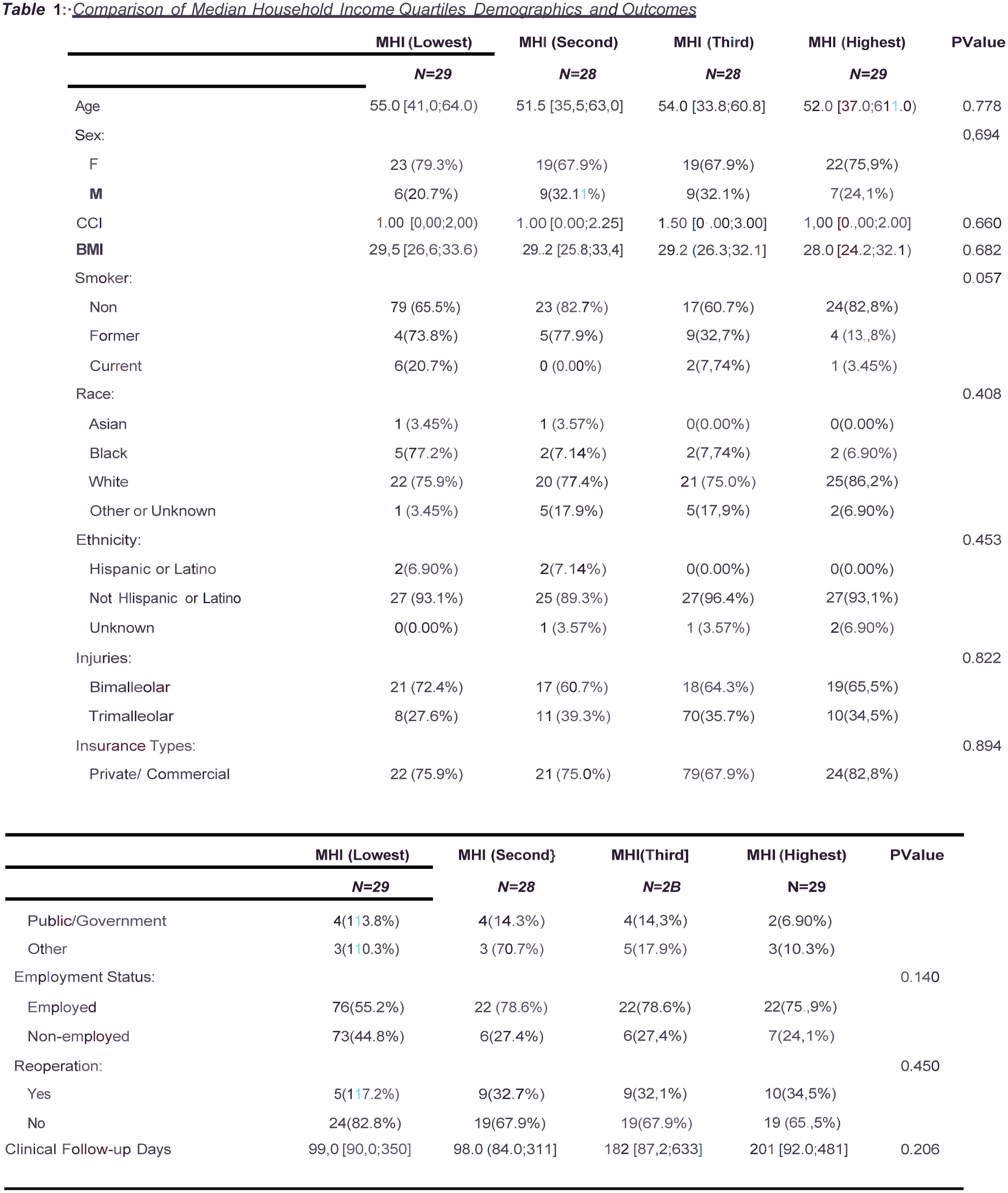
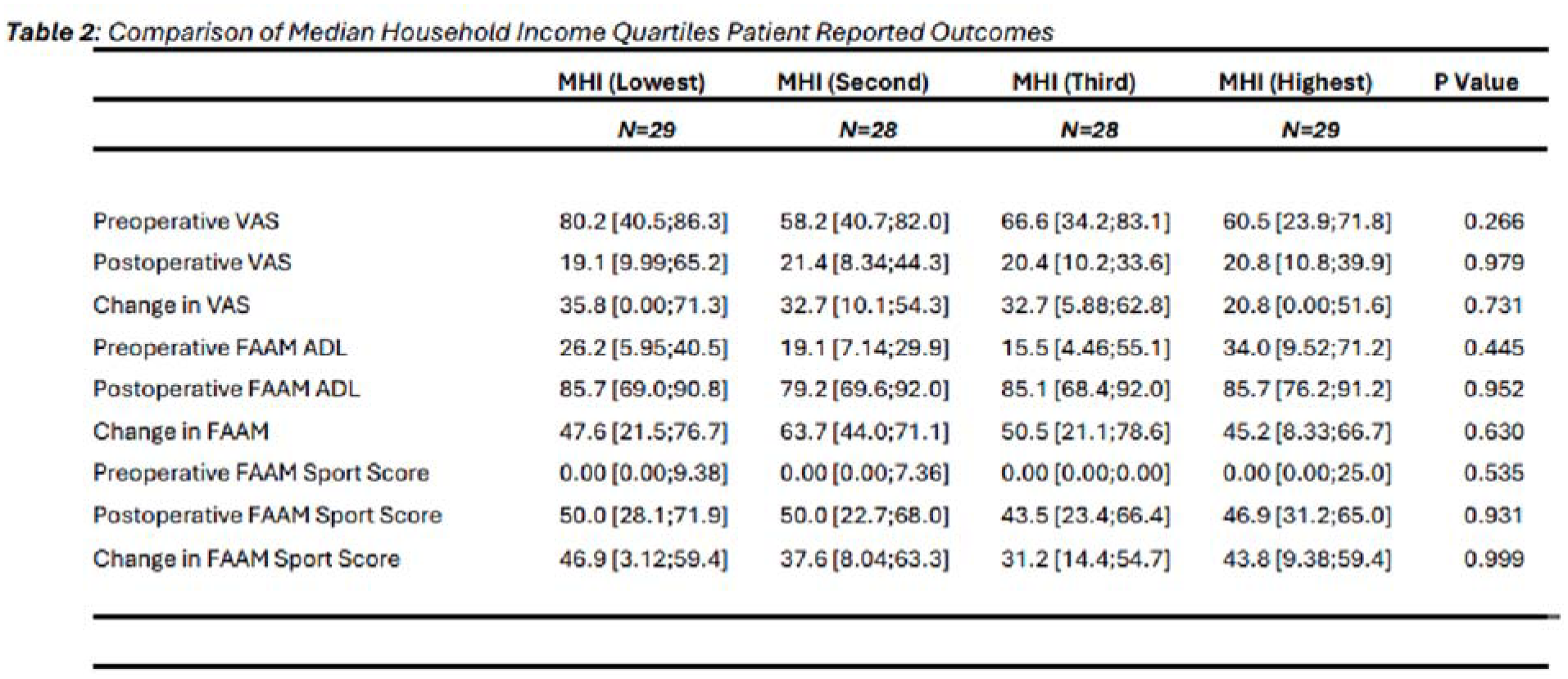
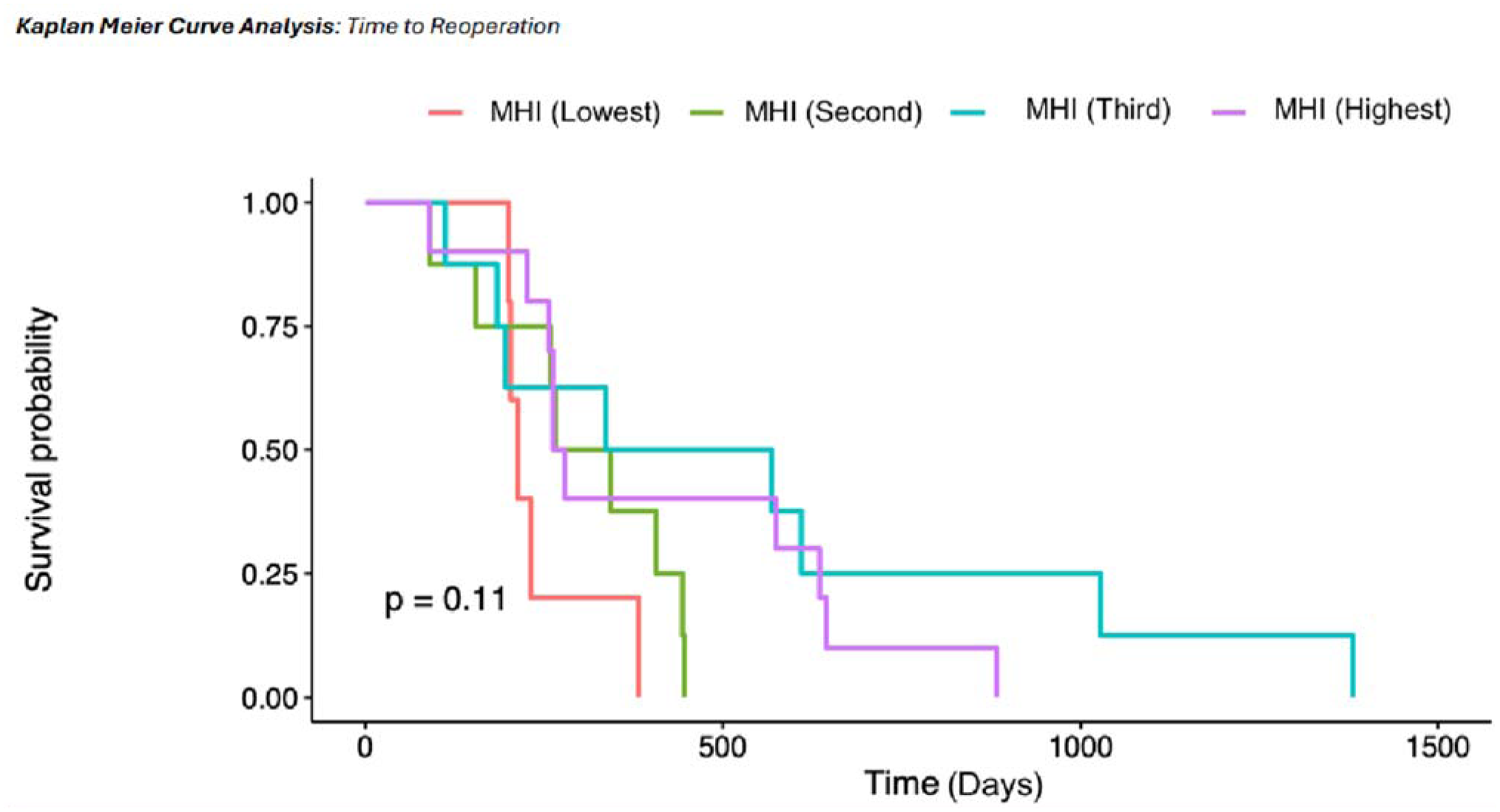
Patients with an acute bimalleolar or trimalleolar fracture from 2016 to 2021 at a single institution were included. Socioeconomic data was collected using zip codes and the National Census Bureau median household income estimates from 2015 to 2023 and divided into quartiles. Univariate analyses were used to compare demographics and patient reported outcome data including Visual Analog Pain (VAS) scores and Foot and Ankle Ability Measure (FAAM) scores. Kaplan Meier Curve Analysis was created to evaluate time to reoperation between groups.
Results:
One hundred and fourteen patients who sustained an acute ankle fracture were retrospectively identified and included. After univariate analysis, there were no significant differences between groups with patient characteristics such as age, sex, CCI, smoking status, reoperation rates, VAS or FAAM scores. Overall, the lowest quartile group had the highest percentage of current smokers and reported preoperative pain. Kaplan-Meier Curve analysis demonstrated that the lowest quartile group had the shortest time to revision while there were no significant differences with time to reoperation between groups.
Conclusion:
There were no significant differences in characteristics or patient reported outcomes scores between socioeconomic groups. Although not statistically significant, the lowest quartile group had more current smokers and preoperative pain while the highest quartile had an increased rate of reoperation. The lowest quartile group also had a faster time to reoperation compared to the other groups. Future studies are needed to understand potential healthcare inequities in patients with traumatic foot and ankle injuries.