




Abstract
Research Type:
Level 3 - Retrospective cohort study, Case-control study, Meta-analysis of Level 3 studies
Introduction/Purpose:
Accurate quantification of bony malalignment within the ankle syndesmosis is crucial in diagnosing syndesmotic instability, especially when subtle. While three-dimensional (3D) measurement techniques using weight-bearing computed tomography (WBCT) have gained popularity, normative bilateral comparative data still need to be established. This study aimed to identify the side-to-side variations and gender differences in the syndesmotic area and volume among individuals without syndesmotic injury using WBCT.
Methods:
Retrospective analysis was conducted on bilateral ankle WBCT imaging of 88 individuals who underwent imaging for non-ankle-related injury or pathology. Two-dimensional area (at 1, 3, and 5 cm proximal to the tibial plafond) and 3D volumetric (from 0.5 mm proximal to the tibial plafond and up to 3 and 5 cm proximally) measurements were obtained for bilateral ankles. Mean (± SD) values, percentage right-to-left differences, and gender differences were analyzed.
Results:
Although there were no significant differences between laterality in any of the measurements, significant gender differences were found in the areas and volumes of the distal syndesmosis. The largest difference was observed in volume to a level 5 cm above the tibiofibular joint (8.41±0.87 vs 7.45±1.47 in male vs female, respectively; P=0.001). The syndesmotic area at 5 cm proximal to the tibial plafond showed the smallest difference between bilateral sides, with a 6.9% difference, underscoring the sensitivity of volume (3D) versus area (2D) measurements (Table 1).
Conclusion:
Significant gender differences in syndesmotic measurements on WBCT, especially when using volume-based measurements, highlight the need for a contralateral comparison. Any future attempts to create absolute value cutoffs will need to take into account gender variation in order to account for such differences.
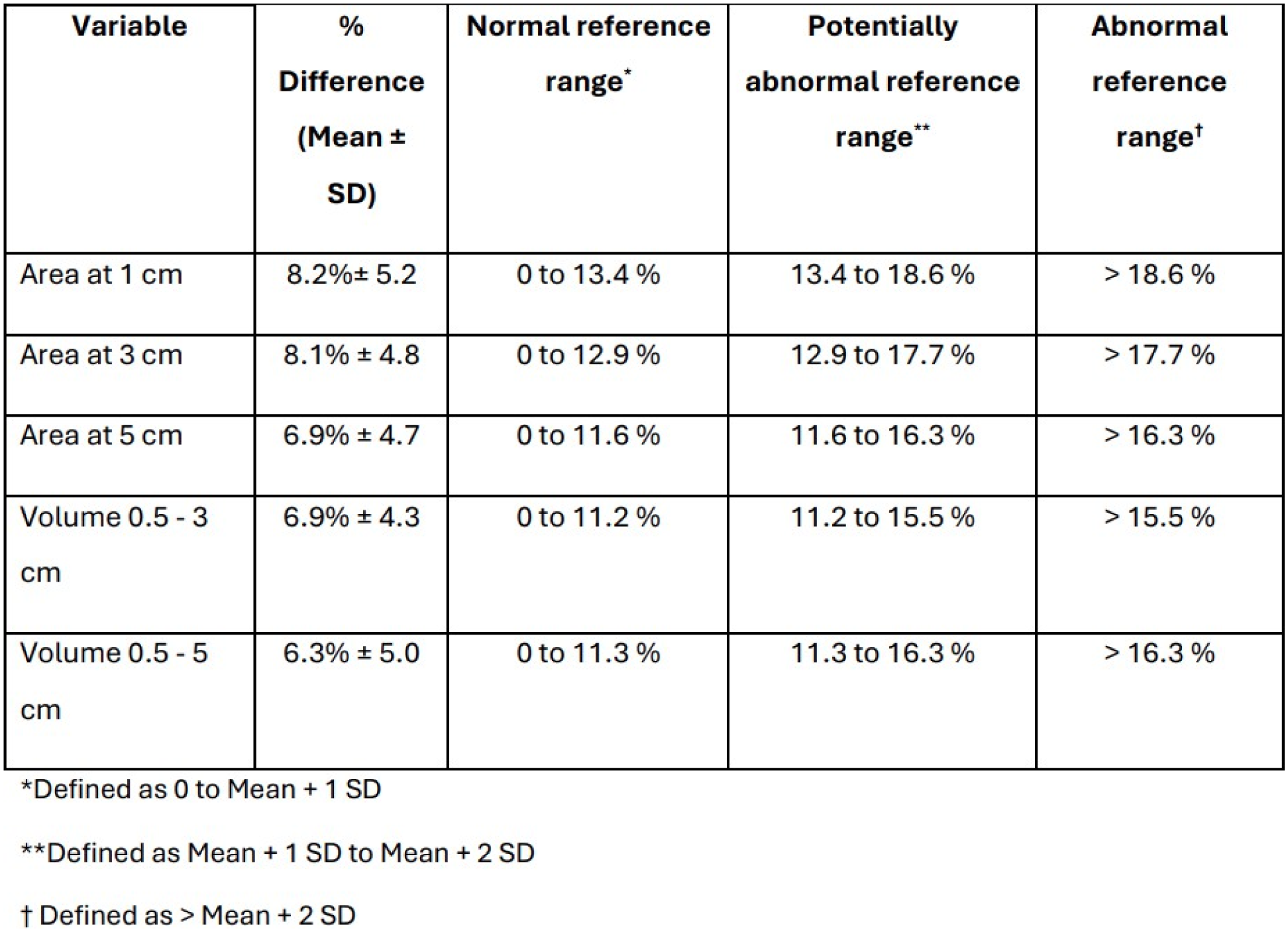
Table 1. Percentage of side-to-side differences for all measurements and derived reference ranges.