



Abstract
Research Type:
Level 3 - Retrospective cohort study, Case-control study, Meta-analysis of Level 3 studies
Introduction/Purpose:
The traditional lateral approach with open reduction and internal fixation (ORIF) is the gold standard for treating ankle fractures since the 1960s. Although good results can be achieved with this technique, it has a considerable complication rate particularly in high-risk patients. Common complications include wound dehiscence, infection, hardware prominence, and fixation failure. Minimally invasive closed reduction and internal fixation with a fibular nail (CRIF) offers a biomechanically stronger alternative. This technique requires smaller incisions, minimizes soft tissue disruption, and utilizes low-profile hardware, potentially reducing complication rates. This study retrospectively compares the radiological and functional outcomes of these techniques in patients at increased risk of complications
Methods:
We conducted a retrospective review of patients who underwent surgical treatment for ankle fractures at a Level I trauma center between 2018 and 2020. A total of 61 patients met the inclusion criteria, with a minimum follow-up of one year. Of these, 30 patients underwent fixation with a fibular nail, while 31 were treated with plate and screws. Radiographic assessments were performed to evaluate fracture alignment and consolidation. Clinical outcomes included the reoperation rate for wound dehiscence or other complications, as well as amputation and mortality rates. Functional outcomes were measured using the Olerud and Molander Score.
Results:
The fibular nail group experienced significantly fewer complications compared to the ORIF group. Radiographic analysis showed comparable fracture alignment and consolidation between both techniques. At the one-year follow-up, no significant difference was observed in functional outcomes, with mean Olerud and Molander Scores of 78 (range: 0–100) in the fibular nail group and 88 (range: 20–100) in the ORIF group.
Conclusion:
Fibular nailing provides reliable fracture reduction and stable fixation while significantly reducing soft tissue complications compared to ORIF. Given its minimally invasive nature, biomechanical advantages, and lower complication rate, it represents a valuable alternative, particularly for high-risk patients. Further prospective studies are warranted to validate these findings and optimize patient selection criteria.
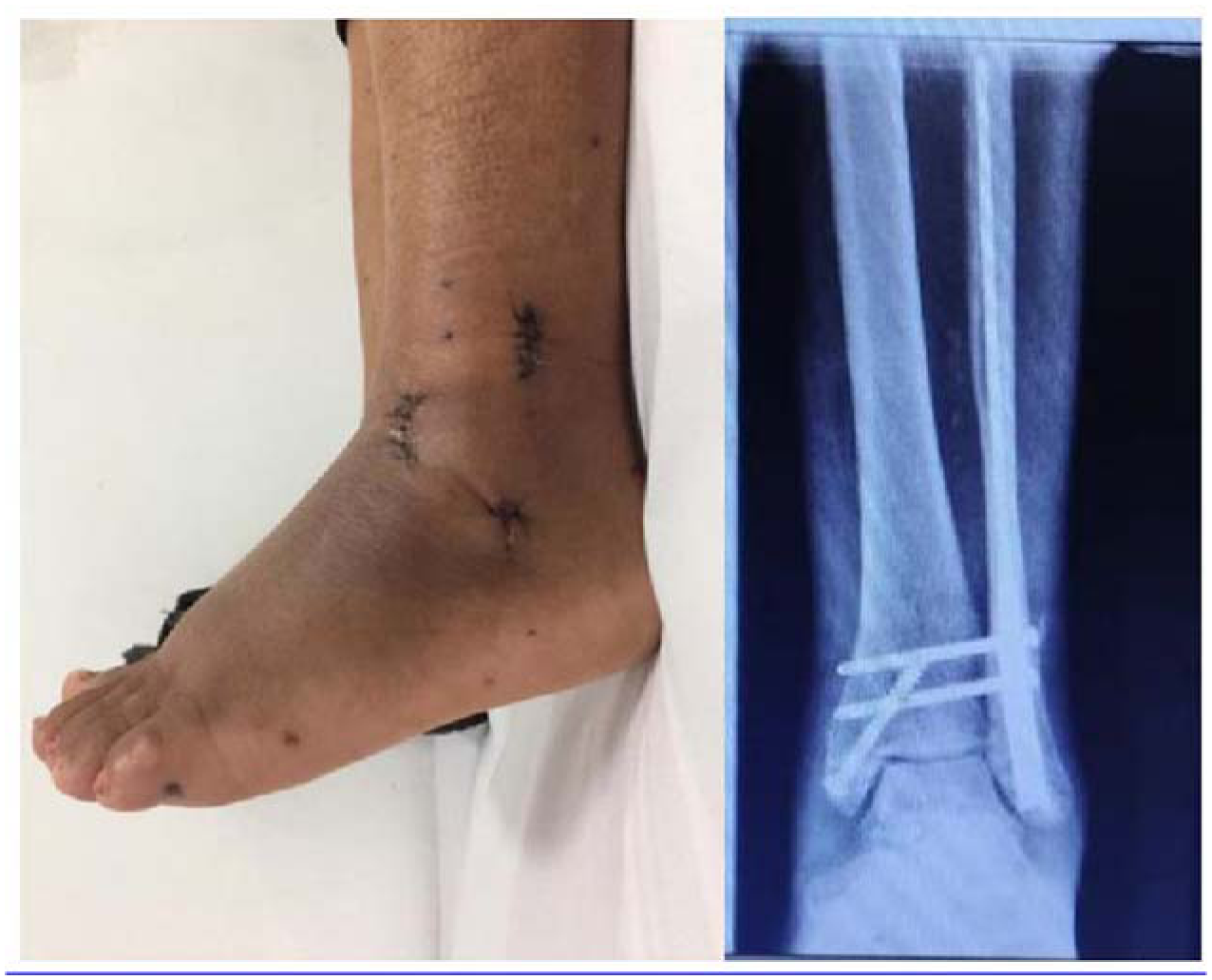
Ankle fracture in an elderly diabetic patient minimally invasive fixed with a fibular nail