Abstract
Category:
Basic Sciences/Biologics; Sports
Introduction/Purpose:
Over the past two decades, there have been significant advancements and increased utilization of orthobiologic technologies. The use of orthobiologic products is often determined by individual surgeons given the limited available literature on efficacy. Currently, there is a paucity of data available evaluating the prevalence of orthobiologics use among foot and ankle orthopaedic surgeons. The primary aim of this study was to investigate orthobiologic utilization among American Orthopaedic Foot & Ankle Society (AOFAS) members.
Methods:
Members of the AOFAS were sent a survey in 2023 that was designed to assess for usage, motivation for use, and treatment indications in operative and nonoperative settings for the following orthobiologics: leukocyte-poor (PRP-LP), leukocyte-rich (PRP-LR) and leukocyte-unknown (PRP-UNK) platelet rich plasma, bone marrow aspirate concentrate (BMAC), adipose-derived mesenchymal stromal cells, hyaluronic acid, recombinant human bone morphogenic protein (rhBMP-2), recombinant human platelet derived growth factor (rhPDGF-BB), amniotic membrane products, and small cell binding peptide. The survey was completed by 129 respondents representing a balanced cohort in regards to geographic spread, time in practice, and medical practice setting.
Results:
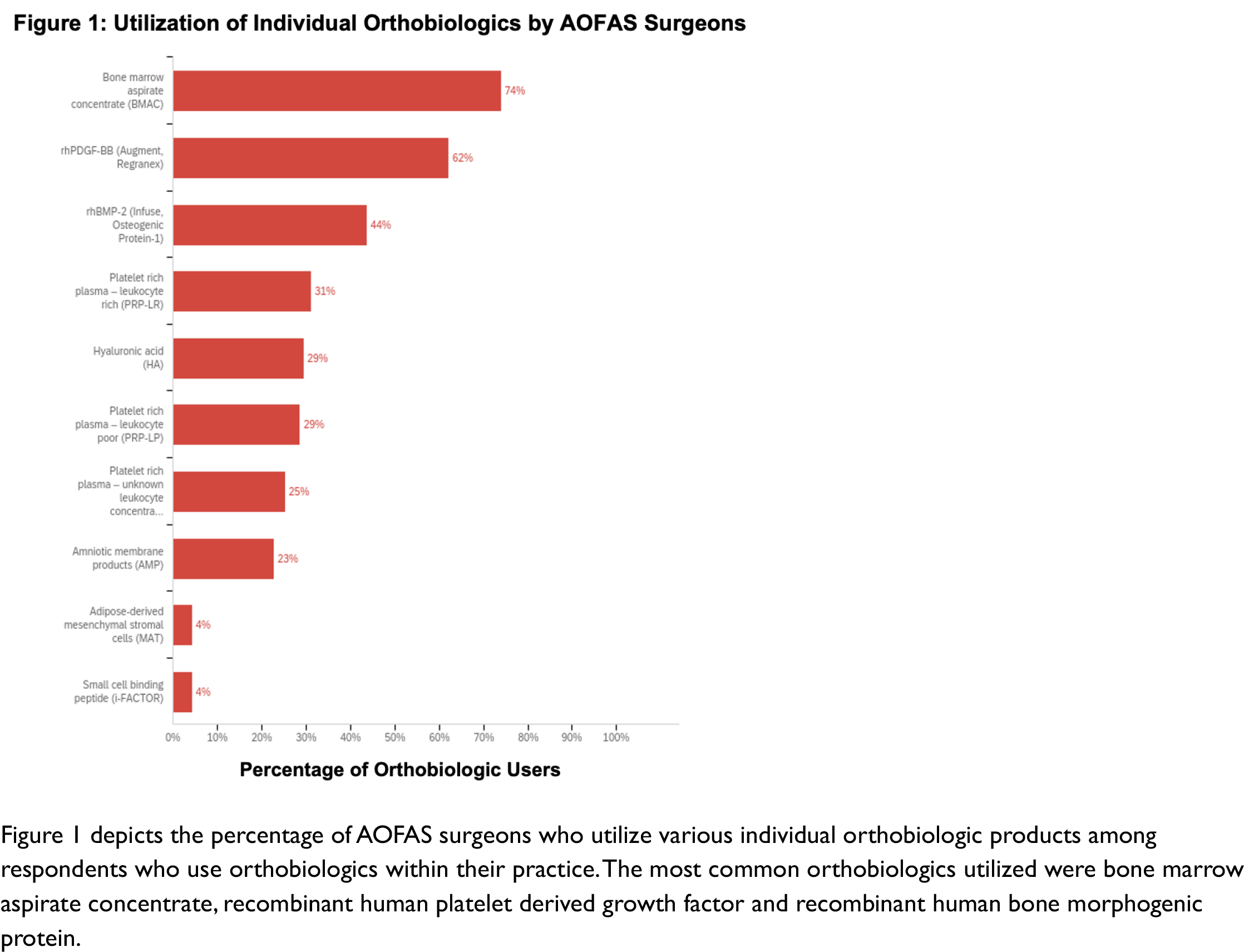
92% of respondents utilized ≥1 orthobiologic with no significant differences in utilization based on demographics. Perceived efficacy and support from literature were cited as common reasons to use orthobiologics. Among orthobiologic users, the most common product used was BMAC (74%), followed by rhPDGF-BB (62%) and rhBMP-2 (43%) (Figure 1). The most common indications for BMAC were revision arthrodesis, osteochondral surgery and primary arthrodesis. For rhPDGF-BB and rhBMP, the most common indications were revision and primary arthrodesis. The most common pathology for nonoperative use of PRP-LR and PRP-UNK was tendinopathy versus plantar fasciitis for PRP-LP, whereas the most common operative use of any formulation of PRP was for osteochondral lesions. Among non-users, 70% cited lack of evidence and 50% cited costs in their decision making.
Conclusion:
Among AOFAS surgeons, there is a high rate of utilization of orthobiologic products. Bone marrow aspirate concentrate was the most common orthobiologic used overall, though there remains significant variability in the usage and treatment indications for each individual orthobiologic. Given that evidence from the literature was frequently cited as a motivation for both users and nonusers for orthobiologics, there remains a need for future studies evaluating the efficacy of orthobiologic products in foot and ankle orthopedics.