




Abstract
A merged system incorporating paperfluidics and papertronics has recently emerged as a simple, single-use, low-cost paradigm for disposable point-of-care (POC) diagnostic applications. Stand-alone and self-sustained paper-based systems are essential to providing effective and lifesaving treatments in resource-constrained environments. Therefore, a realistic and accessible power source is required for actual paper-based POC systems as their diagnostic performance and portability rely significantly on power availability. Among many paper-based batteries and energy storage devices, paper-based microbial fuel cells have attracted much attention because bacteria can harvest electricity from any type of organic matter that is readily available in those challenging regions. However, the promise of this technology has not been translated into practical power applications because of its short power duration, which is not enough to fully operate those systems for a relatively long period. In this work, we for the first time demonstrate a simple and long-lasting paper-based biological solar cell that uses photosynthetic bacteria as biocatalysts. The bacterial photosynthesis and respiration continuously and self-sustainably generate power by converting light energy into electricity. With a highly porous and conductive anode and an innovative solid-state cathode, the biological solar cell built upon the paper substrates generated the maximum current and power density of 65 µA/cm2 and 10.7 µW/cm2, respectively, which are considerably greater than those of conventional micro-sized biological solar cells. Furthermore, photosynthetic bacteria in a 3-D volumetric chamber made of a stack of papers provided stable and long-lasting electricity for more than 5 h, while electrical current from the heterotrophic culture on 2-D paper dramatically decreased within several minutes.
Keywords
Introduction
For centuries, paper has been commonly used for biological and chemical analysis because of its biocompatible surface, hydrophilic porosity, and controllable optical properties.1,2 However, it was not until paper-based microfluidics, known as paperfluidics, was introduced in 2007 that paper was reappraised as a game-changing material for next-generation point-of-care (POC) diagnostics.2,3 The innovative aspect of paperfluidics lies in the use of a hydrophobic wax to create 3-D microfluidic pathways that distribute microliter volumes of analytes into multiple sensing regions of the paper to conduct multiple simultaneous bioassays. 4 The many unique advantages of paperfluidics, including extremely low-cost assembly, power-free fluidic control, and disposability by incineration, make it the best technique for single-use, disposable POC assays, particularly in limited-resource and remote regions.5,6 Concurrent with advances in paperfluidics, remarkable efforts have been dedicated to paper-based electronics, known as papertronics, where paper is used as a substrate for electronic components because of its excellent dielectric constant.7–9 The biodegradability of papertronics has attracted much attention as the future of green electronics, reducing the dramatic increase in electronic waste. Its easy and safe disposability make it ideal for such promising applications as security-related electronics and the Internet of Disposable Things (IoDT).10,11 Merged systems incorporating paperfluidics and papertronics (named here as paper-fluidic-electro-systems) have the potential to yield exceptionally powerful functions and performances in POC diagnostics, reducing design complexity and enabling mass production in a cost-effective manner.12,13 A novel electrofluidic fabrication method on paper for integrating electric pathways and microfluidic channels enabled the fluidic and electric interconnection and offered a number of new designs and capabilities for paper-fluidic-electro-systems.14,15
To attain all-in-one fully sustainable and stand-alone paper-fluidic-electro-systems, their power sources must be built on paper for the system integration.16–18 The fluidic control capability of paper allowed us to choose aqueous biological fuel cells as an energy supply. They are normally inexpensive, environment friendly, and easy to fabricate compared with solid-state power sources (e.g., lithium-ion batteries). 18 Recently, our group pioneered paper-based microbial fuel cells to realize a truly stand-alone and self-sustainable paper-fluidic-electro-system for POC testing.13,15,19–22 Through an integration of the microbial fuel cell into paper substrates and a preloading of lyophilized bacteria as a biocatalyst, a high-performance paper-based microbial fuel cell was created, allowing long device shelf life and on-demand activation with any organic matter, including wastewater and human saliva.21,22 The device generated reliable power from microbial metabolism with one drop of the organic matter, delivering on-board energy to the next generation of paper-based POC platforms. This technique potentially enables a self-powered paper-based diagnostic test for anyone, anywhere, and anytime.23–25
Although single-use, disposable POC tests require relatively small power consumption, the paper-based microbial fuel cells using heterotrophic bacteria have not been translated into practical applications because they fail to deliver power for a relatively long time. The heterotrophic bacteria required continuous replenishment of the bacterial nutrients for longer power generation, while the limited volume of the reservoir in a 2-D paper substrate did not contain enough nutrients. Even the latest advances in the paper-based microbial fuel cell technology generated power for only tens of minutes, hampering on-site, entirely self-sustained POC diagnostic testing. 22
In this work, we created a paper-based biological solar cell to significantly improve power duration by using the sustainable energy production of photosynthetic bacteria (
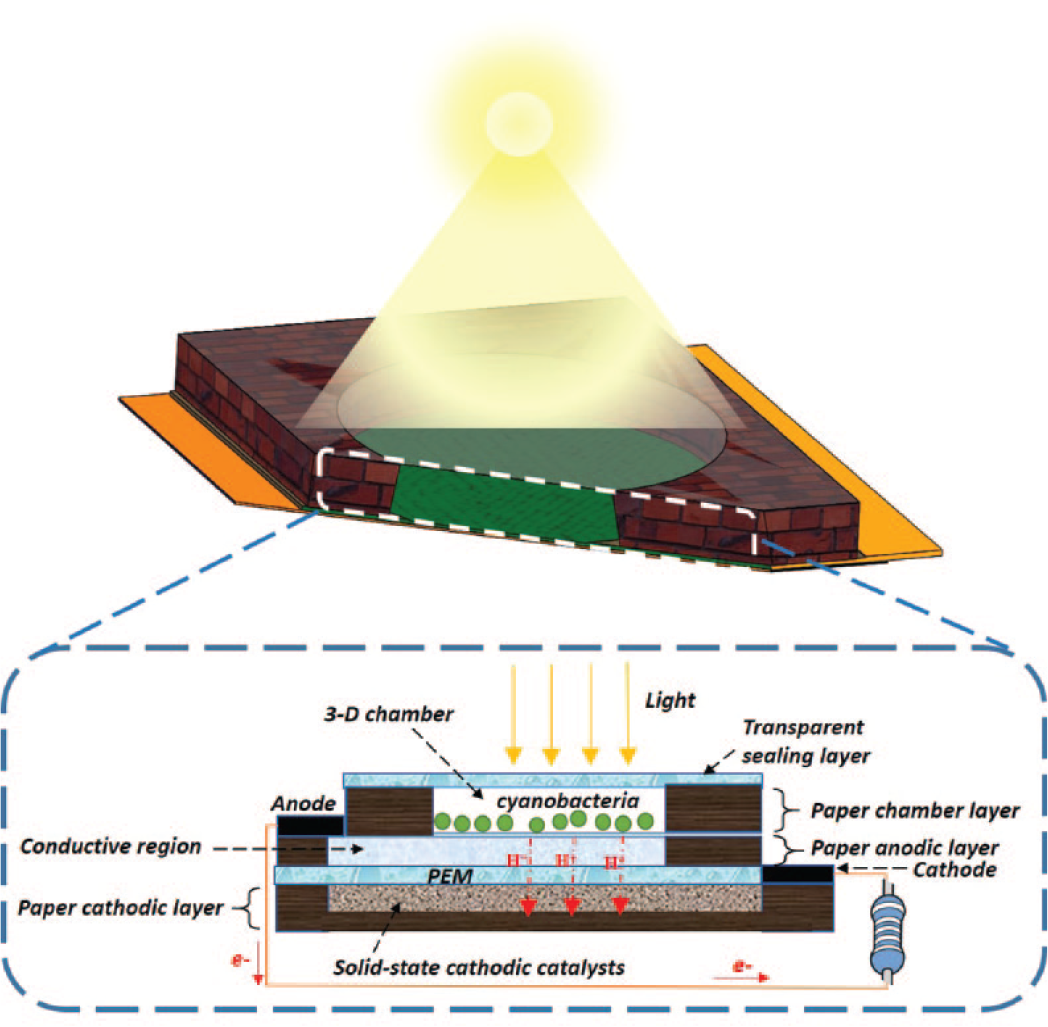
Schematic diagram of the paper-based biological solar cell and its cross section showing the individual layers.
Materials and Methods
Materials
Whatman Grade 3MM Chromatography paper (3030-861) and Ag2O (AA11407-14) were purchased from VWR International, LLC (Philadelphia, PA). Cyanobacteria BG-11 freshwater solution, DMSO, glutaraldehyde solution, Whatman Nuclepore Track-Etched Membranes (111712), and phosphate-buffered saline (PBS) were obtained from Sigma-Aldrich (St. Louis, MO). Poly(3,4-ethylenedioxythiophene):polystyrene sulfonate (PEDOT:PSS) (Clevios PH1000) was purchased from Heraeus (Vandalia, OH). Conductive graphite ink (cat. E34561000G) was obtained from Fisher Scientific Company, LLC (Wareham, MA).
Bacterial Inoculum
The photosynthetic bacteria Synechocystis sp. PCC 6803 were cultivated from −80 °C glycerol stock cultures by inoculating 15 mL of BG-11 medium with gentle shaking under a 12 h/12 h light cycle at 30 °C. The composition of BG-11 medium is as follows: 1.5 g of NaNO3, 40 mg of K2HPO4, 75 mg of MgSO4, 36 mg of CaCl2, 1 mg of EDTA, and 6 mg of citric acid and ferric ammonium citrate per 1 L of distilled water. To compare the enhanced power duration of the biological solar cell, the heterotrophic bacteria Shewanella oneidensis MR1 was grown in 15 mL of L-broth medium with gentle shaking for 24 h at 37 °C. The L-broth medium includes 10 g of tryptone, 5 g of yeast extract, and 5 g of NaCl per liter. Bacterial growth was monitored by the optical density at 600 nm (OD600). All bacterial samples were cultivated until their OD600 reached 1.2.
Preparation of Paper-Based Biological Solar Cells
As shown in
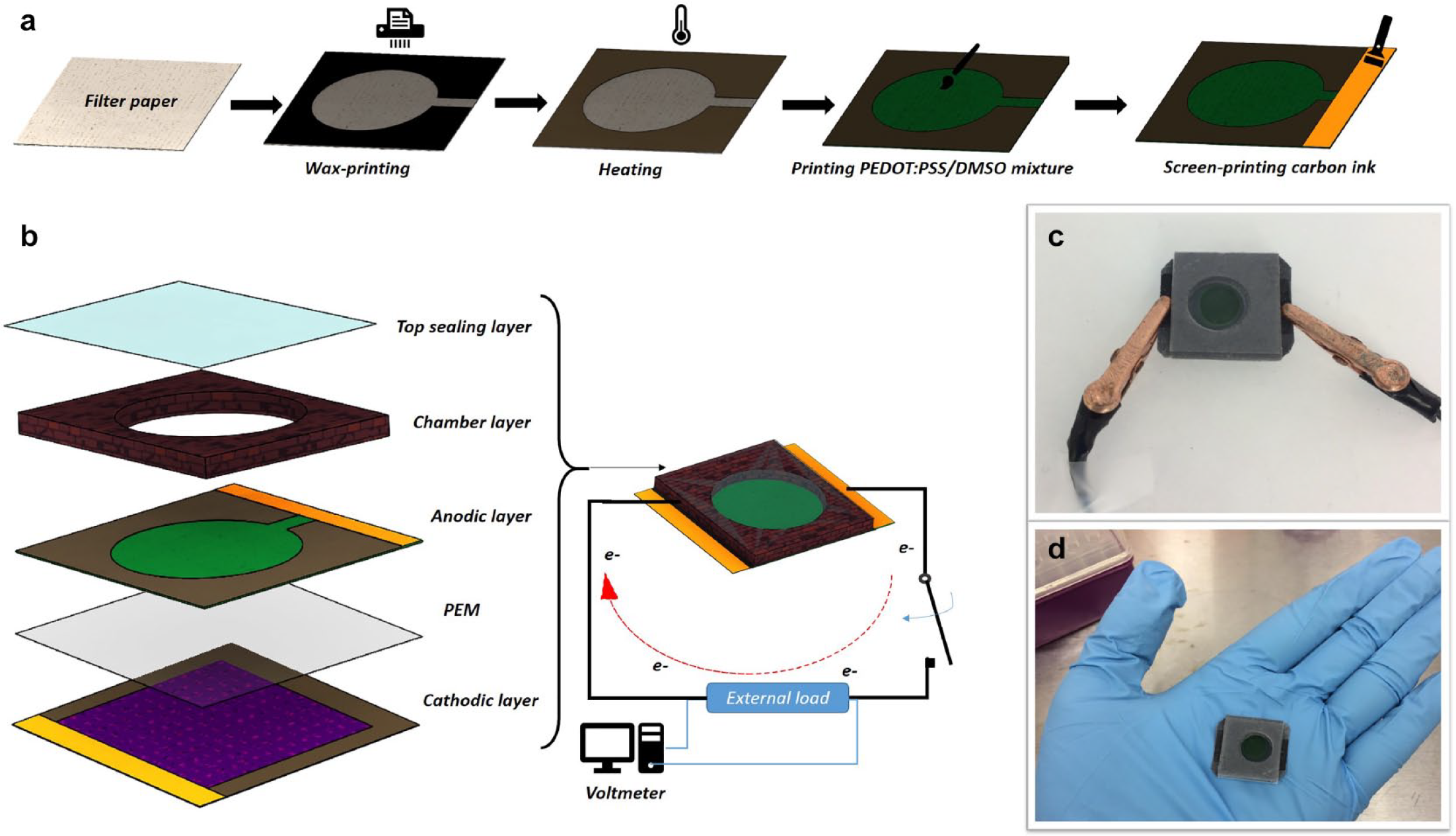
(
Electrical Measurement Setup
A National Instruments (NI) data acquisition module (USB-6212) with a customized user interface was used for voltage measurements. Current and power generation were calculated with the connected external resistance and the measured voltage outputs via Ohm’s law. Current and power densities were normalized to the anodic surface area.
Bacterial Fixation and SEM Imaging
The anodic layers were washed gently with 0.1 M PBS and fixed using 4% glutaraldehyde solution overnight at 4 °C. Then, they were washed with PBS and dehydrated by 5 min serial transfers through 30%, 50%, 70%, 80%, 90%, 95%, and 100% ethanol. The samples were then placed in hexamethyldisilazane (HMDS) for 10 min followed by air-drying overnight. The fixed samples were examined using a FESEM (field emission SEM; Supra 55 VP, Zeiss).
Results and Discussion
Bacteria Loading and Operating Principle
A fluorescent lamp-controlled chamber provided continuous illumination throughout the experiments. After 100 µL of bacterial samples was introduced into the anodic chambers of two identical devices, we waited 30 min for bacterial acclimation and accumulation. The hydrophilic paper reservoir quickly wicked the bacterial solution through capillary action, allowing rapid adsorption of the bacteria onto the conductive paper fibers. As shown in

Compared with conventional microbial fuel cells that use chemicals or oxygen as the electron acceptor, the Ag2O-based solid-sate cathode provides only a two-phase cathodic reaction of Ag2O and water, thus eliminating low reactant collision probability or low aqueous oxygen solubility. 15 Therefore, the cathodic overpotential can be reduced, enhancing power performance. The transparent, gas-permeable sealing tape enclosed the chamber that holds the bacterial nutrients, maximized the light energy capture, and promoted gas exchange for bacterial photosynthetic and respiratory activities.
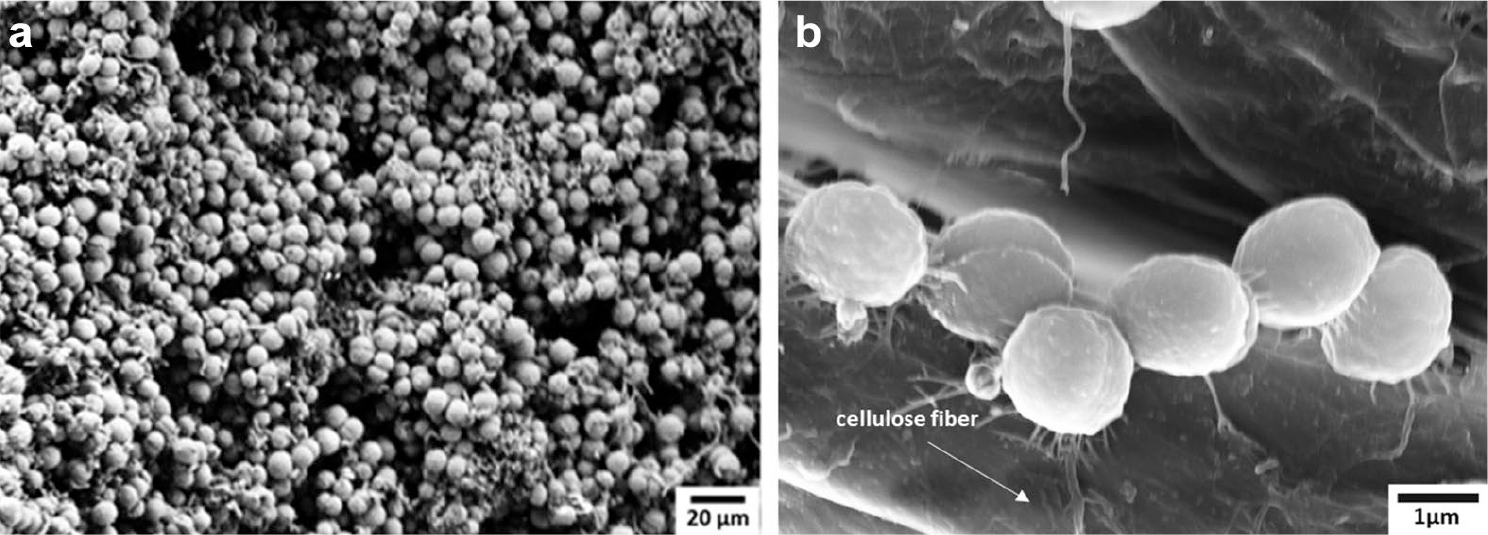
SEM images of (
Power Generation and Duration
To quickly confirm the performance and reproducibility of the paper-based biological solar cells, they were first tested in an open-circuit configuration (
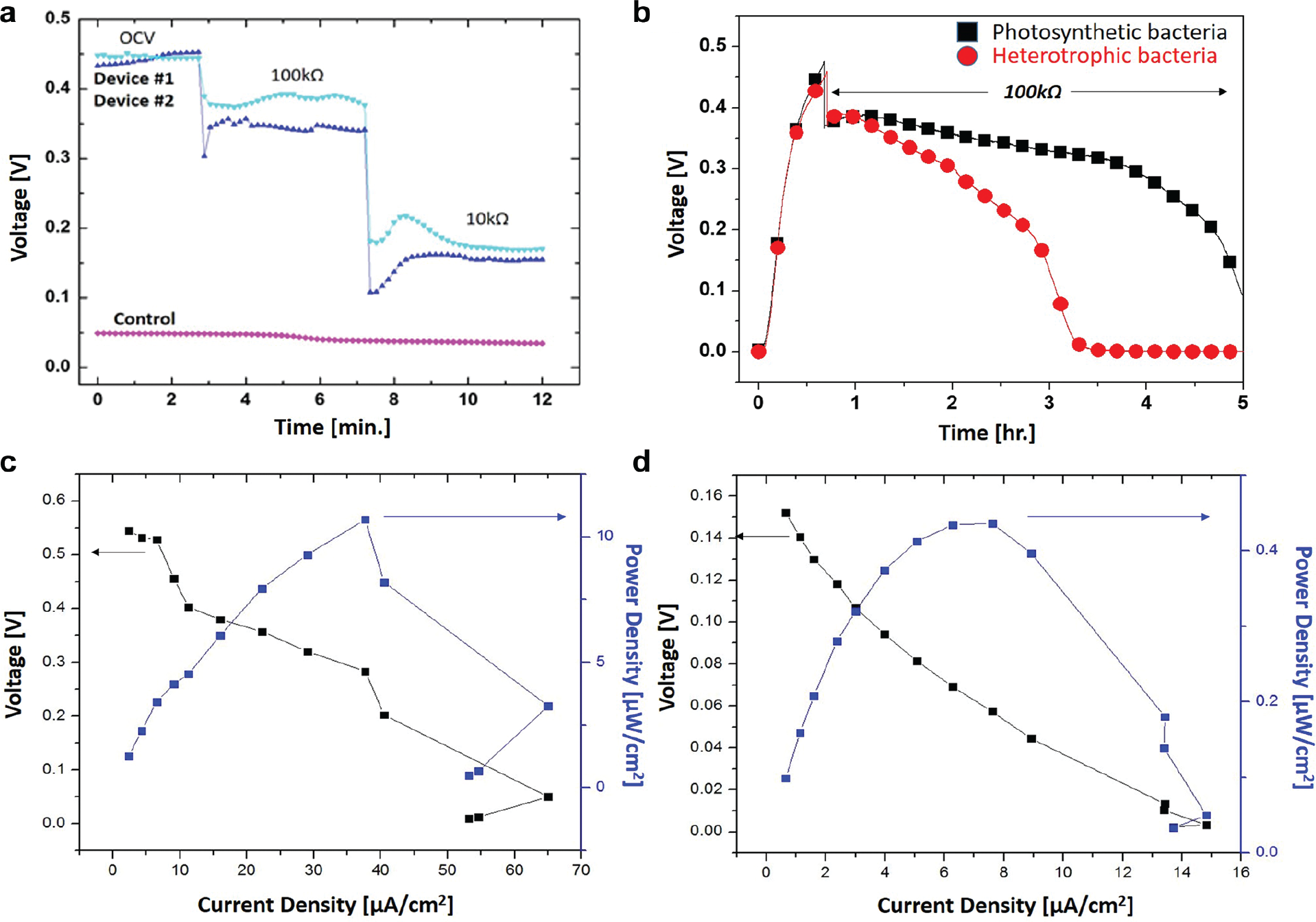
(
Conclusion
In this work, we demonstrated an innovative paper-based biological solar cell to improve the power duration for potential POC diagnostic applications in resource-limited settings. Stand-alone and self-sustainable paper-fluidic-electro-systems will be essential to providing effective and lifesaving POC diagnostic devices even in those challenging fields. Our simple but powerful biological solar cell maximized bacterial electricity-producing capability in a well-controlled paper-based microchamber, featuring a transparent gas-permeable sealing layer, a solid-state Ag2O cathode, and an engineered anodic reservoir. The device generated maximum power and current densities of 10.7 µW/cm2 and 65.0 µA/cm2, respectively, which are considerably higher than those of conventional biological solar cells. Furthermore, the power duration (~5 h) was significantly superior to that of the 2-D paper-based microbial fuel cells (several minutes). Our work will create a realistic and accessible power solution for interfaced, paper-based diagnostic devices that can revolutionarily improve the practical single-use applications in resource-limited settings.
Footnotes
Declaration of Conflicting Interests
The authors declared no potential conflicts of interest with respect to the research, authorship, and/or publication of this article.
Funding
The authors disclosed receipt of the following financial support for the research, authorship, and/or publication of this article: This work was supported by the Office of Naval Research (no. N00014-81-1-2422), National Science Foundation (ECCS no. 1703394), and SUNY Binghamton Research Foundation (SE-TAE).