



Abstract
The necessity for anti-heat stress workwear to ensure the safety and performance of outdoor workers in hot, humid environments is clear. Yet, there is a gap in fabric selection techniques that consider multi-criteria decisions and account for the varying functional needs across different body regions. Here, we proposed a hybrid multi-criteria decision-making approach, merging the efficacy coefficient method, analytic hierarchy process, entropy weight, and technique of order preference by similarity to the ideal solution for developing ergonomic modular outdoor workwear. This method is tailored for anti-heat stress workwear, balancing competing functional demands. Initial research involved surveying workwear requirements in terms of human, clothing, and environmental factors, leading to the selection and testing of 15 fabrics for 6 partitioned designs. We established data standardization by the efficacy coefficient method and six evaluation index systems for human body requirements, with analytic hierarchy process and entropy methods determining subjective and objective criteria weights. The technique of order preference by similarity was used to produce the ideal solution then ranking of pre-screened fabrics, culminating in the optimal selection. For validation, three uniform prototypes were developed and tested through sweating manikin experiments and human wear trials to affirm the effectiveness of our approach. The partitioned design method proved more effective for anti-heat stress workwear for outdoor workers compared to existing solutions.
Introduction
High temperatures seriously threaten the occupational health of outdoor workers, such as those in the electric power industry, food delivery, sanitation, construction, and farming, often laboring without air conditioning. The strenuous nature of outdoor work in hot seasons can cause heat-related illnesses, including dehydration, heat stroke, and cardiovascular disease, exacerbated by factors like heat waves, intense ultraviolet (UV) exposure, insulated workwear, and metabolic heat from physical activity.1,2 Workwear, essentially a second skin, offers thermal comfort through the interplay of body, garment, and environment, influenced by the material and style of the garment, physiological and mental responses, and thermo-acclimatization.3,4 These different functions of partitioned workwear require distinct fabric characteristics during outdoor work. Unfortunately, current in-service workwear, often made from single-layer cotton fabrics, is not comfortable nor does it protect against harsh outdoor conditions. Therefore, it is crucial to select fabrics that are suitable to meet the functional needs of outdoor workers when designing partitioned workwear.
Scholars have advanced protective clothing by optimizing textile materials and structural design to alleviate heat stress, resulting in a variety of protective wear like firefighter suits,5,6 welding protective clothing, 7 construction workers’ uniforms, 8 residential fire-resistant clothing,9,10 sportswear, 11 and cooling garments.12,13 Despite major progress in thermal protection, achieving a balance between protective functionality and ergonomics—such as ease of wear and body mobility—remains a challenge. Workwear for outdoor workers is often composed of one-layer ordinary cotton fabric, whereas an ideal cotton fiber that meets all the requirements for outdoor workwear is rarely available. Thermo-physiological comfort in clothing is primarily determined by the fabric, influenced by factors including fiber type, yarn properties, fabric structure and thickness, abrasion resistance, and the transmission of heat, water vapor, and air.14,15 Functional requirements vary across different body zones, necessitating the categorization of several functional areas in outdoor workwear, such as zones using moisture-wicking fabrics for efficient sweat absorption and release. The right choice of fabric can also insulate our body against extremely hot conditions; however, optimal fabric choice as a key design aspect in partition-designed outdoor workwear has not been adequately explored.
Selecting the right fabric, such as cotton, linen, silk, or wool, is essential for developing anti-heat stress, partition-designed outdoor workwear. Ideal fabrics for summer outdoor wear need to strike a balance between air permeability, moisture vapor permeability, thermal resistance, handle, and drape. However, no single fabric ideally meets all these criteria due to inherent trade-offs. For example, a fabric may excel in one property but underperform in another. Traditional fabric selection often relies on trial-and-error or historical trends, which, despite their occasional success, are not consistently effective. Finding an optimal solution is challenging as objectives frequently conflict. Specifically, a single cotton fabric possessing all the desirable properties is nearly impossible, complicating decision-making processes. Hence, selecting the most suitable fabric from a variety of options, each with conflicting properties, represents a typical multi-criteria decision-making (MCDM) problem.
To tackle fabric selection challenges for outdoor workwear, several MCDM-based approaches have been utilized. These include the analytic hierarchy process (AHP),16,17 ratio analysis, 18 EDAS (Evaluation based on Distance from Average Solution), 19 technique of order preference by similarity to ideal solution (TOPSIS), 20 gray fuzzy logic,21,22 gray fuzzy relational analysis, 23 hybrid criteria importance through intercriteria correlation (CRITIC), 24 hybrid VIKOR (Vlse Kriterijumska Optimizacija Kompromisno Resenje), 25 and hybrid TOPSIS26–28 method. Despite the proliferation of these methods, most research has concentrated primarily on the fabric characteristics itself, with less emphasis on the development of anti-heat stress, partition-designed outdoor workwear based on these fabric choices. Each of these MCDM methods has its strengths and weaknesses, making their suitability dependent on the specific complexities of the decision problem. While huge advancements have been made in fabric selection issues for developing anti-heat stress workwear, there remain two critical research gaps that need addressing.
On one hand, using different fabrics for specific body regions could enhance overall comfort and thermal regulation. Despite there being several studies (e.g. cold protective clothing, 29 motorcycle protective clothing, 30 protective suits for physiotherapists, 31 sports clothing, 32 and ski suits 33 ) on modular clothing based on body mapping of sweating patterns, no research has been conducted on outdoor workwear with optimal fabric selection. The majority of previous studies focused on the uniform requirements of wearers, often using identical fabrics (e.g. cotton fabric), without considering the diverse functional needs of various parts of the body. There has been a focus on single fabrics, with limited attention to partition-designed fabrics, and a notable absence of a systematic evaluation system for these fabrics, considering their distinct properties.
On the other hand, many approaches consider only objective weights determined by methods such as entropy or statistical variance or subjective weights determined by decision-maker preferences, rarely considering both for optimal fabric selection. The AHP, a well-known MCDM method, is largely subjective, relying heavily on decision-maker expertise and preferences. 34 Recent trends in MCDM involve combining methods like AHP or Entropy with TOPSIS to address the limitations of individual methods. 35 TOPSIS, effective in ranking and selecting alternatives through Euclidean distance measurements, enhances these combined approaches.20,26,35 However, the validation of optimal fabric selection has largely been theoretical or simulated, lacking practical application. This study introduces a novel approach, integrating the efficacy coefficient method (ECM), AHP, Entropy, and TOPSIS into a hybrid MCDM method to objectively address the fabric selection challenge.
Driven by these research gaps, we present a novel partitioned design framework for developing partition-designed outdoor workwear with optimal fabric selection. For functional partitioned design, we applied a hierarchical design method to establish design principles and select approaches. The analysis of in-service outdoor workwear covered environmental hazards, activity features, and subjective demands, such as protection, comfort, ergonomics, and compatibility. Multi-function partitioned design approaches29–33 were then combined to develop the overall fabric design for outdoor workwear. Regarding fabric selection, we utilized an integrated ECM–AHP–Entropy–TOPSIS method as an MCDM tool for selecting and ranking suitable fabrics for outdoor workwear. This approach combines ECM, AHP, entropy weight, and TOPSIS, addressing the practical MCDM issue of fabric selection, especially in determining the weight. We identified key comfort criteria for fabrics based on expert opinions, using AHP for criteria weight calculation, transforming fabric values into entropy weights, and employing TOPSIS for ranking alternatives. The effectiveness of three new uniform prototypes was subsequently verified through Newton manikin and human wear trials experiments.
The novelty of this work is twofold. First, we introduce a partitioned design concept for multi-function partitioned outdoor workwear based on optimal fabric selection for each body zone. This approach aims to balance functional trade-offs, enhancing comfort while ensuring protection, ergonomics, and compatibility for outdoor workers. We segment the human body into six sections for workwear based on the partitioned design method, applying the ECM–AHP–Entropy–TOPSIS MCDM method to determine the optimal fabric combinations. In addition, three prototypes are created and assessed for their effectiveness. Second, we developed a hybrid ECM–AHP–Entropy–TOPSIS model to calculate criteria weights and rank alternatives, a novel application in the textile field. This method is used to evaluate 15 candidate fabrics, addressing fabric selection challenges for developing anti-heat stress workwear for outdoor workers. The proposed methodology can be extended to other existing types of protective clothing decision problems (e.g. firefighter protective clothing or sportswear) with finite alternatives and multiple, often conflicting criteria.
Materials and Methods
This study referenced and optimized a structured four-step design framework,36,37 outlined in Figure 1. (1) Design requirements identification. This phase adopts user-centered design processes to discern the clothing needs and preferences of outdoor workers, informed by literature review and survey research. (2) Sample preparation and testing. In this stage, we selected fabrics tailored to the specific needs of outdoor workers and performed tests to derive material parameters, integrating partitioned design and material selection. (3) ECM–AHP–Entropy–TOPSIS model construction. Here, a hybrid MCDM method was formulated to evaluate fabric alternatives, focusing on identifying suitable fabrics for partition-designed outdoor workwear amid conflicting objectives. (4) Prototype making and evaluation. Three prototypes of partition-designed outdoor workwear were developed based on optimal fabric choices. Their effectiveness was verified through thermal manikin evaluations and human wear trials. The subsequent sections comprehensively describe each phase of this process.
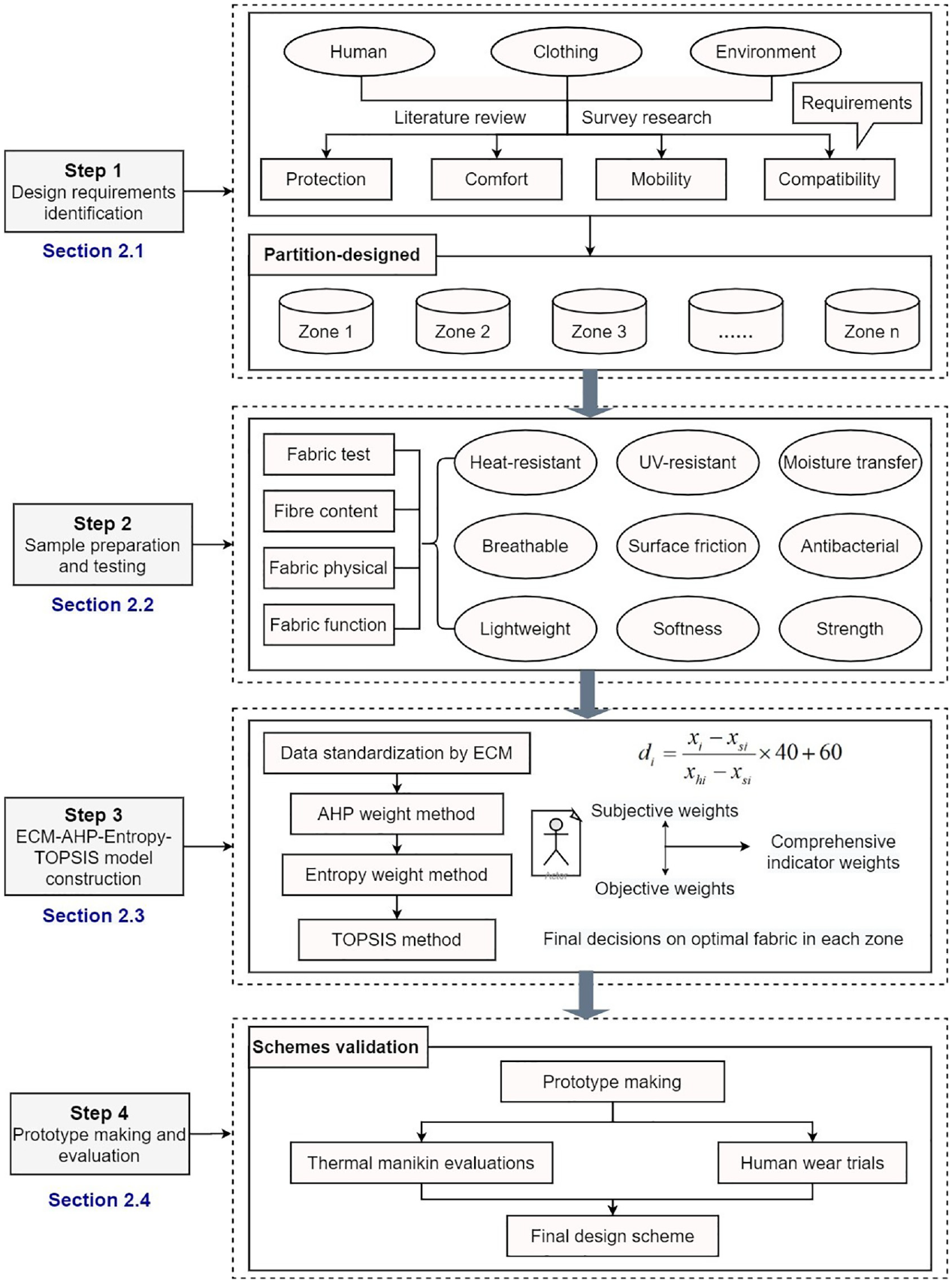
Flowchart for developing optimal fabric selected partition-designed outdoor workwear.
Design Requirements Identification
The development of outdoor workwear in this study began with an investigation into design requirements through extensive field interviews and surveys. This was to understand key attributes necessary for outdoor laborers’ attire, focusing on environmental protection, ergonomic design for user mobility, and workers’ subjective comfort preferences. This detailed requirement analysis was crucial due to the varied hazards of outdoor work, particularly heat stress from high temperatures and UV exposure. These factors are critical in fabric selection to reduce occupational health risks. The dynamic and specific nature of outdoor tasks demands clothing that supports diverse physical movements, necessitating a blend of protection, comfort, and ergonomic suitability in workwear. Interaction with the workforce revealed a need for multi-functional workwear that combines flame resistance, electrical insulation, and water repellence with breathable materials for tactile comfort. A notable issue in current workwear is poor fit, which our study aims to resolve through design optimization.
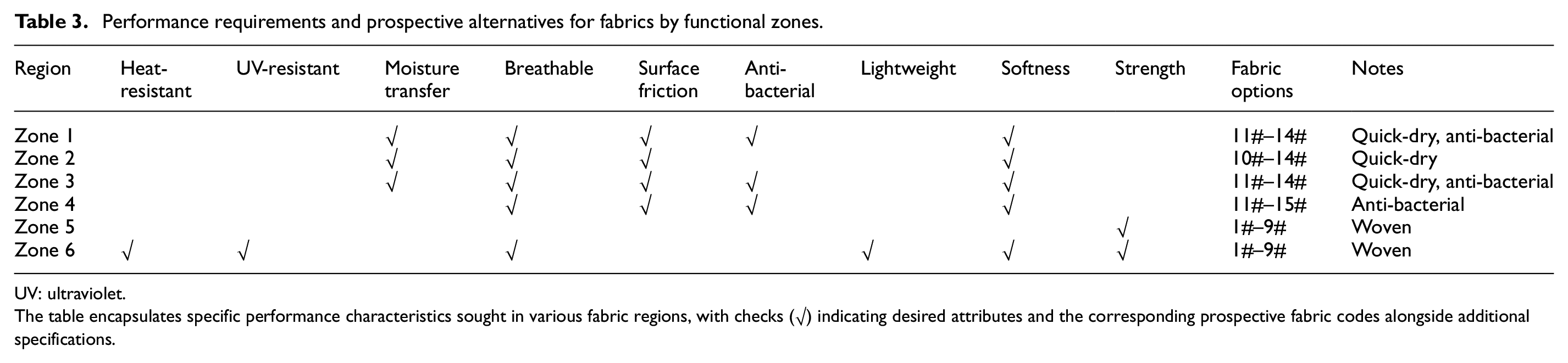
We identified four key design pillars: protective integrity, comfort, ergonomic adaptability, and material compatibility. This led to fabric specifications for six distinct anatomical risk zones, each with unique textile requirements for thermal labor environments, as summarized in Table 1. This table highlights the necessity for versatile materials in high-performance workwear. The zones include the neck (Zone 1), requiring moisture-wicking, breathable, and anti-bacterial properties; chest and lower back (Zone 2), needing soft, smooth, moisture-wicking fabrics; underarms (Zone 3), demanding hygroscopic, anti-bacterial, well-ventilated materials; inner elbows, knees, thighs (Zone 4), requiring soft, breathable, anti-bacterial fabrics; shoulders, elbows, knees, outer surfaces (Zone 5), needing high tensile strength and breathability; and other areas (Zone 6), which require thermal and UV protection, lightweight, soft, durable, and breathable fabrics.
Performance requirements analysis for summer outdoor high-temperature workwear.
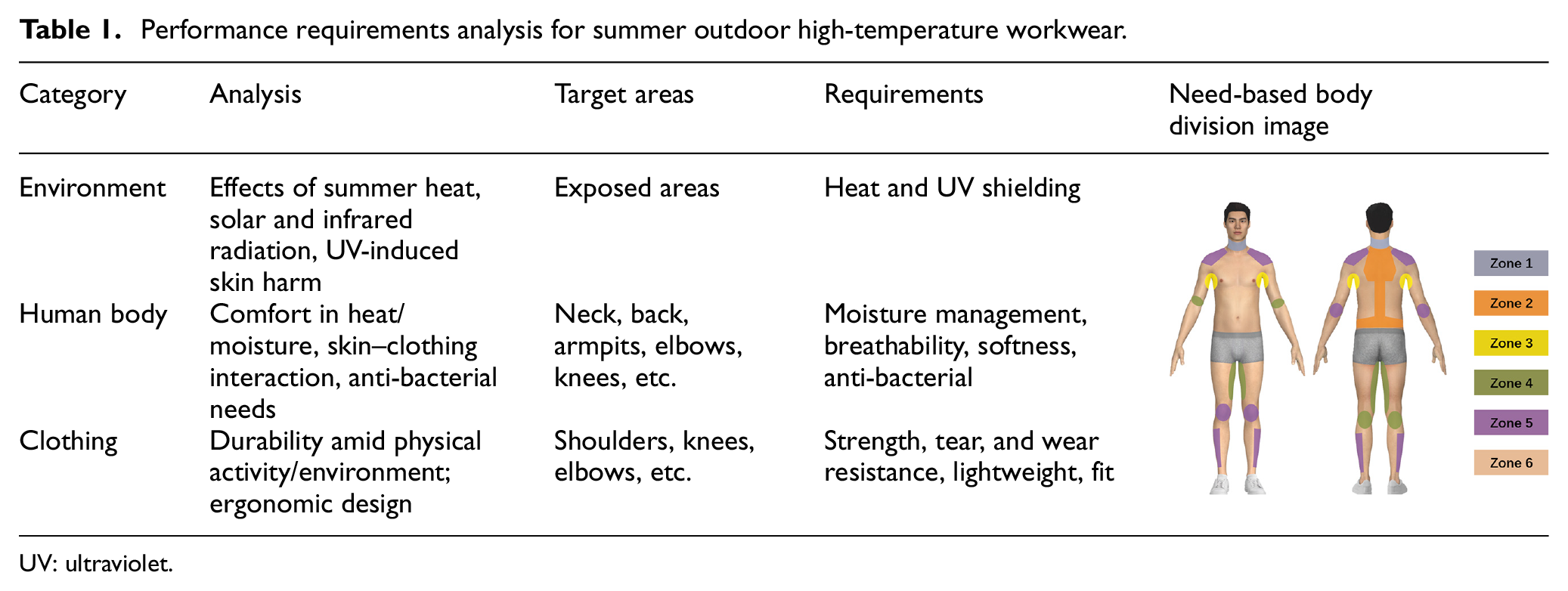
UV: ultraviolet.
Sample Preparation and Testing
Effective summer outdoor workwear necessitates heat-resistant and durable fabrics suitable for rigorous activities. Woven materials, traditionally favored for their robustness and low elasticity, are commonly used in work attire, but knitted fabrics offer enhanced breathability and comfort, critical in hot conditions, making them viable for certain garment parts. Our study evaluated 15 fabric types, including nine woven varieties—regular workwear fabrics, UV-protective, and heat-deflective—and six knitted materials focusing on moisture management and anti-bacterial features. Table 2 presents these fabrics, addressing the multi-faceted requirements of summer workwear, encompassing durability, comfort, and environmental and physiological factors. The fabric selections were tailored to meet high-heat conditions, with all samples preconditioned at 21 ± 1 °C and 65 ± 2% relative humidity for 24 h prior to testing.
Fiber content and fabric physical characteristics.
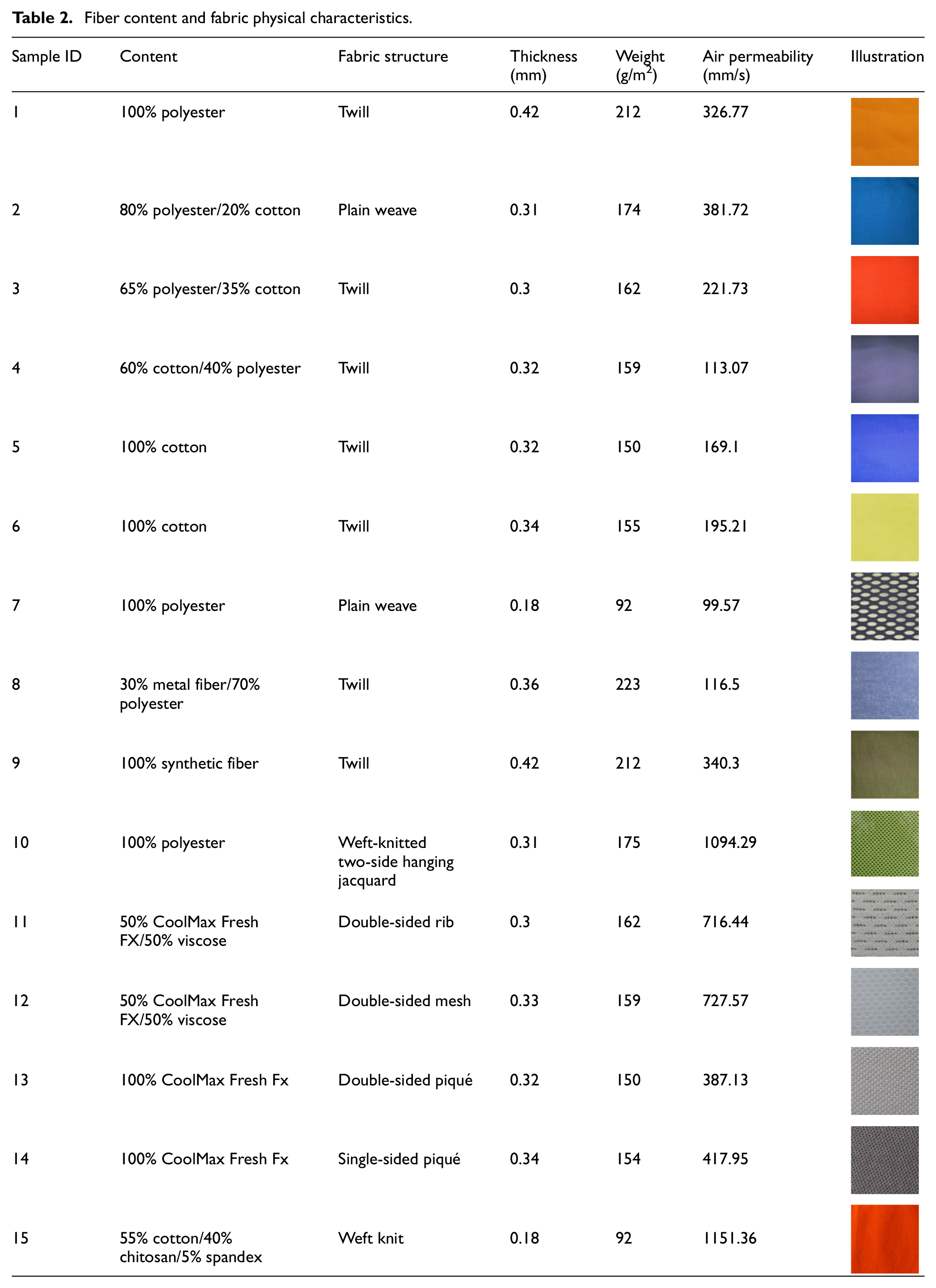
Our evaluation of 15 fabric samples involved several key parameters. Thermal radiation resistance was measured using a long-arc xenon lamp to simulate solar radiation and quantify surface temperature increases. Ultraviolet protection was assessed as per GB/T 18830-2009 using a UV-1000F instrument, determining the Ultraviolet Protection Factor of each material. Liquid water transfer was appraised following SN/T 1689.1-2005 standards using a Moisture Management Tester, revealing each fabric’s liquid permeability. We analyzed the frictional properties with an INSTRON 3365 Universal Testing Machine, calculating static and kinetic friction coefficients under tension. Fabric flexibility was gauged using a YG(B)022D Flexometer in accordance with GB/T 18318-2001, determining bending lengths. Durability tests—covering tensile strength, tear resistance, and abrasion durability—followed GB/T 3923.1-1997, GB/T 3917.2-2009, and ISO 5470-1-1999, using the INSTRON machine and a Y522 Rotary Platform Abraser. Anti-microbial efficacy was quantified based on FZ/T 73023-2006 Appendix D8, targeting specific microbial strains. Adhering to these rigorous standards was crucial for methodological precision and a comprehensive comparison of textile properties.
ECM–AHP–Entropy–TOPSIS Model Construction
We used the TOPSIS model, augmented with the ECM, entropy weight method, and AHP, for fabric selection. This approach hinges on identifying positive and negative ideal solutions. An evaluation system was constructed around these ideal points, enabling the calculation of each alternative’s relative proximity to them. This proximity measure served as the basis for assessing the suitability of the 15 fabric alternatives.
Data Standardization by ECM
Prior to modeling, we standardized the fabric data into structured data using the ECM,38,39 thereby equalizing the impact of different eigenvalue scales. This method transformed the actual values of diverse fabric parameters into dimensionless efficiency coefficients. It differentiated between satisfactory and unsatisfactory index values, facilitating the quantification of multiple objectives. Power coefficient values were assigned to each target, establishing upper (satisfactory) and lower (unsatisfactory) boundaries for further analysis and comparison. This approach provided a quantitative assessment that normalized the evaluation indices and computed the total efficacy coefficient, with higher values denoting superior overall performance. The single efficacy coefficient for each index is calculated using the following formula:

where
Determination of Comprehensive Weights for Criteria
Step 1: Determination of subjective weights by AHP.
We employed the AHP to determine subjective weights for each factor through pairwise comparisons. Data from 30 expert interviews, encompassing summer outdoor workers such as construction workers, cleaners, and gardeners, were assessed using an expert survey. The priority rankings adhered to the additivity constraint, ensuring the sum of all weights equals 1. The factors were then aggregated using a weighted linear combination method based on the calculated weights according to the following equation:

Here,
Step 2: Entropy method for determining objective weights.
Entropy, in information theory, serves as both a measure of system disorder and an indicator of data’s effective information. Utilizing entropy for weight determination means that for an indicator where evaluation objects show significant differences, a smaller entropy value indicates more effective information, meriting a larger weight. Conversely, a larger entropy value signifies greater information dispersion and lesser utility, thus warranting a smaller weight. The entropy weighting method, as an objective approach, provides a solid basis for MCDM. The entropy value for the jth indicator in an evaluation with m objects and n indicators is calculated as shown in equation (3):

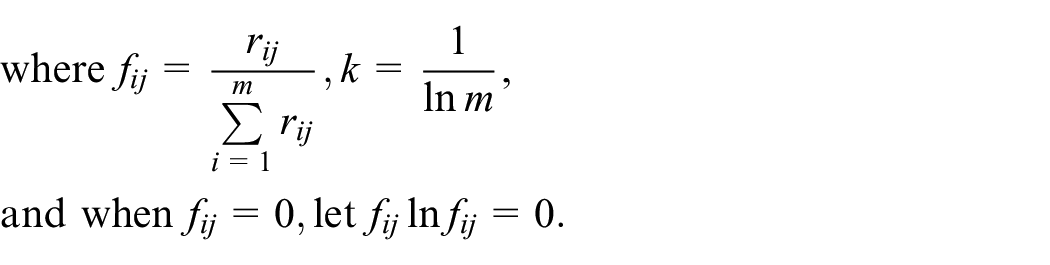
To define the degree of differentiation for the jth indicator and determine the weights, the following formula is used:

where
Step 3: Combined AHP–entropy method for determining comprehensive indicator weights.
This step integrates the subjective weight vector obtained from the AHP, denoted as

where
Construction of the Weighted Normalized Decision Matrix
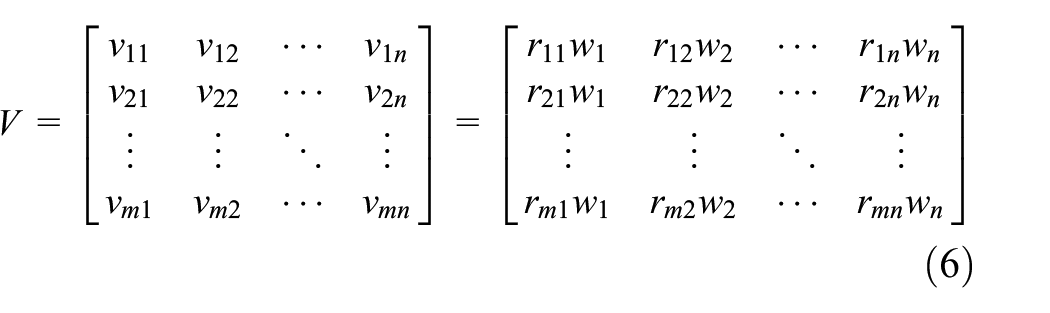
The weighted normalized decision matrix is derived by multiplying each row of the normalized decision matrix R by the comprehensive weights of the indicators
Determination of Positive and Negative Ideal Solutions and Euclidean Distance
The positive and negative ideal solutions in the study are defined as R+ and R−, respectively. Indicators are categorized as either benefit-type (“the larger, the better”) or cost-type (“the smaller, the better”). The set R+ comprises the maximum values of benefit-type indicators and the minimum values of cost-type indicators, while R− is composed oppositely. That is:


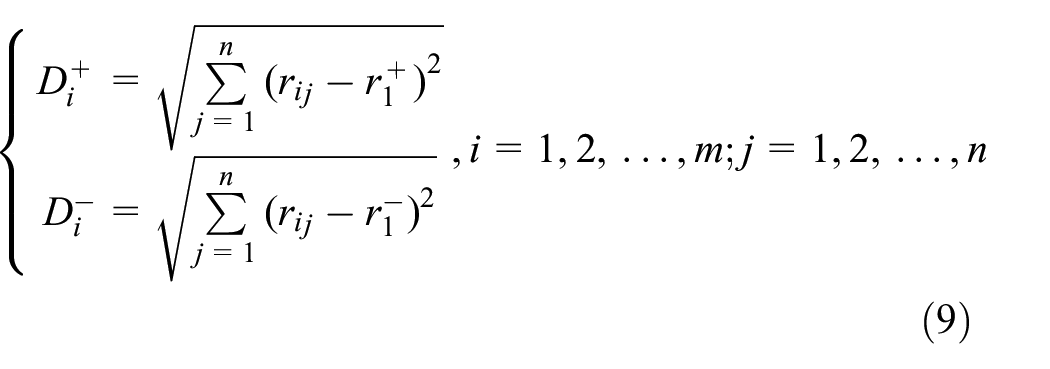
The distance from an engineering alternative to the positive ideal solution R+ is denoted as D+, and to the negative ideal solution R− as D−, with D+ and D− defined as:
Calculation of Relative Closeness and Ranking
The closeness of an alternative to the ideal solution, represented by

For each alternative, the relative closeness
Prototype Making and Evaluation
Following the optimal fabric selection, we designed three types of prototype outdoor workwear using these fabrics. The performance of the selected fabrics was verified through thermal manikin evaluation and human wear trials. In the thermal manikin test, the manikin’s heating power was set to 160 W/m2, mimicking human metabolic heat production, with heat lamps providing simulated solar radiation. The experimental setup was rigorously controlled, with a temperature of 28 ± 2 °C, relative humidity of 65 ± 5%, wind speed of 0.5 m/s, and spraying volume of 375 g, to ensure data accuracy. During the initial 40-min heating and infrared exposure phase, a significant temperature increase was observed in most regions, followed by a marked decrease in the subsequent 10-min cooling phase. For the human wear trials, six volunteers (four males and two females, average height of 165 ± 8 cm, weight of 55 ± 10 kg, and approximately 24 years old) underwent thermal comfort testing in a climate chamber (air temperature: 28 °C, relative humidity: 55%, wind speed: 0.5 m/s). This involved a 40-min treadmill exercise at 3 km/h with a 10% slope. The field experiment comprised 40-min working stages, including 10 min of standing, 20 min of walking at a normal pace, and 10 min of squatting. Post-experiment, participants completed a subjective comfort evaluation form based on their actual wearing experience.
Results
Zonal Principles in Fabric Selection
Human body areas require distinct functionalities, especially considering the diverse sweating patterns of outdoor workers in hot environments and exercise-induced hyperthermia.32,33 Each body region necessitates specific functional requirements. This study evaluated 15 fabric samples, each demonstrating varied thermal comfort and protection features. The lack of a single definitive performance metric for fabric selection prompted the use of a multi-criteria integrated assessment. This approach, based on multi-criteria composite index theory, merges several key evaluation metrics into a singular comprehensive value. It involves normalizing fabric metrics, determining individual metric weight coefficients, and integrating these into an overall evaluation value. Aligning with the partition-designed concept, Table 3 presents the prospective fabric alternatives for each functionally distinct human body region.
Performance requirements and prospective alternatives for fabrics by functional zones.
UV: ultraviolet.
The table encapsulates specific performance characteristics sought in various fabric regions, with checks (√) indicating desired attributes and the corresponding prospective fabric codes alongside additional specifications.
Optimal Fabric Selection Based on MCDM
Data Standardization
Several metrics with differing physical meanings and units can pose challenges for direct comparison and may skew the results in multi-criteria evaluations. To overcome this, we used the ECM to standardize the metrics in a dimensionless manner, which improved the accuracy of the evaluations. The utility ECM was used for this standardization, setting optimal and suboptimal thresholds for each metric and linearly transforming these into a score range of 60–100. This approach is consistent with traditional assessment protocols, preventing zero scores and facilitating the integration and interpretation of outcomes. For properties involving multiple testing criteria, each metric was individually standardized before calculating their mean, providing a comprehensive evaluation of each property.
Dimensionless Processing of Main Fabrics
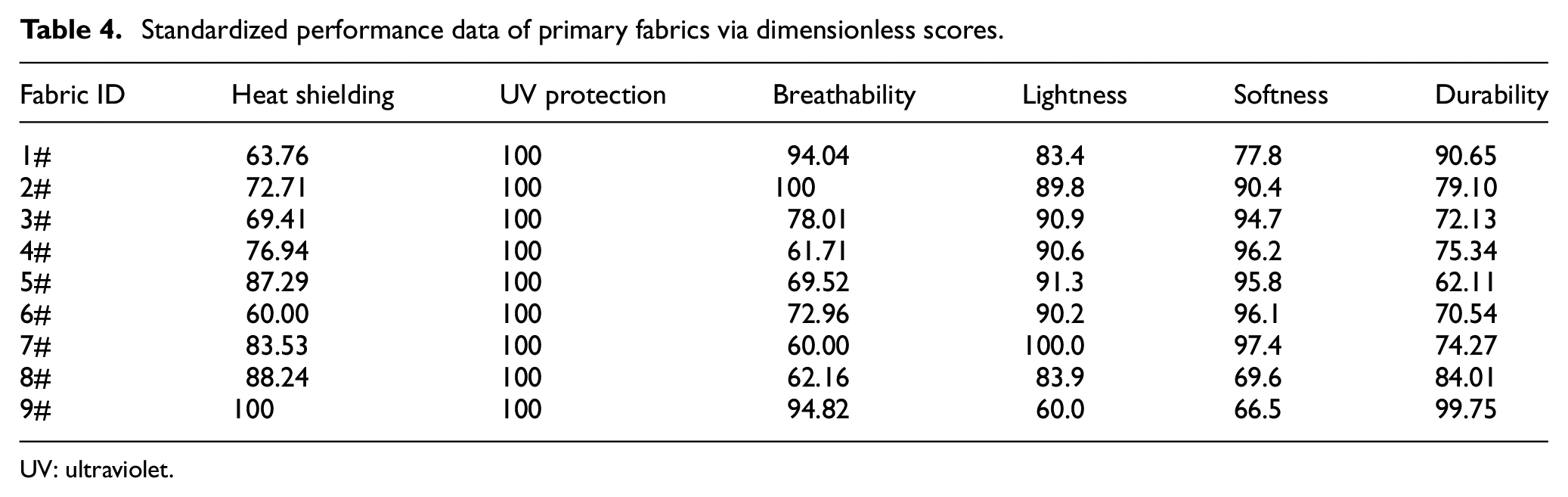
Our investigation undertook a comprehensive multi-indicator analysis of nine types of primary fabrics, designated 1#–9#, utilized in high-temperature outdoor summer workwear. We applied a dimensionless transformation technique to quantify each fabric’s attributes, as shown in Table 4. Notably, all fabrics met national UV protection standards, earning a maximum score. We also analyzed the lightness and suppleness of the fabrics using dimensionless methods, averaging these scores to reflect overall performance in these aspects. Durability was evaluated by combining metrics of stretchability, tear resistance, and abrasion resilience to derive a cumulative durability score for each fabric type.
Standardized performance data of primary fabrics via dimensionless scores.
UV: ultraviolet.
Dimensionless Processing of Moisture-Wicking Fabric
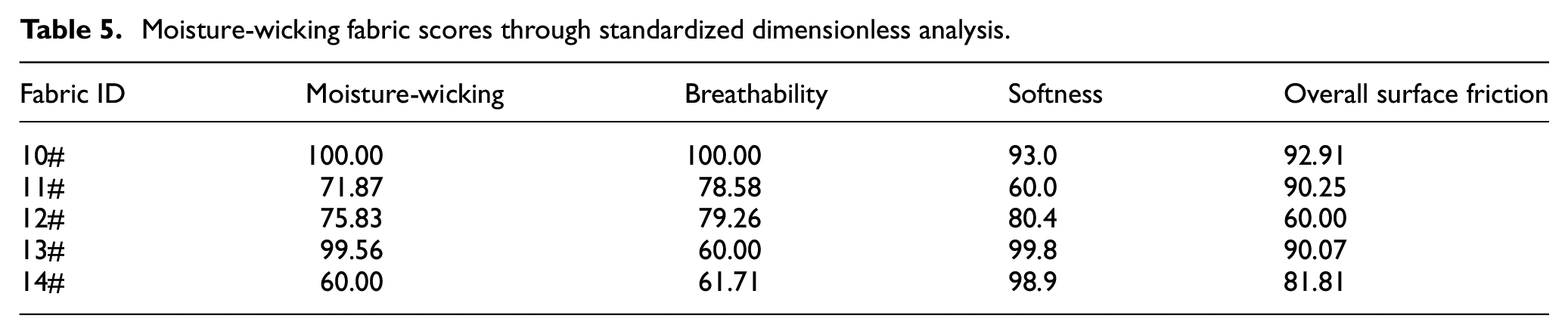
Our study examined five types of moisture-wicking fabrics for workwear labeled 10#–14#. We employed dimensionless transformation techniques to quantify both the moisture-wicking capacities and surface friction characteristics of these fabrics. The results are presented in Table 5. An integrated assessment of surface friction was performed, which included averaging static and dynamic friction coefficients and calculating the coefficient of variation for dynamic friction.
Moisture-wicking fabric scores through standardized dimensionless analysis.
Dimensionless Processing of Anti-bacterial Fabric
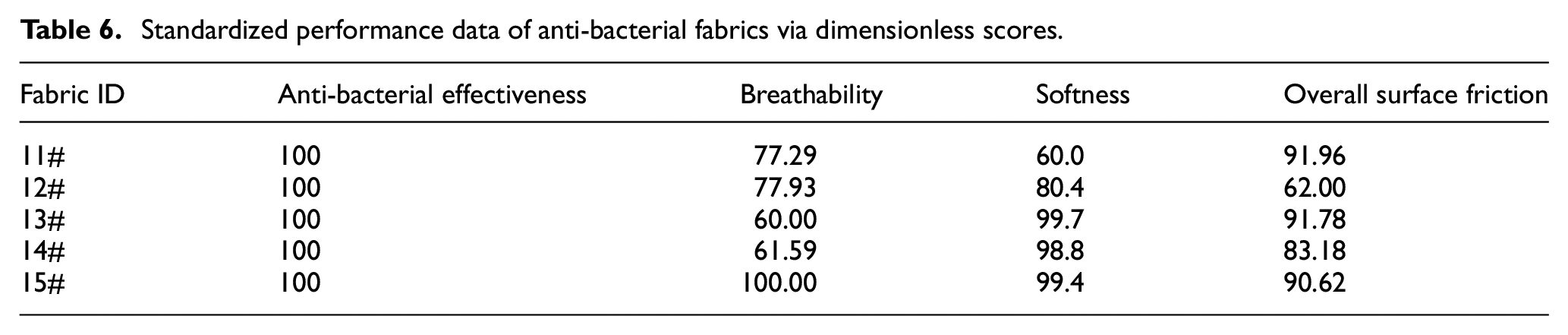
Our investigation encompassed five categories of anti-bacterial fabrics, numbered 11#–15#. Table 6 presents the anti-bacterial, breathable, and pliant characteristics of each fabric category for workwear, quantified using the dimensionless method.
Standardized performance data of anti-bacterial fabrics via dimensionless scores.
Dimensionless Processing of Composite Fabrics with Moisture-Wicking and Anti-bacterial Features
Our analysis also encompassed fabrics with both moisture-wicking and anti-bacterial properties, covering four categories labeled 11#–14#. Using the dimensionless method, we comprehensively evaluated the collective attributes of these fabric types. The findings are detailed in Table 7.
Standardized data of combined moisture-wicking and anti-bacterial fabrics via dimensionless scores.

Determining the Criteria Weights
Determination of Subjective Weights by AHP
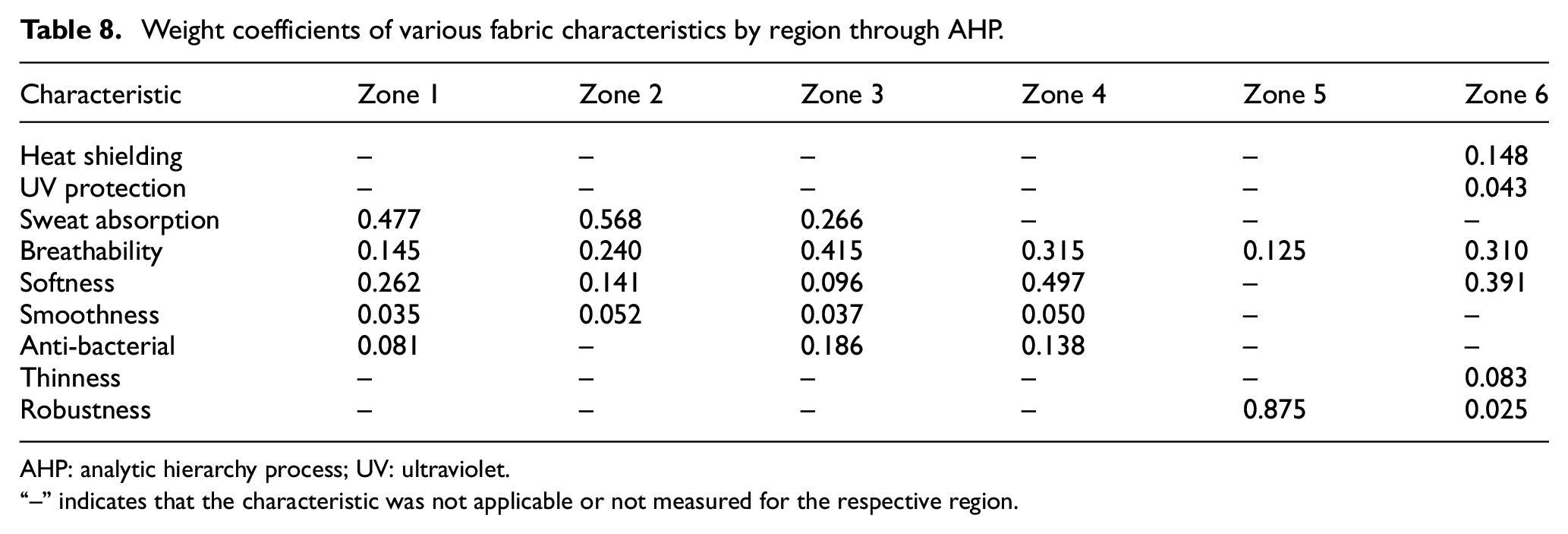
For this study, 30 summer outdoor workers, including construction workers, cleaners, and gardeners, were interviewed using a nine-point scale to assess fabric performance across various body regions. The cohort included 9 females and 21 males, divided based on work experience: under 3 years (10 individuals), 3–10 years (10 individuals), and over 10 years (10 individuals). These data contributed to developing weighted performance criteria for fabrics in different body regions. Specifically, for the main fabric region (Zone 6), computations revealed weighted criteria: softness (2.37), breathability (2.42), heat insulation (3.10), thinness (3.72), UV protection (4.43), and durability (4.97). Consistency checks produced a consistency ratio (CR) below 0.1, validating the criterion weighting. The performance weights for the primary fabric in Zone 6 were determined as follows: softness (0.391), breathability (0.310), heat shielding (0.148), thinness (0.083), UV resistance (0.043), and robustness (0.025).
Similarly, criteria weights for fabrics in Zones 1–5 were also established. For example, in Zone 1, the weights were as follows: sweat absorption (0.477), softness (0.262), breathability (0.145), anti-bacterial properties (0.081), and smoothness (0.035). The weights for Zones 2–5 are detailed correspondingly. Integrating these results, the AHP method calculated the weight coefficients for each fabric characteristic across the different functional regions, presented in Table 8.
Weight coefficients of various fabric characteristics by region through AHP.
AHP: analytic hierarchy process; UV: ultraviolet.
“–” indicates that the characteristic was not applicable or not measured for the respective region.
Entropy Method for Determining Objective Weights
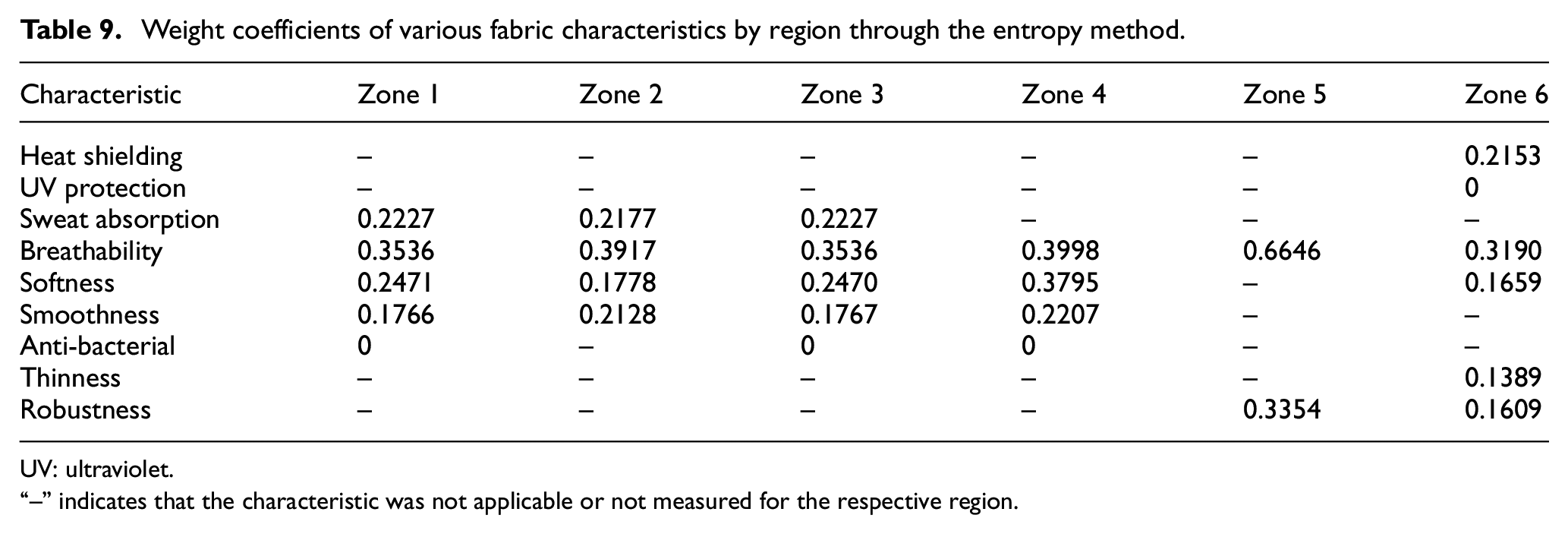
The entropy weighting method is an objective weighting approach. In the evaluation index system, weights are determined through the calculation of entropy, which is based on the degree of variation among different evaluation indices. For fabric selection, the entropy weighting method uses the judgment matrix as the initial data matrix, assigning weights according to the degree of variation in the characteristic values of the evaluation indices within the judgment matrix. Initially, the judgment matrix is standardized according to equation (1) to obtain a standard-type matrix. Subsequently, the entropy values and entropy weights of each evaluation index are calculated using equations (3) and (4), as shown in Table 9.
Weight coefficients of various fabric characteristics by region through the entropy method.
UV: ultraviolet.
“–” indicates that the characteristic was not applicable or not measured for the respective region.
Combined AHP–Entropy Method for Determining Comprehensive Indicator Weights
According to formula (5), the comprehensive weight index, derived from the combined AHP and entropy method, is presented in Table 10.
Weight coefficients of various fabric characteristics by region through the AHP–entropy method.
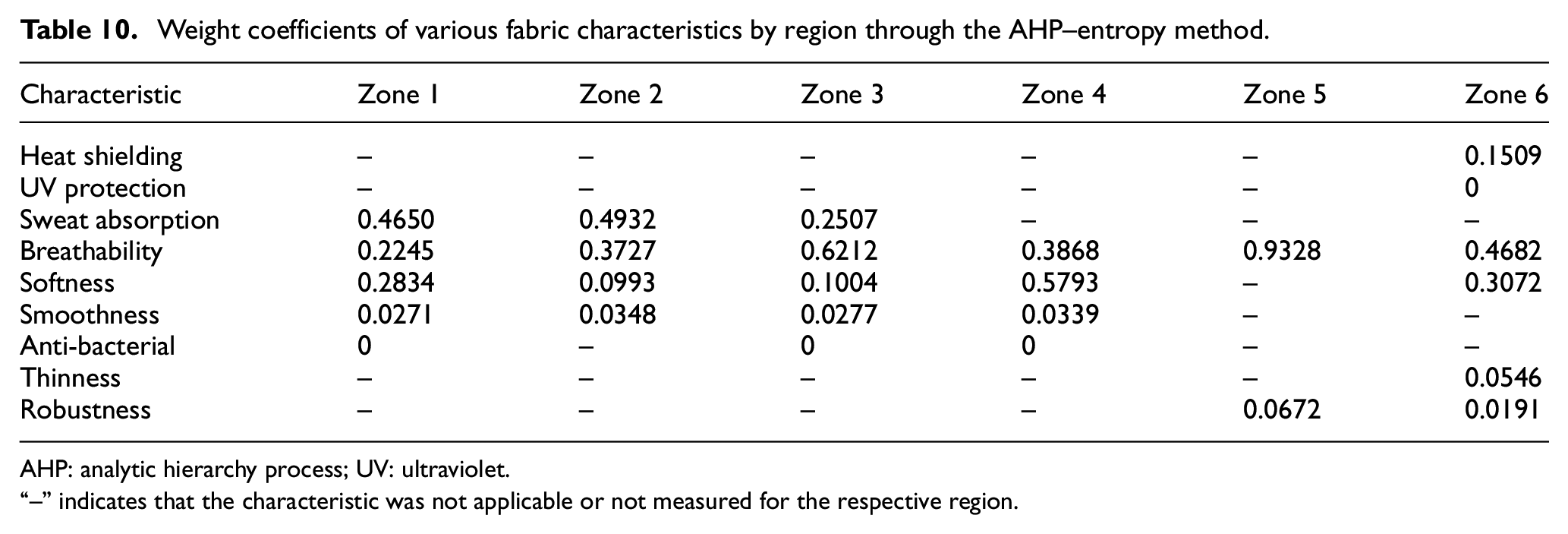
AHP: analytic hierarchy process; UV: ultraviolet.
“–” indicates that the characteristic was not applicable or not measured for the respective region.
Rank of the Alternatives
To facilitate comprehension, let us consider the fabric selection for Zone 1 as an illustrative example. Utilizing equation (6), we can obtain the weighted standardized decision matrix as outlined as follows:
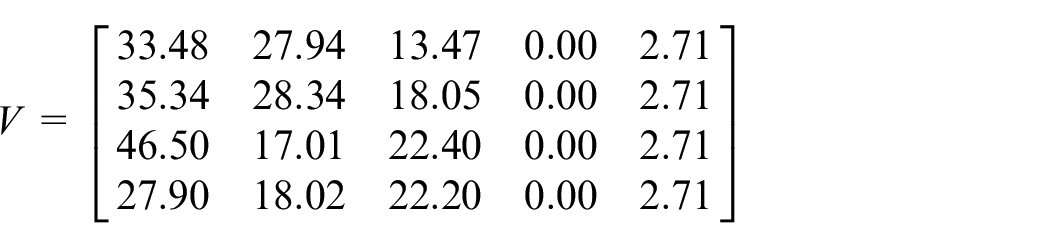
Employing equations (7) and (8), we calculate the positive and negative ideal solutions. The distances D+ and D− between each option and these ideal solutions are determined using equation (9). Subsequently, the closeness of each option to the ideal solution is computed by equation (10). This methodology is similarly applied to calculate the weighted standardized decision matrix for Zones 2–6. The results of these calculations for six functional zones are displayed in Figure 2.
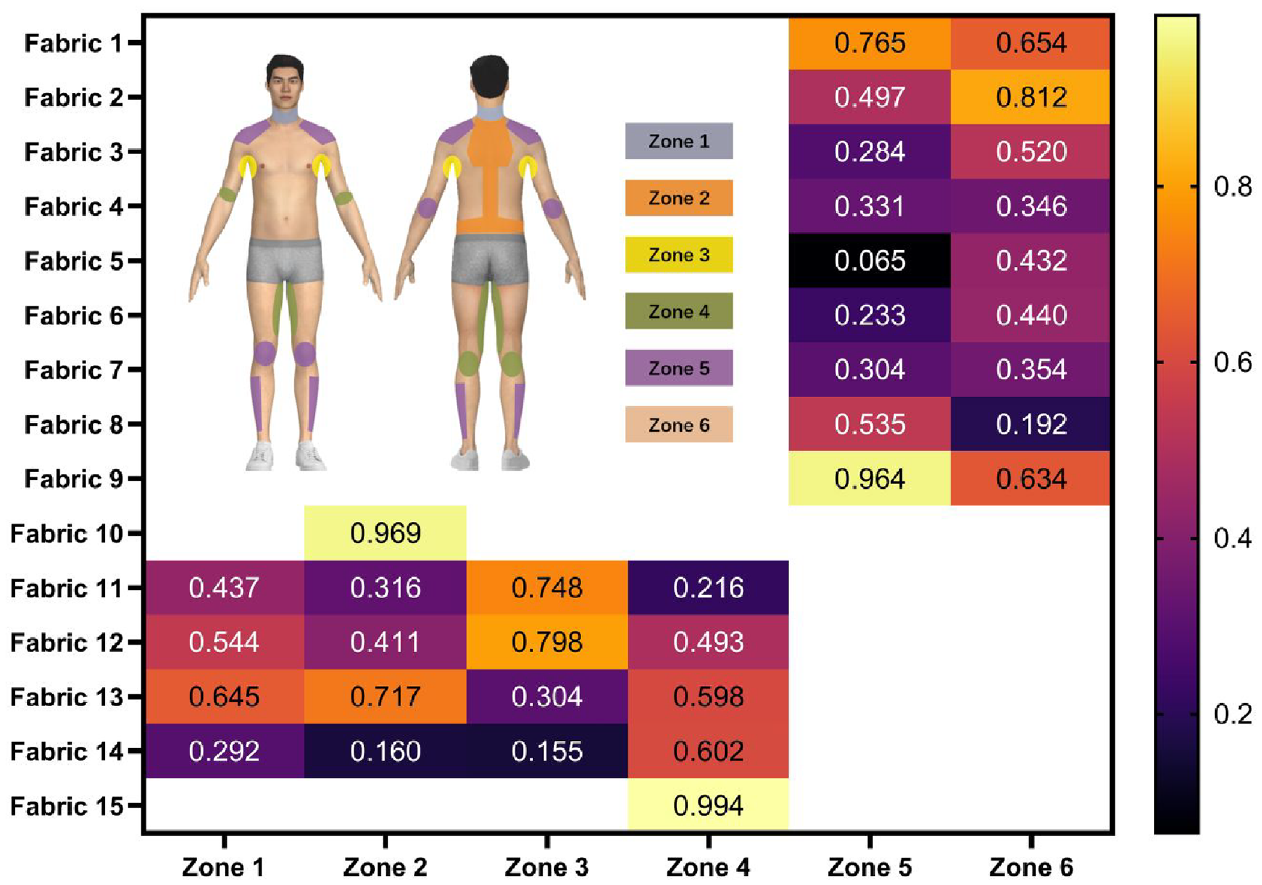
Fabric selection priority matrix for six functional zones.
In the fabric selection process for specific zones, a numerical assessment established the relative importance of each material across six regions. This analysis identified Fabric 10# as most crucial for Zone 2 with a value of 0.969, underscoring its significant role there. Similarly, Fabric 15# was predominant in Zone 4, achieving the highest score of 0.994. Fabric 9# stood out in Zone 5 with a score of 0.964 and also showed notable utility in Zone 6 at 0.634, demonstrating its versatility. In contrast, some fabrics, like Fabric 12#, displayed variable utility, peaking at 0.798 in Zone 3 and 0.493 in Zone 4. These gradations in importance guide the prioritized allocation of materials to areas of highest necessity. The data reveal that while certain fabrics have broad utility across multiple zones, others are more specialized, indicating a nuanced approach to fabric allocation based on their assessed value.
Prototype Making and Evaluation
After determining the optimal fabric choices, three prototype outdoor workwear prototypes were developed using these fabrics. To demonstrate the effectiveness of these selections, two distinct fabric configurations, Schemes B and C, were designed and compared with a normal control group (conventional workwear designs, Scheme A). The key difference between Schemes B and C lies in the use and design of the functional fabrics: Scheme C primarily incorporates straight-lined functional fabrics, while Scheme B utilizes curved designs. Hence, we got two partition schemes, with the sole difference in the proportions of an area of different regions to the total area. That is, Scheme C has a larger total surface area of the optimal fabric than the Scheme B group. Fabric 2# from Zone 6 was used as a control in Scheme A, leading to the development of three distinct prototype ensembles, A, B, and C, as illustrated in Figure 3.
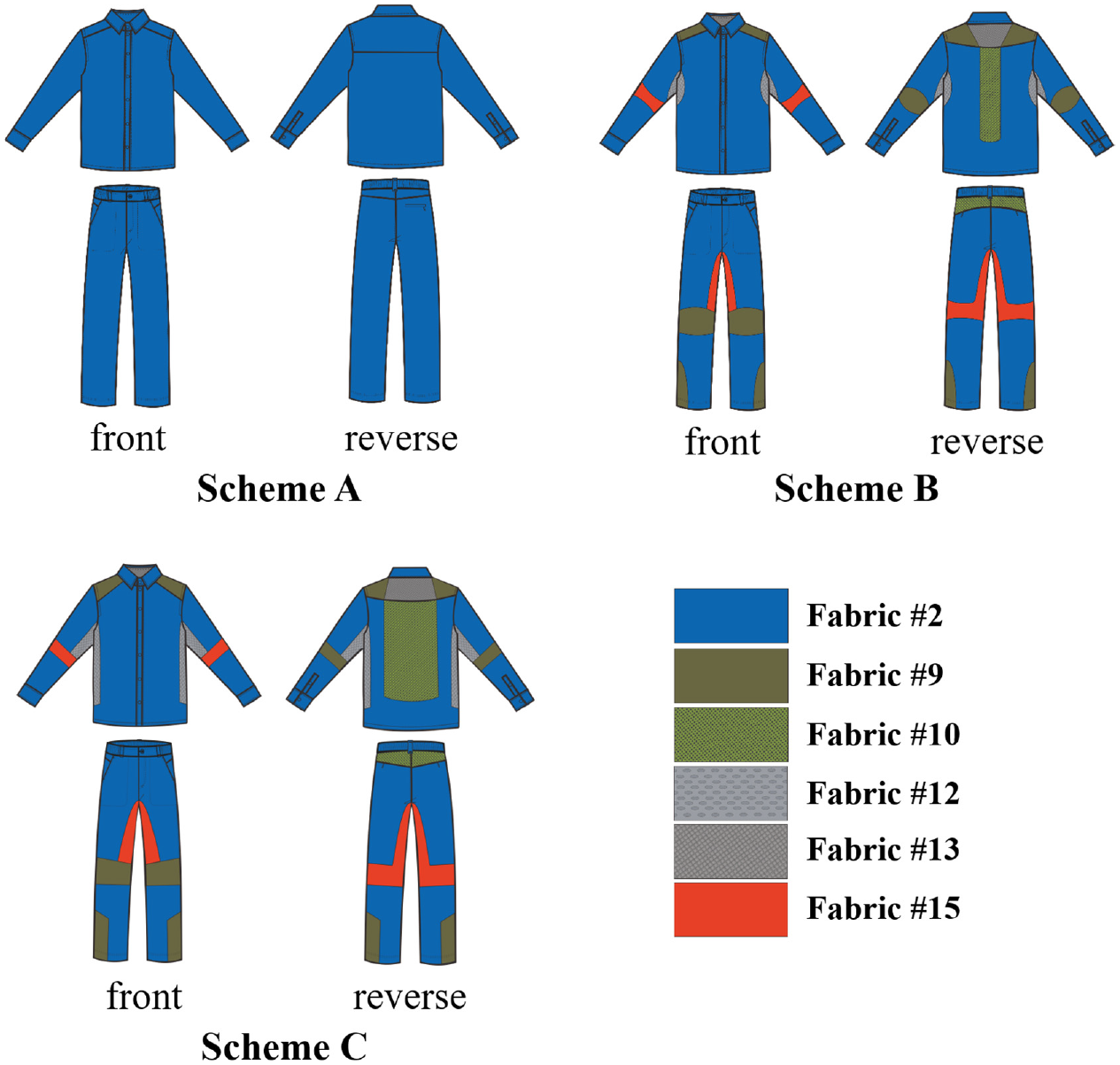
Three partitioned outdoor workwear prototypes diagram of the front side and reverse side.
To validate the effectiveness of our fabric selection, we conducted thermal manikin evaluations and human wear trials. Figure 4 displays the average variations in body surface temperature, encompassing the chest, arms, thighs, and calves, alongside subjective evaluations of overall body comfort. In line with ISO 9886 standards, workwear B and C demonstrated enhanced skin temperature regulation compared to workwear A, particularly under high-temperature conditions. The use of functional knitted fabrics in workwear B and C resulted in a superior reduction of surface temperature and improved comfort in hot environments, highlighting the importance of fabric choice and design in managing individual comfort and temperature in thermal conditions. In addition, the Kruskal–Wallis test was used to compare differences in workwear ensembles between the three prototype groups. Regarding subjective overall body thermal comfort, workwear B and C outperformed workwear A. The simulation outcomes affirm the efficacy of the algorithm proposed in this study.
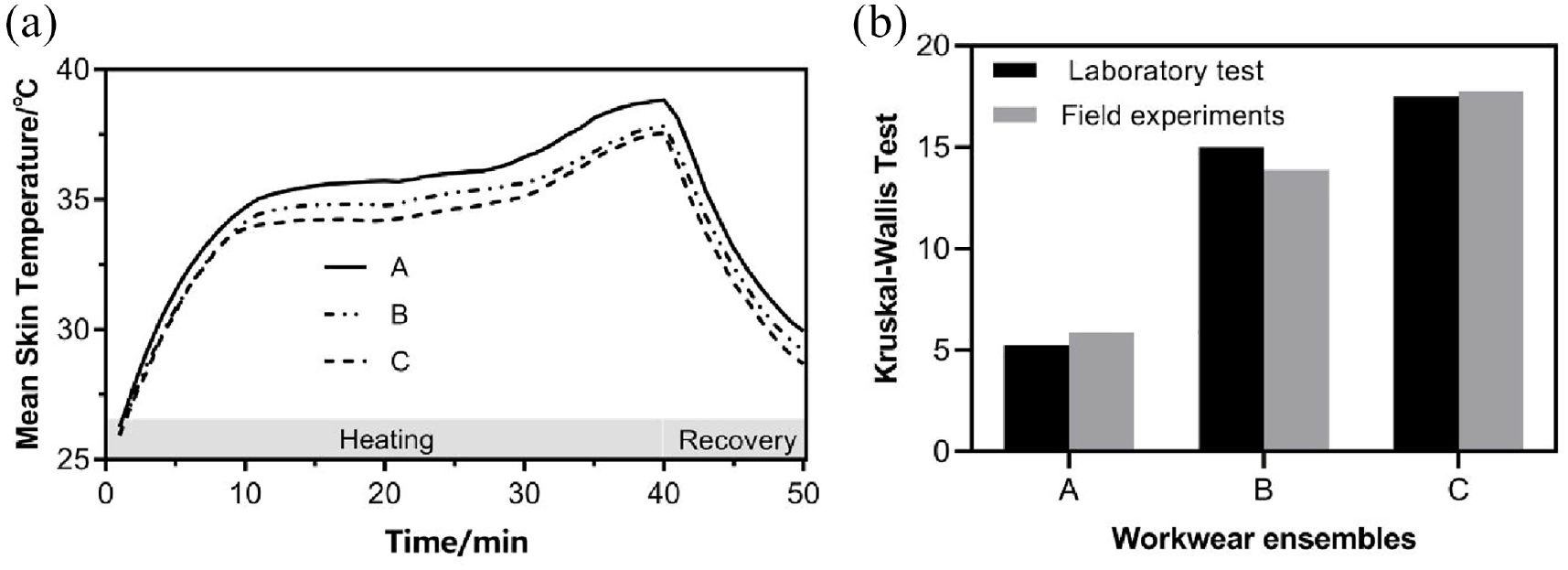
Prototype evaluation. (a) Skin surface temperature on thermal manikins and (b) overall thermal comfort in laboratory and field experiments.
Discussion
This study focused on developing anti-heat stress workwear for outdoor workers in hot, humid conditions, emphasizing both fabric selection and partitioned design. We combined fabric properties with ergonomic design to improve mobility, convenience, and safety, thereby enhancing comfort and functionality. A novel hybrid MCDM method, ECM–AHP–entropy–TOPSIS, was introduced for selecting the most suitable fabric from 15 candidates for partitioned workwear, integrating objective entropy weights with subjective AHP weights. The outcome was the creation of three new workwear prototypes characterized by their enhanced protection, ergonomics, ease of use, and functionality. These prototypes were rigorously tested in both laboratory and field settings, exhibiting superior heat and moisture management and a design that hugely reduced heat stress, thereby improving thermal comfort and performance for outdoor workers. This research contributes to the advancement in fabric and workwear design for outdoor environments, incorporating body mapping with differentiated fabrics for specific body parts. The partitioned design, adapted to human thermal zones, not only minimizes additional heat load but also promotes moisture transport from areas prone to heavy sweating.29,32,33 This strategy represents a departure from traditional uniform material designs, advocating a move toward specialized textiles for different body areas to optimize overall comfort.
Evaluating workwear prototypes is a pivotal stage in product development, involving a range of variables that influence the final collection.36,37 The design of outdoor workwear requires the balancing of thermal protection with anti-heat stress performance, a critical aspect for optimal fabric selection and reducing discomfort risks. Prior research often concentrated on either thermal protection or heat stress independently without considering their combined effect. 40 While some studies addressed both, they lacked a holistic methodology for integrating these factors during material or garment selection, potentially leading to design deficiencies in outdoor workwear.
Structural properties and raw materials significantly influence fabric comfort.14,15 The process of selecting the most suitable fabric entails dealing with complex and sometimes conflicting decision attributes, often based on subjective and vague criteria. Identifying a fabric that excels in all material properties is essential, given its distinct performance characteristics. MCDM is a discipline that assesses various attributes, sometimes in conflict, to support decision-making. The MCDM framework comprises criteria, alternatives, attribute weights, and performance ratings of these alternatives. Several MCDM methods, including AHP,16,17 ratio analysis, 18 EDAS, 19 TOPSIS, 20 gray fuzzy logic,21,22 gray fuzzy relational analysis, 23 hybrid CRITIC, 24 hybrid VIKOR, 25 and hybrid TOPSIS26–28 method, have been applied to fabric selection. Each method has its strengths and limitations, and the choice of the most appropriate method depends on the specific decision problem. Although many MCDM methods have been employed in fabric selection, most have not simultaneously considered both objective and subjective weights. The practical implications of this research include providing textile engineers with a comprehensive evaluation tool that utilizes multi-perspective indices, facilitating the assessment of the rationality behind the designed manufacturing processes in fabric selection.
Our research has limitations that pave the way for future inquiries. First, we have developed new ergonomic modular workwear based on optimal fabric selection, which may influence clothing design and offer adaptability in thermal comfort for outdoor workers. However, our understanding of its functional partitioning is preliminary. Since sweating patterns differ across regions of the body, further research is needed to map sweating patterns in outdoor workers experiencing exercise-induced hyperthermia.29,32,33 Second, our novel ECM–AHP–entropy–TOPSIS method for fabric selection needs broader validation in textile applications. The fabric selection charts derived from this method should be used as preliminary guides rather than definitive tools for selecting optimal materials. There are also alternative MCDM tools available for calculating criteria weights. 34 Third, our fabric comfort evaluation was limited to a specific set of criteria, omitting other potentially significant comfort factors. Finally, our study’s reliance on human judgments for the decision matrix may introduce subjectivity into expert decision-making. Considering that fabric perceptions can differ across outdoor groups, more objective validation would enhance the accuracy of our fabric selection results.
Conclusion
This study proposed a hybrid MCDM approach, ECM–AHP–entropy–TOPSIS, to select the optimal fabric from 15 candidates for designing partitioned outdoor workwear. The workwear was divided into six function zones, and the optimal fabric was identified using the MCDM method. The key findings are as follows:
We developed partitioned workwear tailored to the functional regions, demonstrating its advantages over non-partitioned workwear. Compared to current workwear, the partitioned design method significantly enhances thermal and wet comfort for outdoor sports clothing, providing a new approach to the design of such clothing.
The flexibility of the MCDM approach allows for the adjustment of weight combinations and adaptation to new decision contexts, providing an effective means to evaluate fabrics and select the best material while considering conflicting fabric properties. This methodology could also be applied to other decision-making scenarios in the textile industry involving limited options and multiple, often conflicting criteria. However, further research with a broader range of materials is necessary to assess its effectiveness.
Future research will focus on two areas: extending partitioned design principles to other types of clothing, such as firefighting and chemical clothing, potentially reducing injuries in safety-critical industries, and applying material testing results to diminish the subjectivity in expert decision-making.
Footnotes
Acknowledgements
The authors thank Professor Tamaki Mitsuno (Shinshu University, Japan) for her thoughtful and stimulating TBIS conferences. The authors also thank the subjects who willingly participated in this study.
Declaration of conflicting interests
The author(s) declared no potential conflicts of interest with respect to the research, authorship, and/or publication of this article.
Funding
The author(s) disclosed receipt of the following financial support for the research, authorship, and/or publication of this article: This work was supported by the Science and Technology Research Fund of State Grid Jilin Electric Power Company Limited in 2023 (no. 2023-40).